States vs. Federal Government: PGRI Digital Library
←
→
Page content transcription
If your browser does not render page correctly, please read the page content below

PUBLIC
                                                                 I
                                                                 N
                                                                 T
                                                                 E
    May Scheve Reardon   Paula Otto

                                                                 R
Panel
Discussions
States vs. Federal

                                                                 N
Government:
Who Determines
Regulatory Policy
in the U.S.?             Jaymin Patel

                                                                 A
On Governance of
the Multi-State Games
and the Challenge                                                T
to Meet and Exceed
Rising Consumer
Expectations
                                                                 I

Connie Laverty
O’Connor
                         Jim Kennedy
Recipient of the
                                                                 O

Rebecca Hargrove
Award for Mentorship
                                                                 N
                                        September/October 2014

                                                                 A

                          Tom Little
                                                                     ™
                                                                 L
GTECH is an advocate of socially responsible gaming. For more information visit gtech.com

               LOTTERY + SPIELO + INTERACTIVE + BETTING

All Together
                                                          Global Solutions, Custom Crafted

September/October 2014
PUBLIC
™
I N T E R N A T I O N A L
Feature Interviews and Editorials
6 Paul Jason: From the Publisher 30 Panel Discussion: 46 Australia to Germany, a JUMBO
www.PublicGaming.com States vs. federal government Size Step: Jumbo Interactive
Visit our website to get the 8 Why National Consumer Brands —who determines regulatory now selling for all 16 German
Need to be Supported by policy in the U.S.? lotteries—a population of
latest breaking lottery news. National Marketing, Brand-
Scott Bowen, Commissioner, 80 million people
Messaging, and Distribution
And sign up to receive PGRI’s An interview with May Scheve Michigan Lottery (moderator) 48 A Federal Law Restricting
weekly Morning Report. Reardon, Executive Director, Scott Gunn, Senior Vice President, Internet Gambling Could Lead
Missouri Lottery Global Government Relations, GTECH to Unintended and Devastating
Mark Hichar, Partner, Chair of Consequences for State Lotteries
14 How Coordination of Strategy Mark Hichar, Hinckley Allen
and Execution of the MONOPOLY Gaming Law Practice Group,
Hinckley, Allen Law Firm and Snyder
Millionaires’ Club™ and the
other Multi-State Lottery Games Kevin Mullally, Vice-President of 50 Standing Still Is Not an Option:
is Positioning U.S. Lotteries for Government Relations & General Growing retail sales in a
Long-Term Sustainable Growth Counsel, Gaming Laboratories mature lottery
An interview with Paula Otto, International (GLI) GTECH’s comprehensive retail
Executive Director, Virginia Lottery Lynne Roiter, Secretary General, optimization program to boost the
Vice President Legal Group, Loto- sales and revenue of even high-
20 Panel Discussion: performing lotteries
On governance of the multi- Quebec, and General Secretary of the
state games and the challenge World Lottery Association (WLA) 53 Pulse of the Industry News
to meet and exceed rising Philip Smith, Director of Legal 60 Connie Laverty O’Connor,
consumer expectations Services, Missouri Lottery Senior Vice President and Chief
Subscribe to our new Daily News Philippe Vlaemminck, Partner,
Rebecca Hargrove, Chief Executive Customer Officer, GTECH
Digest. Industry news gets reported Officer, Tennessee Education Lottery Altius Law Firm, Legal Counsel to Recipient of the Rebecca Hargrove
here as soon as it hits the wires. Corporation and Senior Vice President the European Lotteries Award for Mentorship
Gathered from hundreds of publica- of the World Lottery Association (WLA) 36 GTECH and IGT: 61 Government Gaming Enters an
(moderator) Two global leaders combine to Era of Innovation and Growth
tions, government agencies, lotter- define the future of gaming
Gary Grief, Executive Director, Tom Jurkovich, Vice President
ies, commercial firms, and news Texas Lottery, President of the North entertainment and deliver a for Corporate Affairs, Tennessee
wires from all around the world, American Association of State & customer-first experience to Education Lottery
Provincial Lotteries (NASPL) government lotteries
www.PublicGaming.com is the most An interview with Jaymin Patel, 62 Corporate Profiles:
Carole Hedinger, Executive Director, The lottery industry drivers of
comprehensive news and informa- New Jersey Lottery President & Chief Executive Officer,
innovation and progress
tion resource in our industry. PGRI’s Stephen Martino, Director, Maryland GTECH Americas
69 Pioneering a New Lottery
Morning Report is our weekly Lottery and Gaming Control Agency 40 How the Government Lottery
Space: Shoutz’s progress to
electronic newsletter, providing Charles McIntyre, Executive Director, Industry Is Applying Its
Brain-Power to Take Maximum mobile
New Hampshire Lottery
you with a synopsis of the previous Advantage of Forward- 70 Playbook for Launching an
Connie Laverty O’Connor,
week’s industry news Senior Vice President and Chief Looking Macro-Economic and i-Lottery Website
Customer Officer, GTECH Business Trends Pall Palsson, Executive Product
PGR Institute is much more than a An interview with Jim Kennedy, Manager, Betware
28 Online Gambling and State Executive Vice President,
news aggregater. We follow-up on Lotteries Should Be Left Up to 73 Is it Time for Lotteries to Face
Group Chief Executive of Lottery, the Zero Moment of Truth?
the news to deliver the perspective the States and Not Congress Scientific Games Corporation NeoPollard Interactive Helps
and genuine insight you need to Jeff Anderson, Executive Director, 44 U.S. Lotteries Connecting Lotteries Compete for Consumer
understand the gaming industry Idaho Lottery the On-line World of Internet, Mind-Share at the ZMOT.
and how it is likely to evolve. Any Stephen Martino, Executive Mobile, and Wireless Communi-
Director, Maryland Lottery and 74 MONOPOLY Millionaires’ Club™:
cations to the Off-line World of The biggest new game launch in
questions or comments, e-mail Paul Gaming Control Agency Land-Based Retail the history of U.S. lotteries
Jason at pjason@PublicGaming. Charles McIntyre, Executive An interview with Tom Little,
com or call U.S. + 425.449.3000. Director, New Hampshire Lottery President and Chief Executive Officer,
INTRALOT USA
Thank you!
Public Gaming International
Publisher & President Executive Vice President Art director/ Honored Contact
Paul Jason Susan Jason Designer Founders Public Gaming
pjason@publicgaming.com sjason@publicgaming.com Lisa Robinson Doris Burke Tel: (425) 449-3000
Duane Burke Fax: (206) 374-2600
Public Gaming International (ISSN-1042-1912) September/October 2014, Volume 40, No. 5. Published six times a year by the Public Gaming Research Institute,
Inc., 218 Main Street, #203, Kirkland, WA 98033, (425) 449-3000. ANNUAL SUBSCRIPTION RATES: United States: $145. Canada & Mexico: $160(US). All
other countries: $225(US). POSTMASTER: Send address changes to Public Gaming International, 218 Main Street, #203, Kirkland, WA 98033. SUBSCRIPTION
REQUESTS: Send to same address. NOTE: Public Gaming International is distributed by airmail and other expedited delivery to readers around the world. ©2014
All rights reserved. Public Gaming Research Institute.
From the Publisher
                           By Paul Jason, Publisher, Public Gaming International Magazine

                           U.S. Lotteries find ways to say “YES”                      The U.S. lottery business is becoming the GE of the modern era, driv-
                           to technological progress                               ing new products and innovation while preserving the value of its $70+
                                                                                   billion business. The vision, creativity and flat-out intelligence that went
                            What drives companies to push for inno-                into MONOPOLY Millionaires’ Club™ is awe-inspiring. Consider the
vation and change? It might seem like it’s the consumer who drives                 collaborative effort to bring multiple lotteries together to conceive, nur-
change. But is that true? In answer to the question as to why he does              ture, and then implement this complex project. Consider the complexity
not conduct consumer focus-groups to try to discern what the consumer              of integrating this into the existing portfolio of games. Consider the
wants, Steve Jobs famously remarked that consumers do not know what                zero-tolerance for jeopardizing the brands and the revenue streams so
they want. The consumer did not know that they wanted a graphical
                                                                                   vital to the support of good causes.
user interface (GUI), or many of the attributes of the i-products. Neither
the consumer nor the pioneers at Netscape and AOL realized that e-mail                But it’s more than that. When it comes to real-world business deci-
would turn out to be the “killer-app” that would propel the internet into          sion-making, the top priority is to protect that $70 billion revenue stream
the transformational technology of the last three generations. And no              and the brand equity associated with it, right? That is a pillar of risk-
consumer would have said “yes” to Ted Turner’s vision for a 24-hour                assessment that is not unique to Lottery, and rightly so. In fact, Lotteries
news channel or a library of old movies (in fact, the entire TV and media          are clearly managing risk while driving growth much more adeptly than
industry thought he was a fool).                                                   its counterparts in other industry sectors. Accomplishing the balancing
                                                                                   act of driving growth and innovation while preserving the foundations
   Those three examples have something in common. They were enter-
prises which had little to lose by disrupting the status quo. Recall that          of success that took decades to build is key, and Team Lottery is demon-
Nokia ruled the smart-phone roost in the early 2000’s. Apple was strug-            strating to everyone just how that is done.
gling and without a viable growth strategy when it created the i-products             Haven’t we all been thinking that the government-gaming sector is
and the i-phone. AOL and Netscape were start-ups which had nothing                 conservative, risk-averse, even slow to change and adapt? This self-
else to do but dive into their mission and hope for the best. Ted Turner           image may be betrayed by this new reality. I’m reminded of the title of
was, well, let’s just say Mr. Turner is iconoclastic and was not beholden          Andy Grove’s (the genius CEO of Intel who led it from start-up to be the
to the conventional risk-assessment models of the day. Why didn’t Mi-              most valuable company on earth) Only the Paranoid Survive. Maybe,
crosoft invent the internet, or Xerox capitalize on its ownership (or at           ironically, it is our keen sense that there is so much more we can do that
least first rights to) the GUI, or Nokia be the one to transform the smart-        is driving the government-gaming sector to be thrust into this leadership
phone industry, or CBS introduce cable television? I would submit there            position?
was little compelling reason for any of these established companies to re-
shape consumer expectations. They were already highly invested in the                 A no-nonsense index for the measure of business acumen is the fi-
existent state of consumer behavior which was already buying billions of           nancial community, the ultimate arbiters of resource allocation. And it’s
dollars of their products. And this is not a new phenomenon, something             placing its bets on the government-gaming sector and its commercial
emanating from the age of the internet. Consider power steering in the             partners! The acquisitions of IGT by GTECH; and Bally and WMS by
automobile. It was invented in 1876. General Motors developed the                  Scientific Games are momentous, with huge implications for the entire
technology to be commercially viable in the early 1930’s. But it was               games-of-chance industry. This would have been inconceivable just four
Chrysler which introduced power steering to the mass-market, and they              or five years ago. The allocation of financial resources is coalescing
did not do that until 1951 (so long after its invention that the patents had       around the two largest suppliers to operators of government-gaming.
expired)! Of course, as soon as Chrysler put power steering in auto-               This is, I would submit, reflective of the leadership role that the govern-
mobiles, General Motors followed the very next year, installing power              ment-gaming sector is taking in the broader games-of-chance industry.
steering.                                                                          Leadership as relates to consumer and player trends, leadership in terms
    It does not have to be that way. General Electric’s Jack Welch was             of business model that aligns with public policy objectives, and leader-
one of the first to try to break out of that Big-Company-Stasis syndrome.          ship in terms of drive to innovate and evolve with the consumer and
GE was formed in 1892 and was one of the original stocks to be listed              distribution partners.
on the Dow Jones Industrial Average. It does not get much more old-                   Thank you to our interviewees and editorial contributors for shar-
school establishment than GE, operating successfully if conservatively             ing your vision and ideas for how this industry will continue to exceed
for almost a century before Welch was appointed CEO in 1981. He trans-             the expectations of the modern consumer and stakeholders of Lottery.
formed business strategic management by inventing new risk-assessment              Government-gaming operators are innovating in ways that are resetting
models and applying entrepreneurial principles to a multi-billion dollar           consumer expectations, causing the entire industry to adapt to a new nor-
enterprise with fully established markets. He showed the world that a big          mal. In partnership with its vendors, they are carving out a leadership
company can act entrepreneurially, that it is better to “change before you         role that will benefit consumers, stakeholders, and most importantly, the
have to”, that it is better to obsolete your own products before someone
                                                                                   good causes supported by the long-term success of government-gaming.
else does it for you. GE grew by 4,000% over the twenty-year period of
his tenure to become the most valuable company in the world in the early              See you at Lottery Expo Miami, and then at NASPL Atlantic City, and
2000’s (and still in the top ten most valuable companies).                         then at the World Lottery Summit in Rome! u

Public Gaming International • September/October 2014                           6

Public Gaming

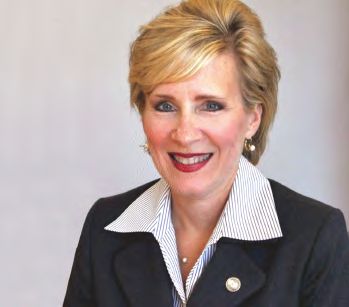
May Scheve Reardon
Executive Director, Missouri Lottery

    PGRI Introduction: Powerball and Mega Millions have both been massively
 successful brands. Still, lotteries are applying all their energies to make them
 even more successful, and now are adding to the mix with Monopoly Million-
 aires’ Club. Right now, the mission of implementing the most exciting new game
 launch in the history of U.S. lotteries is somewhat all-consuming. Thinking that
 this is a good time to begin the dialogue on building a plan for long-term sustain-
 able growth for all of the multi-state games, I asked May Scheve Reardon if she
                                                                                            Paul Jason, Public Gaming: When
 could share her thoughts on cross-jurisdictional marketing and distribution.            cross-selling began in 2010, Powerball and
 Creating consistency for nation-wide branding and marketing is a challenge              Mega Millions were managed by two dif-
 when there are forty-five different lotteries whose mission is to serve their own       ferent groups of lotteries. And not all lot-
                                                                                         teries signed on to both games right away.
 in-state stakeholders. Developing and executing cross-jurisdictional initiatives will
                                                                                         Going forward, now that all U.S. lotteries
 always be challenged by the fact of different state statutes, different business        sell both Powerball and Mega Millions,
 and public policy agendas, and different business processes. State lotteries and        what is the purpose of having two separate
 their commercial partners have done an amazing job at identifying the elements          management groups to manage the two
                                                                                         games? Wouldn’t the ability of lotteries to
 that should remain the province of each state, focusing on those areas where
                                                                                         work collaboratively and create consensus
 cross-jurisdictional standardization is do-able, and capitalizing on the tremen-        be significantly enhanced if there was one
 dous benefits to building on those areas of commonality.                                management group to manage both games?
                                                                                            May Scheve Reardon: Powerball,
                                                                                         Mega Millions, and the new Monopoly Mil-
                                                                                         lionaires’ Club game are national brands
                                                                                         that can benefit greatly from having one cen-
                                                                                         tral body that oversees all aspects of these
                                                                                         games. One governing body could provide
                                                                                         more cohesive guidance and address the is-
                                                                                         sues relating to operational efficiencies, risk
                                                                                         management, brand awareness, and all the
                                                                                         elements that go into the business of build-
                                                                                         ing these brands. The end result would be
                                                                                         much better coordination of nation-wide
                                                                                         initiatives that would generate increases in
                                                                                         sales for each individual lottery.
                                                                                            It should be noted that there are forty-five
                                                                                         different state lotteries with forty-five differ-
                                                                                         ent sets of statutes, rules, constraints, politi-
                                                                                         cal cultures, and business agendas. Having
                                                                                         one governing body does not change the fact
                                                                                         that it is very difficult for anything we do on
                                                                                         a multi-state level to align with the objec-
                                                                                         tives of all forty-five lotteries. That problem
                                                                                         will never go away. I still think that having
                                                                                         one governing body would serve as a better
                                                                                         foundation for working together to find the
                                                                                         solutions that will free up the tremendous ca-

 Public Gaming International • September/October 2014             8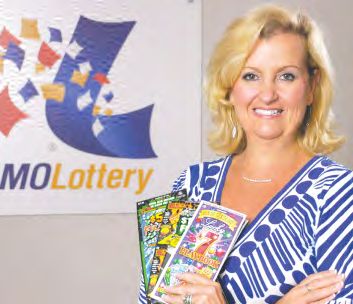
pacity for growth in the multi-state game cat-         does not seem to diminish sales and consum-      do a lot to nationalize the whole playing ex-
egory. It would enable us to think about the           er excitement for the game. Sales keep going     perience, to build a truly national consumer
multi-state games as an integrated product             up for Mega Millions and Powerball.              brand. The Lottery TV Game Show will cre-
category, and not as three isolated products.             Instead of being an “antidote” to jackpot     ate that sense of being a part of something
   Of course, the Powerball and Mega Mil-              fatigue, Monopoly Millionaires’ Club will        really big, something national with tens of
lions Consortium do work well together al-             provide a new gaming experience that will        millions of people involved. And that’s ex-
ready. We meet and try to coordinate plans             draw in new consumer groups. We expect           citing. But even the TV Game Show will
to maximize the overall aggregate perfor-              sales of Powerball and Mega Millions to con-     include representative winners from each
mance of both games. But, the process of               tinue their growth and success. When we were     and every state lottery. That is built into the
the two groups meeting separately to work              figuring out the concept for a new national      game. One of the benefits of Monopoly Mil-
on their own game and then all of us getting           game, we took into consideration that we had     lionaires’ Club is that there will be that many
together to coordinate our plans restricts our         two very successful national jackpot games.      more winners from our state of Missouri.
ability to build momentum for a long-term              Our objective was to create a new game that      The “shower of millionaires” means that we
strategy to build the category. Working to-            would appeal to play styles and buyer mo-        will all be able to celebrate more winners
gether as one single governing body, so that           tives that did not overlap the two successful    that come from our own state. And each and
all decisions regarding both games are made            jackpot games. The primary objective for this    every U.S. lottery enjoys that same benefit.
as a single group with the focused goal of             new game is to expand the market, to bring
                                                                                                           There is an economy of scale for the pro-
maximizing overall sales for the entire cat-           in new consumer groups. Since the jackpot-
                                                                                                        duction of the TV Game Show that couldn’t
egory of national games, would just be a               driven play-style is already being met quite
                                                       handily by PB and Mega, we decided to cre-       really be accomplished on an individual
more productive for of governance.
                                                       ate a new design that would share the wealth,    state basis. Are there economies of scale be-
  Strategies to build the product category             create a “shower of millionaires” instead of     ing derived on the other components of the
would seem to mean managing the national               one ginormous winner. Monopoly Million-          advertising and promotions package?
brands for maximum synergy and overall re-             aires’ Club is an entirely different concept        M. Scheve Reardon: Definitely. Econo-
sults. Is that a big part of the dialogue now?         from PB and Mega and we expect it to ap-         mies of scale enable us to pay for the best
   M. Scheve Reardon: We all agree that                peal to entirely different consumer groups.      creative, the highest production values, the
the business needs to be managed with the              You know, players have always said that they     smartest and most effective promotional
objective of creating maximum overall re-              wished there would be lots of smaller jack-      strategies. That is what you will see with Mo-
sults and that would mean applying a cat-              pot winners instead of giving all the money      nopoly Millionaires’ Club. Achieving these
egory-management approach that focuses                 to one winner. The truth is that the PB and      economies of scale is one of the key ratio-
on synergy between the brands. We think                Mega players may say that, but they buy way      nales for working together to build nation-
that the Monopoly Millionaires’ Club is dif-           more tickets when the jackpot gets big. We       wide brands. The Lottery TV Game Show is
ferentiated quite effectively from Powerball           don’t expect them to change that buying pat-     something that could only be done with scale,
and Mega Millions already, so we aren’t                tern. And that’s fine because that’s the buyer   with multiple states joining together to share
obsessing over the broader concept of cat-             motive that drives the tremendous sales of PB    the cost. And it’s not just about production
egory management right now. Our energies               and Mega. We just think that there are in fact   costs. The whole media buy as measured by
and resources are all focused on effective             a lot of consumer groups who really will be      cost per impression, or cost per viewer, comes
implementation of Monopoly Millionaires’               motivated by the prospect of having a higher     down dramatically when you wrap it around
Club. But I am sure that the principles of             likelihood of winning a million dollars, or      a bigger market instead of local markets. A
category management will be applied as we              $15 million or $25 million.                      national phone app and website with links
develop the next National Premium Game                    And since we started this game from           to the states is another important element all
(NPG), and even as we evolve the manage-               scratch, we could integrate into it a whole      states should embrace, as their statutes allow,
ment of the three current national games.              constellation of promotional drivers that are    to help promote the national brands with to-
When a fourth game is added, we will al-               not a part of the other games. The Lottery       day’s omni-channel consumers.
most certainly need to manage the portfolio            TV Game Show is the obvious biggie in
                                                                                                           But what about the aspect in which state
of national games strategically, for optimal           that department. But there is a whole multi-
                                                       media campaign that includes website and         lotteries like to brand the uniqueness of
synergies and overall results.
                                                       Mobile-based promotional initiatives and a       their own state, their own cultural heritage?
   It’s taking larger and larger jackpots to           large variety of creative concepts to engage        M. Scheve Reardon: That’s a good ques-
capture media and consumer attention in                consumer interest. Monopoly Millionaires’        tion because the reality is that our mission is
the national games. Is “jackpot fatigue”               Club is truly a game-playing experience as       to deliver results for our in-state constituents.
reaching a high-water mark where it will               opposed to just buying a ticket with the sin-    And we all have strong convictions about how
become difficult to meet consumer expecta-             gular purpose of winning a huge jackpot.         to do that. When I came on as director of the
tions? And, is Monopoly Millionaires’ Club                So, it’s not our goal to convince people to   Missouri Lottery in 2009, our team agreed
the antidote?                                          switch from the jackpot-driven games. It’s       that the brand was outdated, very 80’s with a
  M. Scheve Reardon: Jackpot fatigue syn-              our goal to expand the market by appealing       digital look and feel that may have been cut-
drome has been a challenge for many years,             to new consumer groups and play- styles.         ting edge then but needed to be modernized
even decades. The fact that it is a challenge             The Monopoly Millionaires’ Club does          to appeal to the more emotional and lively

Public Gaming International • September/October 2014                        10
When it comes to iLottery,
don‘t take any chances.
© 2014 GTECH or its affiliates. All rights reserved. The GTECH mark and logo are trademarks owned by GTECH Corporation. All other trademarks/logos are trademarks owned by, or licensed to, GTECH Canada ULC.
© 2014 Electronic Arts Inc. Plants vs. Zombies and PopCap are trademarks of Electronic Arts Inc.
GTECH™ has acquired the best talent to provide you with the ultimate interactive solutions. Choose from
traditional lottery games like draw-based, iKeno and eInstants to casino style games such as poker, casino or
sports betting. Combined with our track record in launching interactive solutions for WLA customers, we know
what it takes to make iLottery work in regulated markets.
With GTECH, the odds are in your favor.
Visit us at NASPL and G2E to learn how GTECH’s interactive solution is your best choice.
LOTTERY + SPIELO + INTERACTIVE + BETTING
All Togetherspirit of our times. We changed that and gave though, that the question could be re-framed. or Coke cans that aren’t red. Of course, noth-
it a sweeping look with lots of confetti and Does creating national brands, with consis- ing surprises me when I drive into Arkansas,
vibrant colors. We feel very good about that. tent messaging that appeals to all consumers but I probably would be less likely to drive
We knew it needed to be done, that it would across the country conflict with a lottery’s into a McDonalds with purple arches. Not
be successful, and we take personal pride desire to create an identity unique to their only would I be less likely to buy at McDon-
for having done it. This was our team effort, state, unique to their business? The reason alds with the purple arches, the dissonance of
our own advertising firm, our own marketing there is no conflict is that most lotteries have that image with what I am used to would stay
people, and we did it together for our own a large portfolio of in-state games and a wide with me. And that dissonance is not what a
business - the Missouri Lottery. The time berth for creating their own individual state marketer is trying to achieve. It impairs the
and energy we put into it created a result that lottery brand and unique identity. Lotteries whole brand image we work so hard to build.
is unique to the Missouri Lottery. Not to be can and will continue to brand their games We want to leverage each brand impression,
philosophical, but we value that uniqueness and their own state lottery. And that branding regardless of its origin and consumer touch-
and the sense that there is a soul to the Mis- will emphasize the local culture and unique- point, to create positive thoughts and feel-
souri Lottery that is in fact not interchange- ness. The national brands should have na- ings, not dissonance and wondering why
able with all the other lotteries. There is a big tional brand messaging, marketing and pro- something is other than what I expected it
part of us that does not want to be subsumed motional campaigns that are conceived for to be. When you see those golden arches,
into a national brand. national consumer appeal, consistency in the you not only instantly know what it is, you
Gary Gonder, the Lottery’s chief branding logos, and standardized systems for distribu- make an emotional connection that rein-
officer, focuses on strengthening, extending, tion. They should not be particularized for forces the positive feelings about that brand.
and enhancing the Missouri Lottery brand. each local market because that is inefficient And that happens whether you stop there and
He and our advertising agency are not think- from an operations and distribution point of buy something right then, or not. We want
ing about national consumer markets. Their view, and ineffective from a consumer mar- to build that positive emotional connection
focus is on how to appeal to and person- keting point of view. Fortunately, the com- to Monopoly Millionaires’ Club. Whenever
ally connect with the people of Missouri. monalities to consumer behavior far exceed you see the Monopoly Millionaires’ logo on
A number of state lotteries are applying a the differences, and we can focus on those a billboard or a website, the positive impres-
similar focus on brand identity and image commonalities as the basis for effective na- sion is reinforced in your mind and that stays
and use that as a cornerstone for guiding tional marketing and advertising campaigns. with you and builds over time. You won’t
the marketing decisions. Cindy O’Connell, And all that can be done without compromis- have to read the words or anything. You’ll
for instance, wrapped a whole re-branding ing each individual lottery’s focus on creat- just see the top hat and colors and instantly
campaign around her logo change and to ing its own unique identity and branding. know what it is. And I do think these basic
great effect. It translated directly into robust principles of branding should be applied to
sales increases over the past three years. The Even Powerball and Mega Millions are Powerball and Mega Millions too.
mission of state lotteries is to build all the branded to appeal to local markets. Mo-
nopoly Millionaires’ Club is different in McDonalds is such a great example. Inso-
brands for the purpose of increasing sales in
the sense that states lotteries are required far as these ideas apply to the new National
their own state.
to comply with the agenda to build a truly Premium Game, why wouldn’t they also ap-
There is a similarity between this sense of
national brand, isn’t it? ply to Powerball and Mega Millions?
state ownership of their brand identity with
M. Scheve Reardon: Remember that
the state’s rights to control their own regula- M. Scheve Reardon: Monopoly Mil-
tory policies. The conviction that we do not Powerball has been around for decades and
lionaires’ Club is designed to have much
want to turn over the right to control our des- so may be tied to some legacy policies, and
more consistency in branding, messaging,
tiny in the realm of regulatory policy could states may feel like they have developed
and overall marketing. There will be much
also apply to marketing and all other aspects their own in-state brand for Powerball that
tighter control over the logo which will look
of managing the business. We all have a deep trumps the benefits of nation-wide consis-
the same wherever you go.
sense of pride and personal responsibility tency. Frankly, we should all get together and
I am sometimes asked what does it mat- decide that legacy policies that don’t support
towards our in-state constituents and it defi-
ter, why do we need nation-wide consis- the long-term value of the brand should be
nitely is a sense of home-town pride. We are
proud of our own sports franchises and feel tency when our market is confined to the changed. We should explore the possibility
that they are unique. We are proud of our in- borders of our state. of applying to Powerball and Mega Millions
dividual state culture and feel that it is unique. M. Scheve Reardon: Because our con- some of the ideas that are being applied to
And you can see the differences among all the sumers and distributers expect us too. My Monopoly Millionaires’ Club. Perhaps the
state logos and the way each lottery presents children actually noticed and commented success of those ideas in Monopoly will be
itself to the public. Some want to be more on the difference in the way the Powerball the catalyst to transfer some of them over to
conservative, and others want to be more cre- logo looked as we travelled from one state PB and Mega as well. But the main thing is
atively adventurous. It can be thought of as a to another. They are just not used to the con- that we saw some things like the need for
states’ right issue on the marketing front just cept that a huge consumer brand would be consistency in logos, and built them into the
as in the political front. different in different states. It would be like new National Premium Game. For that mat-
So those are some of the reasons why driving into Arkansas and seeing McDonalds ter, we probably will learn some new things
we all tend to be provincial. The reality is, with purple arches instead of golden arches, …continued on page 67
Public Gaming International • September/October 2014 12I
IR IC
OUVR HERE
HERE OPEN
OPEN IR ICI
OUVRMonopoly has so many moving parts, build a brand from the ground floor and try But aren’t you trying to develop a more
making it even more critical that the run-up to build into it all of the game-playing attri- national approach to brand management and
to launch be planned and executed well. butes that today’s consumers expect. advertising? That as opposed to Powerball
P. Otto: Frankly, that has been done. This and Mega Millions where each state has con-
Some of the great things you are doing
project has been years in development. It trol over the messaging and even the brand.
for Monopoly could have been applied to
is extremely well thought-out. The steer- Powerball or Mega Millions. But it must be P. Otto: States still retain autonomy with
ing committee, of which I’ve been a mem- hard to tinker with an existing multi-billion Monopoly. That’s as it should be. But Mo-
ber, has worked very hard on many of the dollar franchise. nopoly has built into the cost structure of the
little details that make a big difference when game a budget for advertising that will be
P. Otto: From the outset, we knew we
you’re launching a game of this magnitude. created and made available for states to use.
wanted to integrate into Monopoly the entire
Of course, we realize we do not have a crys- The advertising and promotional campaigns
range of exciting game attributes, promo-
tal ball that predicts every outcome, and are being done by the Creative Agency Da-
tional and consumer engagement strategies,
have even planned for that. vid and Goliath. They produced the famous
Mobile and web-based initiatives, etc. We
The exciting and invigorating thing about “California Dreaming” commercial that won
thought about all the things that the modern
Monopoly is that this is actually by far the so many of the Batchy awards for best TV
consumer might want in a lottery playing ex-
biggest launch the U.S. lottery industry has commercial last year. They have developed
perience. We knew from the start that not all
ever had and it is being done from scratch: a multi-faceted campaign which includes
states would be able, or perhaps even want, to
brand new game, brand new everything. TV commercials, but also a wide variety of
do everything that was available to them. So
Powerball (originally “Lotto*America”) new media and innovative promotional cam-
from the outset and to whatever extent possi-
launched with just seven jurisdictions and paigns. And, yes, we do hope that as many
ble, we designed the program to enable states
Mega Millions (originally the “Big Game”) states as possible will work together towards
to participate in those aspects of the promo-
was launched with six states. The scale of the goal of building a national brand, with
tional agenda that work for them, and not in
Monopoly is huge, and the entire project some measure of consistency that will be
those that don’t work for them. We are able to
epic. The number and variety of component the foundation for much deeper consumer
do that because we are building the game and
parts are exhilarating. Of course, there is the engagement, and increased sales. This is a
the entire apparatus that supports the game
TV Game Show which has never been done new game that will connect with consum-
from scratch. For instance, the internet re-
on a scale like this, and that is incredibly ex- ers in ways that no other game is doing. It
strictions in some states are very limiting and
citing. I think the selection of Billy Gardell promises to bring in new consumer groups,
that needs to be respected. There are some
as the host is brilliant—he has a hit TV to appeal to a set of buyer motives and play
states that have restrictions on the application
show and is a very skilled entertainer. And styles that are different from Powerball and
the game itself has more ways to play and of Mobile even as a purely promotional me- Mega Millions. Applying all the tools and
win than anything we have ever done. There dium. Some states may have restrictions that resources at our disposal to build a brand
is a whole group of promotional elements prohibit Second-Chance Draws. While all that connects with a national consciousness,
surrounding the game, along with a well- of the participating states have agreed to the a brand that reflects these ambitious objec-
orchestrated application of internet, social basic operation of the game, they have some tives, means working together and thinking
media, and Mobile initiatives to engage the flexibility in how they’ll use the internet and about the broader, national implications of
consumer and augment the whole Monopoly mobile components. everything we do. Maximizing sales and
Millionaires’ Club player experience. Powerball and Mega Millions are es- net funds to the beneficiaries of our in-state
tablished brands, with established market beneficiaries is the goal. But thinking big,
You are on the committee that is working positions and legacy consumer expecta- building a national brand is the means to ac-
on the Mobile apps and social media strate- tions as to how they’re played, how they’re complishing it.
gies, aren’t you? promoted, and how they’re distributed. We
P. Otto: Yes, and it is truly a pleasure to need to respect that legacy because consum- Media buys will continue to be done on
work with everyone to bring these concepts ers are supporting those two brands to the only at the state level?
to fruition. Think about the fact that there tune of $8 billion a year. And from a practi- P. Otto: The TV Game Show is national,
are forty five jurisdictions and no two are cal standpoint, it can be an arduous process and it’s the first national lottery TV game
completely alike. So as we create all these to change those games, but both groups are show ever. We expect the impact of this on
value-added components to the game, to the working to be more agile and to respond Monopoly, and on consumer awareness of
promotional agenda, to the whole sphere more quickly to consumers. And that is as it lottery in general, to be transformative. It is
of player experience which includes a big should be. What we’re finding with Monop- a collaborative effort, funded by the game
menu of Mobile, online, and social media oly is that it’s much easier to overlay social itself, and so is, in effect, a “national buy.”
tools, we need to do it in ways that allow media, web-based promotions, TV game The Monopoly TV Game Show will include
each individual state to participate in the shows, and other innovations to a game from players from every Monopoly state lottery.
way that fits within their regulatory con- scratch than to experiment with the two big- Other advertising and promotion relating
straints, their gaming culture, their whole gest brands in the industry. So that’s what to Monopoly will be executed and funded
state-specific agenda. Of course it’s a chal- we did. We created a cafeteria of options for at the state lottery level—but states will be
lenge - but it is interesting, it’s fun, and it’s states to be as innovative as they want to be able to use the national spot, so there will be
getting done. It’s an exciting opportunity to with Monopoly Millionaires’ Club. consistency. At this point there has not been
Public Gaming International • September/October 2014 16Your Internet
Partner
Over ten years of
experience and proven e-Retailer
Innovations
technology for internet
lottery sales.
CO$T
Zero Cost Turn-Key
Partnership Solutions
Models
www.jumbointeractive.com
partners@jumbointeractive.comany discussion about other national buys. it will appeal to a demographic profile and of a “Shower of Millionaires.” It is a differ-
But there will be an effort to build con- play-style that will bring in new consumer ent kind of game, appeals to a different play-
sistency into the messaging and branding of groups. We’re confident that it will generate style and motivation than the jackpot games,
Monopoly. There is one logo, for instance, net overall increases in sales. and that’s why we are confident that it will
that everyone will use. The messaging, As regards to category management, my bring in new consumer groups and have
branding, and advertising will be created for perspective is that it does not matter how minimal cannibalization impact on Power-
the national market but with the ability for the pie slices up as long as the aggregate to- ball and Mega Millions.
states to add some local color. tal net revenues generated from Powerball, And as we have already talked about, Mo-
Mega Millions, and Monopoly continue to nopoly Millionaires Club has an incredible
On that topic of consistency, Scott Bowen
grow. That fulfills our mission to the good array of innovative promotional campaigns
commended you (in a previous interview)
causes that lottery supports. to engage consumers in whole new ways.
for giving an effective and eloquent voice
Right now, the business of launching Mo- The breadth and scale of this project is un-
to Mega Millions: “Paula Otto did an ex-
nopoly Millionaires’ Club is getting our fo- like anything that has ever been done in the
tremely good job of representing not just
cus. As time goes on, we will certainly be U.S. lottery industry.
Virginia but the entire Mega consortium.”
assessing the market-response to Monopoly Monopoly represents a new high-water
From your Public Relations perspective,
and look at ways to enhance the overall re- mark for innovation in the U.S. lottery in-
how important will it be to have consistency
sults of all three national games. I expect dustry. How can the momentum be main-
on the national media stage of Monopoly,
that will likely involve deep analyses into tained, even accelerated, going forward?
or Powerball and Mega Millions too?
how they work together in the marketplace
P. Otto: Lotteries are both a state busi- and how we might differentiate and drive P. Otto: We have come a long way over
ness and a nationwide industry. I think it is synergies between the brands, and how we the past four years. Cross-sell, then $2 Pow-
always to our benefit as a state business to might otherwise evolve the brands to drive erball, now Monopoly Millionaires’ Club.
leverage any and all opportunities to build further growth in the category of national Seeing all these things come to fruition
our image and brand as a national industry, draw-games. causes me to feel very positive about the
to carve out a role for brand Lottery on the ability of state lotteries to work together.
What makes the Monopoly Millionaires’ Can we do better, can we try to move faster?
national stage. The obvious opportunity
Club so different from Powerball and Absolutely we can and we are constantly
for that is when there is a big jackpot. That
Mega Millions? working to do so.
becomes national news and we try to take
full advantage of those opportunities to re- P. Otto: It’s not a “jackpot” game. Mo- The challenge of getting forty-five ju-
inforce the image of a national brand. But nopoly is a numbers/draw-based game risdictions and multiple vendors to work
we shouldn’t wait for opportunity to be pre- which has a top prize and then lots of mil- together, make decisions together, vet pro-
sented on a silver platter. We should create lion-dollar prizes. The whole dynamic is posals and decisions with countless stake-
our own opportunity. The Monopoly TV different than the jackpot-driven games of holders, and coordinate the action-plans
Game Show is one example of a proactive Powerball and Mega Millions. Consum- that actually result in new products and
initiative to build national presence. ers often ask why the $400 million jackpot strategies, is that it requires time. Combine
I do think it is vital that the U.S. lottery couldn’t be used to create 400 millionaires that with the fact that the complexity of the
industry has a means of getting the message instead of one “mega” millionaire. We know games and promotional strategies, and the
out there and become a part of the national there will continue to be many players whose business in general, has become more and
behavior will be driven by the high jackpots. more complex. The nature of our business
conversation, to be a staple in the national
And that’s fine. But this game will appeal to is that we can’t market-test beta versions of
media and not be so restricted to local me-
the consumers who want better odds to win a product. We have to research and test to
dia. I don’t know that we need a single
a million-dollar prize instead of the mega- whatever extent necessary to ensure that it
spokesperson to be the face of lottery. I just
jackpot prize. Monopoly does have top is perfect right out of the box. That is a tall
think we need to be more systematic in the
prizes that are still very attractive: The prizes order, and it is not accomplished in weeks or
way we go about the business of garnering
will begin with a $15 million Top Prize and even months.
national press and leveraging that to build
ten $1 million Club Prizes. If the Top Prize is Innovation and change creates uncertain-
nation-wide awareness for our brands.
not won, it will continue to increase in value ty, and we need to mitigate that uncertainty
To what degree are the three national for each subsequent draw up to $25 million. as much as possible. It’s been observed that
games being managed as a single category, Then, if no one wins the Top Prize, all addi- this is a risk-averse industry. Well of course
to work together synergistically for optimal tional prize monies will create additional $1 it is. We simply can’t afford to do anything
overall results? million Club Prizes until someone wins the to jeopardize the value of this brand. Even
P. Otto: There is always the possibility of Top Prize. But as the game continues to roll a minor oversight that results in a mistake
cannibalization between lottery games. As past the top prize, the ongoing game revenue could cost us literally billions of dollars
an industry, we are always keenly aware of goes towards the creation of more and more in brand equity. We are very serious about
the need to harmonize the products for opti- one-million dollar prizes instead of driving increasing the speed from concept to mar-
mal overall results. We have done extensive the top prize higher and higher. The tagline ket, but we won’t compromise the rigor of
research for the introduction of this new Na- that we are excited about, and feel that the our planning and testing, or jeopardize the
tional Premium Game and are confident that consumer will be excited about, is the notion …continued on page 68
Public Gaming International • September/October 2014 18Thinking about engaging
players with Digital Signage?
› Digital Sign Networks
› Interactive Digital Signage
› Video Walls
› Wireless Jackpot Signs
"Carmanah Signs is the trusted choice for increasing sales by lotteries worldwide."
Americas: EMEA:
Maxwell Goldstein Daniel Miller
+1.416.332.2860 +31.62.638.8128
mgoldstein@carmanahsigns.com dmiller@carmanahsigns.comFor the past two decades, Powerball and Mega Millions have dominated the multi-state big-jackpot scene in the U.S.
Monopoly Millionaires’ Club is the new “National Premium Game” (NPG) and it will launch on October 19. At the time of this
panel discussion, “Monopoly Millionaires’ Club” had not been announced as the “National Premium Game”, so in this discus-
sion it is referred to as the “National Premium Game,” or “NPG.”
On Governance of the Multi-State Games
In 1997 (the launch of “Big Game” Mega Following is an edited version of a panel dis-
cussion that addresses these two topics. The
Millions), there were nineteen state lotter- video-recording of the actual panel discus-
ies that sold Powerball and five lotteries sion can be viewed at www.PGRItalks.com.
that sold Mega Millions. Additional state Moderator:
Rebecca Hargrove, Chief Executive Officer,
lotteries proceeded to join one or the other Tennessee Education Lottery Corporation and Senior Vice
game. Since each state lottery could only President of the World Lottery Association (WLA)
Panelists:
sell one game and not both games, it re- Gary Grief, Executive Director, Texas Lottery,
quired two separate organizations, MUSL President of the North American Association of State
and the Mega Millions Consortium, to man- & Provincial Lotteries (NASPL)
Carole Hedinger, Executive Director, New Jersey Lottery
age and operate the two different jackpot
Stephen Martino, Director, Maryland Lottery
games. Now, all forty five U.S. lotteries of- and Gaming Control Agency
fer both games, but the games continue Charles McIntyre, Executive Director,
to be managed by two separate organi- New Hampshire Lottery
zations. Some are arguing that this bifur- Connie Laverty O’Connor, Senior Vice President
and Chief Customer Officer, GTECH
cated organizational structure does not
Rebecca Hargrove: There was a time, not so long ago and
facilitate the consensus-building neces- not so far away, when people would drive for hours or even get
sary for efficient decision-making, and so on an airplane to go to a store where they could buy a ticket for
does not support innovation and a smooth
the chance to win a $40 million jackpot. Hard to imagine that
now. Times have changed and now our customers don’t get that
fluid progress from concept to action-plan excited until the jackpot is way north of $100 million. In fact, it
to execution. Since all state lotteries sell is becoming a real challenge for lotteries to keep up with rising
consumer expectations. We just heard Chuck Strutt’s presenta-
both games, is there still a purpose to hav- tion in which he described the relationship between jackpot size
ing them continue to be managed by two and level of play or ticket sales. We’ve had Mega Millions jack-
pots in the $600 million range. Powerball jackpots in the $500
separate organizations? million range. Is that jackpot chasing mentality sustainable?
Public Gaming International • September/October 2014 20Is it a problem that our customer, and the media, keeps raising you think, Connie, about capping jackpots now?
the bar, waiting for a higher jackpot level to cause them to jump
Connie Laverty O’Connor: The power of jackpots to drive
into the game?
retail traffic and ticket sales is incredible. We have plenty of
Carole Hedinger: Some of us are old enough to remember the evidence in recent years, from cross-sell to $2 Powerball, that
old days when we started to talk about jackpot fatigue and the actions to drive jackpots produce higher sales. Even now, we can
jackpots were in the $20 to $30 million range. We began to worry see that bump when sales go over $100 million. That is obvi-
about it even more when jackpots rose to the unheard of level of ously a good thing. But as an industry, we need to think about
$40 to $50 million. In spite of concerns and dire predictions that how we can extract maximum value from the power of rising
this could not possibly continue, we kept selling tickets, jackpots jackpots to drive sales. Or, from a sustainability point of view,
kept rising, and we sold even more tickets. The model has been we may need to take measures to ensure that the power of rising
sustainable for decades now in spite of our concerns. So I suspect jackpots to drive sales does not diminish over time. For instance,
we will be talking about this same issue at PGRI conferences for we can also see that recent changes to Mega Millions precipi-
many years to come. tated a sales increase of 90%, but Powerball fell by 16.4% be-
Seriously, though, we do seem to be headed for a billion-dollar fore we went into this last roll up. So I believe that jackpots
jackpot, and we should think carefully about the implications of that. are fantastic to drive incremental play but that we have to be
Do we want a billion-dollar jackpot? And when the frenzy of media very proactive as an industry to embrace the notion of jackpot
and consumer excitement has subsided, will we be saddled with a management at a certain level. At some point in the future, it
consumer expectation that eventually becomes undeliverable? may take the form of reducing the roll-up over $600 million, or
Charlie McIntyre: I’m wondering how the billboard folks will maybe it’s re-apportioning the prize pool to fund some kind of
adjust. Most billboards are set up for only three digits before the overlay promotional games or exciting bonus plays. Maybe the
word “Million.” Remember the Y2K Problem—Maybe we should re-apportioned prize monies could fund special games to cele-
prepare for an over-the-top marketing event to take full advantage brate certain holidays. Maybe we could use it to fund new game-
of the frenzy and havoc that will be caused by the billion-dollar plays that could further differentiate Mega Millions, Powerball,
jackpot? Or maybe a teaser to create a Y2K speculation about how and the new National Premium Game.
the world will change when we hit that billion-dollar threshold? R. Hargrove: Thank you for bringing up the National Premium
Back to reality, the size of jackpot necessary to attract media Game, Connie. We have held extensive meetings this week, worked
attention and consumer excitement is increasing at a rate that is through most of the issues, and I am pleased to tell you that the
difficult to keep up with. That is a problem. But, as Carole pointed National Premium Game is going to launch on October 19. I be-
out, it has always been a concern. lieve the majority of U.S. lotteries will participate. And I believe
Gary Grief: In spite of our concerns, sales of the jackpot games everybody on this panel is probably going to participate in the
continue to increase. And put into historical perspective as Carole October launch. The game is going to be different from Mega Mil-
just did, I think we can be confident that they will continue to lions and Powerball, offering many different levels of million-dol-
grow. But I also think that a billion dollars is a watershed moment lar winners, probably the most million-dollar winners ever seen in
for our jackpot levels. How will we fare if the consumer perception a single night. Instead of one single $100+ winner, the National
of big jackpot recalibrates to a billion dollars? And where do we Premium Game is structured to produce lots of million-dollar win-
go from there, to $1.1 billion, then $1.5 billion? It wasn’t too long ners with every draw. Is that a way to combat jackpot fatigue?
ago that the media would give us a big boost once the jackpot hit Stephen Martino: I love the national premium game. I love the
$100 million. Now we have $200 million jackpots come and go idea of it and that the idea has come to fruition. I do think it will
with little media coverage. I hope we think very carefully about complement the two other big jackpot games, hopefully providing
how we manage our jackpot levels up to that $1 billion. There are an alternative play-style and appealing to a buyer motivation that
some discussions taking place in the MUSL group regarding pos- is not consumed by mega-jackpots.
sible jackpot management techniques. I have never been a fan of In Maryland, our way to hedge against jackpot fatigue is to diver-
jackpot capping. But I think the billion dollar mark might be dif- sify our game portfolio so that we are not so dependent on the big
ferent for us, and we need to be concerned and explore new ways jackpot games. Maryland jackpot games generate around13% of our
to generate more consumer excitement for jackpot levels that are overall sales. We make sure we build the playership of games like
below the half-billion mark.
keno and instant tickets. Like everyone, we benefit when the jack-
R. Hargrove: How do you all feel about capping jackpots? I pots go higher and higher. But we can’t control that or predict that.
remember some thirteen years ago when you were at the New York One of the reasons why I like the National Premium Game so much
Lottery, Connie. And the “Big Game” was recruiting New York to is that it’s different - creating those frequent million-dollar winners.
join it in what became Mega Millions. There was some discussion One of the things we continue to struggle with is getting new
then about capping jackpots. But New York Lottery basically said people in Maryland to play the lottery. We’re stuck at about 48-
that the reason they want to join is for the big jackpots. What do 50% participation in any given survey. And 2/3 of our players are
Public Gaming International • September/October 2014 22HAVE YOU BEEN WAITING FOR SOMETHING NEW? Contact us: sales@betware.com
over 45 years old. I am very confident that the National Premium              bring to the party.
Game, with national marketing and a national TV Game Show, is
                                                                                 G. Grief: The NPG is designed to create lots of millionaires
going to bring new people into the game and that will be a power-
                                                                              instead of a small number of multi-millionaires. This will appeal
ful driver of increased consumer participation. Ultimately, I am
                                                                              to the many people who protest that it does not make sense to give
held accountable for how much money we return to the state. But
                                                                              a $600 million jackpot to one person when you could make 600
I also need to ensure that sales grow in a responsible manner. To
                                                                              people millionaires instead. That’s always a great sound bite. But
me, that means getting more people to participate in the games as
                                                                              what people say does not always match up to how they behave.
opposed to increasing the spend of our core players. I think the
                                                                              We know that it’s the huge jackpots that drive Mega Millions and
National Premium Game not only helps us to grow our revenues, it
                                                                              Powerball. But now, the NPG will allow us to appeal to that buyer
does so in a sustainable and responsible way.
                                                                              desire for more millionaires instead of one big winner, without
  R. Hargrove: Stephen is enthusiastic about the national mar-                altering the appeal of the mega-jackpot-driven games. Another ex-
keting campaign for the NPG. Charlie?                                         citing thing about the NPG is the $5 price point. That is an entry
  C. McIntyre: Likewise. We all just saw a fabulous presenta-                 point we’ve never had on a national scale for a draw game. Now,
tion from the DC Lottery. Buddy (Roogow) and Tracey (Cohen)                   we need to incorporate what Connie and Charlie mentioned about
compared the best practices and benchmarks of the major con-                  the portfolio approach. We know there’s a market for the addi-
sumer products companies to those in the lottery industry. The                tional price-points and the NPG will take care of that niche of the
brand must be established on the national stage. And that’s just the          $5 price-point.
start. The long-term model, the success of the National Premium                  Then there is the TV Game Show - nothing like this has ever
Game, along with the continued success of Mega Millions and                   been done before, at least nothing remotely close to the scale of
Powerball, depends on leveraging the foundation for brand exten-              what this will be. This is a chance for us to reach new players who
sion. New games, new brands, can be introduced to a market that               may not be excited about the traditional lottery games sold at the
has already bonded with our flagship brands. Coke had a built-in              convenience store. A game show that features lots of people being
market for Coke-Light and then Coke-Zero and who knows how                    turned into millionaires is something so new and different, it has
many extensions of the brand they could do. When I was a kid,                 the potential to tap into an entirely new buyer motive and bring
each brand of sneakers, or tennis shoes, had one model. Nike and              in entirely new consumer groups. Augmenting all of that with a
Adidas and others have since extended their brand to have lots and            national advertising and promotional program will further differ-
lots of models, a different shoe for a mass market of consumer pro-           entiate the NPG.
files that is further and further subdivided. These concepts for fully           The NPG depends on scale and that depends on maximum par-
leveraging the power of the brands we have, and adding onto it a              ticipation from all the state lotteries. I hope everyone appreciates
plan for systematically extending the brands with the introduction            the magnitude of impact that the NPG could have, and communi-
of new products, should be done on a national scale. They need to             cates that to their boards and commissioners and legislative bodies
be done on a national scale because they simply would not work                so that you can all be a part of the October 19 launch.
well on an individual state level.                                               C. Laverty O’Connor: Absolutely. Many states are fiercely
   The scale is required for lots of reasons. For one thing, the cost         jackpot dependent. For instance, in Indiana, even though instant
to each lottery for developing the concepts and then the games,               sales are up by 12%, and non-jackpot games are up 17% year-
managing the projects, implementing the business plans, manag-                over-year, the factor that determines whether we hit our budget is
ing the games on an ongoing basis, will be much less if shared                the jackpot games, whether there is a jackpot run that drives those
among all forty five lotteries instead of being done on a single state        sales. We’re an industry where we actually make our budgets or
basis. Second, the effectiveness of our advertising and promotion             miss our budgets by what happens to the jackpot. The NPG will
could be much improved with a nationalized, or at least regional-             be such a welcome addition to the portfolio of national games.
ized, approach to media purchase and planning.                                Instants are a big part of everyone’s business, and we all appreci-
   As Stephen suggests, the NPG is a new type of game, different              ate the profit contributed by Instants. But building the high-margin
from our current mega-jackpot games. This will provide us with                draw games contributes much more to the bottom-line funding for
a platform to tell a new story in a fresh and different way. As we            Good Causes, and that’s what the NPG will do. With a 54% prize-
move forward with the NPG, let’s think about things like brand                payout, including the TV Game Show prizes, instead of the 60%
extension along with a nationalized approach to our media buys                to78% prize payout of the Instants, the NPG will be a welcome
and brand imaging. Too, I think we will discover new ways of                  contributor to net proceeds. The cohesive multidimensional prop-
managing this industry that we will be able to apply to our other
                                                                              erties of this game, its ability to draw in new players, a design that
multi-state games.
                                                                              includes digital and TV overlay features—the NPG has the poten-
   R. Hargrove: On the subject of national marketing, Gary,                   tial to reshape our industry’s approach to national games and add
could you comment on the national telecast that’s going to be                 vitality to the lottery brand. Compliments to MDI, and the commu-
tied to the National Premium Game and what you think that may                 nity of lottery directors, for the five years of effort to develop this

Public Gaming International • September/October 2014                     24
You can also read


