Student Handbook AY2019/2020 - Temasek Polytechnic
←
→
Page content transcription
If your browser does not render page correctly, please read the page content below
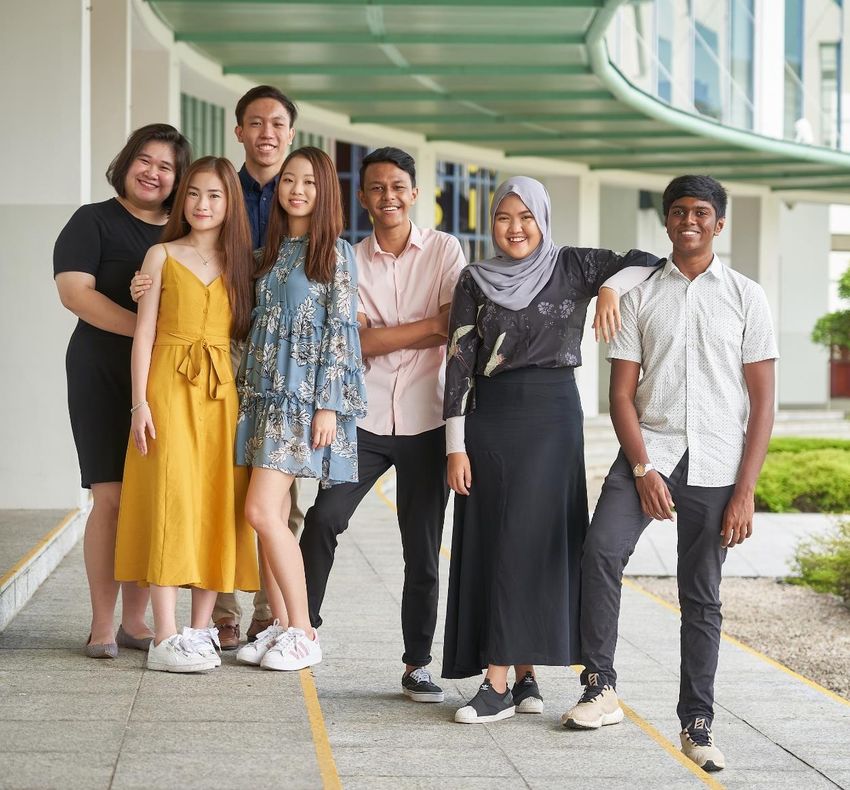
Student Handbook AY2019/2020
ACADEMIC CALENDAR 2019/2020

Semester 1 (April)
Term 1                                         15 Apr – 9 Jun 2019
Term Break                                     10 Jun – 23 Jun 2019
Term 2                                         24 Jun – 11 Aug 2019
Study Week                                     12 Aug – 18 Aug 2019
Semestral Examinations                         19 Aug – 30 Aug 2019

Vacation                                       31 Aug – 13 Oct 2019

Semester 2 (October)
Term 3                                         14 Oct – 15 Dec 2019
Term Break                                     16 Dec 2019 – 05 Jan 2020
Term 4                                         06 Jan – 16 Feb 2020
Study Week                                     17 Feb – 23 Feb 2020
Semestral Examinations                         24 Feb – 06 Mar 2020

Vacation                                       07 Mar – 19 Apr 2020

Students may make travel plans during the following periods:
April semester: 10 June – 23 June 2019 and 7 Sept – 13 Oct 2019
October semester: 16 Dec 2019 – 5 Jan 2020 and 14 Mar – 19 April 2020
Note: the dates given are correct at the point of publication, and are subject to change. For
more information, please refer to http://www.tp.edu.sg/admissions/academic-calendar

 STUDENT HANDBOOK AY2019/2020 | CENTRE FOR FOUNDATION STUDIES                                   1
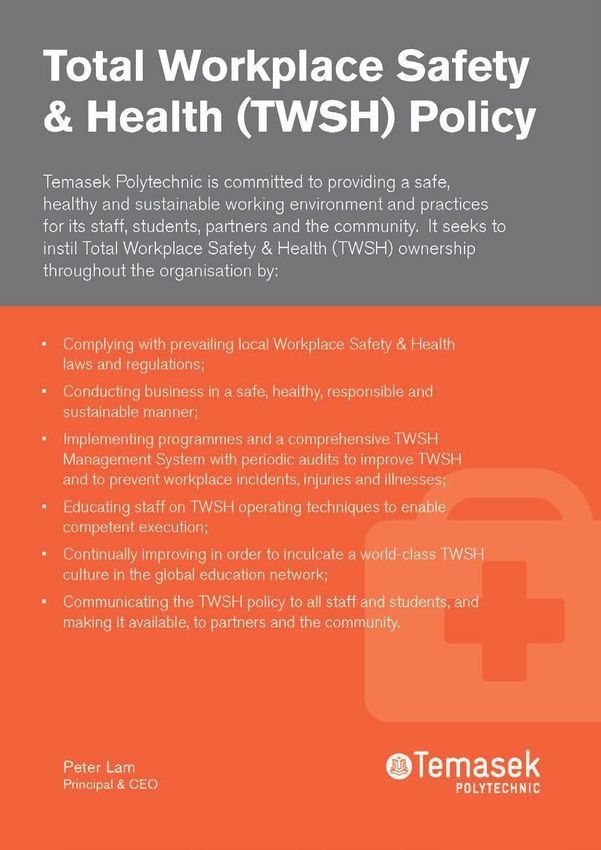
Table of Contents
Academic Calendar 2019/2020...................................................................................................... 1
Temasek Polytechnic ........................................................................................................................ 4
Message from Head/Centre for Foundation Studies ....................................................................... 5
Staff Directory .................................................................................................................................. 6
STAFF CONTACTS ............................................................................................................................. 8
       Care Persons.................................................................................................................................... 8
       Para Counsellor ............................................................................................................................... 9
       Student Support and Career Services .............................................................................................. 9
ACADEMIC MATTERS ................................................................................................................. 12
       TP Curriculum ................................................................................................................................ 12
       Academic Standing ........................................................................................................................ 12
       Examinations ................................................................................................................................. 13
       Alternative Assessment ................................................................................................................. 13
       Withdrawal From Course .............................................................................................................. 13
       Transfer Of Course ........................................................................................................................ 14
STUDENT CONDUCT .................................................................................................................. 15
       Attendance & Absence .................................................................................................................. 17
       Student Disciplinary Policy ............................................................................................................ 18
       Plagiarism Policy ............................................................................................................................ 23
       Copyright Issues ............................................................................................................................ 27
       Social Media Guidelines ................................................................................................................ 27
STUDENT LIFE ............................................................................................................................ 30
       PFP Ambassador ............................................................................................................................ 31
       Co-curricular Activities .................................................................................................................. 31
STUDENT SERVICES.................................................................................................................... 33
       Fees For Academic Year 2019/2020 .............................................................................................. 33
       Polytechnic Foundation Programme Scholarship .......................................................................... 33
       Financial Assistance Scheme ......................................................................................................... 34
Notebook / Bring Your Own Device (BYOD) Scheme ..................................................................... 36
Microsoft Student Advantage Programme .................................................................................... 39
Acceptance Use of Policy for Temasek Polytechnic Students ........................................................ 40
GENERAL INFORMATION ........................................................................................................... 42
       Student Email Account .................................................................................................................. 42
       Use of Polytechnic Premises After Office Hours ............................................................................ 42

 STUDENT HANDBOOK AY2019/2020 | CENTRE FOR FOUNDATION STUDIES                                                                                        2
IN AN EMERGENCY .................................................................................................................... 43
       Temasek Polytechnic TWSH Policy ................................................................................................ 43
       Important Contact Numbers ......................................................................................................... 44
       Emergency Evacuation .................................................................................................................. 44
       Lithium Battery Safety ................................................................................................................... 44
TP Song ........................................................................................................................................... 45
TP Sign Language Song ................................................................................................................... 46
SOME USEFUL CONTACT DETAILS .............................................................................................. 47
       How to Read Your Timetable ......................................................................................................... 48
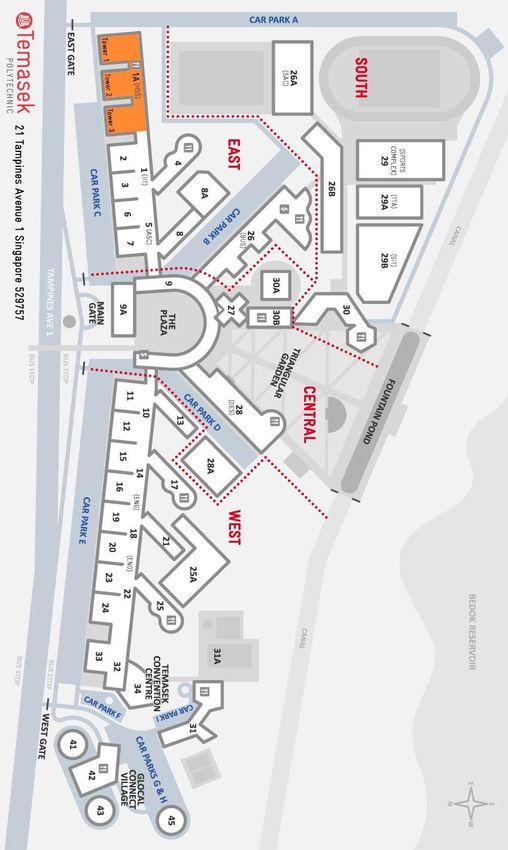
TP Campus Map ............................................................................................................................. 48

 STUDENT HANDBOOK AY2019/2020 | CENTRE FOR FOUNDATION STUDIES                                                                                     3
TEMASEK POLYTECHNIC
MISSION, VISION & VALUES
Mission
To prepare school-leavers and working adults for a future of dynamic change, with
relevant knowledge, life-long skills, character, and a thirst for continuous improvement.
Vision
To be a world-class institution in the global education network, reputed for our programmes,
applied research, managerial excellence and innovative corporate culture.
Values
Responsibility for the continued growth and success of Temasek Polytechnic
Respect for the dignity of the individual
Integrity of the highest order
Student-centeredness
Future-orientation
Strategic Thrusts
Spirit of Excellence and Innovation
Flexible Academic System for Lifelong Employability
Partnership and Collaboration
Staff and Capability Development
STUDENT HANDBOOK AY2019/2020 | CENTRE FOR FOUNDATION STUDIES 4
MESSAGE FROM Head/Centre for Foundation Studies

Dear Students,
Welcome to Polytechnic Foundation Programme @ TP (PFP@TP)!
We are glad that you’ve chosen TP as your choice of study for this next stage of your
studies.

Since its first cohort in 2012, PFP has been a sought-after programme, and till today,
remains highly competitive. Thus, I am sure that you would have felt a sense of pride and
achievement for being able to enrol into PFP. For that, we congratulate you, and we are
confident that you are capable of making a success of your polytechnic education.

At the same time, it will be a period of adjustment to a more independent way of learning.
You will have more flexibility in your schedules and the platforms for learning are varied.
Some of you will take to this well, while others might need more time.

One thing that we have in TP is a strong caring culture. There will be a Care Person (CPs)
assigned to each class, and they are your first point of contact should you need assistance
on different aspects of navigating poly life.

On the academic aspect, PFP students who have done well in this one-year programme
continue to excel in their diploma programmes. Three cohorts of PFP students have since
graduated from TP, and within each cohort, many outperform their peers, obtaining “Diploma
with Merit” awards and winning course medals.

On the non-academic aspect, there are plenty of opportunities for you to participate in
student-led activities. We also have a PFP Ambassadors programme, where PFP students
are selected to be student leaders and mentors to their peers. The Ambassadors also
organise exciting events for the students.

You are in a privileged position to make the most of your time in PFP@TP, to give yourself
an enriching and holistic experience. The choice is yours to make the best of it. Once again,
all the best as you start this new educational journey with PFP@TP!

Terence Leong
Head, Centre for Foundation Studies

 STUDENT HANDBOOK AY2019/2020 | CENTRE FOR FOUNDATION STUDIES                                 5

STAFF DIRECTORY
MANAGEMENT STAFF
MR TERENCE LEONG
Head
Centre for Foundation Studies (CFS)
6780 6457
MRS OH-TEO CHEE LENG
Course Chair
Centre for Foundation Studies (CFS)
6780 4788
MS RAWZAH BINTE AMIR
Manager
Centre for Foundation Studies (CFS)
6780 4785
STUDENT HANDBOOK AY2019/2020 | CENTRE FOR FOUNDATION STUDIES 6
MS TEO GEOK BEE
Manager
Centre for Foundation Studies (CFS)
6780 4776
ADMINISTRATION
Ms Mavis Lee Siew Chen 6780 4770
Manager
Academic & Administrative Services
Mr Chong Boon Foh 6780 4769
Ms Serene Chan Soo Leng 6780 4768
TEACHING STAFF
Mr Bryan Li 6780 1826
Ms Evelyn Ang 6780 4775
Ms Joey Neo Mei Mei 6780 4774
Mr Kenny Tan 6780 4786
Ms Rita Gill 6780 4777
Ms Siti Arfah Abdul Rahman 6780 4773
Mr Tan Kok Heng 6780 4780
HOTLINE
CFS General Office 6780 4220
STUDENT HANDBOOK AY2019/2020 | CENTRE FOR FOUNDATION STUDIES 7
STAFF CONTACTS

CARE PERSONS

The Care Person (CP) provides pastoral care, guidance and counselling. He or she also
handles administrative matters and guides students, where necessary, in problems relating to
studies, family relationships as well as personal and financial matters. The CP is also the first
point of contact between students, parents and TP.

 Name                             Telephone        E-mail                  Care Group
 Mr Bryan Li                      6780 1826        litao@tp.edu.sg         1A1
                                                                           1A2
 Ms Siti Arfah Abdul Rahman       6780 4773        arfah@tp.edu.sg         1B1
                                                                           1B2
 Ms Rita Gill                     6780 4777        ritagill@tp.edu.sg      1B3
 Ms Joey Neo Mei Mei /            6780 4774 /      joeyneo@tp.edu.sg       1B4
 Mrs Oh-Teo Chee Leng             6780 4788        clteo@tp.edu.sg
 Mrs Oh-Teo Chee Leng             6780 4788        clteo@tp.edu.sg         1B5
 Ms Teo Geok Bee                  6780 4776        teogb@tp.edu.sg         1D1
 Ms Rawzah Binte Amir             6780 4785        rawzah@tp.edu.sg        1E1
 Ms Evelyn Ang /                  6780 4788 /      eveang@tp.edu.sg        1E2
 Mr Tan Kok Heng                  6780 4780        tankh@tp.edu.sg
 Mr Tan Kok Heng                  6780 4780        tankh@tp.edu.sg         1E3
 Mr Kenny Tan                     6780 4786        kennytan@tp.edu.sg 1C1
                                                                           1C2

 STUDENT HANDBOOK AY2019/2020 | CENTRE FOR FOUNDATION STUDIES                                 8
PARA COUNSELLOR
Our Para Counsellors are lecturers who can be approached for personal counselling or
guidance. If you would like to make an appointment with a Para Counsellor, you may contact
the following for advice and for referrals:
Name Telephone E-mail
Ms Siti Arfah Abdul Rahman 6780 4773 arfah@tp.edu.sg
Ms Elizabeth Tan 6780 6576 liztan@tp.edu.sg
All matters disclosed will be kept in strict confidence except when you are at risk of hurting
yourself or others.
STUDENT SUPPORT AND CAREER SERVICES
STUDENT CARE
The Student Care team comprises of qualified counsellors who are always ready to lend a
listening ear to the students' concerns and worries about academic progress, adjustment to
life in a polytechnic, relationships or family problems.
Students with financial difficulties can approach the counsellors for the various financial
assistance schemes available in the polytechnic.
Services Provided by Student Care
Counselling on financial, personal and studies-related matters. Please refer to Section 3,
Page 34 for more information on Financial Assistance.
TP administered bursary applications
Student Care also organises workshops, such as stress management, effective
communication and relaxation techniques to enhance our students’ life skills for more effective
living.
Contact Details
Hotline : 6780 5959
Email : care@tp.edu.sg
Location: South Wing Block 26B, Level 1, Unit 49
Website: http://www.tp.edu.sg/student-life/a-caring-campus
STUDENT HANDBOOK AY2019/2020 | CENTRE FOR FOUNDATION STUDIES 9To make an appointment: bit.ly/booktpcs
Opening Hours:
Mon – Fri 8:30 am to 5:30 pm
(Closed on Weekends & Public Holidays)
Crisis Hotlines (after office hours)
Care Corner Helpline (Mandarin) 1800 3535 800 10 am to 10 pm
Samaritans of Singapore (SOS) 1800 221 4444 (24-hours)
IMH Mental Health Crisis Helpline 6389 2222 (24-hours)
If you require urgent care after office hours and on weekends, please contact the hospital
emergency department nearest your home. If you require emergency services because of a
life-threatening situation, please call 999 or 995.
Other Self-Help Resources:
ComCare Helpline: 1800 222 0000
Singapore Association for Mental Health (SAMH) Helpline: 1800 283 7019
TOUCHline (Touch Youth Services) Helpline: 1800 377 2252
Community Health Assessment Team (CHAT) www.chat.mentalhealth.sg
IMAlive online crisis chat www.imalive.org
SUPPORT FOR STUDENTS WITH SPECIAL EDUCATIONAL NEEDS (SEN)
The Polytechnic seeks to develop an inclusive community that promotes a culture of openness,
understanding and mutual support in order that students with Special Educational Needs (SEN)
can:
a. have a holistic education experience; and
b. attain independent living skills and be equipped to access meaningful employment upon
graduation.
Special Educational Needs Support Office
The Special Educational Needs Support Office (SSO) offers services and support for
students with physical disabilities or learning disabilities.
SSO provides the following support to students with SEN:
STUDENT HANDBOOK AY2019/2020 | CENTRE FOR FOUNDATION STUDIES 10 Coordinate support with respective Academic Schools/Centres for students with greater
needs, for example, to look into physical accessibility, sourcing for assistive devices,
making special arrangements related to the teaching and learning process, and access
arrangements for examinations.
Provide ongoing emotional support for students in transition or facing challenges.
Provide informational resources on financial assistance, internship and preparation for
future employment.
Financial Support
The Ministry of Education (MOE) has set up a SEN Fund to help students with physical,
hearing or visual impairment to have adequate support for their educational needs
throughout their education in the polytechnics. Eligible students with SEN can tap into the
Fund to purchase Assistive Technology (AT) devices and support services.
Visit the website to download the SEN Fund form for more details on the eligibility criteria
and application process.
Contact Details
Hotline: 6780 5959
Email: SENsupport@tp.edu.sg
Location: South Wing Block 26B, Level 1, Unit 49
Website: http://www.tp.edu.sg/admissions/special-educational-needs-support
Opening Hours:
Mon – Fri 8:30 am to 5:30 pm
(Closed on Weekends & Public Holidays)
STUDENT HANDBOOK AY2019/2020 | CENTRE FOR FOUNDATION STUDIES 11ACADEMIC MATTERS
1. TP CURRICULUM
The TP curriculum comprises core subjects and domain-clustered subjects. Together, these
subjects prepare students to be responsible people and skilled professionals.
All course structures have two main categories of subjects:
CORE SUBJECTS – Common subjects for all PFP Students.
i. Language & Communication
ii. Mathematics & Logical Thinking
iii. Research & Reasoning
iv. Fitness & Wellness
v. Personal Development & Effectiveness
DOMAIN-CLUSTERED SUBJECTS – Subjects specific to your diploma course to provide
the necessary technical training.
E.g. Living Chemistry (Applied Science), Understanding Customers (Business),
Prototyping (Engineering), Colour Appreciation (Design), Professional IT Skills
(Information & IT).
2. ACADEMIC STANDING
There are two types of academic standing, which will be reflected in the students’ results
notification slips.
a. Proceed to next semester
Students who passed all subjects in the current semester
b. Removed
Students who met the removal criteria. [Refer to section on Removal]
CRITERIA FOR REMOVAL
Students will be recommended to the Board of Examiners for removal from their course of
study if they did not pass one or more PFP subjects.
STUDENT HANDBOOK AY2019/2020 | CENTRE FOR FOUNDATION STUDIES 123. EXAMINATIONS
For important information regarding examinations, please visit the following site:
http://www.tp.edu.sg/student-portal/full-time-student-portal/rulesregulations
4. ALTERNATIVE ASSESSMENT
Alternative Assessments are carried out after the examination period for students who are
given approved absence during exams. Only students who missed an examination paper
due to valid or medical reasons can appeal for special consideration for absence from
examination. Students whose appeals are successful will be arranged to sit for an
Alternative Assessment paper. The marks obtained for the paper will be marked down by
ONE grade. The Down-one-grade WILL NOT be applied to approved absences granted due
to hospitalisation leave, contagious diseases, dengue fever, bereavement of immediate
family member and representing in national competition.
5. WITHDRAWAL FROM COURSE
1. If you have enrolled and wish to withdraw, you have to submit the withdrawal form to
Student Support Services and Admin before course commencement (for new
students) or the start of a new semester (for existing students) to avoid fee implication.
2. For existing students: If the request for withdrawal is submitted on or after start of
Study Week, it will only be processed after the release of the semester’s examination
results and applicable only to those whose student status remains active.
https://www.tp.edu.sg/admissions/academic-calendar
3. The effective date of the withdrawal will be determined by the Registrar after all the
requirements stated on the withdrawal form have been complied with.
4. Information on the policy related to fee charges is available at TP website:
https://www.tp.edu.sg/fees-and-financial-matters/course-withdrawal-and-refund-
guidelines#tab2
5. If you have received a scholarship for the current Academic Year, you are required to
pay back the full amount of the scholarship.
STUDENT HANDBOOK AY2019/2020 | CENTRE FOR FOUNDATION STUDIES 13The application forms can be downloaded from https://www.tp.edu.sg/staticfiles/TP/files/student%20services/Course%20Withdrawal%20For m.pdf Should you have further queries, please approach your Care Person (CP). 6. TRANSFER OF COURSE PFP students are not allowed to transfer to a different diploma course after the completion of PFP. STUDENT HANDBOOK AY2019/2020 | CENTRE FOR FOUNDATION STUDIES 14
STUDENT CONDUCT
At Temasek Polytechnic, students form a big part of our family. Besides helping you to
succeed academically, we also care for your character development. As you go through your
diploma journey in Temasek Polytechnic, you will face new challenges and choices and may
find yourself in unexpected circumstances.
This code of conduct shall serve as a guide for your conduct in both academic and non-
academic aspects of your Polytechnic life. It also serves as a reminder for all of us to work
towards a harmonious environment in and out of the campus, and to maintain the good
reputation of Temasek Polytechnic.
Respect yourself:
Build and uphold personal integrity by being truthful and honest in your own actions.
- Seek help from your Care Person ( C P ) or Lecturer early if you face any
difficulty, instead of being dishonest in submitting course work that is not entirely
your work. Give acknowledgement to all original sources of work, where applicable.
- Do not attempt to cheat during tests and examinations. The penalty for doing so is
heavy.
Observe proper decorum.
Dress appropriately. Remember this is an Institution of Higher Learning.
Be on time or early for lessons. Punctuality is important in life and in the working
world.
Attend all your classes. You made the choice to pursue a Polytechnic education, so
respect your decision and put in the effort to study and work diligently.
Learn to curb impulsive decisions. If it has happened, admit your mistakes and make
amends. Be responsible.
When in doubt of the right decision, always consult your Care Person ( C P ) or
Lecturer. They do have more experiences in life and, so, will be better able to
advise you accordingly.
STUDENT HANDBOOK AY2019/2020 | CENTRE FOR FOUNDATION STUDIES 15Respect others:
Be considerate to others and respect the diversity of cultures, peoples and languages.
Treat others as you would want to be treated.
Refrain from participating in any physical or mental activity which can be harmful,
intimidating or humiliating to others. Inform your Care Person or Lecturer if you see
this happening.
Inspire others to do better, and not incite them to break rules. Showcase your skills
through proper leadership channels and brighten your future.
Abide by the law, rules and regulations:
Everyone has the right to grow and develop in a conducive environment. Do your
part to maintain a clean environment and help to keep our campus in good condition
for everyone to enjoy the facilities.
The campus and its surroundings are designated non-smoking areas by law.
Contribute to a clean, safe and healthy environment for everyone by refraining from
smoking when you are in campus. Please note underage smoking is an offence in
Singapore.
Keep in mind the Social Media Guidelines when you use the online media to
communicate. Do what is right and you can make more friends, build your support
network and your reputation. Refer to the Social Media Guidelines at the Student
Portal -> Useful Information -> Rules & Regulations.
Make sure you have your matriculation card when you are in campus. It is required
for access to facilities and for identification purposes.
All students are to comply with the Student Disciplinary Policy and Student Code of
Conduct (available at the Student Portal -> Useful Information -> Rules &
Regulations), failing which, you may face disciplinary action from the Polytechnic.
As a Polytechnic student, you are responsible for your own actions. Remember that there is
always a choice and you need to make the right choice. Take a step back, observe the
situation and do what is right. For every challenge you face, your choice can change your life.
STUDENT HANDBOOK AY2019/2020 | CENTRE FOR FOUNDATION STUDIES 161. ATTENDANCE & ABSENCE ATTENDANCE You are expected to attend all your classes. TP’s attendance policy requires students to fulfill at least 85% attendance. Approved leave of absence e.g. medical certificate issued by a registered medical practitioner, compassionate leave (for immediate family) and official leave (e.g. representing TP in games, official events, debates, etc.) will be considered as part of the 85% attendance. PUNCTUALITY Punctuality is expected of all students. If you turn up for a lesson beyond the stated start time, your attendance will be recorded as ‘L’ (Late) in the Student Attendance System. Note that ‘L’ carries the same effect as an ‘A’ (Absence). ABSENCE Submission of Medical Certificate (MC) During the semester, all medical certificates must be submitted within two working days from the last day stated on the MC. Only MCs issued by medical practitioners registered with the Singapore Medical Council will be accepted. Application for Leave of Absence (LOA) Application for leave of absence (e.g. participation in a school-based performance, official events or competition etc.) must be submitted, with supporting documents, at least one week before the date of absence. You must inform the subject tutors concerned and obtain the Care Person’s recommendation and Course Chair’s approval. Both MCs and LOAs are to be submitted online via the Student Portal: https://isis2oss.tp.edu.sg/isis2oss/SignIn.aspx STUDENT HANDBOOK AY2019/2020 | CENTRE FOR FOUNDATION STUDIES 17
2. STUDENT DISCIPLINARY POLICY
DEFINITION
The following are the definition of terms or abbreviation used in this policy:
1. Polytechnic Disciplinary Board (PDB) This Committee shall:-
a) review and approve disciplinary actions recommended by the School Disciplinary
Committee for the following types of disciplinary cases:
Category 1A offences
Recommended punitive actions which are not in line with the Student Disciplinary
Policy
Any case as determined by Principal & CEO to require review by PDB
b) act as the Board of Inquiry for student dismissal cases; and
c) comprise one Deputy Principal as Chairperson, Registrar and one independent
Administrative Director. The members will be appointed for a period of 2 years.
2. School Disciplinary Committee – A committee set up by the Schools in TP to investigate
student offences
3. Suspension – Students who are temporarily barred from their course of study owing
to disciplinary issues
4. Removal – Students who are removed from their course of study because they do not
meet the academic requirement(s)
5. Dismissal – Students who committed serious disciplinary offences that warrant the
termination of their course of study
6. Coursework – refers to non-examination components, such as project, term test, and
assessments
STUDENT HANDBOOK AY2019/2020 | CENTRE FOR FOUNDATION STUDIES 18STUDENT OFFENCE CATEGORIES
Student offences are categorised into Category 1, Category 2 and Academic-related Offences.
Category 1 (CAT 1)
CAT 1 offences are serious offences that require investigation by the School Disciplinary
Committee. CAT 1 offences include: -
Category Type of offence Recommended Punitive Actions
1A Assault Suspension with warning or any punitive
Drug-related offence actions deemed appropriate
Possession, distribution and
sale of pornographic
materials
Possession of weapons
Religious/racist attacks
against staff/students
Rioting
Sexual assault and outrage
of modesty
1B Forgery / Tampering of 1st offence
documents Warning Letter
‘Fail’ grade for subject (s) covered in
the period of the fraudulent
MC/document
2nd offence
Fail all subjects in semester that
MC/document is forged
Suspension in next semester
Subsequent
Dismissal
STUDENT HANDBOOK AY2019/2020 | CENTRE FOR FOUNDATION STUDIES 19 Bullying/Harassment First time Offenders*
Fighting Warning Letter and/or Corrective Works
Consumption of alcohol Order (CWO)/ Community Work and
Creating nuisance/bringing make restitution if applicable
disrepute to TP
Defamation against Repeat Offenders
staff/students Suspension or Dismissal
Indecent behavior
Sexual harassment
Viewing of pornographic
materials
Insubordination
IT-related offences
Theft
Unauthorised soliciting of
funds and selling of
products using the name of
the Polytechnic
Vandalism / Mischief
Non-compliance to
regulations and Student
Code of Conduct
* The minimum penalty is the issuance of warning letter. Schools may, at their discretion, impose
a more severe penalty to commensurate with the seriousness of the offence.
1. The School Disciplinary Committee shall submit its findings and recommendations to the
relevant approving authority as per the Student Disciplinary Procedure.
Recommendations shall include mandatory counselling as part of student’s overall
learning and development. Any academic implications are to be indicated clearly in the
recommendations.
2. Warning letters issued by the School must be signed by the Director and copied to the
student’s parents/guardians and Registrar. The student is also required to sign an
undertaking not to commit any other major or repeated offence again, failing which he/she
could be suspended or dismissed.
STUDENT HANDBOOK AY2019/2020 | CENTRE FOR FOUNDATION STUDIES 203. Any suspension imposed shall be for a minimum period of one semester and shall apply
immediately to the current semester which the offence has been committed. Student shall
be deemed to have been absent from his/her classes for the duration of the suspension.
Student shall only be reinstated upon fulfilling the required conditions for reinstatement,
failing which he/she could be withdrawn from the course of study.
4. Upon the student’s reinstatement, the School Counsellor shall follow-up with student to
review his/her progress.
Category 2 (CAT 2)
1. CAT 2 offences include:
Dress code violation
Littering
Smoking or vaping (using an electronic cigarette)
Gambling
Playing poker cards
Trespassing into unauthorised areas
Minor student misconduct
2. The Attire Guidelines for TP Students are as follows:
General Occasions
Students must be dressed in a manner that is becoming of a student. This
includes neat and tidy hairdo, appropriate clothes and footwear.
Laboratories / Workshops
Students must comply with the stipulated dress code for the respective
laboratories and workshops, particularly those for safety and protective reasons.
Headgear
Students must be readily identifiable at all times. Therefore, any form of headgear that
prevents this is not permitted.
STUDENT HANDBOOK AY2019/2020 | CENTRE FOR FOUNDATION STUDIES 213. Temasek Polytechnic is a smoke-free campus. The ‘No Smoking’ boundary extends to
the following areas:
a. All overhead bridges and bus stops along Tampines Avenue 1;
b. Areas at Bedok Reservoir Park close to TP boundary; and
c. Other non-smoking areas as designated by TP
In addition, students are required to adhere to the non-smoking areas listed under the
Smoking (Prohibition in Certain Places) Act, which is administered by the National
Environment Agency (NEA).
4. Offences in CAT 2 carry a warning letter for the first offence, and a $100 fine for
subsequent offences of the same nature. The fines collected will be channeled to Campus
Care Network (CCN) and/or TP-administered bursary funds.
Academic-related Offences
Type of Offence Recommended Punitive Actions
Cheating on Allow student to continue with the current and remaining
Semestral examination papers, if any, pending investigation by the
Examination School Disciplinary Committee. The School Disciplinary
(including possession Committee shall submit its findings and recommendations
of unauthorised to the relevant approving authority as per the Student
materials as verified Disciplinary Procedure.
by the Examiner as Where the cheating offence is confirmed, student shall be
relevant to the marked ‘Fail’ for the subject which he/she was found in
examination paper) possession of unauthorized materials or had cheated in.
All other subjects, including coursework-based subjects,
taken by the student in the semester shall be given a ‘P’
grade if he/she passed them.
Cheating on School Disciplinary Committee shall submit its findings and
coursework recommendations to the relevant approving authority as per
(Coursework refers to the Student Disciplinary Procedure.
non-examination
components such as Where the cheating offence is confirmed, student will be
projects, term tests given zero for the affected component of the subject or
and assessments) heavier penalty, where appropriate.
Plagiarism First offence (handled by the Course Manager or delegate)
STUDENT HANDBOOK AY2019/2020 | CENTRE FOR FOUNDATION STUDIES 22Disciplinary action ‘F’ grade for the component
taken will depend on Student will be required to submit a one-page reflection on
the severity and the plagiarism incident
could include failing Warning letter
the subject,
suspension and Second offence (handled by the School Disciplinary Committee
removal from course. for all students)
‘F’ grade for the subject
Warning letter
Third offence (handled by the School Disciplinary Committee
for all students)
Suspension (minimum 1 semester)/dismissal
The School Disciplinary Committee will submit its
recommendation to the relevant approving authority as per the
Student Disciplinary Procedure.
If two or more students are involved in the plagiarism, the same
penalty shall apply to all students, including the student who
knowingly allowed his or her work to be copied and group
members, if applicable.
3. PLAGIARISM POLICY
TEMASEK POLYTECHNIC'S POLICY ON PLAGIARISM
Academic integrity is expected of all students at Temasek Polytechnic. The Polytechnic
requires all students to be assessed for their own work only. All students are required to give
proper acknowledgement of all original sources of work used in their assignments, projects or
other assessed work.
DISCIPLINARY ACTION AGAINST STUDENTS WHO PLAGIARISE
Plagiarism is a serious academic offence. Disciplinary action taken for students caught for
plagiarism will depend on the severity and includes failing the subject, suspension and removal
from course.
STUDENT HANDBOOK AY2019/2020 | CENTRE FOR FOUNDATION STUDIES 23DEFINATION OF PLAGIARISM
Plagiarism is the act of taking and using the whole or any part of another person's work and
presenting it as your own without proper acknowledgement.
Examples of 'work' include text, writings, computer programmes, web page, on-line
discussions, video, music, sound recording, image, photograph, technical drawing,
invention, research findings, diagram, chart, artwork or design.
If you knowingly allow another student to use the whole or part of your work and to present it
as his or her own work, you could be liable for abetting plagiarism. The penalty for abetting
plagiarism includes failing the subject, suspension and removal from course.
HOW TO AVOID PLAGIARISM
To avoid plagiarism in your assignment, projects and other assessed work, you should
submit work for assessment comprising your original ideas, experience, observations
and comments
acknowledge the original source of work(s) that you use on the appropriate referencing
format
not use any part or the whole of the work of another student or graduate who has taken
the subject previously
not ask someone else to do your assignments, projects or other assessed work
check with your lecturers, when in doubt and seek advice on the appropriate referencing
format for the acknowledgement of all original sources of work used in your assignments,
projects or other work
Paraphrasing is restating text from source material using other words.
Example:
Original Text:
Further acquaintance with the Wong family next door has shown me that they are very
warm and pleasant people. The children are courteous and both Mr and Mrs Wong are most
helpful.
STUDENT HANDBOOK AY2019/2020 | CENTRE FOR FOUNDATION STUDIES 24Unacceptable Paraphrase:
Further acquaintance with the Wong family next door shows me that they are very
friendly and nice people. The children are polite and both Mr and Mrs Wong are most
willing to offer their help.
(Why is this plagiarism? The writer has largely followed the method of expression
and sentence structure used in the original text. He/she has also copied the underlined
phrases directly from the source or changed them slightly in form only.)
Acceptable Paraphrase:
After getting to know my neighbours, the Wongs better, I find them very easy to get along
with. Mr and Mrs Wong are always ready to lend a helping hand and they have well-
mannered children.
(Why is this acceptable? The writer has changed the language and structure of the original
text instead of just changing a few words and phrases.)
Samples of Acceptable Practices
Given the diversity of subjects and curricula of the respective schools, autonomy will be given
to the respective schools to cite specific acceptable and unacceptable practices not covered
by the baseline definition and to make reference to these in their communication plan to staff
and students.
The following lists an example from each school:
From School of Applied Science
Using any standard materials like formulae, charts, symbols, conversion tables,
calendars, abbreviations, definitions, scientific terminology/nomenclature that are
considered general facts.
STUDENT HANDBOOK AY2019/2020 | CENTRE FOR FOUNDATION STUDIES 25From School of Business
For IT-related works
i. Proof-of-concept
ii. Using pictures on the public domain to show how a web-page would look like but
with proper acknowledgement of the source.
From School of Design
There must be sufficient documentation to suggest the development and thinking
process, supporting the evolution of the final expression. This can be in the form of
sketches or other associated media. The outcome or manifestation of the idea or
concept is different from the original source.
From School of Engineering
In report writing, students are strongly encouraged to use primary and secondary
sources to support their main ideas and arguments. These sources must be duly
acknowledged according to proper referencing format as emphasized in the Research
Skills online tutorials undertaken by all students as part of their Communication Skills
subjects.
From School of Humanities & Social Sciences
Proper citation/acknowledgement AND paraphrasing are BOTH necessary in order to
avoid plagiarism. A student who cites/acknowledges an information source MUST still
paraphrase that information when including it as part of his/her work.
From School of Informatics and IT
If the assessment objective is to test certain programming coding concept, open source
code or any codes found in the Internet, books or media or other sources cannot be
used.
If the assessment objective is to develop an application, using the open source code as
part of the application development, with proper acknowledgement, is considered
acceptable.
The only exception to this rule is when the cited information is a direct quote of another
person’s work (i.e., presented in quotation marks). However, this should be done sparingly,
and avoided if possible. Furthermore, quotations should only be used for brief statements and
not large sections of text.
STUDENT HANDBOOK AY2019/2020 | CENTRE FOR FOUNDATION STUDIES 264. COPYRIGHT ISSUES
Copyright protects works like novels, computer programmes, plays, sheet music and paintings.
Generally, the creator of a copyright work has the right to reproduce, publish, perform,
communicate and adapt his/her work.
The following may be protected under copyright law:
Literary works (e.g. written works, source codes of computer programmes)
Dramatic works (e.g. scripts for films and dramas)
Musical works (e.g. melodies)
Artistic works (e.g. paintings, photographs)
Published editions of the above works
Sound recordings
Films
Television and radio broadcasts
Cable programmes
Performances
Students must observe copyright rules. This means they are not to print or photocopy more
than:
10% or one chapter of a book
one article per magazine issue
10% of the total number of bytes of an electronic work
Violation of copyright is a serious offence. For more information, refer to
https://www.ipos.gov.sg/docs/default-source/resources-
library/copyright/copyright_educators-oct-2012.pdf
5. SOCIAL MEDIA GUIDELINES
Temasek Polytechnic supports and encourages its students and staff to exercise good
netiquette through their dialogue with the community. The intent of the guidelines is to provide
a practical and helpful framework to guide students and staff of Temasek Polytechnic in their
engagement online.
STUDENT HANDBOOK AY2019/2020 | CENTRE FOR FOUNDATION STUDIES 27If you are creating or participating in social media activities these guidelines are for you. Social media tools would include but is not limited to blogs, discussion forums, micro blogs (Twitter, Facebook, and LinkedIn), photo and video sharing sites, podcasts, RSS feeds, social networks, web chat tools and Wikis. GUIDELINES Know Temasek Polytechnic Website’s Terms of Use (https://www.tp.edu.sg/about- tp/termsofuse) BE YOURSELF Integrity and honesty. As long as you are a student or staff of Temasek Polytechnic, you are the ambassador of the institution and shall project a positive online image at all times. You must use your real name and identify your relationship with the polytechnic. Do not use someone else's identity nor contribute to discussions anonymously. If you publish your personal views online that make references to Temasek Polytechnic, it is recommended that you include a disclaimer as follows: "The opinions and positions expressed on this site are my own and do not necessarily reflect Temasek Polytechnic's views." This would especially be applicable if you have a blog, website and/or social media pages for your CCA, club, diploma or Student Interest Group (IG) that could be linked to TP. DO NOT PLAGIARISE When posting content that is not your own, add a reference to the source of the content. The reference should include the date the original content was produced and the source from which it was obtained. By passing off content that belongs to someone else as your own, you can be charged for infringement of copyright laws. PROTECT CONFIDENTIAL AND PROPRIETARY INFORMATION Be mindful of what you publish online. Ensure that the necessary citations are documented, hyperlinks are not leading to inappropriate content, videos are captioned and transcripts are available. Likewise, do not discuss or disclose confidential and proprietary information pertaining to Temasek Polytechnic. STUDENT HANDBOOK AY2019/2020 | CENTRE FOR FOUNDATION STUDIES 28
RESPECT YOUR AUDIENCE
Do not post materials or content that is defamatory, derogatory, infringing, indecent,
misleading or unlawful. Do not engage in objectionable or inflammatory topics, such as race,
politics and religion.
Temasek Polytechnic reserves the right to remove comments or block users from its official
social media platforms if they are in breach of the Polytechnic‘s Code of Conduct for students
and staff and to take disciplinary action where necessary.
VALUE ADD
Before posting anything online, take some time to pause and think. What you post should
ultimately value add and contribute to a healthy exchange of ideas. Some questions to think
about:
Is it relevant to my audience?
Will it help someone make a better decision?
Will it help to foster better community ties?
Will it help the audience improve their knowledge or skills?
ADOPT A WARM, OPEN AND APPROACHABLE TONE
Be positive, open and warm as opposed to brash and curt in your communications. This can
help to establish your own personal "brand".
SPELLING, GRAMMAR, PUNCTUATION AND ABBREVIATIONS
You want your postings to reach out to the largest possible audience, thus it is best to pay
attention to spelling, grammar and punctuation. Be mindful of using too many abbreviations if
you have a global audience. A good practice will be to define the abbreviation at least once.
RESPOND OBJECTIVELY AND POLITELY TO NEGATIVE COMMENTS AND CRITICISM
Do not take negative comments or criticism personally but view them constructively. Take
some time to read through the comments and do not reply hastily. Be clear and concise and
back up your response with facts. Getting embroiled in online arguments does not give you
credibility. Likewise, putting someone down does not necessarily make you look good. Take
private conversations offline. Whatever you post online can be permanent, so be prepared to
stand behind anything and everything you post online.
STUDENT HANDBOOK AY2019/2020 | CENTRE FOR FOUNDATION STUDIES 29HAVE THE COURAGE TO ADMIT YOU ARE WRONG Trust has to be earned. If you make a factual error, be honest about it and rectify it immediately. Do document and communicate clearly to your audience that modifications were made, e.g. to an erroneous blog entry. Apologize if necessary and move forward. In order to avoid such situations, ensure that whatever you post online is true and accurate from trusted sources. Information in this section is taken from the Social Media Guidelines at the Full-time Student Portal -> Useful Information -> Rules & Regulations. STUDENT LIFE Work hard. Have fun. This is the start of a new adventure. A different way of learning. A fresh point of view. To do well, you are encouraged to develop a positive learning attitude and practice good work and study habits. But don’t forget to take time out for fun. Explore eateries with your peers. Pick a CCA (or two. Find like-minded friends. Find yourself. Take advantage of the opportunities available at Temasek Polytechnic and Centre for Foundation Studies (CFS) and strive to be the best that you can be. THE TP STUDENT PROFILE Every TP student will graduate as a lifelong learner, future-oriented creator and values-centred leader through a wide range of opportunities, activities and experiences offered at TP. 1. LIFELONG LEARNER Self-directed > Resilient > Competent Our students are self-directed learners who remain competent in the face of challenges and rapid changes. 2. FUTURE-ORIENTED CREATOR Problem Solving > Digital & Information Literate > Innovative & Entrepreneurial Our students are future-oriented creators who possess problem-solving skills and an entrepreneurial spirit. STUDENT HANDBOOK AY2019/2020 | CENTRE FOR FOUNDATION STUDIES 30
3. VALUES-CENTRED LEADER
Character & Citizenship > Leadership > Communicative & Collaborative
Our students are leaders with a service mind-set who, through effective communication
and collaboration, contribute generously to the global community as responsible citizens.
1. PFP AMBASSADORS
The PFP Ambassadors are current students who have been specially nominated to be leaders,
outreach representatives and mentors to future PFP students. Opportunities are plentiful for
those keen in leadership development and to be more involved in student-centred activities.
2. CO-CURRICULAR ACTIVITIES
The Student Development & Alumni Affairs Department (SDAA) is committed to providing
students with a well-rounded educational experience through a variety of engaging CCAs.
CCAs are an integral part of campus life and play a fundamental role in the holistic
development of students. They contribute towards personal enrichment and pride in the
institution. In fact, TP is abuzz with exciting CCAs ranging from the sports and arts to
leadership training and community involvement. With such a wide array of CCAs, life as a TP
student is as exciting and rewarding as you make it to be.
For more details, please visit http://www.tp.edu.sg/student-life.
SEAL RECORDS FOR CCA
Your participation in Co-Curricular Activities (CCAs) will be captured as a record in the SEAL
(Service, Enrichment, Achievement, Leadership) grading system.
SEAL stands for: Service, Enrichment, Achievement and Leadership (S-E-A-L).
Service Local community service: voluntary help to an organisation or
community
Overseas community service
Campus Care Network
Organisers, coordinators, chairpersons or sub-committee members
and event officials or helpers for the TP or CFS
STUDENT HANDBOOK AY2019/2020 | CENTRE FOR FOUNDATION STUDIES 31Enrichment Training or development forums/ seminars/ workshops/ talks (non-
compulsory basis)
Exchange programmes
Overseas student internship programmes
Overseas study trips
Achievement Local and overseas competitions (e.g. Intra-School, Inter-School,
Intra-Polytechnic, Inter-Polytechnic, Institute-Varsity-Polytechnic,
National or International level)
Awards and honours conferred by external organisations (e.g.
NYAA, NAPFA)
Certifications
Expeditions
Leadership Orientation Leaders training
Student Leadership Programme
Leadership appointments held (e.g. in CCAs, Interest Groups,
Care Group)
Leadership Camps
All non-TP CCA related involvements will be recorded under CCA SEAL system provided
there are verification mechanisms and the activities must not be religious or political in
nature.
OTHER TP DEVELOPMENT PROGRAMMES
National Education (NE), National Youth Achievement Award (NYAA), Youth Matters,
Campus Care Network (CCN), Open House (OH) and other activities organised by TP and
CFS. Participation in these activities will be recorded in the SEAL system.
OTHER DEVELOPMENT PROGRAMMES OUTSIDE TP
These include competitions, sports activities, community-based activities or other activities
outside TP. Participation in these activities will be recorded in the SEAL system.
STUDENT HANDBOOK AY2019/2020 | CENTRE FOR FOUNDATION STUDIES 32STUDENT SERVICES
1. FEES FOR ACADEMIC YEAR 2019/2020
There are two semesters in each Academic Year (AY). The billing periods are:
a. Semester 1: from 15 Apr 2019 – 13 Oct 2019
b. Semester 2: from 14 Oct 2019 – 12 Apr 2020
Fees are billed and payable by semester. They are usually payable in June for Semester 1
and December for Semester 2.
For more information, please refer to:
https://www.tp.edu.sg/fees-and-financial-matters/course-fees-for-pfp
2. POLYTECHNIC FOUNDATION PROGRAMME SCHOLARSHIP
The Centre for Foundation Studies will invite outstanding newly enrolled PFP students who
meet the eligibility criteria to apply for the Scholarship.
Eligibility criteria:
Singapore Citizens (SCs) and Singapore Permanent Residents (PRs) only
Outstanding ELMAB3* at the GCE N-Level examinations
Good CCA records (i.e. Grade A1/A2)
Good character and conduct
Not in receipt of any other scholarship or bursary**
Not financially sponsored by employers
*ELMAB3 – English, Mathematics and 3 other best subjects (after deducting CCA bonus
points & inclusive of subjects sat for at O-level) of the course student is admitted/enrolled in
** Singapore Citizen student who needs financial assistance may apply for the Polytechnic
Foundation Programme Bursary. Subject to approval, the student may concurrently hold the
scholarship and bursary in this instance.
STUDENT HANDBOOK AY2019/2020 | CENTRE FOR FOUNDATION STUDIES 333. FINANCIAL ASSISTANCE SCHEME
There are a number of financial assistance schemes available for PFP students. Details will
be made available through your Care Person at a later date.
CAMPUS CARE NETWORK (CCN)
At TP, the Campus Care Network (CCN) has been developed to emphasise personal contact
and rapport between lecturers and students, to create a family-like environment, and to
maintain a caring culture so as to ensure students’ personal growth.
CCN FINANCIAL SCHEMES
CCN provides financial assistance for TP’s needy students. Short to medium-term financial
help from CCN includes:
CCN Crisis Assistance Scheme (short-term)
Students who face financial difficulties and/or are experiencing a crisis in their families
such as death of a breadwinner/ family member should approach their Care Person (CP)
for assessment of their eligibility for this scheme.
CCN Emergency Scheme (medium-term)
This is an assistance given to students in great financial difficulty. Students can approach
Student Care for assessment. Please call 67805959 to make an appointment.
For further information on CCN financial scheme applications, please approach your Care
Person (CP).
STUDENT HANDBOOK AY2019/2020 | CENTRE FOR FOUNDATION STUDIES 34BURSARIES Bursaries are awarded to students who require financial assistance to continue their course of study at the Polytechnic. Visit the Diploma Foundation Programme (DFP) Bursary web link to find out when bursary applications will commence. https://www.tp.edu.sg/fees-and-financial-matters/financial-assistance-schemes#tab8 For further enquiries on financial assistance schemes and bursaries, please email to swcc@tp.edu.sg. For more information on financial assistance, please refer to TP Website: https://www.tp.edu.sg/fees-and-financial-matters/financial-assistance-schemes#tab2 STUDENT HANDBOOK AY2019/2020 | CENTRE FOR FOUNDATION STUDIES 35
NOTEBOOK / BRING YOUR OWN DEVICE (BYOD)
SCHEME

In order to connect to information and to facilitate your learning, you are required to bring your
own device (BYOD) to class. With your personal laptop, you will also have easy access to e-
textbooks, e-learning portals, conduct online research and work on projects and assignments
anytime, anywhere on campus.

If you already own a notebook, you are not required to purchase a new one.
However, if you are thinking of purchasing one, you may refer to the given link
http://www.tp.edu.sg/BYOD-Specs for the required technical specifications for notebooks for
your diploma course, list of supported Antivirus software and commonly used freeware. If you
are unsure, please approach your Care Person (CP) when you meet him/her during
Orientation.

TP has also arranged for IT vendors to put up a roadshow for students who would like to
purchase a notebook computer. The details for the roadshow are as follows:

Date:    29 March 2019 (Friday) to 4 April 2019 (Thursday)
Venue: Temasek Polytechnic Auditorium Foyer
    Event Date                 Timing
  29 March 2019             11am – 6pm
  30 March 2019             11am – 3pm
  1 & 2 April 2019          11am – 8pm
  3 & 4 April 2019          11am – 6pm

Students who face any issues with their notebooks may visit TP’s IT Service
Management Centre (East Wing Building, Blk 1A, Level 4).

You may refer to An e-Lifestyle in Student Life section of TP website for more details or latest
updates nearer the date.
https://www.tp.edu.sg/student-life/an-elifestyle

 STUDENT HANDBOOK AY2019/2020 | CENTRE FOR FOUNDATION STUDIES                                 36
FREQUENTLY ASKED QUESTIONS (FAQs) 1. Is it compulsory to own a personal notebook? Students are required to own a personal notebook as there are many advantages e.g., able to access information and data anywhere able to do self-directed learning able to connect anywhere able to emulate real world working environment where work is portable and convenient However, you already own a notebook, you are not required to purchase a new one. 2. What are the minimum specifications of the notebook computer required? The notebook should meet the minimum notebook specification as indicated by the Diploma as specified in the website link: http://www.tp.edu.sg/BYOD-Specs. 3. Can I use my sibling’s or family notebook? The sibling’s or family notebook can be used if it meets the minimum notebook specification as indicated by the Diploma as specified in the website link: http://www.tp.edu.sg/BYOD-Specs. 4. What are the advantages of getting a notebook from our bulk tender notebook suppliers? 3-year on-site warranty Configurations and settings are set up for use in TP Tested for best optimisation with school network and software Good pricing for the performance and warranty provided 5. Should I purchase Microsoft Office during this roadshow? Microsoft Office 365 can be downloaded FREE for all full-time students. Please refer to the section on Microsoft Student Advantage Programme. 6. If I am using my sibling’s or family notebook, am I able to get the software from somewhere? Yes, you will still be able to obtain the software required from TP’s IT Service Management Centre. STUDENT HANDBOOK AY2019/2020 | CENTRE FOR FOUNDATION STUDIES 37
You can also read


