STUDY AND RESEARCH ON THE LOWER RHINE - Hochschule Rhein-Waal
←
→
Page content transcription
If your browser does not render page correctly, please read the page content below
STUDY AND RESEARCH ON THE LOWER RHINE
PUBLICATION DETAILS
© 2012 Rhine-Waal University
of Applied Sciences, Kleve/Kamp-Lintfort
2nd revised edition, 2014

Publisher:
Rhine-Waal University of Applied Sciences,
Kleve Campus
Marie-Curie-Straße 1
47533 Kleve
Tel.: +49 2821 806 73-0

Kamp-Lintfort Campus
                                                       Photo credits:
Friedrich-Heinrich-Allee 25
                                                       Janna Hünnekes (P. 3, P.16, P. 17, P. 27, P. 28, P. 29, P. 45-47,
47475 Kamp-Lintfort
                                                       P. 49, P. 58, P. 65, P. 66, P. 67, P. 70, P. 71, P.81, P. 85)
Tel.: +49 2842 908 25 -0
                                                       Andreas Schmieding (P. 13, P.15, P. 21, P. 55, P. 56, P. 77)
                                                       Ralf Darius (P. 25, P. 26, P. 54)
Executive responsibility:
Prof. Dr. Marie-Louise Klotz                           Prof. Dr. habil. Jens Gebauer (P. 3, P. 58)

President, Rhine-Waal University of Applied Sciences   Linda Rozendaal (P. 81)
                                                       Judith Fischer (P. 64)
Project management:                                    Mahir Hasan (P. 7)
Christin Hasken, M.A.                                  Jan Feige (P. 38)
Head of Press and PR                                   Peter Garzke (P. 60)
                                                       Klemens Ortmeyer, Hannover (P. 84, P. 85)
Layout, design, lithography:
Typoliner Media GmbH, Recklinghausen

                                                       Rhine-Waal University of Applied Sciences online:
Photos:
                                                       www.hochschule-rhein-waal.de
Michael Bergmann, Duisburg
                                                                  Become a Facebook fan:
                                                                  www.facebook.com/hochschulerheinwaal
Translation:
                                                                  Follow us on Twitter:
United Language Services
                                                                  www.twitter.com/hochschuleRW
Berg 19, 31636 Linsburg
Tel.: +49 5027 900842

Printed by:
B.O.S.S. Druck und Medien GmbH
von-Monschaw-Straße 5
47574 Goch

 2
FOREWORD
                                                       President Professor Dr. Marie-Louise Klotz:
                                                       "Innovative – International – Interdisciplinary“          4
                                                       Mission statement                                         7
                                                       Ten good reasons                                          8

                                                       THE FACULTIES
                                                       Technology and Bionics                                10
                                                       Life Sciences                                         14
                                                       Society and Economics                                 18
                                                       Communication and Environment                         22

                                                       THEMES
                                                       Student advisory service                              28
                                                       Internationality                                      30
                                                       Research                                              38
                                                       Academic quality                                      43
                                                       Work-study degree programmes                          44
                                                       Studium Generale and Wednesday Academy                48
                                                       Well-equipped into the future                         50

                                                       UNIVERSITY LIFE
                                                       Family-friendly university                            62
                                                       Student Support                                       64
                                                       Student union, student parliament, faculty councils   66
                                                       Sport and music                                       68
                                                       ZDI centres and children's university                 70
                                                       Lower Rhine student projects                          72
                                                       Kleve and Kamp-Lintfort tours of discovery            74
                                                       The new university buildings                          80
Four state-of-the-art faculties, forward-thinking
courses, information on tailored study options and     Mentoring programme                                   86

insights into university life – your introduction to   Friends associations                                  88

Rhine-Waal University of Applied Sciences.             Local map                                             90

                                                                                                             3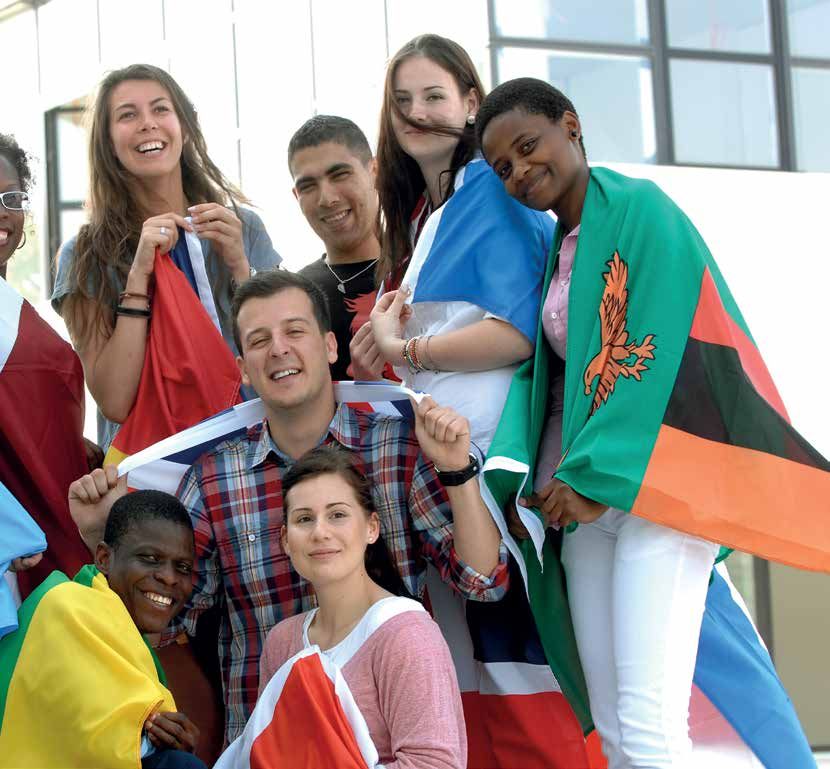
The president
                                                      of Rhine-Waal University
                                                           of Applied Sciences:
                                                    Prof. Dr. Marie-Louise Klotz

                                INNOVATIVE – INTERNATIONAL
                                – INTERDISCIPLINARY
                                                                   At the beginning of 2009, the task of building an inter-   → Was that partly a response to the processes of
                                                                   national, innovative and interdisciplinary university      globalisation and demographic change?
                                                                   represented a huge challenge for the president of          Yes, it was. We didn't want to persevere with old
                                                                   Rhine-Waal University of Applied Sciences, Prof. Dr.       structures while the market and employers and ent-
                                                                   Marie-Louise Klotz, yet it was also a unique opportu-      repreneurs are forever complaining about a lack of
                                                                   nity to mould the university for the future.               skills. For us it was important to tailor the courses to
FOREWORD → PRESIDENT PROF. DR. MARIE-LOUISE KLOTZ

                                                                                                                              the future needs of society and business from the
                                                                   → What did you have when you started?                      outset.
                                                                   Prof. Dr. Marie-Louise Klotz: We had the bid forms of
                                                                   the District of Kleve and the Kamp-Lintfort Regional       →   You're referring to the three I’s …
                                                                   Development Agency for the development of a new            ...yes, the university is innovative, international and
                                                                   MINT university, i.e. a university offering courses with   interdisciplinary. Let's start with innovation. We've
                                                                   a focus on mathematics, IT, natural sciences and           created a different blend of subjects, courses and fa-
                                                                   technology. Otherwise we had nothing, which meant          culties compared with traditional universities, which
                                                                   we had to come up with a totally new concept. That         means we offer modern, interesting, up-to-date
                                                                   gave us a unique opportunity to develop a university       courses.
                                                                   that meets the needs of the region, industry and soci-
                                                                   ety using a new approach.                                  →   For example?
                                                                                                                              Our Faculty of Technology and Bionics. If you look at
                                                                   → What advantages does a newly founded uni-                this type of faculty at an established university, it's
                                                                   versity have over an established one?                      either a faculty dedicated solely to mechanical or
                                                                   For example, from the outset we have considered            electrical engineering or to computer science.
                                                                   what expertise the courses had to offer to satisfy new     We've brought the natural sciences, technology and
                                                                   requirements and give our graduates the tools they         science journalism together in one faculty. Our me-
                                                                   need for their future careers.                             chanical engineers, for example, also concern

                             4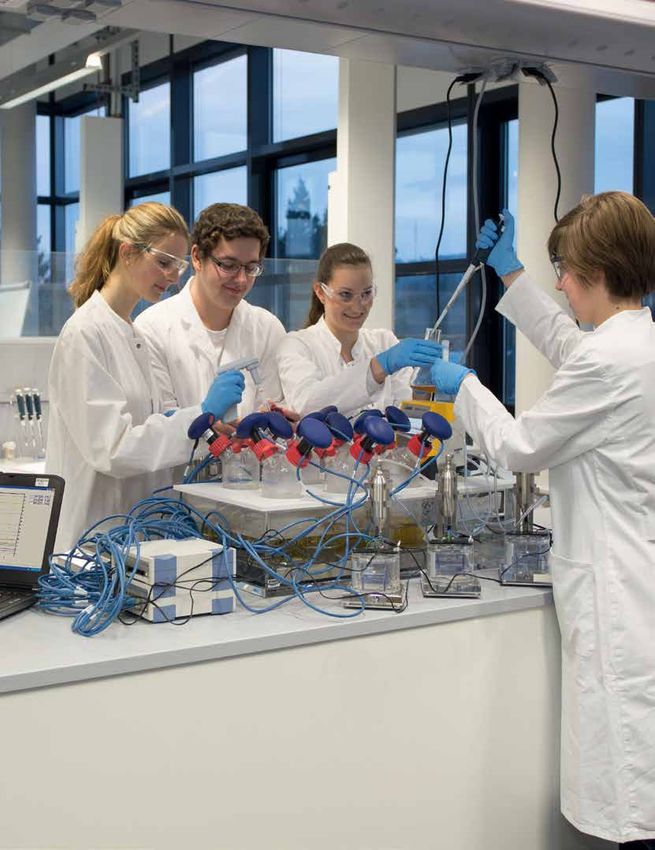
Prof. Dr. Marie-Louise Klotz focuses on internationality,
                                                                           innovation and interdisciplinary work within the faculties.

themselves with creativity studies, business admi-            but worldwide.
nistration, marketing and management accounting.
Our students have time for intercultural compe-               → Is that a goal?
tence, conflict management, project management...             Definitely. But there's more to being international than
                                                              that. The subjects in the curricula are always set up to
→    … tools they need should they opt for self-em-           prompt questions such as: What's important for the re-
ployment, to give them self-assurance when                    gion? For Germany? For Europe? And what's important
dealing with international contracts …                        for other continents? Let's take developing a machine
Exactly. Many people did not realise how important that       as an example. The question I ask, of course, is how
is until after the economic crisis had hit. For us it meant   complex is the design? Will the people in the country it's
changing the mechanical engineering curriculum so             being built for be able to use it? This international look
that students are not only able to design state-of-the-art    at the scientific aspects of expertise is important.
machines but also understand the sales process, learn
marketing skills and know how to interact with other          →   In other words, adapted to current and future
cultures.                                                     challenges?
                                                              That's right. On the Alternative Tourism course we
→   How are companies responding?                             consider both demographic change and environmental
When I tell companies we're a "totally mad university,"       aspects, as we as people have to ensure we manage
they respond by saying "that's exactly what we need!"         resources responsibly in everything we do. Or take the
                                                              Early Childhood Education course, for example. Today
→  Your students come from every continent. The               we need professionals who can run nursery schools
second I – internationality.                                  that cater for both babies and five-year-olds. They also
At the moment we have students from almost 100 dif-           have to understand how to involve parents, deal with
ferent countries, which means we are training future          ethnic minority issues and pay attention to the needs of
employees for companies not just across the region,           educationally disadvantaged children.

                                                                                                                                         5
»          When I tell companies we're a university with a new and very

                                                                       «
                        special profile, they say that's exactly what they need!
                        Prof. Dr. Marie-Louise Klotz

→  Besides the international outlook there's also
the region. What are the people on the Lower
Rhine saying?
That we're boosting the local economy and investing
in the region and for the region. Academics come
here, bring their families with them and have houses
built, buy flats, go shopping. We're attracting employ-
ment and providing a positive impetus within society...
the list is long.

→  The new campuses in Kleve and Kamp-Lintfort
are open to everyone. And they are very inter-
national.
We collaborated with experts on a landscape design
concept. The individual quadrangles emerging with
the buildings are being planted so that you're in
Tuscany at one place, Arizona at another … to give
students and locals alike the feeling that it's an inter-
national university. The concept works. And that ap-
plies to Kamp-Lintfort, too! In the middle of the new
campus there, there will be islands symbolising the
five continents that invite you to stay a while. The con-
cept of internationality is thus ever-present and
forms a unit, as does everything else at the university.

                                                                                        The university board (from right to left):
                              Prof. Dr. Anja Freifrau von Richthofen, Vice-President (Studies, Teaching and Further Education),
                                                            Dr. Martin Goch, Vice-President (Business and Staff Administration),
                                                                              Prof. Dr. Marie-Louise Klotz, University President,
                                                             Prof. Dr. Peter Scholz, Vice-President (Research and Development).
 6
Inspired by the
      passion of a
 hundred nations

Mission Statement

Our mission                                                           achieve this with education that emboldens our students and
Internationality in action                                            awakens their curiosity and enthusiasm.
The Rhine-Waal University of Applied Sciences is both rooted in the
local region and connected to the world. We promote international     Who we are
scientific discourse as well as value-oriented and cultural ex-       We are ambitious. We have the courage and passion to be diffe-
change. We want to use this cosmopolitan outlook to contribute to     rent! For us, finding solutions is more motivating than discussing
the mutual understanding of cultures in a connected world.            problems. We are open to new ways of doing things, reflect upon
                                                                      our actions and continually improve ourselves based on our ex-
Creating modern teaching, opening up new research fields              periences. We also look for feedback from those we work with,
Our method-based, application-oriented, multidisciplinary re-         both inside and outside the university. We are a focal point for
search and teaching enables us to train highly-qualified gradua-      people of all cultures and countries. To ensure respectful colla-
tes. We teach, learn and carry out research in our modern, excel-     boration, we share responsibility with all those who come here.
lently equipped laboratories. We identify new interdisciplinary       Mutual respect between students, professors and academics of
research areas and develop innovative products and services, ai-      all nationalities, religions, cultures and sexual orientations is the
med at addressing society's biggest challenges.                       cornerstone of everything we do. Equality, inclusion and toleran-
                                                                      ce are second nature to us.
Shaping the region responsibly
Together with our partners, we are developing the region into an      We believe that the wide diversity of people at our university enri-
attractive centre of knowledge. We create innovative ideas and        ches the teaching and research on offer here. Our university
are partners in their implementation. We regard internationalisa-     committees also reflect this diversity.
tion as an opportunity. We take our responsibility to connect the
region to the rest of the world very seriously.                       We cooperate with our partners and each other in a respectful,
                                                                      professional and dependable way. For us, this kind of interaction
Empowering people, shaping the future                                 is a key aspect of a collectively developed culture within the uni-
We are preparing people with many differing abilities for the fu-     versity. We want to closely monitor, clearly present and continue
ture. Our theoretically sound, application-based teaching enab-       to actively shape this culture.
les us to train responsible, creative members of society with         To ensure we realise our aims and live out our values, we conti-
specialised knowledge, while at the same time placing great em-       nually act with this mission statement in mind.
phasis on judgement skills and personal independence. We

                                                                                                                                          7
TEN GOOD REASONS
More than 4,000 young people from almost 100 countries study on the Kleve and Kamp-Lintfort sites.

                                                           Ole Valler from Germany,
                                                  studying "Bioscience and Health"
                                                 …because it's so close to the Nether-
                                                  lands and visiting the fish market in
                                                  Nijmegen is fantastic. We then cook
                                                                     and eat together!

     Mariya Poryazova from Bulgaria,
     studying "Environment and Energy"
     … because the lecture rooms and the
     laboratories are so new and full of inte-                                                       Tobias Ludes from
     resting equipment. You can tell you're                                                          Germany, studying
     being prepared for the future here.                                                             "Sustainable Agriculture"
                                                                                                     …because the sport and
                                                                                                     leisure offering is so good
                                                                                                     and you get to meet foreign
                                                                                                     students as well!

                                                                                                     Lea Pauly from Germany,
                                                                                                     studying "Psychology"
                                                                                                     …because I was convinced by
             David Knapp from Germany,                                                               the excellent contacts abroad
             studying "International Relations"                                                      that allow me to get to know the
             …because I like looking beyond                                                          world while I'm still studying!
             boundaries!

 8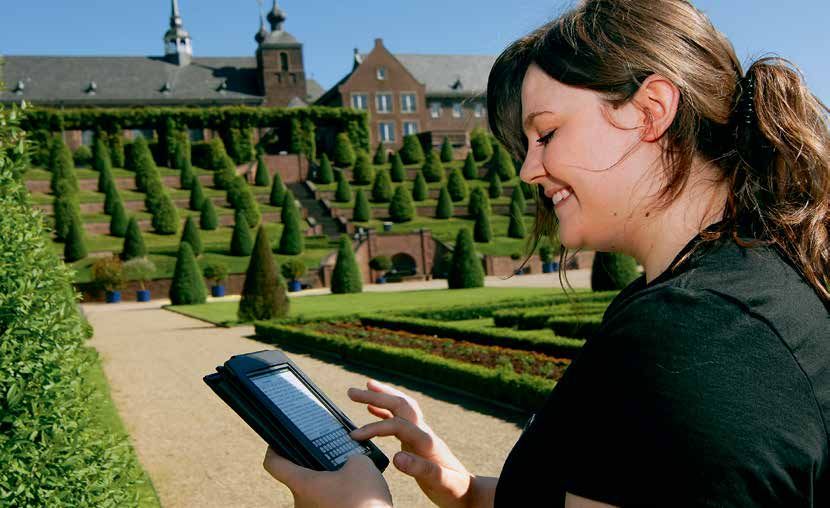
Valentin Turbin
                                                       from Latvia, studying
                                                 "Mechanical Engineering"
                                                      …because I get to meet
                                                              some incredibly
                                                              exciting people!

                                     Sandra Ndachengedzwa from Zimbabwe, studying "International Relations"
                                     …because I think it's good how the university is adapting to the labour market of the
                                     future with its course offerings in every faculty!

                                                          Anna Rutencrantz
                                                   from Germany, studying
                                                   "Bioscience and Health"
                                               …because I received help and
                                                       support from all sides
                                                        in the first semester!

                                                                                          Antoniya Lazarova from
                                                                                          Bulgaria, studying
Marlies Cleven from Germany,                                                              "International Relations"
studying "Sustainable Agriculture"                                                        …because the numerous
…because the university is very                                                           projects and research groups
modern and forward-looking!                                                               teach me how to develop
                                                                                          innovative ideas and
                                                                                          understand how important all
                                                                                          the contacts at companies are.

                                                                                                                         9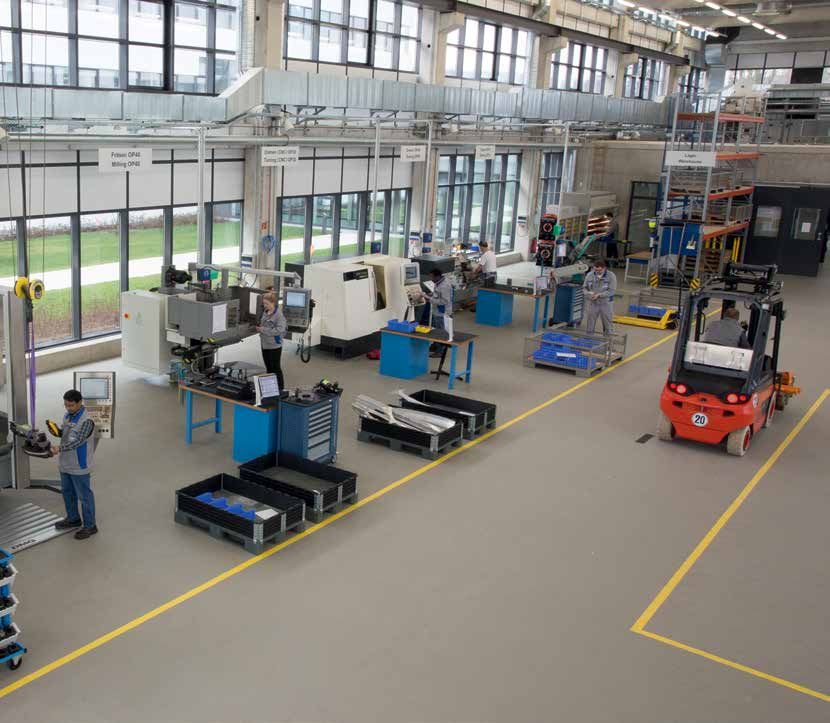
FACULTY OF
       TECHNOLOGY
       AND BIONICS

                                         → From nature to engineering. The Faculty of Tech-
                                         nology and Bionics at the Kleve Campus offers fasci-
                                         nating courses in engineering, natural sciences, bio-
                                         nics and scientific communication. "Nature provides
                                         the inspiration. Biological phenomena often serve as
                                         a template for solutions to technical issues. Bionic
                                         engineers transform them into products," says dean
                                         of the faculty, Prof. Dr.-Ing. Thorsten Brandt. This
THE FACULTIES → TechnologY and Bionics

                                         slightly abstract sounding concept is taught in an ap-
                                         plications-driven context on six bachelor's courses
                                         and one master's course. Graduates have a wealth of
                                         options open to them, including management jobs at
                                         industry and research institutes, careers in marke-
                                         ting or the sale of engineering equipment and pro-
                                         ducts, as well as opportunities in PR and specialist
                                         journalism. One reason for this is the topicality and
                                         practice relevance of the newly designed courses.
                                         Prof. Dr.-Ing. Brandt explains: "We took the opportu-
                                         nity to respond to the major trends, tailor the courses
                                         to them and build a dynamic team."

                                         The Faculty of Technology and Bionics makes use of
                                         3D measuring equipment.

                       10
11
COURSE FACTS
                                         UNDERGRADUATE COURSES

                                         → Biomaterials science, B.Sc.*                          → Industrial Engineering, B.Sc.*
                                         This course deals with traditional engineering ma-      As cross-disciplinary specialists, graduates with
                                         terials as well as biocompatible, biomimetic and na-    engineering and business skills have excellent per-
                                         turally sourced materials. This enables advances in     spectives.
                                         many applications such as the development of im-
                                         plants with improved biocompatibility, longer useful    → Science communication and Bionics, B.A.*
                                         lives and increased functionality.                      The combination of science and technology with
                                                                                                 journalism presents graduates with a host of oppor-
                                         → Mechanical Engineering, B.Sc.*                        tunities from PR jobs at leading companies to
                                         A classic course geared to the future! Mechanical       children's television.
                                         engineering graduates enjoy a variety of career op-
                                         portunities from the development to the distribution    POSTGRADUATE COURSES
                                         of technical products in industry, private-sector
                                                                                                 → Bionics/Biomimetics, M.Sc.*
THE FACULTIES → TechnologY and Bionics

                                         businesses and public authorities and agencies, in-
                                                                                                 What is bionics? Over three additional semesters,
                                         cluding management roles.
                                                                                                 students learn to understand natural phenomena
                                                                                                 and apply these to technical products.
                                         → Mechatronic Systems Engineering, B.Sc.*
                                         Innovations emerge on the boundaries between dis-
                                                                                                 → Mechanical Engineering, M.Sc.*
                                         ciplines! The course is based on the three pillars of
                                                                                                 The course is aimed at developing, producing and
                                         mechanical engineering, electrical engineering and
                                                                                                 successfully marketing technical products. Over
                                         computer science. Students receive an all-round
                                                                                                 three semesters, engineers gain additional specia-
                                         grounding in the understanding of technical pro-
                                                                                                 list knowledge and methods in different production
                                         ducts and processes as dynamic systems.
                                                                                                 development roles, from product development and
                                                                                                 production to marketing and servicing.
                                         → Electronics, B.Sc.*
                                         Electronics is modern! Excellent job prospects await
                                         graduates thanks to the broad field of applications
                                         for electrical solutions in every industrial sector.

                                         * Course taught in English

                       12
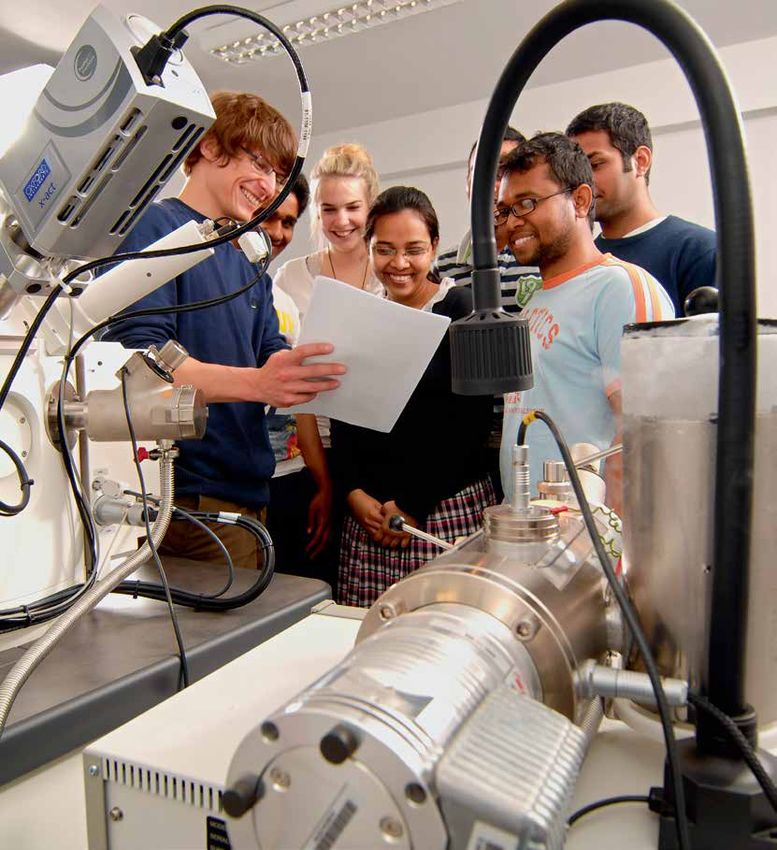
From a basic understanding of physics
(photo far left) to exciting experiments in
the field of electrical engineering (left):
students in the Faculty of Technology and
Bionics not only have a wealth of complex
technical equipment at their disposal, they
also study and conduct research in a very
practice-based way every day. Courses in
this faculty are taught exclusively in English.
→ What is special about your faculty?
The faculty has a very broad science and technology
portfolio. Students come into contact with many dif-
ferent issues. We also work closely with companies
and business associations, so we know what capa-
bilities and skills our graduates need to have.
→ And you take that into account?
Yes, we do. Today it's increasingly about the ability to
work in a team, social skills and creativity. We have
therefore deliberately reserved space for soft skills in
the curricula in addition to science and technology
components.
→ A very practice-based approach, then?
Exactly. Students also write their own business plan
to allow them to set out clearly the technical delive-
rables they have learned and ask themselves how
they can market them, what the sales concept looks
like and what costs they are faced with when they've
finished.
Faculty contact:
technology-bionics@hochschule-rhein-waal.de
Prof. Dr.-Ing. Thorsten Brandt,
Dean, Faculty of Technology and Bionics.
13FACULTY OF
LIFE SCIENCES
→ Life Sciences is a broad field encompassing as-
pects such as the marketing of agricultural products,
wellness and health, and the production of cosmetics,
biofuels and new plant varieties. This diversity is also
reflected in the range of courses the university offers
in the Faculty of Life Sciences on the Kleve campus.
As different as the courses are, they also have many
things in common. They are practice-based and spe-
cifically geared to the requirements graduates will
need in their future careers, for example by integra-
ting the students in national and international pro-
jects. All the courses have an international focus, be it
the content of the teaching or the semester abroad
that is embedded in the syllabus.
THE faculties → life sciences
Sustainability is a key theme in the Faculty of Life Sci-
ences and the two agricultural science courses are no
exception. "The issue of sustainability is becoming
more important with each passing year. The greatest
challenge of our age is assuming responsibility for fu-
ture generations while at the same time remaining
mindful of economic and ecological concerns. We
want to convey this understanding to our students,"
explains Prof. Dr. Matthias Kleinke, Dean of the Facul-
ty of Life Sciences.
1415
COURSE FACTS

                                UNDERGRADUATE COURSES

                                → Sustainable Agriculture, B.Sc.*
                                                                                            with safety requirements? Are a company's processes
                                Sustainability is very important in the field of agricul-
                                                                                            environmentally sound? These are the kind of questi-
                                ture, both for soil quality and livestock and crop pro-
                                                                                            ons that experts in the field of quality, environment,
                                duction. The Sustainable Agriculture course looks at
                                                                                            safety and hygiene keep in focus. With their knowledge
                                how sustainability can be achieved. International or-
                                                                                            of directives, laws and standards, they form an inter-
                                ganisations in the agriculture and environment sec-
                                                                                            face between company personnel and divisions and
                                tors and the agricultural machinery and equipment
                                business offer graduates a variety of career options.       coordinate cross-departmental processes. They re-
                                                                                            cord processes and structures, ensure procedures are
                                                                                            transparent, organise audits and look after accreditati-
                                → Agribusiness, B.A.*                                       on by external bodies. Their expertise qualifies them
                                What is the best way to market agricultural products        for numerous sectors, including manufacturing tra-
                                at regional, national and international level? The Ag-      des, research institutes and hospitals.
                                ribusiness course focuses on business aspects such
                                as these. Graduates enjoy excellent career opportuni-       → BioEngineering, B.Sc.*
                                ties in the booming green sector, not least thanks to       What can be done to counteract climate change? How
                                the strong practice-oriented curriculum.                    can we compensate for energy and raw material
                                                                                            shortages? And what can we do to sustain the health
THE faculties → life sciences

                                → Bio Science and Health, B.Sc.                             of an aging population? Biotechnology, or bioengi-
                                The Bioscience and Health course prepares gradua-           neering, attempts to find answers to questions like
                                tes for key roles at the interface between science          these through the application of scientific and techni-
                                and health in areas such as occupational health-            cal advances on living organisms. Biotechnology is
                                care, hospitals, the chemical and cosmetics indust-         already ubiquitous. It is used in the production of
                                ries, and wellness.                                         cheese, wine and bread, for example. Molecular bio-
                                                                                            logy methods in modern biotechnology also permit
                                → QUALITY, ENVIRONMENT, SAFETY                              the production of ingredients for laundry detergents
                                AND HYGIENE, B.Sc.                                          and cosmetics, active ingredients in drugs, raw mate-
                                Are hygiene regulations being met? Are the products         rials for the chemicals industry, biofuels, new plant
                                made of the necessary quality? Are staff complying          varieties and much more besides.

                                *Course taught in English

                  16
POSTGRADUATE COURSES
→ FOOD SCIENCES, M.Sc.
There are few commodities of greater importance in our everyday lives than food and be-
verages. From the production of primary raw materials to the consumption of the final
product, this field incorporates a wide range of different establishments and companies,
and covers not only the production, processing and refinement of foodstuffs but also the
trading and sale of goods. The Food Sciences course examines the individual components
of production from a primarily scientific perspective as well as their place in the value
chain. Different perspectives enable students to identify connections, giving them an ove-
rall picture of the commodity of food.
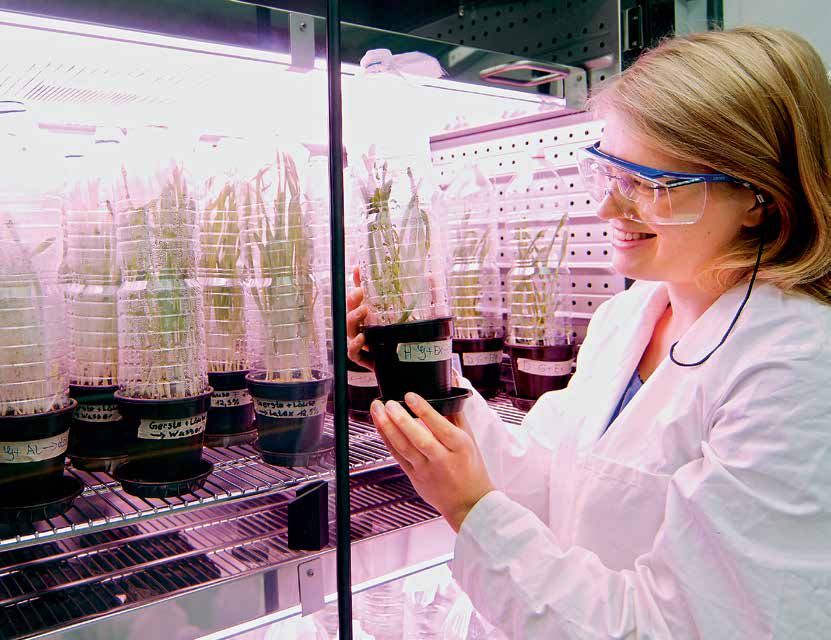
Students research back-
ground information about
agriculture and horticulture
in field trials and in the
laboratory.
→ What makes your faculty so practice-based?
The concept behind our courses enables us to offer
companies graduates who can walk in and do their
job right away. We require our students to work on
practice-oriented projects in interdisciplinary
teams. In doing so we cover the methods and skills
needed in practice.
→ Does that include issues such as environ-
ment protection?
That is a particularly exciting issue for us because
there are so many levels to it worldwide. For us it
means teaching a global aspiration while also im-
plementing it locally.
→ With local partners?
Absolutely. We're constantly establishing new con-
tacts to ensure we are well placed to meet the
needs of our students and research projects. Our
aim is to be strongly rooted in the Lower Rhine regi-
on but also to pursue projects in Asia or Africa.
Faculty contact:
life-sciences@hochschule-rhein-waal.de
Prof. Dr. Matthias Kleinke,
Dean, Faculty of Life Sciences.
17FACULTY OF
SOCIETY
AND ECONOMICS
→ The knowledge imparted by the new Faculty of
Science and Economics on the Kleve campus is ge-
ared towards addressing the challenges facing so-
ciety today. Students approach these developments
in a practice-driven, interdisciplinary way. Topics in-
clude energy and resource shortages, building the
knowledge-based digital society, demographic
change and how to stay competitive in a globalised
world. The focus here is on networking culture, sci-
the faculties → society and economics
ence and business with the region.
→ Internationality is written with a capital I:
Courses held entirely in English are also attractive for
international students, who in turn facilitate the pro-
cess of intercultural exchange. "There are students
from 60 countries in our faculty alone. Anyone who
has worked in an interdisciplinary team knows that
managing such teams is a slightly more complex task,
but the outcomes are significantly better," says the
dean, Prof. Dr. Hasan Alkas. Cooperation arrange-
ments with leading international universities and ins-
titutions offer students and graduates exceptional
prospects for their personal development.
1819
Accepting new challenges collectively, working in teams, discussing case studies – interdisciplinary
                                           work is the name of the game in the faculty.

       COURSE FACTS

                                        UNDERGRADUATE COURSES
                                                                                                 → ALTERNATIVE TOURISM, B.A.
                                        → International Business                                 Travellers are placing increasing value on ecologi-
                                           and Social Sciences, B.A.*                            cal, social and bespoke aspects. As well as following
                                        Business and social science subjects are taught
                                                                                                 a traditional tourism management approach, the
                                        from an international standpoint, which in addition
                                                                                                 course therefore teaches subjects such as sustaina-
                                        to the fact that the course is taught entirely in Eng-
                                                                                                 bility and development policy.
                                        lish ensures graduates are prepared for the global
                                        labour market.
                                                                                                 → EARLY CHILDHOOD EDUCATION, B.A.
                                        → International Taxation and Law, B.A.*                  Potential recognition, targeted early intervention and
                                        Questions relating to taxation increasingly demand       well-grounded didactic and organisational skills are
                                        answers in an international context from both a busi-    the goals of this course. In additional to traditional
                                        ness and legal point of view. The course content         education models, the course therefore includes
the faculties → society and economics

                                        therefore has a global focus to produce graduates        components such as developmental psychology and
                                        with a qualification tailored to the job market.         education policy.

                                        → International Relations, B.A.*                         → Gender and Diversity, B.A.*
                                        International relations are discussed and ana-           The practical application and implementation of out-
                                        lysed from a political, economic and social sci-         comes from research on gender and diversity issues
                                        ence perspective, which in the era of globalisa-         and simultaneous scientific and theoretical orienta-
                                        tion is taking on increasing importance. The             tion gives graduates access to a broad spectrum of
                                        course thus opens the door to a wide range of            careers, for example in human resources, human
                                        careers, for example in the fields of politics, ad-      rights organisations, and management and political
                                        ministration and education.                              consulting.

                                        * Course taught in English

                       20
POSTGRADUATE COURSES
→ Economics and Finance, M.Sc.*
This master's course builds on the knowledge
acquired on a previous business degree and ser-
ves to broaden and deepen the student's under-
standing with a specialisation in the areas of fi-
nance and economics.
The students' projects are as practical as possible, ranging from discussions relating to economic policy to
projects on alternative tourism in the region that could also be implemented in practice.
→ The faculty combines the areas of society and
economics ...
… Yes, we have the advantage of starting from scratch
and being able to explore new avenues. This enables
us to integrate themes early in our curricula that will
be of continuing importance for society in the future.
→ For example?
The process of demographic change and its effects on
the population and the employment situation. Rapid
internationalisation and its consequences for produc-
tivity. Current economic challenges and the develop-
ment of potential solutions.
→ How is this approach reflected in the course?
We employ an experimental approach in our teaching.
Role-play simulations under laboratory conditions,
case studies and situational role play deliver very rea-
listic insights into incentive mechanisms and human
behaviour in conflict situations.
Faculty contact:
society-economics@hochschule-rhein-waal.de
Prof. Dr. Hasan Alkas,
Dean, Faculty of Society and Economics.
21FACULTY OF
COMMUNICATION
AND ENVIRONMENT
→ The Faculty of Communication and Environ-
ment on the Kamp-Lintfort campus is impressively
unique. "The faculty was originally meant to be geared
to IT but it soon became clear that the offering would
be more broad-based, embracing design, psychology,
the faculties → communication and environment
media communications, computer science, e-govern-
ment, environmental science and the usability engi-
neering master's degree course," says the dean, Prof.
Dr. Ingeborg Schramm-Wölk. "It meant we were lay-
ing down a marker right from the start because in
terms of structure and composition the faculty is un-
like any other in Germany.“
A wide range of successful student and research pro-
jects underscore the aspects of interdisciplinarity and
internationality. One example is the German-Dutch
SMART INSPECTORS project, where airborne test
platforms for optical sensor are being developed for
various applications. The Faculty is also a centre for
the "Future Through Innovation" ("Zukunft durch In-
novation - ZDI") community initiative, which aims to
get young people enthusiastic about science and
technology, for example in the Fab Lab, which focuses
on state-of-the-art 3D printing and where computer-
controlled machines can produce various products.
2223
Simon Poos per-
                                                                                                                                                    forms a water
                                                                                                                                                    analysis on an
                                                                                                                                                 excursion by the
                                                                                                                                                Environment and
                                                                                                                                             Energy course (left).

                                                                                                                                              Researching with a
                                                                                                                                                Stirling engine on
                                                                                                                                             the open day (right).

  course facts

                                                UNDERGRADUATE COURSES

                                                → Mobility and Logistics, B.Sc.*                           → MEDIA COMMUNICATIONS AND
                                                Mobility and Logistics is one of the most important fu-        COMPUTER SCIENCE, B.Sc.
                                                ture growth industries and as such offers numerous         These days it is hard to imagine a society without in-

                                                career opportunities. Students graduating from this        formation technology. The lines between the traditio-

                                                course are not only expertly qualified for logistics ma-   nal fields of IT, telecommunications and consumer

                                                nagement but are also equipped for new activities in       electronics are becoming increasingly blurred, giving

                                                the field of public and private mobility.                  rise to an ever greater variety of possibilities and ap-
                                                                                                           plications – a development that offers significant op-
the faculties → communication and environment

                                                                                                           portunities and challenges for future media commu-
                                                → Environment and Energy, B.Sc. *
                                                                                                           nications and computer science specialists.
                                                Our future depends on the sustainable management
                                                of resources. This course provides a broad grounding
                                                                                                           → E-Government, B.Sc.
                                                in natural and sciences and engineering as well as a
                                                                                                           E-Government involves the design of processes and or-
                                                sound foundation in economics and IT. Graduates are
                                                                                                           ganisations in the areas of business and administration
                                                optimally prepared for global collaboration with ex-
                                                                                                           and the development of fit-for-purpose software sys-
                                                perts from relevant disciplines.                           tems. Graduates enjoy first-rate career prospects in
                                                                                                           public administration and corporate enterprises.
                                                → International Business
                                                    and Social Sciences, B.A.*                             → PSYCHOLOGY, OCCUPATIONAL AND ORGA-
                                                To be successful at international level, good mana-           NISATIONAL PSYCHOLOGY, B.Sc.
                                                gers require not only specialist knowledge but also        Graduates of this course will shape the working
                                                an understanding of the values and customs of other        world of tomorrow. The content of this fascinating
                                                countries. The combination of business and social          course covers areas such as job satisfaction, team

                                                science from an international standpoint paves the         and management development, personnel selection
                                                                                                           and corporate culture.
                                                way for a career at commercial enterprises and not-
                                                for-profit organisations.

                                                *Course taught in English

                    24
→ INDUSTRIAL ENGINEERING, Specialization Communication and
Information Engineering, B.Sc.*
Networked systems are increasingly being introduced in many fields of application. As a
result, there is increased demand for engineers who can plan, develop, implement, main-
tain and adjust such systems in various contexts. This technically-oriented course has
been developed with modern industrial requirements in mind.
→ Information and Communication Design, B.A.*
Communication designers convey sophisticated content and design communication that is
imaginative, surprising, inspiring and occasionally moving too. Our graduates are not just
limited to communicating what others have already devised but have learned to develop
content, products and services themselves as part of interdisciplinary teams.
Images from an excursion on
the "Mobility and Logistics"
course.
→ What makes the concept behind the courses
so different?
The strength of our faculty is that the courses are
systematically geared towards networked and in-
terdisciplinary teaching.
→ What does that mean specifically?
When we were designing the courses, we had the op-
portunity to take into account the challenges posed by
a society in transition. The project-driven approach,
high level of teamwork and integrated consideration
of economic and social aspects create network com-
petence and provide the skills required on the inter-
national job market.
→ To what extent can the course help those loo-
king to start their own business?
Supra-disciplinary qualifications are highly valued.
Personal development aspects and civic engagement
training are stated course aims. In our subject-speci-
fic training we offer students a thorough grounding in
business concepts as well as subjects such as entre-
preneurship that look at all the key issues surround-
ing business startups.
Faculty contact:
communication-environment@hochschule-
rheinwaal.de
Prof. Dr. Ingeborg Schramm-Wölk, Dean of the
Faculty of Communication and Environment
25A student explores
Kamp Abbey using
gesture-controlled
navigation.
course facts
POSTGRADUATE COURSES
→ Usability Engineering, M.Sc.* → Information engineering and
Products that succeed on the market are always Computer Science, M.Sc.*
tailored to the needs of users. Students gain extensive In today's society, information is a commodity that
knowledge in fields including human-machine inter- can be refined to make it more valuable, and working
action, psychology, intercultural management and vi- efficiently with big data plays an important role in this
sualisation, to enable them to implement their ideas in process. Graduates have a broad base of knowledge
as many industrial and research fields of application as in the areas of data collection, processing and sto-
possible. rage and are extremely well acquainted with the
the faculties → communication and environment
enormous potential of networks and distributed sys-
→ Digital Media, M.A.* tems.
This Masters course prepares students for a career in
which they will be able to combine design skills with the
latest technical developments in digital media to deve-
lop creative digital solutions with sophisticated com-
munication requirements.
→ International Management and
PsychologY, M.Sc.*
This course develops both management skills and
psychological expertise. Graduates can apply and
embed this knowledge in a targeted manner within
internal structures and have numerous career op-
tions in all fields in which human experience and be-
haviour interact with economic processes.
SStudents from the Industrial Engineering
course help to develop a circuit.
*Course taught in English
26GENERAL COURSE DURATION DETAILS
FOR BACHELOR'S AND MASTER'S COURSES
The Rhine-Waal University of Applied Sciences
offers an innovative, interdisciplinary course
offering in both German and English that can
be completed full-time or as part of a work-
study degree programme. In full-time study, all
bachelor's degree courses consist of seven se-
mesters as standard. The sixth semester is re-
served for a practical placement at a company
in Germany or abroad or a term of study abroad.
Students write their dissertation (thesis) in the
seventh semester, usually in cooperation with a
company, before completing their studies with
an oral examination. Graduates at their graduation ceremony.
Students on a work-study degree programme
spend three days per week undertaking an ap- Alternatively, students can also complete a term
prenticeship with a company. They spend the of study abroad at an overseas university.
remaining two days each week studying at the
university for a course closely related to their In the ninth semester, students write their dis-
apprenticeship. In order to undertake a work- sertation, ideally in cooperation with the com-
study degree programme, you must first agree pany where the apprenticeship was completed,
an apprenticeship contract with a company in before finishing their studies with an oral exa-
addition to holding a German university entran- mination.
ce qualification. During their apprenticeship,
students receive a training allowance from their The master's course lasts three semesters.
company. After four semesters, the apprentice- The first two semesters are designed to deepen
ship culminates with an examination in front of specialist knowledge and focus on individual
the chamber of commerce and industry. They areas by selecting elective modules. Students
then undertake three semesters of full-time also spend time on a related research project.
study. The eighth semester is a practical place- In the third semester, students complete their
ment with either the company where the app- master's thesis and finish their studies with an
renticeship was completed or another company. oral examination.
27Student Service Centre –
GOOD ADVICE FROM THE OUTSET
Prospective and existing students will always have questions or require tips and suggestions. Professional
advice is therefore available from the student advisory service. Here are ten of the most frequently asked
questions, answered by Susanne Habers, head of the Student Service Centre.
What courses does Rhine-Waal University of Ap- ves for life at work in additional offerings covering
plied Sciences offer at the moment? subjects such as business etiquette, help with job
Rhine-Waal University of Applied Sciences offers 25 applications and entrepreneurship.
bachelor's and eight Master's degree courses at the
Kleve and Kamp-Lintfort sites in the faculties of Society How can I finance my studies?
and Economics (Kleve), Technology and Bionics (Kleve), Through domestic grants (www.bafoeg.bmbf.de), in-
Life Sciences (Kleve) and Communication and Environ- ternational grants, bursaries and student loans. Infor-
ment (Kamp-Lintfort). mation and links to other internet offerings are availa-
ble on the university website and also from the student
Where can I get help during the first semester? services body (www.studentenwerk-duesseldorf.de).
In addition to our student advisory service, which con-
tinues once the semester has started, specialist advice How do I find a suitable student job?
can be obtained from the deans of each faculty and The university posts information on job vacancies and
themes → student advisory service
personal tutors. There are also tutor programmes internships on its website and the various notice
tailored to the individual target groups that include get
to know you parties and offer intensive support. The
university also has a special mentoring programme for
all students (see Page 86).
What chances do I have when I graduate?
Very good ones! The courses are innovative and
tailored to the latest needs of the employment mar-
ket. Thanks to its international orientation and coope-
ration arrangements with universities and companies
abroad, the university also offers students key con-
tacts across the world while they are still on their
course. On top of that, students can prepare themsel-
28The most frequently asked questions are answered by
Susanne Habers, head of the Student Service Centre.
boards. There are also regular entrepreneur days and 'internship How can I engage with the life of the university?
speed dating' events plus job advice sessions and company con- You can attempt to influence policy through the student parliament
tacts organised through the university. (StuPa), the student union (AStA) or the relevant faculty council, for
example, or organise a party or an event. You can also volunteer as
Where can I find an inexpensive place to live? a tutor for your fellow students.
The university helps students looking for accommodation, be it a
room in one of the new halls of residence or an apartment in town, I don't speak German. Can I study in English?
through a dedicated network of landlords and adverts posted on Rhine-Waal University of Applied Sciences is ideal for foreign
the website and notice boards. It also has its own accommodation students because 85% of the courses are taught entirely in Eng-
officer (see Page 65). lish. Only five courses are taught in German. To make daily life
easier, the university provides a wide range of support and has
What can I do in my spare time? an extensive programme of German courses for students from
Kleve and Kamp-Lintfort are surrounded by beautiful countryside abroad.
but are also close to cosmopolitan cities such as Nijmegen, Düs-
seldorf, Cologne and the Ruhr conurbation. Besides attractive Can I spend some time abroad as part of my course?
cultural points of interest, a host of sport and leisure options and Of course, in fact it is encouraged. You can do an internship or a
direct proximity to the Netherlands, both sites offer a vibrant stu- placement semester, for example, or spend a semester at a for-
dent life with a varied music, sport and culture programme in the eign university. We have a large network of partners on all conti-
immediate vicinity. nents for this purpose.
More questions?
The university website contains a wealth of up-to-date
information:
www.hochschule-rhein-waal.de
Any other questions can be by answered by the stu-
dent advisory service on
Tel.: +49 2821 806 73-360
or via email:
studienberatung@hochschule-rhein-waal.de
29THE WORLD DESCENDS
ON THE LOWER RHINE
The opening of Rhine-Waal University of Applied
Sciences brought students from all over the world
to Kleve and Kamp-Lintfort. In the reverse direc-
tion German students spend semesters abroad.
The university has cooperation arrangements with
universities and companies across the globe. For
truly international education.
Norma comes from Zimbabwe, Angela from Canada,
Tennison from Ghana, Mounir from Egypt, Linda from
the Netherlands, Iona from Romania … Diversity at
the core of university life. These young people from
around the world have come to Kleve and Kamp-Lint-
fort for a myriad of reasons. "Germany was always my
first choice because I wanted to study engineering,"
explains Angela from Canada. "One of the reasons I
chose Rhine-Waal University of Applied Sciences was
because Kleve occupies a central yet rural location.
themes → internationality
That brings a lot of advantages."
For some, the exceptional blend of courses and strong
practice orientation are what drew them to the Lower
Rhine. Others have since pinpointed the social inter-
action between students and lecturers as a major plus
point. "I began my studies at home but now I'm happy
to be able to continue my education at Rhine-Waal
University of Applied Sciences", says Linda from
neighbouring Holland. "The togetherness is simply
wonderful, everyone is understanding and nice.“
3031
Iona, 23, from Romania studies in
                                                                                  Kleve because she has the opportunity
                                                                                  to further her studies in English.

                                                                                  The opportunity to study in English makes
                                                                                  Kleve and Kamp-Lintfort attractive places
                                                                                  to learn, especially for international stu-
                                                                                  dents. "I come from a very small town in
                                                                                  Romania but I spent the last four years in
                                                                                  Bucharest doing my bachelor's degree",
                                                                                  says Iona, 23. "As I wanted to build on my
                                                                                  knowledge and I have some friends in Ger-
                                                                                  many, I decided to come here because I
                                                                                  can study in English.“

                            Managed by Joost Kleuters, the International Office at Rhine-Waal University of Applied
                            Sciences is where everything comes together for German students wanting to go abroad
                            or foreign students coming to Kleve or Kamp-Lintfort. In 2013 alone some 7,000 applica-
                            tions were received from abroad.

                            → What makes an international office so important?
                            We have a lot of international students, which is down to the fact that we offer a lot of courses
                            in English – around 85 percent! We've had lots of applications from international students from
                            the outset and at the moment 27 percent come from abroad.

                            → Is there a faculty where the number of foreign students is particularly high?
themes → internationality

                            No, there isn't, it's about even.

                            → It all sounds very exciting.
                            Yes, it is. It starts with the application process. That's when we examine the paperwork from
                            abroad, and there's a database put out by the federal education ministers that states the requi-
                            rements for the individual countries. And the requirements do indeed differ for every country.

               32
» Germany is not the same as Bangladesh or America.
«
The students have to come to terms with that!
Dr. Joost Kleuters
OVERCOMING THE INITIAL HURDLES network of people with holiday homes and was able to help him
Another selling point is the service. Which other university will there and then. The owner even came to pick him up in
arrange for you to be picked up from the airport, organises an in- person.“Support also includes a mentoring programme, accom-
ternational tutor programme for the first few weeks and is even on panying new students at the bank and the immigration office, help
hand spontaneously to help you to find somewhere to stay? Petra in furnishing accommodation and settling in on campus.
Hübers and Astrid Watkins, who have looked after accommodati-
on enquiries from the very beginning, remember one afternoon, And of course, language courses provide an opportunity to learn
for example, when a young man from Bangladesh suddenly ap- German quickly. The course offering is international in scope, with
peared at their door. "He could hardly speak any German and was 85% of the courses being taught in English, and our library re-
looking for a place to stay. Fortunately I had already built up a flects this with a wide range of English literature.
→ For example?
Sometimes a student has to have studied for two years at home before being able to start
a course at a German university. That's the case for students from Bangladesh, for ex-
ample. Sometimes the relevant advanced level certificate of education from school is all
you need, as for students from Romania, for example. Checking every individual criterion
and keeping on top of things is a challenge for our staff.
→ What kind of day-to-day challenges do students from abroad face?
Well, they vary a lot, of course. Germany is not the same as Bangladesh or America.
The students have to come to terms with that – it starts with looking for somewhere to
live, the food, the climate and the traffic and continues with opening a bank account
and learning to recycle your waste properly...
→ You also administer the periods of study abroad undertaken by German stu-
dents and give them advice.
Yes, we do. We have a network of universities and companies. It's also important to
have information on exchange programmes and grant options.
Dr. Joost Kleuters,
Head of the International Office.
33From top to bottom right: Miriam Bressan from the US, Jan Keiffenheim from Germany,
Qi Zhao from China and Nile Nyama Hossain from Bangladesh.
Students from across the world
More than 4,000 young people study at the
RECOGNITION OF STUDY
Rhine-Waal University of Applied Sciences, inclu-
ding 1,000 international students from almost ATTAINMENT AND PERFORMANCE
100 countries as diverse as Cameroon, China,
Pakistan, Turkey, India, Zimbabwe, Russia, the The European Credit Transfer and Accumulati-
USA, Italy, Canada or Mexico. In this environment, on System (ECTS) facilitates the recognition of
students develop and practice intercultural studies successfully completed abroad, which
skills from the word go and have an opportunity to amount to around 30 credits per semester, with
discuss issues from the perspective of other one ECTS credit corresponding to 25 to 30 hours
themes → internationality
cultures. Conversely, the university also offers a of study.
global network and cooperation arrangements The ECTS is used to compare the study attain-
with education establishments and major compa- ment and performance of individual students
nies all over the world. Examples include universi-
across Europe. Credit points are awarded to re-
ties in Dhaka (Bangladesh), Tianjin, Fuzhou
present academic achievement in a standard
and Shanghai (China), Kolkata, Mumbai and
form – the number of credit points is dependent
Kharagpur (India), Caen (France), Plymouth
on the average amount of study completed.
(England), Fitchburg and Florida (US), Cartagena
(Spain) and Moscow (Russia), to name a few.
34German students abroad
German students wishing to go abroad need to start their
preparations as early as possible. Non-European coun-
tries often require a visa, which due to the high level of
bureaucracy involved has to be applied for four months in
advance. Students also need to clarify whether their stu-
dies will be recognised, how to finance their stay, what in-
surance they need, whether the internship is a paid positi-
on, and what accommodation options they have. There are
many options to consider when planning to go abroad,
from self-funded applications to grants from the German
Academic Exchange Service (DAAD) or a charitable trust
or foundation. Assistance is also available for placement
A touch of adventure, interaction with other cultures, the work semesters abroad through the EU-funded Erasmus pro-
mentality abroad – all experiences that enhance your personal gramme or – for internships outside Europe – through or-
development and can even lead to you choosing a country whe- ganisations such as AIESEC (business, humanities, social
re you would like to work at a later date or where you can make sciences) and IAESTE (science, engineering, technology).
excellent contacts who will be of significant help to your career. Incidentally, the first batch of students have already com-
The university therefore supports German students wishing to pleted a period of study abroad!
spend a semester abroad or add a more international dimensi-
on to their internships. Do I speak the language well enough? Information can be obtained from the International
What are the main areas of focus of my course and how can I Office:
link them with the semester abroad or internship? What fac- Rhine-Waal University of Applied Sciences
tors are important for my future career? How do I finance eve- International Office
rything? Marie-Curie-Straße 1, 47533 Kleve
The university website www.hochschule-rhein-waal.de also Tel.: +49 2821 806 73-140
provides information on grants, exchange programmes and any E-Mail: international-office@hochschule-rhein-waal.de
bureaucratic hurdles students may face.
SERVICE POINTS ABROAD
Rhine-Waal University of Applied Sciences has opened of-
fices in Bangladesh and China in order to develop contact
with students, partners in business and research and po-
tential collaborators and win them for the university:
South and Southeast Asia Office:
Mr. G. Saha, South & South-East Asia Office, 7 R.K. Missi-
on Road, Dhaka 1203, Bangladesch, info@rhine-waal-uni-
versity.org
China Office:
Ms. Xing Yanrong, Tianjin Intertech Plaza/Hotel, 25 Youyi
Road, He Xi District, Tianjin, China,
www.rhein-waal.com
beijing@hochschule-rhein-waal.de oder
tianjin@hochschule-rhein-waal.de
Linda from the Netherlands.
35DISTRIBUTION OF STUDENTS AND INTERNATIONAL
Afghanistan Albania Armenia Australia Azerbaijan Bangladesh Belgium Benin Bhutan Bosnia and Herzegovina
France Finland Germany Ghana Hungary India Indonesia Iran Iraq Ireland Israel Italy Jamaica Jordan Kenya
Morocco Nepal Netherlands New Zealand Nigeria Pakistan Peru Philippines Poland Romania Russian Federation
United Kingdom USA Uzbekistan Venezuela Vietnam Yemen Zimbabwe
Poland
Wyzya Skola Bankowa
Poznaniu, Poznan
Netherlands
HAN University, Arnhem/Nijmegen
University of Applied Sciences Van Hall Larenstein,
Wageningen
Fontys University of Applied Sciences, Venlo
Radboud Universiteit, Nijmegen
De Haagse University of Applied Sciences, Den Haag
United Kingdom
Plymouth University
USA France
Ferris State University, Big Rapids, Michigan EM Normandie, Caen
Savoyen University, Chambéry
USA France
Fitchburg ISARA Lyon
State University Spain
Las Palmas de
Gran Canaria University
mexico USA Spain
Morelia University, Morelia Florida Mondragon
International University
University Spain
Complutense University,
Colombia
Madrid
Universidad Cooperativa de Colombia, Bogotá
King Juan Carlos University
Madrid
Technical University of
Cartagena
themes → internationality
Brasil
Universidade Federal de Minas Gerais,
Belo Horizonte
Universidade Estadual do Oesto do Paraná,
Cascavel, Paraná
Belgium
Chile Haute Ecole
Universidad Finis Terrae, Santagio Provinciale
de Hainaut
Condorcet,
Moons
PXL University
= Home countries of the students
College, Hasselt
= Cooperating universities
36COOPERATION PARTNERS BY COUNTRY OF ORIGIN
Brazil Bulgaria Cameroon Canada Chile China (PR) Colombia Congo Croatia Egypt El Salvador Estonia
Korea Kyrgyzstan Latvia Lebanon Liberia Lithuania Luxembourg Macedonia Malaysia Mauritius Mexico Moldova
Saudi Arabia Serbia Slovakia Slovenia Sri Lanka Taiwan Togo Turkey Uganda Ukraine United Arab Emirates
hungary
Budapest Business
School, Budapest
Finland
HAMK University of
Applied Sciences
Hämeenlinna
moldavia Ukraine
Moldavian State KPV National Technical
Agrarian University, University of Agriculture,
Chisinau Kharkiv
lithuania Russian Federation
Mykolas Romeris Moscow State University of Design and Technology
University, Vilnius Vologda State Dairy Farming Academy, Vologda
China
Bulgaria Tianjin Polytechnic University, Tianjin
Technical University, Sofia Tianjin University of Commerce Boustead College, Tianjin
Tianjin Chenjian University, Tianjin
Turkey Kyrgystan
Marmara University, Istanbul Kyrgiyz National Agrarian China
Isik University,, Istanbul University, Bishkek Donghua University, Shanghai
Koç University, Istanbul Ningbo University of Technology, Ningbo
Bilgi University, Istanbul Fujian Agriculture and Forestry University, Fuzhou
Taiwan
National Taipei
Benin
College of Business
University of
Abomey-Calavi,
Cotonou
india
Jadavpur University, Kolkata
Philippines
University of Calcutta, Kolkata
University of the
Bengal Engineering
Philippines, Manila
and Science University, Kolkata
Indian Institute of Techology, Bombay
Indian Institute of Techology, Kharagpur
Bangladesh
University of Dhaka, Dhaka
Bangladesh University of Engineering
and Technology, Dhaka
Bangladesh Agricultural University,
Mymensingh
North South University, Dhaka
Shanto-Mariam University of Creative
Technology,
Dhaka
37You can also read


