Subject Selection 2020 - Year 10 - 12 Subject Descriptions - Mornington Secondary College
←
→
Page content transcription
If your browser does not render page correctly, please read the page content below
Subject Selection 2020
      Year 10 - 12
  Subject Descriptions
Welcome
This handbook is designed to assist students and parents in planning programs and pathways for the
important senior years of secondary education. It is vital that students entering this stage of their
schooling begin to think about educational pathways and career options.

Mornington Secondary College provides students with comprehensive individual pathways which
cater to their individual differences. The College ensures students receive course counselling and
guidance but decisions should be a joint responsibility between the student, parent and the school. It
is strongly recommended that parents take the time to discuss course direction and long term goals
with their children.

Subjects will only be offered where there are sufficient numbers to make up a class. The timetable
enables, Year 10 students to access a wide range of electives designed to prepare for their final years
of formal schooling. In Year 10, students are able to undertake Unit 1-2 VCE units only if they have
demonstrated their ability in a particular subject by receiving distinctions or high distinctions in that
subject at Year 10.

In addition, students can also consider vocational programs such as VET, school based apprenticeships
and VCAL – the Victorian Certificate of Applied Learning. Students are advised to ensure they
understand the differences and consequences of their choices. This is especially relevant when
choosing a Vocational, Education and Training (VET) program as VET studies are an additional subject
to their timetabled course.

DARE TO DREAM, Audacter Astra Capesse

Student course selection should be viewed in conjunction with personal commitment and the desire
to achieve one’s personal best. There is an expectation that students will demonstrate a responsible
attitude to the education provided by the College. In the Senior School we expect a high level of
personal commitment to studies as well as to wider school programs, extra-curricular activities and
compliance with school policies.

      S      Support students to achieve success
      T      Teamwork, bringing the school community together
      R      Respect for all
      I      Inspire minds
      V      Value every opportunity
      E      Endeavour to be the best you can

            Please ensure you submit your selections via Subject Selection Online.
            Subject Selection Online is available from Wednesday 24th of July 2019.

                                                    2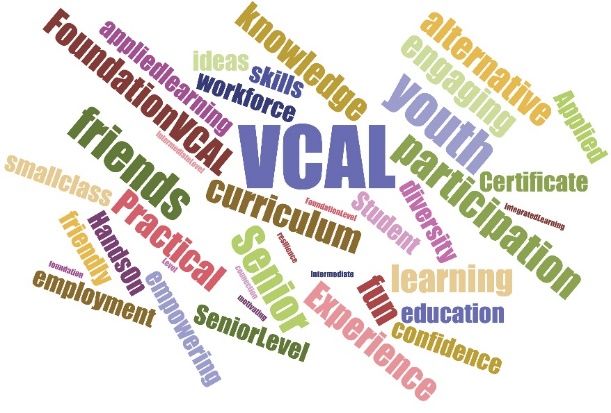
College Personnel

     Linda Stanton                               College Principal
     Jim Papas                                   Assistant Principal Year 10-12
     Michael Parker                              Assistant Principal Year 9
     Denise Leggett                              Assistant Principal Year 7-8
     Jenny Mason                                 Assistant Principal Student Wellbeing

     Grant Olarenshaw                            Year 12 Team Leader
     Jenna Kennedy                               Year 12 Coordinator
     Alex Canton                                 Year 12 Coordinator

     Graham Howgate                              Year 11 Team Leader
     Russell Fulton                              Year 11 Coordinator
     Juley Karis                                 Year 11 Coordinator

     Michelle Barnes                             Year 10 Team Leader
     George Wardle                               Year 10 Coordinator
     Paul Davis                                  Year 10 Coordinator

     Amanda Cruise                               Year 9 Team Leader
     Morgan Maloney                              Year 9 Coordinator
     Chris Ardi                                  Year 9 Coordinator

     Chris Robinson                              VCAL Coordinator

     Michaeli Lyon                               Career Practitioner
     Teena Batenburg                             Career Practitioner

    Learning Area Heads of Department

     Arts                                        Michael Delaney
     English (Year 7-9)                          Sacha Hose
     English (10-12)                             Paula Chambers
     Food                                        Kellie Nottle
     Health & Physical Education                 George Neophytou
     Humanities                                  Michael Lamond
     Languages                                   Elise Ong
     Mathematics (Year 7-8)                      Michael Raven
     Mathematics (Year 9-12)                     Stephan Tillett
     Science                                     Daniel Patch
     Technology                                  Lara Adams

    Curriculum Team

     Curriculum: Assessment, Reporting and       Amanda Keen
     Timetable
     Curriculum: Teaching and Learning           Amanda Windsor
     Curriculum: Victorian Curriculum            Jackie Lewis

                                             3
QUICK GLANCE - IMPORTANT DATES:
 Accelerated Study Guide & Application Forms               Distributed Friday 28th June

 Course Selection Interview Bookings Open – Online         Wednesday 17th of July

 Applications for Accelerated Study Closes                 Friday 19th July 4.00pm

 Course Information Evening with Subject Expo (Gym)        Tuesday 23rd July 5.00-7.00pm

 Course Selection Booklet available for collection (LC1)   Tuesday 23rd July 5.00pm onwards

 2020 Year 10, 11, & 12 Information Session (LC2)          Tuesday 23rd July 6.00pm-6.30pm

 Subject Pre-Selection Opens – Online                      Wednesday 24th July 9.00am

 Accelerated Study Confirmation/Offer                      Thursday 25th July During day

 Subject Pre-Selection Closes – Online                     Sunday 28th July At midnight

 Course Selection Interviews                               Monday 29th July By appointment

 College works on preparing 2020 courses                   From Week 4 onwards

 Course Confirmation & Fee Schedule                        To be advised

                           PLEASE NOTE: Students Not Returning in 2020

If your son/daughter is not returning to Mornington Secondary College in 2020 an Exit Form
MUST be completed before the student exits the College. Forms are available from the General
Office.

                                                    5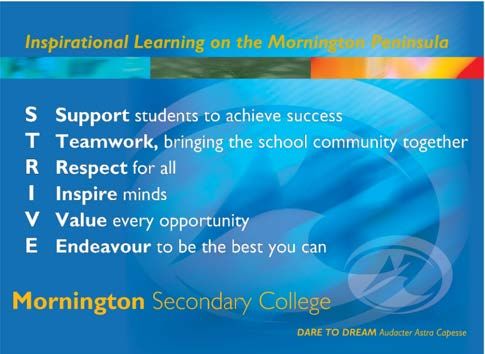
Terms and Definitions
ATAR             Australian Tertiary Admission Rank
The ATAR is an overall percentile ranking reflecting your comparative Year 12 achievement compared to the
relevant age group in a given year.

DET       Department of Education & Early Childhood Development (www.education.vic.gov.au)
The Department of Education and Early Childhood Development offers learning and development support,
services and resources for all Victorians, from birth through to adulthood.

SBAT              School Based Apprenticeships & Traineeships
A SBAT offers students the option of combining part-time employment, school and training. The program is
undertaken under a training contract with an employer, has a Training Plan signed by the school and formally
registered with the Victorian Registration and Qualifications Authority (VRQA) and leads to a nationally
recognised qualification.

SEAS               Special Entry Access Scheme
The Special Entry Access Scheme (SEAS) is for applicants who have experienced educational disadvantage. There
are six categories within SEAS. Not all institutions recognise all categories.

VET                Vocational Education & Training
VET is often associated with TAFE colleges but VET training can be offered in many settings and by a range of
Registered Training Organisations (RTOs). VET programs are focused on particular vocational areas e.g.
hospitality, building, hairdressing, community services etc.

Vocational Education & Training in Schools

VCAA    Victorian Curriculum and Assessment Authority (www.vcaa.vic.edu.au)
The VCAA is an independent statutory body responsible to the Victorian Minister for Education, serving both
government and non-government schools. The mission of the VCAA is to provide high quality curriculum,
assessment and reporting that enables individual lifelong learning.

VCAL               Victorian Certificate of Applied Learning
The Victorian Certificate of Applied Learning (VCAL) is a hands-on option for students in Years 11 and 12. The
VCAL gives you practical work-related experience, as well as literacy and numeracy skills and the opportunity to
build personal skills that are important for life and work. Like the Victorian Certificate of Education (VCE), VCAL
is an accredited secondary certificate.

VCE                Victorian Certificate of Education
The Victorian Certificate of Education (VCE) is the certificate that the majority of students in Victoria receive on
satisfactory completion of their secondary education. The VCE provides diverse pathways to further study or
training at university or TAFE and to employment

VTAC                Victorian Tertiary Admissions Centre (www.vtac.edu.au)
The Victorian Tertiary Admissions Centre (VTAC) is the central office that administers the application processes
for places in tertiary courses, scholarships and special entry access schemes at university, TAFE and independent
tertiary colleges in Victoria (and a few outside Victoria). VTAC receives and forwards application information and
supporting documentation to the relevant authorities at institutions.

                                                      6
What do I need to know?
What’s the difference between a TAFE Course and a University
Degree?
                   TAFE                                                 University
Qualifications     Certificates, Diplomas and Apprenticeship             Bachelor Degrees

                   Practical training, classes and interactive           Theory-focused classes, complemented by
Course Delivery    workshops                                             workplace learning.
                                                                         Individual and team learning
Learning style     Support learning                                      For each hour in the classroom, students are
                   More hours in classroom learning                      expected to study three hours on their own
Course length      6 months – 3 years                                    3-4 years.

Some higher education institutions connect pathways between TAFE Courses and university degrees,
check with individual institutions. For example

     Certificate IV in                         Diploma of                          Bachelor of Business
       Accounting                              Accounting                             (Accounting)

Are you good with numbers?                                       Are you creative and artistic?

BUSINESS COURSES              POSSIBLE GRADUATE                   ARTS COURSES                   POSSIBLE GRADUATE
                              CAREERS                                                            CAREERS
•   Accounting                • Accountant                        •   Creative Arts              •       Copywriter
•   Bookkeeping               • Business analyst                  •   Information and Cultural   •       Curator
•   Financial Planning        • Economist                             Services                   •       Music/media producer
•   Human Resource            • Human resource advisor            •   Interactive Media          •       Web developer
    Management                • Market analyst                    •   Liberal Arts               •       Writer
•   International Business                                        •   Music

Like working with your hands?                                    Want to teach?
TRADE COURSES                 POSSIBLE GRADUATE                   EDUCATION COURSES                  POSSIBLE GRADUATE
                              CAREERS                                                                CAREERS
•   Bricklaying               •   Bricklayer                      •   Children’s Services            •   Child care supervisor
•   Building and              •   Construction Working            •   Education (P-12)               •   Primary School teacher
    Construction              •   Cabinet Maker                   •   Early Childhood                •   Secondary school
•   Furniture Making          •   Estimator                           Education                          teacher
•   Plumbing                  •   Finished make-up artist         •   Education Studies              •   Support worker
•   Hairdressing              •   Hairdresser                     •   Education Support              •   Teacher aide
•   Specialist Make-up                                                                               •
                                                            7
Do you love sport?                                                 Love to write?
SPORT AND EXERCISE              POSSIBLE GRADUATE                  WRITING &                          POSSIBLE GRADUATE
SCIENCE COURSES                 CAREERS                            COMMUNICATIONS                     CAREERS
                                                                   COURSES
• Exercise Science and          • Exercise physiologist            •       Communications             •           Communications officer
Human Movement                  • Fitness instructor               •       Marketing                  •           Journalist, writer or
• Fitness                       • PE teacher                       •       Professional Writing                   editor
• Physical Education            • Program development              •       Professional Writing and   •           Marketing/public
   (Secondary)                  coordinator                                Editing                                relations
• Remedial Massage              • Remedial/sports                                                                 Political advisor
                                                                   •       Public Relations           •
• Sport and Recreation              massage therapist                                                 •           Radio/television
   Management                   • Sports coach                                                                    producer

Want to be an engineer?                                            Are you great with computers?
ENGINEERING COURSES             POSSIBLE GRADUATE                      COMPUTING COURSES                      POSSIBLE GRADUATE
                                CAREERS                                                                       CAREERS
•   Architectural and           •   Draftsperson                       •     Computer Systems                 •     Applications developer
    Building Engineering        •   Engineer                                 Engineering                      •     Programmer
•   Civil Engineering           •   Industrial designer                •     Digital Media                    •     Systems analyst
•   Electrical and Electronic   •   Project manager                    •     Computing                        •     Technical and user
    Engineering                 •   Surveying technician               •     Network and Systems                    support
•   Mechanical Engineering      •   Engineering technician                   Computing                        •     Web developer
•   Sports Engineering                                                 •     Website Development

Interested in the health sciences?                                 Interested in helping the community?
HEALTH SCIENCE                  POSSIBLE GRADUATE
                                                                       LAW AND COMMUNITY                  POSSIBLE GRADUATE
COURSES                         CAREERS
                                                                       SERVICES COURSES                   CAREERS
•   Nursing                     •   Dermal therapist
                                                                       •    Community                     •        Counsellor
•   Paramedics                  •   Dietician
                                                                            Development                   •        Lawyer
•   Nutritional Therapy         •   Nutritional therapist
                                                                       •    Law and Legal Services        •        International aid worker
•   Biomedical Sciences         •   Paramedic
                                                                       •    Psychology                    •        Policy officer
•   Health Science              •   Registered Nurse
                                                                       •    Social Work                   •        Social/youth worker
•   Dermal Therapies            •   Wellness Consultant
                                                                       •    Youth Work
•   Medical                     •   Doctor

                                             Do you like critical thinking?
                                    COURSES THAT USE             POSSIBLE GRADUATE
                                    PHILOSOPHY SKILLS            CAREERS
                                     •   Law                      • Lawyer
                                     •   Commerce Degree          • Business
                                     •   Medicine                     Analyst/Consultant
                                     •   Engineering              • Doctor
                                     •   Arts Degree              • Engineer
                                                                  • Working for a think tank

                                                             8
Where to find
                      Careers Information?
We recommend that students visit the Mornington Secondary College Career Page accessed via COMPASS. You
will find the following information:

Students Tab - Job and Careers Information - Search almost 300 jobs and careers. View information on each job
including, what you do in that job, the personal requirements you need to do it and what education and training
you have to have. There are also videos you can view and see what the future outlook for that job is over the next
10 years and look for job vacancies as well.

Post School Option tab - Job information through the following websites and information pages:

Job Outlook - Careers and labour market research information site: www.joboutlook.gov.au

The Victorian Skills Gateway - Developed by the Victorian Department of Education and Training (DET), the
Victorian Skills Gateway is a one-stop-shop of Victorian vocational education and training. Searches can be
performed on occupations, course, training providers, video and written case studies. The website is also viewable
via a smartphone interface. Courses listed on the Victorian Skills Gateway website are either qualifications
regulated under the Australian Qualifications Framework (AQF) or short training programs comprising units of
competency from regulated qualifications:

http://www.education.vic.gov.au/victorianskillsgateway/Pages/home.aspx

Defence Forces - http://www.defence.gov.au/adfa/

Police Careers - http://www.policecareer.vic.gov.au/

Senior school tab - Students can find information on:
    • VCE
    • VCAL
    • VTAC (Victorian Tertiary Admissions Centre) - Students can find information regarding required subject for
        tertiary education.

My Future - This website will help students start thinking about their careers, explore their interests and skills and
discover different occupations. www.myfuture.edu.au

                                                          9
Year 10
                                Course Selection
Selecting a Year 10 Course
Year 10 is the beginning of life in the senior school and students are encouraged to adopt the senior school ethos of
Honesty, Integrity and Work. Students will experience a more focused and increasingly mature classroom
environment, where their endeavors will enable them to “Dare to Dream”. Year 10 is a pivotal year with many students
more focused on their future pathway.

Throughout the year the students are supported through a number of events including, Careers Expo, Mock Interviews
and Work Experience.

Students have a far wider choice of subjects and courses. Students in Year 10 can choose a course with Year 10 subjects
only or they may choose to apply for an accelerated VCE study, or choose to apply for the Pre-VCAL program.

What is the difference?
In Year 10, students should think ahead to what their educational course will look like in their final years of schooling.
The subjects in Year 10 have been designed to prepare students with the skills and knowledge that they need to be
successful at a Year 11 and 12 level. The Extension program in Science and Humanities allows students interested in
these areas to lay solid foundations for a Year 11 subject in this Learning Area. For example, if a student thinks they
would like to complete VCE Biology, they would choose Science Extension. At Year 10 we want students to have
ownership and choice over their course without limiting their options too early.

VCE (Victorian Certificate of Education) Units
If a student is achieving Distinctions and High Distinctions in a subject they are encouraged to choose a VCE subject.
Studying VCE in Year 10 has many benefits in terms of preparing students for the demands of Year 11 and 12. It is
highly recommended that the students discuss their suitability for a VCE course with the respective subject leaders.

A set of criteria has been developed and distributed to students as well as an application form. Students must complete
this process in order to be considered for an accelerated VCE subject while completing Year 10.

VCAL (Victorian Certificate of Applied Learning) – Pre-VCAL (Year 10)
The Victorian Certificate of Applied Learning (VCAL) is designed to provide alternative pathways for students interested
in vocationally oriented career options, attending TAFE or entering employment. Students may apply for the Pre-VCAL
program in Year 10. In semester 1, students complete a specific Work Related Skills elective while building their skills
across all other subject areas. Pre-VCAL students are required to complete one day in the workplace each week of
semester 2. The work placement can be organized by the student but must be approved by the school.

                                                           10
HOW TO PLAN YOUR YEAR 10 COURSE

Year 10 Students will complete English and Mathematics as compulsory subjects. For Science and Humanities,
students will choose either Essentials or Extensions in these subjects depending on their future career direction. It is
recommended that students undertake at least one of the Extension subjects as the majority of Year 11 students
complete at least one VCE Science or Humanities subject.

Please note: A VCE Subject occupies two elective spaces, one in each semester.

Use this planning guide to assist you with Subject Selection Online

                                SCIENCE EXTENSION and HUMANITIES EXTENSION
                           4 periods    4 periods      3 Periods         3 Periods      3 periods        3 periods

            Semester 1
                                                        Science         Humanities
                            English      Maths                                         (Elective 1)      (Elective 2)
                                                       Extension         Extension

                                                        Science         Humanities
            Semester 2      English      Maths                                         (Elective 3)      (Elective 4)
                                                       Extension         Extension

                                SCIENCE EXTENSION and HUMANITIES ESSENTIALS
                           4 periods    4 periods      3 Periods         3 Periods      3 periods        3 periods

           Semester 1
                                                        Science       Humanities
                            English      Maths                                       (Elective 2)     (Elective 3)
                                                       Extension      Essentials

                                                        Science
           Semester 2       English      Maths                        (Elective 1)   (Elective 4)     (Elective 5)
                                                       Extension

                                SCIENCE ESSENTIALS and HUMANITIES EXTENSION
                           4 periods    4 periods      3 Periods         3 Periods      3 periods         3 periods

           Semester 1
                                                                        Humanities
                            English      Maths        (Elective 1)                     (Elective 2)      (Elective 3)
                                                                         Extension

                                                        Science         Humanities
           Semester 2       English      Maths                                         (Elective 4)      (Elective 5)
                                                       Essentials        Extension

 NOTE: The Essentials subject of either Humanities or Science may take place in either Semester 1 or Semester 2.
 Students are required to pick Essentials in both subjects as a minimum.

    ALL STUDENTS ARE TO PICK 3 RESERVE ELECTIVE SUBJECTS WHEN SUBMITTING THEIR SUBJECTS ONLINE

    Please refer to your coordinator or the Pathways Office for assistance.

   Please note: Subject costs are indicative at the time of publishing.
  These costs will be presented and ratified at the next School Council
             meeting and are therefore subject to change.
                                                           11
Year 10 Compulsory Subjects
ENGLISH 10 COST: $38.00
At Year 10, students are encouraged to develop more independence when completing written responses to a range
of literature. They compare and analyse arguments and texts and apply their understanding to their own writing and
speaking.
Students also build upon their growing understanding of a range of text types and their conventions and write their
own texts within particular contexts.
There is a focus upon the future and career development, with a final ‘mock interview’ presentation at the end of the
year in which students prepare a CV and complete an interview with an adult ‘employer’ from the Mornington
community.
English may lead to: VCE: English Units 1-4, English Language Units 1-4, English Literature Units 1-4.
OR
ADVANCED ENGLISH 10 COST: $38.00
At Year 10 students will be selected to complete an Advanced English course in preparation for the VCE English group
of subjects, English, Literature and English Language, instead of the regular English offered at Year 10.
Entrance into Advanced English is through a selection process which may include: performance task data, PAT-R
results and completing an entrance exam as well as teacher recommendation. Students have to be deemed to have
the capacity and capability to meet the demands of the course.
It is expected that students will engage in more difficult texts to explore moral, psychological and social issues. They
will examine how structure of and narrative style contribute to understanding of texts.
Students will write analytically and creatively in response to texts studied, they will also be encouraged to present and
justify their own points of view.
In this course students will develop their language skills both orally and in writing.
Advanced English may lead to: VCE: English Units 1-4, English Language Units 1-4, English Literature Units 1-4.
12MATHEMATICS 10 COST: $33.00
This course prepares students for all VCE mathematics subjects. In Year 10, students continue to develop their
mathematical skills and knowledge by studying three key content areas: Number and Algebra, Measurement and
Geometry and Statistics and Probability.
Students explore Probability, Linear and non Linear Relations, Measurement, Statistics and Geometry and
Trigonometry. They apply mathematics in each area and engage in classroom activities that strengthen conceptual
understanding and develop logical reasoning.
Students will require a scientific calculator (TI-30XB) or CAS calculator (TI-Nspire). Students who intend to study VCE
Mathematics should purchase a TI-Nspire CAS calculator.
OR
ADVANCED MATHEMATICS 10 COST: $33.00
In Year 10 Advanced Mathematics, students will complete an in depth study of the three strands of the Mathematics
curriculum: Number & Algebra, Measurement & Geometry, and Statistics & Probability. Advanced Mathematics Places
particular emphasis on developing high order mathematical reasoning skills in students.
Students explore Indices, Ratio, Measurement, Probability, Graphs, Trigonometry, and Statistics. They apply
Mathematics in each area and engage in classroom activities that strengthen conceptual understanding and develop
logical reasoning. Students will require a scientific calculator for this subject (TI-30XB recommended).
Entrance into Advanced Mathematics is based on student results in PAT-Maths & NAPLAN tests, as well as teacher
recommendations.
13Important information regarding Advanced English and Advanced Maths
Advanced English replaces Accelerated English from 2020 onwards.
Advanced Maths replaces Accelerated Maths from 2020 onwards.
The process for entry into the Advanced English or Advanced Maths course is as follows:
1. Students are able to select Advanced English or Advanced Maths by selecting the subject in Edval
2. Students who have previously been in Accelerated English or Accelerated Maths are able to select this course,
however it does not mean an automatic entry into the subject
3. Students who have not previously been in Accelerated English or Accelerated Maths are able to select this course,
however it does not mean an automatic entry into the subject
4. A panel will assess the suitability of all students who select this subject using the following selection criterion:
- the student has demonstrated advanced results in PAT testing, NAPLAN and Victorian Curriculum, as well as,
any other relevant testing source
- the student has consistently demonstrated a high level of achievement in Year 9 English or Maths with 80%
and above (Distinction average) for assessed tasks
- the student has excellent organisational and time management skills, as well as, a high attendance rate for the
current year as evidenced in Compass Learning Tasks, Semester 1 Report and Attendance
- the student’s GPA (Progress Checks) reflect appropriate learning behaviours, with a minimum score of 3.0, to
deal with the demands of the subject
5. For 2020, there is no separate application, interview or entrance exam.
6. A panel will be formed to assess the suitability of each student for the subject. All decisions will be final.
7. Both successful and unsuccessful applicants will be notified by email.
SCIENCE ESSENTIALS 10 COST: $40.00
Science essentials is designed to provide students with a background and base of key scientific ideas, skills and content
knowledge. This semester based elective is for students who may need Science for a future career (eg: The ADF) or
for those who want do not envisage that science is in their VCE program. The topics include those most relevant to
students in the 21st century, including concepts and ideas such as genetics testing and screening, space, stars and
physics. Students will also learn key skills used to approach situations with the scientific method.
This pathway may lead to VCAL or non science related VCE subjects.
OR
SCIENCE EXTENSIONS 10 COST: $60.00
Science Extension is designed to prepare students for VCE subjects. During class students will build on the skills that
students previously developed in their science classes. This full year subject represents a greater challenge than
essentials, covers content in more detail and is designed to be a realistic example of VCE expectations and skills.
Science extension will cater to those with an interest in science or those who wish to pursue future sciences at
Mornington Secondary College.
The topics include those most relevant to students in the 21st century, including concepts and ideas such as genetics
testing and screening, space, stars and physics. Students will also learn key skills used to approach situations with the
scientific method.
This pathway may lead to VCE: Environmental Science Units 1-4, Biology Units 1-4, Chemistry Units 1-4, Physics Units
1-4, Psychology Units 1-4.
14HUMANITIES ESSENTIALS 10 COST: $56.00
Humanities investigates the natural and man-made world around us and examines aspects of our society from the
past and present. A semester-long course that focuses current and historical issues facing Australian from the natural
and man-made world. Students will investigate these issues and develop research, analysis, evaluation and
communication skills.
This pathway may lead to VCAL or non humanities related VCE subjects.
OR
HUMANITIES EXTENSION 10 COST: $80.00
Humanities investigates the natural and man-made world around us and examines aspects of our society from the
past and present. This course focuses is on Australia - investigating its natural and man-made geography, its past,
present & future, our role as Australian citizens and the country’s position as a global power. It covers History,
Geography, Civics & Citizenship and Economics & Business.
This pathway may lead to VCE: History 20th Century Units 1-2, History – Revolutions 3-4, Legal Studies Units 1-4,
Accounting, Business Management and Geography.
15Pre-VCAL (Victorian Certificate of
Applied Learning) Year 10
The Victorian Certificate of Applied Learning (VCAL) is designed to provide alternative pathways for students interested
in vocationally oriented career options, attending TAFE or entering employment.
Who is the VCAL suited to?
VCAL could be considered by students who:
• Are interested in apprenticeships or traineeships
• Do not want to go to University
• Do not require an ATAR
• Want a Year 10, Year 11 and/or Year 12 Certificate
• Want to stay at school to complete their secondary education
• Are more attuned to applied “hands on” learning
• May want to go out to work when they finish school
• Wish to pursue Higher Education at TAFE or ACE providers in the future
• Want to develop more confidence in the workplace
Our aim in VCAL is to offer as much flexibility as possible to suit individual student needs and pathways.
• Students may undertake Foundation level in Year 10, Intermediate level in Year 11 and Senior level in Year 12.
• In VCAL, students are expected to undertake a work placement, community work, SBAT or VET program, or a
combination of these as required.
• Work placement is mandatory one day per week in VCAL.
• At Year 11 and 12, VCAL runs parallel to VCE and provides students with a wider range of educational and
training pathways.
• In semester 2, completing a work placement for one day per week outside of school is compulsory
16Day to Day Structure - Example
Semester 1 – Preparing for Employment
• English
• Maths
• Science Essentials
• 2 mainstream electives
• Pre-VCAL Elective (Work Related Skills)
Work Related Skills 10 (1 Semester) COST: $140.00
Semester 2 – Off to Work
English
Maths
Humanities Essentials
2 mainstream electives
One Day of Work Placement
Work Placement Arrangements
VCAL students are required to complete one day in the workplace each week of semester 2. The work placement can
be organized by the student, but must be approved by the school.
VCAL Application Process
Entry into the VCAL program depends on an application, interview and selection process. Students must apply using
the information provided in the VCAL information packs available from the Pathways Office.
17YEAR 10 ELECTIVES
Arts Languages Science
Art Indonesian 10 Medical Forensic Science
Media Studies Japanese 10 Mindworks
Studio Art (2 semesters/full year elective) Marine Science
Visual Communication
Food Technology Health and Physical Education Technology
Marvellous Menus Health and Human Development Quirky Couture
Food Studies Outdoor and Environmental Innovative Design
Studies Robotics
Humanities Physical Education
Sport Education VCAL
Money Smarts
Work Related Skills
For accelerated VCE Units refer to the VCE Section of this booklet
18Art Electives
Art 10 (1 Semester) COST: $75.00
Students utilise skills and techniques learned in previous years to create self-directed art projects with a focus on
concept. This study provides students with the opportunity to develop skills, knowledge and technical competence in
the application of two dimensional and three- dimensional art making processes and mediums.
Students create a folio of drawings as well as 2D and 3D mixed media works. Sculptural, print and painting techniques
are among the more traditional art forms students will experiment with. Students will learn to analyse and interpret
contemporary and historical artworks and gain an appreciation of diverse forms of art from a variety of times and
cultures. Students will maintain a visual diary as a record of their art experience.
This pathway may lead to: VCE: Art Units 1-4, Studio Arts- Photography Units 1-4. VET Visual Arts
Media Studies 10 (1 Semester) COST: $80.00
Media is an introduction to the film analysis and production skills students use in greater depth in VCE Media. Students
study a range of live action and animated film genres and see how audiences respond to those texts. Students learn
industry-standard script writing, storyboarding and editing skills, which will set them up for any future media-related
pathways they take. Students will develop analytical theory skills and apply them to their own live action and animated
films.
This pathway may lead to: VCE Art Units 1-4, VCE Media Units 1-4, VCAL, VET Interactive Digital Media, VET Visual Arts
19Studio Art – Photography 10 (1 Semester) COST: $80.00
This unit aims to give students a solid introduction to Art processes. Students explore the work of other artists,
extend their knowledge of digital art making and create artworks that convey a message. Students will use a
range of digital technologies including digital cameras, scanners and image manipulation software. Practical
activities include producing a folio of images which explore a wide range of photographic styles and techniques.
This pathway may lead to: Art 1-4; VCE Studio Arts–Photography 1-4, Media 1-4, Visual Communication & Design 1-4 and
VCAL, VET Interactive Digital Media, VET Visual Arts
Visual Communication and Design 10 (1 Semester) COST: $55.00
This study encourages students to learn about the three different fields of design and how the design process can be
applied. Students are encouraged to experiment with a wide variety of materials and techniques including 2D, 3D,
hand-drawn and computer generated drawings and designs.
Students will learn:
• Skills and knowledge in the three design fields; communication, environmental and industrial
• Two-dimensional and three-dimensional freehand and instrumental drawing techniques
• To develop skills and knowledge in the application and use of the design elements and principles
• Rendering techniques
• To develop skills in applying a design process to a specific brief
• How to use a range of computer programs including Adobe Photoshop, Adobe Illustrator and Google Sketch Up.
This pathway may lead to: VCE: Visual Communication & Design Units 1-4; VCAL, VET: Interactive Digital Media,
VET Visual Arts
20Food Technology Electives
Food Studies 10 (1 Semester) COST: $147.00
Year 10 Food Studies is a lead in subject for VCE Food Studies. This subject focuses on understanding the
functional properties of key foods, and the role they play in a healthy diet. Students will follow complex recipes
to produce food products of a high quality. Students will explore the role of media and make decisions relating
to the credibility of food information. Students taking this subject would do so as preparation for VCE Food
Studies.
Students will learn:
• Food science – the functional properties of key foods.
• The health of Australians and the Australian Dietary Guidelines.
• The role of the media in shaping food information.
Assessment:
• Research Assignment
• Design Task
• Production Test
• Semester Exam
This pathway may lead to: VCE Food Studies Units 1-4
Marvellous Menus 10 (1 Semester) COST: $147.00
Marvellous Menus focuses on the role of nutrition in maintaining health and wellbeing. Emphasis is on key nutrient
functions and sources while considering diet-related conditions. This subject will allow students to develop many
food production and presentation skills, whilst using the design process to plan and prepare food products related to
specific design briefs.
Students will learn:
• How to use tools and equipment safely, as well as different food preparation and processing techniques.
• The major nutrients, their functions and food sources
• Factors affecting food choices and new food development
• The environmental and ethical impacts of meat production.
Assessment
• Research Assignment
• Design Task
• Production Test
• Semester Exam
This pathway may lead to: VCE Food Studies Units 1-4
21Humanities Electives
Money Smarts 10 (1 Semester) COST: $59.00
Money Smarts is for students with a special interest in business, commerce, entrepreneurship and the personal
management of their, and others’, financial resources.
This pathway may lead to: VCE Accounting (Units 1-4), VCE Business Management (Units 1-4), VCE Economics (Units 1-4). VCE
Legal Studies (Units 1-4)
Language Electives
Indonesian 10 (2 Semesters/Full Year) COST: $50.00
Students work towards building and consolidating their Indonesian cultural and language understanding through the
use of ICT and variety of texts. A strong emphasis on grammatical structures and everyday communication skills will
develop study skills for VCE. There is also an opportunity for students to travel to Indonesia to improve their
language and cultural understanding. The course covers Student Exchange, Going to the Doctor, Environment and
Recycling and Indonesian History
Assessment
Students will complete listening, reading, writing and speaking assessment over the course of the semester.
Prerequisite: Indonesian Years 7, 8 and 9
This pathway may lead to: VCE Indonesian Second Language Units 1-4
Japanese 10 (2 Semesters/Full Year) COST: $50.00
Students work towards building and consolidating their Japanese cultural and language understanding through the
use of ICT and variety of texts as well as a strong emphasis on grammatical structures and everyday communication
skills students have the opportunity to prepare study skills for VCE. There is also an opportunity for students to travel
to Japan to improve their language and cultural understanding. The course covers Eating Out, Homestay, Directions,
Personal Skills, Part-time Job and Activities.
Assessment
Students complete listening, reading, writing and speaking assessment in a variety of forms from listening to
conversations, writing speeches / scripts and using ICT to record their speaking skills.
Prerequisite: Japanese Years 7, 8 and 9
This pathway may lead to: VCE Japanese Second Language Units 1-4
22Health and Physical Education Electives
Health and Human Development 10 (1 Semester) COST: $56.00
Students will explore community health issues, investigate youth health, local community health and Australia’s
health on a national level as well as global health. Students will also undertake a personal health challenge. This unit
will provide a foundation for those students going on to study VCE Health and Human Development.
Learning outcomes:
• Students learn to use health data to explore personal behaviours and community actions that contribute to
health and wellbeing of specific groups
• Respectful relationships
• Students investigate community facilities available for health and physical fitness activities and explore
how people might use them to maintain their wellbeing
• Students analyse the importance of policy, programs and initiatives designed to help improve
health outcomes
• Global Health
Assessments:
• Personal health challenge
• Youth health in the local community
• Health
promotion
• End of Semester Exam
This pathway may lead to: VCE Health & Human Development Units 1-4
23Outdoor and Environmental Studies 10 (1 Semester) COST: $260.00
This course includes theory/practical components as an introduction to topics covered in VCE Outdoor &
Environmental Studies. Students will increase their leadership, teamwork and co-operation in challenges.
Learning outcomes:
• Minimal impact travel and living
• Water awareness such as reading rips, currents and tides
• Snorkeling skills/Surfing skills
• Orienteering skills
• Camping including preparing and cooking meals
• Indoor rock climbing skills
Assessments:
• Snorkeling, rock climbing and orienteering will be assessed
• Environmental issue assignment/ Exam
Camps/Excursions:
• Overnight surf camp to Phillip Island
• Rock Climbing
• Snorkeling
• Orienteering
This pathway may lead to: VCE Outdoor & Environmental Studies Units 1-4. VET: Outdoor Recreation
Physical Education 10 (1 Semester) COST: $70.00
This subject will be made up of both theory and Practical components and will serve as an introduction to VCE
Physical Education for students who plan to study PE in years 11 and 12.
Learning Outcomes:
• Students will learn about the body systems and their role in health and exercise, training principles and methods
and energy systems.
• Students will analyse practical activities in order to investigate the theoretical components of the course.
• Students will be involved in Laboratory activities, excursions to local gymnasiums and several incursions with
a variety of exercise physiologists.
Assessments:
• End of semester exam
• Training methods peer teach assessment
• Body system assessment
Excursions:
• Optima Gym – Fitness Sessions (3)
• Victorian Institute of Sport
This pathway may lead to: VCE Physical Education Units 1-4, VET Sport and Recreation
24Sport Education 10 (1 Semester) COST: $44.00
Students take part in a range of sports/activities. The course will focus on skill development, strategic play, fitness
components and methods of training associated with the chosen activities. It is a mainly practical based course but
will also contain elements of Physical Education that will help students prepare for VCE.
Learning outcomes
• A variety of skills, rules and strategies associated with the chosen
sports/activities.
• Which different components of fitness are important in order to train effectively for each
sport/activity.
• How different methods of training can be applied and adapted in order to train effectively for each
sport/activity.
• How to plan, organise and run practical sessions effectively.
Assessments:
• Written assessments based on knowledge and understanding of chosen sports/activities and on training
methods and their application.
• Practical assessment based on contribution to lessons, participation as well as performance.
Excursion:
Mornington Tennis Club – Tennis Lessons
This pathway may lead to: VCE Physical Education Units 1-4 or VET Sport and Recreation
25Science Electives
Marine Science 10 (1 Semester) COST: $125.00
Do you realise how lucky you are to live on the Mornington Peninsula? Do you wonder at the animals and plants that
can be found in the rock pools? Do you go to the Aquarium and stare at the sea jellies and wish you knew more about
them? Do you see plastic in our waters that we discard and wonder what it is doing to the animals and plants that are
there? The Mornington Peninsula is an amazing place and special in its location. So close to Port Phillip Bay and
Westernport Bay, with marine environments ranging from rock pools, limestone reefs, saltmarshes and open water
which can be easily explored. Recreational use in these areas has led to conservation issues regarding pollution, over-
fishing, salinity and erosion. In this course you will explore the range and types of organisms found in different marine
environments, the factors that affect them and what we can do as a community to preserve them for the future.
This pathway may lead to: VCE Environmental Science Units 1-4, VCE Chemistry Units 1-4, VCE Biology Units
1-4
26Medical Forensic Science 10 (1 Semester) COST: $27.00
Ever watched those numerous Forensics shows? Want to know the real Science behind them? Ever wondered what
the deadliest disease is? Interested to hear the disgusting details of parasites like tapeworms? Well get ready! Medical
and Forensic Science is all about the gross, the real and sometimes bloody facts about crimes and medicine! During
Medical and Forensic Science you will take an in-depth look at how your body works to keep you healthy, the
Chemistry, Biology and Physics scientists use to solve nearly any crime, whilst developing your essential skill set for
VCE. Areas may include Toxicology (poisons) Entomology (Insects), Anthropology (bones) and the implications and
dangers of blunt and edged weapons.
This pathway may lead to: VCE Biology Units 1-4, Chemistry Units 1-4, Physics Units 1-4, VCAL, VET Laboratory
Skills.
Mindworks 10 (1 Semester) COST: $27.00
Can’t make up your mind? Well why not learn about the Brain and how it works? Mindworks is an elective for those
who wish to extend their scientific understanding in preparation for VCE.
Psychology is the study of how people, think, feel and behave. In this elective, students will study the behaviour of
humans and learn how Psychology relates to mental health.
This unit covers topics including mental health, memory, intelligence, sport psychology and the varied Psychological
occupations that are available.
This pathway may lead to: VCE Psychology Units 1-4, VCAL
27Technology Electives
Quirky Couture 10 (1 Semester) COST: $140.00
The students will engage in design and development of a variety of fashion accessories or soft furnishings e.g. bags,
hats, quilts, soft sculpture and garments. Student’s creativity will be encouraged and explored, challenged and
extended throughout the course. This course is an excellent foundation course leading onto VCE Product Design
Fabrics.
Students will learn:
• A variety of decorative techniques to create their ideas. Student’s creativity will be encouraged and explored,
challenged and extended throughout the course
• A variety of construction techniques and processes to enable them to be successful at making soft furnishings and
sculptures.
• How to structure a design folio with consideration to the design process.
• Sustainability – Social, economic and environmental issues
Assessment:
Design Folio and completed Soft Furnishing/sculpture or Garment
This pathway may lead to: VCE Design & Technology Fabrics Units 1-4, VET Clothing Design and Production.
Innovative Design 10 (1 Semester) COST: $120.00
This course is designed for students to further their knowledge and skills using wood as their focal medium. A typical
project would be a flat pack table with the emphasis being on innovation and design for disassembly. Laser cutting
and 3D printing can also be incorporated into the project. This course is an excellent foundation course leading onto
VCE Product Design, studying key issues such as sustainability, product analysis, industrial manufacturing, and the
social, economic and environmental issues.
Students will learn:
• To write an extended design brief, evaluation criteria and to conduct relevant research for their project
• To develop drawing and presentation skills
• To develop skills using hand tools, power tools and time management.
• To analyse social, ethical and environment considerations for global preferred futures
Assessment
Portfolio and practical project
This pathway may lead to: VCE Product Design & Technology – Wood Units 1-4, VET Building & Construction
28Robotics 10 (1 Semester) COST: $150.00
Students will learn about robotics and automation through practical application and will find innovative solutions to
real-world problems. They will be collecting data from input sensors and mapping the data to control a range of output
devices. Students will use input sensors such as: ultrasonic, infrared, sound, light and heat and they will use output
devices such as: motors, servos, lights and solenoids. Typical projects could be: a glove-controlled robotic hand:, a
robotic arm; an interactive dancing robot.
Students will learn:
• About robotics and automation in modern society
• Graphical-based coding
• C++ text-based programming language
• The modern manufacturing techniques of 3D printing and laser cutting
• Industry standard 2D & 3D design software packages such as Fusion 360
• Problem solving through following sequences and decision making
Assessment:
Folio and completed practical project.
This pathway may lead to: VCE Systems Engineering, VET Integrated Technologies, VET Electrical, VCE Product
Design & Technology
29Year 11-12 Course Selection
The first step is to decide whether you are doing:
VCE Standard Course
(2 year Certificate)
VCAL (Victorian Certificate of Applied Learning)
Includes a combination of VCAL units, VET, work placement/community service
or an SBAT (School Based Apprenticeship and Traineeship)
Some basic guidelines
Students who plan to go to university and require an ATAR (Australian Tertiary Admission Rank) should
select an appropriate VCE course.
Students who plan to do a trade should consider a VET program and the VCAL program.
Students who are seeking an alternative to academic studies and would like to acquire industry based
experience should consider the VCAL program.
Students who are unsure about their future plans but may wish to attend university should consider VCE.
Planning Your Course
The 1-2-3 Plan for VCE /VCAL /VET
Your VCE / VCAL / VET /SBAT (School Based Apprenticeship and Traineeship) program is designed to lead you to either
employment or further education and training. You need to be sure that the course of study you choose at Year 11
and 12 will connect you to your desired career path.
So follow the 1-2-3 Plan
1. WHERE do you want to end up?
2. HOW do you get there – an apprenticeship, university course, TAFE course or particular skills for your job?
3. WHAT course do you need to put together at Year 11 and 12 to get to the next step?
30Before I Choose My Course
1. Have I referred to my Career Planner in the student secure area on the COMPASS Career Web Page and tried to
understand where my career interests are?
• Discussing the outcome with the Pathways Team may help me make better use of the ‘Job Guide’.
2. Have I thought carefully about subjects?
• What I like
• What I am good at
• What I need for courses and careers of interest?
3. Have I looked up the subjects required for the courses I am interested in?
• The careers practitioners can show you how to use important directories: - the VTAC guide, tertiary entry
supplements, VICTER, TAFE directory. These resources are available in the Pathways Office.
4. Have I checked with my subject teachers?
• Subject choice should depend on your abilities and interests. It is best to select the most appropriate subject/s
which allows you a broad career pathway.
• Consider a VET course or a part-time apprenticeship as a start on your career pathway.
5. Have I discussed my thoughts openly with my family?
• Your family can be a very important support network in doing VCE/VCAL/VET. Allow your family to be a
meaningful part of this process.
6. Have I used all the contacts available to me?
• Speak with anyone able to give constructive advice in your areas of interest.
7. Have I made sure I am preparing for a range of options?
• Make sure you are not just preparing for one career. Consider alternative options if your plans fall through or
you change your mind about a career.
8. Have I completed and lodged my preferred course through COMPASS?
• You don’t want to miss out because you did not meet the deadline.
9. Refer to VICTER appropriate to the year of your expected tertiary entry.
31Choosing Your Course for 2020
Discuss your intentions with your Homegroup teacher, parents and subject teachers.
Read this handbook. Seek advice on anything you don’t understand.
If you are interested in VCAL you must complete the VCAL Application Form and the VCAL Coordinator will
make contact to organize an appointment if required.
Discuss your VET options with the Pathways Office.
You will have the opportunity to discuss your course with your subject teachers, learning area coordinators
and the senior school co-ordinators. Use your Career Action Plan and consult the Career Practitioners. You
may also wish to use the Career Voyage program or Job Guide to assist you.
Ensure that you thoroughly investigate your appropriate Maths unit. Remember many tertiary courses list
Maths as a pre-requisite subject. Consult with your Year 10 Maths teacher and ask for their
recommendation.
Where Can I Get Help?
VTAC Guide
TAFE Directory
Victer
Work Experience
Subject Teachers
Career & Pathways Office
Learning Area Coordinators
VCE Coordinators
Self-directed Search (SDS)
Contacts in Area of Interest
Family
32VCE
(Victorian Certificate of Education)
Year 11-12
The VCE program covers Years 11 and 12 and involves four semesters of work. Over these four semesters,
students will normally take a total of 20 units: 10 units of 1 and 2 studies and 10 units of 3 and 4 studies.
Some students will undertake extra units, for example in Year 10.
A unit lasts for one semester or a half year.
Units 1 and 2 are normally attempted in Year 11 and can be taken as single units.
Units 3 and 4 are normally attempted in Year 12 and must be undertaken as a sequence.
Successful completion of the VCE is based on satisfactorily achieving Learning Outcomes. In reporting
satisfactory completion of Units 1, 2, 3 and 4, we are certifying that students have met the outcomes as set
out in the VCE Study Designs. Early in each semester, students will be provided with a list of the tasks
required and will be told when each is due. All students need to set goals for meeting deadlines and plan to
have work completed on time.
VCE Graduation Requirements
The Victorian Curriculum Assessment Authority (VCAA) requires that you must satisfactorily complete a total
of no fewer than 16 units that include:
Three units of English (Units 1 and/or 2, units 3 and 4 are vital for ATAR)
Three sequences of Units 3 and 4 studies other than English.
Assessment
Assessment of Unit 1 and 2 studies is school-based and reported as S (Satisfactory) or N (Not Satisfactory).
For Unit 3 and 4 studies, students receive grades as well as the S or N assessment. At Unit 3 and 4 level,
the VCAA supervises the assessment of all students. Graded assessments are either school-based (SACs or
SATs) or externally set and marked examinations. Every VCE study has at least one exam.
More information regarding assessment can be obtained by visiting the VCAA website:
www.vcaa.vic.edu.au/vce/index.html
33Tertiary Entrance Requirements
Tertiary institutions such as universities and colleges have a range of selection criteria and it is important
that students investigate requirements of courses early in the development of their career pathways.
Some VCE studies may be prerequisites The ATAR is used as the primary source of selection in almost 50%
of courses. VCAA calculates a study score from the graded assessments in each Unit 3 and 4 study. Using
these study scores, VTAC (Victorian Tertiary Admissions Centre) calculates an ATAR for each student.
Choosing a Course
Students and their parents should study this handbook and the Guide to the VCE carefully. Students and
parents need to aware that there is a cutoff date for subject changes. When choosing courses and units,
students should consider studies that:
• Interest them
• They are good at, i.e. what type of work is required? Practical? Scientific? Essay Writing?
• Lead to employment they find appealing
• Prepare them for further training or tertiary courses that they are considering.
• Fulfill the requirements for admission to tertiary courses.
Obtaining Advice and Information
It is the student’s responsibility to seek advice and make informed decisions. Students can seek advice
and information from their Year Level teams. Students should also seek information on possible careers
and further education courses by visiting the Pathways Office and seeking advice from the Career
Practitioner. Year 11 2020 students, with their parents and/or guardians, will have a course selection
interview with a teacher at the College to discuss and finalise subject selection. Subject information is
available from the appropriate subject teacher. Students interested in VET courses should see the
Pathways office for information and application forms.
Planning for the Two Year Course
Students should plan for both Years 11 and 12, noting that changes can be made to suit changing interests
and activities. In year 11, six units will be studied each semester. In year 12, five units will be studied in
each semester. Each unit is 3 periods per week.
Units Offered
A range of units are offered to provide the widest possible student. However, due to staffing restrictions
and student numbers, not all listed units will be available in any one year or semester. We will also have to
timetable units together, which may restrict choices for some students. As far as possible, efforts will be
made to minimize these restrictions.
34Acceleration
Some Year 11 students will be able to take a Unit 3/4 sequence depending on their Year 10 results.
University units can also be undertaken if students have completed Unit 3 and 4 studies in Year 11.
Fees and Charges
All units of study have a charge attached to them. Selecting one of these courses means an obligation to accept
responsibility for the charge involved. Payment of the unit charge confirms the student’s place in the class.
Alternative arrangements can be made in cases of financial difficulty.
VCE UNITS 1 and 2
ENGLISH – COMPULSORY
Students are able to select any one of following 1/2 English Units or a combination of any two of these units.
English English Language Literature
Arts Humanities Health & Physical Science
• Art • Accounting Education • Biology
• Drama • Business • Health & Human • Chemistry
• Media Management Development • Environmental Science
• Music • Geography • Outdoor & Environmental • Physics
Performance • History –20th Studies • Psychology
• Studio Arts Century • Physical Education
(Photography) • Legal Studies Technology
• Visual • Philosophy Mathematics • Product Design &
Communication • General Maths Technology – Fabrics
Design Languages • Maths Methods • Product Design &
• Indonesian (Second • Specialist Maths Technology – Woodwork
Language) • Systems Engineering
• Japanese (Second • Food Studies
Language)
VCE UNITS 3 and 4
ENGLISH – COMPULSORY
Students are able to select any one of following 3/4 English Units or a combination of any two of these units.
English English Language Literature
Arts Humanities Health & Physical Science
• Art • Business Management Education • Biology
• Media • Geography • Health & Human • Chemistry
• Studio Arts – • History –Revolutions Development • Environmental Science
Photography • History – Australian • Outdoor & • Physics
• Visual • Legal Studies Environmental Studies • Psychology
Communication • Physical Education
Design
Languages Technology
• Indonesian (Second Mathematics • Food Studies
Language) • Further Mathematics • Computing: Software
• Japanese (Second • Mathematical Methods Development
Language) • Specialist Mathematics • Product Design &
Technology – Fabrics
• Systems Engineering
35You can also read


