Submission to Queenstown Lakes District Council on the Draft Long Term Plan 2018-2028 - TIA
←
→
Page content transcription
If your browser does not render page correctly, please read the page content below
Submission to

Queenstown Lakes District Council

on the

Draft Long Term Plan 2018-2028

Date: 13 April 2018

TOURISM INDUSTRY AOTEAROA
Level 4, 79 Boulcott Street, PO Box 1697, Wellington 6140, New Zealand
P +64 4 499 0104 www.tia.org.nz E info@tia.org.nz
Tourism Industry Aotearoa (TIA) welcomes the opportunity to comment on the Long Term
Plan 2018-2028 of Queenstown Lakes District Council. This submission comprises two main
parts. Part One provides a general perspective on tourism at a regional level. Part Two
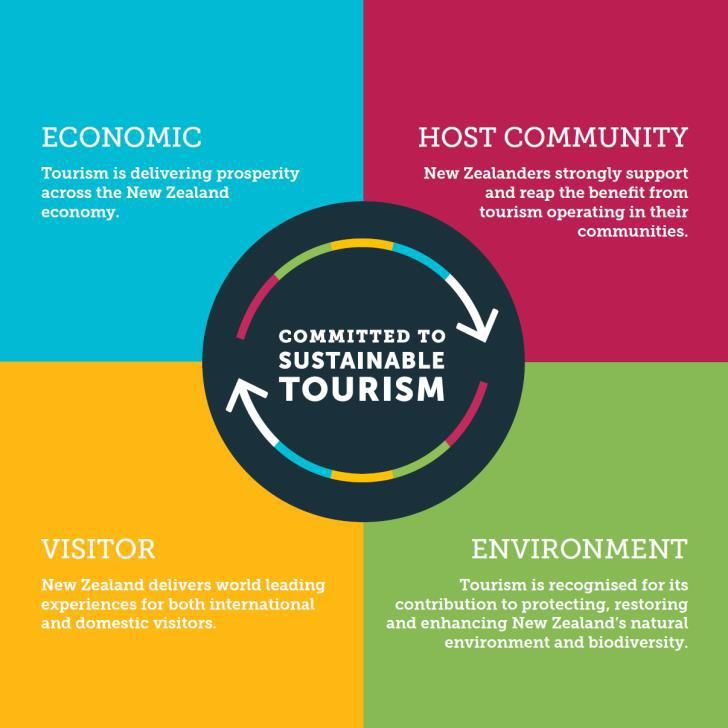
provides specific feedback on the draft Long-term Plan.

This submission is filed without prejudice to TIA’s future position. Our ability to prepare a
comprehensive submission responding to the consultation document relied on the provision
by the Council of information relevant to the connection between the consultation
document and the benefits that would accrue. If any information is provided at a later
date, TIA reserve the right to comment further.

INTRODUCTION

1. Tourism Industry Aotearoa (TIA) is the peak body for the tourism industry in New
   Zealand. With over 1,500 members, TIA represents a range of tourism-related activities
   including hospitality, accommodation, adventure and other activities, attractions and
   retail, airports and airlines, as well as related tourism services.

2. The primary role of TIA is to be the voice of the tourism industry. This includes working
   for members on advocacy, policy, communication, events, membership and business
   capability. The team is based in Wellington and is led by Chief Executive, Chris Roberts.

3. Tourism 2025 (www.tourism2025.org.nz), an industry-led, government supported
   economic growth framework was launched in New Zealand in 2014 and has set an
   aspirational goal of reaching $41 billion in annual tourism revenues by 2025. Spend
   growth has been rapid since 2014 and we are well on target to reach that goal.

4. This year, TIA is working on a Tourism 2025 reset that will include incorporating
   sustainability principles, articulating a longer-term view of tourism in coordination with
   Central Government; and identifying new priority actions to be addressed over the next
   1-3 years.

5. Any enquiries relating to this paper should in the first instance be referred to Nienke
   van Dijken, TIA Policy Analyst at nienke.vandijken@tia.org.nz or by phone on 04 494
   1842.

TOURISM’S IMPACT AT A REGIONAL LEVEL

6. The visitor spend from both international and domestic visitors for Queenstown Lakes
   District Council was $2,721m (YE Feb 2018).

7. The tourism industry makes a significant contribution to regional economic
   development through the jobs and income it creates. Only a fraction of visitor spending
   actually occurs in places commonly considered visitor specific e.g. accommodation,
   attractions. The rest takes place in shops, cafes, petrol stations and other local
TOURISM INDUSTRY AOTEAROA
Level 4, 79 Boulcott Street, PO Box 1697, Wellington 6140, New Zealand
P +64 4 499 0104 www.tia.org.nz E info@tia.org.nz
businesses. Local farmers and market gardeners benefit from selling their goods
directly or indirectly to visitors.
8. On any day of the year, your community is hosting the visitors, domestic and
international, who are helping support local jobs and businesses.
9. One of the keys to a strong regional visitor economy is the quality of the visitor
experience. Councils play an important part in that experience with the investment
they make in infrastructure e.g. roads, water/waste disposal, broadband, attractions
and events in addition to their support for promotional bodies. Councils play a vital role
in helping visitors, as well as ratepayers, make the most of their time in the community.
10. Councils’ planning need to consider the needs of visitors and residents so that the
community can reap the benefits of the visitor economy.
11. In 2016, TIA developed a Local Government Manifesto, outlining eight priority actions
for councils to reap greater economic and social rewards from tourism. A copy of this
manifesto was sent to all Local Councils, ahead of the Local Council Election. For more
details, please refer to Appendix 1.
Challenges and opportunities of tourism growth
12. Tourism growth presents both challenges and opportunities. The visitor economy is a
major driver of regional prosperity but the costs and benefits of increased tourism do
not always fall evenly. However, talk of new visitor taxes and levies must be debated
robustly, with all the issues and options considered. Any form of national or local
tourism tax or levy must be fair, efficient and ring-fenced for tourism-related
investments.
13. We understand that the growth in tourism in your region may bring with it specific
issues. The following section explores some of those likely issues, how the industry is
responding and what you, as a Council, could do.
14.Infrastructure
Recent tourism growth has placed pressure on some infrastructure used by visitors. In
order to better understand and size this issue, TIA undertook a National Tourism
Infrastructure Assessment in 2016/17. The resulting report identified the main
infrastructure deficits in both the private and public sectors.
The priority infrastructure types identified were:
Visitor accommodation
Telecommunications
Airport facilities
Road transport
Car parking
Public toilets
Water and sewerage systems
Much of the infrastructure identified as a priority for investment is local and mixed use
(used by both residents and visitors) and has often seen long-term under-investment.
To optimise the benefits of tourism for host communities, coordination between Central
TOURISM INDUSTRY AOTEAROA
Level 4, 79 Boulcott Street, PO Box 1697, Wellington 6140, New Zealand
P +64 4 499 0104 www.tia.org.nz E info@tia.org.nzand Local Government agencies and industry partners is needed for necessary projects
to proceed.
What the Industry is doing:
TIA successfully advocated for the Tourism Infrastructure Fund resulting in a
$100m fund for local and mixed-use infrastructure.
Tourism sectors able to scale-up quickly are doing so, e.g. the road transport
sector has been able to respond quickly with increased fleet size.
Operators making significant private investment into infrastructure, e.g. Skyline
Queenstown’s $100m redevelopment.
TIA is undertaking work to identify and address the key barriers to infrastructure
investment.
What you as a Local Council could do in regards to infrastructure:
Apply to the Tourism Infrastructure Fund for projects like new carparks, toilets
and visitor facilities.
Coordinate with Central Government and industry partners on infrastructure
needs including submissions to the Provincial Growth Fund.
Ensure the Long-term Plan accurately reflects the infrastructure needs of
tourism.
15.Social Licence to Operate
The fast growth of visitor economy has caused unease in some host communities, with
locals worried about the number of visitors and the impact. This places pressure on the
social licence the industry has to operate within these communities.
What the Industry is doing:
TIA in conjunction with Tourism New Zealand undertakes six-monthly ‘Mood of the
Nation’ research to assess New Zealanders’ views of tourism.
TIA in conjunction with Tourism New Zealand is developing a ‘Tourism Narrative’
project, which includes helping local businesses tell their stories.
TIA is a key partner in NZTA’s Visiting Drivers project to reduce the number of
accidents by visiting drivers.
TIA leads the Responsible Camping Forum, a group of 40 organisations representing
rental operators, industry associations, Local and Central Government working
together to manage freedom camping.
A number of infrastructure initiatives will contribute to addressing social licence
issues such as over-crowding.
What you as a Local Council could do in regards to social licence concerns:
Ensure freedom camping is effectively managed in your region
Promote the benefits of tourism in your region to the local community
16.Sustainable tourism
With the rapid growth achieved in the past few years, the tourism industry is facing the
challenges of managing and sustaining growth, rather than generating growth. There
needs to be purposeful effort to actively manage the industry for its long term
sustainable success.
What the Industry is doing:
TIA has worked with industry and with Government agencies’ support to develop a
Tourism Sustainability Commitment (TSC). The Commitment establishes a set of
TOURISM INDUSTRY AOTEAROA
Level 4, 79 Boulcott Street, PO Box 1697, Wellington 6140, New Zealand
P +64 4 499 0104 www.tia.org.nz E info@tia.org.nzaspirational goals at both an industry and business level across the areas of
economic, environmental, host communities and visitor sustainability. Tourism
operators are signing up to the TSC and working towards implementing the
sustainability commitments within their businesses.
What you as a Local Council could do to support tourism sustainability:
Support the tourism sustainability goal through positive policy and regulatory
settings, and funding.
Sign up the Council or your appropriate agency to the TSC and actively promote
the TSC to your local tourism operators.
17.Protecting and restoring the environment
Tourism is a highly competitive global industry. New Zealand’s environment is our
unique selling point, it underpins our 100% Pure New Zealand tourism position and
supports many of our iconic adventure and outdoor activities. Data from the
International Visitor Survey conducted for the Ministry of Business Innovation and
Employment (MBIE) shows that the top factor for influencing visitors to choose New
Zealand is our natural landscape and scenery.
New Zealand’s natural environmental assets are under threat, including many of our
native species, our freshwater rivers and lakes, and our unique landscapes.
What the Industry is doing:
The environment is one of the four pillars of the Tourism Sustainability
Commitment. The TSC asks that Tourism businesses actively support and
champion ecological restoration initiatives, and that they are measuring,
managing and minimising their environmental footprint.
TIA is a member of the Land and Water Forum and advocates with central
government to protect our natural environment.
TOURISM INDUSTRY AOTEAROA
Level 4, 79 Boulcott Street, PO Box 1697, Wellington 6140, New Zealand
P +64 4 499 0104 www.tia.org.nz E info@tia.org.nzWhat you as a Local Council could do to support our valuable environment:
Recognise the economic value of your environmental assets to tourism
Ensure the Long-term Plan accurately reflects the environmental needs of
tourism
Action the requirements of the National Policy Statement for Freshwater
Management as quickly as possible
Funding
18. Tourism funding in this context relates to financial contributions provided through
Central and Local government. There are two components to tourism funding – the
source of funds and distribution of funds.
19.Sources of tourism funding
International visitors pay taxes and are more than paying their way. TIA believes these
taxes, including the border clearance levy and $1.5 billion a year in GST, need to be
taken into account when additional charges on visitors are contemplated.
Tourism businesses support regional tourism activity through general and targeted
rates, regional marketing alliances and their own marketing efforts.
There are infrastructure funding issues at a Local Government level, especially in
regions with small ratepayer bases. Central Government assistance is desirable in some
cases and there are opportunities for greater user pays and better use of council
balance sheets.
Any new funding models contemplated need to be fair and applied nationally. A
strength of the New Zealand tax system is its simplicity. Ad hoc taxes on visitors or
tourism businesses at a local level are undesirable.
20.Distribution of tourism funding
Central government funding support for local mixed-use infrastructure provided by
Local government requires a robust governance and allocation process.
Any form of tourism tax, such as the existing border clearance levy, must be ring-
fenced for tourism-related investments, not siphoned off for other purposes.
Regional expenditure on tourism marketing and destination management by local
authorities should be consistent with the tourism aspirations of the community and
cognisant of the impact that visitor spend has on the wider community including
employees and suppliers.
21. New visitor taxes and levies must be debated robustly, with all the issues and options
considered. Any form of national or local tourism tax or levy must be fair, efficient and
ring-fenced for tourism-related investments. TIA will vigorously resist any poorly
designed tax or levy proposals that could tarnish New Zealand’s reputation as a country
that welcomes visitors.
TOURISM INDUSTRY AOTEAROA
Level 4, 79 Boulcott Street, PO Box 1697, Wellington 6140, New Zealand
P +64 4 499 0104 www.tia.org.nz E info@tia.org.nzPart Two - Specific feedback on your LTP
22. In the following section, we provide feedback on the tourism components within your
LTP.
23. We understand that Long Term Plans set out a local authority’s priorities in the medium
to long term.
24. We understand that Queenstown Lakes District Council’s priorities are:
Queenstown town centre masterplan
Project connect and libraries
Wanaka masterplan
Water (major capital programme)
Funding small communities’ water needs
Funding the Queenstown Town Centre Masterplan
25. We acknowledge that QLDC is in a difficult predicament in regards to funding the
infrastructure requirements of the LTP. The LTP is ambitious and recognises the long-
term importance of tourism to the Queenstown and Wanaka economies.
26. The proposed introduction of a new targeted rate (Queenstown CBD Transport
Improvement Rate) to fund the Queenstown Masterplan project appears to be a
necessary, albeit unpalatable, requirement to fund the infrastructure growth.
27. Commercial and accommodation properties at the top-end of property values will see
annual rate increases of up to 30.3% ($28,377) and 19.1% ($55,255) respectively as
a result of the targeted rate.
28. When the rate increases required to fund two other major projects (Project Connect
and Water Treatment project) are added, accumulative top-end rate increases move to
34.8% ($32,530) for commercial and 21.7% ($62,789) for accommodation. These are
significant increases, particularly when other councils without the same challenges and
a more conservative approach are signalling annual rate increases around the 4% - 6%
range.
29. The positives, if there are any, coming from the approach to funding the major projects
is that the rate increases are being applied across commercial and residential properties
in a 65/35 split, therefore aiming to spread the cost across the wider set of those who
benefit from the investment.
30. We are concerned that the use of capital value to apportion share of the targeted rate
(commercial portion) inevitability hits the likes of hotels with a much larger share of
the proposed increase, given their capital asset base. We ask Council to consider
other options for the commercial portion that may result in a more equitable
apportionment across commercial operators.
31. We acknowledge that QLDC has been proactive in engaging with Central Government
for infrastructure support. It is encouraging that NZTA may fund $235m over the ten-
year period, including $119m towards the Queenstown by-pass arterial.
TOURISM INDUSTRY AOTEAROA
Level 4, 79 Boulcott Street, PO Box 1697, Wellington 6140, New Zealand
P +64 4 499 0104 www.tia.org.nz E info@tia.org.nz32. Visitors to the QLDC region spent $2,721m (YE Feb 2018). TIA’s long-held position has
been that a component of the GST international visitors pay (currently about $1.5bn
p.a.) should be contributing to tourism needs, in particular to tourism infrastructure
needs. We encourage QLDC to continue advocating for further funding from Central
Government and offer our support for this as required.
33. There is a general concern amongst tourism operators that these significant rate
increases occur at the same time as many operators are investing in their own
products and people to create a better experience for all visitors. The commercial
reality is that only a portion of cost increases can be passed on in visitor pricing and
that ultimately reductions in other spending, e.g. staffing, will be required which in
turn may impact negatively on the visitor experience. Therefore, there needs to be a
wider conversation between Council and tourism operators about funding of
infrastructure, water and other services. TIA and its members would welcome this
conversation with Council.
Local communities embracing tourism
34. The vision of the New Zealand Tourism Sustainability Commitment, launched by TIA in
2017, is to lead the world in sustainable tourism. To deliver on this, we must achieve
ambitious economic goals while sharing the overwhelming benefits with supportive host
communities, contributing to restoring, protecting and enhancing our natural
environment, and continuing to be a high quality destination of choice for domestic and
international travellers.
35. Welcoming, supportive communities are a vital part of what New Zealand has to offer
our visitors. Sustainable businesses have to find ways to protect and enhance their
social license to operate within their communities.
36. This includes active engagement with the communities in which businesses (and
Councils) operate. The economic, social and environmental impacts that tourism has
on a community should be balanced.
37. The Queenstown region currently carries a risk of over-tourism and as such, of the loss
of community support and tourism’s social license to operate in this region. Having
local communities embrace the visitor population is important and not without its
challenges. The issues with freedom camping in Queenstown have had a negative
impact on some local perceptions on the value of visitors.
38. We agree with the Council that tourism is critical to the economic success of
Queenstown Lakes District and that it is critical that the Council hits the right balance
between meeting the expectations of its community and visitors and ensuring the LTP
is affordable.
39. We are supportive of the development of a Wanaka Masterplan in 2018 that will balance
the needs of a growing community that is increasingly seeing the pressures of a popular
tourist destination, and will include solutions for parking, public transport, shared
vehicle and pedestrian access, alternative transport methods, arts and culture, civic
facilities and routes such as dedicated cycle pathways.
TOURISM INDUSTRY AOTEAROA
Level 4, 79 Boulcott Street, PO Box 1697, Wellington 6140, New Zealand
P +64 4 499 0104 www.tia.org.nz E info@tia.org.nz40. Visitor spend figures for February for the Wanaka region show a 28% increase, totalling
$58 million and ranked 2nd in New Zealand for percentage growth1. We do not support
setting investment in this Masterplan aside and waiting until growth in Wanaka
becomes more challenging.
Environment: Fresh water and Coronet Forest
41. As noted, New Zealand’s environment is our unique selling point and our natural
environmental assets are under threat, including our freshwater rivers and lakes, and
our unique landscapes.
42. We are pleased to see that the Council proposes to protect the environment by funding
new wastewater and water supply schemes for small communities. We are supportive
for the Council’s preferred option of introducing a general subsidy in order to protect
the environment by supplementing the cost of smaller community schemes.
43. We are supportive of the inclusion of funding for the revegetation programme in
Coronet Forest, which aims to eradicate pests in the area, offers ongoing maintenance
and construction of tracks. Currently the draft LTP says that these tracks may be
available for walking, bikes and horse-trekking to create a valuable community asset.
We encourage the Council to do all they can to make these tracks available for walking,
bikes and horse-trekking. As the community, including business community, is bearing
the cost of this development through Council rates, we feel they should have access to
these tracks.
Investment in trails
44. Queenstown Lakes District has a well-developed network of cycle trails and tracks
which benefit both the local population and domestic and international visitors. We are
supportive for the Council to work closely with the Queenstown Trails Trust and the
Upper Clutha Tracks Trust to continue to manage and develop cycle trails and tracks.
Follow up process
45. TIA wishes to participate further in any follow-up process, including any formal
meetings, to ensure that the potential impacts on tourism are adequately represented.
BACKGROUND
46. Tourism for New Zealand is big business as the country’s largest export sector. It is a
major contributor to the New Zealand economy that will always be here and won’t
easily go offshore. Tourism takes the lead in promoting New Zealand to the world. The
1
MBIE, Monthly Regional Tourism Estimates, as sourced on - http://www.mbie.govt.nz/info-services/sectors-
industries/tourism/tourism-research-data/monthly-regional-tourism-estimates/monthly-spend-grouped-by-
rto-and-country-of-origin
TOURISM INDUSTRY AOTEAROA
Level 4, 79 Boulcott Street, PO Box 1697, Wellington 6140, New Zealand
P +64 4 499 0104 www.tia.org.nz E info@tia.org.nzbrand positioning built by a vibrant tourism industry has become an important source
of national confidence and identity and a front window for “Brand New Zealand”.
Indeed, the clean and pure offer that is synonymous with New Zealand tourism has
been widely adopted and used to promote New Zealand exports in a range of other
industries as well.
47. The tourism industry delivers the following value to New Zealand’s economy:
Tourism in New Zealand is a $99 million per day and $36 billion a year industry.
Tourism delivers around $40 million in foreign exchange to the New Zealand
economy each day of the year. Domestic tourism contributes another $59 million
in economic activity every day.
The tourism industry directly and indirectly supports 14.5% of the total number of
people employed in New Zealand. That means 399,150 people are working in the
visitor economy.
Tourism is New Zealand’s biggest export industry, earning $14.5 billion or 20.7%
of New Zealand’s foreign exchange earnings (year ended March 2017).
End.
TOURISM INDUSTRY AOTEAROA
Level 4, 79 Boulcott Street, PO Box 1697, Wellington 6140, New Zealand
P +64 4 499 0104 www.tia.org.nz E info@tia.org.nzAppendix 1: TIA Local Government Manifesto 2016
The following Tourism 2025 actions are the priorities for a stronger local
government/tourism partnership. The industry’s eight priorities we would like to see
from Local Government are:
Destination Management
This is the most important thing councils can do – look after and invest in the quality
of your region as a destination.
• Facilitate and enable communities to meet the needs of growing numbers of visitors,
as well as residents.
• Identify your unique selling points as a destination and promote them.
• Work with neighbouring communities to attract visitors to the wider region.
Infrastructure Facilitation
With the rapid growth in visitor numbers, we have to invest in essential infrastructure
and enable the private sector to develop its infrastructure by delivering efficient
planning and approval services.
• Define and plan for the priority infrastructure that meets the needs of visitors as
well as residents.
• Examine the regulatory environment applied to tourism operators and other
businesses serving visitors, and assess where the compliance burden can be
reduced to support increased productivity
Events programming
Events are one of the best tools for encouraging people to visit your community. Use
them to your advantage.
• Schedule events (meetings, conferences, sports events and festivals) outside of the
peak season to foster off-peak travel activity.
• Attract high value business visitors through the availability of quality facilities, such
as convention centres where appropriate.
Measuring Visitor Satisfaction
It is important to understand what your visitors think of your community. If they are
happy, businesses can grow. If you know there are areas of low satisfaction, you can
address the problems. Without this insight, you can’t increase value.
• Track the satisfaction of international and domestic visitors, whether by direct
customer feedback or social media, and use this information to address areas of
dissatisfaction and deliver ever higher satisfaction levels.
Off-peak Marketing
Help your community to prosper by attracting people to visit throughout the year. This
will develop a sustainable tourism industry with more permanent jobs.
• Council-owned or supported marketing agencies (e.g. RTOs, EDAs) build a stronger
focus on promoting off-peak travel activity to high value visitors.
TOURISM INDUSTRY AOTEAROA
Level 4, 79 Boulcott Street, PO Box 1697, Wellington 6140, New Zealand
P +64 4 499 0104 www.tia.org.nz E info@tia.org.nzRegional Development and Tourism
Every region wants to grow and tourism can and does support this goal. Tourism
complements your community’s other industries like wine, horticulture and farming.
• Encourage and incentivise tourism as part of your regional development strategies.
Enabling Airport and Port Facility Development
Great air and cruise links are vital to growing tourism. If your airport or port is council-
owned, make sure long-term plans are aligned with industry forecasts. There are long
lead times, so you have to think ahead.
• Councils work with local airports to establish and implement long-term and
sustainable development strategies.
• Councils work with their port company to ensure cruise tourism is enabled.
Sustainable Tourism Positioning
Every region needs to demonstrate its commitment to look after its economic future
and the resources it uses to operate.
• Identify the regional priorities required to develop a sustainable tourism industry
across economic, social, cultural and environmental considerations.
By actively pursuing these opportunities, your Council can enable real economic and
social gains for their communities.
TOURISM INDUSTRY AOTEAROA
Level 4, 79 Boulcott Street, PO Box 1697, Wellington 6140, New Zealand
P +64 4 499 0104 www.tia.org.nz E info@tia.org.nzYou can also read


