Sustainability Report - Port of Melbourne
←
→
Page content transcription
If your browser does not render page correctly, please read the page content below
Sustainability Report
Message from
                                                            the CEO

                                                            As the CEO of Port of Melbourne, I am proud to launch our inaugural Sustainability Report covering
                                                            our activities to the end of 2018 calendar year.
                                                            As Australia’s largest container and general cargo port, we play a pivotal role in the economic
                                                            prosperity for Melbourne and our key regional and interstate trade catchment areas. We consider that
                                                            the better the Port works, the better Victoria works. We understand the importance of this economic
                                                            responsibility, whilst also recognising that there are additional areas of focus that our business must
                                                            address to strengthen our stewardship role for the many industry and community groups that
                                                            depend on us.
                                                            Our long history as a city-port provides the strategic benefit of being close to our customers
                                                            who use our Port to move trade in and out of the state. However, being a city-port requires
                                                            sensitivity – our aim is to harmonise the commercial operations of the Port with the liveability of
                                                            our community neighbours.
                                                            We are committed to embedding sustainability principles into our operating framework and our

Contents
                                                            long-term planning. This includes prioritising the health, safety and wellbeing of our employees and
                                                            members of the community, upholding and promoting environmental protection standards and
                                                            practices, and ensuring strong corporate governance to enhance organisational resilience.
About Port of Melbourne                                 2   This is our first Sustainability Report and we intend to further develop and mature our approach
Sustainability at Port of Melbourne                     4   over the coming years. We welcome your feedback and look forward to evolving the report in
                                                            future editions.
                                                            I look forward to continuing this important conversation and building on our success with you.
Chapter 1: Delivering for our community and industry    9
Chapter 2: Our people                                  18
Chapter 3: Prioritising health and safety		            22
Chapter 4: Protecting the environment                  26
                                                            Brendan Bourke
Chapter 5: Governance                                  30

Appendix                                               32
Glossary                                               33
                                                            Our goals                                              Our values
Inaugural report based on Port of Melbourne’s               • Developing talented and committed people             Integrity
                                                                                                                             We build trust by acting with
2018 performance                                            • Nurturing a shared city-port vision                                     honesty and transparency

                                                            • Ensuring sustainable                                 Collaboration
                                                                                                                                 We achieve more by engaging
                                                              business performance                                                    and working together
                                                            • Delivering world-class port                          Accountability
                                                                                                                                   We fulfil our commitments,
                                                              facilities and services                                                 take responsibility
                                                                                                                                      for our actions, and
                                                            • Driving integrated freight
                                                                                                                                      celebrate success
                                                              transport outcomes
                                                            • Enhancing Australian and                             Adding Value 	We embrace excellence
                                                              international trading activities                                        and innovation in what we
                                                                                                                                      do and how we do it
SOUTH
AUSTRALIA NEW SOUTH WALES
2 Port of Melbourne · Sustainability Report 2018 3
Sydney
Mildura
Griffith
Melbourne CBD Cootamundra
About Port of Melbourne
Adelaide
Wagga Wagga
Canberra
Deniliquin
Tocumwal
Footscray Echuca
Albury
Docklands Donald
Shepparton (Ettamogah)
Horsham
VICTORIA
Our trading gateways Port of Melbourne
More than 40 commercial shipping
Sustainability at Port of Melbourne
Overview
Warrnambool
Maryvale
lines call on the Port of Melbourne. They
Fishermans Bend
46%
make around 3,000 ship visits each year and
give our importers and exporters vital access
to ports and markets all around the world. of our exports are packed
Our trade catchment area stretches well beyond in regional catchment areas
Victoria’s boundaries. To support and grow regional Burnie
and are transported by
South Melbourne trade in Australia we have business development
Devonport road or rail to the
staff in Wagga Wagga and Tasmania. Port of Melbourne
TA S M A N I A
Port of Melbourne for export.
Port Melbourne
Delivering for our community and industry
Chapter 1
Hobart
CHIN A
41%
28% JAPAN
6%
SOU TH KORE A
About Port of 4%
Our people
Chapter 2
Melbourne THAIL AND USA
5% 8%
6%
Prioritising health and safety
Chapter 3
The Port of Melbourne is Australia’s
largest capital city container and general
Who we are
M AL AYSIA
cargo port, handling more than one-third The Port was previously operated
Williamstown by Port of Melbourne Corporation, a
4%
of the nation’s container trade. We operate
as a landlord port and are responsible Victorian Government entity. In 2016,
NE W ZE AL AND
for planning, operating and maintaining Port of Melbourne Operations Pty Ltd
was awarded a 50-year lease of the
5%
Port land and shipping channels. We
Port of Melbourne by the Victorian Figures based on top five international containerised cargoes for Port of Melbourne FY2018. 10%
ensure the Port has the capacity and Source: Port of Melbourne 2018.
capability needed to handle cargo, Government. The Port of Melbourne
Protecting the environment
Chapter 4
and that facilities and infrastructure are Group is owned by a consortium of
developed and maintained as needed. shareholders with local and global Our operations facilitate the movement of a multitude of goods and materials Capabilities and
that we need to live our daily lives, build new infrastructure and operate
Located in the heart of Melbourne, among
expertise in delivering world-class port
and infrastructure facilities and services. successful businesses. Similarly, millions of tonnes of goods leave our operational assets
growing communities, vital industrial shores from the Port, supporting Australia’s wider export industry. We are responsible for the ongoing
precincts and transport corridors, we maintenance and development of 52
are the cornerstone of Victoria’s Port Our trade Our Port gate kilometres of shipping channels within
freight transport network, operating 24 • Over 2.9 million twenty-foot equivalent • Around 3,000 ship visits per year Port Phillip Bay and the Yarra River.
hours a day, 365 days a year. Melbourne units (TEU) of containers per year • Around 12,500 average
Our facilities include:
Governance
Chapter 5
has continued to develop and evolve • Over 1,200 motor vehicles per day truck movements in and
closely around the Port, supporting the out of the Port per day** • three modern, purpose-built
• Over 95 million revenue tonnes per year
prosperity of thousands of businesses international container terminals;
• Total trade value around $104 billion* • 40 train visits each week ***
and the daily lives of many people • terminal and trade-handling
across south-eastern Australia. facilities; and
Our Port Our infrastructure
Appendix
With the necessary port facilities and • connections to surrounding
• Over 500 hectares of land • 30 commercial berths
transport connections to handle each of road and rail networks, including
the major trades, the Port of Melbourne • 100,000 hectares of Port waters • 7 kilometres of quay line intermodal terminals.
Victoria serves as a vital freight hub for Australia, • 21 kilometres of waterfront • Over $2 billion invested in Port
Glossary
including southern New South Wales, infrastructure over the last decade
South Australia and Tasmania. * Based on Port of Melbourne internal data.
** Based on traffic survey data collected for Port of Melbourne by AusTraffic.
*** Based on Australian Rail Track Corporation data.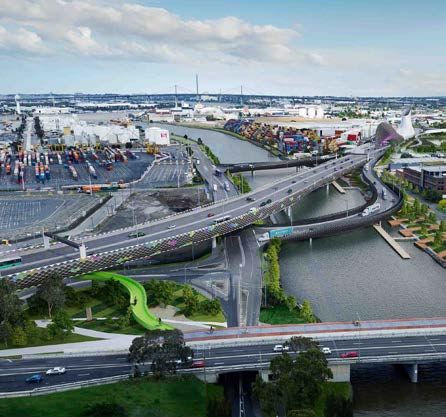
4 Port of Melbourne · Sustainability Report 2018 5
Overview: Port of Melbourne’s
About Port of Melbourne
Sustainability at Port of Melbourne summary of the United
Nations Sustainable
Development Goals (SDG)
and our achievements
and progress
Sustainability at Port of Melbourne
Overview
SDG and
corresponding
chapter Relevance and potential contribution Key 2018 Port of Melbourne achievements
Delivering for our community and industry
Chapter 1
Maintaining the health, SDG target 3.4: By 2030, reduce by one-third premature
safety and wellbeing of our mortality from non-communicable diseases through prevention
employees is a fundamental and treatment and promote mental health and wellbeing
value of Port of Melbourne • Continued to progress our workplace wellbeing program, MAST,
and makes this goal integral by introducing new initiatives and training to enhance employee
to our organisation now health and wellbeing and create a more resilient workforce.
and over the long term.
• Introduced Driver Behaviour Safety Program to raise awareness
As a landlord port, we are in of driver behaviour and reduce potential for accidents.
the position to advocate for
SDG target 3.9: By 2030, substantially reduce the number
best-practice health, safety
of deaths and illnesses from hazardous chemicals and
and wellbeing procedures
Port of Melbourne’s approach to sustainability is defined by our air, water and soil pollution and contamination
related to the operations of
Our people
Chapter 2
commitment to deliver world-class safe, responsible and reliable port Port tenants, Port users, • Zero Port of Melbourne staff and contractors lost time injuries for FY2018.
facilities while respecting and enhancing the environmental, social and licensees, and other Port • Continued to engage across industry to coordinate and collaborate
economic systems within which we operate. stakeholders, achieved through on health and safety initiatives, including management of hazardous
This means cultivating a culture across our business that recognises, contractual agreements and materials and delivering emergency training and exercise programs.
Prioritising health and safety
Chapter 3
legislative requirements. • Port safety project awarded ‘Best Solution to a Specific Workplace
values and takes responsibility for our behaviours and practices now
and into the future. Health and Safety Issue’ in 2018 WorkSafe Awards.
Our people | Delivering for our community and industry | Prioritising health and safety | Protecting the environment
Port of Melbourne’s Sustainable Development Goals
This goal aligns to our SDG indicator 4.3.1: Participation rate of youth and adults in formal and
Australia is a signatory to the United Nations Sustainable Development Goals (the
engagement with community non-formal education and training in the previous 12 months, by sex
Goals) and it is for this reason that Port of Melbourne has adopted these Goals as
by providing a Port Education • Continued to deliver our Port Education Program (including
a framework to be followed. As an important actor within the global supply chain,
Program. We are in a unique online resources) to students at all education levels, including
we recognise our responsibility to contribute towards the achievement of these
position to enhance the public
Protecting the environment
Chapter 4
Goals and prioritise action on shared social, environmental, economic and security technical and vocational education related to supply chain
understanding of the critical and logistics management. This is irrespective of sex, ability or
challenges. Viewed together they present opportunities for us to create meaningful
role of the Port and provide socio-economic status. Our Port Education Program and online
and positive change within our local, national and international communities.
resources to assist in building education resources are provided free of charge for schools.
We have identified the Goals that apply to Port of Melbourne and we have used educational opportunities,
• Primary and secondary schools breakdown:
these to form the basis of our sustainability reporting. A summary of how we including career pathways
• 8 girls schools;
have approached these Goals is provided over the following four pages. to related industries.
• 4 boys schools; and
The balance of the Sustainability Report is divided into five chapters, which • 20 co-education schools.
detail what Port of Melbourne has done against each of the Goals. Goals
Delivering for our community and industry | Our people
Governance
Chapter 5
that are faded do not currently relate to our operations; however, we
are committed to supporting these objectives where possible.
This goal relates to our SDG target 5.c: Adopt and strengthen sound policies and enforceable
diversity objectives and legislation for the promotion of gender equality and the empowerment of
our intent to commit to all women and girls at all levels
Appendix
In 2018, Port of Melbourne participated in gender equality and equal • Continued to recognise gender equality as a key factor in our commitment
its first Global Real Estate Sustainability opportunity in the workplace. to workplace diversity and inclusion across all sectors of our business.
Benchmark Infrastructure Asset Assessment
– undertaking a comprehensive review of • Continued to support flexible work arrangements that allow employees to
our overall sustainability performance. work from home, part-time, or have flexible working hours.
Glossary
Our people
6 Port of Melbourne · Sustainability Report 2018 7
About Port of Melbourne
This goal is central to Port SDG target 9.1: Develop quality, reliable, sustainable and resilient
of Melbourne and our infrastructure, including regional and transborder infrastructure, to support
commitment to deliver economic development and human wellbeing, with a focus on affordable and
world-class Port facilities equitable access for all
and services. This goal also • Completed several safety-driven projects within the Port’s
supports environmental operational environment to enhance infrastructure resilience.
action towards enhancing
• Continued to strengthen connections to road and rail
resource-use efficiency, and
Sustainability at Port of Melbourne
Overview
networks to support the efficient movement of freight.
This goal aligns to our SDG target 6.3: By 2030, improve water quality by reducing pollution, adopting sound technologies
and industrial processes. • The development of the Webb Dock precinct was guided by the
commitment to environmental eliminating dumping and minimising release of hazardous chemicals
Australian Green Infrastructure Council. The project won awards
protection and effective and materials, halving the proportion of untreated waste water
for construction expertise, including its delivery of safe working
resource management and substantially increasing recycling and safe reuse globally
practices, environmental controls and durable infrastructure.
of the Port. We are in a • Undertook a Rock Revetment Improvement Project to improve riverbank
position to collaborate with stabilisation, which reduces soil erosion and protects water quality. SDG indicator 9.1.2: Passenger and freight volumes, by mode of transport
Port stakeholders and to • Continued to develop our Rail Access Strategy (due in 2019) that will
• Continued to uphold Good Environmental Practice of water
implement best practice enhance the long-term viability of the Port.
management, including risk identification of water hazards
water management principles,
through the Port of Melbourne Corporate Risk Register. SDG indicator 9.3.1: Proportion of small-scale industries in total industry
including support for local
• Undertook assurance activities of contractors, tenants and third value added
Delivering for our community and industry
Chapter 1
community groups.
parties, and other relevant service providers to ensure compliance • Facilitated a number of regional forums to identify opportunities for trade,
and effective monitoring and management of water practices. including agricultural start-ups.
• Continued to deliver training activities and emergency preparedness
related to marine pollution and dangerous goods management. Delivering for our community and industry | Prioritising health and safety | Protecting the environment
SDG indicator 6.3.1: Proportion of waste water safely treated
• Engaged with contractors to implement a water This goal relates strongly to SDG target 11.6: By 2030, reduce the adverse per capita
retention and treatment process. Port of Melbourne as a city- environmental impact of cities, including by paying special attention
• Strengthened controls on stormwater management including port with urban communities to air quality and municipal and other waste management
installation of stormwater treatment devices. next to the Port’s operations • Continued to engage with Port tenants to reduce dust emissions.
and landside links. This goal
SDG target 6.b: Support and strengthen the participation of local covers key social amenity SDG target 11.4: Strengthen efforts to protect and safeguard the world’s
communities in improving water and sanitation management cultural and natural heritage.
Our people
Chapter 2
issues relating to public
• Supported local community organisation Ocean Crusaders. spaces, which is a central • Continued to progress our heritage strategy
aspect of the Port’s daily
Protecting the environment SDG target 11.7: By 2030, provide universal access to safe, inclusive
activities, as well as our long-
and accessible green and public spaces, in particular for women
term future development.
and children, older persons and persons with disabilities
Prioritising health and safety
Chapter 3
This goal relates to Port of SDG target 7.3: By 2030, double the global rate of improvement in
Melbourne’s objective to adopt energy efficiency • Maintained public access areas and buffers surrounding Port
energy-efficient practices and interfaces including parks, footpaths and shared pathways.
• Continued to progress our previously adopted energy-saving practices
identify opportunities for across our workplace and Port of Melbourne-controlled sites. SDG indicator 11.a.1: Proportion of population living in cities that
improvement over the long term. implement urban and regional development plans integrating
population projections and resource needs, by size of city
Protecting the environment
• Released the first stage of the 2050 Port Development Strategy and
conducted a number of community and stakeholder consultation sessions.
This goal relates to Port of SDG target 8.3: Promote development-oriented policies that support
• Provided strategic advice to government on major community
Protecting the environment
Chapter 4
Melbourne’s core business productive activities, decent job creation, entrepreneurship, creativity and
development projects where shared Port boundaries exist.
goal to ensure sustainable innovation, and encourage the formalisation and growth of micro, small and
business performance. We medium-sized enterprises, including through access to financial services
are in a position to connect Protecting the environment | Delivering for our community and industry
• Continued to support our stakeholders to maximise trade development
local, national and international and opportunities, and strengthen connections to new markets.
communities to markets,
• Continued to play a vital role in the Tasmanian economy by This goal aligns with Port of SDG target 12.4: By 2020, achieve the environmentally sound
facilitate trade development
handling most of that state’s international and domestic trade. Melbourne’s intent to minimise management of chemicals and all wastes throughout their life cycle,
and generate wealth and
• Participated in a purpose-built blockchain technology project emissions and matters that in accordance with agreed international frameworks, and significantly
employment opportunities.
with Australian and international supply chain companies. may be considered harmful or reduce their release to air, water and soil in order to minimise
Governance
Chapter 5
hazardous to land, air or water their adverse impacts on human health and the environment
SDG target 8.8: Protect labour rights and promote safe and secure environments. As a landlord • Continued to work in partnership to assist with the
working environments for all workers, including migrant workers, in Port, we are also in a position transfer of dangerous goods through the Port.
particular women migrants, and those in precarious employment to advocate for improvements
• Conducted assurance activities to ensure compliance with to waste management and SDG target 12.5: By 2030, substantially reduce waste generation
Appendix
health and safety requirements and standards. environment protection. through prevention, reduction, recycling and reuse
• Continued to uphold our commitment to state and • Continued to benefit from our existing waste management
Commonwealth workplace legislation. system in our workplace, and encouraged contractors
to engage in waste reduction techniques.
Glossary
About Port of Melbourne | Delivering for our community and industry | Prioritising health and safety |
Workplace legislation (Appendix) Prioritising health and safety | Protecting the environment
8 Port of Melbourne · Sustainability Report 2018 9
Chapter 1:
About Port of Melbourne
This goal relates to Port SDG target 13.1: Strengthen resilience and adaptive capacity to
of Melbourne’s operations
and long-term infrastructure
protection through risk
climate-related hazards and natural disasters in all countries
• Continued to support our Environment Policy, which supports Delivering for our community and industry
strategies to effectively manage climate risks.
identification and management.
Protecting the environment
Sustainability at Port of Melbourne
Overview
This goal is highly relevant SDG target 14.2: By 2020, sustainably manage and protect marine
to Port of Melbourne as Port and coastal ecosystems to avoid significant adverse impacts,
waters are recognised areas including by strengthening their resilience, and take action for their
of ecological sensitivity. Our restoration in order to achieve healthy and productive oceans
operations are undertaken • Supported and contributed to the marine pollution clean-
with strict compliance to up with local community organisation Ocean Crusaders to
environmental regulations remove a tonne of rubbish and debris from Port waters.
and legislative requirements.
• Continued to engage with Port stakeholders to identify construction
risks to ecosystems through Environment Management Plans.
• Provided logistical support for the Department of Agriculture
Delivering for our community and industry
Chapter 1
and Water Resources’ Melbourne Marine Pest Survey to detect
invasive marine species in and around Port waters.
Driving economic growth A major source of
Protecting the environment
We play an important
and opportunity employment
role in Victoria’s
This goal relates strongly to SDG target: 15.5: Take urgent and significant action to reduce the The Port is part of the critical The Port has conducted studies to
our land operations and our degradation of natural habitats, halt the loss of biodiversity and, by
economic growth national and international supply assess its contribution to job markets
commitment to protecting, 2020, protect and prevent the extinction of threatened species and prosperity, chain that supports the state and across local and national settings.
enhancing and ensuring national economies, helps Victoria Our most recent studies show the
best practice environmental
• Continued our environmental management and protection with benefits and maintain its competitiveness and Port supported 30,000 full-time
of ecologically sensitive areas within Port-controlled zones,
management across land including Perc White Reserve and Maritime Cove. opportunities extending increases productivity through the equivalent (FTE) jobs in Australia, a
efficient movement of goods. The third of which were directly related to
zones that include ecosystems across Australia.
Our people
Chapter 2
and wildlife habitats. Port is also an important part of the delivery of Port services. In this
the Tasmanian economy, serving as same period, Port activities directly
Protecting the environment | Delivering for our community and industry the key domestic and international and indirectly supported around
trade gateway for the state. 20,000 full-time jobs for Victoria.
EACH VESSEL VISITING Based on studies undertaken in 2018, Supporting local employment is
THE PORT OF MELBOURNE
Prioritising health and safety
Chapter 3
As critical infrastructure, SDG target 17.17: Encourage and promote effective public, public-private and
this goal relates to our role civil society partnerships, building on the experience and resourcing the Port’s operations generated total important for us given our city centre
BRINGS AN ESTIMATED AVERAGE OF economic benefits worth $7.5 billion location. Analysis has shown that
$670,000
as an important hub to strategies of partnerships
work alongside local, state to the Australian economy. The two-thirds of Port-related jobs are
• Engaged with government at all levels to develop the first stage of the 2050 highest level of economic benefit, located in these local government
and national governments Port Development Strategy to ensure alignment with growth projections.
to strengthen action totalling slightly over $4.3 billion, was areas that border the Port.
• Engaged with Federal Government regarding a National Freight and brought to the inner Melbourne region,
towards sustainability.
Supply Chain Strategy. IN AUSTRALIAN HOUSEHOLD INCOME* comprising the local government areas
t
of Melbourne, Hobsons Bay, Port Phillip
Delivering for our community and industry and Maribyrnong, where the majority of
Protecting the environment
Chapter 4
the Port’s daily activities are located.*
Total benefits Total FTE jobs
$7.5b 30,000
Governance
Chapter 5
Appendix
Victoria $6b Other $900m Victoria 20,000 Other 2,900
Tasmania $600m Tasmania 7,100
Glossary
* Based on November 2018 data commissioned for Port of Melbourne.
10 Port of Melbourne · Sustainability Report 2018 11
Grants, sponsorships and industry participation 2018
About Port of Melbourne
19 community and
148 school groups, industry events sponsored We play an active role in improving contributing across community and industry
tertiary institutions and and hosted through meaningful partnerships, support programs, grants and sponsorships.
community groups
through the Port
$84,000 Education Centre The Hunger Ride
Melbourne
for community 20+ Port tours Donated to FoodBank Victoria’s The Hunger Ride, helping raise more than
and industry 3,000+ Port tour $61,200 and providing vulnerable children and families with emergency food relief.
events support attendees
Sustainability at Port of Melbourne
Overview
Open House Melbourne
Joined 150 other major buildings and sites across Melbourne to take part in this
major city event. We ran six guided boat tours around major Port facilities and
6,591 Port 12 charities attracted 1,250 visitors.
Education supported
visitors Ocean Crusaders ‘Paddle Against Plastic’
Sponsored and participated in this event at Moonee Ponds Creek, removing more
than a tonne of rubbish and debris from community waterways.
Mission to Seafarers and Stella Maris
Continued to contribute financial assistance to these organisations which provide
Delivering for our community and industry
Chapter 1
care and wellbeing support services to seafarers visiting the Port of Melbourne.
The Mildura Fruit Company-Seaway Intermodal, Nangiloc Colignan Farms,
Riverina
Charity Golf Day
Sponsored and participated in this industry networking event to raise money
for various charities and organisations in the region.
Ricegrowers Association Conference
Sponsored this important industry event that brings together major
stakeholders across the Australian rice growing sector.
Riverina International Trade Network
Organised this key industry event, bringing together stakeholders from the
Our people
Chapter 2
agricultural sector and across the region.
2018 NSW Business Chamber Regional Awards
Sponsored this event recognising business excellence and contribution
to industry.
Prioritising health and safety
Chapter 3
Embracing our Lending a hand Community partnerships
community connection through fundraising In 2018, we partnered with one of
our tenants, FoodBank – Australia’s Tasmanian Export Awards
Tasmania
Port of Melbourne fosters a shared city- Throughout 2018 our staff led a
largest hunger relief organisation – to Sponsored this prestigious industry awards evening that recognises the
port vision and our commitment to the number of fundraising initiatives that
establish a corporate-social partnership contribution of local export businesses to the Tasmanian economy.
community goes well beyond the Port have supported causes across our
program. This partnership will assist
gate. Our unique location has allowed community. These include: Tasmanian Freight and Logistics Forum
FoodBank’s mission to operate across
us to be at the centre of a rapidly • The Royal Children’s Hospital Sponsored this annual forum that brings together experts across sectors to
a nation-wide logistics network to
expanding city, and we strive to play an Good Friday Appeal discuss important issues for Tasmanian trade.
deliver groceries, meals and school
active role that positively contributes to
Protecting the environment
Chapter 4
• Australian Wildlife Conservancy breakfast programs to help those
the communities in which we operate.
• Wagga Women’s Health Centre experiencing food insecurity.
• Dup15q Australia
Listening to our community • Médecins Sans Frontières Australia Case study:
We believe that listening and
• Jeans for Genes
responding to community concerns are Helping farmers through drought relief
essential to being an engaged, good • Loud Shirt Day for Taralye
• NSW Farmers Drought Relief Fund In July 2018, Port of Melbourne joined forces across the supply chain to
and responsible neighbour. We have
provide assistance to drought-affected farmers in southern and central
targeted engagement on key matters
Governance
Chapter 5
New South Wales who were unable to feed their stock due to
of interest, including the Port’s long-
term planning and development, as well Employee volunteering below-average rainfall.
as informal engagement through Port We encourage our staff to take part The collective effort across Tasmania and Victoria saw more than 450
tours, community events and social in our positive community action tonnes of hay transported across the Bass Strait, as well as tarpaulins to
media. We promote open, honest and through volunteering. In 2018, staff cover the loads and drivers who volunteered their time to deliver to the
Appendix
transparent dialogue with community dedicated their time to helping out with affected areas.
members and value a shared platform FoodBank and Ocean Crusaders.
Port of Melbourne waived the wharfage fees that would have been incurred
of communication. This allows us to
for any relief hay coming through the Port from Tasmania.
be responsive to the community and
Glossary
provide prompt and relevant feedback. To complement the initiative, we also hosted a Farmers Drought Relief Morning
Tea in our office to raise money for farmers in the Riverina district.
12 Port of Melbourne · Sustainability Report 2018 13
Enhancing public experience Preserving our heritage
About Port of Melbourne
Shared Port spaces The Port contains a diverse range of
heritage assets and archaeological sites
We created shared Port spaces to provide publicly accessible including piers, lighthouses, navigational
areas in many places while establishing a boundary between aids and shipwrecks that are listed
Port operations and sensitive land uses. The shared on the Victorian Heritage Register.
Port spaces safeguard port operations and enhance the
amenity for residents, workers and visitors to the area. Port of Melbourne maintains a Heritage
Policy that guides the stewardship
Sustainability at Port of Melbourne
Overview
36 hectares of Port of Melbourne land are made up of of valued heritage landmarks within
shared Port spaces and are integrated into pedestrian, the Port precinct, and ensures
cyclist and road networks. that heritage conservation and
Port boat tours management are considered in our
overall property planning, development
Port of Melbourne conducts regular boat tours that give
and management functions.
members of the public the opportunity to understand and
experience Port operations up-close. The tours provide Right: Hobson’s Bay and the River Yarra. This map by
Commander Cox in 1864 shows the course of the Yarra
a guided commentary from Port of Melbourne staff and before the improvements in the 1880s and 1890s.
include visits to Port areas along the Yarra River. La Trobe Map Collection, State Library of Victoria.
A small booking fee is charged for the tours, with proceeds
Delivering for our community and industry
Chapter 1
going towards future community sponsorships.
Port Heritage Trail 5
As part of the Port’s shared spaces, the
Port Heritage Trail was established to 6
offer visitors a unique perspective on
Melbourne’s maritime history. The trail
stretches 22 kilometres around the Port, 7
and special markers provide information
Case study: and historical images. The Trail allows 4
visitors to explore the rich history
Perc White Reserve and Maritime Cove of the Port while walking or cycling 8
Our people
Chapter 2
along established shared-use paths.
As part of the Port Capacity Project, the The design and maintenance of the
Perc White Reserve and Maritime Cove area have significant environmental 1 Station Pier
Playscape were created to provide an and social considerations, including:
inviting area for the community to enjoy. 2 Westgate Park 9 3
• the existing vegetation, constructed
boardwalks, lighting and furniture;
Prioritising health and safety
Chapter 3
Maintained by Port of Melbourne,
3 Rotten Row 2
the area embraces the social and • transport infrastructure
environmental zones surrounding connections to broader pedestrian
the Port, with the local ecology and cycle networks; and 4 Moonee Ponds Creek
providing a sustainable place • connections through to Webb 10
to discover green corridors. 5 Confluence of rivers
Dock, Westgate Park and Todd
and Williamstown Roads. 6 Footscray Wharf
11
7 Whitehall Street
Protecting the environment
Chapter 4
1
8 Francis Street
9 Stony Creek
10 Spotswood
11 Riverside Park
Governance
Chapter 5
12 Point Gellibrand
Appendix
Glossary
12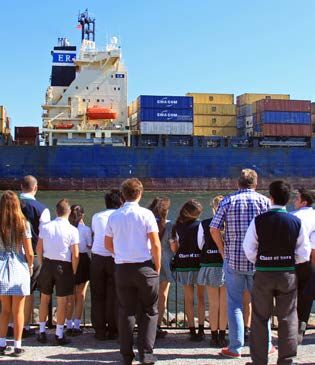
14 Port of Melbourne · Sustainability Report 2018 15
Working to improve transport networks Working with government Case studies:
About Port of Melbourne
As our population grows and inner Melbourne becomes busier, the efficient Maintaining open and constructive
movement of goods around the state becomes more challenging. Urban dialogue across all levels of government
Fishermans Bend West Gate Tunnel Project
congestion restricts economic efficiency and liveability of major cities. It is important to us. Facilitating To ensure appropriate planning measures are considered, Completion of the West Gate Tunnel Project by the
also detracts from amenity (safety, noise, environmental concerns and collaboration and partnerships based Port of Melbourne is providing strategic advice around Victorian Government will provide the Port with direct
community liveability) and generates pollution and social impacts by on shared aims and interests of the precinct planning of Fishermans Bend Urban Renewal connections to the western and northern suburbs, where
keeping people delayed from their activities, families and friends. liveability, opportunity and prosperity Area to ensure shared boundaries and key freight routes a significant portion of the Port’s imported containers go.
is key to our sustainable future. are created and managed effectively over the long term.
Although 90 per cent of the Port’s containers are currently transported by Port of Melbourne is working closely with the key
Sustainability at Port of Melbourne
Overview
Central to working with government Fishermans Bend image: supplied by Victorian Government
project stakeholders to ensure the project is designed
trucks travelling on the major metropolitan road network, they represent only Department of Environment, Land, Water and Planning 2018.
is identifying shared initiatives that to optimise benefit and any disruption to road users
a small portion of all trucks and commercial vehicles seen on our roads.
facilitate trade development, attract is minimised and managed appropriately.
The remaining 10 per cent of Port containers are transported on rail.
investment and grow the economy.
Port of Melbourne is currently planning to improve the on-Port rail network The West Gate Tunnel Project is scheduled
Local Government for completion in 2022.
to enable transport of a greater portion of the Port’s containers by rail.
This will allow the Port freight supply chain to decrease its reliance on We form a part of four municipalities West Gate Tunnel Project image: supplied by the West Gate Tunnel Authority 2018.
the use of trucks and improve social and environmental outcomes. that provide valuable insight and
advice to guide sensible planning and
Delivering a Rail Access Strategy improvements to the liveability around
the Port. Working with local government
Port of Melbourne recognises that enhancing its rail capacity is important to ensures that an integrated approach
Delivering for our community and industry
Chapter 1
the long-term growth of the Port. As trade increases, rail will play a key role to planning is undertaken, which is
in Port productivity and will be integrated across our Port operations. integral to recognising the current
Increasing our rail capacity plays a major role in enhancing our long-term and future requirements of the Port.
sustainability by assisting with road congestion, improving social amenity, Victorian Government
and optimising Port productivity to support supply chain efficiencies.
The Port of Melbourne and the Victorian
The Rail Access Strategy supports wider government initiatives including the Government share obligations under
Victorian Freight Plan and the National Freight and Supply Chain Strategy. the terms of the 50-year Port Lease.
Our contractual obligations ensure
that we are commercially aligned with
the strategic interests of the state.
Federal Government
Our people
Chapter 2
Port of Melbourne engages with
Federal Government to enhance
freight and transport networks and
identify opportunities for growth
on a national scale. Similar to our
Prioritising health and safety
Chapter 3
engagement with the Victorian
Government, long-term planning of
the Port must consider government
forecasts to ensure appropriate
infrastructure and planning are in place.
In 2018, Port of Melbourne provided
submissions to the National Freight
and Supply Chain Strategy and
consulted closely with relevant
Protecting the environment
Chapter 4
federal departments and agencies.
Developing the Port in the long term
Governance
Chapter 5
In September 2018, Port of Melbourne delivered the first stage of its 30-year
Port Development Strategy. We hosted a number of public consultations
and forums with community, government and industry stakeholders.
This process provided valuable feedback around the Port’s planning,
Appendix
development and operations that is integral to ensuring our future planning is
smart, responsible and mindful of community and industry considerations.
The first stage of the strategy included the public release of the Port Development
Strategy Discussion Paper, which outlined our high-level plans and approach
Glossary
for developing the capacity and efficiency of the Port over the next 30 years.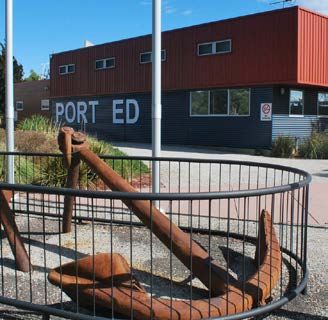
16 Port of Melbourne · Sustainability Report 2018 17
Advancing our
About Port of Melbourne
industry networks Innovation
Port of Melbourne operates within
Embracing innovation plays an
a complex network of diverse local,
important role in ensuring Port of
national and international participants,
Melbourne continues to deliver
all of whom play a critical role in
premier Port facilities and services.
providing services to the logistics
Industry
supply chain that supports the effective Emerging blockchain technologies
Sustainability at Port of Melbourne
Overview
Community associations
operation of the Port. around the world are providing new
opportunities to think creatively about
We advocate system-wide for greater
service delivery within Port logistics,
efficiencies across the entire Port
improving efficiency and transparency.
freight supply chain, and coordinate
with our industry partners to deliver In 2018, Port of Melbourne was
solutions that drive growth and part of a ground-breaking trade
economic prosperity. experiment that facilitated the
Government movement of 17 tonnes of almonds
Terminals
from Sunraysia in Victoria, to
Hamburg in Germany. The experiment
Delivering for our community and industry
Chapter 1
was part of a larger collaboration
between the Commonwealth Bank
of Australia and five Australian and
international supply chain leaders.
Shipping lines
Port of Melbourne will continue
to identify opportunities to apply
and capitalise on more innovative
Transporters and efficient solutions to meet the
Freight forwarders Cargo owners trade demands of the future.
Community
Our people
Chapter 2
Helping our trade regions grow Global Port
Industry associations Business development Port Access Forum Riverina International Trade Network Functional Grains Centre Partnerships Program
Port of Melbourne is proud to partner workshops Port of Melbourne is actively engaged and Albury-Wodonga International An initiative of the Graham Centre Port of Melbourne has maintained
with key industry organisations with the transport operators who Trade Network
Prioritising health and safety
Chapter 3
To enhance business development for Agricultural Innovation at Charles long-standing and continuous relations
in support of an efficient supply service the Port and regularly host a Sturt University and funded by the
opportunities with Port stakeholders, with international ports under the
chain and logistics sector. Post Access Forum, sharing information Australian Research Council, Port of
Port of Melbourne conducts regular Global Port Partnerships Program.
relating to both operational issues and Melbourne engages with this centre to
workshops and presentations. These The Program has included staff
strategic planning for more efficient help identify national and international
events are useful opportunities to exchange programs, delegation visits
access to the Port. consumer trends and new products
discuss important information relating and international conferences.
to trade, Port operations and Port The Forums are attended by a that will influence consumer and trade
development, and may include a guided demand for grain now and in the future. In 2018, Port of Melbourne hosted
broad range of Port stakeholders,
tour of the Port. Throughout 2018, 30 the 19th Sister Ports Conference,
including transport operators, Charles Sturt University
presentations and 16 Port tours were bringing together representatives
Port of Melbourne tenants, cargo
Protecting the environment
Chapter 4
conducted, with 721 attendees in total. Port of Melbourne participates in the from our international Port network.
owners and shipping lines.
Charles Sturt University Regional
An initiative of Port of Melbourne, the These experiences promote mutually
Melbourne Port System objective of the Riverina International
Consultative Committee, engaging with
rewarding friendship and cooperation,
Industry Induction Port pricing stakeholder Trade Network and the Albury-
our Murray-Riverina stakeholders and
strengthen international trade and
providing advice and recommendations
engagement Wodonga International Trade Network
on supply chain and logistics
prosperity, and provide a platform to
Launched in 2012 and continuing is to provide regional stakeholders exchange development information,
today, we established the Melbourne Prior to the release of our Reference management and opportunities.
who are engaged in international trade technology and expertise. Importantly,
Port System Industry Induction Tariff Schedule in May each year, Port of
to meet, network and share regular AgriFutures Australia these relationships facilitate dialogue
(MPSII) seminars and workshops to Melbourne hosts a series of stakeholder
and give access to a wider range of
Governance
Chapter 5
information on key trade issues and Port of Melbourne works closely
provide an introduction and overview consultations to provide information
opportunities. Held quarterly in regional with AgriFutures Australia, which is current approaches to the shared
of the Melbourne Port System and relating to the Port’s planned pricing
New South Wales, it encourages dedicated to enhancing research, challenges faced by ports worldwide.
logistics supply chain. Held on-site at schedule for the ensuing financial year.
trade and actively seeks new and leadership, innovation and learning
the Port of Melbourne, participants In 2018, we hosted 24 of these innovative ways to help maximise Port of Osaka
across regional industries. We provide
receive an overview of the network engagement sessions across Victoria, global opportunities and create Port of Yokohama
Appendix
assistance in identifying agricultural
across freight and logistics sectors New South Wales and Tasmania, new partnerships and alliances. start-ups that display export potential.
to develop a greater understanding including regional centres. Collectively Port of Oakland
of how their role fits into the wider they drew 452 participants including Port of Philadelphia
supply chain. In 2018, more than 250 Port users, industry, government
Glossary
people attended these seminars, which and community members. Port of Tianjin
included a guided tour of the Port. Port of Shanghai18 Port of Melbourne · Sustainability Report 2018 19
Chapter 2:
About Port of Melbourne
Our people
Sustainability at Port of Melbourne
Overview
Workplace wellbeing Movers and Shakers Encouraging a
Looking after our employees and Team (MAST) broader dialogue
providing support are priorities
MAST is our primary wellbeing Employee Town Halls
for Port of Melbourne. We take an
program that takes an interactive Port of Melbourne conducts monthly
active role in promoting healthy
approach to employees’ health and ‘Town Hall’ gatherings attended by
lifestyles, including physical, mental
wellbeing. It provides opportunities all employees and hosted by our
and social wellbeing, that helps
for employees to participate in CEO. Town Halls provide an update
build positive work environments
various activities, including increasing on overall business performance
and organisational resilience.
health knowledge and awareness. and health and safety incidents,
We have a number of activities and as well as achievements of the
In 2018, workplace wellbeing
Delivering for our community and industry
Chapter 1
programs in place that inspire staff to Company and individual employees.
activities included:
focus on their health and wellbeing
and create balance between their • fitness groups; Staff also present at these gatherings
work and home lives. Staff also have • yoga classes; and highlight specific projects and
access to counselling services under new developments happening across
• weekly walking groups;
our Employee Assistance Program. corporate divisions. The forums
• relaxation therapies;
As an organisation we are Fostering an open, diverse and inclusive workplace • health screenings and workshops; and
help facilitate inclusivity and positive
whole-of-business engagement.
committed to prioritising a safe,
healthy and harmonious working
Employee engagement Workplace flexibility • women’s training and fitness classes. Treasure Chest Talks
environment that values the Port of Melbourne conducts an annual Employee Engagement Survey that Port of Melbourne understands
provides valuable insight into what our employees feel is important and helps MAST also supports a number of social Given the extensive and diverse nature
contribution made by all that staff have many competing initiatives that promote workplace of Port of Melbourne operations, it can
identify areas that require improvement. In 2018, we had a 93 per cent Employee responsibilities outside of work that
our employees. Engagement Survey participation rate. health and wellbeing awareness. be difficult for staff to be aware of the
can place pressure on individuals,
Our people
Chapter 2
We achieve our business goals by Starting a conversation, leading daily tasks and operations of colleagues
The results of the Employee Engagement Survey are reviewed by the Senior families and working environments. workshops and providing support across the Company. To improve this,
encouraging a culture that is inclusive, We recognise that this has the
Leadership Team, which establishes action plans and priorities, shares findings services are meaningful ways we build we introduced Treasure Chest Talks,
collaborative and high performing. potential to lead to significant health
with staff and collaborates across the Company to design and implement solutions. a positive and healthy workplace. which select an employee or team to
Port of Melbourne recognises that and wellbeing risks, as well as low present on their role and function at
Valuing diversity productivity in the workplace. In 2018 this included:
Prioritising health and safety
Chapter 3
our staff are the key to the successful the Port. Everyone is encouraged to
management of a large port when We define workplace diversity as recognising, respecting and valuing differences. • Women’s Health Week; attend to enhance their understanding
We have systems in place to assist
it comes to our daily operations, We endeavour to create a workplace where everyone has the opportunity to of Port operations as well as
full-time and part-time employees make • Men’s Health Week;
customer liaison, project delivery and participate fully and is valued for their distinctive skills, experiences and perspectives recognise the diversity and breadth
flexible work arrangements. Employees • R U OK? Day; and
shaping our future plans. they contribute. This is based on respect and appreciation for what makes us of colleagues’ expertise that helps
can make use of these arrangements
unique, be it age, gender, ethnicity, religion, disability, sexual orientation, education, • National Safe Work Month.
Many of our staff work directly with to help balance work and personal keep the Port running successfully.
and cultural identity.
customers and stakeholders to responsibilities, in turn fostering and
A key part of our inclusive culture is our ongoing commitment to champion maintaining a positive, healthy and
enhance our services and facilitate the
gender equality and equal opportunity in the workplace and, where inclusive workplace and workforce.
Implementing
movement of trade throughout the Port.
possible, across our industry. workplace excellence
Protecting the environment
Chapter 4
Many others work behind the scenes Staff implementing flexible
to plan and manage the development Throughout 2018, staff completed Appropriate Workplace Behaviour Training working arrangements: Integrated Management System
of the Port, manage information and Programs, including unconscious bias training to raise awareness of structural
generally support the delivery of The Compass is the Port of
barriers within the workplace.
services directly or indirectly to Melbourne’s Integrated Management
our customers. In 2019 we will continue to promote gender equality and equal opportunity at System (IMS) that delivers a
all levels and work towards identifying initiatives that promote and recognise documented and auditable approach
women’s participation and leadership in the workplace and across the industry. October is National Safe Work to what we do and how we do it.
Workforce 2018 Month and Port of Melbourne
Gender breakdown celebrated this important initiative It’s a systematic and collaborative
Governance
Chapter 5
with a host of events, seminars approach to designing, reviewing and
Full-time permanent 67 28 95 and presentations surrounding documenting our key procedures and
health, safety and incident analysis processes, the purpose of which is
in the workplace and on-site. to drive operational excellence and
Part-time - 7 7 deliver International Organization
The initiative reaffirms our
Appendix
for Standardization Compliance
commitment to building a safety- across four key areas: Quality, Safety,
Casual 5 1 6 54 Flexi-time staff first culture within our organisation Environment, and Asset Management.
and ensuring this knowledge and
Permanent Executive Board 7 Part-time experience are understood and
Glossary
Total 72 36 108 workforce Management shared by all employees.
31% 20% 25% 6 Purchase leave20 Port of Melbourne · Sustainability Report 2018 21
Helping future generations through education Building pathways
About Port of Melbourne
We recognise the importance of educating younger generations on the complex to the workplace
operations of the Port industry, including the critical role the Port plays in
Port of Melbourne engages with
international trade and commerce, shipping, and logistics and supply
universities to provide tailored
chain management.
In 2018, we spent classes and curriculum that support
industry-based learning and highlight
an average of 1.65 per cent of Our Port Education Program potential career opportunities in
remuneration on learning the logistics industry. In 2018, Port
Sustainability at Port of Melbourne
Overview
Port of Melbourne is pleased to provide a specialised Port Education Program of Melbourne gave presentations
and development. tailored to fit with the Australian National Curriculum, which explores the Port’s to a total of 100 tertiary students
operations and international trade networks. completing courses in International
We offer specific classes and guided tours of the Port to primary, secondary Trade and Supply Chain Logistics at
and tertiary students as well as online resources for students and teachers, leading Victorian tertiary institutions.
which are accessible through our website and free of charge. Port of Melbourne All classes are held in our Port
currently provides teacher resources including whole unit plans and corresponding Education Centre, located in the
activities, including fieldwork, for the subjects of Humanities, Economics and heart of the Port of Melbourne,
Business, and Geography. on the Yarra River, opposite the
We also provide a variety of student resources that enhance learning on the vital Port’s Swanson Dock international
Delivering for our community and industry
Chapter 1
role of the Port and how it affects our daily lives, economy and the future. ‘From container terminals. Although most
Ship to Shop’ is one of our key online resources (available through our website) of the activities within the Port are
and takes students on an interactive journey to learn about the traded goods and not accessible to the general public,
commodities that pass through the Port each day. our Port Education Centre gives
students and visitors a window into
the Port industry, and a first-hand
look at managing critical infrastructure
from a health, safety, environment
and supply chain perspective.
Our Port Education Centre also
hosts education and training
seminars for community groups
In 2018, our and the logistics industry.
Our people
Chapter 2
Supporting employee Graduate program Port Education Centre
learning and development Port of Melbourne’s engineering graduate program eases candidates into the conducted 148 presentations
We believe that supporting and
workforce and gives them the skills necessary to become part of the larger team.
The program lasts up to two years and in some cases candidates will enter a
to more than 6,500 visitors
Prioritising health and safety
Chapter 3
facilitating our employees’ learning
and development will increase
permanent position earlier based on progress and business requirements. across school groups,
our organisational capability and The program is structured in a way to develop graduates by providing necessary tertiary institutions and
maximise employee potential. work and life skills, training and development opportunities, industry exposure, and community groups.
educational assistance.
Developing employees will enable
Port of Melbourne to acquire the Port of Melbourne’s graduate program is an important way to develop a pipeline of
competencies and knowledge future leaders and supports succession planning to future-proof the business for
necessary to meet business objectives years to come.
and operational requirements.
Protecting the environment
Chapter 4
Matthew Brooks, 2018 graduate:
In 2018, we supported employees’
educational and professional “Being able to work on large projects around the
development pursuits to enable Port right out of university has been great for
these endeavours. These included: my professional development. I’ve been lucky
• internal and external courses; enough to be involved in a range of projects so
far, ranging from upgrading bollards, geotechnical
• study leave support; studies, and a full berth remediation. I’m looking
• technical training; and forward to developing my skills further and gaining
• professional qualification renewal. experience across a wide range of projects.”
Governance
Chapter 5
Darsha Jayakody, 2018 graduate:
“The most interesting aspect of working at Port
of Melbourne as a graduate is the people. There
Appendix
is a wealth of expertise in our workplace and
my colleagues have been positive and invested
in my learning and development from the start.
I’ve been involved in major projects, including
developing and identifying spatial location of
Glossary
our critical assets, specialising in wharves.”You can also read


