SWISS REVIEW - How Apollo 11 and a sheet of foil put the wind in Swiss sails Scaling the wall - Petra Klingler has the Olympics in her sights All ...
←
→
Page content transcription
If your browser does not render page correctly, please read the page content below
SWISS REVIEW
                  The magazine for the Swiss Abroad
                              May 2019

How Apollo 11 and a sheet of foil
put the wind in Swiss sails
Scaling the wall –
Petra Klingler has the Olympics in her sights
All that glitters –
Switzerland’s gold mining dilemma
liberal

                                                                                                                                                                           Innovation
       The Liberals

                                                                                                                                                          Progresso
                                                                                                                                                    und
       International
                                                                                                                                                    weltoffen
                                                                                                                    liberal
                                                                                                                              liberal and libéral et

                                                                                                                  Gemeinsinn
                                                                                                                               Cohésion

                               ld
                                                                                                                                                                                               Fortschritt

                          e Wor                                                                                          ed     open to ouvert

                                                                                                                                          Liberté
                        th

                                                                                                                                                                                        1848
    Liberal and Open to                                                                                                           Freiheit
                                                                                                                        avert the world au monde
                                                                                                                                                    liberali e
                                                                                                                                                                                           Coesione

                                                                        l.ch
                                                    www.fdp-internationa

                                                                                                                                                                            Libertà
                                                                                                                                                    aperti

                                                                                                                                                                Cohésion
     Advance together                                                                                                                               al mondo
                                                                                                  @www.fdp-international.ch / F: FDP The Liberals International / T: FDPInte

The federal elections 2019
will take place on 20 October
Swiss Abroad who are registered on an electoral roll
may elect their National Councillors, and also
their members for the Council of States
in some cantons.
Find out more on
www.aso.ch/en/politics/
federal-elections-2019
                                                                                                                                                                                                             Photo © djama / Fotolia.com

Partners of the Organisation of the Swiss Abroad:

                                                                        International Insurance
Contents Editorial 3
From the moon to the stars
5 Mailbag Anyone and everyone who enjoys science fiction will
have heard of Jules Verne (1828–1905) – a pioneer of
6 Focus the genre who described things that no one really else
The first moon landing was one giant leap could. He travelled around the world in 80 days, jour-
for Berne’s space science programme neyed to the centre of the Earth, and flew to the moon.
In purely literary terms, Verne set foot on the moon
10 Politics in 1865, a good century before US astronaut Neil
No other country consults its people Armstrong.
more frequently than Switzerland From afar, the Earth looked like a “cloudy light” and a “dark spot, drowned
in the solar rays” according to Verne. This is incorrect – we live on a blue pla-
The Swiss gold industry
net. Blue because we now know what the Earth actually looks like from space.
is under scrutiny
Space science has transformed our understanding of things.
Take the first moon landing 50 years ago, for example. Thanks to the Uni-
14 Sport
versity of Berne’s solar sail (or Solar Wind Collector), Apollo 11 was also a ma-
Sport climbing at the Olympics –
jor Swiss event. Astronauts Armstrong and Aldrin made sure that this expe-
Petra Klingler is aiming high
rimental device was in place even before they thrust the American flag into
the lunar soil.
News from around the world
As you will learn in Berne-based journalist Dölf Barben’s lead article, the
reputation of Swiss space science has gone from strength to strength ever
17 Literature series
since. Metaphorically, Berne’s physicists have travelled from the moon to the
stars. Their research continues to help change our view of the universe – from
18 Society
taking high-resolution images of Mars, to searching for planets outside our
Women’s strike across Switzerland –
solar system.
what are today’s activists demanding?
Former astronaut Claude Nicollier from Vaud notwithstanding, Switzer-
Civilian service is popular – now the land has remained a nation of space researchers to this day rather than
government wants to make it less attractive becoming a space travelling nation. Science is first and foremost a story of
delving into the vast unknown. It is about the beauty of knowing, learning,
23 OSA news understanding and comprehending. This ethos is more important than ever
as a counterpoint to the growing clamour among those who view near-Earth
25 news.admin.ch objects as a potential source of raw materials. Especially, it is also an antidote
The number of Swiss Abroad to the global superpowers hell-bent on militarising space – talks in Geneva
has risen to 760,000 to prevent an outer-space arms race ended in spectacular failure at the
beginning of April.
28 Images The lesson from Berne is that we should maybe attend to some of the much
The village photographers whose body more pressing and urgent problems on our own planet first. And that we
of work resembles a long-term anthro- should probably let science fiction writers worry about manned missions to
pological study the red planet. In the words of one of the Berne physicists who worked on the
solar sail 50 years ago: “The red planet is so far away. Most people don’t even
30 Books / Sounds know where it is in the night sky.” So why fly there? MARC LETTAU, EDITOR-IN-CHIEF
31 Top pick / News
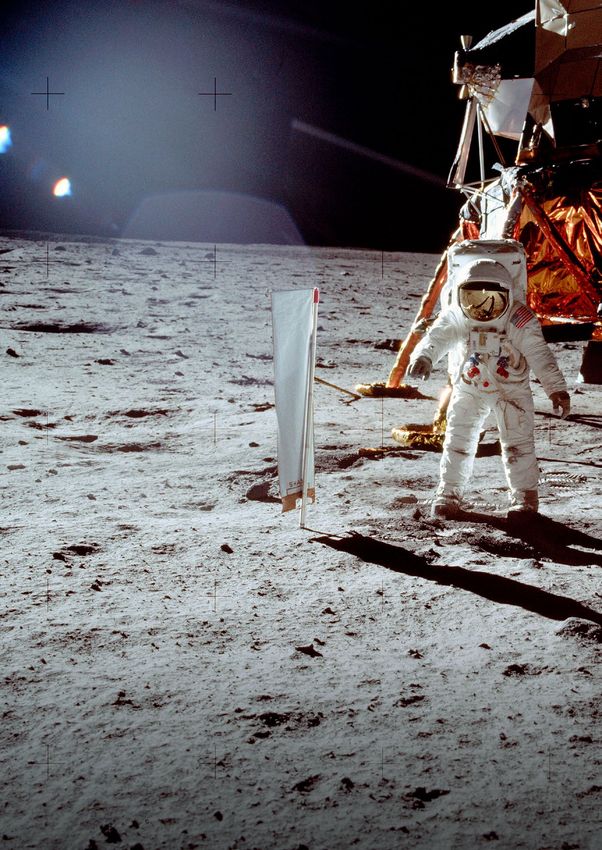
Cover image: Astronaut Buzz Aldrin deploys the “Swiss Review”, the information magazine
University of Berne’s solar sail on the moon, 20 July 1969 for the “Fifth Switzerland”, is published by the
Photo: Nasa/Keystone Organisation of the Swiss Abroad (OSA).
Swiss Review / May 2019 / No. 3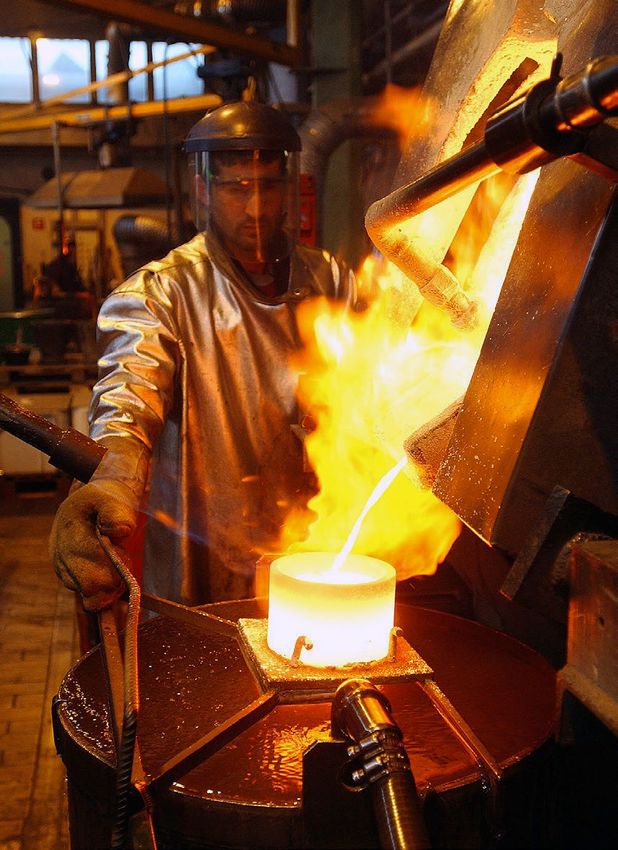
4                                                                                                           Mailbag

                                                                                                            Pressure on voting rights for Swiss Abroad

                                                                                                                     I always vote, it gives me a feeling of belonging. I am
                                                                                                                     happy not to be a “citizen of nowhere”, especially
                                                                                                                     considering what happened in the Brexit referen-
                                                                                                                     dum. Certainly, it is always good for outsiders to keep
                                                                                                                     their counsel. But I don’t view myself as an outsider.
                                                                                                            Life (outside Switzerland for the last 30 years) has expanded
                                                                                                            my horizons. Surely this is a good thing, particularly at a time
                                                                                                            when nationalism and xenophobia are rearing their ugly
                                                                                                            head around the world. Indeed, maybe the UK would have
                                                                                                            avoided this debacle in the first place had all those British
                                                                                                            citizens who live abroad been able to vote.
                                                                                                                                            DANIEL A VAN DER HEIJDEN, FOREST ROW, UK

                                                                                                            We have been living in Canada for almost 25 years. In all
                                                                                                            this time, we have never made use of our voting rights in
                                                                                                            Switzerland. I would have no problem at all if Swiss expa-
                                                                                                            triates were no longer entitled to vote. What gives me the
                                                                                                            right to tell people living in Switzerland what they should
                                                                                                            and shouldn’t do?
                                                                                                                            DANIEL SCHWIZER AND FAMILY, DIDSBURY, ALBERTA, CANADA

                                                                                                            I think it is great that I can vote while living abroad. Be-
                                                                                                            cause I am retired, I have plenty of time to view what is
                                                                                                            happening in Switzerland from afar. I am sure the same
                                                                                                            applies to others. Retirees like me also want to vote on is-
                                                                               61 11                        sues such as school reform because it is our grandchildren
                                                                                                            who will be affected. We might be old, but we still have a
                                                                                                            lot of life experience.
                                                                                                                   MARKUS KÜNG, SANTIAGO DE LOS CABALLEROS, DOMINICAN REPUBLIC

                                                                                                            Swiss ‘dual citizens’ should not be able to vote when they
                                                                                                            live somewhere and vote in that new country if they have
                                                                                                            became naturalised. I have been in Australia since 1970 and
                                                                                                            this is my permanent home, hence I believe I have no right
                                                                                                            to tell Swiss people how to live their lives.
                                                                                                                                      THERESE SAL ADIN-DAVIES, EMU PL AINS, AUSTRALIA

    Consular services
    anywhere, conveniently                                                                                  Some popular votes certainly affect me as a Swiss living
    on your mobile devices
                                                                                                            abroad, and I would feel like a second-class citizen if I was
                                                                                                            no longer entitled to vote. We, the Swiss, are always keen
                                                                                                            to extol our country’s democratic credentials – which is all
    www.fdfa.admin.ch                 Cappadocia (2019)                                                     the more reason for us to avoid introducing two classes of

                                              Swiss Quality Language Summer Camps for 8-17 year olds
                                              Learn English, French, German or Italian in multilingual Switzerland
                                              With top destinations also in Germany, France & England
                                              We provide excellence in language teaching with an enriching extracurricular programme
                                              of exciting activities to provide students an experience of a lifetime!

    Call us on +41 (0) 21 621 88 88                                                                                  www.alpadia.com

                                                                                                                                                                 Swiss Review / May 2019 / No. 3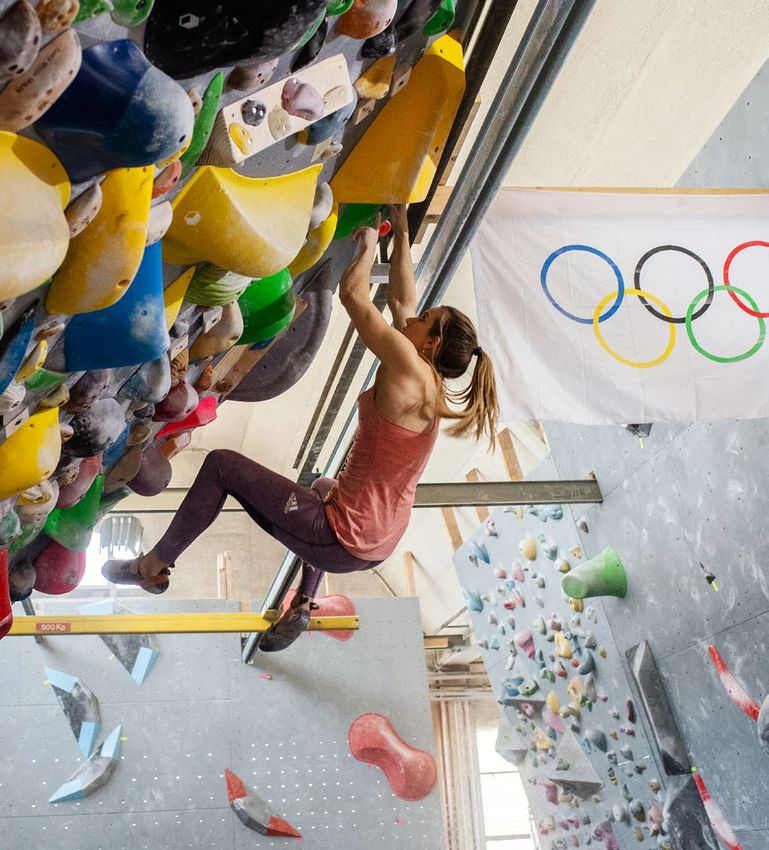
5
voter. I have always followed a rule of thumb whereby I murder has changed the landscape for ever down under.
choose not to vote on issues that do not directly affect me. Nobody will stop you from using your semi automatic guns for
I did the same when I was still living in Switzerland. Swiss sporting or leisure purposes – but it might just make it more
citizens should be able to make up their own mind either difficult for an illegal buyer to purchase a weapon. It is a fact of
way though. PATRIK MÜLLER, GERMANY life that there are bad fruit in every delivery of the harvest – be
that in Switzerland or anywhere else in the world.
Swiss by marriage and French by birth, I lived in Switzer- JOST SIEGFRIED, WHAKATANE, NEW ZEALAND
land for 28 years without ever voting in France, despite the
border being just a few kilometres away. For the last Firearms are not the problem in the horrible tragedy that hap-
23 years, my husband and I have lived in France. We do not pened in New Zealand, racism is. If firearms were not accessi-
vote in Switzerland, but I do now vote in France. All of ble, the extremist would have set the mosque on fire, or driven
which is to say that we find it unacceptable to participate a truck through it; the firearms were just the means to an end.
in the politics of a country in which we are not living. Only Restrictive laws impede good citizens in practising their hobby
the residents of a country should be allowed to vote in it and living the way they wish. DANIEL CONUS, BETHLEHEM, USA
and this should be defined by law. I therefore find it com-
pletely logical that this subject should be put to the vote. The Swiss still don’t get it. Without bilateral agreements with
GINETTE MEMBREZ, DORDOGNE, FRANCE the EU, Switzerland would have had to shut up shop long ago.
It’s also about being able to compromise. The question of
Since retirement, I have been living in the Philippines. I whether a few gun enthusiasts can keep their weapons is a
would love to vote but my voting papers never arrive on pretty minor issue in the grand scheme of things. But what I do
time. I have now decided to stop receiving them and will know is that fewer guns equals fewer potential problems
wait until I am able to vote electronically. I basically don’t with guns. ROLAND SCHMIED, FRANCE
have any voting rights at this time.
PETER SCHMUTZ, DUMAGUETE, PHILIPPINES In my opinion, the Swiss government are giving the EU ever
more opportunity to meddle with the rights and laws of our
The question of whether voting rights for Swiss Abroad are justified in their country. To date, no other country has managed to regulate and
present form generated a huge amount of debate among our readers. For control things as well as we do when it comes to gun owner-
more reader comments, visit www.ogy.de/stimmrecht ship. Remember that virtually every Swiss male has an army
gun including ammunition at home. URSUL A RAUEN, SPAIN
Tighter gun laws
If the suggested changes lead to one
less death over the next twenty years it ‘House rules’ for our comments section
is worth the inconvenience of all those “Swiss Review” reports on events in Switzerland – and is keen to receive feedback from
gun owners who have to jump through Swiss nationals living abroad. Therefore, letters, comments and other input are most
extra loops. At the end of the day it welcome. The same applies to lively debate. The “Swiss Review” editorial team regular-
appears you can still keep your guns. ly gets contacted by readers asking why the comments that they have written online do
Try to look at it from the point of view of families who have not appear immediately on our website. This is not a technical problem. Comments are
been affected by senseless murders – and don’t ever think not published automatically. Instead, they are checked first by the editorial team before
it could not happen in Switzerland. New Zealand was in the being manually approved. First and foremost, this is a routine procedure to eliminate
same situation until two months ago – and the recent mass obvious typing errors and thereby ensure that the automatic translation feature that
many readers have enabled works more accurately. The editorial team will not and can-
not publish any comments that are deemed under Swiss law to be racist, defamatory,
MIET-PW, MIET-Camper, MIET-4x4 insulting or offensive in any other way. (MUL)
Ilgauto ag, 8500 Frauenfeld
200 Autos, 40 Modelle, ab Fr. 500.-/MT inkl. 2000Km
For the rules on posting comments, please visit ogy.de/comments
Readers can also join the debate in the online discussion forums of the platform for the
Swiss Abroad, swisscommunity.org
Tel. 0041 52 7203060 / www.ilgauto.ch
Swiss Review / May 2019 / No. 3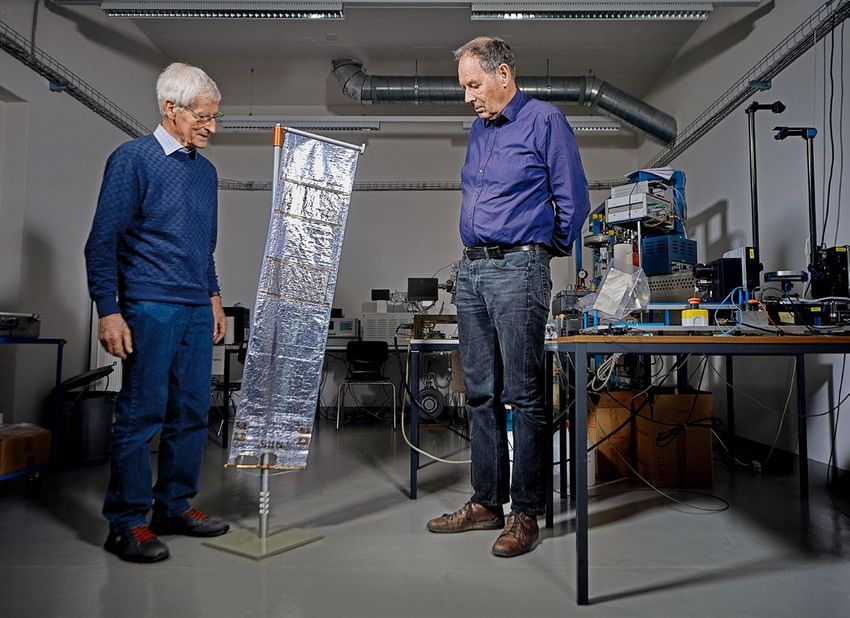
6        Focus

The beautiful lunar toy from Berne
Man first walked on the moon 50 years ago. It was also one giant leap for the University of Berne whose
Solar Wind Composition Experiment on the moon ultimately helped to clear up a misconception about the Big Bang.

                              DÖLF BARBEN                                grams (equivalent to a pound), the in-     back with him to the lunar module.
                              As the rocket took off, television view-   strument was tiny compared to the          He left the supporting upright on the
                              ers saw the three letters “U – S – A”      nearly 3,000 metric tons of spacecraft     moon. The experiment was so suc-
                              slowly ascend. And on 21 July 1969, as-    in which it flew. Yet of trifling impor-   cessful that the US space agency NASA
                              tronauts Neil Armstrong and Buzz           tance it was not. Astronaut Aldrin as-     repeated it on four other missions, in-
                              Aldrin planted the American flag on        sembled the contraption – a simple         creasing the length of exposure each
   Jürg Meister (left)        the moon. Great PR for the United          sheet of foil along an upright, 30 cen-    time. Johannes Geiss, the physics pro-
  and Peter Bochsler
                              States. No wonder America is making        timetres wide, 140 centimetres long –      fessor who had developed the sail – or
with their ‘old friend’,
    the Bernese solar         the most of it 50 years on.                even before unfurling the Stars and        Solar Wind Collector (SWC) – with
sail, in a windowless             But the University of Berne is also    Stripes. Its purpose was to collect so-    the help of his team, became world-fa-
    laboratory on the         entitled to celebrate, given that its      lar wind: particles such as protons        mous.
basement floor of the         Physics Institute was responsible for      and electrons which originate from            Jürg Meister, 80, and Peter
  University of Berne
     Physics Institute        an experimental device used during         the sun. After 77 minutes, Neil Arm-       Bochsler, 76, worked at the Physics In-
        Photo: Adrian Moser   the Apollo 11 mission. Weighing 454        strong rolled up the foil and took it      stitute at the time. On a return visit,

                                                                                                                                         Swiss Review / May 2019 / No. 3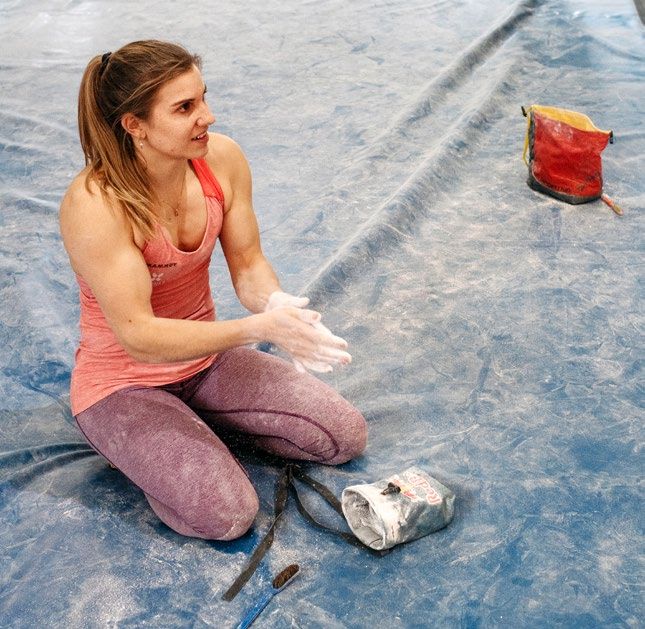
7

they recount their experiences and          a lot easier had the desired weight
talk their way through a series of pho-     been one kilogram.”
tos. In these pictures, young men with         NASA left nothing to chance and
dated haircuts are busying around a         instructed astronaut Don Lind to test
solar wind simulator. These were the        the device in Berne. Unlike the physi-
Berne scientists. Experimental physi-       cists and engineers, Lind employed a
cist Meister helped to develop the          spaceman’s perspective. He knew
SWC. Professor Bochsler was not yet         what you could and could not hold on
directly involved at that stage, but        to with those big unwieldy gloves.
would later succeed Johannes Geiss by       Meister: “Lind gave us a multitude of
becoming the Institute’s co-director.       instructions, which we painstakingly
Geiss himself is now over 90 and has        followed.” For example, certain sec-
retired from public life.                   tions of the upright were roughened
      Meister and Bochsler walk into a      for gripping purposes, while key com-
windowless laboratory teeming with          ponents were coloured red. “But he
devices on the basement floor of the        loved the contraption – just as if it
Institute. The SWC (the reserve sail, to    were a big toy.”
be precise) stands in the middle of the
room, glittering in the lamplight.          Why Berne?                                 the other hand, was simply hoping the      Astronaut Buzz Aldrin
Meister and Bochsler greet it almost as                                                guys would “get back down in one           planted the Bernese
                                                                                                                                  solar sail on the
they would an old friend. Meister           But how did the only non-US experi-        piece”.
                                                                                                                                  moon – before un-
gives a little demonstration, showing       ment of the Apollo 11 mission origi-           Jürg Meister lives near Thun now-      furling the American
how a preloaded spring draws the foil       nate in Berne of all places? “It was no    adays. After leaving the University of     flag. Photo: Keystone
up. “Just like a roller blind.”             coincidence,” says Bochsler. The Uni-      Berne, the young physics doctor spent
                                            versity of Berne had previously made       time in Texas analysing data from a
“Incredibly good and simple”                a name for itself through its research     different Apollo experiment. On his
                                            into meteorites. This opened the door      return to Switzerland, he worked at an
You rolled out a sheet of aluminium         to possible experiments involving lu-      armament factory in Thun and spe-
foil on the moon to catch the solar         nar rocks. In addition, Professor Geiss    cialised in armour-piercing ammuni-
wind. Then you rolled it up again. “It      knew many of the NASA scientists and,      tion. He continues to be fascinated by
was an incredibly good and simple           according to Bochsler, “showed great       all things that fly, although aircraft
idea,” says Meister. Solar wind parti-      skill and determination” in develop-       and rockets are no longer his primary
cles travelling at speeds of several        ing relations with NASA.                   preoccupation. He and his wife breed
hundreds of kilometres per second –            It was Jürg Meister who took the        butterflies. And every time he looks at
much slower than light – collide with       solar sail to the USA in his hand lug-     the moon, he remembers he held five
the foil and are collected there. By        gage. Meister was able to watch the lu-    uprights in his hand that are still on
melting the foil back in the laboratory,    nar rocket taking off on three later       the lunar surface. “Remarkable, don’t
you could ascertain how many of each        missions – from a viewing point one        you think?”
type of particle were captured.             and a half kilometres away. “It was an         Peter Bochsler’s travels took him to
      Everything on the SWC had to be       incredible and remarkably loud expe-       Israel. He found the USA less appealing.
designed for it to be easy to use and to    rience. The low frequencies reverber-      “Not least because of America’s involve-
work perfectly. The upright – a tele-       ated in my stomach. My shirt on my         ment in the Vietnam War”. After return-
scopic tube with ultra-fine threads –       skin quivered. It sounded like a huge      ing to Berne, he continued his research
stretched the ingenuity of the univer-      pan full of sizzling eggs.”                into solar winds. Later measurements
sity’s engineers to its limits. Then you       It was 3 a.m. in Switzerland when       taken by space probes confirmed the re-
had the roller that was hidden in the       Neil Armstrong and Buzz Aldrin set         sults of the Apollo experiments.
upright until it was time to pull it out.   foot on the moon. The team in Berne
Finally, you had the foil itself, rein-     followed the event live on television at   Better understanding of the Big Bang
forced with Teflon tape to prevent          the Institute. “I wasn’t worried,” says
tearing. “The weight specification of       Meister. “We had tested the sail hun-      What did scientists learn from the
one pound was quite a headache,” says       dreds of times, so I knew it would         Solar Wind Composition Experi-
Meister. “Everything would have been        work without a problem.” Bochsler, on      ment? Bochsler says it was the first-

Swiss Review / May 2019 / No. 3
8 Focus
ever time that they were able to col- the meteorites had been exposed to Bochsler says: “We were suddenly
lect solar wind particles in a solar wind before they had fallen to able to clear up some discrepancies
systematic fashion and analyse them Earth. The SWC facilitated the first- regarding the Big Bang, so the impli-
in a laboratory. Solar wind cannot be ever detailed analysis of the compo- cations were quite major.”
measured directly on Earth, because sition of the solar wind. It also threw
our planet’s atmosphere and mag- up some surprises. For example, sci- Boost for Berne
netic field deflect and shield us from entists discovered that solar hydro-
it. Meteorites had previously con- gen differs greatly from terrestrial The SWC put wind in the sails of
tained the only solar wind particles hydrogen and meteorite hydrogen in Bernese (and Swiss) space research.
that had ever been detected, al- terms of the amount of deuterium Firstly, Professor Geiss was adept at
though it was never clear how long or ‘heavy hydrogen’ it contains. exploiting his fame to expand the
Physics Institute, thereby laying the
foundation for further successes.
Berne’s scientists went on to play a
Switzerland’s celestial pioneers: regular part in international projects.
The Rosetta probe’s rendezvous with
Lucerne jesuit Johann Baptist Cysat (1586–1657) discovers new comet Churyumov-Gerasimenko, or
“Chury” for short (see also “Swiss Re-
binary star systems; Lausanne scholar Jean-Philippe Loys de Cheseaux view” 1/2015), is still fresh in the mem-
ory. High-performance instruments
(1718–1751), documents numerous star clusters and nebulae;
from Berne were on board the probe,
Rudolf Wolf from Zurich (1816–1893) recognises that the sunspot capturing data on the chemical
make-up of this mysterious celestial
activity cycle corresponds with the Earth’s magnetic field cycle; Fritz body – and ascertaining, among other
things, that Chury stinks of horse ma-
Zwicky (1898–1974), the Bulgarian-born astronomer from the canton nure.
of Glarus, transforms astrophysics in the USA with his theories on Exoplanets
extragalactic nebulae; Paul Wild (1925–2014) , University of Berne, The University of Berne is a global
leader in space science. This is accord-
discovers over 90 asteroids as well as seven comets; the Zenit rocket ing to none other than Thomas Zurbu-
chen, the Associate Administrator for
developed by Hans Balsiger and Ernest Kopp flies into space in
NASA’s Science Mission Directorate.
1967; Johannes Geiss (born in 1926) develops the Apollo 11 Solar Citing exoplanets – the study of plan-
ets outside our solar system – as an ex-
Wind Composition Experiment at the University of Berne (see main text); ample, Zurbuchen tells “Swiss Review”
on the phone that scientists in Berne
in 1995, Michel Mayor and Didier Queloz of the Geneva Observa- and elsewhere in Switzerland have
discovered, developed and played a
tory discover the first planets outside our solar system, orbiting the star key role in new areas of research. He
believes that it would have been
Helvetios (51 Pegasi); in 1992, NASA astronaut Claude Nicollier (born in wrong for them to rest on their laurels:
“To make an international mark, you
1944) becomes the first Swiss to fly into space; Markus Griesser need to keep pushing. You don’t stand
still.”
(born in 1949) discovers ten main-belt asteroids and the minor plan
Zurbuchen, who grew up in the
et 113390 Helvetia in 2002; Kathrin Altwegg (born in 1951) becomes Bernese Oberland, embodies Berne’s
thriving space science programme to
a leading figure in Swiss space science due to her involvement in the some extent. It is unlikely h is own ca-
reer would have taken off as it did, had
Giotto and Rosetta missions. (MUL) it not been for the Solar Wind Compo-
Swiss Review / May 2019 / No. 3
9

                                                                or play an essential role in modern
                                                                weather forecasting. “We at NASA do           Berne in space
                                                                the most accurate global CO2 meas-            Notable space projects with Bernese
                                                                urements,” Zurbuchen says. He also            involvement:
                                                                thinks that science brings people to-
                                                                gether. “For me it is one of the key rea-     1986: The Giotto probe of the European
                                                                sons why we gravitate to these pro-           Space Agency (ESA) flies to Halley’s Comet
                                                                jects in the first place.”                    in 1986. On board is a University of Berne
                                                                    Bochsler acknowledges the argu-           spectrometer carrying out the first-ever
                                                                ments in favour of human space flight.        close-proximity study of a comet’s dust and
                                                                The lunar rocks that the astronauts           gas.
                                                                brought back 50 years ago were of             1990: Launch of the joint ESA/NASA Ulysses
                                                                great scientific value, he concedes. “I       mission. The Ulysses probe observes the
sition Experiment and the boost it        Switzerland’s most    was one of the scientists who handled         sun over a prolonged period of years, using a
gave Berne. At the beginning of the       powerful scientist:   quite a lot of them,” says Bochsler,          Swiss-made instrument to study the solar
                                          Thomas Zurbuchen,
1990s, Zurbuchen worked in Berne –                              who goes on to praise NASA, explain-          wind.
                                          Associate Adminis-
incidentally as one of Peter Bochsler’s   trator for NASA’s     ing that the US space agency distrib-
PhD students – on the development of      Science Mission Di-   uted the rocks generously to research         1995: Launch of the ESA/NASA Solar and
an instrument for an American solar       rectorate.            centres around the world. Neverthe-           Heliospheric Observatory (SOHO). On board is
probe. “It was a direct descendent of
                                          Photo: Keystone
                                                                less, he believes that unmanned               Celias, a highly sensitive ion mass spectrome-
the SWC,” he says. As NASA’s top sci-                           probes probably would have achieved           ter from Berne.
entist, Zurbuchen currently manages                             much the same findings. In his view,          2004: Launch of the ESA probe Rosetta.
a budget of almost USD seven million.                           the immense outlay needed to fund             The probe reaches comet Churyumov-Gerasim-
His decisions have implications for                             manned projects – “often for nothing          enko (Chury) ten years later, keeping it
around 10,000 scientists and engi-                              more than reasons of prestige” – in-          company for two subsequent years. The
neers.                                                          evitably means less money being               spectrometers developed in Berne
                                                                available for programmes of poten-            function perfectly.
Off to Mars?                                                    tially much more immediate scien-
                                                                tific benefit. When Bochsler sees pho-        2016: The ExoMars Trace Gas Orbiter begins
And now? Half a century since Apollo                            tomontages of colonies on Mars, he            its journey to Mars. CaSSIS – the University
11, the possibility of a return to the                          wonders how many “beautiful exper-            of Berne’s specially developed camera system
moon and a mission to Mars is on                                iments” would be possible on un-              – has been producing high-resolution colour
everyone’s lips. NASA is at the fore-                           manned missions using the same                images of the red planet’s surface over the
front, although the issue is a conten-                          amount of money.                              past year.
tious one. Bochsler and his former                                  And what does Jürg Meister think?         2018: The BepiColombo probe sets off for
student have differing opinions. Zur-                           Not much, if you mean Mars. “The red          Mercury – a joint venture between the ESA
buchen knows that opponents would                               planet is so far away. Most people don’t      and the Japan Aerospace Exploration Agency.
say that there are other, urgent mat-                           even know where it is in the night sky.”      The University of Berne developed and built an
ters to attend to on Earth, and that                            On the other hand, the moon means             on-board instrument designed to produce a
manned missions are considerably                                something to everyone. He believes            three-dimensional map of Mercury’s surface.
risky and much too expensive anyway.                            we were quite right to fly there once.
Yet he believes it is human nature to                           “No question.” But there is no need to        2019: CHEOPS, the space telescope for
aim high and push the limits of what                            do it again. “We’ve known what it             observing planets outside our solar system
is possible. “Why do we want to go                              looks like up there for the last 50           (exoplanets), is set to launch in the second
Mars?” he asks, before answering his                            years.”                                      half of the year. The University of Berne
own question. “Because we can.” He                                                                            oversaw its construction.
points out that you can never predict                           Related article: www.ogy.de/swiss-universe
the good that can come of such ven-
tures either. When the first probes
shot into space in the middle of the
last century, no one had thought yet                            DÖLF BARBEN IS EDITOR AT THE NEWSPAPER “DER
of satellites that record climate data                          BUND” IN BERN

Swiss Review / May 2019 / No. 3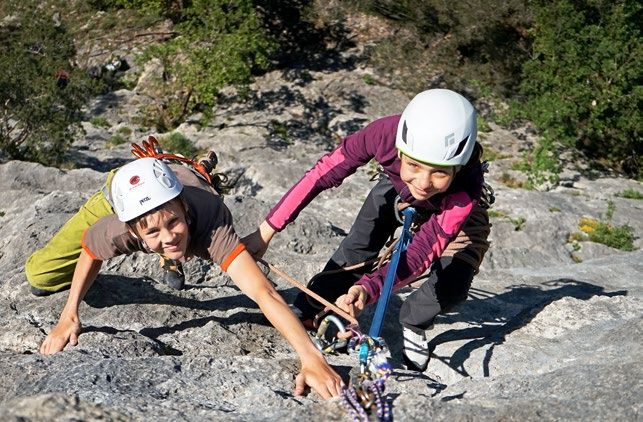
10     Politics

Switzerland consults its people more than any other country
The Swiss participate in up to 20 referendums per year. Approximately 80 % of the
population vote regularly, but participation per subject is very low, with the youth vote showing
signs of stagnation despite initiatives such as easyvote.

STÉPHANE HERZOG                              corded at 77 % for the first round, and                                       Low turnout, a sign of low
“The residents of this country are asked     this was considered very low.”                                                dissatisfaction
to give their opinion on political mat-          So, who votes and who doesn’t?
ters more frequently than anywhere           “One quarter of Swiss people vote on                                          The low level of voter turnout does not
else in the world,” states Nenad Sto-        every occasion, one fifth never vote,                                         worry Marquis. “It’s a sign that dissatis-
janovic, political scientist at the Uni-     and the rest – accounting for 55 % of the                                     faction is low amongst the population.
versity of Geneva. In the City of Geneva,    population – vote on a case by case ba-                                       People know that for important sub-
for example, over 70 subjects were put       sis,” says Stojanovic. For the specialist                                     jects, they will have multiple opportu-
to the people between 2015 and 2018,         in political participation, a voter turn-                                     nities to give their opinion.” The politi-
over and above the six federal, cantonal     out rate of 25 % is good, while an ab-                                        cal scientist notes a particularly high
and municipal elections. Far fewer           stention rate of 20 % does not make                                           level of abstention amongst young peo-
votes are held in France, where presi-       Switzerland an exceptional case. He                                           ple, which is an international phenom-
dential and legislative elections take       considers the average turnout rate of                                         enon. “In the 2015 federal elections, only
place once every five years. “There is no    80 % to be “excellent”. But why do some                                       30 % of 18–24 year-olds voted, compared
other opportunity for people to ex-          people choose never to give their opin-                                       with 67 % of 65–74 year-olds: this affects
press their discontent at a national         ion? “There are at least three different                                      the results,” explains Marquis. Stojano-
level, and this leads to demonstrations      reasons: the first is disengagement                                           vic recalls that “in the past, in the small
like the yellow vest protests,” explains     with politics. This accounts for those                                        municipalities, young people would go
Stojanovic. “Voters in France use the        who tend to confuse subjects and have                                         to vote with their families. But this form
European elections to express their op-      no particular knowledge of the sector.                                        of voter turnout was socially restrictive
position to national politics, which is      It’s the same idea as people who skip to                                      and influenced voting”.
absurd,” underlines Lionel Marquis,          the sports section in a newspaper. The                                            The downside of Swiss politics?
head of the Research Group on Elec-          second reason is frustration. The peo-                                        The lack of transparency regarding fi-
tions and Political Citizenship (GREC)       ple in this category may be the long-                                         nancing for parties and campaigns,
at the University of Lausanne.               term unemployed, for example. They                                            says Stojanovic. This situation does
                                             feel disillusioned. Finally, there are                                        not have a direct impact on voter turn-
A record abstention rate                     those who abstain from voting for ra-                                         out, but rather on the forming of opin-
                                             tional reasons. In this case, individuals                                     ions. “The richest parties can influ-
Yet the Swiss people are irregular in        consider that their vote will not have                                        ence a vote, but this doesn’t guarantee
their participation. The vote on acces-      an impact on the outcome.”                                                    victory,” he concludes.
sion to the European Economic Area in
                                                                                         Lionel Marquis: Low
1992 saw voter turnout of 79 %, whereas
                                                                                         voter turnout is evi-
the vote at the end of 2012 on epizoot-                                                  dence “that the level
ics saw only 25 % participation. The                                                     of dissatisfaction is
complexity of subjects put to the peo-                                                   not very high”.
                                                                                         Photo provided
ple and the frequency of voting go some
way to explaining this irregularity. “It’s
one of the lowest turnout rates in the
world compared with other democra-                                                           Nenad Stojanovic
cies,” states Marquis. “Participation                                                          sees “excellent
typically varies between 35 % and 45 %,                                                  figures”: 80 per cent
with 48 %–50 % considered high. In
                                                                                               have turned out
                                                                                               every time or at
comparison, turnout at the last presi-                                                      least occasionally.
dential elections in France was re-                                                                       Photo provided

                                                                                                                                                  Swiss Review / May 2019 / No. 3
11
Videos and ‘smartspiders’ to help people vote
Making politics clearer to encourage voting: this is the objective of the
easyvote and smartvote initiatives. Easyvote is supported by the Swiss
‘Smartspiders’: examples from two youth parties
Federation of Youth Parliaments. It provides simplified content as an al- The ‘smartspiders’ for the Young SVP party in the canton of Bern and for the Young
ternative to the official brochures and videos. “The most easily under- Greens in the canton of Zurich during the 2015 federal elections
standable documents are the two video clips. Easyvote’s video is consid- The graphs in the form of spider webs provided by smartvote are created from eight
ered even more straightforward than that of the Federal Council,” states political objectives. A value of 100 indicates strong support for the subject, whilst a
the programme. Thanks to this system, which has been tested in a value of 0 represents the opposite. In 2015, the Young Green Party (ZH) presented a
Ticinese municipality, the turnout amongst 18–25 year-olds for the fed- smartspider which showed support for the environment and a liberal society. For the
eral referendum of 24 September 2017 exceeded that of the rest of the Young SVP party (BE), ‘order and safety’ is shown to be an important value, indicating
electorate, according to smartvote. “If a young person can be convinced that this party is in favour of strict laws, a strong army and police force, and that it
to vote once, there is a greater chance that they will vote again in the fu- advocates values such as order and discipline. Smartspiders are created for individu-
ture,” explains Lionel Marquis, who nevertheless considers the effects of al candidates as well as parties.
this programme to be “limited”.
Introduced in 2003 by an association, smartvote works like a dat- Open
foreign policy
ing website. Based on questionnaires filled out by candidates and par-
ties, voters are presented with options which match their chosen crite- ty Lib
era
cie le
so
ria. The political profile of candidates can then be viewed graphically
l
co
era
no
Lib
my
(see examples opposite). “In 2011, this system was very widely used, with
more than a million submissions,” notes Marquis. “In the last elections,
in 2015, 30 % of those who voted used this programme, including peo-
ple who would not have voted otherwise,” adds Nenad Stojanovic.
financial policy
According to Marquis, one criticism of smartvote “is that it reduces
welfare state
Restrictive
Expanded
politics to a chart, whereas it should also be a matter of values and feel-
ings”. In 2011, then National Councillor Jean-Christophe Schwaab
wrote: “Smartvote is riddled with such major errors that it would be
foolish to trust this software to fill out your ballot paper.”
env
Smartvote: a neutral tool?
iro
er
Ex ent
ord
n
mm
&
al ded
te
w
pro La
tec
tio
n
Based on an algorithm, smartvote is suspected of rendering voting un-
Restrictive
balanced. “In the 2011 federal elections, which took place after the Fuk- immigration policy
ushima catastrophe, the Green Liberals saw a strong increase in sup- Open
foreign policy
port at the expense of the larger parties. Smartvote made this
little-known party visible by suggesting it to people who had ticked Lib
ty era
cie le
both economy and ecology,” explains Marquis. The political scientist so
l
co
era
no
Lib
my
from Lausanne does not believe this tool will be able to positively in-
fluence voter turnout. Nor does he think the electronic vote will have
an impact: “it works more like a replacement for a postal vote”, he says.
Can we do better? In Geneva, Professor Stojanovic’s team are pre-
paring a test for November based on the Oregon model. This process
financial policy
welfare state
Restrictive
Extended
was launched in a Swiss municipality with 20 citizens chosen at ran-
dom. After listening to experts and various opinions, they will debate
the subject of a vote. The group will draft a neutral presentation on the
subject and a summary of the reasons for voting yes or no. “This model
provides a summary constructed by a group of ordinary individuals,
env
who will be seen as being closer to everyday citizens. It is also a real les-
iro
er
Ex ent
ord
n
mm
&
al ded
te
w
La
son in democracy,” adds the political scientist. (SH) pro
tec
tio
n
www.easyvote.ch Restrictive
immigration policy
www.smartvote.ch
Swiss Review / May 2019 / No. 312 Economy
All that glitters is not gold:
gold industry under scrutiny
Switzerland is a leading global player in the gold trade. Yet some of the raw gold
that ends up in Swiss refineries comes from dubious mines. There is now growing pressure
on the entire raw materials sector to take greater ethical responsibility.
THEODORA PETER tal conditions are often precarious. women and 600,000 are children –
“We cannot completely exclude the Nevertheless, millions of families de- groups particularly at risk from hu-
possibility of gold entering Switzer- pend on small-scale mining for their man rights violations. Some coun-
land that has been produced in a way livelihoods. More than 15 million tries, including Peru and Ethiopia,
that violates human rights.” This was people work in such mines around are trying to regulate unofficial min-
the bombshell that the Federal Coun- the world, of whom 4.5 million are ing activities through the introduc-
cil included in its report about the gold tion of prospecting licences, for ex-
trade and human rights last Novem- ample. Yet implementation is proving
ber. In response to a motion submitted difficult, while on-site checks are few
by parliament, the government’s gold and far between.
report shed a little light on an other- A suspected case of illegal gold
wise secretive industry. trading recently hit the headlines in
Gold is of key importance to Peru, where customs authorities con-
Switzerland. Some 40 per cent of fiscated almost 100 kilograms of gold
global gold refinery capacity is from exporters Minerales del Sur in
The ‘Vreneli’ –
Swiss-based, while four of the nine March 2018. This raw material was
industry world leaders have their
a much-loved gold coin bound for the Swiss refinery Metalor.
headquarters in Switzerland. Gold ‘Vreneli’ – Switzerland’s best-known piece of The Peruvian judiciary is now inves-
refineries such as Argor-Heraeus, gold – is the name of a series of coins depicting tigating the matter. Minerales del Sur,
Metalor, Pamp and Valcambi process Helvetia that were minted from 1887 to 1949. which had up to 900 subcontractors
imported raw gold or remelt existing The gold used to produce them came from other at one stage, may have sourced the
gold. In 2017, over 2,400 metric tons European countries. A total of 58.6 million gold from illegal mines, public pros-
of gold worth almost 70 billion Swiss 20-franc ‘Vrenelis’ entered into circulation ecutors believe. Criminal proceed-
francs was imported into Switzer- back then. A 10-franc denomination (2.6 million ings have not yet begun. Metalor say
land for further processing. This units) and a 100-franc denomination (5,000 that they have stopped importing
equates to around 70 per cent of units) were also released. gold from Peru since the seizure, in-
global gold production. The raw gold The ‘Vreneli’ remains a popular gift coin – sisting that they have always pro-
is sourced from approximately and a simple investment vehicle – to this day. cured gold from legal, registered
90 countries. These include develop- Containing 5.8 grams of gold, the 20-franc coin mines.
ing economies that are heavily de- has a current market value of around 270 francs
pendent on gold exports – such as and can be exchanged at any bank counter in Of indeterminable origin
Burkina Faso, Ghana and Mali. Switzerland. The rare mintages can go for more,
with coins from the 1926 release even known According to the Federal Council’s
Precarious conditions at to change hands for sums of up to 400 francs. gold report, industrial mines are the
Coins from the 1904–06 mintages, worth around source of most of the raw gold refined
small-scale mines
300 francs each, are also collector’s items. The in Switzerland. But that is as detailed
Industrial mines account for about 80 ‘Vreneli’ – a Swiss-German diminutive of Verena as it gets. Import statistics are unable
per cent of global raw gold supplies, – probably owes its name to the coin’s youthful to provide a clear indication of where
while 15 to 20 per cent is sourced depiction of Helvetia, whose plaited hair makes the raw material was sourced or how
from small-scale artisanal mines her look more like a farmer’s girl than the mother it was produced. The Federal Council
where the working and environmen- of Switzerland. (TP) therefore recommends that the in-
Swiss Review / May 2019 / No. 313
on swissinfo.ch, Basel-based criminal
law professor and anti-corruption ex-
pert Mark Pieth said that the Federal
Council were “shooting themselves
in the foot”, showing that they “cared
more about business than about hu-
man rights” – thereby “giving more
ammunition” to those who support
the Responsible Business Initiative
(RBI). The aim of the RBI, which was
proposed by around 50 NGOs in 2016,
is for Swiss companies and their sub-
contractors abroad to be held ac-
countable for any human rights vio-
lations or environmental damage
that they cause. Pieth’s main criti-
cism of the Federal Council’s gold re-
port is that it places the blame for
these problems “squarely on the
shoulders of artisanal and small-
scale miners”, when in truth it is mul-
tinationals that are often responsible
for producing mountains of toxic
waste, for contaminating water and
for appropriating land from indige-
nous communities.
Opinion polls show that there is a
lot of public support for the RBI. The
National Council opted for a counter-
proposal to take the wind out of its
sails. This counterproposal would
have introduced provisions on corpo-
rate liability into Swiss company law.
Yet the Council of States would have
none of it. In March, a majority within
dustry open up more, e.g. on customs nology of decentralised databases – Liquid gold at the the small chamber of parliament re-
declarations, regarding the origin of can be used to improve the traceabil- Metalor gold refinery jected the initiative without consider-
in Neuchâtel.
its gold. However, the government ity of gold. ing the counterproposal. Ruedi Noser,
Photo: Keystone
sees no need for action on due dili- FDP member of the Council of States
gence, pointing to the sustainability An initiative targeting for the canton of Zurich, argued that
standards implemented voluntarily provisions on corporate liability
multinationals
by the industry. Switzerland also sup- would put companies at a significant
ports implementation of the OECD The Federal Council believes that fur- disadvantage and could even result in
Due Diligence Guidance for Respon- ther regulation is unnecessary. Citing Swiss businesses having to withdraw
sible Supply Chains of Minerals from intense competition from abroad, the from numerous countries. The issue
Conflict-Affected and High-Risk Ar- Swiss government would prefer it if now heads back to the National Coun-
eas, in order to prevent the gold trade the gold industry regulated itself. cil. If the chambers fail to agree on a
from fuelling armed conflict in places Non-governmental organisations way forward, the RBI is likely to go to
including the Democratic Republic of (NGOs) are not the only stakeholders a popular vote without any counter-
Congo. The Federal Council wishes to criticising this pro-business ap- proposal. A voting date has not yet
examine whether blockchain – a tech- proach. In an opinion piece published been set.
Swiss Review / May 2019 / No. 314 Sport
Scaling the heights
with Tokyo on her
mind – Petra Klingler
at the SAC’s utili
tarian training facility
in Biel
Photo: Danielle Liniger
Far from the mountains
Sport climbing will feature at the next Olympics. This has understandably raised hopes in Switzerland,
the alpine country par excellence. What we are also seeing is the rise of an ultra-hip indoor sport –
with notable side effects for its original outdoor equivalent.
MIREILLE GUGGENBÜHLER there for a few seconds... then lets herself fall, breathing
“Allez! Allez!” – Go! Go! Petra Klingler has heard her coach heavily. This time her pulse was racing. “It doesn’t always,”
shout at her once or twice already this morning. She has she says, laughing.
reached that tricky spot again on the boulder wall. Klingler With the first Bouldering World Cup event of 2019
holds on to one of the grips with one hand, then pushes off round the corner, the purpose of this morning’s training
with her legs. The elite climber pulls herself up and dangles session at the Swiss Climbing national performance centre
Swiss Review / May 2019 / No. 315
in Biel (canton of Berne) is all about getting into competi-
tion mode. But for Klingler this is just a staging post on the
way to a much bigger goal: qualifying for the 2020 Olym-
pics in Tokyo. Sport climbers will be competing for Olym-
pic medals in Tokyo for the first-ever time (see additional
text). The Swiss Alpine Club (SAC) Olympic Pool consists of
five athletes. Petra Klingler, 27, is one of them. As the speed
and lead climbing Swiss champion and the bouldering
world champion, Klingler excels in the three disciplines
that will feature in Tokyo.
Training on artificial walls
The SAC built its national performance centre in an old in-
dustrial building in Biel. A worn sofa and a side table stand
in the corner. A coffee machine complements the ex-
tremely spartan setting. Training schedules are pinned up
on the wall. The performance centre has all the charm of
a student digs – a world away from rocks, wind and
weather. The athletes train on climbing walls made of syn-
thetic material. Outdoor rock climbing is not a priority at
the moment. “Rock climbing will remain on the back
burner during the next two years until the Olympics are
over,” says Klingler. gest facility in Uster (canton of Zurich) has welcomed ev- World champion
For Switzerland – the country of mountains – the Olym- er-increasing numbers of visitors since opening in 2014. “If Petra Klingler:
“I can now make
pic moment of truth will be played out not on a rock face you want to take up climbing nowadays, you normally go
a modest living
but on an artificial wall. Although this reflects the evolu- to an indoor centre,” says Martin Baumeler of Griffig, the from climbing.”
tion of the sport in Switzerland as well. Until the 1990s, cooperative that runs the climbing centre in Uster. Two Photo: Danielle Liniger
climbing was purely an outdoor pastime. In 1993, Switzer- thirds of people who start indoors will also climb outdoors
land’s first-ever indoor climbing centre opened in Nieder- later, although a third will continue just using climbing
wangen (canton of Berne). Hanspeter Sigrist and his wife walls, he adds.
Gabriele Madlener Sigrist currently manage the facility. Si-
grist is also the SAC’s performance director for climbing. Female and ultra-hip
“Everyone thought we were crazy when we said we were
planning to build a climbing wall,” he says. Alpinists, most According to Hanspeter Sigrist, women are one of the fac-
of them male, could not yet imagine themselves climbing tors behind the boom in indoor climbing. “Women climb-
on an indoor wall. There are now over 50 indoor climbing ers weren’t taken that seriously for a long time. The lead
centres in Switzerland, while countless schools have at least climber in a rope team was always the man – the roles were
one climbing wall in their gymnasium. The country’s big- clear.” Indoor centres have given women the type of inde-
pendent access that they previously would not have en-
joyed. Today, women account for around half of all people
Olympic climbing who climb indoors. And those who practise the sport – men
A total of 20 female athletes and 20 male athletes will take part in the and women (and children and teenagers) – no longer just
first-ever Olympic sport climbing competition at Tokyo 2020. They will belong to the alpinist fraternity. Sigrist believes that indoor
have qualified for the event primarily on the basis of their performance at climbing has become an ultra-hip mass-participation sport.
international meetings. The competition in Tokyo will consist of three Basically, it is the modern, sophisticated version of climb-
disciplines: ing in its original form.
■■ Lead climbing – climbing as high as possible using a rope and harness The trend of “away from the mountains and into the
■■ Speed climbing – scaling the wall as fast as possible on a safety rope city” seems to have boosted the sport. But there is at least
■■ Bouldering – climbing without a rope on a low-level wall one other factor contributing to the rising popularity of
Only the best athletes in all three disciplines have the chance of a medal. indoor climbing: safety. For example, in bouldering – a
form of climbing without any ropes or harnesses – thick
Swiss Review / May 2019 / No. 316 Sport
mats are used to cushion falls. Indoors it is a world away
from the wild, risky unpredictability of climbing in the
Alps. If something untoward happens, the climbing cen-
tre operator will in many cases be liable, hence the people
who run such facilities are acutely aware of the need to
minimise risks.
Overused rock faces
However, the flourishing indoor scene has implications
elsewhere. “People who suddenly want to climb outdoors
expect the same high level of safety that they enjoyed in-
doors, so they transplant their ‘all-risks-insured’ mind-
set to the mountains,” says Tim Marklowski, mountain-
eering project leader at the alpine protection organisation
Mountain Wilderness. As Marklowski explains, it means
that in various climbing areas around Switzerland, in- purer form of climbing. Marklowski says: “There are Janik Spindler
cluding the high Alps, many routes are dotted with per- climbing areas in the UK, the USA and Italy where bolts and Delia Büchel
scaling the Rotsteini
manent bolts to secure belays, whereas easily accessible are still a no-no.”
near Meiringen.
unmarked routes are now few and far between. The bolts Climbing is purely
allow everyone to climb safely. Such routes are very pop- Greater recognition for the elite an indoor sport
ular. He points out that the resulting rock erosion is dra- for many children.
But not for these two.
matic in some cases. This “human encroachment into the The sport’s burgeoning reputation is changing the way
Photo: Silvan Schüpbach, SAC
Alps”, as he calls it, means that we lose something along we view the athletes at the top. For example, elite climber
the way. “We no longer enjoy nature in its original state, Petra Klingler is no longer the complete unknown that
or the pleasure of making decisions for ourselves.” Moun- she used to be. She was crowned Bouldering World Cham-
tain Wilderness is therefore working to preserve bolt-free pion in 2016 in front of a crowd of 10,000 in Paris. This
routes that “allow you to take charge” and experience a world title as well as the inclusion of sport climbing in the
Olympic programme have helped the 27-year-old to at-
tract new sponsors. “I can now make a modest living from
climbing – but not enough to feed a family,” says Klingler,
who finished her degree in psychology and sports science
last year. Nevertheless, Klingler is inclined to think that
the sport has not yet reached its full “monetary poten-
tial”.
This may well change after Tokyo 2020. At any rate,
Switzerland’s National Olympic Committee (NOC), Swiss
Olympic, believes that sport climbing is a particularly good
fit for Switzerland on account of its varied nature. “Sport
climbing connects the alpine with the urban,” says Swiss
Olympic media officer Alexander Wäfler. The NOC hopes
that Tokyo 2020 “will ignite this spark and get lots of peo-
ple interested”.
Indoors instead of outdoors,
artificial instead of natural. Sport
climbing has changed a great deal
in the last 20 years. Photo: Danielle Liniger
Swiss Review / May 2019 / No. 3Literature 17
Truth and fiction on the French coast
Kurt Guggenheim fell out of love, but fell in love with France, during his stay in Le Havre from 1919 to 1920.
CHARLES LINSMAYER nen” is unable to put losing Esther behind him. He falls even
“Zurich’s faces nauseated me,” wrote Kurt Guggenheim in deeper into depression after learning of Esther’s marriage
his diary in September 1919 during his time in Le Havre. to his rival during a visit to Zurich.
The 23-year-old trader had spent three listless and frus- However, Guggenheim’s unpublished diaries reveal
trating years at his father’s coffee-importing business – that the story of a traumatised émigré who is incapable
until his father arranged for him to do a stint at a cof- of love is a contrivance that lends the novel a special
fee-roasting plant in Le Havre. “Entfesselung” was the title poignancy but has little to do with real life. Apart from
of Guggenheim’s 1934 debut novel – the story of a young Eva Hug, the girl on whom Esther’s character is based,
man who breaks free from the conservative shackles of Guggenheim also fell in love with the slightly older An-
his home town. However, Guggenheim’s two years in Nor- géline Savoy, who travelled from Zurich to Le Havre in
mandy take on a whole new significance in light of his 1964 November 1919 and lived with her admirer for two weeks
work “Salz des Meeres, Salz der Tränen”, in which the same in a hotel. Guggenheim would look back at that fortnight
young man moves to France to overcome the pain of “with sweet melancholy”, calling them his “14-day mar-
breaking up with Esther, the central character in Guggen- riage”. Angéline would spend an additional three months
heim’s earlier novel “Die frühen Jahre”. The salt of the sea with him in 1920, until it all became too much for Gug-
– Salz des Meeres – is a metaphor for the stinging tears – genheim himself – the writer de-
Salz der Tränen – that the character sheds over his sweet- ciding in April 1920 that a “long
heart. “I lived without love,” writes Guggenheim in the period of ardent introspection”
novel. “From 21 July 1918, the last date on the cover page and a literary appraisal of his love
of Esther’s diary, I was no longer able to love.” for Eva Hug was the best course
of action after all.
French revelations Those two years in Le Havre
must have been a particularly in-
Yet life in Le Havre was a different matter altogether for tensive experience, considering
the young Swiss. On the coattails of Louis Dupuis, his col- that Guggenheim doubled the
league at coffee roasters Rauber, Guggenheim got to know length of time by referring to “four “Without realising, I had very
the sunny, easy-going attitude to life that young French years” in 1955. In any case, it was quickly begun to regard this
men and women shared during the post-war years. He definitely a key period in his life, country through the eyes of the
buried himself in French literature, “devouring books at given that the novelist not only
impressionist painters. Experi-
random” – from Pascal and Maupassant to Zola and Proust. discovered France but was also
This left an indelible mark. Guggenheim, a Jew, also found able to build a wealth of material
encing the landscape of the
his spiritual home in the French language, enabling him for his works, which he very con- River Seine and the port of Le
to diarise his most intimate feelings during the National sciously and elegantly moulded Havre in a different way to a
Socialist era without having to resort to the German that into a “reworking of selected Sisley, a Pissarro or a Monet
had been hijacked by anti-Semites. The artists of the im- memories”.
pressionist movement also fascinated him so much that
seemed unthinkable to me.
his 1972 work “Minute des Lebens”, exploring the friend- BIBLIOGRAPHY: All the aforementioned Their literary contemporaries
ship between Cézanne and Zola, proved to be one of his novels are available from the Kurt also influenced my view of
Guggenheim collection of selected works,
most moving novels. As Guggenheim noted in 1980, “If I many localities.”
didn’t have the French language, my life would be half-
published by Verlag Th. Gut, Zurich.
(Quote from “Salz des Meeres,
empty.”
Salz der Tränen”, Kurt Guggen-
Romance over sublimation heim, selected works, volume 1,
reprinted by Huber, no. 4,
But how did things turn out for Guggenheim in Le Havre? CHARLES LINSMAYER IS A LITERARY SCHOL AR Frauenfeld, 1989)
The lovesick young man in “Salz des Meeres, Salz der Trä- AND JOURNALIST IN ZURICH
Swiss Review / May 2019 / No. 3You can also read


