WCO news Sweeping away corruption through collective action - World Customs Organization - World ...
←
→
Page content transcription
If your browser does not render page correctly, please read the page content below
June 2017 | n° 83 | www.wcoomd.org

WCO news
 Sweeping away corruption
 through collective action

      World Customs Organization

WCO news N° 83 June 2017

   Content

   04 Flash info

   08 Dossier

   26 Focus                                         04                                                                            29
   29 Panorama                                      Image format                                                                  ‘Hackathon’ innovation
                                                    standardization: a                                                            potential tested by
   56 Events                                        revolution in the making                                                      Finnish Customs

                                                    32                                                                           52
                                                    Enhanced                                                                     Using basic
                                                    control of light                                                             mathematics to fight
                                                    aviation in West                                                             corruption and bad
                                                    Africa                                                                       practices

 DOSSIER: COLLECTIVE ACTION                                      FOCUS: WCO MERCATOR PROGRAMME                                                EVENTS

09      The Secretary General                                   26      Pioneering innovative                                                 56      WCO Global AEO
        shares his thoughts on integrity,                               partnerships: the need for donor                                              Conference: a focal point
        what we have learned and what we                                coordination when it comes to                                                 for security and facilitation
        still need to learn                                             capacity building, the WCO’s                                                  discussions
                                                                        specific added-value when it
12      Anti-corruption Collective
                                                                        comes to supporting Customs, and
        Action: the logical next step for
                                                                        the Programme operating model
        Customs
15      Fighting corruption through
        partnership: the Uruguayan
        experience
20      Collective action to promote
        integrity in the maritime sector
23      Renewing Guatemala’s
        Customs service

Editor-in-Chief                       Advertising                           Editorial note                                                    Copyright © World Customs Organization
Grant Busby                                                                 WCO News is distributed free of charge in English                 All rights reserved. Requests and enquiries concerning
                                                                            and in French to Customs administrations, international           translation, reproduction and adaptation rights should be
Writer / Editor                                                             organizations, non-governmental organizations, the                addressed to copyright@wcoomd.org.
Laure Tempier                         Bernard Bessis                        business community and other interested readers. Opinions
                                      bernard.bessis@bb-communication.com   expressed in WCO News are those of the contributors and           Acknowledgements: The Editorial Team wishes to express its
Editorial Assistant                   Publisher                             do not necessarily reflect the official views of the World        sincere thanks to all who contributed to this publication.
Sylvie Degryse                        World Customs Organization            Customs Organization. Contributions in English or
                                      Rue du Marché, 30                     French are welcome but should be submitted no later than          Illustrations: Our thanks also extend to all who provided
Online subscriptions                  B-1210 Brussels                       15 August 2017 for consideration. The WCO reserves the            photos, logos and drawings to illustrate this issue.
http://www.wcoomd.org/en/media/wco-   Belgium                               right to publish, not to publish, or to edit articles to ensure
news-magazine/subscriptions.aspx                                            their conformity with the magazine’s editorial policy             Photo cover: © Fabio Motta / Agência Estado
                                      Tel.: +32 (0)2 209 94 41              and style. The WCO Communications Service is available
                                      Fax: +32 (0)2 209 92 62               to answer all requests for subscriptions, submission of           Design: www.inextremis.be - mp5521
                                      communication@wcoomd.org              contributions, and any other enquiries relating to WCO
                                      www.wcoomd.org                        News. Please email communication@wcoomd.org.

                                                                                                                                                                                                           3
FLASH INFO

                                                                                                                                        © Smiths Detection
    Image format standardization:
    a revolution in the making
    By Tim S. Norton,
    GLOBAL MARKET DIRECTOR, PORTS & BORDERS,
                                                have been demanding that technology            deliverables into three phases of work
    CORPORATE STRATEGY & MARKETING GROUP OF     suppliers use one specific format for          with specific aims:
    SMITHS DETECTION,                           the images and data produced by their
    and Asha Menon,                             equipment. This lack of standardization        • Phase 1 – testing to determine whether
    SENIOR TECHNICAL OFFICER, PROCEDURES AND    led to the WCO and NII suppliers –               the file format being used by Dutch
    FACILITATION SUB-DIRECTORATE, WCO
                                                AS&E, L3, Leidos, Nuctech, Rapiscan,             Customs could be read by the user
    NON-INTRUSIVE INSPECTION (NII) technology   and Smiths Detection – taking the                interfaces of other NII manufacturers;
    is now bei ng u sed by Cu stoms             initiative to a global level, thereby
    administrations around the world            chartering a mission to create an              • Phase 2 – generating a standardized,
    to increase the efficiency of their         international standard for scanned               evolved version of the file format used
    inspection capability, and speed up the     images and associated metadata.                  during Phase 1 in order to develop a
    clearance process. It consists of various                                                    UFF that would become the standard
    technologies with different capabilities    Unified file format                              electronic data interchange (EDI)
    that are able to identify specific goods    Discussions on the development of                output for the NII scanning industry,
    and materials during the inspection         such a standard had been ongoing for             and testing the capacity of all industry
    process. Among them are high-energy         some time at the WCO, which led to               leaders to handle the new standard
    cargo scanning systems, which allow the     an informal group of Customs and                 uniformly and adequately;
    screening of different modes of transport   industry representatives being tasked
    such as cars, trucks, railway wagons        with formulating a plan on how to              • Phase 3 – generating an upgraded
    and sea containers, as well as personal     proceed. This informal group evolved             version of the format for use by all
    luggage, packages, parcels and other        into the WCO Technical Experts Group             technology providers, which would
    mail through either X-ray or gamma-ray      on Non-Intrusive Inspection (TEG-NII),           continue to evolve as an ongoing,
    imaging systems.                            which first met in September 2016 with a         standardized industr y-accepted
                                                mandate to develop a ‘unified file format’       format.
    Several technology providers currently      (UFF).
    compete on the market. They offer                                                          The project is currently in Phase 2.
    specific scanning equipment, with each      The Group benefited from the efforts           Right now, NII suppliers are developing
    machine producing proprietary data,         of Mr. Joris Groeneveld – Co-Chair of          the architecture of the UFF and the
    which requires a specific workstation or    the TEG-NII – leading the initiative           associated testing platform.
    software as well as specific training on    at Dutch Customs, a pioneer when it
    how to use it. As a consequence, Customs    comes to scanning operations, which had        Expected outcome
    administrations usually have a fleet of     already been working on a unified image        Countries wishing to centralize the
    scanning equipment, each producing          format. NII industry representatives           management of scanning operations
    data which is not easily shareable.         have, of course, also been instrumental in     performed by various NII systems and
                                                developing the standard, dedicating a lot      the handling of inspections from a
    In order to address the demands for more    of resources and time to ensure its success.   remote control centre will now be able
    system interoperability capability and                                                     to do it easily. The tool that is being
    centralize the management of scanning       As part of the development process, the        tested will harmonize the format for the
    operations, Customs administrations         TEG-NII decided to break down the              images and data that are being produced

4
WCO news N° 83 June 2017

                             A global security solution
                             in the palm of your hand

 Extract big data                              Consolidate complex          Superior data           Control of your entire
  from multiple                                   data streams -        intelligence forecasts     security operation from
sources – static or                            generating predictive      passed to the user,      a secure, single-window,
mobile user devices                                risk analytics      flagging priority issues        digital platform

                                                 www.cor-sys.com

    CORSYS - a trademark of Smiths Group Plc

                                                                                                                              5
FLASH INFO

                                                                                                                       © Iceland Customs
    by different NII systems. Moreover, the utility of such a system lies also
    in the capacity to exchange images between border posts and between
    countries.

    Last but not least, standardizing the format of an NII image output
                                                                                 Latest accessions to
    would enable a huge database of scanned images to be created, not only       WCO instruments
    collected from national Customs offices, but also from other Customs
    administrations, which could be used by all to train officers or program
    machines to recognize objects.                                               Revised Kyoto Convention

    Join the discussion                                                                 Angola
    Discussions at the TEG-NII are not limited to the UFF. Issues such as        Date of accession: 23 February 2017
    NII equipment and related topics such as the tendering process, post         108th Contracting Party
    deployment service and maintenance agreements, as well as a training
    curriculum, have also been addressed.                                               Kuwait
                                                                                 Date of accession: 13 April 2017
    Feedback from WCO Members gathered during the Group’s meetings               109th Contracting Party
    will enable the WCO Guidelines for the Procurement and Deployment
    of Scanning/NII Equipment to be enhanced, and possibly lead to the                  Sao Tome and Principe
    development of new tools or instruments that will assist Members in the      Date of accession: 8 May 2017
    deployment of their NII equipment.                                           110th Contracting Party

    The Group offers Customs representatives a unique opportunity to             Harmonized System Convention
    discuss issues openly and frankly with industry experts. The latest
    meeting in May 2017 had a great turnout, but the WCO would like to                  Palestine
    encourage even more administrations to attend future meetings as well        Date of accession: 10 March 2017
    as to suggest discussion items that can be added to the TEG-NII agenda.      156th Contracting Party

    Along with NII industry members, the WCO would like to encourage             Convention on Temporary Admission
    all its Members to participate in future meetings of the TEG-NII, to
    provide input on the further development of the global standard, and to             Kuwait
    fully support the initiative.                                                Date of accession: 13 April 2017
                                                                                 69th Contracting Party
    More information
    asha.menon@wcoomd.org                                                        More information
    vyara.filipova@wcoomd.org                                                    communication@wcoomd.org

6
A TRUSTED PARTNER
AT YOUR SIDE

MODERN TECHNOLOGIES
INTEGRATED WITHIN                                                                           CUSTOMS

TAILOR-MADE SOLUTIONS                                                                       SUPERVISION
                                                                                            CENTRE

Through solid Public-Private
Partnerships, Cotecna provides                                                                     VERIFICATION
Governments with customized                                                                        OF CONFORMITY
services and innovative systems.
                                                                                   FRAUD
                                                                                TARGETING
To ensure the sustainability of the                                                                       NATIONAL
solutions deployed, we systematically                                                                     VALUATION
deliver permanent capacity building                                                                       DATABASE
and know-how transfer programs,
which guarantee the effective
autonomy and efficiency of our
clients.
                                                                                   CARGO
                                                                                SCANNING
                                                                                                     TRANSIT
                                                                                                     MONITORING
For more information, please contact
governments@cotecna.com

A LEADING PROVIDER OF TECHNOLOGY-BASED SERVICES TO GOVERNMENTS
40 years of experience 100 offices around the world 4000 employees and agents               www.cotecna.com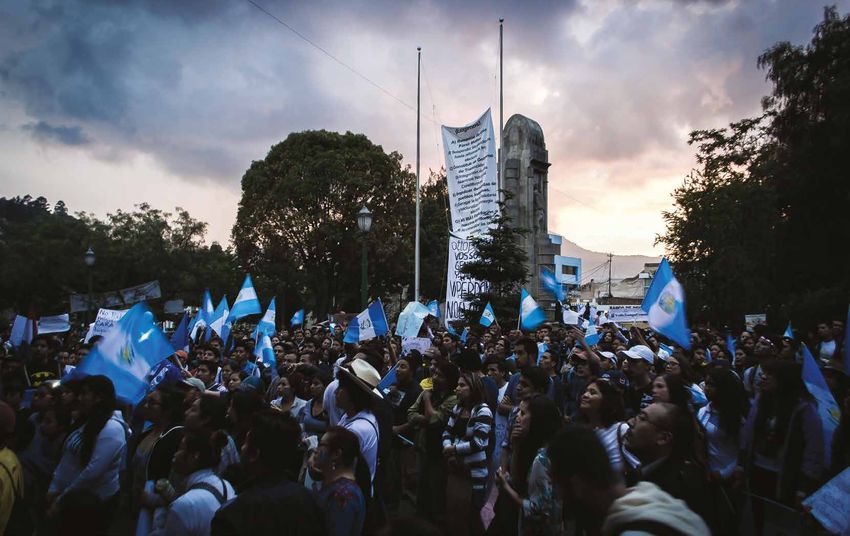
DOSSIER

    Sweeping away corruption
    through collective action

     As a symbol of protest against corruption,
     close to 600 green brooms were planted in
     the sand at Copacabana beach in Rio de
     Janeiro, Brazil on Monday, 19 September
     2011. Photo: Fabio Motta/Agência Estado

8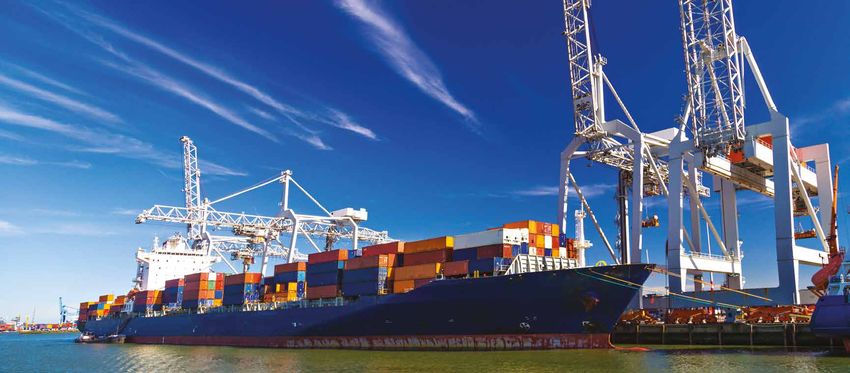
WCO news N° 83 June 2017

Integrity: what we have
learned and what we still
need to learn
By Kunio Mikuriya,
WCO SECRETARY GENERAL                        But before looking in more detail at what
                                             collective action is all about, I would
BY THE VERY nature of their activities,      like to share the results of the analysis
Customs administrations are vulnerable       carried out by WCO experts who have
to various sorts of corruption – from        been providing assistance over the last
the payment of a bribe to large-scale        five years to 26 countries around the
fraud. Since the adoption of the Arusha      world, in order to help them combat
Declaration in 1993, which was later         corruption and enhance integrity.
revised in 2003, the WCO has developed
several tools to help its Members identify   Identified trends
or monitor corruption risks, implement       Before looking at the new approach, let’s
relevant measures, and develop anti-         have a look at some of the ‘traditional’
corruption strategies.                       measures aimed at fighting corruption.
                                             The WCO experts have reported several
Moreover, the WCO also carries out           trends, remarks and thoughts on
various types of missions at the request     critical practices and policies, such as
of its Members, such as integrity            automation, performance measurement
assessment missions, missions to             or clearance procedures, which are
provide guidance on the introduction         summarized below.
of performance measurement systems,
or ad hoc missions to provide support in     Automation
revising a code of conduct, an integrity     Despite the establishment of automated
strategy, a training plan or the mapping     Customs clearance systems in all the
of corruption risks.                         administrations visited, in most cases
                                             the automation is not complete: certain
In the dossier section of this edition of    tasks are still being carried out manually,
the magazine, we have chosen to focus        and many paper documents continue to
on the use of ‘collective action’ to fight   circulate, since the technology in use
corruption, an expression which arose        does not allow them to be submitted
out of a concern to find an innovative       electronically. This slows the process
approach to address integrity-related        down, and increases contact between
issues.                                      officials and users.

                                                                                           9
DOSSIER

     The other negative aspect is that all
     stages of a Customs clearance that do
     not leave a trail in the system cannot
     be verified or measured in the case of
     performance measurement projects. In
     certain administrations, two automated
     Customs clearance computer systems
     work in parallel, making controls more
     difficult, and an analysis virtually
     impossible. This also raises integrity and
     security problems.

                                                                                                                                                       © David Plas
     Performance measurement
     It has been found that following missions
     providing performance measurement
     support, the behaviour of some officials
     very quickly changes irremediably when           officials who perform these duties are      are not necessarily a guarantee of
     the hierarchy takes measures to stop             not always capable of carrying out          respec t for i nteg r it y u n less t hey
     certain identified bad practices.                others. These additional stages or this     are accompanied by other reform
                                                      multiplicity of border controls may help    m e a s u r e s . H o w e v e r, p r o v i d i n g
     H o w e v e r, e v e n a f t e r y e a r s o f   to generate opportunities for corruption.   acceptable working conditions which
     implementing this approach, it is                                                            foster ethical behaviour and do not
     necessary to take stock and assess the           Communication policy                        place officials in extremely precarious
     situation constantly, in order to identify       There is, in most administrations that      circumstances is critical. Yet in some
     persistent problems and review the               have asked the WCO for assistance,          of the countries visited by a WCO
     indicators in practice, as a means of            an absence of a communication policy        mission, political changes have often
     rectifying the behaviour of individuals          designed to ensure internal and external    resulted in Customs officials’ salaries
     who seek to manipulate them in order to          communication on decisions taken            being reduced by half or even two
     reinstate the bad practices. On this very        by the administration in connection         thirds, which is not helpful.
     subject, I invite you to read the article        with integrity building, particularly
     by Cameroon Customs on page 52 of                in relation to the sanctions taken and      Recruitment
     this magazine.                                   progress made in this area.                 Even in cases where an administration
                                                                                                  has a recruitment system built, among
     What is interesting, though, is that,            Out of the 26 countries covered by the      other things, on job profiles that meet
     even when an administration does                 analysis, only four have indicated that     international standards, it is very
     not regularly analyse data from the              they have a Communications Service. A       often subject to political interference.
     automated Customs clearance system in            communication policy for the purposes       This jeopardizes recruitment based
     the context of performance measurement,          of transparency, as recommended by the      on integrity tests, and can provoke
     data analysis can be used to inspect the         Revised Arusha Declaration, is useful,      frustration and conf licts within an
     services and to ensure internal auditing,        notably for giving users a positive         administration.
     t hereby a l low ing behav iou r a nd            image of Customs, and for providing
     procedures to be analysed.                       information to staff.                       Rotation system
                                                                                                  The absence of a transparent and
     Procedures                                       Whistle blowing mechanism                   balanced rotation system , designed to
     During visits to Customs offices at              Most administrations have introduced a      support human resource management,
     land or sea borders where WCO teams              mechanism allowing officials and users      is a recurring theme, which more or
     have monitored the Customs clearance             to report acts of corruption. However,      less has a serious impact on integrity
     process, it has been noted that certain          fear of reprisals and lack of (legal)       within an administration according to
     stages of the Customs clearance are              protection has deterred whistle blowers     the extent of corruption in the country
     superf luous, and add nothing to the             from coming forward, even when              concerned.
     process other than an additional stage.          anonymity can be guaranteed.
                                                                                                  Strategy
     Sometimes for social reasons, certain            Salaries                                    Although most administrations have
     obsolete duties are maintained so that           As the WCO has often pointed out in         introduced anti-corruption measures,
     jobs do not have to be cut, since the            its publications, increases in salaries     the absence of an anti-corruption

10
WCO news N° 83 June 2017
You will learn from the
selection of articles making
strateg y is common to 90% of the of the trends identified by an expert up the dossier how collective
countries that the experts studied. is the building of new or innovative
partnerships with the private sector, action to combat corruption
Awareness-raising which can fit into what is today referred may apply in the Customs
W hen ad m i n i s t r at ion s have a n to as ‘anti-corrupion collective action.’
integrity awareness-raising or training context. I hope it will inspire
programme – which, in most cases, Collective action refers to the actions some WCO Members to
amounts merely to an induction session undertaken by individuals and/or
for new recruits – the emphasis is almost groups towards a collective purpose or look at the relevance and
always placed on the implementation goal. As I explained at the beginning of possibility of engaging in
of the code of conduct, specific rules this article, international organizations,
existing in this area, and penalties the private sector and the civil society such forms of relationships or
incurred in the event of non-compliance. are now using the term “anti-corruption schemes.
collective action” as an approach that
The incentives and explanations offered seeks to combat corruption ‘differently’
to persuade officials to respect integrity – a measure referred to in response to
should not be restricted solely to the fear of the failure of certain piecemeal anti-
penalties. It is just as important to highlight corruption approaches. Such initiatives
the advantages that exist for individuals and can include industry standards, multi-
for an administration in demonstrating stakeholder initiatives and public-
respect for integrity. An objective and private partnerships.
wellfounded performance measurement
policy and forums for exchanging views You will learn from the selection of
on integrity and corruption issues may be articles making up the dossier how
useful in this area. The objective should be collective action to combat corruption
to nurture a culture of integrity, supported may apply in the Customs context. I
by the provision of well-established career hope it will inspire some WCO Members
paths for Customs officers. to look at the relevance and possibility of
engaging in such forms of relationships
Relationship between Customs and or schemes. Unfortunately, there are
the private sector still very few examples of Customs
Eighty per cent of the countries visited administrations having done much work
by the experts have provisions for in this field, meaning that we still have
meeting and communicating with the a lot to learn.
private sector, which are more or less
effective, but not always official, which As WCO documents often stress, an
results in a lack of rigour. imaginative multi-faceted approach must
be adopted to enhance anti-corruption
However, a clear improvement in the initiatives, rat her t ha n sta ndard
climate of confidence between the private approaches alone. So, collective action
sector and Customs has been noticeable may represent a broader application of
over the years, particularly with the the partnerships that Customs generally
signature of individual memoranda seeks, and which the WCO has long
of understanding with private sector promoted.
partnerships in several Latin American
countries, and also in relations between By extending our multi-faceted approach
Customs and its partners, which the to collective action, Customs will take
experts have witnessed. the lead and strengthen its image in
combating corruption. Even if such
Collective action actions are launched by another party,
The WCO has a lways advocated such as representatives of the industry or
partnerships to combat corruption and another governmental agency, Customs
enhance integrity, particularly with the administrations will, nevertheless, have
private sector, as set out in Principle 10 every interest in taking part in such
of the Revised Arusha Declaration. One initiatives.
11DOSSIER
Anti-corruption Collective Action:
the logical next step for Customs
By Gemma Aiolfi,
HEAD OF THE INTERNATIONAL CENTRE FOR COLLECTIVE ACTION (ICCA), BASEL INSTITUTE ON GOVERNANCE
growth.4 Businesses have also identified
corruption at the border as one of the
This article outlines the case for Customs main obstacles to cross-border trade.5
administrations to use ‘Collective Action’ to fight The multidimensional nature of Customs’
obligations represents a tension between
corruption and, by doing so, improve Customs policy facilitating the flow of goods on the one
hand, and performing regulatory and
and its implementation, increase duty and tax collection coercive duties on the other. In many
countries, Customs and other border
rates and support government anti-corruption efforts, agencies are equipped with powers that
enable them to stop, search, control and
while creating a fair business environment. This may all seize goods, as well as detain persons,
under remits that go well beyond those
sound quite ambitious, but it is also arguably the logical of other law enforcement agencies.
next step for Customs. These powers are predicated on a wide
range of laws addressing criminal
activities as well as standards for health,
T H E WCO H A S long re cog n i z e d t he competition for local industries, under- safety and agriculture, including the
deleterious effects of corruption in valuation and/or misclassification of collection of duties and taxes. The
Customs, and the imperative to take imports and some exports. discretionar y aspects of Customs
action to prevent, detect and deter its combined with the locations where these
occurrence. To support these efforts, In addition, the hazards associated with functions are exercised, the handling of
the WCO and other international illegal or dangerous substances and money (often cash) at borders, and the
organizations have produced a number products being introduced into a country involvement of Customs brokers and
of standards, tools and guidance that are concerning in many countries, and agents acting as third parties for clients,
aim to practically support countries border corruption enables other crimes all contribute to creating increased
committed to tackling corruption.1 By to flourish, such as terrorism, human corruption risks for Customs services.
engaging in ‘Collective Action’ with the trafficking and poaching, all of which
private sector, Customs authorities may can have devastating and long-term Research indicates that companies
invigorate their efforts in implementing consequences. or their brokers that offer bribes, are
these standards, and improve the motivated by the trade-off between time
effectiveness of accompanying reforms.2 The World Bank estimates that about and the cost required to import goods,6
1 trillion US dollars is paid each year and traders pay bribes in an institutional
The problem of corruption in Customs in bribes around the world, with the environment where they feel removed
C or r upt ion i n Cu s tom s a f fe c t s total economic loss from corruption from the Customs ser vice, which
international trade and is, therefore, an estimated to be many times that supposedly represents their interests as
issue that influences the global economy. number. 3 Estimates also indicate that citizens and business. The legal regimes
The effects of corruption in Customs about 2 billion US dollars in bribes that permit so-called ‘facilitation
services are well known and frequently occur in Customs administrations payments’ by companies have probably
cited as including reduced intake of each year. Scholars have found a strong exacerbated the practice and tolerance of
revenue, economic damage through relationship between corruption, bribery bribes at Customs, though this may now
the reduction in revenue, unfair price in Customs services, and low GDP be declining in acceptance.
1 For example: WCO Revised Arusha Declaration (2003), WCO Revised Integrity Development Guide, WCO SAFE Framework of Standards to Secure and
Facilitate Global Trade (2012), UN ASYCUDA.
2 On the need for ‘big bang’ reforms in Customs, see Michael B, Ferguson F, Karimov A. (2010) Do Customs Trade Facilitation Programmes Help Reduce
Customs-Related Corruption?
3 http://www.worldbank.org/en/topic/governance/brief/anti-corruption.
4 Michael B (2010).
5 OECD/WTO (2015), Aid for Trade at a Glance 2015: Reducing Trade Costs for Inclusive, Sustainable Growth, OECD Publishing, Paris, http://www.oecd-
ilibrary.org/development/aid-for-trade-at-a-glance-2015_aid_glance-2015-en.
6 Michael B (2010).
12WCO news N° 83 June 2017
What is Collective Action and why
consider it?
Collective Action has been defined
variously as a “catch all term for
industry standards, multi-stakeholder
i nit iat ives, a nd publ ic-pr ivate
partnerships”,7 or it may be a distinct
form of interaction: “a collaborative
and sustained process of cooperation
amongst stakeholders [that] increases
ut
eP
pp
the impact and credibility of individual
ili
Ph
action, brings vulnerable individual
©
players into an alliance of like-minded
organizations, and levels the playing
field between competitors.”8 If Collective Action is challenging, take leadership roles, particularly on the
why consider it at all in this context? Customs side.
For t h e Wor ld B a n k I n s t it ut e , Reasons to do so include addressing
Collective Action against corruption the aforementioned ‘tension’ between Examples of Collective Action
can take the form of anti-corruption enforcement and trade facilitation in A basic approach to anti-corruption
declarations, principle-based Customs. The fact that virtually all Collective Action draws the public
initiatives, business coalitions subject bureaucratic procedures and control and private sectors in a dialogue
to certification, and integrity pacts.9 practices are usually more or less that is structured, sustained, goal
The forms of Collective Action are ‘negotiated ’ bet ween government oriented, transparent, and supported
distinguished from each other by agencies and the business and logistics by the Customs authority. For example,
the degree of enforceability of the sectors, particularly in enclosed or Canada, Russia and the United Kingdom
participants’ joint commitments 10 and, strictly defined areas such as ports and have a l l set up Customs-related
perhaps, by the goals of the initiatives. airports,11 might suggest that Collective consultative committees that include
Ac t ion fo c u si ng on pre vent i ng industry stakeholders, who provide
By any definition, Collective Action corruption and promoting integrity feedback on a variety of initiatives,
is neither a panacea for all corruption would be a logical and effective approach policies and regulations, including some
problems, nor easy to achieve, not to tackle issues of joint interest to the that relate to anti-corruption.12
least because it demands an active public and private sectors.
and participatory approach by the A wider version of the consultative
pa r t ic ipa nt s . E s t a bl i s h i ng suc h Initiating Collective Action approach has been taken by Guatemala.
action may also require patience and Engaging with the private sector can The Customs authority leads a ‘whole-
persuasion; companies want to know be a challenge in itself, particularly if of-gover n ment ’ approach ba s e d
the business benefits of joining any there is a lack of tradition in consulting on an agreement that establishes a
group, especially if they are suspicious with economic operators, and a basic “Public-Private Sector Discussion and
of competitors’ motives. The public lack of trust between the public and Cooperation Roundtable for Customs
sector may also question the need for a private sectors. Taking steps to alter Affairs,” to which some 17 institutions
participatory process when their mode of this premise often requires overcoming have signed up to.
working thus far has been to determine prejudices and deep-seated skepticism
standards and regulations without the on both sides. It needs champions who One of the main strengths of this
need for consultation. can see the wider benefits, and who can initiative, perhaps lies in the realization
7 Pieth M (2007) Multi-stakeholder initiatives to combat money laundering and bribery. In:Brutsch C, Lehmkuhl D (eds) Law and legalization in transna-
tional relations. Routledge, Oxford, pp 81–100.
8 World Bank Institute (2008) Fighting corruption through collective action, a guide for business, World Bank. http://info.worldbank.org/etools/docs/antic/
Whole_guide_Oct.pdf.
9 Ibid. World Bank (2008).
10 Design and Enforcement of Voluntary Anti-Corruption Agreements in the Private Sector, a study commissioned by the G20 Anti-Corruption Working
Group and prepared on behalf of the B20 Task Force, Draft 30 May 2013, p. 5 (on file with the author).
11 Cantens T (2016).
12 OECD (2016) Customs Integrity: Taking Stock of Good Practices, Responses to the G20 ACWG Integrity in Customs Self-Assessment Questionnaire.
13DOSSIER
that the public and private sectors can and the government is the Turkish Engaging with the private
“all wake up and work together to the Customs Broker Initiative. Set up in
benefit of the country” according to 2013, it is still a work in progress13 and sector can be a challenge
one member. This method of working needs to resolve some outstanding in itself, particularly if there
includes formalized meetings involving issues, but has also made progress since
three groups that ensure information- its inception. is a lack of tradition in
sharing with the highest levels of consulting with economic
government, coordination of activities, In 2013, The Ethics and Reputation
and a technical group that includes Society of Turkey (TEID) convened operators, and a basic lack
representatives from all stakeholders. 250 par ticipants representing 8% of trust between the public
of Customs brokers and 67% of all
The goals of improving efficiency Customs clearances in five Turkish and private sectors. Taking
in Customs and business are being cities. Under the auspices of Turkish steps to alter this premise
addressed systematica lly and Customs, the brokers signed a Code
transparently. The initiative has its of Ethics. They then had one year to often requires overcoming
weaknesses according to the private implement the Code via a compliance prejudices and deep-seated
sector, such as the slow pace of reform programme to address bribery risks,
and dealing with hierarchical structures after which they would receive the skepticism on both sides.
in the public sector. While there “Ethical Broker Logo” that would
remains much to be done, the approach identify them as a broker capable of
is supported on all sides and led by managing identified risks.
Customs.
The Turkish initiative has a fully thought
Other examples that embrace a whole- out governance structure that envisages
of-government approach include Brazil committees to ensure transparent
(Procomex) and Mexico (Customs procedures to award the logo, remove
Modernization and Competitiveness it, and to manage the process. Even
Board): though not all of the original aims of
the initiative have yet been met, the
• In Brazil, the public and private sectors process is informative for others seeking
collaborate to map business processes to develop participatory approaches
to inform and drive key procedural involving Customs brokers.
cha nges. T he process i ncludes
giving due consideration to both Conclusion
trade efficiency and implementing Combating corruption requires a
appropriate integrity controls; multiplicity of approaches. Collective
Action does not provide the only
• In Mexico, the public and private solution, but in combination with other
sectors work together through the legal, institutional and administrative
Board to design and implement reforms, multi-stakeholder engagement
policies in seven areas, namely (1) can lead to informed policy making
open and two-way communication, and more effective implementation
(2) transparency, (3) collaboration, of processes that are fair and relevant
(4) inclusion of all stakeholders, (5) to economic operators. At the same
innovation to anticipate changes time, such engagement can assist in
and challenges, (6) integrity, mutual increasing the collection of duties and
trust and understanding, and (7) taxes, decreasing bribery, and facilitating
accountability and joint responsibility. trade.
A different Collective Action that brings More information
together civil society, Customs brokers www.collective-action.com
13 Remaining elements include: establishing a “Joint Committee for Combating Corruption in
Customs” together with the Ministry for Trade and Customs along with other stakeholders; and
addressing the position of ‘runners’ who handle the paperwork and assist physical Customs control
procedures, but have the lowest wages and try to mitigate their low income with improper pay-
ments.
14WCO news N° 83 June 2017
Fighting corruption through partnership:
the Uruguayan experience
By Verónica Gómez, December 2010, the DNA commissioned • Innovate in terms of the tools used to
HEAD OF AUDIT OF PROCESSES, URUGUAYAN
CUSTOMS ADMINISTRATION
a survey to capture and analyse the foster integrity and promote a change
level of satisfaction of traders and DNA of culture;
IN 20 08, A huge corr uption sca nda l officials, as well as the perception of the
involving officials from the public sector wider public, about how the organization • Step out beyond the organization itself
and representatives from the private was being managed. The objective was to to create partnerships with the private
sector shook Uruguay’s foreign trade establish baseline levels of satisfaction, sector, other State bodies and with
community, as well as its international and to provide a snapshot which could civil society.
trading partners: 11 Customs officials be used as a starting point for assessing
working at Carrasco International how Customs’ modernization project Two key decisions were taken: first, to
Airport and 25 Customs brokers were was progressing. draw up a work programme containing
found guilty of receiving and paying specific objectives; and second, to include
backhanders. The first survey confirmed something an item on ‘Integrity and Transparency’
which had already been suspected, in the Customs Strategic Plan, thereby
This event marked a watershed for the namely that the institution had low formalizing the DNA’s willingness to
Uruguayan Customs Administration trust and approval ratings from both shape, implement and measure results in
(DNA), publicly and starkly displaying traders and citizens, and that there this domain. Thus, the topic of integrity
its wea k nesses as a n institution. was a particular lack of trust regarding was integrated into the DNA’s agenda
It dealt a heav y blow to the DNA’s its integrity. So, it became clear that and into its modernization project, with
public credibility, forcing it to take enhancing the integrity of Uruguay terms such as ‘integrity’ and ‘corruption’
a hard look at itself, and prompting Customs would require a thorough becoming part of the language of the
Customs brokers and the private sector review and expansion of the traditional organization.
in general to accept their share of model of control. As a result thereof, the
responsibility for the situation, which Customs administration had to address Within the strategic planning process
ultimately led to the implementation three main areas: that started in 2010, the ‘Belief System
of a future solution. of the Customs Administration’ was
• Decide whether the exercise of established. Since its first version,
Following the scandal, Uruguay Customs its traditional powers of internal the problem of corruption has been
embarked on a modernization project a nd ex terna l cont rol cou ld be established as a strategic objective: ‘As
with integrity constituting one of the complemented and expanded by other Customs officials, we are proud of being
key cornerstones of its reform policy. In working methods; civil servants that are professional and
15DOSSIER
The main objective of the
MOUs signed with the
efficient in fulfilling our tasks, honest, private sector is to establish, MOU implementation
and will not tolerate corruption.’ in a coordinated manner, a In practica l terms, t his involved
dra f t ing a sta nda rd let ter which
Although this process was not easy for system aimed at attacking all was sent by the National Director of
Uruguay Customs, taking both effort conduct that does not follow Customs to each association, inviting
and a lot of perseverance, nowadays, them to join the project and sign an
the word ‘ethics,’ ‘corruption’ and current regulations, or which MOU on Integrity and Transparency.
‘integrity’ can be heard across the could indicate that an act of A meeting was later arranged with the
organization. In addition, the topic is management team of an association,
referred to almost naturally today in corruption may have been du r i ng wh ich a sen ior Cu stoms
presentations, during training events, committed, while making re pre s e nt at i ve w a s t a s k e d w it h
and in exchanges between internal and personally explaining the project’s
external players. the biggest effort to combat objectives, enabling any queries to be
such conduct, both in the resolved on the spot.
Three years of intensive work resulted
in the formation of a comprehensive public and private sphere. It is important to highlight that, when
anti-corruption programme and, at the promoting such MOUs, Customs was
end of 2013, all the various integrity particularly careful to inform traders
initiatives were brought together under that subscribing to the agreement was
a special project. completely voluntary, and that any
agreement made was there to be kept.
A lt hough t he whole Customs MOUs with the private sector
administration is now committed to Reaching out to the private sector However, the following must be borne
fighting corruption, the units that are involved Customs ushering in a new in mind if a proposal of this type is
most closely linked to this matter are: era of interaction, which required to succeed: the trust and credibility
Internal Audit; Audit of Processes; conditions to be met and a common of the person heading the Customs
Inquiries a nd Ad minist rat ive understanding to be shared among all organization; the trust and credibility
I nvest igat ion; a nd t he Cu stoms the DNA’s stakeholders: of the person heading an association;
Response and Intelligence Group. and the trust and credibility of the
However, it is planned to change the • The existence of a good relationship department in charge of the project.
structure and organization chart of the a nd posit ive d ia log ue bet ween
administration with a view to creating Customs and the private sector; To date, 11 associations have signed
a consultancy department to be known MOUs. The first one to do so was the
as ‘Transparency and the Fight against • The recognition that public-private Association of Customs Brokers. It was
Corruption,’ which will report directly collaboration is fundamental to any followed by the Chamber of Logistics,
to the Director General of Customs, and improvement; the Navigation Centre, the Association
will be in charge of such matters. of Express Delivery Service Companies,
• The acknowledgement that facilitation the Association of Cargo Agents, the
Fo l l ow i n g WC O g u id a nc e a nd is also one of Customs’ priorities as a Chamber of Free Trade Zones, the Uruguay
recommendations laid out in concomitant to control; Chamber of International Road Transport,
t he ‘Declaration of t he Customs the Uruguayan Exporters Union, the
Co-operation Council concerning Good • The cer ta int y t hat faci litat ion Uruguay National Chamber of Commerce
Governance and Integrity in Customs’ measures can only work if integrity and Services, the Chamber of Duty Free
(Revised Arusha Declaration) and in the and transparency levels are high; Owners, and the Rice Mills Union.
‘WCO Integrity Development Guide,’
Uruguay Customs developed a Code • A private sector that was mature Wit h i n t he DNA, t he Aud it of
of Conduct, and courses on integrity in enoug h to accept it s sha re of Processes Unit, the Internal Audit
the civil service and on the benefits of responsibility for the problem; Unit and the Customs Response and
anti-corruption practices were provided Intelligence Group (GRIA) are working
to all staff. • A private sector which, in the midst collaboratively, and have the autonomy
of a period of increased Customs to investigate and identify acts of
Last but not least, Customs reached operations, backed business expansion corruption. However, the responsibility
out to the private sector, signing and improved efficiency in all areas; for spearheading the delivery of the
Memoranda of Understanding (MOUs) MOU project was given to the Audit of
on Integrity and Transparency with • A Customs administration that Processes Unit, which is responsible,
its key stakeholders. This is one of the was prepared to publicly accept its inter alia, for monitoring the MOUs
milestones of the steps taken by the DNA organizational shortcomings and and for ensuring that existing rules are
and the one which will be considered in have the will to spearhead an agenda enforced by all employees, whether they
detail in the rest of this article. to change the situation. are from Customs or a private entity.
16WCO news N° 83 June 2017
In practical terms, monitoring the contracting parties, which is followed by institutional transparency are put
MOUs consists mainly of organizing and a section listing facts and statements that in place;
coordinating the meetings in which action the parties recognize as true. The aim is
plans are agreed, and then controlling the for the parties to start from a realistic 3. The private sector entity must
fulfilment of each of these plans. position and to admit their share of commit to drafting or reviewing its
responsibility for the problem. own Code of Ethics within a specific
Whoever is in charge of managing period;
the project must have direct powers of In the final part, the parties commit
control. Such power ensures prompt themselves, expressly stating what 4. A Joint Committee, consisting
and timely intervention in the event their immediate obligations will be and of two representatives from each
of disclosures or alleged irregularities. setting deadlines for each commitment. institution, must be set-up and
Furthermore, it is advisable that the Although the commitments may vary tasked with drawing up an action
project manager also has a direct from one agreement to the other, plan, also within a specific period;
line of communication with senior they essentially contain the following
management. This lends weight to obligations: 5. T h e J o i nt C o m m i t t e e mu s t
decisions, and guarantees the necessary prepare a report, either twice a
discretion and confidentiality. 1. The DNA must draft its Code of year or annually, to evaluate the
Conduct; implementation of the MOU.
MOU content
All MOUs share the same features in 2. The DNA must, as part of its Some features of MOU implementation
terms of structure and content. They restructuring project, ensure that Once the MOU is signed, a Joint
open with a paragraph relating to the specific powers on integrity and Committee is established, as agreed,
Customs Studies in Australia
Study in Australia in 2018
Centre for Customs and Excise Studies
Charles Sturt University
Port Macquarie Campus
BACHELOR DEGREES | POSTGRADUATE DEGREES | DOCTORATES
• MASTER OF CUSTOMS ADMINISTRATION
• GRADUATE DIPLOMA IN CUSTOMS ADMINISTRATION
AN I
A
C
BE AL
R R A - AU ST R
• GRADUATE CERTIFICATE IN CUSTOMS ADMINISTRATION
Knowledge Beyond Borders
www.customscentre.com | customs@csu.edu.au
Charles Sturt University: The world’s largest provider of university education in
law enforcement, counter-terrorism, emergency management, customs and border security
17
F5339DOSSIER
and draws up an action plan with a • Customs and the Association of spearheading the change need to
view to meeting the objectives set out in Customs Brokers ca rried out a demonstrate a great deal of tenacity
the agreement. It is essential that those joint Workshop on Ethics and the in taking the project forward;
appointed to serve on the Committee – Fight against Corruption, aimed at
whether from Customs or an association students of the Professional Training • Those involved in a project of this
– have a specific profile (a clean record) Inst itute of Foreign Trade a nd kind must be prepared to be the
and qualities (discretion), and that they Customs (CEA); butt of constant criticism and to be
are exemplary in terms of integrity and scrutinized in the smallest detail;
transparency. • Customs officials have been given
g u ided tou rs by foreig n t rade • In some associations, fear of reprisals
Milestones related to the integrity operators; means that there is an underlying
project, including information on the resistance to making disclosures
MOUs, are widely disseminated – • An annual activity plan is developed which identify officials;
appearing on Uruguay Customs’ website together with MOU signatories;
and regularly communicated to media • For various reasons, some associations
representatives. • A survey aimed at ascertaining resist the drawing up of a Code of
which activities were vulnerable to Ethics;
Results of the MOU project corruption has been carried out, and
Here are just some of the results of this an action plan has been designed to • Continuity and stability in the
initiative that have been realized thus minimize them; hierarchy are essential for instilling
far: the necessary trust, so public and
• Information requests presented by private representatives should remain
• The MOU signatories have been operators have been responded to, in place at least until the project has
approved, updated or are currently within the framework of the MOUs; been consolidated – the fact that
working on their Codes of Ethics; the DNA Director has stayed in the
• Representatives from Customs and position since 2010 has been very
• Customs has approved its Code of members of the associations have been beneficial to the project.
Conduct; invited to give talks and presentations
in various national and international Needed improvements and actions
• Criminal complaints presented by forums on their experience with the In looking at the project, Uruguay
the DNA involving operators, and by MOUs. Customs has identified the following
operators involving the DNA, have improvements and actions that need to
been exchanged; Lessons learnt be undertaken:
The main points that Customs has
• Topics to be addressed with the private learned thus far are as follows: • Strive to win more support for the
sector were identified, and the DNA project from Customs officials and
and each association have agreed • Mutual trust is the bedrock of the traders;
to work on one of the specific topics project’s success, but this trust
together; is constantly put to the test, and • Work towards a situation where
maintaining it partly involves respecting the associations make disclosures
• In 2013, the cycle of conferences confidentiality and being effective when involving their members;
on ‘Getting to know the traders’ it comes to taking action;
was carried out, aimed at giving • Set achievable objectives in the action
associations the opportunity to share • Much of the project’s credibility plans and quantify results to provide
their perspectives on, and experience depends on providing a timely and a more effective steer for the action
with, the MOUs before an audience of fitting response, on confidentiality, plans;
Customs officials; and on tangible results, once the first
disclosures are made; • Push harder to meet the deadlines set;
• Joint work with the ‘Project of
Procedure for Receiving Criminal • Initially, many Customs employees • Greater accountability in cases of non-
Complaints’ is being carried out; failed to believe in the project, and compliance by the parties;
managers in signatory associations
• Training on ethics has been provided, experienced the same feedback from • Ensure that 100% of the associations
both onsite and online; their staff; have a Code of Ethics;
• The subject of ethics has been included • The subject of integrity is taboo in • Raise awareness among officials and
in the ‘Customs control course,’ given some organizations and Customs is no traders on the opportunities offered by
throughout the country; exception, so managers and officials the MOU project;
18WCO news N° 83 June 2017
Conclusions
Regarding the concepts of ethics,
transparency and the fight against
corruption, the public and private
sectors have a shared responsibility. In
most cases, two parties are necessary for
corruption to exist. The ethical action of
civil servants must be accompanied by
ethical action from all of society, and
specifically on Customs matters, by all
foreign trade operators.
In order to work jointly, the DNA
went about signing MOUs with the
private sector. The main objective of
these agreements is to establish, in a
coordinated manner, a system aimed at
attacking all conduct that does not follow
current regulations, or which could
A GALAXY
OF SKILLS
Agence Linéal - 03 20 41 40 76
indicate that an act of corruption may
have been committed, while making the
biggest effort to combat such conduct, FOR A UNIVERSE
both in the public and private sphere.
OF SERVICES
In this article, the stages completed in
reaching the conclusion of MOUs have
been mentioned as well as the details of
the agreements, and specific activities
carried out within their framework. The
DNA must continue working actively
and make the best use of the MOU tool.
In addition, both the public and private
sectors must continue to report alleged
acts of corruption, accepting only as
business partners those that respect
ethical principles.
According to the survey results, the
Customs Modernization Project as a
whole, the actions taken on integrity,
and the operations conducted by the
GRIA – which led to 315 people being
convicted, of which 135 were given no
prison sentence and 180 imprisoned –
have helped to improve the perception
which traders and the general public
have about the Customs administration.
Hav i ng emba rked on a pat h of
transformation, Uruguay Customs has
changed completely. More importantly,
when it comes to radically improving
integrity, Customs has realized that a
continued effort is vital.
More information
www.aduanas.gub.uy
19DOSSIER
© MACN
Stakeholders from the public and private sector undertake an exercise aimed at identifying risks across the clearance process
Collective action to promote integrity in
the maritime sector
By Martin Benderson,
ASSOCIATE, BSR (COPENHAGEN)
One approach t hat has emerged large. It comprises vessel owners and
for companies to overcome such a other companies within the maritime
COMPANIES OPER ATING IN global supply stalemate is ‘collective action,’ which industry, including cargo owners and
chains face a number of systemic allows businesses to share information, service providers. MACN currently has
corruption issues, such as demands coord i nate ac t ions , a nd enga ge over 85 member organizations and is
for ‘facilitation’ payments or extortion governments and civil society without governed by a member-elected steering
for bribes, when trading goods across threatening their own competitive committee. The network is facilitated
borders. National anti-bribery legislation advantage and freedom to operate. by BSR – a global nonprofit business
in many countries and extraterritorial Fortunately, a number of examples of network and consultancy dedicated to
regulations, such as the United States’ collective action driven by businesses sustainability.
Foreign Corrupt Practices Act and the to tackle corruption have been initiated
United Kingdom’s Bribery Act, have in recent years, with key public sector Since its formation, MACN has worked
put pressure on international business institutions such as Customs authorities to strengthen the anti-corruption
to take a firm stance against corruption. playing a leading role. programmes of its member companies
However, any company that implements by providing systems, tools, policies,
zero tolerance internal policies against One example of successful collective and best practices to help them – in
bribery and facilitation payments risks action is the Maritime Anti-Corruption particular, captains arriving in a port
losing business or facing delays unless Network (MACN). The network was – to say no to facilitation payments. By
their competitors institute similar established in 2011 as an industry- promoting good corporate practices in
policies. This ‘first mover’ disadvantage led initiative, working collaboratively the maritime industry for tackling bribes
incentivizes companies to give bribes toward t he v ision of a maritime and facilitation payments, MACN seeks
and facilitation payments instead of industry free of corruption that enables to build a culture of integrity among
promoting a level playing field. fair trade to the benefit of society at its members, ultimately ensuring that
20WCO news N° 83 June 2017
all companies empower their captains MACN has implemented in partnership cases of extortion and even threats of
to say no to demands for facilitation with Customs authorities include: violence. MACN began with an integrity
payments during port calls. risk assessment in the port sector,
• undertaking risk assessments – identifying specific forms of corruption
However, addressing only the behaviour conducting integrity risk assessment and its drivers, and possible solutions.
of companies – the ‘supply side’ of of vessel and cargo clearance processes
corruption – is not sufficient to stop in collaboration with key stakeholders; Key integrity risks for the Nigerian
corruption in the maritime industry. port sector included a lack of standard
Therefore, MACN actively engages and • promot i ng good governa nce – operating procedures, with officials
collaborates with government agencies developing transparent procedures wielding high discretionary powers, and
to find ways to reduce the frequency and regulations for vessel and cargo weak infrastructure and capacity – both
and severity of demands for facilitation clearance in collaboration with key physical and procedural. Moreover, the
payments and bribe solicitations. stakeholders; assessment also identified bureaucratic
Countries targeted are those where ‘red tape’ in port operations as a potential
M ACN members ex per ience t he • building capacity – implementing bottleneck, creating ample opportunities
greatest challenges, and where MACN integrity and awareness training for for bribe solicitations: for instance, the
finds the most viable opportunities to public officials and the private sector; study found that 142 signatures were
drive change in collaboration with local required to process cargo at Lagos ports!
stakeholders, thanks to, for example, • promoting accountability – improving
local political commitments to the accountabilit y in t he maritime The integrity risk assessment exercise
anti-corruption agenda and to trade sector by developing accountability stressed the importance of participatory
facilitation. mechanisms, such as whistleblowing execution, and therefore recommended
systems for public officials and the the training and certification of 70 local
Fundamental to MACN’s collective private sector; corruption risk assessors drawn from
action approach is that sustainable the public sector – at federal and state
solutions to tackle corruption must be • promoting public-private sector levels, and from relevant anti-corruption
enabled by, supported by, and beneficial dialogue – promoting a culture of agencies – as well as from civil society.
to key stakeholders. Dialogue with integrity and knowledge-sharing
stakeholders is, therefore, a critical part between government stakeholders Impact to date
of MACN’s collective action projects, and the private sector through multi- MACN has successfully worked to
securing commitment and buy-in from stakeholder dialogue and awareness implement the recommendations of
local stakeholders in specific countries raising. the risk assessment, in collaboration
and ports. Customs authorities are a key with various stakeholders, including
stakeholder in MACN’s collective action In the sections below, two case studies the Nigerian Shippers Council (NSC),
projects, as they play a central role in the from MACN´s collective action projects the Nigeria Customs Service (NCS),
clearance of goods through maritime in Nigeria and Indonesia respectively the Technical Unit on Governance and
ports worldwide. are presented, illustrating the results Anti-Corruption Reforms (TUGAR),
achieved in countries where MACN is the UNDP, local non-governmental
To date, MACN has successf u lly collaborating with Customs authorities. organizations (NGOs), and the Nigerian
partnered with Customs authorities in Ports Authority (NPA). The work to
Nigeria and Indonesia to collaboratively Addressing corruption in the Nigerian date has included best practice training
i mplement a nu mber of ac t ions port sector workshops for Customs officials, the
enhancing integrity and combating MACN launched its first collective action harmonization of procedures across
corruption risks in vessel and cargo project in Nigeria in partnership with the ports, and the establishment of a
clearance processes. The collective United Nations Development Programme grievance mechanism.
action projects implemented by MACN (UNDP) in 2012. Nigeria had been
have demonstrated that a similar set identified as one of the most challenging In addition, MACN supported the
of tools and approaches for improving countries to do business in, with requests implementation by the NPA of an
transparency and integrity are relevant for facilitation payments posing a major Electronic Ship Entry Notice (e-SEN)
in all locations. Typical activities that risk to member companies, involving system that is expected to curb the
21You can also read


