Taieri College - Charter 2021-2023
←
→
Page content transcription
If your browser does not render page correctly, please read the page content below
Taieri College

Charter 2021-2023
OUR MISSION

To deliver a challenging and enriching education in a
supportive environment that will transform the lives of
our students.

OUR VISION

To provide a safe, friendly environment where students
will experience an innovative and cohesive education
to enable them to become confident, connected, life-
long learners who are positively involved in society.

                               Taieri College Charter (2021 to 2023) - Page 2 of 56
OUTCOME OF OUR VISION –
What we want for our young people

People who:
•    will be creative, energetic and enterprising
•        will seize the opportunities offered by new knowledge and technologies to
         secure a sustainable social, cultural, economic, and environmental future for
         our country
•        will work to create an Aotearoa New Zealand in which Maori and Pakeha
         recognise each other as full Treaty partners, and in which all cultures are
         valued for the contributions they bring
•        will continue to develop the values, knowledge, and competencies
         (Thinking; Using Language, Symbols and Text; Managing Self; Relating To
         Others; Participating and Contributing) that will enable them to live full and
         satisfying lives
•        will be confident, connected, positively involved and lifelong learners.

                  Confident                                Actively involved
    •   positive in their own identity          • participants in a range of life
    •   motivated and reliable                    contexts
    •   resourceful                             • contributors to the well-being of
    •   enterprising and entrepreneurial          New Zealand – social, cultural,
    •   resilient                                 economic and environmental
                 Connected                                  Lifelong learners
    • able to relate well to others             • literate and numerate
    • effective users of communication          • critical and creative thinkers
      tools                                     • active seekers, users, and
    • connected to the land and                   creators of knowledge
      environment                               • informed decision makers
    • members of communities
    • international citizens

                                                 Taieri College Charter (2021 to 2023) - Page 3 of 56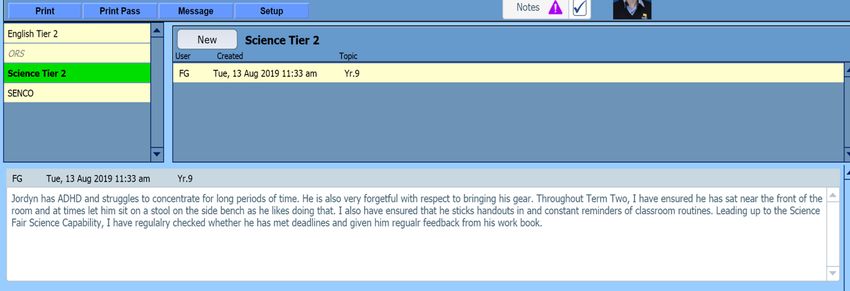
OUR ROLL

  120
                       Taieri College Roll - February 2021
  115       110                                                 110
  110                   103
  105                                         101 101
  100             95
   95                           91                                    89                               90
                                                                                     88 88
   90
   85
   80                                                                                             73
   75
   70
   65
   60                                                                                                                56
   55
   50                                                                                                           44
   45
   40
   35
   30
   25
   20
   15
   10
    5
    0
            Year 7       Year 8               Year 9            Year 10              Year 11      Year 12       Year 13
                                                         Boys          Girls

                                      Taieri College Roll Comparison
1250
1200
1150
1100
1050
1000
 950
 900
 850
 800
 750
 700
 650
 600
 550
 500
 450
 400
 350
 300
 250
 200
 150
 100
  50
   0
        2004 2005 2006 2007 2008 2009 2010 2011 2012 2013 2014 2015 2016 2017 2018 2019 2020 2021

                       Year 7        Year 8     Year 9    Year 10          Year 11      Year 12   Year 13

                                                                        Taieri College Charter (2021 to 2023) - Page 4 of 56
COLLEGE AND COMMUNITY
Taieri College, situated in Mosgiel, Dunedin, serves a well-defined local community.
As a Decile 7 co-educational Year 7- 13 college it continues a commitment to
education that began in this area in 1853.
Taieri College is a community college. This concept involves the college having a
sense of ownership by the people of the Taieri. We share with the whole
community the important role of developing our young people.
Logo significance
Saddle Hill
• Taieri’s major landmark
• Legendary and historic
• Iconic status
Sunshine
• New era
• Life-giving
• Warmth, health, happiness
• Taieri’s better weather
Blue and Gold
• Recognition of Chinese society
• Taieri’s colours
• Adds vivacity to design
• Recognition of Scottish society
The Water Dish
• Taieri River, Waipori River and
Silverstream Set of Three
• Meandering appearance of rivers • Three rivers
• A region born from water • Three centuries of Taieri schools: 1800s,
• Legend of Makamaka 1900s and 2000
• Maori koru shapes (birth, young) • Three school names: Mosgiel Intermediate
• Strong New Zealand symbolism and The Taieri High School becoming Taieri
College
• Students finding their way in life
• Three-way relationship: students, staff and
• Recognition of Maori society
family
• Adds movement to design
The Taieri Plain is a clearly defined geographical area which has a proud tradition
of sturdy independence and a commitment to its unique mix of town and country.
It is a community which is willing to embrace change and has looked to diversify
and grow to meet the evolving needs of the markets for its products. It has warmly
embraced the technical and scientific world in its desire to maximise its production
yet has retained its sense of cohesiveness and of family values.
Families of the Taieri Plain choose Taieri College to educate their young people.
They want:
• a co-educational seamless school
• a safe, supportive environment
• broad-based balanced education
• strong community links
• an education that will equip their young people for the 21st Century
• credentials that will give students from the school the personal resources to
fulfil their goals.
At the same time the community wants its young people to be nurtured and cared
for by staff with values similar to their own. They look to the college to help them
teach their young about respect and caring for others, about being honest and
trustworthy and to learn about hard work and commitment and the benefits and
rewards these can bring.
Taieri College Charter (2021 to 2023) - Page 5 of 56SHARED VALUES
Our shared values are the important qualities we live by; shown in the ways we go
about our work and relationships with others.
Excellence
This means we:
• constantly strive for our personal best, challenging self, showing a positive
attitude, perseverance, and being accountable
• encourage ourselves and others to show courage in striving for new learning as
we test ourselves and others in healthy competition
• provide opportunities and help for every individual to reach their potential.
Respect
This means we:
• have pride in ourselves, our family, our college and our community
• take responsibility for our actions and act with honesty and integrity
• show respect for the beliefs and values of other cultures and acknowledge the
importance of the Treaty of Waitangi as the founding document of our society
• respect the fragility of our environment and strive to practise ecological
sustainability.
Our Commitment to the Government Requirements
Taieri College is committed to meeting all the requirements of:
• the Treaty of Waitangi. This means that Taieri College will:
- Ensure an awareness of Tikanga and Te Reo is created within the college
through curriculum areas, College assemblies, signage and the college
newsletter (where appropriate).
- Parents and caregivers who wish to have their young person educated
through Te Reo Maori will:
- Have explained to them what Taieri College does to meet Te Reo and
Tikanga Maori needs in its regular programme.
- Be offered the opportunity for assessment of the suitability of the student
for study through Correspondence School
- Be invited to explore the availability of family support in Te Reo.
- Work with the college to access external agencies able to offer support.
• the National Education Goals
• the Foundation Curriculum Policy Statements
• the National Curriculum
• the National Administrative Guidelines
• all relevant legislation that applies to all aspects of school operation.
Taieri College Charter (2021 to 2023) - Page 6 of 562021 – 2023 STRATEGIC FOCUS
Transforming the lives of our students by positively engaging them in
education at Taieri College
Statements of
Intent. How? Who? When? Resourcing
We intend to…
Instil confidence in School Values and expectations Principal and whole Ongoing N/A
our students by staff
providing an
environment that is
both emotionally Positive Teacher/Student Relationships Whole staff Ongoing N/A
and physically safe. (Ako)
Classrooms will be
inclusive and cater Tataiako (cultural competencies) Whole staff Ongoing Professional
for the needs of all development
learners, regardless
of age, ethnicity, Health Programmes PE & Health Ongoing and Ongoing PLD
gender, or ability. Curriculum Director reviewed in including liaison with
and Health December each other agencies
Teachers year
Counselling Principal, Board of Ongoing and Budgeting and
Trustees and reviewed in staffing for
Guidance October each counsellors
Department year
Senior Leadership Ongoing N/A
Team and Deans
Taieri College Charter (2021 to 2023) - Page 7 of 56Pastoral Care discussion at staff meetings NZ Police Term 1 Classrooms
(and Dean’s Meetings) using Student presenting to Year provided
Manager 12s
“Loves-Me-Not” Presentation (Sophie
Elliott Foundation)
Restorative Practices Whole staff Professional Potential
development of professional
Restorative Justice development
principles and opportunities
practice
Continuation of Year 9 Travellers Year 9 Deans All year Professional
programme development for
Deans
Well Being Ambassadors Guidance All year Rebranding of Peer
Mediators to “Well
Being
Ambassadors”
Mentoring Programme Assistant Principal Selection and
training of Senior
Mentors to work
with “at risk”
younger students
Taieri College Charter (2021 to 2023) - Page 8 of 56Respect the Understanding and implementation of Ka Principal and Ongoing Professional
uniqueness of New Hikitia across the school whole staff development
Zealand Society opportunities
with particular
understanding of Provision for Kaitiaki (Maori Dean) Principal and BOT Ongoing Management Unit
our bi cultural and release time
partnership with
Tangata Whenua Consultation with our Maori community Kaitiaki, Principal Annual Hui Providing Kai
(Tangata (Whanautanga) and Maori-Pasifika
whenuatanga) Council
Hui time at Year 10 Kaitiaki, Deputy Ongoing All Year 10s have
Principal consistent
opportunity to
explore Tikanga
Tracking of Maori student achievement Kaitiaki, Maori
Curriculum Ongoing Professional
Directors and Development
whole staff
Support of Maori-Pasifika Council and Kaitiaki, Principal Ongoing $10,000 Budget
promotion of Kapahaka and BOT approved by BOT
Mentoring Programme Principal and Ongoing Use of Maori mentor
Kaitiaki to work with
students who are
not achieving or “at
risk” of not
achieving
Taieri College Charter (2021 to 2023) - Page 9 of 56Resource our Budget provision Principal and BOT Ongoing IT Budget approved
school so teaching
programmes reflect Professional Development Senior Leadership $30,000 budget
current Team and approved by BOT
developments, Curriculum Directors
particularly in
regard to Modern Learning Environment Principal and BOT Ongoing Professional
technology development of classrooms development
opportunities
Microsoft 365 Development Principal and SLT 2021 Commitment to
provide release
time for a teacher
who will provide
release time for staff
professional
development of
Microsoft 365
Foster a community Email contact from teachers with home Classroom teachers Ongoing Provision of Staff IT
of connected (laptops)
learners with the Reporting Curriculum Learning
understanding that -Learning Readiness Directors, Deans Readiness every N/A
students learn -Formal Reports and Classroom three weeks.
better when we -Deans pastoral system teachers Formal Reports
work in partnership end of Terms Three
with home and the and Four
wider community
(Manaakitanga) Parent Interviews Classroom Teachers Conducted March Budget provided for
and July staff meals
Senior Leadership Ongoing N/A
Community Consultation
Team Weekly
Taieri College Charter (2021 to 2023) - Page 10 of 56Weekly Newsletter Principal and Office Ongoing E-mailed
School Website Principal’s PA Ongoing
One Middle
Facebook Pages Liz Hurst –TIC Social Ongoing Management
Media Allowance
KAMAR SLT, Lyndon Jones Ongoing Developing of
(AP) parent portal to
access “real time”
assessment details
College functions Senior Leadership Ongoing Catering and rental
Team of facilities when
required
Careers / Gateway Programmes Senior Leadership Monthly Careers support
Team
Sports Council Head of Sport Monthly N/A
Role model Professional Development Senior Leadership Regular staff $30,000 per annum
reflective practice Team meetings professional
and use our development
knowledge of budget
student
achievement to Use of Student Profiles (tracking) Curriculum Directors Developing Reviewable
guide us in the next and Classroom annually
steps of their Teacher KAMAR licence
learning
Curriculum Directors Ongoing N/A
Assessment Practices and Classroom
Teachers
Taieri College Charter (2021 to 2023) - Page 11 of 56Learning Support Coordinators (LSC) Learning Support LSC Folder Look at developing
information sharing Coordinators provided on Staff appropriate office
SharePoint space in
consultation with
MoE
Appraisal (waiting for developments Principal and Ongoing Principals appraisal
following conditions included in recently Curriculum Directors externally sourced
settled PPTA Collective Agreement) every two years
Create a school School wide expectations Principal and whole Regular staff N/A
culture that values staff meetings
lifelong learning
and allows students Positive Teacher-Student relationships Whole Staff Ongoing N/A
to reach their (Ako)
academic
potential. We will School wide and Curriculum Specific Senior Leadership Ongoing N/A
have high Professional Development Team and
expectations Curriculum Directors
Promote active EOTC Programme PE Curriculum Ongoing Professional
involvement in a Director and EOTC Development
range of school coordinator Budget
contexts, with
reference to Provision for Sporting and Cultural Teacher in charge Ongoing Funding for Sports
curriculum and co opportunities outside of school of Sport, Sports Coordinators
curriculum Coordinators
opportunities PE Curriculum
Compulsory physical education Ongoing N/A
Director
programme
Arts Curriculum
Compulsory Arts/Music Programme Director and Head Ongoing N/A
of Music
Taieri College Charter (2021 to 2023) - Page 12 of 56ANNUAL PLAN GOALS FOR 2021
The Board of Trustees has identified the following annual plan goals for 2021:
GOAL 1: Success as Maori
Raising Maori student achievement and strength of identity. Cultural inclusiveness will be
the focus of our annual college wide well-being programme. Academically, we will
continue to develop the Tier 2 tracking programmes to enhance the academic
achievement of Maori students. Our specific academic goal is for 75% of Maori students
at Year 11 attain Level 1 NCEA in 2021.
GOAL 2: NCEA Achievement
Enhancing NCEA Achievement. Our college-wide NCEA goals are:
• 85% of all Year 11 students attain Level 1 NCEA in 2021
• 85% of all Year 12 students attaining Level 2 NCEA in 2021
• 70% of all Year 13 students attaining Level 3 NCEA in 2021
GOAL 3: Tracking of Years 7-10
Accelerated progress of Year 7-10 students at risk of not achieving. Curriculum Areas will
make an early identification of students who are at risk of not achieving (Tier 2 students) at
the Curriculum level recommended by the Ministry of Education and will develop and
employ strategies to accelerate the learning of the targeted students.
• Year 7–8 Writing: All students identified as operating 'below' the desired Curriculum
level of learning should move at least two subsets in their writing ability.
• Year 9–10 Science: Tier 2 students will be identified using assessment of their Science
capability. Their learning progression will be tracked and half of identified Tier 2
students will graduate into Tier 1 during the course of the year.
• Year 9-10 English: Tier 2 students will be identified using assessment of their Writing
capability. Their learning progression will be tracked and half of identified Tier 2
students will graduate into Tier 1 during the course of the year.
• Year 9-10 Mathematics Tier 2 students will be identified using assessment of their
Numeracy capability. Their learning progression will be tracked and half of identified
Tier 2 students will graduate into Tier 1 during the course of the year.
Goal 4: Literacy
Staff will explore and deploy specific strategies to enhance literacy levels across all
Curriculum areas. Curriculum Directors will drive this initiative by developing a shared
approach to improving literacy levels.
GOAL 5: Technology
BYOD will be successfully implemented at Years 12 and 13. This will include further progress
of Microsoft 365 use and implementation.
Taieri College Charter (2021 to 2023) - Page 13 of 56Goal 1
Raising Maori student achievement and strength of identity. Cultural inclusiveness will be the focus of our annual College wide
well-being programme. Academically, we will continue to develop the Tier 2 tracking programmes to enhance the academic
achievement of Maori students. Our specific academic goal is for 75% of Maori students at Year 11 attain Level 1 NCEA in 2021.
Background
Taieri College upholds the principles of the Treaty of Waitangi. We respect the notion of Maori learning as Maori and their right
to a fair and equitable education.
Completed Responsibility of and
Action KPI
By cost
Offering Level 1 Maori as a subject Principal Staffing allowance of • Level 1 programme developed.
four hours • Monitor student achievement and
liaise with Deans regarding
interventions if and/or as required.
• Sufficient professional development
opportunity for teacher.
Hui Time Deputy Year 10s will participate • Maintaining knowledge of Haka.
Principal in regular Kapa Haka • Programme developed over the
Year’s 7-10 opportunity during Hui
course of 2021.
Time.
• Staff provided for kapa haka tuition.
Funding of a Kaitiaki (Maori Dean) Principal Principal (one • Kaitiaki oversees Maori mentoring
Management Unit, programme.
including classroom • Organisation of annual Whanau Hui
release time)
• Identify NCEA Maori students who are
at risk of not achieving.
• Assists Year Level Deans in the pastoral
care of Maori students.
Taieri College Charter (2021 to 2023) - Page 14 of 56• Maori / Pasifika students show a
willingness to participate in cultural
events. Promotion of kapa haka.
All staff continue to embrace the On-going Curriculum Directors • Continued understanding and
principles of Ka Hikitia and demonstrate and implementation of “Ako” concept.
cultural competency as teachers monitored • Ensuring learning programmes are
(Tataiako) each year inclusive and their progress as
individuals is comparable with non-
Maori Pasifika students.
Te Reo classes continue to be offered Whole year Principal • Specific classroom for Maori language
and use of Te Reo promoted across the (wharenui).
college • Waiata sung at beginning of
assemblies.
• The college is committed to ensuring
that Te Reo classes continue to be
offered.
• Professional development opportunities
Early identification of Maori students at Whole year Classroom Teachers and • Maori students identified by classroom
risk of not achieving Curriculum Directors teachers.
• Learning data from “Student Profiles”
on KAMAR will identify students at risk of
not achieving.
• IEP’s developed in response to data
ensuring students on a pathway that
ensures academic success.
Provision for specialised Kapa Haka tutors Whole year Principal and BoT • $10,000 per annum
Taieri College Charter (2021 to 2023) - Page 15 of 56Goal 2
Enhancing NCEA Achievement. Our college-wide NCEA goals are :
-85% of all Year 11 students attain Level 1 NCEA in 2021
-85% of all Year 12 students attaining Level 2 NCEA in 2021
-70% of all Year 13 students attaining Level 3 NCEA in 2021
Completed
Action Responsibility of KPI
By
Provision of a rich and diverse Level 2 December Principal • Vocational courses offered to students
Curriculum giving students the 2021 who are not suited to a traditional
opportunity to attain credits in a variety academic pathway.
of learning areas
Programmes developed giving students December Curriculum Directors and • Programme of work completed.
a better chance of attaining credits at 2021 teaching staff
NCEA
Tracking of “at risk” students December Deputy Principal and • Process to identify students at risk of not
2021 Deans achieving NCEA via KAMAR data.
• List developed early enough for
intervention to occur.
• Specific study period for selected
students who need a boost.
Taieri College Charter (2021 to 2023) - Page 16 of 56Goal 3
Accelerated progress of Year 7-10 students at risk of not achieving. Curriculum Areas will make an early identification of students
who are at risk of not achieving (Tier 2 students) at the Curriculum level recommended by the Ministry of Education and will
develop and employ strategies to accelerate the learning of the targeted students.
• Year 7–8 Writing: All students identified as operating 'below' the desired Curriculum level of learning should move at least two
subsets in their writing ability.
• Year 9–10 Science: Tier 2 students will be identified using assessment of their Science capability. Their learning progression will
be tracked and half of identified Tier 2 students will graduate into Tier 1 during the course of the year.
• Year 9-10 English: Tier 2 students will be identified using assessment of their Writing capability. Their learning progression will be
tracked and half of identified Tier 2 students will graduate into Tier 1 during the course of the year.
• Year 9-10 Mathematics Tier 2 students will be identified using assessment of their Numeracy capability. Their learning
progression will be tracked and half of identified Tier 2 students will graduate into Tier 1 during the course of the year.
Background
Early identification of students at risk of not achieving is essential in developing programmes and implementing appropriate
interventions to ensure success for all students
Completed
Action Responsibility of KPI
By
Mathematics, Science and English Curriculum March 2021 Curriculum Directors • Specific achievement data used to
Directors define criteria for identifying students provide information for determining
at risk of not achieving students at risk of not achieving (overall
Teacher judgement criteria).
Science and English Curriculum Directors will March 2021 Curriculum Directors • List of Tier 2 at risk students identified
identify students at risk of not achieving early in and Heads of before the end of February.
the year Departments
Identified students will have their achievement December Curriculum Directors • Data of at risk students collated.
tracked over the course of the year 2021 and Heads of
Departments
Taieri College Charter (2021 to 2023) - Page 17 of 56Teaching programmes will be reviewed and December Curriculum Directors, • Teaching programmes cater for students
modified to enhance achievement of 2021 Heads of working at curriculum levels below the
identified at risk learners (Teaching as Inquiry) Departments and recommended level for each Year level.
Classroom teachers
Year 7 and 8 Reading / Writing / Mathematics - December TK Curriculum • Group four to six students for each
To move a core group of Tier 2 students by 2021 Director subject, over the two cohorts this will be
implementing an intervention programme to around 35 students per year level.
boost achievement and progress towards Planned programme over two terms.
expected curriculum level. • Move these identified students one to
TK Teachers two subsets. Have entry level data and
exit level data.
TK Teachers • Teacher class profiles identify and plan
intervention programme for each
student.
TK Teachers • Specific teaching strategies are planned
to boost/improve the student’s
achievement
Resourcing: • Professional development opportunities.
• Professional development around KAMAR Markbooks.
Taieri College Charter (2021 to 2023) - Page 18 of 56Goal 4: Literacy
Staff will explore and deploy specific strategies to enhance literacy levels across all Curriculum areas. Curriculum Directors will drive this
initiative by developing a shared approach to improving literacy levels.
Background
High literacy levels have been identified as being critical to NCEA success for students. We believe a school wide approach
using shared strategies across all curriculum areas will be beneficial in improving student literacy levels
Completed
Action Responsibility of KPI
By
Curriculum Directors form a shared Dec 2021 Curriculum Directors • Attendance of staff at professional
strategy which will be implemented by development workshops/staff meetings.
teachers across the college (all curriculum • Implementing of learned strategies
areas) during class time.
• 60% of our Year 10 cohort at level 5P or
above by the end of Year 10 for reading
(medium term goal)
All staff will consider themselves teachers End of Classroom teachers • Implementation of literacy strategies
of Literacy school across the college
year • Professional development opportunities
Resourcing: • Professional Development opportunities for staff.
Taieri College Charter (2021 to 2023) - Page 19 of 56Goal 5
BYOD will be successfully implemented at Years 11, 12 and 13.
Background
We have contracted Cyclone Computers to look after the college IT requirements. Part of this arrangement is Cyclone have
employed a technician who works at the college.
Completed Responsibility of and
Action KPI
By cost
Year 11, 12, and 13 students required to 2021 SLT • Number of Year 11, 12 and 13s with
bring their own laptops as part of their devices
Nicole Wilson is
learning programmes employed through • Provision for those who do not have
Cyclone as a network them or can’t get them
technician who will assist • Teaching programmes across
in student use of curriculum areas using cloud-based
computers on our programmes
network
Resourcing: Working with Cyclone as an education partner in IT facilitation and on-site technician ($102,000 per
annum)
Taieri College Charter (2021 to 2023) - Page 20 of 56ANALYSIS OF
VARIANCE FROM
2020
Taieri College Charter (2021 to 2023) - Page 21 of 56ANNUAL PLAN GOALS 2020 (Analysis of Variance)
GOAL 1
Raising Maori student achievement and strength of identity. Cultural inclusiveness will
be the focus of our annual College wide well-being programme. Academically, we
will continue to develop the Tier 2 tracking programmes to enhance the academic
achievement of Maori students. Our specific academic goal is for 75% of Maori
students at Year 11 attain Level 1 NCEA in 2020.
Participation Based Results: Year 11 Maori students Level 1 NCEA
Taieri College
Taieri College Maori National Maori
All
2016 73.3% 62.8% 88.8%
2017 70.6% 62.0% 82.5%
2018 66.7% 55.1% 77.8%
2019 64.3% 54.8% 80.6%
2020 80.8%% 58.2% 77.8%
Result: Achieved
Of the 26 Maori students at Year 11, 21 were successful at obtaining Level 1
NCEA.
Participation Based Results: Year 12 Maori students Level 2 NCEA
National Decile Taieri College
Taieri College Maori
4-7 Maori All
2016 83.3% 70.6% 79.4%
2017 100% 69.8% 86.5%
2018 84.6% 66.4% 85.4%
2019 69.2% 71.2% 74.7%
2020 84.6% 75.6% 70.5%
Excellent results
Taieri College Charter (2021 to 2023) - Page 22 of 56Participation Based Results: Year 13 Maori students Level 3 NCEA
National Decile Taieri College
Taieri College Maori
4-7 Maori All
2016 37.5% 49.9% 57.6%
2017 88.9% 52.4% 76.0%
2018 83.3% 50.8% 74.5%
2019 81.8% 53.4% 73.9%
2020 44.4%* 62.1% 59.9%
We had nine Maori students in Year 13 in 2020. Of the nine who are part
of our statistics, five left before the end of the year. When we
recalculate leaving those students out, 100%of Maori students who
stayed to end of Year 13 achieved Level 3 NCEA.
Taieri College Charter (2021 to 2023) - Page 23 of 56GOAL 2
Enhancing NCEA Achievement. Our college-wide NCEA goals are :
- 85% of all Year 11 students attain Level 1 NCEA in 2020
- 85% of all Year 12 students attaining Level 2 NCEA in 2020
- 70% of all Year 13 students attaining Level 3 NCEA in 2020
Result: Partially achieved
Results (Year 11, Level 1)
Taieri College Year 11 Decile National
Level 1 4-7
2016 79.4% 81.4% 78.4%
2017 86.5% 80.8% 78.0%
2018 85.4% 78.6% 76.1%
2019 74.7% 78.7% 76.1%
2020 77.8% 74.9% 70.2%
Results (Year 12, Level 2)
Taieri College Year 12 Decile National
Level 2 4-7
2016 79.4% 81.4% 78.4%
2017 86.5% 80.8% 78.0%
2018 85.4% 78.6% 76.1%
2019 74.7% 78.7% 76.1%
2020 88.0% 82.9% 79.1%
Results (Year 13, Level 3)
Taieri College Year 13 Decile National
Level 3 4-7
2016 57.6% 65.2% 64.2%
2017 78.2% 66.1% 65.5%
2018 77.2% 66.3% 66.1%
2019 74.8% 67.5% 67.3%
2020 68.4%* 72.0% 71.4%
Taieri College Charter (2021 to 2023) - Page 24 of 56As with or NCEA Maori achievement data when students who left before the
end of the school year were removed from statistics the pass rate of Level 3
for Year 13 students was 84%.GOAL 3
Tracking of Year 7-10 achievement. Curriculum Areas will make an early
identification of students who are at risk of not achieving (Tier 2 students) at
the Curriculum level recommended by the Ministry of Education and will
develop and employ strategies to accelerate the learning of the targeted
students.
• Year 7–8 Writing: All students identified as operating 'below' the
desired Curriculum level of learning should move at least two subsets
in their writing ability.
• Year 9-10 English: Tier 2 students will be identified using assessment of
their Writing capability. Their learning progression will be tracked and
half of identified Tier 2 students will graduate into Tier 1 during the
course of the year.
• Year 9–10 Science: Tier 2 students will be identified using assessment
of their Science capability. Their learning progression will be tracked
and half of identified Tier 2 students will graduate into Tier 1 during the
course of the year.
Result: Partially achieved
OVERALL STUDENT ACHIEVEMENT
The following is the analysis of every students progress in Year 7 & 8
Teachers monitor and track the progress and achievement of every student in
their class. Teachers run differentiated programmes across the curriculum for
students depending on their levels of learning and learning needs. The aim is
to boost and support every pupil’s learning through careful monitoring and
specific feedback and support.
CURRICULUM LEVELS
The Curriculum Levels of Achievement change as the pupils move throughout
the year.
In Year 7 in Term 1 & 2 an Achieved/At is Curriculum Level 3P (3 Proficient).
In Year 7 in Term 3 & 4 an Achieved/At is Curriculum Level 3A (3 Advanced).
In Year 8 in Term 1 & 2 an Achieved/At is Curriculum Level 4B (4 Beginning).
In Year 8 in Term 3 & 4 an Achieved/At is Curriculum Level 4P (4 Proficient).
The levels change to reflect pupils continued learning throughout the year.
Taieri College Charter (2021 to 2023) - Page 25 of 56Year 7/8 Scaffolded Programme
The Year 7 and 8 programmes are heavily scaffolded. In Year 7 pupils are
exposed to a lot of new learning and skills, that are implemented to scaffold
learning all the way through to the senior school. In Year 8 the pupils reinforce
that learning and build to be ready for Year 9 and above. The
course/curriculum builds as the year goes on. In Terms 3 and 4 more difficult
units of learning take place (eg. Multiplication and Division Strategies, Formal
Writing and Novel Study Analysis). Alongside this the pupils are expected to
become more independent as the teachers use Term 1 and 2 to model,
guide and demonstrate all the skills, knowledge and understanding of the
learning tasks.
2020 Learning from Home
The pupils learning in 2020 was interrupted by the lockdown. This meant that
Term 1 and Term 2s interrupted Curriculum delivery programmes had an
impact on students learning this year. After lockdown, our Learning
Programmes were adjusted to focus on Staff and Student wellbeing.
Programmes were adjusted and edited to allow students to feel happy, safe,
settled, and confident to be back at school. This had a direct influence on
our learning programmes. Assessments were removed or adjusted and
learning programmes changed and adjusted to focus on the wellbeing
concept. As such, pupils were not exposed to the full range of skills,
knowledge and understandings that were planned to be taught. The
lockdown resulted in Term 3 being the only term where the pupils had
continuity of learning.
2021 Strategies to improve achievement outcomes:
1. To help improve outcomes a Well Being Programme is being introduced in
2021 with the emphasis on growing and developing a positive growth
mindset. The focus will be on personal attitude, work ethic and having a
positive attitude towards learning. Other topics including Resilience and
Goal Setting will be introduced throughout the year.
2. Department Goals have been set to focus on specific areas to improve
outcomes:
• Reading: Year 7 & 8 Novel Analysis Programme - To move a core group
of Tier 2 pupils by implementing an intervention programme to boost
achievement and progress towards expected curriculum level.
• Writing: Year 8 Writing - To move a core group of Tier 2 pupils by
implementing an intervention programme to boost achievement and
progress towards expected curriculum level.
• Maths: Year 7 Basic Facts - To move a core group of Tier 2 pupils by
implementing an intervention programme to boost achievement and
progress towards expected curriculum level.
Taieri College Charter (2021 to 2023) - Page 26 of 56• Social Sciences – Year 7 & 8 – Processing Information - To move a core
group of Tier 2 pupils by implementing an intervention programme to
boost achievement and progress towards expected curriculum level.
3. Teacher Data Analysis term by term – teachers will track each pupil and
analyse progress term by term. Teachers will meet with Lance Woods
each term to discuss individual progress and strategies implemented to
promote progress.
4. Lauren Roney will be used extensively through classroom observation of
new staff to provide feedback on teaching techniques and lesson
structure for Maths in Year 7 and Writing across Year 7 & 8.
Taieri College Charter (2021 to 2023) - Page 27 of 56YEAR 7 WRITING – ENTIRE YEAR 7 COHORT
Below At Above
Beginning of Programme 80 75 34
End of Programme 61 87 40
End of Term 3 Analysis:
Subset Movement Number of Pupils
1 104
2 36
3 or more 4
Ethnicity:
Maori Students Number
Above Expected 7
Level
At Expected Level 13
Below Expected Level 15
Note: 15 Maori Students are working at L3P which is 1 subset below
expectation
Gender:
Male Female
Above Expected 15 25
Level
At Expected Level 43 44
Below Expected Level 37 21
Well Below Expected 3 0
Level
Note:
37 males working at L3P which is 1 subset below expectation
21 Females working at L3P which is 1 subset below expectation
Analysis of Year 7 Writing Progress:
What is positive is of the 61 pupils below there are 58 who are only one subset
below expected level. That means there is a tail of 3 pupils who are well
below in their writing skills.
The main feature was the 40 pupils who had their learning level boosted by
moving 2 subsets on the learning curriculum. 104 pupils made at least 1
subset movement which is normal progress on the learning continuum.
There are still 61 pupils working Below expected level at the end of Term 3 – so
there will be a focus in Term 3 to improve the outcomes in Creative Writing.
This will focus on Lance Woods working with the Year 7 teachers to upskill
them on understanding the structure, sentence structure and language
features of Creative Writing.
Taieri College Charter (2021 to 2023) - Page 28 of 56YEAR 8 WRITING – ENTIRE Y8 COHORT
Below At Above
Beginning of Programme 60 70 46
End of Programme 79 60 42
End of Term 3 Analysis:
Subset Movement Number of Pupils
1 81
2 60
3 or more 16
Ethnicity:
Maori Students Number
Above Expected Level 3
At Expected Level 10
Below Expected Level 5
Well Below Expected Level 5
Note: 5 Maori Students working at L4B which is 1 subset below expectation
Gender:
Male Female
Above Expected 19 23
Level
At- Expected Level 23 37
Below Expected 47 13
Level
Well Below Expected 12 7
Level
Note:
47 males working at L4B which is 1 subset below expectation
13 Females working at L4B which is 1 subset below expectation
Analysis of Year 8 Writing Progress:
The main feature was the 60 pupils who had their learning level boosted by
moving 2 subsets on the learning curriculum and a further 16 who moved 3
subsets.
A positive outcome was the 81 pupils made at least 1 subset movement
which is normal progress on the learning continuum. Most (157) pupils made
at least 1 subset movement which is expected progress on the learning
continuum.
There are still 79 pupils working Below expected level at the end of Term 3
which is of concern and new strategies will be introduced in 2021 to address
the issue. The lack of continued progress in the second half of the year needs
to be addressed.
Taieri College Charter (2021 to 2023) - Page 29 of 56Of the 79 pupils below there are 60 who are only one subset below expected
level. Of the 60 who are one subset below expectation – 47 of them are boys.
2021 strategies to improve learning outcomes in Writing:
The writing topic in Term 3 is formal writing and this is an area a large group of
pupils need to develop further. The pupils need to develop their application
of sentence structure and writing correct paragraphs. To try to solve these
issues the Term 3 Writing Programme is being rewritten and a new way of
teaching Formal Writing will be used. A “Personal Writing Unit” of learning will
be used to add greater engagement in writing, especially for the boys.
Lance Woods will also work closely with the Year 8 teachers to upskill them in
teaching Formal Writing. This will include reorganising the planning and
resources for the unit and focusing on structure, paragraph writing, and
vocabulary required in Formal Writing.
Taieri College Charter (2021 to 2023) - Page 30 of 56YEAR 7 READING – ENTIRE YEAR 7 COHORT
Below At Above
Beginning 45 68 73
End 42 82 64
End of Term 3 Analysis:
Subset Number of Pupils
Movement
1 98
2 32
3 or more 0
Ethnicity:
Maori Students Number
Above Expected 8
Level
At Expected Level 18
Below Expected Level 8
Well Below Expected 1
Level
Note: 8 Maori Students working at L4B which is 1 subset below expectation
Gender:
Male Female
Above Expected 26 38
Level
At Expected Level 40 42
Below Expected 29 10
Level
Well Below Expected 3 0
Level
Note:
29 males working at L3P which is 1 subset below expectation
10 Females working at L3P which is 1 subset below expectation
Year 7 Reading Analysis:
A major focus in Year 7 is introducing and exposing pupils to the concept of
reading Novels and the process of analysing a text. The task of reading a
novel and recording its theme, message, purpose, plot, and summary is new
to a lot of our Year 7 pupils. The Term 3 reading tasks are the most difficult of
the reading programme. The pupils are involved in Literature Circles – reading
and sharing a range of novels and where the pupils are expected to record
the theme, message, purpose, audience, plot, and personal response with
greater independence. New Novels have been purchased to help support
pupils learning. The Novels are linked to the Social Studies topic to help link
learning and use the pupil’s knowledge and understanding better.
Taieri College Charter (2021 to 2023) - Page 31 of 56A large group of pupils (98) made progress of 1 subset which is normal
learning within 1 year at school. Considering the concept of analysing a novel
is new to most of the pupils the progress is very pleasing. The novel Analysis is
also scaffolded into Year 8 so a major focus in Year 7 is introducing and
building a foundation for Year 8.
A number (130) of pupils made at least 1 subset movement which is expected
progress on the learning continuum. We have 39 pupils working at Level 3P
which is one subset below expectation, meaning they have a solid
foundation to go into Year 8 and develop their reading skills further. Of these
39 – 29 are boys. To address this issue the new Well Being Programme will
hopefully see improved results through an improved attitude and work ethic
in reading.
To gain improved outcomes the Novel Analysis Learning Matrix has been
adjusted to make the learning outcomes much clearer for the students. As
well there will be a focus in Year 7 of upskilling teachers in understanding the
requirements on the Novel Programme.
Taieri College Charter (2021 to 2023) - Page 32 of 56YEAR 8 READING – ENTIRE YEAR 8 COHORT
Below At Above
Beginning 61 60 55
End 55 65 55
End of Term 3 Analysis:
Subset Movement Number of Pupils
1 82
2 54
3 or more 6
Ethnicity:
Maori Students Number
Above Expected 7
Level
At Expected Level 6
Below Expected 10
Level
Note: 10 Maori Students working at L4B which is 1 subset below expectation
Gender:
Male Female
Above Expected Level 16 39
At Expected Level 33 32
Below Expected Level 34 16
Well Below Expected Level 4 1
Note:
34 males working at L4B which is 1 subset below expectation
16 Females working at L4B which is 1 subset below expectation
Year 8 Reading Analysis:
The Term 3 Reading programme is the most challenging for our pupils. The
pupils are involved in a Novel Study and Novel Analysis with growing
independence. The pupils are expected to independently read a novel and
analyse it for the theme, message, plot, audience, purpose, personal
response and make connections to the novel. The deeper thinking involved is
a challenge for many pupil’s but the results are positive as they indicate that
they are achieving success at level 4P.
A number (82) of pupils made at least 1 subset movement which is expected
progress on the learning continuum by the end of term 3. Of the 55 who are
below, 50 are one subset below expected level which indicates they have a
sound basis to go into Year 9 English.
To gain improved outcomes the Novel Analysis Learning Matrix has been
adjusted to make the learning outcomes much clearer for the students. As
well there will be a focus in Year 8 of upskilling teachers in teaching and
understanding the requirements on the Novel Programme.
Taieri College Charter (2021 to 2023) - Page 33 of 56YEAR 7 MATHS – ENTIRE YEAR 7 COHORT
Number Strand Below At Above
Beginning 50 44 99
End 52 40 97
End of Term 3 Analysis:
Subset Movement Number of Pupils
1 72
2 37
3 or more 5
Ethnicity:
Maori Students Number
Above Expected Level 14
At Expected Level 8
Below Expected Level 12
Well Below Expected 1
Level
Note: 12 Maori Students working at L3P which is 1 subset below expectation
Gender:
Male Female
Above Expected 53 44
Level
At Expected Level 15 25
Below Expected Level 22 15
Well Below Expected 9 6
Level
Note:
22 males working at L3P which is 1 subset below expectation
15 Females working at L3P which is 1 subset below expectation
Results from the individual maths strand achievement for the entire cohort are:
Statistics Below At Above
50 63 55
The main area to see improvement is pupil’s ability to calculate the Mean,
Median, Mode and Range.
Basic Facts – Below At Above
Add/Sub
61 14 115
61 pupils below is a concern. A new Number Knowledge Programme in Term
1 2021 will be implemented to improve these outcomes.
Basic Facts – Below At Above
Mult/Div
82 22 86
Taieri College Charter (2021 to 2023) - Page 34 of 56There are 82 pupils below which are a major concern. A new Number
Knowledge Programme with an emphasis on Basic Facts will be implemented
to improve these outcomes in Term 1 2021.
Year 7 Maths Analysis
The Maths programme is heavily scaffolded in Year 7 & 8. We all use the same
maths language, teach the same strategies and processes. This means two
years of consistency in learning for the pupils. This has helped pupils maintain
consistent progress over two years.
The end of Term 3 analysis shows normal movement in the progress of Yr 7
pupils but not a boost to move more pupils from Below to At.
The reason for this is - The Term 3 Maths Topic is Multiplication and Division
which is the most difficult topic for pupils to achieve success. The reason for
this is that the pupils do not know their times tables with speed, accuracy or
confidence which impacts on their achievement in this topic. Many pupils are
not prepared for the Year 7 Maths programme because their Basic Facts
Knowledge is below expectation when they arrive at the beginning of Year 7.
Of the 52 pupils who are below there are 37 who are 1 subset below
expected level.
A number (114) of pupils made at least 1 subset movement which is expected
progress on the learning continuum.
The area for improvement and development in 2021 is Basic Facts – Mult/Div
where 82 pupils are below expected level. This will be focus of the Number
Knowledge Unit in Term 1 2021 and has been included as one of our
Department Goals in 2021.
Taieri College Charter (2021 to 2023) - Page 35 of 56YEAR 8 MATHS – ENTIRE YEAR 8 COHORT
Number Strand Below At Above
Beginning 36 21 118
End 49 20 99
End of Term 3 Analysis:
Subset Movement Number of Pupils
1 81
2 59
3 or more 9
Ethnicity:
Maori Students Number
Above Expected 12
Level
At Expected Level 3
Below Expected Level 6
Well Below Expected 2
Level
Note: 6 Maori Students working at L4B which is 1 subset below expectation
Gender:
Male Female
Above Expected Level 45 54
At Expected Level 8 12
Below Expected Level 20 13
Well Below Expected 11 5
Level
Note:
20 males working at L4B which is 1 subset below expectation
13 Females working at L4B which is 1 subset below expectation
Results from the individual maths strand achievement for the entire cohort are:
Statistics Below At Above
49 39 76
Of the 49 below the main reason was the pupils lack of achievement in
calculating the Mean, Median, Mode and Range. New ideas and resources
will be introduced to improve student’s outcomes in this area. The pupil’s
ability to create Graphs was very positive.
Measurement Below At Above
25 49 94
This Unit was new and introduced to improve the outcomes in Measurement
which has been an area of concern and needed improvement. The results
were very positive and showed progress in the knowledge and understanding
of measurement concepts and skills.
Taieri College Charter (2021 to 2023) - Page 36 of 56Year 8 Maths Analysis:
The standout feature is the 99 pupils working above expected level. This can
be contributed to the consistency in maths language, processes, and
strategies from Year 7 to Year 8. This means Year 8 pupils build on their
previous years learning and grow in confidence quickly. The consistent
processes and strategies were developed in discussions with and advice from
Amber Sides (CD of Maths).
A number (81) of pupils made at least 1 subset movement which is expected
progress on the learning continuum.
33 of the 49 pupils below are only 1 subset below expectation.
Combined there are 119 pupils working at or above expected level – which is
very positive.
The explanation for 49 pupils still being below expected level is that in Term 3
Maths Topic is Multiplication and Division which is the most difficult topic for
pupils to achieve success. The main reason for this is that the pupils don’t
know their times tables with speed, accuracy or confidence which impacts
on their achievement in this topic. To improve these results the focus will be on
improving student’s Basic Facts in Year 7 as outlined above.
NEW MATHS PROGRAMME 2021
Lance Woods and Amber Sides have worked together to redesign the Year
7/8 Maths Programme that is heavily scaffolded and an emphasis on “Time to
Learn Concepts’ has been created. Achievement Objectives have been
taken from the new maths standards. A two-year programme has been
written so that all Mathematical areas and Strands are covered over a two-
year cycle.
Taieri College Charter (2021 to 2023) - Page 37 of 56YEAR 7 SOCIAL STUDIES: ENTIRE YEAR 7 COHORT
Below At Above
Term 1 35 69 86
Term 3 40 74 76
Below is the Term 3 break down of the individual Social Studies Skills that
contribute towards a teacher’s overall teacher judgement:
Knowledge & Below At Above
Ideas:
Term 3 28 34 126
Researching Below At Above
Information:
Term 3 59 62 65
Processing Below At Above
Information:
Term 3 49 67 70
Communicating Below At Above
Information:
Term 3 45 62 79
End of Term 3 Analysis:
Subset Movement Number of Pupils
1 78
2 38
3 or more 2
Ethnicity:
Maori Students Number
Above Expected Level 12
At Expected Level 16
Below Expected Level 6
Well below Expected 1
Level
Note: 6 Maori Students working at L3P which is 1 subset below expectation
Gender:
Male Female
Above Expected Level 27 49
At Expected Level 46 28
Below Expected Level 19 11
Well Below Expected 8 2
Level
Note:
19 males working at L3P which is 1 subset below expectation
11 Females working at L3P which is 1 subset below expectation
Taieri College Charter (2021 to 2023) - Page 38 of 56Year 7 Social Studies Analysis
A number (118) pupils made expected or more progress throughout the year.
40 of these pupils made accelerated progress.
Thirty pupils are working at Level 3P which is one subset below expected level.
Analysing the individual skills that make up the teacher’s overall teacher
judgement - there has been a slight increase in the number of pupils Below at
the end of Term 3.
The reason for this is: - In Term 3 the pupils are expected to be more
independent in the research process. (Term 1 and 2 is teacher guided and
modelled). This results in some pupils not meeting expected levels.
Analysing the individual skills taught in Social Sciences - all the skills are
relatively evenly spread for achievement.
Researching Information (Finding info, note taking and keeping a
bibliography) will be a focus for improvement as it is the lowest area for
overall achievement. A new reading focus in Term 1 on Finding Information,
Note taking, and Summarising will help develop the student’s skills in Social
Studies.
Processing Information (developing notes into well written responses and
applying Grammar, Punctuation and Spelling) will also be an area of focus in
2021 and will be a department Goal as it links to Literacy/Writing across the
Curriculum which is a school wide focus in 2021.
Taieri College Charter (2021 to 2023) - Page 39 of 56YEAR 8 SOCIAL STUDIES: ENTIRE YEAR 8 COHORT
Below At Above
Term 1 37 74 65
Term 3 58 56 48
Below is the Term 3 break down of the individual Social Studies Skills that
contribute towards a teacher’s overall teacher judgement:
Knowledge & Below At Above
Ideas:
Term 3 51 60 50
Researching Below At Above
Information:
Term 3 53 65 43
Processing Below At Above
Information:
Term 3 56 45 50
Communicating Below At Above
Information:
Term 3 47 65 47
Term 3 Analysis:
Subset Movement Number of Pupils
1 95
2 21
3 or more 4
Ethnicity:
Maori Students Number
Above Expected Level 5
At Expected Level 6
Below Expected Level 9
Well Below Expected 1
Level
Note: 9 Maori Students working at L4B which is 1 subset below expectation1
Gender:
Male Female
Above Expected Level 10 38
At Expected Level 30 26
Below Expected Level 29 12
Well Below Expected 12 5
Level
Note:
29 males working at L4B which is 1 subset below expectation
12 Females working at L4B which is 1 subset below expectation
Taieri College Charter (2021 to 2023) - Page 40 of 56Year 8 Social Studies Analysis:
There have been 95 pupils who made normal progress of 1 subset movement.
Only 21 pupils made accelerated progress of 2 subsets. 31 of the Below pupils
are at L4B which is only 1 subset below expectation.
There are still 58 pupils working Below - In Term 3 the pupils are expected to be
more independent in the research process. (Term 1 and 2 is teacher guided
and modelled). This results in some pupils not meeting expected levels. A large
group of boys struggle with the growing independence and managing their
workload within time frames. The Well Being Programme will hopefully improve
outcomes in these areas.
The areas in need of development to improve progress have been identified
as:
• Developing notes into well written responses in their own words (Processing
Information)
• Presenting working to acceptable standards (Neat, tidy, layout, few
spelling errors) – (Communicating Information)
• Processing Information (developing notes into well written responses and
applying Grammar, Punctuation and Spelling) will also be an area of focus
in 2021 and will be a department Goal as it links to Literacy/Writing across
the Curriculum which is a school wide focus in 2021
Tier 2 Pupils 2020:
Tier 2 data showing number of Tier 2 pupils identified in Term 1 and again at
the end of Term 3.
Year 7 Tier 2 Students:
Year 7 Tier 2 = 3B (Expected Level is 3P in Term 1)
Year 7 Tier 2 = 3P (Expected Level is 3A in Term 3)
Social
Reading Writing Maths
Sciences
Year 7 - Term 1 42 66 44 31
Year 7 - Term 3 39 58 37 30
Taieri College Charter (2021 to 2023) - Page 41 of 56Year 8 Tier 2 Students:
Year 8 Tier 2 = 3A (Term 1)
Year 8 Tier 2 = 4B (Term 3)
Reading Writing Maths Social
Sciences
Year 8 - Term 1 51 60 37 35
Year 8 - Term 3 50 60 34 31
Taieri College Charter (2021 to 2023) - Page 42 of 56Tier 2 Target Group Pupils Achievement (ALL Programme Pupils) as at the end of the
intervention programme 2020
Result: Success
Categories: YEAR 7 YEAR 8
TOTAL NUMBER OF STUDENTS
TOTAL NUMBER OF TOTAL NUMBER OF
STUDENTS 30 31 61 STUDENTS
TOTAL NUMBER OF TOTAL NUMBER OF
STUDENTS -PACIFIKA 0 0 0 STUDENTS -PACIFIKA
TOTAL NUMBER OF TOTAL NUMBER OF
STUDENTS -NZE 26 26 52 STUDENTS -NZE
TOTAL NUMBER OF TOTAL NUMBER OF
STUDENTS -MAORI 3 5 8 STUDENTS -MAORI
OTHER 1 0 1 OTHER
TOTAL MALE 17 13 30 TOTAL MALE
TOTAL FEMALE 13 18 31 TOTAL FEMALE
Ethnicity Analysis: YEAR 7 YEAR 8 TOTAL NUMBER OF STUDENTS
WHO ACCELERATED
NUMBER OF STUDENTS 29 18 NUMBER OF STUDENTS
WHO ACCELERATED (97%) (58%) 47 (77%) WHO ACCELERATED
PACIFIKA STUDENTS WHO PACIFIKA STUDENTS
ACCELERATED 0 0 0 WHO ACCELERATED
NZE STUDENTS WHO NZE STUDENTS WHO
ACCELERATED 25 13 38 ACCELERATED
MAORI STUDENTS WHO Maori students who
ACCELERATED 3 5 8 accelerated
OTHER STUDENTS WHO OTHER STUDENTS WHO
ACCLERATED 1 0 1 ACCLERATED
Gender Analysis: YEAR 7 YEAR 8 TOTAL NUMBER OF STUDENTS
WHO ACCELERATED
MALE STUDENTS WHO 16 9 MALE STUDENTS WHO
ACCLERATED (94%) (70%) 25 (83%) ACCLERATED
FEMALE STUDENTS WHO 13 9 FEMALE STUDENTS WHO
ACCELERATED (100%) (50%) 22 (71%) ACCELERATED
NZ Curriculum YEAR 7 YEAR 8 TOTAL NUMBER OF STUDENTS
WHO ACCELERATED
Analysis:
NUMBER OF STUDENTS AT 22 16 NUMBER OF STUDENTS
38
NZ CURRICULUM AT NZ CURRICULUM
EXPECTATION EXPECTATION
PACIFIKA STUDENTS AT NZ 0 0 PACIFIKA STUDENTS AT
0
CURRICULUM NZ CURRICULUM
EXPECTATION EXPECTATION
Taieri College Charter (2021 to 2023) - Page 43 of 56Year 9-10 MATHEMATICS
Summary:
In Term 1 2020, 49 Year 10 students and 50 Year 9 students were identified as
Tier 2. This does not include four Year 9 Tier 3 students on alternative
programmes and 24 Year 10 Tier 3 students who were selected to be in the 10
Numeracy class or who have similar results.
The Mathematics teachers then selected 39 of the 99 Tier 2 students to
include in their focus groups. They implemented strategies to lift student
achievement. These strategies and reflection on their success or failure is
recorded on KAMAR.
In Term 4 2020, student results were analysed again. Of the students identified
as Tier 2 in Term 1, 24% were successful and moved to Tier 1 (22% Year 9, 27%
Year 10). 53% did not move from Tier 2 (36% Year 9, 69% Year 10). 22%
dropped to Tier 3 (42% Year 9 and 2% Year 10).
Of all students In Term 4 2020, 48 Year 10 students and 42 Year 9 students were
identified as Tier 2. This does not include 26 Year 9 Tier 3 students and 23 Year
10 Tier 3 students.
In comparison to 2019 the number of students who were initially identified as
Tier 2 has essentially doubled; 50 Year 9 in 2020 compared to 25 in 2019, 49
Year 10 in 2020 compared to 25 in 2019. In 2019, 52% of the Year 9 students
initially identified as Tier 2 were shifted to Tier 1. 24% of the Year 10 students
initially identified as Tier 2 were shifted to Tier 1.
There are some notable differences between 2019 and 2020 which may
account for some of the differences in results. The Covid-19 lockdown has
undoubtedly had an impact on students learning and occurred at a time
that teachers were making plans to implement targeted strategies for Tier 2
learners.
Lockdown added extra time pressure both to teach the course content but
also to execute strategies to lift Tier 2 students.
We also reviewed the Year 9 and 10 courses this year, making changes to
most of the Year 9 topics and rewriting all the junior assessments and marking
schedules so we are not necessarily comparing like with like.
Taieri College Charter (2021 to 2023) - Page 44 of 56Comparing E-asTTle beginning of year results for Year 9 and 10 across the
years show that the 2020 Year 9 cohort are achieving at a noticeably lower
level than 2019 Year 9’s. The 2020 Year 10 cohort had similar beginning of
year E-asTTle results to the 2019 year group. This suggests that the 2019 and
2020 Year 10 Term 1 Tier 2 students should be similar in 2019 and 2020, and
perhaps the different assessments used to identify students has influenced the
numbers. Even taking these possible sources of variation into account, the
2020 results are disappointing.
As a department we will reflect upon these results and conduct deeper
analysis of individual students to identify the specific barriers to their learning
which has resulted in their Tier 2 classification. It is evident that the strategies
implemented in 2020 were not as successful as we hoped. Many Tier 2
students share common traits, so in future it may more effective if we
implement some strategies department wide.
Nineteen of the Year 9 Tier 3 students will be in the Year 10 Numeracy class for
2021. Their course programme will be adjusted to meet their needs.
As an analogy, Tier 2 students are classified as such because they have been
walking when they needed to be jogging. They could start jogging, but to
catch up with the rest of the group they now need to run. It is not going to be
easy to get students to run, who have been walking, but we are up for the
challenge.
Details:
In Term 1 49 of the 171 Year 10 students were identified as Tier 2.
The criteria used to identify students as Tier 2 was to be achieving below the
expected level in at least two out of three assessments. The assessments used
for initial identification were:
• End of Year 9 Exam (below 50%)
• Beginning of year E-asTTle (below 5b[1571])
• Numeric Reasoning Assessment (“Not Achieve” or “Progressing towards”
grades)
An additional 24 students were identified as Tier 3. The criteria used to identify
students as Tier 3 was:
• Year 10 Numeracy course
Or all of the following:
• End of Year Exam (below 25%)
• Beginning of year E-asTTle (below 5b[1571])
• Numeric Reasoning Assessment (“Not Achieve” or “Progressing towards”
grades)
In Term 1 50 of the 196 Year 9 students were identified as Tier 2.
Taieri College Charter (2021 to 2023) - Page 45 of 56You can also read


