Senior Course Information 2019 NCEA Level 3 - Growing Good People for a Changing World - Tamatea High School
←
→
Page content transcription
If your browser does not render page correctly, please read the page content below

Growing Good People for a
    Changing World

Senior Course
 Information
    2019

NCEA Level 3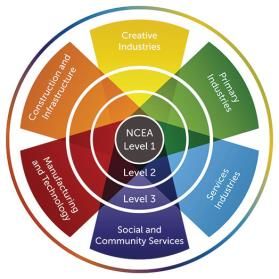
Tamatea High School Course Handbook 2019
This booklet contains essential information on all National Certificate of Educational
Achievement (NCEA) courses offered at Tamatea High School in 2019. Choosing the correct
subjects for a student’s educational pathway is important so that their course of study suits their
individual abilities, interests and learning needs.

Students in Years 11, 12 and 13 work towards gaining their NCEA at Level 1, 2 and 3. NCEA is
primarily made up of Achievement Standards. Students taking alternative courses may gain
work/industry related Unit Standards which also count towards NCEA Qualifications.

Key Contacts
Senior Management
Principal                                 Robin Fabish
Deputy Principal                          Nigel Groom
Deputy Principal                          Nicky Anderson

Deans/Careers/Guidance
Year 9 Dean                               Josie Burdon
Year 10 Dean                              Sanjesh Kumar
Year 11 Dean                              Annie Macfarlane
Year 12 Dean                              Dave Murdoch
Year 13 Dean                              Sarah Grant
International Dean                        Cheryl Brownlee
Careers Advisor                           Cindy Morgan
Guidance Counsellor                       Wendy Isakson
NZQA Principal’s Nominee                  Cheryl Brownlee
SENCO                                     Nicky Anderson

Heads of Departments/Teachers in Charge
Careers                            Cindy Morgan
English                            Hugh Forlong-Ford
Health                             Annie Macfarlane
Languages                          Cheryl Brownlee
Mathematics                        Sanjesh Kumar
Physical Education                 Russell Ennor
Science                            David Murdoch
Social Sciences                    Dianne Martin
Technology and Arts                Kay Le Comte

                                                                                                 1
CONTENTS
1 Key Contacts
2 Contents
3 Principal’s Notes/Career Planning
4 Curriculum Structure - Subject Pathways 2019
5 Alternative Courses
6 NCEA Information
7 University Entrance Information
9 Vocational Pathways
10 What to Choose
11 Course Costs
Year 13 Subjects
12 301 Visual Art
13 301 Biology
14 301 Calculus
15 301 Chemistry
16 301 Classical Studies
17 302 Design Technology – Hard Materials
18 301 Digital Technologies
19 301 Education for Sustainability
20 301 English
21 302 English
22 302 English for Speakers of Other Languages (ESOL)
23 302 Food and Nutrition
24 302 Gateway
25 301 Geography
26 301 Health
27 301 History
28 302 Horticulture
29 301 Japanese
30 302 Māori Performing Arts
31 301 Mathematics
32 301 Music
Painting: see Art: Visual Arts: Painting
Photography: see Art: Visual Arts: Photography
33 301 Physical Education
34 301 Physics
35 302 Science
36 301 Social Studies
37 301 Statistics
38 301 Te Reo Māori
39 302 Tourism Studies
40 202/302Trades Academy @ EIT
41 Final Advice
2Principal’s Notes
Career Planning for Students
As you begin to select your course of study for 2019 there are a number of factors you must
carefully consider when making your decision.
1. Ownership of your learning
This occurs when you take time to set goals for yourself in terms of your learning and how
it relates to your future. Career planning and building your life begins with taking
responsibility for your choices and developing a vision for your future.
2. Developing a vision
Time spent planning for your future is a challenging task but is the key to your success.
Here are a number of strategies to work through:
• Work with your House Group teacher and/or Dean to write a well-considered plan
• Set goals for your learning and achievement for 2019 and beyond eg. NCEA Goals
• Pursue excellence in all your tasks and activities
• Know the skills you have and the skills you need to develop, to be the very best
you can be
3. Practical issues to consider when choosing subjects
• Keep your options as broad as possible for as long as possible
• Know how subjects develop through the senior school, for example: Level 1
Science can become Physics, Chemistry and Biology at Levels 2 and 3
• Know what the entry requirements are for particular jobs and/or courses of study at
universities or polytechnics. Check www.careers.govt.nz
• Get good information and advice from your Careers Advisor (Mrs Morgan) and/or
employers, about what subjects you need and at what level
• Consider the subjects that you are interested in and have ability in, these classes
will help you achieve your best and may help you see future career options
• Future proof your learning, by gaining skills which will help you to continue learning
throughout your life. Work places will demand this as change in the work force
becomes constant. You will need to:
⬧ communicate well, orally and in writing
⬧ work co-operatively with others
⬧ use a range of information technologies
⬧ cope with and adapt to constant change
⬧ be punctual and reliable
⬧ be a good person
Choosing your programme of study for 2019 is an important task. Seek assistance and advice
from your parents, your House Group teacher, class teachers, Heads of Departments, Deans
and Mrs Morgan. You will be most successful when these decisions are carefully planned and
fit with your own interests and needs. Please do not hesitate in seeking help with this task.
Good planning
Robin Fabish
Principal
3TAMATEA HIGH SCHOOL
SENIOR CURRICULUM STRUCTURE 2019
Level One Level Two Level Three
Departments
NCEA NCEA NCEA
101 Art – Visual Arts 201 Art – Visual Arts 301 Art – Visual Arts‡
102 Design Technology – 202 Design Technology – 302 Design Technology –
Hard Materials Hard Materials Hard Materials
TECHNOLOGY
102 Design Multi Technology
and
102 Digital Communication 202 Digital Communication
ARTS
101 Digital Technologies 201 Digital Technologies 301 Digital Technologies‡
102 Food and Nutrition 202 Food and Nutrition 302 Food and Nutrition
102 Māori Performing Arts 202 Māori Performing Arts 302 Māori Performing Arts
101 Music 201 Music 301 Music‡
101 English 201 English 301 English‡
ENGLISH 102 English 202 English 302 English
103 English 203 English
101 Japanese 201 Japanese 301 Japanese‡
LANGUAGES 101 Te Reo Māori 201 Te Reo Māori 301 Te Reo Māori‡
102 Tikanga 202 Tikanga
101 Mathematics 201 Mathematics 301 Mathematics‡
102 Mathematics 202 Mathematics
MATHEMATICS 103 Mathematics
301 Calculus‡
301 Statistics‡
HEALTH and 101 Health 201 Health 301 Health‡
PHYSICAL 101 Physical Education 201 Physical Education 301 Physical Education
EDUCATION
101 Science 201 Biology 301 Biology‡
201 Chemistry 301 Chemistry‡
SCIENCE 201 Physics 301 Physics‡
102 Science 302 Science
102 Horticulture 202 Horticulture 302 Horticulture
101 Social Studies 201 Social Studies 301 Social Studies ‡
101 Geography 201 Geography 301 Geography‡
101 History 201 History 301 History‡
SOCIAL
201 Education for 301 Education for
SCIENCES
Sustainability Sustainability‡
101 Classics 201 Classics 301 Classics‡
202 Tourism Studies 302 Tourism Studies
OTHER 202 Gateway 302 Gateway
PROGRAMMES ESOL ESOL ESOL
(Special conditions 202 Trades Academy @ EIT 202/302 Trades Academy @ EIT
apply – see Mrs Video Conference
Morgan) Video Conference Video Conference
‡ Subjects from the University Entrance Approved List
If there is a subject you would really like to study that is not listed above ,
see Mrs Morgan to discuss it
There is a possibility of studying other subjects
▪ through distance learning
▪ by video conference
▪ by attending EIT
Subjects studied in the past have included Agriculture, Accounting, Calculus, Economics, Home Economics, Law,
Media Studies, Spanish, Health Disability and Age Support Certificate and University papers.
4Alternative courses
A range of programmes exist to meet the diverse needs of students.
Special Needs/ Gifted and Talented Education Programmes (GATE)
Students with Special Needs including GATE may be invited to enter alternative programmes
that better meet their learning needs. They may also apply for special assessment conditions
– please see the SENCO, Ms Anderson for further details.
Gateway
This programme links school and the workplace – refer to Year 13 Course descriptions for
detail.
Hawke’s Bay Schools’ Trades Academy @ EIT
Students will typically spend each Friday out at EIT following a programme of study for their
area of interest. For more information refer to 202/302 Trades Academy.
STAR Courses
A number of Secondary/Tertiary Alignment Resource (STAR) courses link students to
Polytechnics or other providers for short term courses. These courses are often in the holidays
for levels 1-3 and provide students with work related learning. Mrs Morgan (STAR
Coordinator) will offer these courses to meet individual student needs and interest.
Video Conferencing and Correspondence Study
If there is a subject not offered by Tamatea High School or for which there is an unresolvable
timetable clash there are other opportunities available for self-motivated learners. These are
opportunities to study through Te Kura Pounamu (the Correspondence School) or through the
VLN via the Baylink cluster of schools. To find out more see Mrs Morgan.
Students who apply must:
• be self-motivated, well organised and committed to achieving
• have an excellent attendance record
• have the necessary pre-requisites for the course (e.g. a pass in externals
of a previous NCEA level)
• gain permission from their dean and parents
NCEA Guide: Mobile App
To help parents and employers better understand NCEA, NZQA has developed an app designed
for mobile devices - phones and tablets.
Called NCEA Guide, the app is for parents, whānau and employers and provides quick and easy
access to key information about NCEA.
NCEA Guide includes key content about the structure of NCEA, how the qualification is used after
studying, how credits work, and how endorsements are earned. Users can also choose to view the
content in English or Te Reo.
Importantly, parents and whānau can also get information about how they can support family
members studying towards gaining their secondary school qualification.
For employers, content focusses on what they can expect to see when job candidates show them
documents detailing their qualifications and what they have studied.
The NCEA Guide App is free to download from the Apple App Store and Google Play Store.
5National Certificate of Educational Achievement (NCEA)
NCEA (the National Certificate of Educational Achievement) has three levels: Levels 1, 2 and 3.
These are the first three levels of the National Qualification Framework’s eight levels, with higher
levels studied at polytechnics, universities and other tertiary providers.
Students gain credits through:
Excellence
Achievement standards with Merit
Achieved
Not Achieved
Unit Standards with Achieved
Not Achieved
For a student to be awarded NCEA Level 1 they must achieve:
• 80 credits.
• 10 credits in Literacy standards
• 10 credits in Numeracy standards.
For a student to be awarded NCEA Level 2 they must achieve:
• 60 credits at level 2 or above; plus
• 20 credits at any level, even if gained for any other National Qualification
• Level 1 Literacy and Numeracy
For a student to be awarded NCEA Level 3 they must achieve:
• 60 credits at level 3 or above; plus
• 20 credits at level 2 or above, even if gained for any other National Qualification
• Level 1 Literacy and Numeracy
NCEA Certificate Endorsement
Students have the opportunity to earn NCEA with Merit or Excellence if they gain 50 credits at the
required level.
NCEA with Excellence requires 50 credits at Excellence
NCEA with Merit requires 50 credits at Merit (or a combination of Excellence and Merit)
NCEA Course Endorsement
Students can pass a particular subject with a Merit or Excellence endorsement
eg Science with Excellence, Music with Merit
To do this they must get:
14 or more credits at Merit or Excellence in their course in a single year with at least three credits
from externally assessed standards and three credits from internally assessed standards
The courses where this is available are marked at the bottom of the Course
relevant page with this box. Endorsement
available
(see page 6 for
explanation)
6Gaining University Entrance (UE)
UE Requirements
University Entrance (UE) is the minimum requirement to go to a New Zealand university or to
study for a degree at a New Zealand polytechnic. To qualify a student will need:
• NCEA Level 3 – 60 credits at Level 3 or higher and 20 credits at Level 2 or higher
• Three subjects - at Level 3 or above, made up of:
▪ 14 credits each, in three approved subjects (see below)
• Literacy - 10 credits at Level 2 or above, made up of:
▪ 5 credits in specified reading credits
▪ 5 credits in specified writing credits
• Numeracy - 10 credits at Level 1 or above, made up of either:
▪ Achievement Standards – specified standards from a range of
subjects, or
▪ Unit Standards - three Unit Standards (26623, 26626, 26627- all
required)
Approved Subjects
Accounting Home Economics
Agriculture & Horticulture Indonesian
Biology Japanese
Business Studies Korean
Calculus Latin
Chemistry Mathematics
Chinese Media Studies
Classical Studies Music Studies
Construction and Mechanical Technologies Painting (Practical Art)
Cook Islands Māori Photography (Practical Art)
Dance Physical Education
Design (Practical Art) Physics
Design and Visual Communication Printmaking (Practical Art)
Digital Technologies Processing Technologies
Drama Religious Studies
Earth and Space Science Samoan
Economics Science
Education for Sustainability Sculpture (Practical Art)
English Social Studies
French Spanish
Geography Statistics
German Technology
Health Education Te Reo Māori
History Te Reo Rangatira
History of Art Tongan
A student who wishes to study for a degree at a New Zealand Polytechnic or University
disadvantages themselves if they do not plan a course which gives them
five approved subjects at Level 3.
7Gaining Admission to a New Zealand University
Students who are applying for admission to a New Zealand University must gain both:
• University Entrance
• Selection into the specific university degree programme through their rank
score/points.
Rank score/Points are calculated from a student’s top 80 credits at Level 3 or higher with a
maximum of 24 credits per subject over five approved subjects.
• credits at Excellence = 4 points
• credits at Merit = 3 points
• credits at Achieved = 2 points
Examples for Entrance to an undergraduate degree in 2018:
Victoria University
• Guaranteed Entry Score 150 points
University Entrance: Information for Parents and Caregivers
Research recently undertaken at the University of Auckland found many school leavers were
missing out on University Entrance because of unsuitable NCEA choices. They recommended the
following
1. Understand NCEA.
2. Plan from Year 9 (as many subjects have pre-requisites).
3. Keep options open by choosing academic subjects such as English, Mathematics,
Sciences and Languages.
4. Find out about the university entry standards for your son/daughter’s choice of career and
then work backwards when choosing NCEA subjects.
5. Review their career goals each year to ensure they are enrolled in the correct subjects.
6. Go to Individual Development Plan (IDP) meetings and engage with the school.
7. Encourage high standards and celebrate your son/daughter’s successes.
A possible course outline for someone heading for degree study
Subject Level 1 Level 2 Level 3
English 101 English 201 English 301 English
Mathematics 101 Mathematics 201 Mathematics 301 Calculus
301 Physical
Physical Education 101 Physical Education 201 Physical Education
Education
Social Sciences 101 Social Sciences 201 Social Sciences 301 Classical Studies
Science 101 Science 201 Biology 301 Biology
102 Design Technology 202 Design Technology
Technology Study
Hard Materials Hard Materials
Scholarship
Entry for Scholarship is available for students who are top academics and who seek to challenge
themselves beyond the level of NCEA Level 3. Any student who may wish to prepare for
Scholarship needs to speak to the relevant HOD.
8Vocational Pathways
Vocational pathways were introduced by the Government to help a learner see the industry links to
their learning at schools developed
Six pathways were identified:
• Construction and Infrastructure
• Manufacturing and Technology
• Primary Industries
• Service Industries
• Social and Community Services
• Creative Industries
Industry leaders from those areas then sat down and examined almost 2000 standards taught in
schools and identified the standards containing the knowledge used in their industry.
Students can log in to NZQA and see which sector/s value the standards they have gained.
Alternatively they can plan a programme and use the profile builder to see where their plan will
take them. http://youthguarantee.net.nz/vocational-pathways/profile-builder/
Parents will see that we have identified the Vocational Pathways that relate to each standard.
Students will now be able to achieve NCEA Level 2 in Vocational Pathways. To achieve the
Vocational Pathways Award, the learner must achieve: NCEA Level 2 which includes
Literacy (10 credits) and
Numeracy (10 credits) at Level 1 or above, and
Achieve 60 Level 2 credits from the Recommended Assessment Standards for a
Vocational Pathways sector e.g Primary Industries,
The pathways enable students to see how their learning and achievement will be valued in the
workplace and the types of study options and jobs opportunities available.
Achieving a vocational pathway means a learner has developed the skills and knowledge in areas
that employers’ value. It lets an Employer see a learner’s strengths, abilities and interests are
relevant to a field of work.
Although we have indicated Vocational Pathways (where available) at Level 1, 2 and 3,
please note Vocational Pathways are currently available for Level 2.
Once a vocational pathway has been identified the information provided in Occupation Outlook
http://www.dol.govt.nz/publications/lmr/occupational-outlook/
will identify the probable income fees and job prospects for that pathway.
The dials show the income, fees and job prospects for each occupation
This dial shows likely income This identifies the fees This dial shows the chance of
required to qualify for this job. a job in this area of work.
9What To Choose
Students should be aiming to achieve up to 15-20 credits in every subject selected.
• Plan your course as though you are at school until the end of Year 13.
• Choose: the subjects you enjoy
the subjects you do well in
the subjects you need for your career areas of interest
A Guide to Course Choice
Select courses according to your ability and interest. Bear in mind it is wise to keep a broad range
of courses for as long as possible.
Mum, Dad and family:
Your Subject teacher: know you best – talk to
Has taught you and them!
knows your ability and
potential
Your House Group
Teacher:
has followed your
progress through
The Careers Advisor:
school
Knows about careers
and the qualifications
you need.
Your Dean:
Knows you and
where you will do
www.careers.govt.nz well
www.futureintech.org.nz and
www.youthguarantee.net.nz/vocational
pathways/profilebuilder/
great sites for information
Career Quest
Computer programme accessible at
www.careers.govt.nz – asks students
questions about themselves and then
creates a profile of them which is
matched to jobs that match the profile
Consult, discuss, consider
It’s YOUR future you are planning
10Course Costs
The following fees applied in 2018 and may be subject to change:
National Certificate of Educational Achievement (NCEA)
• Entry for all NCEA Certificate courses is $76.70 per student per year.
Financial Assistance
There is considerable financial assistance available to parents/caregivers who:
• Receive a Work and Income or Study Link benefit
• Have a Community Services Card or have an income that would qualify them for a
Community Services Card if they chose to get one.
• Have more than TWO children undertaking these qualifications in the same year (at
Years 11,12 or 13)
There is a simple form to fill in to receive the financial assistance. If you think you may be eligible
to receive assistance, you should talk to Ms Brownlee before 30 August 2019. In 2018 financial
assistance changed fees from $76.70 to $20.
Paying these fees before the due date is important because otherwise late payment attracts penalty
fees, eg. in 2017 it is $50.00 so $76.70 becomes $126.70.
Course/Subject Contribution
Course/Subject contributions represent the ‘take home’ material that is used in the classroom. The
school purchases these materials (at a discount due to bulk purchasing), and this charge covers
part of the costs.
To meet these financial commitments Tamatea High School recommends parents or
caregivers establish an automatic payment of approximately $5-$10 per week. At the end of
your son/daughter’s schooling any unused payments are refunded to the parent or caregiver.
KEY TO ABBREVIATION USED ON COURSE TEMPLATES
AS Achievement Standard
US Unit Standard
01 For students with proven performance at Year 10
02 For students who have found aspects of the Year 10 subject difficult or a course
that is mainly Unit Standard based
Internal Internally assessed
External Externally assessed (typically through examinations)
Sub Ref Subject Reference
HOD Head of Department
NCEA National Certificate of Educational Achievement
11Approved Subject for
University Entrance
Practical Art
301 Visual Art 301ART
Total Credits Available 30
University Entrance Reading Credits 0
University Entrance Writing Credits 0
• Achievement in 201 Art of AS 2.2, 2.3 and AS 2.4 or
Entry Requirements
HOD approval
Qualification • Credits towards NCEA Level 3
• $50.00 for consumables for one of the following
disciplines: painting, printmaking, sculpture – take home
Course Contribution component
• $80.00 for photography paper and external portfolio –
take home component
Next Step • Tertiary Study or Employment
Vocational Pathways
Construction Creative Primary Service Social and
Manufacturing
and Industries Industries Industries Community
Infrastructure
0 0 30 0 4 0
Standards to be assessed:
Standards marked with R (Reading) and/or W (Writing) meet the requirements for University Entrance Literacy
Standard R
Sub Ex/
and / Level Cr Standard Title VP
Ref Int
Version W
AS
Design
91440
Paint
91441 Analyse methods and ideas from established
Photo
91442 - 3 4 design/painting/photography/printmaking/sculpture Int
Print
91443 practice
Sculp
91444
3.1
v2
AS
Design
91445
Paint
91446 Use drawing to demonstrate understanding of
Photo
91447 - 3 4 conventions appropriate to design/painting/ Int
Print
91448 photography/printmaking/sculpture
Sculp
91449
3.2
v2
AS
Design
91450
Paint
91451 Systematically clarify ideas using drawing informed
Photo
91452 - 3 4 by established design/painting/photography/ Int
Print
91453 printmaking/sculpture practice
Sculp
91454
3.3
v2
AS
Design
91455
Paint Produce a systematic body of work that integrates
91456
Photo conventions and regenerates ideas within design/
91457 - 3 14 Ex
Print painting/photography/printmaking/
91458
Sculp sculpture practice
91459
3.4
v2
Vis
AS Produce a resolved work that demonstrates
Art
91460 - 3 4 purposeful control of skills appropriate to visual arts Int
3.5
v2 cultural contexts
Course
Endorsement
available
(see page 6 for
explanation)
12Approved Subject for
University Entrance
Biology
301 Biology 301BIO
Total Credits Available 22
University Entrance Reading Credits 22
University Entrance Writing Credits 19
• 14 or more credits from Level 2 Biology with at least
Entry Requirements
four from external papers
• Credits towards NCEA Level 3
Qualification
• Credits towards University Entrance
Course Contribution • Nil
Next Step • Tertiary Study or Employment
Vocational Pathways
Construction Creative Primary Service Social and
Manufacturing
and Industries Industries Industries Community
Infrastructure
10 0 0 22 0 13
Standards to be assessed:
Standards marked with R (Reading) and/or W (Writing) meet the requirements for University Entrance
Literacy
Standard
Sub R/ Ex/
and Level Cr Standard Title VP
Ref W Int
Version
AS
Bio R/ Integrate biological knowledge to develop an informed
91602 3 3 Int
3.2 W response to a socio-scientific issue
v2
AS
Bio R/ Demonstrate understanding of the responses of
91603 3 5 Ex
3.3 W plants and animals to their external environment
v2
AS
Bio Demonstrate understanding of how an animal
91604 R 3 3 Int
3.4 maintains a stable internal environment
v2
AS
Bio R/ Demonstrate understanding of evolutionary processes
91605 3 4 Ex
3.5 W leading to speciation
v2
AS
Bio R/ Demonstrate understanding of trends in human
91606 3 4 Ex
3.6 W evolution
v2
AS
Bio Demonstrate understanding of human manipulations
91607 R 3 3 Int
3.7 of genetic transfer and its biological implications
v2
Course
Endorsement
available
(see page 6 for
explanation)
13Approved Subject for
University Entrance
Calculus
301 Calculus 301CAL
Total Credits Available 21
University Entrance Reading Credits 0
University Entrance Writing Credits 0
• 12 credits from Achievement Standards in 201
Mathematics which must include AS91261 or
Entry Requirements
HOD/Dean approval. It is preferred that students also
include AS91262
• Credits towards NCEA Level 3
Qualification
• Credits towards University Entrance
Course Contribution • Nil
Next Step • Tertiary Study or Employment
Vocational Pathways
Construction Creative Primary Service Social and
Manufacturing
and Industries Industries Industries Community
Infrastructure
16 16 0 12 0 6
Standards to be assessed:
Standards marked with R (Reading) and/or W (Writing) meet the requirements for University Entrance Literacy
Standard
Sub R/ Ex/
and Level Cr Standard Title VP
Ref W Int
Version
Math
AS
&
91575 - 3 4 Apply trigonometric methods in solving problems Int
Stats
v2
3.3
Math
AS
& Apply the algebra of complex numbers in solving
91577 - 3 5 Ex
Stats problems
v2
3.5
Math
AS
&
91578 - 3 6 Apply differentiation methods in solving problems Ex
Stats
v2
3.6
Math
AS
&
91579 - 3 6 Apply integration methods in solving problems Ex
Stats
v2
3.7
NOTE: To obtain UE Numeracy 10 credits must be gained from either Mathematics Achievement Standards or
Numeracy Unit standards. A combination of Unit and Achievement standards is not possible.
Course
Endorsement
available
(see page 6 for
explanation)
14Approved Subject for
University Entrance
Chemistry
301 Chemistry 301CHE
Total Credits Available 23
University Entrance Reading Credits 3
University Entrance Writing Credits 7
Entry Requirements • HOD/Dean approval
Qualification • Credits towards NCEA Level 3
Course Contribution • Approximately $10.00 for field trips
Next Step • Tertiary Study or Employment
Vocational Pathways
Construction Creative Primary Service Social and
Manufacturing
and Industries Industries Industries Community
Infrastructure
23 23 0 23 5 23
Standards to be assessed will be selected from the following:
Standards marked with R (Reading) and/or W (Writing) meet the requirements for University Entrance
Literacy
Standard
Sub R/ Ex/
and Level Cr Standard Title VP
Ref W Int
Version
AS Carry out an investigation in chemistry involving
Chem
91387 W 3 4 quantitative analysis Int
3.1
v2
AS Demonstrate understanding of spectroscopic data
Chem
91388 - 3 3 in chemistry Int
3.2
v2
AS
Chem R/ Demonstrate understanding of chemical processes
91389 3 3 Int
3.3 W in the world around us
v2
AS Demonstrate understanding of thermochemical
Chem
91390 - 3 5 principles and the properties of particles and Ex
3.4
v2 substances
AS
Chem Demonstrate understanding of the properties of
91391 - 3 5 Ex
3.5 organic compounds
v2
AS
Chem Demonstrate understanding of oxidation–reduction
91393 - 3 3 Int
3.7 processes
v2
Course
Endorsement
available
(see page 6 for
explanation)
15Approved Subject for
University Entrance
Classical Studies
301 Classical Studies 301CLS
Total Credits Available 26
University Entrance Reading Credits 26
University Entrance Writing Credits 14
• Achievement of 12 credits in 201 English, 201 Social
Entry Requirements
Studies, 201 History or HOD/Dean approval.
Qualification • Credits towards NCEA Level 3
Course Contribution • Nil
Next Step • Tertiary Study or Employment
Vocational Pathways
Construction Creative Primary Service Social and
Manufacturing
and Industries Industries Industries Community
Infrastructure
0 0 26 0 0 0
At Level 3 students can select a learning programme from within Social Studies, Geography, Classics, Education
for Sustainability and History. Students will explore how other people view themselves through a variety of
contexts and settings. Independent learning is encouraged.
Standards to be assessed:
Standards marked with R (Reading) and/or W (Writing) meet the requirements for University Entrance
Literacy
Standard
Sub R/ Ex/
and Level Cr Standard Title VP
Ref W Int
Version
Class.
91394 R/
Studies 3 4 Analyse ideas and values of the classical world EX
v2 W
3.1
Class.
91395 R/ Analyse the significance of a work(s) of art in the
Studies 3 4 Ex
v2 W classical world
3.2
Clas.s
91396 R/ Analyse the impact of a significant historical figure
Studies 3 6 Ex
v2 W on the classical world
3.3
Class.
91397 Demonstrate understanding of significant
Studies R 3 6 Int
v2 ideology(ies) in the classical world
3.4
Class. Demonstrate understanding of the lasting
91398
Studies R 3 6 influences of the classical world on other cultures Int
v2
3.5 across time
Course
Endorsement
available
(see page 6 for
explanation)
16302 Design Technology - Hard Materials 302DTH
Total Credits Available 25
University Entrance Reading Credits 0
University Entrance Writing Credits 0
• Achievement of 12 credits in 202 Design Technology -
Entry Requirements
Hard Materials or HOD/Dean approval
Qualification • Credits towards NCEA Level 3
• $120 towards the cost of set projects and consumables
Course Contribution (take home component). Individual projects may incur
additional costs depending on the scale of the project
Next Step • Tertiary Study or Employment
Vocational Pathways
Construction Creative Primary Service Social and
Manufacturing
and Industries Industries Industries Community
Infrastructure
6 6 6 0 0 0
Students are working on a major project related to the construction environment which covers the practical skills
and the related theory of materials and processes currently in use and practice in the industry.
Standards to be assessed:
Standards marked with R (Reading) and/or W (Writing) meet the requirements for University Entrance
Literacy
Standard
Sub R/ Ex/
and Level Cr Standard Title VP
Ref W Int
Version
AS
Implement complex procedures to integrate parts
Tech 91620 3 6 Int
using resistant materials to make a specified product
v3
US Follow safe workplace practices, and contribute to a
BCAT 29677 3 2 health and safety culture, in a BCATS environment Int
v1
US Communicate and work collaboratively in a Stage 3
BCAT 29680 3 5 BCATS project Int
v1
US
BCAT 29684 3 12 Undertake a Stage 3 BCATS project Int
v1
NOTE: Must be an independent worker – this course is not for everyone
Note: By signing up to this course students are agreeing to follow all Health and Safety rules of the Hard
Materials Workspace.
• Never wear loose clothing, including loose sleeves, ties, or scarves, when working with machinery
• Tie back and cover long hair.
• Wear fully enclosed footwear, not sandals, jandals, or open-toed shoes.
• Remove rings, and all loose jewellery.
• Use protective clothing, safety glasses, or noise protection as required
Failure to follow these rules means the student may not participate in practical assessments, so will be unable
to complete the course.
17Approved Subject for
University Entrance
Digital Technologies
301 Digital Technologies 301DGT
Total Credits Available 16
University Entrance Reading Credits 0
University Entrance Writing Credits 0
• 12 credits in a technology learning area or HOD/Dean
Entry Requirements approval
• Students will require headphones for this course
Qualification • Credits towards NCEA Level 3
Course Contribution • Nil
Next Step • Tertiary Study or Employment
Vocational Pathways
Construction Creative Primary Service Social and
Manufacturing
and Industries Industries Industries Community
Infrastructure
16 12 16 12 4 0
At Level 3 students undertake a digital project. They create their own theme and decide the areas they would
like to further develop, whether that be graphic design, filmmaker, online media, animation etc. The project
content, outcomes and expectations are negotiated and agreed with the HOD.
Standards to be assessed:
Standards marked with R (Reading) and/or W (Writing) meet the requirements for University Entrance
Literacy
Standard
Sub R/ Ex/
and Level Cr Standard Title VP
Ref W Int
Version
Gen AS
Develop a conceptual design considering fitness
Tech 91610 - 3 6 Int
for purpose in the broadest sense
3.3 v3
Gen AS
Develop a prototype considering fitness for
Tech 91611 - 3 6 Int
purpose in the broadest sense
3.4 v3
Digi AS
Implement complex procedures to produce a
Tech 91635 - 3 4 Int
specified digital media outcome
3.43 v2
18Approved Subject for
University Entrance
Education for Sustainability
301 Education for Sustainability 301EDS
Total Credits Available 24
University Entrance Reading Credits 24
University Entrance Writing Credits 9
• Level 2 Literacy and Numeracy, one Level 2 Social
Entry Requirements
Studies course or HOD/Dean approval
Qualification • Credits towards NCEA Level 3
Course Contribution • Nil
Next Step • Tertiary Study or Employment
Vocational Pathways
Construction Creative Primary Service Social and
Manufacturing
and Industries Industries Industries Community
Infrastructure
0 24 0 24 14 0
Students will explore how other people view themselves through a variety of contexts and settings. Independent
learning is encouraged.
Standards to be assessed:
Standards marked with L or N meet the NCEA Level 1 requirements for Literacy (L) and Numeracy (N)
Standard
Sub R/ Ex/
and Level Cr Standard Title VP
Ref W Int
Version
Educ
AS
For Evaluate a planned personal action that contributes
90828 R 3 6 Int
Sust toward a sustainable future
v3
3.1
Educ
AS
For Evaluate measures that may be taken to sustain
91735 R 3 4 Int
Sust and/or improve a biophysical environment
v2
3.2
Educ
AS Analyse how different worldviews, and the values and
For R/
91736 3 4 practices associated with them, impact on Ex
Sust W
v2 sustainability
3.3
Educ
AS
For R/ Analyse the impact that policies have on a
90831 3 5 Ex
Sust W sustainable future
v3
3.4
Educ
AS
For Develop and justify a strategy for an organisation that
90832 R 3 5 Int
Sust will contribute to a sustainable future
v3
3.5
Course
Endorsement
available
(see page 6 for
explanation)
19Approved Subject for
University Entrance
English
301 English 301ENG
Total Credits Available 21
University Entrance Reading Credits 4
University Entrance Writing Credits 14
• Eligibility for entry into this course will be decided by the
HOD/Dean
Entry Requirements • At least one Merit grade from Level 2 English plus
achievement of either 2.1 or 2.2
• Achieved UE Literacy in 2017
• Credits towards NCEA Level 3
Qualification • Attainment of the English standards fulfilling the
requirements for University Entrance Literacy
Course Contribution • Nil
Next Step • Tertiary Study or Employment
Vocational Pathways
Manufacturing Construction Creative Primary Service Social and
and Industries Industries Industries Community
Infrastructure
11 17 12 17 17 17
Standards to be assessed:
Standards marked with R (Reading) and/or W (Writing) meet the requirements for University Entrance
Literacy
Standard
Sub R/ Ex/
and Level Cr Standard Title VP
Ref W Int
Version
AS
Eng R/ Respond critically to specified aspect(s) of studied
91472 3 4 Ex
3.1 W written or oral text(s), supported by evidence
v1
AS
Eng Respond critically specified aspect(s) of studied
91473 W 3 4 Ex
3.2 visual or oral text(s), supported by evidence
v1
AS
Eng Produce a selection of fluent and coherent writing
91475 W 3 6 Int
3.4 which develops, sustains, and structures ideas
v1
AS
Eng Create and deliver a fluent and coherent oral text
91476 - 3 3 Int
3.5 which develops, sustains and structures ideas
v1
AS
Eng Respond critically to significant connections across
91478 - 3 4 Int
3.7 texts, supported by evidence.
v1
Course
Endorsement
available
(see page 6 for
explanation)
20Approved Subject for
University Entrance
English
302 English 302ENG
Total Credits Available 18
University Entrance Reading Credits 4
University Entrance Writing Credits 8
• Eligibility for entry into this course will be decided by the
Entry Requirements HOD/Dean
• Achieved at least one of 2.1, 2.2 or 2.8
• Credits towards NCEA Level 2 and/or 3
• Approved subject for University Level at Level 3
Qualification
• Attainment of some of the English standards fulfilling the
requirements for University Entrance Literacy
Course Contribution • Nil
Next Step • Tertiary Study or Employment
Vocational Pathways
Manufacturing Creative Primary Service Social and
Construction and
Industries Industries Industries Community
Infrastructure
8 or 15 15 18 or 10 15 15 12 or 15
Standards to be assessed:
Standards marked with R (Reading) and/or W (Writing) meet the requirements for University Entrance
Literacy
Standard
Sub R/ Ex/
and Level Cr Standard Title VP
Ref W Int
Version
AS
Analyse specified aspect(s) of studied written or oral
Eng 91098
2 text(s), supported by evidence
2.1 V3 R/
or 4 or Ex
or or W
3 Respond critically to specified aspect(s) of studied
3.1 91472
written or oral text(s), supported by evidence
v1
AS
Analyse specified aspect(s) of studied visual or oral
Eng 91099
2 text(s), supported by evidence
2.2 V3
W or 4 or Ex
or or
3 Respond critically specified aspect(s) of studied visual
3.2 91473
or oral text(s), supported by evidence
v1
AS
Construct and deliver a crafted and controlled oral
Eng 91102
2 text
2.5 V2
- or 3 or Int
or or
3 Create and deliver a fluent and coherent oral text
3.5 91476
which develops, sustains, and structures ideas
v1
AS
Analyse significant connections across texts,
Eng 91104
2 supported by evidence
2.7 V2
- or 4 or Int
or or
3 Respond critically to significant connections across
3.7 91478
texts, supported by evidence
v1
AS Analyse aspects of visual and/or oral texts through
Eng 91107 close viewing and/or listening, supported by evidence
2
2.10 V2 or
- or 3 Int
or or Respond critically to significant aspects of visual
3
3.9 91480 and/or oral text(s) through close reading, supported
v1 by evidence
Course Endorsement
available
(see page 6 for explanation)
21302 English for Speakers of Other
302ESL
Languages
Total Credits Available 25
University Entrance Reading Credits 0
University Entrance Writing Credits 0
• Be a person for whom English is not their first language
Entry Requirements • 12 credits in 202ESL and/or be in your third year living in
New Zealand
Qualification • Credits towards NCEA Level 3
Course Contribution • Nil
Next Step • Tertiary Study or Employment
Vocational Pathways
Construction Creative Primary Service Social and
Manufacturing
and Industries Industries Industries Community
Infrastructure
0 0 0 0 0 0
Standards to be assessed:
Standards marked with R (Reading) and/or W (Writing) meet the requirements for University Entrance
Literacy
Standard
Sub R/ Ex/
and Level Cr Standard Title VP
Ref W Int
Version
US Demonstrate understanding of spoken information
ESOL - 3 5 Int
28050 on familiar topics (EL)
US
ESOL 28056 - 3 5 Read and understand texts on familiar topics (EL) Int
v3
US
Read and understand texts for practical purposes
ESOL 28057 - 3 5 Int
(EL)
v3
US
Read and demonstrate understanding of a range of
ESOL 28058 - 3 5 Int
written texts independently (EL)
v3
US
ESOL 28064 - 3 5 Present information on a familiar topic (EL) Int
v3
US
ESOL 28068 - 3 5 Write a connected text on a familiar topic (EL) Int
v3
If you have not completed the corresponding Level 1 or 2 ESOL Unit Standards, there will be an opportunity to
pass those assessments in preparation for Level 3.
Note: The available grades for US 28050, 28056, 28057, 28064 and 28068 are Achieved, Merit or Excellence
22302 Food and Nutrition 302 FAN
Total Credits Available 17 (21)
University Entrance Reading Credits 0
University Entrance Writing Credits 0
• US167, 202 Food and Nutrition, or interview with teacher
Entry Requirements to gauge skill level, interest and commitment to the
subject
Qualification • Credits towards NCEA Level 3
• $30.00 per term (for three terms) for ‘take home’
Course Contribution
component (ingredients)
Next Step • Tertiary Study or Employment
Vocational Pathways
Construction Creative Primary Service Social and
Manufacturing
and Industries Industries Industries Community
Infrastructure
0 0 0 0 0 (4) 0
This course is yet to be confirmed
Standards to be assessed:
Standards marked with R (Reading) and/or W (Writing) meet the requirements for University
Entrance Literacy
Standard
Sub R/ Ex/
and Level Cr Standard Title VP
Ref W Int
Version
US Demonstrate knowledge of food contamination
Food 168 - 3 4 hazards, and control methods used in a food Int
v4 business
US
Prepare, assemble and present complex
Cook 13282 - 3 2 Int
sandwiches for service in a commercial kitchen
v3
US
Demonstrate knowledge of coffee origin and
Food 17284 - 3 3 Int
production
v6
US
Demonstrate knowledge of culinary products, terms
Food 18497 - 3 8 Int
and food preparation methods
v7
*US Practice food safety methods in a food business
Food 167 - 2 4 Int
under supervision
v8
* If students have not passed US 167 (covered in Year 11) it must be completed in their own time by
the end of the term they enter the Food and Nutrition course – support and resources will be
provided. If this Unit Standard is not completed the student can not continue with 302 Food and
Nutrition
Note: By signing up to this course students are agreeing to follow all Health and Safety rules of the kitchen
i.e.
• short, clean nails, no nail polish, false or gel nails
• no jewellery
• hair tied back off the face
• wear fully enclosed shoes
Failure to follow these rules means the student may not participate in practical assessments, so will be
unable to complete the course.
23302 Gateway 302GTW
Total Credits Available Up to 24
University Entrance Reading Credits 0
University Entrance Writing Credits 0
• Gateway is open to any Year 13 student.
• Year 12 students who believe they need to build a work
Entry Requirements record and gain industry qualifications can pick Gateway
as a 7th option choice. They will be interviewed, with their
parents and may then be offered a place
• Credits towards NCEA
Qualification
• Gain qualifications towards an industry qualification
• Nil but students must be prepared to catch up missed
Course Contribution
class work because of time out of school
Next Step • Tertiary Study or Employment or possibly a return to
school
Vocational Pathways
Construction Creative Primary Service Social and
Manufacturing
and Industries Industries Industries Community
Infrastructure
0 0 0 0 0 0
Standards to be assessed will be chosen from:
Standards marked with R (Reading) and/or W (Writing) meet the requirements for University Entrance
Literacy
Standard
Sub R/ Ex/
and Level Cr Standard Title VP
Ref W Int
Version
US
Gate 1312 - 3 3 Give oral instructions in the workplace Int
v5
US
Gate 4251 - 3 2 Manage own career development Int
v5
US
Health 6400 - 3 2 Manage first aid in emergency situations Int
v5
US
Health 6401 - 2 1 Provide first aid Int
v5
US
Health 6402 - 1 1 Provide resuscitation level 2 Int
v7
Gateway is a programme designed for the individual. It involves time in a workplace and the study of units
associated with that workplace.
This programme is ideal for those who wish to train by apprenticeship as it gives an opportunity for a student
and an employer to see if they suit one another.
Learning programmes vary according to the industry area. For example Carpentry has 20 Level 3 credits
available while other industry areas may have fewer. While we do our best, not all industry areas can be
accommodated. For any questions please see Mrs Morgan.
24Approved Subject for
University Entrance
Geography
301 Geography 301GEO
Total Credits Available 20
University Entrance Reading Credits 14
University Entrance Writing Credits 8
• NCEA Level 2, one Level 2 Social Studies course or
Entry Requirements
HOD/Dean approval
• Credits towards NCEA Level 3
Qualification
• Credits towards University Entrance
Course Contribution • Nil
Next Step • Tertiary Study or Employment
Vocational Pathways
Construction Creative Primary Service Social and
Manufacturing
and Industries Industries Industries Community
Infrastructure
0 0 6 10 20 3
Students will explore how other people view themselves through a variety of contexts and settings. Independent
learning is encouraged.
Standards to be assessed:
Standards marked with R (Reading) and/or W (Writing) meet the requirements for University Entrance
Literacy
Standard
Sub R/ Ex/
and Level Cr Standard Title VP
Ref W Int
Version
AS Demonstrate understanding of how interacting
Geo R/
91426 3 4 natural processes shape a New Zealand geographic Ex
3.1 W
v2 environment
AS
Geo R/ Demonstrate understanding of how a cultural
91427 3 4 Ex
3.2 W process shapes geographic environment(s)
v2
AS
Geo Analyse a significant contemporary event from a
91428 R 3 3 Int
3.3 geographic perspective
v2
AS
Geo
91431 R 3 3 Analyse aspects of a contemporary geographic issue Int
3.6
v2
AS
Geo Analyse aspects of a geographic topic at a global
91432 - 3 3 Int
3.7 scale
v2
AS
Geo Apply spatial analysis, with consultation, to solve a
91433 - 3 3 Int
3.8 geographic problem
v2
Course
Endorsement
available
(see page 6 for
explanation)
25Approved Subject for
University Entrance
Health Education
301 Health 301HED
Total Credits Available 19
University Entrance Reading Credits 19
University Entrance Writing Credits 5
• Achievement of 12 credits in 201 Health or HOD/Dean
Entry Requirements
approval
• Credits towards NCEA Level 3
Qualification
• Credits towards University Entrance
Course Contribution • Nil
Next Step • Tertiary Study or Employment
Vocational Pathways
Construction Creative Primary Service Social and
Manufacturing
and Industries Industries Industries Community
Infrastructure
0 0 0 14 19 19
Standards to be assessed:
Standards marked with R (Reading) and/or W (Writing) meet the requirements for University Entrance
Literacy
Standard
Sub R/ Ex/
and Level Cr Standard Title VP
Ref W Int
Version
AS
Health
91461 R 3 5 Analyse a New Zealand health issue Int
3.1
v2
AS
Health R/
91462 3 5 Analyse an international health issue Ex
3.2 W
v2
AS
Health Evaluate health practices currently used in New
91463 R 3 5 Int
3.3 Zealand
v2
AS
Health Analyse a contemporary ethical issue in relation to
91464 R 3 4 Int
3.4 well-being
v2
Course
Endorsement
available
(see page 6 for
explanation)
26Approved Subject for
University Entrance
History
301 History 301HIS
Total Credits Available 21
University Entrance Reading Credits 21
University Entrance Writing Credits 6
• Achievement of 12 credits, with at least four credits
Entry Requirements
gained from AS 90467, AS 90469 or AS 90470
• Credits towards NCEA Level 3
Qualification
• Credits towards University Entrance
Course Contribution • Nil
Next Step • Tertiary Study or Employment
Vocational Pathways
Construction Creative Primary Service Social and
Manufacturing
and Industries Industries Industries Community
Infrastructure
0 0 10 14 10 0
Standards to be assessed:
Standards marked with R (Reading) and/or W (Writing) meet the requirements for University Entrance
Literacy
Standard
Sub R/ Ex/
and Level Cr Standard Title VP
Ref W Int
Version
AS Research an historical event or place of significance
Hist
91434 R 3 5 to New Zealanders, using primary and secondary Int
3.1
v2 sources
AS
Hist Analyse an historical event, or place, of significance
91435 R 3 5 Int
3.2 to New Zealanders
v2
AS
Hist R/ Analyse evidence relating to an historical event of
91436 3 4 Ex
3.3 W significance to New Zealanders
v2
AS
Hist Analyse different perspectives of a contested event
91437 R 3 5 Int
3.4 of significance to New Zealanders
v2
AS
Hist R/ Analyse the causes and consequences of a
91438 3 6 Ex
3.5 W significant historical event
v2
AS
Hist R/ Analyse a significant historical trend and the force(s)
91439 3 6 Ex
3.6 W that influenced it
v2
Course
Endorsement
available
(see page 6 for
explanation)
27Approved Subject for
University Entrance
Education for Sustainability
302 Horticulture 302HOR
Total Credits Available 19
University Entrance Reading Credits 15
University Entrance Writing Credits 0
Entry Requirements • Open Entry
Qualification • Credits towards NCEA Level 3
Course Contribution • Nil
Next Step • Tertiary Study or Employment
Vocational Pathways
Construction Creative Primary Service Social and
Manufacturing
and Industries Industries Industries Community
Infrastructure
0 15 0 19 5 0
Standards to be assessed will be selected from the following:
Standards marked with R (Reading) and/or W (Writing) meet the requirements for University Entrance
Literacy
Standard
Sub R/ Ex/
and
W
Level Cr Standard Title Int
VP
Ref Version
Edu
AS
For Evaluate a personal action that contributes towards a
90828 R 3 6 Int
Sus sustainable future
v3
3.1
Edu
AS
For Develop a strategy for an organisation that will
90832 R 3 5 Int
Sus contribute to a sustainable future
v3
3.5
Edu
AS
For Evaluate measures that may be taken to sustain
91735 R 3 4 Int
Sus and/or improve a biophysical environment
v2
3.2
US
Agr 581 - 3 4 Dock and treat lambs Int
v4
28Approved Subject for
University Entrance
Japanese
301 Japanese 301
Total Credits Available 18
University Entrance Reading Credits 0
University Entrance Writing Credits 0
• Achievement of 10 credits in 201JPN
• Students wishing to begin learning Japanese should
Entry Requirements
consider Year 10 Japanese or see the HOD of
Languages – Level 1 credits may be attainable
Qualification • Credits towards NCEA Level 3
Course Contribution • $15 Language Perfect (optional)
Next Step • Tertiary Study or Employment
Vocational Pathways
Construction Creative Primary Service Social and
Manufacturing
and Industries Industries Industries Community
Infrastructure
0 0 0 0 10 0
Standards to be assessed:
Standards marked with R (Reading) and/or W (Writing) meet the requirements for University Entrance
Literacy
Standard
Sub R/ Ex/
and Level Cr Standard Title VP
Ref W Int
Version
AS
Jap Demonstrate understanding of a variety of extended
91553 - 3 5 Ext
3.1 spoken Japanese texts
v2
AS Give a clear spoken presentation in Japanese that
Jap
91554 - 3 3 communicates a critical response to stimulus Int
3.2
v1 material
AS
Jap Demonstrate understanding of a variety of extended
91556 - 3 5 Ext
3.4 written and/or visual Japanese texts
v1
AS
Jap Write a variety of text types in clear Japanese to
91557 - 3 5 Int
3.5 explore and justify varied ideas and perspectives
v1
Course
Endorsement
available
(see page 6 for
explanation)
29302 Māori Performing Arts 301MPA
Total Credits Available 22
University Entrance Reading Credits 0
University Entrance Writing Credits 0
Entry Requirements • Achievement of 12 credits in 202 Māori Performing Arts
Qualification • Credits towards NCEA Level 3
• Approximately $20 for optional entry into competitions
Course Contribution
and/or concerts which may incur entry fees
Next Step • Tertiary Study or Employment
Vocational Pathways
Construction Creative Primary Service Social and
Manufacturing
and Industries Industries Industries Community
Infrastructure
0 0 0 0 0 0
Standards to be assessed:
Standards marked with R (Reading) and/or W (Writing) meet the requirements for University Entrance
Literacy
Standard
Sub R/ Ex/
and Level Cr Standard Title VP
Ref W Int
Version
Māori US
Perf 15020 - 3 6 Perform whakaraka Int
Art v6
Māori US
Perf 22756 - 3 10 Perform a Māori Performing Arts bracket Int
Art v5
Māori US
Demonstrate knowledge of the historical development
Perf 22757 - 3 6 Int
of Māori Performing Arts
Art v5
Note: The available grades for these units are Achieved, Merit or Excellence
30Approved Subject for
University Entrance
Mathematics
301 Mathematics 301MAT
Total Credits Available 16
University Entrance Reading Credits 0
University Entrance Writing Credits 0
• Achievement of 12 credits from 201 Mathematics or
Entry Requirements 202 Mathematics (achievement of AS91261 is also
recommended) or HOD/Dean approval
• Credits towards NCEA Level 3
Qualification
• Credits towards University entrance
Course Contribution • Nil
Next Step • Tertiary Study or Employment
Vocational Pathways
Construction Creative Primary Service Social and
Manufacturing
and Industries Industries Industries Community
Infrastructure
10 12 3 12 7 9
Standards to be assessed:
Standards marked with R (Reading) and/or W (Writing) meet the requirements for University Entrance
Literacy
Standard
Sub R/ Ex/
and Level Cr Standard Title VP
Ref W Int
Version
Math
AS
& Apply linear programming methods in solving
91574 - 3 3 Int
Stat problems
v2
3.2
Math
AS
&
91576 - 3 2 Use critical path analysis in solving problems Int
Stat
v2
3.4
Math
AS
& Apply systems of simultaneous equations in solving
91587 - 3 3 Int
Stat problems
v2
3.15
Math
AS
&
91575 - 3 4 Apply trigonometric methods in solving problems Int
Stat
v2
3.3
US
Develop a plan to achieve a long term personal
Fin. 28100 - 3 4 Int
financial goal
v3
Optional
Math
AS
&
91586 - 3 4 Apply probability distributions in solving problems Ex
Stat
v2
3.13
Course
Endorsement
available
(see page 6 for
explanation)
31Approved Subject for
University Entrance
Music Studies
301 Music 301MUS
Total Credits Available (Making Music) 20
Total Credits Available (Music Studies) 8
University Entrance Reading Credits 0
University Entrance Writing Credits 0
• 201 Music
Entry Requirements • You need to able to perform in front of an audience
• Students will require headphones for this course
Qualification • Credits towards NCEA Level 3
• $5 photocopying if you are learning an instrument
Course Contribution • Students may have the opportunity to attend concerts
which may incur a payment
Next Step • Tertiary Study or Employment
Vocational Pathways
Construction Creative Primary Service Social and
Manufacturing
and Industries Industries Industries Community
Infrastructure
0 0 28 0 0 0
Standards to be assessed will be selected from the following:
Standards marked with R (Reading) and/or W (Writing) meet the requirements for University Entrance
Literacy
Standard
Sub R/ Ex/
and Level Cr Standard Title VP
Ref W Int
Version
Making AS
Perform two programmes of music as a featured
Music 91416 - 3 8 Int
soloist
3.1 v1
Making AS
Demonstrate ensemble skills by performing two
Music 91418 - 3 4 Int
substantial pieces as a member of a group
3.3 v1
Music *AS
Studies 91422 - 3 4 Analyse a substantial music work Int
3.7 v2
Music AS
Examine the influence of context on a substantial
Studies 91423 - 3 4 Ex
music work
3.8 v2
Making AS
Compose three original songs that express
Music 91849 - 3 8 Int
imaginative thinking
3.11 v1
*May not apply to all students
Course
Endorsement
available
(see page 6 for
explanation)
32Approved Subject for
University Entrance
Physical Education
301 Physical Education 301PED
Total Credits Available 19
University Entrance Reading Credits 4
University Entrance Writing Credits 0
• 14 Credits from 201 Physical Education
Entry Requirements
• or HOD/Dean approval
Qualification • Credits towards NCEA Level 3
Course Contribution • Nil
Next Step • Tertiary Study or Employment
Vocational Pathways
Construction Creative Primary Service Social and
Manufacturing
and Industries Industries Industries Community
Infrastructure
0 0 8 0 19 15
Standards to be assessed:
Standards marked with R (Reading) and/or W (Writing) meet the requirements for University Entrance
Literacy
Standard
Sub R/ Ex/
and Level Cr Standard Title VP
Ref W Int
Version
Phys AS
Evaluate physical activity experiences to devise
Ed 91498 - 3 4 Int
strategies for lifelong well-being
3.1 v2
Phys AS
Demonstrate quality performance of a physical activity
Ed 91501 - 3 4 Int
in an applied setting
3.4 v2
Phys AS
Examine a physical activity, trend or issue and its
Ed 91502 R 3 4 Int
impact on New Zealand Society
3.5 v2
Phys AS
Analyse issues in safety management for outdoor
Ed 91504 - 3 3 Int
activity to devise safety management strategies
3.7 v2
Phys AS
Ed 91789 - 3 4 Devise strategies for a physical activity outcome Int
3.9 v2
Course
Endorsement
available
(see page 6 for
explanation)
33You can also read


