Tapioca Harvesting Machine - irjet
←
→
Page content transcription
If your browser does not render page correctly, please read the page content below
International Research Journal of Engineering and Technology (IRJET)                                         e-ISSN: 2395-0056
         Volume: 07 Issue: 04 | Apr 2020                    www.irjet.net                                             p-ISSN: 2395-0072

                                          Tapioca Harvesting Machine
        Muneer Babu1, Prince Joseph2, Manikuttan M.R3, Ananthakrishnan P.B4, Ashish S.M5
        1Asssistant   Professor, Department of Mechanical Engineering, VISAT, Elanji, Ernakulam, Kerala, India
             2,3,4,5Student, Department of Mechanical Engineering, VISAT, Elanji, Ernakulam, Kerala , India
---------------------------------------------------------------------***----------------------------------------------------------------------
Abstract - Tapioca, a starch extracted from cassava                      percent of total tapioca area and production in India are
root is cultivated around the hill stations. The cassava                 confined Salem, Namakkal, Erode and Vilupuram district of
roots are very strong and it requires to be harvested                    Tamilnadu. An average productivity of tapioca is highest in
                                                                         the world.
assiduously when using hand. Large-scale harvesters
have harvesting attachments attached to the tractor.
But it may damage the cassava, so the design is
proposed to make a harvesting machine which will
harvest the cassava without any damage and to make
an effective equipment available at nominal prices. The
mission is to create a portable, user-friendly and low
cost mini harvesting machine. The idea was to create a
machine which is cheap and will reduce the labour
required to harvest crops. This machine has the
capability and the economic value for fulfilling the                                        Fig -1.1: Harvested tapioca
needs of farmers having small land holdings. The cost
of harvesting using this harvester is considerably less                  1.1 AIM & OBJECTIVE OF THE PROJECT
as compare to manual harvesting. As a solution for
these entire problems, we would like to introduce our                    Smaller and efficient combine harvesting which would be
project Tapioca Harvesting Machine.                                      more accessible and also considerably cheaper. The mission
                                                                         is to create a portable, user-friendly and low cost mini
Key Words:     Tapioca Harvesting, Labour, Farm                          harvesting machine. The idea was to create a machine which
Equipment, Agriculture, Cassava, Manual harvesting                       is cheap and will reduce the labour required to harvest
                                                                         crops. This machine has the capability and the economic
                                                                         value for fulfilling the needs of farmers having small land
1. INTRODUCTION
                                                                         holdings (less than 2 acres). This machine is cost effective
                                                                         and easy to maintain and repair for the farmer. Our ultimate
Cassava (Manihot esculenta) is the most widely cultivated
                                                                         aim to design and fabricate an efficient and cost-effective
root crop in tropics and is grown across a broad range of
                                                                         machine to harvest tapioca.
agro-climatic conditions. Tapioca is familiar crop which
cultivated around Kerala and Tamil Nadu. It was harvested
                                                                         1.2 NEED OF THE PROJECT
by using hand, it is very difficult to harvest crop so we decide
to make harvesting machine which should be economical.
                                                                         Tapioca was harvested by using hand, it is very difficult to
Most of the Indian farmer’s economic condition is not good,
                                                                         harvest crop so we decide to make harvesting machine
so they not able to buy tractor or large harvesting machines,
                                                                         which should be economical. Most of the Indian farmer’s
so this kind of equipment’s help them to harvest in low
                                                                         economic condition is not good, so they not able to buy
investment. It reduces the harvesting wages of farmers. It's a
                                                                         tractor or large harvesting machines, so this kind of
shrubby, tropical, perennial plant that is less common in the
                                                                         equipment’s help them to harvest in low investment. It
temperate zone. There is shortage of skilled labor available
                                                                         reduces the harvesting wages of farmers. It's a shrubby,
for agricultural purpose. Because of this shortage the
                                                                         tropical, perennial plant that is less common in the
farmers have transitioned to using harvestings. Cutting crop
                                                                         temperate zone. There is shortage of skilled labour available
manually using labour but this method is very time lengthy
                                                                         for agricultural purpose. Because of this shortage the
and time consuming. Large scale harvesters have harvesting
                                                                         farmers have transitioned to using harvestings. Cutting crop
attachments attached to the tractor. But it may damage the
                                                                         manually using labour but this method is very time lengthy
cassava, so the design is proposed to make a harvesting
                                                                         and time consuming. Development of labour saving
machine which will harvest the cassava without any damage
                                                                         technology for tapioca harvesting becomes most critical
and to make effective equipment available at nominal prices.
                                                                         challenge in tapioca transformation. The harvestings are
This machine is cost effective and easy to maintain and
                                                                         available for purchase but because of their high costs, they
repair for the farmer. India acquires significant in the global
                                                                         are not affordable. The tapioca roots are very strong and it
tapioca scenario due to its highest productivity. About 90

© 2020, IRJET          |       Impact Factor value: 7.34           |     ISO 9001:2008 Certified Journal                 |   Page 2444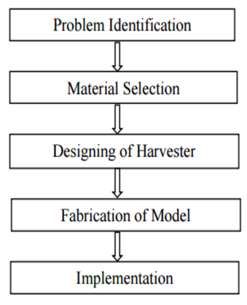
International Research Journal of Engineering and Technology (IRJET) e-ISSN: 2395-0056
Volume: 07 Issue: 04 | Apr 2020 www.irjet.net p-ISSN: 2395-0072
requires to be harvested assiduously when using hand. Large has been done in the area of root crop harvesting.
scale harvesters have harvesting attachments attached to the Traditionally, root crops are harvested using cutlasses, hoes,
tractor. But it may damage the cassava, so the design is diggers, digger-pickers and by hand. It is now the most
proposed to make a harvesting machine which will harvest widely cultivated crop in Africa and is grown by subsistence
the cassava without any damage and to make effective farmers, who depend on seasonal rainfall. Cassava as a food
equipment available at nominal prices. crop helps in sustaining food security but efficient
Tapioca harvesting needs a lot of manpower and is mechanical uprooting, storage and processing technologies
also very time consuming process. need experts’ attention Cassava is typically grown by small-
Farmers in India are getting discouraged by the scale farmers using traditional methods and can do well even
problems like high wages and insufficient number on land that is not suitable for other crops. Cassava is
of labour. propagated by cutting a mature stem into sections of
This project aims to solve all the above mentioned issues. approximately 15 cm and planting these prior to the wet
season. The roots are harvestable after 6 to 12 months and
1.3 NECESSITY OF HARVESTING EQUIPMENT can be harvested any time in the following 2 years. The most
difficult operation in cassava production is cassava
Cassava is cultivated eighty percentage in Tamil Nadu. It is harvesting. The reasons being that Cassava is harvested by
majorly cultivated around namakkal, erode, Salem, hand; in addition, there is the difficulty in the design of the
Kanyakumari. It cultivate in 1.39 lakes hectares in Tamil digging blades because of the indeterminate shape and
Nadu. Most of the farmers are having below 2 hectares so geometry of the tubers in the soil.
they not using tractor for harvesting tapioca. They using
daily wages peoples for harvesting it required more energy Manual harvesting of cassava involves the following steps:
to harvest tapioca from field. Due to harvesting using daily
wages people, wages for harvesting is accurse more it affect 1. Plucking off the upper parts of the stems with the
their profit. Existing model is an attachment which attached leaves before harvest.
in tractor it damage the tapioca it affect its grade in market 2. Cutting of the stem about 0.3 m above the soil
so we make this machine which harvest the crop without surface and collecting the stems as planting
damaging the tapioca. So it help to increase their profit. material.
3. The loosening of the soil at the cassava root zone.
1.4 TECHNOLOGICAL DEVELOPMENT 4. Lifting the cassava root system out of the soil and
separating the root system from adhering soil
Engineers at home and abroad have made many attempts before collecting tubers, loading them on to
towards the development of cassava uprooting devices. transport vehicles and transporting them as
These include manual devices such as cutlasses and hoes and required.
semi-mechanized devices such as Prairie mouldboard Table-1.4 Manual harvesting
ploughs with different structural configurations such as:
Existing manual harvesting techniques lead to drudgery,
Inverting the whole ridge and roots with a wastage and also consume a lot of time and farm labor,
mouldboard plough body which is scarce and costly. Cassava harvesting is still done
Pulling a mouldboard share (with the board manually in Ghana, Nigeria, Thailand and other parts of the
removed) below the soil level world. Manual harvesting of cassava does not fit well with
Using a mouldboard plough to split the ridge along the modern processing factories. This is as a result of the low
the crest productivity associated with manual uprooting of cassava.
Pulling specially designed blades to cut below the The cost of manual harvesting is high; it takes about 25 to 35
tubers men days to harvest a hectare of cassava. One major
Using animal and tractor-drawn single disc ploughs challenge associated with this important food crop the world
to harvest tapioca over, is difficulty in uprooting it. Currently, this is done
manually by hands and consequently farmers develop
Further work on the machine led to the development of a blisters in their palms, callus palms, arched spinal cord and
single-row harvester with two gangs of reciprocating Power waste pains over time. Manual uprooting is slow with low
Take off driven diggers, which digs on two opposite sides of output and productivity but an uprooting device will be
the ridge from the furrow bottom in order to uproot the faster with high productivity. It is against this background
Cassava root cluster. The combine harvester, or simply that an easy way of uprooting cassava locally is being
combine, is a machine that harvests grain crops. It combines considered in this paper. The objective of this paper is
into a single operation process that previously required therefore to design a simple, efficient, cheap and affordable
three separate operations (reaping, threshing and device to facilitate easy uprooting of cassava for local
winnowing). Among the crops harvested with a combine are farmers.
wheat, oats, rye, barley, corn (maize), soybeans and flax.
Notwithstanding the technological improvement so far, little
© 2020, IRJET | Impact Factor value: 7.34 | ISO 9001:2008 Certified Journal | Page 2445International Research Journal of Engineering and Technology (IRJET) e-ISSN: 2395-0056
Volume: 07 Issue: 04 | Apr 2020 www.irjet.net p-ISSN: 2395-0072
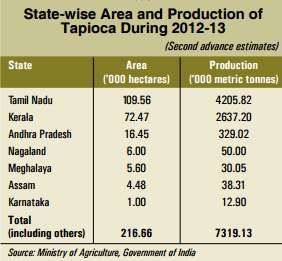
1.5. CASSAVA IN INDIA use in different part of world to overcome challenges. Earlier
attempts at mechanizing tapioca scale of cultivation.
In India, the cultivation of cassava is mainly done in Kerala, Development of labour saving technology for the tapioca
Tamil Nadu, Andhra Pradesh, Nagaland, Meghalaya, Assam, harvesting becomes most critical challenge in cassava
etc. Tamil Nadu stands first both in area and production transformation. Earlier attempts at mechanized harvesting
followed by Kerala and Andhra Pradesh. As per the second have been affected by constrain such as soil characteristic,
advanced estimates for the period 2012- 13, the total area nature, size of tuber depth and both between tuber and soil
under tapioca in India is 216.66 thousand hectares and the leading to high tuber damage and root tuber breakage There
production is about 7319.13 thousand metric tonnes. Table by usage of pneumatic cylinder and the gripper in machine
shows data on area and production in different states during the chance of getting damage to tapioca get reduced.
2012-13. In Tamil Nadu and Andhra Pradesh, it is grown
under open conditions whereas in Kerala about 40 per cent [3] Shadrack Kwadwo Amponsah, J. Thajudhin Sheriff ,
of cassava is raised as a mixed crop. About 40 per cent of Gangadharan Byju (1. CSIR-Crops Research Institute,
cassava in Tamil Nadu is intercropped with short-duration Kumasi, Ghana; 2. ICAR- Central Tuber Crops Research
crops such as cowpea, black gram, groundnut and Institute, Sreekariyam, India). The study sought to
vegetables. In Karnataka, it is grown along with areca, investigate the 13 effect of cassava agronomy parameters on
coconut and rubber. The mixed cropping system practiced in uprooting force requirement. The field study was carried out
these states provides the much needed additional income to at the central tuber crops research institute (CTCRI).
the small and marginal farmers.
[4] Lawal N.S, M.Akinbamowo (Journal of innovative
research, Volume5, issue 6, july2015) Planting were majorly
being carried out manually mechanical planters available in
fully developed to level for them to be taken up by
fabricators for commercialization, the implementation of
automatic and improved cultural practice of tapioca enhance
for reduction of the labour and time.
[5] Asetifa B.O, Lawal N.S, Samuel T (Development on
manually operated tapioca harvester using hydraulic
medium). The aim of study is to design and develop low cost,
light manually operated hydraulic tapioca harvester which
would produce minimal disturbance to soil when harvesting.
This study seek to eliminate high effort requirement in
tapioca harvesting through use of hydraulic ram and plunger
which will replace human arm lifting operation. There by
pneumatic working will be more easier compared to
hydraulic and it is appropriate to do the harvesting process.
Table 1.5 Production of tapioca [6] Akinbamowo R.O (Journal of agriculture and allied
science, Volume-2, issue2, April-2013). The rate of
harvesting of dug tapioca was determined with the machine
2. LITERATURE REVIEW
running on the test field and designated PTO rotation with
other selected operational and implement parameters
[1] K.V.Hariharan, S.P.Pradepkumar, M.Prasanth
(forwards speed and rake angle) for each row as plot layout,
(International journal of innovative research in science,
harvested tapioca are collected sown after harvesting, dug
volume 4, special issue 6, May 2015) Manual tapioca root
losses were determined by digging up tapioca and lift in soil
tuber peeling rate of about 21.8kg/h, Ezekwe et design
per plot and machine has passed and surface produce
spring load tapioca peeling machine with 5 spring load point
collected labelled bugged and weighted.
equal spaced at 140mm interval and length of knife assembly
with spring 2.193 N/mm. Tapioca is in various sizes and
[7] O.I Sekunowo,S.O Adesum and O.E ojo(International
average height stem to suit various tuber sizes, this result
journal of engineering and technology volume 4,may 2014 )
obtained is 15% broken tuber with peeling efficiency 98.8%.
tensile strength characteristics demonstrated by mild steel
The rate of loading root diameter were found to have
specimen after tempering, tensile behaviour steel austenised
significant effect on the breaking strength, deformation of
at 800 degree compared with 558.3 Mpa of other material.
root, breakup energy.
Emerging trending specimen’s behaviour shows strength
increase concomitantly with tempering temperature. Impact
[2] Shadwack kwadwo, Amponash and byju gongadharan
properties imperatives because fasteners are required to
(Review of various harvesting option for tapioca) Various
mechanized harvesting option have been developed for the
© 2020, IRJET | Impact Factor value: 7.34 | ISO 9001:2008 Certified Journal | Page 2446International Research Journal of Engineering and Technology (IRJET) e-ISSN: 2395-0056
Volume: 07 Issue: 04 | Apr 2020 www.irjet.net p-ISSN: 2395-0072
exhibit adequate resistance to dynamic loading, susceptivity
to brittle failure during installation.
[8] A.S. Akinwonmi and F. Andoh (Research Journal of
Applied Sciences, Engineering and Technology 5(2): 411-
420, 2013). This paper deals with a design of a cassava
uprooting device. This study analyses the design of a simple,
efficient, cheap and affordable cassava uprooting device for
local cassava growing farmers. Processes involved in
uprooting cassava were found out from local farmers,
studied and mechanized using bevel gears, cams and
followers, chain and sprockets. The principle of moments Fig-3.2. NCAM cassava lifter
was used as a basis for the design.
3.3 MECHANICAL CASSAVA HARVESTERS
3. METHODS OF TAPIOCA HARVESTING
Leipzig Mechanical Cassava Harvester,the digging, lifting and
3.1 MANUAL HARVESTING transport of cassava root cluster into a windrow have been
demonstrated under a Ghanaian condition using a prototype
This is the traditional method of harvesting cassava using a cassava harvester developed at the Leipzig University,
hoe, cutlass or mattock to dig round the standing stem to Germany. The harvester reduces to the minimum the heavy
pull out the root before detaching the uprooted roots from physical work involved in manual cassava harvesting using
the base of the plant. Figure shows two different manual the hoe and cutlass, especially in the dry season. Design goals
cassava harvesting methods; one with the help of a cutlass for the Leipzig mechanical harvester prototype included:
and the other using a hoe. This method is laborious cutting of soil, digging of soil, raising of soil containing the
especially during the dry season when soil moisture is at cassava root cluster, transporting the cassava root cluster
lower levels. According to Nweke et al, manual harvesting into windrow behind the tractor to ease manual tuber
requires about 22-62 man days per hectare. detachment from stem, reducing the number of moving
parts, improvement in the flow of soil and residue to prevent
blockade and fuel conservation during seedbed preparation
for next cropping.
Fig-3.1. Manual harvesting methods
3.2. SEMI-MANUAL HARVESTERS
Fig-3.3. Leipzig Mechanical Cassava Harvester
The International Institute of Tropical Agriculture (IITA) in
Nigeria designed and produced a manually operated cassava Another mechanical harvester is TEK Mechanical Cassava
root tuber lifter to be used by small scale farmers for cassava Harvester as the name depicts, was developed and
growing areas in Africa The National Centre for Agricultural manufactured at the Department of Agricultural Engineering,
Mechanization (NCAM) in Nigeria also developed and Kwame Nkrumah University Science and Technology -
commercialized a semi-mechanised cassava lifter/harvester Kumasi. The TEK mechanical cassava harvester basically has
as shown in Figure 5after Oni and Eneh . The IITA cassava the following parts; digger, shakers consisting of a slatted
lifter consists of a frame to which an immovable griping jaw mould conical mouldboard, the linkage points and the
is attached and a lever (handle) which is hinged to the frame vertical support. The TEK 49 mechanical cassava harvester is
for lifting cassava roots. The NCAM on the other hand, a fully mounted implement which operates according to the
consists of a frame to which a footboard and immovable „dig and pull‟ principle. When hitched to the tractor, after
griping jaws are attached and a lever (handle) which is having met the required field conditions, the implement is
hinged to the frame. lowered to set the required depth to dig (depending on root
depth of the cassava variety to be harvested). The digger
goes into the soil and then digs out the cassava root cluster.
Due to the inclination of the slatted conical mouldboard (B),
© 2020, IRJET | Impact Factor value: 7.34 | ISO 9001:2008 Certified Journal | Page 2447International Research Journal of Engineering and Technology (IRJET) e-ISSN: 2395-0056
Volume: 07 Issue: 04 | Apr 2020 www.irjet.net p-ISSN: 2395-0072
the roots are brought onto the surface for collection and 4.2. MATERIAL SELECTION
detachment.
SL. NO COMPONENTS MATERIAL
1. Frame Mild Steel
2. wheel Mild Steel
3. Bearing Steel
4. C-bracket & Arm Mild Steel
5. Gear wheel Mild Steel
Table-4.2. Material Selection
5. COMPONENTS AND DESCRIPTION
The major components that are used in this project are as
follows:
Fig-3.4. TEK Mechanical Cassava Harvester
5.1. FRAME
4. METHODOLOGY
The whole power is mounted on frame structure with
suitable arrangements. Frame is made of mild steel. Boring
of bearing sizes and open bores done in one setting so as to
align bearing properly while assembling provision is made to
cover the bearing with grease. Frame is the creation of
metals structures by cutting, bending, and assembling
processes. Frame is a value added process involving creation
of machine parts and structures from various raw materials.
Mild steel is type of carbon steel with low amount of carbon,
it is also known as “low carbon steel” although ranges vary
depending on source, the amount of carbon typically found
in mild steel is 0.05% to 0.25% by weight. Whereas higher
ranges from 0.30% to 2.0%. Mild steel is not an alloy steel
and therefore does not contain large amount of other
elements beside iron.
4.1. PROBLEM IDENTIFICATION
It was very difficult to remove the soil and pull out
tapioca
More human labour is required for harvesting Fig-5.1. Frame
There is shortage of skilled labour available 5.2. DC MOTOR
agricultural purpose
Shortage of farmers has transitioned to using A DC motor is any of a class of rotary electrical motors that
harvesting crop manually using labour but this converts direct current electrical energy into mechanical
method is very time consuming. energy. The most common types rely on the forces produced
There is chance of breaking of tapioca while pulling by magnetic fields. Nearly all types of DC motors have some
out from soil. internal mechanism, either electromechanical or electronic,
Harvesting of tapioca manually requires more to periodically change the direction of current in part of the
effort. motor. DC motors were the first form of motor widely used,
as they could be powered from existing direct-current
lighting power distribution systems. A DC motor's speed can
be controlled over a wide range, using either a variable
supply voltage or by changing the strength of current in its
© 2020, IRJET | Impact Factor value: 7.34 | ISO 9001:2008 Certified Journal | Page 2448International Research Journal of Engineering and Technology (IRJET) e-ISSN: 2395-0056
Volume: 07 Issue: 04 | Apr 2020 www.irjet.net p-ISSN: 2395-0072
field windings. Small DC motors are used in tools, toys, and
appliances. The universal motor can operate on direct
current but is a light weight brushed motor used for portable
power tools and appliances. Larger DC motors are currently
used in propulsion of electric vehicles, elevator and hoists,
and in drives for steel rolling mills. The advent of power
electronics has made replacement of DC motors with AC
motors possible in many applications. The DC motor is the
device which converts the direct current into the mechanical
work. It works on the principle of Lorentz Law, which states Fig-5.4. Ball bearing
that “the current carrying conductor placed in a magnetic
and electric field experience a force”. And that force is called Bearing is made up of steel material and bearing cap is mild
the Lorentz force. steel. Some types of bearings are roller bearing and ball
bearing. The bearings are mainly used to reduce friction. The
allow demand application to meet maximum efficiency,
reliability, durability and performance. A ball bearing is a
type of rolling element bearing that uses balls to maintain
the separation between bearing races. The purpose of ball
bearing is to reduce rotational friction and support radial
and axial loads. It achieves this by using atleast three races to
contain the balls and transmit loads through the balls. The
most application one race is stationary and other is attached
to rotating assembly. As one of the bearing races rotates it
cause the balls to rotate as well. Because the balls are rolling
Fig-5.2. DC motor
they have a much lower coefficient of friction than if two flat
surfaces where sliding against each other. Radial ball bearing
DC Motor Characteristics are runs on DC power or AC line
(6202) is able to accommodate low to heavy radial loads and
voltage with a rectifier, Operating speeds of 1,000 to 5,000
low to moderate thrust loads in either direction. They are
rpm, 60-75% efficiency rate, High starting torque, Low no-
available with metal shields or rubber seals. Several
load speeds.
tolerance grade, internal clearance and cage designs are
available to best suit the running precision and speed of the
5.3. WHEEL
application.
A wheel is a circular component that is intended to rotate on 5.5. LEADSCREW
an axial bearing. Wheels, in conjunction with axles, allow
heavy objects to be moved easily facilitating movement or
A leadscrew (or lead screw), also known as a power screw
transportation while supporting a load, or performing labor
or translation screw, is a screw used as a linkage in a
in machines. Wheel is designed and fabricate inspired from
machine, to translate turning motion into linear motion.
the wheels of tractors for the usage on loose soils and other
Because of the large area of sliding contact between
unleveled surface. their male and female members, screw threads have larger
frictional energy losses compared to other linkages. They are
not typically used to carry high power, but more for
intermittent use in low power actuator and positioner
mechanisms. Leadscrews are commonly used in linear
actuators, machine slides (such as in machine
tools), vises, presses, and jacks. Leadscrews are a common
component in electric linear actuators. Leadscrews are
manufactured in the same way as other thread forms (they
may be rolled, cut, or ground).A lead screw is sometimes
used with a split nut also called half nut which allows the nut
to be disengaged from the threads and moved axially,
Fig-5.3. Wheel independently of the screw's rotation, when needed (such as
5.4. BALL BEARING in single-point threading on a manual lathe). A split nut can
also be used to compensate for wear by compressing the
A bearing is machine element that constrains relative motion parts of the nut.A hydrostatic leadscrew overcomes many of
to only desired motion and reduces friction between moving the disadvantages of a normal leadscrew, having high
parts. The bearings are pressed smoothly to fit into the positional accuracy, very low friction, and very low wear, but
shafts because if hammered the bearing may develop cracks. requires continuous supply of high pressure fluid and high
© 2020, IRJET | Impact Factor value: 7.34 | ISO 9001:2008 Certified Journal | Page 2449International Research Journal of Engineering and Technology (IRJET) e-ISSN: 2395-0056
Volume: 07 Issue: 04 | Apr 2020 www.irjet.net p-ISSN: 2395-0072
precision manufacture leading to significantly greater cost acts as a remotely controlled switch. Relays used in control
than most other linear motion linkages. circuits of typical HVAC/R systems may be
electromechanical. A relay is an electrically operated switch.
It consists of a set of input terminals for a single or multiple
control signals, and a set of operating contact terminals..
Relays are used where it is necessary to control a circuit by
an independent low-power signal, or where several circuits
must be controlled by one signal. Relays were first used in
long-distance telegraph circuits as signal repeaters: they
refresh the signal coming in from one circuit by transmitting
it on another circuit.
Fig-5.5. Leadscrew
5.6. GEARWHEEL
A gear or cogwheel is a rotating machine part having cut
teeth or, in the case of a cogwheel, inserted teeth (called
cogs), which mesh with another toothed part to
transmit torque. Geared devices can change the speed,
torque, and direction of a power source. Gears almost always
produce a change in torque, creating a mechanical
advantage, through their gear ratio, and thus may be
Fig-5.7. Switching relay
considered a simple machine. The teeth on the two meshing
gears all have the same shape. Two or more meshing gears,
working in a sequence, are called a gear train or a 5.8. BATTERY
transmission.
A battery is a device consisting of one or
more electrochemical cells with external connections for
powering electrical devices such as flashlights, mobile
phones, and electric cars. When a battery is
supplying electric power, its positive terminal is
the cathode and its negative terminal is the anode. The
terminal marked negative is the source of electrons that will
flow through an external electric circuit to the positive
terminal. When a battery is connected to an external electric
load, a redox reaction converts high-energy reactants to
Fig-5.6. Gearwheel lower-energy products, and the free-energy difference is
delivered to the external circuit as electrical energy.
The gears in a transmission are analogous to the wheels in a
crossed, belt pulley system. An advantage of gears is that the
teeth of a gear prevent slippage. When two gears mesh, if
one gear is bigger than the other, a mechanical advantage is
produced, with the rotational speeds, and the torques, of the
two gears differing in proportion to their diameters. Spur
gears or straight-cut gears are the simplest type of gear.
They consist of a cylinder or disk with teeth projecting
radially. Though the teeth are not straight-sided (but usually
of special form to achieve a constant drive ratio, Fig-5.8. Battery
mainly involute but less commonly cycloidal), the edge of
each tooth is straight and aligned parallel to the axis of 5.9. VIBRATOR MOTOR
rotation. These gears mesh together correctly only if fitted to
parallel shafts. No axial thrust is created by the tooth loads. Vibration motor is a coreless DC motor and the size of this
Spur gears are excellent at moderate speeds but tend to be motor is compact. The main purpose of this motor is to alert
noisy at high speeds. the user from receiving the call by without sound/vibrating.
These motors are applicable for different applications like
5.7. SWITCHING RELAY pagers, handsets, cell phones, etc. The main feature of this
motor is, it has magnetic properties, lightweight, and motor
Typically they are used to switch light current loads, ranging size is small. Based on these features, the motor performance
from fan motors to damper controls. A relay is a device that is highly consistent. The configuration of these motors can be
© 2020, IRJET | Impact Factor value: 7.34 | ISO 9001:2008 Certified Journal | Page 2450International Research Journal of Engineering and Technology (IRJET) e-ISSN: 2395-0056
Volume: 07 Issue: 04 | Apr 2020 www.irjet.net p-ISSN: 2395-0072
done in two varieties one is coin model and another one is a Wheels designed is inspired from the wheels of
cylinder model. The vibrator motor specifications mainly tractors for the usage on loose soils and other
include type, max operating torque, max. centrifugal force, unleveled surface.
weight range, rated current and output.
Fig-5.9. vibrator motor
5. WORKING PRINCIPLE
The ultimate aim of the machine is to harvest
tapioca without any leftovers underneath and make
the process easy.
The initial design consists of a four legged Fig-6.2. Basis mechanism
structure, with a basement and wheels attached to
each leg. 6. DESIGN
At the centre of the basement, there is an electric
motor attached to a threaded rod by which, the arm
moves up and down. This is to pull up the tapioca.
Switching relay for driven the dc motor. Single
contact relay for vibrator motor and double contact
relay for motor in which function in up and fro of
the arm.
Along with this setup, there is a vibrator motor
powerful enough to loosen the soil around the
tapioca and a battery which powers this whole
setup.
It has a main platform in which its gear wheel,
motor support , wheel and threaded support all are
connected.
The thread support is moving through a slotted
support to and fro.
Bottom of the threaded support is connected to a
motor vibrator. To provide a vibration for arm.
The C brackets are connected at the bottom of
tapioca and the arm is tighten by a locking
mechanism.
The arm is adjustable and the motor vibrator is Fig-6.1. Structural view
ON.
It provide a vibration action around the tapioca and
loosens the soil.
The soil loosens and the threaded shaft move
upwards with the help of a motor in connection
with a gear wheel.
On the process the tapioca gets detached from the
soil.
This process is carried out for harvesting tapioca
using this machine.
© 2020, IRJET | Impact Factor value: 7.34 | ISO 9001:2008 Certified Journal | Page 2451International Research Journal of Engineering and Technology (IRJET) e-ISSN: 2395-0056
Volume: 07 Issue: 04 | Apr 2020 www.irjet.net p-ISSN: 2395-0072
Screw shaft eff. dia. = 19 mm
Screw shaft minor dia. = 17.18 mm
Material = Mildsteel
7.6. BATTERY
Volt = 12 v
Ampere = 40 A
Watts = 460 watts
7.7. WHEEL
Material = Mildsteel
Fig-6.2. 3D Drawing Diameter = 22
7. SPECIFICATIONS 8. CALCULATION
7.1. LIFTING MOTOR 8.1. CALCULATION OF BALL BEARING
Motor type = DC motor Selection of Bearing No. 6202
Volt = 24v Outer Diameter of Bearing (D) = 35 mm
Ampere = 30A Thickness of Bearing (B) = 12 mm
Watts = 24 30=720watts Inner Diameter of the Bearing (d) = 150 mm
RPM = 2500 Radius (r₁) =1
Maximum Speed = 15,000 rpm
7.2. VIBRATOR MOTOR Mean Diameter (dm) = (D + d) / 2
= (35 + 15) / 2
Motor type = DC motor dm = 25 mm
Volt = 12v
Ampere = 50A 8.2. CALULATION OF GEAR WHEEL
RPM = 1500
Gear ratio =
7.4.3. GEAR WHEEL
Type = Spur gear
No. of teeth on driving gear = 8 No. of teeth of driven gear = 90
No. of teeth on driving gear = 90 No. of teeth of driving gear = 8
Material = Mildsteel Gear ratio = 11.25.
As we know that specification of motor ,i.e.,speed = 2500,
7.4. BALL BEARING Torque = 15 Nm
Selection of Bearing = No. 6202
Outer Diameter of Bearing (D) = 35 mm S1 =
Maximum Speed = 15,000 S2
rpm
Thickness of Bearing (B) = 12 mm = =
Inner Diameter of the Bearing = 150 mm
Material = Steel
=
7.5. LEADSCREW
S2 =
Material = Mildsteel
No. of groove = 88
Length = 46 cm Where, S2 is the speed of driven gearwheel and S1 is the
Diameter = 20 mm speed of the driving gear wheel.
Thread type = circular
Pitch = 2 mm
© 2020, IRJET | Impact Factor value: 7.34 | ISO 9001:2008 Certified Journal | Page 2452International Research Journal of Engineering and Technology (IRJET) e-ISSN: 2395-0056
Volume: 07 Issue: 04 | Apr 2020 www.irjet.net p-ISSN: 2395-0072
MS square pipe pieces which has cut is welded
Gear ratio = together to develop a leg, similarly 3 legs also
fabricate.
Finally weld the legs of the frame together to
11.25 = fabricate frame of the machine.
MS round pipe of diameter 7.5cm and height 62cm
is taken as the arm support, with the help of MS flat
= 11.25 = 168 Nm of 3*30mm and square pipe of 30mm for the c-
bracket, arm and locking mechanism.
The torque produced by the driven gear is 168 Nm MS rod of 30mm for the fabrication process of
leadscrew ,no of groove in the leadscrew is 88.
Attachment of bearing and gear wheel to the
Gear efficiency = leadscrew. No of teeth on the gearwheel is 90 and
the 6202 bearing is selected.
Cut 3 pieces of MS flat of 6*65mm of dimension
= = = 3927 watts 15cm which is attached to the leadscrew and also to
the frame.
Attachment of leadscrew to the arm of the product.
Motor is connected to the gearwheel, on motor gear
= = = 3906 watts
there is 8 number of teeth.
Vibrator is attached to the supporting plate on the
arm of the product.
Gear efficiency = = 0.99 Wheel is designed and fabricate inspired from the
wheels of tractors for the usage on loose soils and
The efficiency of gear wheel is 0.99. other unleveled surface.
Steady plate is fabricate which gave support to the
8.3. WEIGHT LIFTING CALCULATION arm when vibration and rotation of motor taken
place.
Experiment checking around 10 harvesting of tapioca plant Finally provide electrical connection to vibrator and
with the instrument spring balance. From the experiment for motor by switching relay, power supply taken from
harvesting tapioca plant mass required for harvesting each a battery.
plant were 132 kg , 127 kg , 98 kg , 86 kg , 102 kg , 98 kg , At last the product tapioca harvesting machine is
101 kg , 70 kg , 108 kg , 92 kg. fabricated and ready for the testing.
Taking average mass = 101.4 kg
From the force of gravity, F = Mg
Where, M = Mass of tapioca
g = Force of gravity
Average mass = 101.4 kg
Force of gravity = 9.81
F = 101.4*9.81 = 995 N
Workdone in lifting a 995 N weight, .5m off the
ground.
W = Force*Distance
W = 995*.5
= 497 Nm 0r Joule
Power required for lifting tapioca in 2 Minutes.
We know that, Power =
Fig-9.1. Proposed machine
= 4.14 watts
Power required for lifting 101.4 kg of tapioca in 2 min is 10. ADVANTAGES
4.14 watts. Separate tapioca from soil and collect in
ridge, easy to load.
9. FABRICATION PROCESS
Manual power not required.
MS square pipe of 30mm is cut as in the dimension Maintenance is easy.
as in above figure.
Replacement of parts is easy.
© 2020, IRJET | Impact Factor value: 7.34 | ISO 9001:2008 Certified Journal | Page 2453International Research Journal of Engineering and Technology (IRJET) e-ISSN: 2395-0056
Volume: 07 Issue: 04 | Apr 2020 www.irjet.net p-ISSN: 2395-0072
The involvement of manual work is highly 14. CONCLUSION AND FUTURE WORK
negligible.
Tapioca harvester is simple compact structure and can
Simple in construction. operate easily. This unit is equipped with a wheeled frame as
High efficiency. its supporting power. The tapioca stem would be higher of
the ground so that the combined operation of both digging
No need of skilled operators to operate this and plucking are performed in one stroke. If the digging
system. depth is adjusted other deep rooted crops like cassava have
11. APPLICATIONS also be harvested. The digging part and frame can be adjusted
according to any tapioca fields. No tapioca root breakage was
It is used in the agricultural fields. observed during the harvesting procedures and giving the
high lifting efficiency. Many ways of reducing the production
It is used in ground seed harvesting.
costs must be investigated to make the study more appealing
Arm can be used for up lifting heavier to the rural farmers. We have implemented an automatic and
objects. improved cultural practices of tapioca harvesting machine
that will enhance for the reduction of labour charge and time.
12. BENEFITS
Further improvements can also be made regarding the
Less energy expended . gripper size and mode of transportation. It is done by
designing a portable machine which uses a powerful vibrator
Increase in the number of Cassava roots
motor. The vibrator loosens the soil around the plant and pull
uprooted .
it up without any of it getting stuck under the soil. Smaller
Saving time. and efficient combine harvesting which would be more
accessible and also considerably cheaper. The mission is to
Reduction in the risk of health hazards of
developing blisters in the palms, callus create a portable, user-friendly and low cost mini harvesting
palms, arched spinal cord and waste pains machine. The idea was to create a machine which is cheap
over time. and will reduce the labour required to harvest crops. This
machine has the capability and the economic value for
Higher output and productivity. fulfilling the needs of farmers having small land holdings.
Enhancement in the easy way of uprooting This machine is cost effective and easy to maintain and repair
Cassava. for the farmer.
13. RESULT The future work for this design by providing better c bracket
or gripper for lifting heavier objects. It is used in ground seed
After complete the machine, it was taken into agricultural harvesting. The device is recommended to the Cassava
field and test the entire performance of the equipment. The growing farmers to enhance and enjoy the benefits. This
experiment had been done at a tapioca field, Elanji grama designed is limited to lose to moderately loose and moist soil,
panchayath, Ernakulam district. During this experiment 5 it is therefore pertinent that further research work be carried
tapioca plants were harvested by using manual method and out to make the design applicable to other types of soil
other 5 tapioca plants were harvested by using the tapioca structures.
harvesting machine. It has been observed that:
REFERENCES
Manual Method Proposed Machine
During harvesting 20% During harvesting 5% waste [1] K.V.Hariharan,S.P.Pradepkumar,M.Prasanth(Interna
waste occurs that means occur that means we can tional journal of innovative research in science,
some part of the tapioca completely pull out the tapioca volume 4, special issue 6, May 2015)
remains in the soil. without any damage [2] Shadrack Kwadwo Amponsah, J. Thajudhin Sheriff ,
Gangadharan Byju(1. CSIR-Crops Research
Time consuming, it takes Less time consuming, it takes
Institute, Kumasi, Ghana; 2. ICAR- Central Tuber
30min for harvesting 5 20min for harvesting 5 tapioca
tapioca plants. plants. Crops Research Institute, Sreekariyam, India)
[3] Lawal N.S, M.Akinbamowo(Journal of innovative
High man power required. Less man power required. research, Volume5, issue 6, july2015)
High labour cost required Less labour cost, i.e the field [4] Akinbamowo R.O (Journal of agriculture and allied
owner can be harvesting using science, Volume-2, issue2, April-2013)
this product without depend [5] Asetifa B.O, Lawal N.S, Samuel T (Development on
on labours. manually operated tapioca harvester using
hydraulic medium).
Table-13.1. Result observed comparison with manual [6] A.S . Akinwonmi , F. Andoh, Design of cassava
harvesting and our product uprooting device, 2015.
© 2020, IRJET | Impact Factor value: 7.34 | ISO 9001:2008 Certified Journal | Page 2454International Research Journal of Engineering and Technology (IRJET) e-ISSN: 2395-0056
Volume: 07 Issue: 04 | Apr 2020 www.irjet.net p-ISSN: 2395-0072
[7] Dr. C.R Mehta, Dr. Uday Badegaonkar, Tractor
operated cassava harvester, Harvesting of cassava
using tractor, 2016.
[8] “DESIGN OF MACHINE ELEMENTS”- V.B Bhandari
[9] “MANUFACTURING TECHNOLOGY”-R.K Rajput
© 2020, IRJET | Impact Factor value: 7.34 | ISO 9001:2008 Certified Journal | Page 2455You can also read


