Tararua livestock and taonga species protection operation - OSPRI
←
→
Page content transcription
If your browser does not render page correctly, please read the page content below
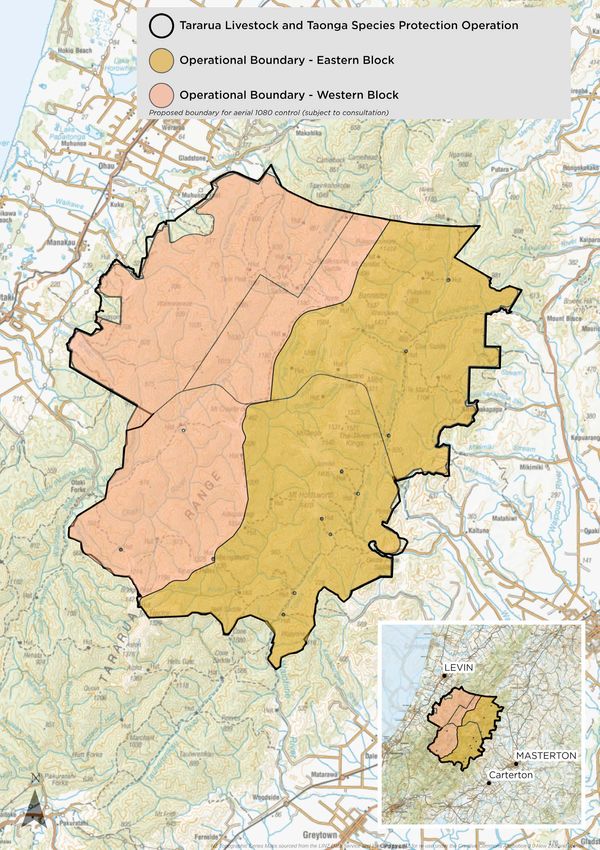
Tararua livestock and taonga
species protection operation

A joint approach                            will inform, and be included along with     distributed at a 1.5–2kg/ha rate. Toxic
                                            other factors, in the decision-making       baits are green, 16–20mm wide and
OSPRI and the Department of                 process around the proposed operation.      cylindrical shaped.
Conservation (DOC) are collaborating
                                            EPRO Ltd have been contracted by            Advanced GPS navigational equipment
on a predator control operation in the
                                            OSPRI to carry out consultation with        will be used to ensure the pellets are
Tararua Range. This collaboration will
                                            landowners and other affected parties       accurately placed, exclusion zones
increase the effectiveness and efficiency
                                            on its behalf. Contractors have been        avoided, and an accurate record of
of achieving their respective objectives:
                                            discussing boundary issues, water supply    bait distribution obtained.
OSPRI to eradicate TB and DOC to
                                            safety and management of any risks to
protect native plants and wildlife.
                                            dogs and livestock and how to mitigate
                                            any impacts of the proposed operation
      Timeframe                             may have on you, such as changing the
                                            planned control area.
This operation was originally planned
to occur in 2020, however, it is now        Before the operation can commence,
planned to take place in early 2021.        consents from both the Ministry of Health
                                            and Department of Conservation are
The western block is yet to receive
                                            required.
consent, if the consent is given, it is
scheduled for the first suitable weather
window from April 2021. The eastern               Operational details                              Notification
block has consent and is planned to
                                            The operation will begin with the
occur in the first suitable weather                                                          Affected landowners and occupiers
                                            distribution of non-toxic cereal pellets
window from April 2021.                                                                      will be contacted again before the
                                            by helicopter. These brown cylindrical
                                                                                             commencement of the operation
                                            shaped baits are 4cm long and
      Planning                              16mm wide.
                                                                                             would start. Public notices will
                                                                                             be published in local newspapers
DOC and OSPRI are continuing to             The toxic operation would then                   and warning signs will be placed
engage with iwi and key stakeholders        occur one-two weeks later (weather               at all likely access points to the
to hear their views on the proposed         dependent). Each bait contains 0.15%             operational area.
operation. Feedback from this process       of sodium fluoroacetate and will be

                                                                               ospri.co.nz          OSPRI            DOC
                        TBfree is an OSPRI programme
                                                                               doc.govt.nz          0800 482 463     (06) 377 0700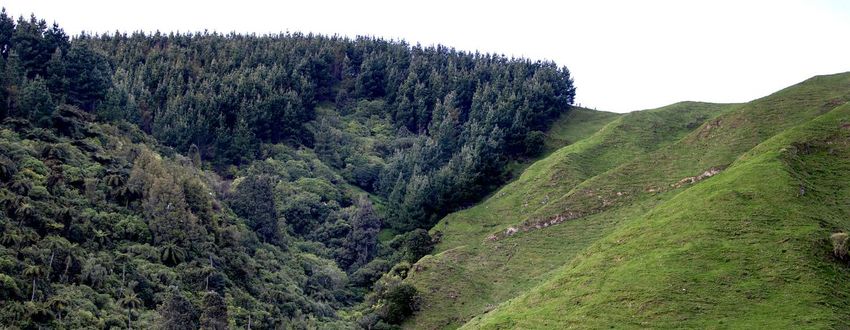
The road to
                                                                                            TB eradication
                                                                                                  Testing wildlife
                                                                                                  We check the wildlife to see
                                                                                                  if TB is present in an area.

                                                                                                  Possum control – year one
                                                                                                  Possums spread TB.
                                                                                                  Getting numbers low
                                                                                                  will help stop TB.

                                                                                                  Keeping possum
                                                                                                  numbers low
                                                                                                  It’s really important to keep
                                                                                                  possum numbers low over
                                                                                                  multiple years to break the
                                                                                                  TB cycle.

Benefits of                                 central sections of this TB management
                                            area since 1996 (Upper Otaki) and 2001
collaboration                               (Maungahao/Ruamahanga).
                                                                                                  Testing wildlife
                                                                                                  We test wildlife to check if
between OSPRI                               The last infected herd was in 2003 in                 TB still exists. The animals will

and DOC                                     the western section of the range.                     be checked for signs of TB.
                                                                                                  Samples may be grown in
Goal 1: Targeting possums                   Goal 2: Protecting native                             a laboratory. If TB is found,
                                                                                                  you will be told by TBfree.
to eradicate TB                             species through predator
                                            control in Tararua Forest Park
Reducing and keeping the possum
population low reduces the risk of
                                                                                            TB     TB Eradicated
                                            Project Kākā
TB being spread.
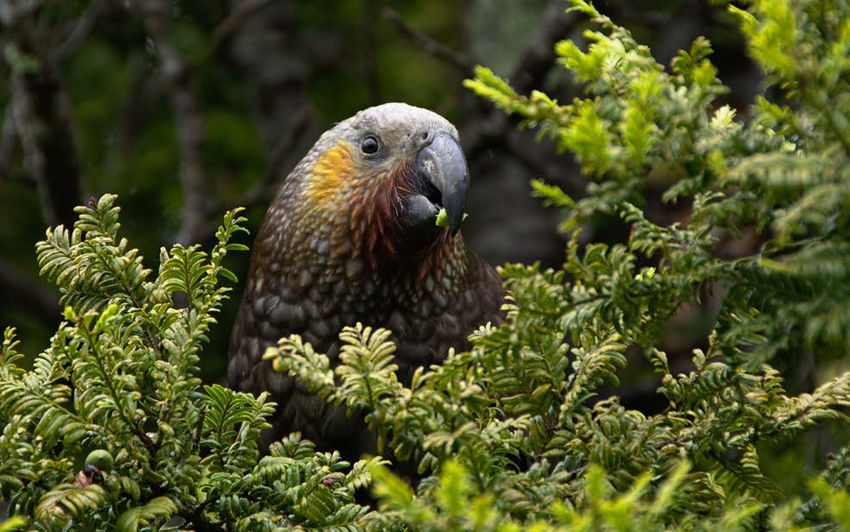
                                            The Tararua range is home to the iconic
OSPRI’s TBfree programme uses possum        kākā, bellbirds, kakariki, rifleman and
control along with regular herd testing     other native birds. The native tree
and movement restrictions to achieve        fuchsia is also present. Project Kaka,
bovine TB eradication goals. Information    DOC’s proposed area for predator
from wild animal surveys, recent and        control, is at the southern end of
historic findings of TB in wild animals,    OSPRI’s TB Management Area in the
herd testing results and the operational    Northern Tararua.
history of the region are used when
                                            DOC has controlled possums, rats,
planning operations.
                                            stoats and goats in the area to protect
TB eradication goals are:                   native fauna and flora against browsing
                                            and predation every three years since
• TB freedom in cattle and deer herds       2011 and prior to that at six-to-seven-
  by 2026                                   year intervals. Since 1994 more than
• TB freedom in possums by 2040             60,000 ha of the range has been
                                            controlled.
• TB freedom in all wildlife by 2055
                                                                                       in predator numbers after each
TB history in the Tararua Range             Predator control                           aerial 1080 operation and increasing

TB has been found in the wildlife on the    works                                      populations of native bird species.
                                                                                       Monitoring of plants such as the tree
eastern side of the range from Mt Bruce     By knocking the predator population
to Mikimiki Crown and on the western                                                   fuchsia clearly shows survival is far better
                                            down and keeping numbers low, the
side from Otaki Forks to Holdsworth         native species in the area are able to     in areas that have had predator control.
campground. This is an area covering        regenerate.                                However, possums, rats and stoats
29,801 hectares in the Northern Tararuas.                                              increase dramatically after mast years
                                            Intensive monitoring by DOC, OSPRI,
The last control in the western side        Manaaki Whenua-Landcare Research           which impacts on native wildlife as
was in 2013 and in 2014 for the eastern     and Greater Wellington Regional Council    well as greater numbers of possums
side. There has been no control in the      has shown significant drops                increases the chance of TB spreading.

                                                                              ospri.co.nz         OSPRI              DOC
                        TBfree is an OSPRI programme
                                                                              doc.govt.nz         0800 482 463       (06) 377 0700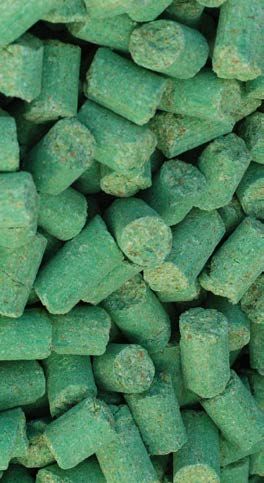
Important                                                                                  What to do if you
                                                                                           suspect poisoning
information                                                                                Contact your local hospital
                                                                                           or doctor, or dial 111
                                                                                           National Poisons Centre
Warning signs will be placed at all        exposed to 1080. Hunting can resume             0800 POISON (764 766)
main access points to the operational      approximately four months following
                                                                                           If a domestic animal is
area and everyone must follow the          the control work or after two months
                                                                                           poisoned, contact a local
cautions on the signs. There’s no          if 100mm of rain has fallen.
health risk when using this area as                                                        veterinarian.
                                           Please observe these rules whenever
long as you follow these instructions:
                                           you see warning signs about the
Do not handle any bait or allow            pesticide. Warning signs indicate that
children to wander unsupervised.           pesticide residues may still be present
Cereal baits containing 1080 are
dyed green.
                                           in the baits or carcasses. When the
                                           signs are officially removed, you can                      urther
                                                                                                     F
Do not hunt or take game from
                                           resume normal activities in the area.                     information
within a two kilometre radius of           Free dog muzzles will be provided
the operational area for human or          on request. Please contact OSPRI on             OSPRI
pet consumption. It’s an offence to        06 353 2710 or vector.sni@ospri.co.nz           Palmerston North Office
sell meat products that have been          to obtain a muzzle.                             P 06 353 2710
                                                                                           E vector.sni@ospri.co.nz
                                                                                           W ospri.co.nz

                                                                                           DOC
                                                                                           Wairarapa
                      Do not bring dogs into the area until the                            P 06 377 0700
                      warning signs have been officially removed.                          E masterton@doc.govt.nz
                      Dogs are particularly susceptible to 1080. They must not be          W doc.govt.nz
                      allowed access to bait or poisoned carcasses which remain
                                                                                           Contractor
                      toxic to dogs until they have fully decomposed.
                                                                                           Epro Ltd
                                                                                           P 0800 ASK EPRO
                                                                                              (0800 275 3776)
                                                                                           E control@epro.co.nz

                                           There is no risk                                For more information on
                                                                                           controlling bovine TB and
                                           to public drinking                              how and why 1080 is used

                                           water                                           in New Zealand, visit
                                                                                           1080facts.co.nz
                                           Biodegradable 1080 is highly soluble
                                           and does not persist in water or                DOC’s Tiakina Nga Manu work see:
                                           soil. Local health authorities apply            www.doc.govt.nz/our-work
                                           strict conditions to aerial operations          /tiakina-nga-manu
                                           so that drinking water supplies are             For guidance on recreational hunting
                                           not contaminated. Safety has been               see our factsheet ‘TB Information
                                           confirmed by tests on several thousand          for Hunters’ at ospri.co.nz
                                           water samples taken after aerial 1080
                                           operations over many years.                     For guidance on commercial
                                                                                           hunting see the Ministry for
                                                                                           Primary Industries and Department
                                                                                           of Conservation websites.

                                                                                           For more information see
                                                                                           OSPRI’s Operational Status Page,
                                                                                           or DOC’s Pesticide Summary.

                                                                             ospri.co.nz          OSPRI            DOC
                        TBfree is an OSPRI programme
                                                                             doc.govt.nz          0800 482 463     (06) 377 0700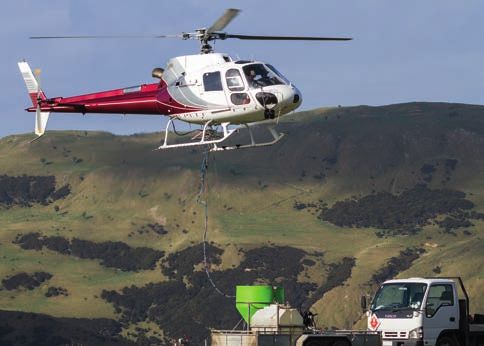
You can also read


