The Baby Food Cheat Sheet - An Easy Guide to Introducing Baby Food - IncredibleInfant com
←
→
Page content transcription
If your browser does not render page correctly, please read the page content below
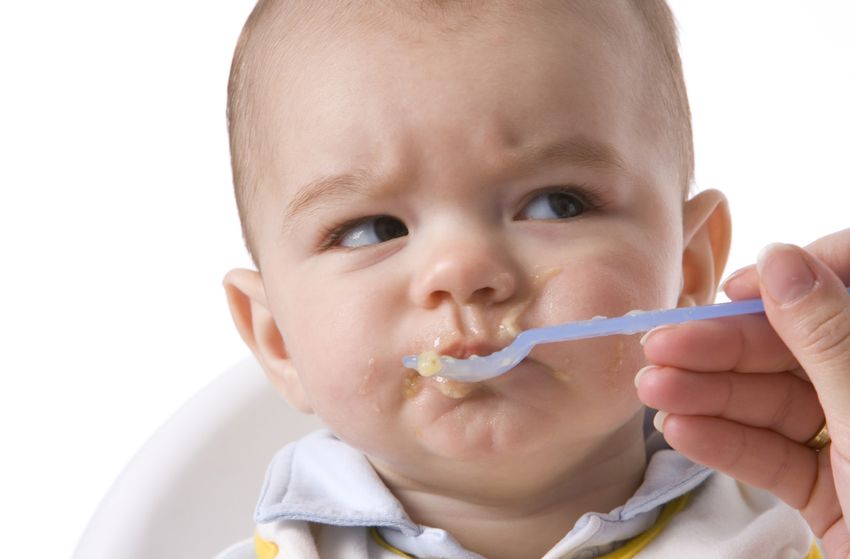
The Baby Food Cheat Sheet
An Easy Guide to Introducing Baby Food

                         IncredibleInfant com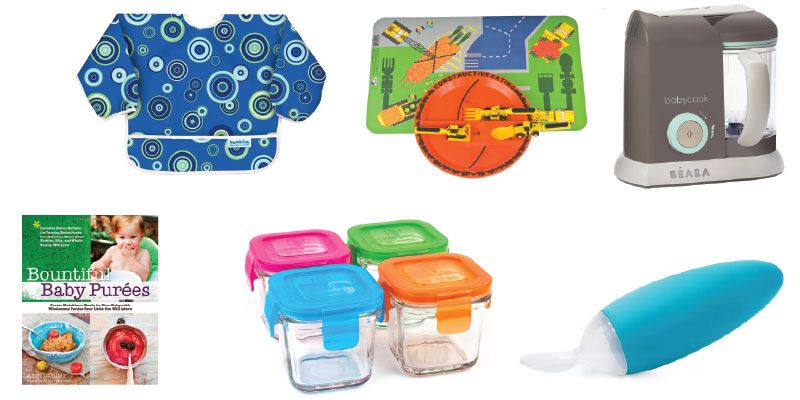
Table of Contents
    3 Number One Rule of Baby
    4 The Six Month Old
    6 The Seven Month Old
    7 The Eight Month Old
    8 The Nine Month Old
    9 The Ten Month Old
    10 The Twelve Month Old
    11 The Eighteen Month Old
    12 Baby Food Buying Guide
    13 Easy Peasy
2
                                IncredibleInfant com
No. 1 Rule of BABY FOOD
Make it Choke Proof
I have a terrible, gut-wrenching, bile-wretching fear of watching one of my kids choke.
Actually, let me revise that.
I have a terrible, gut-wrenching, bile-wretching fear of watching anyone’s kids choke. (That means yours.)
So before we start talking about strawberries and avocadoes, we need to cover the basics on how to make
your homemade baby food choke-proof.
This requires...
• Overcooking, pureeing, and straining foods for beginning eaters so there are no lumps whatsoever.
• Adding breastmilk or formula to thin cereals and purees out and get the right consistency.
• Dicing pieces of overripe fruit and rolling them in oat bran (prevents slipping down the wrong tube) for
older babies & toddlers.
Babies gum food. They don’t chew it. Keep foods mushy until his molars arrive in his second year.
You should also talk to your doctor before starting your baby on solid foods. Eating solids requires a com-
pletely different set of tongue movements than a breast or bottle.
The younger the baby, the more difficult it is to get those movements down. For this reason, most parents
wait until after the 6-month marker (or older) before introducing baby food.
Making baby food at home is brain-dead simple.
Steam food until mush. Blend until watery. Voila!
Save yourself extra dishes and have one small appliance
do the whole shabang.
33
IncredibleInfant comThe 6-Month Old
Safe Foods to Introduce
For babies just starting their eating adventures, think “tasting liquids” not “eating solids”. His food
should be literally dripping off the spoon.
As he starts this lesson in The Art of Feeding My Face, don’t be surprised when he shoves most of the food
out with his tongue.
That’s actually not a “I hate this food” message.
It takes different tongue movements to eat off a spoon than to suck out a bottle or breast.
In his mind, he’s trying to breastfeed this new-fangled “drink” off of some silly cup-on-a-stick.
At this age, eating solids is less about nutrition (he will get most/all his nutrition from breastmilk and
formula) and more about tongue practice.
If he doesn’t seem interested or isn’t “getting it” after a few days, shelve solids for a few more weeks.
I didn’t start introducing baby food to my youngest Bella until almost 8 months.
She had NO interest in eating solids, and since she was still gaining weight, the
doctor gave me the a-okay in waiting.
Just because he’s 6 months doesn’t mean he’s ready to eat solid foods. You are
the expert on your baby remember? If he’s still growing, don’t feel you have to
rush him into solids.
4
IncredibleInfant comCooked Fruits and Veggies
Blend up these fruits and cooked vegetables with formula or breastmilk, strain to remove any lumps,
and then freeze in ice-cube trays for homemade healthy baby food. (Takes 20 minutes once a week
and will save you a fortune!)
• Ripe Avocado
• Ripe Banana
• Mango
• Papaya
• Pears
• Sweet Potatoes
• Winter Squash
Grains and Dairy
Making your own baby cereals at home is eye-rolling easy. (Not to mention better for your baby nu-
tritionally.)
Grind the grains before cooking with a clean coffee grinder and then cook on the stove using 2:1
ratio. (Example: 2 cups of water for 1 cup of grain.)
Finally, thin it out with breastmilk or formula to make it safely soupy.
• Brown Rice
• Barley
• Millet
• Oats
• Whole-milk plain yogurt
Obviously, that’s going to make a LOT of baby cereal. Divvy it up into smaller containers
and refrigerate for 2-3 days. Then pop it in the microwave, stirring in an ice cube
to cool and thin it down a little.
55
IncredibleInfant comThe 7-Month Old
Safe Foods to Introduce
You may be able to thicken the food a little, but you still want it the texture of heavy cream.
This is also the age when you can start offering diluted fruit juices: apple, apricot, grape, pear, papa-
ya, pear, peach, and prune. Only offer juice once a day. Formula, breastmilk, and water should be his
primary liquids at this age.
The following foods can be added to the “Safe” list at seven months.
Cooked Fruits and Veggies
• Peaches (skin free)
• Asparagus
• Carrots
• Green Beans
• Peas (cooked and pureed
only)
• Summer Squash
• White Potatoes
• Sugar Snap Beans
• Yellow Beans
Protein Sources
• Silken Tofu (blended)
• Cottage Cheese (small curd)
• Egg Yolks (hard cooked and mashed)
• Poultry (cooked and pureed)
• Beef (cooked and pureed)
• Veal (cooked and pureed)
• Lamb (cooked and pureed)
6
IncredibleInfant comThe 8-Month Old
Safe Foods to Introduce
If he seems like he’s understanding the “gumming” concept of eating, let him experiment with a few
small finger foods (like Cheerios). Give him only one or two at first, or he may attempt to chip-
munk-cheek himself.
Since he’s just a beginner, make sure everything you give him can be swallowed whole. You may also
want to roll diced pieces of fruit in oat bran to further protect against choking. (Slippery food is easily
choked on.)
Here’s the list of items you can add on to his food list at 8 months.
Cooked Fruits and Veggies
• Apricots
• Apples (peeled)
• Cantaloupe
• Honeydew
• Kiwi Fruit
• Plums
• Watermelon
• Grapes (diced only!)
• Broccoli
• Okra
Protein Sources
• Lean fish like flounder, sole, cod, catfish, haddock (cooked and pureed)
• Tahini Spread (Sesame Seed Paste)
• Ground nuts (if no family nut allergy history)
• Cheese (shredded or grated)
• Finely ground seeds
77
IncredibleInfant comThe 9-Month Old
Safe Foods to Introduce
This is a great time to introduce your infant to cooked beans, lentils, and split peas. Cook them,
then mash them into a paste before serving. This is an excellent way for your baby get some bone-
and-brain building proteins!
These foods, when cooked, can be added to your baby food list.
Cooked Fruits and Veggies
• Pineapple
• Cherries (finely diced, pits removed)
• Brussels Sprouts
• Cauliflower
• Onions (diced and cooked)
• Beets
• Eggplant
• Rhubarb
• Rutabaga
• Turnips
• Raw Parsley (finely chopped)
• Mustard Greens
• Collard Greens
• Spinach
• Kale
• Mushrooms (diced)
Protein Sources
• fatty fish like tuna, halibut, bluefish, sardines, and salmon
(cooked and pureed)
• Pork and ham (cooked and pureed)
• liver and kidney (cooked and pureed)
8
IncredibleInfant comThe 10-Month Old
Safe Foods to Introduce
You can begin to introduce finely grated raw fruits and vegetables as fun new finger snacks at this
age.
Raw (peeled) apples, summer squash, sweet peppers, and carrots, finely shredded provide a new tex-
ture for him to try with his new teeth.
Here are a few things you can add to his diet this month.
Cooked Fruits and Veggies
• Sweet Bell Peppers (finely grated)
• Lettuce (finely grated)
Other Foods
• Bulgur Grain Cereal
• Cornmeal
• Whole Grain Pastas (small enough to swallow whole)
• Thinned creamy peanut butter (if no family history of nut allergies)
99
IncredibleInfant comThe 12-Month Old
Safe Foods to Introduce
The first birthday is a HUGE milestone for your little guy! Besides eating his first cake and
ripping open gifts, a whole new culinary world of options opens up.
This is also a great time to introduce the wonders of The Sippy Cup. Try introducing it for one
meal a day, and eventually replace the bottle altogether. Continue to dice and overcook these
foods. Lumpy is good. Hard chunks is not.
Cooked Fruits and Veggies
• Oranges & diluted orange juice
• Clementines
• Grapefruit
• Lemons
• Limes
• Mandarin Oranges
• Tangerines
• Blueberries (quartered)
• Strawberries (diced)
• Blackberries (diced)
• Raspberries (diced)
• Tomatoes and tomato juice
Other Foods
• Shellfish (cooked and finely chopped)
• Hard-cooked Egg Whites
• Wheat Germ
• Honey
• Whole cow’s milk
10
IncredibleInfant comThe 18-Month Old
Safe Foods to Introduce
By this age, there are very few foods your baby can’t chow down on. Here are the final
food items you can add to his diet this month.
• Cabbage
• Corn
• Cucumbers (grated)
11
11
IncredibleInfant comBABY FOOD Buying Guide
1 6
4
2 5
3
Tools of the Baby Food Trade
1 2 3
Bumkins Waterproof Bountiful Baby Purees: Wean Green Glass
Sleeved Bib Nutritious Meals Your Baby Food Jars
Baby Will Love
4 Construction Plate
Utensils & Worksite 5 Squirt Baby Food
Dispensing Spoon
6 Baby Food Processor
and Steamer
12
IncredibleInfant comSee How Simple That Was?
Easy Peasy
Introducing baby foods is one of the highlights of parenting in the first year.
What parent hasn’t panicked to capture the first taste of a lemon?
Or snap a high quality iphone picture of a new sweet potato hair style?
Watching your baby experience new tastes and textures is one of my favorite things about babyhood.
Enjoy these precious days when YOU get to decide what he’s eating! (It passes all to fast...)
For more helpful tips on baby food and nutrition, check out these articles at IncredibleInfant.com!
Out-Smarting a Picky Eater: 22 Ways to Sneak in Healthy Foods
Is Your Baby Getting the Right Vitamins? 3 Simple Ways to Find Out.
Hope you found this free report helpful!
xo
Heather Taylor
http://www.incredibleinfant.com
13
13
IncredibleInfant comYou can also read


