The best mental gymnastics for the autumn semester: Lithuanian - Regina Sabonytė
←
→
Page content transcription
If your browser does not render page correctly, please read the page content below
The best mental
  gymnastics for the autumn
    semester: Lithuanian

Regina Sabonytė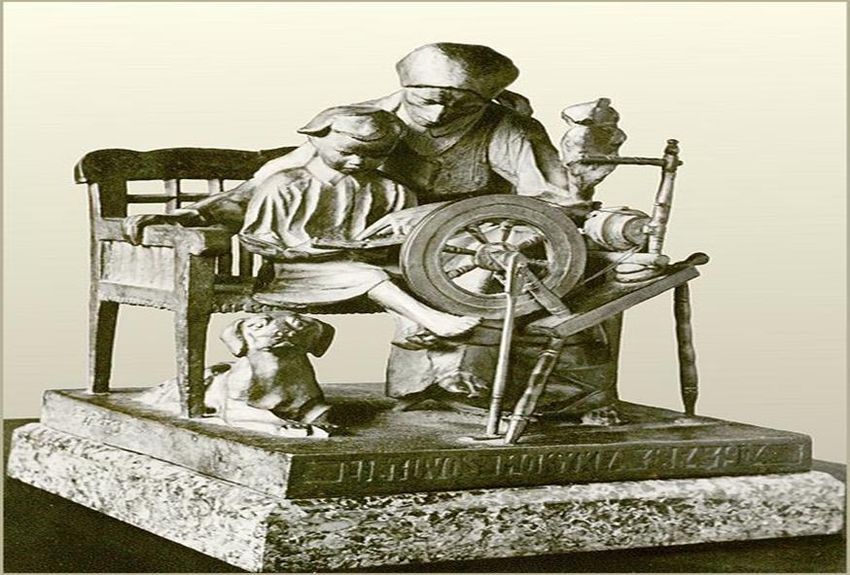
Survival Lithuanian
LKB0304 SURVIVAL LITHUANIAN (in English)! ONLY ONE WEEK.
2 ECTS! (Exchange students have to iclude this course in their Learning Agreement if they want to go
to this class)

Two groups: 9:15 - 11:00 AM (Lithuanian time) ONLINE (Lec. Regina Sabonytė)
                9:15 - 11:00 AM (Lithuanian time) IN THE CLASSROOM (Lec. Vijolė Višomirskytė)
23, 24, 25, 26, 27 August! Exam on the last day (27 August).
If you have any questions regarding the course, please contact greta.garnyte@vdu.lt

Lecturers:

Regina Sabonytė                                       Vijolė Višomirskytė
Short course description
The aim of the course is to introduce students to a very
basic knowledge of Lithuanian that would help them to
“survive” in Lithuania. In this intensive course students
will learn to introduce themselves, to provide basic
biographical information, to ask for the prices while
shopping, to ask for directions, basic information at the
university, to order food, as well as other useful everyday
phrases in Lithuanian. This intensive course is structured
around the sociocultural knowledge of the Lithuanian
Language.
Course content
• Introducing ourselves (name, last name,
  address, telephone, ethnicity, country, city of
  origin);
• Telling the time, arranging the meeting;
• Getting around the city;
• Ordering food in a cafe and restaurant;
• Asking for prices (handling basic conversation
  in grocery store).
Labas!

           Aš esu ...

 Some      Labas rytas! Laba diena! Labas vakaras!

           Aš nekalbu lietuviškai.
Survival   Atsiprašau.

phrases    Skanaus!

   ☺       Ačiū!

           Viso gero!

           Iki!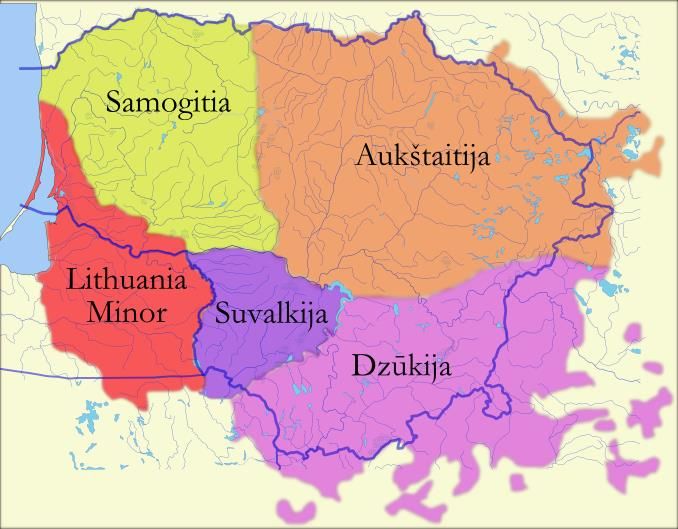
Now a little bit more about Lithuanian
  language and Lithuanian history...
Lithuanian language is the
             most difficult language in
             whole wide world. If you
  What do    don't believe me try to learn
  learners   it yourself.:))
 say about
Lithuanian   Lithuanian  is an
             extremely difficult language
language?    with many inflections,
             difficult grammar and
             pretty strange vocabulary.
The hardest language to master
  is the one you are currently
         trying to learn.
          (Anonymous)
What’s unique about Lithuania(n)?
           It survived!

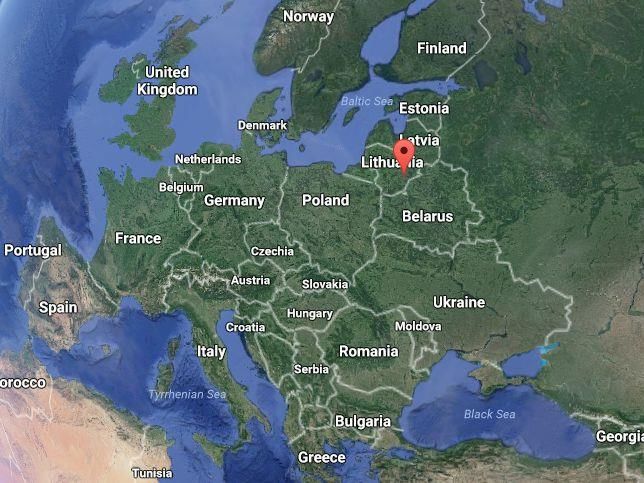
• In 1989, the National Geographic Institute of
  France, led by Jean-George Affholder, made its
  official finding: the center of Europe was the
  village of Purnuškės, just north of Vilnius,
  Lithuania.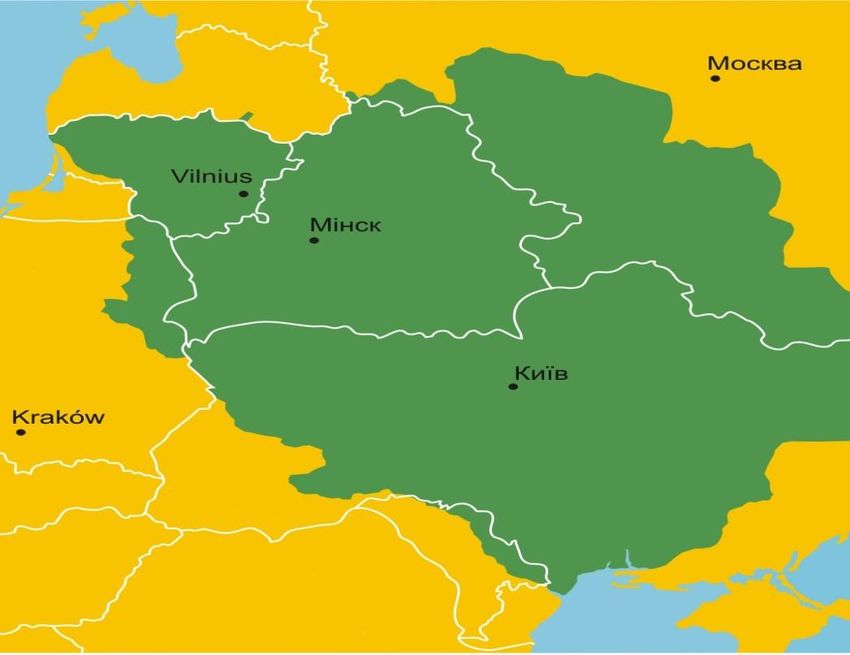
What’s unique about
Lithuania(n)?         • The Lithuanian
                        state emerged in
It survived!            the middle of
                        the 13th c.
                      • From the 13th to
                        the 16th c. it
                        stretched over
                        large areas
                        inhabited not
                        only by Balts but
                        also by Slavs.
What’s unique about Lithuania(n)?
It survived!
From the mid-16th to
the end of the 18th c. it
was in a union with
Poland.
From the end of the
18th c. to the early 20th
c. it was occupied by
the Russian Empire.
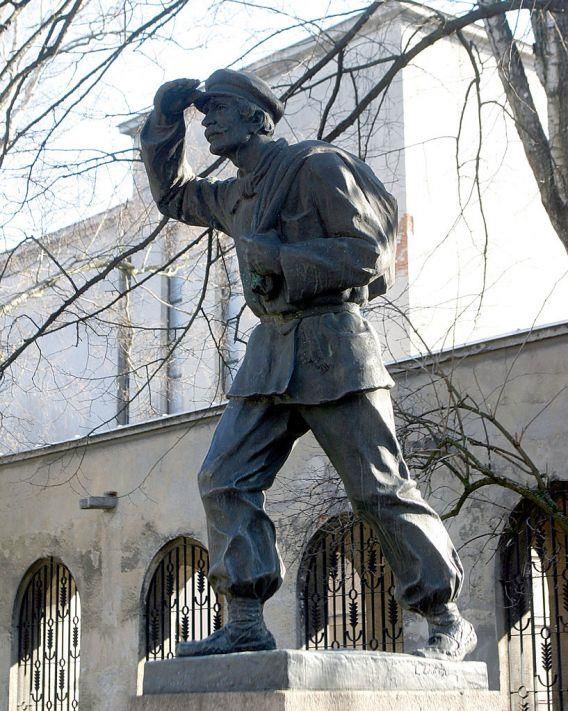
The Book SmugglerLithuanian School (1864-1904)
What’s unique about Lithuania(n)?
            It survived!
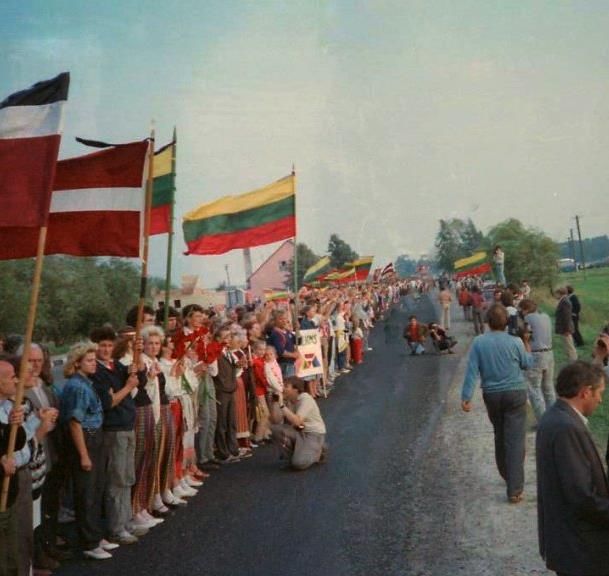
• Lithuania’s independence was declared on
  February 16, 1918.
What’s unique about Lithuania(n)? It survived! • From 1944 to 1990 it was occupied by the Soviet Union. • Since 1990, Lithuania has again been a democratic independent republic, like Latvia and Estonia.
Lithuanian now
Lithuanians make up to about 80% of
the population of Lithuania.
More than 3 million people (perhaps
3.5 million) consider Lithuanian to be
their mother tongue.
It is spoken by the Lithuanian
populations in some border areas of
Latvia, Poland and Belarus, and by
numerous Lithuanian émigrés in the
other countries.
The largest émigré groups are to be
found in the United States. Numerous
groups also in the UK, Ireland and
Spain.Lithuanian now • Lithuanian and Latvian are the only living Baltic languages. • Lithuanian belongs to the Indo-European group and is nearest to Sanskrit (the ancient language in Hinduism). • Some people say that Lithuanian and Latvian are very similar. • A Lithuanian (without previous learning, except those who live close to the border) and a Latvian can recognise a few words in each other’s speech, but this is not enough to hold a conversation.
Lithuanian ethnographic regions and
                 dialects
Often users of different
Lithuanian dialects (such
as Samogitians and
Aukstaitians) cannot
understand each other
unless they communicate
in standard Lithuanian,
which they have to learn.
Alphabet • Latin based under the influence of Polish, German and Czech. • 32 letters. • Consonants with diacritics c→č, s→š, z→ž. • Vowels: ą, ę, ė, ų, ū, y, į.
Reading and spelling
•   Pronunciation is almost entirely
    consistent with the spelling: i. e.,
    words are pronounced exactly as
    they are spelt.
•   One letter usually corresponds to one
    sound.
•   In this respect, Lithuanian is more
    modern than French or English,
    where the same letters do not always
    represent the same sound.
•   It is also easier to find a Lithuanian
    word in a dictionary when you hear it
    pronounced than it is to find an
    English one.
•   Free word stress.
Morphology • Lithuanian is an inflectional language; majority of word forms are made with affixes (prefixes, endings). • Prefixes→ new word: eiti-ateiti, nueiti, pareiti, įeiti, pereiti. • Endings→ new word form: namas-namo-namui. • The endings are the principal means of marking the relations between words in a sentence.
Noun
• 2 genders:
   – masculine (namas),
     feminine (Lietuva)
• 2 numbers:
   – singular (namas),
     plural (namai)
• 7 cases
Cases in Lithuanian Nominative. Geras draugas eina į kiną. Genitive. Čia gero draugo knyga. Dative. Čia dovana geram draugui. Accusative. Matau gerą draugą. Instrumental.Einu į kiną su geru draugu. Locative. Gerame drauge. Vocative. Geras drauge, padėk man.
Frequency of case forms
The frequency of distribution of case forms (%)
in Spoken Lithuanian (adult directed speech).
• Not only nouns, but also adjectives, numerals,
  pronouns, and participles have cases. ☺

• Lithuanian versions of well-known names like:
  Džordžas Bušas, Bilas Geitsas, Eltonas Džonas,
  Stingas, etc.
• Prezidentas, internetas, kompiuteris, žurnalas,
  ambasadorius, džinsai, etc.
Examples
•   elektra
•   traktorius
•   fotografija
•   kolekcija
•   politika
•   popierius
•   lempa
•   šortai
Verb
• 4 tenses: present, past simple, past iterative,
  future.
• 3 types of verbs in the present:
      A type
      gyventi – gyvena, gyveno ‘live’
      O type
      valgyti – valgo , valgė ‘eat’
      I type
      mylėti – myli, mylėjo ‘love’
Verb
• 2 types of verbs in the
past:
Ė type
valgyti – valgo, valgė
‘eat’
O type
gyventi – gyvena,
gyveno ‘live’Word order
• Of secondary importance as a
means of expressing grammatical
relationships in Lithuanian.
• S – subject, V – verb/predicate, O
– object.
SVO Mama skaito knygą
‘mother reads a book’
SOV Mama knygą skaito
VSO Skaito mama knygą
OSV Knygą mama skaito
OVS Knygą skaito mamaWhen in Lithuania: try to learn and speak Lithuanian! First Survival Lithuanian and then Lithuanian A1 ?
AČIŪ!!!
THANK YOU!!!
You can also read


