THE BLUECARD PROGRAM PROVIDER MANUAL
←
→
Page content transcription
If your browser does not render page correctly, please read the page content below
MARCH 2019

THE BLUECARD PROGRAM PROVIDER MANUAL

IN THIS MANUAL                              TOPIC                                     SEE PAGE
                 Introduction                                                             2
                 What is the BlueCard Program?                                            3
                 How the BlueCard Program Works: An Example                               5
                 How to Identify BlueCard Members                                         7
                 Medicaid Programs Administered By Blue Plans                            12
                 International Blue Plans                                                16
                 GeoBlue Travel Insurance                                                17
                 Limited Benefit Products                                                18
                 Referenced Based Benefits                                               20
                 Consumer Directed Healthcare and Health Care Debit Cards                22
                 Health Insurance Marketplaces                                           25
                 Blue Exchange for Inquiries and Authorizations                          27
                 BlueCard Eligibility and Benefits Verification                          29
                 Utilization Review                                                      31
                 Electronic Provider Access (EPA)                                        34
                 Claim Submission and Claim Status Inquiry                               37
                 Itemized Bills Required for High-Dollar Host Claims                     42
                 NAIC Codes                                                              44
                 Contiguous County Contracting                                           46
                 Overlapping Service Areas                                               47
                 Ancillary Claim Filing Rules                                            48
                 Medical Records Requests                                                49
                 BlueCard Quick Tips                                                     51
                 Medicare Advantage Products                                             52
                 Medicare Advantage PPO Network Sharing                                  55
                 Medicare Advantage Eligibility, Claims, and Payment                     57
                 Traditional Medicare Related Claims                                     63

                                                                     What Is My Service Area?

                           INTER-PLAN PROGRAMS | The BlueCard Information Center         1|P a g e
                                  The BlueCard Program Provider Manual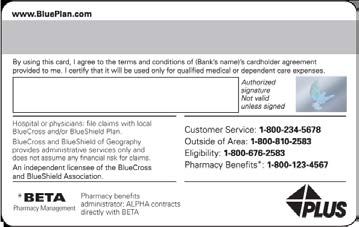
MARCH 2019

INTRODUCTION

Overview   The 36 independent, community-based and locally operated Blue Cross and Blue
           Shield companies and the Blue Cross and Blue Shield Association (BCBSA)
           comprise the Blue Cross® and Blue Shield® System, the nation's oldest and largest
           family of health benefits companies. The Blues® cover 100 million Americans in all
           50 states, the District of Columbia, and Puerto Rico. Nationwide, more than 96% of
           hospitals and 91% of professional providers contract with the Blue System —
           more than any other health insurer.

           Offering a variety of products, programs, and services to all segments of the
           population, the Blues cover large employer groups, small business, and
           individuals. Moreover, the Blues have enrolled more than half of all U.S. federal
           workers, retirees, and their families, making the Federal Employee Program (FEP)
           the largest single health plan group in the world.

           Throughout BCBSA’s more than 80-year history, the Blue Cross and Blue Shield
           companies have provided millions of families with top-quality, affordable health
           insurance. As a participating provider of Highmark, you may render services to
           patients who are national account members of other Blue Plans traveling to or
           living in Pennsylvania, Delaware, and West Virginia. The BlueCard® Program makes
           it easier for you to service these out-of-area Blue Plan members.

In this    This manual describes the BlueCard Program and its advantages, and provides
manual     information to make filing claims easy. You will find helpful information about:
               • Identifying members
               • Verifying eligibility
               • Obtaining precertifications/preauthorizations
               • Filing claims
               • Who to contact with questions

           PLEASE NOTE: This BlueCard Program Provider Manual duplicates the information
           contained in the Highmark Provider Manual’s Chapter 2.6: The BlueCard
           Program. It is reproduced here in the BlueCard information Center for your
           convenience. Features used in the Highmark Provider Manual, such as the use of
           state icons and the Highmark service area map, are retained here.

           To access the entire Highmark Provider Manual, select MANUALS from the
           Quicklinks bar that extends across the top of the Provider Resource Center.

                       INTER-PLAN PROGRAMS | The BlueCard Information Center         2|P a g e
                               The BlueCard Program Provider Manual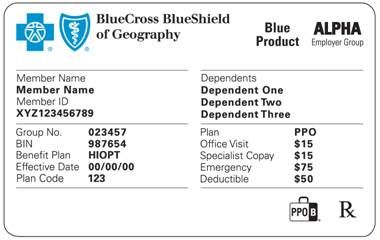
MARCH 2019

WHAT IS THE BLUECARD PROGRAM?

Definition      BlueCard® is a national program that enables members of one Blue Plan to obtain
                health care service benefits while traveling or living in another Blue Plan’s service
                area. The program links participating health care providers with the independent
                Blue Cross Blue Shield (BCBS) Plans across the country and in more than 200
                countries and territories worldwide through a single electronic network for claims
                processing and reimbursement.

                The program lets you submit claims for patients from other Blue Plans, domestic
                and international, to your local Blue Plan. Highmark is your sole contact for claim
                submission, payment, adjustments, and issue resolution.

Advantages      The BlueCard Program lets you conveniently submit claims for members from
for providers   other Blue Plans, including international Blue Plans, directly to Highmark.
                Highmark will be your one point of contact for all of your claims-related questions.

                Always look to Highmark first when you need help with information about out-of-
                area members. We are committed to meeting your needs and expectations. In
                doing so, your out-of-area Blue Plan patients will have a positive experience with
                each visit.
                                                                           What Is My Service Area?

Highmark        The BlueCard Program is supported by Highmark’s networks as follows:
networks        PENNSYLVANIA
supporting         • Participating Provider Network: Supports all BlueCard programs for
BlueCard             members with traditional, POS, or HMO coverage who are traveling or
                     living outside of their Blue Plan’s service area.
                    • Keystone Health Plan West (KHPW)*: The KHPW network supports the
                       BlueCard PPO programs in the 29-county Western Region of Pennsylvania
                       for members in a PPO plan who are traveling or living outside of their Blue
                       Plan’s service area.
                    • Premier Blue Shield Network: The Premier Blue Shield Network supports
                       the BlueCard PPO programs in all other Highmark service areas in
                       Pennsylvania for members in a PPO plan who are traveling or living outside
                       of their Blue Plan’s service area.
                DELAWARE: The Delaware Provider Network supports the BlueCard Program.

                *Keystone Health Plan West is Highmark’s managed care provider network in the 29-county
                Western Region of Pennsylvania.

                                                                                    Continued on next page

                             INTER-PLAN PROGRAMS | The BlueCard Information Center              3|P a g e
                                     The BlueCard Program Provider Manual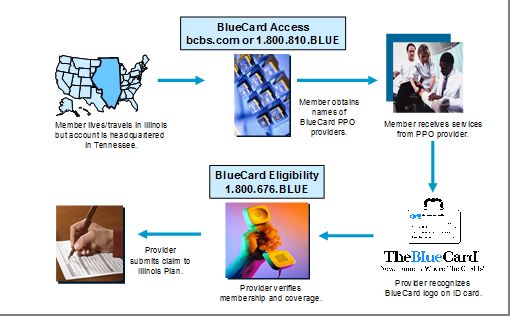
MARCH 2019

WHAT IS THE BLUECARD PROGRAM?, Continued

Highmark      WEST VIRGINIA
networks        • Indemnity Network: Supports the BlueCard programs for members with
supporting         traditional or HMO coverage who are traveling or living outside of their
BlueCard           Blue Plan’s area.
(continued)     • Preferred Provider Organization (PPO) Network: Supports the BlueCard
                   PPO programs for members in a PPO plan who are traveling or living
                   outside of their Blue Plan’s service area.
                • Point of Service (POS) Network: Supports the BlueCard POS programs for
                   members in a POS plan who are traveling or living outside of their Blue
                   Plan’s service area.
                                                                           What Is My Service Area?

BlueCard      Claims for the following products are excluded from the BlueCard Program:
Program           • Stand-alone dental
exclusions        • Self-administered prescription drugs delivered through an intermediary
                     model (using a vendor)
                  • Vision delivered through an intermediary model (using a vendor)
                  • The Federal Employee Program (FEP)*
                  • Medicare Advantage**

              *For more information on FEP, please visit the Highmark Provider Manual’s Chapter 2.3:
              Other Government Programs and for billing tips, see Chapter 6.4: Professional
              (1500/837P) Reporting Tips.

              **Medicare Advantage is a separate program from BlueCard and delivered through its
              own centrally-administered platform; however, since you may see members of other
              Blue Plans who have Medicare Advantage coverage, Medicare Advantage information is
              available in this manual.

                           INTER-PLAN PROGRAMS | The BlueCard Information Center               4|P a g e
                                   The BlueCard Program Provider Manual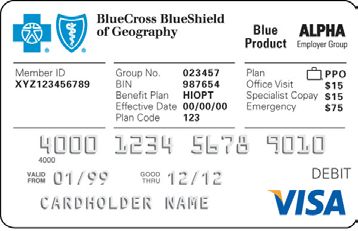
MARCH 2019

HOW THE PROGRAM WORKS: AN EXAMPLE

Example         The following diagram illustrates how the BlueCard® program works. In this
situation       example, a member with coverage through BlueCross BlueShield of Tennessee is
                seeking services in Illinois.

                There are two scenarios where a Tennessee member might need to see a provider
                in the Illinois Blue Plan’s service area:
                     1. If the Tennessee member was traveling in Illinois; or
                     2. If the member resides in Illinois and has employer-provided coverage
                        through BlueCross BlueShield of Tennessee.

How the         In either scenario above, the member can obtain the names and contact
member          information for BlueCard PPO providers in Illinois by calling the BlueCard Access
can find        Line at 1-800-810-BLUE (2583).
participating
providers       The member also can obtain information online by using the BlueCard National
                Doctor and Hospital Finder available at bcbs.com.

                Note: Although members are not obligated to identify participating providers
                through either of these methods, it is their responsibility to go to a PPO provider if
                they want to access PPO in-network benefits.

                                                                                 Continued on next page

                            INTER-PLAN PROGRAMS | The BlueCard Information Center           5|P a g e
                                    The BlueCard Program Provider Manual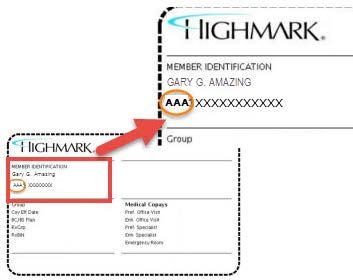
MARCH 2019

HOW THE PROGRAM WORKS: AN EXAMPLE, Continued

How a provider   When the member makes an appointment and/or sees an Illinois BlueCard PPO
verifies the     provider, the provider may verify the member’s eligibility and coverage
member’s         information via the BlueCard Eligibility Line at 1-800-676-BLUE (2583).
eligibility
and benefits     The provider may also obtain this information via a HIPAA electronic eligibility
                 transaction if the provider has established electronic connections for such
                 transactions with the local Plan, Blue Cross and Blue Shield of Illinois.

Claim            After rendering services, the provider in Illinois files a claim locally with Blue Cross
submission       and Blue Shield of Illinois. The Illinois Blue Plan forwards the claim internally to
and payment      BlueCross BlueShield of Tennessee.

                 The Tennessee Blue Plan adjudicates the claim according to the member’s benefits
                 and the provider’s arrangement with the Illinois Plan. This information is sent back
                 to Blue Cross and Blue Shield of Illinois.

                 When the claim is finalized, the Tennessee Plan issues an explanation of benefit
                 (EOB) to its member. The Illinois Plan issues the explanation of payment or
                 remittance advice to its provider and pays the provider.

                              INTER-PLAN PROGRAMS | The BlueCard Information Center             6|P a g e
                                      The BlueCard Program Provider Manual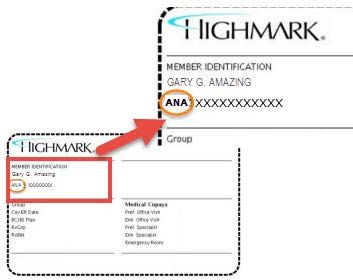
MARCH 2019

HOW TO IDENTIFY BLUECARD MEMBERS

Member            When members of out-of-area Blue Plans arrive at your office, be sure to ask them
identification    for their current Blue Plan membership identification card. The card will display
numbers           the member’s identification number.

                  Important facts concerning Member IDs:
                     • The main identifier for out-of-area members is the prefix.
                     • A correct Member ID number includes the prefix (first three positions) and
                        all subsequent characters, up to 17 positions total. This means that you may
                        see cards with ID numbers between 6 and 14 numerals/letters following
                        the prefix.
                     • Do not add/delete characters or numerals within the Member ID.
                     • Do not make up prefixes.
                     • Do not change the sequence of the characters following the prefix.
                     • The prefix is critical for the electronic routing of specific HIPAA transactions
                        to the appropriate Blue Plan.

                  Do not assume that the member’s ID number is the social security number. All
                  Blue Plans have replaced Social Security numbers on Member ID cards with an
                  alternate, unique identifier.

                  Note: Members who are part of the Blue Cross Blue Shield Federal Employee
                  Program (FEP), which is excluded from BlueCard, will have the letter "R" in front of
                  their Member ID number instead of a 3-character prefix.

Prefix            The 3-character prefix at the beginning of the member’s identification number is
(formerly         the key element used to identify and correctly route claims. The prefix identifies
“alpha prefix”)   the Blue Plan or national account to which the member belongs. It is critical for
                  confirming a patient’s membership and coverage.

                  The 3-character prefix has historically been an “alpha prefix” – with all alpha
                  characters. Beginning in 2018, the Blue Cross Blue Shield Association (BCBSA) will
                  issue alphanumeric “prefixes” to Blue Plans since the options for 3-character all
                  alpha combinations are running low. The examples below illustrate the alpha and
                  alphanumeric prefixes on the Member ID card (A = alpha; N = numeric):

                                                                                  Continued on next page

                              INTER-PLAN PROGRAMS | The BlueCard Information Center          7|P a g e
                                      The BlueCard Program Provider Manual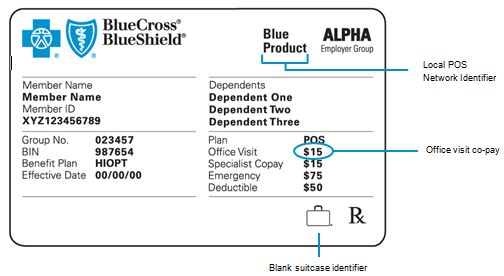
MARCH 2019

HOW TO IDENTIFY BLUECARD MEMBERS, Continued

Prefix            There will be no change to existing 3-character alpha prefixes for products/accounts
(formerly         already in existence. Alphanumeric prefixes will be created and assigned to Blue
“alpha prefix”)   Plans for new products or new large national group accounts.
(continued)
                  Initially, the ANA (alpha-numeric-alpha) format will be issued, with a designated
                  sequence of alpha/numeric patterns to follow as needed. Please note the following
                  guidelines the BCBSA will use in creating alphanumeric prefixes:
                       • Zero (0) and one (1) will not be used in prefixes; only the numerals two (2)
                           through nine (9) will be used.
                       • Numeric-only prefixes (NNN) will not be used.
                       • R22 – R99 will not be issued as they overlap with Federal Employee Program
                           (FEP) identification numbers.
                       • Other alphanumeric combinations may be excluded for various reasons.

                  IMPORTANT! Effective January 1, 2019, Highmark has new group plans that have
                  been assigned alphanumeric prefixes. Please be aware that you may be seeing local
                  Highmark members with valid alphanumeric prefixes on their Member ID cards.

Examples of       The following examples represent various numeral/letter combinations that may
Member ID         be seen as Member IDs for Blue Plan members ((A = alpha; N = numeric):
numbers

                  Remember: Member ID numbers must be reported exactly as shown on the ID
                  card and must not be changed or altered. Do not add or omit any characters from
                  the Member ID.

Helpful           As a provider servicing out-of-area members, you may find the following tips helpful:
tips                  • Ask the member for the most current ID card at every visit. Since new ID cards
                         may be issued to members throughout the year, this will ensure that you have
                         the most up-to-date information in your patient’s file.
                      • Verify with the member that the ID number on the card is not his/her Social
                         Security Number. If it is, call the BlueCard Eligibility Line at 1-800-676-BLUE to
                         verify the ID number.
                      • Make copies of the front and back of the member’s ID card and pass this key
                         information on to your billing staff.
                      • Capture all ID card data to ensure accurate claim processing. If the
                         information is not captured correctly, you may experience a delay with the
                         claim processing.

                                                                                   Continued on next page

                              INTER-PLAN PROGRAMS | The BlueCard Information Center           8|P a g e
                                      The BlueCard Program Provider Manual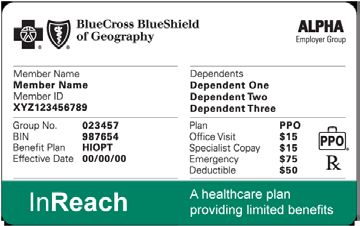
MARCH 2019

HOW TO IDENTIFY BLUECARD MEMBERS, Continued

Suitcase   BlueCard Member ID cards have a suitcase logo, either as an empty suitcase or as a
logos      PPO in a suitcase.

           The PPO in a suitcase logo indicates that the member is enrolled in either a PPO
           product or an Exclusive Provider Organization (EPO) product. In either case, you
           will be reimbursed according to Highmark’s PPO provider contract.

           Note: EPO products may have limited benefits out-of-area. The potential for such
           benefit limitations are indicated on the reverse side of an EPO ID card.

                                   The 3-character   The “PPO in a suitcase” logo may
                                   prefix.           appear in the lower right corner.

           One of the key elements of health care reform under the Affordable Care Act (ACA)
           is the public "exchange" — officially known as the Health Insurance Marketplace.
           The PPOB in a suitcase logo on an ID card indicates that the member has a Blue
           Plan PPO or EPO product from the exchange. These members have access to a
           Blue System PPO network referred to as “BlueCard PPO Basic.”

           Many Blue Plans have created a new BlueCard PPO Basic network; however,
           Highmark will utilize the same networks as we do for BlueCard PPO (see Page 3 of
           this manual). You will be reimbursed for covered services in accordance with your
           PPO contract with Highmark.

                                                                                Continued on next page

                       INTER-PLAN PROGRAMS | The BlueCard Information Center               9|P a g e
                              The BlueCard Program Provider Manual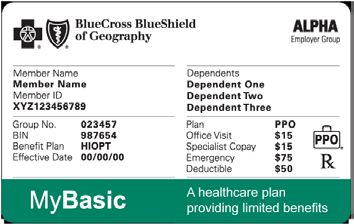
MARCH 2019

HOW TO IDENTIFY BLUECARD MEMBERS, Continued

Suitcase         The empty suitcase logo indicates that the member is enrolled in one of the
Logos            following products: traditional, Health Maintenance Organization (HMO), or Point
(continued)      of Service (POS). For members with these products, you will be reimbursed
                 according to Highmark’s traditional participating provider contract.

Blue Plan        Some Blue Plan ID cards do not have a suitcase logo. Those are the ID cards for
ID cards         Medicaid; State Children’s Health Insurance Programs (SCHIP) if administered as
without          part of a state’s Medicaid program; and Medicare complementary and
suitcase logos   supplemental products, also known as Medigap.

                 Government determined reimbursement levels apply to these products. While
                 Highmark routes all of these claims for out-of-area members to the member’s Blue
                 Plan, most of the Medicare complementary or Medigap claims are sent directly
                 from the Medicare intermediary to the member’s Blue Plan via the established
                 electronic Medicare crossover process.

                                                                               Continued on next page

                            INTER-PLAN PROGRAMS | The BlueCard Information Center        10 | P a g e
                                    The BlueCard Program Provider Manual
MARCH 2019
HOW TO IDENTIFY BLUECARD MEMBERS, Continued
BlueCard The BlueCard Managed Care/POS Program is for members who reside outside
Managed their Blue Plan’s service area. Unlike in the BlueCard PPO Program, the BlueCard
Care/POS Managed Care/POS members are enrolled in a Highmark network and have a
Program primary care physician (PCP).
members
You can recognize BlueCard Managed Care/POS members who are enrolled in a
Highmark network through the Member ID card as you do for all other BlueCard
members. The ID cards will include:
• The 3-character prefix at the beginning of the member’s ID number
• A local network identifier
• The blank suitcase logo
INTER-PLAN PROGRAMS | The BlueCard Information Center 11 | P a g e
The BlueCard Program Provider ManualMARCH 2019
MEDICAID PROGRAMS ADMINISTERED BY BLUE PLANS
Background Medicaid is a government program that provides free or low-cost health care to an
eligible population. States design their own Medicaid programs within federal
guidelines – eligible populations, cost-sharing, benefits, and other rules vary by
state. State Medicaid agencies contract with health insurers, including Blue Cross
and Blue Shield (BCBS) Plans, as Managed Care Organizations (MCOs) to
administer comprehensive Medicaid benefits.
Medicaid members have limited out-of-state benefits, generally covering only
emergent situations. In some cases, such as continuity of care, children attending
college out of state, or a lack of specialists in the member’s home state, a Medicaid
member may receive care in another state, and generally the care requires
authorization. Reimbursement for covered services is limited to the Medicaid
allowed amount established in the member’s home state.
Blue Plan Members enrolled in BCBS Medicaid plans are issued ID cards from the home plan
Medicaid where they reside, and are usually provided with state-issued Medicaid ID cards. It
ID cards is important to note that:
• Blue Plan Medicaid ID cards do not always indicate that a member has a
Medicaid product.
• Blue Plan Medicaid ID cards do not have the suitcase logo.
• The back of the Blue Plan Medicaid ID card must contain a disclaimer
indicating limited out-of-area benefits.
Providers should submit an eligibility inquiry if the ID card has no suitcase logo
and has a disclaimer with benefit limitations.
Obtaining You can obtain eligibility and benefit information for out-of-area BCBS Medicaid
eligibility members using the same tools as you would for other out-of-area Blue Plan
& benefits members:
and prior • Submit an eligibility inquiry using the NaviNet® BlueExchange® function;
authorization • Submit a HIPAA 270/271 electronic eligibility inquiry; or
• Call the BlueCard Eligibility line at 1-800-676-BLUE (2583).
Providers can also request prior authorization for out-of-area Blue Plan Medicaid
members using the same tools available for BlueCard:
• BlueExchange;
• BlueCard Eligibility Line at 1-800-676-BLUE (2583); and
• Electronic Provider Access (EPA) tool for pre-service review, including prior
authorization.
Continued on next page
INTER-PLAN PROGRAMS | The BlueCard Information Center 12 | P a g e
The BlueCard Program Provider ManualMARCH 2019
MEDICAID PROGRAMS ADMINISTERED BY BLUE PLANS, Continued
Claim Although BCBS Medicaid claims are processed through the BCBS Inter-Plan
submission and system, Medicaid is not officially part of the BlueCard Program since there is no
reimbursement network reciprocity and the locally negotiated rates do not apply to Medicaid
claims. However, you still submit out-of-area Blue Plan Medicaid claims to
Highmark as you would submit BlueCard claims, and you will receive
reimbursement from Highmark. You will be reimbursed according to the
member’s home state Medicaid fee schedule, which may or may not be equal to
what you are accustomed to receiving for the same service in your state.
When you see a Blue Plan Medicaid member from another state, you must
accept the Medicaid allowed amount applied in the member’s home state
even if you do not participate in Medicaid in your own state. Federal
regulations limit providers to the Medicaid allowed amount applicable in the
member’s home state as payment in full. Billing Medicaid members for the
amount between the Medicaid allowed amount and charges for Medicaid-covered
services is specifically prohibited by Federal regulations (42 CFR 447.15).
In some circumstances, a state Medicaid program will have an applicable copay,
deductible, or coinsurance applied to the member’s plan. You may collect this
amount from the member as applicable. Note that the coinsurance amount is
based on the Medicaid fee schedule in the member’s home state for that service.
If you provide services to a Medicaid member who is not covered by Medicaid, you
will not be reimbursed. In some states, you may bill a Medicaid member for
services not covered by Medicaid if you have obtained written approval from the
member in advance of services being rendered.
Medicaid Some states require that out-of-state providers enroll in their state’s Medicaid
provider program in order to be reimbursed. Some of these states may accept a provider’s
enrollment Medicaid enrollment in the state where they practice to fulfill this requirement. To
requirements view provider enrollment requirements for BCBS Medicaid states, please see the
Medicaid Provider Enrollment Requirements by State. (This document is also
available in the BlueCard Information Center on the Provider Resource Center;
select INTER-PLAN PROGRAMS from the main menu.)
If you are required to enroll in another state’s Medicaid program, you should
receive notification upon submitting an eligibility or benefit inquiry. You should
enroll in the state’s Medicaid program before submitting the claim. If you submit a
claim without enrolling, your Medicaid claims will be denied and you will receive
information from Highmark regarding the Medicaid provider enrollment
requirements. You will be required to enroll before the Medicaid claim can be
processed and before you may receive reimbursement.
Continued on next page
INTER-PLAN PROGRAMS | The BlueCard Information Center 13 | P a g e
The BlueCard Program Provider ManualMARCH 2019
MEDICAID PROGRAMS ADMINISTERED BY BLUE PLANS, Continued
Required data Medicaid MCOs are required to report specific Medicaid encounter information to
elements for their states and may incur a financial penalty if the data is not submitted or
Medicaid incomplete. State Medicaid encounter data reporting requirements vary from
claims state to state. When billing for a Medicaid member, please remember to check the
Medicaid website of the state where the member resides to understand the state’s
Medicaid requirements for reporting encounter data elements.
The data elements identified below are required on all out-of-area Blue Plan
Medicaid claims so that BCBS Medicaid MCOs are able to comply with encounter
data reporting applicable to their respective state.
Effective March 2016, applicable Medicaid claims submitted without these data
elements will be denied:
• National Drug Code (NDC)
• Rendering Provider Identifier (NPI)
• Billing Provider Identifier (NPI)
Applicable Medicaid claims submitted without these data elements may be
pended or denied until the required information is received:
Billing Provider (Second) Address Line Ordering Provider Identifier and
Billing Provider Middle Name or Initial Identification Code Qualifier
(Billing) Provider Taxonomy Code Attending Provider NPI
(Rendering) Provider Taxonomy Code Operating Physician NPI
(Service) Laboratory or Facility Postal Claim or Line Note Text
Zone or ZIP Code Certification Condition Applies
(Ambulance) Transport Distance Indicator and Condition Indicator
(Early and Periodic Screening,
(Service) Laboratory Facility Name Diagnosis and Treatment (EPSDT))
(Service) Laboratory or Facility State or Service Facility Name and Location
Province Code Information
Value Code Amount Ambulance Transport Information
Value Code Patient Weight
Condition Code Ambulance Transport Reason Code
Occurrence Codes and Date Round Trip Purpose Description
Occurrence Span Codes and Dates Stretcher Purpose Description
Referring Provider Identifier and
Identification Code Qualifier
Continued on next page
INTER-PLAN PROGRAMS | The BlueCard Information Center 14 | P a g e
The BlueCard Program Provider ManualMARCH 2019
MEDICAID PROGRAMS ADMINISTERED BY BLUE PLANS, Continued
IMPORTANT: National Drug Codes (NDC s) are required on all applicable out-of-area Blue Plan
NDC reporting Medicaid claims, including inpatient, outpatient, and professional; claims
requirements submitted without applicable NDCs reported will be denied.
CONVERTING NDCS FROM 10-DIGITS TO 11-DIGITS
Many NDCs are displayed on drug packaging in a 10-digit format. Proper billing of
an NDC requires an 11-digit number in a 5-4-2 format. Converting NDCs from a 10-
digit to an 11-digit format requires a strategically placed zero, dependent upon
the 10-digit format.
The following table shows common 10-digit NDC formats indicated on packaging
and the associated conversion to an 11-digit format, using the proper placement
of a zero. The correctly formatted additional “0” is in a bold font and underlined
in the following example. Note that hyphens indicated below are used solely to
illustrate the various formatting examples for NDCs. Do not use hyphens when
entering the actual data in your paper claim form.
CONVERTING NDCs FROM 10-DIGITS TO 11-DIGITS
10-Digit 11-Digit
10-Digit Format 11-Digit 11-Digit Format Actual 10-Digit
Format on Conversion
Example Format Example NDC Example
Package of Example
0002-7597-01
4-4-2 9999-9999-99 5-4-2 09999-9999-99 Zyprexa® 10mg 00002759701
Vial
50242-040-62
5-3-2 99999-999-99 5-4-2 99999-0999-99 50242004062
Xolair® 150mg vial
60575-4112-1
5-4-1 99999-9999-9 5-4-2 99999-9999-09 60575411201
Synagis® 50mg vial
INTER-PLAN PROGRAMS | The BlueCard Information Center 15 | P a g e
The BlueCard Program Provider ManualMARCH 2019
INTERNATIONAL BLUE PLANS
Overview The Blue Cross and Blue Shield Association licenses Blue Plans outside of the
United States. International Licensees currently include the following:
• Blue Cross Blue Shield (BCBS) of U.S. Virgin Islands
• BlueCross & BlueShield of Uruguay
• Blue Cross and Blue Shield of Panama
• Blue Cross Blue Shield of Costa Rica
If in doubt, always check with Highmark as the list of International Licensees may
change.
International The ID cards from International Licensees will also contain 3-character prefixes and
Blue Plan may or may not have a benefit product logo. Please treat these members the
ID cards same as domestic Blue Plan members (e.g., do not collect any payment from the
member beyond cost-sharing amounts such as deductible, coinsurance, and
copayment). Submit all claims for these international members to Highmark.
Front of card: Back of card:
Canadian The Canadian Association of Blue Cross Plans and its member Plans are separate
Association of and distinct from the Blue Cross and Blue Shield Association (BCBSA) and its
Blue Cross member Plans in the United States.
Plans are
separate and Claims for members of the Canadian Blue Cross Plans are not processed
distinct through the BlueCard Program. Please follow the instructions of these Canadian
plans for servicing their members. Instructions may be provided on their ID cards.
The Blue Cross Plans in Canada are:
• Alberta Blue Cross • Ontario Blue Cross • Saskatchewan Blue Cross
• Manitoba Blue Cross • Quebec Blue Cross • Pacific Blue Cross
• Medavie Blue Cross
INTER-PLAN PROGRAMS | The BlueCard Information Center 16 | P a g e
The BlueCard Program Provider ManualMARCH 2019
GEOBLUE TRAVEL INSURANCE
Overview GeoBlueSM health plans help travelers and expatriates get high quality, safe, and
convenient care around the world and are offered in cooperation with many Blue
Cross and Blue Shield companies, including Highmark. Through innovative product
offerings, including concierge-level service and unsurpassed mobile technology,
members who are living or working abroad can find carefully selected doctors and
hospitals in more than 180 countries.
These plans provide medical coverage outside the United States for ongoing
conditions, preventive health care, or an unexpected medical crisis. GeoBlue
enables participating Blue Plans to provide their clients traveling the world with the
care they need, when and where they need it, from trusted doctors and hospitals.
GeoBlue is the trade name for the international health insurance programs of
Worldwide Insurance Services, an independent licensee of the Blue Cross Blue
Shield Association.
Group Employers can obtain group plans for their employees that provide either long-
plans term or short-term coverage.
• GeoBlue ExpatSM combines comprehensive global benefits with medical
assistance services. This plan is designed for international assignees and
their families when they leave their home countries for six months or more.
• GeoBlue TravelerSM is offered for international business travelers who are
outside their home country for trips lasting up to one hundred eighty (180)
days. It provides group supplemental medical benefits and services for
international business travelers.
Individual GeoBlue also offers a full array of travel and international medical plans for
plans individuals with global lifestyles whether for just a two week leisure trip or a two
year work assignment. General plans include:
• Voyager offers coverage in addition to a primary health plan for a single trip
of international travel for up to six months.
• Trekker provides coverage for unlimited trips within a 12-month period with
a limit to the number of days per trip and also requires a primary health plan.
• Xplorer is long-term international health insurance for expatriates that
provides coverage both inside and outside the United States.
GeoBlue specialty plans are also available that provide discounted coverage for a
single trip for a group of five or more and long-term coverage for students and
faculty, maritime crews, and missionaries.
INTER-PLAN PROGRAMS | The BlueCard Information Center 17 | P a g e
The BlueCard Program Provider ManualMARCH 2019
LIMITED BENEFIT PRODUCTS
Overview Verifying Blue Plan patients’ benefits and eligibility is now more important than
ever since new products and benefit types have entered the market. In addition to
patients who have traditional Blue PPO, HMO, POS, or other coverage with
typically high lifetime coverage limits (i.e., $1million or more), you may now see
patients whose annual benefits are limited to $50,000 or less.
Currently, Highmark does not offer the limited benefit plans described here to our
members; however, you may see patients with these limited benefit plans who are
covered by another Blue Plan.
How to Patients with Blue limited benefits coverage carry ID cards that may have one or
recognize more of the following indicators:
members • Product name will be listed such as InReach or MyBasic;
with limited
• A green strip at the bottom of the card;
benefits
products • A statement either on the front or back of the ID card stating that this is a
limited benefit product;
• A black cross and/or shield to help differentiate it from other
identification cards.
These Blue limited benefits ID cards may look like this:
Verify In addition to obtaining a copy of the patient’s ID card, and regardless of the
eligibility benefit product type, we recommend that you verify the patient’s eligibility and
and benefits benefits. You may do so electronically or you may call the 1-800-676-BLUE
Eligibility Line for out-of-area members.
Both electronically and via telephone, you will receive the patient’s accumulated
benefits to help you understand the remaining benefits left for the member. If the
cost of services extends beyond the patient’s benefit coverage limit, inform the
patient of any additional liability they might have.
Continued on next page
INTER-PLAN PROGRAMS | The BlueCard Information Center 18 | P a g e
The BlueCard Program Provider ManualMARCH 2019
LIMITED BENEFIT PRODUCTS, Continued
If benefits Annual benefit limits should be handled in the same manner as any other limits on
are exhausted the medical coverage. Any services beyond the covered amounts or the number of
before the end treatments are member liability.
of treatment
We recommend you inform the patient of any potential liability they might have
as soon as possible.
INTER-PLAN PROGRAMS | The BlueCard Information Center 19 | P a g e
The BlueCard Program Provider ManualMARCH 2019
REFERENCED BASED BENEFITS
Overview With health costs increasing, employers are considering alternative approaches to
control health care expenses by placing a greater emphasis on employee
accountability by encouraging members to take a more active role in making
health care decisions. Blue Plans have begun to introduce Reference Based
Benefits to self-funded group accounts that limit certain (or specific) benefits to a
dollar amount that incents members to actively shop for health care for those
services.
The goal of Reference Based Benefits is to engage members in their health choices
by giving them an incentive to shop for cost-effective providers and facilities.
Reference Based Benefit designs hold the member responsible for any expenses
above a calculated “Reference Cost” ceiling for a single episode of service.
Due to the possibility of increased member cost-sharing, Referenced Based
Benefits will incent members to use Plan transparency tools, like the National
Consumer Cost Tool (NCCT), to search for and identify services that can be
performed at cost-effective providers and/or facilities that charge at or below the
reference cost ceiling.
Reference The Blue Plan will pay up to a predetermined amount, called a “Reference Cost,”
cost for specific procedures. If the allowed amount exceeds the reference cost, the
excess amount becomes the member’s responsibility.
The Blue Cross Blue Shield Association (BCBSA) calculates reference costs on a
state by state basis with each state representing a “cost region” with its own
reference costs. The reference costs are established in a cost region based on
claims data provided by the Blue Plan(s) in that region. Reference costs are
updated on an annual basis.
Applicable The Blue Plan and the employer group collaborate to define the services for which
services Referenced Based Benefits will apply. Services could include inpatient services,
outpatient procedures, and diagnostic services; and services may vary by
employer group with coverage under the same Blue Plan. Reference Based
Benefits are not applicable to any service that is urgent or emergent.
Verifying When you submit an electronic eligibility and benefits inquiry prior to performing
coverage services, you will be notified if a member is covered under Reference Based Benefits.
Additionally, you may call the BlueCard Eligibility phone number to verify if a
member is covered under Referenced Based Benefits:
1-800-676-BLUE (1-800-676-2583)
Continued on next page
INTER-PLAN PROGRAMS | The BlueCard Information Center 20 | P a g e
The BlueCard Program Provider ManualMARCH 2019
REFERENCED BASED BENEFITS, Continued
Claims, Reference Based Benefits will not modify the current contracting amount agreed
payment, on between you and Highmark. You should submit claims to Highmark under your
and member current billing practices. When you receive payment for services, the claim will pay
responsibility per the member’s benefits. Providers can expect to receive their contract rate on
all procedures where Reference Based Benefits apply.
When Reference Based Benefits are applied and the cost of the services rendered
is less than the cost ceiling, then Highmark will pay eligible benefits as it has in the
past. The member continues to pay their standard cost-sharing amounts in the
forms of coinsurance, copay, or deductible as normal.
If the cost of the services rendered exceeds the reference cost ceiling, then
Highmark will pay benefits up to that reference cost ceiling. The member
continues to pay their standard cost-sharing amounts in the forms of coinsurance,
copay, or deductible, as well as any amount above the reference cost ceiling up to
the contractual amount.
Example 1: If a member has a reference cost of $500 for an MRI and the allowable
amount is $700, then Highmark will pay up to the $500 for the procedure and the
member is responsible for the $200.
Example 2: If a member has a reference cost ceiling of $600 for a CT scan and the
allowable amount is $400, then Highmark will pay up to the $400 for the
procedure.
Consumer Since members are subject to any charges above the Reference Cost up to the
transparency contractual amount for particular services, members may ask you to estimate how
tools much a service will cost. Also, you can direct members to view their Blue Plan’s
transparency tools to learn more about the cost established for an episode of care.
The National Consumer Cost Tool (NCCT) is a national effort by Blue Cross and/or
Blue Shield Plans across the country to assist members in navigating the health
care delivery system. A national database houses pre-calculated cost estimates
submitted by Blue Plans, which allows members to view the total cost of specific
medical procedures and common office visits for providers across the country.
Note: Highmark members have access to this information through the Care Cost
Estimator which is available to them by logging into their account on Highmark’s
websites.
If you have any questions regarding Reference Based Benefits, please contact the
Questions?
Highmark Provider Service Center.
INTER-PLAN PROGRAMS | The BlueCard Information Center 21 | P a g e
The BlueCard Program Provider ManualMARCH 2019
CONSUMER DIRECTED HEALTHCARE AND HEALTH CARE DEBIT
CARDS
Overview Consumer Directed Healthcare (CDHC) is a broad term that refers to a movement
in the health care industry to empower members, reduce employer costs, and
change consumer health care purchasing behavior.
Health plans that offer CDHC provide the member with additional information to
make an informed and appropriate health care decision through the use of
member support tools, provider and network information, and financial
incentives.
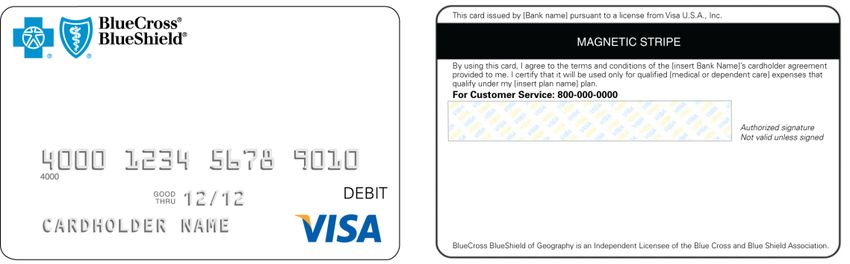
Health care Members who have CDHC plans often have health care debit cards that allow
debit cards them to pay for out-of-pocket costs using funds from their Health Reimbursement
Account (HRA), Health Savings Account (HSA), or Flexible Spending Account (FSA).
All three are types of tax-favored accounts offered by the member’s employer to
pay for eligible expenses not covered by the health plan.
Some cards are “stand-alone” debit cards to cover out-of-pocket costs while others
also serve as a Member ID card with the member’s ID number. These debit cards
can help you simplify your administration process and can potentially help:
• Reduce bad debt
• Reduce paper work for billing statements
• Minimize bookkeeping and patient account functions for handling
cash and checks
• Avoid unnecessary claim payment delays
In some cases, the card will display the Blue Cross and Blue Shield trademarks
along with the logo from a major debit card such as MasterCard® or Visa.®
Example: Front of card: Back of card:
Stand-alone
health care
debit card
Continued on next page
INTER-PLAN PROGRAMS | The BlueCard Information Center 22 | P a g e
The BlueCard Program Provider ManualMARCH 2019
CONSUMER DIRECTED HEALTHCARE AND HEALTH CARE DEBIT
CARDS, Continued
Example: Front of card: Back of card:
Combined
health care
debit card and
Member ID
card
Health care The health care debit card includes a magnetic strip allowing providers to swipe
debit card the card to collect the member’s cost-sharing amount (i.e., copayment). With
details health care debit cards, members can pay for copayments and other out-of-pocket
expenses by swiping the card through any debit card swipe terminal. The funds
will be deducted automatically from the member’s appropriate HRA, HSA, or FSA
account.
Combining a health insurance ID card with a source of payment is an added
convenience to members and providers. Members can use their cards to pay
outstanding balances on billing statements. They can also use their cards via
phone in order to process payments. In addition, members are more likely to carry
their current ID cards because of the payment capabilities.
If your office currently accepts credit card payments, there is no additional cost or
equipment necessary. The cost to you is the same as the current cost you pay to
swipe any other signature debit card.
Helpful The following tips will be helpful when you are presented with a health care debit
tips card:
• Carefully determine the member’s financial responsibility before
processing payment. You can access the member’s benefits and
accumulated deductible by using online electronic capabilities or by
contacting the BlueCard Eligibility Line at 1-800-676-BLUE (2583).
• You may use the debit card for member responsibility (i.e., copay) for
medical services provided in your office. Please do not use the card to
process full payment upfront.
Continued on next page
INTER-PLAN PROGRAMS | The BlueCard Information Center 23 | P a g e
The BlueCard Program Provider ManualMARCH 2019
CONSUMER DIRECTED HEALTHCARE AND HEALTH CARE DEBIT
CARDS, Continued
Helpful • You may choose to forego using the debit card on the date of service and
Tips wait for the claims to be processed by Highmark to determine the
(continued) member’s responsibility.
• All services, regardless of whether or not you have collected the member
responsibility at the time of service, must be billed to Highmark for proper
benefit determination and to update the member’s claim history.
If you have any questions about the member’s benefits, check eligibility and
Questions?
benefits electronically or by calling 1-800-676-BLUE (2583).
For questions about the health care debit card processing instructions or payment
issues, please contact the toll-free debit card administrator’s number on the back
of the card.
INTER-PLAN PROGRAMS | The BlueCard Information Center 24 | P a g e
The BlueCard Program Provider ManualMARCH 2019
HEALTH INSURANCE MARKETPLACES
Overview The Patient Protection and Affordable Care Act of 2010 provides for the
establishment of Health Insurance Marketplaces (or “Exchanges”) in each state
where individuals and small businesses can purchase qualified coverage. These
exchanges are websites through which eligible consumers may purchase
insurance.
The Marketplaces are intended to create a more organized and competitive
marketplace for health insurance by offering members a choice of health
insurance plans, establishing common rules regarding the offering and pricing of
insurance, and providing information to help consumers better understand the
options available to them. The Marketplaces will enhance competition in the
health insurance market, improve choice of affordable health insurance, and give
individuals and small businesses purchasing power comparable to that of large
businesses.
The Marketplaces offer consumers a variety of health insurance plans. Product and
Plan information, such as covered services and cost sharing (i.e., deductibles,
coinsurance, copayments, and out-of-pocket limits) are organized in a manner
that makes comparisons across health insurance plans easier for consumers.
In conjunction with offering a choice of health insurance plans, the Marketplace is
intended to provide consumers with transparent information about health
insurance plan provisions such as premium costs and covered benefits as well as a
plan’s performance in encouraging wellness, managing chronic illnesses, and
improving consumer satisfaction.
What Is My Service Area?
Marketplace Each state was given the option to set up its own “state-based” Marketplace
options approved by the Department of Health and Human Services (HHS) for marketing
products to individual consumers and small employers. If the state did not set up a
state-run marketplace, HHS has established either a federally-facilitated
Marketplace or a Federal partnership Marketplace in the state.
Blue Plans that offer products on the Marketplaces collaborate with the state and
federal governments for eligibility, enrollment, reconciliation, and other
operations to ensure that consumers can seamlessly enroll in individual and
employer-sponsored health insurance products.
Pennsylvania has a Federally Facilitated Exchange (FFE) marketplace. The federal
government, mainly through the Department of Health and Human Services, will
operate nearly all of the functions. It will verify eligibility for buying coverage,
determine subsidies, and oversee enrollment, plan management, consumer
assistance, and financial management.
Continued on next page
INTER-PLAN PROGRAMS | The BlueCard Information Center 25 | P a g e
The BlueCard Program Provider ManualMARCH 2019
HEALTH INSURANCE MARKETPLACES, Continued
Marketplace Delaware and West Virginia are two of the seven states that formed state-federal
options partnerships with the states operating the plan management and consumer
(continued) assistance functions of the Marketplace.
What Is My Service Area?
OPM Under the Affordable Care Act (ACA) of 2010, the Office of Personnel Management
Multi-State (OPM) was required to offer OPM-sponsored products on the Marketplaces
Plan Program beginning in 2014. For a coverage effective date of January 1, 2015, Blue Cross and
Blue Shield Plans participated in this program by offering these Multi-State Plans
on Marketplaces in 33 states and the District of Columbia, including Highmark in
Pennsylvania, Delaware, and West Virginia. The ACA requires these products to be
offered across all states and the District of Columbia by 2017.
These products are similar to the other Qualified Health Plan products offered on
the Marketplaces. Generally, all of the same requirements that apply to other State
Marketplace products also apply to these Multi-State Plan products.
Exchange The Patient Protection and Affordable Care Act (PPACA) mandates a three-month
Individual grace period for individual members who receive a premium subsidy from the
Grace Period government and are delinquent in paying their portion of premiums. The grace
period applies as long as the individual has previously paid at least one month’s
premium within the benefit year. The health insurance plan is only obligated to
pay claims for services rendered during the first month of the grace period. PPACA
clarifies that the health insurance plan may pend claims during the second and
third months of the grace period.
Blue Plans are required to either pay or pend claims for services rendered during
the second and third month of the grace period. Consequently, if a member is
within the last two months of the federally-mandated individual grace period,
providers may receive a notification from Highmark indicating that the member is
in the grace period.
Claims and Providers should follow current practices with Highmark for claims processing and
utilization handling of Marketplace claims. You can make claim status inquiries through
review Highmark or by submitting an electronic inquiry to Highmark.
If authorization/precertification is needed, you should follow the same protocol as
you do for any other BlueCard members.
INTER-PLAN PROGRAMS | The BlueCard Information Center 26 | P a g e
The BlueCard Program Provider ManualMARCH 2019
BLUE EXCHANGE FOR INQUIRIES AND AUTHORIZATIONS
Overview We understand you need the right tools and resources to provide the best care to
out-of-area Blue Plan members. To help you obtain information for out-of-area
Blue Plan members, Highmark offers several options to assist you with
administrative processes, including BlueExchange.®
BlueExchange was developed by the Blue Cross Blue Shield Association as a
gateway for routing inquiries about out-of-area members between providers and
the member’s Blue Plan. BlueExchange transactions submitted through Highmark
are routed to the member’s Blue Plan based on the prefix.
BlueExchange simplifies your exchanges for out-of-area members using HIPAA-
compliant transactions. There are three primary types of transactions that can be
routed via BlueExchange:
• Eligibility and Benefits Inquiry and Response;
• Claim Status Inquiry and Response; and
• Referral/Authorization Requests.
Accessing Highmark provides you with convenient, easy-to-use access to BlueExchange via
BlueExchange NaviNet®. Each of these transactions can be initiated through Highmark’s
via NaviNet BlueExchange portal within NaviNet.
The BlueExchange (Out-of-Area) option in the Plan Central menu allows you to
choose from the three transactions.
Continued on next page
INTER-PLAN PROGRAMS | The BlueCard Information Center 27 | P a g e
The BlueCard Program Provider ManualMARCH 2019
BLUE EXCHANGE FOR INQUIRIES AND AUTHORIZATIONS, Continued
NaviNet NaviNet User Guides can provide helpful tips on using the BlueExchange
User Guides transactions. To access, click on Help in the navigation panel at the top of the
NaviNet screen to open the NaviNet Support window. Select the applicable
Highmark plan for your service area to access all available User Guides.
Electronic If your office has the capability, the following transactions can be submitted to
transactions Highmark for out-of-area members via your practice management software and
routed via routed via BlueExchange:
BlueExchange • 270 for Eligibility and Benefits
• 276 for Claim Status
• 278 for Utilization Review
Highmark will route both the inquiry and response transactions between you and
the member’s Blue Plan via BlueExchange.
INTER-PLAN PROGRAMS | The BlueCard Information Center 28 | P a g e
The BlueCard Program Provider ManualMARCH 2019
BLUECARD ELIGIBILITY AND BENEFITS VERIFICATION
Overview As a Highmark participating provider, you have three options for verifying
eligibility for members of other Blue Plans:
• Submit an electronic HIPAA 270 transaction to Highmark;
• Initiate a BlueExchange® inquiry within NaviNet®; or
• Call the BlueCard® Eligibility line at 1-800-676-BLUE (2583).
Electronic Electronic transactions and online communications have become integral to
transactions health care, and they are the preferred method of interaction between providers
preferred and Highmark. Today’s technology can help you simplify business operations, cut
costs, and increase efficiency in your office.
Electronic options for verifying eligibility and benefits for out-of-area Blue Plan
members provide a very quick turnaround -- with responses in seconds. You can
use the following electronic options for verifying eligibility and benefits for an out-
of-area member:
• Submit a HIPAA 270 Eligibility Inquiry transaction to Highmark:
Highmark will route both the inquiry and the 271 response transactions
between you and the member’s Blue Plan via BlueExchange; or
• Initiate a BlueExchange inquiry from within NaviNet: The BlueExchange
Eligibility and Benefits Inquiry transaction allows users to access up-to-date
eligibility and benefits information for out-of-area members.
BlueCard For those offices that are not electronically-enabled, the Blue Cross Blue Shield
Eligbility Association provides a toll-free phone line for eligibility and benefit inquiries for
phone line BlueCard members. Contact BlueCard Eligibility at 1-800-676-BLUE (2583).
• English and Spanish speaking phone operators are available to assist you.
• Blue Plans are located throughout the country and may operate on a
different time schedule than Highmark; you may be transferred to a voice
response system linked to customer enrollment and benefits outside that
Plan’s regular business hours.
• The BlueCard Eligibility Line is for eligibility, benefit, and precertification
and referral authorization inquiries only; it should not be used for claim
status. Direct all claim inquiries to Highmark.
Continued on next page
INTER-PLAN PROGRAMS | The BlueCard Information Center 29 | P a g e
The BlueCard Program Provider ManualMARCH 2019
BLUECARD ELIGIBILITY AND BENEFITS VERIFICATION, Continued
Electronic Some Blue Cross Blue Shield Plans have implemented electronic health ID cards to
health facilitate a seamless coverage and eligibility verification process.
ID cards • Electronic health ID cards enable electronic transfer of core
subscriber/member data from the ID card to the provider’s system.
• A Blue Plan electronic health ID card has a magnetic stripe on the back of
the card, similar to what you can find on the back of a credit or debit card.
The subscriber/member electronic data is embedded on the third track of
the 3-track magnetic stripe.
• Core subscriber/member data elements embedded on the third track of
the magnetic stripe include: subscriber/member name, subscriber/member
ID, subscriber/member date of birth, and Plan ID.
• Providers will need a track 3 card reader in order for the data on track 3 of
the magnetic stripe to be read (the majority of card readers in provider
offices only read tracks 1 and 2 of the magnetic stripe; tracks 1 and 2 are
proprietary to the financial industry).
• The Plan ID data element identifies the health plan that issued the ID card.
Plan ID will help providers facilitate health transactions among various
payers in the marketplace.
• An example of an electronic ID card:
Front of card Back of card
INTER-PLAN PROGRAMS | The BlueCard Information Center 30 | P a g e
The BlueCard Program Provider ManualMARCH 2019
UTILIZATION REVIEW
Introduction Traditionally, many Blue Plan members have been held responsible for obtaining
pre-service review from their Home Plan when receiving inpatient and outpatient
care in another Blue Plan’s service area. If authorization is not obtained, the
member could be subject to financial penalties.
Pre-service Pre-service review is defined as the process of obtaining authorization for medical
review defined treatment prior to select procedures and services. The process is commonly
referred to as precertification, preauthorization, notification, and/or pre-admission.
Inpatient Effective July 1, 2014, under a new Blue Cross Blue Shield Association (BCBSA)
services initiative, all Blue Plans must require participating providers to obtain pre-service
review for inpatient facility services for out-of-area members. In addition,
members are held harmless when pre-service review is required and not obtained
by the provider for inpatient facility services (unless an account receives an
approved exception).
These requirements apply to all fully-insured health benefit plans. However, if a
self-funded employer group wishes to keep member precertification penalties in
place, a formal exception can be filed with the BCBSA. If an account receives an
approved exception, a member penalty could apply if pre-service review is not
obtained for inpatient services.
Highmark provider contracts require participating providers to obtain pre-service
review for inpatient facility services for our members and also out-of-area
BlueCard® members. Highmark participating providers are also required to hold
members harmless if the member’s plan requires pre-service review and the
provider did not attempt to acquire an authorization.
This initiative also requires Blue Plan participating providers to keep the Home
Plan informed of changes in a member’s condition. Providers must notify the
member’s Home Plan within forty-eight (48) hours when a change to the original
pre-service review occurs, and within seventy-two (72) hours for emergency
and/or urgent admissions.
Note: This policy does not affect medical necessity. Services must still be medically
necessary, appropriate, and a covered benefit. If, prior to service or care, the
provider requests authorization and it is denied, a Highmark participating provider
can bill the member if the member was informed of the denial and agreed in
writing to be responsible for payment for the service or care.
Continued on next page
INTER-PLAN PROGRAMS | The BlueCard Information Center 31 | P a g e
The BlueCard Program Provider ManualYou can also read


