DELIVERING A MEANINGFUL AND CONCISE INTEGRATED REPORT: AN INFORMATION PAPER - integrated reporting committee (irc) of south africa
←
→
Page content transcription
If your browser does not render page correctly, please read the page content below
integrated reporting committee (irc) of south africa

DELIVERING A MEANINGFUL AND
CONCISE INTEGRATED REPORT:
AN INFORMATION PAPER

www.integratedreportingsa.org
CONTENTS
             FOREWORD                                                                                                                                                                   1
             PURPOSE OF THIS PAPER                                                                                                                                                      2
             1. ALIGNMENT | OPTIMIZE AND ALIGN THE REPORTING SUITE                                                                                                                      4
             2. CONNECTIVITY | CONNECT THE INFORMATION IN THE CONTENT ELEMENTS                                                                                                          7
             3. CONCISENESS | BALANCE CONCISENESS AND COMPREHENSIVENESS                                                                                                                 9
             4. KPIs | EXPLAIN KPIs AND THE LINK TO VALUE                                                                                                                           11
             5. OUTCOMES | REPORT CLEARLY ON OUTCOMES AND TRADE-OFFS                                                                                                                15
             6. TECHNICAL REQUIREMENTS | APPLY ALL  FRAMEWORK REQUIREMENTS                                                                                                      19
             ACKNOWLEDGEMENTS                                                                                                                                                       20
             ABOUT THE IRC OF SOUTH AFRICA                                                                                                                                          21
             IRC OF SOUTH AFRICA MEMBERS                                                                                                                                            22

           978-0-6399597-3-3
           Copyright © January 2021 Integrated Reporting Committee (IRC) of South Africa
           All rights reserved. Permission is granted to make copies of this work provided each copy bears the above copyright information.

                                                                                                                                 INTEGRATED REPORTING COMMITTEE (IRC) OF SOUTH AFRICA
FOREWORD            PURPOSE OF        ALIGNMENT |                CONNECTIVITY |                   CONCISENESS |                 KPIs |              OUTCOMES |       TECHNICAL REQUIREMENTS |   ACKNOWLEDGEMENTS   ABOUT THE IRC OF   IRC OF SOUTH AFRICA
                    THIS PAPER        OPTIMIZE AND ALIGN         CONNECT THE INFORMATION          BALANCE CONCISENESS           EXPLAIN KPIs AND    REPORT CLEARLY   APPLY ALL  FRAMEWORK                      SOUTH AFRICA       MEMBERS
                                      THE REPORTING SUITE        IN THE CONTENT ELEMENTS          AND COMPREHENSIVENESS         THE LINK TO VALUE   ON OUTCOMES      REQUIREMENTS
                                                                                                                                                    AND TRADE-OFFS

FOREWORD
After 10 years of integrated reporting in South Africa we can be proud of the strides that have been made. This is thanks to the commitment of the preparers and many others across the reporting ecosystem who play
a role in taking integrated reporting forward.

Now is not the time, however, to rest on our laurels. Organizations are continuously being challenged to evolve and respond to the changing environment in which they operate and strategies are continuously tested and
adjusted to respond to internal and external pressures, evolving risks and new opportunities. The challenges faced across the globe are increasingly unprecedented and the types of risks coming to bear, as underscored
by the World Economic Forum’s annual global risks reports1, emphasize the importance of integrated thinking – for now and into the future. The prevalence of environmental and social risks reinforces the need for
organizations, more than ever before, to recognize the interconnectedness in society, especially related to economic, social, health and environmental matters and to act accordingly. Organizations do not operate in silos.
They rely on and effect multiple capitals: reinforcing the imperative that governing bodies and management have to integrate the six capitals into strategy, risks and opportunities and decision-making. This is recognized
in the King IV Report on Corporate GovernanceTM for South Africa, 2016 (King IV2) and in the International  Framework (2021) ( Framework).

Effective communication through integrated reporting allows an organization to explain how it responds to the ever-changing and often challenging context in which it operates. This openness and transparency enhances
credibility and trust and allows stakeholders to form a view of the quality of the organization’s leadership, strategy and performance. The integrated report is an opportunity to convey how the governing body is leading the
organization, especially through difficult times, and to explain to what extent it creates, preserves or erodes value.

A quality integrated report has meaningful information presented in a connected and concise manner. It tells the complete story of the organization’s process through which value is created, preserved or eroded. This
process is not static – and neither is reporting. Organizations do, and should, strive for continuous improvement in their integrated report. By regularly evaluating the disclosures in the integrated report, the governing body,
management and their teams have the opportunity to reassess aspects of their business and how well integrated thinking is embedded, particularly in the context of an ever-changing landscape.

The effort to continuously improve is a key component of a quality integrated report: effective communication is integral to the governing body’s duty of accountability. Its input from initial planning to final approval is
essential for the report to successfully communicate how the organization creates, preserves or erodes value. The content of this Information Paper (Paper) will assist in this regard.

Professor Mervyn E. King SC
Chairman of the Integrated Reporting Committee (IRC) of South Africa
Chairman Emeritus of the International Integrated Reporting Council (IIRC)

January 2021

1
    World Economic Forum, Global Risks
2
    Copyright and trademarks are owned by the Institute of Directors in South Africa NPC, and all of its rights are reserved.

                                                                                                                                                                                                INTEGRATED REPORTING COMMITTEE (IRC) OF SOUTH AFRICA        1
FOREWORD            PURPOSE OF        ALIGNMENT |               CONNECTIVITY |                  CONCISENESS |           KPIs |              OUTCOMES |       TECHNICAL REQUIREMENTS |   ACKNOWLEDGEMENTS     ABOUT THE IRC OF   IRC OF SOUTH AFRICA
                    THIS PAPER        OPTIMIZE AND ALIGN        CONNECT THE INFORMATION         BALANCE CONCISENESS     EXPLAIN KPIs AND    REPORT CLEARLY   APPLY ALL  FRAMEWORK                        SOUTH AFRICA       MEMBERS
                                      THE REPORTING SUITE       IN THE CONTENT ELEMENTS         AND COMPREHENSIVENESS   THE LINK TO VALUE   ON OUTCOMES      REQUIREMENTS
                                                                                                                                            AND TRADE-OFFS

PURPOSE OF THIS PAPER
The IRC of South Africa developed this Paper to provide practical considerations on how to better deliver a meaningful and concise
integrated report in the context of the  Framework.
A meaningful integrated report transparently explains the organization’s process through which value is created,
preserved or eroded, over the short, medium and long term through complete and balanced information. It is concise,                                 KING IV
readable, understandable, useful to stakeholders and contains all material information. In short, a meaningful and                                  King IV encourages transparent and meaningful reporting as a tenet of good corporate
concise integrated report exemplifies the Guiding Principles and Content Elements of the  Framework.
                                                                                                                                                    governance. Principle 5 states: The governing body should ensure that reports issued
The experience of South African organizations in preparing integrated reports over the past 10 years lends itself
                                                                                                                                                    by the organization enable stakeholders to make informed assessments of the
to sharing learnings from a continuous cycle of improvement. This Paper identifies six focus areas that contribute                                  organization’s performance, and its short, medium and long-term prospects.
to a meaningful and concise integrated report. The six focus areas are derived from the observed characteristics
of quality integrated reports – as well as from the weaknesses noted in other integrated reports.
                                                                                                                                                In the following pages, these six focus areas are discussed. For each of them, there is reference to relevant
The weaknesses that detract from a meaningful and concise integrated report, include:                                                           sections of the  Framework, discussion of the challenges and weaknesses, and key considerations
  	Unclear or incomplete articulation of how the organization creates, preserves or erodes value in short,                                     are given together with illustrative examples extracted from the integrated reports of South African listed
    medium and long term                                                                                                                        companies. It has to be noted that the six focus areas, and their key considerations, do not purport to be an
  	Reporting without regard to materiality resulting in content that is either too lengthy and cumbersome or                                   exhaustive list. The due process, judgement and integrity of the organization’s governing body determine
    too short and incomplete                                                                                                                    whether its integrated report provides a complete, meaningful and concise view of the value created,
    Report content is formulaic or follows other organizations’ disclosure rather than bespoke                                                  preserved or eroded by the organization.
    Not adapting or updating content to a change in the organization’s context in the reporting year
    A compliance approach to the  Framework without mindful application to the organization                                                 Along with the release of the new International  Framework (2021), this Paper can serve to inspire
                                                                                                                                                experienced preparers to reflect on their integrated reports, and new preparers can see it as a practical
                                                                                                                                                resource in starting their integrated reporting journey1. Further, this Paper can assist users in knowing what
        The six focus areas that underpin a meaningful and concise integrated report, are:                                                      to look for in assessing whether an integrated report is meaningful and concise.

        1. ALIGNMENT | Optimize and align the reporting suite
        2. CONNECTIVITY | Connect the information in the Content Elements
        3. CONCISENESS | Balance conciseness and comprehensiveness
        4. KPIs | Explain KPIs and the link to value                                                                                                The Paper includes excerpts from the International  Framework (2021) and from King IV.
        5. OUTCOMES | Report clearly on outcomes and trade-offs                                                                                     This Paper is issued for informational purposes; guidance is offered by the
        6. TECHNICAL REQUIREMENTS | Apply all the  Framework requirements                                                                        Framework and King IV.

1
    New preparers are also referred to the Preparing an Integrated Report: A Starter’s Guide (Updated).

                                                                                                                                                                                        INTEGRATED REPORTING COMMITTEE (IRC) OF SOUTH AFRICA                     2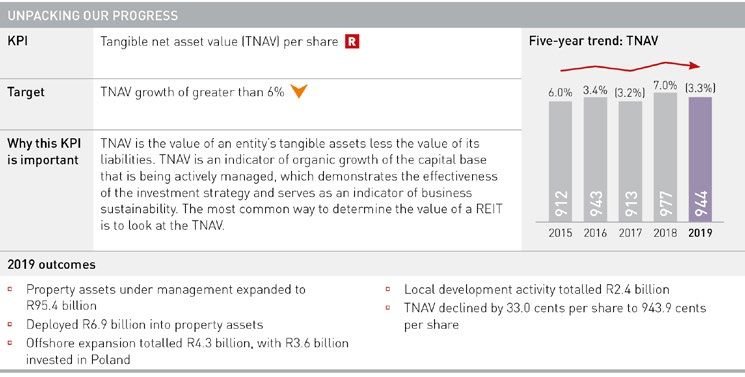
FOREWORD           PURPOSE OF       ALIGNMENT |                 CONNECTIVITY |            CONCISENESS |           KPIs |              OUTCOMES |       TECHNICAL REQUIREMENTS |   ACKNOWLEDGEMENTS     ABOUT THE IRC OF   IRC OF SOUTH AFRICA
                   THIS PAPER       OPTIMIZE AND ALIGN          CONNECT THE INFORMATION   BALANCE CONCISENESS     EXPLAIN KPIs AND    REPORT CLEARLY   APPLY ALL  FRAMEWORK                        SOUTH AFRICA       MEMBERS
                                    THE REPORTING SUITE         IN THE CONTENT ELEMENTS   AND COMPREHENSIVENESS   THE LINK TO VALUE   ON OUTCOMES      REQUIREMENTS
                                                                                                                                      AND TRADE-OFFS

PURPOSE OF THIS PAPER CONTINUED

       The importance of integrated thinking
                                                                                                                                             Integrated thinking begins with the governing body’s understanding that the organization creates
       Integrated thinking is a fundamental concept of integrated reporting. In essence, it involves                                         value by having a clear purpose and with awareness of the value afforded by its stakeholders and
       extending the mindset to include not only financial capital and                                                                                            the resources it relies on. It requires an understanding of the organization’s
       performance, but all six capitals identified in the  Framework (aka                                                                                      positive and negative effects on the six capitals (outcomes) so that these may
       resources used by the organization and the relationships it relies on).                                                                                                      be considered in strategy, performance, risks and opportunities,
                                                                                                                                                                                        outlook, stakeholder relationships and material matters.
       Integrated thinking is the active consideration by an
       organization of the relationships between its various                                                                                                                            The interdependencies and trade-offs among the six
       operating and functional units and the capitals that                                                                                                                            capitals are inherent in the process of creating, preserving
       the organization uses or effects. Integrated thinking                                                                                                                           or eroding value. This means the organization’s leadership
       leads to integrated decision-making and actions that                                                                                                                               needs information systems to enable fully informed
                                                                                                                                                                                                  decision making considering all of these
       consider the creation of value over the short, medium
                                                                                                                                                                                                    complexities. As part of its integrated thinking
       and long term.
                                                                                                                                                                                                    decision-making process, it needs to holistically
       Integrated thinking takes into account the connectivity                                                                                                                                      assess the possible implications of a proposed
       and interdependencies between the range of factors                                                                                                                                          strategy and actions on the six capitals, including
       that affect an organization’s ability to create value over time,                                                                                                                          the ongoing relationships with stakeholders.
       including:                                                                                                                                                                               Tangible KPIs are needed to measure achievement
                                                                                                                                                                                                 in the specified timeframes and targets.
       •	The capitals that the organization uses or effects, and the
           critical interdependencies, including trade-offs, between them                                                                                                                            Typically, organizations that have embedded
       •	The capacity of the organization to respond to key stakeholders’ legitimate                                                                                                          integrated thinking in their operations have designed
           needs and interests                                                                                                                                                                  information systems to present information in an
       •	How the organization tailors its business model and strategy to respond to its external                                                                                               integrated format. This enables integrated internal
           environment and the risks and opportunities it faces                                                                                                                                 reporting and reporting to the governing body. It also
       •	The organization’s activities, performance (financial and other) and outcomes in terms                                                                                              enables a high degree of connectivity in the integrated
           of the capitals – past, present and future.1                                                                                                                   report by facilitating a connected picture of the organization and
                                                                                                                                                                      meaningful and relevant information rather than general or vague information.
       The more that integrated thinking is embedded into an organization’s activities, the more                                                                 It will thus greatly simplify the process of writing the integrated report. The
       naturally will the connectivity of information flow into management reporting, analysis                                                                  linkage between the six capitals within the inputs to outcomes process is crucial
       and decision making. It also leads to better integration of the information systems that                                                                to the integrated report – and can indicate the extent to which the organization
       support internal and external reporting and communication, including preparation of the                                                                 applies integrated thinking.
       integrated report.2

1
    IIRC,  Framework, page 3
2
    IIRC,  Framework, Guiding Principle 3B, paragraph 3.7

                                                                                                                                                                                  INTEGRATED REPORTING COMMITTEE (IRC) OF SOUTH AFRICA                   3
FOREWORD           PURPOSE OF        ALIGNMENT |               CONNECTIVITY |                  CONCISENESS |                  KPIs |                  OUTCOMES |            TECHNICAL REQUIREMENTS |        ACKNOWLEDGEMENTS          ABOUT THE IRC OF      IRC OF SOUTH AFRICA
                   THIS PAPER        OPTIMIZE AND              CONNECT THE INFORMATION         BALANCE CONCISENESS            EXPLAIN KPIs AND        REPORT CLEARLY        APPLY ALL  FRAMEWORK                                  SOUTH AFRICA          MEMBERS
                                     ALIGN THE                 IN THE CONTENT ELEMENTS         AND COMPREHENSIVENESS          THE LINK TO VALUE       ON OUTCOMES           REQUIREMENTS
                                     REPORTING SUITE                                                                                                  AND TRADE-OFFS

1. ALIGNMENT | OPTIMIZE AND ALIGN THE REPORTING SUITE1
The integrated report’s holistic view signals it as a “first read” for users who may then seek detailed information in a subject-specific
supplementary report, the website or through engagement with the organization. The supplementary reports and information can be
informed by legislative, regulatory or stakeholder requirements.
The  Framework                                                                                                                                         Challenges and weaknesses
An integrated report should be a designated, identifiable communication.2                                                                                  1.	A reporting suite misaligned in messaging and material content
                                                                                                                                                           	In some cases, different reporting suite elements create different messaging or do not demonstrate an
An integrated report is intended to be more than a summary of information in other communications                                                            aligned picture of the organization. These differences can beg questions about the process followed to
(e.g. financial statements, a sustainability report, analyst calls, or on a website); rather, it makes explicit the                                          determine material matters in the integrated report.
connectivity of information to communicate how value is created, preserved or eroded over time.3
                                                                                                                                                           	It can also indicate a lack of communication between the departments responsible for different reporting
An integrated report may be either a standalone report or be included as a distinguishable,                                                                  suite elements.
prominent and accessible part of another report or communication. For example, it may be included
at the front of a report that also includes the organization’s financial statements.                                                                       	Further, supplementary information might contradict the contents of the integrated report, thus impacting
                                                                                                                                                             the integrated report’s credibility.
An integrated report can provide an “entry point” to more detailed information outside the
designated communication, to which it may be linked.4                                                                                                      2.	Addressing some of the  Framework’s requirements in a supplementary
                                                                                                                                                               report, but excluding it from the integrated report
                                                                                                                                                           	Conciseness should not be pursued through excluding material information required by the
               In a nutshell                                                                                                                                  Framework.

                  Ensure the integrated report is complete by including all material information and all the
                   Content Elements, while applying the Guiding Principles in the preparation of the information
                                                                                                                                                           3. Excessive supplementary information that does not necessarily add value
                 	Create a detailed plan for the reporting suite so that each reporting element has a clear
                                                                                                                                                                 Additional information may not always be aligned to stakeholders’ current information needs.
                    objective and there is a “picture” of how the various reporting elements interconnect
                 	 Implement a holistic review process across the reporting suite
                 	 Use effective and accurate cross-referencing

    Further reading
    IRC of South Africa FAQ: The Octopus Model
    King IV, Principle 5

1
    The reporting suite refers to communications published to provide information about the organization, guided and required by various regulatory frameworks, and read by its stakeholders, including investors, shareholders and employees, among others. For example, a South African listed entity at
    year-end might produce the integrated report, annual financial statements, results presentation, results advert, Stock Exchange News Service (SENS) announcements and the notice of annual general meeting, accompanied by other supplementary reports, such as a sustainability report, governance
    report and remuneration report.
2
     IIRC,  Framework, Section 1E, paragraph 1.12 (emphasis added)
3
     IIRC,  Framework, Section 1E, paragraph 1.13
4
     IIRC,  Framework, Section 1E (excerpt, emphasis added)

                                                                                                                                                                                                           INTEGRATED REPORTING COMMITTEE (IRC) OF SOUTH AFRICA                                        4
FOREWORD            PURPOSE OF        ALIGNMENT |                CONNECTIVITY |                   CONCISENESS |                   KPIs |                  OUTCOMES |             TECHNICAL REQUIREMENTS |   ACKNOWLEDGEMENTS   ABOUT THE IRC OF   IRC OF SOUTH AFRICA
                    THIS PAPER        OPTIMIZE AND               CONNECT THE INFORMATION          BALANCE CONCISENESS             EXPLAIN KPIs AND        REPORT CLEARLY         APPLY ALL  FRAMEWORK                      SOUTH AFRICA       MEMBERS
                                      ALIGN THE                  IN THE CONTENT ELEMENTS          AND COMPREHENSIVENESS           THE LINK TO VALUE       ON OUTCOMES            REQUIREMENTS
                                      REPORTING SUITE                                                                                                     AND TRADE-OFFS

1. ALIGNMENT | OPTIMIZE AND ALIGN THE REPORTING SUITE CONTINUED
Key considerations
The integrated report is a standalone report in its completeness
The integrated report provides a complete, holistic and concise overview of the process through which value is created, preserved or eroded over time. As explained in the
IRC of South Africa’s FAQ on The Octopus Model, the integrated report represents the head of the octopus1 and the other reporting elements represent the arms as they typically
contain supplementary information.2 Material information or a Content Element should not be excluded from the integrated report because a supplementary report also contains
that information.
Where appropriate, applying the  Framework Guiding Principles to other elements of the reporting suite can help make them more concise and meaningful, improving the
overall quality of the reporting suite.

Upfront planning for the reporting suite
Each of the other reporting elements will have clear objectives, such as meeting legislative or regulatory compliance requirements, responding to a specific stakeholder group’s
information needs, or packaging information for a particular stakeholder group.
All those involved in preparing the different reporting suite elements should have a clear picture of how they converge, interconnect and align to each other. Revisiting this during
the reporting process will help ensure it remains relevant.
Re-evaluate the reporting suite each year, considering each element’s usage and whether it is still relevant as stakeholders’ information needs might have changed. Online
monitoring of the number of users accessing the various elements is useful.

A holistic review process and effective cross-referencing
Review the reporting suite to ensure all information is aligned and that there are no contradictions or inconsistencies. Review the other reporting elements to ensure the
integrated report includes all material information. This is best done by those responsible for the integrated report; multiple reviews may be required depending on the complexity.
Responsibility for these reviews should be assigned upfront and included in the project timeline.
The governing body should satisfy itself that the reporting suite in totality is aligned, prior to approval.
To enable users to identify the available reports and information, include an overview of the organization’s reporting suite in the integrated report, in each supplementary report
and on the website. Use specific and accurate cross-referencing across the reporting suite and ensure all reporting elements are easily accessible.

1
    IRC of South Africa FAQ: The Octopus Model
2
    Smaller organizations often include their annual financial statements after their integrated report in the same publication, clearly indicating the two separate sections of the publication.

                                                                                                                                                                                                            INTEGRATED REPORTING COMMITTEE (IRC) OF SOUTH AFRICA        5
FOREWORD PURPOSE OF ALIGNMENT | CONNECTIVITY | CONCISENESS | KPIs | OUTCOMES | TECHNICAL REQUIREMENTS | ACKNOWLEDGEMENTS ABOUT THE IRC OF IRC OF SOUTH AFRICA
THIS PAPER OPTIMIZE AND CONNECT THE INFORMATION BALANCE CONCISENESS EXPLAIN KPIs AND REPORT CLEARLY APPLY ALL FRAMEWORK SOUTH AFRICA MEMBERS
ALIGN THE IN THE CONTENT ELEMENTS AND COMPREHENSIVENESS THE LINK TO VALUE ON OUTCOMES REQUIREMENTS
REPORTING SUITE AND TRADE-OFFS
ILLUSTRATIVE EXAMPLES TO SHOW A REPORTING SUITE
OUR
In the examples below, the organizations clearly show all the elements of their reporting suite, the information provided in each element and where it can be found.
Sasol Limited Integrated Report for the year ended 30 June 2020, page 1
TED REPORT These reports are available on our website, www.sasol.com, or on request
from Investor Relations. Contact details are on inside back cover (IBC).
IR SR CCR AFS 20-F
SASOL LIMITED Integrated Report SASOL LIMITED
Sustainability Report SASOL LIMITED
Climate Change SASOL LIMITED
Annual Financial SASOL LIMITED
Form 20-F
Report Statements
INTEGRATED REPORT SUSTAINABILITY CLIMATE CHANGE ANNUAL FINANCIAL FORM-20F
Concise communication Communication about Our Annual Report filed
for the year ended 30 June 2020
REPORT REPORT STATEMENTS for the year ended 30 June 2020
for the year ended 30 June 2020 for the year ended 30 June 2020 for the year ended 30 June 2020
about how Sasol’s strategy, Sasol’s environmental, Information about Sasol’s Contains full analysis of the with the United States
governance, performance social and governance climate change risk Group’s financial results, Securities and Exchange
and outlook lead to the (ESG) performance. management process, with detailed financial Commission (SEC), in line
R E P O RTI N G F R A M E WO R KS A N D COM PA R A B I LIT Y
creation of value over the
short, medium and long
response strategy
and summary of work
statements, as well as the
full Remuneration Report
with the requirement
of our New York Stock
In compiling this report, we have considered information included Other reporting frameworks applied, where appropriate, include:
POSITIONING FOR A
SUSTAINABLE FUTURE
term. POSITIONING FOR A POSITIONING FOR A
underway to address our POSITIONING FOR A
together with the report of POSITIONING FOR A
Exchange listing.
climate change risks. the Audit Committee.
SUSTAINABLE FUTURE SUSTAINABLE FUTURE SUSTAINABLE FUTURE SUSTAINABLE FUTURE
in previous reports, legislative reporting requirements, and the • The Global Reporting Initiative Standards, relevant to
International Integrated Reporting Council‘s (IIRC) framework. We information provided in the sustainability strategic focus area
are committed to adopting the IIRC framework in this report.
• International Financial Reporting Standards, relevant to financial
Woolworths Holdings Limited Integrated Annual Report 2020,information page 4 provided in the Annual Financial Statements
2 02 0 R E P O RTI N G S U ITE
The 2020 Integrated Annual Report is the key report that • Summarised Remuneration Report, providing key features
provides a holistic view of the Group‘s business, strategy, of the Remuneration Report
performance, and the creation of value for all stakeholders. • Annual General Meeting (AGM) Notice Report, providing the
This report should be read in conjunction with the more detailed relevant information necessary for shareholders to vote on the
reports highlighted below. resolutions to be tabled at the AGM
Complementing the Integrated Annual Report are a number of The Annual Financial Statements and Good Business Journey
other reports targeted at specific stakeholders. These reports are: Report are available online on our corporate website,
• Annual Financial Statements, providing a more detailed www.woolworthsholdings.co.za.
understanding of the financial aspects of our business The AGM Notice will be available online on our corporate
• Good Business Journey Report, providing details of our website, www.woolworthsholdings.co.za, and sent to all
sustainability strategy and a review of performance, primarily shareholders by no later than 30 September 2020.
against non-financial targets for social, transformation, and Supporting documents and compliance information not included
environmental matters in the reports can be accessed on our corporate website,
www.woolworthsholdings.co.za.
FO RWA R D - LO O K I N G STATEM E NTS
Certain statements in this report may constitute forward-looking be beyond the Group’s control. The directors, therefore, advise
statements which, by their nature, involve risk and uncertainty readers to use caution regarding interpreting any forward
because they relate to future events and circumstances that may looking statements in the report.
INTEGRATED REPORTING COMMITTEE (IRC) OF SOUTH AFRICA 6FOREWORD PURPOSE OF ALIGNMENT | CONNECTIVITY | CONCISENESS | KPIs | OUTCOMES | TECHNICAL REQUIREMENTS | ACKNOWLEDGEMENTS ABOUT THE IRC OF IRC OF SOUTH AFRICA
THIS PAPER OPTIMIZE AND ALIGN CONNECT THE BALANCE CONCISENESS EXPLAIN KPIs AND REPORT CLEARLY APPLY ALL FRAMEWORK SOUTH AFRICA MEMBERS
THE REPORTING SUITE INFORMATION AND COMPREHENSIVENESS THE LINK TO VALUE ON OUTCOMES REQUIREMENTS
IN THE CONTENT ELEMENTS AND TRADE-OFFS
2. CONNECTIVITY | CONNECT THE INFORMATION IN THE CONTENT ELEMENTS
Effectively connecting information in different areas of the integrated report enables the user to understand the organization’s
end-to-end process through which value is created, preserved or eroded over time. It helps clarify the material interdependencies
the organization manages and how it applies integrated thinking.
The Framework Challenges and weaknesses
Guiding Principle Connectivity of information: An integrated report should show a holistic picture of the 1. Applying the Content Elements as a “tick-box”
combination, interrelatedness and dependencies between the factors that affect the organization’s ability Some reports create the impression that the organization did not consider how the Content Elements
to create value over time.1 link together to explain its unique story. This might be due to applying a “tick-box” approach to the
guidance given in the Framework. This can result in unnecessary duplication, inconsistencies and
The key forms of connectivity of information include the connectivity between: a disjointed report.
• The Content Elements
• The past, present and future Some reports are overly reliant on cross-referencing or iconography in attempting to demonstrate
• The capitals connectivity. This can confuse and may not show the reality of the connections in the business.
• Financial information and other information 2. Siloed report sections and contradictory or isolated content
• Quantitative and qualitative information In some reports, it appears that different sections reflect the individual responsibilities in the organization
• Management information, board information and information reported externally – without considering how different information areas are connected in telling the story. This can lead to
• Information in the integrated report, information in the organization’s other communications and information misalignment, inconsistencies or isolated report content, as well as unnecessary duplication. It might also
from other sources.2 indicate a flawed reporting process.
The connectivity of information and the overall usefulness of an integrated report is enhanced when it is 3. A one-sided view of connectivity
logically structured, well presented, written in clear, understandable and jargon-free language, and Connectivity too often only focuses on connecting the various Content Elements and ignores other key
includes effective navigation devices, such as clearly delineated (but linked) sections and cross-referencing.3 areas of connectivity, such as the past, present and future, the six capitals, financial and other information,
quantitative and qualitative information, etc.
In a nutshell
Approach content development in an integrated manner and with detailed, upfront planning to
ensure everyone involved is on the same page
Create a logical report structure, be mindful of overlap between sections and plan who will
take the lead on common matters throughout the report
Conduct thorough end-to-end reviews and check for alignment and isolated content
Use cross-referencing and icons strategically; aim to address key topics only once
Further reading
IIRC: Integrated Thinking & Strategy State of Play Report
IRC of South Africa: Preparing an Integrated Report: A Starter’s Guide (Updated)
1
IIRC, Framework, Guiding Principle 3B, paragraph 3.6
2
IIRC, Framework, Guiding Principle 3B, paragraph 3.8 (excerpt, emphasis added)
3
IIRC, Framework, Guiding Principle 3B, paragraph 3.9 (excerpt, emphasis added)
INTEGRATED REPORTING COMMITTEE (IRC) OF SOUTH AFRICA 7FOREWORD PURPOSE OF ALIGNMENT | CONNECTIVITY | CONCISENESS | KPIs | OUTCOMES | TECHNICAL REQUIREMENTS | ACKNOWLEDGEMENTS ABOUT THE IRC OF IRC OF SOUTH AFRICA
THIS PAPER OPTIMIZE AND ALIGN CONNECT THE BALANCE CONCISENESS EXPLAIN KPIs AND REPORT CLEARLY APPLY ALL FRAMEWORK SOUTH AFRICA MEMBERS
THE REPORTING SUITE INFORMATION AND COMPREHENSIVENESS THE LINK TO VALUE ON OUTCOMES REQUIREMENTS
IN THE CONTENT ELEMENTS AND TRADE-OFFS
2. CONNECTIVITY | CONNECT THE INFORMATION IN THE CONTENT ELEMENTS CONTINUED
Key considerations
Approach content development in an integrated manner and with detailed, upfront planning
An integrated approach to content development requires the report preparers and content contributors to understand:
The six capitals and how the organization creates, preserves or erodes value related to the capitals
How the organization applies integrated thinking, as well as consideration within the content contributor’s area
How performance in the content contributor’s area impacts other business units and stakeholders
The organization’s material matters
The report structure and how individual contributions fit into it
Where alignment is required
As part of the planning process, seek guidance from leadership on the material matters and the report structure (the skeleton). Thereafter, it may be useful to have a planning session with the
project team and/or the content contributors to unpack the year’s messaging, intended report improvements, significant context changes from the previous year and so on.
Consider and plan for all aspects of connectivity (as listed in the Framework extract on the previous page) in deciding the report’s structure and how content will be collected, written and
reviewed.
Create a logical report structure and be mindful of overlap between sections
An integrated and concise story has an easy to follow and understand structure and narrative. As the Framework explains, it follows a logical structure and includes internal cross-references
as appropriate to limit repetition. A good structure can support connected information, avoid inconsistencies and limit duplication.
The Content Elements can appear in any order and format. The primary consideration is that their order and format allow the preparer to best explain how the organization creates, preserves
or erodes value over time. It is useful to consider how internal reports are structured, the information included therein, and how the governing body and management oversee and manage the
organization’s financial and non-financial performance.
The integrated report should read like a story with all chapters relevant and building on one another. There needs to be logic and flow in the structure, and provide reference to detailed information
or context.
Conduct thorough end-to-end reviews
There ought to be various reviews of the report comprising a collaborative effort between contributors, reviewers and approvers, focusing on, inter alia, the structure, storyline, alignment,
completeness and integrity. It is helpful to give one individual the responsibility of ensuring overall alignment and to check for duplication or isolated content throughout the process.
Some organizations find it useful to have someone who has not been involved in the drafting process to review the report to identify any duplication, inconsistencies or where connectivity is
unclear or lacking.
Use cross-referencing and icons strategically
A clear understanding of the value created, preserved or eroded by the organization over time and reinforcing this narrative throughout the report will lead to sections that flow naturally without
constantly using links or icons – too many links and icons can disrupt the reading flow and cause confusion. However, the strategic use of cross-referencing and icons can enhance the clarity of the
organization’s story and limit duplication. Ideally, key topics will be addressed once in a complete manner, with appropriate linkages and cross-references to information elsewhere in the report.
INTEGRATED REPORTING COMMITTEE (IRC) OF SOUTH AFRICA 8FOREWORD PURPOSE OF ALIGNMENT | CONNECTIVITY | CONCISENESS | KPIs | OUTCOMES | TECHNICAL REQUIREMENTS | ACKNOWLEDGEMENTS ABOUT THE IRC OF IRC OF SOUTH AFRICA
THIS PAPER OPTIMIZE AND ALIGN CONNECT THE INFORMATION BALANCE EXPLAIN KPIs AND REPORT CLEARLY APPLY ALL FRAMEWORK SOUTH AFRICA MEMBERS
THE REPORTING SUITE IN THE CONTENT ELEMENTS CONCISENESS AND THE LINK TO VALUE ON OUTCOMES REQUIREMENTS
COMPREHENSIVENESS AND TRADE-OFFS
3. CONCISENESS | BALANCE CONCISENESS AND COMPREHENSIVENESS
A concise integrated report provides users with material information and sufficient context without being burdened with less relevant or
detailed information. A key construct in conciseness is a robust process of determining material matters.
The Framework
Guiding Principle Materiality: An integrated report should disclose information about matters that substantively Incorporating other disclosure requirements in the integrated report
affect the organization’s ability to create value over short, medium and long term.1 Information beyond the Framework can be included in the integrated report, provided it does not
obscure the concise information required by the Framework.
Guiding Principle Conciseness: An integrated report should be concise.
Where aspects of this “other information” are material to explaining the organization’s process through
An integrated report includes sufficient context to understand the organization’s strategy, governance,
which value is created, preserved or eroded over time, it should be included in the integrated report.
performance and prospects without being burdened with less relevant information.
When deciding on the extent of other information to include in the integrated report, for example
The organization seeks a balance in its integrated report between conciseness and the other Guiding Principles,
disclosures relating to King IV, the United Nation’s Sustainable Development Goals or the Task Force on
in particular completeness and comparability. In achieving conciseness, an integrated report:
Climate-related Financial Disclosures, among others, consider the Framework’s Guiding Principles.
• Applies the materiality determination process
A supplementary report or the organization’s website can include information that does not meet the
• Follows a logical structure and includes internal cross-references as appropriate to limit repetition
Guiding Principles (refer to the FAQ: The Octopus Model). The integrated report includes cross-references
• May link to more detailed information, information that does not change frequently (e.g. a listing of subsidiaries),
to where users can find additional disclosures.
or external sources (e.g. assumptions about future economic conditions on a government website)
• Expresses concepts clearly and in as few words as possible
• Favors plain language over the use of jargon or highly technical terminology
• Avoids highly generic disclosures, often referred to as “boilerplate”, that are not specific to the organization.2 Challenges and weaknesses
1. No clarity on what is considered material and how material matters were
identified and evaluated
In a nutshell Suppose the process and criteria to determine material matters is not disclosed with sufficient context –
Follow a robust process to determine material matters and explain the process in the integrated in this case, the user is unable to assess the robustness and completeness of the process and what reliance
report can be placed on it. A limited view of the organization’s material matters could result in an incomplete
Exclude irrelevant information report.
Implement design elements (such as infographics) with clear intent and provide sufficient context
Use plain language and get straight to the point using as few words as possible
2. Irrelevant information included in the integrated report
Including information that does not align with the Guiding Principles and Content Elements can lead to
the inclusion of irrelevant or less important information, detracting from the report’s meaningfulness and
Further reading conciseness.
IRC of South Africa FAQ: The Octopus Model
3. Information is difficult to interpret or presented with insufficient context
IIRC: Materiality in Guidance for the preparation of integrated reports
Without sufficient context, the user may not fully understand the organization’s process through which
IRC of South Africa: Achieving Balance in the Integrated Report: An Information Paper
value is created, preserved or eroded over time. For example, using technical terms, internal terminology
IRC of South Africa FAQ: Reporting on the SDGs in the Integrated Report
or infographics without explanation or context may result in losing or misinterpreting key messages.
Corporate Reporting Dialogue: Statement of Common Principles of Materiality
1
IIRC, Framework, Guiding Principle, Section 3D, paragraph 3.17
IIRC, Framework, Guiding Principle, Section 3E (emphasis added)
9
2
INTEGRATED REPORTING COMMITTEE (IRC) OF SOUTH AFRICAFOREWORD PURPOSE OF ALIGNMENT | CONNECTIVITY | CONCISENESS | KPIs | OUTCOMES | TECHNICAL REQUIREMENTS | ACKNOWLEDGEMENTS ABOUT THE IRC OF IRC OF SOUTH AFRICA
THIS PAPER OPTIMIZE AND ALIGN CONNECT THE INFORMATION BALANCE EXPLAIN KPIs AND REPORT CLEARLY APPLY ALL FRAMEWORK SOUTH AFRICA MEMBERS
THE REPORTING SUITE IN THE CONTENT ELEMENTS CONCISENESS AND THE LINK TO VALUE ON OUTCOMES REQUIREMENTS
COMPREHENSIVENESS AND TRADE-OFFS
3. CONCISENESS | BALANCE CONCISENESS AND COMPREHENSIVENESS CONTINUED
Key considerations
Follow a robust process of determining material matters
A matter is considered material if it could substantively affect the organization’s ability to create value in the short, medium or long term.1 The process of determining material matters
should ideally be embedded as a continuous and robust process and it requires a clear understanding of how the organization creates, preserves or erodes value over time. It includes
assessing the inputs to outcomes process covering the six capitals, the external environment, internal and external information sources, sustainability reporting indices, stakeholders’
needs, concerns and expectations and the performance measurement and monitoring that currently occurs and what should be done.
The process and criteria applied to identify, evaluate and prioritize material matters should be explained in the integrated report. It should include the two critical elements of the six
capitals and time (short, medium and long term); and the governing body’s involvement in the process and approval of the material matters. It is also useful to disclose the timing of
the process, e.g. beginning or end of the year or continuous. This allows the user to assess the reliance that can be placed on the organization’s process and the degree of comfort
it provides on the accuracy and completeness of the material matters stated in the integrated report.
Apply the Guiding Principles consistently and rigorously and address the Content Elements
All information in the report should be relevant for the user to make an informed assessment of value creation, preservation or erosion over time. When developing and reviewing
content, some helpful questions to ask in considering information are:
What insight will it provide to the user (relevance)?
How does it align with the material matters?
How does it align to the Guiding Principles and Content Elements?
Implement design elements with clear intent and provide sufficient context
Infographics are a good tool to make complex information easier to understand and can enhance a report’s conciseness. However, if done inappropriately, they can detract from the
report’s meaningfulness. Have a clear objective for each infographic, graph or other design element and ensure sufficient information is given so that the user has context. Importantly,
ensure the design does not slant, emphasize or de-emphasize information, for example, give equal design prominence to KPIs that improved and those that deteriorated.
Use plain language and get straight to the point
The Framework extract on the previous page highlights two particular aspects contributing to conciseness, namely:
Expresses concepts clearly and in as few words as possible
Favors plain language over the use of jargon or highly technical terminology
This underscores the importance of how the report is written, in conjunction with what content to include. Write the report assuming a reasonable level of understanding of the
organization. However, the report should have enough detail to aid user understanding. Where technical terms are required consider including a glossary to explain them. Limit the use
of internal acronyms and terms.
1
IIRC, Framework, Glossary
INTEGRATED REPORTING COMMITTEE (IRC) OF SOUTH AFRICA 10FOREWORD PURPOSE OF ALIGNMENT | CONNECTIVITY | CONCISENESS | KPIs | OUTCOMES | TECHNICAL REQUIREMENTS | ACKNOWLEDGEMENTS ABOUT THE IRC OF IRC OF SOUTH AFRICA
THIS PAPER OPTIMIZE AND ALIGN CONNECT THE INFORMATION BALANCE CONCISENESS EXPLAIN KPIs REPORT CLEARLY APPLY ALL FRAMEWORK SOUTH AFRICA MEMBERS
THE REPORTING SUITE IN THE CONTENT ELEMENTS AND COMPREHENSIVENESS AND THE LINK TO ON OUTCOMES REQUIREMENTS
VALUE AND TRADE-OFFS
4. KPIs | EXPLAIN KPIs AND THE LINK TO VALUE
Users want to see KPIs that directly show the organization’s performance and outcomes. They also want to see whether executives
have “skin in the game” and that remuneration incentives drive behavior that delivers sustainable value creation over the short, medium
and long term.
The Framework Challenges and weaknesses
Content Element Strategy and resource allocation: An integrated report should answer the question: Where does 1. It is not evident why the organization selected specific KPIs, or why the KPIs
the organization want to go and how does it intend to get there? changed year-on-year
When it is unclear why the KPI is important or “core” it may be difficult to understand how it supports
The integrated report ordinarily identifies… the organization’s short, medium and long term strategic the process through which the organization creates, preserves or erodes value over time and links to the
objectives… how it will measure achievements and target outcomes for the short, medium and strategic objectives.
long term.1
In addition, if KPIs differ year-on-year, without a clear explanation as to why (for example, due to a change in
A principles-based approach: The Framework does not prescribe specific KPIs, measurement methods or the strategic objectives), it may impact the report’s credibility.
disclosure of individual matters. Those responsible for the preparation and presentation of the integrated report
therefore need to exercise judgement, given the specific circumstances of the organization.2 2. No clarity on what the KPI means (i.e. what it is measuring, or explanation of
whether a performance trend is positive or negative)
Content Element Governance: An integrated report provides insight about how such matters as the following If the user does not understand the KPI, what it measures or what its performance trend means, they might
are linked to its ability to create value – how remuneration and incentives are linked to value misinterpret the organization’s performance and outcomes.
creation in the short, medium and long term, including how they are linked to the
organization’s use of and effects on the capitals.3 3. No clear connection between KPIs and remuneration incentives
Without clear explanation of how the value created, preserved or eroded over time links to the
In a nutshell remuneration policy and there is no clear disclosure of how remuneration incentives are aligned to
Continually assess whether the disclosed KPIs reflect the value created, preserved or eroded over performance, users cannot determine if such incentives support sustainable value creation over the
time by the organization short, medium and long term.
Disclose what each KPI measures and why it was selected
Explain the KPI’s performance effectively, providing insight into what drove the performance It can also confuse if it is not appropriately explained where incentives related to previous years vest in a
Industry benchmarks add useful context year where the current performance is significantly different to when the incentives were awarded.
Further reading
IRC of South Africa: Disclosure of Performance against Strategic Objectives: An Information Paper
IRC of South Africa: Preparing an Integrated Report: A Starter’s Guide (Updated)
Paragraph 4.53 of the Framework, Characteristics of quantitative indicators
1
IIRC, Framework, paragraphs 4.28 and 4.29 (excerpt, emphasis added)
2
IIRC, Framework, paragraph 1:10 (excerpt).
3
IIRC, Framework, paragraph 4.9 (excerpt, emphasis added)
INTEGRATED REPORTING COMMITTEE (IRC) OF SOUTH AFRICA 11FOREWORD PURPOSE OF ALIGNMENT | CONNECTIVITY | CONCISENESS | KPIs | OUTCOMES | TECHNICAL REQUIREMENTS | ACKNOWLEDGEMENTS ABOUT THE IRC OF IRC OF SOUTH AFRICA
THIS PAPER OPTIMIZE AND ALIGN CONNECT THE INFORMATION BALANCE CONCISENESS EXPLAIN KPIs REPORT CLEARLY APPLY ALL FRAMEWORK SOUTH AFRICA MEMBERS
THE REPORTING SUITE IN THE CONTENT ELEMENTS AND COMPREHENSIVENESS AND THE LINK TO ON OUTCOMES REQUIREMENTS
VALUE AND TRADE-OFFS
4. KPIs | EXPLAIN KPIs AND THE LINK TO VALUE CONTINUED
Key considerations
Continually assess whether the disclosed KPIs are aligned to the governing body’s oversight process and reflect the value created, preserved
or eroded over time, with a link to remuneration incentives
The governing body and management use KPIs to manage and monitor strategy implementation and performance. The assessment to ensure the KPIs included in the integrated report
are relevant should include:
All the capitals the organization uses and relies on
The material outcomes that its business activities, products and services have on the six capitals over the short, medium and long term
The linkage to strategy and strategic objectives
Combined assurance1 over these KPIs adds value to the process and KPI disclosure.
Disclosure should include the KPIs linked to remuneration, the extent to which financial and non-financial measures are balanced and consider the six capitals and how the performance
impacted incentives allocated/paid to management.
Disclose what each KPI measures and why it was selected
Clearly define KPIs and explain each KPI’s importance and relevance in relation to the organization’s strategy and effects on the six capitals. Explain how the measures are calculated.
This detail can be included in a KPI glossary in the integrated report, with appropriate cross-references. If a KPI changes from year-to-year, explain the reason for and nature of the
change. Also consider including industry benchmarks as they add useful context.
Effectively explain the KPI’s performance
Provide insight into what the KPI’s performance data means, indicate its scope for improvement and explain performance drivers and whether these align with expectations/targets.
Disclose targets for the KPI and indicate achievement timelines if the target is not yet met. Performance trends over several years for the KPI can be insightful. Use design elements
to indicate whether the KPI movement or performance against target is positive, negative or neutral.
1 K ing IV Glossary: A combined assurance model incorporates and optimizes all assurance services and functions so that, taken as a whole, these enable an effective control environment; support the integrity of information used for internal decision-making by management, the governing body and
its committees; and support the integrity of the organization’s external reports.
INTEGRATED REPORTING COMMITTEE (IRC) OF SOUTH AFRICA 12FOREWORD PURPOSE OF ALIGNMENT | CONNECTIVITY | CONCISENESS | KPIs | OUTCOMES | TECHNICAL REQUIREMENTS | ACKNOWLEDGEMENTS ABOUT THE IRC OF IRC OF SOUTH AFRICA
THIS PAPER OPTIMIZE AND ALIGN CONNECT THE INFORMATION BALANCE CONCISENESS EXPLAIN KPIs REPORT CLEARLY APPLY ALL FRAMEWORK SOUTH AFRICA MEMBERS
THE REPORTING SUITE IN THE CONTENT ELEMENTS AND COMPREHENSIVENESS AND THE LINK TO ON OUTCOMES REQUIREMENTS
VALUE AND TRADE-OFFS
ILLUSTRATIVE EXAMPLES
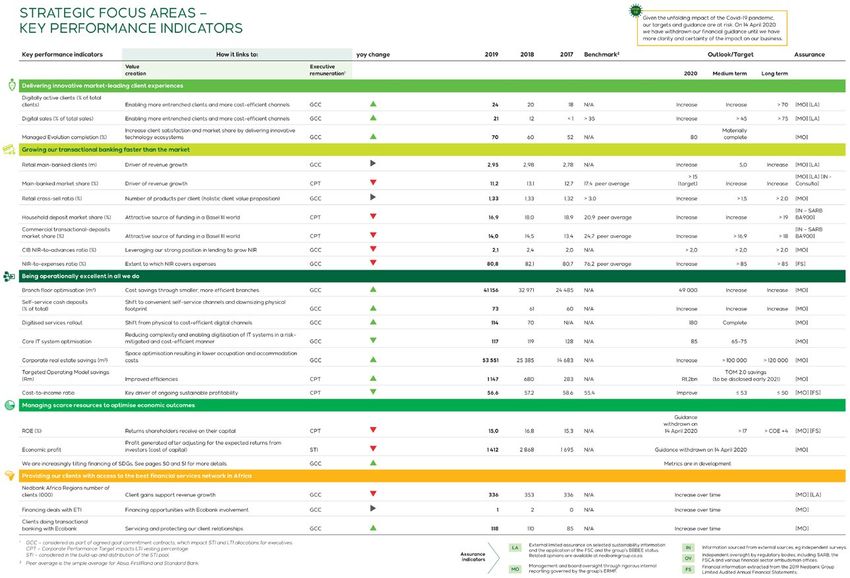
Nedbank Group Limited Integrated Report 2019, pages 58 and 59
Each strategic focus area
lists the material KPIs, giving
the link to remuneration.
The year’s performance
and the performance trend
and sector benchmark are
shown. The targets for the
short, medium and long
term are disclosed. The level
of assurance on each KPI
is given.
INTEGRATED REPORTING COMMITTEE (IRC) OF SOUTH AFRICA 13FOREWORD PURPOSE OF ALIGNMENT | CONNECTIVITY | CONCISENESS | KPIs | OUTCOMES | TECHNICAL REQUIREMENTS | ACKNOWLEDGEMENTS ABOUT THE IRC OF IRC OF SOUTH AFRICA
THIS PAPER OPTIMIZE AND ALIGN CONNECT THE INFORMATION BALANCE CONCISENESS EXPLAIN KPIs REPORT CLEARLY APPLY ALL FRAMEWORK SOUTH AFRICA MEMBERS
THE REPORTING SUITE IN THE CONTENT ELEMENTS AND COMPREHENSIVENESS AND THE LINK TO ON OUTCOMES REQUIREMENTS
VALUE AND TRADE-OFFS
ILLUSTRATIVE EXAMPLES
Redefine Properties Limited Integrated Report 2019, pages 52 and 58
There is explanation of why the KPI is important and the performance target. The year’s performance is given in the context of the five-year trend and the related outcomes in the reporting year are shown.
The link to remuneration is clearly shown.
INTEGRATED REPORTING COMMITTEE (IRC) OF SOUTH AFRICA 14FOREWORD PURPOSE OF ALIGNMENT | CONNECTIVITY | CONCISENESS | KPIs | OUTCOMES | TECHNICAL REQUIREMENTS | ACKNOWLEDGEMENTS ABOUT THE IRC OF IRC OF SOUTH AFRICA
THIS PAPER OPTIMIZE AND ALIGN CONNECT THE INFORMATION BALANCE CONCISENESS EXPLAIN KPIs AND REPORT CLEARLY APPLY ALL FRAMEWORK SOUTH AFRICA MEMBERS
THE REPORTING SUITE IN THE CONTENT ELEMENTS AND COMPREHENSIVENESS THE LINK TO VALUE ON OUTCOMES REQUIREMENTS
AND TRADE-OFFS
5. OUTCOMES | REPORT CLEARLY ON OUTCOMES AND TRADE-OFFS
Disclosure of material outcomes is essential to the organization’s story. It shows the positive and negative effects the organization’s
activities and its products and services have on the six capitals over time. Being clear about the interdependencies and trade-offs
among the six capitals enhances understanding of the organization.
The Framework Challenges and weaknesses
Outcomes: The internal and external consequences (positive and negative) for the capitals as a result of an 1. Describing value creation, preservation or erosion over time in general terms (or
organization’s business activities and outputs. 1 not at all) instead of organization-specific information
The following weaknesses detract from meaningfulness, undermine transparency, and leave users with
Complexity, interdependencies and trade-offs: The Framework does not require an integrated report a lack of clarity on the short, medium and long-term outcomes:
to provide an exhaustive account of all the complex interdependencies between the capitals such that an Vague descriptions with little or no focus on quality or relevance
organization’s net impact on the global stock of capitals could be tallied. It is important, however, that an A focus on value created, preserved or eroded in the reporting year and the short term, but with little
integrated report discloses the interdependencies that are considered in determining its reporting boundary and disclosure on the medium and long term
the important trade-offs that influence value creation over time, including trade-offs: No interpretation of the possible implications, such as how the outcomes can impact future strategy
• Between capitals or between components of a capital implementation and strategic resource allocation plans.
• Over time
• Between capitals owned by the organization and those owned by others or not at all.2 2. Biased, unbalanced or incomplete disclosure of outcomes
Some organizations tend to only report positive outcomes rather than all the material positive and negative
outcomes. There may be insufficient disclosure of indirect or unintended outcomes across all six capitals,
In a nutshell particularly where these are negative, as well as the medium and long-term outcomes.
Understand how the organization creates, preserves or erodes value over the short, medium and
long term 3. Trade-offs are general or disclosed without sufficient context
Think holistically about outcomes for a complete and balanced integrated report: consider the six Providing incomplete trade-off disclosures or general (“boilerplate”) non-specific information suggests the
capitals, the short, medium and long term and be specific in disclosing actual outcomes, intended organization has not properly considered trade-offs or has not fully embedded integrated thinking.
and unintended, positive and negative A lack of sufficient context when explaining the significance of the trade-offs can limit user understanding
Explain the judgement applied and the thinking process behind the trade-offs made and detract from the report’s meaningfulness.
Further reading
IRC of South Africa: Reporting on Outcomes: An Information Paper
Section 2D of the Framework, The value creation process
1
IIRC, Framework, Glossary
2
IIRC, Framework, Chapter 5, paragraph 5.8 (excerpt)
INTEGRATED REPORTING COMMITTEE (IRC) OF SOUTH AFRICA 15FOREWORD PURPOSE OF ALIGNMENT | CONNECTIVITY | CONCISENESS | KPIs | OUTCOMES | TECHNICAL REQUIREMENTS | ACKNOWLEDGEMENTS ABOUT THE IRC OF IRC OF SOUTH AFRICA
THIS PAPER OPTIMIZE AND ALIGN CONNECT THE INFORMATION BALANCE CONCISENESS EXPLAIN KPIs AND REPORT CLEARLY APPLY ALL FRAMEWORK SOUTH AFRICA MEMBERS
THE REPORTING SUITE IN THE CONTENT ELEMENTS AND COMPREHENSIVENESS THE LINK TO VALUE ON OUTCOMES REQUIREMENTS
AND TRADE-OFFS
5. OUTCOMES | REPORT CLEARLY ON OUTCOMES AND TRADE-OFFS CONTINUED
Key considerations
Understand how the organization creates, preserves or erodes value over short, medium and long term
The value the organization creates, preserves or erodes over time is the essence of the integrated report and informs its structure, content and messaging. The organization’s ability to articulate this, and how
it links to its purpose and strategy, is essential to a meaningful integrated report. The organization’s understanding of the value it creates, preserves or erodes over time may evolve and improve as it embeds
integrated thinking.
Determining outcomes should not only be done when preparing the integrated report. An organization should embed its understanding of outcomes (and measurement, where feasible, as well as monitoring) in
its integrated thinking. Integrated thinking implies that the evaluation of outcomes is a standard business practice.
While the business model provides a valuable overview of outcomes, the entire integrated report - encompassing all the Content Elements and its preparation according to the Guiding Principles – explains the
process of how the organization creates, preserves or erodes value over time.
Think holistically about outcomes for completeness and balance: six capitals, positive and negative, and the short, medium and long term
The following considerations may be useful in disclosure:
The transparent disclosure of the material negative and positive outcomes can give users a clear view of the value being created, preserved or eroded over time and allows them to make informed decisions
Consider all six capitals in the determination of outcomes
Consider outcomes in the reporting year and the short, medium and long term. Longer-term outcomes may not always be apparent in the reporting year, but it is important that they are considered and
disclosed
Quantitative information on outcomes is recommended, where possible, together with explanatory narrative and comparative information
Quantitative information may not always be possible or available and thus qualitative information on outcomes should be given - the unavailability of quantitative information should not be a reason to
exclude material outcomes
Disclose negative outcomes together with the mitigation measures the organization has/will put in place to minimize and manage these
Outcomes may have interdependencies and the interplay between capitals should be disclosed and linked to the trade-offs made
Explain the possible implications of outcomes to the organization
Do not forget about the relevant connectivity, such as to performance, risks and opportunities, material matters, strategy, strategic resource allocation plans and outlook
Explain the judgement and thinking process applied to the trade-offs made
Disclosure of the material trade-offs in the business model and strategy should demonstrate the judgement applied, the breadth and depth of the thinking process and the organization’s decisions. Many choices
have positive and negative outcomes and some element of risk. The disclosure of trade-offs should not seek to justify the decision as one without risk or potential negative effects, but is rather a transparent
disclosure of how the organization balanced these factors in the decision-making process.
Trade-offs do not always have to be disclosed as information in a specific table as is often shown in integrated reports; they can be discussed throughout the report if this best explains the organization’s story.
The trade-offs should explain the interdependencies between the capitals and the choices made regarding the relative effects on the capitals. This could include an explanation of the positive and negative
effects considered, any mitigating plans and actions, and why the chosen decision/option is regarded as the optimal choice for the organization over time.
A useful internal process is to document material trade-off considerations during key strategic decisions as they happen. This promotes integrated thinking and can assist the disclosure in the integrated report.
INTEGRATED REPORTING COMMITTEE (IRC) OF SOUTH AFRICA 16You can also read


