THE ENGLISH PROGRAM A Guide for Undergraduate Students 2019-2020 - Cedar Crest College
←
→
Page content transcription
If your browser does not render page correctly, please read the page content below
THE ENGLISH PROGRAM

A Guide for Undergraduate Students

           2019-2020

               i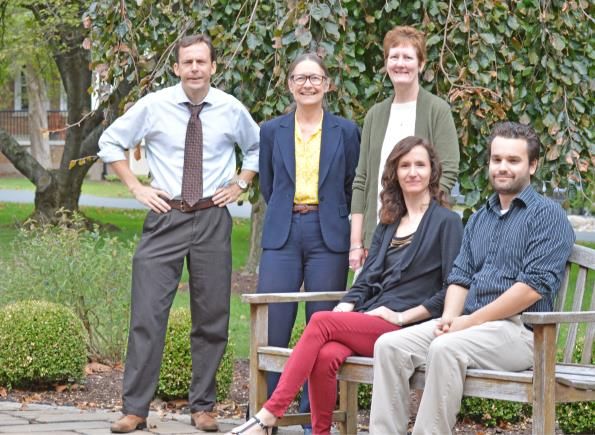
Contents
  English Program Information....................................................................................................................... 1
       Welcome from the English Faculty at Cedar Crest College........................................................................................................ 1
       Mission Statement and Learning Outcomes.................................................................................................................................. 2
             Mission of the English Major ............................................................................................................ 2
             Student Learning Outcomes for the English Major ................................................................................ 2
             Mission of the Writing Major ............................................................................................................ 2
             Student Learning Outcomes for the Writing Major ................................................................................ 3
       Faculty and Department Information ............................................................................................................................................ 3
             English Faculty and Support Staff ...................................................................................................... 3
       Advising Information ........................................................................................................................................................................ 4
       Reference Books and Professional Organizations........................................................................................................................ 5
       Planning When to Take Your English and Writing Courses ...................................................................................................... 5
       Residency Requirement for Transfer Students ............................................................................................................................. 6
  The English Curriculum .............................................................................................................................. 7
       Course Requirements for Majors & Minors .................................................................................................................................. 7
       Should I Complete a Second Major or a Minor? ........................................................................................................................ 13
       English Program Assessment ........................................................................................................................................................ 13
             Exit Survey of Graduating Seniors.................................................................................................... 13
             Portfolio Requirement for Graduation .............................................................................................. 14
             Portfolio Contents for English Majors, English and Secondary Education Majors, and Evening English Majors 14
             Portfolio Contents for Writing Majors .............................................................................................. 15
  Academic Opportunities in English and Writing ............................................................................................. 16
             Internships .................................................................................................................................. 16
             Graduate School........................................................................................................................... 16
             Preterite, the Cedar Crest College Literary Club................................................................................... 17
             Xi Kappa, the English Honor Society ............................................................................................... 17
             Pitch, Cedar Crest’s Online Journal of Arts and Literature ..................................................................... 17
             Association of Writers and Writing Programs (AWP) ........................................................................... 17
             Awards in English and Writing ........................................................................................................ 17
  Careers for English or Writing Majors .......................................................................................................... 18

                                                                                                 ii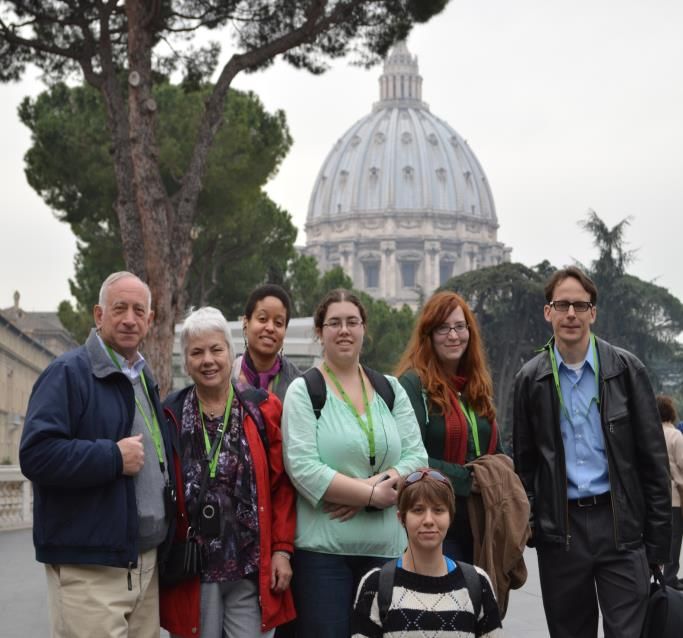
English Program Information

                       Welcome from the English Faculty at Cedar Crest College

Welcome to the English program!

You’ve joined an exciting, dynamic discipline, one that
will both challenge and reward you with a transformed
way of reading the world and writing about it.

The study of literature and language equips you with
abilities—critical reading, thinking, and writing—that
are essential to all professions and postgraduate study.
Through your coursework, the English faculty will
engage you in thoughtful conversations about literature,
work with you to hone your writing skills, and support
your intellectual, artistic, and professional explorations.

We encourage you to take advantage of all that our
vibrant program has to offer:                                            English Students & Professors before the Tower Bridge: (March 2011).

         o Take stimulating courses where you study
            classic works of English literature and discover new and contemporary writings.
         o Take creative and professional writing courses to hone your writing skills and develop the confidence to use these
            skills in a potential career as a writer.
         o Participate in events sponsored by Preterite, the college’s literary club, and the department.
         o Publish your creative work in the college arts and literature journal, Pitch, and write for the student newspaper, The
            Crestiad.
         o Attend regional events such as the Visiting Writers series and field trips to Shakespeare plays and poetry festivals.
         o Present your scholarly paper or creative work at regional conferences such as the Pennsylvania College English
            Association Conference, the English Association of Pennsylvania State Universities Conference, the LVAIC
            Undergraduate Conference in Medieval and Early Modern Studies, or the FUSE conference for editors of college
            literary journals.
         o Travel with English professors and other students to locations associated with great works of literature—both
            regionally and abroad.
         o Join your fellow students and faculty at literary film nights and departmental parties.
         o Connect with English program alumnae at career events and other sponsored activities.

You’ll work with your English faculty advisor to plan a schedule of classes, explore options for internships, and navigate
college life as you embark upon your journey at Cedar Crest. Remember that your advisor isn’t only someone who signs your
paperwork: she or he can encourage you to explore post-graduate options and can help you to prepare for your career goals.
Talk to your advisor when seeking internships, graduate schools, publishing opportunities, and contacts with faculty and other
professionals in areas of interest to you, as well as when you want a faculty member’s perspective on appropriate strategies for
interviewing, resume or professional portfolio preparation, and the crafting of letters of intent for graduate study.

This Student Guide is intended to provide essential information about the English program’s requirements and opportunities.
If you have any questions or need further information, please contact the English program director and department chair:

                                                            Dr. Carol A. Pulham
                                                      Email: capulham@cedarcrest.edu
                                                       Phone: (610) 437-4471 x3395
                                                         Office: Hartzel Hall 110

Here’s to a life of rich reading and rewarding writing!

                                                                        1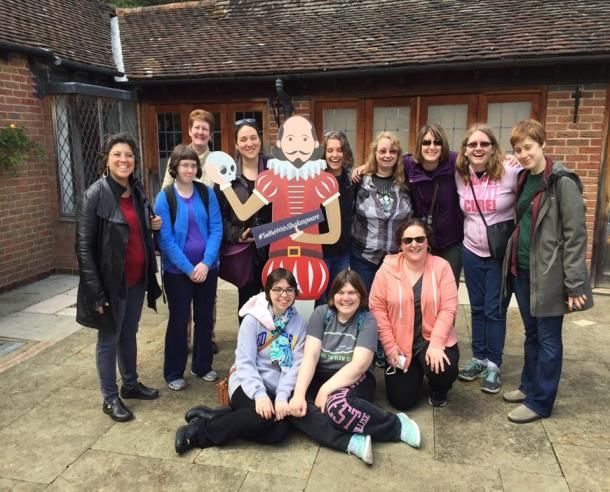
Mission Statement and Learning Outcomes

As a liberal arts discipline, the English program's mission strongly promotes the overall mission of Cedar Crest College.

Mission of the English Major
The English major offers students a solid fundamental background in American, British, and World literature; allows students
to develop strengths in scholarly and creative writing; invites students to explore more specialized areas such as linguistics and
critical theory; and provides opportunities for students to ground their understanding of literature within the context of the
location that produces it. The major is designed to prepare students for graduate study and for careers in teaching, publishing,
law, business, government, journalism, advertising, and other language-related fields. More generally, the discipline of English
enables students better to understand and respond to their world through the spoken and written word, both within the
academic setting and beyond.

Student Learning Outcomes for the English Major
        1. Students will demonstrate a general knowledge of the history of literature in English and its cultural contexts, as
           well as a familiarity with a range of critical strategies that may be employed to illuminate the study of that
           literature.

        2. Students will demonstrate their competence in thoughtfully reading and critically analyzing works of literature.

        3. Students will demonstrate their ability to write and
           revise, effectively and creatively, in a variety of
           genres. Their writing will demonstrate their ability
           to formulate and think critically about an
           appropriate topic, to be aware of audience needs, to
           incorporate relevant research, and to follow
           appropriate standards for grammar, mechanics and
           documentation procedures. Their writing will
           further evince freshness and originality, as well as
           their ability to employ literary and rhetorical
           devices and to make stylistic choices that are
           appropriate to the subject and purpose of the work.

        4. Students will demonstrate their ability to apply their
           knowledge of literature and critical strategies and
           their reading, speaking, and writing skills at a level
           that will lead to productive employment and
           citizenship. Some students will achieve a level of
           proficiency and interest in the discipline that will              Cedar Crest College students and faculty and pose with a statue
           enable them to undertake advanced study in                                of James Joyce in Dublin, Ireland (May 2014)
           English or other disciplines.

Mission of the Writing Major
The Writing major prepares students to produce rhetorically and aesthetically sophisticated writing across a number of literary
and professional genres. Students apply their foundational studies in rhetoric and literature to inform their writing in these
genres. The major allows students to improve the quality of their writing while enhancing their ability to read, comprehend,
analyze, and edit their own and others’ writing. These skills are the foundation for a career and a life of leadership, civic
engagement, creativity, and scholarship.

                                                                    2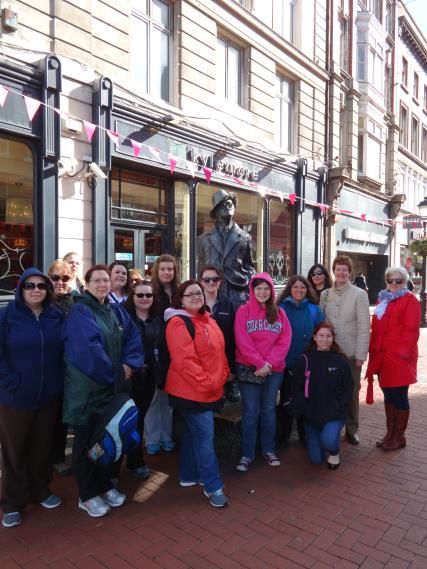
Student Learning Outcomes for the Writing Major
       1. Students will produce documents that are appropriate, purposeful, persuasive, and professional.

       2. Students will analyze and edit their own writing and the writing of others, showing an awareness of audience,
          genre, and contexts.

       3. Students will formulate and think critically about their writing topics, incorporate relevant research, and
          understand and employ literary and rhetorical devices that are appropriate to the subject and purpose of the work.

       4. Students will demonstrate their ability to use current software programs in writing, editing, and publishing to
          produce professional-quality documents and presentations that may be submitted to or shared with professional
          venues.

Faculty and Department Information
English Faculty and Support Staff
Courses for the English major and minor and the Writing major and minor are offered by the following members of
the Cedar Crest faculty. Adjunct instructors also offer occasional courses for the English program; some courses
for the writing major are offered by faculty members from other associated departments.

   LuAnn McCracken Fletcher; PhD
   Professor of English
   Hartzel Hall 121, x3396; email lmfletch@cedarcrest.edu

       Dr. Fletcher has published an anthology of Victorian prose and edited a collection of essays on literary tourism in the British
       Isles. She has also published scholarly articles on Charles Dickens, Charlotte Brontë, Virginia Woolf, A.S. Byatt, and J.K.
       Rowling. She teaches classes that include Shakespeare, Jane Austen, Celtic Literature, and British Fantasy.

   Peter Nagy; PhD
   Assistant Professor of English and Director of Writing
   Hartzel Hall 111, x3417; email pnagy@cedarcrest.edu

       Dr. Nagy teaches classes in American literature, film studies, and gender studies. His scholarship focuses on gender and
       sexuality in American literature; he has published and presented on Sherwood Anderson, Martha Gellhorn, and Willa
       Cather. He also teaches courses and publishes articles on gender and sexuality in popular culture, including superheroes and
       comic books.

   Carol Ann Pulham; PhD
   Professor of English and Department Chair
   Hartzel Hall 110, x4612; email capulham@cedarcrest.edu

       Dr. Pulham’s areas are Chaucer and the Middle Ages, Language and Gender, and Language of Discrimination. Among her
       courses are Linguistics and the Development of the English Language, Chaucer, and The Quest (Arthurian Literature).

                                                                    3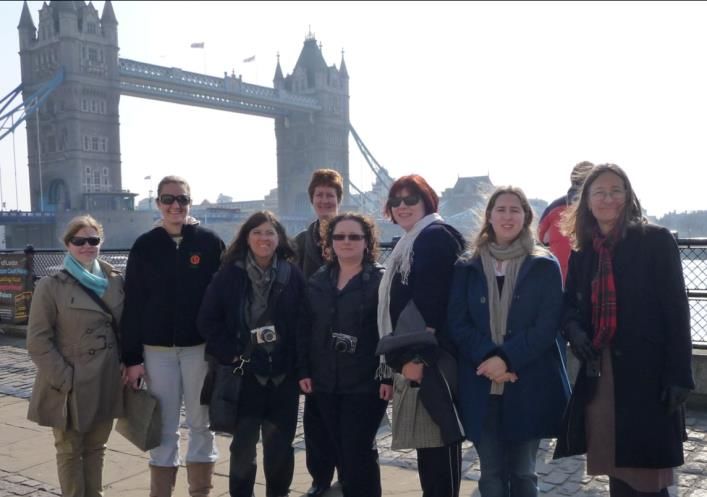
Alison Wellford; MFA
   Assistant Professor of English and Internal Director of the Pan-European MFA in Creative Writing
   Hartzel Hall 115, x 3394; email acwellfo@cedarcrest.edu

       Ms. Wellford teaches creative and professional writing at the college. She published the novel Indolence and her short
       fiction has appeared in The Gettysburg Review, The Barcelona Review, and Fence, among other journals. She’s
       received fellowships and grants for her writing from The MacDowell Colony, The Virginia Center for the Creative Arts,
       Ragdale, and The Barbara Deming Memorial Fund.

   Bob Wilson; PhD
   Provost; Associate Professor of English
   Blaney Hall 116, x3474; email rawilson@cedarcrest.edu

       Dr. Wilson teaches American literature, film studies, and college writing. He has published scholarship on writers such as
       Henry James and Herman Melville, as well as a writing guide modeled from the work of Ernest Hemingway.

Support:

Ruth Pérez
Administrative Assistant, Department of History, Literature &
        Languages
Hartzel Hall 119, x3389; email Ruth.Perez@cedarcrest.edu

                                                                                English faculty members Bob Wilson (PhD), Carol Pulham (PhD), and
                                                                               LuAnn McCracken Fletcher (PhD), standing; Alison Wellford (MFA) and
                                                                                                    Peter Nagy (PhD), seated.

Advising Information

All English and Writing majors and minors are assigned a faculty advisor within the department when they declare
their course of study. If you are planning to declare a major or minor, do so as soon as it is permitted, since a
faculty advisor within the program can guide you through the completion of your liberal arts and major
requirements and alert you to possibilities for courses, internships, and post-graduate plans that you might not have
considered.

Each semester during the course registration period, all students should speak with their major advisor prior to
signing up for classes. In addition to maintaining regular contact with your advisor during the registration period,
you are urged to meet with him or her on any occasion when his or her advice may be needed to help you solve
academic problems or to explore academic opportunities. All faculty members hold regular office hours or will
make a special appointment to meet with you if the posted hours are insufficient.

                                                                   4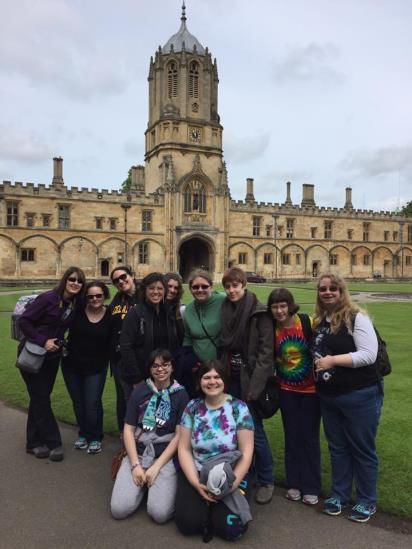
Reference Books and Professional Organizations

The following reference books are suggested by the faculty to assist in your preparation for the study of literature
and writing:

        Breen, Nancy and Erika O’Connell, eds. Poet’s Market. Cincinnati: Writer’s Digest Books, updated annually.
               [Includes interviews on the craft of poetry and information on getting published.]

        Brewer, Robert Lee and Joanna Masterson, eds. Writer’s Market. Cincinnati: Writer’s Digest Books, updated
               annually. [Includes interviews with writers on writing and information on getting published.]

        Gibaldi, Joseph. MLA Handbook. 8th ed. New York: MLA, 2016. [Style guide for the discipline.]

        Harmon, William and Hugh Holman. A Handbook to Literature. 12th ed. Upper Saddle River, NJ: Prentice
             Hall, 2011. [Provides alphabetical listing of literary terms.]

In addition to the books listed above, Hartzel library also contains a copy of the Oxford English Dictionary that may be
consulted. Hartzel library and lounge contain a collection of literature—including copies of books signed by authors
who have visited Cedar Crest—that may be borrowed on the honor system; copies of The Writer’s Chronicle are also
available.

Two websites of special interest to majors are the Modern Language Association site (www.mla.org) and the
Association of Writers and Writing Programs site (www.awpwriter.org).

Planning When to Take Your English and Writing Courses

                                                            The rotation sequence of courses regularly offered by the
                                                            English program appears on the next page. This
                                                            template lists only those courses offered for the English
                                                            major/minor, and English courses for the Writing
                                                            major/minor, that are regularly offered in the day,
                                                            evening, and online as noted. Each semester, the English
                                                            faculty may supplement this roster of regular course
                                                            offerings with other literature and/or writing courses,
                                                            and other circumstances may change when a particular
                                                            course is offered. Please consult the schedule each
                                                            semester for a list of all course offerings and times. Speak
                                                            with your advisor if you have any concerns or questions.

                                                            The English program may also offer additional literature
                                                            or writing courses in summer sessions and May/winter
                                                            terms. Please consult the course schedule each semester
                                                            for these listings.

     Students & alumnae in Rome, Italy (March 2013) for
         English Seminar: Italy, Reading Heaven & Hell

                                                             5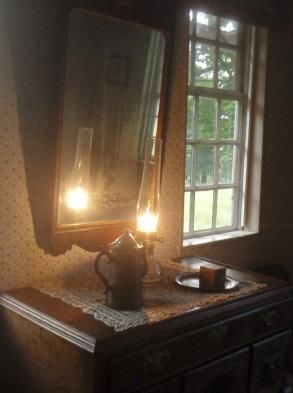
English Course Rotation Sequence
    Semester 1: Fall 2020 & 2022       Semester 2: Spring 2021 & 2023           Semester 3: Fall 2019 & 2021      Semester 4: Spring 2020 & 2022
Literature Courses:                   Literature Courses:                  Literature Courses:                   Literature Courses:

ENG 101 Survey of Brit Lit I(D)       ENG 102 Survey of Brit Lit II (OL)   ENG 101 Survey of Brit Lit I (E)      ENG 102 Survey of Brit Lit II (D)
ENG 120 Survey of Am Lit (OL)         ENG 105 Survey of World Lit I (D)    ENG 120 Survey of Am Lit (OL)         ENG 120 Survey of American Lit
ENG 223 Topics in American Lit        ENG 120 Survey of Am Lit (D)         ENG 180 Women Go to the                 (D)
  (E)                                 ENG 203 Lit. Research Methods          Movies(D)                           ENG 203 Lit. Research Methods
ENG 209 Professional Dev. for           (E)                                ENG 209 Professional Dev. for           (E)
  Majors (D)                          ENG 225 Topics in British Lit (D)      Majors (E)                          ENG 245 Topics in World
ENG 303 Linguistics (E)               ENG 312 Medieval and Renaissance     ENG 223 Topics in American Lit (D)      Literature (OL)
ENG 311 Shakespeare (E)                 Lit (E ’23), or ENG 319 Modern     ENG 306 Chaucer (E)                   ENG 225 Topics in British Lit (D)
ENG 322 Realist Am Lit ( E ’22), or     and Contemporary Brit Lit (E       ENG 323 Modern American               ENG 285 Women Writers (D)
    ENG 321 Romantic Am Lit             ’21)                                 Literature (E ’21), or ENG 326      ENG 318 19th C Brit Lit (E ’22), or
    (E’20)                            ENG 352 English Seminar (E)            Contemporary American                 ENG 317 Restoration & 18th C
                                                                             Literature (E ’19)                    Brit Lit (E ’20)
Writing Courses:                                                                                                 ENG 352 English Seminar (E)
                                      Writing Courses:                     Writing Courses:
ENG 104 Intro to Creative Writing                                                                                Writing Courses:
   (D)                                ENG 200 Literary Analysis (E)        ENG 104 Intro to Creative Writing
ENG 200 Literary Analysis (D)         ENG 230 Intro to Professional          (D or E)                            ENG 200 Literary Analysis (E)
ENG 233 Creative Writing:               Writing (OL)                       ENG 200 Literary Analysis (D)         ENG 230 Intro to Professional
   Fiction (D)                        ENG 234 Creative Writing:            ENG 233 Creative Writing: Fiction       Writing (OL)
ENG 235 Topics in Nonfiction            Poetry (E)                           (E)                                 ENG 234 Creative Writing:
   Writing (E)                        ENG 235 Topics in Nonfiction         ENG 235 Topics in Nonfiction            Poetry(D)
ENG 334 Topics in Poetry (E)            Writing (D)                          Writing (D)                         ENG 235 Topics in Nonfiction
                                      ENG 333 Topics in Fiction (E)        ENG 237 Writing for the Web             Writing (E)
                                      ENG 351 Writing Major Capstone         (hybrid/OL)                         ENG 335 Advanced Nonfiction
                                                                           ENG 336 Topics in Professional          Writing (E)
                                                                             Writing (E)                         ENG 351 Writing Major Capstone

                                        “D” = Daytime Section; “E” = Evening Section; “OL” = Online Section

 Residency Requirement for Transfer Students
 All English and Writing majors must complete successfully a minimum of 18 credits of Cedar Crest College English
 courses; this figure includes 12 credits at the 300-level. However, the department reserves the right to negotiate a
 lower number in special cases.

           Notes on Classes to Take

                                                                           6                    Posing with the Bard at Anne Hathaway’s
                                                                                                 Cottage, Stratford, England (May 2016)
The English Curriculum
Course Requirements for Majors & Minors
English Major (16 Courses, 48 credits)
Core Requirements (8): Complete Eight Courses Listed Below
___ ENG 101 Survey of British Literature I –or– ENG 102 Survey of British Literature II
___ ENG 120 Survey of American Literature
___ ENG 105 Survey of World Literature I –or– ENG 245 Topics in World Literature
___ ENG 200 Literary Analysis
___ ENG 203 Literary Research Methods
___ ENG 209 Narrating Your Success: Professional Development for Majors
___ ENG 306 Chaucer –or– ENG 311 Shakespeare
___ ENG 352 English Seminar (Junior or Senior Class Standing)
Advanced British Literature (1): Complete at Least One Course Listed Below
___ ENG 312 Medieval and Renaissance Literature
___ ENG 317 Restoration and Eighteenth-Century British Literature
___ ENG 318 Nineteenth-Century British Literature
___ ENG 319 Modern and Contemporary British Literature
Advanced American Literature (1): Complete at Least One Course Listed Below
___ ENG 321 Romantic American Literature
___ ENG 322 Realist American Literature
___ ENG 323 Modern American Literature
___ ENG 326 Contemporary American Literature
Advanced Literature Electives (2): Complete at Least Two Additional 300-Level ENG Literature Courses from Any
Literary Field
___ ENG 3_ _ :
___ ENG 3_ _ :
Literature and Writing Electives (2): Complete at Least Two Additional 100-, 200-, or 300-Level ENG Literature or Writing
Courses from Any Literary Field
___ ENG 1_ _ /2__ / 3 _ _:
___ ENG 1_ _ /2__ / 3 _ _:
Oral Presentation Requirement (1): Complete One Course Listed Below
___ COM 100 Introduction to Communication
___ COM 210 Interpersonal Communication
___ THS 105 Public Speaking
Technology Requirement (1): Complete One Course Listed Below
___COM 120 Introduction to New Media
___COM 107 Digital Imaging with Photoshop
___COM 108 Digital Design with Adobe
___COM 252 Digital Journalism
___ENG 237: Writing for the Web
Portfolio of Writing Requirement:
___ A professional portfolio of course writings suitable for publication, for submission to a graduate literature program, or for
consideration by a prospective employer. Due by April 1st, if the student is graduating at the end of a spring semester, or
within the first two weeks of the student’s final semester if not a spring semester. For content and assessment, refer to
“Portfolio of Writing” in the Guide to the English Program.
7HON courses offered by English faculty (other than HON 110 or FYS HON) count as advanced courses for the English major.
Beyond courses required for the major, students are recommended to take 1) at least two American or European history courses
or one of each, and 2) two sequential language classes. Please refer to the Cedar Crest College catalog for grade, Grade Point
Average, residency, and other requirements for the English major.
English Major for Secondary Education
(12 Courses, 36 credits)
Core Requirements (8): Complete Eight Courses Listed Below
___ ENG 101 Survey of British Literature I –or– ENG 102 Survey of British Literature II
___ ENG 120 Survey of American Literature
___ ENG 105 Survey of World Literature I –or– ENG 245 Topics in World Literature
___ ENG 200 Literary Analysis
___ ENG 203 Literary Research Methods
___ ENG 303 Linguistics and Development of the English Language
___ ENG 306 Chaucer –or– ENG 311 Shakespeare
___ ENG 352 English Seminar (Junior or Senior Class Standing)
Film Course Elective (1): Complete at Least One Course Listed Below
___ COM 140 Introduction to Film
___ COM 240 History of Cinema
___ COM 244 Topics in Film
___ ENG 180 Women Go to the Movies: From Book to Film
___ HIS 220 Film and History: Visions and Revisions of the Past
Advanced Literature Electives (2): Complete at Least Two Additional 300-Level ENG Literature Courses from Any
Literary Field
___ ENG 3___:
___ ENG 3___ :
Creative Writing Elective (1): Complete at Least One Course Listed Below
___ ENG 233 Creative Writing: Fiction
___ ENG 234 Creative Writing: Poetry
___ ENG 235 Topics in Nonfiction Writing
Portfolio of Writing Requirement:
___ A professional portfolio of course writings suitable for publication, for submission to a graduate program, or for
consideration by a prospective employer. Due by the end of classes in the semester prior to the student’s
teaching semester. For content and assessment, refer to “Portfolio of Writing” in the Guide to the English Program.
Cognate Courses Completed in Secondary Education
Adolescent Literature Course (1): Completed as an EDU Major Requirement.
___ EDU 214 Reading in the Content Area
Oral Presentation Requirement (1): Satisfied through EDU Major Requirement or Complete One Course Listed Below.
Students completing a Secondary Education major must satisfy the Oral Presentation requirement specific by the
Education department.
___ Education Oral Presentation Requirement
___ COM 100 Introduction to Communication
___ COM 210 Interpersonal Communication
___ THS 105 Public Speaking
Technology Requirement (1): Satisfied through EDU Major Requirement, or Complete One Course Listed Below. Students
completing a Secondary Education major must satisfy the Technology requirement specific by the Education
department.
8___ Education Technology Requirement
___COM 120 Introduction to New Media
___COM 252 Digital Journalism
___ENG 237 Writing for the Web
HON courses offered by English faculty count as advanced courses for the English major. Secondary Education majors should complete
English content-area requirements before student teaching. Please refer to the Cedar Crest College catalog for grade, Grade Point Average,
residency, post-baccalaureate certification, and other requirements. Teacher candidates seeking secondary teacher certification in English
must have at least a 3.0 GPA in their content-area course work, as well as a minimum overall 3.0 cumulative GPA. The English faculty
recommend that students declare a secondary English major in addition to completing the Secondary Education English concentration.
SAGE English Major
(14 courses, 42 credits)
Core Requirements (7): Complete Seven Courses Listed Below
___ ENG 101 Survey of British Literature I –or–
ENG 102 Survey of British Literature II
___ ENG 120 Survey of American Literature
___ ENG 105 Survey of World Literature I –or–
ENG 245 Topics in World Literature
___ ENG 200 Literary Analysis
___ ENG 203 Literary Research Methods
___ ENG 306 Chaucer –or–
ENG 311 Shakespeare
___ ENG 352 English Seminar (Junior or Senior Class Standing)
Literature and Writing Electives (2): Complete at Least Two Additional 100-, 200-, or 300-Level ENG Literature
or Writing Courses from Any Literary Field
___ ENG 1__ / 2_ _ / 3 _ _:
___ ENG 1__ / 2_ _ / 3 _ _:
Advanced Literature and Writing Electives (3): Complete at Least Three Additional 300-Level ENG Literature
or Writing Courses from Any Literary Field
___ ENG 3_ _ :
___ ENG 3_ _ :
___ ENG 3_ _ :
Oral Presentation Requirement (1): Complete One Course Listed Below
___ COM 100 Introduction to Communication
___ COM 210 Interpersonal Communication
___ THS 105 Public Speaking
Technology Requirement (1): Complete One Course Listed Below
___ COM 120 Introduction to New Media
___ COM 252 Digital Journalism
___ ENG 237 Writing for the Web
Portfolio of Writing Requirement:
___ A professional portfolio of course writings suitable for publication, for submission to a graduate program in
English, or for consideration by a prospective employer. Due by April 1st, if the student is graduating at the end
of a spring semester, or within the first two weeks of the student’s final semester if not a spring semester. For
content and assessment, refer to “Portfolio of Writing” in the Guide to the English Program.
9HON courses offered by English faculty count as advanced courses for the SAGE English major (with the exception of HON
110 and HON FYS courses). Beyond requirements for the major, students are recommended to take at least one American or
European history course. Please refer to the Cedar Crest College catalog for grade, Grade Point Average, residency, and other
requirements for the English major.
English Minor
(6 courses, 18 credits)
Core Requirement (1): Complete the Course Listed Below
___ ENG 200 Literary Analysis
Literature Electives (2): Complete at Least Two Additional 100-, 200-, or 300-Level ENG Literature Courses
from Any Literary Field
___ ENG 1__ /2_ _ / 3 _ _:
___ ENG 1__/ 2_ _ / 3 _ _:
Literature and Writing Electives (1): Complete at Least One Additional 100-, 200-, or 300-Level ENG Writing
Course or Literature Course from Any Literary Field
___ ENG 1__ /2_ _ / 3 _ _:
Advanced Literature Electives (1): Complete at Least One Additional 300-Level ENG Literature from Any
Literary Field
___ ENG 3_ _:
Advanced Literature and Writing Electives (1): Complete at Least One Additional 300-Level ENG Writing
Course or Literature Course from Any Literary Field
___ ENG 3_ _:
HON courses offered by English faculty count as advanced courses for the English minor, with the exception of HON 110 and
HON FYS courses. Departmental approval is required to count a course for the minor if the same course is also being used to
fulfill another major or another minor. No more than two courses from your major may be used to satisfy the requirements for
the English minor. Please refer to the Cedar Crest College catalog for grade, Grade Point Average, residency, and other
requirements for the English minor.
Cedar Crest students, faculty, and alumnae at Christ Church,
Oxford University, England (May 2016)
10Writing Major (14 courses; 42 credits)
Core requirements (30 credits)
ENG 104: Introduction to Creative Writing 3 credits
ENG 230: Introduction to Professional Writing 3 credits
ENG 235: Topics in Nonfiction Writing 3 credits
ONE of the following: ENG 333: Topics in Fiction, ENG 334: Topics in Poetry, or ENG 335: Advanced Nonfiction Writing
3 credits
ENG 200: Literary Analysis 3 credits
100-, 200-, or 300-level literature elective 3 credits
ENG 351 Writing Major Capstone 3 credits
Oral Proficiency requirement to be satisfied by one of the following: COM 100, COM 210, or THS 105
Global Studies requirement, 3 credits, to be satisfied by either ENG 105: Survey of World Literature I or ENG 245: Topics in
World Literature
Technology requirement, 3 credits, may be satisfied with either ENG 237: Writing for the Web or by COM 252: Digital
Journalism
Information literacy to be introduced in the introduction to creative writing and professional writing courses, reinforced in the
300-level writing courses, and mastery demonstrated in the writing major capstone course and in the senior portfolio required
for graduation.
Applied writing electives (6 credits)
Choose TWO courses from the list below:
ENG 233: Creative Writing: Fiction 3 credits
ENG 234: Creative Writing: Poetry 3 credits
ENG 235: Topics in Nonfiction Writing as appropriate topics are offered 3 credits each
BUA 204: Business Communications 3 credits
COM 150: Introduction to Journalism 3 credits
COM 152: The “Crestiad” Staff 3 credits
PSC 204: Legal Research and Writing 3 credits
THS 230 Playwriting 3 credits
Completion of a writing internship, to be determined with student’s faculty advisor 3 credits
Advanced writing electives (6 credits)
Choose TWO courses from the list below:
ENG 209: Narrating Your Success: Professional Development for Majors 3 credits
ENG 333: Topics in Fiction 3 credits
ENG 334: Topics in Poetry 3 credits
ENG 335: Advanced Nonfiction 3 credits
ENG 336: Topics in Professional Writing 3 credits
Please note that satisfaction of the WRI-1 requirement is a prerequisite for all courses for the Writing major, with the exception of ENG 104:
Introduction to Creative Writing. ENG 104: Introduction to Creative Writing is required before other creative writing courses are taken; ENG
230: Introduction to Professional Writing is required before other advanced professional writing courses are taken. The Writing major may be
completed as a SAGE major. Please consult the department for details.
Writing majors are also required to submit a writing portfolio as directed below under “Portfolio Requirement for
Graduation.”
11Writing Minor (6 courses, 18 credits)
Core Requirement (1):
___ ENG 235 Topics in Nonfiction Writing*
Writing Electives (5): Complete at Least Five Writing Courses Below, Totaling at Least 15 Credits
___ ENG 104 Introduction to Creative Writing
___ ENG 230 Introduction to Professional Writing
___ ENG 200 Literary Analysis
___ ENG 233 Creative Writing: Fiction
___ ENG 234 Creative Writing: Poetry
___ ENG 235 Topics in Nonfiction Writing*
___ ENG 237 Writing for the Web
___ ENG 333 Topics in Creative Writing: Fiction
___ ENG 334 Topics in Creative Writing: Poetry
___ ENG 335 Advanced Nonfiction Writing
___ ENG 336 Topics in Professional Writing
___ ENG 370 Internship
___ BUA 204 Business Communications
___ COM 150 Introduction to Journalism
___ COM 152 “The Crestiad” Staff
___ COM 252 Digital Journalism
___ PSC 204 Legal Research and Writing
___ THS 230 Playwriting
Other courses offered for the Writing major, special topics courses in writing, or WRI-2 courses may count toward writing electives with
the permission of the Director of Writing. Students are encouraged to complete at least one writing internship.
* ENG 235 Topics in Nonfiction Writing may be repeated under different topics.
Departmental approval is required to count a course for the minor if the same course is also being used to fulfill another major or another
minor. No more than two courses from your major may be used to satisfy the requirements for the Writing Minor. Please refer to the
Cedar Crest College catalog for grade, Grade Point Average, residency, and other requirements for the Writing minor.
12Should I Complete a Second Major or a Minor?
An English or Writing major by itself develops reading, critical thinking, and writing skills, all of which are desirable for many
occupations and essential for graduate work, including law school and medical school. If you are interested in pursuing an
M.F.A., you should choose a Writing major; if you are interested in pursuing a Ph.D. in English you should choose an English
major. Depending upon your career interests, it may be beneficial to combine an English or Writing major with another major
or minor. Here are some suggested pairings:
Writing major and English minor or the reverse (for students interested in journalism or free-lance writing, research
writing, library science, or publishing)
Writing major and Media Studies or New Media major or Communication minor (for students interested in
journalism, publishing, advertising, public relations, etc., including work in an online venue)
English or Writing major and Business major or minor (for students interested in publishing, media and public
relations, advertising, retailing, or careers with nonprofit organizations)
Writing major with a science major or minor, such as Biology or Chemistry (for students interested in technical
writing or publishing in technical or scientific fields—or for students interested in attending medical school)
English with an Art major or minor (for students interested in web design and electronic publishing or for students
interested in working for a museum or library, or for students interested in visual communication—a New Media
major or minor is also recommended)
English with a History major or minor (for students interested in a public service career or in attending law school)
English with a Spanish major or minor (for students interested in work as translators or for international businesses
or agencies)
English with Secondary Education major (for students interested in teaching in a public or private school setting)
English Program Assessment
Each year, the English faculty review the English program to ensure that it reflects the
requirements of external agencies, such as the Pennsylvania Department of Education, and
the recommendations of professional organizations, such as the Modern Language
Association (MLA), the Association of Departments of English (ADE), and the Association
of Writers and Writing Programs (AWP), for the preparation of its majors for careers in
language-related fields as well as graduate study. Part of the review of the program involves
an assessment of how well it enables students to achieve the learning outcomes associated
with the major. To that end, the English faculty have implemented two types of formal
assessment involving students enrolled in the major: 1) an exit survey of graduating senior
majors and minors and 2) a portfolio review, required of all majors. Each of these
mechanisms for program review is described below.
Site of Emerson and Hawthorne’s writing
desk at The Old Manse in Concord, MA.
(Photo courtesy Dr. Wilson.)
Exit Survey of Graduating Seniors
As part of the Department of History, Literature, and Language’s ongoing assessment of its academic programs, all senior
English/Writing majors and minors are asked to complete an exit questionnaire about their experiences as an English or
Writing major or minor at Cedar Crest College. The questionnaire asks students to evaluate their achievement of the English
program learning outcomes and to comment on the value of the Cedar Crest English program to them. The feedback
provided helps the department and the English faculty to identify the strengths and weaknesses of the current curricula in
English and Writing in attaining the educational objectives of each from the perspective of its students. All survey responses
are anonymous.
13Portfolio Requirement for Graduation
By April 1st, if the student is graduating from Cedar Crest at the end of a spring semester or within the first two weeks of the
student’s final semester if not a spring semester, all graduating seniors must submit a portfolio of four critical essays or writing
projects that they consider to be the best examples of work completed in undergraduate English courses taken at Cedar Crest
College, prepared according to the parameters listed below. Students completing the English major for secondary education
should submit their portfolio no later than the end of classes of the semester prior to their student teaching semester. While
the portfolios will be scored by the English faculty, the scores will not be used to evaluate individual students, but rather to
provide the faculty with an indication of areas in which the English program might improve instruction.
The purpose of the portfolio is first and foremost to serve as an assessment tool for the English program. Nevertheless, in the
process of selecting items to include and writing the required reflection, students have an opportunity to gain insight into their
progress as developing writers and scholars, and to reflect on the connections between their major and their Cedar Crest
education as a whole. The portfolio may also be used by students seeking admission to graduate school or entering a
profession requiring the demonstration of writing abilities; in particular, students graduating with a writing major should
prepare their portfolio with this objective in mind.
Items included in the portfolio must be submitted as clean copies, without instructor comments or grades. Students may
revise the writing chosen prior to its inclusion in the portfolio; writing majors are required to do so. The portfolios will not be
returned to the student; hence, students should keep copies of their portfolio materials. Portfolios will be submitted
electronically as directed by the department.
The selection of items for inclusion in the portfolio will be determined by the type of major the student is completing.
Portfolio Contents for English Majors, English and Secondary Education Majors, and SAGE English Majors
One essay from an American literature course or an essay on an American author submitted for any class
One essay from a British literature course or an essay on a British author submitted for any class
One essay from a world literature course or an essay on a non-Anglo-American author submitted for any class
One additional piece of the student’s choice. This final piece may be critical or creative; if a creative work is
chosen, the student should select a piece that addresses the evaluation criteria for the writing major, listed below.
If you have any questions about the selection of the above materials for the portfolio, speak with the English program
director.
These essays should be accompanied by a reflection (about 3-5 typed pages) on the essays chosen for inclusion in the
portfolio and on the student’s larger experience within the English major. This reflection should 1) explain the assignment to
which each essay responded, 2) reflect on what the student learned in the process of completing each assignment, and 3)
address how the portfolio, taken as a whole, demonstrates the learning outcomes for the major listed in the chart below.
Finally, the reflection should briefly explore the connections the student sees between her or his experience of the English
major and the outcomes of the Cedar Crest curriculum as a whole.
14Literature-Focused Portfolio Evaluation
Knowledge of American, British, Ability to Employ Critical Strategies Ability to Write Effectively,
and World Literature and its to Read and Analyze Literature Critically, and Creatively about
Cultural Contexts Literature
Demonstrates knowledge of an author, Demonstrates understanding of and Develops and supports a thesis
period, movement, or paradigm from ability to apply one or more critical Includes insightful and developed ideas
American literature strategies for reading literary texts Provides a coherent and logical
Demonstrates knowledge of an author, Demonstrates understanding of literary organization
period, movement, or paradigm from texts as acquiring meaning, significance, Follows appropriate audience and
British literature and value in the context of their discourse conventions
Demonstrates knowledge of classical relationships with readers, cultures, Uses a sophisticated and professional
literature or an author, period, literary traditions, and the historical style
movement, or paradigm from a non- moments in which they are produced by
their authors
Employs sound editing decisions to
Anglo-American tradition prepare a manuscript of professional
quality
Literature-focused portfolios will be evaluated, on a 12-point scale, for how well the portfolio, taken as a whole, demonstrates
the student’s knowledge of American, British, and World literature and its cultural contexts (1-4 points); ability to employ
critical strategies for analysis (1-4 points); and ability to write effectively, critically, and creatively about literature (1-4 points).
Portfolio Contents for Writing Majors
One analytic paper or piece of professional writing (3-5 pages)
One work of nonfiction (5-10 pages)
One revision process report (2-3 pages)
One longer work from the capstone project (approximately 10 poems or 30 pages of prose) or two shorter creative
works from any creative genre
The maximum number of pages for the entire portfolio is approximately 50 pages.
Revision process report: Students must submit a 2-3 page typed response in which they reflect on their progress and process
as writers, including how they have revised the portfolio pieces. The report should not only include a reflection on their
revision process and growth as a writer on a whole, but also include at least two examples of specific revisions made during
their writing career; this might include, for example, deleting expository writing that had previously weighed down a fiction
submission, the re-shaping of a particular line of poetry, or addressing an issue of audience in a professional writing piece. If
possible, the student should include a short quotation from an earlier draft to demonstrate the specific revisions made.
Finally, a 1-2 page reflection should be included with the portfolio. This reflection should briefly explore the connections the
student sees between her or his experience of the Writing major and the outcomes of the Cedar Crest curriculum as a whole.
Writing portfolios will be evaluated, on a 12-point scale, for the student’s knowledge and application of craft techniques (1-4
points); ability to express originality, voice, and creativity in writing (1-4 points); and an ability to research and revise in crafting
a piece of writing (1-4 points).
15Writing-Focused Portfolio Evaluation
Knowledge and Application of Craft Ability to Express Originality, Ability to Research and Revise in
Techniques Voice, and Creativity in Writing Crafting a Piece of Writing
Demonstrates knowledge of craft Demonstrates a willingness to take Demonstrates ability to conduct and
techniques in creative, critical, and/or creative risks and to think critically employ relevant research
professional writing about the relationship among subject, Demonstrates ability to improve a piece
Demonstrates ability to effectively style, and audience of writing through multiple drafts with
employ craft techniques germane to the Demonstrates an original and imaginative feedback from different readers
written subject matter approach to subject and style, including Employs sound editing decisions to
Demonstrates cogency, competency, and a fresh and vivid approach to using prepare a manuscript of professional
complexity language quality
Demonstrates an awareness and
development of voice
Academic Opportunities in English and Writing
Internships
Internships are highly recommended and may be planned for as early as your sophomore year. Consult with your faculty
advisor about the kind(s) of internship to pursue, as well as to complete the application process. English majors are required,
and writing majors encouraged, to take ENG 209: Narrating Your Success: Professional Development for Majors. This course
is intended, in part, to prepare students for internships. Students who take this course when offered in the fall may wish to
complete an internship in the subsequent spring semester.
Graduate School
If you are contemplating attending graduate school (master’s or doctoral program) or pursuing a professional degree (law
school, medical school), you should begin the planning process in the second half of your junior year. Your faculty advisor
can help you to identify suitable graduate programs for your interests, as well as suggest strategies for a successful application.
In general, in order to be considered for financial aid, you must submit your complete application by the deadline set by the
school—usually December for admission the following fall. Most graduate programs (M.A. and Ph.D. in English, or M.F.A.)
require you to take the GRE exam (general and subject tests); these should be taken by early fall of your senior year so that
you will have results by the application deadline. Please note that the GRE subject exams are only offered in November and
April; thus, if you are applying to graduate school in the fall semester of your senior year, you must take the subject exam in
November. Visit www.ets.org/gre/ for testing dates and information on the GRE exams.
Many graduate programs require you to submit a sample of your undergraduate academic writing (either a single essay or a
portfolio) with your application. The portfolio you assemble to complete your English major will serve as a resource for you
to fulfill this requirement.
If you are pursuing graduate study at the Ph.D. level in English, be sure to take 300-level coursework in a full range of
American and British literature, as well as world literature. You should also consider completing a teaching internship with an
English faculty member. Supplement your English coursework with history, art history and philosophy courses. And, as
many Ph.D. programs have a language requirement, take international language courses.
16Preterite, the Cedar Crest College Literary Club
Preterite is Cedar Crest’s literary club, open to any student interested in literature and/or creative writing. Preterite members
meet weekly to plan activities that include film nights, pizza parties, open mic readings, field trips, and fundraisers. Preterite
also sponsors a writing contest with poetry, fiction, and nonfiction categories; winning entries are published in the club’s
chapbook, Onyx. The club helps to sponsor visiting writers and participates in other college-wide activities.
Xi Kappa, the English Honor Society
Xi Kappa is the Cedar Crest chapter of Sigma Tau Delta, the international English honor society. Xi Kappa works with
Preterite to sponsor speakers and literary-themed events, and plans activities such as a banned books raffle during Banned
Books week. Members of Xi Kappa are eligible to apply for scholarships and internships sponsored by this organization, as
well as to submit work to its creative and scholarly publications (The Rectangle and The Sigma Tau Delta Review); information
about these items is available at Sigma Tau Delta’s website. Students who meet the eligibility requirements for Sigma Tau
Delta will be invited to join Xi Kappa.
Pitch, Cedar Crest’s Online Journal of Arts and Literature
Pitch: A Journal of Arts and Literature publishes students' original works of creative writing, including play scripts; photography,
visual and digital art; video and new media creative work; and choreography. The journal is staffed by two student editors who
hold internships with the department and are advised by a faculty member. All published work is peer reviewed by students,
faculty and alumnae in the various fields featured in the journal. See www.cedarcrest.edu/pitch.
Association of Writers and Writing Programs (AWP)
The department maintains a membership in the AWP, which publishes The Writer’s Chronicle, copies of which are available to
students. Students also have access to the AWP’s website, which provides useful information of interest to writers.
Awards in English and Writing
The Department of History, Literature, and Languages awards the Humanities Prize and the Margaret M. Bryant Prize to
graduating seniors from the department. Preterite offers creative writing prizes in connection with its annual contest, and the
English program sponsors the Senior Essay Prize in English.
Each spring, the English faculty award a prize of $100 to the best essay submitted by a senior English major. Eligible essays
must be analytic, not creative; they must be five pages minimum in length, not including a Works Cited page. There is no
maximum page length. An analytic essay prepared for your portfolio is a good submission choice.
17Careers for English or Writing Majors
Students who enjoy reading and writing but are not interested in teaching often ask “What can I do with this degree, other than teach?”
For these students (and their parents), the following is a list of some typical careers for English/Writing majors:
Writing/Editing Publishing
Creative writing Magazines/books
Journalism Editorial, production
Freelance Advertising, sales, marketing
Science and technical writing
Public Relations
Literature-related Research
Librarian/Information specialist Writing/editing
Publishing Media Liaison
Media and public relations
Translator Business/Industry
Abstractor Banking
Researcher Management
Sales/Marketing
Personnel
To prepare yourself academically for these careers, review the section “Should I Complete a Second Major or a Minor?” in this guide and
consult with your academic advisor. English and writing majors provide excellent preparation for other careers and advanced degrees, as
well, when paired with majors in other disciplines. Students enrolled in ENG 209: Narrating Your Success: Professional Development for
Majors have the opportunity to explore and prepare for career options that match their interests.
Last updated: 10/9/19
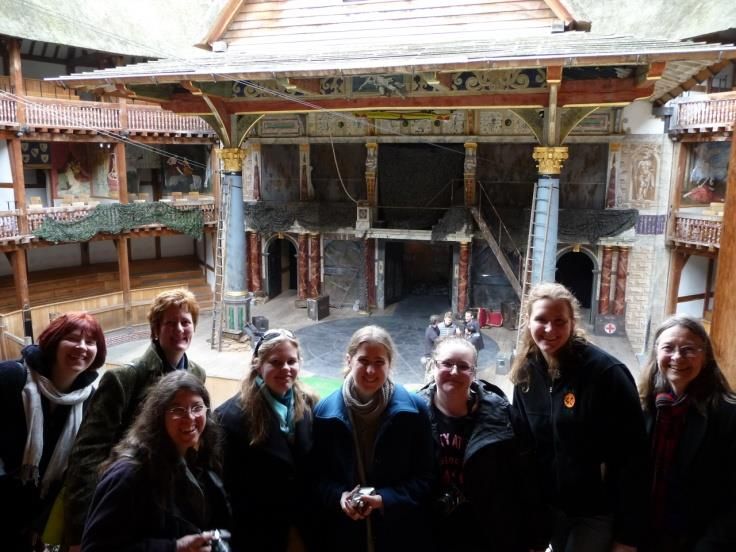
At The Globe: Cedar Crest students and faculty visit Shakespeare’s
London stage, 2011 (Photo courtesy Dr. Fletcher)
18You can also read


