The Game of American Football and the Danger It Imposes on Athletes - 1M160135-0 Taisei Ieda SILS Seminar on History Graduation Thesis Fall 2019 ...
←
→
Page content transcription
If your browser does not render page correctly, please read the page content below
1

The Game of American Football and the

    Danger It Imposes on Athletes

                 Taisei Ieda

                1M160135-0

           SILS Seminar on History

         Graduation Thesis Fall 2019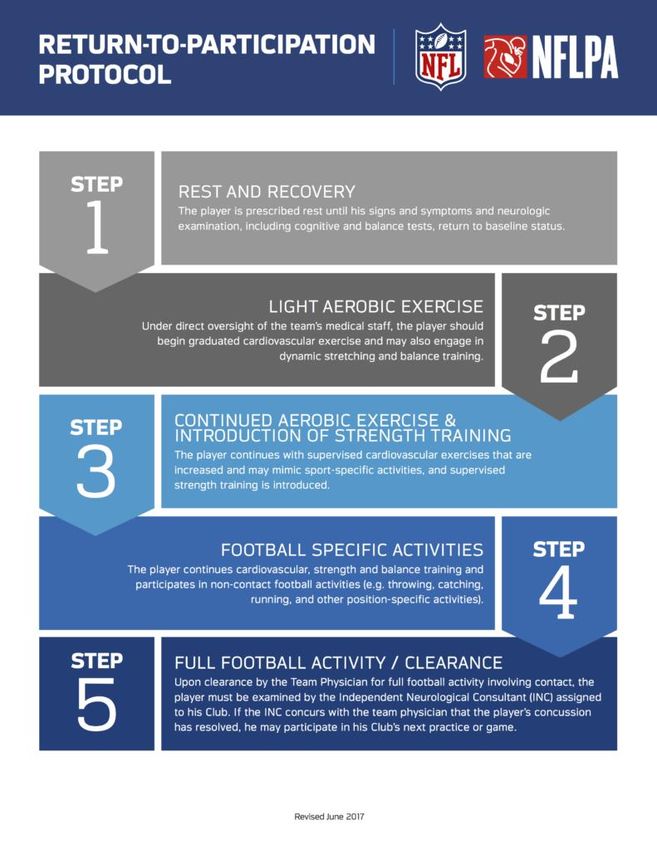
2

Abstract:

The game of football presents significant stress and toll on the athletes. With one of the

most common injuries on the field being concussions, recently, there has been an extensive

discussion questioning the safety of the game. The problem with concussions is that a

repetition of them is known to lead to a chronic traumatic encephalopathy, which is a type

of significant brain injury. There hadn't been enough attention put towards this injury due

to the lack of research and advancements in the game. Many players in the past have

suffered significant consequences, with some people even committing suicide, as discussed

in this thesis. One of the recent players who has become a victim of this was Aaron

Hernandez. Many players have relied on medicinal drugs such as 'Toradol' to overcome the

pain of injuries suffered in the league. There have been some breakthroughs in making the

game safer, such as the advancement of equipment, changes in rules, and the installation of

the concussion protocol. However, there are still significant issues in the NFL and many that

pose a threat to the safety of the players. The thesis will discuss how the events noted

above have progressed over time and how the NFL is in its current state.
3

                              Table of Contents

                                                                  Page

Abstract                                                           2

Chapter 1.     Introduction                                        6

Chapter 2.     One of the Most Significant Injuries in American   10

               Football: Concussions

Chapter 3.     Concussions and the lead to CTE                    13

Chapter 4.     The Denial by the NFL                              15

Chapter 5.     Aaron Hernandez                                    18

Chapter 6.     How did players overcome injuries in the league?   21

Chapter 7.     The Advancement of NFL Equipment                   24

Chapter 8.     The Change of Rules in the NFL                     27

Chapter 9.     NFL Concussion Protocol                            31

Chapter 10.    Seattle Seahawks Tackling Technique                35

Chapter 11.    Current Status of the NFL                          38

Chapter 12.    Thursday Night Football                            40

Chapter 13.    Conclusion                                         42

Bibliography                                                      44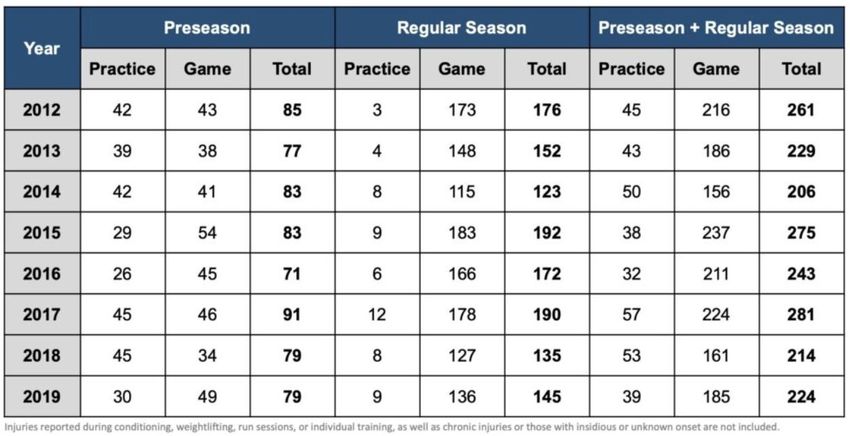
4

                                 List of Tables & Figures

Table 1. Number of Concussions in the NFL from 2012 – 2019                              10

“Injury Data.” NFL Play Smart, Play Safe,

       www.playsmartplaysafe.com/newsroom/reports/injury-data/.

Figure 1. The Stages of CTE                                                             14

Resnick, Brian. “What a Lifetime of Playing Football Can Do to the Human Brain.” Vox, Vox, 4

       Feb. 2019, www.vox.com/science-and-health/2018/2/2/16956440/super-bowl-

       2019-concussion-symptoms-cte-football-nfl-brain-damage-youth.

Figure 2. Leather Helmets used in the 1920s                                             24

“Extreme Team Sports.” History Of Football Helmets, 2010,

       www.extremeteamsports.com/Football-

       Pop%20Warner/HistoryOfFootballHelmets.htm.

Figure 3. The Introduction of Plastic helmets in the 1930s by Riddell.                  25

“Extreme Team Sports.” History Of Football Helmets, 2010,

       www.extremeteamsports.com/Football-

       Pop%20Warner/HistoryOfFootballHelmets.htm.

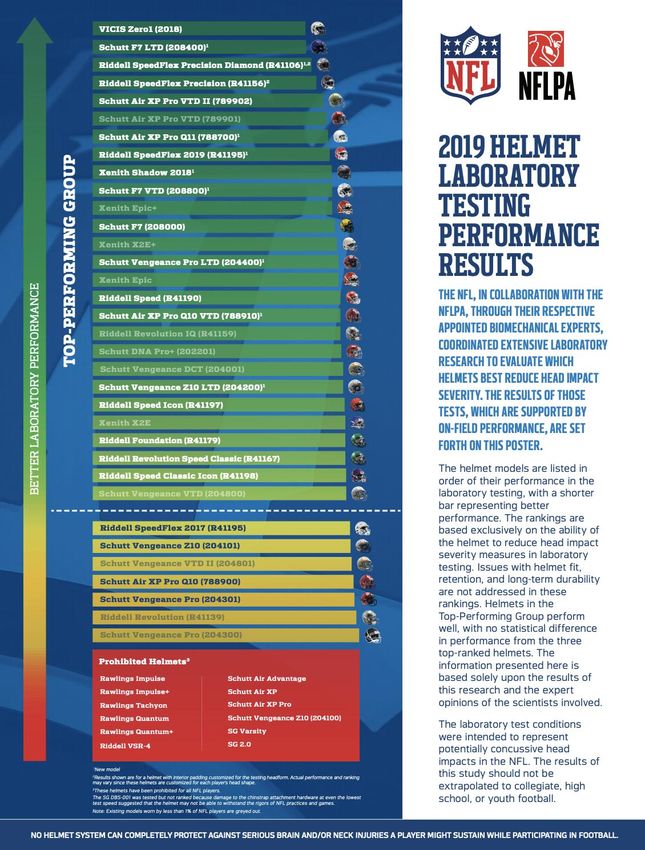
Figure 4. List of Approved Helmets for Use by the NFL                                   26

“Helmet Laboratory Testing Performance Results.” NFL Play Smart, Play Safe, 14 Sept. 2016,

       www.playsmartplaysafe.com/resource/helmet-laboratory-testing-performance-

       results/.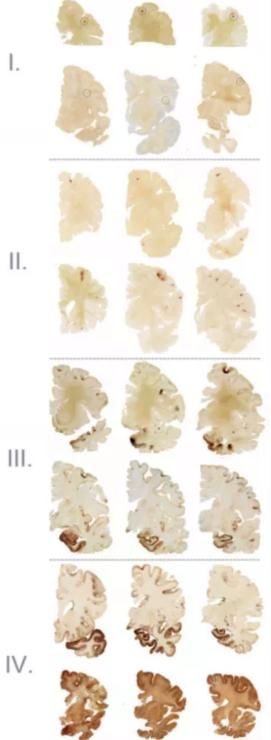
5

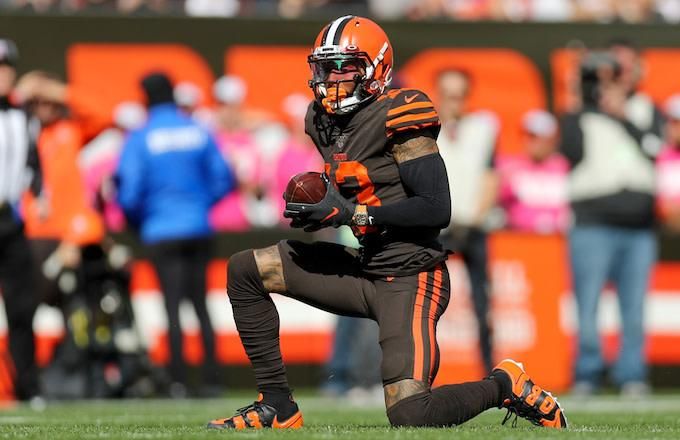
Figure 5. Odell Beckham Jr. not wearing pants over the knee area.                       29

Martinez, Jose. “Odell Beckham Jr. Fined $14K for Wearing Pants That Didn't Cover His

       Knees During Game.” Complex, Complex, 22 Oct. 2019,

       www.complex.com/sports/2019/10/odell-backham-jr-fined-14k-for-wearing-pants-

       that-didnt-cover-his-knees-during-game.

Figure 6. The Five-Step Return to Participation Protocol.                               34

“NFL Return-To-Participation Protocol.” NFL Play Smart, Play Safe, 20 June 2017,

       www.playsmartplaysafe.com/focus-on-safety/protecting-players/nfl-return-to-

       participation-protocol/.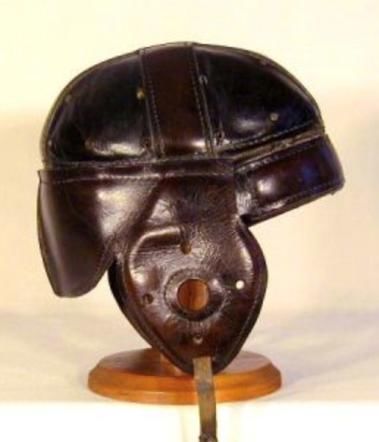
6

Chapter 1. Introduction:

       The sport of American Football is one like no other. It combines various aspects such

as physical toughness, chess-like mental strategies, and critical game situation awareness.

This sport is predominately popular in the United States. American Football originated in the

late 19th century in North American Colleges, where it had evolved from preexisting British

games of both rugby and soccer. (History Extra, 2019) The first set of matches took place in

1869, where Princeton and Rutgers played, with Rutgers taking the victory over Princeton.

The game played then is very different from the one played today. According to History

Extra, it stated that both teams were not allowed to pick up the ball but instead could only

score and advance the ball by kicking or swiping the ball with their hands. (History Extra,

2019) Present-day, two opposing teams, can move the ball down the field by either

throwing the ball or running the ball to score in an area known as the 'end zone.' Eleven

players are allowed to be on the field at one time for each team. When on offense, teams

get four chances or 'downs' to move the ball 10 yards forward. One yard is equivalent to

that of 36 inches. Once the 10 yards have been reached, the team will receive another set of

4 downs to gain another 10 yards. If the 10 yards cannot be reached within the 4 downs, the

ball will be handed over to the other team, and the team that was on offense will now

switch to defense, vice versa. (Rules of Sports, 2019)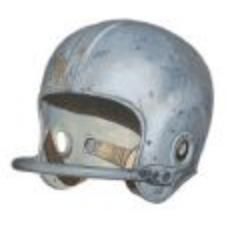
7

        The most competitive level of American Football is played in the US, known as the

National Football League or NFL, for short. The NFL consists of a total of 32 teams divided

into two conferences, the National Football Conference (NFC) and the American Football

Conference (AFC). Teams play a 16-game regular season, and the teams with the most

winning records ultimately advance to what is known as the 'playoffs.’ The games in the

playoffs are initiated in a tournament style for a chance to play in the championship game,

known as the ‘Super Bowl.’ (Wikipedia, 2020) The NFL is considered to be one of the four

major professional sport leagues in the United States, and the highest level of

professionalism that can be reached in this sport.

        Now, we arrive at the question, why is American Football so popular in the United

States? When purely looking at the NFL, one reason is unlike any other professional sport;

there is more of an equal chance of your favorite team winning the Super Bowl. This is due

to the many elements that the game of football presents, and not one aspect can be valued

over another. Football is mainly divided into three components of offense, defense, and

special teams. It is imperative to have a well-balanced force for all three elements to win.

For example, even if your organization has an outstanding offensive team, it might have a

terrible defense and special team unit. That team would most likely have a hard time

winning when their offense begins to struggle. This is why in the game of football, there are

a lot of 'upsets' where the presumed winner ultimately loses to the underdog. (Fitzpatrick,

2017)

        When looking at the sport itself and examining why people dedicate so much time

and effort to become an NFL player, one apparent reason can be the enormous amount of
8
money that can be obtained from playing the sport. There are many current and former NFL
players who grew up poor. For many athletes, becoming an NFL star was a way to escape
the rough surroundings and the life of poverty. Now, if you excel at the sport, your full
college tuition can be paid for as well as your food and dormitory expenses. In other words,
your life would be set, not only for yourself but for your family and your children’s families
to come. (Zak, 2017)
As for myself, I first came across the sport when I was in 1st grade. At the time, I had
just moved to the United States due to my father’s job. Not knowing the language of English
at all, I had very few ways of communicating with not only my teacher but my classmates.
But, I noticed how everyone was playing one particular sport during recess. That happened
to be American Football. Of course, we weren't playing tackle football, but it looked fun, so
on the day, I decided to join. Immediately I got hooked and began to watch football on
Sundays with my family. For myself, the adrenaline you would get just by watching the sport
was what got me so interested. One play could change the whole momentum of the game,
and it was a sport like no other. Some people get attracted to the flashy players on the
offensive side and their abilities to make defenders look silly and score touchdowns. But, for
me, it was the opposing side. The violent hits that defensive players would make and the
stadium roaring loud was what got me hooked. During my time, players like Sean Taylor and
Ed Reed were some of the players that I admired with their ability to knock out players
running across the field. Little did I know at the time, the amount of blow the players were
taking to their body and head and how that would impact their body in the long term.9
Minus all of the excitement and popularity the sport poses, American Football is a
hazardous sport. The amount of toll it inflicts on your body is like no other, and you have to
experience the game itself to know the exceptional care directly you must take to make it
your career. Injuries are common in football; there is not one player that isn't hurt playing
on a week-to-week basis in the NFL. In the NFL, there are a total of 16 regular games played
in 17 weeks. That means every player must be ready to go every week other than the one
bye week the team receives out of the 17 weeks. Recently, the safety of the game has been
questioned from various aspects, with some even debating if the game should also be
played at all. It's important to note that injury comes with any sport played at the
professional level. The criticism around football mainly deals with injuries that could've
been prevented in the first place.10
Chapter 2. One of the Most Significant Injuries in American Football:
Concussions
One of the most common injuries in American Football is perhaps a concussion, with
more than 200 NFL players suffering this injury each year. A heavy emphasis on the
prevention and treatment of concussions has been put in effect over the recent years. The
table below shows the number of concussions suffered during the preseason and regular
season during the period from 2012 to 2019. Even though there have been ruling and
equipment advancements to try and combat this injury, from the data below it, can be
clearly stated that there hasn't been a consistent decline. As this data only portrays those of
recent years, we must take a more in-depth look as to how the number of concussions
began a problem in the NFL in the first place.
Table 1. Number of Concussions in the NFL from 2012 – 2019 (NFL Player Safety & Health,
2020)11
First of all, what is a concussion? According to Web MD, a concussion is defined as
the most common and least serious type of traumatic brain injury or TBI. The word comes
from the Latin word, ‘concutere’ which means “to shake violently.” (Bhandari, 2019) TBI is
defined by the Center for Disease Control (CDC) as “a disruption in the normal function of the
brain that can be caused by a bump, blow, or jolt to the head, or penetrating head injury.”
(CDC, 2019) Even though Web MD defines a concussion as the 'least serious' type of TBI, I
don't necessarily agree with this statement. The number of concussions piling up over time
can have a severe effect on the brain and mental health of a person. TBI has been a severe
health problem in the United States. Each year there have been numerous cases where TBI
has resulted in permanent disabilities and, in the worst case, even death. According to the
CDC, in 2014 alone, there were approximately 2.87 million cases of TBI-related cases. Of
those, over 837,000 cases were among children. (CDC, 2019)
“A bump, blow, or jolt to the head." That seems about every play in American
Football. Even with the protective helmets, it still can't protect the brain inside the head
from moving around. So why is it that it's not until recently that there has been a substantial
amount of attention put onto concussions in the NFL? For that question to be answered,
there is a need to go back to 2002. A doctor by the name of Bennet Omalu, a Nigerian-
American pathologist, physician, and neuropathologist, discovered what would be known as
chronic traumatic encephalopathy, otherwise known as CTE. (Wikipedia, 2020) The body in
which Bennet Omalu found CTE happened to be Mike Webster. Mike Webster was a pivotal
player on the Pittsburgh Steelers team that won 4 Super Bowl Championships in the 1970s.
(Litsky, 2002) Mike Webster played a total of 17 seasons in the NFL, 15 for the Pittsburgh12 Steelers, and 2 for the Kansas City Chiefs. In 1997, he was elected for the Hall of Fame for his position, Center, which is part of the Offensive Line. One can only imagine the number of blows Mike took to his head during his tenure in the NFL. Especially with the un-advanced helmet equipment, they had during his time of play. As the idea of linking CTE to contact sports was not mainstream during this era, Omalu could not get the support for his research. Therefore, the link between the two couldn’t be correctly identified.
13

Chapter 3. Concussions and the lead to CTE

        CTE doesn’t appear in just a single case of concussion. But instead, it is a result of a

repetition of concussions over time. Even if the concussion or head injury sustained at the

time might not have been a significant one, it still can result in structural changes within the

brain. (Resnick, 2019) According to Philip Bayly, who is an engineering professor at

Washington University in Saint Louis, the same can be said for the pain you feel after you hit

your head and how that is not a direct indicator of how severe the injury is either. (Resnick,

2019)

        So, what effects does CTE have on the brain? It is believed that brains with CTE

accumulate a protein known as ‘tau.’ Tau essentially is dislodged from brain fibers

developed during an injury, which is found in the brain and nervous system. They have a

stabilizing effect on cells. Meaning that they can clump together in brain tissue, interrupting

the flow of critical information in the brain. (Simpson, 2020)

        It is also known that CTE takes time to form. Usually, it takes around 8 to 10 years

from the initial head injury for the actual symptoms to appear and the tau proteins to form

inside the brain.
14 Figure 1. The Stages of CTE (Resnick, 2019) From Figure 1. We can see the progress of CTE and how it advances in the brain in each stage. The brown stains, seen in the later stages of III and IV, represent the tau proteins discussed in the paragraph above. They start as just spots on the brain, but later, we can see how the tau proteins have clumped together and ultimately has made the whole section of the brain, brown. As the stages of CTE progress, many synonyms progress as well. In the beginning, the patient will experience subtle changes, including headaches, loss of short- term memory, and a decrease in attention. By the time, the brain reaches stage IV; most patients will have a broad range of symptoms including profound loss of focus and concentration, language difficulties, aggressive tendencies, paranoia, depression, etc. (Resnick, 2019) The problem with CTE is despite the advancements in the field of medical technology, the only way to definitively diagnose CTE to this day is through an autopsy, which means that the person would have to be dead.
15

Chapter 4. The Denial by the NFL

       September 28, 2002, was one of the most critical days in the history of American

Football. Not because a player set a record, not because a team won the Super Bowl, but

because it was the day Hall of Fame Center Mike Webster was found dead at the age of 50.

Before his death, Webster was very sick. Not many people knew, but he was broke, jobless,

and had been living inside his truck.

       As established in the prior section, the later stages of CTE can affect the decision-

making process as well as the focus on attention. With the tau proteins interrupting the

critical pathway to distribute information, Webster had fallen off. He was usually regarded

as a kind and thoughtful man during his playing days. But now, he had accumulated a series

of weapons including a semiautomatic pistol, an AR semiautomatic assault rifle, Sig Sauer

P226, and a .357 Magnum revolver, which he often talked about killing NFL Officials with.

Webster had become addicted to substances as well. One included 'Ritalin,' which was a

drug that would typically be prescribed to children with the attention-deficit disorder as

that was one of the only things that would help him through a day. (Fainaru-Wada, 2014)

       Dr. Omalu, who had been on duty to perform autopsies that day, began to examine

the body of Webster slowly. Throughout each process, Mike's body looked completely

normal. Even his brain looked normal as it showed no significant bruises or injuries. The

cause of Webster's death was marked down as an 'acute myocardial infarction,' which

essentially meant a heart attack. But, Dr. Omalu wasn’t satisfied. He ordered his assistant to

“fix the brain.” Knowing of instinct, he thought there had been some sort of evidence as to
16
the reports he saw on TV of Webster exhibiting erratic behavior upon his retirement of the
NFL. (Fainaru-Wada, 2014)
This ended up being a critical decision for the line of events to come. Dr. Omalu
found traces for possible CTE in the brain of Webster. Dr. Omalu began to hypothesize that
CTE was caused due to repeated blows to the head during Webster's tenure in the NFL.
During the time that Webster was alive, he even filed complaints himself accusing the NFL
to be responsible for his early onset of dementia and confusion. But, at first, the league did
not listen to his case and denied the fact that the concussions suffered during his career
directly led to that cause of CTE.
The league was well aware of brain injuries and how football might have been the
cause of them, many years before the death of Webster. To be exact around 1994, the NFL
Commissioner at the time, Paul Tagliabue, formed 'The Mild Traumatic Brain Injury
Committee.' The committee was set up to examine brain injuries and how football could
have affected them. However, the whole committee could have been said just to be a
lookout for the NFL. Portraying to the general public that they are in-fact evaluating the
cause of brain injuries when their primary intent was just to disregard the other physicians
and journalists who had been coming up accusations of injuries sustained in the NFL leading
to TBI such as CTE.17
One major criticism this committee faced concerned the leader. The Commissioner
had named Dr. Elliot Pellman to lead the committee. Dr. Pellman had been the team
physician for the New York Jets, meaning that he was already inside the NFL. They could
corroborate information, and also, he had no background in the field of brain research.
(Conway, 2017) The committee went on to publish 16 studies, where each study found no
serious injuries and even stated that “players could return to the same game after suffering
a concussion.” An absurd statement that would not pass in today’s day of age.
No matter how much Dr. Omalu would voice his opinion on the danger of
concussions in the NFL, it was often overlooked. As Mike Webster was the first player that
showed a significant amount of damage to his brain for his age, the NFL ruled his case an
outlier and therefore, could not gain support. It was not until Dr. Omalu’s second
publication on Terry Long; another retired Pittsburg Steelers player, that progress would be
made. As Dr. Omalu detected signs of CTE in the brain of Terry Long, he got a chance to sit
down with an NFL doctor. A boundless opportunity that he had been waiting for to express
his findings and the dangers of playing a sport like football. The conversation wasn't
successful. A famous statement that the doctor made against Dr. Omalu is one to remember.
"If 10 percent of mothers in this country would begin to perceive football as a dangerous
sport, that is the end of football." (Conway, 2017)18
Chapter 5. Aaron Hernandez
One of the most recent players who had been diagnosed with CTE was a former star
tight end for the New England Patriots, Aaron Hernandez. In 2017, Hernandez hanged
himself in prison while serving his time for the first-degree murder of Odin Lloyd. At the
time, he was only 27 years old. After research on his research, it showed that he had also
had CTE and was the most advanced the doctors had seen for a person that young. How
could a young star with a life that was just only getting off the tracks suddenly turn into such
a violent killer? Many believe it could've been linked to the CTE that he had been diagnosed
with. As established in previous sections, CTE can cause decision-making issues.
In December 2011, there were over a dozen former NFL Players that had filed a
lawsuit against the NFL, claiming that there were multiple occasions in where team officials
would administer drugs such as 'Toradol’ for players before and during games. (Longman,
2020) Within the suit, they claimed that this was indiscriminately applied repeatedly and
worsening injuries like concussions. One player who happened to be a victim of this case
was Aaron Hernandez.19
Recently, there was a Netflix series that documented the life of Aaron Hernandez.
Known as “Killer Inside: The Mind of Aaron Hernandez.” Within the documentary, there is a
scene where Aaron and his fiancée discuss this drug. Their conversation goes on as the
following:
"All those drugs they shoot you guys up with and tell you to go out there and play. 'Play
through your pain. Go! Go!'" (Longman, 2020)
“You know what’s crazy?” Hernandez responds. “They banned that [expletive] from the
league, saying you only could take it if you have a serious injury or something. … Guess who
they gave that [expletive] to every [expletive] game? Me.” (Longman,2020)
According to the New York Times, the suit also claimed that the NFL and its teams
failed to warn them about any of the side effects that would take place in the matter of
consuming the drug. This included making the blood thinner and also making it harder for
the players to decipher when they had concussions due to the pain-killing feature of the
drug. Of those retired players, they argue about how they now face cases of anxiety,
depression, and short-term memory loss as a result of continuously used the drug during
their career in the NFL. (Belson, 2011) Joe Horn, a former wide receiver who played for the
New Orleans Saints, Kansas City Chiefs, and the Atlanta Falcons, states that he would have
never taken the 'Toradol’ shots if he had known the side effects of using them. The NFL has
then gone onto dispute many of the claims made by these players.20
A league spokesman by the name of Greg Aiello stated that “The NFL has long made
player safety a priority and continues to do so. Any allegation that the NFL. Intentionally
sought to mislead players has no merit. It stands in contrast to the league's actions to better
protect players and advance the science and medical understanding of the management
and treatment of concussions." (Belson, 2011)
As featured throughout this thesis, there have been numerous claims made against
the NFL that have ultimately stated one common theme. The league didn't care for its
players, and all they were doing was no different than any other company, which that was
to make revenue. Throughout the years, there have been reforms made within the rules,
protection wear, and education to its players and staff. But, it seems as if they are only
doing so to show the general public that they are doing "something" to combat these issues.
Every time a suit like the one stated above comes into play, the league ultimately denies any
of the allegations. It will go onto state that they will continue their research on discovering
how to make the game safer. To myself, I believe that we are in an endless loop where the
NFL will always continue to work around the problem and not provide any real solutions.
More has to be done to stop this from occurring again and for the future of the NFL to be
intact.21
Chapter 6. How did players overcome injuries in the league?
When thinking about how much damage one game of football can inflict on a human
body, you think to yourself, "How could a professional athlete afford to play a game every
week? In a regular NFL season, players usually play a span of 16-regular season games with
only one week off in 17 weeks.
One way that many players get through this tight schedule is the heavy reliance on
pain-killing drugs and injections. This has been a significant issue in the league as medicine
has often helped banged-up players get back on the field. According to ESPN, it compares
the midseason training room of every NFL team to a flu clinic, as players line up to get an
injection of 'Toradol,' which is the most commonly used pain killer. (Matz, 2011) Toradol is
known to be a nonsteroidal anti-inflammatory drug that had been approved by the Food &
Drug Administration (FDA) in 1989. It had often been used in the operating room to relieve
the pain for patients. Now, it has become widely used for players to overcome injuries in the
NFL and many other various sports. Former Eagles Center Jamaal Jackson made a famous
remark that any football player could relate to, stating, "Your first day in the league is the
last day you'll ever be 100 percent healthy." (Matz, 2011) This is true in any level of football
that is being played today. Having personal experience in playing the game for over nine
years now, even I can acknowledge the tremendous amount of damage your body takes
from playing this sport. I have relied on medicinal drugs to get through a game as well. That
also came from the pure reason, get through the game. Just taking a normal pain-killer
before a game, in some way, makes you feel like you’re superman. Every pain that you've22
thought before that, it all goes away. Even during a game, you don't feel as much pain as
you would usually feel. Maybe it's just in the conscience. But as many people share the
same feeling, the effects of pain killers cannot be denied.
Even though the drug may help you get through the game, the symptoms after the
pain killers wear off is where it becomes a problem. Essentially what these drugs do is they
make the body not become aware of the one message it is trying to send to the brain, pain.
This raises the question, does it really enable players to play, or does it just make the injury
worse? In my opinion, it does make the injury worse. This year, I experienced one of the
worst injuries of my life. Just like every other game, I would take a pain killer before the
game, so I basically wouldn't feel any pain during the game. It was on special teams when I
dove at the opponent's legs to try and make a tackle. Immediately, I felt pain in my arm. But,
because of both adrenaline and the pain killer, I just thought it was the shock from tackling
the player that raced in my arm. Running back to the sideline, just like after any other
ordinary play, I just stood there and shook my arm to ease the pain. Just before going back
to the defensive huddle, I was stopped by one of the trainers who saw me in pain. They
noticed something abnormal with the shape of my arm. I had broken my arm into two. But
because the pain-killer had interrupted some of the messages they were trying to send to
my brain, the thought of breaking my arm didn't even cross my mind. After the game ended,
the pain killer immediately began to wear off. It was then, I experienced immense pain like
no other and was taken to the hospital. Experiencing the negative side of taking pain killers
before games, I decided never to take then again. But, if it weren't experiences like this, I
would have never stopped using them before games. On some occasions, they do help you
get through a game, but in others, they do the complete opposite of what you intended.23
Making injuries worse and not being able to realize you injured some body part in the first
place.
Painkillers were just an example of the many substances players relied on. It got me
thinking, what else could NFL players and their ability to contact and reach different
products use for the same purpose. It was then that I came across a series of YouTube
videos published by Bleacher Report called 'Untold Stories.' In one case, it featured a former
standout player known as Santana Moss, who played for the Washington Redskins. Within
the short 6-minute video, Santana Moss talked about an incident in 2007 where Dan Snyder,
who was the owner of the team that he played for asked Moss personally to play in a big
game against their divisional rivals, the Dallas Cowboys. However, Moss hadn't played for
two weeks due to the heel injury he had sustained in a game against the New York Jets. The
owner had personally come down into the training room where Moss was and had asked if
he could play this upcoming Sunday. Moss, who hadn't even been practicing because of the
heel injury, told him 50%. But the owner wanted Moss to play, so he said to him that he
would get him anything that would help him play, which was 'Toradol' and 'Vicodin.' Also,
Moss would sometimes take a shot of Hennessy before a game to ease off some of the pain.
Before this particular game, he stated that he took half a Gatorade bottle worth of
Hennessy in addition to the Vicodin and Toradol to play through the game with the heel
injury. When asked about Toradol and the effects of it and whether he would use it again,
Moss went on to state that "He's not 100% sure about the effects." He also went on to say
how the players themselves walk in the game knowing the effects of it, knowing that some
of the stuff comes with the game we have to suck it up and do whatever has to be done to
play in limits of it not being illegal. (YouTube, 2019)24
Chapter 7. The Advancement of NFL Equipment
One of the critical protection elements to preventing concussions, as well as various
head injuries, is, of course, the helmet. The evolution of the helmet has come a long way,
especially learning that football used to be played with only leather helmets. Football
helmets are virtually the only thing that protects the player's heads when colliding with
each other. One of the first helmets used during the 1920s consisted of leather with little or
almost no padding inside of it.
Figure 2. Leather Helmets used in the 1920s (Extreme Team Sports, 2010)
Shown in Figure 2 above, you can see the little protection the thin layer of leather provides
compared to the helmets today. But, one thing to note is that games during this era were
not as violent compared to games played later on. Still, injuries were common, and there
was a need for an upgrade. It lacked vital components of what a helmet would consist of
today, including internal padding, a chinstrap, and also a facemask to guard the frontier
portion of the head.25
It wasn't until 1939 when the first set of plastic helmets were implemented and
became available for use. One of the leaders in the helmet industry today, known as
'Riddell,' a company in Chicago, was the manufacturer. The plastic outer layer and the ability
to hold its shape when two players collided, along with its internal layer of padding
protection, made the game safer. Also, with the introduction of facemasks, it protected the
frontier side of the head as well. Figure 3, shown below, is an example.
Figure 3. The Introduction of Plastic helmets in the 1930s by Riddell. (Extreme Team Sports,
2010)
From that point on, there have been various adjustments made to the helmet, such as the
padding inside to make the game safer to an extent. During the time where CTE had become
a significant problem, Riddell announced a game-changing invention of the 'Riddell
Revolution.' This was the first significant remodel in over 25 years and significantly changed
the safety of the game. Currently, companies such as Schutt and Zenith join Riddell in
designing helmets to be used in the NFL. (2ndSkull, 2019)
In the NFL today, helmets have to undergo laboratory testing each year to evaluate
which helmets have the best features to reduce the impact to the head and determine26 which helmets have become outdated. From the list of approved helmets, players are free to choose their helmet based on comfort and safety. Figure 4 below shows a list of helmets that are approved for use in the NFL with helmets with better safety ratings at the top of the chart. (NFL Health & Safety, 2019) Figure 4. List of Approved Helmets for Use by the NFL (NFLPA, 2016)
27

Chapter 8. The Change of Rules in the NFL

       Along with the technological advancements of the helmets being used in football,

there have been various rule changes in the NFL to protect the players from critical injuries

further. One of the significant changes in the rules would have to be the "Use of Helmet"

rule where it states that a player will be penalized or even disqualified from a game if a

player lowers his head to initiate and make contact with his helmet against an opponent.

(NFL Health & Safety, 2019)

       Under the NFL Rule book in Rule 12, Section 2, Article 8; states

“it is a foul if a player lowers his head to initiate and make contact with his helmet against

an opponent. Contact does not have to be to an opponent’s head or neck area – lowering the

head and initiating contact to an opponent’s torso, hips, and lower body, is also a foul.” (NFL

Communications, 2019)

It also goes on to state that the penalty for the violation of the rule will be a loss of 15 yards.

A player may also be ejected and fined based on the severity of the incident. Some of the

ejection standards include a player lowering his helmet to establish to initiate and making

contact with the helmet, an unobstructed path to his opponent, and if there was a clear

avoidable pathway and the player had other options. This penalty is subject to video review,

and the ruling can be changed from the original live call by the NFL officials.
28
As the league focuses on making the game safer for the player, there are still some
aspects of the game that need to be revised and looked at again. For example, in 2013, the
NFL implemented a rule that players are required to wear protective knee and thigh pads.
Within the rule book, it states that the pants, including the knee and thigh pads, must be
worn over 'the entire knee area.' From this statement alone, you can suggest that 'the
entire knee area' is, in some ways, ambiguous. However, coving up the knee and thigh pads
is another essential part of keeping the game safe. Of course, direct head to head contacts
shares a significant percentage of the number of concussions that take place. But, in any
other case, concussions happen when one player's head collides with one's knee or thigh
area. If the padding is not there to cover the knee, that would mean that the players take a
direct blow from the knee to the helmet without the padding in between it. Despite this fact,
this is one of the most overlooked rules in the NFL. With a majority of NFL players only
wearing slim protection on their knees for the reason of comfort, many of them don't even
cover the knee at all. Take a look at Figure 5 below. This was the first time last season (2019),
where a player was fined for not wearing their pants over his entire knee area. The player is
known as Odell Beckham Jr. He is one of the most famous players in the league right now
and was fined a total of $14,037 for this uniform and equipment rules violation.29 Figure 5. Odell Beckham Jr. not wearing pants over the knee area. (Martinez, 2019) Just like in the image, many players tend to roll up their pants above, and instead use their socks as a way of covering their knee. Through personal experience myself, I've learned how covering the knee is essential not only for yourself but the opponent as well. While I do agree with Odell's statement of how the knee pad mostly does little to protect yourself, it does help reduce the damage done to the opponent. For example, the knee colliding with one's helmet can cause a concussion. Also, a heavy blow to any part of the body with a knee can cause serious injuries. If the league implements a rule, the officials must do their job in making the players abide by the rules to keep the game safe. It is actions like this that make us question whether the NFL does care for the safety of the players. Odell went on in the post-game conference to express his disinterests, stating, “You really think that this little knee pad covering my kneecap is going to affect, if somebody hits me, weighs 250 pounds, running 18 mph.' I don't do physics, but if I get hit, this is not going to protect me... It's just stuff like that [that] I feel like we can come to a better agreement and simplifying things and not taking the money out of the pockets of the players who are putting money into this entire game.” (Bergman, 2019)
30

          As much it is the league’s responsibility to make players abide by the rules, I also

think it is the player's responsibility to be aware of not only their own but the other player's

safety when it comes to regulations like this. If we are going to keep advancing towards a

safer way to play the game, it must be through the cooperation of both the players and the

league.
31
Chapter 9. NFL Concussion Protocol
The NFL has put together a concussion protocol to combat further damage to the
injury. The protocol was initially established in 2011 by the NFL Head, Neck, and Spine
Committee, which was a board of independent and NFL-affiliated physicians and scientists.
(“NFL Return-To-Participation Protocol,” 2017)
Ever since this was created, it has been reviewed each year based on the most
recent medical consensus on the identification, diagnosis, and treatment of concussion.
(“NFL Return-To-Participation Protocol,” 2017) Within the concussion protocol, there is a
section known as the 'Return-to Participation Protocol.' In this excerpt, the guidelines state
that every player diagnosed with a concussion must follow a five-step process before being
cleared to participate in a full practice or game. As each player’s progress in recovering from
a concussion is different, there is no specific set time frame in which the five steps have to
be completed. The decision of players moving onto each step is ultimately determined by
the Head Team Physicians of the team that they belong to. However, upon the completion
of the protocol, the report must be sent to the Independent Neurological Consultant of 'INC'
and confirmed by them.
In the first step of the return-to-participation protocol is the 'Rest and Recovery'
stage. The early-stage prescribes the player rest and limits the players from taking on any
activities that include both physical and cogitative, which may aggravate or worsen the
symptoms of a concussion. This limitation continues until the player's cognitive and balance32
tests have returned to baseline status. (NFL Player Safety & Health, 2017) The player may,
however, be engaged in the form of limited stretching and balance activity if decided
appropriately by the team medical staff. Once the level of examination has reached the
baseline status, the player is allowed to progress to the second stage, 'Light Aerobic
Exercise.'
The second stage allows the players to begin forms of light aerobic exercises. They
are permitted to engage in activities such as stationary bicycles and treadmills. In
continuation to stage 1, they are also allowed to participate in dynamic stretching and
balance training. The gradual increase in activities must be monitored by the team medical
staff to ensure that the player remains at the bassline status established in completion to
stage 1. Regarding team activities, they are permitted to attend regular meetings and may
begin to watch film. If the player shows no sign or aggravated synonyms and can clear these
activities without any issue, he may proceed to the next step.
Step three is titled 'Continued Aerobic Exercise and the Introduction of Strength
Training.' Upon the supervision of the medical staff, the player is allowed to increase the
intensity of the aerobic activities with some activities that mimic sport-specific movements.
For example, a defensive back is allowed to start working on footwork such as
'backpedaling,' which is specific to that position. Also, the players are now allowed to lift
weights. Upon the completion of stage three, the player must conduct a neurocognitive test.
According to the guidelines it states,33
“Neurocognitive testing is administered to assess the player-patient's level of cognitive
function and identify any acute/subacute deficits that would affect his ability to resume
normal activities” (NFL Player Safety & Health, 2017)
The neurocognitive test does not have to be administered in step three. It can be conducted
anywhere from steps one through three, and the timing of the tests is up to the team
physician. But, it must be complemented by the end of step three, or the players will not be
able to progress to step four. As the player moves onto step four, he will mainly be focusing
on football-specific activities in continuation of the list of exercises discussed in steps before
this one. However, the player has not been cleared for contact yet, so some examples of
activities he can participate in include throwing and catching or running with a football.
After the player has shown his ability to engage in all activities up to step four
without any aggravation of the symptoms, he may be cleared by the team physician for full
football activity, including contact, which is step five in the return-to-participation protocol.
After the team physician clears the player, he must also be examined by the INC that is
assigned to his team. It is only after the INC has reviewed the progress of the players and
has given confirmation that the player is finally cleared to participate in the team's next
practice or game. The summary of the five steps can be seen in the figure that the NFL
Player Association has provided below.34 Figure 6. The Five-Step Return to Participation Protocol. (NFL Player Safety & Health, 2017)
35

Chapter 10. Seattle Seahawks Tackling Technique

        In the journey of trying to make football games safer, some teams have gone the

extra mile to approach the game of football correctly. One team has put in tremendous

effort into teaching players the right way of playing the game. That was the Seattle

Seahawks. In 2014, the coaching staff of the Seattle Seahawks decided to focus on the

aspect of 'tackling' to combat the rise of injuries such as concussion in the league. This

particular philosophy of tackling led by Rocky Seto showed ways to take the head out of the

play and increase safety. (Seahawks Official Team Website, 2019) Seto emphasized on how

the game could still keep the toughness and physicality without the use of the head. This

tackling method, later named 'Hawk Tackling,' was inspired by the game of rugby and

emphasized on shoulder leverage tackling. Hawk tackling taught the players to target the

hips and thigh area of the opponent and drive their shoulders into them. Established in the

equipment section, football was initially played with just leather helmets. What was thought

to be a safety option in developing plastic helmets, ultimately became a weapon for the

players to use and enforce contact on the opponent. (Davis, 2017) Seto’s statement

regarding this fact stated:

“I believe that's how the game was originally played when the guys were wearing leather

helmets or helmets without the face masks. You didn't want to put your nose right into

someone's chest or knee. You're going to get hurt. So that's just what the rugby guys do, as

well. They try to get in contact with the shoulders. So that's the biggest principle." (Davis,

2017)
36
The Seahawks went on to produce a video on various ways to teach this method and how it
applied to all competitive levels of football being played. They included actual game film
where their players followed this technique while still bringing a physical presence to the
game.
One significant difference in how this method taught the technique of tackling was
the placement of the head. The conventional football philosophy was to get your head
across the opponent you are trying to tackle. So essentially, you would place your head in
the direction that your opponent is moving. But, in Hawk tackling, you would the complete
opposite and put your head in the other direction that the opponent was moving. By doing
so, it reduces the risk of the players tackling the opponent from suffering a concussion to
the head as well as any physical damage it could enforce on the player being tackled as well.
There were even comments made by the commissioner of the NFL, Roger Goodell, stating,
“It’s a great thing for our game to have had the coach of the Super Bowl champs teaching
tackling techniques that protect the head and make it available to everyone.” (Sadler Sports
& Recreation Insurance, 2019)37
Also, Pete Caroll, Head Coach of the Seattle Seahawks stated,
"We just thought it would be worth sharing, and hoping that it works its way through high
school and youth football to teach kids at an early age how to tackle and how to take care of
themselves and play this game fast and hard in absolutely the safest way possible.” (Sadler
Sports & Recreation Insurance, 2019)
This new philosophy has made a significant impact in the NFL as well as other
competitive levels of play. One personal experience is how my college taught this method of
tackling. Upon reaching the collegiate level of football, I also had been taught to get my
head across when tackling an opponent. It wasn't until I was taught this method that I had
even thought about how my tackling methods could hurt not only my opponent but myself
as well. Our team put a heavy emphasis on not using our heads at all. This was just about
tackling but also include the process of hitting an opponent. As an extension of hawk
tackling, our team didn't allow players to hit with their helmets but instead focused on the
use of hands to approach every opponent, whether it was on offense or defense. I was able
to first-hand witness the importance of teaching different techniques. Every team will take
different approaches to the game of football. But, one common goal that I believe
organizations should share was keeping the game safe for yourself and others.38
Chapter 11. Current Status of the NFL
Over the past couple of years, there have been numerous notable early retirements
in the NFL. Many fans and players from been stunned by the decisions of players such as
Andrew Luck, Rob Gronkowski, and, more recently, Luke Kuechly, who all retired before
reaching the age of 30. Even though the reasons for retirement have varied from one player
to another, many have regarded concussion-related issues as a reason for retirement.
The most recent retirement comes from Carolina Panthers Line Backer, Luke Kuechly. The 8-
year all-pro linebacker surprisingly announced his retirement after the 2019 season. Luke
Kuechly did not give a lot of insight into the reasoning behind his retirement. He did state
that one there was only one way to play this game, and that was to play fast, physical and
strong, and he believed that at this point, he didn't know if he could do that any longer.
Luke has suffered multiple concussions during his NFL career, and although not explicitly
stated, we can imply that it is one of the reasons he is leaving the game of football.
(Schwartz, 2020)
One other star player who recently announced his retirement was the tight end for
the New England Patriots, Rob Gronkowski. He played a significant role in winning multiple
Super bowls for the Patriots. Throughout his career, he suffered many season-ending
injuries that affected him both physically and mentally. In a show, HBO's "The Shop," Gronk
stated that,
"In order to do something bigger in life ... I felt like I had to get away from the game and
focus on my health." (McCarriston, 2020)39
Gronk suffered multiples injuries to his forearm, back, knee, as well as concussions that
forced him to take a step back and analyze where he was in life in terms of health.
(McCarriston, 2020)
There are other players not mentioned in this section, but one thing we can take out
of this is the wear and tear the game of football inflicts on the players. Even star players
who excel at the top level of the game chose to retire based on their health and well-being.
As a fan, it is shocking and sad to see these players go away as one could only imagine the
excitement they could still provide for the game. With early retirements becoming a trend
in recent years, it again puts the topic of 'safety' into perspective, and endless ideas will
continue to rise in wake to continue the process of making the game safer for the players.40
Chapter 12. Thursday Night Football
There is a famous saying in the football world, "The NFL owns a day of the week."
This statement couldn't be any more accurate. Sunday is the day everyone in the US gets
together and watch games all day long. With the basic outline of high school games being
played on Friday night, college games on Saturday, and the NFL on Sunday. You can say
football is a sport that is embedded in the culture of the US. There are also some NFL games
played on Monday night.
In addition to this, recently, the NFL has begun playing games on Thursdays.
'Thursday Night Football' has raised a lot of concerns for the health of the players. Many
players have voiced their opinion and how playing on Thursday negatively impacted their
bodies. The team that is scheduled to play a Thursday night game essentially means that
they will only receive a three-day rest. This is not even close to the amount of time a body
needs to heal before playing another game. One other problem that arises from playing on a
Thursday is that players and teams don't have enough time to prepare a game plan for the
opponent they are going to face. Usually, the three-day rest days consist of only a
walkthrough, and little do teams put on pads and practice as they would during a typical
game week. Of course, walkthroughs are beneficial, but the feeling of actually putting on
pads and preparing for an opponent is far different from that of a walkthrough.
It is actions like this that the NFL is often questioned if they care about the players. If
they cared about the players, they wouldn't put the players in such an injury-prone game.41
Richard Sherman, a cornerback for the San Francisco, has long disapproved of the games
being played on Sunday had these words to say.
“You also understand it's a bottom-line business and if saying they care about player safety
gets fans off their backs, then they're going to say it as much as they can," (Crowley, 2019)
A columnist from the Tampa Bay Times also stated,
Thursday night games sound great in a boardroom. Fans get an extra night of football, and
the NFL gets a lot more television money. The problem is football is not meant to be played
on short rest. Players do not have time to recover, and one team often seems
unprepared. (Hooper, 2019)
The concept of Thursday Night Football could not have been put into a better
perspective. As a fan base, you get excited when you don't have to wait until Sunday to
watch a game. This is a genius business decision. But, where the line between the profit and
the safety of players placed is the problem. It is doubtful that we will see any reforms made
to this as they're more and more Thursday Night games played each year. Until someone
comes up with another way to make the same amount of profit, the debate will continue.42
Chapter 13. Conclusion
The criticism against the NFL and its guidelines for safety is one that has been
debated for a long time. Although there hasn't been a complete fix to the problem, you can
also say that there has been some progress made. If it hasn't been for the remarkable
advancements in equipment, teaching techniques, and revision of the rules, the game
wouldn't be at a level it stands today. The courage by Dr. Omalu, along with various
physicians who took the extra mile in researching the topic of CTE, was one of the most
important breakthroughs in the game of football. With the installation of the new
concussion protocols and various rule changes to the game, the NFL has cooperated to
make the game safer as well. However, it seems ironic how, at the same time, they continue
to implement new ideas such as Thursday Night Football, which increases the likelihood of
injuries. It's important to realize that the NFL is much so a business than it is just a
professional game of football. Any type of revenue is welcome, and they can't afford to just
put the safety of the players as a priority of their agenda. If there is anything to conclude on
such a complex topic, it is that the NFL is a standard that many teams at a different
competitive level of football follow. Whether that is just the rules in itself or the concussion
protocols, they have created. In the future, there will continue to be adjustments made to
the game, which may ultimately make the game safer or potentially more dangerous for the
players. But, the league needs to keep in mind the extreme amount of attention they reach
worldwide and must set an example in being a role model for the different levels of
competitive football that is played today. Coaches and players at these various levels of
competition also have to keep in mind not to copy the complete standards of the NFL, but43 only the ones that they believe are true in playing the game of football. The NFL, in a way, is a form of entertainment that those in different situations must keep in mind that they are not professionals and therefore have to operate differently. The priority of the NFL, as a business, is to create revenue. But, for many players and coaches at amateur levels, their priority should be safety first. Also, it is important for people like Dr. Omalu to keep on stepping up and voicing their criticism versus the NFL. Just as in the past, there might not be any immediate progress made. But, it is the repetition of those voices that force leagues like the NFL to react and make adjustments. Even if the change may seem small, endless effort in striving to make the game safer will ultimately prove to become an extreme force in the long-term.
44

                                       Bibliography

“2015 Seahawks Tackling.” Seahawks Official Team Website, 3 Apr. 2019,

       www.seahawks.com/video/2015-seahawks-tackling-124581.

“American Football Rules.” American Football Rules | How To Play American Football | Rules

       of Sport, Rule of Sports, www.rulesofsport.com/sports/american-football.html.

“Basic Information about Traumatic Brain Injury.” Centers for Disease Control and

       Prevention, Centers for Disease Control and Prevention, 6 Mar. 2019,

       www.cdc.gov/traumaticbraininjury/basics.html.

Belson, Ken. “Ex-Players Suing N.F.L Over Use of Painkiller.” The New York Times, The New

       York Times, 6 Dec. 2011, www.nytimes.com/2011/12/06/sports/football/nfl-sued-

       by-ex-players-over-painkiller-toradol.html.

“Bennet Omalu.” Wikipedia, Wikimedia Foundation, 30 Jan. 2020,

       en.wikipedia.org/wiki/Bennet_Omalu.

Bergman, Jeremy. “Odell Beckham Fined $14K for Wearing Pants above Knees.” NFL.com,

       National Football League, 21 Oct. 2019,

       www.nfl.com/news/story/0ap3000001068452/article/odell-beckham-fined-14k-for-

       wearing-pants-above-knees.

Bhandari, Smitha. “Concussion: Symptoms, Causes, Diagnosis, Treatments, & Recovery.”

       WebMD, WebMD, 28 Aug. 2019, www.webmd.com/brain/concussion-traumatic-

       brain-injury-symptoms-causes-treatments.

“A Brief History of American Football and the Super Bowl.” HistoryExtra, HistoryExtra, 4 Feb.

       2019, www.historyextra.com/period/20th-century/history-american-football-

       superbowl-facts-when-first-played-invented-sport/.
45
Conway, Tyler. “Major Takeaways from 'League of Denial: NFL's Concussion Crisis' PBS
Documentary.” Bleacher Report, Bleacher Report, 3 Oct. 2017,
bleacherreport.com/articles/1803977-major-takeaways-from-league-of-denial-nfls-
concussion-crisis-pbs-documentary.
Crowley, Kerry. "49ers' Richard Sherman Takes Shot at NFL: Thursday Night Football Is 'a
Terrible Turnaround.'" The Mercury News, The Mercury News, 30 Oct. 2019,
www.mercurynews.com/2019/10/30/49ers-richard-sherman-takes-shot-at-nfl-
thursday-night-football-is-a-terrible-turnaround/.
Davis, Scott. “The Seahawks' Dominating Defense Uses a Safer Rugby Style of Tackling, and
It Could Change the NFL.” Business Insider, Business Insider, 14 Jan. 2017,
www.businessinsider.com/seahawks-tackling-style-could-change-nfl-2017-1.
“Evolution of Football Helmets.” 2ndSkull, 2ndskull.com/blogs/news/evolution-of-football-
helmets.
“Extreme Team Sports.” History Of Football Helmets, 2010,
www.extremeteamsports.com/Football-
Pop%20Warner/HistoryOfFootballHelmets.htm.
Fainaru-Wada, Mark. “How the NFL Worked to Hide the Truth about Concussions and Brain
Damage [Excerpt].” Scientific American, Scientific American, 7 Mar. 2014,
www.scientificamerican.com/article/how-the-nfl-worked-to-hide-the-truth-about-
concussions-and-brain-damage-excerpt/.
Fitzpatrick, Michael. “Why the NFL Is the Most Popular Sport in America.” Bleacher Report,
Bleacher Report, 3 Oct. 2017, bleacherreport.com/articles/11481-why-the-nfl-is-the-
most-popular-sport-in-america.You can also read


