The Great Eastern Ranges Initiative - 2011 to 2015 - building for the future bringing people together to protect, link and restore healthy ...
←
→
Page content transcription
If your browser does not render page correctly, please read the page content below
The Great Eastern Ranges Initiative
bringing people together to protect, link and restore healthy habitats
                                              across 3600 kilometres

                        2011 to 2015 – building for the future
ACKNOWLEDGEMENTS

We wish to acknowledge the outstanding support and involvement of the many individuals and organisations who have shared a
passion for conserving Australia‘s richest and most intact ecosystems across the Great Eastern Ranges.

This includes:

• Numerous landholders committed to managing habitat and connectivity from western Victoria through NSW and ACT to far north
  Queensland

• Members of our ten Regional Partnership working groups

• Regional Partner organisations, including state government agencies, natural resource management bodies, local government
  authorities, industry, Aboriginal groups, conservation groups, Landcare, research and education organisations

• GER Regional Partnership facilitators

• GER National and State Partner organisations

• GER Lead Partner organisations

• GER Science Panel

• GER central team

• NSW Environmental Trust Board, Green Corridors sub-committee and secretariat

• Other colleagues, collaborators and stakeholders in Australia and overseas

We would like to recognise that our success has been made possible through the $11.1 million funding support provided over the last
eight years by the NSW Government, and the staff and resources of the NSW Office of Environment & Heritage.

Additional funding from the Australian Government’s Clean Energy Futures Biodiversity Fund and other programs has also made a
significant contribution to our growth over the last four years.

Major supporters:
The Great Eastern Ranges Initiative network

In August 2015, this report was endorsed by the GER Lead Partners, namely Greening
Australia NSW, National Parks Association of NSW, Nature Conservation Trust of NSW, NSW
Office of Environment & Heritage and OzGREEN, though it still requires final approval by
the NSW Environmental Trust Board. It is being distributed prior to Trust Board approval as
part of the current review of our governance, delivery model and strategic plan to ensure
                                GER’s future sustainability.

Citation: Great Eastern Ranges Initiative (2015) The Great Eastern Ranges Initiative 2011-2015:
building for the future.

                                                                                                  3
CONTENTS

ACKNOWLEDGEMENTS........................................................................................................................... 2
CONTENTS............................................................................................................................................... 4
EXECUTIVE SUMMARY............................................................................................................................. 5
1. BACKGROUND..................................................................................................................................... 8
2. APPROACH TO DELIVERY................................................................................................................... 10
3. EVALUATION OF EFFECTIVENESS....................................................................................................... 16
    Introduction....................................................................................................................................... 16
    Objective One - Connect Landscapes and Ecosystems...................................................................... 17
    Objective Two - Link People And Landscapes.................................................................................... 20
    Objective Three - Communicate Effectively....................................................................................... 26
    Objective Four - Apply Knowledge.................................................................................................... 30
4. RISKS & CHALLENGES........................................................................................................................ 35
5. OPPORTUNITIES................................................................................................................................ 38
6. CONCLUSIONS................................................................................................................................... 41
APPENDICES.......................................................................................................................................... 43
    Appendix 1 – Case studies................................................................................................................. 44
    Appendix 2 – Overview of the ten GER regional partnerships......................................................... 68
ACRONYMS............................................................................................................................................ 79

4
EXECUTIVE SUMMARY
The Great Eastern Ranges Initiative          • Applying knowledge and skills –           reported increased contact with
(GER) brings people and organisations          Working with researchers and              other complementary organisations,
together to protect, link and restore the      academia to use the best available        resulting in high levels of awareness
connectivity of wildlife habitats over         research, data and analysis               of other partners programs going
3600 kilometres from western Victoria,         techniques to support the efforts of      from 10% to 72% since involvement
through New South Wales and the ACT            our partners.                             in GER.
to far north Queensland. The region
comprises the most biologically diverse      Major achievements                        • Knowledge of connectivity
landscapes on the continent and includes                                                 conservation – All of those surveyed
the most extensive network of protected      2011-2015 has seen the growth and           have reported an increased
areas and natural habitats in eastern        expansion of GER to see it become           understanding of connectivity
Australia.                                   recognised as a leader in Australia and     conservation, with 74% of partners
                                             overseas in large-scale connectivity        expressing high to very high
Scope of investment                          conservation.                               understanding of how their efforts
                                                                                         contribute to the bigger picture,
In 2011, the NSW Environmental Trust         This has been achieved through:             increased from 22% prior to
(Trust) announced the investment                                                         involvement in GER.
of $4.4m to enable the growth and            • Major on-ground outcomes –
expansion of the GER over a four year          More than 58 000ha of priority          • Increased focus on GER landscapes
period, which has been supported further       linking habitat have been restored        – Greater emphasis has been placed
by significant funding from the Australian     through natural regeneration, weed        on applying resources and effort
Governments Clean Energy Futures               management and strategic replanting,      in priority linking areas, with more
Biodiversity Fund (Biodiversity Fund) and      complemented by more than 160             than 52% of partners increasing their
other supporters.                              voluntary private land agreements         investment in them.
                                               and 50 property plans encouraging
Particular emphasis was given to:              enhanced management of a further        • Partners’ cash and in-kind
                                               6500ha.                                   contributions – The Trust’s
• Implementing connectivity                                                              investment in GER has acted as
  conservation – Delivering a range          • More regional partnerships – The          a catalyst to attract significant
  of on-ground conservation projects           number of regional partnerships           project funding and the alignment
  through our regional partnerships            has been increased from five to           of partners’ existing capacity and
  and national and state partners to           ten, all located in strategically         resources as in-kind contributions. In
  improve the connectivity of habitats         important landscapes to facilitate        the last four years this is estimated to
  in priority landscapes                       local community outcomes, with            have been at a ratio of $6.50 for every
                                               the number of active organisations        $1 of Trust funding.
• People working together – Expanding          increasing 110% from 120 to 260.
  and building the capacity of the                                                     Lessons for connectivity
  regional partnership network in            • Greater community awareness of the      conservation
  priority landscapes in NSW, ACT,             brand – Partners’ communications
  Queensland and Victoria and                  capacity has been mobilised to          • Local ownership - The work of GER
  supporting efforts to build their            complement delivery of a GER              experience is held by participants
  sustainability                               communications strategy, carrying         engaged in regional projects,
                                               stories and information about the         knowledge sharing and coordination
• Communicating with the                       GER to an audience of at least 4.5        across landscapes facilitated by a core
  community – Extending the reach              million across eastern Australia.         supporting capacity. Its successes
  of the importance of connectivity                                                      cannot be imposed from outside or
  conservation and awareness of              • Increased trust and collaboration         above, but are generated from grass-
  the GER to engage, motivate and              between organisations, community          roots level involvement in locally-
  influence partners, stakeholders and         and landholders – Two-thirds of           owned and managed projects.
  the wider community                          those GER partners surveyed have

                                                                                                                                 5
• Collaboration - Throughout the                the coordination of local biodiversity    • Leverage recent business
  funded period, GER has performed              conservation activities. These              development – develop innovative
  an essential role in engaging                 improvements are reported as being          delivery programs that position
  organisations, explaining its                 directly associated with GER and            proposals alongside existing projects
  objectives and helping new partners           represent a major outcome of the            in a bigger context of contributing to
  find a place in expanding regional            Trust’s investment.                         continental connectivity conservation
  networks.                                                                                 with projects linked thematically
                                             A program for the future                       across landscapes
• Coordination capacity - Experience in
  GER and elsewhere demonstrates the         The 2011-15 period has witnessed the         • Continue to communicate the vision
  essential role local leadership plays in   continued growth of GER as it evolved          and successes – facilitate cross-
  the delivery of successful on-ground       into a highly effective public-private         sharing of information, engagement
  outcomes. No other mechanism               sector partnership for the future.             with a wider audience and underpin
  currently exists to coordinate the         The significance of the Great Eastern          the continuing growth in wider
  otherwise disparate connectivity           Ranges is well recognised by many land         community awareness of GER,
  conservation activities of groups and      managers, policy makers and researchers.       particularly in our priority partnership
  organisations in the landscape at a        The needs of such a landscape are              areas
  regional scale. Regional partnerships      diverse and complex and require the
  provide a forum to facilitate              development of systems, approaches and       • Implement a new strategic plan
  agreement on strategic priorities,         processes that enable society to have          - take stock of the GER approach
  develop greater understanding of           confidence that their efforts are having a     through review of ongoing
  contributions made via on-ground           positive impact on a much wider level.         delivery, funding opportunities and
  delivery and coordinate activities                                                        governance arrangements for GER.
  across a spectrum of groups and            The size of the landscape and the
  project sites.                             dynamic changes occurring within
                                             and acting upon it require that the
• Cross-tenure outcomes - By providing       most targeted and cost-effective
  coordination, GER has performed            approach to delivering available and
  a unique function by explaining            emerging interventions is needed.
  the spectrum of private land               GER has delivered a rational approach
  instruments and options for getting        to translating knowledge about the
  involved, and brokering greater            status and trends in ecosystems and
  awareness, understanding, trust and        their drivers into action, by facilitating
  collaboration between managers             agreement on local, regional and whole
  responsible for different land tenures.    of corridor priorities.
  This is an essential prerequisite to
  developing commitment to contribute        Continued long term success of the GER
  to a wider outcome and in many cases       will rely to a large extent on continued
  helps to refine priorities or scheduling   public, industry, philanthropic and
  of work to better complement               government support to:
  neighbours’ efforts.
                                             • Leverage partners’ programs -
• Personal and institutional capacity          further leverage the knowledge, skills
  – Strong investment in building and          and capacity of partner organisations
  enabling the capacity of partner             to further mainstream GER
  organisations, landholders and the           investment priorities and facilitate
  wider community is essential for             growth in awareness of community
  enhancing knowledge of conservation          participation and collective
  priorities and what others are doing         investment in partner programs
  to address them, and improvement in

6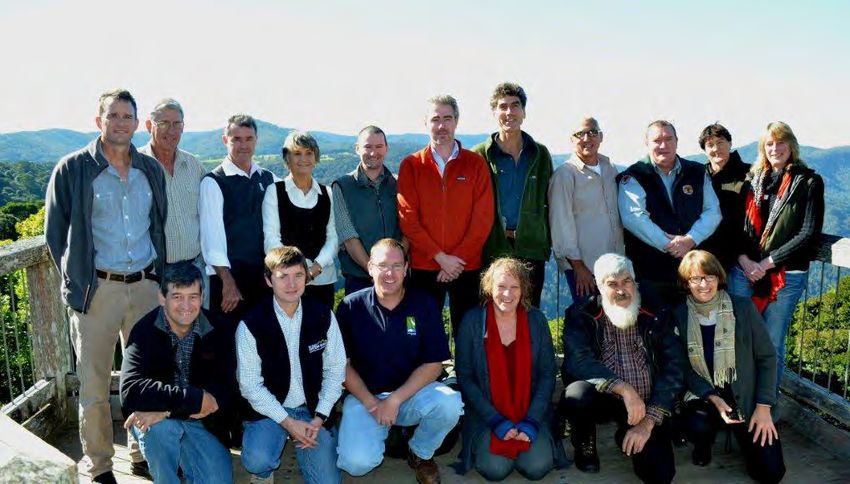
“The Great Eastern Ranges Initiative will make a
globally significant difference, as well as a difference
          in the lives and future of every Australian.”

                                                                    Harvey Locke,
                      Co-founder of the Yellowstone to Yukon Conservation Initiative

                                                                                       7
1. BACKGROUND
1.1 The Great Eastern Ranges                   under private ownership. Connectivity       Maintaining ecosystems and connectivity
of Australia                                   of protected areas is greatest in the       of the GER corridor is also essential for
                                               southern sections of NSW and the Alpine     sustaining the health and well-being
The Great Eastern Ranges (also referred        areas of ACT and Victoria, however, parts   of eastern Australia’s rapidly growing
to as the GER corridor) is made up of the      of the corridor have been cleared and       population and economy, providing
mountainous landscapes that separate           fragmented and are subject to ongoing       the water supply of 11 million people
the east coast of Australia from inland        significant land-use pressures.             and protecting significant nature-based
eastern Australia. They extend for more                                                    tourism and recreation assets.
than 3600 km from the Grampians in             1.2 The Great Eastern Ranges
western Victoria, along the Great Dividing     Initiative                                  1.3 The evolution of GER
Range and Eastern Escarpment of New
South Wales, the Australian Capital            GER is one of a growing number of           GER was set up in 2007 with a
Territory and to the wet tropics of Far        internationally recognised connectivity     commitment of $6.7m from the NSW
North Queensland (see map on p.9).             conservation programs developed in          Government. The period 2007 to 2010
                                               response to the ongoing decline and         saw investment in the GER brand and
The ranges form the watershed and              mass extinction of species due to past      connectivity conservation science that
headwaters of 63 major river systems           and current land-use and other threats to   continues to underpin the work of GER
directing run-off either towards the           habitat and biodiversity.                   today and the establishment of five GER
coast or inland. Topography varies widely                                                  regional partnerships in priority NSW
in elevation and form and includes             In the face of an increasingly variable     landscapes.
Australia’s highest mountain (Mt               climate, GER is working to strengthen
Kosciuszko at 2228 metres) located in          the resilience of natural ecosystems        With the continuing support of the NSW
southern NSW. Here, the ranges receive         and the native plant and animal species     Government, GER transitioned in 2010 to
over 3000 millimetres of rainfall annually.    supported by the GER corridor. Improved     a non-government-led (NGO) enterprise
In other areas the terrain is barely           resilience can be achieved by drawing       under direction of a Lead Partner group
distinguishable from the surrounding           together the efforts of community,          and small GER central coordination team.
landscape.                                     industry, government, non-government
                                               organisations and individuals already       During this transition in December 2011,
The Great Eastern Ranges comprises the         working on conservation projects in         the NSW Government announced a
most biologically diverse ecosystems           eastern Australia and concentrating their   further investment of $4.4m over four
on the continent and includes the most         efforts where they are most needed.         years to June 2015. This supported the
extensive network of protected areas                                                       continued development of the five GER
in eastern Australia. Of equal scale and       Connectivity conservation seeks to          Regional Partnerships, establishment of
importance as the Great Barrier Reef           establish a targeted approach to            additional regional partnerships in new
the ranges host a series of biodiversity       conservation management. It aligns          areas and extension of GER inter-state. It
hotspots interconnected by a wide              effort across a range of tenures and        is this funding that has taken GER into its
diversity of native vegetation and intact      geographical landscapes strengthening       current iteration, a phase of significant
habitat.                                       or re-establishing physical connections     growth and expansion and recognition
                                               between protected areas to create a         as a leader in large-scale connectivity
Within NSW, the GER corridor contains          continuous corridor of healthy habitats     conservation in Australia and overseas.
examples of most land tenures. Public          that enable species to disperse and
protected areas (e.g. national parks and       persist in the face of threats such as      This report outlines GER’s achievements
nature reserves) occupy 39% of the area,       climate change and habitat loss.            over this most recent phase in our
with other public lands (e.g. State forests,                                               evolution.
military reserves and travelling stock
reserves) covering a further
20%. The remainder comprises land

8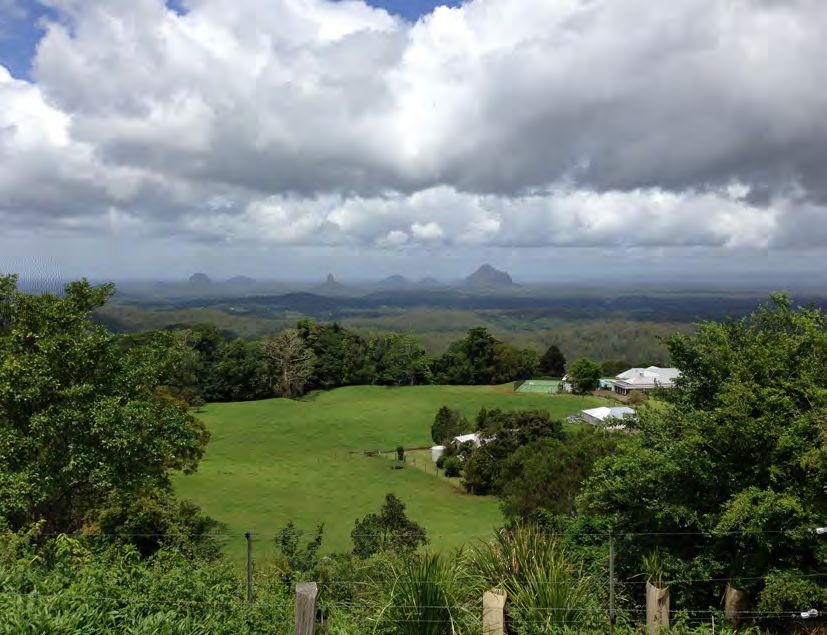
The Great Eastern Ranges in eastern Australia

                                                9
2. APPROACH TO DELIVERY

2.1 Vision and objectives                   2.2 Partnerships, partners and                 • Strengthening regional networks
                                            supporters                                       with local working groups, providing
A major strength of GER has been its                                                         governance and structure which
ability to motivate a diverse range of      Connectivity conservation is driven by           enables communities to collaborate
partners. Over the past four years, GER     a coordinated network of participating           on local conservation projects and
has leveraged its brand not only to         organisations collaborating to achieve           strategic solutions for regional habitat
maintain the previous level of enthusiasm   mutually agreed objectives at a local            connectivity
but to engage an increasing number of       level. Local outcomes in turn nest within
partners and sectors and in more regions    a broader strategic context that amplifies     • Bringing together diverse groups
of NSW, ACT, Victoria and Queensland.       this effort at a landscape-scale.                who would not normally have the
                                                                                             opportunity to work together under
GER provides a unifying focus for the       2.2.1 The role of partnerships in                a common focus
many active organisations involved in       priority regions
the conservation of the Great Eastern                                                      • New and expanded opportunities
Ranges, as aspired to through the GER       Regional partnerships in strategically           for individuals and communities
vision (see below).                         important landscapes, identified through         to engage in local environmental
                                            high level analysis, is central to GER being     projects
The size, complexity and reach of GER is    able to facilitate outcomes at a local
such that its achievements are reflected                                                   • New projects and partnerships which
                                            community level. These include:
in a range of land management, social,                                                       can become a source of employment,
research and community capacity-            • Improved coordination of otherwise             skills and knowledge building for local
building outcomes. The ultimate               disconnected projects and                      communities
objective of GER is to increase the           demonstration of the ‘added value’ of
extent, condition and connectivity of                                                      • Increased visibility of the investment
                                              collaborative environmental activities
natural habitat across the 3600km length                                                     made by the Trust Government
                                              creating further engagement in
of the GER corridor and enhance the                                                          in protecting and enhancing
                                              connectivity conservation
persistence of natural ecosystems and                                                        connectivity conservation outcomes
native species.                             • Empowerment of local communities
                                              to build an approach that suits their
This objective is supported by three          circumstances, recognising that no
complementary objectives which                single approach suits everyone
reflect the importance of collaboration,
communication and the application of
knowledge to ensure more effective and
lasting outcomes (see diagram on p.11).

The vision of the Great Eastern Ranges Initiative is

to bring people and organisations together to protect, link and restore healthy
   habitats over 3,600 kilometres from western Victoria, through New South
                  Wales and the ACT to far north Queensland.

10
2.2.2 Selecting priority regions 2.2.3 The role of GER National and 2.3 Management framework
State Partners
Each landscape within the GER corridor
2.3.1 ‘Whole-of-GER’ level
is not equal in terms of its potential to GER National and State Partners play
contribute to maintaining connectivity. a critical role in the implementation GER Lead Partner group - When GER
With around 60% of the landscape of GER in a range of ways, such as transitioned from a NSW Government-
occupying land other than protected project delivery, communications and led program to a community-based,
areas, there are multiple options for fundraising. Together, these partners NGO-led initiative, a Memorandum of
management action. provide a broad range of services from Understating (MoU) was entered into
on-ground projects, conservation between five Lead Partners, namely
A targeted approach to working in agreements, community and youth Greening Australia NSW (Greening
priority areas was adopted by GER to engagement to research, advocacy and Australia), National Parks Association of
ensure resources were not spread too volunteerism. NSW (NPA), Nature Conservation Trust of
thinly and are invested where social,
NSW (NCT), NSW Office of Environment &
economic and environmental returns Each has extensive communication Heritage (OEH) and OzGREEN. The role of
are potentially the greatest. A desk- channels that support GER’s information the lead partners is to provide high level
top analysis of connectivity priorities dissemination, knowledge-sharing and direction, coordination and governance
considered each landscape in relation to messaging functions. As well-established, of GER as outlined in the MoU.
four variables. independent organisations, GER partners
also have their own funding support, The MoU was amended in 2012 to reflect
These are: allowing GER to operate in many areas the expanded involvement of national
and on many levels without drawing and state organisations.
• Biological values - regional heavily on its own resources.
distinctiveness and species diversity
• Connectivity need - apparent
discontinuity in connectedness of The four objectives of GER
habitat and protected areas
1. Connect Landscapes and Ecosystems
• Conservation and social opportunity -
active organisations with capacity and Improve the connectivity, condition and resilience of landscapes and ecosystems and
interest in delivering collaborative halt further decline and loss of species
programs
2. Link People and Landscapes
• Program contribution - opportunity
to develop and test approaches Increase the number of people working together to improve connectedness
that contribute to implementing an and resilience of landscapes
effective GER program
This approach was used to identify 3. Communicate Effectively
or assess the merits of the new GER
partnership areas established during the Improve the transfer of knowledge, skills and practices through community
reporting period and will underpin future engagement, involvement and education
expansion into new landscapes, subject
to available resources and funding. 4. Apply Knowledge
Improve understanding of species, ecosystems and local landscapes and their
requirements for long term health
11GER central team – A multi-discipline
GER central coordination team was
established in 2011 to deliver the GER
program and provide an important
supporting role to the regional
partnerships. The central team,
comprising a CEO, Conservation Manager
and part-time Communications Manager,
reports to the Lead Partners, through
the CEO, on current activities and overall
performance.
GER Science Panel – Recognising the
importance of maintaining the body of
science underpinning GER, a GER Science
Panel, which had been established in
the first phase of GER, was re-formed
with a new membership and terms of
reference in 2014. The Panel works with
the Conservation Manager to provide
specialist knowledge on ecological issues,
systematic conservation planning and
consultation on economic and social
issues, which in turn inform GER program
development and delivery.
GER National and State Partners
The current ten GER Regional Partnerships – During the transition phase to an
NGO-led enterprise, the opportunity
to engage further with national and
state conservation organisations
The seven regional facilitators in December 2012, prior to the
involvement of K2W, CVB and HBL was recognised as an appropriate
approach to expanding the reach of
GER into new landscapes along the
GER corridor in NSW and ACT, and
into Queensland and Victoria. These
partnerships are formalised through
GER Partner Agreements which outline
the commitment of both parties to work
together to support the GER vision,
subject to available resources, and detail
how partners can support GER’s core
values, objectives and brand.
2.3.2 Regional level
GER Regional Partnerships – Ten GER
Regional Partnerships operate under
different governance structures which
continue to evolve over time (see map
above). The management framework
12is determined by the members of the • Stimulated the formation of two new In 2014-15, a separate allocation of
partnership, often drawing upon the partnerships in NSW ($0.45m) GER funding was allocated to GER
experiences of GER since its inception. Landcare Grants to acknowledge the
While regional partnerships have been • Funded projects in each of the 25th Anniversary of the establishment
established under various versions of regional partnerships areas and along of the Landcare and made available
MoU, four have established themselves the full extent of the GER corridor in on a competitive basis to all of the
as incorporated entities, namely Jaliigirr NSW ($1.78m) (see map p.14). movement’s community groups within
Biodiversity Alliance (JBA), Kosciuszko to the GER corridor.
Coast (K2C), Hinterland Bush Links (HBL) The first year of Trust project funding was
and Central Victoria Biolinks (CVB). allocated to the seven Trust-funded GER Investment in central and regional
regional partnerships and each of the capacity to build awareness, engage
Regional Partnership working groups lead partners to ensure progress against communities and create action, ensures
– The strategic direction and activities GER’s four objectives was achieved as that when projects are delivered a
of the ten GER regional partnerships soon as possible. Investment made high degree of additional resources,
is led by core groups of committed directly by GER through its regional complementary mechanisms and other
organisations and individuals, partnerships into community projects funding is captured providing a multiplier
representing a range of interests. A was particularly effective in galvanizing effect. Investing in individual and
key role of these working groups is to interest and support for GER and disconnected projects cannot compete
prioritise the work plan and activities of connectivity conservation. with these benefits.
the Regional Partnership Facilitators.
Funding in the 2013-14 and 2014-15 This approach has proved essential in
Regional Partnership Facilitators – The rounds became competitive and open sourcing new funding and catalysing new
Facilitators provide local leadership to all NSW regional partnerships and action in priority areas (see map on p.14).
on GER program delivery and support GER national and state partners with The involvement of new partners and
communications, fundraising and administration of the grant process the skills and capacity they bring have
governance arrangements for each managed by the Foundation of National proven to expand the achievements of
regional partnership and maintain links Parks & Wildlife (FNPW). This brought partnerships and translate successful
with landowners and local communities. considerable benefits for GER including models for action into new landscapes.
Facilitators are employed by a host the ability to have on-line applications, This function has played a key part in the
organisation, though their role requires extensive promotion of GER through growth of GER during the past four years.
them to work closely with and report to FNPW networks and the efficient use of
the members of the regional partnership. GER resources.
The management framework is shown in
the diagram on p. 3.
2.4 Program Investment Model
In summary, the NSW Environmental
Trust’s $4.4m funding announced in
December 2011 has:
• Supported a multi-disciplinary GER
central team and coordination
program ($1.05m)
• Continued coordination and
alignment of regional partners’
programs and capacity in five existing
regional partnerships ($1.12m)
13Location of projects funded by the Trust 14
“One of the reasons why we need the Great Eastern
 Ranges is that the ranges will be one of the main refuges
for species and ecosystem types in the centuries to come.”
                                                     Prof. Brendan Mackey,
                                        Griffith University, IUCN Councillor
3. EVALUATION OF EFFECTIVENESS
3.1 Outcome hierarchy Medium term (2011-15) – Periodic organisations to confirm the extent to
assessment of the effectiveness of GER in which GER has influenced conservation
The outcome hierarchy which underpins contributing to medium term outcomes, practice, allowing the following questions
the four objectives establishes what GER forming the basis for evaluating the to be addressed:
will measure to assess its progress, and success of the GER model.
evaluates this performance on three • To what extent have GER-related
levels: Long term (Beyond 2015) – Evaluation program activities reduced
of the ‘ultimate outcomes’ generated by key threatening processes to
Short-term – On-going evaluation of GER including modelling of biophysical environmental values in the GER
progress against funding agreements outcomes for ecological processes, corridor? (Objective one)
and operational plans providing the calibrated and validated by site condition
information necessary to inform short- data. • To what extent are people working
term outcomes. These in turn are used more cooperatively and consistently
to adaptively guide and refine budgeting, This report addresses the medium on conservation efforts at three
resource management, process term measures needed to assess GER’s scales - NSW, regional and local?
development and planning. progress. It summarises the results of (Objective two)
surveys of knowledge, attitudinal and
behaviour change in partner • Whether governance arrangements
and administrative management
practices are fit-for-purpose given the
scales of program activities and needs
“Our focus was on our own farms until we of partners? (Objective two)
were introduced to GER through the Kanangra • Whether community capacity is
Boyd to Wyangala partnership.” being built through improvements to
knowledge and skills across partner
Keith Hyde, Lachlan regional representative Landcare NSW Council
agencies and the NSW community?
(Objective three)
• To what extent has the
community become more aware
of environmental issues and
more supportive of connectivity
conservation efforts? (Objective four).
The following sections of this report
bring together data collated in relation to
both short and medium term outcomes
to evaluate the degree to which
activities during the 2011-15 period have
contributed to the objectives of GER in
NSW. For the purposes of this report,
outputs and outcomes in Queensland,
ACT and Victoria are reported only to
highlight how investment by the NSW
Government has proven catalytic across a
wider landscape.
163.2 Objective One – Connect • The quality of delivery – efforts • Term-based agreements – property
Landscapes and Ecosystems and contributions linked across vegetation plans (LLS), whole of
landscapes, combining to achieve an paddock restoration (Greening
Improve the connectivity, condition outcome on a broader level Australia), restoration grants (the
and resilience of landscapes and Trust, various private foundations),
ecosystems and halt further decline • Additionality of outcomes – changes BioBanking agreements (OEH)
and loss of species and improvements that have accrued
beyond what might reasonably have • Permanent protection mechanisms -
3.2.1 Approach been expected had the GER not been conservation agreements (OEH) and
undertaken. covenant agreements (NCT), private
GER has worked with a diverse protected areas (Bush Heritage
community of landholders, industry Improvements to the connectivity, Australia), Indigenous Protected Areas
groups, traditional owners, government condition and resilience of landscapes (Australian Government).
agencies, conservation NGOs and others and ecosystems have largely been
to collaborate in delivering projects to delivered through four mechanisms: GER’s approach to promoting
protect and restore natural ecosystems targeted delivery of these private land
and habitat connections in priority areas. Alignment of available instruments conservation mechanisms encourages
These involve a spectrum of activities – Unlike previous approaches to enduring management of strategic links
from education and awareness-raising, landscape conservation which invest that connect and buffer protected areas,
to improved management and medium directly in works in order to generate value-add to the National Reserve System
to long-term protection of native outcomes, GER has adopted an approach and enhance management of the public
species. They combine to generate encouraging partners to align delivery protected areas system.
outcomes which far exceed the benefits of the conservation instruments they
of individual action. The resulting provide to create a ‘corridor of effort’ Habitat restoration – In simple terms,
effect on the ground is the creation of in priority areas. GER funding has not habitat restoration has been achieved
a linked ‘corridor of effort’ in which been used to directly establish these across the GER corridor through
land managers commit to build local instruments, rather, GER partners have the combined use of replanting and
corridors and ‘stepping stones’ allowing collaborated to promote the spectrum assisted natural regeneration. GER
for species dispersal and adaptation to a of options already available to the involves a number of organisations
changing environment. community. This has involved the full with considerable experience and
range of public and private conservation skills in environmental restoration,
Understanding the extent to which mechanisms, from environmental including Greening Australia,
threats to biodiversity and habitat values education to permanent conservation Conservation Volunteers Australia
exist in the GER corridor are shown protection, examples of which include: (CVA) and Wetlandcare Australia. These
through: environmental NGOs are complemented
• Knowledge building – education and by the localised work of state
• What has been delivered – the awareness raising (NPA, OzGREEN, government agencies, such as OEH and
number of regionally-focussed Envite) LLS, Landcare NSW and other regional
projects, organisations in regional community and conservation groups.
partnerships • Capacity building - Landcare
(Landcare NSW) and natural resource Cross-property coordination – The
• How much has been delivered – management (NRM) bodies with an coordinated approach adopted by GER
quantum of outputs generated such emphasis on restoration (Local Land regional partnerships encourages the
as individuals reached, landholders Services (LLS)) alignment of specific site management
engaged, hectares restored or needs with the most appropriate
protected • Entry level conservation mechanisms conservation action for the conditions or
– property registration (Land for landholder circumstances. Landholders
• Where delivery has occurred – the Wildlife, Wildlife Land Trust) and in priority areas are encouraged to
location of projects and actions in Wildlife Refuge (OEH) participate in some form of conservation
relation to priority focus areas commitment, while public land
managers are similarly encouraged to
17align their activities (e.g. infrastructure • Follow-up surveillance of pest • Increase in number of landholders
development offsets) with the work of numbers on public land (via engaged in private land conservation
local community groups. Such alignment WildCount) and other public and instruments: 229
leads to improvements in efficiency and private lands (camera trapping and
efficacy. reporting via FeralScan) • Organisation or stakeholders
adopting improved agricultural land
Integrated cross-tenure pest animal 3.2.2 Outputs management practices: 587
management – An important evolution
of the GER delivery approach has The extent to which GER-related • Area protected under conservation
involved implementation of a cross- program activities have reduced key covenants: 6581ha
tenure integrated management programs threatening processes to biodiversity
particularly in the area of pest animal and habitat values in the GER corridor is These figures relate only to NSW
control. This has involved: demonstrated through: Environmental Trust funding and the
three major Australian Government
• Awareness raising through NPA’s • Total area of native habitat restored: Biodiversity Fund projects in NSW, being
‘Who’s Living On My Land?’ program, 57 987ha HVP ‘Stepping Stones, S2S ‘Bush Links’
inviting landholders to workshops and the K2W Link.
to learn about animal detection • Total area under improved weed
methods to engage and enthuse management: 6835ha A significant challenge throughout the
local nodes of adjoining properties reporting period has been the consistent
contiguous to protected areas or • Number of plantings: 168 391 reporting of activities and outputs
other public lands generated from partner programs which
• Area of Aboriginal owned land or sites contribute to connectivity outcomes in
• Locally-organised collaborative of cultural significance restored or the GER corridor. Any future efforts to
pest animal control networks, rehabilitated: 1457ha encourage closer alignment between
with landholder control across all partner programs and GER outputs
properties in a district coordinated • Area protected by fencing: 107ha would benefit from a more specific
or assisted by NPWS, State Forests understanding and agreement about how
or LLS • Length of fencing installed: 101km these contributions can be accurately
and comfortably reported on as a whole,
• Cross-landscape control activities • Area of vegetation corridors: 985ha so that both GER and its partners can be
including aerial cull, trapping and acknowledged for their collective effort.
baiting for targeted species • Area of connected vegetation Such measures should reflect:
established: 13 966ha
• Improvements to biodiversity
conservation outcomes through
increased uptake of private land
conservation mechanisms
• Increases in landscape connectivity
in the area of habitat improvement
and restoration of other priority
connections are being managed to
suppress site threats from weeds,
erosion, littering, and public misuse,
particularly those outside existing
regional partnership areas
• Delivery of local projects which
contribute to achieving program
delivery targets for other priority
18programs, such as OEH Visitor connectivity after being involved in • 54% of organisations felt they had
Experience Programs and Saving Our GER, compared to only 22% prior to made a high or very high difference in
Species programs, NSW Department GER (See fig. 1) enhancing connectivity and a further
of Primary Industries (DPI) and LLS 30% a moderate difference where
bio-securities projects and Indigenous • 56% stated that they only had some they work
Protected Areas (IPA) programs. or no involvement in connectivity
conservation prior to GER and that 3
3.2.3 Outcomes and impacts this had decreased to 11% after GER.
At the other end of the scale prior to
A survey in June 2015 assessed GER, only 11% had a high or very high
improvements amongst GER partners in involvement, compared to 59% after
the level of understanding and delivery GER (See fig. 2)
of connectivity conservation. The survey
had a response rate of approx. 50% and • 52% of organisations reported that
was completed by 46 organisations and they had high or very high focus on
represented a broad cross section of GER work in GER priority areas
national, state and regional partners who
have been involved in GER for a number • 58% stated that they had only
of years. targeted minimal investment to
priority connectivity areas prior to
Findings included: GER, but this had decreased to 13%
after GER. At the other end of the
• 74% of organisations said that they scale prior to GER, only 13% had
had a high or very high understanding targeted their resources in this way
of the contribution that their own compared to 52% after GER
landscapes make to wider (See fig. 3).
1
2
193.3 Objective Two – Link Developing the five original GER Given the level of trust and collaboration
People and Landscapes Regional Partnerships that had been built up since 2007,
the partnerships were able to carry
Investment by the NSW Government has through on their activities and plan
Increase the number of people
working together to improve been essential in building the partner for the future with some certainty.
connectedness and resilience of programs across the GER corridor in the The catalysing effect of investment to
landscapes original five GER regional partnership support regional partnerships, and at
areas (Border Ranges Alliance (BRA), the same time making funds available for
3.3.1 Approach Hunter Valley Partnership (HVP), priority projects, was an essential part of
Southern Highlands Link (SHL), Kosciuszko continuing the success of GER.
Connectivity conservation relies on a to Coast (K2C) and Slopes to Summit
coordinated network of participating (S2S)) and attracting new funding. This Some of these regional partnerships have
organisations collaborating to achieve has enabled a high level of multi-partner expanded the footprint of their activity
mutually agreed objectives at a local delivery by providing for the essential into new priority areas within their
level. Local outcomes in turn nest within program infrastructure needed to engage respective regions, such as increasing
a broader strategic context and combine and enable local community involvement active delivery of connectivity projects in
to achieve a greater goal. During the and ownership of projects. the Greater Garooyarroo (a cross-border
reporting period, GER has invested corridor involving the ACT Government
heavily in programs to increase the At the beginning of the reporting period, and K2C partners), the Merriwa Plateau
number of people working together in these regional partnerships were relying and Lower Hunter corridors (HVP).
priority landscapes and in other areas in on limited funding from non-Trust
the GER corridor in NSW, ACT, Victoria sources to maintain key Facilitator roles
and Queensland. and continued in-kind support of regional
partnership members. The commitment
of further funding from the Trust
guaranteed the continuation of these
roles until June 2015.
Increase from five Regional Partnerships in June 2012 to ten in June 2015
20Formation of five new partnerships • Kanangra-Boyd to Wyangala Link The lessons learnt from the formation of
Established August 2012, this original five GER regional partnerships
The 2011-2015 period saw the formation partnership is hosted by OEH, played a useful role in assisting the early
of five new partnerships in the GER formed to implement a major $2.7m establishment of each of these new
corridor, including three in NSW and one project to June 2017 funded by the partnerships.
each in Queensland and Victoria (see Biodiversity Fund, focussing on the
maps on p. 20): upper Lachlan catchment. Developing relations with national and
State partners
• Sunshine Coast Hinterland Bushlinks • Illawarra to Shoalhaven
Established January 2012, this Established October 2012, this A major focus during the reporting period
partnership exists within a recognised partnership is located where has been on building more-effective
biodiversity hotspot centred on the the Illawarra and Cambewarra relationships with an increasing number
Glasshouse Mountains and supports Escarpments combine to form a of GER national and state partners to
an important linkage between the narrow north-south aligned rainforest fully realise their potential by exploring
Blackall and Conondale Ranges where corridor linking the major sandstone ways to align their operations with the
weed management has been the reserves of the southern Sydney Basin objectives of GER (see partners in figure
focus of the group’s activities. with wet sclerophyll forests of the below).
south coast.
• Jaliigirr Biodiversity Alliance These partners now play a key role in
Established May 2012, this • Central Victorian BioLinks the implementation of GER through
partnership formed as an Established 2013, Central Victoria is a project delivery, communications and
incorporated entity, covering crucial region for connectivity of the fund raising. Each provides a broad range
337 000ha from Coffs Coast to the GER corridor sitting at the southern of services from on-ground projects,
Dorrigo Plateau. Located in a tropical, end of the Great Divide and spanning conservation agreements, community
subtropical, temperate convergence, from drier northern plains across and youth engagement to research,
the region is an area of significant woodlands and forests of the divide advocacy and volunteerism. They all have
ecological diversity and the World to cooler, more southerly hills, gorges extensive communications channels and
Heritage Gondwana Rainforests of and grasslands. their own source of funding, which has
Australia. allowed GER to operate in inter-state and
in new areas of NSW without drawing on
Trust funding.
GER National and State Partners as at June 2015
21Building relations with other corridor • All GER regional partnerships now NSW Government investment in GER
initiatives have representatives from NRM central and regional coordinating
bodies, Local Government and capacity has provided it with a unique
Since 2007, GER has grown to be Landcare opportunity within the connectivity
recognised within the international conservation sector. Investment in
conservation community as a leader • GER now comprises an extensive projects through such grant programs are
in partnership-building and an model network of active organisations considered successful where they attract
example of public-private partnership in including: matching or double the investment
practice. However, GER is still relatively from project partners and other funding
young compared to programs such as 174 local and regional organisations sources. GER has greatly exceeded this
Yellowstone to Yukon and Gondwana Link engaged through regional attracting $6.5 for every $1 invested by
but is continuing to harness knowledge partnerships in eight priority the NSW Government (see table at top
from reciprocal connections with these connectivity landscapes in NSW and of p.24). This is the result of investing
and other Australian and overseas other State-based organisations, in both the GER as an enterprise in
initiatives. This is allowing GER to develop conjunction with the funding of GER
an understanding of: 25 national organisations projects.
• Alternative options for delivery of 53 additional interstate regional GER has also had some direct success
regional partner programs organisations involved through in attracting funds from other sources,
the Central Victoria Biolinks and though these have been project based
• Integrating the work of public land Hinterland Bushlinks partnerships and contributed in only a small way to
management agencies and other interstate organisations. GER’s central and regional coordinating
capacity (see lower table on p.24).
• Applying latest available science to 9 major conservation networks in
understanding priorities Australia and overseas
• Encouraging the development See figures below and on p. 23.
of themed projects with greater
potential for philanthropic and
corporate funding support.
3.3.2 Outputs
The extent to which people are working
more cooperatively and consistently on
conservation effort at ‘whole-of-GER’,
regional and local scales is demonstrated
through:
• The number of GER Regional
Partnerships increasing from five to
ten
• The number of active organisations
comprising the GER network, which
has grown over 110%, from 120 to
261 during the 2011-2015 period GER partners and active organisations by sector as at June 2015
22Sectors Examples of NSW partners Number
Community groups Caldera Regional Arts Inc.; Friends of Grasslands; Friends of the Koala; Hunter Bird 44
Observers Club; Hunter Coal Environment Group; Richmond Birdwing Recovery
Network Inc.; Wombat Forestcare
Non-government organisation Birdlife Australia; Wetlandcare Australia; Wildlife Land Trust; Wildlife Tourism 42
Australia; Albury Conservation Company; Envite Environment; Parklands Albury
Wodonga
Landcare Big Scrub Rainforest Landcare Group; Brunswick Valley Landcare; Coffs Harbour 41
Regional Landcare; Fullerton Hadley Landcare; Upper Lachlan Landcare; Wilsons
Creek Huonbrook Landcare, Holbrook Landcare Network
Academic & Research Atlas of Living Australia; Australian Museum; CSIRO; Invasive Animals Co-operative 34
Research Centre; Muswellbrook High School; NSW Riverina Institute of TAFE; Royal
Botanic Gardens; Tocal Agricultural College
Local Government Albury City Council; Byron Shire Council; Coffs Harbour City Council; Singleton 21
Council; Southern Councils Group; Upper Lachlan Council; Wingecarribee Shire
Council
State Government agency NSW Rural Fire Service; NSW Trade and Investment (Crown Lands); Office of 17
Environment and Heritage NSW
Industry Coal and Allied; Forests Alive; GHD Consultants; Hunter Thoroughbred Breeders 16
Association; Southern Highlands Corporate Events; Thurgoona Country Club Resort;
John Holland Inc.
NRM Body Central Tablelands Local Land Services; Northern Rivers Local Land Services 16
Aboriginal Coffs Harbour Local Aboriginal Land Council; Cowra Traditional Ecological Knowledge 12
group; Gumbanggir Elders; Wanaruah Local Aboriginal Land Council; Kombumerri
Aboriginal Corporation for Culture; Ngarang-Wal Gold Coast Aboriginal Association
Inc.
GER Regional Partnership Slopes to Summit; Hinterland Bush Links 10
Other Yellowstone to Yukon; Gondwana Link 8
Total 261
Examples of GER partners and active organisations by sector as at June 2015
GER partners and active organisations by location as at June 2015
23Trust Cash In-kind Total Ratio
GER central capacity $1.05m $1.64 m $3.65m $5.29m 5.0:1
Regional partnership $1.57m $13.72m $5.60m $19.33m 12.3:1
Project funding $1.78m $0.34m $3.54m $3.87m 2.2:1
Total over four years $4.4m $15.70m $12.79m $28.49m 6.5:1
Ratio of contributions by GER partners and active organisations to the Trust’s investment for
the four years to June 2015
Landscape Source Project Amount Funding to
Hinterland Bush Link Sunshine City Council Partnership facilitation $150 000 June 2016
Kanangra Boyd to Australian Government Future-proofing the GER $2.7m June 2017
Wyangala Biodiversity Fund corridor in the K2W Link
Hunter Valley Australian Government Hunter Stepping Stones $2.8m June 2017
Biodiversity Fund
Hunter Valley John Holland Inc. & Taronga Merriwa Rail Corridor $250 000 June 2019
Zoo restoration
Slopes to Summit Australian Government Carbon plantings in Slopes to $2.3m June 2017
Biodiversity Fund Summit to improve connectivity
& habitat gaps
Jaliigirr Biodiversity Australian Government Northern Rivers CMA $3.0m June 2017
Alliance Biodiversity Fund Biodiversity Fund project
Kosciuszko2Coast Australian Government Building restored resilient $216 000 June 2017
Biodiversity Fund landscapes in the ACT & greater
Goorooyarroo
Kosciuszko2Coast Myer Foundation grant Monaro Grasslands Restoration $150 000 June 2015
Whole of GER Australian Government National Wildlife Corridors Plan $120 000 Finished 2014
Slopes to Summit Albury Conservation Albury Urban Habitat Program $100 000 June 2016
Company
Border Ranges Alliance Queensland Everyone’s Restoration of five critical $98 000 June 2016
Environment Grants habitats
Whole of GER Foundation for National Partner grants $60 000 December
Parks & Wildlife 2015
Kanangra-Boyd to Australian Government K2W Link Tussock Tamers $50 000 June 2015
Wyangala Link Green Army
Central Victoria Biolink Macpherson Foundation Development of a strategic plan $50 000 June 2015
for the CVB region
Slopes to Summit Dahl Trust Eucalypts of S2S media $25 000 Finished 2014
production
Total $9.37 million
Examples of funding secured from sources other than the Trust
24The primary source of this additional While this is of obvious benefit towards 4
funding was the Biodiversity Fund. overall GER objectives, it highlighted
Four of the GER regional partnerships the need to ensure the GER brand is
submitted applications, of which three appropriately represented in any bids for
were successful. A fourth application by funding.
OEH resulted in the formation of a new
GER regional partnership. The successful As an outcome of involvement in the
projects were: development of the National Wildlife
Corridors Plan, funding of $120 000 was
• Hunter Valley Parnership (via received from the Australian Government
OzGREEN) Stepping Stones Project to complete a gap analysis and action
($2.76m) - strengthening connectivity plan for priority activities to underpin
by linking isolated patches of the recognition of GER as one of the 5
bushland to core habitat areas six national corridor initiatives. These
funds assisted with various GER activities
• Slopes to Summit Partnership (via including the development of a MER Plan,
Holbrook Landcare Network) Carbon transition to a new web-site and major
plantings to improve connectivity GER events.
and habitat gaps ($2.29m) - piloting
a collaborative approach to 3.3.4 Outcomes and impacts
rehabilitation work in seven priority
areas for connectivity conservation GER partners surveyed in June 2015
and safeguarding and restoring reported a high level of activities in
source areas for habitat specialists partnership with others, with greatly
increased levels of collaboration as a 6
• Kanangra Boyd to Wyangala result of GER involvement and increased
Partnership (via OEH) GER corridor support from partner organisations.
management and restoration of
connectivity ($2.71m) - enabling the Findings included:
formation of a new GER regional
partnership in the upper Lachlan • 68% of organisations stated they had
catchment a high or very high sense of being part
of a bigger picture
• Jaliigirr Biodiversity Alliance (via
North Coast LLS) Connecting • Approximately two-thirds stated
communities and cultures through they had seen a marked increase in
corridors ($3.0m) - restoring, the number of contacts with other 7
managing and enhancing biodiversity organisations in being part of GER and
conservation and increasing also noted that they considered the
carbon stores, building resilience diversity of these organisations to be
to climate change by reconnecting high or very high after GER compared
and rehabilitating fragmented and to 10% prior to GER (See fig. 4)
degraded corridors.
• Prior to their involvement in GER
Other organisations have also leveraged only 10% of those surveyed stated
the GER brand in their Biodiversity Fund that they had a high or very high
proposals to attract a further $24m into knowledge of what others were
the corridor, some without the direct doing in their landscape. After being
input of GER. involved in GER this increased 72%
(See fig. 5)
25You can also read


