THE GREATEST SHOW ON THE EAST COAST - North Carolina's Nightscapes - NC State University
←
→
Page content transcription
If your browser does not render page correctly, please read the page content below
Coastwatch
 Capturing Carbon • Learning to Fly • Underwater Eavesdropping • Mercury Rising

 NORTH CAROLINA SEA GRANT            •   SPRING   •   2020   •   ISSUE 1   •   $6.95

                                       THE GREATEST SHOW
                                        ON THE EAST COAST
                                     North Carolina’s Nightscapes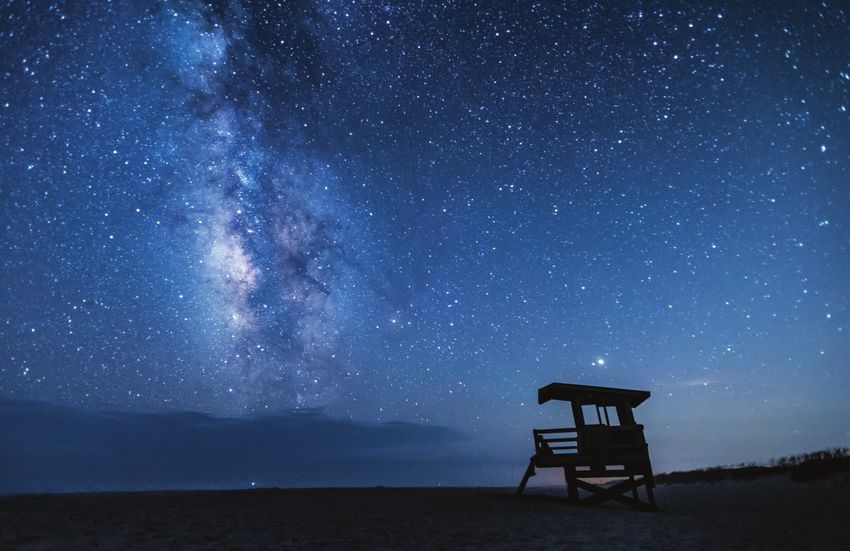
F R O M T H E
A Special Note to Our Readers about COVID-19
E X E C U T I V E
We prepared this issue of Coastwatch before responses to COVID-19 quickly escalated. Many of the stories here will be much
more relevant and meaningful when our lives return to “normal,” and some of the events we mention, such as statewide Star Parties, have
been postponed indefinitely. We also know how much you appreciate our coast, which is why we decided to print and mail this issue.
We hope our valued readers, along with your family, neighbors and colleagues, will continue to take precautions to stay healthy and to
limit transmission of the Coronavirus. Monitor updates from trusted state and federal sources, such as ncdhhs.gov and cdc.gov.
D I R E C T O R
Coastwatch F E A T U R E S
C O A S T A L T I D I N G S............................................................................... 2
At North Carolina Sea Grant, this is a season for fellowships. Every We also recently began hosting the first high school intern during THE GREATEST SHOW ON THE EAST COAST
New Journeys into the Heart of North Carolina’s Darkness
year, I am impressed with the thoughtful applications that detail interests my tenure. She already has learned to telecommute as she works on
and accomplishments of a new generation of our coastal researchers, Oceans and Human Health priorities and other projects. I also enjoy The Outer Albemarle Peninsula offers some of the darkest skies on the
U.S. Atlantic seaboard and a nightscape full of wildlife. ..............................6
planners, decisionmakers, advocates, industry leaders, and ecosystem that she adds splashes to layouts for some of our N.C. seafood recipes
enthusiasts. They truly offer us encouragement and inspiration as we see — and to my virtual presentations. CAPTURING THE CULPRIT
the impacts of their leadership and innovation, often stemming from ever- The cover story of this issue focuses on lifelong learning — Carbon Sequestration and the Battle Against Climate Change
expanding opportunities for interdisciplinary training that they seek out via potential educational and tourism opportunities in the night We can take advantage of nature’s own tools for capturing carbon from
— or create — within our strong public and private institutions. skies in our coastal region. With funding from our N.C. Community the atmosphere — and help to slow down global warming. .......................16
In this issue, you will read about four new Knauss Marine Policy Collaborative Research Grants, a team that includes the N.C. Land
Fellows from four North Carolina universities, taking on exciting of Water and A Time for Science documented locations that can be AT THE DAWN OF FLIGHT
The Earthscape and Climate of the Outer Banks
new roles in Washington, D.C. Recently, we also had two full days research sites or future fieldtrip destinations. As he has done for the
Torrential winds, wild ponies, marauding pigs, and an ever-shifting
interviewing applicants for the 2021 term. This national program past 50+ years since he arrived at East Carolina University, Stan coast all made a perfect lab for learning how to fly. ....................................22
celebrates 40 years, while other fellowships, such as NOAA Coastal Riggs speaks eloquently about our ecosystems that include water,
Management/Digital Coast Fellowship and a National Sea Grant/National land, and sky. CURRICULUM CONNECTIONS
Marine Fisheries Service partnership also draw top-notch candidates. I know that you will take time to enjoy the variety of topics in this Zoom In on Aquaculture
Here in North Carolina, we have been thrilled with the response issue of Coastwatch, including pieces written by our interns, funded A blue crab starts life as a microscopic larva that drifts through the
to our new North Carolina STEM Policy Fellowship that will place graduate students, and multi-talented team members. Also, please take water eating zooplankton and plant materials. .............................................30
current or recent graduate students in state agencies to focus on topics time to check our back cover and add your thanks to individuals who
HOOK, LINE & SCIENCE
related to science, technology, engineering, and/or mathematics. The have donated to our North Carolina Sea Grant Program Enhancement The Surf Zone, Summer Spawning, and Seafood Sleuths
program is a partnership with the Burroughs Wellcome Fund, with host Fund that supports our ongoing research, education, and outreach. Citizen scientists collected seafood samples to help determine seafood
offices in the N.C. Department of Commerce and the N.C. Department As always, if you have a topic of interest, send me an email via mislabeling — and they did it as well as the experts. ..................................33
of Environmental Quality, and a professional development program snwhite3@ncsu.edu.
being developed with Sigma Xi. — Susan White, Executive Director, North Carolina Sea Grant NOR T H C AROL INA’ S BLUE ECONO M Y
Coastal Landscaping: The Next Blue Economy Sector?
In the Southeast, the use of native plants by landscape architects and
I N T H I S I S S U E Alleghany
Northampton Currituck
contractors has increased — as has consumer interest. ..............................36
Stokes Rockingham Caswell Granville Vance Gates
Ashe Surry Camden
Warren
Person Hertford Pasquotank
C O N T R I B U T I N G W R I T E R S PKY :
Watauga
Wilkes Yadkin Forsyth Alamance
85 95 Perquimans
Chowan
MARINER’S MENU
Guilford Halifax
Scott Baker Jackson Bialek Lee Cannon Mitchell
Avery
Olivia Caretti
Winston-Salem 40 Orange
Durham Nash Bertie Springtime Sensations
These delightful dishes work for warmer weather. ......................................40
Franklin
Davie Greensboro Edgecombe Nags
Danielle Costantini Riley Gallagher Jane Harrison
Yancey Maya Hoon
Caldwell Alexander
Iredell
Durham Wake
Rocky Mount Martin Head
Madison
Julie Leibach Vanda Lewis Sara Mirabilio McDowell Katie Mosher Rowan
Chatham
Raleigh
Washington
Tyrrell
Dare
Buncombe Davidson Asheboro
Dave Shaw Sarah Spiegler40 JoyceAshevilleTaylor Chloe
Burke
Tenn
Catawba
77 85 Randolph
Johnston
Wilson Pitt
Beaufort SEA SCIENCE
Washington
Larry E. Tise SwainKatelyn Vause Susan White Lincoln Hyde
Haywood
Rutherford
26 Cabarrus
Lee Greene
An Underwater Soundscape Is Worth a Thousand Words
What can we learn by eavesdropping on the underwater conversations
Graham Cleveland Montgomery Harnett
Moore
C O N T R I B U T I N GJackson P H O THenderson
OGRPolk
A P H E R S Gaston
: Charlotte Stanly Wayne
Lenoir Craven
of fish? .............................................................................................................42
Macon Transylvania
Jackson BialekCherokee Serge Brunier Carolyn Currin Mike DunnMecklenburg Fayetteville
New Bern Pamlico
Clay Union
P. Gemperline Jane Harrison Jared Kay Martin LaBar Anson Richmond
Hoke
Cumberland
Sampson Duplin Jones
Ingrid Lemme Vanda Lewis Joshua Mayer Baxter Miller Scotland Onslow
Morehead City
Jacksonville
Carteret C OA S TA L C U R R E N T S
Vance Miller Josef Reischig Stan Riggs Debbie Roos
Meredith Ross Bill Russ David Saddler Melissa D. Smith
Robeson
Bladen Mercury on the Rise
As Hurricane Dorian made its way to the coast, one scientist collected
40
Pender
Allie Stewart Rob Thurman Jamie Zink
including photography via CreativeCommons.org, Library of Congress, NASA, Columbus
New Hanover
samples in the field while local towns were evacuating. .............................44
NC State Extension, NOAA, Raleigh News & Observer, UNC-TV, USFWS, USMC, Wilmington
and VisitNC.com, as well as images courtesy of Olivia Caretti and Yener Ulus. Brunswick
Front Cover: Like a searchlight outside a movie premiere, Bodie Island Lighthouse shines
The story settings in this issue include Camp Lejeune, Kitty Hawk, outside our state’s amazing theater of the dark. By JamieZink/CC-BY-SA 4.0 International.
four counties on the Outer Albemarle Peninsula, and other places. International. Table of Contents: Little bluestem, by Joshua Mayer/CC BY-SA 2.0
coastwatch | spring 2020 | ncseagrant.org 1
Coastwatch
Raleigh News & Observer
C O A S T A L T I D I N G S
North Carolina Sea Grant • Spring • 2020 • Issue 1
Knauss Fellows Arrive in D.C.
Communications Director
North Carolina Sea Grant
F
Bill Russ/VisitNC.com
Katie Mosher our North Carolina graduate “This next year as a
students are among the new group Knauss Fellow is going to push
Editor of 69 Knauss fellows whose service me outside of my research
Dave Shaw Marching for Hyde County desegregation
recently began in Washington, comfort zone and into the world
Science Editor
Julie Leibach
D.C. The National Sea Grant of science policy,” Corradino
“WATER/WAYS” TOURS NC NC Marks
Contributing Editors
Program selected Margaret says. “I am looking forward to Hyde County
Lee Cannon
Chory, Gabrielle Corradino,
Cheyenne Stienbarger, and
working with my NOAA office
and exploring the process
Merchants Millpond State Park Desegregation
Katelyn Vause
Assistant Editor
Jessamin Straub for the prestigious behind policy decisions.”
Six rural North Carolina host sites will showcase “Creating personal connections with our
S chool desegregation came to coastal
fellowship, a year-long program • Cheyenne Stienbarger Hyde County, but not without a fight. The
Chloe Tenn the Smithsonian’s “Water/Ways” exhibit in 2020 local waterways is extremely important for
for graduate students interested graduated with a master’s white-controlled Hyde County Board of
Designer and 2021 through the North Carolina Humani- supporting active stewardship of these waters,”
in national policy issues affecting in marine biology from the Education first created a desegregation
Linda Noble ties Council’s “Museum on Main Street” pro- says Christy Perrin, sustainable waters and
ocean, coastal, and Great Lakes University of North Carolina plan without input from the African
North Carolina Sea Grant is a federal/state gram. The tour begins in Burnsville in late May, communities coordinator for North Carolina
resources. Wilmington. She serves in American community, which responded
partnership that promotes stewardship of marine, with each participating site and community to Sea Grant and a leader in the N.C. Watershed
Knauss fellows serve in NOAA’s ocean observing and with what became known as the “Hyde
coastal and watershed resources through research announce local programming. Stewardship network. “Hopefully visiting the
and outreach. It joined the National Sea Grant host offices within the federal monitoring division. County Movement.”
College Network in 1970 as an institutional
North Carolina’s distinct coastal beaches, exhibits and related events will inspire people to
government’s executive or Stienbarger hopes the A North Carolina Highway Historical
program. In 1976, it was designated a full mountain rivers, and local lakes play an integral get out and explore their own local waterways.”
legislative branches. The fellowship Knauss Fellowship will give Marker commemorates that movement in
Sea Grant College program. Today, North Carolina part in shaping the state’s identity. Water/ North Carolina Sea Grant and the North
Sea Grant supports research projects, along honors John A. Knauss, a founder her an opportunity to embark front of the old Hyde County Courthouse
Ways is designed for small-town museums, Carolina Water Resources Research Institute
with extension and communications teams. of the National Sea Grant on something completely on NC Route 45 in Swan Quarter.
Susan White is executive director. libraries, and cultural organizations to catalyze are among the co-sponsors for Water/Ways.
Program. new. “Working in a physical Initially, the all-white board
The program is funded by the National Oceanic “A Knauss Fellowship is oceanography office will
community conversations about water’s impact go.ncsu.edu/Waterways
and Atmospheric Administration in the
proposed to expand the consolidated
an excellent opportunity to on American culture. — Katelyn Vause & Chloe Tenn
U.S. Department of Commerce, and by the certainly satisfy that goal,” whites-only Mattamuskeet School and
state through the University of North Carolina. develop career-long personal and she says. “I’m excited to be close two traditionally African American
Coastwatch (ISSN: 1068-784X; professional relationships,” says part of a team that uses ocean schools. This would have meant extensive
USPS Periodical # 010464) is published quarterly Susan White, executive director of observations to inform decision- Oyster Trail Debuts This Spring travel for African American students, loss
(Spring, Summer, Autumn, Winter) by: North Carolina Sea Grant. “Our making in communities around of longstanding educational experiences,
North Carolina Sea Grant fellows always offer high levels of the globe.” W
hat draws you to the coast? Beaches? Fishing? How about shellfish? and potential job losses for African
professionalism, expertise, and • Jessamin Straub A team of researchers thinks local oysters and clams have caché enough American educators.
NC State University Box 8605
Raleigh, NC 27695-8605 enthusiasm for what they do.” graduated from the University to support a tourism industry centered on marine aquaculture. African American leaders formed
Telephone: 919-515-2454. North Carolina’s fellows have of North Carolina at Chapel To test that idea, the researchers — from North Carolina a committee with representation from
Subscriptions are $15 per year.
a wide array of interests. Hill with a master’s in marine Sea Grant, NC State University, and East Carolina University — religious denominations in the county.
Email: dmshaw@ncsu.edu • Margaret Chory graduated sciences. Straub works with the are investigating the potential of an Oyster Trail to connect tourists with With help from Golden Frinks, who served
URL: ncseagrant.org from Duke University with U.S. Army Corps of Engineers local businesses. with the Southern Christian Leadership
Periodical Postage paid at Raleigh, NC a master’s in environmental as the advisor to the technical “For example, shellfish farms could offer tours to the public, and Conference, they planned long marches
POSTMASTER: Send address changes to: management. Chory serves the director for Civil Works Research restaurants could celebrate local oysters through dinner specials,” says between communities in the county.
C O A S T W A T C H National Sea Grant College and Development. team leader Whitney Knollenberg, of NC State’s Department of Parks, Other protests followed that
North Carolina Sea Grant Program as a socioeconomics “The broad range of Recreation & Tourism Management. attracted widespread media attention,
NC State University Box 8605 specialist. projects I’ll have the opportunity Essential to the project is understanding the demand for such ex- including a February 1969 march that
Raleigh, NC 27695-8605 “This placement uniquely to work on relate directly to my periences, as well as the capacity of businesses to support them. To that brought approximately 600 protesters to
Baxter Miller
North Carolina Sea Grant Coastal Offices: will allow me to see firsthand how interests and career goals,” she end, the researchers are conducting focus groups to learn more from the state capital.
Coastal Studies Institute a large NOAA program like Sea says. “They range from flood- candidate Oyster Trail sites — and from the public. North Carolina Sea Eventually, the county adopted a
Wanchese, NC 252-475-3663 Grant is run,” Chory says, “while risk management to the U.S. Grant will announce focus group meetings on NCseagrant.ncsu.edu/news. desegregation plan with more inclusive
also experiencing how its initiatives Coastal Research Program, “We’ve been in regular communication with Oyster Trail decision-making. It was less expensive and
Center for Marine Sciences & Technology
Morehead City, NC 252-222-6307 play out on the ground level in the the committee on the Marine enthusiasts in the Outer Banks,” says team member Jane Harrison, resulted in shorter bus routes.
34-program network.” Knauss 2020 fellows (top to Transportation System, and North Carolina Sea Grant’s coastal economics specialist. “Trail sites are being developed first along The Highway Marker program
Center for Marine Science
Wilmington, NC 910-962-2491 • Gabrielle Corradino bottom): Margaret Chory, the Engineering with Nature the northern coast, namely in Dare County and Hyde County.” is a collaboration between the N.C.
pursued her doctorate in Gabrielle Corradino, Cheyenne initiative.” The trail’s Outer Banks debut is slated for May, says Harrison. “Eventually, though, the trail Department of Natural and Cultural
ATMOSPHE
biological oceanography at Stienbarger, and Jessamin Straub. These fellows join more will be available coastwide.”
D
Resources and the N.C. Department of
AN RI
C
C
NI A
A
DM
CE
INI
NATIONAL O
NC State with a focus on than 80 graduate students from
S
The trail is administered by North Carolina Sea Grant and the N.C. Coastal Federation, Transportation.
TRATION
nanoplankton. She serves in the NOAA Office North Carolina who previously served during the and the Coastal Federation’s N.C. Oyster Blueprint website will host an Oyster Trail online portal. — N.C. Department of Natural
U
CE
D
S
E
R
EP
AR
O MM
TME
N T OF C
of Education as a science education and policy Knauss program’s 40-year history. Stay tuned for updates. and Cultural Resources
Printed on recycled paper. fellow. — Danielle Costantini NCoysters.org — Julie Leibach
2 coastwatch | spring 2020 | ncseagrant.org coastwatch | spring 2020 | ncseagrant.org 3
C O A S T A L T I D I N G S C O A S T A L T I D I N G S
Fellowship Supports
NC STEM Policy
N orth Carolina Sea Grant opened 2020 with
a call for applicants for a new fellowship that
places graduate students, trained at North
N.C. Maritime Museum
Carolina institutions, in science and technology
policy roles in state government offices.
UNC-TV “This new NC STEM Policy Fellowship —
focused on science, technology, engineering, competitive stipend, health care costs, and
Debbie Roos / NC State Extension.
and mathematics — will provide a unique, associated travel and training opportunities,
Maintaining a way of life in-state, nonacademic career opportunity that elements that combine for a total value of
in coastal fishing communities may lead to greater retention of these highly $54,500. Sensory Saturday at the
trained individuals in state,” says Susan White, “The North Carolina fellows will gain N.C. Maritime Museum at Southport
Commercial Fishers North Carolina Sea Grant’s executive director. valuable real-world experience and professional
Go to Camp With funding from North Carolina Sea development opportunities, working directly Maritime Museum
Grant and the Burroughs Wellcome Fund, with host offices engaged in STEM policy and Becomes NC's
S eventeen of the next generation’s two fellowships will begin in August. Each policymaking processes,” says North Carolina First Certified
commercial fishers came together to
network, learn from one another’s
fellowship is full-time, working with host offices
in the N.C. Department of Commerce’s Office
Sea Grant fisheries specialist Sara Mirabilio, the
fellowship’s coordinator. “Host offices also will Native plants like asters attract pollinators, such as the American lady butterfly.
Autism Center
business operations, and communicate of Science, Technology and Innovation, or the benefit from access to impartial, science-savvy The North Carolina Maritime Museum
with consumers and policymakers at “Fish N.C. Department of Environmental Quality’s fellows to help them make critical decisions.” Coastal Landscaping Video Now Online at Southport is the state’s first Certified
Camp” in January. State Energy Office. NCseagrant.ncsu.edu/fellowships Autism Center.
“Demand for local seafood is Each 12-month fellowship includes a — Chloe Tenn W hy is nature-enhancing landscaping and homeowners also benefit from highly “This is a remarkable achievement
increasing, yet the numbers of active becoming more popular? effective erosion control. for the North Carolina Maritime Museum
commercial fishermen who provide that Because less lawn and more native and In a free webinar earlier this year, Jane at Southport and its entire staff,” says
seafood are decreasing,” says Scott Baker, pollinator-friendly plants help keep residential Harrison of North Carolina Sea Grant and Joseph Schwarzer Jr., director of North
fisheries specialist at North Carolina Sea Marine Debris landscapes in line with local ecology — and Christy Perrin of the North Carolina Water Carolina Maritime Museums. “I couldn’t
Grant. “Those who want to succeed in this Action Plan that increases biodiversity. Not only are home- Resources Research Institute explained the be prouder.”
new era will need solid communication Takes Effect owners more likely to encounter wildlife, there’s Coastal Landscapes Initiative and how to make Museum staff and volunteers
and business skills, as well as a good less grass to mow. sustainable coastal landscaping choices. underwent comprehensive training to earn
understanding of the fishery management N orth Carolina Sea Grant and Some landscaping features, such as rain
gardens, even remove pollution and reduce
You can access the video of their webinar
and use their information and resources
the Certified Autism Center designation.
process.” partners recently announced the “We’ve done a lot of work with the
The three-day workshop covered state’s first Marine Debris Action downstream harm from stormwater runoff. In around your home, in your neighborhood, and special needs population in our part of
management and science, business, and Plan. This multiyear effort will remove addition, the use of “living shorelines” in coastal across your community. North Carolina,” says Katy Menne, the
safety. Steve Murphey, director of the litter and prevent its accumulation areas and on waterways can maintain the You can also read more about coastal museum’s education curator. “We wanted
N.C. Division of Marine Fisheries, and along North Carolina’s coast. The ecological connections between land and water landscaping on page 36. to take that to the next level.”
John Nicholson, chief deputy secretary of plan complements the Southeast that many species of plant and animal require, go.ncsu.edu/CoastalLandscapes Lori Sanderlin, manager of the
NOAA
the N.C. Department of Environmental Regional Marine Debris Plan. Southport museum, says that through
Quality, held “kitchen-table” conversations. “This plan represents the ideas their training and collaboration the
The N.C. Commercial Fishing Resource museum staff has developed methods for
Fund supported the industry training.
of many people who are familiar
with marine debris issues in the
Scientists Publish NC Climate Report providing a safe, welcoming, and accepting
Two staff from UNC-TV’s NC Science
Now also played key roles, and the Small
state, and it is bringing new energy
to this important topic,” says Gloria
Coastal cleanup of marine debris
The North Carolina Institute for Climate Studies (NCICS) has released the North Carolina Climate environment.
“This process gave us the opportunity
Science Report, an independent assessment of observed and projected climate change.
Business Center at Carteret Community Putnam, North Carolina Sea Grant’s coastal resources and communities specialist. Putnam serves to look more deeply at how we are serving
NC State University’s Kenneth Kunkel, NCICS’s lead scientist for assessments, assembled
College and the U.S. Coast Guard Auxiliary on the advisory and implementation committee for the plan, which the North Carolina Coastal everyone who visits the museum,” she says.
presented critical information. the team that wrote the report and an advisory panel that provided scientific oversight. The panel Their programming includes
Federation spearheaded over a three-year period.
“It’s a start to maintaining a way “The practical solutions and research projects in the plan are achievable with relatively included scientists with national and international reputations in their areas of expertise. “Sensory Saturdays,” specially designed for
of life in North Carolina’s coastal fishing modest funding but will need strong and continued engagement from various stakeholders,” The report will inform responses to Governor Cooper’s Executive Order 80, North Carolina’s people on the autism spectrum. During
communities,” says Sara Mirabilio, fisheries Putnam adds. “In the long run, the steps on prevention will be the key to success.” Commitment to Address Climate Change and Transition to a Clean Energy Economy, including the “N.C. Risk that time, the museum dims the lights and
specialist at North Carolina Sea Grant and In addition to North Carolina Coastal Federation and North Carolina Sea Grant, partners and Resilience Plan,” which the Department of Environmental Quality is developing. turns off all audio, as well as providing a
the project lead. “We hope activities like on the project included N.C. Coastal Reserve, N.C. Division of Coastal Management, N.C. Wildlife For more on Executive Order 80 and the “N.C. Risk and Resilience Plan,” see this issue’s craft to incorporate hands-on experiences.
these foster business-savvy, stewardship- Resources Commission, Coastal Carolina Riverwatch, and the N.C. Marine Debris Symposium. “Capturing the Culprit” on page 16. The free drop-in program runs the first
minded commercial fishing men and Beaufort recently became the first N.C. town to endorse the new plan publicly. North Carolina Climate Science Report summary: go.ncsu.edu/climate-science Saturday of each month from 9 to 11 a.m.
women.” — Chloe Tenn NCcoast.org/ActionPlan — Katelyn Vause Full report: go.ncsu.edu/climate-science-full NCmaritimemuseumsouthport.com
4 coastwatch | spring 2020 | ncseagrant.org coastwatch | spring 2020 | ncseagrant.org 5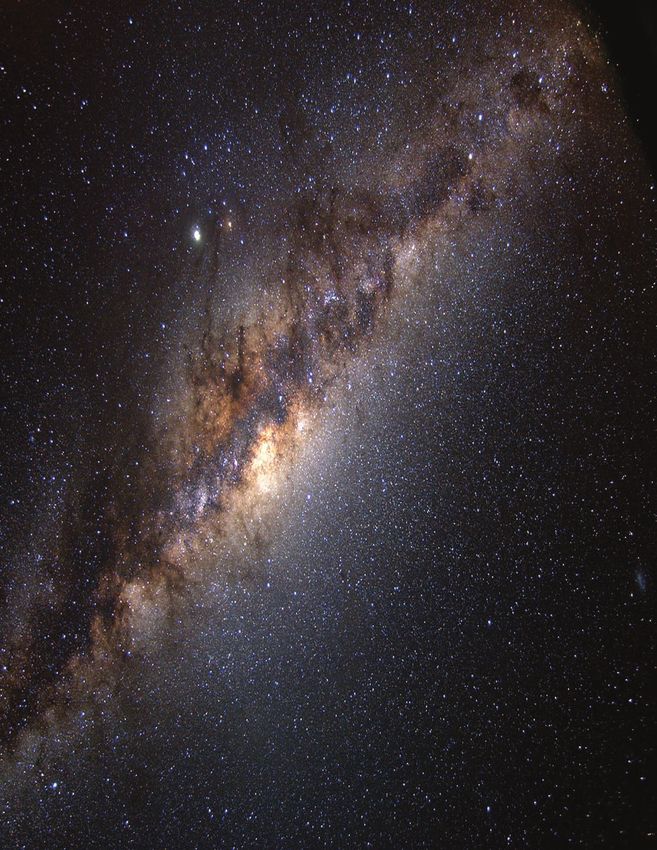
GREATES
                                                   TH

                                              ON EART
                                                 SHO
                                                                  The Outer Albemarle Peninsula offers some of the darkest skies
                                                          on the U.S. Atlantic seaboard, with sites for unsurpassed stargazing and
                                                    a nightscape experience full of wildlife at play under the music of the spheres.

                                                  THE GREATEST SHOW
                                                   ON THE EAST COAST
                                                      New Journeys into
                                                     the Heart of North
                                                    Carolinas’ Darkness
                                                                                                                          D A V E      S H A W

                                                                                                  The buffer around the Outer Albemarle Peninsula’s
                                                                                                      amazing nightscapes includes Ocracoke Island.
Meredith Ross/VisitNC.com

6 coastwatch | spring 2020 | ncseagrant.org                                                         coastwatch | spring 2020 | ncseagrant.org 7
W              elcome to the “Yellowstone of the East,” where the Gothic
South meets the galaxy. Here on the Outer Albemarle Peninsula, you can
stare into the soul of the Milky Way, a gash of glitter across the night sky
                                                                                     “It’s truly a magic place,” he says, “once you get off the main
                                                                               highways.”
                                                                                     Riggs first heard the “Yellowstone of the East” description of the
that formed billions of years before our planet. You can watch the moon        peninsula from Mike Dunn, a naturalist and science educator, who
rise, feathering cirrus clouds of silver and indigo, or follow the night’s     worked with Riggs on earlier research. Dunn has led tours for visitors
new river of light across a black inlet out to the horizon. Here, nighttime    from around the world primarily to two jaw-dropping regions — Costa
cues the cacophony of tundra swans. Your shoes will find solid earth,          Rica and Yellowstone Park — and also, at first blush, to seemingly much
but the terrain also includes bays, marshes, ghost forests, and pocosins       less exotic eastern North Carolina.
— wetlands built on sandy, peaty soil, saturated with groundwater, and               “Mike was right,” Riggs says. “There are plenty of reasons to
made for boots. This country belongs to wild creatures and critters, to        compare Yellowstone with aspects of the OAP that require more
red wolves, alligators, black bears, otters, and manatees.                     introspection and contemplation. You just have to slow down and
       Bring your telescope, your binoculars, your sense of adventure, and     understand a little about the natural resources that we have here.”
anyone you know who still believes that reality beats virtual reality. Over          Riggs’s enthusiasm is catching, especially when he begins
2.4 million acres of public lands and waters stretch across the Outer          cataloging why exactly the Outer Albemarle, like the iconic national
Albemarle Peninsula (OAP) and the surrounding estuaries and barrier            park, possesses the potential for ecotourism. The biodiversity within

                                                                                                                                                                                                                                                                                           Allie Stewart/USFWS
islands. Locals live in small towns on the peninsula’s perimeter like          OAP terrain rivals Yellowstone’s, for instance, even among the large
Columbia, Stumpy Point, Engelhard, and Swan Quarter, or in crossroad           animals — black bears, red wolves, porpoises, and sharks versus the
communities like Goat Neck, Alligator, and Gum Neck. This part of the          famous park’s moose, elk, and grizzly bears — not to mention that the
state remains mostly untamable, and, at night, strikingly dark.                peninsula’s panoramas can compete with any location’s.
       All of which makes the peninsula one of the country’s best kept               In fact, the OAP’s 780 square miles of national wildlife refuges,
secrets — an expanse of land and sky that offers the rarest of settings.       state parks and reserves, and vast swaths of public game land seem to
The OAP stages a nightscape that not only awes visitors but that might         unfurl endlessly because of an additional 2,900 square miles of publicly
provide a much-needed boost to ecotourism in northeastern North                owned buffer enveloping it all.                                             The Outer Albemarle peninsula belongs to red wolves, alligators, and many other creatures,
Carolina.                                                                            Albemarle Sound to the north, Croatan and Pamlico sounds to the       including river otters (like this one, below), and tundra swans (above, at Lake Mattamuskeet).
                                                                               east and southeast, and Pamlico River Estuary to the south surround
                                                                               the OAP. Cape Hatteras and Cape Lookout National Seashores further
“When you have a vast area of public wetlands surrounded                       protect the peninsula to the east, as do the Pea Island and Cedar Island
                                                                               National Wildlife Refuges. To the west, broad stretches of agricultural
by expansive estuarine bodies of water, with minimal human                     fields sprawl across the lower Coastal Plain.
                                                                                     “When you have a vast area of public wetlands surrounded by
activity, the 360-degree vistas of the horizon provide a                       expansive estuarine bodies of water, with minimal human activity,
                                                                               the 360-degree vistas of the horizon provide a never-ending parade of
never-ending parade of night sky magic. Thunderheads                           night sky magic,” Riggs says. “Thunderheads illuminate the stage with
                                                                               dramatic lightning, as spectacular cloud displays at day’s end introduce
illuminate the stage with dramatic lightning, as spectacular                   a zenith of planets, constellations, and an astronomical wonderland that
                                                                               is becoming an endangered environment along our coast, because of
cloud displays at day’s end introduce a zenith of planets,                     increasing light pollution.”

constellations, and an astronomical wonderland that is                         INTO THE DARK
                                                                                     Because of the OAP’s immense tracts of protected and unpopulated
becoming an endangered environment along our coast,                            terrain, these night skies are some of the darkest on the U.S. Atlantic
                                                                               Coast between Boston and Miami.
because of increasing light pollution.”                                              Riggs recalls when he previously could view the Milky Way
                                                                               from his own back doorstep, a level of visibility astronomers consider
                                                                               necessary both for optimal stargazing with the unaided eye and for
THE YELLOWSTONE OF THE EAST                                                    exploring the farther reaches of space with binoculars and telescopes.
     “These are world-class natural resources,” says Stan Riggs. Since         Today, he says, due to light pollution from nearby residential
the early 1970s, North Carolina Sea Grant has supported numerous               developments, “I can’t see either the Milky Way or the Little Dipper.”
research initiatives Riggs has spearheaded, including his latest, the                In large part, the conspicuous black sky over the OAP that appears
Night-Scape Resource Project. Riggs, now coastal and marine geologist          on nighttime satellite maps of the Eastern Seaboard prompted Riggs to

                                                                                                                                                                                                                                                                                           Mike Dunn
with NC LOW (“North Carolina Land of Water”), is exploring the Outer           document this terrain. Naturalists and astronomers covet such conditions,
Albemarle Peninsula after dark.                                                                                                           Continued

8 coastwatch | spring 2020 | ncseagrant.org                                                                                                                                                                                                       coastwatch | spring 2020 | ncseagrant.org 9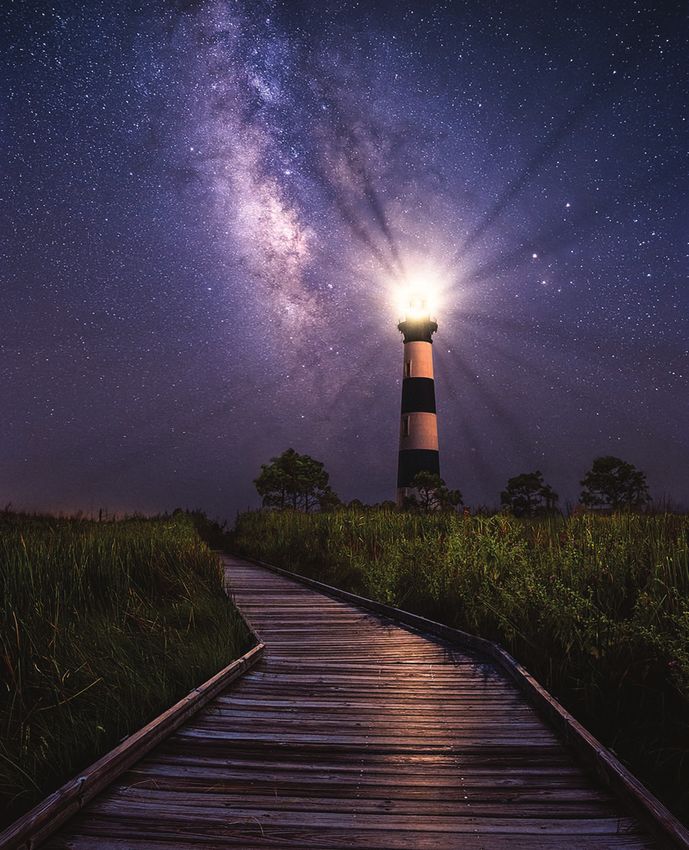
Stan Riggs
                                                        which offer a paradise for both professional and amateur explorers alike
                                                        — with significant implications for the future economic health of the
                                                        whole region.
                                                              To partner with astronomy experts, his NC LOW joined forces
                                                        to form the Night-Scape Resource Project with another nonprofit,
                                                        Greenville’s “A Time For Science.” The project trained survey teams
                                                        to journey across the peninsula to catalog night landscapes and
                                                        soundscapes, as well as the viewscapes of those deep and spacious skies
                                                        untouched by artificial light.
                                                              The teams would visit sites on national wildlife refuges (Alligator
                                                        River, Pocosin Lakes, Mattamuskeet, and Swanquarter), state parks and
                                                        reserves (Pettigrew, Somerset Place, and Buckridge), and vast parcels of
                                                        public game lands (NC Wildlife Resources Commission). But first, there
                                                        was a caution for everyone who had volunteered for the assignment —
                                                        scientists, educators, and students alike — about the remote ground they
                                                        were about to cover.

                                                        “The sites with a shoreline are the best. The stage

                                                        becomes much vaster. Incredible cloud patterns, distant

                                                        thunderheads with flashing lightning spectacles. Out here,

                                                        the sunsets and sunrises, and moonrises and moonsets,

                                                        are among the biggest shows on Earth.”

                                                              “Most of this land is low, wet, and wild,” reads the project’s
                                                        instructional guide. “Do not drive off any paved, graveled, or sand
                                                        roadway. YOU WILL GET STUCK.”                                               ABOVE: The Night-Scape Resource Project studied the quality of darkness and many other environmental factors at 83 sites inside the
                                                              To be sure, venturing off the beaten path on the OAP could lead       area that the black border on this map represents.
                                                        you into territory Edgar Allen Poe could have borrowed for a literary
                                                        milieu. Undaunted, though, three adventurous teams fanned out across        Association, would enhance the peninsula’s visibility, infusing                “Opportunities for building programs around the
                                                        Tyrrell, Washington, mainland Dare, and mainland Hyde counties to           the region’s slowly growing ecotourism industry with instant
                                                        map and develop profiles of optimal sites to experience the nightscape.     marketability.                                                            nocturnal environment and night sky are unlimited.
                                                              Armed with GPS devices, sky-quality light meters, sound meters,             Jane Harrison, North Carolina Sea Grant’s coastal economics
                                                        and weather instruments, the teams collected data for 11 months, across     specialist, says tourism on the coast is a key economic driver.           Educating the youth, public, and leadership of the
                                                        each season, timing their visits as closely as possible with new and full         “For Dare County, one in four jobs is in tourism and recreation,”
                                                        moons. By the end of the project, they had logged 250 visits to 83 sites,   she explains. “Hyde, Washington, and Tyrrell counties are looking         Roanoke-Albemarle region is critical for the protection and
                                                        mostly on public land, compiling portraits of each location’s darkness,     to grow their tourism economies especially, and night sky ecotours
                                                        ambient sound, light pollution, nearby environment, accessibility, and      would be a great addition to what they already offer.”                    management of this dark-sky natural resource, but also
                                                        even available parking space.                                                     In 2015, Harrison says, tourism in Tyrrell County provided less
                                                              Not only did the project produce comprehensive site profiles,         than 2% of the jobs.                                                      to capitalize on the potential for developing a sustainable
                                                        but its data on light pollution possibly could earn the OAP a regional
                                                        designation as an “International Dark Sky Reserve.”                         THE STARGAZER’S PLAYGROUND                                                ecotourism for the region’s future.”
                                                              “A majority of our survey sites on the OAP offer starry nights             The Yellowstone of the East’s appeal is significant and indelible.
                    Inside the red circle, the OAP      that the International Dark Sky Association’s guidelines rate as gold or         “The sites with a shoreline are the best,” Riggs says. “The stage          The OAP offers a majestic platform to watch lunar eclipses and
                    region’s pristine darkness stands   silver,” Riggs says.                                                        becomes much vaster. Incredible cloud patterns, distant thunderheads      rising planets, to unfold a chaise-lounge for shooting stars — especially
                    in contrast to the East Coast’s           The dark sky designation, Riggs adds, along with the                  with flashing lightning spectacles. Out here, the sunsets and sunrises,   the seasonal Perseid or Geminid meteor showers — or a place to plant
NASA

                    bright lights.                      accompanying stamp of approval from the International Dark Sky              and moonrises and moonsets, are among the biggest shows on Earth.”                                                                     Continued

10 coastwatch | spring 2020 | ncseagrant.org                                                                                                                                                                                    coastwatch | spring 2020 | ncseagrant.org 11
your telescope to gaze at supernovas, Saturn’s rings, or Jupiter’s red spot. Accordingly, a large part of the Night-Scape Resource Project’s
And, of course, out in the heart of all this darkness, our own Milky charge is to educate — in effect, to take the sky into the classroom and
Way gleams for the naked eye. Most of us no longer can see it from our to draw students into the environment. Riggs and his team have held a
own back door, with or without a lens. But out on the OAP, that long band series of science teacher education workshops and fieldtrips, and A Time
of stellar haze crosses the celestial sky faithfully — as faithfully each night For Science’s Brian Baker has taken his portable planetarium into many
as, well, Old Faithful — hinting, like the famous geyser, at the universe’s coastal N.C. schools.
hidden depths. The project also collaborates with the Coastal Studies Institute
“Sweeping through the Milky Way with a telescope reveals a to host “Star Parties” at Jennette’s Pier in Nags Head and the Windsor
window deep into the center of our galaxy,” Riggs says. “Interstellar gas Middle School in Bertie County, with another slated for April 24 at
and dust constitute the spiral arm as it cuts through the starry ‘cloud.’ Jockey’s Ridge. Hundreds of eager participants typically attend these
Within this cloud is a treasure trove of nebulas and star clusters — a events, which include a series of large outdoor telescopes and where “sky
stargazer’s playground. Here, it’s important to see not only with your eyes, time” eclipses “screen time.”
but with your mind.” “Opportunities for building programs around the nocturnal
Of course, lifting our chins to the heavens was the original mind- environment and night sky are unlimited,” Riggs says. “Educating the
altering experience. From ancient constellations made in the shape of youth, public, and leadership of the Roanoke-Albemarle region is critical
mythological heroes to contemporary literature’s marriage of setting and for the protection and management of this dark-sky natural resource, but
psychology, the night sky has always offered contemplation, inspiration, also to capitalize on the potential for developing a sustainable ecotourism
and awe. One of John Cheever’s acclaimed stories, “The Swimmer,” for the region’s future.”
ABOVE: Sunrises and sunsets and moonrises and moonsets captivate visitors depicts a suburbanite’s nighttime trek through town, full of youthful vigor Riggs adds that this ecotourism doesn’t depend on clear skies.
to the Alligator River Refuge (here) and elsewhere across the Outer Albemarle Peninsula. as he plunges into his neighbors’ pools, flutter-kicking and crawl-stroking While spellbinding, the region’s unpolluted gateway to the celestial is
his way across one backyard after the other, only to arrive home to find the only part of its hidden magic.
USFW
BELOW: Black bears are common sights across the OAP region.
constellations have changed. Summer’s metaphorical skies have become “The best part of stargazing on the OAP often is the environment
fall’s — and just as the seasons have passed, so, too, has much of his life. around you,” Riggs says. “Hearing the owls talk to each other, as otters
splash in the water. Wolves howl in the distance. And the cacophony of
NATURE’S REMEDY summer amphibians and winter swans and geese. The awesome wind
In addition to nature’s archetypal resonance within us, a record of blows through the marsh grasses and causes the waves to lap onshore.”
research as wide as the OAP’s dark expanses suggests the very act of
beholding the natural world can help alleviate many ills that consume our
psychological space — afflictions including stress, depression, and even “Sweeping through the Milky Way with a telescope reveals
attention deficit disorder. In fact, science over the past decade has shown
that spending time in nature may be especially important for the well- a window deep into the center of our galaxy. Interstellar gas
being of children.
In 2018, researchers at NC State and Clemson found that even rural and dust constitute the spiral arm as it cuts through the starry
children, amid easily accessible natural settings, are spending more time
in front of electronic screens than they spend outside. The study looked at ‘cloud.’ Within this cloud is a treasure trove of nebulas and
middle school students, in particular, and determined that gaps between
time spent on screens and time in the outdoors were widest for girls and star clusters — a stargazer’s playground. Here, it’s important
African American students.
When the study was published, NC State’s Lincoln Larson, co-author to see not only with your eyes, but with your mind.”
of the journal article, said that middle school could be a turning point for
children as priorities shifted and their lives became more structured. “This
often results in fewer opportunities for outdoor recreation,” he explained. The skies, wildlife, possibilities for photography and kayaking, the
“This is a problem, because connection to nature plays a positive role in potential for an astonishing trail system, even simply the sheer breadth
young people’s physical health and psychological development.” of the terrain to explore — the more you contemplate all that the Outer
For Riggs, the nightscape offers a natural remedy, a valuable alterna- Albemarle Peninsula offers, the more apt “The Yellowstone of the East”
tive for families zigzagging through life with their eyes locked on screens. begins to sound.
“The whole concept is to get people in tune with these hidden But the OAP also defies comparison.
resources,” he says. “When I take people out on North Carolina’s “I’ve lived and worked all over the world,” Riggs says. “This region
large estuarine water bodies and away from the large urban centers, I is unique. We’ve got blackwater streams and swamp forests. The estuaries
tell them to count the number of boats they see. It’s rare to see more are drowned river valleys that are bounded by the beaches and capes of
Mike Dunn
than a fisherman or two on any given day on most of North Carolina’s the outer barrier islands. And it’s all dynamic, subject to high-energy
underutilized estuarine waters.” Continued
12 coastwatch | spring 2020 | ncseagrant.org coastwatch | spring 2020 | ncseagrant.org 13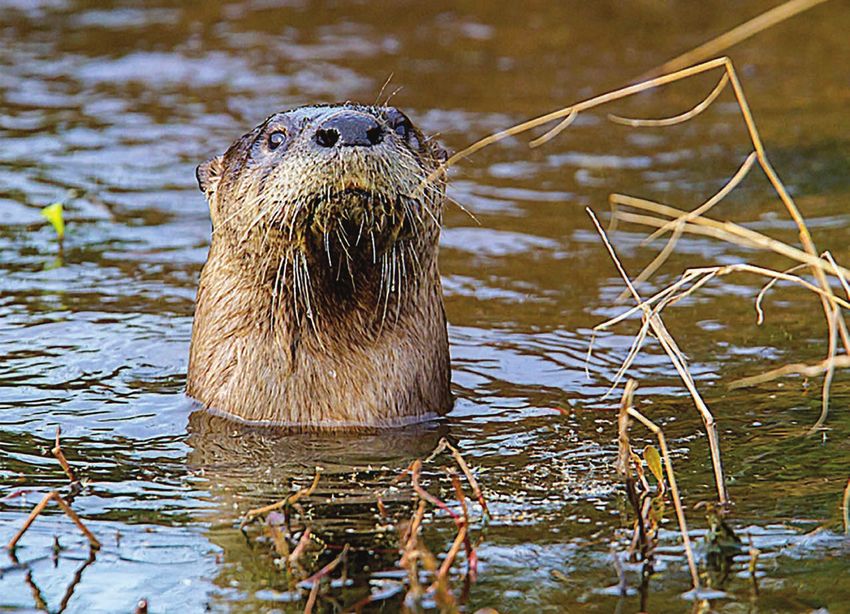
This composite of            storms that cause ongoing changes to the coastal system. It’s far more than just
                          exposures documented         a place where astronomers go wow. And it’s ours. It belongs to the people.”
                          24 memorable minutes
                          from Brook Valley in Pitt           This project defined nightscape resources within northeastern North
                          County, during last year’s   Carolina’s coastal system, but local, county, state, and/or federal agencies,
                          full lunar eclipse.          with specific rules and regulations pertaining to night visitation, manage
                                                       these sites. Contact the appropriate office for permission to access specific
                                                       sites for nightscape viewing.

                                                             North Carolina Sea Grant funded the Night-Scape Resource Project
                                                       through a Community Collaborative Research Grant, in partnership with
                                                       NC State’s Kenan Institute of Engineering, Technology, and Science. North
                                                       Carolina Space Grant, East Carolina University’s Department of Geological
                                                       Sciences, and ECU’s Coastal Studies Institute also provided key support.
                                                       The project includes: Stanley Riggs, coastal and marine geologist at North
                                                       Carolina Land of Water and project lead investigator; Karen Clough, NC
                                                       LOW’s community outreach coordinator; Emily Jarvis, executive director of
                                                       A Time For Science; and Brian Baker, director of astronomy with ATFS. The
                                                       project has a working partnership with Reide Corbett, oceanographer and
                                                       executive director of the ECU Coastal Studies Institute, as well as three groups
                                                       of local volunteers who constituted the field-mapping teams. The project also
                                                       has developed working partnerships with the U.S. Fish and Wildlife Service
                                                       (Alligator River, Pocosin Lakes, Mattamuskeet, and Swanquarter National
                                                       Wildlife Refuges), Pettigrew State Park, and the N.C. Wildlife Resources
                                                       Commission.

                                                       EDITOR’S NOTE: This article heavily relies on Stan Riggs’s report, Night-
                                                       Scape Resources: Northeastern North Carolina Coastal System, as well
                                                       as interviews with and presentations by Stan Riggs. NC State News, Jane
                                                       Harrison, and other sources also provided information.

                                                       • Community Collaborative Research Grants:
                                                         go.ncsu.edu/CCRGprogram
                                                       • North Carolina Sea Grant funding opportunities:
                                                         NCseagrant.ncsu.edu/funding-opps/
                                                       • Stan Riggs on “A Brief History of Sea Level Rise”:
                                                         go.ncsu.edu/a-brief-history

                                                       “I’ve lived and worked all over the world. This region is unique.

                                                       We’ve got blackwater streams and swamp forests. The estuaries

                                                       are drowned river valleys that are bounded by the beaches

                                                       and capes of the outer barrier islands. And it’s all dynamic,

                                                       subject to high-energy storms that cause ongoing changes to
                                                                                                                                          Brunier/NASA
P. Gemperline

                                                       the coastal system. It’s far more than just a place where

                                                       astronomers go wow. And it’s ours. It belongs to the people.”

 14 coastwatch | spring 2020 | ncseagrant.org                                                                                                            coastwatch | spring 2020 | ncseagrant.org 15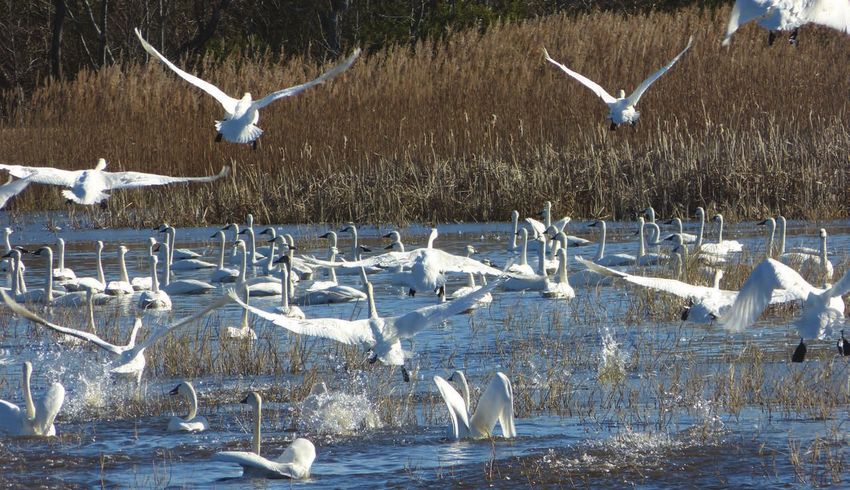
BY PROTECTING COASTAL ECOSYSTEMS, WE CAN TAKE ADVANTAGE
                                                OF NATURE’S OWN TOOLS FOR CAPTURING CARBON FROM THE ATMOSPHERE —
                                                AND HELP TO SLOW DOWN GLOBAL WARMING.

                        Carbon Sequestration and the
      S A R A H
                        Battle Against Climate Change
                        S P I E G L E R

      Continued
Jared Kay/VisitNC.com

                                                                                                          Taylor's Creek, near Beaufort

 16 coastwatch | spring 2020 | ncseagrant.org                                                coastwatch | spring 2020 | ncseagrant.org 17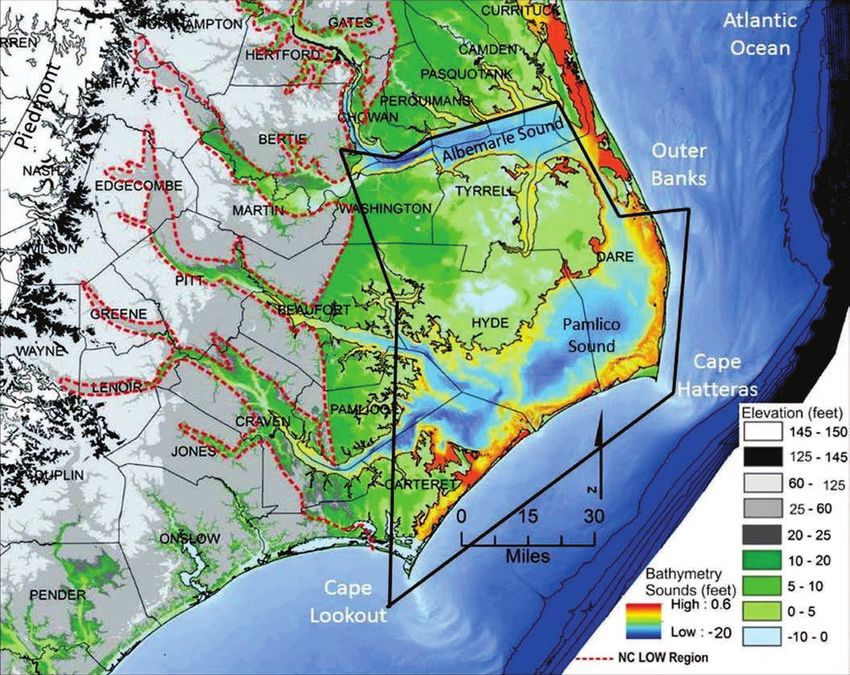
n January 8, 2016,                                                                                                                                         Our coastal communities experience climate change most severely
scientists arrived at Camp Lejeune                                                                                                                              in the forms of more intense storms, greater rainfall, and rising seas. Hans
in Jacksonville, North Carolina, for a                                                                                                                          Paerl at the University of North Carolina at Chapel Hill’s Institute of
day of fieldwork.                                                                                                                                               Marine Science in Morehead City published a study last year noting that
      Researchers have conducted several studies at Camp                                                                                                        six of the seven highest precipitation events on record in North Carolina
Lejeune since 2009 to understand the complex ecosystems                                                                                                         have occurred within the last 20 years. Increasing rainfall and hurricanes
that provide the training setting for the largest Marine Corps                                                                                                  such as Floyd (1999), Matthew (2016), and Florence (2018) have brought
base on the East Coast. On this day, Carolyn Currin and                                                                                                         catastrophic flooding, adverse economic impacts, and ecological
Nathan McTigue from the NOAA National Centers for                                                                                                               damage that has included the increased runoff of pollutants into coastal
Coastal Ocean Science in Beaufort collected a sample of                                                                                                         ecosystems and estuaries.
the marsh (a “sediment core”) from 7 feet below ground.
Radiocarbon dating later determined the sediment contained carbon                                                                                               “Current studies suggest that mangroves and
that the marsh had stored for almost 2,500 years.                                                                                                               coastal wetlands annually sequester carbon at a
      These scientists’ work highlights the critical role of coastal                                                                                            rate 10 times greater than mature tropical forests.
ecosystems in removing carbon from the atmosphere. Last year, Currin                                                                                            They also store three to five times more carbon per
and McTigue published a study based on the sediment they collected in                                                                                           equivalent area than tropical forests.”
2016, noting that the high rates of carbon buried over time in wetland                                                                                                           F R O M N OA A’ S C OA S TA L B LU E C A R B O N
sediments have “garnered attention as a potential ‘natural fix’ to reduce
the concentration of carbon dioxide in Earth’s atmosphere.”                                                                                                     Capturing the Culprit: Carbon Sequestration
      The buildup of carbon in the atmosphere, of course, accelerates                                                                                                 Studies of Camp Lejeune sediment cores have shown how coastal
global warming — with sizeable consequences. By 2060, the small                                                                                                 ecosystems play an important role both in “sequestering” (capturing) and
town of Beaufort in eastern North Carolina, for instance, will experience                                                                                       storing carbon.
a foot of sea level rise under NOAA’s lowest sea level projections                                                                                                    According to Currin, salt marshes, mangroves, and seagrass beds
and potentially as much as 2 to 4 feet as the global climate continues                                                                                          absorb large amounts of carbon dioxide from the atmosphere and store it
to warm over the next 40 years. Higher temperatures will result in                                                                                              underground for extremely long periods of time.
significant challenges for coastal habitats and communities, including                                                                                                “By using radiocarbon dating,” she says, “we were able to determine
many of the places on the North Carolina coast and around the country                                                                                           that marsh plant material buried at the bottom of a 2-meter deep core was
that are of important cultural, social, ecological, and economic value.                                                                                         2,460 years old.”
                                                                                                                                                                      Currin and her colleagues estimated that carbon has accumulated in
The Carbon Culprit                                                                                                                                              the sediment for the past 100 years at a rate almost four times higher than
      Carbon, an element found in all living organisms, is the chemical                                                                                         it has for the past 1,000 years. The rate of carbon burial over the lifetime
                                                                             Carolyn Currin

backbone of life, and it is second in abundance only to oxygen in the                                                                                           of this marsh typically correlates closely with local sea level rise; thus, the
human body.                                                                                                                                                     recent increase in stored carbon could be due to accelerated sea level rise
      The overall amount of carbon on our planet remains relatively                                                                                             in North Carolina.
fixed, but the way it is stored changes as it cycles through the                                                                                                      Of course, North Carolina is replete with vast tracts of salt
environment and through living organisms. Oceans, for example, store        TO P : For thousands of years, atmospheric levels of carbon                         marshes. Over hundreds of thousands of years, sediment has layered
about 50 times more carbon than the earth’s atmosphere.                     dioxide never rose above the dashed line, but after 1950 they                       on these marsh ecosystems. As sediment layers continue to build on top
      Changes in the amount of carbon in our atmosphere, however,                                                                                               of previous layers, carbon remains stored deep within coastal habitats.

                                                                                                                                               Carolyn Currin
                                                                            haven’t fallen below it. B OT TO M : Scientists drill for a core
result in significant impacts. As greater amounts of carbon dioxide and     sample at Camp Lejeune. R I G H T: Core samples from the                                  Through photosynthesis, marsh plants take in carbon dioxide from
other greenhouse gases enter the atmosphere, oceans warm and acidify,       Marine Corps base revealed carbon stored in the marsh for                           the atmosphere and then convert it to plant matter. Because this organic
icebergs melt at a faster rate, and sea levels rise.                        almost 2,500 years.                                                                                                                                 Continued

18 coastwatch | spring 2020 | ncseagrant.org                                                                                                                                       coastwatch | spring 2020 | ncseagrant.org 19
plant material becomes buried under value coastal habitats both for their carbon
sediments, decomposition occurs over sequestration and storage benefits and for
thousands of years — in effect, keeping the ecosystems services they provide. These
the carbon stored — as compared to ecosystems provide vital habitats for marine
forest habitats where decomposition life, shoreline protection, opportunities
occurs over mere decades. Most of the for outdoor recreation and tourism, and a
living organisms in terrestrial forests supply of seafood. Fostering these healthy
exist above ground and, thus, break ecosystems will serve to make the state
down after death at a faster rate due better prepared to adapt to the challenges of
to much higher exposure to light climate change.
and oxygen. A multi-pronged approach with
Currin says marsh ecosystems diverse partners and solutions, through
are more effective than any other type Executive Order 80 and other efforts, is
USMC
of habitat in the world — including instructive for how to continue tackling
terrestrial and freshwater ecosystems — climate change challenges at state, national,
Ingrid Lemme
at the sequestration and storage process. and global levels. Many residents in North
However, she warns, the accelerated rate L e f t : Fostering North Carolina’s healthy coastal ecosystems Carolina’s coastal communities already are thinking about how to work
of sea level rise might significantly affect will better prepare the state to adapt to the challenges of together. The solutions will be complex, and the best approaches will offer
carbon storage in coastal ecosystems. climate change. A b ove : Camp Lejeune Marines conduct equitable and affordable ideas.
“Although sea level rise brings a HALO jump over an airfield. Researchers have conducted
more tidal water and sediments into the marshes,” she says, “we’re coastal wetlands will disappear by the year 2100. studies to understand the complex ecosystems that provide “Tactics to prevent further warming also often help
finding that our low marshes in North Carolina are not keeping up with In North Carolina, however, a new statewide approach could bring the training setting for the largest Marine Corps base on the us adapt to the warming that has already happened.”
sea level rise, and carbon accumulation will end quickly if the marshes important protections to our coast. In 2018, Governor Roy Cooper signed East Coast. L E T T E R F R O M T H E E D I TO R , 2 0 1 9 AU D U B O N
convert to mudflats.” Executive Order 80 (EO80): North Carolina’s Commitment to Address S O C I E T Y S P EC I A L R E P O R T O N C L I M AT E C H A N G E
Even more importantly, as these habitats disappear, they also Climate Change and Transition to a Clean Energy Economy. By doing
will release hundreds or thousands of years’ of stored carbon into the so, he also brought recognition to the importance of the state’s coastal A collaborative group of partners from many different • Executive Order 80: go.ncsu.edu/80
atmosphere. habitats. EO80 instructs the state to accomplish specific climate-related organizations serves on the state’s Natural and • Carolyn Currin, Nathan McTigue, and other scientists conducted
goals, such as reducing greenhouse gas emissions to 40% below 2005 Working Lands Stakeholder Group’s Coastal Habitats
research at Camp Lejune as part of the Defense Coastal/Estuarine
Subcommittee, which is making recommendations for
Preserving Marshland levels by the year 2025, integrating climate change mitigation and Research Program (DCERP): go.ncsu.edu/DCERP
the N.C. Climate Risk Assessment and Resiliency Plan.
We can try to slow down or adapt to the changes in climate adaption practices into all cabinet agency programs and operations, and • U.N. Special Report on the Ocean and Crysosphere:
• N.C. Division of Marine Fisheries
that are already well underway. Preserving and restoring salt marsh preparing a “Climate Risk Assessment and Resiliency Plan” this year. go.ncsu.edu/UN-report
• N.C. Division of Coastal Management
habitats and mangrove forests remain an incredibly important piece Of course, coastal habitats are at the forefront of the battle of land
• North Carolina Sea Grant
of the puzzle. However, even if we were to preserve and protect all versus rising waters in North Carolina. As part of the EO80 efforts, • NOAA National Centers for Coastal Ocean Science Sarah Spiegler serves in a dual role as the program coordinator of
saltmarshes successfully, these habitats cover insufficient area globally to the Natural and Working Lands (NWL) Stakeholder Group is making • The Nature Conservancy North Carolina the N.C. Sentinel Site Cooperative (NCSSC) and as a marine education
singlehandedly solve climate change. We won’t be able to salt marsh our recommendations to build ecosystem resiliency, sequester carbon, and • Defenders of Wildlife specialist for North Carolina Sea Grant. She works collaboratively
way out of this problem. provide economic growth through the conservation, restoration, and • Albemarle-Pamlico National Estuary Partnership with NCSSC partners to address the impacts of sea level rise on North
In addition, as Currin cautioned, rising sea levels could drown management of the state’s inland and coastal terrain. To inform the • Carolina Wetlands Association Carolina coastal habitats and communities. She helps to bridge the gap
marshes, not only ending the capacity of the land to store carbon but statewide resiliency plan, the Coastal Habitats Subcommittee of the • U.S. Fish and Wildlife Service between science and real-world policy solutions, translating sea level
also releasing carbon that had already been stored. In fact, a 2019 NWL has developed strategies and viable on-the-ground actions that will • Audubon North Carolina rise and climate change science for managers and local government
Special Report on the Ocean and Crysosphere from the United Nations protect and restore North Carolina’s vital coastal habitats. • Duke University officials. She also serves on the state’s Natural and Working Lands
Intergovernmental Panel on Climate Change found that 20 to 90% of The subcommittee’s recommendations will include measures that Stakeholder Group’s Coastal Habitats Subcommittee.
20 coastwatch | spring 2020 | ncseagrant.org coastwatch | spring 2020 | ncseagrant.org 21You can also read


