The green behind the cloud - THE GREEN BEHIND THE CLOUD
←
→
Page content transcription
If your browser does not render page correctly, please read the page content below

The green
           behind
           the cloud
1   THE GREEN BEHIND THE CLOUD
Authors
Cloud has moved from “nice-to-
have” to “must-have”. But not all
approaches to cloud migration
Peter Lacy Paul Daugherty
are equal. Cloud migration can Senior Managing Director Group Chief Executive
deliver a double helix effect
European Lead & Global Sustainability Lead Technology, and CTO, Accenture
Accenture Strategy Paul Daugherty is Accenture’s chief technology
of shareholder and stakeholder
Peter advises leaders of Fortune 500 companies and innovation officer and leads the company’s
on strategies related to growth, technology, Technology Innovation and Ecosystem group.
value—simultaneously
innovation and sustainability.
reducing costs and carbon
emissions if approached from
a sustainability perspective.
Leading to a greener planet Pavel Ponomarev
Principal Director
Kishore Durg
Senior Managing Director
and a boost in profitability. Sustainability, Accenture Strategy
Pavel leads the North American Sustainability
Lead Intelligent Cloud & Infrastructure
Accenture Technology
Strategy practice and has deep expertise in Kishore is the Growth and Strategy Lead for
technology and sustainability. Accenture Technology Services where he
helps in Ventures and Acquisitions, Technology
strategy and Strategic Growth Initiatives.
2 THE GREEN BEHIND THE CLOUD
Forecast for cloud
    The business forecast is for more and more cloud with a chance of
    significant savings...financial and carbon. With the proliferation of
    data and devices, public cloud will only gather strength. Every
    business will become a “cloud-first” business.

    Consider this: The number of large-scale data centers is increasing
    by 14% each year1 and public cloud spend will rise by 17% between
    2019-2020.2 Some analysts estimate that 11.4% of the United States’
    IT spend is dedicated to cloud, with China at 2.7% and catching up
    rapidly.3 This double-digit growth comes with a price. Global data
    center electricity consumption is nearly equivalent to the annual
    consumption of the country of Spain.4,5

    However, by pursuing a green approach, our Accenture analysis
    suggests migrations to the public cloud can reduce global carbon
    (CO2) emissions by 59 million tons of CO2 per year. This represents
    a 5.9% reduction in total IT emissions and equates to taking 22
    million cars off the road. This magnitude of reduction can go a
    long way in meeting climate change commitments, particularly
    for data intensive businesses.

3    THE GREEN BEHIND THE CLOUD
From Accenture’s experience supporting cloud migrations                        At Accenture, we practice what we preach: Today we run a full 95%
    for hundreds of clients, sustainable cloud positions companies                 of our applications on the cloud. The migration led to $14.5 million
    to deliver on financial targets. We’ve seen up to 30-40% total                 in benefits after the third year. Another $3 million in annualized costs
    cost of ownership (TCO) savings. Drivers like greater workload                 were saved by right-sizing service consumption.6
    flexibility, better server utilization rates, and more energy-efficient
    infrastructure all make public clouds more cost efficient than
    enterprise-owned data centers.

       Outperforming peers through responsible
       business practices:
       Based on Accenture research, between 2013—2019, companies with
       consistently high ratings for environmental, social and governance
       (ESG) performance enjoyed 4.7x higher operating margins than low ESG
       performers over the same period. High performers generated higher annual
       total returns to shareholders, outperforming peers by 2.3x. Over the past
       several months, when global markets have faced tremendous pressures and
       volatility, companies with high ESG scores have continued to outperform,
       experiencing a cumulative relative return 6.3% higher than bottom
       performers and facing lower volatility.

4     THE GREEN BEHIND THE CLOUD
Glossary of Terms

    As importantly, cloud migrations also unlock new opportunities                            SUSTAINABLE CLOUD—A technology platform that enables
                                                                                              organizations to tap on-demand public, private or hybrid computing
    like clean energy transitions enabled by cloud-based geographic
                                                                                              capabilities through virtual hardware, software and services.
    analyses, material waste reductions from better data insights, and                        Sustainable cloud focuses on the environmentally friendly operation
    targeted medical R&D as a result of faster analytics platforms.                           and use of cloud services through a proactive approach to lowering
                                                                                              carbon emissions and unlocking new responsible applications of
                                                                                              cloud technology.

                                                                                              PUBLIC CLOUD—Computing services provided by third-parties
                                                                                              and offered over the public Internet. They are typically available
       Sustainability as the future of business:                                              for purchase on-demand.
       Companies have historically driven financial, security, and agility benefits
       through cloud, but sustainability is becoming an imperative. According to              FOURTH INDUSTRIAL REVOLUTION (4IR)—A term coined
       the latest UNGC-Accenture Strategy CEO Study, more than 99% of CEOs                    by Klaus Schwab, Founder and Executive Chairman of the World
       from large companies now agree that “sustainability issues are important               Economic Forum, in his book, “The Fourth Industrial Revolution”.
       to the future success of their businesses.” Two-thirds view fourth industrial          4IR technologies are characterized by a range of new technologies
       revolution (4IR) technologies as a critical factor for accelerating                    that are fusing the physical, digital and biological worlds.
       socioeconomic impact. 59% of CEOs say they are deploying low-carbon
       and renewable energy across their operations today while 44% see                       CLOUD-NATIVE APPLICATIONS—Designed to take full advantage
       a net-zero future for their company in the next ten years.7                            of on-demand computing, higher asset utilization rates, and multi-
                                                                                              tenant structures that allow multiple customers to be served with
                                                                                              one application installation.

                                                                                              CIRCULAR ECONOMY—The departure from traditional ‘take, make,
                                                                                              waste’ production and consumption systems to a system whereby
                                                                                              resources are kept in use for as long as possible, the maximum value
                                                                                              is extracted from them whilst in use, then products and materials are
                                                                                              recovered and regenerated at the end of each life-cycle.

5    THE GREEN BEHIND THE CLOUD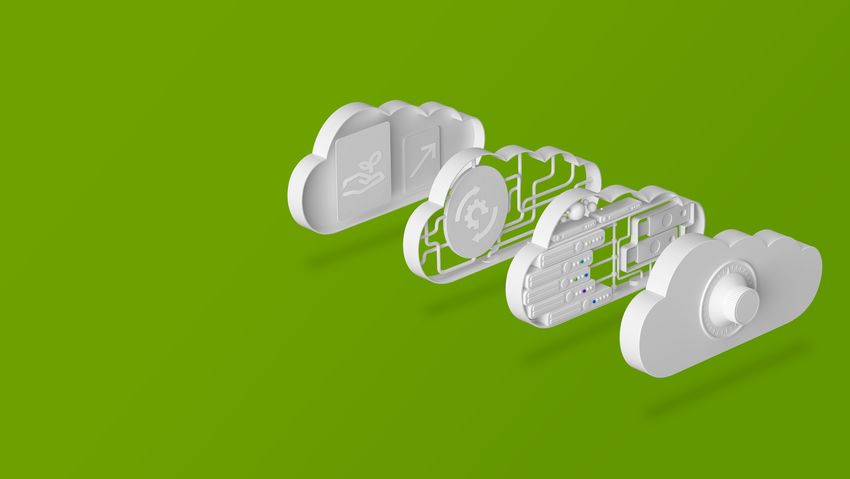
Toward greener cloud
    Not all cloud migration approaches are created equal when it comes to
    sustainability and one size certainly does not fit all. What do we mean
    by that? The range of benefits possible depend on a company’s focus
    around three things:

    01                     02                 03
    Select with            Build with         Innovate
    purpose                ambition           further

6    THE GREEN BEHIND THE CLOUD
Select with purpose
                                                                                                                                          01
    The first step towards a sustainable cloud-first journey begins
    with selecting a carbon-thoughtful provider. Cloud providers      Things to consider when selecting a public cloud provider:
    set different corporate commitments towards sustainability,
    which in turn determine how they plan, build, power,                  Carbon neutral or carbon negative corporate goals of the provider

    operate, and retire their data centers.                               Source of electricity, the renewable power mix, and the cloud
                                                                          provider’s support for developing new renewable generation
    Carbon emissions can differ widely across providers even              sources rather than purchasing carbon offsets
    though many providers have focused on driving down
                                                                          Direct match of energy usage with 100% renewable energy purchases,
    energy consumption to standard benchmarks. Differences                ideally in real-time (See Google case study on next page)
    arise from varying ranges of corporate investments
    in renewable energy generation, the reusability and                   Commitment to the most energy efficient underlying infrastructure,
    recyclability of data center hardware, and advanced                   including optimized network & servers, smart construction, state-of-
                                                                          the-art cooling, and responsible water management (See Amazon
    analytics for better management of asset operations. And              Web Services case study on next page)
    cloud customer-facing services like transparent real-time
    reporting of associated carbon emissions can help track               Customer-facing services like carbon calculators or granular cloud
    actuals against sustainability goals.                                 lifecycle emissions reporting to help companies monitor their cloud
                                                                          footprint (See Microsoft case study on next page)

                                                                          Circular value chains of cloud provider’s hardware

7     THE GREEN BEHIND THE CLOUD
CLOUD PROVIDER CASE STUDIES

                    Google Cloud Platform

          Google currently utilizes a carbon-intelligent computing platform that shifts timing
          of non-urgent data center workloads to when low-carbon sources of energy are most
          plentiful. The company has also been matching 100% of its annual energy usage with
          renewables since 2017.8 The company has a bold commitment to operate its data
          centers carbon-free 24/7 by 2030, rather than rely on annual direct energy matches.
          In 2020, Google became the first company to achieve a zero lifetime net carbon
          footprint, meaning the company has eliminated its entire legacy operational
          carbon emissions.9

                    Amazon Web Services (AWS)                                                              Microsoft Azure

          AWS’s expansive infrastructure is 3.6 times more energy efficient compared             Microsoft, carbon neutral since 2012, has committed to shifting its data centers
          to median US enterprise data centers, largely due to efficient servers and             to 100% supply of renewable energy by 2025 through power purchase agreements
          high capacity utilization rates.10 The company’s water-cooled facilities actively      (PPAs). The company recently launched its ambition to be carbon negative by
          measure water efficiency and select conservation options in the context of             2030 and by 2050 to remove all carbon emitted by the company since 1975.12
          regional climate patterns and local resources.11                                       Microsoft Azure’s customers can access a carbon calculator that tracks
                                                                                                 emissions associated with their own workload on the cloud.13

8    THE GREEN BEHIND THE CLOUD
Build with ambition
    The journey toward a sustainable cloud involves three ambition levels: infrastructure as a service (IaaS also referred to as “lift-
    and-shift”) migrations (bronze level) without major redesign, application of sustainable software engineering practices (silver
                                                                                                                                                                                                      02
    level), and application optimization for the “fabric of the cloud” (gold level). IaaS migrations can reduce carbon emissions by
    more than 84% compared with conventional infrastructure. Reductions can be pushed even higher—by up to a whopping 98%—
    by designing applications specifically for the cloud. The graphic below indicates the incremental levels of carbon reduction that can
    be achieved—the greater the ambition, the greater the reduction in carbon emissions.
    Reducing carbon emissions (estimated ranges based on Accenture research and analysis)
          High

                                                              10-20%
                                                                       Power & Cooling Efficiency
                         On-Premise Enterprise IT-Footprint

                                                                          10-15%
                                                                                       Hardware Efficiency

                                                                                                      35-45%
         CO2 Intensity

                                                                                                               Compute Utilization

                                                                                                                      5-10%      Sustainable Software
                                                                                                                                 Engineering

                                                                                                                                         5-10%          Cloud-Native Application
                                                                                                                                                        Architecture

                                                                                                                                                                  15-20%      Carbon Free Energy &
                                                                                                                                                                              HW Circular Economy
          Low

                                                                                                                                                                      Cloud Footprint
                                                                                                                                                                                        Cloud Footprint

                                                                                                                                                       Cloud-based
                                                                                                                                           Sustainability Use Cases
9     THE GREEN BEHIND THE CLOUD
Shifting enterprise-owned computing to the cloud                     B RO NZE

     IaaS migrations involve migrating applications from enterprise-
     owned to cloud without major redesigns of applications
     or workflows. These basic cloud-first journeys pave the way for
     significant carbon reduction opportunities. The main drivers of
     IaaS include better power and cooling improvements that allow for
     less energy per compute unit, newer and more efficient hardware
     optimized by cloud providers, and server utilization rates several
     times greater than typical enterprise-owned rates. In most cases,
     cloud providers also have greater renewable energy mixes than
     cloud users and minimize data center carbon footprints through
     renewable energy.

     Our analysis of the largest public cloud service providers shows
     average enterprise-owned-to-cloud migrations can lead to an
     impressive 65% energy reduction and 84% carbon reduction.

10    THE GREEN BEHIND THE CLOUD
Applying sustainable software engineering practices S ILVE R
Sustainable software development approaches deliver even Sustainable software engineering practices drive energy and
more improvements. Companies must make intentional choices carbon reductions. But with limited resources, companies need to
to consider cost and performance in the context of sustainability prioritize which applications will deliver the biggest carbon benefit
outcomes. For example, our experiments indicate that selecting when it comes to sustainable development efforts. What’s also
the right “fit-for-purpose” coding language can reduce energy important: executives should back sustainability as an outcome for
consumption. Maintaining balance between accuracy of optimizing software, shifting away from their traditional focus on
analytical models and cloud resource consumption can result performance and cost reduction.
in significant savings.
EXAMPLE OF SUSTAINABLE SOFTWARE ENGINEERING
Accenture Labs’ research in sustainable software engineering
revealed that for certain types of programming techniques, the
choice of coding language can impact energy consumption by
as much as 50 times. In dealing with AI, which is typically hosted Amazon CodeGuru
on the cloud, choices related to accuracy can also make a big
difference in energy use. Consider this: Accenture found that while Amazon’s CodeGuru machine learning service helps the company
identify and act upon the lines of code that hinder application
training a simple AI model for identifying flowers, increasing model
performance. From 2017 to 2018, Amazon used it to increase
accuracy from 96% to 98% resulted in a nearly 7X jump in energy application efficiency, driving a 325% increase in Central Processing Unit
consumption. (CPU) utilization and reducing the number of instances needed to manage
Prime Day, the company’s largest shopping event of the year.14
11 THE GREEN BEHIND THE CLOUDOptimizing software applications for the cloud G O LD
Companies drive even greater carbon reductions through cloud-native
architectures and deployments. Our analysis shows that customizing
applications to be cloud-native can stretch carbon emission reduction to
98%. Customization requires designing applications to take full advantage
of on-demand computing, higher asset utilization rates, and dynamic
allocation of computing resources. For applications that are not fully
migrated, companies can use digital decoupling to take the core parts of
legacy applications and build efficient cloud architecture around them.
EXAMPLE OF SOFTWARE APPLICATIONS
Microsoft Exchange
Taking advantage of Microsoft’s cloud-native Exchange Online platform rather
than Microsoft Exchange instances deployed in traditional data centers can result in
significant energy and carbon reductions. A Microsoft study of 10,000 users found
Exchange Online led to a 93% carbon emission reduction from energy savings and
the company’s renewable electricity purchases.15
12 THE GREEN BEHIND THE CLOUDInnovate further
03
Cloud is critical to unlocking greater financial, societal and Cloud-based circular operations
environmental benefits through cloud-based circular operations
and sustainable products and services. Leading companies are
pushing further when it comes to innovation; going beyond Cloud providers have unique scale and financial incentives and
data center carbon improvements. can work closely with stakeholders in adopting the circular
economy when it comes to hardware. Accenture estimates
show enterprise technology manufacturers can capture an
additional 16% of operating profit by designing products
for longevity, modularity, and circularity. Embedded emissions
from the manufacture and transfer of hardware to data centers
also represent significant value satisfying the needs of both
shareholders and stakeholders.
Cloud consumers use cloud-based platforms to trace upstream
and downstream value chains more rigorously and to recover
value from unused materials and industrial waste streams.
See examples on the next page.
13 THE GREEN BEHIND THE CLOUDEXAMPLES OF CLOUD-BASED CIRCULAR OPERATIONS
Banyan Nation AMP Robotics
Banyan Nation is India’s first vertically integrated plastics recycling company using AMP Robotics is a pioneer in AI and robotics for the recycling industry. In 2019,
mobile and cloud-based technology platforms. They collaborate with the informal the company launched its new AMP Cortex dual-robot system (“DRS”) focused on
supply chain of plastic and proprietary plastic cleaning technology to create new material recovery in municipal solid waste, electronic waste, and construction
quality granules which can then be used for packaging of new products. The and demolition. Guided by AI, robots sort, pick and place material. Data from each
company has recycled over 7 million pounds of plastic and integrated thousands material stream is captured in the cloud and made available through AMP Insights,
of formerly informal sector waste workers into Banyan Nation’s supply chain. They a visualization tool that makes informed decisions to optimize operations. The
won the Dell People’s Choice Award for Circular Economy Entrepreneur as part of the company won The Ecolab Award for Circular Economy Digital Disruptor in 2019 and was
Circulars Awards at the World Economic Forum in Davos.16 the Rising Star Company of the Year in the 2020 Global Cleantech 100.17
14 THE GREEN BEHIND THE CLOUDBetter sustainable products and services
By combining cloud with fourth industrial revolution (4IR) technologies, leading companies
promote better customer outcomes. This has been especially true for data-rich sectors.
Winnow Artemis – AI Against Human Exploitation
Winnow’s cloud-based solutions use AI and analytics tools to help chefs cut food Accenture is collaborating with Splunk and Global Emancipation Network to combat
waste in commercial kitchens. Using computer vision, the company’s system human trafficking using the power of analytics. The Artemis solution uses AI,
harvests large volumes of food waste images which are used to train a predictive machine learning, and cloud computing to help law enforcement partners pro-
model. Winnow saves kitchens 3-8% on food cost and drives an ROI of 2x to 10x in actively and rapidly identify high risk business establishments and individuals. The
less than a year. Its existing manual system is already used by thousands of chefs in technology greatly improves the ad-hoc and tip-based approaches typically
more than 40 countries. The company has helped divert the equivalent of $42 million used by law enforcement.19
in food from landfills and saved 61,000 tons of CO2 emissions.18
15 THE GREEN BEHIND THE CLOUDHow Accenture
can help
Companies beginning their cloud journey confront a number
of questions: Which cloud provider is best? How should
applications be modernized to meet needs today and tomorrow?
And which cloud-driven innovations should be priorities? The
decisions they make will directly determine how sustainable their
solutions are and the benefits they drive. Those who choose wisely
will gain unprecedented levels of innovation leading to both
a greener planet and a greener balance sheet.
At Accenture, we are committed to helping all companies become
cloud-first and accelerate their digital transformation. Our
newly created multi-service group, Accenture Cloud-First, brings
together the full power and breadth of Accenture’s industry
and technology capabilities, ecosystem partnerships, and deep
commitment to responsible business. We will deliver the business
value, innovation acceleration and technical know-how you need.
Our experience will be your advantage, now more than ever.
16 THE GREEN BEHIND THE CLOUDReferences
1
Synergy Research Group, “Hyperscale Data Center Count Passed the 500 Milestone in Q3”, 10
Amazon blog, “Reducing carbon by moving to AWS”, November 26, 2019
October 17, 2019
Amazon, “Sustainability: Thinking Big”, September 2019
11
2
Gartner, “Gartner forecasts worldwide public cloud revenue to grow 17% in 2020”,
November 13, 2019 12
Microsoft blog, “Microsoft will be carbon negative by 2030”, January 16, 2020
3
Seeking Alpha, “China’s burgeoning cloud computing market is a tremendous opportunity”, 13
Microsoft blog, “Microsoft sustainability calculator helps enterprises analyse the carbon emis-
May 12, 2020 sions of their IT infrastructure”, January 16, 2020
4
Eric Masanet, Arman Shehabi, Nuoa Lei, Sarah Smith, Jonathan Koomey, “Recalibrating 14
Amazon, “AWS Announces General Availability of Amazon CodeGuru”, June 29, 2020
global data center energy-use estimates”, Science Vol: 367, Issue 6481, February 28, 2020
15
Microsoft, “The Carbon Benefits of Cloud Computing”, 2018
5
IEA, Data and Statistics, “CO2 emissions from electricity generation factors, Spain 2000-
2017”, accessed July 2020 16
UN Global Compact, “Role of technology in transforming India’s sustainability agenda”, 2019
6
Accenture, “Accenture’s journey to the cloud”, accessed July 2020 17
AMP Robotics, “AMP Robotics Launches New AI Guided Dual-Robot System for the Recycling
Industry”, May 9, 2019
7
Accenture Strategy, “U.N. Global Compact – Accenture Strategy CEO Study on Sustainabili-
ty”, September 24, 2019. 18
Winnow Solutions, “Technology to run a more profitable, sustainable kitchen”, accessed
July 2020
8
Google blog, “Our data centers now work harder when the sun shines and wind blows”, April
22, 2020 19
Splunk, Accenture, “Combating Human Trafficking Using Analytics”, accessed July 2020
9
Google, “Our third decade of climate action: Realizing a carbon-free future”, September 14,
2020.
17 THE GREEN BEHIND THE CLOUDAbout Accenture Contributors
Accenture is a leading global professional services company, providing
a broad range of services in strategy and consulting, interactive, technology
and operations, with digital capabilities across all of these services. We KUSHAL AMIN SANJAY PODDER
combine unmatched experience and specialized capabilities across more Senior Consultant Managing Director
than 40 industries — powered by the world’s largest network of Advanced Sustainability Accenture Labs
Technology and Intelligent Operations centers. With 513,000 people serving Accenture Strategy Technology
clients in more than 120 countries, Accenture brings continuous innovation to
help clients improve their performance and create lasting value across their
enterprises. Visit us at www.accenture.com. SUNDEEP SINGH SWATI SHARMA
Principal Director Senior Manager
Sustainability Application Development
Accenture Strategy Technology
DISCLAIMER: This document is intended for general informational purposes only and does not take
into account the reader’s specific circumstances, and may not reflect the most current developments.
Accenture disclaims, to the fullest extent permitted by applicable law, any and all liability for the
accuracy and completeness of the information in this presentation and for any acts or omissions made
based on such information. Accenture does not provide legal, regulatory, audit, or tax advice. Readers
are responsible for obtaining such advice from their own legal counsel or other licensed professionals.
This document makes descriptive reference to trademarks that may be owned by others. The use of
such trademarks herein is not an assertion of ownership of such trademarks by Accenture and is not
intended to represent or imply the existence of an association between Accenture and the lawful
owners of such trademarks.
Copyright © 2020 Accenture. All rights reserved.
Accenture and its logo are trademarks of Accenture.
18 THE GREEN BEHIND THE CLOUDYou can also read


