The Impact of COVID-19 on Adolescent Mental Health: Preliminary Findings From a Longitudinal Sample of Healthy and At-Risk Adolescents
←
→
Page content transcription
If your browser does not render page correctly, please read the page content below
BRIEF RESEARCH REPORT
                                                                                                                                                      published: 08 June 2021
                                                                                                                                              doi: 10.3389/fped.2021.622608

                                                The Impact of COVID-19 on
                                                Adolescent Mental Health:
                                                Preliminary Findings From a
                                                Longitudinal Sample of Healthy and
                                                At-Risk Adolescents
                                                Zsofia P. Cohen 1 , Kelly T. Cosgrove 1,2 , Danielle C. DeVille 1,2 , Elisabeth Akeman 1 ,
                                                Manpreet K. Singh 3 , Evan White 1 , Jennifer L. Stewart 1,4 , Robin L. Aupperle 1,4 ,
                                                Martin P. Paulus 1 and Namik Kirlic 1*
                                                1
                                                  Laureate Institute for Brain Research, Tulsa, OK, United States, 2 Department of Psychology, University of Tulsa, Tulsa, OK,
                                                United States, 3 Department of Psychiatry and Behavioral Sciences, Stanford University, Palo Alto, CA, United States,
                                                4
                                                  School of Community Medicine, University of Tulsa, Tulsa, OK, United States

                                                Background: The COVID-19 pandemic has brought on far-reaching consequences for
                                                adolescents. Adolescents with early life stress (ELS) may be at particular risk. We sought
                                                to examine how COVID-19 impacted psychological functioning in a sample of healthy
                                                and ELS-exposed adolescents during the pandemic.
                           Edited by:
                       Emma Sorbring,           Methods: A total of 24 adolescents (15 healthy, nine ELS) completed self-report
              University West, Sweden
                                                measures prior to and during the COVID-19 pandemic. The effect of COVID-19 on
                        Reviewed by:
                       Sevtap Gurdal,
                                                symptoms of depression and anxiety were explored using linear mixed-effect analyses.
             University West, Sweden
                                                Results: With the onset of the pandemic, healthy but not ELS-exposed adolescents
                      Fatumo Osman,
           Dalarna University, Sweden           evidenced increased symptoms of depression and anxiety (ps < 0.05). Coping by talking
                   *Correspondence:             with friends and prioritizing sleep had a protective effect against anxiety for healthy
                           Namik Kirlic         adolescents (t = −3.76, p = 0.002).
           nkirlic@laureateinstitute.org
                                                Conclusions: On average, this study demonstrated large increases in depression
                   Specialty section:           and anxiety in adolescents who were healthy prior to the COVID-19 pandemic, while
         This article was submitted to
                                                ELS-exposed adolescents evidenced high but stable symptoms over time.
     Child and Adolescent Psychiatry,
               a section of the journal         Keywords: adolescents, anxiety, depression, COVID-19, stress
                 Frontiers in Pediatrics

          Received: 28 October 2020
             Accepted: 19 April 2021            INTRODUCTION
            Published: 08 June 2021

                              Citation:         Beyond the physical health consequences of the virus (1), the COVID-19 pandemic is expected
 Cohen ZP, Cosgrove KT, DeVille DC,             to have a substantial impact on mental health (2), particularly for adolescents and young adults
      Akeman E, Singh MK, White E,              (3). Although COVID-19 does not place most adolescents at significant physical risk (4, 5), the
 Stewart JL, Aupperle RL, Paulus MP             burgeoning literature suggests that many aspects of the global pandemic (e.g., fear of infection,
    and Kirlic N (2021) The Impact of
                                                social disconnectedness, and financial difficulties) increase stress reactions and pose a threat to
    COVID-19 on Adolescent Mental
  Health: Preliminary Findings From a
                                                mental health in adolescents (6). This is further compounded by already rising rates of internalizing
  Longitudinal Sample of Healthy and            disorders in adolescents and young adults and seeking treatment for psychopathology (7–9). Due
                 At-Risk Adolescents.           to the importance of peer relationships in adolescence (6, 10), consequences of the pandemic
             Front. Pediatr. 9:622608.          measures, such as school closures and lack of social contact, may be especially difficult for
     doi: 10.3389/fped.2021.622608              this population.

Frontiers in Pediatrics | www.frontiersin.org                                           1                                               June 2021 | Volume 9 | Article 622608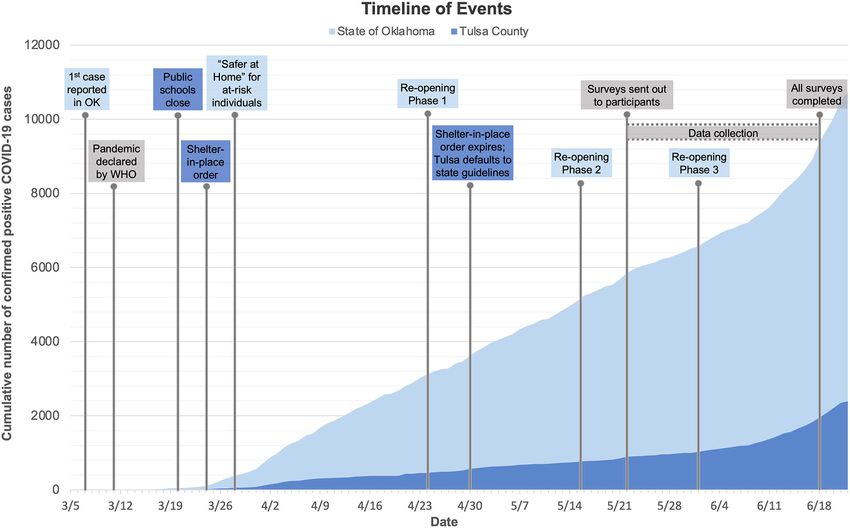
Cohen et al.                                                                                                         Adolescent Mental Health During COVID-19

   Early life stress (ELS; e.g., child abuse and neglect, domestic                    funded by the National Institute for General Medical Sciences
violence, and parental psychopathology) is a salient risk factor                      Centers of Biomedical Research Excellence (CoBRE) grant.
that may predispose individuals to negative outcomes from                             Participants were recruited from the community using a variety
large scale stressors such as COVID-19 (11). Adolescents                              of methods, including a school messaging platform (PeachJar),
who have experienced ELS are more likely to develop                                   radio advertisements and billboards, social media posts, news
both internalizing (12) and externalizing disorders (13). ELS-                        broadcasting, and word of mouth.
exposed adolescents demonstrate increased threat reactivity (14),                        At the time of data collection, a total of 29 adolescents (17 HC,
experience difficulties in emotion regulation (15), and tend to                       12 ELS) completed the baseline visits (August 2019–February
use maladaptive coping skills [e.g., avoidance, substance use, risk-                  2020) for this longitudinal investigation. All subjects were invited
taking behaviors; (16)], which may place them at higher risk for                      to complete follow-up questionnaires for the present study. Five
experiencing negative mental health consequences of COVID-19                          of the 29 participants either could not be reached for follow-
relative to adolescents without ELS histories.                                        up or declined to participate, resulting in a total sample of 24
   Although other studies have examined the impact of COVID-                          adolescents. HC adolescents were psychiatrically healthy and
19 on mental health symptoms in adolescents (5)1 , none of the                        reported no history of maltreatment. ELS participants reported
prior investigations compare these effects against pre-pandemic                       histories of childhood maltreatment and met criteria for at
measures. Because the pandemic presented unique challenges                            least one anxiety and/or depressive disorder, assessed by the
and stressors that could negatively impact the well-being of                          Mini International Neuropsychiatric Interview for Children and
adolescents, research is needed to determine how adolescents’                         Adolescents (17). Parents provided written informed consent,
mental health has been affected and whether those already at                          while adolescents provided assent for study participation. Parent
risk are disproportionally affected. Therefore, the present study                     consent and adolescent assent were both required for the baseline
aimed to (1) describe adolescent experiences during the COVID-                        visit at study entry and in order to be sent questionnaires for
19 pandemic, (2) examine the impact of the pandemic on                                this follow-up time point. All procedures were approved by the
mental health symptoms relative to pre-pandemic functioning                           Western Institutional Review Board.
in healthy and adolescents with ELS exposure, and (3) explore
what factors may account for changes in symptoms. The study                           Procedures
was conducted at a private research institute in the larger                           The Maltreatment and Abuse Chronology and Exposure Scale
Tulsa, Oklahoma, metro area. Adolescents were surveyed at two                         [MACEs; (18)] was used to assess exposure to maltreatment.
timepoints: (1) prior to the onset of COVID-19 (1–8 months                            Anxiety and depression were assessed using the pediatric
prior to the pandemic) as part of a larger longitudinal study and                     Patient-Reported Outcomes Measurement Information System
(2) ∼3 months after the first COVID-19 case was identified in                         [PROMIS; (19)]. Family conflict was assessed using the
Oklahoma. Because the existing literature suggests that COVID-                        Conflict subscale of the Family Environment Scale [FECS;
19 poses a threat to mental health, especially for adolescents,                       (20)], while parent and peer relationship quality was assessed
we predicted that adolescents would show an overall trend                             using the Inventory of Parent and Peer Attachment–Revised
toward increased mental health problems following the onset                           [IPPA-R; (21)]. Adolescents completed self-report assessments
of the pandemic. We further expected that this trend would                            of ELS, mental health, and family and peer relationships
be greater for adolescents with ELS exposure than for healthy                         at both timepoints. COVID-19-specific measures were
controls (HC). Finally, we conducted a series of exploratory                          administered following the onset of the pandemic (see below
analyses to identify potential risk and resilience factors (e.g.,                     for timeline), including the COVID-19 Adolescent Symptom
social functioning, coping skills, family dynamics) for changes in                    and Psychological Experience Questionnaire [CASPE; (22)],
mental health symptomatology.                                                         Adolescent Social Connectedness and Coping during COVID-19
                                                                                      Questionnaire [ASC; (23)], and Coronavirus Health Impact
                                                                                      Survey [CRISIS; (24)].
METHODS
Participants                                                                          COVID-19 Context
Twenty-four adolescents [15 healthy control [HC] and nine                             On March 7th, 2020, the first case of COVID-19 was announced
with early life stress exposure [ELS]] participated in the                            in Oklahoma. By the 11th, the WHO had declared the disease a
present study as part of a larger longitudinal investigation                          global pandemic (25). State and local responses to the pandemic
of (1) the development and maintenance of mood, anxiety,                              came mid-month, with public schools announcing closures on
and stress disorders in adolescents [Neuroscience-Based Mental                        March 20th, followed by state and city “Safer at Home” orders
Health Assessment and Prediction for Adolescents (NeuroMAP-                           on the 24th and 28th, respectively (i.e., closure of non-essential
A)] and (2) how mindfulness training augmented with real-                             businesses, making only essential trips outside of the household).
time functional magnetic resonance imaging (rtfMRI-nf) may                            While the state “Safer at Home” orders were limited to those 65
enhance resilience in adolescents [Augmented Mindfulness                              years or older and individuals with underlying conditions (26),
Training for Resilience in Early Life (A-MindREaL)], both                             the local orders encompassed all residents of Tulsa County. By
                                                                                      March 31st, cases of COVID-19 in Oklahoma had increased to
1 Alvis L, Shook N, Oosterhoff B. Adolescents’ prosocial experiences during the       565 and 23 deaths. Although cases and deaths continued to rise
covid-19 pandemic: associations with mental health and community attachments.         at both state and local levels, the state began a three-phased
(unpublished manuscript).                                                             reopening plan on April 24th. On April 30th, Oklahoma reported

Frontiers in Pediatrics | www.frontiersin.org                                     2                                       June 2021 | Volume 9 | Article 622608
Cohen et al. Adolescent Mental Health During COVID-19
a total of 3,618 positive cases and 222 deaths. Despite rising cases, positive but was not tested. The majority of participants did
the state continued a phased reopening in early May 2020. At the not report knowledge of financial impacts related to COVID-
conclusion of the present study on June 18th, all restrictions were 19 and reported that at least one adult in the household
lifted by June 1st, as cases totaled 9,354 infections and 366 deaths. was considered an essential worker. Notably, ELS participants
Surveys for the current study were sent out on May 22nd and reported experiencing greater negative emotions (t = 2.25, p
completed by June 18th. Thus, 23 adolescents provided follow-up = 0.03) and fewer positive emotions (t = −2.76, p = 0.01)
responses during the period overlapping with Phase 2, while one than HC participants. Across both groups, it was noted that the
adolescent provided responses during Phase 3 of the reopening majority began reengaging in activities within the community
plan, which began on May 15th and June 1st, respectively (26). following the lifting of stay-at-home restrictions (e.g., contact
Therefore, between the pre-pandemic baseline and the COVID- with extended family, activities in public, family travel, eating
19 follow-up assessment, participants had experienced the onset in restaurants).
of the pandemic, a shelter-in-place order, rising rates of local
cases, and a push toward re-opening. See Figure 1 for a timeline
for the follow-up period.
Primary and Secondary Outcomes
Table 2 details LME models results. For the LME examining
Analysis depression, we observed a Group-by-Timepoint interaction
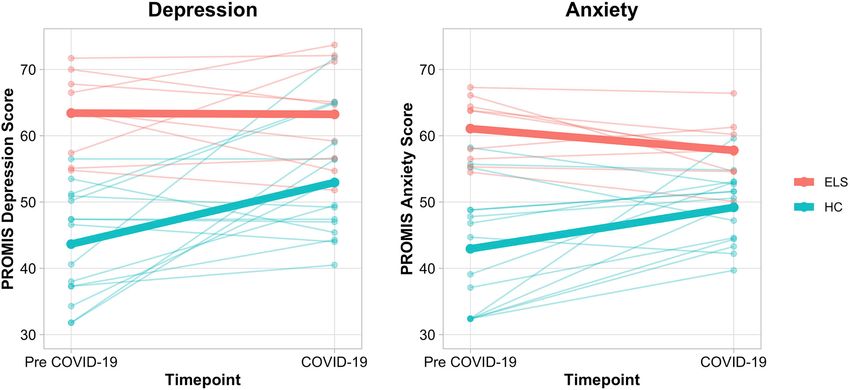
All statistical analyses were performed using R statistical package [F (1, 22) = 4.54, p = 0.045, d = 0.91; Figure 2]. Pairwise contrasts
(27). Descriptive statistics regarding participant characteristics revealed that HCs exhibited significant increases in symptoms of
were obtained using the R package “psych” (28). Independent depression (t = 3.43, p = 0.003, d = 1.07) following COVID-
sample t-tests examined group differences on demographic 19 onset (46.7% reported an increase of 1+ SD), whereas the
variables. To examine changes in self-reported mental health ELS group did not (t = −0.05, p = 0.96). Similar patterns
symptoms after the onset of the pandemic, linear mixed-effects were noted for anxiety. We observed a Group-by-Timepoint
models (LMEs) were conducted using the “lmer” function interaction [F (1, 22) = 9.35, p = 0.009, d = 1.23] characterized by
in R package “lme4” (29) and plots were generated with increased anxiety from pre-COVID-19 to COVID-19 timepoints
“emmeans” (30) R package. Fixed effects included group (HC vs. among HCs (t = 3.10, p = 0.005, d = 0.81; 33.3% reported an
ELS) and timepoint (pre-COVID-19 vs. COVID-19). Random increase of 1+ SD). Changes in anxiety were non-significant for
effects included subject. Follow-up pairwise comparisons were ELS adolescents (t = −1.25, p = 0.222). Finally, there were no
conducted using estimated marginal means to further describe significant Group-by-Timepoint interactions to suggest that the
the effects of group and timepoint on the outcome variables. experience of COVID-19 affected adolescents in the ELS or HC
Results were Bonferroni-corrected for multiple comparisons group disproportionally across family (i.e., family conflict) or
for primary outcome variables (depression, anxiety; a p-value peer domains (i.e., trust, communication, or alienation). In the
cutoff of 0.05/1.6 = 0.03), secondary (family conflict, family absence of significant interactions, we examined main effects of
and peer alienation, communication, and trust; a p-value Timepoint. We found that reports of peer trust [F(1, 22) = 5.81,
cutoff of 0.05/5 = 0.01), and exploratory (correlations: p- p = 0.025, d = 0.37] and peer communication [F(1, 22) = 5.63, p
value cutoff of 0.05/11 = 0.005; t-tests: p-value cutoff of = 0.027, d = −0.04] declined for both HC and ELS adolescents
0.05/15 = 0.003). Given the small sample size, we report effect from the pre-COVID-19 to COVID-19 Timepoints, although no
sizes calculated using Cohen’s d for all outcomes and adjust significant changes were observed for mothers’ trust [F(1, 22) =
our interpretations accordingly. A post-hoc exploration of the 0.01, p = 0.94, d = 0.06], fathers’ trust [F(1, 22) = 2.25, p = 0.15,
relationship between HC participants’ change in anxiety and d = 0.03], mothers’ communication [F(1, 22) = 0.32, p = 0.58, d
depression symptoms (i.e., calculated by subtracting the follow- = 0.15], or fathers’ communication [F(1, 22) = 0.15, p = 0.70, d
up scores from the pre-COVID-19 scores, divided by the baseline = 0.08], or overall family conflict [F(1, 22) = 0.96, p = 0.34, d =
score to produce change score independent of initial symptom −0.60] for either HC or ELS adolescents.
severity) and a number of self-report measures related to the
COVID-19 pandemic were examined using Spearman rank- Exploratory Outcomes
order correlations or paired sample t-tests. To contextualize the observed changes in depression and anxiety
within the HC group, we conducted exploratory post-hoc analyses
RESULTS (Supplementary Tables 2, 3). We focused our analyses on
strategies employed by 20–80% of the HC adolescents, correcting
Between-group comparisons of demographics and clinical for multiple comparisons (p < 0.003). We found that increased
characteristics are presented in Table 1, while COVID-related depressive symptoms were correlated with reduced peer trust
experiences are presented in Supplementary Table 1. There were (rs = −0.54, p = 0.036) during COVID-19. Further, increased
no significant differences between groups in the experience anxiety was correlated with reduced peer trust (rs = −0.64, p
of COVID-19 symptoms, exposure, other pandemic-related = 0.009) and increased hopelessness (rs = 0.55, p = 0.032).
impacts (e.g., family job/income loss, changes in routine), or Adolescents who endorsed video games as a coping strategy
coping skills (p > 0.05). Four adolescents (two ELS, two HC) reported greater increases in depression (t = −4.18, p < 0.001,
reported physical symptoms of COVID-19, while two adolescents d = −0.45) and anxiety (t = −5.50, p < 0.001, d = −0.61)
(one ELS, one HC) reported receiving a confirmed positive during COVID-19, whereas prioritizing good sleep (t = −3.97,
test result, and one adolescent (ELS) reported a suspected p = −0.001, d = −0.39) and talking with friends virtually (t =
Frontiers in Pediatrics | www.frontiersin.org 3 June 2021 | Volume 9 | Article 622608Cohen et al. Adolescent Mental Health During COVID-19
FIGURE 1 | A timeline of state and local government restrictions and the trajectory of total cases. Between the pre-pandemic baseline and the COVID-19 follow-up
assessment, participants had experienced the onset of the pandemic, a shelter-in-place order, rising rates of local cases, and a push toward reopening.
TABLE 1 | Sample demographic and maltreatment exposure characteristics.
Characteristic ELS (n = 9) HC (n = 15) Group differences
Mean SD Mean SD t
Age 15.22 0.97 14.53 1.3 1.37
Grade in school 8.78 1.09 8.67 1.23 0.22
Income 86,777.78 74,264.36 102,066.67 80,293.63 −0.46
Psychotropic medication 0.33 0.5 0 0 2.62**
MACEs 16.89 5.9 3 3.09 7.6***
N % N % χ2
Sex 3.7**
Male 1 11.1 9 60
Female 8 88.9 6 40
Ethnicity 0
Hispanic 1 11.1 2 13.3
Non-Hispanic 8 88.9 13 86.6
Race 0.64
White 6 67 9 60
Native 0 0 2
Mixed 3 33 4
***p < 0.01; **p < 0.05; *p < 0.10.
ELS, early life stress; HC, healthy control; MACES, Maltreatment and Abuse Chronology and Exposure Scale.
Frontiers in Pediatrics | www.frontiersin.org 4 June 2021 | Volume 9 | Article 622608Cohen et al. Adolescent Mental Health During COVID-19
TABLE 2 | Unadjusted means, standard deviations, effect sizes, and main analyses of change from baseline in early life stress exposed compared with healthy controls.
Outcome variable Mean and standard deviation Statistic
ELS HC Cohen’s d Effect of COVID-19 SE t
PROMIS Random factor: subject
Depression
Baseline 63.41 6.33 43.65 8.20
Follow-up 63.23 8.07 52.95 9.13 0.91 9.47** 4.45 2.13
Anxiety
Baseline 61.08 4.96 42.95 9.49
Follow-up 57.80 4.64 49.20 5.46 1.23 9.53*** 3.30 2.89
Family conflict Random factor: subject
Baseline 3.44 1.59 3.33 1.59
Follow-up 4.22 1.48 3.20 1.32 −0.59 −0.91 0.66 −1.39
Family attachment Random factor: subject
Mom alienation
Baseline 17.33 5.34 22.67 4.72
Follow-up 16.89 5.06 21.80 3.91 −0.08 −0.42 2.29 −0.18
Dad alienation
Baseline 13.25 7.96 21.67 5.83
Follow-up 16.89 8.61 21.80 4.14 −0.70 −4.24 2.67 −1.59
Mom communication
Baseline 25.33 8.12 30.87 10.09
Follow-up 23.44 5.55 30.40 8.53 0.15 1.42 4.17 0.34
Dad communication
Baseline 16.25 7.34 26.53 11.22
Follow-up 16.11 11.22 27.60 8.54 0.08 0.72 3.65 0.20
Mom trustworthiness
Baseline 33.56 9.38 39.67 8.90
Follow-up 33.11 8.37 39.80 8.27 0.06 0.58 4.23 0.89
Dad trustworthiness
Baseline 20.50 9.71 36.67 11.60
Follow-up 22.67 8.00 39.73 7.36 0.03 0.31 3.88 0.08
Peer attachment Random factor: subject
Peer alienation
Baseline 24.33 2.83 27.87 3.48
Follow-up 21.67 5.39 26.53 3.46 0.27 1.33 2.08 0.64
Peer communication
Baseline 34.33 5.02 34.33 5.74
Follow-up 31.33 6.76 31.07 7.27 −0.04 −0.27 2.64 −0.10
Peer trustworthiness
Baseline 44.78 4.09 47.27 5.15
Follow-up 39.33 9.58 44.73 6.40 0.37 2.91 3.31 0.88
***p < 0.01; **p < 0.05; *p < 0.10.
ELS, early life stress; HC, healthy control; PROMIS, Patient-Reported Outcomes Measurement Information System.
−3.76, p = −0.002, d = −0.59) were associated with attenuated history of early life stress exposure due to the increased mental
increases in anxiety during COVID-19. health risk. To understand the impact of the pandemic on
these populations, the present study assessed mental health
symptoms and a variety of related factors (e.g., family dynamics,
DISCUSSION social functioning, and coping styles) in a sample of adolescents
with and without ELS. Although prior studies have examined
The COVID-19 pandemic presented long-term challenges the association between adolescent mental health following
beyond physical health, affecting economic, social, and mental COVID-19, to our knowledge there have been no longitudinal
health domains (1). The pandemic may be particularly investigations of mental health in healthy and at-risk adolescents
challenging for adolescent populations, especially those with before and after the onset of COVID-19. We hypothesized that
Frontiers in Pediatrics | www.frontiersin.org 5 June 2021 | Volume 9 | Article 622608Cohen et al. Adolescent Mental Health During COVID-19
FIGURE 2 | Spaghetti plots depicting self-reported depression and anxiety in healthy controls and early life stress exposed adolescents. Means for each group are
depicted via a bolded line. A significant Group by Time Interaction was found for the LME models examining depression [F (1, 22) = 4.54, p = 0.045, d = 0.91] and
anxiety [F (1, 22) = 9.35, p = 0.009, d = 1.23]. HC subjects demonstrated meaningful increases in depression and anxiety (t = 3.43, p = 0.003, d = 1.07; t = 3.10, p
= 0.005, d = 0.81), while ELS subjects did not (t = −0.05, p = 0.96; t = −1.25, p = 0.222). ELS, early life stress; HC, healthy control; LME, Linear Mixed-Effects
Model; PROMIS, Patient-Reported Outcomes Measurement System.
adolescents would demonstrate an increase in mental health of belonging and can buffer against negative impact of stress
symptoms with the onset of the pandemic and that this increase and development of mental health symptoms (31). Further,
would be greater for those with ELS exposure. attachment in peer relationships (e.g., trust and communication)
Our hypothesis for symptom changes across groups was shows significant effects on positive mental health outcomes
not supported. On average, healthy adolescents exhibited (32). Thus, the measures implemented to slow the spread of
large increases in self-reported anxiety and depression, while COVID-19 (i.e., social distancing, remote learning, canceled
symptoms in adolescents with ELS remained high yet stable extracurricular activities, restrictions from in-person visits with
following the pandemic’s onset. Indeed, nine of 15 healthy friends and extended family) may have served to promote
adolescents exhibited clinically meaningful increases in self- social isolation in adolescents, thereby adversely impacting
reported anxiety and depression, while the ELS group’s reported psychological well-being.
symptoms did not change following the onset of COVID-19. It is Further, healthy adolescents who endorsed playing video
possible that ELS adolescents’ perception of stress remained the games to cope exhibited greater increases in mental health
same during the pandemic, given their chronic stress exposure. symptoms. Time spent playing video games and the related
Additionally, ELS adolescents may have accessed already- problematic gaming behaviors (e.g., use of games to escape or
established internal or external resources, including connection relieve negative moods) have been associated with depression,
to psychotherapy services (two-thirds of ELS adolescents) or use anxiety, and physical health problems in adolescents (33).
of prescribed selective serotonin reuptake inhibitors (one-third). Although the consequences of the pandemic (e.g., sheltering
On average, healthy adolescents denied using these resources, in place) may have allowed for greater video game usage in
including two adolescents who reported starting mental health healthy adolescents already engaging with video games, it may
professional counseling, while none reported starting new be the case that playing video games also interfered with the
prescription medications. use of adaptive coping strategies, such as exercise, healthy sleep,
Our findings suggest that COVID-19 related changes in and meaningful social interactions, thus contributing to negative
mental health symptoms in healthy adolescents were associated moods. Finally, although the majority of healthy adolescents
with decreased communication with peers, playing videogames endorsed using sleep as a coping strategy, those who did not,
to cope, and poor sleep. First, healthy adolescents who evidenced greater increases in depression and anxiety. Previous
maintained trust in peer relationships and often relied on research supports the role of poor sleep in development and
communicating with their friends to cope with COVID-19 stress maintenance of affective disturbances in adolescents (34). Taken
fared better than those who did not. Close peer relationships together, these findings suggest that prioritizing peer connections
offer the forging of personal identities, support, and a sense and healthy sleep, while limiting time spent playing video games,
Frontiers in Pediatrics | www.frontiersin.org 6 June 2021 | Volume 9 | Article 622608Cohen et al. Adolescent Mental Health During COVID-19
may have promoted adaptive coping and served a protective role during COVID-19, including peer trust and communication,
against negative moods. engagement with positive activities, and quality sleep, while
Finally, rates of family conflict remained the same in both coping strategies such as playing video games may have served as
groups across time. Adolescents within the ELS group endorsed a risk factor for negative mental health outcomes. Prevention and
higher family conflict than healthy adolescents, but neither intervention efforts may be able to capitalize on these factors to
group showed any significant changes. Healthy adolescents also improve outcomes among youth affected by large-scale stressors.
reported higher levels of trust and communication with both Further, it is likely that the COVID-19 pandemic is exacerbating
parents than did ELS adolescents, although these differences an increasingly upward trend in mental health disorders in
remained stable throughout the pandemic for both groups. adolescents and young adults, further pointing to the need for
Therefore, we conclude that changes in family dynamics did timely interventions to prevent public mental health crises.
not impact the observed changes in mental health outcomes in
healthy adolescents. While several studies have demonstrated or DATA AVAILABILITY STATEMENT
warned against increases in family violence following the onset of
the pandemic, especially for adolescents already at risk for abuse The data that support the findings of this study are available from
(35–38), these findings were not present in our sample. the corresponding author upon reasonable request.
LIMITATIONS ETHICS STATEMENT
Although the current study is among the first to examine The studies involving human participants were reviewed and
changes in mental health symptoms using the longitudinal approved by Western Institutional Review Board. Written
approach (i.e., with pre-pandemic measurements available), there informed consent to participate in this study was provided by the
are limitations to consider. First, larger studies with a greater participants’ legal guardian/next of kin.
number of predictors (i.e., sex, age, coping strategies) are
needed to further examine the impact the pandemic has had AUTHOR CONTRIBUTIONS
on adolescent mental health. Second, generalizability may be
ZC contributed to the data collection, data analysis and
limited. The experience of the COVID-19 pandemic thus far
interpretation, literature search, writing of the manuscript, and
has been dependent upon the location and timeframe in which
creation of tables and figures. KC and DD contributed to the data
data is collected. For the present study, data was collected in a
analysis and interpretation, literature search, and writing of the
midwestern state near the beginning of phased reopenings and
manuscript. EA contributed to the writing of the manuscript.
thus represents only a snapshot in time. Cases were relatively
MS, RA, and MP contributed to the study design and revisions
low when compared with the spikes the U.S. has observed in
to the manuscript. EW and JS contributed to the revisions of the
more recent months. Finally, a group of anxious or depressed
manuscript. NK contributed to the study design, data analysis
adolescents without ELS exposure would help further delineate
and interpretation, and writing of the manuscript. All authors
changes in mental health symptoms in response to COVID-19
contributed to the article and approved the submitted version.
and shed light on how different trauma profiles may impact
symptom outcomes over time.
FUNDING
CONCLUSIONS This work was funded by the National Institute of General
Medical Sciences Center Grant Award Number P20GM121312
We examined mental health symptoms among healthy and the William K. Warren Foundation.
adolescents and adolescents with histories of early life stress prior
to and after the onset of the COVID-19 pandemic. We discovered SUPPLEMENTARY MATERIAL
increases in anxiety and depression symptoms in previously
healthy adolescents, whereas ELS adolescents demonstrated The Supplementary Material for this article can be found
no significant changes in symptoms. We further observed online at: https://www.frontiersin.org/articles/10.3389/fped.
a number of factors that may have served a protective role 2021.622608/full#supplementary-material
REFERENCES 3. Czeisler MÉ. Mental health, substance use, and suicidal ideation during
the COVID-19 pandemic—United States. Morbid Mortal Wkly Rep. (2020)
1. Nicola M, Alsafi Z, Sohrabi C, Kerwan A, Al-Jabir A, Iosifidis C, et al. The 69. doi: 10.15585/mmwr.mm6932a1
socio-economic implications of the coronavirus and COVID-19 pandemic: a 4. Dong Y, Mo X, Hu Y, Qi X, Jiang F, Jiang Z, et al. Epidemiology of COVID-19
review. Int J Surg. (2020) 78:185–93. doi: 10.1016/j.ijsu.2020.04.018 among children in China. Pediatrics. (2020) 145. doi: 10.1542/peds.2020-0702
2. Pfefferbaum B, North CS. Mental health and the Covid-19 5. Liang L, Ren H, Cao R, Hu Y, Qin Z, Li C, et al. The effect
pandemic. New Engl J Med. (2020) 383:510–2. doi: 10.1056/NEJMp20 of COVID-19 on youth mental health. Psychiatr Q. (2020) 91:841–
08017 52. doi: 10.1007/s11126-020-09744-3
Frontiers in Pediatrics | www.frontiersin.org 7 June 2021 | Volume 9 | Article 622608Cohen et al. Adolescent Mental Health During COVID-19
6. Imran N, Zeshan M, Pervaiz Z. Mental health considerations for children 23. Pfeifer J. Adolescent Social Connection & Coping during COVID-19
& adolescents in COVID-19 Pandemic. Pak J Med Sci. (2020) 36:S67–72. Questionnaire (ASC) (2020).
doi: 10.12669/pjms.36.COVID19-S4.2759 24. Bromet E, Colcomobe S, Georgiades K, Klein DN, Salum G. The CoRonavIruS
7. Collishaw S, Maughan B, Goodman R, Pickles A. Time trends in Health Impact Survey (CRISIS) V0.2 (2020).
adolescent mental health. J Child Psychol Psychiatry. (2004) 45:1350– 25. Cucinotta D, Vanelli M. WHO declares COVID-19 a pandemic. Acta Bio
62. doi: 10.1111/j.1469-7610.2004.00335.x Medica Atenei Parmensis. (2020) 91:157. doi: 10.1111/bjhp.12414
8. Keyes KM, Gary D, O’Malley PM, Hamilton A, Schulenberg J. 26. Commerce O. Open Up & Recover Safely (OURS) Plan. (2020). Retrieved
Recent increases in depressive symptoms among US adolescents: from: https://www.okcommerce.gov/covid19/ours-plan/ (accessed June
trends from 1991 to 2018. Soc Psychiatry Psychiatr Epidemiol. (2019) 26, 2020).
54:987–96. doi: 10.1007/s00127-019-01697-8 27. RCoreTeam. R: A Language and Environment for Statistical
9. Mojtabai R, Olfson M. National trends in mental health Computing (2013).
care for US adolescents. JAMA Psychiatry. (2020) 77:703– 28. Revelle WR. Psych: Procedures for Personality and Psychological Research.
14. doi: 10.1001/jamapsychiatry.2020.0279 Evanston, IL (2017).
10. Brown BB, Larson J. Peer relationships in adolescence. (2009) 29. Bates D, Sarkar D, Bates MD, Matrix L. The lme4 package. R package version.
74–101. doi: 10.1002/9780470479193.adlpsy002004 (2007) 2:74.
11. Fegert JM, Vitiello B, Plener PL, Clemens V. Challenges and burden of 30. Lenth R, Singmann H, Love J. Emmeans: estimated marginal means, aka
the Coronavirus 2019 (COVID-19) pandemic for child and adolescent least-squares means. R package version. (2018) 1:3.
mental health: a narrative review to highlight clinical and research 31. Majd Ara E, Talepasand S, Rezaei AM. A structural model of
needs in the acute phase and the long return to normality. Child depression based on interpersonal relationships: the mediating role
Adolesc Psychiatry Mental Health. (2020) 14:1–11. doi: 10.1186/s13034-020- of coping strategies and loneliness. Noro Psikiyatri Arsivi. (2017)
00329-3 54:125–30. doi: 10.5152/npa.2017.12711
12. Nugent NR, Tyrka AR, Carpenter LL, Price LH. Gene–environment 32. Gorrese A, Ruggieri R. Peer attachment and self-esteem: a meta-analytic
interactions: early life stress and risk for depressive and anxiety disorders. review. Person Ind Differ. (2013) 55:559–68. doi: 10.1016/j.paid.2013.04.025
Psychopharmacology. (2011) 214:175–96. doi: 10.1007/s00213-010- 33. Männikkö N, Ruotsalainen H, Miettunen J, Pontes HM, Kääriäinen
2151-x M. Problematic gaming behaviour and health-related outcomes:
13. Dube SR, Felitti VJ, Dong M, Chapman DP, Giles WH, Anda RF. Childhood a systematic review and meta-analysis. J Health Psychol. (2017)
abuse, neglect, and household dysfunction and the risk of illicit drug 25:67–81. doi: 10.1177/1359105317740414
use: the adverse childhood experiences study. Pediatrics. (2003) 111:564– 34. Owens J. Insufficient sleep in adolescents and young adults:
72. doi: 10.1542/peds.111.3.564 an update on causes and consequences. Pediatrics. (2014)
14. Garrett AS, Carrion V, Kletter H, Karchemskiy A, Weems CF, Reiss A. 134:e921–32. doi: 10.1542/peds.2014-1696
Brain activation to facial expressions in youth with PTSD symptoms. Depress 35. Ahmed D, Buheji M, Fardan S. Re-Emphasising the future family role in ’care
Anxiety. (2012) 29:449–59. doi: 10.1002/da.21892 economy’ as a result of Covid-19 pandemic spillovers. Am J Econ. (2020)
15. Villalta L, Smith P, Hickin N, Stringaris A. Emotion regulation difficulties in 10:332–8. doi: 10.5923/j.economics.20201006.03
traumatized youth: a meta-analysis and conceptual review. Eur Child Adolesc 36. Campbell AM. An increasing risk of family violence during the Covid-19
Psychiatry. (2018) 27:527–44. doi: 10.1007/s00787-018-1105-4 pandemic: strengthening community collaborations to save lives. For Sci Int.
16. Walsh K, Fortier MA, DiLillo D. Adult coping with childhood sexual abuse: (2020) 2:100089. doi: 10.1016/j.fsir.2020.100089
a theoretical and empirical review. Aggress Violent Behav. (2010) 15:1– 37. Daks JS, Peltz JS, Rogge RD. Psychological flexibility and inflexibility as
13. doi: 10.1016/j.avb.2009.06.009 sources of resiliency and risk during a pandemic: modeling the cascade of
17. Sheehan DV, Sheehan KH, Shytle RD, Janavs J, Bannon Y, Rogers JE, COVID-19 stress on family systems with a contextual behavioral science lens.
et al. Reliability and validity of the mini international neuropsychiatric J Context Behav Sci. (2020) 18:16–27. doi: 10.1016/j.jcbs.2020.08.003
interview for children and adolescents (MINI-KID). J Clin Psychiatry. (2010) 38. Prime H, Wade M, Browne DT. Risk and resilience in family well-
109:E563–72. doi: 10.4088/JCP.09m05305whi being during the COVID-19 pandemic. Am Psychol. (2020) 75:631–43.
18. Teicher MH, Anderson CM, Polcari A. Childhood maltreatment is doi: 10.1037/amp0000660
associated with reduced volume in the hippocampal subfields CA3,
dentate gyrus, subiculum. Proc Natl Acad Sci USA. (2012) 109:E563– Disclaimer: The content is solely the responsibility of the authors and does not
72. doi: 10.1073/pnas.1115396109 necessarily represent the official views of the National Institutes of Health.
19. Cella D, Riley W, Stone A, Rothrock N, Reeve B, Yount S, et al.
The Patient-Reported Outcomes Measurement Information System Conflict of Interest: The authors declare that the research was conducted in the
(PROMIS) developed and tested its first wave of adult self-reported absence of any commercial or financial relationships that could be construed as a
health outcome item banks: 2005–2008. J Clin Epidemiol. (2010) potential conflict of interest.
63:1179–94. doi: 10.1016/j.jclinepi.2010.04.011
20. Moos RH, Moos BS. Family Environment Scale Manual. Palo Alto, CA: Copyright © 2021 Cohen, Cosgrove, DeVille, Akeman, Singh, White, Stewart,
Consulting Psychologists Press (1994). Aupperle, Paulus and Kirlic. This is an open-access article distributed under the
21. Gullone E, Robinson K. The inventory of parent and peer attachment— terms of the Creative Commons Attribution License (CC BY). The use, distribution
Revised (IPPA-R) for children: a psychometric investigation. Clin Psychol or reproduction in other forums is permitted, provided the original author(s) and
Psychother. (2005) 12:67–79. doi: 10.1002/cpp.433 the copyright owner(s) are credited and that the original publication in this journal
22. Pfeifer J, Silvers J, THomason M, Forbes E, Silk J. COVID-19 Adolescent is cited, in accordance with accepted academic practice. No use, distribution or
Symptom & Psychological Experience Questionnaire (CASPE) (2020). reproduction is permitted which does not comply with these terms.
Frontiers in Pediatrics | www.frontiersin.org 8 June 2021 | Volume 9 | Article 622608You can also read


