THE JUNGLE BOOK STATE STREET BALLET - STUDY GUIDE - Valley Performing Arts Council
←
→
Page content transcription
If your browser does not render page correctly, please read the page content below
STATE STREET BALLET

THE JUNGLE BOOK

                            STUDY GUIDE
                       Written by Anaya M. Cullen

                       STATE STREET BALLET CLASSROOM CONNECTION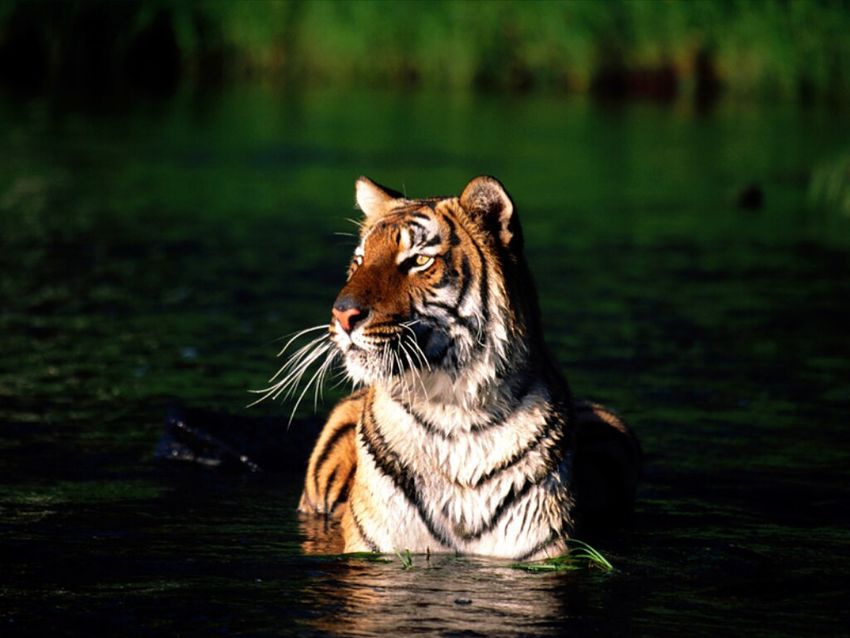
THE JUNGLE BOOK
   Based on the classic tale by Rudyard Kipling
   Produced and Directed by Rodney Gustafson
   Music by Milan Svoboda
   Choreography by Rodney Gustafson with additional choreography by Gary MacKenzie

                            wants to raise Mowgli as     Bagheera, the panther          council with a torch of
                            her own son. She names       and Baloo, the bear,           fire and banishes Shere
                            him Mowgli because he        befriend Mogwli and            Khan. Bagheera explains
                            reminds her of a little      volunteer to teach him         to Mowgli that he must
                            frog. Mowgli is raised by    the law of the jungle.         leave the jungle to be
                            the wolf pack and            Akela, the wolf pack           with other humankind.
                            protected from Shere         leader agrees. When            Before he leaves, Mowgli
                            Khan, a Bengal tiger who     Mowgli is captured by          vows never to forget his
                            objects to Mowgli’s          Bandar Log the jungle’s        jungle family.
                            presence in the jungle: he   monkey tribe, Bagheera
State Street Ballet’s       thinks no good can come      and Baloo rescue him
THE JUNGLE BOOK is          from a man in the jungle.    with the help of Kaa, the
a full length ballet                                     cobra.
production based on
the class tales, The                                     Shere Khan plots to
Jungle Books, written                                    banish Mowgli from the
by Rudyard Kipling over                                  jungle, threatening
                                                         Mowgli and his friends.
100 years ago...
                                                         Mowgli goes to the man
                                                         village to get fire to scare
THE JUNGLE BOOK
                                                         Shere Khan away. When
takes place in the jungle
                                                         he sees humans in the
of Southern India where
                                                         village for the first time,
a baby boy, Mowgli, is
                                                         Mowgli realizes he is
discovered by a female
                                                         human too. Mowgli
wolf named Raksha who                                                                   Jungle Peacock
                            Kaa, the cobra               returns to the wolf

Discussion Questions:
   1. Who are the main characters in the show? Why do you think they are main characters?
   2. What is the Jungle Law? What purpose do rules and laws serve in communities? What are some of the
  rules in your classroom?
   3. What are advantages to being a man cub in the jungle? What are some disadvantages?
   4. How do the movements of the dancers reflect the characters of their animals? How do the costumes
  help identify the animal characters?
   5. Can you tell the emotions and feelings of the characters even though there are no words?
   6. How could you show the difference between fear and joy by using only using movement and facial
  expressions?
   7. Is this story fiction or nonfiction? What makes you think so?

                                                                 STATE STREET BALLET CLASSROOM CONNECTION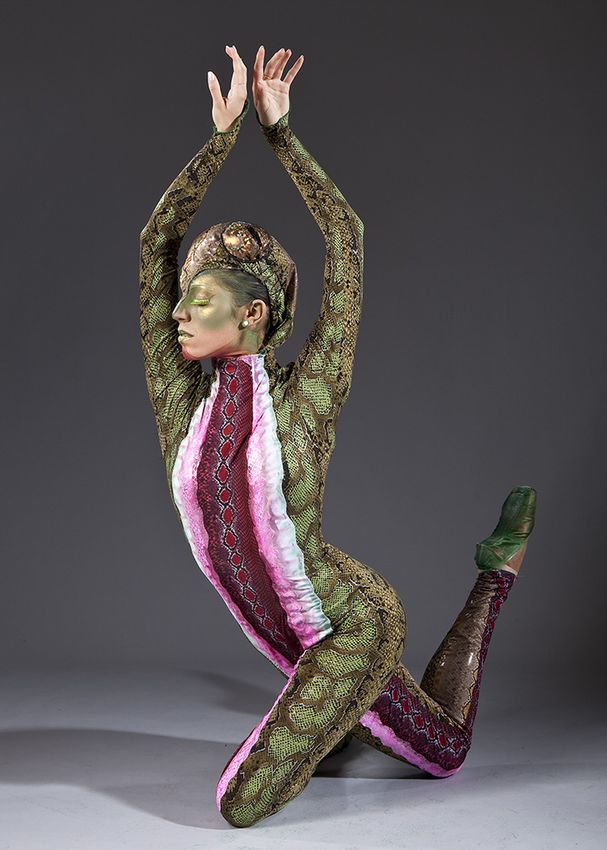
THE JUNGLE BOOK
    Arts & Cultures Connection I: About State Street Ballet and General facts about Ballet

 STATE STREET BALLET

 State Street Ballet is a vibrant, innovative
 professional dance company based in Santa
 Barbara, California. The company was founded in
 1994 and remains dedicated to promoting original
 dance through public performances and
 educational outreach programs.

 The company combines the rigors and timeless
 beauty of classical technique with updated looks,
 special effects and digital technology, producing
 original works that satisfy today's diverse
 audiences. By melding familiar story lines with
 exciting dance movement and special effects, State
 Street Ballet gives each tale a modern, passionate
 and unique twist. This heady meld of movement,
 music, lighting, scenery and acting is successfully
 reaching new audiences, introducing dance as
 mainstream entertainment while honoring classical
 training, style and tradition.

General Facts about Ballet
1. Ballet is an art of movement. Movement is vertical and horizontal on stage movement is organized in
   space and follows time in rhythmical patterns as indicated by the music. Movement sequences can convey
   a story without the use of words or even mime. Movement can establish mood, make statements and
   develop a good story line. A good ballet does not need an explanation; it visually illustrates a piece of
   music.

2. As a performing art, ballet combines a number of elements to create an overall theatrical spectacle: music,
   lights, costumes and scenery all help to convey the story.

3. The teaching language of ballet is French, a universal language understood by all dancers. Dancers can
   learn from teachers and choreographers, even though they might not speak the same language because
   the names of the steps are the same no matter where they are used.

4. All ballet steps and movements have a common denominator as everything begins or ends in one of five
   basic feet positions. Steps can be linked together in movement, phases or combinations.

5. Ballet dancers are athletes and professionals. They spend long hours training in order to perform. This
   training stats at an early age, 8-11 years old. Training hours increase with a dancers physical development
   ability. Professional dancers train 7 hours a day, 6 days a week, and even longer on performing days.
                                                                STATE STREET BALLET CLASSROOM CONNECTION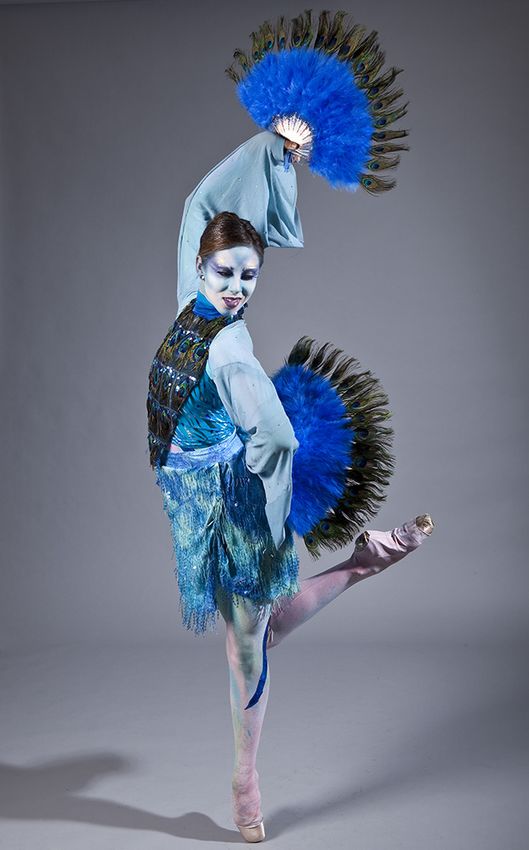
THE JUNGLE BOOK
   Arts & Cultures Connection II: Ballet History and Vocabulary

                                                                 Spotlight Word: Ballet
                                                                 What is Ballet? Where does it come from?
                                                                 Ballet is a formalized type of performance
                                                                 dance, which began in 16th and 17th
                                                                 century French courts. Ballet was further
                                                                 developed in England, Italy, and Russia
                                                                 as a concert dance form. Early ballet
                                                                 dancers were not as highly skilled as they
                                                                 are now. Ballet has since become a
                                                                 highly technical form of dance with its
                                                                 own vocabulary. It is a poised style of
                                                                 dance that incorporates the foundational
                                                                 techniques for many other dance styles.

                                                                 What is the difference between
                                                                 contemporary Ballet and classical
                                                                 Ballet?
                                                                 Classical ballet is the most formal of the
                                                                 ballet styles; it adheres to traditional
                                                                 ballet technique whereas contemporary
                                                                 ballet is a form of dance influenced by
                                                                 both classical ballet and modern dance.
                                                                 Contemporary ballet allows a greater
                                                                 range of movement outside of the strict
                                                                 body lines in classical ballet technique.
                                    Water lily, Jungle Book
Ballet Vocabulary List

Ballet vocabulary     Pronunciation                 Description

adagio                ah•DAZJ•eh•oh                 Slow; a slow, sustained movement

allegro               ah•leh•GROH                   Fast; fast; jumps performed to a quick, sharp tempo;
                                                    grandee allegro ‐ large jumps; petite allegro ‐ small jumps

arabesque             ah•rah•BESK                   A pose on one leg with the other leg extended to the back;
                                                    originally a Llourished, curved line used in Arabic motifs

pirouette             peer•WHET                     Whirling; a generalized term used in ballet to describe a
                                                    turn

plié                  plee•YAY                      To bend; a movement fundamental to ballet that requires
                                                    bending of the knee(s)

sauté                 soh•TAY                       Jump; a jump off the ground with either one or two legs

tendue                tahn•DEW                      Stretched; held out; tight; a basic ballet movement where
                                                    the leg is extended straight out from the supporting leg
                                                    with the foot fully pointed ‐ front, side or back

                                                                  STATE STREET BALLET CLASSROOM CONNECTION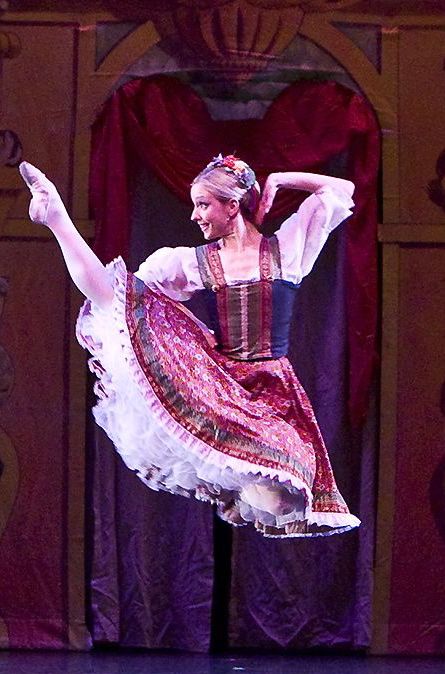
THE JUNGLE BOOK
   Science Connection: Animals of the Jungle

                                                          animal common in the         when disturbed, when
                                                          Indian jungle forests.       angered it stands
                                                          These bears are              menacingly with one-third
                                                          omnivores, which means       of its body erect, and its
                                                          they eat plants, meat, and   hood spread. Cobras
                                                          insects. Asian black         grow to an average length
                              Bagheera                    bears can grow to 6 feet     of around 12 feet with the
                                                          in length and almost 500     longest cobra measuring
                              “Bagheera means
                              panther in Hindustani, a    pounds.                      over 18 feet. The cobra’s
                                                                                       entire body is covered
                              language of India. Like
                              tigers, panthers are a                                   with scales which are
                              type of cat and are                                      usually smooth and
Shere Khan                                                                             glossy.
                              carnivores. Like all cats
Shere Khan is a Bengal        they have excellent night
tiger. His name means         vision. Panthers are                                     Kaa
“tiger chief in some Indian   extremely agile and can
                                                          Akela
dialects. Very large cats,    leap up to 20 feet.
                                                          Akela is an Indian wolf.
tigers are carnivores,        Panthers are solitary
                                                          According to Kipling,
which means they eat          animals and are rarely
                                                          “Akela” means “alone.”
mostly meat. Male Bengal      spotted in the wild.
                                                          The Indian wolf has a
tigers like Shere Khan can    Panthers have been
                                                          reddish white fur coat.
measure 10 feet in length     called “the ghost of the
                                                          Wolves live together in a
and weigh up to 600           forest.” The panther is
                                                          pack and can cooperate
pounds. The Bengal tiger      currently an endangered
                                                          to hunt and raise their
is currently an               species.
                                                          cubs. Indian wolves are
endangered species.
                                                          currently an endangered
                                                          species.
Shere Khan

                              Baloo                                                    Leila Drake dances Kaa
                              Baloo is a bear, which is
                              the meaning of his name                                  Look closely, the fabric in
                              in Hindustani. Described    Kaa                          the costume for Kaa
                              by Kipling as a “sleepy     Kaa is a cobra. The King     resembles the smooth
Bayarra Badamsambuu           old grey bear,” Baloo was   cobra moves by slithering    and glossy, scaled skin of
dances Shere Khan             probably meant to be an     and sliding. Though it       a real cobra.
                              Asian black bear, an        usually tries to escape

                                                                STATE STREET BALLET CLASSROOM CONNECTION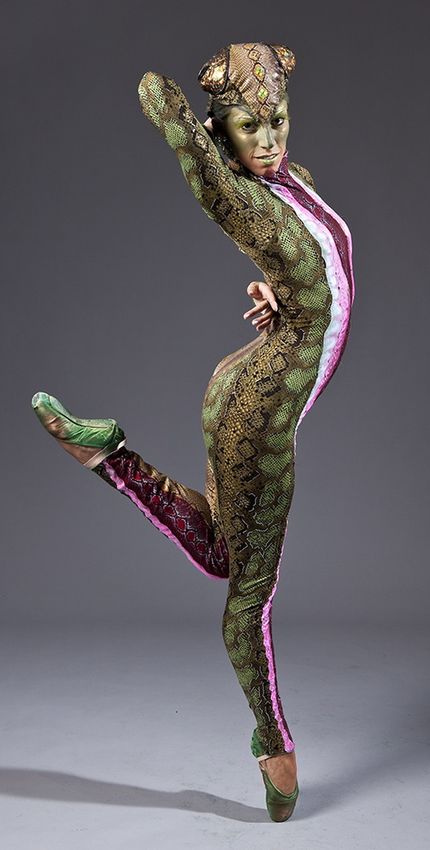
THE JUNGLE BOOK
  Geography Connection

                    Be sure to give your map a title, legend and compass rose!

Map Activities

1. The Jungle Book takes place in Asia in India. Using an atlas find and outline the continent of Asia
   and the country of India on your map.
2. Using an atlas locate and mark Santa Barbara on your map.
3. The music from Jungle Book is composed by Milan Svoboda who is from the Czech Republic.
   Using an atlas locate and mark the Czech Republic on your map.

Discussion Questions
1. What is the difference between a continent and a country?
2. What is the purpose for a compass rose on a map?
3. What is a legend? How is it used?

                                                          STATE STREET BALLET CLASSROOM CONNECTION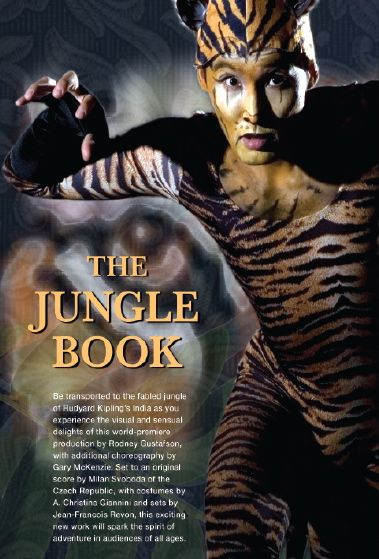
THE JUNGLE BOOK
Math Connection

 Be sure to label your Venn diagrams. Share them with your class!

Venn Diagrams

Choose two characters from The Jungle Book. How are they alike? How are they different?
Make a Venn diagram to show how the characters are alike and how they are different.

More Exercises:
1. Compare and contrast ballet/theater
2. Compare and contrast common pets and jungle animals
3. Compare and contrast three characters and animals.

                                                   STATE STREET BALLET CLASSROOM CONNECTION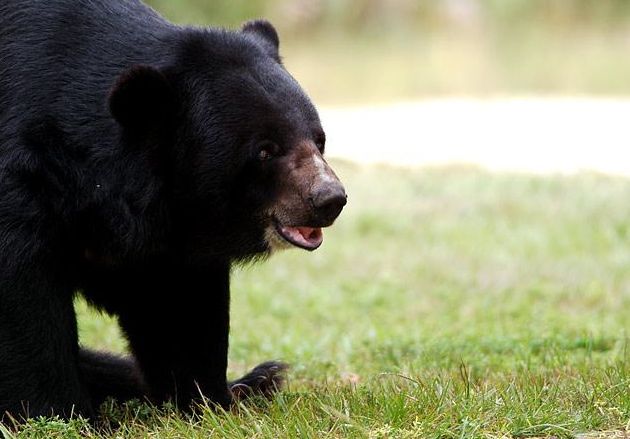
THE JUNGLE BOOK
   How to Enjoy Live Theater

Let’s share the excitement of live theatre together! When young people attend a live theatrical
performance for the first time they often do not realize how different it is from watching a movie or
television show. Because the performers and audience are together in the same room, they are
creating the event together. The performers can see and hear the audience just as the audience can
see and hear them.

A live presentation has not been prerecorded, with the mistakes taken out, which means it’s riskier
for the performers and more exciting for the audience. It also means the audience has a real
contribution to make the overall experience enjoyable. Audience members affect those around them
as well as the performers. The more the audience “gives” to the performers, the more the
performers can give back to the audience. Remember, without the audience, there would be no
show! Live theatre is successful because of the efforts of many people working together.

                           The Audience
                           The Technical Crew
                           The Creative Production Team
                           The House Manager and The Ushers
                           The Performers

•Listening, laughing and applauding in the appropriate places is welcomed and greatly appreciated
by performers. They are the signs of a good audience. Talking during a performance is distracting.
Ushers have been instructed to ask anyone creating a distraction to leave the auditorium.

•No hats or chewing gum in the theatre; these must be removed upon entering the lobbies.

•Trips to the bathroom should be taken before and after the performance. A chaperone from your
schools must accompany the students.

•Please encourage the students to listen to the ushers carefully when being seated and when
leaving the theatre. Our ushers are trained to ensure the comfort and safety of the audience.

•Live theatre is a unique and fun-filled experience that is made even better when all work together
and show off their best theatre manners.

                                                         STATE STREET BALLET CLASSROOM CONNECTION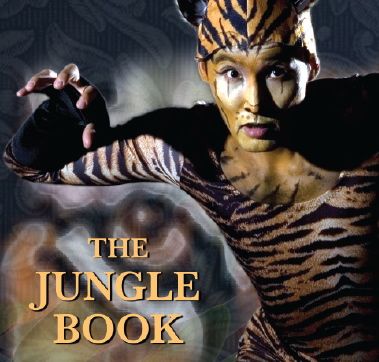
THE JUNGLE BOOK
  Additional Resources

                                       Additional books by Rudyard Kipling:

                                       Just So Stories for Little Children (grades pre-K-5)
                                       Captains Courageous (grades 6-12+)
                                       Kim (grades 6-12+)

                                       Online Resources for Rudyard Kipling:
                                       A selection of Kipling’s books are available in full text to read online through
                                       google books including, The Jungle Book, and Just So Stories:

                                       Google Books: (Hint: Search for Rudyard Kipling)
                                       http://books.google.com/

                                       Rudyard Kipling:
                                       http://www.kipling.org.uk/kip_fra.htm
1926 Photogravure of Rudyard Kipling

Online Resources for STATE STREET BALLET:
http://statestreetballet.com
Follow State Street Ballet on Twitter:
https://twitter.com/StateStBallet
Visit State Street Ballet’s Blog:
http://statestreetballet.blogspot.com

Watch State Street Ballet on YouTube:                                                         Nutcracker, State Street Ballet

Nutcracker:
http://www.youtube.com/watch?v=1loDPv61kzA&feature=channel_page
Cinderella:
http://www.youtube.com/watch?v=_ijcj2so9oc&feature=channel_page
Carmen:
http://www.youtube.com/watch?v=xntNsQdB0no&feature=channel
Beauty and the Beast
http://www.youtube.com/watch?v=XENQ9xDoS2c&feature=channel_page
Not so Strictly Ballroom:
http://www.youtube.com/watch?v=gokCm1pgIWk&feature=channel_page

                                                                   STATE STREET BALLET CLASSROOM CONNECTION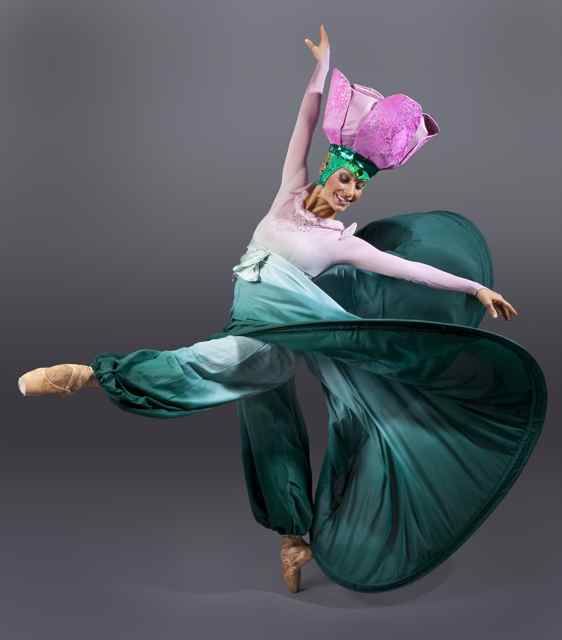
You can also read


