The new Structural Funds: Smart Specialisation for Innovation, Growth and Jobs
←
→
Page content transcription
If your browser does not render page correctly, please read the page content below
The new Structural Funds:
         Smart Specialisation
   for Innovation, Growth and Jobs

                Pierre Godin, Policy Analyst,
               DG Regional and Urban Policy,
                  European Commission

               EARTO Annual Conference
"NEW HORIZONS FOR 2020 AND BEYOND: CROATIA AND SOUTH EAST
              EUROPE IN THE EUROPEAN UNION“
          Dubrovnik, Croatia, May 23-24, 2013
                            Regional and
                            Urban Policy
A new name for the new Structural Funds
     ESIF: European Structural and Investment Funds:

* Regional Policy (DG REGIO: Regional & Urban Policy)
 - ERDF: European Regional Development Fund (→ activities)
 - CF: Cohesion Fund (→ “basic” infrastructures, not for R&I)

* Social Policy (DG EMPL: Employment and Social Affairs)
 - ESF: European Social Fund (→ people)

* Common Agricultural Policy (DG AGRI: Agriculture and
 Rural Development)
 - EAFRD: European Agricultural Fund for Rural Development

* Common Fisheries Policy (DG MARE: Maritime Affairs and
 Fisheries)
 - EMFF: European Maritime and Fisheries Fund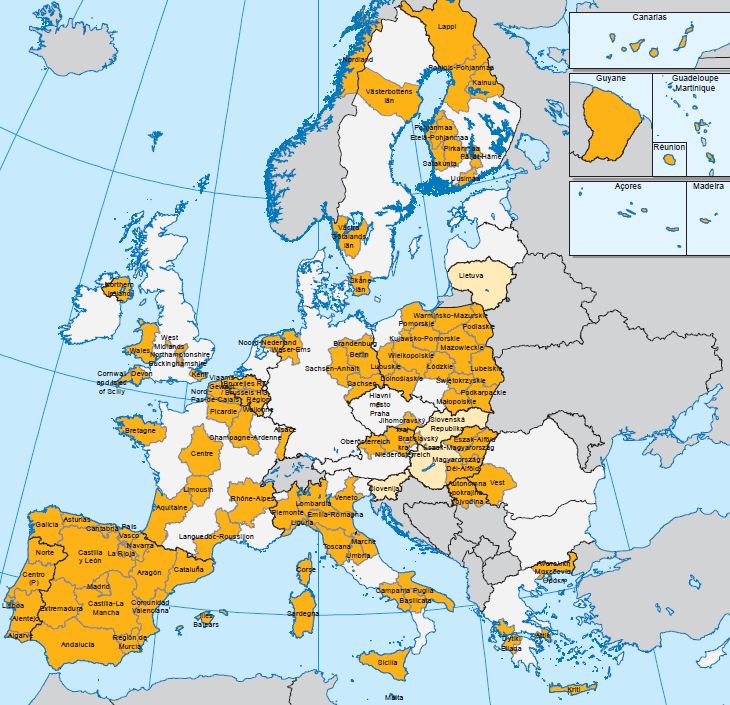
EU 2020: a new context for 2014-2020
- ESIF will focus on Europe 2020 objectives for smart,
  sustainable and inclusive growth,
- Common list of 11 thematic objectives for ESIF developed
  around the Europe 2020 priorities
- Thematic concentration for maximising impact: minimum
  shares for research and innovation through ERDF
- Ex-ante conditionality, e.g. existence of a Research and
  Innovation Strategy for Smart Specialisation (RIS3).
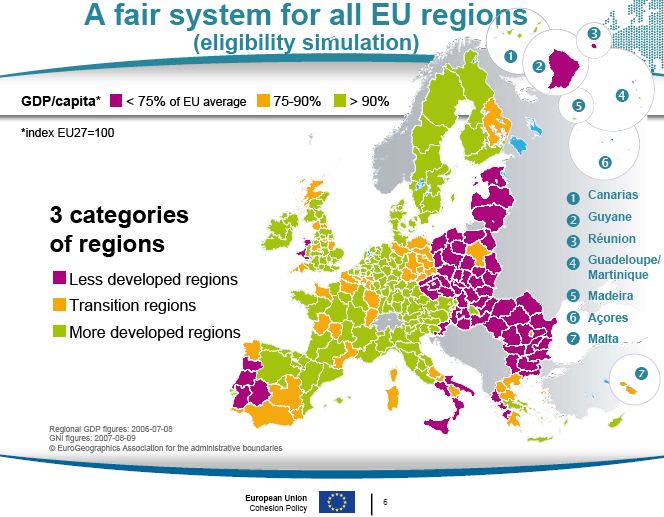
- All regions are mobilised with a geographical concentration
  of the budget on the less developed regions (and higher
  cofunding rates).
Cohesion Policy 2014-2020
(ERDF, CF & ESF)
Key messages for designing RIS3
1) Beyond obligation, connection will all objectives
2) An interactive process, not a top-down EU mapping
3) Combine thematic areas & cross-cutting activities
4) Facilitate synergies between EU funding sources
5) Logical links with ERDF Operational Programmes (OPs)
6) Need for consistency at national level
7) Need for consistency at macro-regional level
8) Work before the approval of the Regulations
                      Disclaimer: Regulations are not yet adopted!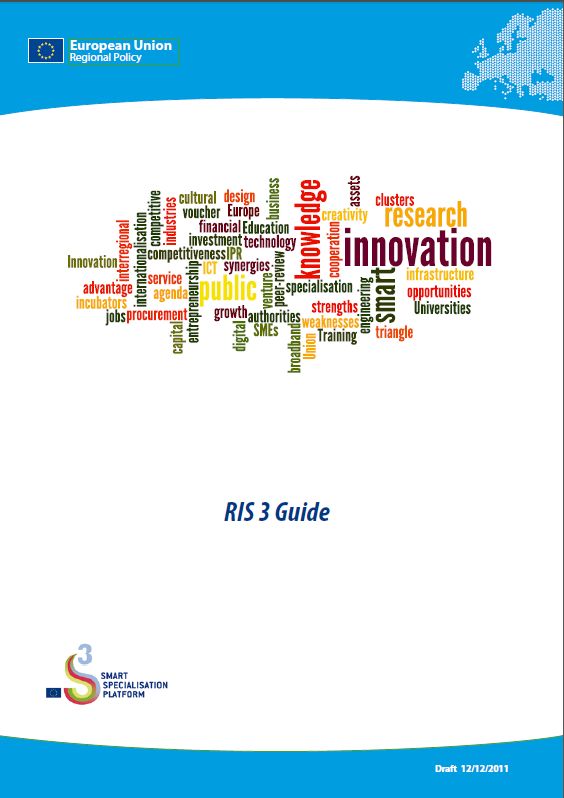
ESIF / Thematic Objectives (TOs) 2014-2020
                            1) Research and innovation (ex-ante conditionality:RIS3)*
              smart

                            2) Information and Communication Technologies (part of RIS3)*
                            3) Competitiveness of Small & Medium-Sized Enterprises (SME)
Europe 2020

                            4)   Shift to a low-carbon economy
              sustainable

                            5)   Climate change adaptation and risk management
                            6)   Environmental protection and resource efficiency
                            7)   Sustainable transport and major network infrastructure

                            8) Employment and support for labour mobility
               inclusive

                            9) Social inclusion and poverty reduction
                            10) Education, skills and lifelong learning
                            11) Institutional capacity & effectiveness of public administration

                            (*) need for consistency with the other objectives
                                                        Cohesion
                                                         Policy
TO-1: ERDF Investment Priorities (IP-1)
Strengthening research, technological development and
innovation (TO-1 / IP-1):
- Enhancing research and innovation (R&I) infrastructure
  and capacities to develop R&I excellence and promoting
  centres of competence, in particular those of European interest
- Promoting … investments in R&I, developing links and
  synergies between enterprises, R&D centres and higher
  education, in particular product and service development,
  technology transfer, social innovation and public service
  application, demand simulation, networking, clusters and open
  innovation through smart specialisation …
 supporting technological and applied research, pilot
 lines, early product validation actions, advanced
 manufacturing capabilities and first production in Key Enabling
 Technologies and diffusion of general purpose technologies.
Key messages for designing RIS3
1) Beyond obligation, connection will all objectives
2) An interactive process, not a top-down EU mapping
3) Combine thematic areas & cross-cutting activities
4) Facilitate synergies between EU funding sources
5) Logical links with ERDF Operational Programmes (OPs)
6) Need for consistency at national level
7) Need for consistency at macro-regional level
8) Work before the approval of the Regulations
                      Disclaimer: Regulations are not yet adopted!
Key elements of RIS3 RIS3 is an entrepreneurial discovery process leading to an economic transformation of the regions, based on: - selecting priorities based on existing and potential competitive advantages, to be reinforced and diversified (SWOT analysis) - Mobilizing and developing R&I potential for meeting business needs & capacities (critical mass, cross-cutting links between sectors which drive technological diversification) - Targeting emerging market opportunities and promoting cooperation between regions to avoid fragmentation and duplication of efforts - Involving public/private stakeholders & funding sources: authorities and bodies concerned by the different EU policies (ERDF, Horizon 2020…); representatives of universities, research centres, businesses and civil society
Key messages for designing RIS3
1) Beyond obligation, connection will all objectives
2) An interactive process, not a top-down EU mapping
3) Combine thematic areas & cross-cutting activities
4) Facilitate synergies between EU funding sources
5) Logical links with ERDF Operational Programmes (OPs)
6) Need for consistency at national level
7) Need for consistency at macro-regional level
8) Work before the approval of the Regulations
                      Disclaimer: Regulations are not yet adopted!
Hypothetical Structure of a RIS3
RIS3
CCA-1: promoting innovation in SMEs
RIS3 Priorities: (KETs, incubators, demonstrators, pilots,…)
- Thematic
Areas (TA)
Bio-economy
- Cross-Cutting
TA-2: Energy
TA-3: Health
(RIS3 is not
(be specific)
through CCA
(be specific)
(be specific)
Activities (CCA)
New TAs
Identified
static)
TA-1:
CCA-2: improving skills for innovation
(training, mobility, innovation management,…)
Technical Assistance may be used to develop and monitor the RIS3Steps to RIS3
(1) Analysis
Step 1: Analysis of regional potential for
innovation-driven differentiation
(6) Monitoring (2) Process
Step 2: RIS 3 design and governance –
ensuring participation & ownership
RIS 3 Strategy
Step 3: Elaboration of an overall vision for
the future of the region
Step 4: Selection of priorities for RIS3 + (5) Policy mix (3) Vision
definition of objectives
Step 5: Definition of coherent policy mix, (4) Priorities
roadmaps and action plan
Step 6: Integration of monitoring and
evaluation mechanismsFRANCE
• Alsace • Aquitaine
http://s3platform.jrc.ec.europa.eu/registration
• Bretagne • Centre
• Champagne-Ardenne
• Corse • Guadalupe
• Guyane • Languedoc-Rousillon
• La Réunion • Limousin
• Martinique
• Nord-Pas-de-Calais
• Picardie • Rhône-Alpes
ITALIA
• Lombardia • Marche
• Piemonte • Puglia
• Sardinia • Emilia-Romagna
• Toscana • Umbria
Register here:
• Veneto • Sicily
• Basilicata
• Campania
• Liguria
LITHUANIA
MAGYARORSZÁG
• North-Hungarian Region– Miskolc
• Észak-Alföld • Dél-Alföld
MALTA
NEDERLAND
• Noord Nederland
BELGIQUE ÖSTERREICH
• Région de Bruxelles-Capitale • Niederösterreich
• Vlaanderen • Oberösterreich
• Wallonia POLSKA
ČESKÁ REPUBLIKA • Dolny Śląsk (Lower Silesia)
• Jihomoravský kraj • Lubelskie
• Capital City of Prague • Lubuskie
DEUTSCHLAND • Mazowieckie
• Berlin • Podkarpackie
• Brandenburg • Pomorskie
• Freistaat Sachsen • Świętokrzyskie
• Weser-Ems • Wielkopolska
• Sachsen-Anhalt • Województwo Podlaskie
ELLADA • Kujawsko-Pomorskie
• Attiki • Crete • Łódzkie
• Eastern Macedonia and Thrace • Warminsko-Mazurskie
• Western Greece • Małopolskie
ESPAÑA PORTUGAL
• Andalucía • Aragón • Alentejo (Alto, Baixo, Central e Litoral)
• Canarias • Cantabria • Centro
• Galicia • La Rioja • Norte
• Madrid • Navarra • Região Autónoma dos Açores
• País Vasco • Catalunya • Lisboa e Vale do Tejo
• Principado de Asturias • Algarve
• Región de Murcia • Região Autónoma da Madeira
• Illes Baleares ROMÂNIA
• Extremedura • Vest
• Castilla y León SLOVENSKÁ REPUBLIKA
• Castilla-La Mancha • Bratislavský kraj
• Comunidad Valenciana SLOVENIA
FINLAND SVERIGE
• Kainuu • Oulu • Skåne
• Päijät-Häme • Uusimaa • Västerbotten
• PohjaEtelä-Pohjanmaa • Västra Götaland
(Ostrobothnia) UNITED KINGDOM
• Satakunta • Lapland • Buckinghamshire
• Etelä-Pohjanmaa (South • Cornwall and the Isles of Scilly
Ostrobothnia) • Kent
• Tampere region • Northamptonshire
• Northern Ireland
• West Midlands
• Wales
• Devon
NORWAY • Nordland
SERBIA • VojvodinaKey messages for designing RIS3
1) Beyond obligation, connection will all objectives
2) An interactive process, not a top-down EU mapping
3) Combine thematic areas & cross-cutting activities
4) Facilitate synergies between EU funding sources
5) Logical links with ERDF Operational Programmes (OPs)
6) Need for consistency at national level
7) Need for consistency at macro-regional level
8) Work before the approval of the Regulations
Disclaimer: Regulations are not yet adopted!RIS3 : a framework to facilitate coordination between priorities (IPs),
programmes (OPs) and funding sources (EU, national, regional)
Different funding sources
can contribute to RIS3
Synergies
Other EU funds,
National Regional
ERDF, ESF Ex: Horizon 2020
Funds Funds
Coordinate several strategies
EAFRD:
Rural
Research Development
Higher Education
Innovation
Entreprises Pour les priorités autres que PI-1 (R&I):
PO nationaux et/ou régionaux éventuelsPossible scenarios combining ESIF & Horizon 2020 Sequential approach: ESIF projects enabling Horizon 2020 projects (“upstream”) Horizon 2020 projects enabling ESIF projects (“downstream”) Simultaneous approach: ESIF and Horizon 2020 used in the same project ESIF and Horizon 2020 used in parallel projects ESIF substituting Horizon 2020 funding
RIS3 / OP: synergies with Horizon 2020
  Theoretical                             RIS3 = IP-1 (R&I)
  example
                         OP: capacity building for submitting to Horizon 2020
                             projects reinforcing competitive advantages
                          in line RIS3 (infrastructures, skills, partnerships)
National & regional
    authorities
 involved in RIS3
                      R&I priorities at

                                           of Horizon2020
                      Horizon 2020 =

                                                                              to Horizon2020
                      reference s for

                                           See relevance

                                                            RIS3 priorities

                                                                               easier access
                                                            = competitive

                                                                               advantages =
 need information

                                                                                Competitive
                                                             advantages
                                              priorities
      about

                                               for RIS3
                         EU level

  Horizon 2020!

                      OP: in priority areas for RIS3, support to ERDF projects
                            turning results from Horizon 2020 projects
                                           into innovation

     Cooperation between authorities involved in RIS3 / OP e& RTD-I
Opportunities for combining sources of funding:
Articles 55(8), 60(2) and 87(2)(c)(v&vi)
Same project supported by different funds [Art.55(8), CP Gen.Reg.]
→ possible for different expenditures items [ex-ante identification of
expenditure items and assignment to one source could be discussed]
Support outside of the programme area [Art.60(2), CP Gen.Reg.]
→ possible up to 10% (at priority level) [1%-15%]: useful for enabling
combined support from CP & H-2020 to partners in different countries.
Support from different operational programmes
→ Enhanced possibility to use CP in the framework of the arrangements
for interregional and transnational actions in mainstream OP [Art.
87(2)(c)(v&vi) of proposed Gen.Reg.), on the basis of the
opportunities offered by the provisions of the above mentioned Art.
55(8) and Art. 60(2).
[pm: Art. 87(2)(c)(v) concerns interregional and transnational actions and
Art.87(2)(c)(vi) concerns macro regional strategies and sea basin strategies]Simplified costs options: Articles 54, 57, 58 and 98 → Similar eligibility rules proposed for simplifying the financial management: lump sums, flat rates & scales of unit costs possible under both policies for funding direct/indirect costs without providing documents proving real expenses. → Reduction of the administrative burden for the beneficiary managing the same project with a support coming from different funds or managing several projects supported separately by different funds. Annex 1 – Common Strategic Framework, item 4.3. (modified proposal) → MS and the Commission shall pay attention to strengthening coordination and complementarities between CSF Funds & H2020, → The authorities directly concerned by H2020 shall be closely associated in the RIS3 process → MS shall make a full use of the provisions in this regulation for combining the CSF Funds with those under H2020
Process for designing & implementing ERDF rules: how to
facilitate synergies in this process?
At policy level: The objective of the ERDF Regulation is to improve
the regional economy in terms of competitiveness, growth and jobs.
Therefore, ERDF can only support research projects contributing to this
objective. It cannot support projects for "purely" scientific purposes.
At RIS3, PA & OP level: the authorities involved in designing and
delivering RIS3 / PA / OPs should work together with the authorities
and bodies involved in designing and implementing R&I policies, in
particular for facilitating cooperation with enterprises through clusters.
At project level: for using ERDF, R&I project managers have to
contact the ERDF Managing Authorities (MAs) to explain the impact on
the regional economy (links with innovative industries, spin-offs, etc).
Possible funding will depend on the regional priorities, budget
planning, timing and procedures.
About operational costs: Annual operational costs of research
organisations are nor eligible as such. Only operational costs included
in a project supported by ERDF are eligible to ERDF. It can include the
part of overheads linked to this project.Key messages for designing RIS3
1) Beyond obligation, connection will all objectives
2) An interactive process, not a top-down EU mapping
3) Combine thematic areas & cross-cutting activities
4) Facilitate synergies between EU funding sources
5) Logical links with ERDF Operational Programmes (OPs)
6) Need for consistency at national level
7) Need for consistency at macro-regional level
8) Work before the approval of the Regulations
Disclaimer: Regulations are not yet adopted!RIS3 / ERDF OPs: different but linked
EU level: ESIF Gen. Regulation, ERDF specific Regulation, …
National level: Partnership Agreement for ERDF
RIS3 → IP-1 (R&I)
Hypothetical
OP not linked to RIS3:
micro-finance for SMEs,
only outside of IP-1:
CCA–1: promoting innovation in SMEs
energy, environment,
example
ERDF
ERDF
(KETs, incubators, demonstrators, pilots,…)
risk prevention…
Competitiveness
EAFRD (to be specific)
(to be specific)
TA-2: Energy
(to be specific)
Bio-economy
TA-3: Health
(RIS3 is not
in rural areas
through CCA
identified
New TAs
static)
OPOP
TA-1:
OP
ESF OP / Horizon 2020
National
CCA-2: improving skills for innovation
/ Regional Funds
(training, mobility, ,innovation management, …) OP
IP-1Key messages for designing RIS3
1) Beyond obligation, connection will all objectives
2) An interactive process, not a top-down EU mapping
3) Combine thematic areas & cross-cutting activities
4) Facilitate synergies between EU funding sources
5) Logical links with ERDF Operational Programmes (OPs)
6) Need for consistency at national level
7) Need for consistency at macro-regional level
8) Work before the approval of the Regulations
Disclaimer: Regulations are not yet adopted!RIS3: national and/or regional level?
Partnership Agreement (national level)
OPs are possible at national level …
RIS3 is possible at National level
It is necessary if a National OP covers R&I
Need for consistency between
regional RIS3 and the national level
Hypothetical
example
Region D
Region A
Region B
Region C
RIS3
RIS3
RIS3
RIS3
Cohesion
PolicyKey messages for designing RIS3
1) Beyond obligation, connection will all objectives
2) An interactive process, not a top-down EU mapping
3) Combine thematic areas & cross-cutting activities
4) Facilitate synergies between EU funding sources
5) Logical links with ERDF Operational Programmes (OPs)
6) Need for consistency at national level
7) Need for consistency at macro-regional level
8) Work before the approval of the Regulations
Disclaimer: Regulations are not yet adopted!Example : Danube Region
• The situation of the Danube Region is characterised by:
− Insufficient spending on R&I
− Low participation in RTD Framework Programme (FP7)
− Significant brain drain
− Uncompetitive R&I infrastructure
• In the framework of the EU Strategy for the Danube Region:
− a joint RIS3 could be designed, consistent with the National
and regional RIS3, for improving this situation,
− an agency (or similar entity) could be set up to implement this
joint RIS3 through coordinating the use of regional, national
and EU funding sources (ERDF, Horizon 2020, …),
− this agency could be inspired by the experiences in the Baltic
Sea Region (Art 185 programme “BONUS”) and in South East
Europe (SEE ERA-NET+).Key messages for designing RIS3
1) Beyond obligation, connection will all objectives
2) An interactive process, not a top-down EU mapping
3) Combine thematic areas & cross-cutting activities
4) Facilitate synergies between EU funding sources
5) Logical links with ERDF Operational Programmes (OPs)
6) Need for consistency at national level
7) Need for consistency at macro-regional level
8) Work before the approval of the Regulations
Disclaimer: Regulations are not yet adopted!Thematic guides
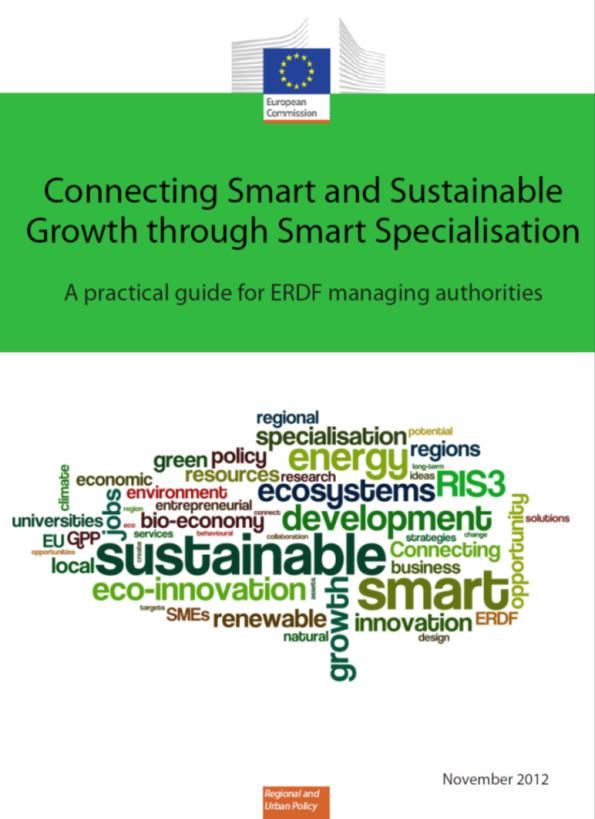
RIS3 guide
Incubators
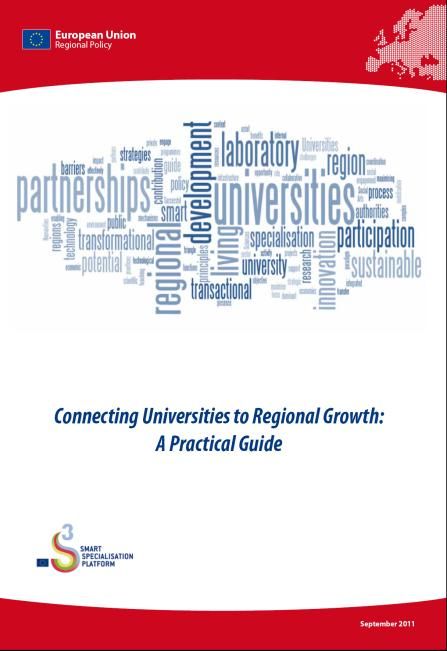
Universities & regional
development
Broadband – to be up-dated by CNECT
Service innovation
Creative industries
Green growth
Entrepreneurial mind-set
Social innovation
See: http://s3platform.jrc.ec.europa.eu/s3pguide 28
http://s3platform.jrc.ec.europa.eu/guides Cohesion
PolicySources of advice & information
• Practical Guide on EU funding opportunities for research & innovation:
http://cordis.europa.eu/eu-funding-guide/home_en.html
• FP7: http://cordis.europa.eu/fp7/home_en.html
• CIP: http://ec.europa.eu/cip/index_en.htm
• ERDF: Managing Authorities for the Operational Programmes
http://ec.europa.eu/regional_policy/atlas2007/index_en.htm
• S3-Platform: http://s3platform.jrc.ec.europa.eu/home (for all EU regions!)
• ESF: Managing Authorities for the Operational Programmes
• http://ec.europa.eu/employment_social/esf/index_en.htm
Contact the information centres & the MAs in the MS
• EEN – Enterprise Europe Network: for FP7 and CIP
• NCP – National Contact points: for FP7; for CIP (energy & ICT)
• SF – Managing Authorities: contacts & OPs summaries in web-sites; funding
depends on their budget planning, timing and procedures.
Thank you for your attention !You can also read


