THE NEXT BIG THINGS Tom Slater on tomorrow's opportunities - US Equities Second Quarter 2019 - Baillie Gifford
←
→
Page content transcription
If your browser does not render page correctly, please read the page content below

THE NEXT
BIG THINGS
Tom Slater on tomorrow’s opportunities

US Equities
Second Quarter 2019

THIS PAPER IS INTENDED SOLELY FOR THE USE OF PROFESSIONAL INVESTORS AND SHOULD NOT BE
RELIED UPON BY ANY OTHER PERSON. IT IS NOT INTENDED FOR USE BY RETAIL CLIENTS.

– The Next Big Things                                                         Baillie Gifford

    RISK FACTORS

    The views expressed in this article are those of Tom Slater and should
    not be considered as advice or a recommendation to buy, sell or hold
    a particular investment. They reflect personal opinion and should not
    be taken as statements of fact nor should any reliance be placed on
    them when making investment decisions.

    This communication was produced and approved on the stated date
    and has not been updated subsequently. It represents views held at the
    time of writing and may not reflect current thinking.

    Potential for Profit and Loss

    All investment strategies have the potential for profit and loss, your
    or your clients’ capital may be at risk. Past performance is not a guide
    to future returns.

    Stock Examples

    Any stock examples and images used in this article are not intended
    to represent recommendations to buy or sell, neither is it implied that
    they will prove profitable in the future. It is not known whether they
    will feature in any future portfolio produced by us. Any individual
    examples will represent only a small part of the overall portfolio and
    are inserted purely to help illustrate our investment style.

    This article contains information on investments which does not
    constitute independent research. Accordingly, it is not subject to the
    protections afforded to independent research and Baillie Gifford and
    its staff may have dealt in the investments concerned.

    All information is sourced from Baillie Gifford & Co and is current
    unless otherwise stated.

    The images used in this article are for illustrative purposes only.

2

                                                                               The Next Big Things 38542 0219.indd
                                                                                           Ref: 38542 PRO AR 0034
Second Quarter 2019

 THE NEXT
BIG THINGS
                 BY TOM SLATER

 Why are the visionary leaders of the world’s biggest
  companies unfazed by market setbacks? Because
they’re already at work on tomorrow’s opportunities.
  Tom Slater, head of Baillie Gifford’s US Equities
    team reports from the frontline of innovation.

                                                                              3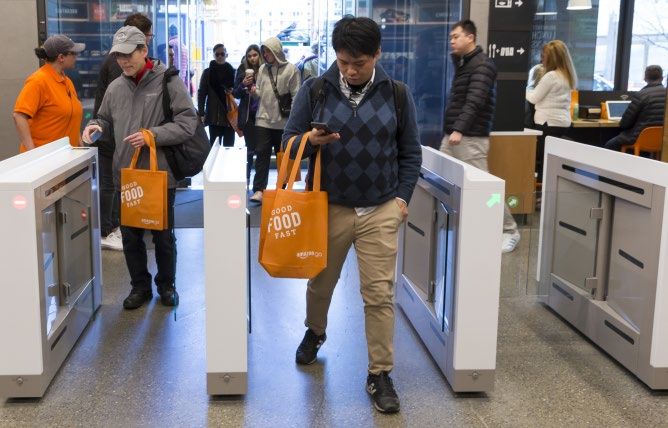
– The Next Big Things

                            I spent most of last autumn working     process. We describe it as trying to
                            on the West Coast of America. Another learn from genius.
                            member of the US Equities team spent
                            six weeks in Eastern China.             We know that if we start by looking
                                                                    at the same market data as everybody
                            We both came back with good news.       else we are doomed to produce – at
                            The misery now pervading markets is, best – the same investment results. A
                            for now, a financial services industry  different outcome requires a different
                            phenomenon, a million miles from        approach.
                            the concerns of the world’s most
                            dynamic growth companies. It barely     We also know that there are people
                            registers in the calculation of their   out there who are much smarter than
                            entrepreneurial bosses.                 we are. Understanding what they are
                                                                    talking about and what they are doing
                            Listening to Jeff Bezos, Amazon’s       to create the growth companies of
                            founder and chief executive officer at tomorrow is an important stimulus
                            the company’s HQ in Seattle, I noted    to our own thinking.
                            that he didn’t speculate about the
                            impact of rising interest rates on US   Here we have the opportunity to gain
                            consumers or what Brexit might do       competitive advantage. Because access
                            to Amazon’s UK sales. He started by     to smart people is not dependent
                            declaring that he spends most of this   on funds under management or the
                            time living in the future: “a wonderful ability to write a large cheque. It is
                            place!”                                 about your record of behaviour and
                                                                    credibility as a long-term investor and
                            Bezos was making the point that he      business owner.
                            only concerns himself with Amazon’s
                            immediate operational reality if        During our discussion Bezos chose to
                            something goes drastically wrong.       focus on four areas: Amazon’s virtual
                            Otherwise his focus is on the next      assistant Alexa and its media, grocery
                            big opportunities.                      and cloud computing businesses. Here
                                                                    follows some reflections on what he
                            I share the following thoughts of Mr    had to say.
                            Bezos to convey something of the
                            flavour of our US equities research

4
Second Quarter 2019

                              ALEXA

The Amazon Echo speaker and Alexa,        this. More importantly, Amazon now
its integrated voice assistant, are       has over 100 million Alexa-enabled
already ubiquitous. Market attitudes      devices in circulation which means it
to Alexa in Silicon Valley and on         is collecting data faster than rivals. Its
Wall Street illustrate the divergence     competitive edge is increasing.
between West Coast and East Coast
thinking. Cursory analysis might          Data matters because of how
suggest that the smart speaker market     inadequate Alexa now is relative to our
is maturing and the fastest revenue       expectations. We want to interact with
growth phase is behind us. It will be     ‘her’ like a person, whereas in reality
another contributor to a slowing top      ‘she’ is a four-year-old algorithm.
line at Amazon over the coming years.     Those managing the business within
                                          Amazon see themselves as a four-
It is precisely this narrow type of       year-old start-up. The things they
thinking which has led Wall Street to     need to improve are predominantly
underestimate Amazon for the past         engineering problems within their
two decades. I would not disagree         control. They need to improve their
that the smart speaker market is no       natural language processing, they need
longer of much interest. But Amazon       to connect Alexa to more devices, and
has laid the foundations of a new         they need to strike more partnership
era of computing. It has created an       deals. They are not dependent on the
expectation that we ought to be able      vagaries of markets.
to speak to our devices. The monitor,
the keyboard and the mouse are too        Think of the potential: if this
expensive and cumbersome to fit our       technology becomes our default
lifestyles and consumers are warming      household assistant and the means
to their alternative. Alexa, is coming    by which we organise our households,
to your microwave, to your television,    then Amazon has just taken an
to your car, and even your bicycle.       important step closer to influencing the
Ambient computing is becoming             way we decide to spend our money.
a reality.                                And crucially, it can monetise this role
                                          by selling shoes, not just advertising
As for the competitive position,          shoes. This is a business model edge
very few rival companies have the         that no others can match. No wonder
infrastructure to create a product like   Jeff is excited.

                                                                                                             5
– The Next Big Things

    MEDIA

    In the past we have focused on the         last year, signing Jen Salke from
    distinction between offline and online     NBC as the new head of its studios
    media but the issues have moved on         business. As Amazon is data-driven,
    and so have our investments. Today,
    Amazon and Netflix and new purchase
                                               this spending is motivated by the
                                               information derived from customer
                                                                                             As many as
    Roku dominate our US equities
    media exposure.
                                               spending patterns. When a Prime
                                               member watches their first piece of
                                                                                             45 million
    We are seeing the accelerating
                                               content on Prime Video they become a
                                               much more committed Prime member.
                                                                                             households
    decline of the traditional media
    industry. ESPN, the powerhouse of
                                               Renewal rates improve.                        watched
    the cable industry, peaked at 100
    million subscribers in 2011. Since
                                               This brings us back to Amazon’s
                                               business model advantage of not
                                                                                             Netflix’s
    then it has fallen 14 per cent. In 2018,
    Disney’s purchase of 21st Century
                                               being compelled to monetise directly.
                                               Investment in content sells more
                                                                                             horror thriller
    Fox and Comcast’s purchase of Sky
    illustrated the kinds of pressure this
                                               ‘shoes’. So in a way we have become
                                               familiar with elsewhere, in the age of
                                                                                             Bird Box in
    is creating. Since peak ESPN, Netflix
    has grown from around 25 million
                                               on-demand viewing there is no longer
                                               competition for audience share at a
                                                                                             its first week
    subscribers to almost 140 million
    today. It is spending close to double
                                               particular time. All the competition is
                                               for the talent that creates unmissable
                                                                                             of release…
    what some of the biggest traditional       content.
    media companies spend on content
    and customers are voting with their        Elsewhere within our media holdings,
    eyeballs. As many as 45 million            Facebook is working hard to rebuild
    households watched Netflix’s horror        trust after the damage inflicted by the
    thriller Bird Box in its first week of     Cambridge Analytica data privacy
    release, more than twice the total         scandal. It has its work cut out in the
    number of cinema tickets sold that         face of a hostile traditional media
    week in North America for all films.       industry but we hope to see a return to
                                               profit growth over the coming months.
    With the industry in flux, it is           Gaming continues to grow and in
    understandable why this area is such       the UK is now bigger than the music
    a priority for Bezos. Amazon spent         industry and video industry combined.     © Getty Images North America.
    just under $5 billion on content

6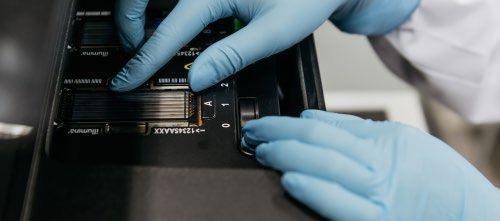
Second Quarter 2019

Big internet platforms like Facebook
and Alphabet are still extremely
powerful businesses, addressing
vast opportunities, many of which
lay far in the future. While these
major companies work through
the challenges of regulation and
governance, we have been trying to
identify companies that could become
the platforms of the future.

That is the backdrop to our holdings
in companies such as Shopify. Could
it become the key infrastructure
for entrepreneurs to operate online
globally?

                                           7
– The Next Big Things

                                                    GROCERY

                Bezos’ third topic was grocery. I would like            Technology is enabling some amazing
                to broaden consideration of this to include the         experiences. At one of the five Amazon Go
                entire food industry.                                   stores in Seattle and San Francisco, you can scan
                                                                        your mobile on the way into the store, pick items
                As recently as five years ago it might have             from the shelves and walk out. No item-scanning,
                seemed that the food industry would be one of           no tills, no queues: just cameras and machine
                the last to be affected by digitalisation. Instead it   intelligence. This is a meaningful improvement
                has become one of the most interesting parts of         on the customer experience in a traditional store.
                the online market.
                                                                        The key to achieving success in this retail format
                As Amazon seeks to offer a broadening array of          is rich data on the customers, an area in which
                services to its customer base, grocery is clearly       a traditional food retailer has comparably little
                a top priority. It is a huge market and also one in     experience.
                which there has been very little radical thinking
                for a long time.                                        Meanwhile the progress being made by food
                                                                        ordering companies such as Grubhub and others
                If one looks at one of the most ecommerce-              may lead to other structural changes in the
                penetrated grocery markets in the world, the            market. As ordering prepared food gets easier,
                UK, you can begin to realise the potential              the range and options available improves,
                opportunity: online sales still account for only        delivery costs decline and speed increases,
                seven per cent of the total spend on groceries.         which will help the market grow.
                There is still a lot to play for here, and elsewhere
                in the world penetration is lower still. The            We are also seeing the emergence of ‘dark
                frequency of purchase and the scale of the              kitchens’, operations run from industrial parks
                market make the sector very attractive for              with no counter or covers whose business is
                technology-led entrants.                                built on marketing and distributing through
                                                                        these online networks.
                Today’s customers are looking for a combination
                of physical stores, click-and-collect and home       The combination of changing habits and local
                delivery. This is a battle that is likely to consume monopolies is creating some great opportunities
                capital and take time to develop.                    in the food industry.

                It is also, of course, exactly the type of
                competition Amazon loves. The company is
                tying together its online pantry service with
                click-and-collect and its estate of Whole Foods
                stores. It enthusiastically acknowledges that
                it needs to get to a different level of inventory
                control and picking capability for this to be a
                big growth driver for the next decade.
8
Second Quarter 2019
Customers scan their mobile phones as they enter Amazon Go,
Amazon’s high-tech, cashless convenience store.
© Paul Christian Gordon/Zuma Wire/REX/Shutterstock.
9– The Next Big Things
CLOUD
The final area Bezos mentioned was Bezos is most enthusiastic about
cloud computing. At a superficial level databases. He thinks that the
you could describe this as the move advantages of a Cloud-based system
from on-premise systems to third party are sufficient for corporates to consider
infrastructure. We think the change is switching. At the very least it would
more profound and should really be be unlikely that a startup would tie
thought of as the digital transformation themselves to the Oracle ecosystem.
of enterprise. Amazon’s cloud database, Aurora, has
been a long time in the making but in
It is being driven by information Bezos’ view, the long learning time
technology becoming a central and shows that the opportunity is gigantic.
strategic activity for many businesses.
This isn’t a technology cycle, it is a Microsoft’s Azure is currently the
fundamental change that will play only credible competitor and the
out over decades. outstanding question is whether
Alphabet’s Cloud efforts, under new
Three observations: Firstly, it is clear leadership, can leverage its computing
that enterprises are moving workloads scale and artificial intelligence
to the cloud at an accelerating rate. expertise to win a place at the table.
Secondly, it appears to be a winner-
takes-most industry with customers
typically having a main supplier and
then a backup. Thirdly on-premise
giants such as Oracle and SAP have
failed to find ways to adapt their
business model to embrace Cloud,
which broadens the opportunity set
for new players.
10Second Quarter 2019
11– The Next Big Things
© Bloomberg/Getty Images.
HEALTHCARE
Having covered Bezos’ four major technology, serving the research markets
topic areas, here is one he didn’t and putting in place the building blocks
mention but about which his actions necessary to address the real world of
denote strong interest. That is the topic patients and therapies. The next phase
of healthcare-meets-data. is about unlocking this clinical sphere
which is happening already. One million
There has been a massive change over individuals have now had their genome
the past 10 years to a data-driven world sequenced but it is still very early days.
and our expectations as consumers have
changed. But our healthcare institutions Only a tiny proportion of those
suffer from chronic inertia and it is diagnosed with cancer have their disease
difficult to get prompt answers in a way sequenced but that number is growing
we’ve come to expect in other industries. fast. For example, the UK Government
recently announced that all children in
Against this backdrop, we have been England diagnosed with cancer will
looking for the healthcare companies qualify for whole genome sequencing.
that can drive the shift to data-driven
based treatments. By far the most Meanwhile, the clinical data that
important are our holdings in gene Illumina’s unlisted offshoot Grail has
sequencing company Illumina which published suggests that its quest for
marked its twentieth anniversary this an early stage pan-cancer blood test is
year. Illumina’s mission remains the showing promise and is happening much
same but a new phase has begun. faster than anticipated.
The first part of this new healthcare
journey was about refining the
12Second Quarter 2019
CONCLUSION
I hope I have managed to convey some of our
thinking as we navigate 2019, although a
whistle-stop tour of the portfolio must inevitably
leave out more than it includes. Our US Equities
portfolio will continue to search for the
companies that have the best opportunity to be
outliers when it comes to delivering returns to
our clients. We aim to own these companies for
long periods, and without unnecessary
transactions, so that the maximum possible
returns accrue to our clients.
We believe that having the confidence in these
companies to remain steadfast is the best way
to convert current opportunities into
outsized future returns.
13– The Next Big Things
IMPORTANT INFORMATION
Baillie Gifford & Co and Baillie Gifford & Co Limited Important Information Hong Kong
are authorised and regulated by the Financial Conduct
Authority (FCA). Baillie Gifford & Co Limited is an Baillie Gifford Asia (Hong Kong) Limited
Authorised Corporate Director of OEICs. 百利亞洲(香港)有限公司 is wholly owned by
Baillie Gifford Overseas Limited and holds a Type 1
Baillie Gifford Overseas Limited provides investment licence from the Securities & Futures Commission of
management and advisory services to non-UK Professional/ Hong Kong to market and distribute Baillie Gifford’s
Institutional clients only. Baillie Gifford Overseas Limited range of UCITS funds to professional investors in
is wholly owned by Baillie Gifford & Co. Baillie Gifford & Hong Kong. Baillie Gifford Asia (Hong Kong) Limited
Co and Baillie Gifford Overseas Limited are authorised and 百利亞洲(香港)有限公司 can be contacted at 30/F,
regulated by the FCA in the UK. One International Finance Centre, 1 Harbour View Street,
Central, Hong Kong. Telephone +852 3756 5700.
Baillie Gifford Investment Management (Europe) Limited
provides investment management and advisory services to
European (excluding UK) clients. It was incorporated in Important Information Australia
Ireland in May 2018 and is authorised by the Central Bank This material is provided on the basis that you are
of Ireland. Through its MiFID passport, it has established a wholesale client as defined within s761G of the
Baillie Gifford Investment Management (Europe) Corporations Act 2001 (Cth). Baillie Gifford Overseas
Limited (Frankfurt Branch) to market its investment Limited (ARBN 118 567 178) is registered as a foreign
management and advisory services and distribute Baillie company under the Corporations Act 2001 (Cth). It
Gifford Worldwide Funds plc in Germany. Baillie Gifford is exempt from the requirement to hold an Australian
Investment Management (Europe) Limited is a wholly Financial Services License under the Corporations Act
owned subsidiary of Baillie Gifford Overseas Limited, 2001 (Cth) in respect of these financial services provided
which is wholly owned by Baillie Gifford & Co. to Australian wholesale clients. Baillie Gifford Overseas
Persons resident or domiciled outwith the UK should Limited is authorised and regulated by the Financial
consult with their professional advisers as to whether they Conduct Authority under UK laws which differ from those
require any governmental or other consents in order to applicable in Australia.
enable them to invest, and with their tax advisers for advice
relevant to their own particular circumstances. Important Information South Africa
Baillie Gifford Overseas Limited is registered as a
Important Information South Korea Foreign Financial Services Provider with the
Baillie Gifford Overseas Limited is licensed with the Financial Sector Conduct Authority in South Africa.
Financial Services Commission in South Korea as a cross
border Discretionary Investment Manager and Non- Important Information North America
discretionary Investment Adviser.
Baillie Gifford International LLC is wholly owned by
Baillie Gifford Overseas Limited; it was formed in
Important Information Japan Delaware in 2005. It is the legal entity through which
Mitsubishi UFJ Baillie Gifford Asset Management Limited Baillie Gifford Overseas Limited provides client service
(‘MUBGAM’) is a joint venture company between and marketing functions in America as well as some
14 Mitsubishi UFJ Trust & Banking Corporation and Baillie marketing functions in Canada. Baillie Gifford Overseas
Gifford Overseas Limited. MUBGAM is authorised and Limited is registered as an Investment Adviser with the
regulated by the Financial Conduct Authority. Securities & Exchange Commission in the United States
of America.Second Quarter 2019
ABOUT THE AUTHOR
TOM SLATER
Investment Manager
Tom graduated BSc in Computer
Science with Mathematics from the
University of Edinburgh in 2000. He
joined Baillie Gifford the same year
and worked in the Developed Asia and
UK Equities teams before joining the
Long Term Global Growth Team at the
start of 2009. Tom became a Partner in
the firm in 2012. Tom was appointed
Joint Manager of Scottish Mortgage
Investment Trust in January 2015
having served as Deputy Manager for
the previous five years. In 2015 Tom
was appointed Head of the US Equities
team and is a decision maker on Long
Term Global Growth portfolios. Tom’s
investment interest is focused on high
growth companies both in listed
equity markets and as an investor
in private companies.
15CURIOUS
ABOUT
THE
WORLD
bailliegifford.com/thinking
Calton Square, 1 Greenside Row, Edinburgh EH1 3AN
Telephone +44 (0)131 275 2000 / www.bailliegifford.com
Copyright © Baillie Gifford & Co 2015.You can also read


