DUBLIN RESIDENTIAL MARKET ANALYSIS FOR INTERNATIONAL INVESTORS 2018 - INVESTMENT INSIGHT - Knight Frank
←
→
Page content transcription
If your browser does not render page correctly, please read the page content below
INVESTMENT INSIGHT

DUBLIN
RESIDENTIAL MARKET ANALYSIS
FOR INTERNATIONAL INVESTORS
2018

      TRENDS         ANALYSIS   OUTLOOK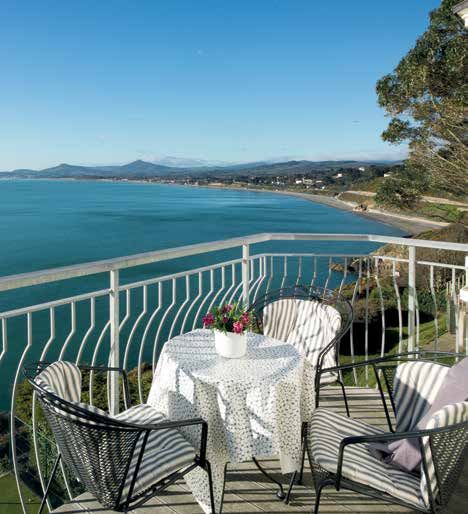
SUMMARY INTRODUCTION
As the capital city of Ireland, Europe’s fastest growing
1. Dublin is the capital city of economy, Dublin’s residential market is increasingly
Ireland, Europe’s fastest
growing economy
on the radar of international investors. This report
examines the factors driving this heightened interest.
2. In addition to economic
opportunities, Dublin has a rich
cultural and lifestyle offering
Overview highly educated English speaking
workforce is also of central importance
The appeal of investing in Dublin’s for employers:
residential market is underpinned by the
3. Ireland is undergoing a • 33% of the population is aged under
city’s commercial success, which is
population boom, underpinning 25, the highest rate in Europe1
complemented by its educational and
long-term demand for housing lifestyle offering. Dublin is a dynamic, • 53% of 30-34 year olds have a degree,
outward looking city, and home to the also the highest rate in Europe2
4. Despite recovering by 89%, European Headquarters of many of the
• Ireland is ranked first in the world
residential prices remain 24% world’s leading companies including
Google, Facebook, Twitter, LinkedIn and for being open to foreign ideas and
below their previous peak level also for flexibility when faced with
Microsoft to name just a few. Dublin’s
success in attracting these companies is a new challenges3
5. Dublin compares very favourably reflection of the wider success the city has
The incentivised tax treatment that
to major international cities had in positioning itself as a leading global
businesses enjoy also extends to
across a range of metrics business and financial hub within the EU.
individual investors. There are a number
The draw of Dublin can be attributed to of fund structures that allow tax efficient
soft and hard factors. For instance, investing through vehicles such as the
Ireland’s long history of emigration Qualifying Investor Alternative Investment
enables the country to yield substantial Fund, which is open to suitably qualified
soft power by leveraging its influence with investors making a minimum initial
the Irish diaspora in senior positions in subscription of €100,000. As a further
major multinationals. At a more hard- incentive, the Immigrant Investor
nosed business level, Dublin’s low Programme has been established which
corporate tax rate of 12.5% is one of the allows non-EEA nationals and their
lowest ‘onshore’ statutory corporate tax
families, who commit to an approved
rates in the world.
investment in Ireland, to secure residency
While a favourable tax rate acts as a status. The ease of investing in Dublin is
significant pull factor, Dublin’s young, facilitated by Dublin Airport, which offers
FIGURE 1
Selected global corporate tax rates
35%
30%
25%
20%
15%
10%
5%
0%
Ireland
Singapore
Luxembourg
Czech Republic
Poland
UK
Finland
Iceland
Russia
Portugal
USA
Sweden
Denmark
Italy
Korea
Austria
China
Netherlands
Spain
Germany
France
Belgium
Source: Deloitte
1
Eurostat
2
Eurostat
2 3
IMD World Competitiveness Yearbook, 2017DUBLIN RESIDENTIAL MARKET ANALYSIS 2018 INVESTMENT INSIGHT
excellent global connectivity due to its destination to study medicine for students
strategic geographic position between from Asia with the Royal College of
Europe and the United States. Surgeons, University College Dublin and IRELAND –
Trinity College Dublin all offering medical
UNITED STATES
Educational draw training to overseas students. Trinity
College, which has sister colleges in the PRECLEARANCE
Dublin’s educational institutions have universities of Cambridge and Oxford in
a growing reputation abroad with the United Kingdom, is Ireland’s most Ireland has an aviation preclearance
international student numbers expanding prestigious university and attracts agreement with the United States
by 17.5% over the last three years.4 thousands of tourists annually to its since November 2008. Under the
Dublin is increasingly becoming a primary historic campus in Dublin City Centre. agreement, passengers of all United
States bound flights from Dublin and
Shannon Airports are fully cleared
for immigration, customs, agriculture
and security controls before leaving
53%
Ireland. This means that passengers
travelling to the United States are
treated as domestic passengers on
arrival and do not face any further
entry controls.
OF 30-34 YEAR OLDS HAVE From the passenger’s perspective,
A DEGREE OR HIGHER the preclearance process allows for
COMPARED WITH AN EU more efficient use of preboarding
AVERAGE OF 39% time at Dublin Airport. The
experience on arrival is also greatly
improved as it avoids a lengthy
entry process and can allow transit
passengers to remain airside for
connecting flights.
FIGURE 2
Flight connectivity ex Europe
DUBLIN
IRELAND’S
Vancouver WORKFORCE IS
Montreal
HIGHLYSeattle
EDUCATED WITH 50%Toronto Boston
Chicago Beijing
Newark Hartford
OFSan30-34
FranciscoYEAR OLDS HAVING
Washington New York
Las Vegas Philadelphia
A DEGREE OR
Los Angeles
HIGHER Atlanta Charlotte
Shanghai
Agadir
COMPARED WITH AN AVERAGE Orlando Dubai
Delhi
Doha
OF 39% ACROSS THE EU. Miami Abu Dhabi Hong Kong
EU AVERAGEMumbai
39%
Bangkok
Addis Ababa Kuala Lumpur
50%
Singapore
IRELAND
Sydney
Auckland
Melbourne
DIRECT CONNECTION
THROUGH ABU DHABI/DUBAI
Source: Knight Frank Research
4
Higher Education Authority 3Lifestyle appeal FIGURE 5
Projected share of population
In addition to the commercial and growth 2016-2031
educational appeal, Dublin also has
attractive cultural and lifestyle pull factors. 45%
Chief amongst these is the city’s rich literary 40%
heritage with Oscar Wilde, Samuel Beckett 35%
and James Joyce just some of the famous 30%
writers and playwrights to hail from the city.
25%
Indeed, Dublin was the setting for Joyce’s
20%
great 20th century novel, Ulysses.
15%
Dublin’s environs offer fantastic outdoor 10%
activities, especially in the golfing and horse 5%
breeding arenas. Ireland is home to over 0%
Border
Dublin
Mid-East
Midlands
Mid-West
South-East
South-West
West
400 golf courses, producing some of the
world’s leading professionals including Rory
Over
400
McIlroy, Darren Clarke, Graeme McDowell,
Paul McGinley and Padraig Harrington. Irish
Source: CSO
golf courses, renowned worldwide for their
picturesque landscapes and rich heritage,
latest census, over the period 1991- 2016,
golf courses attracted 193,000 people to play in 2016
according to Fáilte Ireland. Famous courses the population grew by 35% compared
include the Old Head Golf Links in Cork and
whole. Leinster
10.1
to a growth rate of 7% for the EU as a
%
– the province in which
14.9%
The K Club located just outside Dublin. EU Average
Dublin is located – accounted for 55% of
Ireland is currently the third largest
Ireland breeding nation in the world
thoroughbred 14.9%
the population in 2016, which represented
a 5% increase on 2011.
with 6,777 registered breeders basing there Ireland
operations here.5 These include John A high fertility rate in conjunction with
Magnier’s Coolmore Stud, Prince Khalid lower mortality rates, has resulted in a
10.1%
Abdullah’s Juddmonte Farms, Sheikh
Mohammed bin Rashid Al Maktoum’s
EU Average
natural annual population growth rate of
0.7%, which is far in excess of any other
Darley Stud and Sheikh Hamdan Al European state.6 The high growth rate is
Maktoum’s Derrinstown Stud. set to continue with Eurostat projecting
that the population of Ireland will increase
FIGURE 3 by 35% during the period 2015 to 2081
Population projections 2015-2081 Demographic drivers compared to just 2% for the EU.
Ireland is experiencing a population boom, Due to trends in urbanisation, Dublin is
providing a natural long-term source of set to benefit most from this population
demand for housing. According to the growth. According to the United Nations,
14.9
FIGURE 4
35%
Natural population growth rate
%
0.8% Ireland
Ireland 0.6%
0.4%
0.2%
0.0%
2% 34.39% 10.1%
-0.2%
-0.4%
10.1%
EU Average Ireland
-0.6% EU Average EU Average
-0.8%
Belgium
Bulgaria
Czech Republic
Denmark
Germany
Estonia
Ireland
Greece
Spain
France
Croatia
Italy
Cyprus
Latvia
Lithuania
Luxembourg
Hungary
Malta
Netherlands
Austria
Poland
Portugal
Romania
Slovenia
Slovakia
Finland
Sweden
United Kingdom
Source: Eurostat Source: Eurostat
5
Horse Racing Ireland
4 6
EurostatDUBLIN RESIDENTIAL MARKET ANALYSIS 2018 INVESTMENT INSIGHT
80% of people in Ireland will live in
FIGURE 6
urban areas by 2050, up from just over
Unemployment trends
60% currently. According to the Central
Statistics Office (CSO), by 2031, over
18%
40% of Ireland’s population growth will Euro Area Ireland
be concentrated in Dublin. Furthermore, 16%
the counties surrounding Dublin in the 14%
Mid-East region (Meath, Kildare and
12%
Wicklow) have the next highest potential
accounting for approximately 25% of 10%
projected growth. Clearly then, Dublin 8%
will be the focal point of future population
6%
growth which will underpin long-term
demand for housing. 4%
2%
Economic drivers 0%
2008 2009 2010 2011 2012 2013 2014 2015 2016 2017
The EU Commission is forecasting Source: Eurostat
economic growth of 4.4% for Ireland
in 2018, almost twice the growth rate
of the Euro area. Growth is supported indicating that the recovery is becoming December 2017. Ireland’s success in
by heightened foreign investment increasingly domestically led. turning around its finances following the
inflows, which has seen the euro crisis has earned it a ‘star pupil’
Government debt as a percentage of
unemployment rate fall to 6.7% at the reputation in Europe and created the
GDP declined from a peak of 124%11
end of 2017, below the Euro area stable environment which has spurred
during the height of the euro crisis to
average of 9.1%.7 large capital inflows from international
now stand at 68%12 while tax revenue
Consumer confidence has rebounded increased by 3.5%13 in the year to March investors. Additionally, Brexit may
sharply, with the volume of retail sales ex 2018. The improvement in the public provide a further boost to Dublin with
motors increasing by 6.2%8 in the year finances, combined with the strong relocations of well paid office jobs from
to February 2018. Personal consumption momentum behind economic growth, London expected, adding an additional
grew by 1.9%9 in 2017 with a 2.4%10 has led to Ireland’s sovereign credit layer of high-value demand to the
further expansion forecast for 2018, rating being upgraded to A+ by Fitch in residential market.
RETAIL SALES ARE UP
6.2%
7
Eurostat
8
CSO
9
CSO
10
ESRI
11
CSO
12
CSO
13
Department of Finance 5RESIDENTIAL
MARKET OVERVIEW
The Dublin residential market is characterised by a chronic
lack of supply which is driving price and rental inflation.
“In contrast to the Ireland was one of the worst affected
countries of the Global Financial Crisis
FIGURE 8
latter stages of the (GFC) as an overvalued residential
Mortgage drawdowns
Celtic Tiger, the market underwent a correction
40,000
simultaneously as the GFC hit. In the
residential market aftermath, prices fell by almost 60%14 35,000
is now dominated in Dublin, making it one of the worst 30,000
housing crashes on record anywhere
by first-time buyers
€ million
25,000
in the world. However, as it became
illustrating that the clear that the market had substantially 20,000
market is being overcorrected, prices rebounded
strongly, growing by over 89% although
15,000
driven by positive they remain 24% below peak.15
10,000
fundamentals rather Meanwhile, rents fell by 27% peak-to-
trough but now exceed their previous
5,000
than unsustainable high by 13%.16
0
2006
2007
2008
2009
2010
2011
2012
2013
2014
2015
2016
2017
speculation.” A lack of new supply has been driving
these increases, with the delivery of new Source: BPFI
residential stock between 2010
140
and 2016 sitting at its lowest ever level
130 value of mortgage lending in Ireland
since records began in 1970.17 While
falling from €39.9 billion in 2006 to €7.2
delivery
120 of new stock increased by 44%
billion in 2017.19 While part of this fall has
in 2017 to just over 6,000 units18, it
110
been due to the tightening of the
remains significantly below the need for
100 availability of domestic bank funding
11,000 units annually as identified by
90 following the GFC, the decline can also
our research.
be attributed to the macro-prudential
80
A scarcity of mortgage financing measures introduced by the Central
70
continues to be one of the main factors Bank in 2015 aimed at avoiding another
behind
60 the lack of new supply, with the credit fueled bubble. The Central Bank
50
FIGURE 7
Dublin residential price index
150
140
130
120
110
100
90
80
70
60
50
40
30
20
10
0
2006 2007 2008 2009 2010 2011 2012 2013 2014 2015 2016 2017 2018
Source: CSO
14
CSO
15
CSO
16
RTB
17
Department of Housing, Planning and Local Government
18
Department of Housing, Planning and Local Government
6 19
BPFIDUBLIN RESIDENTIAL MARKET ANALYSIS 2018 INVESTMENT INSIGHT
measures included introducing
borrowing limits of 3.5 times income and
the requirement of a 20% deposit,
reducing to 10% for first-time buyers
while buy-to-let investors require a
deposit of 30% loan-to-value.
As a result, first-time buyers now
account for approximately 50% of
mortgages compared to 20% leading up
to the crash.20 Furthermore, buy-to-let
investors now account for approximately
2% of the market compared to
approximately 20% previously which is
a further sign that the market is being
driven by positive fundamentals rather
than unsustainable speculation.21
Summary
The Dublin residential market represents
a unique opportunity for investors
to gain exposure to Europe’s fastest
growing economy. In addition to
being Ireland’s economic engine, with
average incomes 15%22 higher than the
State, Dublin is also the focal point for
Ireland’s population boom which will
ensure a long-term demand for housing.
With the majority of advanced
economies experiencing the dual forces
Strawberry Hill House, Vico Road, Dalkey, Co. Dublin
of weak economic growth and aging
populations, Dublin has stood out as
a beacon of growth. In the process,
the city has attracted the attention of
some of the world’s largest investment
funds such as Singapore’s Oxley
International comparison
Holdings who are developing a mixed- Dublin compares favourably to New York. Furthermore, property
use scheme with Ballymore extending London, New York and Hong Kong taxes are much lower with an investor
to over one million sq ft in the heart of across a range of metrics as illustrated paying €10,000 on acquisition of a
Dublin’s docklands. With indicators one million euro property in Dublin
in the table below.
such as prices, rents and supply all compared to approximately €68,000
pointing in a favourable direction from Examining the purchasing power of in London, €28,000 in New York
an investor’s point of view, the outlook one million euro in Dublin, one can and €187,000 in Hong Kong. For the
remains bright. purchase nearly five times the amount same property, annual property tax
of prime space than in Hong Kong and would be €1,491 in Dublin compared
These same dynamics have also raised
approximately four times the amount to €1,589 in London, €12,228 in New
the market’s profile for international
of prime space than in London and York and €1,896 in Hong Kong.
individual investors who are also
attracted by Dublin’s educational
and lifestyle offering in addition to Category Dublin London New York Hong Kong
the aforementioned economic case. How much space will
And while the residential market faces 1,370 sq ft 358 sq ft 320 sq ft2 287 sq ft
€1 million buy1
serious issues such as the difficulty
Transaction tax3 €10,000 €68,417 €28,242 €187,500
in obtaining mortgage financing, this
Property taxation3 €1,491 €1,589 €12,228 €1,896
creates an opportunity for foreign
buyers who are not hindered by funding 1
Knight Frank Research as of Q4 2017
2
Refers to new developments only for New York
obstacles. In this context, international 3
Based on €1 million home
interest is only set to grow.
20
BPFI
21
BPFI
22
CSO 7RESIDENTIAL
James Meagher, Director
+353 1 634 2466
james.meagher@ie.knightfrank.com
Rena O’Kelly, Director
+353 1 634 2466
rena.okelly@ie.knightfrank.com
Evan Lonergan, Director
+353 1 634 2466
evan.lonergan@ie.knightfrank.com
Ray Palmer-Smith, Director
+353 1 634 2466
ray.palmer-smith@ie.knightfrank.com
Peter Kenny, Associate Director
+353 1 634 2466
peter.kenny@ie.knightfrank.com
Guy Craigie, Associate Director
+353 1 634 2466
guy.craigie@ie.knightfrank.com
Barry Feenan, Associate Director
+353 1 634 2466
barry.feenan@ie.knightfrank.com
RESEARCH
John Ring, Head of Research
+353 1 634 2466
john.ring@ie.knightfrank.com
Robert O’Connor, Research Analyst
+353 1 634 2466
robert.oconnor@ie.knightfrank.com
© HT Meagher O’Reilly trading as Knight Frank
This report is published for general information only and not to
be relied upon in any way. Although high standards have been
used in the preparation of the information, analysis, views
and projections presented in this report, no responsibility or
RECENT MARKET-LEADING RESEARCH PUBLICATIONS liability whatsoever can be accepted by HT Meagher O’Reilly
trading as Knight Frank for any loss or damage resultant
from any use of, reliance on or reference to the contents
RESEARCH RESEARCH RESEARCH of this document. As a general report, this material does
INVESTMENT INSIGHT - 2017 IN REVIEW INDUSTRIAL MARKET INSIGHT - 2017 IN REVIEW
Despite a strong finish to the year
- with €965.3 million transacting
during Q4 - 2017 was defined by a
stabilisation of investment volumes
Office sales comprised of the largest
proportion of activity with 39% of
the market or €891.4 million. The
lack of opportunities in the city
FIGURE 3
Investment spend by sector
While rising employment levels and
household incomes are underpinning
increases in consumer spending, the
proliferation of digital technologies means
not necessarily represent the view of HT Meagher O’Reilly
% 2
trading as Knight Frank in relation to particular properties
centre induced investors to move that a growing share of this expenditure
with approximately €2.3 billion worth
The global perspective on prime property and investment of deals changing hands. While up the risk curve with the purchase 4 STUDENT
%
% ACCOMMODATION RESIDENTIAL1 Residential is happening on-line. This was
investor appetite for Irish real estate of suburban assets and forward- 6
% MULTI-FAMILY demonstrated in Eurostat’s 2017 survey
DUBLIN
HOTEL on ICT which showed that 18% of Irish
funding opportunities becoming more
remained robust, volumes were
constrained by a shortage of large
%
commonplace. This was highlighted INDUSTRIAL 6 Student Accommodation people purchased household goods on-
line in 2017, up from 10% five years ago.
lot-sized assets as a result of the by the sale of a confidential suburban
Multi Family
This phenomenon has acted as a driving
asset for €145.0 million and Irish Life’s
decline in the deleveraging activity
39
or projects. Reproduction of this report in whole or in part
% force behind recent demand for industrial
forward-funding of 13-18 City Quay for
and loan portfolio sales which had
% 10 OFFICE space, with research by Standard Life
OFFICE MARKET REVIEW AND OUTLOOK characterised the market up until now.
The lack of large lot-sized assets was
€126.3 million. Retail sales accounted
for 32% of the total spend or €714.3
MIXED-USE Hotel Investments1 illustrating that e-commerce
requires twice as much industrial space
2018 best demonstrated by the fact that
17 deals in excess of €50.0 million
million. While half of this was driven by
the disposal of shopping centres and Industrial
as traditional bricks and mortar retail for a
given amount of sales.
Unit 103, Northwest Business Park, Ballycoolin, Dublin 15 which Knight Frank sold in Q4 2017.
occurred in 2016 as opposed to six
retail parks, there was also significant
% 32
is not allowed without prior written approval of HT Meagher
interest in high-street retail assets, RETAIL Mixed-Use Adding a further layer to demand, was the FIGURE 2 FIGURE 3
deals in 2017, the largest of which
sharp increase in industrial production Take-up by location Deal size share of market in sq m
in 2017, with Investec’s Manufacturing
FIGURE 1 FIGURE 2 Retail
Irish commercial investment volumes
€ million
Investment spend by location Source: Knight Frank Research Purchasing Managers’ Index finishing the
year at 59.1 – the strongest reading in the 7% 3%
SOUTH-EAST 9%
South East 10,001+
10,001+ sq m
Office history of the series – up from 55.7 a year NORTH-EAST
FIGURE 4 earlier.
8% 9%
THE WEALTH REPORT 2018
2500
North East 5,001-10,000
O’Reilly trading as Knight Frank to the form and content
Investment spend by buyer origin 501-1,000 sq mYou can also read


