Update on results from completed and ongoing FP7 and Horizon 2020 funded Pre-Commercial Procurements (PCPs) - Lieve Bos
←
→
Page content transcription
If your browser does not render page correctly, please read the page content below

Update on results from
       completed and ongoing
    FP7 and Horizon 2020 funded
Pre-Commercial Procurements (PCPs)

                       Lieve Bos

 DG CONNECT F3 unit (“Digital Innovation and Blockchain”)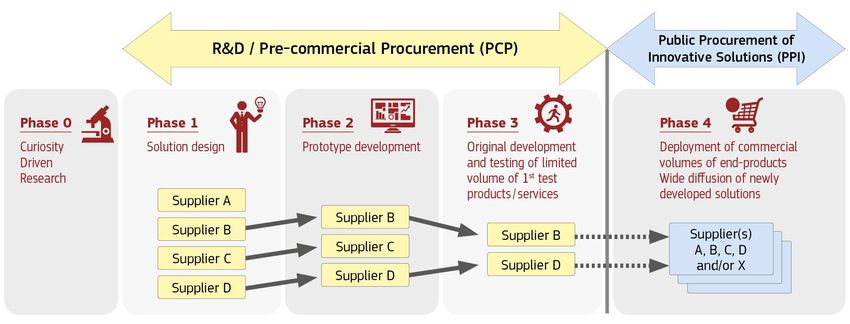
The EC supports PCP & PPI, but…
this ppt is about PCPs only

 •     PCP to steer the development of solutions to concrete public sector
       needs, while comparing/validating alternative solution approaches from
       various vendors + possibly first deployment (non-commercial volumes)
 •     PPI to act as early adopter / first buyer of commercial volumes of
       innovative end-solutions newly arriving on the market

     The following slides only provide information about results of PCPs (not PPIs)
Ongoing and completed PCP procurements

• 12 PCPs have completed (phase 3 finished)
  -   SILVER (Robotics for elderly care)
  -   THALEA (Telemedicine for intensive care unit patients at increased risk)
  -   SMART@FIRE (Smart protective equipment for fire fighters)
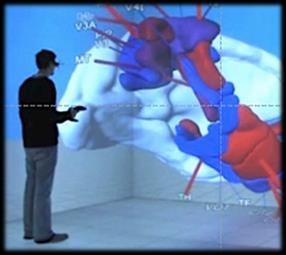
  -   Human Brain Project (High Performance Computing for brain simulation)
  -   DECIPHER (Cross-border mobile health services)

                                                                                                    finished
  -   V-CON (Virtual construction of road infrastructure)

                                                                                                      PCP
  -   CHARM (Advanced Traffic management and prediction)
  -   PRACE 3IP (Energy efficient supercomputing)
  -   PREFORMA (Long term digital preservation)
  -   IMAILE (Personalised e-learning solutions)
  -   NYMPHA-MD (Mental care for bipolar disorders)
  -   HNSciCloud (Science cloud platform for research community)

• 10 PCPs are ongoing (are procuring)

                                                                                                    ongoing
                                                                                                     PCP
  -   QUACO (Quadrupole magnets for large hadron collider)
  -   MAGIC (Post stroke recovery)

  HBP PCP doesn't result from a PCP call. HBP decided itself to implement a PCP in the HBP research project.
  Cloud for Europe (Cloud computing for govs) was only partially implemented (up to mid phase 2)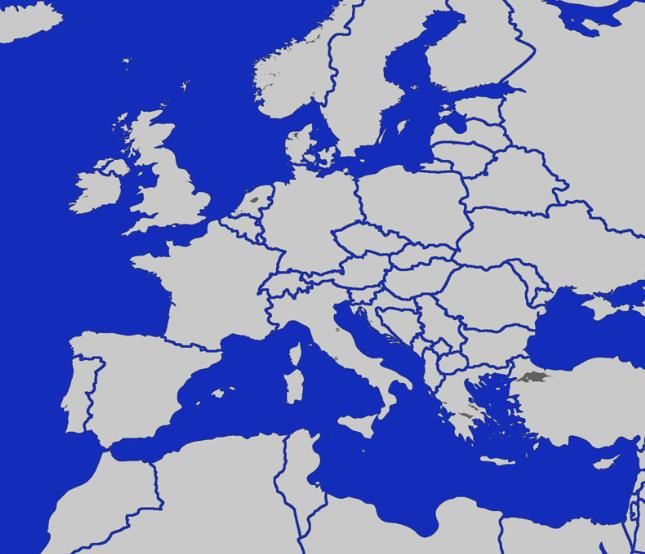
-   SELECT4Cities (Internet of Everything platform for Cities)
   -   RELIEF (Pain self-management)
   -   NIGHTINGALE (Wearable sensors for safer patient monitoring/care)

                                                                               ongoing
   -   PROEMPOWER (Diabetes patient empowerment)

                                                                                PCP
   -   LIVE INCITE (Lifestyle interventions in perioperative medicine)
   -   MARINE-EO (Marine earth observation)
   -   FABULOS (Automated bus lanes)
   -   SMART.MET (Smart water metering)

• 7 buyers groups are in open market consultation
  (preparing the PCP) or in the tendering phase of the PCP
   -   ANTISUPERBUGS (detection/reduction of superbugs and other infections)

                                                                               Preparation
   -   STARS (Health stress reduction)

                                                                                  PCP in
   -   POSIDON (Polluted site decontamination)
   -   BROADWAY (Interoperable mobile broadband for public safety)
   -   SHUTTLE (Toolkit for trace analysis by forensic laboratories)
   -   CIVILnEXT (Next gen information systems for EU external policies)
   -   ARCHIVER (Archiving and preservation for research environments)
Procurers involved

                          in
                     cooperation
                         with
Procurers involved

Procurers involved
Procurers involved
Procurers involved
Procurers involved
Achieved market engagement
(ongoing + completed PCPs)

• Open Market Consultations
   -   Involving between 70 to 300 companies and researchers per PCP
   -   Broaching the views of companies and researchers from all over Europe and
       beyond in preparation of the upcoming PCP procurement

• Call for Tenders
   -   Tender docs downloaded typically between 50 to 300 times
   -   Nr of offers received typically between 10-50 (4-7 for specialised/low budget PCPs)
   -   Offers received from all over Europe and beyond

• Contract award
   -   110 procurers cooperating/buying jointly across the different buyers groups
   -   151 contracts awarded in total
   -   Winning bidders involving 312 companies and 56 universities/research centra
   -   Total value of the PCP procurements: between € 450.000 and € 9.000.000
        -   Contract values for phase 1: between € 15.000 and € 180.000 (per contractor)
        -   Contract values for phase 2: between € 20.000 and € 900.000 (per contractor)
        -   Contract values for phase 3: between € 65.000 and € 2.700.000 (per contractor)
Geographic location winning bidders & procurers
(completed+ongoing PCPs)
(1)
(6)
(1) (8)
(10) (9)
(11) (1) (2)
(1)
(5)
Companies (7)
(1)
in winning bids
(1) (11) (9)(7) (2)
(nr/country) (1)
(1) (7) (25)
(30) (8) (2)
Universities/ (2) (10 (1)
(15) (1) (4) (1)
research centra ) (3)
(26) (2)
in winning bids (8) (13) (1)
(4)
(11) (3) (1)
(nr/country) (2) (2)
(1)
Procurers (10) (3)
(51)
(nr/country) (13) (27)
(9) (3) (3)
(5) (56) (8) (1)
(1) (4)
(3)
(1)Companies & univs / research centra involved
Companies & univs / research centra involved
Companies & univs / research centra involved
Companies & univs / research centra involved
Companies & univs / research centra involved
Immediate impacts of EU funded PCPs
(ongoing + completed PCPs)

• Opening a route-to-market for new players/SMEs
   -   61,5% of the total value of all PCP contracts goes directly to SMEs
   -   Compared to 29% average in public procurements across Europe
   Mostly small young SMEs: 31% below 10 people, 48% below 50 people, 60% less than 10 years old

• Helping also larger market players bring products to the market
   -   16% of PCP contracts won by large companies as single bidder
   -   19% of PCP contracts won by consortia of larger companies plus SMEs
   -   73,5% of the PCP contracts won by SMEs (SMEs alone, or as lead bidder)

• Relevance to universities & bringing scientific results to market
   -   30% of winning contracts have also a university/R&D center partner in consortium
   -   Winning SMEs are also often university start-ups

• Stimulating cross-border company growth
   -   33,1% of contracts are won by bidders that are not from a country of any of the
       procurers in the buyers group (e.g. DE company working for UK+NL procurers)
   -   Compared to 1,7% average in public procurements across Europe

• Creating growth and jobs in Europe
   – 99,5% of contractors do 100% of R&D activities for the PCP in Europe
        (2 have committed to do minimum 68% resp. 85% of R&D in Europe)
Lessons learnt
(ongoing + completed PCPs)
• Separating PCP (R&D) from PPI (commercial volume deployment)
and using a phased PCP approach
- Opens the market for small players/SMEs (smaller gradually growing contract sizes)
- Enables procurers to steer industry R&D to meet their needs, achieve desired
quality and efficiency improvements in public services and reduce vendor lock-in
- Stimulates cooperation with universities and larger companies
- Enables use of place of performance clauses that create growth/jobs in Europe
• Joint cross-border PCP procurement
– Stimulates cross-border company growth
– Facilitates the creation of more open standards based interoperable solutions
• Leaving IPR ownership rights with contractors
– Reduces the cost / the R&D risk for procurers with 50%
– Encourages wider commercialisation of solutions by vendors
• Using a place of performance condition in PCPs
– Can effectively stimulate growth and job creation in EuropeLONGER TERM IMPACTS
OF COMPLETED PCPs
Results of survey with companies and procurers of
all completed FP7 funded PCPs
94% of the 66 contractors and 98% of the 46 procurers from the 11 completed FP7 PCPs
replied to the e-mail & phone survey conducted by DG CNECT in April-May 2019Timeline of the completed FP7 PCP procurements
Ph1 to Ph3 contracting
SILVER
DECIPHER
CHARM
PRACE3IP
HBP
SMART@FIRE
PREFORMA
V-CON
THALEA
NYMPHA-MD
IMAILE
2014 2015 2016 2017 2018 2019
Note that 3 PCPs have only finished 1 year ago, 3 finished 2 years ago, 5 finished 2,5 years ago
Several companies and procurers are therefore still busy commercialising and preparing deployment.
Impacts reported below are therefore the impacts achieved ‘so far’. More is still to come in the future.Longer term impacts of completed PCPs ‘so far’
Impacts for procurers
• Improving the quality and efficiency of public services
– All completed PCPs delivered solutions that improve quality and / or efficiency
– 60% of procurers use PCP also to obtain more open, interoperable solutions
• Deployment of solutions by procurers in the project
– Procurers from 55% of completed FP7 PCPs have already deployed solutions
developed during the PCP (SILVER, PRACE3IP, HBP, PREFORMA, THALEA, IMAILE)
• Open source solutions deployed without needing procurement: PREFORMA, HBP (part open source)
• Solutions procured as part of the PCP: PRACE3IP, THALEA, IMAILE
• Solutions procured after the PCP: SILVER, HBP
– Procurers from 45% of completed FP7 PCPs have not procured yet
• Delay in other deployments that need to be finished first before buying the PCP solutions: CHARM
• Slow standardisation is delaying deployment: V-CON
• Product commercialisation/certification/clinical trials not finished yet: SMART@FIRE, NYMPHA-MD
• Market situation / deployment EPSOS interoperable health records delayed: DECIPHER
• Wider deployment of solutions by other procurers on the market
– Procurers from 27% of completed FP7 PCPs are already preparing additional larger
scale procurements with enlarged buyer groups (THALEA, PRACE3IP, IMAILE)
Typical hurdles to scale up further in some areas: slow standardisation, certification,
regulation, unclear health insurance/reimbursement rules, fragmented market in EULonger term impacts of completed PCPs ‘so far’
Impacts for companies
• Commercialisation of solutions (product available on the market)
– 86% of Ph3 contractors, 75% of Ph2 contractors and 30% of Ph1 contractors have
already commercialised (part of) their solutions
– 11% of contractors (across Ph1/2/3) still expect to commercialise within 2 years
– 17% of contractors do not plan commercialisation of solutions
• Business growth
– 50% of contractors already increased their revenues thanks to the PCP solution
– 24,2% of start-ups have secured equity investment since the PCP
– 18% of start-ups concluded partnerships with large corporates
– ~1 SME per PCP attracted additional financing from the EU SME instrument
• Either before the PCP to verify the feasibility of their idea and setup their business for the PCP
• Or during/after the PCP, for wider marketing activities and/or to diversify also into other markets
• Exit strategy (62,8% of companies in the PCPs are Start-Ups)
– 12,1% of start-ups have undergone a merger or acquisition
– 3% of start-ups have done an IPO since end of the PCP (1 on NASDAQ)
Typical additional support that SMEs/start-ups are looking for, to scale up further:
Introduction to investors, corporates, international distributors, budget for more trials/
demonstrations with new customers and marketing of solutions (e.g. specialised fairs)€171,5M 66
Additional funds
PCP contracts 33
awarded Contractors
leveraged
(VC & grants) increased revenues
57
IPRs protected
€37,4M (patents, TM,©)
Funds
invested
40
Products on
20%-30% the market
Cost savings and
11 completed
higher quality FP7 funded PCPs
public services
20
9 Solutions
exported
Solutions exported
outside EULessons learnt – Recommendations for the future
• Feedback from procurers
– More regular and higher budget open PCP calls, synchronised with prior CSA calls
– Allow for budget, time and task flexibility in project implementation
– H2020 template tender docs: great help, add more guidance (e.g. on IPR clauses)
– Simplify? (so much work to evaluate tons of offers, work with many suppliers etc.)
• Feedback from companies
– Don’t make big changes to the PCP instrument: it works well. More PCPs, please!
– Don’t compromise on the EU wide transparent, competitive approach
– Keep EU reviews on the tender docs: delivers higher quality, more open tenders
– Don’t combine the purchase of R&D and wide scale deployment in one procurement
(most innovative start-ups/SMEs would otherwise not have won contracts, it would
crowd out R&D investments and foreclose competition also for larger companies)
– Give start-ups and SMEs in PCPs priority access to EU SME support instruments
• Common feedback
– Simply and accelerate without changing the core features of the PCP instrument:
simplify EC IT tool for reporting/payments, fast track PCPs with combined ph2/3,
make more visible that PCP can include 1st deployment (not commercial volumes)
– More capacity building on PCP around Europe needed for procurers and companies
– Create a European home market where we can scale-up fast (remove regulatory
market fragmentation, speed up certification, standardisation… alongside the PCP)Telemedicine for ICU-patients at increased risk
THALEA: benefits for procurers
PCP: procured the R&D, testing PPI: larger scale wider
and deployment (for 4 years) of deployment of final
the resulting pre-series systems certified systems
Certification of solutions
June 2015 -> Nov 2016 Scaling up development Call for tenders
5 suppliers (ph 1) -> 3 suppliers (ph 3) SMEs grow their business Expected by summer 2019
Enlarged buyers group
Procurers PCP: Univ Clinic Aachen (DE), Univ Hospital Maastricht (NL), Hospital East Limburg (BE),
Parc Tauli Sabadell University Hospital (ES), Northern Ostrobothnia Hospital District (FI)
Enlarged buyers group for the PPI: includes also Austrian procurers.
Benefits for procurers and intensive care patients:
Interoperable (lower cost) platform for tele-detection / tele-care of ICU-patients at increased risk
Significantly improved risk-detection, earlier diagnosis and higher efficiency in the ICU, enabling
a reduction in sepsis mortality by 25% and in length of hospital stay by 20-50%.
Faster time to market: From research to deployed systems in 1,5 year time. The three pre-series
systems delivered during the PCP by Dendrite Clinical Systems (UK/IE), New Compliance (NL) and
Philips (DE) all met the procurers' needs. They are deployed and in use in the hospitals since 2016.Telemedicine for ICU-patients at increased risk
THALEA: benefits for companies
THALEA enabled companies to grow their business cross-border and bring disruptive innovations to
the market: Telemedicine center with big data analysis, self-learning and prediction capabilities.
Nov 2016 (end of PCP) Certification as medical device (2018)
Today
Company setup office in the US (12/2016) OR Cockpit Solution
Distributor agreements (2017) already installed in 25
Integration with hospital platforms of Dutch and 2 US hospitals.
SME, NL big corporates (e.g. GE, Johnson, Philips..) Distributing also in BE
ERDF funded safety demonstration (2018)
Finalising VC investment round (2019)
ICView Solution
Setup new company ICView specifically for running as a pilot system
commercialising the solution in Europe, in several hospitals
Middle East, Russia (2017)
SME, UK SME, IE
eICU Solution
deployed in several clinics.
Further solution enhancements in Commercialisation of
cooperation with hospitals (2017-19) TeleICU extensions for
Marketing ongoing critical care ongoing now
DERobotics for independent living of elderly
SILVER: benefits for procurers
INDIVIDUAL
PURCHASES by
public procurers
(DK,SE), elderly
persons and elderly
PCP: procured the development care organisations
and testing in 5 countries (worldwide)
Certification of solutions
Oct 2013 -> Aug 2016 Scaling up production End 2016 - Present
7 suppliers (ph 1) -> 3 suppliers (ph 2-3) SMEs grow their business
Procurers PCP: City of Odense and region of Southern Denmark (Denmark), city of Västerås (Sweden),
city of Vantaa and Oulu (Finland), city of Stockport (UK), city of Eindhoven (Netherlands)
Deployment: Only SE and DK cities are responsible for buying elderly care equipment. NL, UK, FI
cities promoted SILVER to elderly (wide deployment depends on sickness reimbursement schemes).
Benefits for procurers and elderly people:
Concrete contribution to the goal to market solutions that enable to care by 2020 with same
amount of staff for 10% more elderly people living a higher quality independent life at home
Choice between 5 new products: 5 out of 7 contractors are successfully commercialising their
solutions: Robot Care Systems (NL), Bioservo (SE), Camanio (SE), Robosoft (FR), Marsibionics (ES)
Several hundreds of the robotics solutions resulting from SILVER have already been sold and
deployed in the SILVER countries and beyond. Elderly users are very happy.Robotics for independent living of elderly
SILVER: benefits for companies
SILVER triggered the creation of new start-ups and helped existing startups grow their business.
Certifications as medical device (2017-18)
Aug 2016 (end of PCP) Today
SME ph1 grant (2012) setup the SME ~32 LEA robots (walking
Lerovis merged into RCS (2014) and other assistance) sold
Raised equity investment (2016) in NL, UK, DE, Scandinavia
SME, NL
Agreements with NASA, Airbus, GM, GE,… ~ 245 i-Hands (smart
3 equity investment rounds (‘13,’14,’16) wearable giving muscular
NASDAQ listed (2017) support) sold worldwide to
SME ph2 grant (2018) wider commercialisation industrial and health market
SME, SE
Equity investment round (2013) ~ 50 Kompaï robots
Spun out Kompaï robotics company (2016) (walking+other assistance)
Partnering with AGFA healthcare installed in several nursing
SME, FR SME, FR
homes + hospitals
Merger and renamed Camanio Care (2016) ~350 Mealtime devices
Stocklisted on Spotlight (2017) (eating assistance) sold
Office in US, distributors in China, AU, EU worldwide
SME, SE SME, SE
ECHORD ++ support Wearable bionic
Agreement with ESCRIBANO (2016) exoskeleton (muscular
SME, ES SME ph2 grant (2018) wider commercialisation assistance) in trials now
Clinical trials (ES) & crowdfunding ongoingLong term digital preservation
PREFORMA: benefits for procurers
INDIVIDUAL DOWNLOADS
of the open source
solutions by memory
institutions from around
PCP: procured the R&D and the world (incl. from
tested the solutions in 8 countries Publication and continued PREFORMA countries)
June 2014 -> Dec 2017 extension and updating
Beginning 2018 - Present
6 suppliers (ph 1) -> 3 suppliers (ph 3) of the open source code
Procurers PCP: National Archives - Riksarkivet (SE), Sound and Image - Beeld en Geluid (NL),
Royal Institute for the art patrimonium - KIK (BE), Greek Film Center (EL), Local Government
Management Agency - LGMA (IE), Foundation Prussian Cultural Heritage (DE), Town Hall Girona
(ES), Ministry of Culture - EVKM (EE), National Library - Kungliga (SE)
Benefits for procurers and citizens:
Goal achieved to market open source products that enable reliable assessment and
correction of the increasing amount of electronic collections to be archived
3 Conformance checkers for the 3 most common file formats (PDF, TIFF, AV)
successfully marketed by: MediaArea.net (FR) and Open Preservation Foundation (UK)
The new solutions are saving time and money, reducing the error rate and improving
the quality of digital preservationLong term digital preservation
PREFORMA: benefits for providers
PREFORMA helped companies and foundations to bring to the market reliable, standardised
conformance checker tools and to raise the interest of the community to keep on investing in
extending the high quality tools
Within only 1,5 years, the open source tools have already been downloaded by memory
institutions from over 150 countries: 60% from EU, 30% from US and 10% from the rest of the
world. The number of downloads is still growing.
End 2017 (end of PCP) Today
MediaConch
New release published in 2018 and 2019 (for Audio Visual files)
Contributing further to standardisation 15000 downloads and still
SME, FR to improve for video format increasing
DPF (for TIFF format)
Blueroom licensed further development VeraPDF (for PDF format)
Foundation, UK and commercialisation of DPF to OPF 32000 downloads and
New release published in 2018 and 2019 still increasing
DPF license Nr of employees increased with 60%
SME, ESPersonalised e-learning
IMAILE: benefits for procurers
Solutions already deployed by
PCP: procured the R&D, tested IMAILE partners. PPI under
and deployed the solutions preparation (with larger buyers
group) for wider deployment
October 2015 -> September 2017 Enlarging buyers group
7 suppliers (ph 1) -> 2 suppliers (ph 3) SMEs grow their business September 2017 - Present
and scale up development
Procurers: Halmstad Commune (SE), Alexandersson University Institute Varberg (SE), University of
Magdeburg (DE), Municipality of Konnevesi (FI), City Council Viladecans (ES).
Benefits for procurers and children/teachers:
Goal achieved to obtain solutions that offer a more personalised, gaming-like learning experience
to children in primary and secondary schools. Two solutions continuously analyze and interactively
motivate students to improve their learning behaviour with the help of artificial intelligence
Result: Students 55-75% more motivated and successful in learning mathematics, technology and
science topics and reduction in the teachers' planning and assessment time by 30-40%
Solutions usable on any device (compatible with Bring Your Own Device aproach)
4 suppliers commercialized their solution: Almerin (FI), Edebe (ES), Digiloket (NL), Finpeda (FI)Personalised e-learning
IMAILE: benefits for companies
IMAILE triggered the creation of new start-ups and helped existing startups grow their business.
Sept 2017 (end of PCP) Today
AMIGO
Mydocumenta raised VC investment Deployed in Konnevesi
Doing marketing to expand to other markets (FI), Saxony-Anhalt (DE)
and Villadecans (ES)
Large comp + SME, ES
schools
Attracted 2 VC investment rounds (2017, 2018) YIPTREE
Distribution partnership with OPPI
Deployed in Cities (FI)
SME, FI Moving international in 2019
Tampere and Jyväskylä
Diversified also into corporate learning market
Attracted additional angel investment (2018) Schoolpoort.nl
New release coming for more personal learning 40 schools signed up
SME, NL experience and reducing teacher admin more in the pipeline
Expanding to more schools across EU in 2019
Working on further releases to improve the Virtual 3D STE(A)M Lab
virtual school experience Piloted by city of Turku
Expanded trainings in India, Asia and China
SME, FIEnergy Efficient High Performance Computing
PRACE3IP: benefits for procurers
PRACE 3IP PCP
PCP: procured the R&D, tested PPI: €73M procurement ongoing.
and started using the prototypes Vendors from PRACE 3IP PCP
have already won contracts.
July 2014 -> February 2018 Preparing larger
5 suppliers (ph 1) -> 3 suppliers (ph 3) scale deployment Today
Procurers PCP: CINECA (IT), Juelich Supercomputing Center (DE), Genci (FR), EPCC (UK), CSC (FI)
Procurers PPI: CINECA (IT), Juelich Supercomputing Center (DE), Genci (FR), CEA (FR), BSC (ES)
Benefits for procurers and other HPC end-users:
The PCP accelerated key R&D activities on high energy efficiency supercomputing and delivered
three pilot solutions that use different technology approaches that improve the state-of-the art of
energy efficient high performance computing: Bull/Atos (FR), E4 Engineering (IT), Maxeler (UK)
The results have clear potential for a real impact on future HPC procurements (e.g. PPI4HPC,
ICEI/FENIX, the new EUROHPC Joint Undertaking) and on the larger European HPC community
The PCP enabled supercomputing centers to pilot for the first time joint procurement and joint
ownership of innovative HPC prototypes. This paved the way for the creation of a Joint
Undertaking (EUROHPC) that will invest over 1Bn EURO on joint HPC procurement in coming yearsEnergy Efficient High Performance Computing
PRACE3IP: benefits for companies
PRACE3IP helped both large companies and SMEs accelerate the energy efficiency of HPC solutions
February 2018 (end of PCP) Today
Added the power measurement innovation Power measurement
to its cluster software product portfolio. framework
Commercialised the solution. Already sold to several
Large comp, FR
customers
Added the power monitoring / capping and OP206 Gold
SLURM innovation to its product portfolio. Commercialisation
Working on an updated improved version. ongoing
Commercialising in partnership with IBM.
SME, IT
Commercialised as a service on AWS cloud
AWS cloud and Conjugate
and separately, the Conjugate Gradient kernel. Gradient kernel solution
Commercialising in partnership with Xilinx. Commercialisation
SME, UK ongoingInteractive HPC for Human Brain research
HBP PCP: benefits for procurers
No need for PPI for open
PCP: procured R&D and source part of solutions.
testing. Pilot solutions €23M PPI for wider
also deployed at the end deployment of other part
Preparing larger is ongoing (FENIX/ICEI)
July 2014 -> End 2016 scale deployment
3 suppliers (ph 1) -> 2 suppliers (ph 3) Today
Buyers HBP PCP: Juelich Supercomputing Center (DE) in collaboration with Swiss National Computing Center
Buyers FENIX/ICEI PPI: Juelich Supercomp. Center (DE), ETHZ/CSCS (CH), BSC (ES), CEA (FR), CINECA (IT)
Benefits for procurers and other HPC end-users:
The Human Brain Project PCP delivered innovations for specific High Performance Computing
requirements for brain simulation, including interactive supercomputing and large memory capacity.
Two vendors successfully completed the final phase of the PCP: Cray and IBM / NVIDIA consortium.
Both performed all R&D in Europe and deployed pilot systems based on their solutions, which are now
deployed and widely used for brain research.
Procurements for wider deployment across an enlarged buyers group are under the way e.g. in the
ongoing FENIX / ICEI procurementsInteractive HPC for Human Brain research
HBP PCP: benefits for companies
HBP accelerated the developed of interactive computing and large memory capabilities for HPC.
It opened up business opportunities for companies to partner with other HPC players on the market.
End 2016 (end of PCP) Today
JURON
CH The PCP strengthened the cooperation Interactive in-situ HPC
between NVIDIA and IBM visualisation with
Together they are successfully commercialising NVIDIA graphical
DE processing unit
and rolling-out the solution
accelerators in IBM
Power Processors
The core technology developed in the PCP JULIA
has grown further and split into two strands KNL-based compute
of engineering (for which Cray attracted also nodes. Intel processors.
DE further funding) that will likely result in products Omni-path 100 Gbps
networkIn their own words
In their own words
In their own words
Help us spread the message

    There are still plenty of public procurers out there that don't know yet
    about this type of EU support for innovation procurement!
    Who can help promote the Horizon 2020 support to help public procurers carry
    out PCPs/PPIs across the EU Member States and Associated Countries?

    There are still plenty of companies out there that don't know yet about
    these innovation procurement sales opportunities!
    Who can help promote upcoming open market consultations and call for tenders
    in for PCP/PPI procurements in their countries?

                                  More info - Overview EU funded innovation procurements
                           https://ec.europa.eu/digital-single-market/en/innovation-procurement
                                       http://ec.europa.eu/digital-agenda/en/eu-funded-projects
HOW DO THE IMPACTS OF EU FUNDED JOINT
CROSS-BORDER PCPs COMPARE TO THOSE OF
NATIONAL PCPs AND OTHER INNOVATION
PROCUREMENT APPROACHESComparing all TED/EU wide published PCP versus innovation partnership procurements
Comparing all TED/EU wide published
EU funded joint PCPs versus national PCPs
Complementarity / split between PCP and PPI
and phased approach            enables to…

• Get 20% better value for money products(US defense data)
• Use PPI also if no(more) R&D needed for procurement need
• Use a small budget PCP to de-risk a large budget PPI
      •   PPI spec can be 'completely rephrased' benefiting from PCP lessons learnt

• Can use conditions that encourage job creation 'in Europe'
      •   Because PCP falls outside WTO rules

• Prevent foreclosing of competition & crowding out of
  private investment in R&D
      •   Companies that are not financing their R&D via procurement/PCP (e.g. via grants,
          own company resources) can still bid for deployment contracts/PPIs

• Facilitates access to procurement market for SMEs*
      •   Gradually increasing contract sizes, tasks, required manpower
      •   Stringent financial guarantee/qualification requirements:'no' in PCP,'ltd' in PPI

All the above is not the case if R&D is procured as part of a large deployment contract
(e.g. innovation partnerships)                     (more on differences PCP-PPI/innovation partnerships: eafip toolkit)
PCP and PPI: legal framework
PCP and PPI are NOT new public procurement procedures. They are approaches
to use existing public tendering mechanisms in such a way to optimise value for
money for procurers and to optimise growth opportunities for suppliers
PCP PPI
• Open tendering • Early announcement (via PIN) of the
• R&D services procurement (possibility 'intention' to buy a critical mass of
to buy also the end-product as part of solutions 'if' the market can deliver
PCP or with negotiated procedure solutions that match predefined
without publication after the PCP) specific requirements by a set date
• IPR sharing between supplier (keeps • Conformance testing (optional) to
IPR ownership) and procurer (right to verify if market can meet needs
use/license) • Tendering: use existing procedure
• Multiple sourcing (# suppliers) e.g. open, negotiated procedure,
• Phases (FW contract for the PCP + competitive dialogue.
specific contracts/phase) • Get better value for money and
• Job creation (majority of R&D - and don’t block further innovation:
possibly also significant part of later Where possible, leave IPR ownership
production - done in EU Member States with suppliers alike in PCPs.
or associated countries)
Exempted from EU public Subject to applicable provisions
procurement directives, WTO EU public proc. directives, WTOYou can also read


