The Presidency South Africa - Government Communication and ...
←
→
Page content transcription
If your browser does not render page correctly, please read the page content below
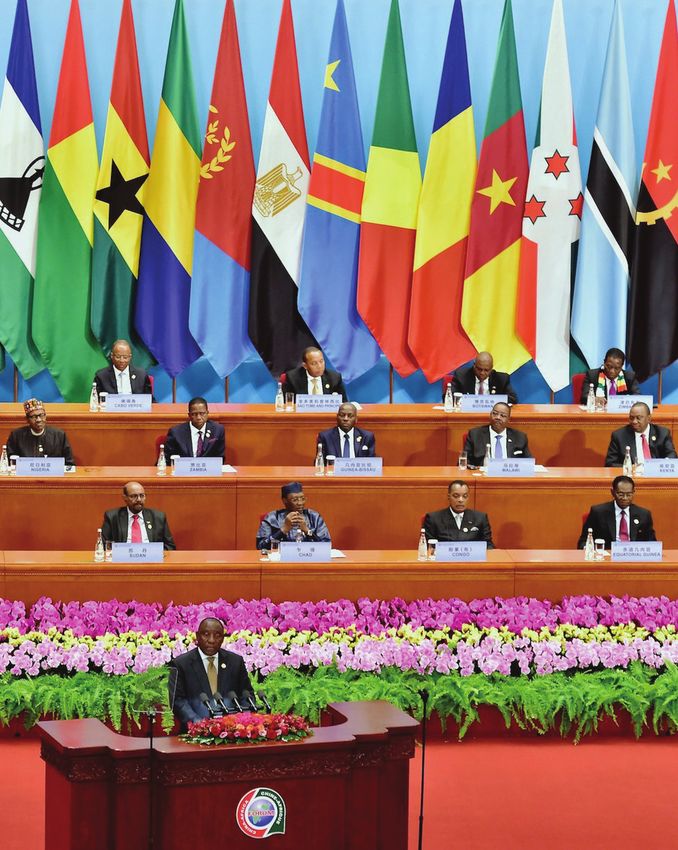
OFFICIAL GUIDE TO

                                      South Africa
                                                         2018/19
                                              The
                                              Presidency

31   Official Guide to South Africa 2018/19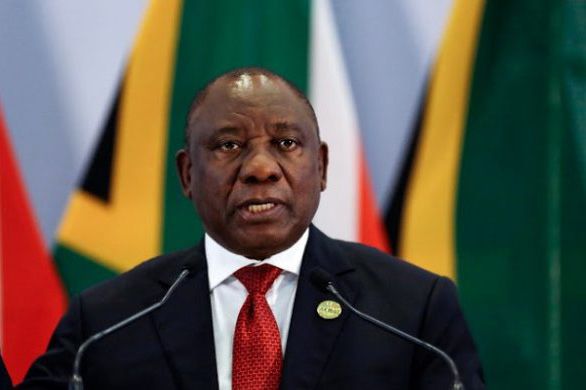
The Presidency       32

As the executive manager of government, The Presidency is
at the apex of the system of government in the Republic of
South Africa. The Presidency is situated in the Union Buildings,
Pretoria, and has another subsidiary office in Tuynhuys, Cape
Town.
   The mandate of The Presidency is to ensure that the
President is able to execute constitutional responsibilities in
leading and galvanising the whole of government and society
to implement the electoral mandate.
   Chapter 1 of the National Development Plan (NDP) sets
out a vision for increased government integration towards
developing policy in a complex domestic and international
environment.
   This is given expression by Outcome 11 (create a better
South Africa, a better Africa and a better world) and Outcome
12 (an efficient, effective and development-oriented public
service) of government’s 2014-2019 Medium Term Strategic
Framework (MTSF), with which the work of The Presidency
is closely aligned.
   Following the reconfiguration of government departments in
June 2019, the Minister in The Presidency is now responsible
for the following organisations:
• Department of Planning, Monitoring and Evaluation (DPME)
• Statistics South Africa (Stats SA);
• Government Communication and Information System
   (GCIS);
• Media Development and Diversity Agency (MDDA); and
• Brand South Africa (Brand SA).
The Minister in The Presidency for Women, Youth and Persons
with Disabilities is responsible for the:
• Department of Women, Youth and Persons with Disabilities
   (DWYPD); and
• National Youth Development Agency (NYDA).

Promoting nation-building and social
cohesion
The Presidency continues to provide support to initiatives that
promote nation-building and social cohesion.
  The Deputy President continues to lead the Moral
Regeneration Movement,          a civil-society organisation
mandated to facilitate and coordinate processes and initiatives
aimed at promoting collective activism on issues of moral
renewal.
As part of delegated responsibilities, the Deputy President
     also leads the government’s efforts to fast-track land reform.
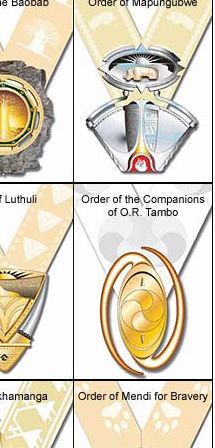
        The President leads initiatives on national days, national
     orders and special events, and use them as platforms to
     promote nation-building and social cohesion.

     Advancing South Africa’s interests
     The fundamental role of The Presidency in the international
     arena is to assist the President and Deputy President in
     advancing South Africa’s interests in the global community.
        It provides strategic and administrative support to unilateral,
     bilateral and multilateral meetings and summits, and state
     visits; and assists in fulfilling South Africa’s obligations to the
     United Nations, the Brazil-Russia-India-China-South Africa
     group of countries, Group of 20, African Union, Southern
     African Development Community, and regional and continental
     peacekeeping processes.

     Promoting an integrated approach to
     governance
     The Presidency endeavours to improve coordination among
     all government departments to ensure that policies are
     implemented in line with national priorities, that executive
     authorities and departments are better prepared to engage and
     understand the Cabinet system, and that Cabinet members
     take collective decisions and responsibilities.
        This requires the department to provide training or briefing
     sessions on Cabinet decision-making processes for relevant
     officials in ministerial offices and offices of directors-general.
        Executive orientation sessions are also provided to Cabinet
     members and their staff, as and when required.

     Operationalising the e-Cabinet system
     The e-Cabinet system is a tool used to streamline Cabinet’s
     decision-making processes, ensuring that an integrated
     approach to governance is adopted.
        The system enables members of the Executive, heads of
     department and executive support staff to share, manage
     and store information securely, and provides a platform for
     collaboration among relevant support staff.
        The system, which has been designed, developed, installed,
     piloted and made available to all Cabinet members, as well
     as certain ministerial and Cabinet secretariat personnel via

33    Official Guide to South Africa 2018/19
The Presidency 34 an online portal, was expected to be operationalised after receiving security certification in 2018/19. Department of Planning, Monitoring and Evaluation The DPME is mandated to: • facilitate the implementation of the NDP through the development of sectorspecific and outcome-specific medium-term plans and delivery agreements, and monitor and evaluate the implementation of these plans; • ensure the alignment of departmental strategic and annual plans and budget allocations with the MTSF; • facilitate socioeconomic impact assessments of legislation and regulations; • monitor the performance of individual national and provincial government departments and municipalities, and related improvement plans, and facilitate targeted intervention programmes; • monitor frontline service delivery and manage the presidential hotline; • develop and implement the annual national evaluations plan and support the national evaluations system; promote good planning, monitoring and evaluation practices in government; Chapter 13 of the NDP sets out a vision towards building a capable and developmental state. This vision is supported by Outcome 12 (an efficient, effective and development-oriented public service) of government’s 2014-2019 MTSF, with which the work of the DPME is directly aligned. The department provides support for the implementation of the NDP and government’s 2019-2024 MTSF by monitoring and improving the capacity of state institutions. This will be achieved through the development and use of appropriate tools, such as the Management Performance Assessment Tool and the Local Government Management Improvement Model, that generate monitoring reports regarding the state of compliance with management practices in the three spheres of government. Statistics South Africa Stats SA is responsible for the production and coordination of official and other statistics on changing dynamics in the economy, society and the environment as the country moves
towards the realisation of the NDPs’s vision of a state that
     plays a developmental and transformative role in the lives of
     its people.
        The department supports Outcome 4 (decent employment
     through inclusive growth) and Outcome 8 (sustainable
     human settlements and improved quality of household life) of
     government’s 2014-2019 MTSF by contributing to enhanced
     planning, policy responsiveness and effectiveness, and
     promoting evidence-based decision-making.
        Stats SA publishes more than 200 statistical releases
     each year, and compiles statistical research that measures
     development against the NDP and government’s 2014-2019
     MTSF, in conjunction with global and continental agendas for
     sustainable development.
        The coordination of statistics between organs of state
     is crucial in achieving consistency and efficiency in the
     production of official statistics.
        In recognising this need, the department began the process
     of revising statistical legislation by holding stakeholder
     consultations between 2015/16 and 2018/19, with the aim of
     driving statistical reform.
        Particular attention was given to coordination and
     institutional arrangements between organs of state, statistical
     geography, the data revolution, and a state-wide statistical
     service. Based on the outcomes of stakeholder consultations,
     a draft Statistics Amendment Bill was expected to be tabled in
     Parliament in 2019/20.
        In addition, the department has compiled an integrated
     statistical indicator framework to guide and coordinate the
     production of official and other statistical data in the national
     statistics system, which is set to be rolled out over the Medium
     Term Expenditure Framework (MTEF) period.
        To maintain an adequate supply of statistical information
     over the MTEF period, the department will continue to focus
     on planning for South Africa’s next census, which is scheduled
     for 2021.
        As part of the planning process, the design of statistical
     tools and instruments, as well as the development of a
     georeferenced spatial information frame, was scheduled for
     2019/20.
        Also intended for adoption in Census 2021, and as part of
     the department’s broader focus on modernisation, is the use
     of digital data collection methods such as computer-assisted
     telephone and personal interviews, and online interviews.

35   Official Guide to South Africa 2018/19
The Presidency 36
Activities associated with Census 2021 include a trial run
and spatial planning in 2019/20, piloting in 2020/21 and data
collection in 2021/22.
With effect from June 2019, Stats SA changed from using
the drum logo to using the Coat of Arms as its logo.
Government Communication and Information
System
The mandate of the GCIS is derived from Section 195(g) of
the Constitution of the Republic of South Africa of 1996, which
stipulates that the public should be provided with information
that is timely, accurate and accessible.
This is in support of the constitutional principles of freedom
of expression, transparency and openness of government. The
department is responsible for providing strategic leadership
and coordinating government communication to ensure
that the public is informed and have access to government
programmes and policies that benefit them.
The NDP emphasises the need to unite all South Africans
around a common goal, ensure citizens are active in their own
development, and build a capable and developmental state.
This is given expression by Outcome 12 (an efficient,
effective and development-oriented public service) and
Outcome 14 (nation-building and social cohesion) of
government’s 2014-2019 MTSF, with which the work of the
GCIS is directly aligned.
To support the realisation of these outcomes, the
department will continue to focus on providing and facilitating
strategic government communication and facilitating active
citizen participation.
The department provides information about government
policies, plans, programmes and activities to the public.
Among other things, the GCIS is responsible for maintaining
government’s website (www.gov.za), which provides general
information about government.
Among other products, the GCIS publishes the South Africa
Yearbook, Official Guide to South Africa (formerly Pocket
Guide to South Africa), Vuk’uzenzele newspaper, Public
Sector Manager magazine and My District Today newsletter.
It is also responsible for the South African Government News
Agency, SAnews.gov.za.
The Thusong Service Centre Programme enables
communities to access government information and services.Thusong Service Centres are one-stop centres providing
integrated services and information from government and
othercivil society groups, to communities close to where they
live as part of a comprehensive strategy to better their lives.
They also also enable communities to access opportunities
offered by other civil-society groups such as businesses,
non-governmental organisations and parastatals.
The GCIS also gathers public opinion, research and
analysis of media coverage to understand the communications
environment and to inform government messages.
The department provides media bulk-buying services, which
are designed to reduce the cost to government on advertising;
facilitate a rapid response mechanism to hasten government’s
response to issues arising in the media; and provide media
production services to support other government departments.
Media Development and Diversity Agency
The MDDA promotes media development and diversity to
ensure that all citizens can access information in a language
of their choice, and to transform media access, ownership and
control patterns in South Africa.
It is a statutory development agency for promoting and
ensuring media development and diversity, and a partnership
between the South African Government and major print
and broadcasting companies to assist in, amongst others,
developing community and small commercial media in South
Africa.
Its main target audiences are historically disadvantaged
communities, historically diminished language and cultural
groups; and inadequately served communities.
The mandate of the MDDA is enshrined in law in the MDDA
Act of 2002 and aims to:
• create an enabling environment for media development
and diversity which refl ects the needs and aspirations of
all South Africans.
• redress exclusion and marginalisation of disadvantaged
communities and persons from access to the media and
the media industry.
• promote media development and diversity by providing
support, primarily to community and small commercial
media projects.
The MDDA will not fund the following, amongst others:
• Media projects owned and/or controlled by the government
37 Official Guide to South Africa 2018/19The Presidency 38
or other funders of MDDA (Caxton, e-tv, Independent
Newspapers, Johnnic Communications, Kagiso Media,
Media 24, M-Net, Primedia, SABC);
• Special events licensees or once-off publications (except in
exceptional circumstances);
• Media projects owned or controlled by any political party;
• Any advocacy except if it promotes media development and
diversity;
• Conferences/seminars and attendance at any of these;
• Media earmarked for foreign audiences; and
• Media aimed at reinforcing/boosting/promoting any
particular entity/organisation that suits only the ends of that
entity/organisation.
Brand South Africa
Brand SA develops and implements a proactive and
coordinated international marketing and communications
strategy for South Africa to contribute to job creation and
poverty reduction, and to attract inward investment, trade and
tourism.
The mission of Brand SA is to:
• develop and articulate a South African Nation Brand
identity that will advance South Africa’s long-term positive
reputation and global competitiveness.
• seek the involvement and cooperation of various
stakeholders in building awareness and the image of the
Nation Brand domestically and internationally.
• seek to build individual alignment to the Nation Brand in
South Africa, and pride and patriotism amongst South
Africans.
Its strategic objective is to inspire and unify civil society,
business, government and the media to build the reputation
of South Africa, and contribute to its global competitiveness.
Department of Women, Youth and Persons
with Disabilities
The new DWYPD is uniquely poised at the centre of
government to coordinate and provide oversight in ensuring
that government implements inclusive programmes geared
towards closing gaps in the representation of women, youth
and persons with disabilities.
Its focus is on intersectionality because women, youth and
persons with disabilities are often disadvantaged by multiplesources of oppression – race, class, gender, sexual identity
and other identity markers, and these markers intersect to
create complicated layers of oppression.
Among other things, the department plans to develop a
database of unemployed graduates and in partnership with
the Department of Employment and Labour, the NYDA, private
sector and the sector education and training sectors, to ensure
the employment of professionals.
It aims to galvanise the private sector to create opportunities
for the youth and persons with disabilities.
National Youth Development Agency
The NYDA aims to initiate, implement, facilitate and monitor
youth development interventions aimed at reducing youth
unemployment and promoting social cohesion.
It plays a leading role in ensuring that all major
stakeholders such as the government, private sector and civil
society, prioritise youth development and contribute towards
identifying and implementing long-lasting solutions that
address youth development challenges.
The NYDA has shifted its primary core business away
from Enterprise Finance towards Education and Skills
Development.
The fundamental change in this area of development is
the change from loan provision to grant provision for young
entrepreneurs.
The NYDA no longer offers loan finance to young
entrepreneurs; the agency provides financial support in the
form of micro-finance grants to young entrepreneurs and
youth cooperatives.
The objective of the NYDA Grant Funding is to provide
young entrepreneurs with an opportunity to access both the
financial and non-financial business development support to
establish their survivalist businesses.
The programme focuses on youth entrepreneurs who are
just coming into existence and beginning to display signs of
future potential but are not yet fully developed.
The Grant Funding starts from R1 000 to a maximum
of R200 000 for any individual or youth cooperative. For
agriculture and technology-related projects, the maximum
threshold is R250 000.
The NYDA continues with efforts directed at economic
participation offering a range of products, programmes
39 Official Guide to South Africa 2018/19The Presidency 40 and services to young entrepreneurs in need, albeit as a secondary focus. The new plan of the NYDA focuses on tailor-made interventions for job preparedness and placement, a focus on scholarship provision for youth who excel in schools, the scaling up of the YouthBuild Programme for out-of-school youth, the increase of second chance opportunities for matriculants and the intensification of a highly successful career guidance programme. Furthermore, the NYDA designs and implements programmes that are aimed at improving the lives of young people, as well as avail opportunities to youth. These programmes could be clustered as follows: • Individual (Micro) level: The NYDA provides direct services to youth in the form of information provision, career guidance services, mentorship, skills development and training, entrepreneurial development and support, health awareness programmes and involvement in sport. • Community (Meso) level: The NYDA encourages young people to be catalysts for change in their communities through involvement in community development activities, social-cohesion initiatives, National Youth Service programmes and social dialogues. • Provincial and National (Macro) level: Through its policy development, partnerships and research programmes, the NYDA facilitates the participation of youth in developing key policy inputs, which shape the socio-economic landscape of South Africa.
You can also read


