The Status of Grandparents in the Pandemic - Lurie Children's
←
→
Page content transcription
If your browser does not render page correctly, please read the page content below
September 2020
                                                                                              Contact: FCHIP@Luriechildrens.org

                                                                                                 @LurieFCHIP        @luriefchip

            Family & Child Health Innovations Program 2020 Grandparents Day Report:
       The Status of Grandparents in the Pandemic
In celebration of Grandparents Day on
                                          While Grandparents Day may not receive the same press as Mother’s or Father’s
September 13th 2020, the Lurie            Day, during this year of pandemic we recognize and appreciate the role of
Children’s Family & Child Health          grandparents in families more than ever. Whether grandparents are new or
Innovations Program (FCHIP) wants to
help guide families during the COVID-19   experienced, COVID-19 has definitely altered grandparenting plans. Grandparents,
pandemic and beyond.                      however, have risen to the occasion.
The central tenet of the Family & Child   Grandparent’s involvement with their grandchildren has increased over the
Health Innovations Program (FCHIP) is
“Children Thrive when Families Thrive.”   decades, doubling since the 1970s. Custodial grandparents who have sole
Established in 2020, FCHIP is housed at   responsibility for raising their grandchildren has risen to 2.9 million in 2015. This
Ann & Robert H. Lurie Children’s          year, especially, involved grandparents are integral to their grandchildren’s lives.
Hospital of Chicago, in the Stanley
Manne Research Institute and the Mary
Ann & J. Milburn Smith Child Health       Issues for Grandparents in the COVID-19 Pandemic
Research, Outreach, and Advocacy
(SCHROA) Center. FCHIP is directed by     Grandparenting is typically a time of great joy; however, the COVID-19 pandemic
founder Craig F. Garfield, MD, MAPP.
                                          has put a damper on meeting a new grandbaby, guiding adult children through
                                          parenting, and the social benefits of time with grandchildren, which can benefit
  Join the FCHIP Mailing List
                                          grandparents and grandchildren alike. Rates of both hospitalization and death
                                          from COVID-19 rise as people age, with the highest rates among the oldest
                                          Americans living in care facilities.

Page 1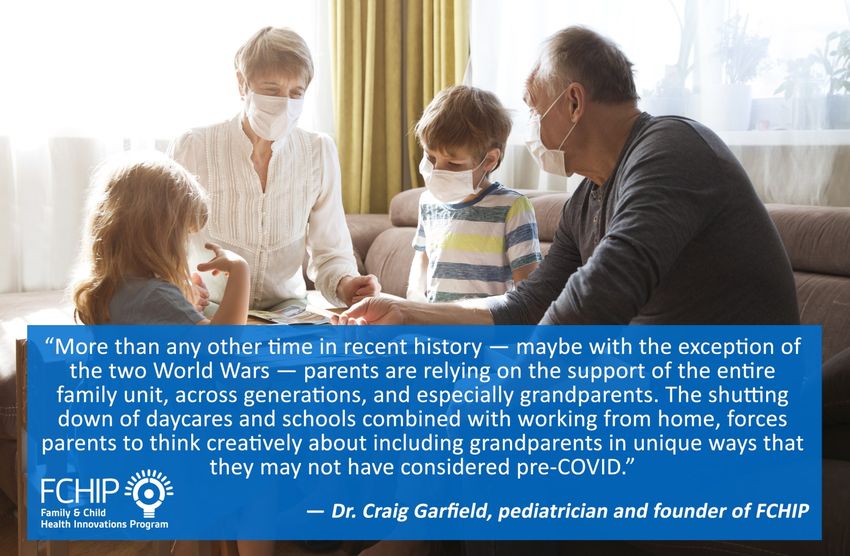
luriechildrens.org/FCHIP

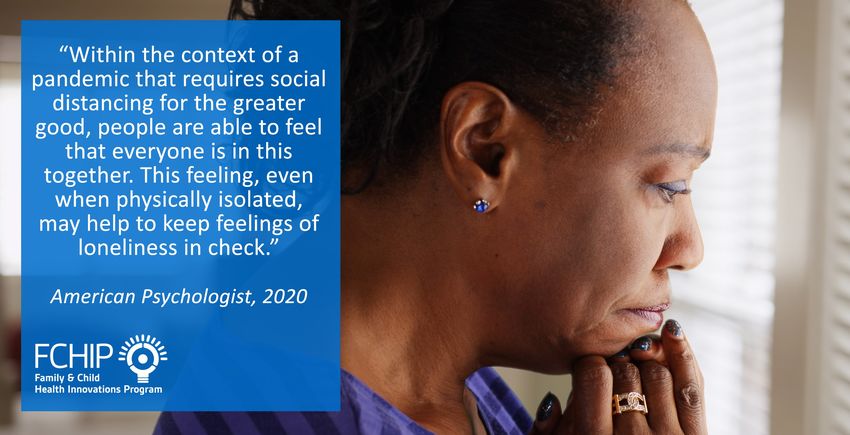
Loneliness and Social Isolation
Balancing risks is challenging for everyone, but may be especially pronounced for grandparents. Choosing how to avoid
social isolation or reduce infectious disease transmission is not simple. Even before the pandemic, nearly one in four
older adults were at-risk for loneliness (or what scientists call “perceived social isolation”), which is associated with
increased morbidity and mortality, and higher risk of depression and anxiety. Involved grandparenting can reduce
these risks, but may create other risks, such as contracting COVID-19. Grandparents are generally of an age where
hospitalization and mortality are especially high and get higher with increasing age. Luckily, first reports on loneliness
during the pandemic show that older adults have been resilient to loneliness, with an increase during first stages of
social distancing, but leveling through stricter stay-at-home orders.

Experiencing Grief, Loss and
Worry During the Pandemic
Currently, older adults are grieving the loss
of family contact and worried about their
future. Grandparents may have a difficult
time reentering the workforce, may have
lost retirement savings, have had changes or
cancellation of health care services, or
experienced increased ageism. All of these
challenges are even greater for older adults
of color, a group especially at risk from
COVID-19 infection (Journal of Aging and
Social Policy).
Grandparents may experience loss of
friends qnd family, spouses, or feel grief Provisional death counts; COVID-NET - COVID-19-Associated Hospitalization Surveillance Network
following separation from children and
grandchildren. To cope with these feelings, grandparents can express their grief with activities such as art, gardening,
writing, cooking, music and talking with friends and family. To maintain social connection, shared activities include
playing games, exercise and interaction through phones calls and virtual game play.

Benefits of Grandparent Involvement and Staying Connected During a Pandemic
Grandparents help children by serving as role models, helping with schoolwork, and providing wisdom, advice and
love. Grandparents who join single parent households are especially beneficial to their grandchildren’s development.
Research shows that among adolescents in these families, grandparent involvement is associated with lower rates of
smoking and drinking, and higher rates of graduating high school and attend college. Data also shows that during
times of crisis and need, grandparents often rise up to increase their involvement with grandchildren.
During this worldwide pandemic, how can grandparents bond with grandchildren? While geographic distance may
affect the grandparenting relationship with grandchildren, technological innovations can be used to safely sustain
relationships no matter how far away families may live.

Page 2
luriechildrens.org/FCHIP

Additional ways to maintain long distance                    Grandparents living close by can consider
connections with grandchildren include:                      some of these options:

1) Learn dances with your grandchildren on TikTok,           1) Spend socially-distanced time outside together, sitting
   helping to keep cognitively strong and physically            in camping chairs in a park watching grandchildren
   active, while also connecting with your grandchildren.       ride bikes and play, chat with adult children, go fishing
2) As your grandchildren return to school virtually or in-      or for a walk.
   person, offer to be a virtual tutor.                      2) If you or your children need even more time together
3) Try preparing and having a meal, playing a game,             or are struggling apart, consider forming a family
   telling jokes, discussing a book together, or telling        quarantine pod if you can do so safely. Remember
   stories virtually to give your grandchildren some time       that most transmission is within family, so when you
   together and help your children with a parenting             share space, everyone has to follow the same rules for
   break.                                                       keeping safe and healthy both together and times you
4) Become a foster grandparent, helping children in             are apart.
   need.                                                     3) If you have older grandchildren, offer to take a masked
5) If you are considering a visit to grandchildren, re-         walk together to catch up, have outdoor time
   consider if they are high-risk or newborns, or if you are    together, or set up camping equipment and camp in
   high-risk or planning to travel either to or from an area    the backyard.
   with high infection rates. Children may be carriers of
   diseases or exposed if their schools are now offering in
   -person classes, and being sick far from home may not
   be ideal (Washington Post, 2020). If you do visit, wear
   a mask and stay six feet away.

                                                                                             American Psychologist, 2020

Page 3
luriechildrens.org/FCHIP

Regardless of whether grandparents live near
or far to their grandchildren, grandparents
                                                                 PRACTICE SAFE
                                                                          HUGS
can maintain their bonds by:

1) Sharing your wisdom and expertise: whatever your
   skills, interests or knowledge, consider passing them
   on to your grandchildren
2) Financial support: if you are able to help provide
   financially, consider contributing by sending approved
   gifts or essentials to lessen the burden on your
   children
3) Talk to your children, including their spouses or
   partners. If you have a better relationship with your
   grandchildren’s parents, you are more likely to
   maintain closeness to grandchildren.
                                                                           A                 B               C
4) Gain a new pen pal, sending letters by mail back and
   forth with your grandchildren. Send an extra gift like a   A. For a safe, full-body hug, turn your faces in opposite
   sticker or word search, or a larger gift via mail like a      directions, which prevents you from directly breathing
   board game, puzzle, or book.                                  each other’s exhaled particles. Wear a mask.
                                                              B. Hugging at knee or waist level lowers risk for direct
5) Bonding with grandchildren can be a real benefit for          exposure to droplets and aerosols because faces are far
   grandparents, too. Grandparents may experience                apart. There is potential for the child’s face and mask to
   increased connectivity and improved quality of life,          contaminate the adult’s clothing. Wash your hands after
   and note the potential for an expanded workforce              a visit that includes hugs and consider changing your
                                                                 clothes. The adult also should look away so as not to
   specializing in aging.
                                                                 breathe down on the child.
6) Share your feelings and emotions: age-appropriate          C. In this scenario, the grandparent is minimally exposed to
   discussions with grandchildren about your fears and           the child’s exhaled breath. The child could be exposed to
   concerns, even about death, can help them feel heard          the taller person’s breath, so kiss through a mask.
   and understood, and allows you to develop coping
   mechanisms together and let grandchildren know that                Adapted from the New York Times, 2020
   you will be there as their loving grandparents

                                                                                       FCHIP T-Shirts are Available!
                                                                                              Visit the online shop at
                                                                                      Ann & Robert H. Lurie Children’s
                                                                                                   Hospital of Chicago

Page 4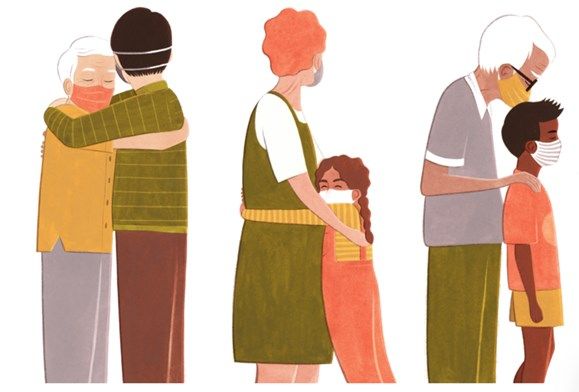



You can also read


