THE TRUTH ABOUT LAUNDRY - Findings of a European study into laundry, caring for clothes and environmental impacts - Better Living Program
←
→
Page content transcription
If your browser does not render page correctly, please read the page content below
THE TRUTH
ABOUT
LAUNDRY
Findings of a European study
into laundry, caring for clothes
and environmental impacts

2021
About the study

The Truth About Laundry was commissioned by Electrolux,
a global leader in household appliances.

A recognised sustainability leader in the                          In particular, the study explored the relationship
appliance industry1, Electrolux has won many                       between people and their clothes. Whether,
awards for its commitment and performance,                         for example, extending the life of clothes was
including the Gold Class award in the                              seen as positive, whether people made the
RobecoSAM Sustainability Yearbook and                              connection between extending garment life
inclusion in the Dow Jones Sustainability                          and the environment, and whether specific
World Index every year since 1999.                                 laundry behaviours supported those attitudes.

One of its key sustainability priorities is to help
make clothes last twice as long, with half the
environmental impact. With that in mind, this
study was commissioned to further understand
attitudes and behaviours to laundry and the
attitudinal relationships between clothing
care and the environment.

Aims included understanding whether people
consider the environment when doing the
laundry; identifying behaviours that might
contribute to more sustainable laundry practices;
and understanding, what might be preventing
people from being more environmentally driven
when it comes to doing the laundry.

1
    https://www.electroluxgroup.com/sustainabilityreports/2017/en/reporting-framework/awards-and-recognitions/

THE TRUTH ABOUT LAUNDRY – 2021                                                                                          2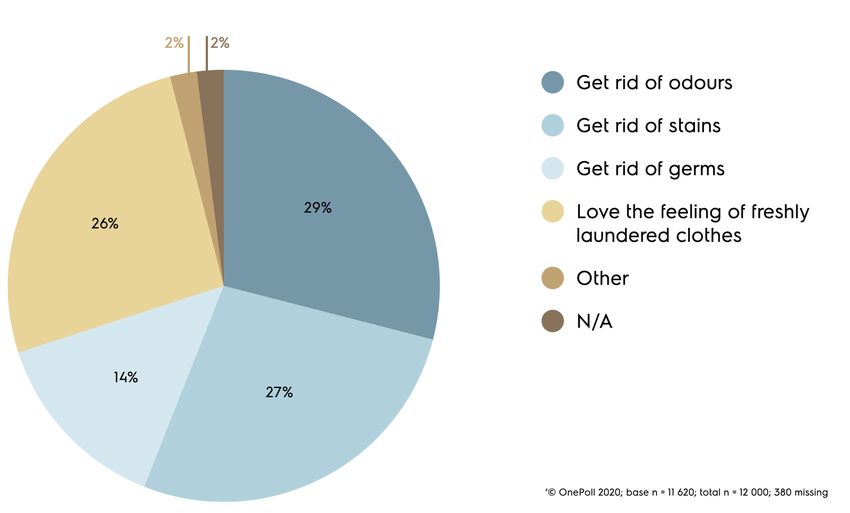
Foreword by Elisa Stabon (M.Sc Chemistry)
Care Experience Development
Manager, Electrolux

Fundamentally, this study is aimed at helping people
to be more sustainable, an ambition that is at the
very heart of Electrolux.

While a key part of our work considers the role of     The third and last step towards positive change
appliances in the laundry process, in many ways it     is for people to review the type of detergent they
is only as good as the understanding that people       are using. In this study we prove that certain
have of laundry techniques and the capabilities        types of detergent are more abrasive on clothes
of modern machinery in supporting them. Our            than others, especially when dosing is not
study shows that the technology available is not       accurately measured. Taking both temperature
being fully utilised. This means that clothing (and    and detergent type into account, significant
by definition, people), as well as the planet are      negative impacts on the environment could
paying a higher price than is needed.                  be averted.

The laundry process could be improved if people        How we deliver change is now the big challenge
were given the necessary knowledge, I see three        for us all. Our study shows that people are more
key opportunities for small but significant steps to   or less on auto pilot when it comes to laundry
be taken.                                              practices with 59% of people in Europe stating
                                                       that they do the laundry the way they were
Firstly, we’re generally not wearing clothes enough    taught by previous generations. Breaking free of
times between washes. It results in millions of        outdated habits and updating laundry practices
clothes being laundered before they should be          will therefore be key.
reducing garment life substantially and increasing
individual carbon footprints. The more we can          With more people acknowledging the need to
encourage more wears per item, the better it is        be sustainable, I think the results of this study
for the planet and for our clothes.                    show us how and when more conscious choices
                                                       can easily be made without sacrifice or major
Secondly, when we do wash, I would recommend           lifestyle changes.
an overall reduction of ten degrees in wash
temperatures, except where there are specific          At Electrolux we will continue with our work to
hygiene requirements or where laundry is               enhance technical performance however, we
particularly dirty. 30°C or lower must become the      will do so with an understanding that to deliver
norm, not the exception and with the capability        excellence, the process is a duality of user and
of modern technology and advancements                  machine. Harnessing the power of technology is
in detergent science, the cleaning is just             best done when we are not solely reliant upon
as effective.                                          it and this study shows where user and machine
                                                       can work together to help clothes and the
This message must get through. Our study shows         planet last for longer.
that over 60% of people across Europe are still,
mainly, washing at 40°C and above. If every
household, that washes at 40°C, switched to 30°C,
the potential saving would be the equivalent of
nearly 5m tonnes of CO₂, every year.

THE TRUTH ABOUT LAUNDRY – 2021                                                                             3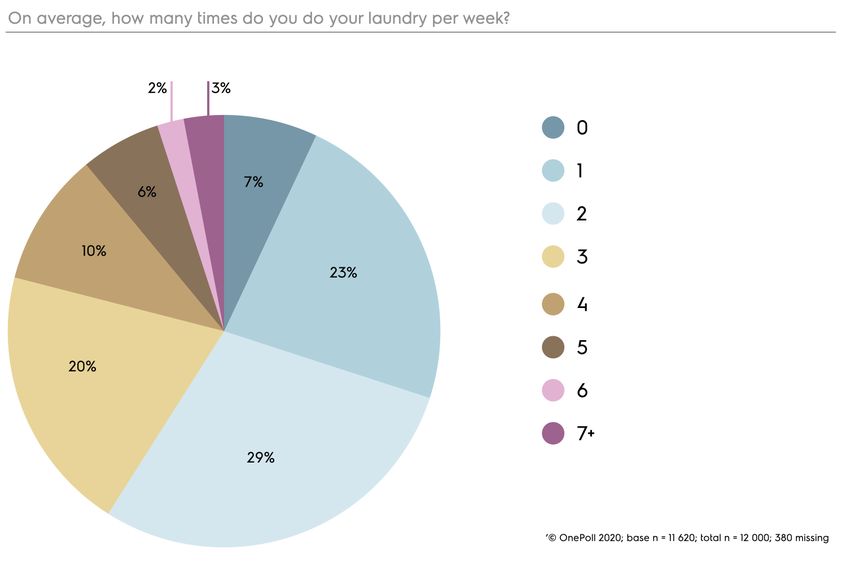
Foreword by Vanessa Butani,
Director Sustainability,
Electrolux Europe

At Electrolux, we want to be
the Sustainability leader in our industry.

I am keen on exploring how we can build             Electrolux will continue to make technological
bridges, not just between our actions as a          advancements to help people, whilst constantly
manufacturing company and the environment           ensuring care for the environment. We aim to
but with those that use and rely on our products    reduce the environmental impact of laundry by
every day. I am particularly conscious that         half and I am very happy to see how this study
our responsibility goes beyond our immediate        helps break down the opportunities for people
environment so that it also brings people with us   to have an impact at home. I hope it will inspire
on the journey to a more sustainable future.        people to continue to ask more of us so that
                                                    we can move forward together.
To me, that means more than the creation
of energy efficient, reliable and supportive
household appliances and it certainly means
more than telling people what they can
do better.

This study, coming in the middle of a global
pandemic, provides an interesting opportunity
to review the way in which we can all make a
contribution to the health of the planet through
our own daily actions and especially when so
many of us are spending more time at home
and have greater reliance on home appliances.

THE TRUTH ABOUT LAUNDRY – 2021                                                                          4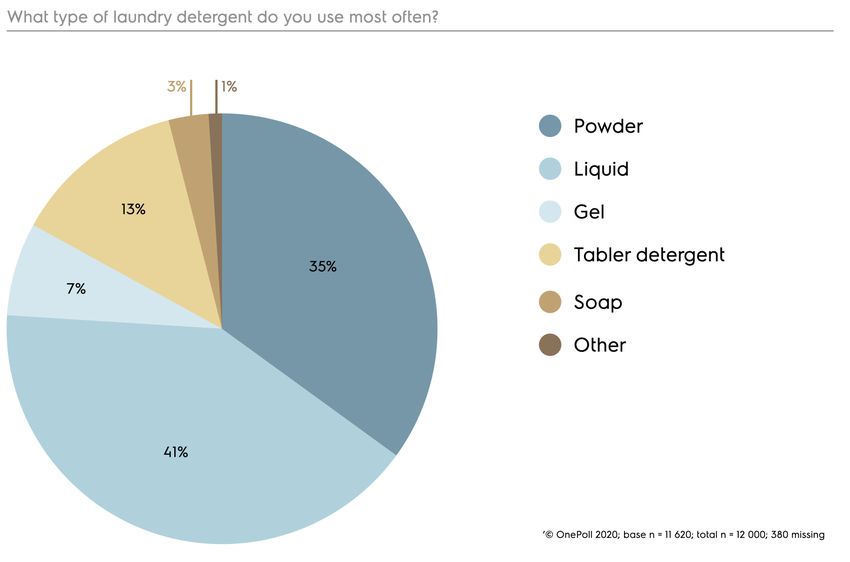
Methodology

To inform the direction and content of the study, Electrolux first
commissioned a review of existing research and commentary on
laundry and garment care. The review covered newswires, news
sites, industry news and commentary, and research from relevant
brands and environmental organisations. Using the analysis, it
then commissioned new research.

The findings in the study are based on quantitative data
collected from 12,000 adults across twelve European markets.
OnePoll, a survey-led market research company – managed the
research in collaboration with Electrolux and its partners. The
survey was fielded between the 21st July and 7th August 2020
with data collected in the following countries: Denmark, Finland,
France, Germany, Italy, Norway, Poland, Russia, Spain, Sweden,
Switzerland and the United Kingdom.

The data was weighted for each country to ensure accurate
representation by age, marital status, income/social class,
ethnicity and religion. For a statistic of 50% the margin of error
for sampling on a sample of 1000 respondents is ±3.1%. For
smaller or larger statistics, the margin of error will decrease
and falls to 1.9% for a statistic of 10% or 90%. This is based on
all countries having 1000 respondents per market. This margin
of error is small making the data highly reliable.

THE TRUTH ABOUT LAUNDRY – 2021                                       5
The importance of extending
the life of clothes

The environmental cost of fashion                                              The cost of under-utilisation of clothes

There has been extensive research into                                         Estimates on how many clothes people own and
the fashion industry and its impact on the                                     utilise (the average number of times a garment is
Environment. Some of these impacts are best                                    worn before it ceases to be used) and ultimately
highlighted by research from the United Nations                                discard them on a global level vary but the
Environment Programme (UNEP)² and the Ellen                                    conclusion is largely the same:
MacArthur Foundation³:
                                                                               •     We buy more clothes than ever, wear
•       The fashion industry is responsible for 10%                                  them fewer times and discard them at
        of annual global carbon emissions, more                                      a faster rate.
        than all international flights and maritime                            •     During the past 10 years the number of
        shipping combined.                                                           items of clothing purchased per consumer
•       If the fashion industry’s trajectory continues,                              has more than doubled⁴.
        greenhouse gas emissions will surge by                                 •     It is expected that clothing consumption will
        more than 50% by 2030.                                                       increase globally by 63%, from the current 62
•       The textiles industry relies mostly on non-                                  million tonnes to 102 million tonnes by 2030⁴.
        renewable resources – 98 million tonnes                                •     The average consumer now buys 60% more
        in total per year – including oil to produce                                 items of clothing than in 2000³.
        synthetic fibres, fertilisers to grow cotton,
        and chemicals to produce, dye, and finish                              •     Worldwide, the average number of times
        fibres and textiles.                                                         a garment is worn, before it ceases to be
•       Textile production (including cotton farming)                          •     used, has decreased by 36% compared
        also uses around 93 billion cubic metres of                                  to 15 years ago³.
        water annually.                                                        •     It is estimated that the average garment is
•       87% of the total amount of fibre used for                                    worn only ten times before disposal6.
        clothing is ultimately incinerated or disposed                         •     It is estimated that more than half of the fast
        of in a landfill.                                                            fashion produced is disposed of in under
                                                                                     a year⁵.
                                                                               •     These buying habits contribute to the 39
                                                                                     million tonnes of post-consumer textile
                                                                                     waste that is generated (at a minimum)
                                                                                     worldwide each year – primarily in the form
                                                                                     of garments⁵.
                                                                               •     In terms of the bigger picture, of all
                                                                                     discarded clothing, only 10% overall is
                                                                                     recycled, only 8% is re-used as second-hand
                                                                                     clothing and 57% is sent to landfill³.

2
    https://unfashionalliance.org/
³ https://www.ellenmacarthurfoundation.org/assets/downloads/publications/A-New-Textiles-Economy_Full-Report_Updated_1-12-17.pdf
⁴ https://www.commonobjective.co/article/fashion-and-waste-an-uneasy-relationship
⁵ https://traid.org.uk/wp-content/uploads/2018/09/impacts_of_clothing_factsheet_23percent.pdf
6
    Global Fashion Agenda and Boston Consulting Group, Pulse of the fashion industry (2018), p.59

THE TRUTH ABOUT LAUNDRY – 2021                                                                                                     6
The importance of extending
the life of clothes continued

The environmental benefit of                                                    Which behaviours reduce
extending clothing life                                                         garment life?

According to research from WRAP (Waste &                                        According to Fashion Revolution, up to 25% of a
Resources Action Programme), extending the                                      garment’s carbon footprint comes from the way
life of clothes by an extra nine months of active                               it is washed and cared for⁸. They also report that
use would reduce carbon, water, and waste                                       nine out of ten items of clothing end up in landfill
footprints by around 20–30% each⁷.                                              long before they should, mainly due to over-
                                                                                washing which can damage the fabric, fade
                                                                                colours, misshape garments, cause shrinkage
                                                                                and spoil clothes due to colour run.

                                                                                For this Report, three main laundry behaviours,
                                                                                which contribute to the reduction of clothing life,
                                                                                were studied:
                                                                                1.   Wash temperature
                                                                                2.   Frequency of wash
                                                                                3. Detergent type

                                                                                In addition, research was also undertaken to
                                                                                understand behaviours in relation to full
                                                                                loads. Washing full loads of laundry has many
                                                                                environmental benefits including energy and
                                                                                water savings, which have been extensively
                                                                                researched before. However, research has also
                                                                                shown that washing full loads can reduce the life
                                                                                of certain fabrics, such as denim. More research
                                                                                is required to understand the environmental
                                                                                impacts of full loads on fabrics and assess
                                                                                impacts versus those of other savings.

7
    https://wrap.org.uk/sites/files/wrap/valuing-our-clothes-the-cost-of-uk-fashion_WRAP.pdf
⁸ http://fashionrevolution.org/dont-overwash-its-time-to-change-the-way-we-care/

THE TRUTH ABOUT LAUNDRY – 2021                                                                                                     7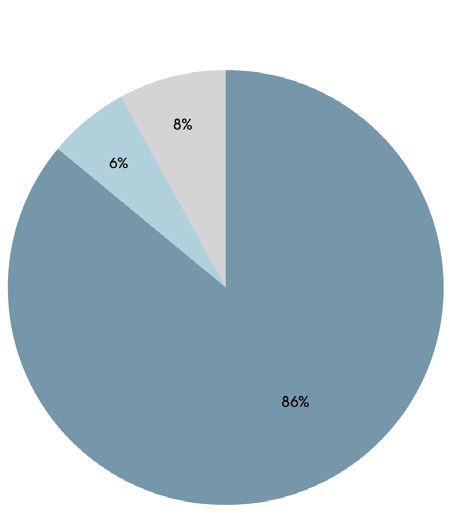
THE
FINDINGS
The main reasons for washing clothes
The study began by exploring the main reasons                                        Younger age groups were more concerned
why people do the laundry. By understanding                                          about odours. 40% of 18-24 year olds and 38%
key drivers, it might be possible to identify                                        of 25-34 year olds wash clothes, primarily, to
areas for improvement. Using options identified                                      get rid of odours. There were no statistically
through previous research⁹, respondents were                                         significant gender differences.
given six answers to choose from.
                                                                                     Notable observations, with regard to statistical
Perhaps, unsurprisingly, the two most popular                                        variances in countries, included:
reasons were, ‘getting rid of odours’ (29%) and
‘getting rid of stains’ (27%). There may also be                                     •     Denmark, Russia and Switzerland were
overlap between the two, e.g. garments that                                                the least concerned by stains (21% versus
have stains and odours.                                                                    average of 27%) whereas Finland was
                                                                                           the most (43%).
However, for just over a quarter (26%) of the
                                                                                     •     Italy, potentially influenced by the timing of
adult population, the main reason cited was
                                                                                           the study and its proximity to the COVID-19
because they ‘love the feeling of wearing freshly
                                                                                           pandemic, was the most likely to wash
laundered clothes’. Using household data for
                                                                                           clothes to get rid of germs (25% versus
Europe10, this equates to over 409 million washes
                                                                                           average 14%).
every week. Further analysis identified age and
marital status as key drivers behind this reason                                     •     Russians enjoyed the feeling of wearing
to launder. 34% of people aged 55+ chose this                                              freshly laundered clothes more than any
reason, significantly more than those who opted                                            other population (44% versus average of
for stain or odour removal; among divorcees                                                26%) whereas the Swedes were the least
(34%) and people widowed (36%), it was also                                                concerned (16%).
the most popular reason given.

9
    Better Living Report (2019), www.ElectroluxGroup.com
10
     https://ec.europa.eu/eurostat/statistics-explained/pdfscache/29071.pdf
     https://www.pordata.pt/en/Europe/Private+households+total+and+by+number+of+children-1615;
     https://en.wikipedia.org/wiki/List_of_countries_by_number_of_households; household size and composition around the world 2017, Data booklet, United Nations

THE TRUTH ABOUT LAUNDRY – 2021                                                                                                                               9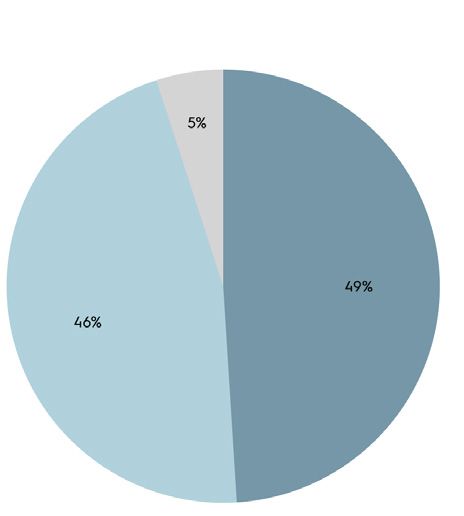
Wash temperatures
It has been over ten years since P&G’s detergent                                       According to this study, The Truth about Laundry,
brand, Ariel, launched Do a Good Turn, a                                               only 35% of people regularly did their washing
campaign encouraging people to turn the                                                at 30°C or lower. 48% of adults were primarily
washing temperature down to 30°C. Since then,                                          washing at 40°C while for 11%, their regular wash
the benefits of washing at lower temperatures                                          temperature was 60%. Nearly two thirds (63%)
(e.g. cost savings, energy and water savings)                                          of the European population were, therefore,
have been promoted far and wide.                                                       continuing to mainly wash at temperatures
                                                                                       above 30°C.
A recent study by the University of Leeds and
Proctor and Gamble11 found that washing clothes                                        As is shown in the chart below, Spain was the
at the coldest and shortest setting on a washing                                       one country where more than three quarters
machine, makes them last longer. Their findings                                        (76%) of the population washed at 30°C or less,
included “more colour loss occurred in ‘warmer-                                        with 27% washing with cold water. That still
longer’ wash cycles than ‘cold-quick’ cycles”                                          leaves just over a fifth (22%) who washed at
and “rate of dye desorption (i.e., dye being                                           40°C or higher.
released) increases most significantly between
20°C and 40°C”. It also found “Microfibre
release was significantly greater” at a 40°C, 85
min cycle in comparison with a cold-quick cycle,
and this effect continued with further washes.

Choice: When doing your laundry, what temperature do you use the most?

                                                                                                                             Switzerland
                                                      Germany
                    Denmark

                                                                              Norway

                                                                                                                    Sweden
                               Finland

                                                                                          Poland
                                           France

                                                                                                   Russia

                                                                                                            Spain
                                                                  Italy

                                                                                                                                           UK
 Cold              0%          0%         3%          1%         7%           1%          0%       3%       27%     1%       1%            2%

< 30°C             4%          2%         3%          4%         10%          2%          2%       5%       18%     2%       1%            5%

30°C              26%          8%        43%         30%        35%           14%         23%      29%      31%     9%       26%           41%

40°C              56%         66%        38%         47%        33%           62%         53%      41%      16%     68%      55%           40%

50°C               3%          4%         2%          3%         4%           3%          6%       7%       2%      3%       3%            3%

60°C               8%         18%         8%         12%         9%           15%         13%      12%      4%      14%      12%           3%

> 60°C              1%         1%          1%         0%           1          1%           1%      2%       0%      1%       0%            0%

                 OnePoll 2020; base n = 11620; total n = 12000; 380 missing

11
     https://www.sciencedirect.com/science/article/pii/S0143720819320431?via%3Dihub

THE TRUTH ABOUT LAUNDRY – 2021                                                                                                                   10
Just over half of Italians (52%) chose to wash at Ingrained habits, as we will see, may, in part,
the lower temperatures although 9% consistently explain why more people are not washing at
washed at 60°C. France and the UK are also lower temperatures more often, as might a lack
notable, with 49% of the population claiming of education on cleaning and hygiene efficacy
to wash at 30°C or lower. at lower temperatures. By analysing temperature
choice alongside the main reasons cited for
Further analysis showed age, once again, had washing, a clearer picture starts to emerge
an influence with older age groups less likely about why people might be choosing specific
to wash at lower temperatures than younger temperatures for certain washes, possibly
groups. Across Europe, 64% of 35-44 years pointing to opportunities for further engagement
old, 69% of 45-54 year olds and 71% of 55+ all and education.
washed at 40°C and above. This is compared
to 49% of 18-24 year olds. Women were also In Denmark, for example, where 68% of people
more likely to wash at 40°C than men (50% vs washed at 40°C or higher, 52% of people cited
45%), but men were more likely to wash at 60°C the main reasons for washing as getting rid of
(13% vs 8%). odours and stains. Both of which, for many fabric
types, can be achieved at lower temperatures,
Without comparable data to analyse, it is not particularly with pre-wash treatments such as
possible to ascertain whether the research is environmentally friendly spot stain removal and
evidence of behavioural change and, if it is, pre-wash soaking. Targeting specific reasons
the speed at which it might have happened. to launder with relevant messaging and,
But, with nearly two thirds of people (63%) critically, proof, could potentially create sizeable
choosing not to primarily wash at lower opportunities to shift attitudes and behaviours
temperatures, sizeable benefits to the towards temperature.
environment, household income and
clothing utility are not being realised.
Choice: What would you say is the main reason you wash clothes?
Switzerland
Germany
Denmark
Norway
Sweden
Finland
Poland
France
Russia
Spain
Italy
UK
To get rid of odours 31% 28% 23% 30% 32% 29% 27% 23% 30% 33% 34% 34%
To get rid of stains 21% 43% 24% 27% 22% 33% 26% 21% 28% 30% 21% 27%
To get rid of germs 25% 10% 11% 12% 25% 14% 11% 6% 19% 16% 6% 16%
You love the feeling
of wearing freshly 19% 16% 39% 27% 19% 19% 35% 44% 21% 16% 36% 17%
laundered clothes
Other reason 2% 2% 1% 1% 2% 2% 0% 1% 1% 3% 1% 2%
N/A - no reason
in particular/ 2% 2% 2% 2% 0% 3% 1% 5% 1% 2% 1% 4%
I don't know
OnePoll 2020; base n = 11620; total n = 12000; 380 missing
THE TRUTH ABOUT LAUNDRY – 2021 11The impact of temperature on reducing micro-organisms The washing process is able to reduce the level of micro-organisms present on textiles thanks to the synergic effect of different factors: • Water (extraction and dilution) • Mechanical action / agitation • Temperature • Chemicals (detergents, additives) The levels of micro-organism reduction are strongly related to the particular combination of the above parameters that characterise a washing programme. Research undertaken by Electrolux has shown the indicative levels of micro-organism removal achievable in different washing conditions. Electrolux showed that, in general, powders perform better than liquids but they have a greater negative impact on textiles/ care. As will also be shown, powders have a greater negative impact than liquids on global warming potential. THE TRUTH ABOUT LAUNDRY – 2021 12
Aware of the link between
temperature and clothing life?

More than half (53%) of all adults did not make   82% of adults responded favourably to the
the link between temperature and its impact on    statement “I care about increasing the lifespan
garment life, including 33% who didn’t know.      of clothes”. 50% agreed strongly and 32%
Spain (62%), Poland (58%) and Russia (57%)        somewhat agreed, which was fairly consistent
were three of only five countries where more      across all age groups.
than half of the population were cognisant
                                                  The countries which agreed strongest were
of the link. At the bottom of the table were
                                                  Poland (71%) and Germany (57%). In France
Denmark, with only 33% of people agreeing,
                                                  though, only 19% of adults agreed strongly,
Finland (35%) and UK (40%).
                                                  with 60% either showing no view (56%) or
To understand whether a shift in focus towards    disagreeing (4%).
clothing care might encourage more people
to wash at lower temperatures, more often, the
study explored whether people actually cared
about increasing the lifespan of clothes.

THE TRUTH ABOUT LAUNDRY – 2021                                                                      13
What is stopping people from washing
at lower temperatures more often?
The key barriers preventing people from The country with the most ingrained habits
washing at lower temperatures were due to a was Spain (34%) while Poland and Sweden,
lack of confidence in cleaning efficacy. 47% of at 16%, were the lowest at citing habit. Finland
people were not confident their laundry would (63%) was the most sceptical about lower
be cleaned and 39% did not think their laundry temperatures cleaning effectively, while
would be free of stains. Denmark (37%) had the most concerns over
germs and for Poland (52%), it was stains.
Lack of confidence in tackling germs (29%) and
odours (25%) were not primary drivers but still
significant. For over a fifth of people (21%), habit
was a barrier to change. Men were more likely
to cite habit than women (24% vs 18%) and it
slightly under-indexed among older age groups
and over-indexed with younger groups.
THE TRUTH ABOUT LAUNDRY – 2021 14Common items and the most
used wash temperatures
Respondents were then asked to state the Using this data, we can see there are potentially
temperature they most frequently used to wash hundreds of millions of items of clothing being
various items of common clothing, namely washed at too high a temperature.
t-shirts, jeans, regular underwear, sportswear,
This behaviour is proven to not only reduce
outdoor wear and wool.
the life span of clothes (especially when one
• 50% of respondents reported washing considers the damage to woollen items and
outdoor wear through a high temperature wash),
• T-shirts at 40°C or above with 10%
the majority of which will end up in landfill, but
washing them at 60°C or higher.
also negatively impact upon energy and water
• 54% washed jeans at 40°C or above with, supplies as well as having a negative economic
again, 10% washing at 60°C or higher. cost for every household.
• 25% washed regular underwear at 60°C
or above.
• 15% washed sportswear at 50°C
or above.
• 48% washed outdoor wear at 40°C and
above and 19% did the same with wool.
THE TRUTH ABOUT LAUNDRY – 2021 15The impact of
temperature on colour
According to WRAP12, “Colour is one of the Dye is released into the environment and if
most important influences on consumers other garments are also being washed at the
when they are considering the purchase of same time, spoilage occurs. Washing at lower
new clothes. Colour also plays a significant temperatures may reduce the concentration of
role in the consumers’ decision making when dye transfer but there is no solution yet available
deciding whether a garment has reached to total prevention.
the end of its life. The fading of deep colours
Concerns over washing mixed colours together
and discolouration of light shades can make
came through in the study. 44% of Europeans
garments look old, even though they are
said they would not wash full loads because
still perfectly functional in terms of technical of their concerns over washing mixed colours
performance”. together. This resistance could be down to
a number of factors such as habit, prior bad
It would therefore be reasonable to assume that
experiences with dye transfer, a propensity
the fading of colours could be a key contributor
for cheaper fabrics or, perhaps, it was advice
to clothes being discarded, long before they
passed down.
need to be. The study from Leeds University and
Procter and Gamble11 evaluated the impacts Helping people to both protect garments from
of washing temperature and washing time on dye transfer and to keep clothing from fading
garment colour loss (dye fading), and colour would, as will be shown, deliver demonstrable
transfer (dye staining). benefits to the planet and to garment life. For
25% of Europeans, being able to wash mixed
It found, “Significantly greater colour loss and
colours together more often, would also help
greater colour transfer were observed for a
them do less laundry.
40°C, 85 min wash cycle compared to a cold-
quick (25°C; 30 min) cycle. Desorbing dyes
were found to mainly be reactive dyes. From
fundamental kinetic studies, it was observed
that significant increases in both rate of dye
desorption and total dye desorption occurred
when increasing from 20°C to 40°C, but the
difference in dye release between 40°C and
60°C was not as significant; the same kinetic
trends were observed for dye transfer”.
“Dry transfer” is a phenomenon that can occur
when colour solidity is not strong enough (often
associated with low-quality fabrics), which is
more evident in the initial washes of a new
garment. This ‘dry transfer’ can happen even
at low/cold wash temperatures as the dye has
not been strongly fixed to the fibre. When a dye
transfer episode occurs, even if only once in a
lifetime, it creates a problem.
12
http://www.wrapni.org.uk/sites/files/wrap/Clothing-Durability-Report-final.pdf
THE TRUTH ABOUT LAUNDRY – 2021 16Laundry detergents
The type of detergent used can make a Over a third of all adults (35%) reported using
measurable difference to the life span powder as their detergent of choice. 41%
of garments. reported liquid, 13% tablet detergent and 7% gel.
Of the main detergent types used, washing Across Europe there were sizeable variances
powder, because of its abrasiveness, can worth noting. Only 8% of adults in France
shorten the life of many fabrics. Most powders reported using powder compared to 65%
also contain bleach which can be very effective of Russians, 58% of Norwegians and 58%
on whites, but can cause brightly coloured of Swedes.
clothes to fade, potentially reducing utilisation.
Italy had the highest preference for liquid (64%)
Therefore, while powders are more effective at
followed by France (62%) and Spain (49%). As
cleaning, as will be shown, they have a greater
reported, these three markets also over-index on
impact on Global Warming Potential (GWP)
colder washes which might, in part, explain the
and a negative impact on textiles/care.
variances. It should also be noted that in many
markets, powder detergent is often the cheapest
option so economic influences on detergent
preference should not be ruled out.
THE TRUTH ABOUT LAUNDRY – 2021 17Temperature and detergent and their
impact on global warming potential
Newly published analysis from Electrolux, If each of those households switched to
has now quantified the impact of washing 30°C, the impact on GWP would potentially
temperature and detergent type on Global be reduced by the equivalent of 4.9 million
Warming Potential (GWP) during the washing tonnes of CO₂ per year. This is a minimum as it
machine use phase. should also be noted that an additional 15% of
Europeans claimed to mainly wash their clothes
The following analysis was undertaken using one
at 50°C and above including 10% who said they
model, with one EU-wide detergent. Figures may
mainly washed at 60°C.
change significantly for other types of washing
machine (e.g. vertical axis) and use phases. The potential GWP saving, when switching from
powder detergent to liquid is, according to this
What the analysis shows is that by reducing the
new analysis, just as compelling. By changing
temperature of a wash from 40°C to 30°C, the
the detergent type, within a 40°C wash cycle,
GWP is reduced by 19%. In real terms, that is the
the equivalent saving could be as much as
equivalent saving of 27.2 kg CO₂ per appliance,
29.6kg CO₂, per appliance per year.
per year, based on an average of 220 wash
cycles/year13. Therefore, whilst further analysis has not yet
been completed, it is possible to consider the
To consider the implications, one might look
positive benefits to GWP by households both
at the total number of households across the
lowering their wash temperature to 30°C and
Europe6,which has been estimated to be
switching to liquid from powder. The impact
375 million.
could be as high as saving the equivalent of
With 48% of households primarily washing over 50kg CO₂ per appliance, per year.
at 40°C, and assuming one appliance
per household, then it would equate to
approximately 180 million households
regularly washing at 40°C.
Powder Liquid
40°C 40°C 30°C
Powder Powder Powder
40°C 40°C
100% 100% 100%
90% 90% 90%
OTHER OTHER OTHER
80% 80% 80%
70% 70% 70%
OTHER OTHER
60% 60% 60%
50% 50% 50%
40% 40% 40%
30% 30% 30%
20% 20% 20%
10% 10% 10%
0% 0% 0%
1,436kg* 1,436kg 1,164kg* 1,436kg 1,140kg*
CO₂ Equivalent CO₂ Equivalent CO₂ Equivalent CO₂ Equivalent CO₂ Equivalent
* Cotton 40°C cycle * Decrease temperature * Change detergent
using powder detergent from 40°C - 30°C from powder to liquid
8kg Front Loading The result is ≈25% less impact The result is ≈25% less impact
Washing Machine on GWP of use phase on GWP of use phase
13
JRC, Ecodesign and Energy Label for Household Washing machines and washer dryers - Preparatory study Final report, 2017
THE TRUTH ABOUT LAUNDRY – 2021 18Frequency of laundry
- how much washing do we do?
A high frequency of wash is one of the main 71% of people did their laundry between one
contributors to garments wearing out faster and three times a week with 21% doing it 4
than they should. or more times a week. On average, women
(2.6) did slightly more laundry per week than
According to research13, the average number of
men (2.3) and 35-44 year olds did the most,
wash cycles undertaken across the EU is 4.2 per
averaging 2.8 per week. Italy had the highest
week per household. According to this study,
average number of washes (3.0) and Sweden
which looked at the number of times people
(2.0) had the lowest average.
do the laundry (rather than wash cycles), the
average was 2.4. Even through the data cannot
be corresponded, it would not be unreasonable
to assume that, on average, people are doing
just over two loads per wash.
THE TRUTH ABOUT LAUNDRY – 2021 19Laundry frequency during the Covid-19 pandemic At the time of writing, multiple markets within the study have reimposed restrictions so it must be remembered this study was undertaken between 21st July and 7th August 2020. During that time period, 20% of respondents said they had increased the frequency of laundry during the pandemic; 68% of people said their laundry frequency remained the same and 12% had reduced the number of times they did the laundry. Spain and Italy, two of the countries initially hit hardest by the pandemic, both showed nearly a third of respondents (29%) had increased frequency. Conversely, Sweden only reported a 14% increase in frequency, the second lowest to Switzerland which reported a 12% increase. THE TRUTH ABOUT LAUNDRY – 2021 20
What would help reduce the
frequency of laundry?

Given the impact of laundry frequency on          Interestingly, a fifth (20%) said none of the
garment longevity and resources, including        options would make them do fewer washes.
energy and water, it was important to try and     This might speak to some of the ingrained habits
identify the factors that might help people       already reported, e.g. a percentage of people
reduce those impacts.                             may not be willing to change their behaviours
                                                  under any circumstance or for any reason.
Nearly a third of all respondents, recognised
that wearing clothes more often, between
washes, was the simplest way to reduce the
number of times they did the laundry. 28% of
people believed washing fuller loads would
reduce frequency while 25% of adults, as
reported earlier, said washing mixed colours
together more often would help. 23% claimed
washing mixed materials, and 18% said getting
others in the household to be more responsible,
would help.

THE TRUTH ABOUT LAUNDRY – 2021                                                                  21
The figures below show all responses from
across the 12 markets with the most popular
choice for reducing the frequency of laundry
highlighted.
Which of the following would help you to do laundry less often?
Switzerland
Germany
Denmark
Norway
Sweden
Finland
Poland
France
Russia
Spain
Italy
UK
Wash fuller loads 14% 28% 22% 28% 36% 29% 32% 26% 34% 32% 23% 26%
Wear clothes more
often between 24% 33% 33% 29% 24% 44% 24% 37% 29% 30% 30% 36%
washes
Wash mixed
materials together 30% 21% 28% 21% 26% 20% 30% 17% 25% 18% 21% 21%
more often
Wash mixed
colours together 31% 25% 26% 21% 27% 20% 34% 17% 29% 20% 22% 24%
more often
Get others in the
household to be
more responsible
14% 13% 15% 18% 24% 16% 19% 38% 15% 15% 19% 16%
with their laundry
OnePoll 2020; base n = 11620; total n = 12000; 380 missing
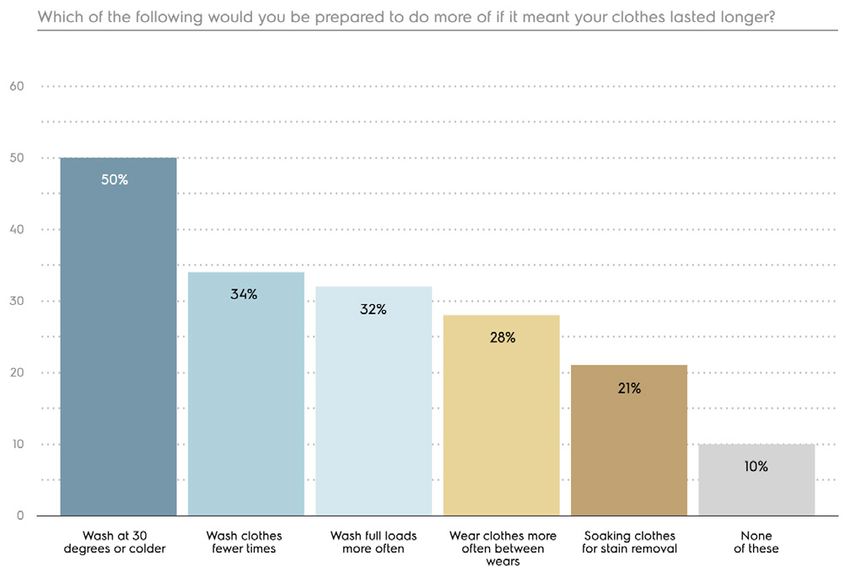
THE TRUTH ABOUT LAUNDRY – 2021 22Would people behave differently to extend clothing life? As well as understanding which change of Only a fifth of respondents (21%) said ‘soaking behaviours might help reduce the amount and clothes for stain removal.’ Given ‘getting rid of frequency of doing the laundry, the study group stains’ was the second most popular reason was asked what they might do differently, if the for washing garments, there could be merit in primary benefit was increasing clothing life. exploring this further. For half of all respondents, temperature played It is widely accepted that removing stains the most important role in extending garment promptly, via spot stain removal, for example, life. 50% said they would be willing to wash at can result in more wears between washes. 30°C or colder compared to 34% who would Once a stain is treated, the idea that it requires wash clothes fewer times, 32% who opted to a higher temperature wash could be challenged wash full loads more often and 28% of people resulting in significant benefits to garments and who also believed in wearing clothes more often the environment. between washes. THE TRUTH ABOUT LAUNDRY – 2021 23
The chart below shows the main preference per
  country with all, bar Sweden, opting to lower
  the temperature of the wash. For a number of
  countries, as we will see, this attitude is out of
  step with actual laundry behaviours. Switching
  the primary benefit of lowering temperatures to
  impact on clothes, rather than potential energy/
  cost savings and benefits to the environment,
  could, on this evidence, be more persuasive in
  delivering change.

  Which of the following would you be prepared to do more of
  if it meant your clothes lasted longer?

                                                                                                                           Switzerland
                                                         Germany
                          Denmark

                                                                               Norway

                                                                                                                  Sweden
                                    Finland

                                                                                        Poland
                                               France

                                                                                                 Russia

                                                                                                          Spain
                                                                    Italy

                                                                                                                                         UK
Wash at 30°C or
colder more often
                         47%        46%       50%       48%        54%       44%        61%      59%      55%     39%      50%           52%

Wash clothes
fewer times
                         24%        44%       29%       33%        22%       36%        40%      29%      37%     40%      32%           43%

Wash full loads
more often
                         26%        35%       24%       32%        37%        31%       34%      30%      35%     33%      28%           36%

Wear clothes
more often               33%        38%       24%       27%        21%       38%        21%      15%      26%     31%      24%           35%
between washes

Soaking clothes
for stain removal
                         18%        20%       16%        18%       21%        18%       28%      34%      21%     17%      20%           22%

None of these            14%        11%       11%        12%        6%        10%       4%       5%       5%      13%      14%           13%

                       OnePoll 2020; base n = 11620; total n = 12000; 380 missing

  THE TRUTH ABOUT LAUNDRY – 2021                                                                                                              24
Full loads of washing
Washing full loads of laundry is generally The gap between an attitude that recognises
accepted to be better for the environment. a clear benefit to the environment and a
But there are certain fabrics, such as denim, behaviour which doesn’t support it, could
delicates (e.g. wool, silk, viscose) and special be explained by a number of factors.
The discrepancy highlights one of a number
items, such as duvets and down jackets, which
of green gaps within laundry – the gap
will degrade more quickly when washed in a full
between recognising clear, green benefits
load. This can also be the case with garments
and green actions.
with zips and rivets. Without room to move,
these can snag and pull, stitching can break The countries least likely to wash full loads are
etc. which results in garments being thrown out Russia, where only 15% always wash with full
before they need to be. loads and France (22%). This might be explained
by Russians and French also reporting they were
63% of respondents believed washing full loads
most likely to wash their clothes because they
of laundry is better for the environment, with
‘love the feeling of wearing freshly laundered
30% not convinced and 7% who claimed it to
clothes’. The countries which top the list of
be worse. However, when asked how often
always washing full loads are Spain (51%) and
they wash with full loads, only one in three
the UK (42%), both of which chose “getting rid
(33%) replied ‘always’. 45% said ‘often’, 16%
of odours’ as the main reason to launder.
‘sometimes’, and 5% rarely or never.
THE TRUTH ABOUT LAUNDRY – 2021 25What stops people from washing
full loads more often?
Two main reasons were cited for not washing full Many websites and organisations advocate
loads more often. 44% of people do not want separating colours and materials before
to wash mixed colours and 34% do not want to washing. This, together with ingrained habits
wash mixed materials. around the laundry process, might suggest a
high degree of resistance among the 67% of
The attitude towards not wanting to wash mixed
people who do not always wash full loads,
colours is felt more keenly by women (49%
to do so more often.
than men (39%) and, in part, should be seen in
context to temperature data. But, temperature
might not be the only factor in explaining the
results. Spain, for example, where 76% of people
wash under 30°C, showed 41% of people
concerned about mixing colours.
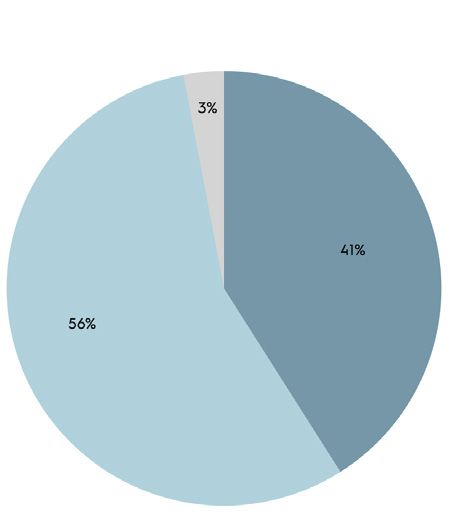
THE TRUTH ABOUT LAUNDRY – 2021 26The use of fabric conditioner
41% of all adults questioned in the study, 49% of all adults reported using fabric
reported using fabric conditioner when washing conditioner for sports / workout / yoga clothes.
outdoor wear. In line with previous analysis, it Again, younger age groups were at the forefront
was younger age groups who were more likely of driving the numbers. 57% of 18-24s and 59%
to use conditioner with these particular fabrics. of 25-34s reported using it, both statistically
48% of 18-24 years old used it, increasing to 50% significant. The three countries where usage was
of 25-34 years old. Compared to only 31% of 55+ highest were Spain (75%), Poland (72%) and
and 38% of 45-54 years old. Italy (62%)
The countries which were least likely to add The three countries where usage was lowest
conditioner were Switzerland, where fewer than were Switzerland (33%), Finland (34%) and
a quarter reported using it (22%) and Finland Denmark (38%). However, it should be noted
(28%). Conversely, nearly two thirds of people that while they were the lowest scoring, each
in Poland (64%) and Spain (63%) added fabric country still had more than a third of all
conditioner to the wash cycle. adults potentially shortening the life of high
performance fabrics by using fabric conditioner.
There is also a lot of anecdotal evidence of
fabric conditioner having a negative impact on
the performance of technical sports / yoga
wear. While the authors of this study have found
no hard evidence of this, there are a notable
number of websites, and brands, which state
fabric conditioner can interfere with a garments
wicking properties (i.e. fabrics that draw
moisture away from the skin to the exterior
of the fabric, making it easier to evaporate).
Do you use fabric conditioner when washing outdoor Do you use fabric conditioner when washing
wear such as ski jackets, waterproof jackets etc.? sportswear/workout, yoga and gym clothes?
THE TRUTH ABOUT LAUNDRY – 2021 27Clothes which wear
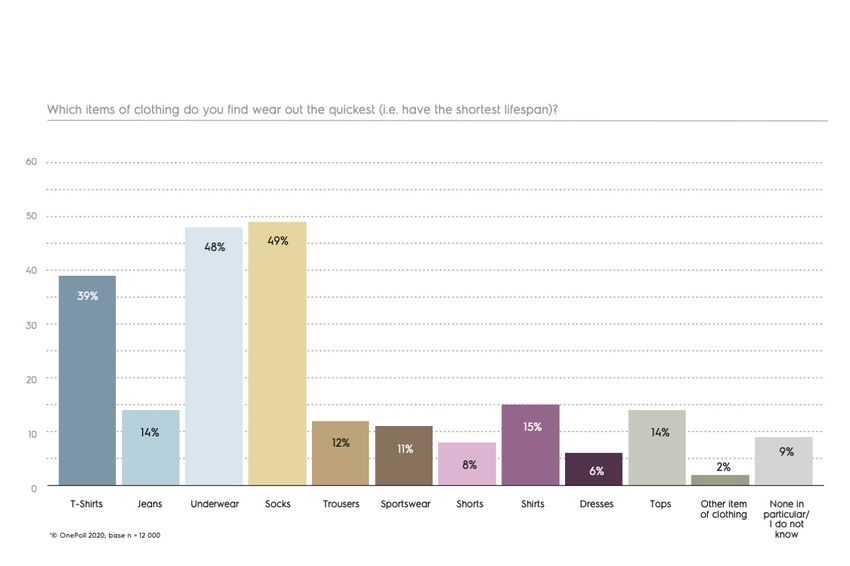
out the quickest
Understanding which garments people perceive The same is true with underwear, the second
to have the shortest life, could pave the most popular item to wear out the quickest
way for targeted information and education (48%). In both cases, the addition of laundry
programmes. For example, 49% of people sanitiser to the wash cycle can kill up 99.9% of
believed socks wear out more quickly than any bacteria and viruses when washed at 20°C with
other item. Many websites advocate washing no negative impact on the fabric. Additional
socks at 40°C and above, temperatures which studies would be required, though, to evaluate
have been proven to reduce garment life. environmental impact assessments before
endorsing a change of behaviours such
as these.
THE TRUTH ABOUT LAUNDRY – 2021 28Attitudes towards garment care
During the study, attitudes to the environment, Respondents were then asked if they believed
to garment care and to the relationship between that making clothes last longer is good for the
the two were explored. environment. 86% of respondents agreed with
14% either disagreeing or saying they don’t
78% of all adults identified as being ‘climate-
know. There were no statistically significant
conscious’ but the strength of identity varies
differences by age or gender.
considerably. Only 31% of respondents strongly
identified themselves as ‘climate-conscious’ The countries which agreed most strongly were
while just over a fifth (22%) were either neutral or Finland and the UK (94%) while in France only
rejected the description. That leaves nearly half 67% of respondents agreed, with 33% either
of all adults across Europe (48%) who did not disagreeing (16%) or saying they don’t
strongly identify with the description. know (18%).
Of the twelve countries studied, respondents in To understand if people made a conscious
Poland (51%) identified most strongly with being connection between laundry and the
‘climate-conscious’, closely followed by Russia environment, they were asked whether they felt
(48%). Denmark ranked the lowest with only 14% any guilt. More than a third of all adults (36%) felt
of adults strongly identifying with the term. some guilt towards the environment when doing
the laundry, with 11% feeling strongly about it.
Conversely, for 63% of respondents, there was
either an absence, or a rejection of any guilt
when it came to the impact on the environment.
To what extent do you agree or disagree with the
Do you think making clothes last longer is following statement? 'I often feel guilty about the
good for the environment? impact of doing laundry on the environment/planet'.
THE TRUTH ABOUT LAUNDRY – 2021 (c) OnePoll 2020; base n = 11620; total n = 12000; 380 missing 29How do people approach
doing the laundry?
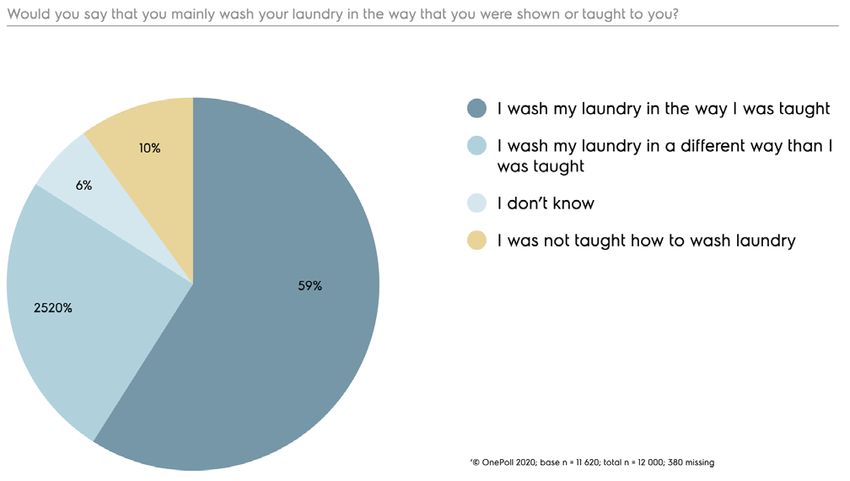
Two questions were asked to understand (a) In terms of how people learn to do the laundry,
how often do people follow care labels on all nearly 6 out of 10 people (59%) claimed to have
garments and (b) how have people learnt to inherited their care habits from their parents
do the laundry. Given the speed of technological advances
within appliances and detergents, plus the
The reason why temperature shown on care
increase in environmental awareness, it would
labels is important, is because it represents the
be reasonable to assume the laundry practices
highest safe level for that particular fabric to
of nearly 60% of the population could be
be washed at, not the recommended setting to
outdated.
wash at. With modern appliances, most laundry
can be effectively cleaned at 20-30°C lower Again, there are biases with age. Younger
than the specified maximum.14 people were significantly more likely to say they
were taught laundry practices (69% of 18-24
In the study, just under a third (32%) of all
year olds and 65% of 25-34 year olds) versus
adults claimed to always follow the washing
52% of 55+ year olds.
instructions on the care label. An additional
40% said they often follow the guidelines, 16% Italians (69%) were the most likely to have
reported ‘sometimes’ with 9% saying they rarely, been taught, Brits (47%) were the least likely,
if ever, followed them. and Poles (35%) were the most likely to do their
laundry differently to the way they were taught.
18-24s were less likely to follow the instructions
(24% versus 32%) while 55+ year olds were 16% of respondents claimed to either not know
significantly more likely to always follow the (6%) or said they weren’t taught (10%), meaning
care label (40%). The country least likely to 84% of all adults having had some sort of tuition
follow the advice was the UK (26%) compared on how to do laundry.
to Italy (41%) which was most likely to follow
the instructions.
14
https://www.aeg.co.uk/siteassets/common-assets/04.-care/inspiration/clp/lookbook_the_care_label_project.pdf/
THE TRUTH ABOUT LAUNDRY – 2021 30CONCLUSIONS AND IMPLICATIONS
The Truth About Laundry is the first pan-European analysis
of attitudes and behaviours towards laundry, fabric care and
the environment. Through its study of 12,000 adults, it aims to
help inform strategies and approaches to extending the life of
clothes, thereby reducing the environmental impact.

The average consumer now owns 60% more                 But less than half (47%) of adults recognise this
items of clothing than they did ten years ago,         relationship which, given data around attitudes
and this appetite is showing no signs of abating.      towards clothing care, could make it an effective
Current estimates reveal clothing consumption          route to encouraging change.
will increase by 63% to 102 million tonnes by
                                                       Changing laundry habits will not be a simple
2030. The impact on the planet is immense and
                                                       case of providing advice and hoping people
not just from the 10% of annual global emissions
                                                       will follow it. The analysis reveals a complex
accounted for by the fashion industry.
                                                       series of influences and decisions involved in
There can be little doubt that the rise of             the laundry process, many of which, for nearly
throwaway fashion has helped to create an              60% of all adults, have been passed down from
immense catwalk of environmental waste. More           previous generations. The reluctance to lower
than half of all fast fashion produced in a year, is   temperatures is also borne out of a disbelief
thrown away. The average garment is worn only          in the cleaning efficacy of detergents and
ten times before being discarded. And 57% of all       appliances at lower temperatures. Both of which
discarded clothing is sent to landfill. Ultimately,    are out of step with advances that have been
people are buying more clothes than ever,              made. The result is millions of garments being
wearing them fewer times and discarding them at        washed at higher temperatures than necessary
a faster rate.                                         which causes fabric and garment degradation,
                                                       a key factor in what has been labelled, ‘throw-
Electrolux is on a mission to help tackle the
                                                       away fashion’.
problem. It wants to play its part by helping to
make clothes last twice as long, with the half         The type of detergent people use also has a
the environmental impact. By extending the             considerable impact on Global Warming
active life of clothes by just nine months, it would   Potential and clothing life. 35% of people across
reduce carbon, water and waste footprints by           Europe use powder as their main detergent of
about 30% per garment.                                 choice. Switching from powder to liquid would
                                                       result in a substantial saving to the Global
The good news, and there is much to celebrate
                                                       Warming Potential as well as increasing the
within the study, is that the majority of people do
                                                       lifespan of garments. But switching might not
care about extending the life of clothes and 86%
                                                       be a simple step for many people, as there
of Europeans believe it to be in the best interests
                                                       could be strong economic reasons for powder
of the planet. Just over a third of adults also feel
                                                       preference. A further dilemma for people could
a level of guilt about the impact of their laundry
                                                       be that powder, because of its more complete
habits on the environment. But there is still much
                                                       formulation, performs better than liquid.
to be done, to close the gap between green
words and green actions.                               71% of adults did the laundry between one and
                                                       three times a week. There is a clear recognition
Nearly two thirds (63%) of Europeans regularly
                                                       from people, that wearing clothes more often
wash their garments at temperatures of 40°C and
                                                       between washes is a simple and effective way
above. New research, published in this study,
                                                       of reducing laundry, increasing the life of clothes
reveals that by simply washing more often at
                                                       and having a positive environmental impact.
lower temperatures, there would be a sizeable,
positive impact on Global Warming Potential.
The benefit of temperature reduction would be
also amplified, as it is also a critical factor in
increasing the life span of garments.

THE TRUTH ABOUT LAUNDRY – 2021                                                                          32
To conclude, the challenges are clear. If sizeable benefits
to the environment and to extending clothing life are to be
realised, then a number of key areas must be addressed:
1. More people must wash at lower
temperatures more often, and more
research and analysis should be conducted
to further understand overcoming the
barriers to doing so.
2. Encouraging people to wear clothes more
often between washes would extend
garment life. This is already a recognised
benefit to the majority of Europeans.
3. Making people aware of the pros and cons
of powder versus liquid, while addressing
potential economic barriers, could deliver
an immediate environmental benefit.
4. Age appears to play a large part across
a wide range of laundry behaviours and
should be considered when developing
solutions.
5. Understanding more about why and how
people wash their clothes could lead to
advancements in technology and detergent
formulas which deliver the benefits people
are looking for at a lower environmental cost.
THE TRUTH ABOUT LAUNDRY – 2021 33You can also read


