The value of rugby to Taranaki - Report to: Venture Taranaki in association with the Taranaki Rugby Football Union
←
→
Page content transcription
If your browser does not render page correctly, please read the page content below

The value of rugby to Taranaki

   Report to: Venture Taranaki in association with
        the Taranaki Rugby Football Union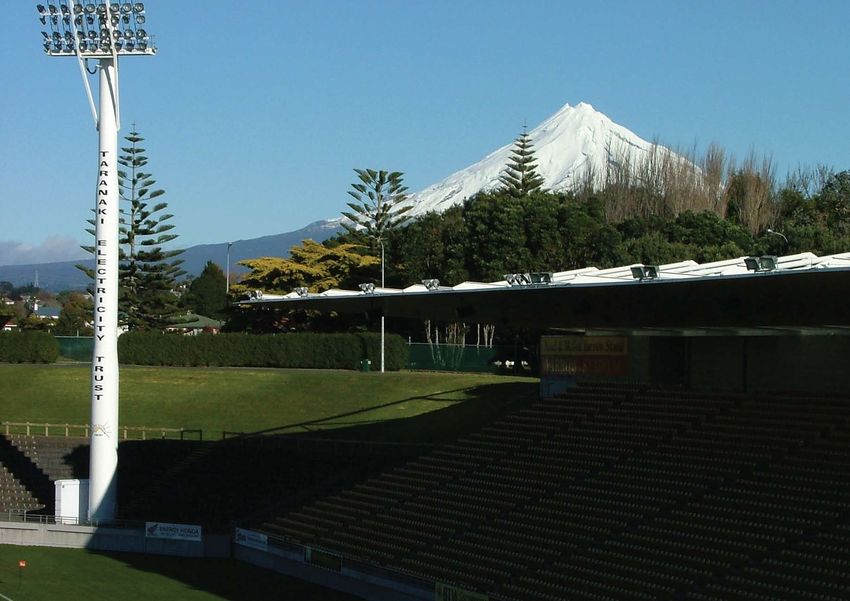
The value of rugby to Taranaki
                                                                                                                  Table of contents

                                                                                                                  1    Executive summary...................................................................................... 4

                                                                                                                  2    Introduction................................................................................................. 7

                                                                                                                  3    Taranaki rugby today................................................................................... 10
                                                                                                                       3.1 The region’s rugby heritage................................................................................ 10
                                                                                                                       3.2 Participation today................................................................................................ 10
                                                                                                                       3.3 Challenges faced.................................................................................................. 12

                                                                                                                  4    Quantifiable impacts of rugby...................................................................... 14
                                                                                                                       4.1 Ongoing quantitative economic impacts............................................................. 15
                                                                                                                       4.2 One-off quantitative economic impacts............................................................... 21

                                                                                                                  5    Qualitative impacts of rugby........................................................................ 28
                                                                                                                       5.1 Developing strong, sustainable and cohesive communities.............................. 28
                                                                                                                       5.2 Increasing skills, employment and economic prosperity.................................. 33
                                                                                                                       5.3 Improving health and reducing health inequalities............................................ 34
                                                                                                                       5.4 Reducing anti-social behaviour and the fear of crime....................................... 37
                                                                                                                       5.5 Improving life chances and focusing energies of young people....................... 38

                                                                                                                  6    Taranaki rugby scenarios............................................................................. 39
Acknowledgments:
                                                                                                                       6.1 Scenario 1: The Air New Zealand Cup (ANZC).................................................. 40
A special thank you to Ian Smith from Stratford Rugby and Sport Club and
                                                                                                                       6.2 Scenario 2: The Heartland Championship.......................................................... 40
Brian Campbell from Coastal Rugby Club for contributing to the case studies.
                                                                                                                       6.3 Scenario 3: Super Rugby...................................................................................... 41
Venture Taranaki and the Taranaki Rugby Football Union wish to
acknowledge the contribution of BERL who have undertaken much of the
                                                                                                                       6.4 Summary of scenarios.......................................................................................... 43
analysis required for this report.
                                                                                                                  7    Conclusions................................................................................................. 44
Photographs courtesy Rob Tucker, Taranaki Daily News
                                                                                                                  8    References................................................................................................... 46

                                                                                                                  9    Appendix: NZRU Criteria for Air New Zealand Cup....................................... 48

Business and Economic Research Limited, BERL House, 108 The Terrace, PO Box 10277, Wellington 6143, New Zealand
T: 04 931 9200 F: 04 932 9202 info@berl.co.nz www.berl.co.nz

                                                                                                                                                                                                            The value of rugby to Taranaki 2009     1
Tables
                                          Table 3.1.    Taranaki Provincial Union key figures........................................................... 11
                                          Table 4.1.    Major ongoing and one-off economic impacts of rugby in Taranaki......... 14
                                          Table 4.2.    Current economic impact of rugby in Taranaki, 2008................................. 15
                                          Table 4.3.    TRFU profit and loss statements, 2003 to 2008............................................ 17
                                          Table 4.4.    Economic impact of TRFU, 2008.................................................................... 17
                                          Table 4.5.    Economic impact of club operations, 2008.................................................. 18
                                          Table 4.6.    Economic impact of school rugby, 2008...................................................... 18
                                          Table 4.7.    Spending by out-of-region visitors to ANZC games................................... 19
                                          Table 4.8.    Economic impact of Rugby World Cup, 2008.............................................. 22
                                          Table 4.9.    Economic impact of All Blacks – Manu Samoa Test, 2008........................... 24
                                          Table 4.10.   Economic impact of 2004 Super 12 game in Taranaki, 2008...................... 25
                                          Table 6.1.    Heartland scenario economic impact of rugby in the region..................... 41
                                          Table 6.2.    Super Rugby scenario economic impact of rugby in the region............... 42

                                          Figures
                                          Figure 2.1.   Quantitative economic impacts of rugby..................................................... 7
                                          Figure 2.2.   Qualitative economic impacts of rugby....................................................... 8
                                          Figure 4.1.   Ongoing contribution of rugby to Taranaki GDP......................................... 16
                                          Figure 4.2.   One-off contributions of rugby to Taranaki GDP......................................... 21
                                          Figure 5.1.   Rugby round the mountain............................................................................ 32
                                          Figure 5.2.   Obesity rates, Taranaki and New Zealand, 2007.......................................... 34
                                          Figure 5.3.   Active lifestyle rates, Taranaki and New Zealand, 2007............................... 35
                                          Figure 5.4.   Maori share of Taranaki population and registrations, 2008....................... 36
                                          Figure 5.5.   Offence rates, Taranaki and New Zealand, 2008.......................................... 37
                                          Figure 5.6.   Cost of crime by category, 2003/04............................................................. 38
                                          Figure 6.1.   Contribution of scenarios to Taranaki GDP.................................................. 49

2   The value of rugby to Taranaki 2009                                                                                     The value of rugby to Taranaki 2009   3
1 Executive summary
The ‘amber and blacks’ provide a The purpose of this report is to investigate the Quantitative benefits stage the games with their existing infrastructure and
significance of rugby to the Taranaki region, as facilities. The economic impact on the region with three
point of focus for the Taranaki region. In 2008, total output (revenue) in the region due to the
Venture Taranaki and the TRFU seek to encourage the games and hosting a team could add $5.2 million to the
Their performance often instils a sense community to consider the future of rugby in, and Taranaki Rugby Football Union, schools, and club rugby, region’s GDP. Participating will also result in improved
of pride and community. Consistent the contribution of rugby to, the region. The report was $11.9 million. This revenue generated $7.4 million facilities that will be available to the region beyond
performers, often pulling off major also helps to determine whether there is a case for the in total GDP and 135 full-time equivalent jobs (FTEs). Rugby World Cup. The benefits of marketing Taranaki
upsets, they exemplify confidence in region to support Taranaki rugby to have a place in the
A range of other quantifiable economic impacts, such
to the world through RWC 2011 are significant.
the ability of Taranaki to punch above highest possible echelon of the sport available in
as the value of volunteerism, the impacts of three These additional impacts are important because of the
its weight and to be a successful and New Zealand.
Rugby World Cup 2011 matches at Yarrow Stadium, dollars they generate, but even more so because they
go-ahead community. Change will ultimately have a significant impact on the operations of Yarrow Stadium itself, and inter- raise the profile of the Taranaki region, build a sense of
provincial rugby in New Zealand. Throughout this school rugby were not included in these figures, pride and place, and contribute to making Taranaki a
Rugby has helped shape the identity of the Taranaki largely because the impact is indirect and cannot be
change process there will be potential threats and more attractive place to live.
region since the Union’s inception over 120 years ago. solely attributed to rugby in the region. However, it
opportunities for Provincial Unions.
It is a sport and activity ‘like no other’. It plays a critical could be very strongly argued that without a parochial
part in communities throughout the region and is Qualitative benefits
Three potential scenarios of future rugby in Taranaki supportive rugby community, these events would
central to the fabric of society in Taranaki. have been considered in this report. These compare the not occur. There are various other ways that rugby benefits the
involvement of Taranaki in: Taranaki region that are not as easily quantified. These
Registered participants in rugby account for more than Rugby is the catalyst for investment in key infrastructure
five per cent of the total Taranaki population. Rugby in qualitative contributions to the community are in
• amateur Heartland Rugby (a competition between and community amenities in the region such as Yarrow
Taranaki starts at the grass roots level. Taranaki has one many ways at least as important as the quantitative
minor Provincial Unions); Stadium, and in smaller towns such as Inglewood
of the highest proportions of involvement of anywhere contribution to the regional economy.
where the Taranaki Electricity Trust Stadium has been
in New Zealand, especially in the younger age grades. • a revamped, semi-professional national provincial
developed. In addition, the facilities and fervent Generally, studies show that participation in team sport
competition, currently the Air New Zealand Cup
support for rugby in the region have contributed to has significant benefits for communities. Some of these
(ANZC); and
The changing face of rugby the attraction of significant rugby sporting events such benefits include:
• full-time professional rugby in an international as the All Blacks in 2008 and the recently announced
This report was commissioned by Venture Taranaki in • increased community visibility – contributes to
competition such as the Super 14. Rugby World Cup 2011 matches and associated events.
association with the Taranaki Rugby Football Union Taranaki being ‘on the map’
(TRFU).The timing of the report was based on the If Taranaki was to ‘drop the ball’ and end up out of the If these events were accounted for in the report
significant potential change for rugby globally and then the quantitative impacts would be substantially • regional pride, status and reputation
top-flight national competition, rugby participation in
nationally that is emerging due to several factors: the region could drop significantly on current levels. more impressive.
• collective morale and the ‘feel good’ factor
The total impact on output (revenue) attributable to
• the expiry of the South Africa New Zealand Australia An earlier study found that a super 12 game in 2004
rugby in the region could be a 62 percent fall. GDP • enhanced community image and attractiveness for
Rugby (SANZAR) broadcasting arrangement with contributed close to $400,000 to regional GDP.
contribution from rugby would subsequently fall by 65 people to visit or relocate to the region
News Ltd The game between the All Blacks and Manu Samoa
percent and employment by 57 percent.
in 2008 attracted several thousand people from • the stimulation of other development
• the issue of endeavouring to create an international
Conversely, albeit hypothetically, if Taranaki was outside the region to the game and associated events,
playing window to unify the game more between • social cohesion, improved healthy lifestyles,
positioned to take advantage of opportunities to secure suggesting an impact of around $1.2 million on
Northern and Southern Hemispheres less crime, improved discipline and appreciation
a Super Rugby franchise at some point in the future, regional GDP.
of team-work.
• the issues of financial sustainability of rugby in TRFU revenue could be boosted to between $10 million
The successful Taranaki bid for Rugby World Cup 2011
New Zealand and Australia and $15 million a year. Total revenue could rise 157
was based largely on the passion for the game in the
percent from the current situation to $30.6 million a
• the challenges around player work-load and the region, combined with the ability of the region to
year, resulting in an increase in regional GDP of 160
high number of games currently played by
percent, and an increase in employment of 72 percent.
professional rugby players
• the future opportunities associated with
Rugby World Cup 2011.
4 The value of rugby to Taranaki 2009 The value of rugby to Taranaki 2009 5
2     Introduction
    Rugby’s point of difference in Taranaki is the central      The value of rugby is a summation of many factors -         This report was commissioned by Venture Taranaki in association with the
    part it plays in many of the communities around Mount       the team, facilities, location, institutional structure,
                                                                                                                            Taranaki Rugby Football Union (TRFU). The purpose of the report is to investigate
    Taranaki, combined with the great level of interest the     stakeholders, history, the experience, game atmosphere,
    representative team generates during the ANZC.              regional spirit, culture and local knowledge of the
                                                                                                                            the importance and impact of rugby in the Taranaki region in a changing and
                                                                game. It has a positive role in youth development,
                                                                                                                            uncertain environment.
    Rugby is the only major sport where the entire Taranaki
                                                                community development and in bringing together
    region is represented in a national, fully televised tier
                                                                people from all parts of society. The value which
    one competition in New Zealand. It embodies the
                                                                individual Taranaki residents place on rugby
                                                                                                                                                   Figure 2.1. Quantitative economic impacts of rugby
    spirit and nature of the Taranaki region where there
                                                                undoubtedly varies. Furthermore, value is also affected
    is a perception that it is the underdog, which often
                                                                by timing. Taranaki rugby has experienced good years
    performs beyond expectations. Taranaki rugby is grass
                                                                but also challenge and change. Overall, however, rugby
    roots. It generates a sense of community and pride in
                                                                forms an important part of Taranaki’s culture, history
    the region. In return, the community supports rugby -
                                                                and identity, and looking ahead, given RWC 2011, the
    whether it is financial, time, or participation.                                                                                                                     Economic impact
                                                                sport will continue to do so.                                                                             eg. visitors attending
                                                                                                                                                                        games, spending money
    The findings of this report clearly indicate that there
                                                                Significant levels of social and economic benefit will be
    is a strong case for significant regional investment in
                                                                lost if Taranaki cannot support its own team in the top
    rugby. Not only to protect the current value rugby
                                                                echelon of domestic rugby in New Zealand.
    offers Taranaki, but to also ensure that the sport is
    well positioned in the medium term to take advantage        We commend this report to anyone interested in the
    of possible opportunities that may arise due to the         future of this wonderful province, we call home.
    imminent and likely ongoing restructuring of the game.
                                                                                                                                 $ Value of the team
                                                                                                                                                                                                             Spin off developments
                                                                                                                                  and supply chain
                                                                                                                                                                                                                   and gains
                                                                                                                                                                        Taranaki Rugby
                                                                                                                                                                           Economic
    STUART TRUNDLE                                              MARK ROBINSON                                                                                             development
    CHIEF EXECUTIVE, VENTURE TARANAKI                           CHIEF EXECUTIVE, TARANAKI RUGBY FOOTBALL UNION                                                              benefits

                                                                                                                                            Community visibility
                                                                                                                                              and awareness                                           Enhanced
                                                                                                                                              eg. televised coverage,                              community image
                                                                                                                                             rugby putting “Taranaki”                               and reputation
                                                                                                                                                     on the map

                                                                                                                                          Figure 2.1, which summarises linkages between rugby and regional
                                                                                                                                          development, has traditionally predominantly focused on economic impacts
                                                                                                                                          e.g. the economic spin-offs from the presence of the premier team, rugby
                                                                                                                                          events, venue construction and so on.

6   The value of rugby to Taranaki 2009                                                                                                                                                                     The value of rugby to Taranaki 2009   7
The report begins in chapter 3 by looking at the           Chapter 6 introduces three possible scenarios for
                                    Figure 2.2. Qualitative economic impacts of rugby                                   history and current state of rugby in the region, and      the future of rugby in Taranaki. Two of these differ
                                                                                                                        summarises the contribution of the sport to Taranaki.      from the present case scenario of Taranaki having a
                                                                                                                                                                                   professional team playing in New Zealand’s premier

                                                                                                                        Rugby impacts the region in two                            competition. In the first of these different scenarios,

                                                                                                                        major ways:                                                Taranaki loses its professional (ANZC) rugby team, and
                                                                                                                                                                                   competes instead in the Heartland Championship.
                                                                                                                        • economic activity generated through participation        In the second scenario, Taranaki participates in an
                                                     Community visibilty                                                  and administration, the maintenance of                   international competition such as Super Rugby. As in the
                                                     eg. contribution to image,                                           infrastructure to support the game, supporters who       examination of the current contribution of rugby in the
                                                       pride and reputation            Excitement quotient -
                                                                                                                          pay to attend the games and volunteers who give up       Taranaki Region, the scenarios consider quantitative and
                       Civic pride from                                               contributes to emotion,
                                                                                                                          valuable time to support the game. In most instances,    qualitative impacts.
                        being a ‘major                                                  vibrancy, and ‘feel
                                                                                                                          this activity can be quantified. This is discussed
                         league’ team                                                       good’ factor                                                                           Chapter 7 provides some concluding remarks on the
                                                                                                                          in chapter 4
                                                                                                                                                                                   importance of rugby in Taranaki, the role it plays in
                                                                                                                        • social benefits generated through participation and      making the Region a more attractive place to live, and
                                                                                                                          association with sport. This is the value of sport in    the need to be prepared to adapt to changes in the
                                                                                                                          changing attitudes and perceptions – improving skills,   rugby environment. It also raises issues around the
                                                                                                                          developing strong, cohesive communities, enhancing       relationship between rugby and regional development.
       Enhanced collective                                                                                                regional pride, vibrancy, image and reputation,
         self-esteem from                          Qualitative Civic                                   Emotional          improving health, reducing anti-social behaviour,
            a winning or                              Benefits                                     involvement, love      and focusing the energies of young people. These
       respected team. The                         from Taranaki Rugby                             affair with a team     benefits are discussed in chapter 5.
         ‘feel good’ factor.

                       Inspirational
                      and aspirational
                        connections                                                   Tangible focus for
                       eg. role-modelling,                                             social bonding
                   achievement, hardwork etc
                                                       Positive sense of
                                                      collective identity
                                                      eg. Taranaki’s ‘can do’
                                                     attitude, punching above
                                                             its weight

                      Figure 2.2 emphasises the qualitative contributions of rugby, such as social cohesion,
                      pride and visibility. These also form an important part of this equation.

                                                                                                                                                                                                     Photo courtesy of Taranaki Daily News

8   The value of rugby to Taranaki 2009                                                                                                                                                                   The value of rugby to Taranaki 2009   9
3        Taranaki rugby today

     This chapter introduces the central role                   The Taranaki rugby team is a source of pride and                  Table 3.1 Taranaki Provincial Union Key Figures
                                                                association for Taranaki residents where rugby is an
     rugby has played, and continues to
                                                                essential component in the lives of many. A sport and                                                                            Players
     play, in the Taranaki region.                              recreation report in 20071 surveying Taranaki residents
                                                                                                                                                                            Under 13         Age 13-20      Age 21+        Total      Coaches        Referees
                                                                highlights the importance of rugby to Taranaki. The key
     3.1 The region’s rugby heritage                            points from this report are as follows:                            Total number 2005                            1,878          1,821           771        4,470           383            49
     Rugby has been a key part of the Taranaki landscape        • sixty-six percent of Taranaki residents watch rugby,             Total number 2008                            2,562          1,488           637        4,687           311            54
     since 1885, when the region’s first touring team –             either live or televised
     Egmont – was selected from senior clubs existing                                                                              Annual growth rate 2005-2008                 11%            -7%             -6%          2%           -7%            3%
     in Taranaki at the time - Waitara, Taranaki, Waimate,      • of all recreational activities undertaken by residents,
                                                                                                                                   Rank (out of 26 provincial unions)
     Hawera and Patea. Since then, rugby has played                 rugby was the third most common, at six percent of

     a major role in the lives of people born or raised             Taranaki respondents                                           Rank by total number 2008                     12             13              14          13            14             14
     in Taranaki.
                                                                • seven percent of Taranaki residents used the Yarrow              Rank by annual growth rate                    4              23              25          11            24             16
     Rugby has always been a major sport in the region,             Stadium facilities. As expected, a greater proportion

     with Taranaki able to compete with the best despite its        of New Plymouth residents (11 percent) used the                                                                                                                Source: New Zealand Rugby Union
     relatively small population. Taranaki has maintained           Stadium compared with the rest of Taranaki

     a representative team in the top tier of competition                                                                         In terms of absolute numbers of players, TRFU is the               Growth in the older age groups is less heartening,
                                                                • over 85 percent of Yarrow Stadium users viewed
     since the inception of professional rugby in 1996 and it                                                                     13th largest provincial union in the country, with 4,687           yet consistent with the general decline that is faced
                                                                    it as either very good or good value for money.
     consistently outperforms larger regions.                                                                                     players in 2008. Growth in the number of younger                   nationally. Age 13-20 year olds playing rugby in
                                                                                                                                  players, partly offset by falls in older player numbers,           Taranaki have fallen by seven percent per annum on
     Taranaki has held the challenge based Ranfurly Shield      3.2 Participation today                                           has led to an overall annual growth rate of 2 percent              average over the last three years, and over 21 year old
     four times, in 1913, 1957, 1963 and 1996. In 1913,                                                                           over the last three years – the 11th fastest growing               players have fallen six percent per annum. We would
                                                                Over 5,500 people, or more than five percent of the
     Taranaki won the shield off Auckland and defended                                                                            provincial rugby union in New Zealand.                             expect, however, that the growing number of under
                                                                Taranaki population, either play, coach or referee rugby
     it six further times. In 1957, Taranaki beat Otago and                                                                                                                                          13 players in the sport will lead to more positive growth
                                                                in the Taranaki region. There are over 90 organisations           The growth over the last three years in the under 13
     then defended it 13 times. In 1963 it beat Wellington                                                                                                                                           in the older groups as the players age.
                                                                – schools and clubs – that participate in rugby                   age bracket is encouraging. TRFU under 13 players grew
     and then successfully defended it 15 times. Out of all
                                                                competitions in Taranaki. Rugby activity, as shown in             by 11 percent per annum from 2005 to 2008, to reach                Also of concern is the fall in the number of coaches seen
     the unions, Taranaki has the sixth highest number of
                                                                Figure 5.1, is spread around the entire region.                   a total of 2,562. The majority of this growth occurred             in the region, from 383 in 2005 to 311 in 2008, down
     Ranfurly Shield game wins, with 36.
                                                                                                                                  from 2007 to 2008. The under 13 age group now makes                seven percent a year. In 2005, there were approximately
                                                                Table 3.1 summarises the 2008 number of Taranaki
     After lifting the shield against Otago in 1957, there                                                                        up over half of all rugby players in Taranaki. Compared            12 players per coach in Taranaki; this ratio has increased
                                                                players, coaches and referees and growth in numbers
     were around 20,000 people lining the route from the                                                                          with the other RFUs in New Zealand, Taranaki under 13              to 15 players per coach in 2008.
                                                                over the last three years, and then ranks the TRFU’s
     old airport to town to congratulate them.                                                                                    players rank as the fourth fastest growing.
                                                                performance against the other 25 provincial                                                                                          The number of referees has grown, however. Referee
                                                                rugby unions.                                                                                                                        numbers increased by on average two percent per year
                                                                                                                                                                                                     over the last three years.

                                                                1
                                                                 Key Research Ltd. (2007). Taranaki Sport and Recreation Needs
                                                                Assessment: A survey of Sport, Recreation and Physical Activity
                                                                in the Taranaki Region 2006/2007.

     Photo courtesy of Taranaki Daily News

10   The value of rugby to Taranaki 2009                                                                                                                                                                                   The value of rugby to Taranaki 2009       11
School rugby                                                 3.3 Challenges faced                                       Coastal Rugby Football Club
     There are between 130 and 140 primary and secondary          Rugby is going through a number of changes and facing
     school teams in the region. Between them, these              an increasing number of pressures.                         The Coastal community is relatively     The club leases a dairy farm, and
     teams have at least 2,340 players and coaching staff.
                                                                                                                             small and very isolated, stretched      sponsors’ contributions purchase
     The figure is likely to be significantly higher than this,   • player numbers are, in general, declining due
                                                                    to increasing competition from other forms of
                                                                                                                             between the rural communities of        cows and equipment for it. The
     however, as many players who play for their school also
                                                                    entertainment, not only sporting activity, but           Opunake, Rahotu and Okato along the     proceeds of the farm support the
     play for a club, but are registered only once – usually
                                                                    leisure activity                                         coast of Taranaki. The one thing that   club, and include providing all players
     for the club.
                                                                                                                             brings them together each week is       with jerseys each season.
     There are numerous grades at the secondary and               • it is becoming harder to find volunteers to
                                                                                                                             Saturday morning rugby.
     primary levels. Secondary School rugby has five grades         support the game                                                                                 While there is never a shortage of
     from A grade to E grade. Junior rugby has eight grades                                                                  The Coastal community has a strong      volunteer coaches and referees,
                                                                  • at the grass roots, there are fewer male teachers,
     from under 13 to under 6.                                                                                               sense of pride in their teams, with     Coastal is finding it difficult to attract
                                                                    making it more difficult for schools to participate
                                                                                                                             rugby being a major obsession           management and administration
     Club Rugby                                                   • at the operational level, there is more competition      for the area. There are around 450      volunteers, up to the point where they
                                                                    for sponsorship funding and, in the current economic     players in 21 teams (4 club teams,      are considering paid positions.
     Taranaki Club rugby is the foundation for the game             climate, competition from other more pressing            14 primary school teams and 3 high      One reason for this may be Coastal’s
     in the province. In 2009, there were 17 active clubs.          business needs.                                          school teams). Up to 60 percent         obsession for rugby! Players are
     Around 3,200 players, coaching and administrative staff
                                                                  This report is timely because it provides an analysis of   of the community come to watch          playing rugby well into their forties,
     are registered at clubs.
                                                                  the value of rugby within a region, at a time when         the games during the season, with       and have no interest in hanging up
     There are two levels of participation in club rugby:         the regional game is facing both risk and opportunity.     crowds known to reach up to 400 for     their boots for a desk job.
                                                                  With several provinces currently finding it difficult      some games.
     • Senior (afternoon grade)
                                                                  to maintain financial viability, defining the value
                                                                                                                             The club enjoys strong financial
     • Junior (morning grade).                                    proposition to all those who benefit from the game
                                                                  is important. If that value is to be maintained and
                                                                                                                             support in the Coastal area also,
     In the Senior competition there are four grades: Senior
                                                                  enhanced it first has to be identified and recognised.     with 500 subscribed members, and
     A, Senior B, Senior 3rds and under 20. The Senior A and                                                                 around 70 local sponsors. Five large
     B competitions have 10 teams in each grade with the          And that is what rugby in the regions does – provides a    multinationals also support the club.
     Senior 3rds and under 20 grade numbers depending on          positive contribution to the community, the region, and
     entries from year to year.                                   enables the nation to celebrate the success of the All     When the three teams of Opunake,
                                                                  Blacks, our national team.                                 Rahotu and Okato were amalgamated
     The two top secondary school 1st XV teams (New
                                                                                                                             into one Coastal club, a question
     Plymouth Boys and Francis Douglas) also compete in the       Taranaki rugby thus plays a much wider role than
                                                                                                                             arose on how it would be financed.
     Club under 20 competition.                                   just providing an opportunity for sponsors wishing
                                                                  to advertise or associate products. It provides major
                                                                                                                             Initial thoughts about running a pub
     Each team is supported by a team manager, head coach,
                                                                  benefits to individuals, individual communities and        fell through, because as the club
     and assistant coach. Top-tier teams may also have a                                                                     management were farmers, they had
                                                                  the Taranaki region. These additional benefits are
     trainer, physiotherapist and another assistant coach.                                                                   no experience in that area. What
                                                                  largely correctly defined as public good and justify

     Many of the junior teams rely on the good will               consideration and support from public agencies in          they did know was how to run a farm,
     of parents to get players to and from training,              furthering their roles to promote community wellbeing.     however, so that is what they did.      COASTAL V NEW PLYMOUTH OLD BOYS
     twice a week.

12   The value of rugby to Taranaki 2009                                                                                                                                                The value of rugby to Taranaki 2009   13
4 Quantifiable impacts of rugby
This chapter deals with the quantifiable Ongoing impacts include the operation of the TRFU, Rugby in the region generates:
club and school rugby, and tourism expenditure
economic impacts of rugby in the • direct output (revenue) of around $7.60 million
generated by ANZC spectators from outside the region.
Taranaki region. Quantifiable impacts Further, the economic impacts of Yarrow Stadium, a year, direct GDP of $4.41 million a year, and 93
are those impacts that we can measure which, it is argued, is only viable as a part of the local direct FTEs
with a degree of accuracy. They infrastructure as a result of the importance of rugby to
• total output of $11.9 million a year, total GDP of
are important in that they provide a the region, and the economic value of volunteerism,
$7.43 million a year, and 136 total FTEs.
are discussed.
financial measure of the contribution
These are conservative figures as they exclude:
in terms of contribution to productive One-off impacts include those of the Rugby World Cup
activity (GDP) and employment. Within games to be hosted by the Region in 2011, the All Blacks • any form of volunteerism other than coaching of the
test in 2008, and the impact of a Super Rugby game approximately 300 school and club rugby teams in
this report two types of quantifiable
such as that held in the Region in 2004.
impact - ongoing (annual), and one-off 4.1 Ongoing quantitative the region. In other words, it excludes the value of
(events) - have been identified. Table 4.1 summarises the main ongoing and one-off economic impacts time spent refereeing, transporting players to and
from matches or practice, unpaid assistance at major
quantifiable economic impacts of rugby in the Region.2
This section presents the estimated ongoing games such as ANZC matches at Yarrow Stadium, and
quantitative impacts of rugby in Taranaki on output administrative support
(revenue), GDP and employment. The figures in this
section explicitly take into account only the impacts of • employment, GDP and output created by the
Table 4.1. Major ongoing and one-off economic impacts of rugby in Taranaki
operations of the TRFU, club and school rugby, as well operation and maintenance of public sports grounds
as the annual ANZC competition. used for rugby, including the operation of Yarrow
Quantifiable impacts Total GDP ($m) Total FTEs
Stadium. For instance, it can easily be argued
Various figures for volunteerism and Yarrow Stadium’s that without a first division Taranaki rugby team,
Ongoing (annual) impacts
contribution to the region are also estimated, but are there would be significant impacts on the business
TRFU $4.62 66 not included in overall figures. efficiency of Yarrow Stadium
Club rugby $0.92 37 Table 4.2 presents the effects on employment, GDP • additional economic impacts of Yarrow Stadium
and output of rugby in the region. when used for other events, noting that without
School rugby $1.34 21
rugby, there would not have been as large a facility
NPC matches $0.55 11 Table 4.2. Current economic impact
• employment, GDP and output created by any large-
One-off impacts of rugby in Taranaki, 2008
scale rugby-related capital expenditure in the region
not paid for out of club or Rugby Union revenues
Rugby World Cup 2011 $5.24 97 Economic impact Direct Total
(e.g. grants from SPARC).
All Blacks Test 2008 $1.19 23 Output ($m) $7.60 $11.91
TRFU activity accounts for around 60 percent of GDP
Super Rugby match $0.39 8 GDP ($m) $4.41 $7.43 generated by rugby, with the remainder split between
club rugby, school rugby and ANZC matches (visitor
Employment (FTEs) 93.0 135.5
Source: BERL activity). Each of these is discussed individually.
Source: BERL
2
Volunteerism is not included in this table because the work is not actually paid (and therefore does not generate GDP). However,
in the section on volunteerism, we estimate the value of such activity if it were paid. Yarrow Stadium is also not included because an
accurate portion of total revenues generated by events at the Stadium cannot be apportioned to rugby. Nevertheless, the ongoing role
of the Stadium is discussed in this report.
14 The value of rugby to Taranaki 2009 The value of rugby to Taranaki 2009 15
Figure 4.1 Ongoing contribution to Taranaki ($7.43m annually) Taranaki Rugby Football Union Table 4.4 Economic impact of TRFU, 2008
Source: BERL The TRFU employs around 15 full-time staff, with a
TRFU Direct Total
further 28 contracted players. The TRFU is one union
that has been able to remain financially viable over the Output ($m) $4.22 $6.71
years, as shown in Table 4.3.
GDP ($m) $2.55 $4.62
Club rugby, $0.92m Income has exceeded expenditure in five of the
Employment (FTEs) 43.0 66.2
last six years.
12%
Source: BERL
School rugby, $1.34m, Income from sponsorship has remained the largest
18% component of revenue over the six years. Its share of Revenues generated by the TRFU in 2008 accounted
NPC, $0.55m total revenue has risen from a little over one third in for around two-thirds of the total ongoing output
2003, to nearly half in 2008. Income from other sources
8% generated by rugby in the region in this analysis, at
(most notably the Hurricanes) has fallen significantly, $4.22 million. This resulted in GDP of around $2.55
from $1.29 million in 2003 to $760,000 in 2008. million, and 43 direct FTEs (staff and contracted players).
Expenditure through the TRFU has ongoing impacts Taking into account indirect and induced impacts, the
and contributes to GDP and employment in the TRFU produced $6.71 million in output, $4.62 million in
Taranaki region. Table 4.4 presents the economic GDP, and 66 FTEs.
impact of the TRFU.
Table 4.3 TRFU profit and loss statements, 2003 to 2008
TRFU profit and loss statement 2003 2004 2005 2006 2007 2008
Income ($000) $2,932 $2,620 $2,942 $3,541 $4,152 $4,222
Sponsorships $898 $930 $1,072 $1,329 $1,610 $1,954
TRFU, $4.62m
62% NZRU Grants $626 $670 $820 $949 $1,075 $943
Team Taranaki $122 $173 $202 $508 $944 $565
Figure 4.1 breaks down the ongoing contributions to Taranaki GDP by the different groups Other $1,285 $847 $849 $756 $524 $760
of activity: Taranaki Rugby Football Union; club rugby; school rugby; ANZC matches.
Expenses ($000) $2,712 $2,551 $2,907 $3,654 $4,033 $4,205
Players and player development $968 $1,069 $1,288 $1,661 $1,874 $1,780
Staff $735 $748 $837 $937 $1,063 $1,207
Commercial expenses $610 $313 $293 $509 $505 $603
Other $399 $421 $488 $547 $592 $616
Net profit/loss ($000) $220 $70 $35 $-112 $119 $17
Source: TRFU
16 The value of rugby to Taranaki 2009 The value of rugby to Taranaki 2009 17Club operations The figure of 24 direct FTEs was estimated on the A similar methodology was used to estimate the direct Table 4.7 Spending by out-of-region visitors to
assumption that the average coach spends six hours employment due to school rugby as was used for clubs. ANZC games
Based on TRFU records, more than 3,200 players, of a 40-hour work-week at training sessions or at Each coach was estimated to spend around six hours a
administrators and coaches are registered at rugby matches. This is a conservative estimate. It also does not week on activities related to their coaching. NPC visitor spending Direct Total
clubs across Taranaki. There are up to 160 club teams take into account administrative, volunteer,
in the region. As with club rugby, the estimate does not take into Output ($m) $0.74 $1.10
or refereeing staff.
account the contribution of referees, administrative and
Table 4.5 presents the estimated economic impact GDP ($m) $0.37 $0.55
Including upstream and downstream impacts, club support volunteers. It also does not take into account
of club operations in the region in 2008. operations in Taranaki create $2.19 million in revenue the possible tourism impact of inter-school competitions Employment (FTEs) 8.5 10.9
(output), $920,000 in GDP, and around 37 FTEs. which bring school teams from across the country into
Table 4.5 Economic impact of club Taranaki for tournaments. Source: BERL
operations, 2008 School rugby
Each year, the region’s two most well-known rugby- Direct spending by out-of-region spectators is around
playing schools, Francis Douglas and New Plymouth Boys $740,000, resulting in $370,000 in GDP and 8.5 FTEs. The
Club operations Direct Total More than 2,300 players, administrators and coaches are
registered through schools across Taranaki. There are High School, host inter-school rugby tournaments. total impact includes $1.10 million in output, $550,000
Output ($m) $1.37 $2.19 in GDP, and 11 FTEs.
around 130 to 140 school teams in the region.
These games bring considerable numbers of out-of-
GDP ($m) $0.51 $0.92 region visitors to Taranaki – players, coaches, parents
Table 4.6 presents the quantitative economic impact of
Yarrow Stadium
school rugby in the region. and additional teaching staff. While many of the
Employment (FTEs) 24.1 37.1
touring team members will stay at the homes of players Yarrow Stadium, like Taranaki rugby, is a focus and
Source: BERL from the two Taranaki schools, it does increase regional object of pride for the region’s people. Yarrow Stadium
Table 4.6 Economic impact of school
spending on retail, food and transport. was recently rated in the top three rugby venues in
The TRFU was able to provide operating expenditure
rugby, 2008
the world, behind only Millennium Stadium, in Cardiff,
data for seven of the region’s 17 clubs. Bulking In addition, the inter-school tournaments raise the
Schools rugby Direct Total Wales, and Suncorp Stadium, in Brisbane.³
this figure up to cover the 17 clubs gave a direct profile of the game in Taranaki and elsewhere, and
output figure of around $1.37 million, resulting in build community spirit as residents rally behind the local The present capacity of the stadium, at 20,685, is
Output ($m) $1.26 $1.92
GDP of $510,000. teams. They also bring prestige to the region’s schools, larger than that of McLean Park in Napier, or Arena
GDP ($m) $0.98 $1.34 which are able to compete at a national level. Manawatu in Palmerston North, for instance, despite
a smaller regional population in Taranaki. By Rugby
Employment (FTEs) 17.5 21.4
ANZC matches World Cup 2011, Yarrow Stadium will be able to hold
Source: BERL 25,000 spectators.
Yarrow Stadium plays host to five to six ANZC matches
School rugby is estimated to generate $1.26 million in in an average year. In 2008, a total of 28,000 spectators Yarrow Stadium was the fifth most popular regional
direct output, resulting in $980,000 in GDP, and around attended these games. Assuming that 10 percent facility in the Taranaki region.4
18 FTEs. Taking into account indirect and induced of these spectators were from outside the region,
A strong case can be made that without strong support
impacts suggests total output due to school rugby is spending on average $266 a day, the results in Table 4.7
for rugby in the Taranaki region, there would be no
$1.92 million. This output is from 21 FTEs, producing are obtained.
justification for Yarrow Stadium and its current size
$1.34 million in GDP.
and level of amenity. Nevertheless, the fact that the
Stadium is used for purposes other than rugby makes
it unrealistic to include it as a direct ongoing economic
impact of rugby.
³ New Zealand Rugby World, May 2009 Issue.
4
Sport Taranaki (2007). Taranaki Sport and Recreation Needs
Assessment – 2007.
18 The value of rugby to Taranaki 2009 The value of rugby to Taranaki 2009 19Historically, the Stadium has played host to a number Furthermore, in the case of sports teams, players and Assuming an average hourly rate of $24.70, and four 4.2 One-off quantitative
of matches across various sporting codes, including support staff are likely to arrive in the region several hours a week (0.1 FTE each) of volunteer time, the
economic impacts
Hurricanes rugby games; Genesis Taranaki versus British days before the game, and possibly stay a day after. This economic impact of these 195 volunteers is significant.7
and Irish Lions (rugby); Taranaki ANZC rugby games; results in considerable spending on accommodation, If these volunteers were paid, the impact would equate This section looks at three one-off quantifiable impacts
New Zealand Maori versus England (rugby); food and other tourism-related expenses. to 19.5 direct FTEs, and almost $1 million in direct of rugby in Taranaki: the hosting of three matches,
New Zealand Maori versus Scotland (rugby); Central GDP a year. upgrades and a team based in Taranaki for the Rugby
Current financing models for sports stadiums suggest
Districts versus Sri Lanka (cricket); and New Zealand World Cup 2011, the 2008 All Blacks – Manu Samoa test
that their construction should be a private-public However, the role of volunteerism is about far more
Warriors versus Parramatta Eels (rugby league). In 2008, match, and a Super Rugby game.
investment due to the spill-over benefits or public than the monetary impact on the economy. The need
it was the first stadium outside the main centres to host
good they accrue. A study by Crompton (2004) for volunteerism in a sport like rugby, which plays such Figure 4.2 shows the one-off contributions to GDP
the All Blacks since 1996. The quality of the stadium,
identified five categories of benefits: direct economic a major role in Taranaki, spills over into other aspects of of rugby events in the region.
combined with the region’s enthusiasm for rugby,
impact; increased community visibility; enhanced life as well. It promotes a culture of volunteerism, which
helped secure three Rugby World Cup 2011 games. Each of these is discussed further in this section. Note
community image; stimulation of other development; benefits many more sectors of the community, such as
that these three events are not exactly comparable. The
In 2008 alone, the Stadium hosted 35 national and and psychic income. charities, community centres, and visitor centres.
Rugby World Cup contribution includes the three pool
three international events. These included:
While some of these benefits are tenuous, Crompton games, the upgrade to Yarrow Stadium, and a team
• Rugby union: one rugby union international, five suggested that “all types of spill-overs may generate based in Taranaki; whereas the All Blacks Test and the
ANZC matches, seven 2nd XV national rugby matches, some benefits in some contexts, for example, if a super rugby match are for a single match only.8
four regional grade rugby matches, and the facility is well integrated into a strategic economic
New Zealand deaf rugby tournament development, it may facilitate economic benefits”.
Figure 4.2. One-off contributions of rugby to Taranaki GDP
• Rugby league: two rugby league internationals, three The Stadium had revenue of $170,000 in 2008. Taking
national provincial rugby league matches, one into account indirect and induced effects, this is around 6
New Zealand Warriors U20s match, and one 100th $270,000 in total revenue for Taranaki.
rugby league anniversary celebration match
Volunteerism
• Other: nine association football provincial 4
championships matches, and two non-sporting Rugby plays a major role in volunteerism in Taranaki.
conferences. Some of this volunteerism has already been covered
$m
in our discussion of the quantitative impact of schools
The impact of these events is far larger than the 2
and club rugby, where volunteer coaches are included
revenue accruing to the Stadium. They bring in tourism
in the estimates.
revenue from those visiting from outside the region.
For instance, the ongoing economic impacts of tourists The case study in the accompanying box gives a clearer
visiting for ANZC games held at Yarrow Stadium are 0
picture of the extent of volunteering at a club level and
Rugby World Cup 2011 All Blacks Test 2008 Super Rugby Match
dealt with in section 4.1 of this report. A further the role that rugby plays in communities in the region.
example is a report in 2004 which identified the Event Source: BERL
economic benefits to the Taranaki region of a There were 195 registered administrators / volunteers
Super 12 game to be around $400,000 in GDP from and referees in Taranaki in 2008. This is likely to be an
tourism spending.5 underestimate, as information on volunteers is far less
7
complete than that on players, coaches and referees.6 The figure of $24.70 an hour is the average pay rate in the
cultural and recreational services industry according to the
In addition, large events like the Rugby World Cup or
Quarterly Employment Survey: June 2008 quarter, published
ANZC games require far more volunteers. by Statistics New Zealand. Some studies assume a far lower
dollar value for time volunteered. Those studies take
into account only the value to the volunteer of the time
volunteered. However, the value of the time spent volunteering
is in fact the “productivity” of that time. In the case of
6
In the Taranaki Sport and Recreation Needs Assessment – 2007 refereeing a rugby game, for instance, the time should be
report, 14 percent of respondents who were administrators or valued as what it generates for the 30 players on the field, their 8
To put it into context, our estimates suggest that the
5
Venture Taranaki. (2004). Economic Impact Study: Hurricanes coaches identified themselves as being rugby administrators coaches, and supporters. In these terms, a figure of $24.70 is expenditure generated from a World Cup game is similar
vs Sharks Super 12 Rugby Game. and coaches. particularly conservative. to the expenditure generated from the All Blacks test.
20 The value of rugby to Taranaki 2009 The value of rugby to Taranaki 2009 21Rugby World Cup 2011
Yarrow Stadium played a significant role in securing three Taranaki could also be the home venue for one of the teams
World Cup 2011 matches for the region. One match will participating in the tournament. . Depending on the team
include Ireland (currently the fourth-ranked team in the this could generate additional expenditure of between
world). Wales (seventh) will contest another. $1 million and $2 million. A conservative estimate is a figure
of around $1.2 million based on a six-week period, a squad
There will be several components to the one-off economic
and support team of 40, and an average daily spend per team
impact of Rugby World Cup in 2011. These include:
member of $700 (double the average international overnight
• tourism revenue generated by visitors from overseas and visitor spend).
other parts of New Zealand coming to the three matches
Summing the expenditure generated by the three
• additional expenditure of around $2 million on the components – tourist spending, Stadium spending, and
Stadium in preparation for the tournament the Taranaki-based team spending – we have direct output
of around $7.6 million.
• additional expenditure by the team that may be based in
Taranaki. This would involve the host team and supporters This expenditure produces the one-off economic impacts
being in the region for up to six weeks. summarised in Table 4.8.11
Rugby World Cup 2011 is expected to attract 71,000 overseas Table 4.8 Economic impact of Rugby World Cup $2008
9
visitors. The largest numbers of these visitors are likely to be
from Australia, the United Kingdom, and Ireland. Rugby World Cup Direct Total
The Wales and Ireland games in particular are likely to Output ($m) $7.59 $12
bring large numbers of overseas and out-of-region visitors
GDP ($m) $3.09 $5.24
to Taranaki. Overseas visitors spend on average $361 per
overnight visit; domestic visitors spend $266.10 If even Employment (FTEs) 69.3 97.4
a small number of out-of-region visitors attend matches at
Yarrow Stadium, this will result in a significant one-off impact Source: BERL
on Taranaki.
Around $7.59 million in direct spending will result in an
A conservative estimate is that 10 percent of overseas visitors additional $3.09 million in direct GDP and the equivalent
to Rugby World Cup 2011 will attend games in Taranaki. The of 69 one-year FTEs.
vast majority of these will be from Wales and Ireland although
Adding indirect and induced impacts raises these figures
there will be some supporters from other overseas countries
to $12.0 million in output, $5.24 million in GDP, and the
such as the Americas 2 qualifier, Europe 2 qualifier, and
equivalent of 97 one-year FTEs.
Africa 1 qualifier, all of which will play in Taranaki.
Approximately 7,000 overseas visitors would be likely These figures are conservative, as they include low estimates
to attend matches in Taranaki. of overseas visitors from Wales and Ireland.
A further 7,000 visitors from other parts of New Zealand, When you consider the further investment by the region
mostly Wellington, Manawatu-Wanganui, and Waikato, are into facilities and associated events, marketing and exposure
also likely to attend. Together, these overseas and domestic around RWC 2011, the impact grows even further. More
visitors are likely to generate around $4.39 million in tourism in-depth analysis of the economic impacts of RWC 2011
revenue for the region. would probably show significantly higher contributions. The
numbers could also be higher or lower depending upon how
9
Estimated Economic Impact of the 2011 Rugby World Cup, Taranaki leverages off its participation in the main event.
Howarth Asia Pacific Limited in conjunction with Market
Economics, 2006.
10 11
Forecasts of Regional Tourism Activity in New Zealand by Year A recent report by BERL and John Cook & Associates identified
2007-2013, Tourism Research Council, 2007. a revenue stream of $3.12 million for a single game.
22
Photo courtesy of Rob
The value Tucker
of rugby to Taranaki 2009 The value of rugby to Taranaki 2009 23All Blacks Test 2008 Table 4.9 Economic impact of All Blacks - Manu Super Rugby An estimated additional $930,000 was spent in Taranaki
Samoa Test, 2008 because of the game, including direct expenditure of
Getting an All Blacks test was a major achievement for Taranaki, as part of the Hurricanes franchise, has hosted $630,000 and indirect and induced effects of $300,000.
Taranaki in 2008. An All Blacks test in a provincial union a number of Super 12 and Super 14 games over the
All Blacks Test 2008 Direct Total As the result of the additional expenditure, 8.2 one-year
is very rare and is a testament to Taranaki’s standing years, with the latest game being in 2009. equivalent FTEs were created. Additional value added
in the rugby community. With over 70 Taranaki players Output ($m) $1.60 $2.35
(GDP) was estimated at $390,000, including $270,000
A report in 2004 identified the economic benefits
having represented the All Blacks, it was fitting that
GDP ($m) $0.79 $1.19 direct GDP, and indirect and induced effects
to the Taranaki region of a Super 12 game. Of the
13
Taranaki finally got to host a test match for the first
of $120,000.
12,500 spectators, an estimated 1,288, or 10.3 percent,
time in the Union’s 120 years. Employment (FTEs) 18.1 23.3
were from outside of Taranaki, with the majority The report concluded that the Super 12 game held in
The event was a celebration of rugby in the region, Source: BERL / TRFU coming from Wellington and Manawatu-Wanganui. New Plymouth had a positive economic benefit to
with the All Blacks arriving days earlier and a number On average, visitors stayed 1.74 nights in Taranaki. New Plymouth and Taranaki in general, and that Yarrow
of events organised to enable interaction with the This game generated around $0.79 million in direct GDP, Over half of guest nights were in hotels. Out-of-region Stadium had adequate infrastructure to host
community leading up to the game. and the equivalent of 18 direct one-year FTEs. The total spectators surveyed gave positive feedback on the Super 12 games.
impacts on the region included $2.35 million in output, quality of Yarrow’s facilities, as well as the friendliness
TRFU have estimated, based on ticket sales (including
$1.19 million in GDP, and 23 one-year FTEs. of the Taranaki people. The event also had the positive effect of being televised
tickets bought in the region for visiting friends and
nationally and internationally, exposing Taranaki to the
family) corporate hosting, external sponsor presence, There were also a number of events that were run Table 4.10 shows the one-off output and GDP values rest of the country as well as viewers in South Africa
event and team support, that up to 6,000 visitors for the concurrently with the Test match, which attracted from the 2004 study, adjusted to 2008 figures for and Australia. Spectators and players visiting Taranaki
game were from outside Taranaki. Assuming an average additional expenditure and exposure for the region, comparison purposes. for the game gave a tourism boost to the region,
spend per visit of $266 per domestic visitor12, we have that are not captured in these figures. The game was with the potential for future return visits given their
direct expenditure (output) of $1.60 million generated televised internationally, and the fact that it was in Table 4.10 Economic impact of 2004 Super 12 experience there.
for the region, as shown in Table 4.9. Taranaki was not lost in the commentary. game in Taranaki, 2008
Hurricanes vs Sharks Direct Total
Super 12 2004
Output ($m) $0.63 $0.93
GDP ($m) $0.27 $0.39
Employment (FTEs) 6.8 8.2
Source: Venture Taranaki
Photo courtesy of Taranaki Daily News
13
Economic impact study: Hurricanes vs. Sharks Super 12 Rugby
12 Game. Venture Taranaki, 2004.
Forecasts of Regional Tourism Activity in New Zealand by
Year 2007-2013, Tourism Research Council, 2007.
24 The value of rugby to Taranaki 2009 The value of rugby to Taranaki 2009 25... Identity - pride in where
we live and who we are
Taranaki rugby,
it’s about...
... Our youth, healthy activity,
life skills, teamwork, values
... Our future, our place
in New Zealand and the
national game
... Our communities,
bringing people
together for a common
purpose, sharing ... Our economy,
employment,
visitors, big events
... It’s about Taranaki and it’s about us
A GAME LIKE NO OTHER
... Lifestyle, recreation,
fun and friendship5 Qualitative impacts of rugby
The qualitative impacts of rugby on • Creating safer communities: reducing anti-social
behaviour and the fear of crime
Stratford Rugby and
the Taranaki region are probably the Sports Club
more important component of this • Transforming lives: improving the life chances and
The Stratford Rugby and Sports Club is a key
benefits analysis. Unfortunately the focusing the energies of children and young people.
organisation in Stratford, which is a rural district
numbers behind this impact cannot be It is important to look at how rugby in Taranaki with around 9,000 people. It would be difficult to find
determined with any accuracy. If they contributes across each of these five areas. a family in Stratford that is interested in rugby that
could, it may well be that these figures doesn’t have at least one person who plays or has
would far surpass those identified in 5.1 Developing strong, sustainable played for one of the Stratford teams.
the quantitative analysis in chapter 4. and cohesive communities There are four afternoon grade teams and
The benefits of sport in general are well documented. At a very core level, it can be argued that, as the only approximately 180 Saturday morning grade primary
These accrue at an individual, community and national major14 professional sports team representing the school players. The Stratford Rugby and Sports Club
level. Indeed, around the world governments spend a entire Taranaki region, the Taranaki ANZC rugby team also have ten netball teams.
significant amount on encouraging participation and encourages cohesiveness within and a sense of pride
The Club is well supported within its community. The
excellence across all sports. in Taranaki. Further, the fact that the domestic rugby
Club receives numerous sponsorships from within the
competition has participation from communities around
The vision for Sport Taranaki according to the 2007- community. The stands are full for every home game.
the mountain also encourages cohesiveness.
2010 strategic plan is to “Inspire a healthy active After match ceremonies are well attended by the
community”. Their strategic objectives over the Having a professional sports team able to play at the supporters and the community at large. After a home
three years include: highest level of competition in New Zealand provides game, the rugby club is the place to be on a Saturday
a point of focus for communities in Taranaki. It to enjoy the company of neighbours. People frequent
• high quality and successful sport development
engenders a sense of pride and togetherness, which the club to enjoy the community spirit and those that
• active communities across Taranaki region is a major factor in developing the culture and aren’t necessarily rugby fans will still attend to discuss
perspective in a region. gardening, farming or their other interests.
• increase in participation levels of youth
These outcomes contribute to important pillars The Club is the predominant way many Stratford
• reduction of inequalities in all areas. community members identify themselves within the
advocated by Taranaki Councils and key stakeholders
as documented in their Long Term Community Plans. 15 larger region. The Club facilitates a positive family
Rugby can and already is playing a leading role in
The provincial rugby team is a highly visible symbol and environment that urges the community to be a part
achieving these objectives. Rugby’s role in successful
within kiwi culture it is often inextricably aligned to of something that represents, and engenders pride in,
sport development has been largely discussed already.
the reputation and identity of a region. Rugby is the Stratford. The Club proudly displays its place within
This section focuses on the other three objectives.
‘national game’, thus the standing of a province’s rugby Taranaki and New Zealand rugby as a whole.
Sport England has five papers that advocate the value team serves as an important medium through which
The Club also works within the community. In the
of sport in shaping places. These papers are: perceptions and judgements about a location
current environment, they have offered labour (from
are sometimes made.
• Building communities: developing strong, sustainable their players) in exchange for sponsorship providing
and cohesive communities an immediate return to sponsors and giving the
players a chance to demonstrate their gratitude to the
• Increased prosperity: increasing skills; employment
community that supports them.
and economic prosperity
• Healthier communities: improving health and
reducing health inequalities
14
You could argue that Basketball is also represented here
through the Taranaki Devon Dynamos.
15
Taranaki Council Long term Plans (2009/2019) advocate
a region which is vibrant, connected, together, secure and
healthy, prosperous, skilled and sustainable.
28 The value of rugby to Taranaki 2009 Photos courtesy of Rob Tucker The value of rugby to Taranaki 2009 29You can also read


