THE VATICAN OBSERVATORY - 1330L At the Intersection of Faith and Science
←
→
Page content transcription
If your browser does not render page correctly, please read the page content below
1330L

         At the Intersection of Faith and Science
         BY MICHELLE FEDER

THE VATICAN OBSERVATORY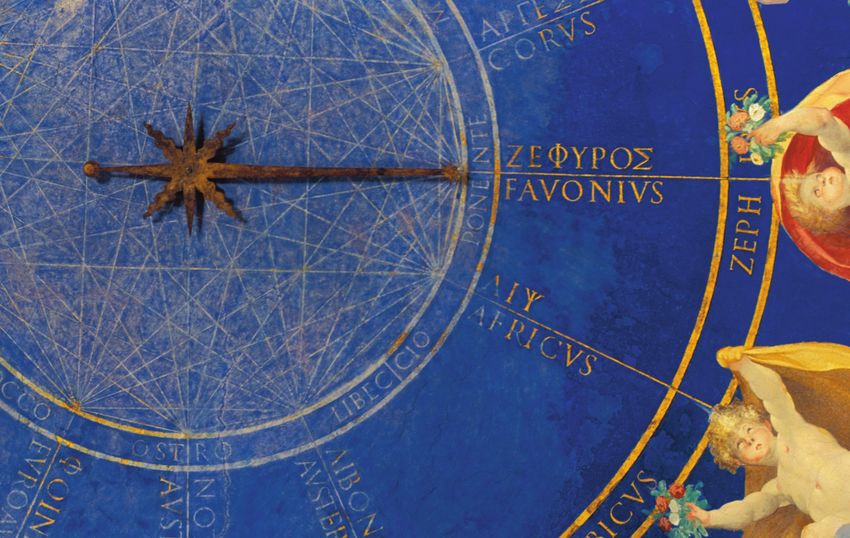
EVERY SUMMER, THE POPE LEAVES THE HEAT
OF ROME AND HEADS TO HIS VACATION HOME
AT CASTEL GANDOLFO, IN THE ALBAN HILLS. THE
SIXTEENTH CENTURY MONASTERY SITS ON A HIGH
RIDGE, A PERFECT SPOT TO VIEW AND REFLECT
UPON THE HEAVENS.
COVER: Frescoed           RIGHT: Castel
ceiling with windrose     Gandolfo, Italy
and anenometer at the
Tower of the Winds
in Vatican City in Rome

CASTEL GANDOLFO serves as the main            ogy and science. In addition to the tele-
headquarters for the Vatican Observa-         scopes, private rooms, working quarters,
tory, one of the oldest astronomical insti-   and kitchen, the facility at Castel Gan-
tutes in the world. It operates under the     dolfo has a museum of meteorites and
jurisdiction of the pope and the Roman        two large libraries containing more than
Catholic Church.                              22,000 volumes, including historic works
                                              by Copernicus, Galileo, Newton, and
Since 1891, when the observatory was          Kepler. Every summer, the astronomers
founded, the pope’s astronomers have          at the observatory update the pope about
used it to study the night sky. Equipped      their work.
with one of the world’s oldest telescopes,
they have applied their scientific exper-     Father George Coyne, who was appoint-
tise to fundamental questions that engage     ed director of the Vatican Observatory
people of all faiths: How did this Universe   by Pope John Paul I in 1978, remembers
come to be, and what is our place in it?      well his early experiences at the Vatican
                                              Observatory. He recalls the excitement of
For more than a century, this research        observing the stars from the telescopes
center has been a bridge between theol-       inside Gandolfo’s notable domes, and the

BIG HISTORY PROJECT                           THE VATICAN OBSERVATORY                     2 OF 10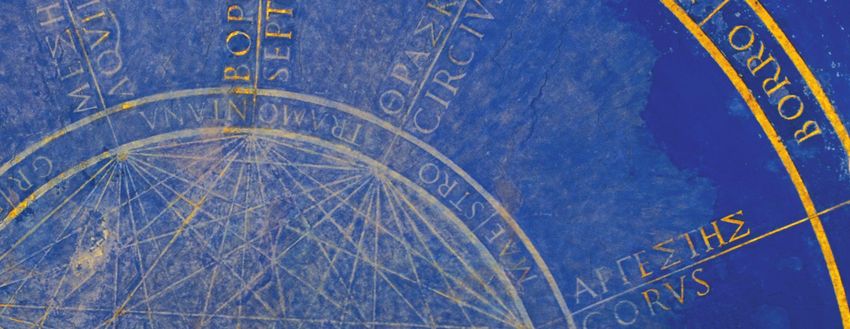
“The Church has      satisfaction that came from doing “good
                      science” while serving the Church. “Sci-
                                                                      smooth. Earlier Christian astronomers
                                                                      may have tried to detect which wandering
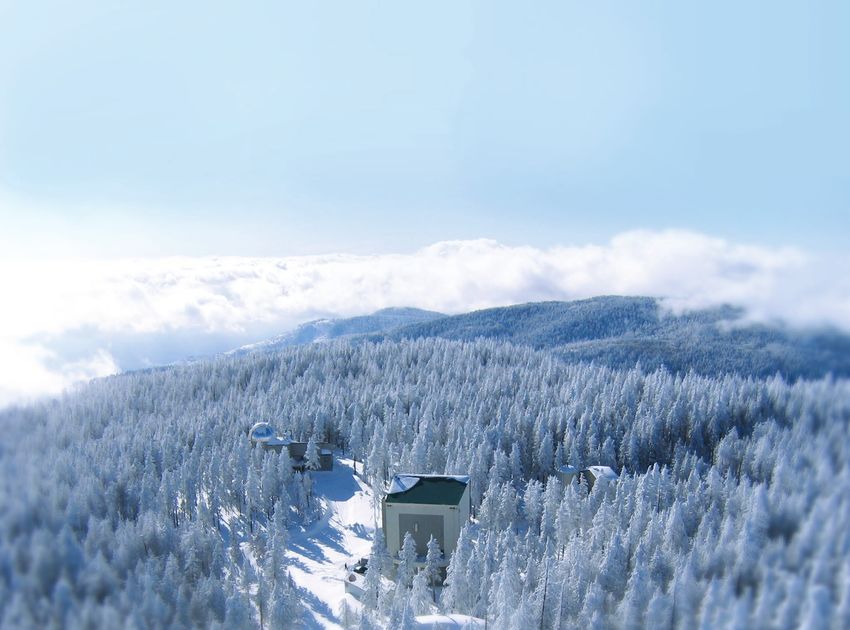
                                                                                                                  THIS PAGE: The VATT
                                                                                                                  telescope on
                                                                                                                  Mount Graham, Arizona

 a serious interest   ence is an attempt to explain natural
                      events by natural causes,” says Coyne.
                                                                      star or supernova led three wise men to a
                                                                      stable in Bethlehem — the birthplace of
 in understanding     “The Church has a serious interest in
                      understanding the Universe and every-
                                                                      Jesus Christ. More precisely, papal
                                                                      interest in stargazing can be traced to
 the Universe         thing in it.” But in his view, “True science,   more than four centuries ago, when Pope

 and everything
                      good science, does not conflict with reli-      Gregory XIII (papal reign 1572 — 1585)
                      gious belief.”                                  set up a committee to examine the impli-

 in it.”              ROOTS IN CONTROVERSY
                                                                      cations for science related to the pope’s
                                                                      1582 reform of the calendar.
                      The relationship between the papacy and
                      astronomy has not always been so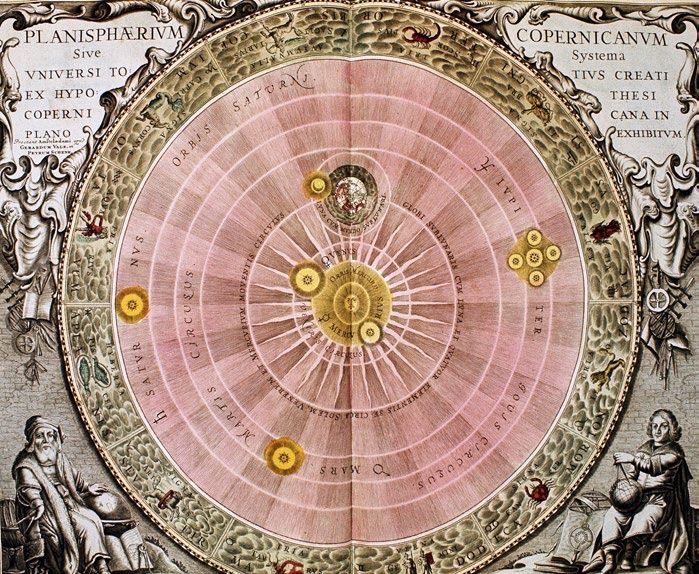
Enter Italian astronomer Galileo Galilei     Galileo suggested that his studies sup-     of the pope and the Catholic Church in        LEFT: Portrait
                                                                                                                                       of Galileo Galilei
(1564 — 1642), whom Albert Einstein          ported the theories of Polish mathemati-    Rome. In 1542, the Church began the
called “the father of modern science.” Us-   cian and scholar Nicolaus Copernicus        Inquisition, an organization that made        CENTER: The
                                                                                                                                       Copernican model
ing observational evidence, Galileo chal-    (1473 — 1543). It was Copernicus who        decisions on questions of morality and
                                                                                                                                       of the Universe
lenged the teachings of the past. In 1609    theorized — a century before Galileo —      faith. It analyzed books and individuals to
and 1610, Galileo used a telescope of his    that the Earth moved around the Sun, and    determine if what they said agreed with       RIGHT: Portrait of
                                                                                                                                       Nicolaus Copernicus
own design to see the surface of the         not vice versa.                             the Bible. Some people were sentenced
Moon, the phases of Venus, and the moons                                                 to death for airing their beliefs.
of Jupiter, compiling strong evidence for    But the Catholic Church, which backed
Copernicus’s Sun-centered theory (Farn-      the Earth-centered, geocentric teachings    The Inquisition found Galileo’s writings of
don, 2007). Galileo, who was born and        of Aristotle and Ptolemy, was not accept-   an Earth in motion around the Sun hereti-
educated in Pisa, first visited Rome in      ing of these new ideas. The Church was      cal and incorrect, and banned the teach-
March 1611 to demonstrate the power of       already dealing with the Reformation, a     ing of Copernicus’s theories. Galileo was
the telescope to Church officials.           movement that challenged the authority      forced to renounce his approval of the

BIG HISTORY PROJECT                          THE VATICAN OBSERVATORY                                                                                4 OF 10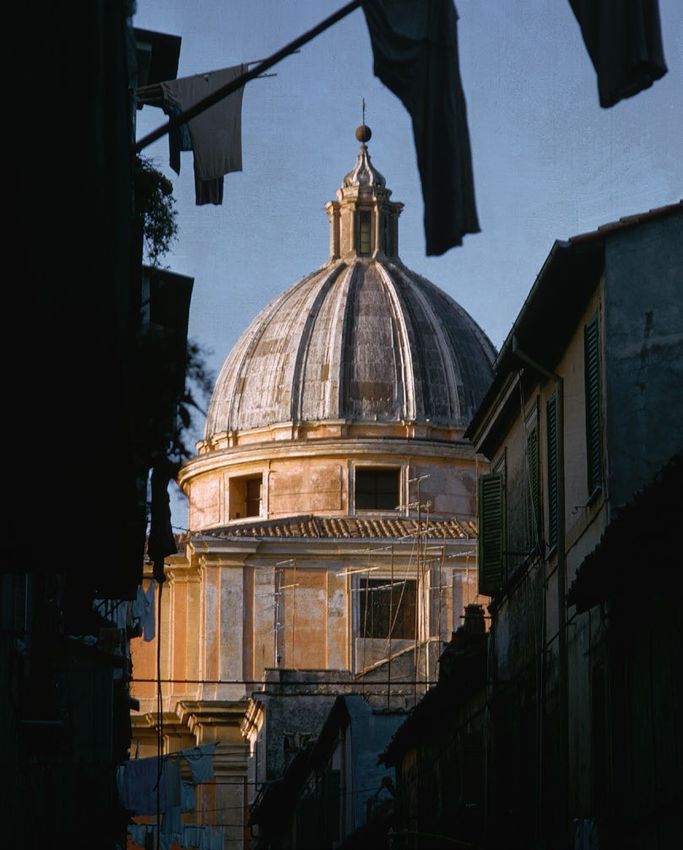
The Inquisition found Galileo’s                                     A breakthrough came in the mid-nine-
                                                                    teenth century with research conducted
                                                                                                                  in the hands of Jesuits; three new tele-
                                                                                                                  scopes were constructed, an astrophys-

writings of an Earth in motion                                      at the Roman College by Father Angelo
                                                                    Secchi. He was the first to classify stars
                                                                                                                  ical laboratory for spectral analysis of the
                                                                                                                  light from distant celestial bodies was
around the Sun heretical and                                        according to their spectra, the color of      installed, and research programs began on

incorrect, and banned the teaching
                                                                    light that stars emit. Modern spectrosco-     Cepheid variables. A Schmidt wide-angle
                                                                    py is very important in astronomy today       telescope, installed in 1957, allowed for

of Copernicus’s theories.                                           because scientists know that different
                                                                    elements have their own emission spec-
                                                                                                                  further work on the classification of stars.

Galileo was forced to renounce                                      tra, and can contribute to the “chemical
                                                                    signature” that a star’s light reveals.
                                                                                                                  ADVANCES IN RESEARCH
                                                                                                                  The telescopes at Castel Gandolfo are
his approval of the Copernican                                      On March 14, 1891, Pope Leo XIII (papal
                                                                                                                  rarely used anymore for astronomical
                                                                                                                  research, reserved instead for visiting
heliocentric model.                                                 reign 1878–1903), in an attempt to coun-      groups and summer-school students. All
                                                                    ter the persistent perception of hostility    serious study is performed using other
                                                                    by the Church toward science, set up          telescopes around the world, mainly in
                                                                    another small astronomical observatory        Arizona.
                      Copernican heliocentric model. In 1633,       on a hill behind the dome of Saint Peter’s
                      he was convicted of heresy for defending      Basilica.                                     Father Coyne helped establish the Vati-
                      that model and placed under a life sen-                                                     can Observatory Research Group (VORG)
                      tence of house arrest. He died on January     In 1910, Pope Pius X (papal reign 1903 —      in Tucson, Arizona. Problems with night-
                      8, 1642, still in confinement.                1914) gave the observatory a new, larger      time viewing conditions around Rome
                                                                    space at a villa built in the Vatican Gar-    spurred the need for this mountaintop
                      DEDICATION TO DISCOVERY                       dens by Leo XIII. From 1914 to 1928, the      institute, founded in 1981. In 1993, the
                      Nevertheless, the Church has, since Gali-     observatory contributed to the Astro-         observatory completed the construction
                      leo’s time, expressed an interest in astro-   graphic Catalogue, an ambitious map of        of the Vatican Advanced Technology Tele-
                      nomical research. Three early observato-      the sky that was undertaken in conjunc-       scope (VATT) on Mount Graham, Arizona;
                      ries were founded by the papacy: the          tion with 17 observatories around the         its optical mirrors are among the most
                      Observatory of the Roman College (1774        world. The Vatican printed 10 volumes,        exact surfaces ever made for a ground-
                      — 1878); the Observatory of the Capitol       which listed the brightness and positions     based telescope. And the telescope’s
                      (1827 — 1870); and the first incarnation of   of 481,215 stars.                             observational abilities are augmented by
                      the Vatican Observatory (1789 — 1821),                                                      the skies above — some of the clearest
                      housed in a building called the Tower         By the 1930s, however, light pollution from   and darkest in North America.
                      of the Winds that still exists within the     the city of Rome prevented the study of
                      Vatican.                                      the fainter stars and galaxies. Pope Pius
                                                                    XI (papal reign 1922 — 1939) relocated the
                                                                    observatory to Castel Gandolfo and put it

BIG HISTORY PROJECT   THE VATICAN OBSERVATORY                                                                                                       5 OF 10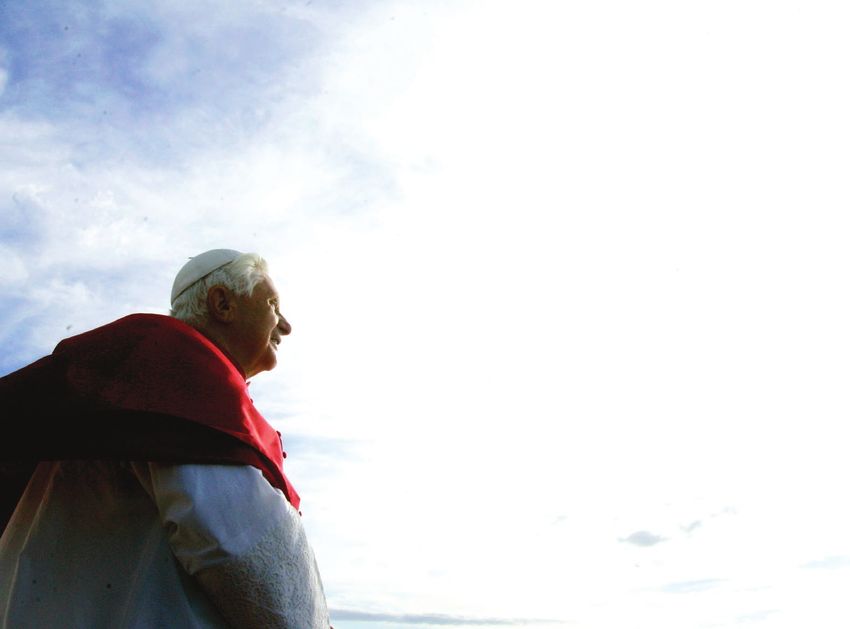
THIS PAGE: Jesuit       RIGHT: Father           BOTTOM RIGHT: A
priest astronomers      Emmanuel Carreira       1.8-meter honey-
using the telescope     using the telescope     combed mirror crafted
at the Vatican          at the Vatican          for the VATT at the
Observatory in Castel   Observatory in Castel   University of Arizona
Gandolfo in 1946        Gandolfo in 2005

                                                                             “We are priests and religious men,
                                                                        but we also are scientists…Astronomy
                                                                           is our main service to the church.”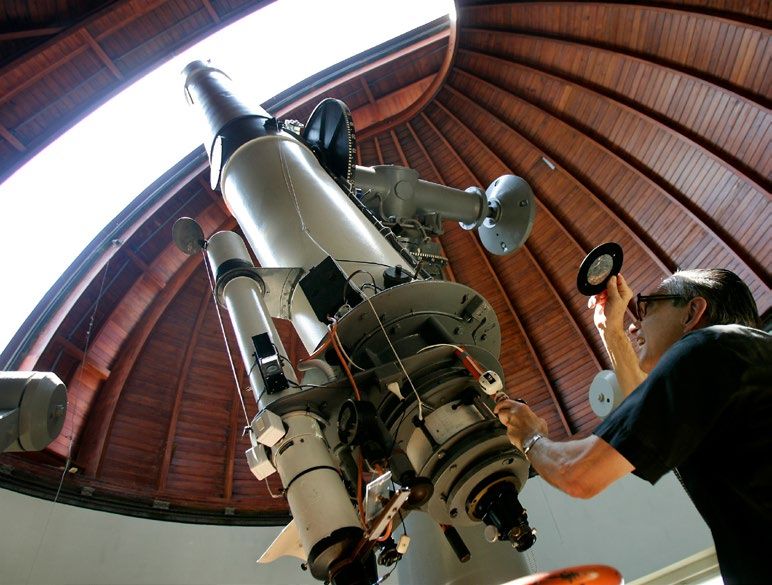
“The error of the theologians of                                    dolfo, and has a library, conference room,
                                                                     offices, guest quarters, laboratory, and
                                                                                                                   ate relationship between faith and reason,
                                                                                                                   science and Scripture, has evolved over
 the time, when they maintained the                                  chapel (Vatican Observatory Newsletter,
                                                                     Fall 2009, p. 1). The unveiling took place
                                                                                                                   time. Each pope’s approach may yield
                                                                                                                   subtle shifts. In 1998, Pope John Paul II
  centrality of the Earth, was to                                    in what was dubbed the “International         wrote in an official letter:

 think that our understanding of the
                                                                     Year of Astronomy,” which honored Gali-
                                                                     leo’s first scientific use of the telescope     Faith and reason are like two wings on

  physical world’s structure was,                                    400 years prior.                                which the human spirit rises to the con-
                                                                                                                     templation of truth; and God has placed

 in some way, imposed by the                                         The subject of Galileo has remained a
                                                                     tricky one for the Church throughout the
                                                                                                                     in the human heart a desire to know
                                                                                                                     the truth — in a word, to know himself
  literal sense of sacred Scripture.”                                years. In 1992, Pope John Paul II (papal
                                                                     reign 1978 — 2005) expressed regret at
                                                                                                                     — so that, by knowing and loving God,
                                                                                                                     men and women may also come to
                                                                     the way Galileo had been treated, stating,      the fullness of truth about themselves.
                       The observatory’s 15 staff members            “The error of the theologians of the time,
                       collaborate with astronomical research        when they maintained the centrality of        Near the end of the same letter, he said:
                       institutes in countries around the globe,     the Earth, was to think that our under-
                       and as members of the International           standing of the physical world’s structure      I cannot fail to address a word to scien-
                       Astronomical Union and the International      was, in some way, imposed by the literal        tists, whose research offers an ever
                       Center for Relativistic Astrophysics.         sense of sacred Scripture.” (BBC News,          greater knowledge of the Universe as a
                                                                     2008).                                          whole and of the incredibly rich array
                       “The first priority of the Vatican Observa-                                                   of its component parts, animate and
                       tory is scientific research, and the VATT     Father Coyne, who ran the Vatican               inanimate, with their complex atomic
                       is our tool,” said VORG director Jose G.      Observatory throughout Pope John Paul           and molecular structures. So far has sci-
                       Funes at a February 2009 research sem-        II’s reign, says, “The Church is a human        ence come, especially in this century, that
                       inar at the University of Arizona. “We are    institution, and a human institution can        its achievements never cease to amaze
                       priests and religious men, but we also        make, and has made, mistakes.” In the           us. In expressing my admiration and in
                       are scientists…Astronomy is our main          1600s, Coyne says, the Church believed          offering encouragement to these brave
                       service to the church” (Stiles, 2009).        that Galileo contradicted Scripture. “We        pioneers of scientific research, to whom
                                                                     can’t judge by the modern day what hap-         humanity owes so much of its current
                       NEW POINTS OF VIEW                            pened 300 to 400 years ago,” Coyne con-         development, I would urge them to con-
                       On the evening of September 16, 2009,         tinues. “We do have to say the Church           tinue their efforts without ever abandon-
                       Pope Benedict XVI inaugurated the new         was wrong in thinking Scripture teaches         ing the sapiential horizon within which
                       facility of the Vatican Observatory with a    science…The Church now knows that.”             scientific and technological achievements
                       prayer and blessing. The facility includes                                                    are wedded to the philosophical and
                       two floors in a renovated building on the     Such thinking didn’t change overnight.          ethical values which are the distinctive
                       grounds of the Pontifical Villas of Gan-      The sense and sensibility of the appropri-      and indelible mark of the human person.

 BIG HISTORY PROJECT   THE VATICAN OBSERVATORY                                                                                                        7 OF 10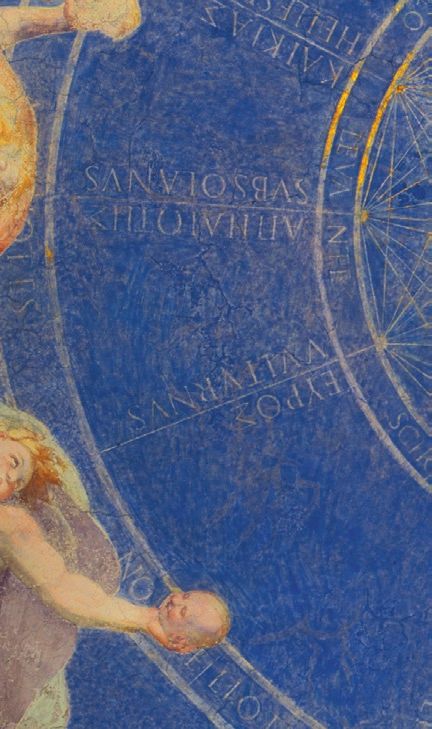
“Galileo anticipated by four centuries     But the papal understanding of the right
                                            rapport between reason and faith is still
                                                                                           And Galileo never turned away from the
                                                                                           faith that had sentenced him. “[He] was

 what the church would finally say          emerging. In January 2008, Pope Bene-
                                            dict XVI (papal reign 2005 — 2013) can-
                                                                                           a devout Catholic and was not trying
                                                                                           to start a conflict between science and
 about the interpretation of Scripture...   celed a visit to a university in Rome where
                                            lecturers and students had protested
                                                                                           religion,” writes Rachel Hilliam in Galileo
                                                                                           Galilei: Father of Modern Science. “He be-
 that Scripture was written to teach        against his views on Galileo. The univer-      lieved that the Bible was there to instruct

  us how to go to heaven, not how the
                                            sity’s rector cited Benedict’s 1990 state-     people in how to get to heaven and was
                                            ment, when, as Cardinal Ratzinger, he          not meant to be a scientific book explain-

  heavens go.”                              said the Church’s verdict against Galileo
                                            had been “rational and just.”
                                                                                           ing how the Universe worked” (p. 78) His
                                                                                           recantation, or confession, on June 22,
                                                                                           1633, “did not include two points because
Pope Benedict XVI
admiring the sky                            However, in 2009 Pope Benedict XVI             Galileo was opposed to them: that he was
in Sydney, Australia                        dedicated a plaque that attests to the         not a good Catholic and that he had
in 2008
                                            “Church’s steadfast support for the work       deceived others by publishing his book”
                                            of the observatory at the nexus of faith       (p. 79).
                                            and science.” Father Coyne emphasizes
                                            that Galileo paved the way for a harmoni-      Coyne believes faith and science comple-
                                            ous relationship between religious belief      ment each other. He says, “Faith is: ‘God
                                            and scientific inquiry. “Galileo anticipated   loves me.’ I accept God’s love. I try to
                                            by four centuries what the Church would        return that love to God each day.” At the
                                            finally say about the interpretation of        same time, he notes, “We are human
                                            Scripture,” he says. “Galileo said that        beings. Science is instrumental to im-
                                            Scripture was written to teach us how to       proving our knowledge of the Universe.
                                            go to heaven, not how the heavens go.”         But we will never have the final answer.”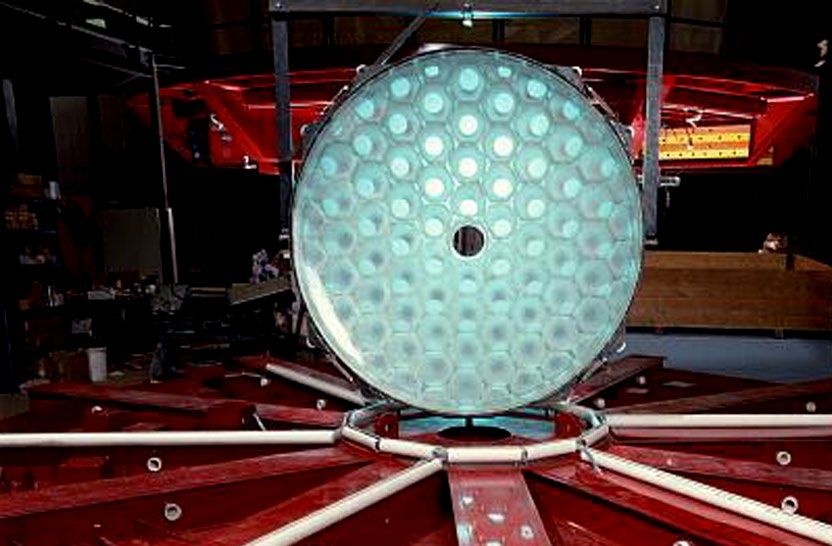
SOURCES                                                                                   IMAGE CREDITS

                                                                                          The frescoed ceiling                   Jesuit priests Brother Matthew Timmer
BBC News. “Papal visit scuppered by scholars.” January 15, 2008. http://news.bbc.
                                                                                          of the Tower of the Winds              and Father Walter J. Miller at the Vatican
co.uk/2/hi/7188860.stm.
                                                                                          © Bob Sacha/Corbis                     Observatory in Castel Gandolfo in 1946
                                                                                                                                 © Hulton-Deutsch Collection/CORBIS
Consolmagno, Brother Guy. Brother Astronomer: Adventures of a Vatican Scientist.
                                                                                          Castel Gandolfo, Italy
New York : McGraw-Hill, 2000.
                                                                                          © Morton Beebe/CORBIS                  Father Emmanuel Carreira at the Vatican
                                                                                                                                 Observatory in Castel Gandolfo in 2005
Consolmagno, Brother Guy. God’s Mechanics: How Scientists and Engineers Make
                                                                                          The VATT facilities on Mount Graham,   © TONY GENTILE/Reuters/Corbis
Sense of Religion. San Francisco: Jossey-Bass/Wiley, 2008.
                                                                                          Arizona, courtesy of the Vatican
                                                                                          Observatory and Alex Lovell-Troy       A 1.8-meter mirror crafted
Farndon, John. From Ptolemy’s Spheres to Dark Energy: Discovering the Universe.
                                                                                                                                 for the VATT telescope
Chicago: Heinemann Library, 2007.
                                                                                          An undated portrait of Galileo         © Roger Ressmeyer/CORBIS
                                                                                          © Bettmann/CORBIS
Hilliam, Rachel. Galileo Galilei: Father of Modern Science. New York: The Rosen
                                                                                                                                 Pope Benedict XVI in
Publishing Group, 2005.
                                                                                          Copernicus’s view of the Solar         Sydney, Australia in 2008
                                                                                          System from the 1661 Harmonica         © Gregorio Borgia/AP/Corbis
John Paul II. Evangelium Vitae. Encyclical letter on the relationship between faith and
                                                                                          Macrocosmia by Cellarius
reason. Vatican website. September 14, 1998. http://www.vatican.va/holy_father/john_
                                                                                          © Bettmann/CORBIS
paul_ii/encyclicals/documents/hf_jp-ii_enc_15101998_fides-et-ratio_en.html.

                                                                                          An engraving of Copernicus
Stiles, Lori. “Cardinal Who Oversees the Vatican Observatory Will Visit Tucson.”
                                                                                          © Copernicus/PoodlesRock/CORBIS
UA News, University of Arizona Communications, January 28, 2009.

Vatican Observatory, 2011 Annual Report.

Vatican Observatory Newsletter, Fall 2009.

BIG HISTORY PROJECT                             THE VATICAN OBSERVATORY                                                                                            9 OF 10
Articles leveled by Newsela have been adjusted along several dimensions of text complexity including sentence structure, vocabulary and organization. The number followed by L indicates the Lexile measure of the article. For more information on Lexile measures and how they correspond to grade levels: http://www.lexile.com/about-lexile/lexile-overview/ To learn more about Newsela, visit www.newsela.com/about. The Lexile® Framework for Reading The Lexile® Framework for Reading evaluates reading ability and text complexity on the same developmental scale. Unlike other measurement systems, the Lexile Framework determines reading ability based on actual assessments, rather than generalized age or grade levels. Recognized as the standard for matching readers with texts, tens of millions of students worldwide receive a Lexile measure that helps them find targeted readings from the more than 100 million articles, books and websites that have been measured. Lexile measures connect learners of all ages with resources at the right level of challenge and monitors their progress toward state and national proficiency standards. More information about the Lexile® Framework can be found at www.Lexile.com. BIG HISTORY PROJECT THE VATICAN OBSERVATORY 10 OF 10
You can also read


