THE WIMBLEDON MASTER PLAN
←
→
Page content transcription
If your browser does not render page correctly, please read the page content below
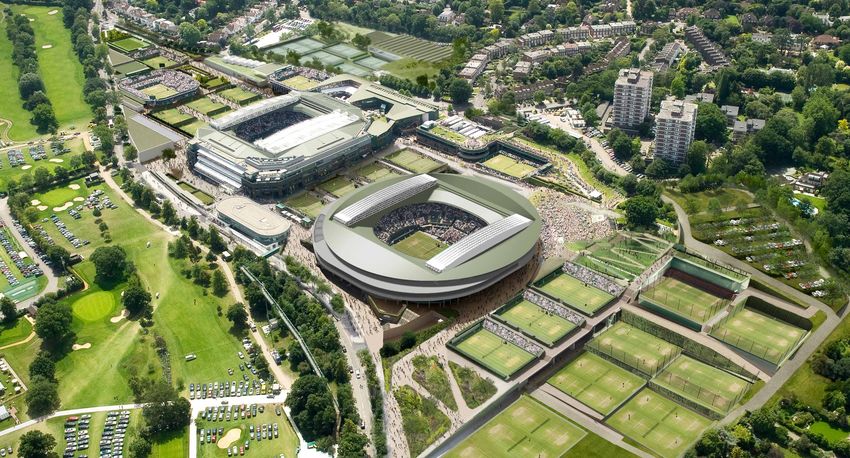
THE WIMBLEDON
                    MASTER PLAN
HISTORY
Wimbledon is the oldest tennis tournament in the
world and widely considered the most prestigious.
First held in 1877, The Championships have come
to embody the notion of British summertime.

THE SITE AND the championships

Wimbledon is one of the four Grand Slam tennis
tournaments around the world, and is the only Grand
Slam still played on the game’s original surface- grass.

Since 1877 The Championships have developed from
the garden party atmosphere of the first meeting to the
highly professional global media tournament of today.

The All England Lawn Tennis Club (AELTC), which
stages the event, was founded in 1868. Its first
ground was in Worple Road, Wimbledon.
The original pavilion and Grounds are still there,
currently used by Wimbledon High School.

Between 1877 and 1900 tennis developed from a
social pastime into an international sport and by
1921 tennis was more popular than ever – Worple
Road could no longer cope with demand.

The AELTC purchased the current site in Church Road
in 1920. In September 1921, the construction of “Centre
Court” began and it was completed ready for the
1922 Championships, along with 12 outside courts.
The old No.2 Court was brought into commission
in 1923, followed by the old No.1 Court in 1924.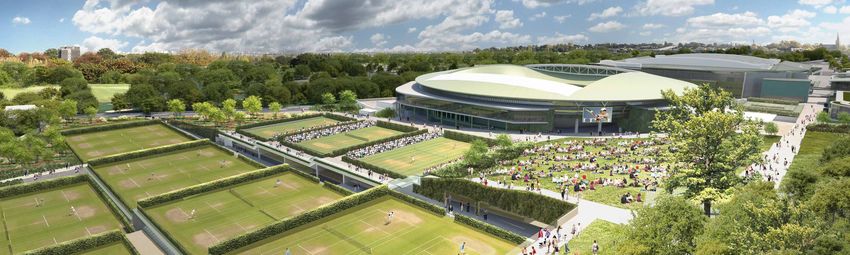
DEVELOPMENT
OF THE SITE
The AELTC site has developed organically and is now close
to capacity. The Master Plan provides a holistic review
to optimise the site in order to enhance and consolidate
the future of the Grounds and The Championships.

                                                                            H

                                                                    H                              H

            1921                       1959                         1993                           2011               Future Proposals

–– The AELTC purchased      –– Championships            –– Long Term Plan             –– Show courts to            –– New fixed and retractable
   the current site in         concentrated in             commenced                     north expanded               roof over No.1 Court
   Church Road in 1920         south of site            –– Arrival and main           –– Service area north of        with associated
–– In 1921 Worple Road      –– Major east/west public      public area north of          No.1 Court consolidated      improved hospitality
   reached capacity            Boulevard built             Centre Court built         –– New competitors’          –– High standard of
–– “Centre Court” build     –– Tennis lawn extended     –– Access from                   facilities added             Championships’
   commenced ready for                                     southeast created                                          support facilities
                                                                                      –– Major north/south
   1922 Championships,                                  –– Major public circulation      public route created      –– Efficient operational layout
   with 12 outside courts                                  to the east established       with St. Mary’s walk         to enable improvement
–– Old No.2 Court                                                                                                     of show courts
                                                        –– Hospitality added to
   commissioned in 1923;                                   south tail of site                                      –– Improvement of public space
   old No.1 Court in 1924                                                                                             and visitors’ experience
                                                                                                                   –– Enhancement of Members’
                                                                                                                      accommodation
                                                                                                                   –– Permanent hospitality
                                                                                                                      facilities to be provided

LONG TERM PLAN 1993 - 2011

Despite further enhancements over the years,                              Outside courts were realigned to provide
it was not until March 1993, when the Club                                enhanced spectator access, and later additions
embarked upon its ambitious Long Term Plan,                               included new player, media and members’
that the Grounds’ transformation into today’s                             facilities in the Millennium Building, an
instantly recognisable and familiar outlook                               almost completely re-built Centre Court with
began.                                                                    additional seating, wider padded seats and
                                                                          its engineering tour-de–force: the retractable
Guided by a blend of innovation and                                       roof. The Long Term Plan concluded with a
tradition, new world-class facilities and public                          new No.2 Court (2009) and in 2011, a new No.3
entertainment spaces were created. An                                     Court and Court 4.
11,500-seat No.1 Court, a permanent Broadcast
Centre, two extra Championships grass courts
(18 and 19), the now world-famous ‘Hill’ and
large TV screen all arrived for the 1997 event.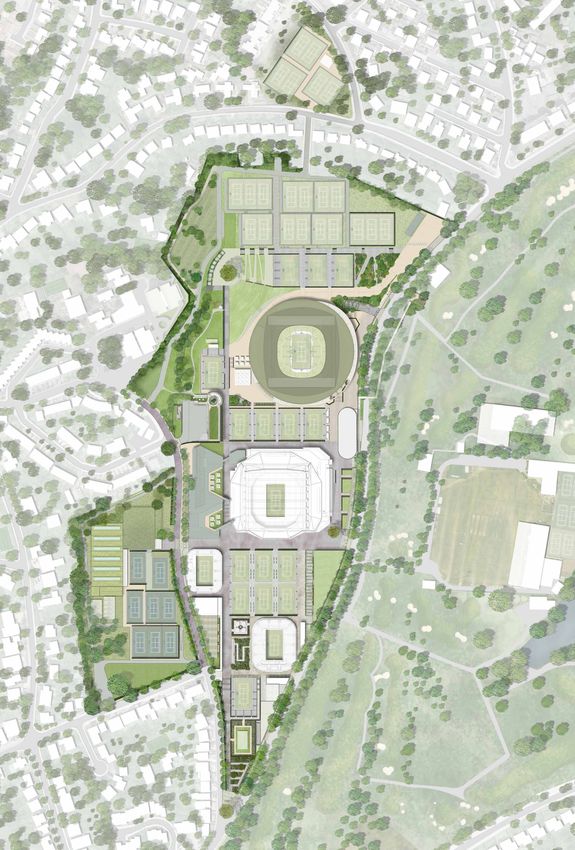
THE FINEST STAGE IN
WORLD TENNIS
The AELTC now looks into the future to retain
Wimbledon as the pre-eminent Grand Slam
and the finest stage in world tennis.

THE NEED FOR A MASTER PLAN

Today, in large part thanks to the work of the        be assessed and refined — what it is not is a set
Long Term Plan, Wimbledon is widely regarded          of definitive development proposals.
as the finest stage in world tennis. However, the
Club recognises that to maintain its leadership       Indeed, the extensive consultations with
position further improvements to the facilities are   neighbours and other interested parties which
required and that standing still is not an option.    have already been carried out during the process
                                                      of the formulation of the Master Plan have been
To this end, in Autumn 2011, the Club                 very helpful in identifying areas and issues that
commissioned international award-winning              are sensitive in terms of future development
architects, Grimshaw, to work alongside it to         proposals. These, in turn, will help to formulate
develop a master plan to guide the further long       the more detailed individual proposals for each
term development of the Club and its facilities.      element, as and when they are being developed,
This ‘Wimbledon Master Plan’ sets out a vision        and any that do reach that stage will be subject
for the future of the Club’s Grounds and is a         to further consultation before and during their
framework against which new development will          formal planning application process.
THE VISION
The Master Plan sets out a vision for the future of the
site and a framework within which development can
be assessed, refined, and carried out in a flexible but
coordinated, sustainable and resilient manner.

The key objectives for the Wimbledon Master Plan are to:

• Maintain The Championships as           • C
                                             ontinue to make a positive
  the premier tennis tournament             contribution to the local
  in the world and on grass                 neighbourhood and community
• Strengthen and enhance Wimbledon • Resolve key operational issues
   as a world class sporting venue of         to ensure the smooth running
   national and international significance    of The Championships for
                                              now and in the future
• Conserve Wimbledon’s unique
   and special heritage                    • Reduce carbon emissions
                                              from the Grounds
• Guided by ‘Tennis in an English
   Garden’, develop the finest setting     • Develop effective transport solutions
   and facilities for the entertainment       which reflect the priorities of the
   and enjoyment of all visitors              Club, its neighbours and those
                                              visiting during The Championships
• Ensure that all new building is
  world class quality in keeping           • Establish a long term framework
  with Wimbledon’s international              to ensure that future development
  status and reputation                       is carried out in a coordinated,
                                              sustainable and resilient manner
A NEW LONG TERM
VISION FOR WIMBLEDON
St. Mary’s Walk enhanced and
extended to provide key circulation
spine
Improved Competitors’ facilities at Proposed new public plaza Aorangi Terrace - Aspiration to provide
the heart of The Championships expanded terraces with views over
courts and Wimbledon Park
New Indoor Courts building within
improved landscape setting, Symbolic oak tree to provide a centre piece on the
reduced height and massing Aorangi Terrace within an enhanced setting
Includes basement areas
for Courtesy Car operation New Championship courts to the north
during The Championships
Garden route from entrance plaza to Aorangi
Terrace with views over practice courts
New clay courts repositioned
Improved boundary treatment
and landscaping
Ma
rry
at R
Road
oad
erset
Som
3
18
To
Vil Wim
lag ble 8 4 14
e do 12
n
9 5 15
2 Centre Court
New southern garden
and opportunity to create 10 6 16 19
new entrance gate Repositioned Court 12 with
permanent stands and
No.1 Court
views to Centre Court
17
7
Long term aspiration
New Cafe Pergola
11
Churc
h Roa
d
Gate 7 re-oriented Improved grass courts and
to improve access access between them
Terrace Garden with views over widened
court’s sustainable green roof
Improved setting around No.2 Enhanced setting for Tea Lawn Major new entrance plaza creates
and No.3 Courts to provide Improved circulation and public First phase will deliver a new approach from North
more unreserved seating spaces around No.1 Court new fixed and retractable
roof over No.1 Court New planting along Church Road to
reinforce tree-lined boulevard
Vehicular service
entrance landscaped To
and separated from So
N ut
pedestrian entrance
hfi
el
0 50 m ds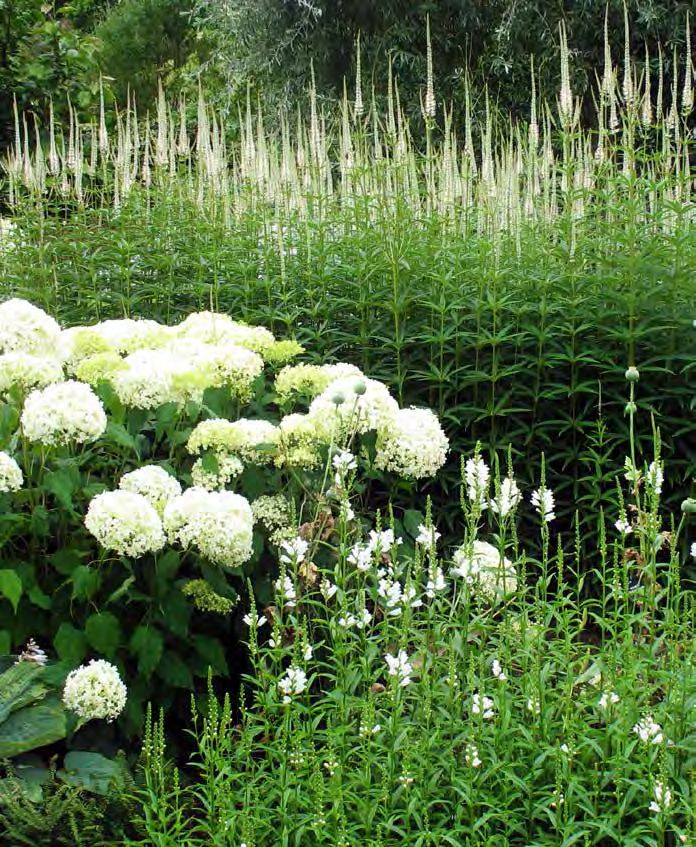
NORTHERN AREA:                                    CENTRAL AREA:
A NEW LANDSCAPE SETTING                           RETAIN TENNIS AT THE HEART

This is a beautiful part of the Grounds that      Defined by buildings around its full perimeter,
benefits from dramatic topography and a           this part of the Grounds has a distinctive feel
unique landscape setting. It provides the         of its own. Here, congestion would be eased by
main approach to The Championships when           the introduction of a new public plaza situated
arriving from Southfields. Existing structures    on two levels in the position of the old Court
to the north of No.1 Court are proposed to        19. New basement accommodation is to be
be demolished, making way for three new           provided below central courts to help facilitate
Championships courts with state-of-the-art        the smooth running of The Championships
players’ facilities and accommodation below.      through the creation of additional space to
Alongside these new courts we propose a           meet the ever-increasing demands for service
public walkway with spectacular views over        and quality. Interfaces and circulation areas
a cascade of gently terraced re-orientated        around No.1 Court are proposed to be widened,
practice courts.                                  and the landscaping and terracing around the
                                                  Tea Lawn significantly improved.
Remodelling of No.1 Court is proposed, along
with provision of a new fixed and retractable     The new retractable roof would allow No.1
roof. This would allow for uninterrupted          Court spectators to join those on Centre Court
play irrespective of the weather and provide      in watching a full day’s programme of tennis
additional new hospitality areas with             regardless of the weather.
spectacular views over the outside courts,
replacing the temporary facilities that are
installed temporarily each year at the south of
the Grounds.

The reconfigured No.1 Court is intended
to provide the backdrop to a major new
landscaped entrance plaza. This would serve
to resolve the existing conflicts between
pedestrians and vehicles, and transform the
entrance experience, with the stunning London
skyline as a backdrop.
SOMERSET ROAD
The Somerset Road site is key to the activities      topography to reduce the overall massing.
of both The Championships and the Club. It           Enhancement of the landscape and open
accommodates the Indoor Courts complex,              character will be a key element of the design
the Centre Court chiller plant and operations        brief.
for important vehicular movements (Park &            The clay courts, which will no longer be
Ride, contractors’ lay-down, courtesy cars,          required for the temporary hospitality facilities,
etc) during The Championships. The existing          are proposed to be removed from the southern
buildings are at the end of their serviceable life   area of the site to Somerset Road in order to
and outside of The Championships, the parts of       release space and ease congestion during The
the site not covered by the Indoor Courts are        Championships.
under-utilised.
                                                     The Contractors‘ lay-down area (required in
Within the context of the Master Plan, there is      the build-up to The Championships) would
an opportunity to use this site more effectively     be retained to the south but other vehicular
and provide an integrated world class facility       activities are proposed to be transferred to new
more in keeping with Wimbledon’s stature.            basement areas beneath the courts. This would
The new Indoor Courts are proposed to be             not only improve the use and appearance of
rebuilt in a new complex integrated more             this site but do so in a manner that is more in
sensitively into its setting and using the           keeping and sympathetic to the neighbourhood.

SOUTHERN AREA:
ENHANCE ITS HISTORICAL CHARACTER
The southern part of the Grounds is one of           area, freeing up space to allow the remaining
the most characterful and historic areas and         courts to be repositioned and the walkways
benefits from a real sense of intimacy which is      between them widened, thereby significantly
unique to Wimbledon. Centre Court defines the        enhancing the experience for players and the
area by forming the backdrop to any views. The       public. The proposed new plaza would provide
southern area is, however, the part of the site      a major new public destination to the south and
that suffers from the highest level of congestion    accommodate additional areas for queueing,
which impacts adversely on the public’s              thus offering the potential for greater numbers
quality of experience and creates operational        of unreserved seats for No.2 and No.3 Courts.
challenges. A key objective of the Master Plan is
to address these issues.                             Court 12 is intended to be repositioned to the
                                                     south of No.2 Court with permanent seating
St. Mary’s Walk, currently the backbone to the       on three sides, offering dramatic views back
public circulation, is proposed to be opened         to Centre Court. The new southern entrance
up and extended from the oak tree at the top         is envisaged to present a spectacular new
of Aorangi Terrace to the very southern apex         approach to the Grounds with landscaping to
of the site, offering the opportunity to create a    reinforce and enhance the image of playing
new, distinctive southern entrance. Two of the       tennis in an English Garden.
grass courts would be relocated to the northern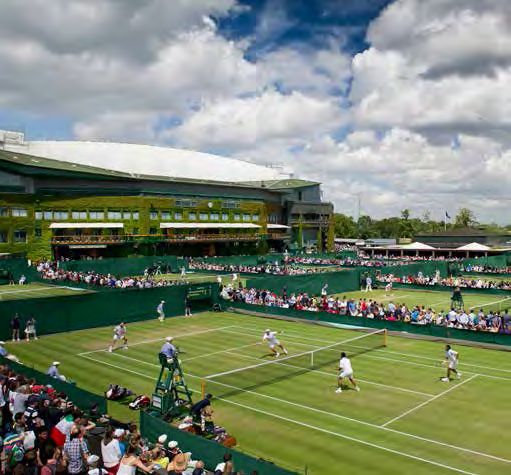
OTHER MASTER PLAN
BENEFITS
The Master Plan will deliver a range of benefits
from transport and travel, sustainable development
to landscape design and the public space.

landscape
A coordinated approach to the landscaping
of the entire site is to be adopted
through a landscape framework, the
main objectives of which will be to:
• Explore opportunities and
  improvements to the public space
• Reinforce the image of playing
  tennis in an English garden
• Create a unique landscape around the site
  providing a memorable journey during
  The Championships and year round
• Create a series of themed gardens set
  within an overall landscape framework
• Enhance existing biodiversity, habitat
  potential and green infrastructure

sustainability
As part of the Master Plan development,                                          KEY
                                                                                       Planting

sustainability guidelines will inform the                                              Lawn
                                                                                       Trees

future development of the site to help:
                                                                                       Wimbledon Park
                                                                                       Water
                                                                                       Woodland / Habitat Areas

• Reduce impact of construction
                                                                                       Key Wildlife Corridor Connections
                                                                                       Church Road Wildlife Corridor Connection
                                                                                       Wildlife Corridor Connections

  materials on the environment                                                   0   10 20         50m

• Improve health and wellbeing,
  biodiversity and ecology of the site

transport                                      community
The Master Plan will include the development   The Wimbledon Master Plan aims to
of a transport strategy, considering           have a positive impact on the community
vehicular and pedestrian movements during      and the immediate setting. In particular,
and outside The Championships to:              the Master Plan will seek to:
• Enhance people movement and crowd            • Improve outlook from neighbouring properties
  dynamics on and around the site                by improving boundary treatments, landscaping
• Minimise impact of The Championships on        and screening of existing and new structures
  residents/ businesses and key stakeholders   • Improve public space around the site’s
• Develop improved transport management,         fringes as part of the landscape strategy
  access and travel plan strategies            • Reduce traffic through encouraging
• Enhance journey to/from Grounds                use of public transport and walking
                                               • Support development of community
                                                 facilities in the area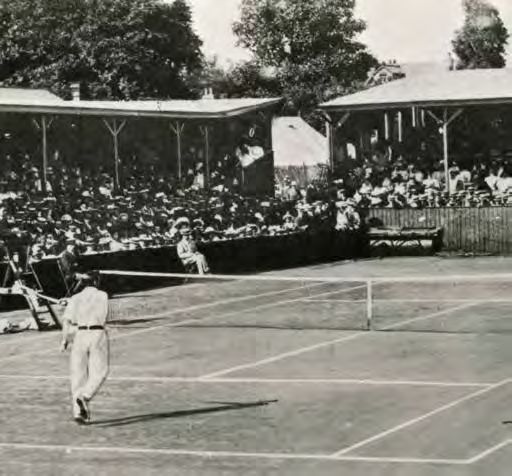
WIMBLEDON AND
BENEFITS TO THE
COMMUNITY
Wimbledon is not just about The Championships;
it plays a significant role year-round in supporting
the local economy and community. Investment in
the future of The Championships is investment in
the future of the local economy and community.

The Wimbledon Foundation, the not-for-profit       • Charity - particularly charities with links to key
arm of The AELTC and The Championships, uses         groups involved in The Championships
the heritage and resources of Wimbledon in its     • Sport/Development- support of projects and
principal areas of focus:                            charities that use the power of sport, and
                                                     particularly tennis, to assist people, especially
• Community - activities and support within the      the disadvantaged and the young, with
  London Boroughs of Merton and Wandsworth           education and personal development

In addition to a substantial contribution to the   Other highlights include:
St. Mary’s Church spire restoration fund, recent
donations to local charities include:              • Ball Boys and Ball Girls - Local schools provide
                                                     world-renowned Ball Boys and Ball Girls at The
• 19th Wimbledon Scout Group                         Championships
• Beyond Autism
                                                   • The Wimbledon Junior Tennis Initiative (WJTI)
• Carers Support Merton                              - Since 2001, through more than 650 state
• Home Start Merton                                  schools visits in Merton and Wandsworth and
• London Community Foundation                        free coaching sessions at the Club at weekends,
• Mayor of Merton’s Charity                          over 140,000 local children have enjoyed their
• Mayor of Wandsworth’s Charity                      first experience of tennis with the WJTI

• Will to Win Foundation                           • Wimbledon Lawn Tennis Museum - is enjoyed
• Wimbledon Civic Theatre Trust                      by nearly 100,000 people throughout the year,
• Wimbledon Guild                                    as they visit the Grounds and local area

• Wimbledon Music Festival                         • Museum Education Department - Around
                                                     25,000 children and young people have
                                                     taken part in educational sessions since the
                                                     Department was created in 2001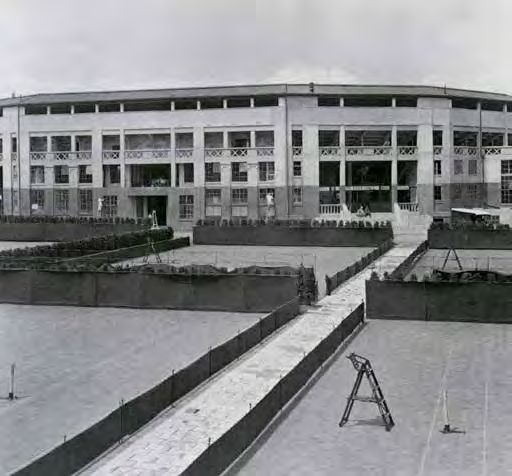
THE WIMBLEDON
                                  MASTER PLAN
WHAT HAPPENS NEXT
Feedback on the Master Plan is welcomed at any
time, as this will assist and inform the AELTC and their
development team as the Master Plan continues to evolve
and as individual projects are brought forward.

     HAVE YOUR SAY
     A copy of the Master Plan exhibition material is available to view on the Wimbledon website at
     www.wimbledon.com/masterplan

     Comments should be sent by email to
     Masterplan@aeltc.com

     or by post to
     The Master Plan
     The All England Lawn Tennis Club (Championships) Limited, Church Road, Wimbledon, London, SW19 5AE

1. SETTING THE VISION
The extensive consultation that has been carried out                            THE VISION
by the AELTC during the process of formulating the
Master Plan has been very helpful in identifying areas and
issues that are sensitive in terms of future development                  PUBLIC ENGAGEMENT

proposals. This, in turn, will inform detailed proposals
for the individual elements as and when they are being
developed and brought forward for further consultation                 WIMBLEDON MASTER PLAN
prior to being submitted as planning applications.

2. ESTABLISHING A FRAMEWORK
The Master Plan sets out the principal development
objectives and a framework for attaining these objectives.
The Master Plan is intended to be a flexible and adaptable
Plan, whose provisions are not binding on any public
body and which will continue to evolve as each of the
individual components is developed in consultation with
all relevant parties and submitted for planning approval.

3. PHASED AND COORDINATED
IMPLEMENTATION
Consultation with local stakeholders and residents
will thus continue throughout the life of the Master
Plan, with specific consultations being undertaken
separately for each of the individual projects within
the Plan as the design proposals are developed.                   DEVELOPMENT      PUBLIC        PLANNING
                                                                   PROJECT A     ENGAGEMENT     APPLICATION

The publication of this Master Plan is therefore in
effect only the start of an long-term consultation,
design and development process that will                                                      DEVELOPMENT       PUBLIC         PLANNING
                                                                                               PROJECT B      ENGAGEMENT      APPLICATION
continue throughout the Plan’s life.

                                                                                                                           DEVELOPMENT        PUBLIC      PLANNING
                                                                                                                            PROJECT ...     ENGAGEMENT   APPLICATION

4. FIRST PHASE
The first phase of the Master Plan will deliver
a new fixed and retractable roof for No.1 Court
by 2019. Public Consultation for this project
will be announced later this year.
You can also read


