TL6. How Immersive Tech is Helping Students Connect with the School of Their Dreams - Bill Wilson YouVisit, New York - Amazon S3
←
→
Page content transcription
If your browser does not render page correctly, please read the page content below

TL6.
How Immersive Tech is
Helping Students Connect
with the School of Their Dreams
Bill Wilson
YouVisit, New York

                                  #NACAC17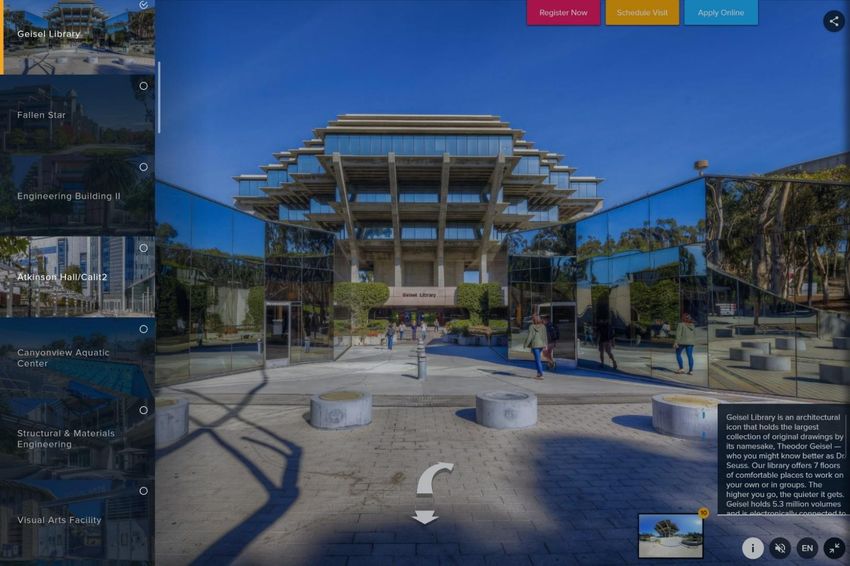
Agenda
1.    About us
2.    Background: Adoption of VR
3.    EDU Challenges / Marketplace
4.    How it works
5.    Why it works
6.    Case Studies
7.    Summary
8.    What’s next in VR?
9.    The rise of AR
10.   Q&A

                                     #NACAC17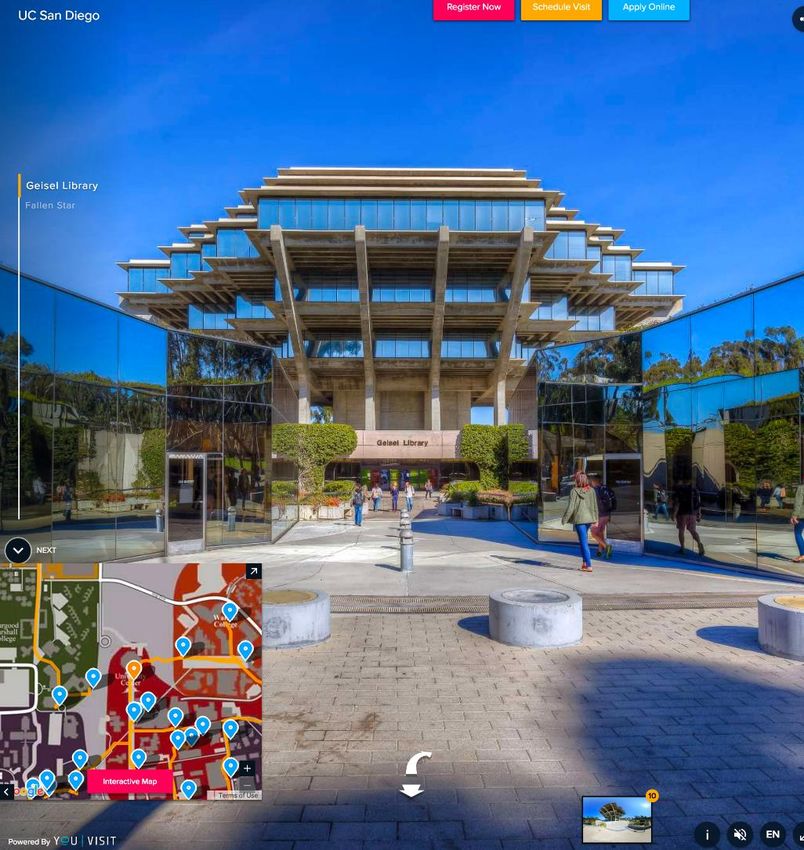
About YouVisit
    YouVisit partners with 600+
    colleges and universities to
 produce virtual campus tours that
increase awareness, engagement,
         and conversions.

                                     #NACAC17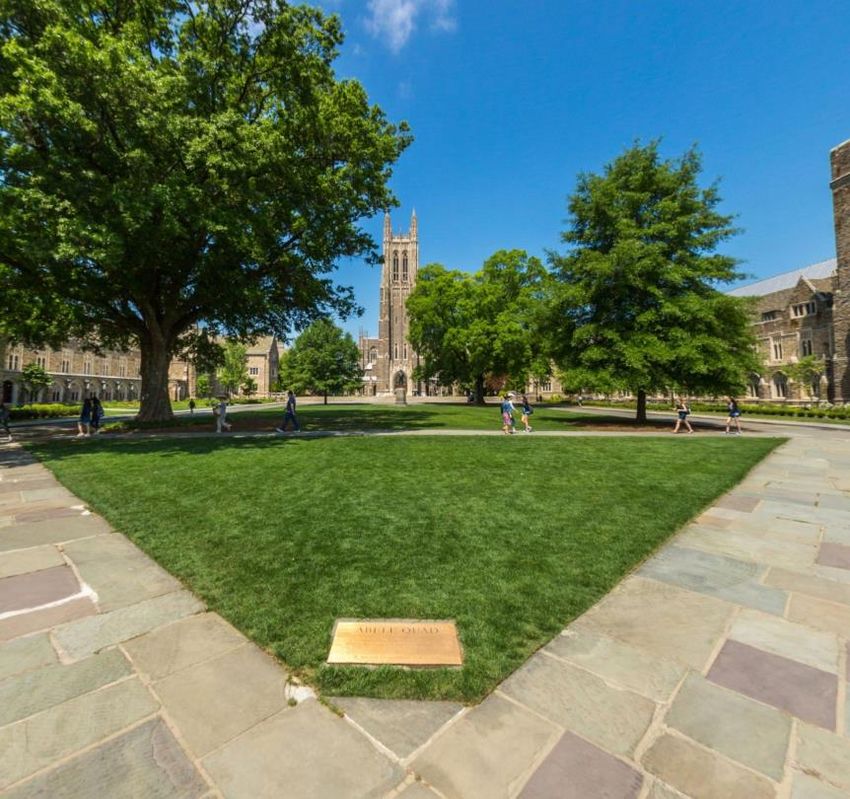
The Rise of Virtual Reality

                              #NACAC17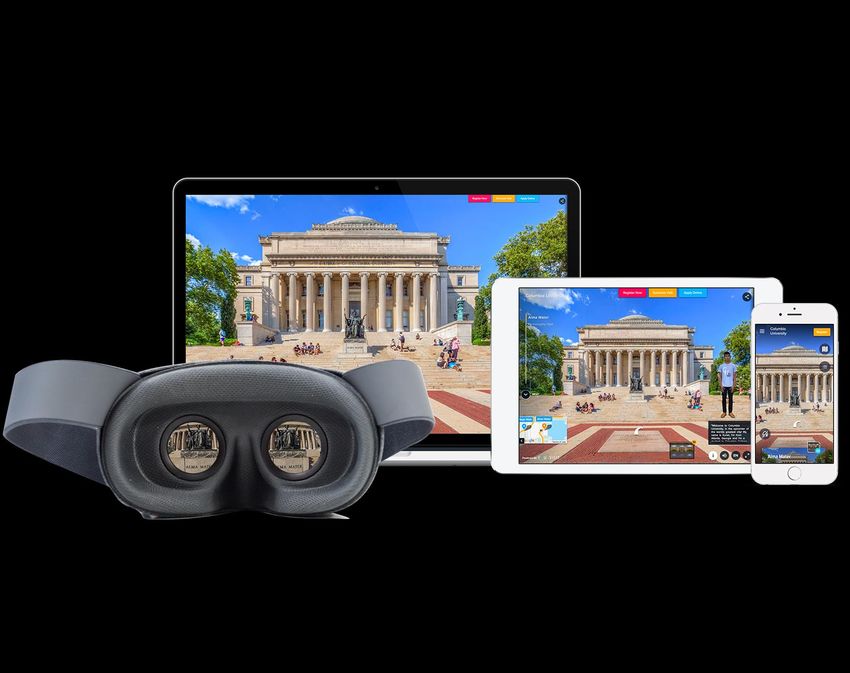
What is Virtual Reality?
VR involves devices that
completely replace a user's view
with a simulated virtual
environment.

It’s a technology that empowers
viewers to experience an event or
location as if they are actually
there. This is called “presence.”

                                    #NACAC17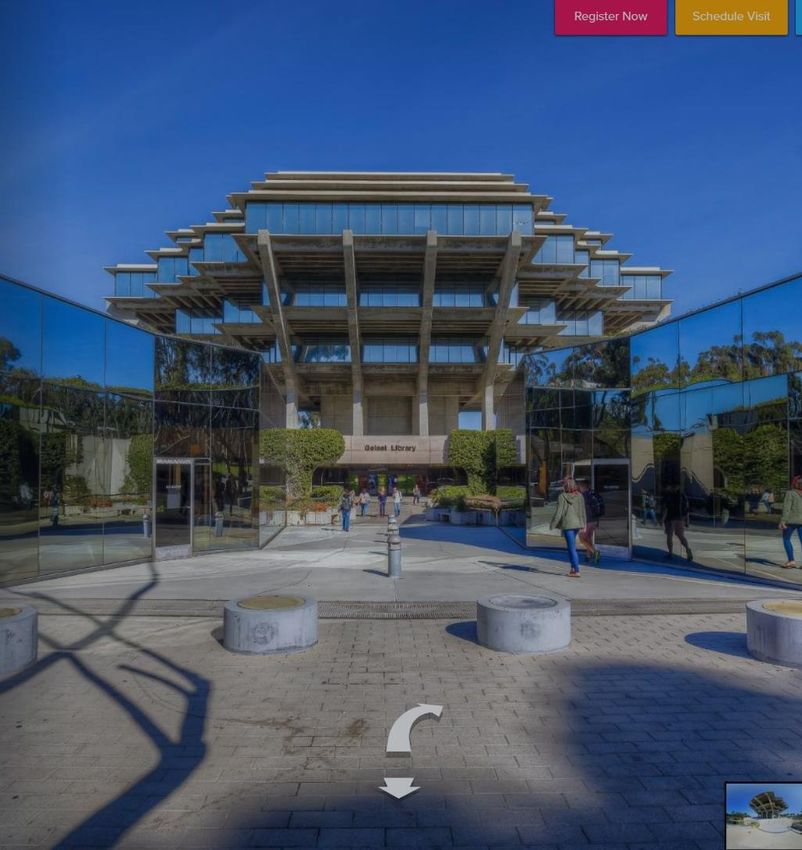
VR Devices

             #NACAC17
VR Hardware Types
Console
VR headsets that require a
connection to an external video
game console.

                                  #NACAC17
VR Hardware Types
  Light mobile

  Low-cost headsets that require
  users to slide their smartphone
  inside. Light mobile headsets do
  not interact with a smartphone's
  operating system, so users have
  to manually launch a VR-enabled
  app to use VR.

                                     #NACAC17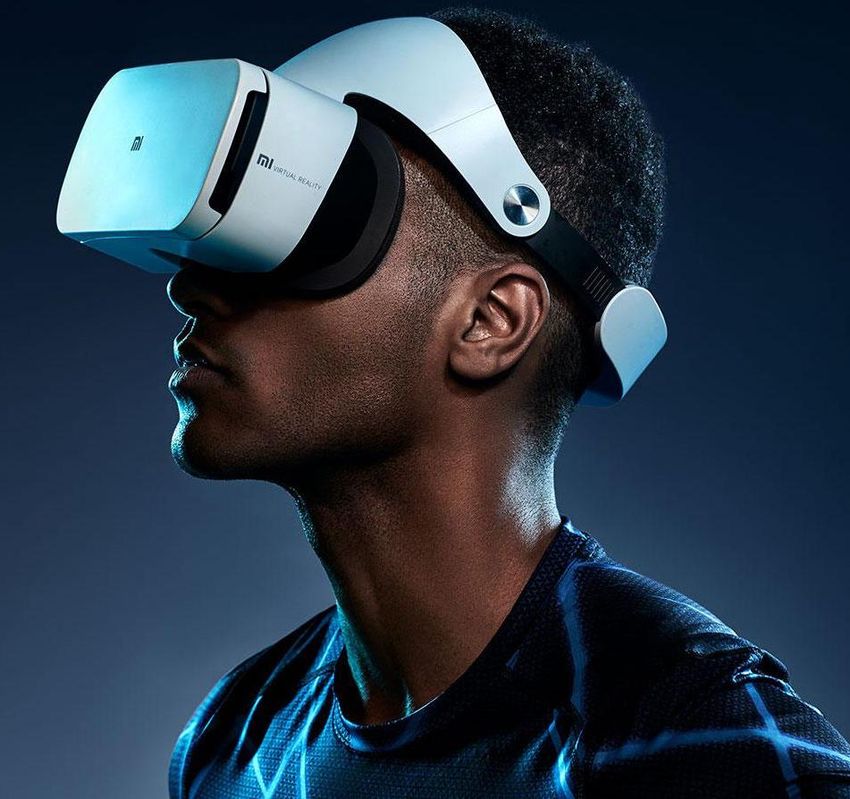
VR Hardware Types
Premium mobile

Headsets that require users to
slide their smartphone inside.
Premium mobile headsets
interact with a smartphone's
operating system, so phones
"know" when they are in a
headset.

                                 #NACAC17
VR Hardware Types
PC
VR headsets that require a
connection to an external PC

                               #NACAC17
VR Hardware Types
Standalone
Headsets where all visuals and
processing are handled by the
headset itself or on a purpose-built
pocket computer.
Examples:
Google
Intel Alloy
Oculus “Santa Cruz”
Apple (tbc)
#NACAC17Other Ways to View
VR Experiences
360-degree videos enable people
to “look around” a scene using a
mouse, trackpad, or by physically
moving their phone. This type of
content, which is growing in
popularity, can be viewed through
unique web browsers such as
YouVisit’s platform, as well as on
YouTube and Facebook.
#NACAC17#NACAC17
37% of US users plan to
use VR for learning & travel.

      #NACAC17
#NACAC17
#NACAC17
So what does this
 all mean for us?

                    #NACAC17
Overcoming
Challenges
#NACAC17#NACAC17
Challenges
Uncertainty dominates the admissions industry.

According to a 2015 Inside Higher Ed and
Gallup survey of admissions directors:

•   58 percent said that they had not filled their
    fall classes by the traditional May 1 deadline.

•   More than half of the administrators stated
    that they were “very concerned” about
    meeting the year’s enrollment goals,

•   Another third stated that they were
    “moderately concerned.”

                                                      #NACAC17
Challenges
The 2015 E-Expectations report from Ruffalo Noel Levitz,
OmniUpdate, CollegeWeekLive, and NRCCUA looked at
expectations of college-bound high school students. The
report concluded:
• 70 percent of students have looked at a college website
on a mobile device
• Prospective students are more drawn to images of a
campus than to photos of current students
• Nearly 80 percent said a campus website affected their
perception of an institution
Bridging the gap is indeed possible, but it requires strategic
planning and employing targeted tactics to achieve
enrollment goals.
#NACAC17Reasons Admissions
Professionals Consider Virtual Tours
• All I have is an interactive map
• Existing tour is outdated
• Increase yield
• Increase applications
• Increase physical campus visits
• Increase % of out of state & international students
• Increase overall enrollment
• Increase tuition revenue
• Re-branding
• I’ve got funds that if I don’t use now I lose them
#NACAC17The Virtual Campus Tour
A Virtual Tour enables prospective students
to virtually visit a school from anywhere in
the world through 360-degree panoramic
photos and videos, and traditional 2D
photos and videos.
#NACAC17The Virtual Campus Tour
They’re are designed to emulate real-life campus
tours, so students can get a true understanding of
what it would be like to attend. This saves
students time and money, but also empowers
schools to reach more prospects and inspires
physical campus visits.
#NACAC17How It Works
#NACAC17#NACAC17
#NACAC17
Youvisit.com/NACAC

                     #NACAC17
#NACAC17
#NACAC17
#NACAC17
#NACAC17
#NACAC17
What’s Next?

               #NACAC17
The Rise of AR
#NACAC17What is Augmented Reality?
• Virtual Reality: Devices that completely
replace a user's view with a simulated virtual
environment. Examples: HTC Vive, Samsung
Gear VR, Oculus Rift.
• Augmented Reality: Devices that overlay
simulated images onto a user's vision. The
real-world environment has little to no impact
on AR imagery. This also includes mobile AR
apps like Pokémon Go. Examples: Google
Glass, smartphones.
#NACAC17The Rise of Augmented Reality
• According to Digi-Capital, the mobile AR
market could hit over a billion users and $60
billion in revenue globally by 2021.
• There's a reason why Snapchat's dancing hot
dog went viral. It's because consumers enjoy
altering their physical environment and seeing
the inanimate come to life. They'll eventually
want AR to contextualize their reality, and it'll
start with their mobile phones.
#NACAC17Top 4 Things Admissions
Professionals Need To Know
About AR
1. AR will start on mobile phones and move to glasses
2. AR will contextualize our reality
3. AR cameras will be fully integrated into everyday lives
4. AR will solve many pain points for students and
Schools:
– Tour Navigation
– Augmented information for buildings and site features.
#NACAC17Mix Reality Definition
Devices that mix simulated images with the real
world. MR appears "within" the real world as
opposed to "on top" of the real world.
Examples: Magic Leap, Microsoft HoloLens
#NACAC17Conclusion
#NACAC17Thank you!
For more information
visit: youvisit.com/education
#NACAC17You can also read


