Tourist Guides GUIDELINES FOR RE-OPENING
←
→
Page content transcription
If your browser does not render page correctly, please read the page content below
GUIDELINES FOR TOURIST GUIDES

                                     GUIDELINES FOR RE-OPENING

                                Tourist Guides
GUIDELINES FOR TOURIST GUIDES

     Note:
     This is a living document which means as Government Public Health guidelines evolve, this
     document will also evolve to reflect new Government advice and changes to protocols when they
     emerge. All sectoral guidelines have been developed in line with the Government’s Roadmap for
     Reopening Society and Business, Work Safely Protocol and the updated Reframing the Challenge,
     Continuing our Recovery & Reconnecting, and based on the latest health guidance available from the
     Department of Health and the HSE. The links to latest guidelines will be included throughout the
     document.

     The Tourism and Hospitality sectoral guidelines, aligned with the Work Safely Protocol, have been
     developed collaboratively to assist businesses to apply guidance to their operations. The guidelines
     are informed by the latest Government public health advice and related regulations.

     Disclaimer
     The information contained within these operational re-opening guidelines can change from time to time. It must
     not by itself be relied upon in determining obligations or other decisions. Users of this document must
     independently verify any information on which they wish to rely. It is expected that all business owners and
     management will have familiarised themselves with the Work Safely Protocol prior to re-opening and
     implemented all relevant requirements.
     Fáilte Ireland and the Approved Tourist Guides of Ireland (ATGI), their servants or agents, do not assume legal or
     other liability for any inaccuracy, mistake, misstatement, or any other error of whatsoever nature contained
     herein. Fáilte Ireland and the Approved Tourist Guides of Ireland (ATGI) hereby formally disclaim liability in respect
     of such aforesaid matters.
     The information accessible in this document has been compiled from many sources that are not controlled by
     Fáilte Ireland. While all reasonable care has been taken in the compilation and publication of the contents of this
     document, Fáilte Ireland makes no representations or warranties, whether express or implied, as to the accuracy
     or suitability of the information or materials contained in this document. Due to the evolving nature of the COVID-
     19 pandemic, this document will be subject to change.

     Access to and use of the information herein is entirely at the risk of the user. Fáilte Ireland shall not be liable,
     directly, or indirectly, to the user or any other third party for any damage resulting from the use of the information
     contained or implied in this document.
     Fáilte Ireland has endeavoured to attribute copyright or other intellectual rights to the rightful owners where
     such course has been appropriate. Where any attribution has been missed or overlooked Fáilte Ireland,
     on being informed, will correct this omission. By proceeding to use this Fáilte Ireland document you are
     accepting this disclaimer.

     Fáilte Ireland Overview Guidelines to Re-opening
     It is recommended that businesses also view the Fáilte Ireland Overview Guidelines to Re-opening in
     addition to this sector specific guideline document, as further information relating to COVID-19
     control measures, Health & Safety measures, hygiene measures, etc. are outlined.

 2                                                BACK TO CONTENTS PAGE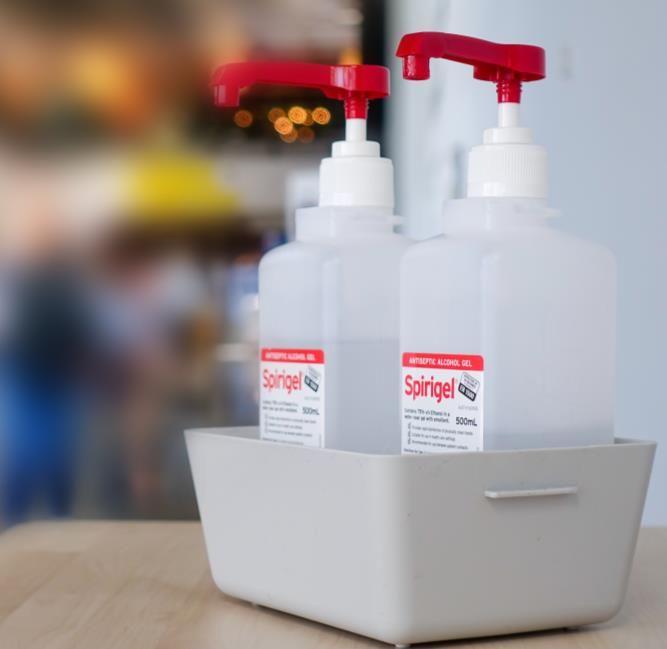
GUIDELINES FOR TOURIST GUIDES

Revision History:
Version      Date Changes     Changes from previous version
    5.2        22/10/2021    Updates in line with Government Health advice.
    5.1        20/09/2021    Update of Table on page 4 to reflect guidance from 20th September 2021.
                             Update of guidelines in line with Reframing the Challenge, Continuing our Recovery &
    5.0        10/09/2021
                             Reconnecting
    4.1        06/08/2021    Updated Public Health advice and links to Government Guidance for Outdoor Events
    4.0        26/07/2021    Updated to reflect the Health (Amendment) (No. 2) Act 2021 and Ventilation Guidance
                             Minor updates to the COVID-19 Resilience & Recovery 2021 (Table on page 4) relating to the
    3.2        01/07/2021
                             recent announcements from Government.
                             Further minor updates to the COVID-19 Resilience & Recovery 2021 (Table on page 4) & links to
    3.1        02/06/2021
                             Work Safely Protocol.
    3.0        27/05/2021    Update of information in line with Work Safely Protocol, Ventilation and other general guidance.
    2.0        11/05/2021    Update of information in line with Government Public Health advice.
    1.0        02/03/2021    Document Published

    3                                         BACK TO CONTENTS PAGE
Reframing the Challenge
Continuing our Recovery and Reconnecting
New Public Health Measures
Subject to the public health situation at the time & continued protective factors.
Current Measures
Weddings From the 22nd of October, there will be no capacity restrictions for weddings.
Paid Tourist
Accommodation services including hotels, B&Bs, self-catering, caravan & camping and hostels are open.
Accommodation
Gyms, Pools &
Leisure Pods of 6 for mixed immunity groups. There is no capacity limit for vaccinated groups.
Facilities
Public transport returns to 100% capacity.
Transport
Face coverings must be worn
Coach Tours are permitted with 75% capacity with protective measures
Face coverings must be worn
Coach Tours Multiple table bookings can be accommodated in food and beverage businesses when catering for tour groups
subject to the application of other existing Infection Prevention Control measures in place for safe operation of
service.
Domestic Travel No Restrictions
Indoor hospitality can open subject to the Guidance on Indoor Hospitality. Government regulations in relation
to evidence of COVID-19 vaccination or immunity following recovery should be implemented. Organised indoor
events and mass gatherings*are permitted where all patrons are immune (fully vaccinated or recovered from
Cafés, COVID-19 within previous 6 months), or accompanied minors (under 18). It is important that businesses should
Restaurants & check photo ID when checking Proof of Immunity. There are some limited circumstances when this may not be
Pubs necessary e.g. where a person is well-known to the business. Unaccompanied minors are required to present
(including Hotel Proof of Immunity.
Restaurants
and Bars) Outdoor Hospitality can continue to operate for customers who are unable to provide evidence of COVID-19
vaccination or immunity following recovery.
A maximum of 15 people including no more than 10 adults may be seated at a table.
From the 22nd of October, venues operating for the purposes of live entertainment or nightclubs are permitted
to open with protective measures in place. Information available here -
Nightclubs
www.gov.ie/en/organisation/department-of-tourism-culture-arts-gaeltacht-sport-and-media
Outdoor Parks
Open with protective measures.
& Play Areas
Business events/conferences can take place once all participants show Proof of Immunity. Government
regulations in relation to evidence of COVID-19 vaccination or immunity following recovery should be
implemented. Organised indoor events and mass gatherings*are permitted where all patrons are immune (fully
vaccinated or recovered from COVID-19 within previous 6 months), or accompanied minors (under 18). It is
important that businesses should check photo ID when checking Proof of Immunity. There are some limited
Meetings
circumstances when this may not be necessary e.g. where a person is well-known to the business.
Unaccompanied minors are required to present Proof of Immunity.
Small non-social meetings, training and educational programmes may take place when it is considered essential,
for the operation of the business, that they must take place face-to-face and as a matter of urgency.Reframing the Challenge
Continuing our Recovery and Reconnecting
New Public Health Measures
Subject to the public health situation at the time & continued protective factors.
Current Measures
Open with protective measures (for example, a maximum capacity to allow physical distancing, one-way traffic
within the venue). Maximum numbers linked to the capacity, taking account of Public Health Advice.
Outdoor amusements/theme parks/funfairs are permitted.
Attractions
Organisers of indoor and outdoor group tours should ensure that appropriate protective measures are in place,
and where indoor groups have a mix of vaccinated and unvaccinated people, pods of 6 should apply.
Organisers of indoor and outdoor group activities should ensure that appropriate protective measures are in
Activities place, and where indoor groups have a mix of vaccinated and unvaccinated people indoors, pods of 6 should
apply.
Organised indoor events and mass gatherings*are permitted where all patrons are immune (fully vaccinated or
recovered from COVID-19 within previous 6 months), or accompanied minors (under 18). It is important that
businesses should check photo ID when checking Proof of Immunity. There are some limited circumstances
Organised
when this may not be necessary e.g. where a person is well-known to the business. Unaccompanied minors are
Indoor Events /
required to present Proof of Immunity.
Mass
Where patrons have mixed immunity status, organised indoor events / mass gatherings are not permitted.
Gatherings
Multiple table bookings are allowed subject to the application of other existing infection prevention control
measures for the safe operation of food and beverage services.
Organised
Organised outdoor events & mass gatherings are permitted with appropriate protective measures.
Outdoor Events
/ Gatherings
*Indoor events and mass gatherings includes conferences, trade fairs and exhibitions and large scale business events involving external
audiences, family gatherings etc.GUIDELINES FOR TOURIST GUIDES
Table of Contents
1. Introduction: Meeting & Overcoming the 7 6. Cleaning Products & Protocols 20
COVID-19 Challenge Public Spaces & Communal Areas 20
Back of House & Employee Areas 20
2. Business Response/Action Plan 8 Equipment Shared by Employees 20
Monitoring & Supporting 8 Vehicles 20
Policies & Processes 9 Control of Waterborne Hazards 21
Communication 10
Training 10 7. Technical & Maintenance Services 21
Cleaning & Frequency 10 Ventilation / Air Conditioning 21
Ventilation /Air Conditioning 11 Dispensers 21
Staffing Resources 11
Fáilte Ireland COVID-19 Safety Charter 11 8. Locations for Distribution of PPE 22
Contractual Agreements 12 Front Office 22
Back Office 22
3. Employee & Customer Health 13 Customer Facing Areas 22
Face Coverings / Masks 13
Physical Distancing 14 9. Employee Uniforms 22
Employee Physical Distancing 14 Cleaning & Disinfection Protocol 22
Measures to Control Noise Levels 14 Physical Distancing Protocol 22
Providing Hand Sanitisers 14
Employee Health Concerns 15 10. The Customer Journey 23
Customer Health Concerns 15 Pre-Arrival 23
Protocols for Tourist Guides 23
4. Tourist Guide Responsibility 16 Protocols for Driver Guides 25
Guiding Operations 16
Hand Hygiene 16 11. Office Areas 26
COVID-19 Training 17 Cleaning & Disinfection Protocol 26
Personal Protective Equipment (PPE) 17 Physical Distancing Protocol 26
Employee Welfare Facilities & Timekeeping 17 Customer Considerations 26
Medical Kit 17 Isolation Area 26
COVID-19 Contact Tracing 17
Appendix 1 27
5. Physical Distancing 18 Ventilation 29
Capacity Management 18 Manual Requirements 29
Queuing 18 Mechanical Requirements 29
On Board / Travelling 18
Check-in process 19
Reception Area or Booking Office 19 While it is acknowledged that Tourist Guides provide a
Employee Areas 19 range of varying services these Guidelines have been
developed to be inclusive of all guiding functions, business
types and sizes e.g. walking tours, driver guides, self-
employed guides, etc.GUIDELINES FOR TOURIST GUIDES
1. Introduction: Meeting & Overcoming
the COVID-19 Challenge
COVID-19 is an unprecedented challenge for the tourism sector. ▪ Ventilation
The proven importance of ensuring adequate air circulation
Businesses will need to review how they work and introduce new should be factored into operational practices Consider a
practices and procedures to ensure everyone stays safe. As a ventilation assessment of the business and the use of CO₂
result, Fáilte Ireland, in consultation with Sectoral Bodies, has monitors as per the Work Safely Protocol and the WSP
developed operational guidelines in line with the Health and Employer Checklist No. 8 - Ventilation. Further information
Safety Authority (HSA), the Health Service Executive (HSE), the regarding air conditioning and ventilation can be found in
Food Safety Authority of Ireland (FSAI). Section 5.d of the Work Safely Protocol as well as Appendix 1.
As part of this, Fáilte Ireland has created this set of specific The spread of the virus is most likely when infected people are
guidelines in consultation with Approved Tourist Guides of Ireland in close contact so the risk of getting COVID-19 is higher in
(ATGI) to help you prepare to re-open. You can be reassured that crowded and poorly ventilated spaces where infected people
these recommendations are underpinned by advice made spend long periods of time together in close proximity. It is
available from the HSA, HSE, World Health Organisation (WHO) important to maximise ventilation in areas where people are in
and other relevant bodies. close contact. While large droplets containing the virus will
settle onto the surrounding surfaces within seconds, smaller
Businesses should follow the Work Safely Protocol which has been particles containing the virus can stay suspended for longer
developed under the aegis of the Safety Health and Welfare Act periods of time. Dilution of indoor air by opening windows and
2005. Businesses are now required to review their existing advice, doors or using mechanical ventilation (HVAC) systems can
guidance and protocols to ensure they are in line with these lower the airborne concentration and remove these smaller
updates. The Health and Safety Authority (HSA) is the compliance particles from the air.
body and has full powers as set out in this legislation designated in
relation to the implementation of the Work Safely Protocol. Non-
compliance can result in the closure of a business.
▪ Focusing on best practice in food and beverage service
Tourism businesses should follow best practices in service and
physical distancing to promote health of employees and
Personal Responsibility
customers.
All individuals and businesses will need to continue to monitor the
ongoing risk from the disease and take personal responsibility as
they take steps individually and collectively in their everyday lives
▪ Food Safety and COVID-19 Safety
There are no reports of transmission of COVID-19 via food. The
to keep this risk under control.
main mode of transmission is from person to person. Food
business operators must continue to apply their food safety
All sectoral guidelines were developed based on the following
management systems, based on the principles of HACCP.
considerations, however not all considerations will be relevant to
(References to HACCP in this guidance are for the purposes of
all Tourist Guides:
food safety and not the prevention of COVID-19).
▪ Restructuring operations
In addition, food business operators will be required to
Tourism businesses of all types need to adapt their operations,
review employee practices and consider the design of their introduce COVID-19 safety management systems in the form of
business to provide a safe environment for customers and enhanced hygiene, cleaning and disinfection, staff training and
employees and ensure physical distancing and the prevention health checks, as well as physical distancing. This is to protect
of the spread of COVID-19. Further information on reviewing against the transmission of the virus to or between staff,
customers and other people who enter their premises. Any
employee practices can be found in the Work Safely Protocol
COVID-19 precautions must not compromise food safety.
e.g. consider any new additional measures for employees who
are deemed high risk.
For advice and information on food safety during COVID-19
▪ Putting dedicated resources in place and for food businesses re-opening, the Food Safety Authority
Tourism businesses should ensure that they have dedicated of Ireland (FSAI) website is a useful resource which is regularly
personnel to implement and operate a robust system that updated HERE.
prevents the spread of COVID-19. Equally importantly, they
need to put processes in place that can deal with individual and ▪ Guidance on International Travel
A range of new measures and requirements, including
multiple cases of the disease that may occur.
mandatory quarantine for travel from certain countries, for
▪ Adapting and enhancing hygiene practices those travelling to Ireland is available HERE. It is important for
Tourism businesses should adapt and implement enhanced employers to keep up to-date on travel restrictions and
procedures in general cleaning, storage and cleaning of requirements into the country as these may be subject to
equipment and vehicles (where appropriate). In particular, change on a regular basis.
they should introduce and implement touchless solutions
where possible. Current Government advice is available HERE.
7 BACK TO CONTENTS PAGEGUIDELINES FOR TOURIST GUIDES
2. Business Response/Action Plan
Creating an Action Plan will help to clarify what needs to be done to overcome the threat of COVID-19 and give your
employees and customers confidence that they are safe.
By endorsing these guidelines, Tourist Guides support the implementation of Government Public Health advice and
COVID-19 safety and hygiene procedures to help prevent the transmission of COVID-19 and increase the level of safety for
their customers, employees, and the local communities they visit.
In developing an Action Plan, the first step that the business Monitoring & Supporting
owners, management and/or Tourist Guides should take is
to familiarise themselves with the latest guidelines from the If a Tourist Guide is a sole trader, with no employees, they
following sources: have the exclusive responsibility of COVID-19 Response
▪ Health Services Executive (HSE) Team / Lead Worker Representative (LWR) as outlined in the
section below. They are responsible for implementing and
▪ Health and Safety Authority (HSA) strictly adhering to measures in their place of work to
▪ Irish Government Departments prevent the spread of COVID-19.
▪ World Health Organisation (WHO).
COVID-19 Response Team/Coordinator/Lead Worker must
Information from these sources will help to shape your plan be appointed to ensure new procedures are adhered to.
of action. You should also:
Adherence to this protocol will only be achieved if employers
▪ Complete a risk assessment to identify what operational, and workers have a shared responsibility to implement the
changes you need to make in your business, this should measures contained in this protocol in their place of work.
include an occupational health and safety risk as well as A collaborative approach to the implementation of the
considering a ventilation assessment. Your safety protocol is essential to achieve success and maximum buy in.
statement should be reviewed and updated in line with
COVID-19 protocols Further information can be found Each workplace should appoint at least one lead worker
HERE for risk assessments and Appendix 1 for Ventilation. representative charged with ensuring that COVID-19
measures are strictly adhered to in their workplace. The
▪ Review of all standard operating procedures (SOPs) to person(s) undertaking the role must receive the necessary
define and note what you are changing. training and have a structured framework to follow within
the organisation to be effective in preventing the spread of
▪ Create a communication plan to inform employees and the virus.
customers of what you are changing, what you need
them to do and how you expect everyone to act and Further information and a short online course on the role of
behave. Lead Worker Representative can be found on the HSA
website.
▪ The HSA provides templates, checklists and advice on
the Work Safely Protocols. Please see HERE for more Employers should have regular and meaningful engagement
information. with their worker representative, workers and/or their
recognised Trade Union or other representative (including
The plan should reassure employees and customers that health and safety committee where it exists) about the
safeguarding their health and safety is of the utmost measures being put in place to address the occupational
importance. It should also ensure that your operations exposure to COVID-19 in the workplace. Employers should
continue to run in an efficient and safe manner. provide COVID-19 induction training for all workers on their
return.
You should review the plan regularly and amend it as new
regulations, guidelines and procedures come into force.
Experience and feedback will inform how appropriate and
effective the plan is.
For further information on the development of your Action
Plan, visit the Fáilte Ireland Business Supports Hub HERE.
*Current physical distancing guidance is in line with Public Health advice. This document will evolve to reflect new Public Health advice and changes to protocols as and when they emerge.
8 BACK TO CONTENTS PAGEGUIDELINES FOR TOURIST GUIDES
The number of worker representatives for COVID-19 An outbreak of COVID-19 is when two or more cases of
appointed should, ideally, be proportionate to the number the disease are linked by time, place or person. The
of workers in the workplace and this person(s) should be management of an outbreak is managed by the local
clearly identifiable in the workplace. Employers and worker Departments of Public Health to enable the outbreak to
representatives will work together to ensure that all the be brought under control as quickly as possible. It also
requires close engagement and cooperation between the
actions in this protocol are fully adhered to in order to employer, the LWR, the staff, representatives and in
ensure the suppression of COVID-19 in the workplace. particular with the worker(s) affected. Outbreaks in a
single workplace, which are not managed and brought
Section 3 of the Work Safely Protocol sets out the steps for under control quickly, can rapidly spread to other
employers and workers to reduce the risk of exposure to workplaces and/or the wider community. Continuous and
COVID-19. effective communication between all parties is essential.
Refer to HPSC guidance on management of outbreaks
These provisions include: HERE.
▪ Consulting with the workplace representatives in the ▪ Defining and documenting the correct and appropriate
development of a COVID-19 response plan. use of Personal Protective Equipment (PPE). This should
be in line with the Government’s Public Health advice.
▪ Developing/amending policies and procedures for
prompt identification and isolation of workers who may ▪ Developing/updating current policy for the care of
have symptoms of COVID-19. employee uniforms to ensure they are clear on the
standards of appearance/dress expected while at work.
▪ Developing, consulting, communicating and
implementing workplace changes or policies. Specific ▪ Reviewing and updating cancellation and refund policies
reference is made to agreeing with workers any in line with business requirements.
temporary restructuring of work patterns that may be
required to implement the COVID-19 prevention ▪ Developing and updating policy relating to the standards
measures in the workplace. There is also provision for the of behaviour expected from employees and customers to
lead worker representative to be involved in prevent the spread of COVID-19. Strict controls should be
communicating the health advice around COVID-19 in the in place to ensure compliance with Public Health advice
workplace. at all times.
▪ The HSA has introduced interim guidance to assist ▪ Define and develop policy to ensure that prior to
employers and workers to manage a return to work commencing a tour, all Agents, Suppliers and Customers
following COVID-19 testing or infection. The Fitness for are compliant with Government Public Health advice and
Work interim guidance and related checklists are COVID-19 safety protocols.
available here.
▪ If a guided tour is a cross border operation, implement a
Tourist Guides should only work with businesses who are process to ensure that Public Health advice for both the
compliant with the Work Safely Protocol and that have a Republic of Ireland and Northern Ireland are
COVID-19 Response Team/Coordinator/Lead Worker communicated to customers in advance of the tour and
appointed to ensure all COVID-19 safety procedures are adhered to throughout. Public Health advice and
adhered to. regulations in both regions may differ.
Policies & Processes
Business owners, management and/or Tourist Guides need
to review all business policies and standard operating
procedures across each department to reflect operational
changes. In particular, this means:
▪ Defining and documenting a clear plan of action in the
event of a suspected case of COVID-19 among customers
and/or employees in all stages of the customer journey
where appropriate.
▪ Develop a policy and process in line with the Work Safely
Protocol to prepare your business for management of a
case or cases (outbreak) of COVID-19 in the workplace.
Ref. section 9 of the Work Safely Protocol.
9 BACK TO CONTENTS PAGEGUIDELINES FOR TOURIST GUIDES
▪ It is recommended that Tourist Guides develop a policy and channels to do this and ensure that employees stay at home
have procedures in place to ensure that the families or and seek medical attention if they have key symptoms such as a
chosen primary contact of a potentially affected person are
properly informed in the case of an emergency. high temperature, coughing or shortness of breath.
▪ Develop/update safety briefings in line with There is an obligation on employers to ensure that employees
COVID-19 measures. are aware that they must not attend work if they have
▪ If adopting the use of Rapid Antigen Diagnostic Tests (RADT)
symptoms. This is essential to ensure that the virus does not
spread.
in the workplace, amend the COVID-19 Business Response /
Action plan to take account of the agreed testing policy and
approach taken and communicate to all employees. For You should organise information briefings to cover all the basic
more information see section D13 of the Work Safely protective measures against COVID-19 and the signs and
Protocol symptoms of the disease. In particular, make sure you cover:
▪ Hand and respiratory hygiene and physical distancing
measures
Communication
▪ Correct use of PPE
You should share the plan with all employees (where applicable)
before they return to work. Changes to policies e.g. sick leave
▪ Cleaning/disinfection protocols
policy should also be shared prior to them returning to work. If ▪ Employee health and what to do if feeling unwell
it is updated at any time, you should make sure everyone knows
what has changed. Providing guidelines to employees on how ▪ Unwell customer/dealing with suspected cases/liaising with
authorities.
they communicate the Action Plan to customers will ensure
everyone gives the same message and there is no inconsistency. If training is needed for specific procedures or if your business
has specific requirements, it should be included in the training
Ensure an up-to-date list of the contact information of all programme.
employees, including emergency telephone numbers, is always
readily available across all areas of the business. First Aid Responders may require further training in light
of COVID-19.
Regularly review all COVID-19 related signage and notices
throughout the business where appropriate, including vehicles For a more comprehensive list of symptoms of COVID-19, please
and other modes of transport if used as part of the tour. Ensure click HERE. If you do not have symptoms, you can get a free
they communicate the latest Public Health advice from COVID-19 (coronavirus) test at a COVID-19 walk-in test centre.
Government. Signs should be placed in prominent and relevant
positions and be legible. Communications should be offered in
multiple languages, as appropriate. Cleaning & Frequency
Tourist Guides should have emergency COVID-19 helpline In the circumstance that a Tourist Guide provides their own
numbers available at all times. The HSE Live COVID-19 Helpline mode of transport (i.e. licenced SPSV / Limousine / Minibus /
for the Republic of Ireland is 1850 24 1850 or 01 240 8787. This Bus / Coach), they should ensure that frequently touched
service is available from 8am-8pm Monday to Friday and 9am- surfaces are cleaned and disinfected regularly and in-between
5pm on Saturday. For Tourist Guides visiting Northern Ireland each use.
this number is 111.
In the circumstance where a Tourist Guide uses an external
Downloading and using the HSE COVID-19 tracker app is also an supplier for the provision of transport services, the Tourist
important measure that can be adopted. Employers should Guide should ensure that the provider is compliant with
provide advice on the tracker and encourage workers to nationally accredited safety and hygiene protocols. The
download. Workers should download as it can be used for
transport provider/driver is responsible for the safety of the
contact tracing purposes in and out of the workplace.
vehicle and the passengers in the vehicle. Although the Tourist
Guide is using an external supplier, they have a responsibility for
the safety of their customers in relation to COVID-19.
Training
In situations where customers may enter a premises or a vehicle
If a Tourist Guide is a sole trader, with no employees, they should managed by a Tourist Guide, the guide muse ensure contact /
ensure they are trained to manage the threat of COVID-19 in their
touch surfaces such as tabletops, switches by seats, ceiling
workplace as outlined in the section below.
lights, temperature controls, luggage racks, handrail or arm
Business owners, management and/or Tourist Guides should rests, seat belt buckles, door handles and work equipment both
inform all employees of the measures being adopted to manage within vehicles and on company premises are visibly clean at all
the threat of COVID-19. Use the most appropriate training times and are cleaned and disinfected at least twice daily.
10 BACK TO CONTENTS PAGEGUIDELINES FOR TOURIST GUIDES
Implement modified cleaning intervals for public areas, work You will also need to plan for the impact of employee
areas and vehicles. This applies especially for washroom absences; this may involve reallocating employees from non-
facilities and communal spaces. Cleaning should be essential tasks. Where appropriate, cross-training employees
performed at least twice per day and whenever visibly dirty. will help maintain staffing levels within your business.
Cleaning of work areas should be conducted at regular
intervals. Employees who have not had close contact with a confirmed
case should continue taking the usual precautions and
Further information on cleaning in non-healthcare settings attend work as usual. Further information on close contacts,
is available from the ECDC HERE or from the casual contacts and testing is available from the
Government HERE. HSE website.
Where physical distancing is not possible all other measures
Ventilation / Air Conditioning to protect employees should be in place. You should apply
the Work Safely Protocol.
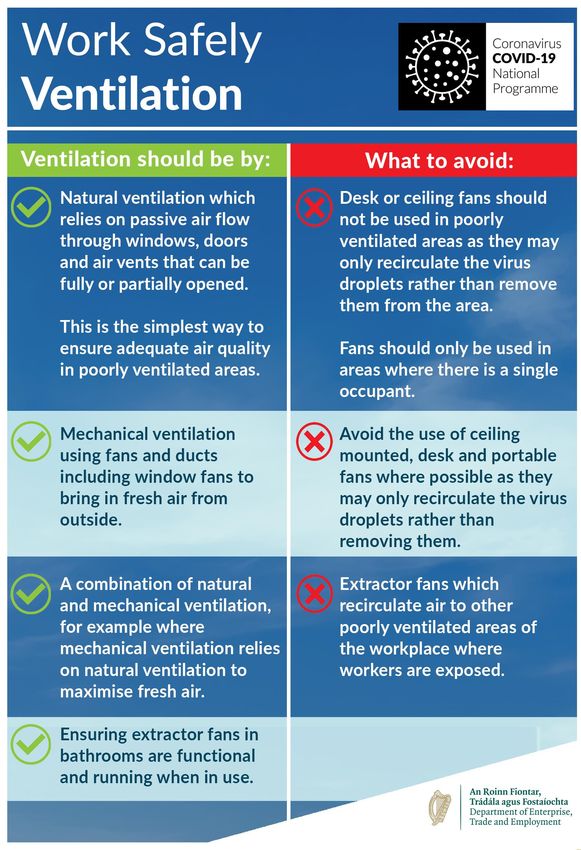
Where possible, windows should be opened to allow for a
flow of air throughout rooms and/or vehicles. When rooms
and/or vehicles are being cleaned, windows and/or doors
where appropriate, should be opened. Care needs to be Fáilte Ireland COVID-19 Safety Charter
taken at all times to ensure security and safety measures.
There are reoccurring safety protocols that are both
fundamental and consistent throughout each sector. The
The spread of the virus is most likely when infected people Fáilte Ireland COVID-19 Safety Charter is a Government-
are in close contact so the risk of getting COVID-19 is higher endorsed initiative to reinforce confidence in domestic and
in crowded and poorly ventilated spaces where infected overseas visitors in tourism businesses. The COVID-19 Safety
people spend long periods of time together in close Charter is designed to give comfort and reassurance to
proximity. It is important to maximise ventilation in areas employers, employees, and customers that a business is
where people are in close contact. While large droplets ready to re-open safely.
containing the virus will settle onto the surrounding surfaces
within seconds, smaller particles containing the virus can All Tourist Guides should sign up for the COVID-19 Safety
stay suspended for longer periods of time. Dilution of indoor Charter and undertake the requisite COVID-19 infection
air by opening windows and doors or using mechanical prevention control training. It is important to note that the
ventilation (HVAC) systems can lower the airborne Fáilte Ireland COVID-19 Safety Charter is only awarded to
concentration and remove these smaller particles from the Tourist Guides for their tourist guiding activities in Ireland,
air. and this should be clearly stated on websites, etc.
Further information regarding air conditioning and It is strongly recommended that Tourist Guides who wish to
ventilation can be found in Section 5.d of the Work Safely receive the COVID-19 Safety Charter should ensure that they
Protocol, in the WSP Employer Checklist No. 8 – Ventilation, only work with businesses e.g. tour operators, venues and
as well as Appendix 1. other suppliers, who are compliant with nationally
accredited safety protocols, such as the COVID-19 Safety
Charter.
Staffing Resources
This ensures that all agents and suppliers have agreed to the
Where appropriate, business owners, management and/or Terms and Conditions of the Charter, to adhere to the
Tourist Guides should review rotas in line with the Work official guidelines for re-opening relevant to their sector and
Safely Protocol, subsection 3, which provides that full to ensure that all of their employees (where appropriate)
consultation on these matters is required to ensure have undertaken requisite COVID-19 infection prevention
sufficient employees are available to maintain physical and control training.
distancing while completing the tasks to the required
standards. To view the live list of businesses compliant with COVID-19
Safety Charter click HERE.
To achieve physical distancing in the office areas of the
business, you should: Tourist Guides, along with the businesses and suppliers they
work, with have a joint responsibility to ensure ongoing
▪ Consider flexible shifts where appropriate. safety of their customers, their employees and the
communities that host them. Further information on sector
▪ Schedule small teams. specific guidelines for tourism and hospitality businesses are
available HERE.
▪ Keep the same team combinations to limit employee
interaction. This will assist should contact tracing be
required.
*Current physical distancing guidance is in line with Public Health advice. This document will evolve to reflect new Public Health advice and changes to protocols as and when they emerge.
11 BACK TO CONTENTS PAGEGUIDELINES FOR TOURIST GUIDES
It is strongly recommended that Tourist Guides develop Tourist Guides should consider the following:
contractual agreements with suppliers, prior to commencing
joint operations, to ensure compliance relating to COVID-19 ▪ Update and define terms and conditions of the contract
safety protocols and Government Public Health advice. in relation to COVID-19 (e.g. cancellations, refunds etc.)
Some examples of these suppliers are: ▪ Incorporate compliance with the COVID-19 Safety
▪ Food & Beverage Suppliers
Charter and Government Public Health advice into the
contractual conditions to ensure your supplier agrees to
▪ Activity Providers provide a safe experience for customers (e.g.
▪ Visitor Attractions accommodation, tour experiences, food and beverage
▪ Tour Experiences
etc.)
▪ Tourism Transport ▪ Update any existing disclaimers in contracts specifically
▪ Accommodation Providers referencing COVID-19.
▪ On booking, obtain agreement from Customers for the
following:
Contractual Agreements
I. Customers will not attend the tour if showing
Tourist Guides are required to work to deliver a safe
symptoms of COVID-19
experience for their customers and their employees (where
appropriate) through enhanced COVID-19 safety and II. Customers will immediately advise if feeling
hygiene practices. unwell while on the tour
Close co-ordination and clear communication with agents,
III. Customers will agree to comply with all COVID-
suppliers and customers is required to ensure all Health and
19 health and safety protocols in place
Safety procedures are in place and that every aspect of the (protocols and restrictive measures may vary
customer journey adheres to Government Public Health depending on the current Public Health advice)
advice relative to the specific region.
IV. Customers will commit to bringing their own
Tourist Guides should ensure that they establish contractual
hand sanitiser and an adequate supply of face
agreements with agents, suppliers, and customers so that
coverings for the duration of the tour.
safety and hygiene protocols are aligned. It is strongly
recommended that Tourist Guides should ensure that they
only use agents and suppliers who are compliant with
nationally accredited safety protocols, such as the COVID-19
Safety Charter.
12 BACK TO CONTENTS PAGEGUIDELINES FOR TOURIST GUIDES
3. Employee & Customer Health
All individuals and businesses will need to continue to monitor the ongoing risk from the disease and take personal
responsibility as they take steps individually and collectively in their everyday lives to keep this risk under control.
The health and safety of the Tourist Guide, employees and customers is the number one priority. The following steps will
help ensure everyone remains fit and well throughout the guided tour.
Face Coverings / Masks details on what constitutes a reasonable excuse, see HERE.
Businesses must ensure that they are familiar with the
Wearing a face covering / mask helps to prevent the spread various reasons why an employee or customer may not be
of COVID-19. It is strongly recommended to wear a face required to wear a face covering/mask, further details can be
covering/mask in situations where physical distancing is found HERE.
difficult. Face masks are always in addition to, and never a
substitute for, other Public Health measures including A face covering should cover your nose and mouth, go under
physical distancing, hand hygiene and practising appropriate your chin, fit snugly against the side of the face with no
respiratory etiquette. visible gaps and be secured with ties or ear loops. For more
information on the safe use, storage and disposal of face
Regulations to enforce the mandatory wearing of face coverings/masks, please click HERE.
coverings in some situations and in certain premises are
currently in effect in Ireland. For more information on when Following the HPSC Evidence Summary on the “Efficacy of
to wear a face covering please click HERE. visors compared with masks in the prevention of
transmission of COVID-19 in non-healthcare settings”,
Government Public Health advice states that face coverings / Tourism and Hospitality businesses should consider the
masks must be worn by staff in customer facing roles where following recommendations:
no other protective measures are in place e.g. protective
screens and where physical distancing is not possible. ▪ In public settings, expert opinion and international
guidance generally favours cloth face coverings over
Face coverings / masks must also be worn by customers visors or shields.
when arriving to and leaving their table when in a restaurant
or bar. Please see HERE for more information. ▪ There is a rationale and laboratory evidence favouring
cloth face coverings over visors where the wearer is at a
Under current legislation, management and employees in higher level (standing) than those potentially exposed at a
customer facing roles, who engage in or carry out work lower level (sitting). This is extremely important for food
relating to the preparation of, or service of, food or and beverage service businesses.
beverages for consumption on the premises must wear a
face covering ▪ Visors reduce exposure to a certain extent when
compared to no face covering and may be considered an
The Work Safely Protocol states that face coverings / masks alternative in certain circumstances where an individual is
are recommended in public areas in buildings, including unable to wear a face mask. Click HERE for more
receptions / foyers and also when moving throughout information.
buildings.
▪ If visors are used, they should cover the entire face
As part of your business risk assessment, you should (above the eyes to below the chin and wrap around from
determine the requirement for face coverings / masks in all ear to ear) and be correctly applied.
individual business activities. The Work Safely Protocol states
that in settings where employee separation cannot be Further information on the handling and care of visors can be
ensured then face coverings / masks should be made found HERE.
available to employees in line with Public Health advice.
Ensure that customers are clearly informed of your business
policy and government regulations regarding face coverings /
masks in advance. Tourist Guides and their employees should
keep up to date with the latest Public Health advice issued
regarding face coverings / masks. They should ensure that
this advice is communicated to their customers in advance of
the tour.
There are
*Current cases
physical where
distancing people
guidance is in linemay be unable
with Public toThis
Health advice. wear a face
document will evolve to reflect new Public Health advice and changes to protocols as and when they emerge.
covering and this is deemed as a reasonable excuse. For
13 BACK TO CONTENTS PAGEGUIDELINES FOR TOURIST GUIDES
Physical Distancing Straining to hear others due to high volumes can cause
people to move closer to each other and not adhere to
Physical distancing guidelines (in line with Government physical distancing. To avoid this, Tourist Guides should put
Public Health advice) should be incorporated into the Action in place a plan and take appropriate measures to control
Plan for each area of the business and also while tours are noise levels, to ensure volumes do not rise to a level where
operational. people are required to take such measures to hear others.
Customers should adhere to Government Public Health Given the strong evidence from the WHO and other public
advice on physical distancing. Careful consideration needs to health bodies, noise levels should be maintained at levels
be given when standing in queues, when boarding and where it is not necessary to speak loudly or shout.
alighting vehicles, using public facilities, moving around
vehicles or premises. Ensure there are systems in place to Tourist Guides are responsible for keeping noise at an
prevent intermingling in communal areas (e.g. entrances, appropriate level to help prevent the spread of COVID-19.
exits and toilet facilities).
Tourist Guides should also be mindful of potential noise
Following updated Government Public Health measures, levels when conducting tours or parts of tours which are
tourism transport businesses should ensure that they outdoors e.g. walking tours, guided site tours etc, and should
implement the required measures subject to the current plan the route and stops with the intention of minimising
Public Health advice in relation to load capacity on both these risks.
public and private transport.
Tourist Guides should be aware that in order to facilitate Providing Hand Sanitisers
compliance with physical distancing, capacity levels at
different stages of the customer journey may be limited (e.g. Where appropriate, hand sanitiser dispensers (touchless
food and beverage, tour experiences etc.) whenever possible) should be readily available and
accessible to all employees and customers, and should be
Further information on the public health measures for this placed at all entry points to buildings and vehicles and at
stage of reopening are available at www.gov.ie. specific points within the public areas where required.
Hand sanitisers for use against COVID-19 may be alcohol or
Employee Physical Distancing non-alcohol based. However, in choosing a hand sanitiser, it
is important to ensure that it is effective against COVID-19.
Where physical distancing is not possible all other measures Further information on hand sanitisers is available in the
to protect employees should be in place. Work Safely Protocol, found HERE.
Minimise any direct employee contact and provide hand Tourist Guides should ensure that they always have hand
washing facilities, and other hand hygiene aids such as hand sanitiser available for their own personal use and advise
sanitisers, wipes, etc. Ensure these are readily available and their customers to bring their own supply on the tour.
accessible so employees can perform hand hygiene as soon
as a task is complete.
Measures to Control Noise Levels
Employees and customers should be aware of the increased
risk of transmission from speaking loudly, shouting and
singing etc. and should ensure that they take the necessary
precautions to avoid any increased risk.
According to the WHO, transmission of COVID-19 can occur
through direct, indirect, or close contact with infected
people through infected secretions such as saliva and
respiratory secretions or droplets, which are expelled when
an infected person coughs, sneezes, talks, etc.
High noise levels within premises can impact conversation
negatively and encourage customers to raise their voice to
communicate thus encouraging possible transmission of the
virus.
*Current physical distancing guidance is in line with Public Health advice. This document will evolve to reflect new Public Health advice and changes to protocols as and when they emerge.
14 BACK TO CONTENTS PAGEGUIDELINES FOR TOURIST GUIDES
Employee Health Concerns Customer Health Concerns
Where appropriate, Tourist Guides should ensure all There are various stages throughout the guided tour where a
employees submit their pre-return to work form before they Tourist Guide may be alerted to a suspected case of COVID-
return to work. For further details relating to what 19. Information is available on the HSE website HERE or in
information should be obtained, please refer to Section 3.D4 Section D5 of the Work Safely Protocol.
of the Work Safely Protocol.
Tourist Guides, as well as their central office (where
Employees should be trained on what to do if they become appropriate) need to have the telephone numbers of the
unwell. Tourist Guides and their employees should follow health authorities, medical centres and public and private
the Work Safely Protocol. hospitals readily available in case a customer falls ill. For a
full list of Dept of Public Health contact details, please see
When dealing with a suspected or confirmed case of COVID- HERE.
19 among employees, follow the Work Safely Protocol.
Further information is available on the HSE website and also As part of your Business Response to COVID-19, the Action
on page 5 of the Work Safely Protocol. Plan should have a defined and clear and documented plan
of action in the event of a suspected case of COVID-19
Tourist Guides need to have the telephone numbers of the among customers in all stages of the customer journey
health authorities, medical centres and public and private where appropriate.
hospitals readily available in case an employee falls ill.
If you are alerted to a suspected case of COVID-19 while at a
For a full list of Dept of Public Health contact details, please Visitor Attraction, Food & Beverage provider,
see HERE. Accommodation provider, etc. the Tourist Guide should
immediately contact the management / appropriate
Regulations to enforce the mandatory wearing of face designated person on the premises and ask that they
coverings in some situations are currently in effect in Ireland. instigate their COVID-19 action plan for a suspected case.
For more information on when to wear a face covering Tourist Guides should follow instructions from the
please click HERE. designated person on the premises. The Tourist Guide
should ensure that the customer with symptoms is
Advice is available to business owners/management and separated from the rest of the group, and that the
employees on how to support your wellbeing during the remainder of the group remain physically distanced from
COVID-19 crisis. Wellbeing supports can be viewed on the each other and other members of the public.
Fáilte Ireland COVID-19 Support Hub HERE
Further information for dealing with a suspected case of
COVID-19 is available in the Overview of Guidelines for Re-
Opening all Sectors
Where appropriate, the Tourist Guide should contact the
company management to ensure the COVID-19 Action Plan
is implemented. Where the Tourist Guide is a Sole Trader,
they should implement their own Action Plan.
Tourist Guides should contact all suppliers to advise of
delays, and possible cancellations, for the remainder of the
tour, due to a suspected case.
15 BACK TO CONTENTS PAGEGUIDELINES FOR TOURIST GUIDES
4. Tourist Guide Responsibility
It is acknowledged that Tourist Guides provide a range of varying guiding functions and they may operate independently,
on a contract basis or as an employee. The effective delivery of a COVID-19 Action Plan depends on the professionalism,
conduct and behaviour of the Tourist Guide, management, contractors, and employees regardless of the guiding function
they operate.
All employees and businesses will need to continue to monitor the ongoing risk from the disease and take personal
responsibility as they take steps individually and collectively in their everyday lives to keep this risk under control.
Guiding Operations
For Tourist Guides who are working on a self-employed or on Paying attention to the following is especially important in
a casual contract basis, effective delivery of the Action Plan is the role of a Tourist Guide:
their sole responsibility and reliant on their own diligence. If
a Tourist Guide is a sole trader, with no employees, they
have the exclusive responsibility of COVID-19 Response Hand Hygiene
Coordinator / Lead Worker as outlined in the Monitoring &
Supporting section. They are responsible for implementing, Correct hygiene and frequent handwashing with soap is vital
and strictly adhering to, measures in their place of work to to help combat the spread of COVID-19. Businesses with
prevent the spread of COVID-19. premises or vehicles need to ensure that adequate sanitary
facilities are provided and that employees thoroughly and
In circumstances where the Tourist Guide has not designed frequently clean their hands.
or organised the tour, and is performing the guiding function
on behalf of a tour operator / venue / site / visitor attraction All Tourist Guides and employees (where appropriate)
etc., the responsibility for compliance with Government should wash their hands frequently and as required, for a
Public Health advice resides with both parties. Adherence to minimum of 20 seconds or use hand sanitiser regularly if
COVID-19 safety and hygiene protocols will only be achieved hands are visibly clean.
if there is a shared responsibility to implement the measures
in the place of work. It is expected that the Tour Operator / Please see HERE for more information.
Venue / Site will advise and brief the Tourist Guide on their
COVID-19 protocols in advance of the tour activity. Where Hands should be washed as often as necessary, but always in
no such advice or briefing is provided, the Tourist Guide the following circumstances:
should seek such information. ▪ After coughing and sneezing or blowing nose,
Tourist Guides, and the businesses and suppliers they work ▪ Before and after preparing food,
with, have a joint responsibility to ensure ongoing safety of ▪ Before and after eating,
customers, employees and the communities that host them.
Tourist Guides should ensure that safety and hygiene ▪ Before and after handing their face covering,
protocols are aligned when providing a guiding function on ▪ If in contact with someone who is displaying COVID-19
behalf of another party. It is strongly recommended that symptoms,
Tourist Guides should ensure that they only work with other
businesses who are compliant with nationally accredited ▪ Before and after being on public transport,
safety protocols such as the COVID-19 Safety Charter. ▪ Before and after being in a crowd,
Further information on sector specific guidelines for tourism ▪ When arriving and leaving the workplace/other sites,
and hospitality businesses are available HERE. ▪ After drinking or smoking
Public Health advice, regulations and guidelines in the ▪ After handling waste,
Republic of Ireland and Northern Ireland may differ. Tourist ▪ After cleaning duties including sweeping/mopping etc.
Guides that are involved in cross-border guiding activities
should ensure they keep up to date with the relevant ▪ After using the toilet,
guidance in both Northern Ireland and Republic of Ireland. ▪ After handling money and
▪ When hands are dirty. If visibly dirty, wash hands with
For further information on guiding operations during COVID- soap and water.
19, please see the ATGI website HERE.
This list is not exhaustive where a more comprehensive list is
available from the Work Safely Protocol.
*Current physical distancing guidance is in line with Public Health advice. This document will evolve to reflect new Public Health advice and changes to protocols as and when they emerge.
16 BACK TO CONTENTS PAGEGUIDELINES FOR TOURIST GUIDES
COVID-19 Training Employee welfare facilities (such as employee areas and
locker rooms) need to be re-organised to suit physical
All employees need to receive training on COVID-19 distancing measures and be frequently cleaned and
Infection Prevention Control Measures. More disinfected. Staggered start times and break times can also
comprehensive training is required for personnel in frequent be very helpful, and you should review the use of clocking-in
customer contact; these include the Tourist Guides, machines if applicable.
reception / booking office team, vehicle operators and on-
board employees, etc. Staff meetings should be held online if possible. If physical
meetings need to take place, physical distancing measures
As a Tourist Guide, it is strongly recommended that any should be taken.
business you work with have adequate training in place for
their employees. See information on the Fáilte Ireland
COVID-19 Safety Charter to ensure that their safety Medical Kit
protocols are aligned with your own.
A medical should always be available in the company offices
(where appropriate) and throughout the customer journey
Personal Protective Equipment (PPE) e.g. on-board vehicles. The medical kit should include:
Appropriate PPE should be worn by all personnel if required ▪ Germicidal disinfectant/wipes/tissues for surface cleaning
by their roles. This may include gloves, face masks, aprons
etc. You should assess each section of the business, and the ▪ Face/eye masks. Note that disposable face masks can
customer journey, to determine what is needed. Training on only be used once.
how to properly use, apply and dispose of all PPE is also
essential. As part of the business risk assessment, ▪ Gloves (disposable).
consideration needs to be given to the level of PPE required
for various tasks e.g. power hosing which can cause an ▪ Protective apron (disposable).
aerosol affect.
▪ Biohazard disposable waste bags.
Government Public Health advice strongly recommends that
individuals wear a face covering / mask in situations where it
is not possible to achieve the recommended physical COVID-19 Contact Tracing
distancing of 2 metres*. Regulations to enforce the
Tourist Guides must keep records of customers to allow for
mandatory wearing of face coverings in some situations are
currently in effect in Ireland. For more information on when contact tracing. Ensure there is a booking system in place
to wear a face covering please click HERE. that collects the name and contact details of each customer
to assist with contact tracing.
Further information on PPE is available HERE.
Tourist Guides do not have to keep records of every person
In the context of COVID-19 risk, employers should check the in a party where a booking is made for a group. In this
HPSC website regularly for updates regarding use of instance, the name and contact details of the lead person
recommended PPE. who booked the group will suffice. The lead person should
be advised to keep a record of who is in their group in case it
is required for contact tracing in the future.
Employee Welfare Facilities & Timekeeping
A Tourist Guide should also keep a record of the tour event
As we move to a system based on personal responsibility details, locations, times and dates of each activity
rather than regulations, employers and employees should throughout the tour. If there are any changes to the itinerary
make every effort to ensure best practice in infection throughout the tour, the Tourist Guide should be
prevention control measures is adhered to. In doing so, the responsible for updating these details.
Work Safely Protocol should be adhered to.
Details must be retained for a minimum of 28 days, after
Employers should ensure all employees submit their pre- completion of the tour, in line with GDPR requirements.
return to work form before they return for work. Further
details relating to what information should be obtained is
available HERE.
It is also essential to display prominent signage relating to
hand and respiratory hygiene as well as physical distancing in
all employee areas and vehicles, where appropriate.
*Current physical distancing guidance is in line with Public Health advice. This document will evolve to reflect new Public Health advice and changes to protocols as and when they emerge.
17 BACK TO CONTENTS PAGEYou can also read


