Towards implementing exercise into the prostate cancer care pathway: development of a theory and evidencebased intervention to train ...
←
→
Page content transcription
If your browser does not render page correctly, please read the page content below
Towards implementing exercise into the prostate cancer
care pathway: development of a theory and evidence-
based intervention to train community-based exercise
professionals to support change in patient exercise
behaviour (The STAMINA trial)
REALE, Sophie, TURNER, Rebecca R., SUTTON, Eileen, TAYLOR,
Stephanie J.C., BOURKE, Liam, MORRISSEY, Dylan, BROWN, Janet,
ROSARIO, Derek J. and STEED, Liz
Available from Sheffield Hallam University Research Archive (SHURA) at:
http://shura.shu.ac.uk/28436/

This document is the author deposited version. You are advised to consult the
publisher's version if you wish to cite from it.
Published version
REALE, Sophie, TURNER, Rebecca R., SUTTON, Eileen, TAYLOR, Stephanie J.C.,
BOURKE, Liam, MORRISSEY, Dylan, BROWN, Janet, ROSARIO, Derek J. and
STEED, Liz (2021). Towards implementing exercise into the prostate cancer care
pathway: development of a theory and evidence-based intervention to train
community-based exercise professionals to support change in patient exercise
behaviour (The STAMINA trial). BMC Health Services Research, 21 (1).

Copyright and re-use policy
See http://shura.shu.ac.uk/information.html

                  Sheffield Hallam University Research Archive
                               http://shura.shu.ac.uk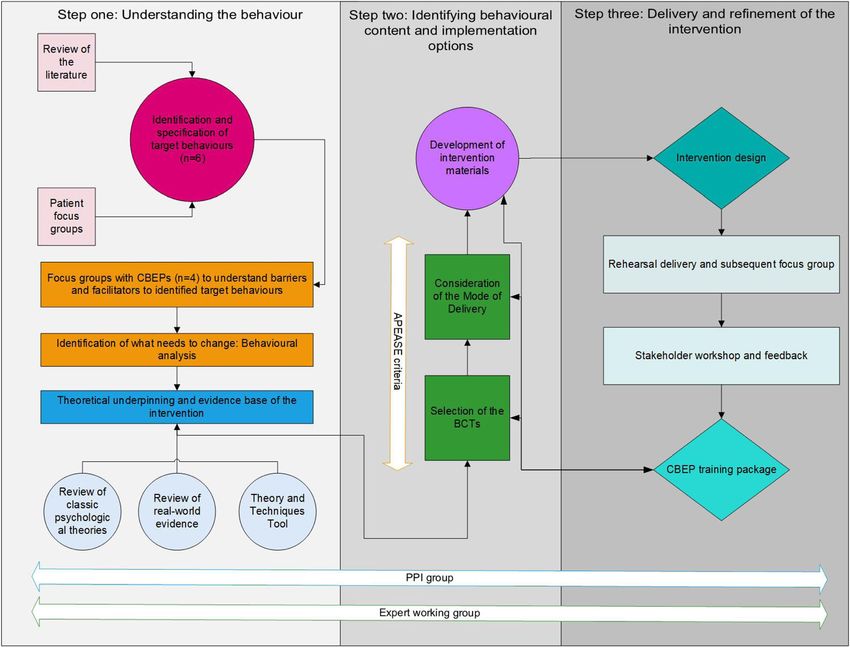
Reale et al. BMC Health Services Research  (2021) 21:264
https://doi.org/10.1186/s12913-021-06275-w

 RESEARCH ARTICLE                                                                                                                                   Open Access

Towards implementing exercise into the
prostate cancer care pathway:
development of a theory and evidence-
based intervention to train community-
based exercise professionals to support
change in patient exercise behaviour (The
STAMINA trial)
Sophie Reale1, Rebecca R. Turner1, Eileen Sutton2, Stephanie J. C. Taylor3, Liam Bourke1, Dylan Morrissey4,
Janet Brown5, Derek J. Rosario1,6 and Liz Steed3*

  Abstract
  Background: The National Institute for Health and Care Excellence (NICE) recommend that men on androgen
  deprivation therapy (ADT) for prostate cancer should receive supervised exercise to manage the side-effects of
  treatment. However, these recommendations are rarely implemented into practice. Community-based exercise
  professionals (CBEPs) represent an important target group to deliver the recommendations nationally, yet their
  standard training does not address the core competencies required to work with clinical populations, highlighting a
  need for further professional training. This paper describes the development of a training package to support CBEPs
  to deliver NICE recommendations.
  Methods: Development of the intervention was guided by the Medical Research Council guidance for complex
  interventions and the Behaviour Change Wheel. In step one, target behaviours, together with their barriers and
  facilitators were identified from a literature review and focus groups with CBEPs (n = 22) and men on androgen
  deprivation therapy (n = 26). Focus group outputs were mapped onto the Theoretical Domains Framework (TDF) to
  identify theoretical constructs for change. In step two, behaviour change techniques and their mode of delivery
  were selected based on psychological theories and evidence to inform intervention content. In step three, the
  intervention was refined following delivery and subsequent feedback from intervention recipients and stakeholders.
  (Continued on next page)

* Correspondence: e.a.steed@qmul.ac.uk
3
 Institute for Population Health Sciences, Queen Mary University of London,
London, UK
Full list of author information is available at the end of the article

                                        © The Author(s). 2021 Open Access This article is licensed under a Creative Commons Attribution 4.0 International License,
                                        which permits use, sharing, adaptation, distribution and reproduction in any medium or format, as long as you give
                                        appropriate credit to the original author(s) and the source, provide a link to the Creative Commons licence, and indicate if
                                        changes were made. The images or other third party material in this article are included in the article's Creative Commons
                                        licence, unless indicated otherwise in a credit line to the material. If material is not included in the article's Creative Commons
                                        licence and your intended use is not permitted by statutory regulation or exceeds the permitted use, you will need to obtain
                                        permission directly from the copyright holder. To view a copy of this licence, visit http://creativecommons.org/licenses/by/4.0/.
                                        The Creative Commons Public Domain Dedication waiver (http://creativecommons.org/publicdomain/zero/1.0/) applies to the
                                        data made available in this article, unless otherwise stated in a credit line to the data.
Reale et al. BMC Health Services Research (2021) 21:264 Page 2 of 13 (Continued from previous page) Results: Six modifiable CBEPs target behaviours were identified to support the delivery of the NICE recommendations. Nine domains of the TDF were identified as key determinants of change, including: improving knowledge and skills and changing beliefs about consequences. To target the domains, we included 20 BCTs across 8 training modules and took a blended learning approach to accommodate different learning styles and preferences. Following test delivery to 11 CBEPs and feedback from 28 stakeholders, the training package was refined. Conclusion: Established intervention development approaches provided a structured and transparent guide to intervention development. A training package for CBEPs was developed and should increase trust amongst patients and health care professionals when implementing exercise into prostate cancer care. Furthermore, if proven effective, the development and approach taken may provide a blueprint for replication in other clinical populations where exercise has proven efficacy but is insufficiently implemented. Keywords: Prostate cancer, Androgen deprivation therapy, Exercise, Exercise professionals, Behaviour change, Intervention development, Behaviour change wheel, Person based approach, Medical Research Council, Patient and public involvement Background A genuine opportunity exists to improve the QoL of Prostate cancer is common worldwide, totalling ap- men with prostate cancer on ADT, with exercise profes- proximately 1.3 million new cases in men in 2018 [1]. sionals supporting the delivery of recommendations na- More specifically, prostate cancer is the most com- tionally (i.e. NG131 1.4.19). More specifically, findings mon cancer diagnosis in men in the UK, with 41,201 from our earlier work, including interviews with a di- new cases in 2017 [2]. Approximately half of men di- verse range of healthcare professionals working in the agnosed with prostate cancer will undergo androgen NHS prostate cancer care and exercise referral pathway deprivation therapy (ADT), also known as medical highlight that HCPs and allied health professionals, (in- castration [3]. This is an ongoing treatment adminis- cluding physiotherapists), do not perceive delivering tered via injection, tablet or surgery. Whilst ADT is NICE recommendations (i.e. NG131 1.4.19) as part of effective in treating prostate cancer, persistent adverse their role [9]. Instead, community-based exercise profes- effects are common and can be debilitating thus sionals (CBEPs) (i.e., physiologists, physiotherapists and impacting on overall quality of life (QoL) (e.g. fatigue, personal trainers based within the leisure industry) are reduced muscle mass, loss of bone mineral density, deemed more suitable. For example, the role of CBEPs is hot flushes, and sexual dysfunction) [4]. to design and deliver safe and effective exercise pro- Numerous strategies to manage the side effects of grammes. Their success in this role has been demon- ADT have been described and tested in practise [5]. strated in previous exercise trials e.g. [14] and is in line However, to date the only evidence-based treatment to with regulation by the Chartered Institute for the Man- demonstrate clinically meaningful improvements to fa- agement of Sport and Physical Activity (CIMSPA) [15]. tigue and disease specific QoL, are non-pharmacological Therefore, we intend a service level change in the pros- interventions, predominantly exercise training [6, 7]. As tate cancer care pathway by integrating two currently such, the National Institute for Health and Care Excel- distinct sectors (the leisure industry and the NHS). We lence (NICE; NG131 1.4.19) include in the guidelines for aim to explore the implementation of NICE recommen- locally advanced and advanced prostate cancer a recom- dations into practice, as part of an ongoing research pro- mendation that men on ADT should be offered super- ject; STAMINA (Supported exercise TrAining for Men vised, aerobic and resistance exercise twice weekly for wIth prostate caNcer on Androgen deprivation therapy). 12 weeks [8]. However, these recommendations are sel- However, integration of these two sectors is not with- dom integrated into practise [9] due to several reported out challenge. Interviews with HCPs in the prostate can- barriers from healthcare professionals (HCPs), including cer care pathway have highlighted concerns regarding a lack of exercise services to refer men to [10] and lim- patient safety when exercising in the community due to ited awareness of clinical exercise recommendations a lack of confidence in CBEP’s skills to deliver a safe, [11], thus adding to unmet needs reported by men with and disease specific, exercise programme [9]. Similarly, prostate cancer [12]. Furthermore, men on ADT who men on ADT emphasise the need for exercise to be su- participated in a 12-month supervised exercise pervised by a professional and tailored to meet their in- programme believe community gyms are easily access- dividual needs [9]. These beliefs are possibly reflective of ible and a location they look forward to attending [13]. limited HCP and patient knowledge of the training
Reale et al. BMC Health Services Research   (2021) 21:264                                                        Page 3 of 13

CBEPs receive, the typically short duration and/ or lim-     LS, RT), complex intervention development (ST), cancer
ited regulation for personal training qualification [16];    research (LB, DR), urology (DR) and qualitative method-
the variation in CBEPs behaviour change and communi-         ologies (ES) (Fig. 1).
cation skills, and limited CBEPs knowledge related to          Regulatory and ethical approvals, in accordance with
prostate cancer. Evidence suggests standard exercise         the Helsinki Declaration, were sought prior to the com-
professional qualifications do not address the core com-     mencement of research activities from Sheffield Hallam
petencies of working with clinical populations highlight-    University (Reference: ER10748795) and the NHS (REC
ing a need for further appropriate professional training     reference: 18/NW/0738 / IRAS project ID: 254343).
to ensure safety [16].                                       Written informed consent was collected from all partici-
   This paper describes the methods used and outcomes        pations prior to research activity.
realised from the development and refinement of a the-
ory and evidence-based intervention (as part of the
STAMINA programme) to facilitate CBEPs to support            Step one: understanding the behaviour
men on ADT for prostate cancer to initiate, and further      To develop a complex intervention centred on support-
maintain, exercise behaviour. The structure was guided       ing patient behaviour, we firstly sought to understand
by formalised intervention development approaches: the       patient needs i.e. what support do men on ADT for
UK Medical Research Council (MRC) guidance for the           prostate cancer need to exercise. We then identified how
development and evaluation of complex interventions,         to train CBEPs to deliver the required support to men
emphasising the importance of drawing on evidence and        on ADT, as detailed below.
theory and specifying key steps in the intervention devel-
opment process [17], and the Behaviour Change Wheel          Identification and selection of target behaviours
(BCW) [18] complemented by elements of the Person-           A list of potential target behaviours for patients and
Based Approach [19], as has been used previously [20].       CBEPs were generated by reviewing i) existing literature
The BCW is a guide to intervention development in-           examining the effectiveness of interventions aimed at ex-
formed by theory and based on the synthesis of 19 be-        ercise initiation and maintenance of cancer survivors
haviour change frameworks [18]. The Person-Based             and the role of exercise professionals [22] and ii) results
Approach complements the BCW by focussing primarily          of 5 focus groups with men on ADT for prostate cancer
on users’ perspective and the context of an intervention     (n = 26), exploring their experiences of physical activity
to enhance acceptability and the likely engagement with,     and beliefs about participating in a structured exercise
and effectiveness of, an intervention [19].                  programme (methods reported elsewhere [9]).
   The aim of this research was to develop a theory and         The comprehensive list of behaviours was reviewed by
evidence-based training package for CBEPs to support         the expert working group for replication or cross-over
the delivery of the NICE recommendations NG131               between behaviours. Each behaviour was then coded ac-
1.4.19, prior to full effectiveness and implementation       cording to defined criteria from the BCW [18], to iden-
evaluation in a planned randomised controlled trial. In      tify behaviours that should be targeted in the
parallel, training for HCPs to provide exercise recom-       intervention: a) the likely impact of change, b) the likely
mendation and support was developed after further pro-       ease of change, c) the centrality of the behaviour (e.g.
fessional training requirements were identified as part of   the likelihood of changing one behaviour having an im-
the STAMINA programme (methods reported else-                pact on another behaviour) and d) the ease of measure-
where; under review).                                        ment. Coding was completed by an individual researcher
                                                             (SR) and verified through discussion with the expert
Methods                                                      working group including review by a behaviour change
The intervention was developed in accordance with the        expert (LS).
MRC guidance for the development of complex inter-
ventions [17, 21] and took a theory and evidence based
approach. The BCW [18] in conjunction with elements          Specification of target behaviours
of the Person-Based Approach [19] provided a system-         Next, the target behaviours were specified in behavioural
atic guide to intervention development, incorporating        terms by the expert working group, and reviewed by the
user perspectives, with the aim of changing CBEPs be-        PPI group (7 men with prostate cancer and 4 family
haviour. The intervention was refined through an itera-      members); who needs to deliver the behaviour, what
tive and dynamic process based on evidence, theory and       does a person need to do differently, when will it happen
feedback from intervention recipients, patient and public    and where will it take place. To consider dose we also
involvement (PPI) members, stakeholders and an expert        considered how often the behaviours are required and
working group with expertise in: behaviour change (SR,       with whom.
Reale et al. BMC Health Services Research (2021) 21:264 Page 4 of 13 Fig. 1 Iterative intervention development process of a training package for community-based exercise professionals (CBEPs) Identifying what needs to change the study. Each focus group was led by an experienced To further develop our understanding of how CBEPs facilitator (ES, LS, SR) and the topic guide, reviewed by may support men on ADT to exercise, barriers to, and the PPI group, was designed to explore the 14 domains enablers of the patient target behaviour were identified of the Theoretical Domains Framework (TDF) version in the previously reported focus groups [9]. Men were 2.0 [23] (Additional file 1). The TDF is an integrative recruited from two urology out-patient departments in framework originally based on the synthesis of 128 the- South Yorkshire and Derbyshire. All eligible men pre- oretical constructs from 33 theories of behaviour change senting during routine follow-up care, prostate cancer [24] to understand behaviour at an individual level and support groups or via poster advertisement were support the development of implementation interven- approached for participation. tions [25]. Furthermore, CBEPs were probed on their Similarly, barriers and facilitators of the CBEPs target preferred mode of delivery of the professional training behaviours that could be addressed in a training programme (e.g. online versus face-to-face). programme were identified from four focus groups. Responses from the focus groups were mapped onto CBEPs were identified from four Nuffield Health fitness the TDF to identify domains through which change may and wellbeing gyms using purposive sampling to ensure occur. Focus group transcripts were analysed deductively inclusion of the target population (community-based supported by the use of NVivo [26]; the TDF was used personal trainers, physiologists, and fitness managers) to generate the framework for content analysis (SR) and and relevant stakeholders (gym general managers and coding specifically identified the type of professional (or operational managers). Study documents were sent via patient) who provided the information and the type of the research team to eligible Nuffield Health employees. professional (or patient) the information was related to Those who provided written consent were enrolled into (e.g. themselves, a different exercise professional, a HCP
Reale et al. BMC Health Services Research   (2021) 21:264                                                        Page 5 of 13

or patient). The lead researcher (SR) systematically went       domains) were reviewed against the APEASE criteria
through each transcript, coding according to the frame-         and CBEPs focus group findings to determine their suit-
work. Text was attributed to more than one domain               ability in the intervention [18].
where applicable. Text relating only to the target behav-
iours were coded for relevance [25]. Subsequently, 25%
of coding was double coded with a second independent            Mode of delivery
reviewer (LS), to develop the coding framework as de-           Once the BCTs had been identified, the behavioural con-
scribed above (i.e. who provided the information and the        tent was then developed, specifying the mode of delivery.
type of professional the information was related to). The       A range of feasible modes of delivering the selected
coders were in 85% agreement, and following discussion,         BCTs were considered and reviewed against the APEA
all discrepancies were resolved.                                SE criteria [18] to identify content to be delivered via
                                                                traditional face-to-face approaches and online learning
Theoretical underpinning and evidence base                      technologies to promote active and self-directed learning
Following the behavioural analysis, psychological theor-        [30].
ies from the field of behaviour change that related to the        Furthermore, intervention materials including patient
identified constructs within the TDF were then reviewed         booklets and professional training worksheets were cre-
to consider how best to apply them to the current con-          ated alongside a training manual for CBEPs and a facili-
text and advance our understanding of the likely mecha-         tator manual for the training providers.
nisms of change. In line with MRC guidance for the
development and evaluation of complex interventions, a          Step three: delivery and refinement of the intervention
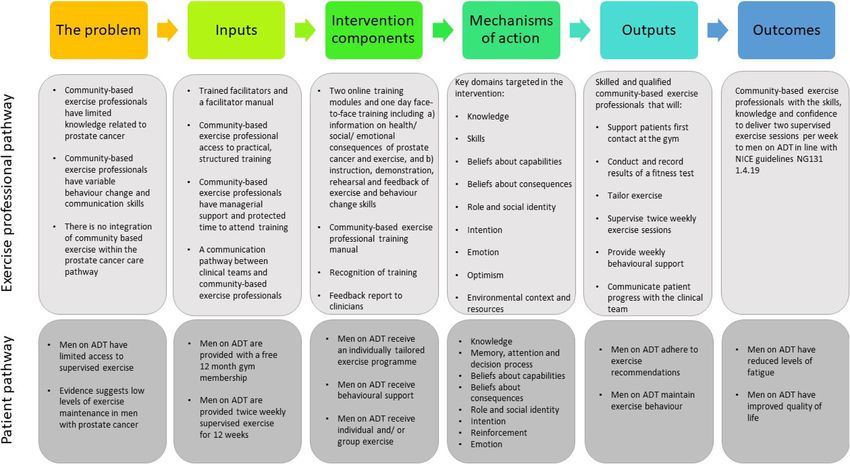
logic model was developed to present the proposed               Modelling components of a complex intervention prior
mechanisms of change of the intervention [27].                  to a full-scale study provides important information
                                                                about the design of the intervention [17]. We sought to
Step two: identifying behavioural content and                   operationalise the CBEPs training package during an it-
implementation options                                          erative process, delivering the intervention face-to-face
Behaviour change techniques                                     to CBEPs (n = 11) and stakeholders (n = 28) between
Having identified which theoretical constructs required         February and June 2019, for feedback and refinement of
change to achieve both the patient and CBEPs target be-         the intervention.
haviours, content for the intervention was developed
and guided by the inclusion of behaviour change tech-
niques (BCTs). BCTs are defined as observable, replic-          Rehearsal delivery and subsequent focus groups
able, and irreducible components of behaviour change            The exercise professional training package was delivered
interventions [18]. We used the labels and detailed defi-       to CBEPs who were purposively sampled to ensure a di-
nitions of BCTs as those included in the BCT Taxonomy           verse range of target users (e.g. gender, job role and pre-
version 1 (BCTTv1) [28].                                        vious experience) [19]. Feedback on the content, format,
   BCTs to be delivered by the CBEPs to support long-           location and delivery of the intervention were collected
term exercise behaviour were identified from previously         immediately post intervention, via an audio recorded
drawn links between constructs of the TDF [18], mecha-          focus group with an independent researcher (RT). The
nisms of action [29] and previous literature exploring          topic guide was based on Kirkpatrick’s Four Level Train-
BCTs for promoting exercise behaviour in people living          ing Evaluation Model [31] (Additional file 1) and con-
with and beyond cancer [22]. Context-based decisions            siders reaction - concerned with understanding how
for each BCT that was identified as likely to be effective      participants feel about the training programme, learning
(i.e. most frequently used with the selected TDF do-            - the extent the attendees have learnt something new
mains), and supported by evidence, was made in relation         such as skills, behaviour - the extent training is put in to
to its affordability, practicability, effectiveness and cost-   practice and results that are obtained as a result of the
effectiveness, acceptability, side effects and safety and       intervention. Focus group data were analysed in NVivo
equity considerations (APEASE criteria) [18].                   [26] following Braun and Clarke’s six step process of
   Similarly, inclusion of BCTs for the delivery of the ex-     thematic analysis [32]. Suggestions for change were
ercise professional training were guided by the CBEPs           highlighted from the key themes and rated against
target behaviours and theoretical constructs requiring          MoSCoW criteria (Must have, should have, could have,
change. BCTs were identified from previously drawn              would like) for prioritising change [33]. Modifications
links between constructs of the TDF [18] and mecha-             were made if they were considered likely to impact on
nisms of action [29]. BCTs that were identified as effect-      behaviour change, uncontroversial and easy or recom-
ive (i.e. most frequently used with the selected TDF            mended by multiple participants.
Reale et al. BMC Health Services Research (2021) 21:264 Page 6 of 13
Stakeholder workshop and feedback sessions, including aerobic and resistance training, for
Following the rehearsal delivery, the exercise profes- 12 weeks at Nuffield Health. The literature also identi-
sional training package and patient intervention mate- fied reports of behaviours conducted by exercise profes-
rials were presented at a one-day stakeholder workshop sionals in supervising exercise. With the patient target
to enhance the future implementation of the designed behaviour in mind, these were distilled into 6 unique be-
intervention. Participants were identified via existing haviours that CBEPs should perform. The final list of
clinical, professional and patient networks, national target behaviours were considered both measurable and
charity representatives and our PPI group. The stake- modifiable and deemed most likely to bring about
holder workshop ran in the format of presentations from change (Table 1).
the research team, presenting ‘key uncertainties’ for dis-
cussion. Stakeholder discussions were facilitated (max-
imum of 8 per group) by a research team member using Identifying what needs to change
a broad topic guide (Additional file 1) based on the Nor- Twenty-six men on ADT participated in one of five
malisation Process Theory (NPT); a framework that uti- focus groups (age range 58–4 years, 96% White British,
lises the core concepts of coherence, cognitive 36% no formal educational qualification, 64% retired)
participation, collective action and reflexive monitoring [9]. Thirty-four barriers to the patient target behaviour
to capture the work that participants do when imple- were identified, mapping onto 8 domains of the TDF,
menting a new practice [34]. Verbal feedback and re- which highlighted domains requiring targeting (Add-
searcher field notes were collated and circulated to all itional file 2). These were: knowledge, memory, attention
stakeholders to ask for any further comment or clarifica- and decision processes, beliefs about capabilities, beliefs
tion within a two-week deadline. Feedback was then about consequences, social/ professional role and identity,
mapped onto the NPT and reviewed against MoSCoW intention, reinforcement and emotion.
criteria for prioritising change [35], to support interven- Twenty-two Nuffield Health employed CBEPs par-
tion refinement, as described above. ticipated in one of four focus groups in South York-
shire, Derbyshire, North Somerset and the West of
Results England (personal trainers n = 11, physiotherapists n =
Step one: understanding the behaviour 4, physiologists n = 3, fitness managers n = 3 and gen-
Identification, selection and specification of target eral manager n = 1). Forty-one barriers to the CBEPs
behaviours target behaviours were identified, that mapped onto 9
The results of the literature review and focus groups (re- domains of the TDF, and thus highlighted domains
ported elsewhere [9]) highlighted that most men on with required targeting (Additional file 3). These
ADT are not receiving supervised exercise in line with were: knowledge, skill, beliefs about capabilities, beliefs
NICE recommendation (NG131 1.4.19) [8]. Therefore, about consequences, social/ professional role and iden-
the target behaviour for men on ADT for prostate can- tity, intention, optimism, emotion and environmental
cer was to attend twice weekly supervised exercise context and resources.
Table 1 Specification of target behaviours to focus upon in the STAMINA intervention
Target Behaviour Behavioural specifications
Who When Where
1. To support patients first contact with the Fitness On receipt of the patient referral From the community-based gym,
community gym providers manager over the telephone
2. To conduct and record results of a fitness test Exercise At baseline and 12 weeks At the community-based gym
physiologist
3. To tailor the exercise prescription Exercise At baseline. Weekly reviews to determine At the community-based gym
physiologist tailoring requirements thereafter.
4. To deliver two supervised exercise sessions per Personal Twice a week for 12 weeks At the community-based gym
week, per protocol trainer
5. To provide weekly behavioural support Exercise At every contact At the community-based gym
physiologist and over the phone ad hoc
Personal
trainer
Fitness
manager
6. To compile progress reports and communicate Exercise At 12 weeks At the community-based gym
progress with the clinical team physiologistReale et al. BMC Health Services Research (2021) 21:264 Page 7 of 13
Furthermore, the CBEP focus groups revealed prefer- Step two: identify behavioural content and
ence for the mode of delivery of the training package to implementation options
include both face-to-face and online elements. Behaviour change techniques
Twenty BCTs were identified to support delivery of the
“I’d much rather we come in and we all sit round exercise professional training package. Due to the com-
and do it. I think with some phys-es like timewise it plexity of the intervention, constructs from more than
might be easier if they’ve got a bit of both. So, if you one theory were used to underpin the behavioural con-
could have some online too” (Personal Trainer) tent. For example, we included observational learning
(i.e. modelling behaviour) with established techniques
(i.e. demonstration of behaviour, verbal persuasion) to
Theoretical underpinning of the intervention improve skills and beliefs about capabilities, based on
Once the expert working group had identified key do- Social Cognitive Theory [36]. To change beliefs about
mains to target in the intervention, a logic model was consequences of exercise, and improve knowledge, we
developed outlining the assumptions of the intervention provided information about health, social and emotional
based on psychological theories (Fig. 2). The psycho- consequences in line with the Necessity and Concerns
logical theories that were explored in greater detail framework [38]. Furthermore, the Theory of Planned Be-
were: Social Cognitive theory (SCT: belief in capabil- haviour suggests that behaviour is (indirectly) influenced
ities and skill development) [36], Necessity Concerns by approval from important others in relation to
Framework (NCF: belief in consequences and know- whether a role should be performed (i.e. subjective
ledge) [36] and Theory of Planned Behaviour (TPB: norms) and thus we included credible sources to en-
Professional role/ identity) [37]. Several constructs hance motivation to adhere to the CBEP role [37].
overlap between these theories e.g. perceived control Thirty-one BCTs were also identified to support be-
(TPB) and self-efficacy (SCT), however there are also haviour change of men on ADT for prostate cancer
distinct constructs such as social norms (TPB), focus (Additional file 4). For example, we included action
on skills training (SCT) and decisional balance (NCF) planning, instruction on behaviour and self-reward due
that suggested that whilst the models are complemen- to their previous positive association with habit forma-
tary there was value in using each of these. tion and exercise maintenance [39].
Fig. 2 Logic model outlining the assumptions of a training package for community-based exercise professionalsReale et al. BMC Health Services Research (2021) 21:264 Page 8 of 13
Mode of delivery 1 training should be uploaded onto internal systems for
The exercise professional training package was devel- ease of access. The feedback, repeated by several partici-
oped to include 8 modules across 2 levels, in line with pants, mirrored suggestions from CBEPs and were
user preference and principles of blended learning. Level deemed high priority. In response, we provided personal
1 was designed to be delivered individually, online, to trainers the opportunity to apply for the role of the
provide flexibility for scheduling and completing tasks physiologist, creating an application form with essential
[40], and included introductory content. The more ad- and desirable criteria to ensure sufficient skill set ahead
vanced content and integration of skill based practical of further professional training.
learning formed level 2 which was designed to be deliv- The final intervention is presented in Additional file 6
ered to groups (minimum 4, maximum 10), face-to-face, in line with the Template for Intervention Description
in a one-day interactive workshop. An overview of the and Replication (TIDieR) [41].
behavioural content and mode of delivery of both levels
is presented in Table 2.
The BCTs included to support patients exercise behav- Discussion
iour were designed to be delivered face-to-face by CBEPs This paper describes the methods used and outputs rea-
or presented interactively in a patient journey booklet lised from the development and refinement of a theory
designed as a behaviour change and self-monitoring tool and evidence-based training package for CBEPs to sup-
(Additional file 4). port the delivery of NICE recommendations (NG131
1.4.19), prior to full effectiveness and implementation
Step 3: delivery and refinement of the intervention evaluation in a planned randomised controlled trial. We
The intervention was refined following feedback from demonstrate a systematic approach to intervention de-
CBEPs and stakeholders. A summary of the main velopment incorporating stakeholder, PPI and user per-
changes is provided below, with further detail in spectives to optimise safe delivery of a disease specific,
Additional file 5. tailored exercise programme. Both the process and inter-
vention, if shown to be effective, have the potential to be
Rehearsal delivery adapted for exercise interventions with other clinical
Eleven CBEPs attended the rehearsal training and subse- populations.
quent focus group. Feedback was categorised into three To date little is known about the contextual factors
themes: 1) Content - CBEPs requested contact details to that may influence implementation of exercise into the
signpost men for further support outside of the exercise prostate cancer care pathway, in partnership with com-
professional role (e.g. bone pain or change in medica- munity gym providers, due to its novelty. In this paper
tion); 2) Format - CBEPs requested additional time to we address this uncertainty by adopting a user-centred
complete interactive tasks, with a focus on behavioural design, collecting in-depth qualitative research itera-
rehearsal; 3) Recognition - CBEPs enjoyed the training tively, (guided by behavioural theory) to understand user
programme but requested accreditation for completion views, context, and experience [19]. This method has
of training as an incentive/ recognition for participation similarities to Chaudoir and colleagues’ multilevel frame-
and to enhance trust in the referral pathway. All sugges- work [42], whereby we collected qualitative data from
tions were deemed high priority and repeated by several three levels hypothesised to influence implementation
participants thus strategies to implement these changes outcomes: at the patient, provider and organisational (al-
were made such as providing additional time to facilitate beit limited) level [42–44]. Subsequently, we developed
learning and providing CBEPs with a title change on an in-depth understanding of patient and professional
completion of training (i.e. clinical exercise specialist). needs to specify key modifiable behaviours and interven-
tion content that was deemed acceptable, to support be-
Stakeholder workshop haviour change. More specifically, we designed a
Feedback from 28 stakeholders (i.e. HCPs, academics, re- training package for CBEPs to address previously re-
searchers, PPI members, members of local charities, ported gaps by incorporating the core competencies of
commissioners, senior community-gym staff and CBEPs) working with clinical populations [16]. A blended learn-
was mapped onto the four domains of the NPT (S7): 1) ing approach was followed to accommodate different
Coherence – it is important to include the evidence-base learning styles, and provide opportunity for real-time re-
of STAMINA; 2) Cognitive participation – CBEPs flection, questions and discussion [45]. This approach
should receive recognition for training completion 3) may be advantageous in the current climate whereby so-
Collective action - personal trainers possess the skills to cial distancing measures are common and digital health/
fulfil the role of the physiologist and have more time to interventions are rapidly being adopted due to Covid-19
deliver the intervention; 4) Reflexive monitoring – Level [46]. However, further refinements to the interventionReale et al. BMC Health Services Research (2021) 21:264 Page 9 of 13
Table 2 Overview of the exercise professional training package including summary of content and behaviour change techniques
Module Summary of content BCTs (coded in line with BCTTV1) TDF domain
(target behaviour)
Level 1: online
Module 1: - Provide an overview of the STAMINA programme 5.1 Health consequences, 5.3 Social & Knowledge
Introduction to and NICE guidelines (text and video from consultant environmental consequences
prostate cancer and urologist)
4.1 Instruction, 9.1 Credible source Professional
exercise (1) - Provide evidence-base for exercise as a treatment
role
component (text and video from consultant
urologist) 5.6 Emotional consequences, 9.1 Credible source, Beliefs about
- Present patient views on exercise (quotes) 10.1 Material incentive consequences
- Present information about prostate cancer,
symptoms, mortality, treatment and side effects (text
and video from consultant urologist)
- Present information on the role of CBEPs in STAMINA
(video from consultant urologist)
- Summary of key points
Module 2: - Present information on communication with clinical 5.1 Health consequences, 5.3 Social & Knowledge
Operationalising the teams (text and video from consultant urologist) environmental consequences
STAMINA - Present information on scheduling STAMINA patients
4.1 Instruction Skill
programme (1, 4) for exercise
- Present frequently asked questions and answers 4.1 Instruction, 9.1 Credible source Professional
related to patient memberships, appointments and role
missed sessions.
5.6 Emotional consequences, 9.1 Credible source Beliefs about
consequences
Level 2: Face-to-face
Module 3: Working - Discussion on prostate cancer treatment, side effects, 2.2 Feedback on behaviour, 5.1 Health Knowledge
with clinical symptoms, survival rates and role of exercise. consequences, 5.3 Social & environmental
populations (1) - Discussion about patient feelings towards attending consequences
the gym and challenge beliefs
4.1 Instruction, 6.1 Demonstration Skill
- Present detailed information about side effects (case
studies) 4.1 Instruction, 9.1 Credible source Professional
- Discuss how best to respond to different side effects role
and consider pros and cons of each
- Provide instruction and demonstration on active 9.1 Credible source Intention
listening and helpful phrases to use 5.6 Emotional consequences, 9.1 Credible source, Beliefs about
9.2 Pros and cons, 10.1 Material incentive consequences
5.6 Emotional consequences, 9.1 Credible source, Emotion
11.2 Reduce negative emotions
3.2 Social support, 12.5 Adding objects Environmental
context
Module 4: Tailoring - Instruction on professional role 2.2 Feedback on behaviour, 4.1 Instruction, 5.1 Knowledge
the exercise - Discussion related to previous similar experiences Health consequences, 5.3 Social & environmental
prescription (3) and persuasion about capability consequences, 5.6 Emotional consequences
- Demonstrate safe tailoring (case study)
2.2 Feedback on behaviour, 4.1 Instruction, 6.1 Skill
- Beliefs about patient capabilities discussed and
Demonstration, 8.1 Rehearsal
challenged (case studies)
- Evidence based information about tailoring for 4.1 Instruction, 15.1 Verbal persuasion Professional
clinical populations provided in a handbook and role
pros and cons discussed
- Information and example of a run-in period provided 9.1 Credible source, 9.2 Pros and cons Beliefs about
and discussed consequences
- Practical task with feedback 3.3 Social support, 11.2 Reduce negative emotions Emotion
- Access to case report forms and instruction on how
to access NHS.net 12.5 Adding objects Environmental
context
Module 5: - Discussion about consequences of monitoring 2.2 Feedback on behaviour, 4.1 Instruction, 8.1 Skill
Delivering the exercise and previous experience, focussing on Rehearsal, 8.7 Graded task
exercise prescription success
(4) - Discussion about challenges of delivering to small 2.2 Feedback on behaviour, 4.1 Instruction, 8.1 Beliefs about
Rehearsal, 8.7 Graded task, 15.1 Verbal persuasion, capabilities
groups and persuasion of capability
15.3 Focus on past success
- Instruction and demonstration of recording heart
rate and exertion 5.1 Health consequences, 5.3 Social & Beliefs about
- Practical graded task delivering and recording environmental consequences, 5.6 Emotional consequences
tailored exercise to small groups, with feedback consequences, 9.1 Credible source, 10.1 MaterialReale et al. BMC Health Services Research (2021) 21:264 Page 10 of 13
Table 2 Overview of the exercise professional training package including summary of content and behaviour change techniques
(Continued)
Module Summary of content BCTs (coded in line with BCTTV1) TDF domain
(target behaviour)
- Information that protected time to deliver exercise incentive, 10.8 Incentive
will be provided at an increased salary
3.3 Social support, 11.2 Reduce negative emotions Emotion
3.2 Social support, 12.1 Restructure, 12.5 Adding Environmental
objects context
Module 6: - Discuss importance of reviewing exercise 2.2 Feedback on behaviour, 4.1 Instruction, 6.1 Skill
Reviewing the - Provide instruction on professional role Demonstration, 8.1 Rehearsal
exercise prescription - Provide instruction and demonstration of
4.1 Instruction Professional
(6) completing a progress report (case study)
- Role play task: completing progress reports and role
discussing progress. Feedback provided. 15.1 Verbal persuasion Optimism
- Discuss importance of language used
- Verbal persuasion about capabilities and focus on 3.3 Social support, 11.2 Reduce negative emotions, Emotion
past success 15.1 Verbal persuasion
12.5 Adding objects Environmental
context
Module 7: Behaviour - Discuss what behaviour is, how it is influenced and 2.2 Feedback on behaviour, 4.1 Instruction, 5.6 Knowledge
change (5) how it can be changed, focus on past success Emotional consequences
- Introduce behaviour change theory
- Discuss capability, opportunity and motivation of 1.2 Problem solving, 2.2 Feedback on behaviour, Skill
men on ADT and challenge beliefs (case study 4.1 Instruction, 6.1 Demonstration, 8.1 Rehearsal,
8.7 Graded task
videos)
- Present patient video discussing the importance of 4.1 Instruction Professional
the exercise professional role and behavioural role
support
- Role play task: respond to exercise ambivalence/ 2.2 Feedback on behaviour, 4.1 Instruction, 6.1 Beliefs about
resistance (case studies). Demonstration, 8.1 Rehearsal, 8.7 Graded task, 15.1 capabilities
- Review task in group discussion and provide Verbal persuasion, 15.3 Focus on past success
feedback. 5.1 Health consequences, 5.6 Emotional Beliefs about
- Provide instruction/ demonstration of suitable BCTs consequences, 9.1 Credible source consequences
for exercise ambivalence and resistance
- Role play task: repeated with new skills learnt
- Discussion and video examples of good and bad
communication focusing on the spirit of
motivational interviewing
Module 7: Fitness - Introduce the fitness test and provide handouts 2.2 Feedback on behaviour, 4.1 Instruction, 5.1 Knowledge
Testing (2) (protocol, exertion scale, case report form) Health consequences
- Provide instruction and demonstration on the gym
2.2 Feedback on behaviour, 4.1 Instruction, 6.1 Skill
floor
Demonstration, 8.1 Rehearsal, 8.7 Graded task
- Discuss safe parameters of exercise testing (case
study) 4.1 Instruction Professional
- Access to gym floor and heart rate monitors for role
practical, graded task with feedback using case
report forms to record outcomes (i.e. heart rate, 5.6 Emotional consequences, 9.1 Credible source Beliefs about
exertion, time, level) consequences
11.2 Reduce negative emotions Emotion
12.1 Restructure environment, 12.5 Adding objects Environmental
context
may be required if remote delivery extends to clinical ex- skills to deliver a safe, and disease specific exercise
ercise services for people with cancer. programme [9]. Furthermore, uploading online training
Feedback from intervention users and stakeholders content to the university as opposed to the organisa-
highlighted modifications which could further improve tion’s website was perceived as a potential barrier, which
intervention effectiveness and implementation into the if addressed, could further optimise implementation.
real-world. For example, integration of an exercise refer- These observations will require confirmation in our
ral pathway between two currently distinct sectors (i.e. planned definitive randomised controlled trial whereby
the NHS and leisure industry) may benefit from formal treatment fidelity will be measured, i.e. professional’s ap-
recognition/ accreditation of professional training to re- plication and delivery of the skills learnt in training into
duce previously reported concerns regarding CBEPs real-life context [47] and a qualitative process evaluationReale et al. BMC Health Services Research (2021) 21:264 Page 11 of 13
conducted to identify areas that may require further re- scalability during the implementation process [50]. Fur-
finement [27]. thermore, NHS services are currently under extreme
pressure due to the coronavirus pandemic [51] thus
Implications for implementation and future work highlighting the need to explore new pathways of care.
To date, exercise is the only evidence-based treatment to A common limitation of intervention development ap-
help manage side effects of ADT [6, 7]. However, exer- proaches is the limited guidance, or evidence to support
cise is rarely offered as standard treatment for prostate the selection of BCTs in clusters, and the unclear in-
cancer [9] and many barriers to implementation exist structions on how to select and apply appropriate theor-
when delivered by exercise professionals working in ies to support intervention content. For example, most
health services, including: pathway inadequacy, limited theories predict behaviour as opposed to providing clear
scope for scalability and limited skillset, i.e. delivered to instructions and techniques on how to change behaviour
a more limited range of clinical populations than efficacy [52]. However, the Social Cognitive Theory [36] is an ex-
studies and clinical guidelines indicate would be benefi- ception as it provides examples of techniques to influ-
cial. We demonstrate a potential solution – the develop- ence behaviour change. To further improve the
ment of a referral pathway between two currently generalisability of our methods we took a triangulation
distinct sectors, which, when combined with professional approach reviewing evidence-based links [29] and most
training (HCP and CBEP) as part of a complex interven- frequently used BCTs [18] against pre-defined criteria
tion, can support the delivery of NICE recommendations (i.e. APEASE) and ensured consensus was achieved
nationally. The next steps are to test the effectiveness amongst our expert working group.
and cost-effectiveness of the intervention in a definitive
randomised trial. We will also conduct a process evalu- Conclusion
ation focussing on implementation outcomes such as This paper describes the development and refinement of
how well the intervention is adopted in services and if it a training package to support CBEPs implementing
is seen as acceptable and appropriate by stakeholders, NICE recommendations into prostate cancer care. We
CBEPs and patients. In this sense the trial can be consid- demonstrate how established intervention development
ered to adhere to a type 1 hybrid design [48] which is in- approaches can be combined to provide a systematic ap-
creasingly recommended for trials of this sort. proach to developing a theory and evidence-based inter-
We also emphasise the importance of combining for- vention and emphasise the importance of incorporating
malised intervention development approaches to ensure stakeholder, PPI and user perspective to ensure the
the approach is systematic, user centred, theory and evi- intervention remains relevant and acceptable to the re-
dence based and conducted at multilevel to enhance im- cipient during each refinement iteration. Both the
plementation. This approach allows for interventions to process and intervention have the potential to be
be refined and adapted to reach larger target audiences, adapted for exercise interventions with other clinical
i.e. to support other clinical populations where exercise populations where exercise is recommended but under-
is beneficial but under-utilised. utilised.
Strengths and limitations Abbreviations
The methods reported in this paper were based on a APEASE: Affordability, Practicability, Effectiveness and Cost-effectiveness, Ac-
combination of formalised intervention development ap- ceptability, Side effects and Safety, Equity considerations; ADT: Androgen
Deprivation Therapy; BCTs: Behaviour Change Techniques; BCW: Behaviour
proaches [18, 19], to address limitations of each ap- Change Wheel; CBEP: Community-based exercise professional;
proach. For example, the BCW provides a systematic HCP: Healthcare professional; MoSCoW: Must have, Should have, Could have,
process to intervention development and is presented as Would like; MRC: Medical Research Council; NICE: The National Institute for
Health and Care Excellence; NPT: Normalisation Process Theory; PPI: Patient
a simple stepwise process to enhance usability. However, and Public Involvement; QoL: Quality of Life; STAMINA: Supported exercise
optimal intervention development takes a much more TrAining for Men wIth prostate caNcer on Androgen deprivation therapy;
lengthy, non-linear process [49] and thus we took an it- TDF: Theoretical Domains Framework; TIDieR: Template for Intervention
Description and Replication; UK: United Kingdom
erative approach to intervention development as sug-
gested by the MRC guidance for the development of
complex interventions [17]. We also included compo- Supplementary Information
nents of the PBA to gain ongoing feedback from user The online version contains supplementary material available at https://doi.
org/10.1186/s12913-021-06275-w.
perspectives to optimise future implementation. Further-
more, we addressed previously reported barriers to inte- Additional file 1. Topic guides. This file contains three topic guides that
grating NICE recommendations into practice [10, 11], by were used for primary qualitative data collection in the intervention
developing an intervention to be delivered by commu- development and refinement process 1) Focus groups pre-rehearsal deliv-
ery to community-based exercise professionals, 2) Focus groups post-
nity providers; to enhance patient accessibility andReale et al. BMC Health Services Research (2021) 21:264 Page 12 of 13
rehearsal delivery to community-based exercise professionals and 3) Author details
1
Round table discussion during the stakeholder workshop. Allied Health Professionals, Radiotherapy and Oncology, Sheffield Hallam
University, Sheffield, UK. 2Population Health Sciences, University of Bristol,
Additional file 2. Barriers to exercising twice weekly as reported by Bristol, UK. 3Institute for Population Health Sciences, Queen Mary University
men on androgen deprivation therapy for prostate cancer: mapped onto of London, London, UK. 4Sports and Exercise Medicine, William Harvey
the Theoretical Domains Framework. This file contains a list of barriers Research Institute, School of Medicine and Dentistry, Queen Mary University
and example quotes to exercising twice weekly in a gym, reported by of London, London, UK. 5Department of Oncology and Metabolism,
men on androgen deprivation therapy for prostate cancer. Responses are University of Sheffield, Sheffield, UK. 6Department of Urology, Sheffield
mapped onto the Theoretical Domains Framework. Teaching Hospitals, Sheffield, UK.
Additional file 3. Barriers to supervising exercising twice weekly as
reported by community-based exercise professionals: mapped onto the Received: 15 December 2020 Accepted: 11 March 2021
Theoretical Domains Framework. This file contains a list of barriers and ex-
ample quotes to supervising men on androgen deprivation therapy for
prostate cancer to exercise twice weekly in a gym, reported by
community-based exercise professionals. Responses are mapped onto References
the Theoretical Domains Framework. 1. Ferlay J, Colombet M, Soerjomataram I, Mathers C, Parkin DM, Piñeros
M, et al. Estimating the global cancer incidence and mortality in 2018:
Additional file 4. Summary of the patient intervention. This file provides GLOBOCAN sources and methods. Int J Cancer. 2019;144:1941–53 Wiley-
a summary of the behavioural content of the patient intervention. Liss Inc.
Additional file 5. Intervention refinements based on feedback from 2. Cancer registration statistics, England - Office for National Statistics. [cited
community-based exercise professionals and stakeholders. This file pro- 2020 May 22]. Available from: https://www.ons.gov.uk/peoplepopulationa
vides feedback on the intervention (training package) following rehearsal ndcommunity/healthandsocialcare/conditionsanddiseases/bulletins/ca
delivery to community-based exercise professionals and presentation to ncerregistrationstatisticsengland/2017. Accessed 19 Nov 202.
stakeholders. Feedback is collated into key themes. Where modifications 3. Sharifi N, Gulley JL, Dahut WL. Androgen deprivation therapy for prostate
were made, criteria for change and a description of the impact upon the cancer. J Am Med Assoc. 2005;294:238–44 American Medical Association;
intervention is provided. [cited 2020 Oct 1]. Available from: https://jamanetwork.com/.
Additional file 6. Template for Intervention Description and Replication 4. Stein KD, Syrjala KL, Andrykowski MA. Physical and psychological long-term
(TIDieR) of the community-based exercise professional intervention. This and late effects of cancer. Cancer 2008;112(S11):2577–2592. [cited 2020 May
file provides an overview of the community-based exercise professional 22]. Available from: https://doi.org/10.1002/cncr.23448
intervention (training package). 5. Ahmadi H, Daneshmand S. Androgen deprivation therapy: evidence-based
management of side effects. BJU Int 2013;111(4):543–548. [cited 2020 May
6]. Available from: https://doi.org/10.1111/j.1464-410X.2012.11774.x
Acknowledgements 6. Bourke L, Smith D, Steed L, Hooper R, Carter A, Catto J, et al. Exercise for
To participants, the PPI group, Nuffield Health and STAMINA co-applicants. men with prostate cancer: A systematic review and meta-analysis. Eur Urol.
The STAMINA co-applicants include Tom Baker, Michelle Collinson, Professor 2016;69:693–703 Elsevier B.V.
Patrick Doherty, Professor Amanda Farrin, Professor Diana Greenfield*, Su- 7. Nguyen PL, Alibhai SMH, Basaria S, D’Amico AV, Kantoff PW, Keating NL,
zanne Hartley, Professor Jenny Hewison, Professor Malcom Mason and Dr. et al. Adverse effects of androgen deprivation therapy and strategies to
David Meads. mitigate them. Eur Urol. 2015;67:825–36 Elsevier.
*Diana Greenfield is a National Institute for Health Research (NIHR) Senior 8. Recommendations. Prostate cancer: diagnosis and management;
Nurse Research Leader. The views expressed in this article are those of the Guidance: NICE; 2019. [cited 2020 Apr 28]. Available from: https://www.
author and not necessarily those of the NIHR, or the Department of Health nice.org.uk/guidance/ng131/chapter/recommendations#people-having-
and Social Care. hormone-therapy
9. Bourke L, Turner R, Greasley R, Sutton E, Steed L, Smith D, et al. A multi-
Authors’ contributions centre investigation of delivering national guidelines on exercise training for
Conceptualization: DJR, LB, LS, ST; Methodology: SR, RT, LS, ES; Formal men with advanced prostate cancer undergoing androgen deprivation
Analysis: SR and LS; Writing-Original Draft Preparation: SR; Writing-Review & therapy in the UK NHS. PLoS One 2018;13(7):e0197606. [cited 2020 Apr 24].
Editing: SR, RT, LS, ST, LB, DM, JB, ES, DJR; Funding Acquisition, DJR and LB. Jiang B-H, editor. Available from: https://doi.org/10.1371/journal.pone.01
The authors read and approved the final manuscript. 97606
10. Cantwell M, Walsh D, Furlong B, Moyna N, McCaffrey N, Boran L, et al.
Funding Healthcare professionals’ knowledge and practice of physical activity
This work was supported by the National Institute of Health Research [grant promotion in cancer care: Challenges and solutions. Eur J Cancer Care 2018;
number RP-PG-1016-20007]. 27(2):e12795. [cited 2020 Oct 1]. Available from: https://doi.org/10.1111/
ecc.12795
Availability of data and materials 11. Roberts AL, Potts HWW, Stevens C, Lally P, Smith L, Fisher A. Cancer
The datasets supporting the conclusions of this article are included within specialist nurses’ perspectives of physical activity promotion and the
the article (and its additional files). potential role of physical activity apps in cancer care. J Cancer Surviv. 2019;
13(5):815–28 [cited 2021 Feb 19]. Available from: https://pubmed.ncbi.nlm.
Declarations nih.gov/31475306/.
12. King AJL, Evans M, Moore THM, Paterson C, Sharp D, Persad R, et al. Prostate
Ethics approval and consent to participate cancer and supportive care: a systematic review and qualitative synthesis of
Ethical approvals for research activities were sought from Sheffield Hallam men’s experiences and unmet needs. Eur J Cancer Care 2015;24(5):618–634.
University (Reference: ER10748795) and the NHS (REC reference: 18/NW/0738 [cited 2020 Oct 1]. Available from: https://doi.org/10.1111/ecc.12286
/ IRAS project ID: 254343). 13. Bourke L, Stevenson R, Turner R, Hooper R, Sasieni P, Greasley R, et al.
Exercise training as a novel primary treatment for localised prostate cancer:
Consent for publication A multi-site randomised controlled phase II study. Sci Rep. 2018;8(1):8374
NA. [cited 2020 Sep 18]. Available from: https://pubmed.ncbi.nlm.nih.gov/2984
9032/.
Competing interests 14. Bourke L, Gilbert S, Hooper R, Steed LA, Joshi M, Catto JWF, Saxton JM,
The authors declare one competing interest. Professor Janet Brown reports: Rosario DJ. Lifestyle changes for improving disease-specific quality of life in
personal fees from Novartis, Amgen, BMS, Ipsen, MSD, Daiichi-Sankyo, San- sedentary men on long-term androgen-deprivation therapy for advanced
doz, Bayer and institutional grants from Amgen, Bayer, outside the submitted prostate cancer: a randomised controlled trial. Eur Urol. 2014;65(5):865–72.
work. https://doi.org/10.1016/j.eururo.2013.09.040.You can also read


