Human primed ILCPs support endothelial activation through NF-kB signaling
←
→
Page content transcription
If your browser does not render page correctly, please read the page content below
RESEARCH ARTICLE

                                     Human primed ILCPs support endothelial
                                     activation through NF-kB signaling
                                     Giulia Vanoni1, Giuseppe Ercolano1, Simona Candiani2, Mariangela Rutigliani3,
                                     Mariangela Lanata3, Laurent Derré4, Emanuela Marcenaro5, Pascal Schneider6,
                                     Pedro Romero7, Camilla Jandus1*, Sara Trabanelli1†*
                                     1
                                       Department of Oncology, Ludwig Institute for Cancer Research - University of
                                     Lausanne, Lausanne, Switzerland; 2Department of Earth Science, Environment and
                                     Life, University of Genova, Genova, Italy; 3Department of Laboratory and Service,
                                     Histological and Anatomical Pathology, E.O. Galliera Hospital, Genova, Italy;
                                     4
                                       Department of Urology, University Hospital of Lausanne (CHUV), Lausanne,
                                     Switzerland; 5Department of Experimental Medicine and Centre of Excellence for
                                     Biomedical Research, University of Genova, Genova, Italy; 6Department of
                                     Biochemistry, University of Lausanne, Lausanne, Switzerland; 7Department of
                                     Oncology, University of Lausanne, Lausanne, Switzerland

                                     Abstract Innate lymphoid cells (ILCs) represent the most recently identified subset of effector
                                     lymphocytes, with key roles in the orchestration of early immune responses. Despite their
                                     established involvement in the pathogenesis of many inflammatory disorders, the role of ILCs in
                                     cancer remains poorly defined. Here we assessed whether human ILCs can actively interact with the
                                     endothelium to promote tumor growth control, favoring immune cell adhesion. We show that,
*For correspondence:                 among all ILC subsets, ILCPs elicited the strongest upregulation of adhesion molecules in
camilla.jandus@unige.ch (CJ);        endothelial cells (ECs) in vitro, mainly in a contact-dependent manner through the tumor necrosis
sara.trabanelli@unige.ch (ST)
                                     factor receptor- and RANK-dependent engagement of the NF-kB pathway. Moreover, the ILCP-
Present address: †Department         mediated activation of the ECs resulted to be functional by fostering the adhesion of other innate
of Pathology and Immunology,         and adaptive immune cells. Interestingly, pre-exposure of ILCPs to human tumor cell lines strongly
Faculty of Medicine, University of   impaired this capacity. Hence, the ILCP–EC interaction might represent an attractive target to
Geneva, Geneva, Switzerland          regulate the immune cell trafficking to tumor sites and, therefore, the establishment of an anti-
Competing interests: The             tumor immune response.
authors declare that no
competing interests exist.
Funding: See page 21
Received: 12 May 2020
Accepted: 05 February 2021           Introduction
Published: 08 February 2021          Innate lymphoid cells (ILCs) constitute the latest described family of innate lymphocytes with key
                                     functions in the preservation of epithelial integrity and tissue immunity throughout the body
Reviewing editor: Vincenzo
Cerullo, University of Helsinki,
                                     (Mjösberg and Spits, 2016). Besides conventional natural killer (cNK) cells, three main distinct sub-
Finland                              sets of non-NK helper-like ILCs have been described so far, mirroring the transcriptional and func-
                                     tional phenotype of CD4+ T helper (Th) cell subsets (Diefenbach et al., 2014): ILC1s, ILC2s, and
   Copyright Vanoni et al. This
                                     ILC3s, that mainly produce IFN-g, IL-4/IL-5/IL-13, and IL-17A/IL-22 respectively (Mjösberg and Spits,
article is distributed under the
                                     2016).
terms of the Creative Commons
Attribution License, which              In human tissues, the majority of ILCs is mainly terminally differentiated, while a population of cir-
permits unrestricted use and         culating Lin- CD127+CD117+CRTH2 ILCs, able to differentiate into all ILC subsets, has been
redistribution provided that the     recently identified in the periphery and named ILC precursors (ILCPs, Lim et al., 2017). ILCPs are
original author and source are       characterized by the expression of CD62L that drives their migration to the lymph nodes (Bar-
credited.                            Ephraim et al., 2019). Enriched at surface barriers, ILCs rely on IL-7 for their development and

Vanoni et al. eLife 2021;10:e58838. DOI: https://doi.org/10.7554/eLife.58838                                                           1 of 24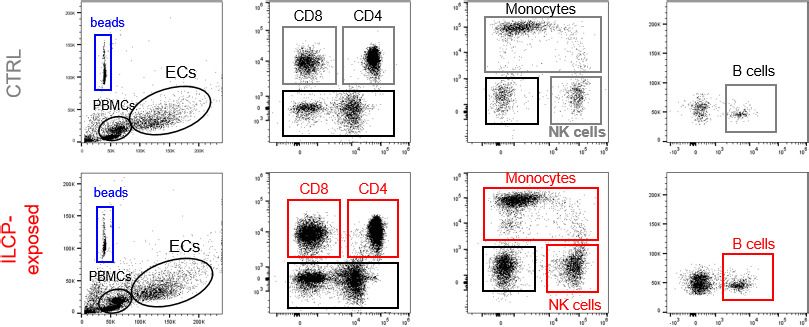
Research article                                                                   Cancer Biology Immunology and Inflammation

                                   promptly respond to tissue- and cell-derived signals by producing effector cytokines in an antigen-
                                   independent manner (Nussbaum et al., 2017).
                                       The different ILC subsets have important effector functions during the early stages of the immune
                                   response against microbes, in tissue repair and in the anatomical containment of commensals at sur-
                                   face barriers (Hazenberg and Spits, 2014). In addition, depending on the ILC subset that is involved
                                   and on the tumor type (Salomé and Jandus, 2018; Chiossone et al., 2018; Ercolano et al.,
                                   2019; Ercolano et al., 2020), ILCs have been shown to also exert pro- and anti-tumoral activity by
                                   interacting with different cell types, including endothelial and stromal cells. In a subcutaneous mela-
                                   noma mouse model, IL-12-responsive NKp46+ ILCs, recruited to the tumor, supported a massive leu-
                                   kocyte infiltration through the upregulation of adhesion molecules in the tumor vasculature
                                   (Eisenring et al., 2010). In humans, NKp44+ ILC3s were found to be present at early stage in non-
                                   small cell lung cancer (NSCLC) patients (Carrega et al., 2015) and to correlate with a more favorable
                                   prognosis, possibly by promoting intratumoral tertiary lymphoid structure (TLS) formation (Dieu-
                                   Nosjean et al., 2008).
                                       However, scant data are available about the interaction between human ILCs and the vascular
                                   endothelium, which constitutes the physical barrier to be crossed by peripheral blood (PB) immune
                                   cells to migrate into tissues where to exert their effector functions (Nourshargh et al., 2010).
                                       In this study, we show for the first time that human primed ILCPs can interact with endothelial
                                   cells (ECs), upregulate adhesion molecules, and stimulate their pro-inflammatory cytokine secretion.
                                   This activation occurs through NF-kB, primarily in a contact-dependent manner that engages surface
                                   TNF and RANKL. We report that the ILCP-mediated activation of the ECs is functional, i.e., it allows
                                   the adhesion of freshly isolated PB immune cells. Moreover, we show that the ability of ILCPs to acti-
                                   vate ECs is dampened after the co-culture with tumor cells. With this study, we have unraveled a cell
                                   intrinsic ability of ILCPs that might be selectively impaired by tumors to favor their immune escape.

                                   Results
                                   ILCPs upregulate adhesion molecules on EC surface and acquire an
                                   activated and ILC3-like phenotype in vitro
                                   The first evidence of an ILC–EC interaction was reported by Eisenring and colleagues in an in vivo
                                   melanoma model (Eisenring et al., 2010). To investigate whether also human ILCs can interact with
                                   ECs, individual circulating ILC subsets, identified based on the expression of c-Kit and CRTH2 within
                                   the Lin- CD127+ fraction (Figure 1a), were ex vivo-sorted from the PB of healthy volunteers and
                                   short-term in vitro-expanded and eventually re-sorted at a purity 90%, before use in co-culture
                                   experiments with primary human ECs (HUVECs, Figure 1—figure supplement 1a). Upon exposure
                                   of ECs to in vitro-expanded ILC subsets, ILCPs were the only subset that significantly upregulated
                                   the adhesion molecules E-Selectin, ICAM-1, and VCAM-1 on the EC surface, if compared to ILC1s
                                   and ILC2s (Figure 1b). These adhesion proteins are involved in the different stages of the multi-step
                                   process of the leukocyte transendothelial migration (TEM) process, i.e., the movement of leukocytes
                                   out of the blood stream and toward the site of tissue damage and/or infection (Muller, 2011). We
                                   confirmed the ability of in vitro-expanded ILCPs to activate ECs using other primary human dermal
                                   blood ECs, i.e., HDBECs (Figure 1—figure supplement 1b). Following in vitro expansion, we
                                   observed that ILCPs upregulated NKp44 and CD69 as well as CD45RO and RORgt, if compared to
                                   their ex vivo counterparts, while maintaining similar levels of expression of NKp46 and CD62L (Fig-
                                   ure 1—figure supplement 1c and d), suggesting that the in vitro expansion process conferred a
                                   more committed phenotype to this ILC subset. Interestingly, no difference in T-bet or GATA3
                                   expression in RORgt+ vs RORgt- cells was observed (Figure 1—figure supplement 1e), indicating
                                   that the expression or not of RORgt is not directly involved in the EC-activating capacity of ILCPs.
                                   Since we observed that around 60% of in vitro-expanded ILCPs acquired NKp44 expression, we
                                   investigated the ability of NKp44+ vs NKp44- ILCPs to activate ECs. As shown in Figure 1—figure
                                   supplement 1f, no significant difference was observed in the EC-activating capacity of these two
                                   subpopulations, suggesting that the EC-activating capacity of ILCPs does not depend on the expres-
                                   sion of NKp44. Moreover, we observed that in vitro-expanded ILCPs upregulated the expression of
                                   the chemokine receptors CCR6 and CXCR5, i.e., two known LTi-like cells markers, compared to their
                                   ex vivo counterparts. Consistent with previous reports, Neuropilin1 (NRP1) was not expressed by

Vanoni et al. eLife 2021;10:e58838. DOI: https://doi.org/10.7554/eLife.58838                                                       2 of 24
Research article Cancer Biology Immunology and Inflammation
Gating on lymphocytes/singlets/
a LIVE/DEAD negative cells Gating on Total ILCs
ILCPs
ILC2s
Lineage
c-Kit
Total ILCs ILC1s
CD127 CRTH2
b
CTRL
ILC1s
Normalized To Mode
ILC2s
ILCPs
3 3 4 5 6 3 3 4 5 6 3 3 4 5 6
-10 0 10 10 10 10 -10 0 10 10 10 10 -10 0 10 10 10 10
E-Selectin ICAM-1 VCAM-1
100 100 100
****
% of E-Selectin+ ECs
% of VCAM-1+ ECs
% of ICAM-1+ ECs
80 80 80
**** ****
60 60 60
40 40 40
20 20 20
0 0 0
CTRL ILC1s ILC2s ILCPs CTRL ILC1s ILC2s ILCPs CTRL ILC1s ILC2s ILCPs
c
CTRL
ILC1s
Normalized To Mode
ILC2s
ILCPs
3 4 5 6 3 3 4 5 6 4 5 6
0 10 10 10 10 -10 0 10 10 10 10 0 10 10 10
E-Selectin ICAM-1 VCAM-1
100 100 100
% of E-Selectin+ ECs
% of VCAM-1+ ECs
% of ICAM-1+ ECs
80 80 80
60 60 60
40 40 40
20 20 20
0 0 0
CTRL ILC1s ILC2s ILCPs CTRL ILC1s ILC2s ILCPs CTRL ILC1s ILC2s ILCPs
Figure 1. In vitro-expanded innate lymphoid cell precursors (ILCPs) induce adhesion molecule expression in
endothelial cells (ECs). (a) Circulating human ILCs are identified as lineage negative CD127+ cells; within this
population, we discriminate ILC1s as c-Kit- CRTH2-, ILC2s as CRTH2+ c-Kit+/-, and ILCPs as c-Kit+ CRTH2- cells.
HUVEC cells were co-cultured for 3 hr at 1:1 ratio in direct contact with either in vitro-expanded (b) or directly ex
vivo-sorted (c) ILC1s, ILC2s, and ILCPs. Untreated ECs were employed as negative control (CTRL). ECs were
harvested and analyzed for cell-surface adhesion molecule expression by flow cytometry. Graphs show
representative histograms (panels b and c, top) and the summary (panels b and c, bottom) of the induction of the
indicated adhesion molecules on the EC surface (n = 6). Ordinary one-way ANOVA–Tukey’s multiple comparison
test (panel b); Ordinary one-way ANOVA–Friedman test (panel c).
The online version of this article includes the following source data and figure supplement(s) for figure 1:
Source data 1. Raw data of panels b and c.
Figure supplement 1. Human innate lymphoid cell precursors (ILCPs) acquire an activated phenotype in vitro.
Figure supplement 1—source data 1. Raw data of panels b and d–f.
Figure supplement 2. In vitro-expanded Th subsets fail to activate endothelial cells (ECs).
Figure supplement 2—source data 1. Raw data of panel b.
circulating ILC3s (Shikhagaie et al., 2017) and was not upregulated after in vitro expansion. Com-
pared to ex vivo ILCPs, in vitro-expanded ILCPs downregulated the expression of CD28, although
only 20% of circulating ILCPs expressed it (Figure 1—figure supplement 1c and d). Overall, these
data suggest that not only in vitro-expanded ILCPs acquire an activated phenotype in vitro, but are
also skewed toward an ILC3-like phenotype and share some phenotypical markers with LTi-like cells,
while maintaining multipotent features as shown by the expression of T-bet and GATA3.
Vanoni et al. eLife 2021;10:e58838. DOI: https://doi.org/10.7554/eLife.58838 3 of 24Research article Cancer Biology Immunology and Inflammation
To understand if the ability of ILCPs to interact with ECs is an intrinsic property of these cells or if
they need to be primed to acquire it, we decided to expose ECs directly to ex vivo-sorted ILC sub-
sets. As shown in Figure 1c, none of the isolated ILC subsets could induce a significant activation of
ECs, suggesting that the EC-activating capacity of ILCPs is acquired during the in vitro expansion
process. Since ILCPs were expanded in the presence of feeder cells, PHA, and IL-2, it is conceivable
that feeder-derived cytokines such as IL-12 and IL-1b are involved in the priming. As ILCs constitute
the innate counterpart of CD4+ T cells, we tested if in vitro-expanded individual T-helper (Th) sub-
sets, i.e., Th1, Th2, Th17, and Th* (i.e., Th cells with a Th1/Th17 intermediate phenotype
[Sallusto, 2016; Figure 1—figure supplement 2a]) could also interact, at steady state, with ECs.
Following the same expansion protocol employed for ex vivo-isolated ILC subsets, Th subsets were
employed in 3 hr co-culture experiments with ECs. As reported in the Figure 1—figure supplement
2b, except for a statistically significant Th1-mediated upregulation of VCAM-1, still not to the same
extent as the ILCP-mediated induction, all Th subsets failed to upregulate adhesion molecule expres-
sion on the EC surface. Overall, these data suggest that in vitro-expanded ILCPs not only acquire a
more activated/ILC3-like phenotype in vitro, but also the ability of interacting with ECs by means of
mediating the upregulation of adhesion molecule expression on the EC surface.
ILCPs activate ECs primarily in a contact-dependent mechanism
Inflammation triggers the upregulation of adhesion molecules in ECs, promoting the accumulation
of leukocytes and their adhesion to the blood vessel walls. This phenomenon is mediated by pro-
inflammatory mediators, such as TNF and IL-1b (Collins et al., 1995). As a consequence, to discrimi-
nate whether the EC activation by ILCPs was due to contact-dependent or soluble factor(s)-depen-
dent mechanism(s), supernatants from the EC/ILCP co-cultures were analyzed. Significantly higher
levels of IL-6, IL-8, GM-CSF, and IFN-g were observed (Figure 2a). To address which cell type was
producing the pro-inflammatory cytokines that accumulate in the cell-free supernatants, qPCR analy-
sis of ECs and ILCPs (CD31-based FACS-sorted after 3 hr co-culture) was performed and compared
to untreated ECs and steady-state ILCPs. As reported in Figure 2b, high levels of IL-6 and IL-8 tran-
scripts were found in ECs exposed to ILCPs, whereas TNF transcripts were high only in steady-state
ILCPs, indicating that IL-6 and IL-8 measured in the supernatant (Figure 2a) derive from ECs, and
TNF from ILCPs. GM-CSF and IFN-g transcripts were observed in both ECs and ILCPs before and
after co-culture, indicating that both cell types contribute to the accumulation of these two cytokines
in the supernatant. To experimentally verify if the upregulation of adhesion molecules in ECs was
dependent on these soluble factors, 0.4 mm pore transwell chambers were employed, to allow cyto-
kine exchange between the two compartments yet avoiding the cell contact. In this context, ILCPs
failed to induce the expression of adhesion molecules on EC surface (Figure 2c). Of note, the pro-
duction of the pro-inflammatory cytokines was dramatically reduced in the presence of the transwell
insert (Figure 2—figure supplement 1a). To further prove the direct contact-dependency of the
EC–ILC interaction, ECs were incubated during 3 hr in the presence of cell-free supernatant col-
lected from previous EC–ILCP co-culture. As reported in Figure 2d, cell-free supernatant did not
lead to the upregulation of the adhesion molecules E-Selectin and VCAM-1 in ECs, although ICAM-1
levels were found to be significantly increased if compared to unstimulated ECs, yet not to the same
extent as for ILCP-exposed ECs. Finally, we analyzed the production of IL-6, IL-8, TNF, GM-CSF, and
IFN-g by ex vivo- and in vitro-expanded ILCPs. As shown in Figure 2—figure supplement 1b, no dif-
ference in terms of secretion of the indicated cytokines was observed. Indeed, incubation of ECs
during 3 hr with cell-free supernatant collected from pure ILCPs at the end of the in vitro expansion
did not provoke upregulation of adhesion molecules on EC surface (Figure 2—figure supplement
1c), correlating with the very low amount of the pro-inflammatory cytokines as shown in Figure 2—
figure supplement 1b. Overall, these data suggest that ILCPs are superior to other ILC subsets in
inducing the upregulation of adhesion molecules on ECs and can also favor the release of pro-
inflammatory cytokines, primarily in a contact-dependent manner.
ILCPs engage the NF-kB pathway in ECs
It has been shown that adhesion molecule expression can be induced in ECs during inflammatory
responses by the activation of different signaling pathways, among which the NF-kB pathway
(Rahman and Fazal, 2011). To test whether the induction of adhesion molecules by ILCPs was
Vanoni et al. eLife 2021;10:e58838. DOI: https://doi.org/10.7554/eLife.58838 4 of 24Research article Cancer Biology Immunology and Inflammation
a
** *** *
GM-CSF (pg/mL)
300 5000 60 160 **** 60
IFN-J (pg/mL)
TNF (pg/mL)
IL-8 (pg/mL)
IL-6 (pg/mL)
4000 120
40
200 40
3000 80
20
2000 40
100 20
1000 0 0
0 0 -20 -40 0
CTRL ILCPs CTRL ILCPs CTRL ILCPs CTRL ILCPs CTRL ILCPs
ECs CTRL ILCP-exposed ECs ILCPs CTRL EC-exposed ILCPs
b
1.0 0.15
(relative to RPS16)
mRNA expression
0.20 0.15
(relative to RPS16)
(relative to RPS16)
0.10
mRNA expression
mRNA expression
(relative to RPS16)
(relative to RPS16)
mRNA expression
mRNA expression
0.8
0.15 0.08
0.10 0.10
0.6 0.06
0.10
0.4 0.04
0.05 0.05
0.05 0.2 0.02
0.00 0.0 0.00 0.00 0.00
IL-6 IL-8 TNF GM-CSF IFN-J
c
CTRL
Normalized To Mode ILCPs
ILCPs (TW)
3 4 5 6 3 4 5 6 4 4 5 6
0 10 10 10 10 0 10 10 10 10 -10 0 10 10 10
E-Selectin ICAM-1 VCAM-1
100 100 100
***
% of E-Selectin+ ECs
% of VCAM-1+ ECs
% of ICAM-1+ ECs
80 80 80
*** ***
60 60 60
40 40 40
20 20 20
0 0 0
ILCPs ILCPs (TW) ILCPs ILCPs (TW) ILCPs ILCPs (TW)
d
CTRL
Normalized To Mode
ILCPs
EC-ILCP SN
3 4 5 6 3 4 5 6 4 4 5 6
0 10 10 10 10 0 10 10 10 10 -10 0 10 10 10
E-Selectin ICAM-1 VCAM-1
100 100 *** 100
% of E-Selectin+ ECs
% of VCAM-1+ ECs
% of ICAM-1+ ECs
80 **** 80 80 ****
60 60 60
40 40 40
20 20 20
0 0 0
ILCPs EC-ILCP SN ILCPs EC-ILCP SN ILCPs EC-ILCP SN
Figure 2. Human innate lymphoid cell precursors (ILCPs) activate ECs primarily in a contact-dependent
mechanism in vitro. (a) The supernatant of the 3 hr co-culture experiments between ECs and ILCPs was analyzed
for its cytokine contents (n = 4). The composition of the supernatant of ECs in EC growth medium was used as
negative control (CTRL). (b) The expression of IL-6, IL-8, GM-CSF, TNF, and IFN-g was analyzed by qPCR in ECs
and ILCPs after being cultured for 3 hr at 1:1 ratio and FACS-sorted according to CD31 expression. Untreated ECs
and ILCPs were employed as controls (CTRL). (c) HUVEC cells were co-cultured for 3 hr at 1:1 ratio in direct contact
with in vitro-expanded ILCPs either in the absence (red dots) or presence (red circles) of a transwell (TW) insert (0.4
mm pore polycarbonate filter) or (d) in the presence of pre-conditioned media coming from previous EC–ILCP 3 hr
co-cultures. ECs were harvested and analyzed for cell-surface adhesion molecule expression by flow cytometry
(n = 6). The dotted lines indicate the level of average expression of adhesion molecules by unstimulated ECs.
Statistical tests used: Unpaired t-test (panels a and d); paired t-test (panel c).
The online version of this article includes the following source data and figure supplement(s) for figure 2:
Source data 1. Raw data of panels a–d.
Figure supplement 1. Human innate lymphoid cell precursors (ILCPs) activate endothelial cells (ECs) primarily in a
contact-dependent manner in vitro.
Figure supplement 1—source data 1. Raw data of panels a–d.
dependent on NF-kB, ECs were pre-treated during 1 hr with a IkB kinase (IKK) complex inhibitor
(BAY 11–7082, Mori et al., 2002) to specifically prevent NF-kB activation. In this context, ILCPs
failed to significantly induce the expression of adhesion molecules on pre-treated ECs (Figure 3a),
indicating that ILCPs need to engage the NF-kB pathway to activate ECs in vitro. Similar to what we
observed in the context of ILCPs cultured with ECs in the presence of a transwell insert, the preven-
tion of NF-kB activation in ECs led to a significant decrease of IL-6, as well as reduction in IL-8, GM-
CSF, and IFN-g secretion (Figure 2—figure supplement 1d). Next, to understand which molecular
Vanoni et al. eLife 2021;10:e58838. DOI: https://doi.org/10.7554/eLife.58838 5 of 24Research article Cancer Biology Immunology and Inflammation
a
CTRL
Normalized To Mode
ILCPs
ILCPs (NF-ƸBi)
4 5 6 3 3 4 5 6 3 3 4 5 6
0 10 10 10 -10 0 10 10 10 10 -10 0 10 10 10 10
E-Selectin ICAM-1 VCAM-1
**
% of E-Selectin+ ECs
100 ***
% of VCAM-1+ ECs
100
% of ICAM-1+ ECs
100
80 ** 80 80
60 60 60
40 40 40
20 20 20
0 0 0
ILCPs ILCPs ILCPs ILCPs ILCPs ILCPs
(NF-NBi) (NF-NBi) (NF-NBi)
b FMO
Normalized To Mode
unstim.
TNF
3 4 5 6 3 3 4 5 6 3 3 4 5 6 3 3 4 5 6 4 4 5 6 7 3 4 5 6 3 4 5 6
0 10 10 10 10 -10 0 10 10 10 10 -10 0 10 10 10 10 -10 0 10 10 10 10 -10 0 10 10 10 10 0 10 10 10 10 0 10 10 10 10
5 6
BAFF-R CD30 CD40 LTȕ5 RANK TNFR-1 10
TNFR-2
10
c FMO
ex vivo ILCPs
in vitro-expanded ILCPs
Normalized To Mode
4 4 5 6 3 3 4 5 6 0 1 2 3 4 5 6 3 4 5 6 0 1 2 3 4 5 6
-10 0 10 10 10 -10 0 10 10 10 10 10 10 10 10 10 10 10 0 10 10 10 10 10 10 10 10 10 10 10
4 4 5 4 5 3 3 4 5 4 4 5 4 4 5
-10 0 10 10 0 10 10 -10 0 10 10 10 -10 0 10 10 -10 0 10 10
BAFF CD30L CD40L /7Į1ȕ2 RANKL
d e
**
% of positive ILCPs
100
ex vivo
80 in vitro-expanded
unstim 100
Normalized To Mode
% of RANKL+ ILCPs
IL-1ȕ
60 * 80 *
60
40
40
20
20
0 3 3 4 5 0
CD30L CD40L LTD1E2 RANKL
-10 0 10 10 10
BAFF unstim. IL-1E
RANKL
Figure 3. Innate lymphoid cell precursors (ILCPs) induce adhesion molecules expression on the endothelial
cell (EC) surface via NF-kB pathway activation. (a) HUVEC cells were treated during 1 hr with 2.5 mM of a specific
inhibitor of both canonical and alternative NF-kB pathways (BAY 11–7082, Adipogen) and then exposed to ILCPs
at 1:1 ratio for 3 hr. ECs were harvested and analyzed for cell-surface adhesion molecule expression by flow
cytometry (n = 4). The black dotted line indicates the level of average expression by untreated ECs. (b) HUVEC
cells were tested for the expression of NF-kB activating receptors, either at steady-state (black line) or following 3
hr in vitro stimulation with 20 ng/mL of TNF (green line). (c and d) The respective activating ligands were analyzed
on both ex vivo- and in vitro-expanded ILCPs. Graphs show representative histograms (panel c) and the summary
(panel d) of the analysis performed on HDs (n = 4–11). (e) In vitro-expanded ILCPs were stimulated during 24 hr in
the presence of 20 ng/mL of IL-1b or left untreated and stained for surface RANKL (n = 4). Statistical tests used:
Paired t-test (panels a and e); Multiple t-tests (panel d).
The online version of this article includes the following source data for figure 3:
Source data 1. Raw data of panels a, d, and e.
players were involved in the ILC–EC cross-talk, we screened ECs and, both ex vivo and in vitro-
expanded, ILCPs for the presence on their surface of receptors and ligands, respectively, known to
be involved in the NF-kB pathway activation. On one side, we observed that untreated ECs constitu-
tively expressed the lymphotoxin-b receptor (LT-bR), as well as the tumor necrosis factor (TNF)
receptors 1 and 2 (TNFR-1 and TNFR-2, respectively), whereas B-cell activating factor receptor
(BAFF-R), CD40, and RANK were expressed only at low levels (Figure 3b). Following stimulation
with TNF, CD30 expression became detectable and BAFF-R and RANK expression increased, while
CD40 and LT-bR expression remained unchanged (Figure 3b). On the other side, when looking at
extracellular NF-kB activating ligands on ex vivo ILCPs, we observed that they expressed high levels
Vanoni et al. eLife 2021;10:e58838. DOI: https://doi.org/10.7554/eLife.58838 6 of 24Research article Cancer Biology Immunology and Inflammation
of the transmembrane form of lymphotoxin (LTa1b2), a described ligand for LT-bR (Madge et al.,
2008), if compared to in vitro-expanded ILCPs (Figure 3c and d). Both BAFF and CD30L were unde-
tectable and low levels of CD40L and RANKL were observed. In contrast, in vitro-expanded ILCPs
upregulated the expression of RANKL and downregulated that of LTa1b2 (Figure 3c and d). It has
been reported that pro-inflammatory cytokines, such as interleukin 12 (IL-12), can induce RANKL on
human periodontal ligament cells in vitro (Issaranggun Na Ayuthaya et al., 2017). Since it is known
that feeder cells can produce a wide array of cytokines, among which IL-1b and IL-12, we decided to
test whether RANKL expression might be upregulated by one of these factors. Surprisingly, after 24
hr stimulation of freshly ex vivo isolated ILCPs with IL-1b (Figure 3e), but not with IL-12 (data not
shown), we observed increased expression of RANKL compared to untreated ILCPs. The transmem-
brane form of TNF (tm-TNF) constitutes another described NF-kB activating ligand. However, the
detection of the membrane-bound form of TNF could not be tested due to the lack of a specific
antibody. Moreover, the discrimination between the soluble and the membrane forms of TNF at
mRNA levels is not possible, since TNF is transcribed (and also translated) as a full-length mem-
brane-bound precursor (Black et al., 1997). However, at the end of the in vitro expansion, ILCPs
showed higher levels of TNF transcripts compared to ex vivo ILCPs (data not shown). Overall, these
data show that in vitro-expanded ILCPs express TNF, possibly present on the ILCP surface, to in vitro
interact with ECs via TNFRs and upregulate RANKL expression, possibly via feeder-cell-derived IL-
1b, to engage RANK on ECs.
ILCPs activate ECs via the engagement of TNFR and RANK
To test which of the NF-kB activating molecules was responsible for the upregulation of adhesion
molecules on EC surface, a series of blocking experiments using different soluble Fc fusion proteins
were performed to prevent the binding of defined ligands to their receptors on ILCPs. Since we
observed increased levels of RANKL on in vitro-expanded ILCPs as compared to their ex vivo coun-
terparts (Figure 3e), and higher levels or RANK on ECs following 3 hr co-culture with ILCPs (Fig-
ure 4—figure supplement 1a), we decided to interfere with the RANK/RANKL interaction. As
negative control, we performed the blocking experiments with intravenous immune globulins (IVIGs),
a pool of human gamma globulins (Figure 4—figure supplement 1b). Although ILCPs were still able
to activate ECs in this setting with yet an inhibition of E-Selectin triggering in ECs (Figure 4a), we
observed that the levels of IL-6 and GM-CSF were dramatically reduced, if compared to the cytokine
composition of ECs cultured with steady-state ILCPs (Figure 4—figure supplement 1c). Therefore,
we hypothesized a major involvement of tm-TNF in the induction of adhesion molecules. Thus, we
pre-incubated ILCPs in the presence of TNFR1:Fc and/or TNFR2:Fc and we observed that the EC
expression of adhesion molecules was significantly reduced (Figure 4b). In all cases, inhibition with
TNFR2:Fc was slightly more efficient than with TNFR1:Fc, which could be explained by the greater
affinity of TNFR2 for TNF (Grell et al., 1995). Of note, no difference in the cytokine secreted levels
was observed (Figure 4—figure supplement 1d), suggesting that interfering with the TNF-TNFR
signaling does not impact cytokine production in both cell types. Addition of RANK:Fc to TNFR1:Fc
and TNFR2:Fc further slightly reduced E-Selectin, ICAM-1 and VCAM-1 levels, although the contribu-
tion of RANK:Fc was not significant (Figure 4c). However, we could observe a decreased production
of the pro-inflammatory cytokine IL-6, IL-8, TNF, and GM-CSF (Figure 4—figure supplement 1e)
when blocking ligands of TNFR1, TNFR2, and RANK in ILCPs/ECs co-cultures. Taken together, our
data suggest that ILCPs activate EC primarily through the engagement of TNFRs to upregulate
adhesion molecules expression on EC surface. The engagement of RANK in ECs does not seem to
have an additive effect in inducing adhesion molecules expression, but might act in synergy with tm-
TNF to control the cytokine secretion and further support the EC activation.
ILCP-mediated EC activation favors the adhesion of freshly isolated
PBMCs in vitro
To address the functionality of the EC–ILCP interaction, i.e., the adhesion of freshly isolated PBMCs
to ILCP-exposed EC, a static adhesion assay was performed. Briefly, following the 3 hr co-cultures,
CD31+ ECs were isolated by FACS, to remove adherent ILCPs, and re-plated. After the sorting,
untreated ECs (negative control) did not upregulate adhesion molecule expression on their cell sur-
face, and ILCP-exposed ECs maintained comparable surface levels of adhesion molecule as before
Vanoni et al. eLife 2021;10:e58838. DOI: https://doi.org/10.7554/eLife.58838 7 of 24Research article Cancer Biology Immunology and Inflammation
a
% of E-Selectin+ ECs
100 100 100
% of VCAM-1+ ECs
% of ICAM-1+ ECs
80 * 80 80
60 60 60
40 40 40
20 20 20
0 0 0
ILCPs ILCPs ILCPs ILCPs ILCPs ILCPs
(RANK:Fc) (RANK:Fc) (RANK:Fc)
b
**
* *
100 100 100
% of E-Selectin+ ECs
% of VCAM-1+ ECs
% of ICAM-1+ ECs
80
** 80 80 *
** *
60 ** 60 60
40 40 40
20 20 20
0 0 0
TNFR1:Fc - + - + TNFR1:Fc - + - + TNFR1:Fc - + - +
TNFR2:Fc - - + + TNFR2:Fc - - + + TNFR2:Fc - - + +
c
100 **
% of E-Selectin+ ECs
100 ** 100
% of ICAM-1+ ECs
% of VCAM-1 ECs
80
80 80 *
+
*
60 ** 60 60
**
40 40 40
20 20 20
0 0 0
TNFR1:Fc - + + TNFR1:Fc - + + TNFR1:Fc - + +
TNFR2:Fc - + + TNFR2:Fc - + + TNFR2:Fc - + +
RANK:Fc - - + RANK:Fc - - + RANK:Fc - - +
Figure 4. Innate lymphoid cell precursor (ILCP)-mediated upregulation of adhesion molecules on ECs involves the
engagement of TNFR1, TNFR2, and RANK. ILCPs were incubated overnight in the presence of 10 U/mL of rhIL-2
and an additional pre-incubation of 30 min (prior co-culture with ECs) was performed in the presence of 5 mg/mL
of RANK:Fc (a), of 2 mg/mL of TNFR1:Fc, 5 mg/mL of TNFR2:Fc, and 5 mg/mL of RANK:Fc, either alone or in
combination (b and c). ECs were harvested and analyzed for cell-surface adhesion molecule expression by flow
cytometry (n = 3). The dotted lines indicate the level of average expression of adhesion molecules by unstimulated
ECs. Statistical test used: Paired t-test.
The online version of this article includes the following source data and figure supplement(s) for figure 4:
Source data 1. Raw data of panels a–c.
Figure supplement 1. Innate lymphoid cell precursor (ILCP)-mediated modulation of RANK expression on
endothelial cell (EC) surface.
Figure supplement 1—source data 1. Raw data of panels a–d.
the FACS isolation procedure, showing that the sorting procedure did not affect the activation state
of ECs in any of the conditions (Figure 5a). The day after, the assay was performed and ECs,
together with adherent PBMCs, were detached and stained for flow cytometry analyses. Interest-
ingly, ECs pre-exposed to ILCPs led to the adhesion of a significantly higher number of freshly iso-
lated PBMCs compared to unstimulated ECs. As shown in Figure 5b and c, the ILCP modification of
EC allowed a strong adhesion of T, B as well as NK cells and monocytes. To understand if the adhe-
sion of freshly isolated PBMCs is itself dependent on NF-kB, we repeated the experiment by expos-
ing untreated or NF-kB-inhibited ECs to TNF for 3 hr the day before performing the static adhesion
assay. As shown in Figure 5d, the inhibition of NF-kB activation prior stimulation with TNF strongly
reduced the numbers of adhered T, B, NK cells, and monocytes. In this setting, we could also
observe that ILCs themselves could adhere to TNF-treated ECs (Figure 5d). Interestingly, a trend for
a reduction in the number of adhered PBMCs to ECs was also observed when NF-kB activation was
prevented in ECs 30 min before performing the static adhesion assay (Figure 5d) although not sig-
nificant. Since we showed that NF-kB engagement is crucial for the ILCP-mediated adhesion mole-
cule upregulation in ECs (Figure 3a), it was not surprising to observe the impaired adhesion of
PBMCs to ECs in vitro. Overall, these data suggest that the adhesion molecule expression induced
by the ILCPs is functional, i.e., it supports the adhesion of other immune cell types to ECs in vitro
and relies on NF-kB activation.
Vanoni et al. eLife 2021;10:e58838. DOI: https://doi.org/10.7554/eLife.58838 8 of 24Research article Cancer Biology Immunology and Inflammation
a
CTRL
Normalized To Mode
ILCP-exposed
3 4 5 6 3 4 5 6 4 5 6
0 10 10 10 10 0 10 10 10 10 0 10 10 10
E-Selectin ICAM-1 VCAM-1
b
c
1.2×10 4 6×10 3 4×10 3 1.5×10 3 1×10 3
*** ** ***
CD16+ NK cells
***
n° of adhered
CD19+ B cells
n° of adhered
n° of adhered
n° of adhered
n° of adhered
1×10 4 **
CD4+ T cells
5×10 3
CD8+ T cells
CD14+ cells
8×10 2
3×10 3
8×10 3 4×10 3 1×10 3
6×10 2
6×10 3 3×10 3 2×10 3
4×10 2
4×10 3 2×10 3 5×10 2
1×10 3
2×10 3 1×10 3 2×10 2
0 0 0 0 0
CTRL ILCP-exposed CTRL ILCP-exposed CTRL ILCP-exposed CTRL ILCP-exposed CTRL ILCP-exposed
d 1500 * 4000 1000
2000 *
CD19+ B cells
CD14+ T cells
n° of adhered
n° of adhered
n° of adhered
n° of adhered
*
CD8+ T cells
*
CD4+ T cells
800
1500 3000
1000
600
1000 2000
400
500
500 1000
200
0 0 0 0
CD56brightCD16low NK cells
CD56dim CD16+ NK cells
1500 30 * 25
n° of adhered
n° of adhered
n° of adhered
total ILCs
* 20
1000 20
15
10
500 10
5
0 0 0
TNF TNF (NF-NBi day -1) TNF (NF-NBi day 0)
Figure 5. Innate lymphoid cell precursor (ILCP)-exposed endothelial cells (ECs) favor the adhesion of freshly
isolated PBMCs in vitro. HUVEC cells were co-cultured for 3 hr at 1:1 ratio in direct contact with in vitro-expanded
ILCPs or left untreated (CTRL). ECs were harvested, FACS isolated to remove adhered ILCPs, and re-seeded. (a)
The graphs show the level of expression of adhesion molecules by ILCP-exposed ECs after the sorting and before
performing the static adhesion assay, compared to untreated ECs (gray). Graphs show representative dot plots (b)
and the summary (c) of the number of adhered CD3, CD4, CD8, CD14, CD16, and CD19 expressing cells assessed
by flow cytometry with the use of CountBright Absolute Counting Beads (blue gate in the dot plots). (d) The day
before the assay, HUVEC cells were cultured for 3 hr in the presence of 20 ng/mL of TNF and treated during 1 hr
with 2.5 mM NF-kB inhibitor BAY 11–7082 (Adipogen), either before the TNF treatment (half-full red square dots)
or directly on the day of the assay (empty red square dots), before incubation with total PBMCs at 1:4 ratio for 30
min. The graphs show the summary of the number of adhered CD3, CD4, CD8, CD14,, CD56dimCD16+,
CD56brightCD16low, CD19 expressing cells, and ILCs assessed by flow cytometry with the use of CountBright
Absolute Counting Beads. Statistical test used: Unpaired t-test (panels c and d).
The online version of this article includes the following source data for figure 5:
Source data 1. Raw data of panels c and d.
Tumor-derived factors impair ILCP ability to activate ECs in vitro
The poorly functional and altered structural organization of the vascular bed has an important impact
on tumor progression and affects endothelial–leukocyte interactions (Cedervall et al., 2015). Hence,
we were interested in studying the impact that the tumor and/or the tumor microenvironment could
exert on ILCPs and, therefore, on their ability to modulate the EC activation. First, we observed that
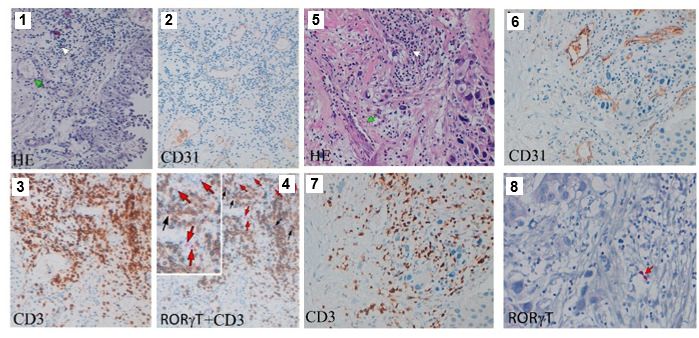
CD3-RORgt+ ILCs are present in low-grade transitional bladder carcinoma in close proximity to
CD31+ blood vessels (Figure 6a, panels 1–4) but are barely detected in high-grade bladder carci-
noma (Figure 6a, panels 5–8), suggesting a protective role of RORgt-expressing ILCs, at least at
early stage of disease. Interestingly, since we also observed that ILCPs are expanded in the PB of
non-muscle-invasive bladder cancer (NMIBC) patients, but reduced in muscle-invasive stage of the
Vanoni et al. eLife 2021;10:e58838. DOI: https://doi.org/10.7554/eLife.58838 9 of 24Research article Cancer Biology Immunology and Inflammation
a b
60
**** **** HD
% of total ILCs
NMIBC
MIBC
40
20
0
ILCPs
c CTRL
Normalized To Mode
ILCPs
ILCPs (NMIBC)
ILCPs (MIBC)
3 3 4 5 6 3 3 4 5 6 3 3 4 5 6
-10 0 10 10 10 10 -10 0 10 10 10 10 -10 0 10 10 10 10
E-Selectin ICAM-1 VCAM-1
100 100 100
**
% of E-Selectin+ ECs
% of VCAM-1+ ECs
% of ICAM-1+ ECs
80 *** 80 80
* **
60 60 60
40 40 40
20 20 20
0 0 0
ILCPs ILCPs ILCPs ILCPs ILCPs ILCPs ILCPs ILCPs ILCPs
(NMIBC) (MIBC) (NMIBC) (MIBC) (NMIBC) (MIBC)
d
****
GM-CSF (pg/mL)
400 5×10 3 *** 60 150 60
*
IFN-J (pg/mL)
TNF (pg/mL)
* ****
IL-8 (pg/mL)
IL-6 (pg/mL)
300 4×10 3
40 100 40
3×10 3
200
2×10 3 20 50 20
100 1×10 3
0 0 0 0 0
ILCPs ILCPs ILCPs ILCPs ILCPs ILCPs ILCPs ILCPs ILCPs ILCPs ILCPs ILCPs ILCPs ILCPs ILCPs
(NMIBC) (MIBC) (NMIBC) (MIBC) (NMIBC) (MIBC) (NMIBC) (MIBC) (NMIBC) (MIBC)
e
Normalized To Mode
FMO 100
CTRL *
% of TCC-Sup+ cells
CTRL + ILCPs
+ ILCPs 80
60
40 ****
3 3 4 5 3 4 5 3 3 4 5
-10 0 10 10 10 0 10 10 10 -10 0 10 10 10
20
CD39 CD73 IDO-1
0
CD39 CD73 IDO-1
f
%of E-Selectin+ ECs
%of ICAM-1 ECs
%of VCAM-1+ ECs
Normalized To Mode
CTRL 100 100
100
ILCPs 80 80
+
80
ILCPs (CADO) 60 60
60
40 40 40
20 20 20
3 4 5 6 3 4 5 6 4 5 6
0 0 0
0 10 10 10 10 0 10 10 10 10 0 10 10 10
ILCPs ILCPs ILCPs ILCPs ILCPs ILCPs
E-Selectin ICAM-1 VCAM-1
(CADO) (CADO) (CADO)
Figure 6. Innate lymphoid cell precursors (ILCPs) are found in proximity of blood vessels in low-grade, but barely
detected in high-grade, bladder cancer tumor samples and are functionally impaired by co-cultures with bladder
carcinoma cells. (a, Panels 1–4) Low-grade transitional bladder cell carcinoma. (a, Panel 1) In the subepithelial
connective, blood vessels (green arrow) and inflammatory lymphocytic infiltrate are observed (white arrow)
(hematoxylin-eosin staining, 20 magnification). (a, Panel 2) Immunohistochemical CD31 signal showing intense
positive endothelial cells (ECs) of blood vessels (20 magnification). (Panel 3) Immunohistochemical detection of
CD3+ cells at level of inflammatory lymphocytic infiltrate (brown signal) (20 magnification). (a, Panel 4) Combined
staining with antibody to RORgt and CD3. Black arrows indicate RORgt+/CD3+ cells; red arrows indicate RORgt+/
CD3- cells (red signal) (20 magnification). On the upper left a magnified insert of the main image. Data are
representative of five independent experiments. (a, Panels 5–8) High-grade bladder cell carcinoma. (a, Panel 5) In
the subepithelial connective, blood vessels (green arrow) and inflammatory lymphocytic infiltrate are observed
(white arrow) (hematoxylin-eosin staining, 20 magnification). (a, Panel 6) Immunohistochemical CD31 signal
showing intense positive ECs of blood vessels (20 magnification). (a, Panel 7) Immunohistochemical detection of
CD3+ cells at level of inflammatory lymphocytic infiltrate (brown signal) (20 magnification). (a, Panel 8)
Immunohistochemical detection of RORgt+ cells at level of inflammatory lymphocytic infiltrate (red signal, red
arrow) (20 magnification). Data are representative of three independent experiments. (b) Flow cytometry
characterization of ILCP distribution in the PB of NMIBC and MIBC patients, compared to HDs, expressed as
percentage of total ILCs (n = 20). (c) Graphs show representative histograms (panel c, top) and the summary (panel
c, bottom) of the induction of adhesion molecules by ILCPs upon different culture conditions, represented as
percentage of ECs expressing the indicated adhesion molecules. The dotted lines represent the level of
expression of the adhesion molecules in untreated ECs (n = 4). (d) The supernatants of the 3 hr co-culture
experiments between ECs and ILCPs, pre-incubated or not for an overnight with bladder carcinoma cell lines,
were analyzed for cytokine content (n = 4). The dotted lines indicate the average level of cytokines produced by
unstimulated ECs. (e) The expression of CD39, CD73, and IDO-1 in MIBC cells (TCC-Sup) after overnight co-
culture with in vitro-expanded ILCPs was assessed by flow cytometry. Untreated TCC-Sup cells (purple bar) were
used as controls (CTRL) (n = 3). (f) Graphs show representative histograms (panel f, left) and the summary (panel f,
right) of the induction of adhesion molecules by ILCPs pre-treated with 50 mM of 2-Chloroadenosine (a stabilized
Figure 6 continued on next page
Vanoni et al. eLife 2021;10:e58838. DOI: https://doi.org/10.7554/eLife.58838 10 of 24Research article Cancer Biology Immunology and Inflammation
Figure 6 continued
form of adenosine), represented as percentage of ECs expressing the indicated adhesion molecules. The dotted
lines represent the level of expression of the adhesion molecules in untreated ECs (n = 3). Statistical tests used:
Ordinary one-way ANOVA, Tukey’s multiple comparison tests (panels b, c, and d); Multiple t-tests (panel f).
The online version of this article includes the following source data and figure supplement(s) for figure 6:
Source data 1. Raw data of panels b–f.
Figure supplement 1. Innate lymphoid cell precursors (ILCPs) are found in proximity of blood vessels in low-grade
colon adenocarcinoma and are impaired by co-cultures with colon adenocarcinoma cells.
Figure supplement 1—source data 1. Raw data of panels b–d.
disease (MIBC, Figure 6b), and, following in vitro expansion, ILCPs acquire RORgt expression, we
hypothesized that the presence of ILCPs in NMIBC patients might underline the attempt of this cell
population to support the infiltration of immune cells into the tumor site. To this aim, ILCPs were
pre-exposed to human bladder cancer cell lines, originating either from non-muscle-invasive
(NMIBC, early stage) or muscle-invasive (MIBC, late-stage) epithelial bladder carcinoma, thus allow-
ing us to mimic in vitro early and late tumor stage conditions. As shown in Figure 6c, the capacity to
upregulate adhesion molecule expression on ECs by ILCPs was significantly reduced after the over-
night incubation with bladder carcinoma cell lines, if compared to resting ILCPs. Interestingly, the
co-culture with MIBC lines showed the highest capacity to modify ILCP ability to activate the ECs
(Figure 6c). Moreover, the analysis of the cytokine composition of the supernatants from 3 hr EC–
ILCP co-culture revealed statistically significant reduced levels of the pro-inflammatory cytokines IL-
8, GM-CSF, and IFN-g when ECs where co-cultured with MIBC pre-exposed ILCPs (Figure 6d). Simi-
lar observations were obtained using tissue sections of colon adenocarcinoma patients and the
SW1116 colon cancer cell line (Figure 6—figure supplement 1a and b). To further understand which
could be the mechanisms underlying the tumor cell-mediated impairment of ILCPs, we wondered
whether the tumor cells were affecting ILCPs via adenosine and/or kynurenines, two metabolites
with potent immune-inhibitory effects in the TME (Vigano et al., 2019; Labadie et al., 2019). As
shown in Figure 6e, TCC-Sup did not express IDO-1, suggesting that the tumor-mediated effects on
ILCPs might not depend on kynurenines. However, following the overnight incubation with ILCPs,
TCC-Sup strongly upregulated CD39 and further increased the CD73 expression (Figure 6e). Inter-
estingly, steady-state ILCPs also expressed CD39, but very low levels of CD73 (Figure 6—figure
supplement 1c), suggesting that, in the presence of CD73+ cells, ILCPs might process ATP and sup-
port adenosine production. Interestingly, as shown in Figure 6—figure supplement 1d, in vitro-
expanded ILCPs upregulated the expression of A2A, A2B, and A3 receptors. Of note, pre-exposure
of ILCPs to 2-Chloroadenosine (a stabilized form of adenosine) reduced their EC-activating capacity
(Figure 6f). Taken together, these results suggest that tumor cells might impair or deviate, at least
in part via adenosine production, the capacity of ILCs to modulate vascular activation through the
upregulation of cell surface adhesion molecules, and affect the production of pro-inflammatory cyto-
kines upon EC–ILCP encounter. Therefore, this could represent a mechanism through which tumors
can prevent and block immune cell infiltration into the tumor site.
Discussion
In this study, we characterized for the first time the in vitro interaction between circulating human
ILCs and vascular ECs. In particular we identify ILCPs as the only competent circulating ILC subset in
inducing EC activation through the upregulation of adhesion molecules on the EC surface. Our
results are consistent with previously reported data showing that group 3 ILCs (defined as Lin-
CD127+NKp44+ cells) induce the expression of ICAM-1 and VCAM-1 on mesenchymal stem cells
(MSCs) after 4-day co-culture and in the presence of IL-7 (Cupedo et al., 2009; Crellin et al., 2010).
According to recent findings, circulating ILCPs constitute a distinct subset from ILC3s, although they
share the expression of c-Kit on their cell surface and are CRTH2 (Lim et al., 2017). Following in
vitro priming, the upregulation of RORgt and the expression of activation markers argue for a con-
version of ILCPs into committed ILC3-like cells, possibly supported by IL-1b and/or other factors
secreted by feeder cells during the expansion phase. This environment mimics the in vivo dynamics
observed during inflammatory processes driven by PAMP/DAMP/tumor-dependent DC activation.
Vanoni et al. eLife 2021;10:e58838. DOI: https://doi.org/10.7554/eLife.58838 11 of 24Research article Cancer Biology Immunology and Inflammation
However, differently from what was described by Lim and colleagues (Lim et al., 2017), the in
vitro culture of ILCPs isolated from the PB of HDs did not lead to the expansion of neither ILC1s nor
ILC2s, whereas only ILC3-like cells arose. Indeed, the in vitro stimulation applied in that context dif-
fers from our in vitro expansion protocol, with the lack of ILC1-, ILC2-, or ILC3-specific cytokines.
Overall, our findings support the idea that the in vitro expansion of circulating ILCPs in the presence
of feeder cells, PHA, and IL-2 favors their commitment toward an ILC3-like phenotype.
Interestingly, as far as adaptive immune cells are concerned, a previous publication showed that
freshly isolated CD4+ CD45RO+ lymphocytes are able to induce, to different extents, the expression
of VCAM-1 on ECs in a contact-dependent manner (Yarwood et al., 2000). We were unable to reca-
pitulate these findings, most probably due to different culture conditions (isolation and in vitro
expansion of T cells, timing, and EC:T-cell ratios). For the innate counterpart, it was shown that the
human NK cell line NK92 induces the expression of E-selectin and IL-8 in ECs, which results in EC
activation, through the LT-dependent activation of the NF-kB pathway (von Albertini et al., 1998).
Yet, in our system, we did not observe the upregulation of adhesion molecules when employing in
vitro-expanded purified primary NK cells (data not shown).
In this work, we define the ILCP-mediated activation of ECs primarily as a contact-dependent
mechanism. However, we cannot exclude that pro-inflammatory cytokines (IL-6, IL-8, GM-CSF, IFN-g,
and TNF), produced during the EC–ILCP interaction, might contribute to the observed EC activation.
It is known that pro-inflammatory cytokines, and especially TNF, constitute potent inducers of adhe-
sion molecule expression in ECs (Collins et al., 1995). However, in our hands, ECs upregulate adhe-
sion molecules expression only when short-term exposed to TNF, but not to the other cytokines
(data not shown). Moreover, the exposure of ECs to cell-free supernatant recovered from foregoing
EC–ILCP co-culture only provoked a significant upregulation of ICAM-1 on ECs, and exposure of
ECs to cell-free supernatant collected at the end of the in vitro expansion of ILCPs did not upregu-
late adhesion molecules on ECs, supporting the idea of a primarily contact-mediated interaction
between these two cell types. However, it cannot be excluded that the pro-inflammatory cytokines
that are produced during the co-culture can support, at the cell–cell contact region, the in vitro
cross-talk.
Upon interaction, ILCPs engage the NF-kB pathway in ECs, most probably via TNFR/tm-TNF and
RANK/RANKL interactions that possibly act in synergy. RANKL has been recently described as a neg-
ative regulator of CCR6+ ILC3s activation and cytokine production, via the paracrine interaction with
its receptor RANK (Bando et al., 2018). On one side, we observed that the expression of RANK on
ex vivo ILCPs was not detectable, whereas in vitro-expanded ILCPs acquire transient, intermediate
levels of RANK after expansion (data not shown). Nevertheless, the contribution of RANKL to EC
activation needs further investigation, as well as the formal evaluation of tm-TNF on ILCP surface. Of
note, we observed higher levels of transcripts in in vitro-expanded ILCPs compared to their ex vivo
counterparts, but very low levels of soluble TNF at the end of the expansion, suggesting that TNF
might be present on the surface of expanded ILCPs. We might speculate that a sequential engage-
ment of these ligand–receptor interactions occurs in the EC–ILCP interface, with initial tm-TNF/TNFR
interactions that are needed to induce adhesion molecules expression, together with increased
RANK expression in ECs. This could facilitate the sequential RANKL/RANK interactions, possibly
required to support the production of pro-inflammatory cytokines, since the prevention of both
TNFR/RANK engagement resulted in impaired cytokine production.
By performing a static adhesion assay, we show that the ILCP-mediated EC activation is func-
tional. Therefore, ILCPs might favor the initial tethering of circulating immune cells to vascular ECs
via E-Selectin induction, and the subsequent ICAM-1/LFA-1 and VCAM-1/VLA-4-mediated firm
adhesion step, and support the EC-dependent recruitment of other immune cell types, thus facilitat-
ing their exit from the blood stream through the vessel wall.
As previously reported (Eisenring et al., 2010), NKp46+ ILCs were described to be crucial, in a
subcutaneous melanoma mouse model, for the establishment of an IL-12-dependent anti-tumor
immune response. A similar role was proposed for NKp44+ ILC3s in NSCLC patients (Carrega et al.,
2015). Beside their putative role in supporting intratumoral TLS formation, an aspect that has been
further recently supported in colorectal cancer patients (Ikeda et al., 2020), these cells were sug-
gested to activate tumor-associated ECs and, in turn, favor leukocyte recruitment. Hence, ILCP–EC
interactions might represent an early event during a large spectrum of biological reactions, ranging
from inflammation, autoimmunity, and cancer. In tumors, leukocytes have to travel across the vessel
Vanoni et al. eLife 2021;10:e58838. DOI: https://doi.org/10.7554/eLife.58838 12 of 24Research article Cancer Biology Immunology and Inflammation
wall to infiltrate tumor tissue where they contribute to the killing of cancer cells. Further, the vessel
wall serves as a barrier for metastatic tumor cells, and the integrity and the activation status of the
endothelium serves as an important defense mechanism against metastasis formation
(Cedervall et al., 2015).
The infiltration of immune cells in solid tumors often correlates with a better overall survival in
cancer patients (Zhang et al., 2003, Tjin and Luiten, 2014, Mina et al., 2015). However, in the
tumor microenvironment, ECs are dysfunctional and play a major role in several processes that con-
tribute to cancer-associated mortality. One mechanism by which ECs can actively discourage the
tumor homing of immune cells was described by Buckanovich and colleagues (Buckanovich et al.,
2008). By transcriptionally profiling the tumor ECs (TECs) isolated from ovarian cancer specimens
poorly infiltrated by T cells, the authors describe a mechanism that relies on the interaction between
endothelin B receptor (ETBR), found to be highly expressed by TECs, and its ligand endothelin-1
(ET-1), overexpressed in ovarian cancer cells. ETBR signaling was shown to be responsible for the
impaired ICAM-1-dependent T cell homing to tumors, and in turn, it correlated with shorter patient
survival. Another mechanism that prevents T cell infiltration into the tumors relies on the overexpres-
sion of Fas ligand (FasL) on TEC surface (Motz et al., 2014) that causes the selective killing of
tumor-specific CD8+ T cells and to the accumulation of FoxP3+ T regulatory (Tregs) cells within the
tumors. Finally, it has been reported that Th1 cells can actively influence vessel normalization pro-
cesses via the production of IFN-g, which positively correlated with a more favorable outcome for
cancer patients (Tian et al., 2017).
Therefore, committed ILCPs might represent an additional key regulator of efficient immune cell
penetration into the tumor.
Tumors can engage multiple mechanisms to discourage the establishment of anti-tumor immune
responses (Vinay et al., 2015). The shaping of an immunosuppressive milieu together with the diver-
sion of the vascular system supports tumor progression and favors metastatic dissemination
(Hida and Maishi, 2018). Here we show that RORgt-expressing ILCs, which share the transcription
factor with in vitro-expanded ILCPs, infiltrate both human low-grade bladder and colon cancers and
are associated with CD31+ vessels, arguing for a potential ILC–EC interaction also in vivo. In vitro,
we observed that the ability of ILCPs to induce adhesion molecules on ECs was dampened after the
co-culture with bladder- and colon-derived tumor cells. ILCs are very plastic cells (Bal et al., 2020),
and it has been reported that, in the cancer setting, tumor-derived TGF-b drives the transition of NK
cells to dysfunctional and pro-tumoral ILC1s in vivo, a novel mechanism exploited by tumors to pre-
vent the establishment of an innate anti-tumor response (Gao et al., 2017). One can speculate that
a similar conversion also occurs for ILCPs toward a non-EC activating ILC subset. We showed that
the mechanism of impairment of ILCPs might rely on adenosine. In vitro-expanded ILCPs express
high mRNA levels of the adenosine receptors and CD39 at the protein level, whereas bladder cancer
cells express CD73 and potentially also CD39. The presence of these two ectoenzymes, key for
adenosine production, suggest that adenosine might be produced during the co-culture between
cancer cells and ILCPs and impact ILCP functions. Indeed, by pre-exposing ILCPs to 2-Chloroadeno-
sine, we could observe reduced EC-activating ability.
In conclusion, our data show that ILCPs, upon proper stimulation, might represent novel players
in regulating the trafficking of immune cells to tissues, not only during the early phase of inflamma-
tion, but also at early phases of anti-tumor immune responses. Such contact-mediated events may
be crucial in supporting further EC activation, to favor tumor-specific T-cell adhesion and, in turn,
recruitment to the tumor site.
Materials and methods
Key resources table
Reagent type
(species) or Additional
resource Designation Source or reference Identifiers information
Cell line HUVEC Lonza Cat# LZ-CC-2517 Primary cell line
(Homo sapiens) (normal, adult, single donor)
Continued on next page
Vanoni et al. eLife 2021;10:e58838. DOI: https://doi.org/10.7554/eLife.58838 13 of 24Research article Cancer Biology Immunology and Inflammation
Continued
Reagent type
(species) or Additional
resource Designation Source or reference Identifiers information
Cell line HDBEC Promocell. Cat# C-12225 Primary cell line
(Homo sapiens) (normal, adult, single donor)
Cell line BU68.08 This paper Primary cell line
(Homo sapiens) generated
in L. Derré Lab
from TaG2
stage cancer
patient
Cell line TCC-Sup RRID:CVCL_1738 Primary cell line
(Homo sapiens) Gift of G.N-
Thalmann,
Inselspital, Bern,
Switzerland
Cell line SW1116 ATCC RRID:CVCL_0544
(Homo sapiens)
Biological Peripheral blood Interregional Blood 9 mL Li Heparin
sample (adult, healthy donors) Transfusion SRC tubes
(Homo sapiens) (Route de la Corniche 2,
1066 Epalinges)
Antibody Alexa 488 anti-human Biolegend RRID:AB_10962442 FACS/FC
CXCR3 (mouse monoclonal) (1:50)
Antibody FITC anti-human CD3 Biolegend RRID:AB_2562046 FACS/FC (1:100)
(mouse monoclonal)
Antibody FITC anti-human CD4 Biolegend RRID:AB_2562052 FACS/FC
(mouse monoclonal) (1:100)
Antibody FITC anti-human CD8 Biolegend RRID:AB_1877178 FACS/FC
(mouse monoclonal) (1:100)
Antibody FITC anti-human CD14 Biolegend RRID:AB_2571929 FACS/FC
(mouse monoclonal) (1:100)
Antibody FITC anti-human Biolegend RRID: AB_314196 FACS/FC
CD15 (mouse monoclonal) (1:100)
Antibody FITC anti-human CD16 Biolegend RRID:AB_314206 FACS/FC
(mouse monoclonal) (1:100)
Antibody FITC anti-human CD19 Biolegend RRID:AB_2750099 FACS/FC
(mouse monoclonal) (1:100)
Antibody FITC anti-human CD20 Biolegend RRID:AB_314252 FACS/FC
(mouse monoclonal) (1:100)
Antibody FITC anti-human CD31 Biolegend RRID:AB_314330 FC
(mouse monoclonal) (1:100)
Antibody FITC anti-human CD33 Biolegend RRID:AB_314344 FACS/FC
(mouse monoclonal) (1:25)
Antibody FITC anti-human CD34 Biolegend RRID:AB_1732005 FACS/FC
(mouse monoclonal) (1:50)
Antibody FITC anti-human CD94 Miltenyi RRID:AB_2659623 FACS/FC
(mouse monoclonal) (1:25)
Antibody FITC anti-human CD203c (mouse monoclonal) Biolegend RRID:AB_11218991 FACS/FC
(1:100)
Antibody FITC anti-human Biolegend RRID:AB_1227653 FACS/FC
FecRI (mouse monoclonal) (1:50)
Antibody PE anti-human BAFF Biolegend RRID:AB_830752 FC
(mouse monoclonal) (1:50)
Antibody PE anti-human CD4 Biolegend RRID:AB_2562053 FACS/FC
(mouse monoclonal) (1:50)
Continued on next page
Vanoni et al. eLife 2021;10:e58838. DOI: https://doi.org/10.7554/eLife.58838 14 of 24You can also read


