Transforming your lawn - into a Xeriscape Garden Bill Melvin of Ecoscape - Resource Central
←
→
Page content transcription
If your browser does not render page correctly, please read the page content below
Transforming
  your lawn
into a Xeriscape
    Garden
      Presented by:
Bill Melvin of Ecoscape
Presentation Overview
Transforming Your Lawn into a Xeriscape Garden

 • What is a Xeriscaping?

 • 7 Principles of Xeriscape

 • Transformation
          17% - 1 to 2 Process
                       17% - 5 to 7
               days.       days.
     Ø      Phase 1: Deconstruction
     Ø      Phase 2: Preparation
     Ø      Phase 3: Installation
           42% - More than
     Ø      Phase
               7 days. 4: Maintenance
What is Xeriscaping?
Landscaping that promotes water efficiency by using
 plants that are native and adaptable to Colorado's
                  semi-arid climate.
                    –Denver Water
7 principles of xeriscaping
          1. Planning and Design
          2. Practical Turf Areas

          3. Group Plants of Similar Water Needs

          4. Proper Soil Amending

          5. Appropriate Mulches

          6. Efficient Irrigation

          7. Landscape Maintenance
zz   1. Planning and design
     •   Have a plan!
     •   Bubble diagrams are great
     •   Right plant, right place
     •   Garden In A Box makes it easy!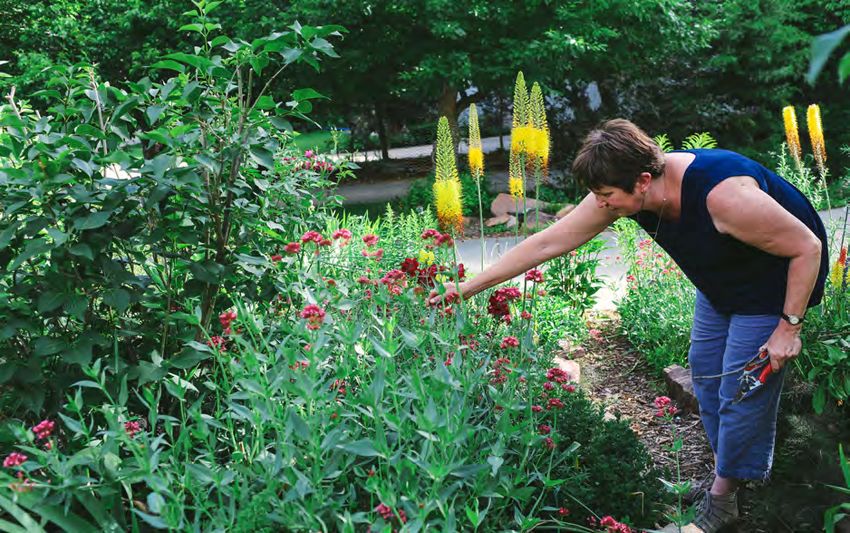
zz   Garden in a box
      makes planning and design a breeze!

              • Water conservation via landscape change
              • Comprehensive Plant and Care Guide
              • 1-3 Plant by Number Maps
              • 14-30 Xeric Starter Plants
zz              2. Practical turf areas
                         •   Turf Type Tall Fescue
                         •   Buffalo Grass
                         •   Gramma Grass
     Turfgrass Options
                         •   Nature’s Prairie Turf
                         •   And, yes, even Bluegrass!
zz   3. Grouping plants
     • Similar water needs go together
     • Modify irrigation…if you know how!
     • Overwatering can create problems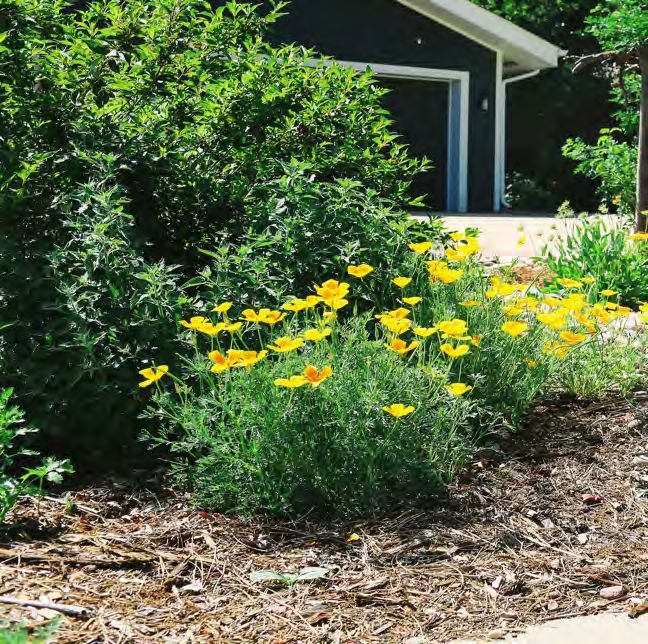
zz   4. Proper soil amending
     • Most important step!
     • Feed the soil, and soil will feed plants
     • Cultivation and aeration
     • Compost – home, local municipality or
       supplier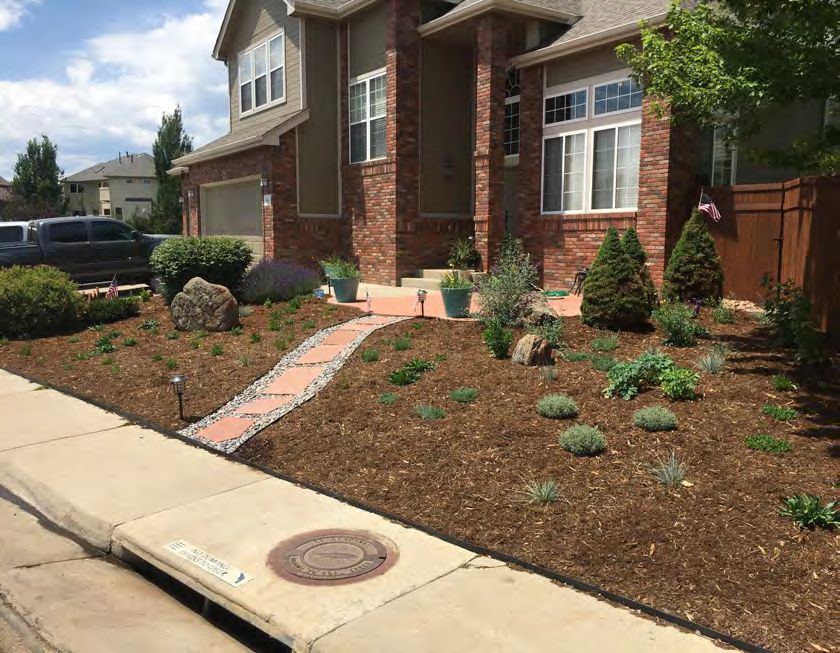
zz   5. Appropriate mulches
     • Inorganic (stone) vs. organic (wood)
     • Keeps moisture in and weeds out
     • Cools the soil
     • Minimizes erosion
zz 6. Efficient irrigation
• What is appropriate?
• Overhead vs. Drip vs. Hand Watering
• Pop ups vs. Micro-sprayzz 7. Landscape maintenance
• Protect your investment!
• Budget for it
• Know your weeds!Transformation process
Transformation process:
phase 1 - Deconstruction

            Step 1
   Select the right location
   *refer to
           17%7 -Principles
                 1 to 2  17% of
                             - 5 toXeriscape*
                                    7
              days.        days.

          Step 2
  Turf mgmt. and17%disposal
                    - Other.
      *let’s
         42% -explore
               More than these options*
             7 days.
zz
Turf MGMT. option #1:
Sheet Mulching: killing your turf by
covering it with newspaper or cardboard and
layering it with organic matter and mulch.
Benefits
• Efficient
• Inexpensive
• Minimal labor
• Minimal environmental
impact
Challenges
• Slower method – about 6
Over 1,200
months (starting in the fall) people on
• Not practical for steep slopes the 2018
• Not ideal for large lawns
pre-sale list!zz
Turf MGMT. option #2:
Solarization: killing your turf with a black
plastic sheet, creating a sun-powered sauna that is
an uninhabitable place for your grass it to live.
Benefits
• Efficient
• Inexpensive
• Minimal labor needed
• Minimal environmental impact
• Create compost from your dead grass
• Good for hot, sunny areas
Challenges Over 1,200
Slower method – 6 wks. to 1 yr.
•
people on
• Unsightly
• Does not work in cool, shady areas the 2018
pre-sale list!zz
Turf MGMT. option #3:
Sod Cutter: removing your turf with a sod
cutter.
Benefits
• Fastest way to remove turf
• Removed sod makes great compost
• Leaves the majority of your soil intact
• Good for areas 100 sq. ft. or more
Challenges
• Labor-intensive Over 1,200
• Higher chance of turf regrowth people on
• Sod cutter does not remove deep
roots the 2018
• May need to rent/buy equipment pre-sale list!zz
Turf MGMT. option #4:
Till: breaking up and removing your sod with
a tiller.
Benefits
• Quicker and easier than digging
• Retains organic matter
• Allows for immediate planting
Challenges
• Difficult on rocky sites and in wet, Over 1,200
clay soils
people on
• Turns up weed seeds
• Weed and grass mgmt. during year 1
the 2018
• Access to equipment pre-sale list!Compost it! Take it to a local disposal
facility!
• Pioneer
• Midwest Materials
• Colorado Materials
Disposal options
Check in with your local Check Additional Resource List!
municipal facility!
Located at registration table and
online at ResourceCentral.orgTransformation process:
Phase 2 - Preparation
Step 1
Proper grading and drainage
Step 2
Soil amendments
Step 3
Irrigation retrofit
Let’s explore steps #1-3 of prep!zz Proper grading and drainage
What you need to know!
• Proper grading should provide positive drainage
Ø Positive drainage = away from permanent structurezz Soil amendments
What you need to know!
• Organic matter = something that was alive
Ø Types: compost, mushroom compost, sphagnum peat, wood chips,
grass clippings, etc.
• Buy in bulk, from:
Ø Pioneer, Midwest
Materials, Colorado
Materials
• Buy in bags, from:
Ø Mayfield's, Harlequins
• Spread 1 to 3 inches deep
• Cultivate into soilzz Irrigation retrofit
What you need to know!
• Transforming from sprinkler drip
Ø Choose an area within 1 zone!
Ø From a head: Rain Bird 1800 Retro Kit - Video
Ø From the manifold/valve box
• Hand watering is also effective
Ø You can still qualify for the program even if you do not have an
in-ground irrigation system.
• When is it time to call a professional?Transformation process:
phase 3 - Installation
Step 1
Replacement options
Step17%2- 5 to 7
17% - 1 to 2
Planting & watering
days. days.
Step 3
42% - More Mulch
than
7 days.
Let’s explore steps #1-3 of install!softscape
• Replacing your turf with Xeric
(low-water) perennials
• Ex: Garden In A Box
Replacement options
hardscape
• Replacing your turf with
permeable materials that have
long-term or permanent qualities
• Ex: rocks and paversInspiration… from past participants!
Softscape #1: Before & After

Before

                     After
Softscape #2: Before & After
Before
AfterHARDSCAPE #1: Before & After
Before
AfterSOFTSACPE + HARDSCAPE #1: before & After
Before
AfterSOFTSACPE + HARDSCAPE #1: after More perspectives from the same project!
zz
               Planting Xeric Perennials

     When planting, consider the following:
     • Proper Size – shrubs vs. perennials vs. ground
       covers
     • Exposure Requirements – sun, shade, adaptable
     • Natives – you can’t go wrong… they just like it
       here!
     • Edibles – require more water, but…
     • Neonicotinoids – systemic insecticide              Over 1,200
         Ø Garden In A Box plants are not treated with    people on
           neonics!
                                                           the 2018
     • Invaluable Resources – books (next slide)!
                                                         pre-sale list!
WaterWise Landscaping
with Trees, Shrubs & Vines
A Xeriscape Guide for the Rocky
Mountain Region
- Jim Knopf
Invaluable resources
Xeriscape Plant Guide
100 Water-Wise Plants for
Gardens and Landscapes
- Denver Waterzz
Planting Perennials 101
Tools and
How to plant perennials: Supplies!
• Dig a hole ü Shovel / Trowel
Ø Width: 2x as wide as container ü Compost
Ø Depth: as deep as container ü Mulch
Ø Top of root ball = level with top of soil
ü Water
• Loosen the roots
With your hands or a shovel
• Backfill the hole and tuck in the plant
With soil and compost
• Mulch around base of plant and water!
We’ll talk more about mulch & water…zz
Watering Xeric Perennials
With a drip system,
water:
When watering, consider…
In Apr, May, Sept, Oct:
• High Water Use Plants 45-60 min, 1x/wk.*
20 gallons / square foot / growing season
From June-Aug:
• Moderate Water Use Plants 45-60 min, 2x/wk.*
10 gallons / square foot / growing season
• Low Water Use Plants
1-3 gallons / square foot / growing season
• Observe your garden and make adjustments
Check soil moisture with your finger!zz
Mulch
For Xeric Perennials!
• Moisture in, weeds out
• Feeds the soil
• Organic vs. inorganic mulch
1) Organic
Ø Ex: wood chips, grass
clippings, etc.
2) Inorganic
Ø Ex: gravel, stone, etc.
• So…which one should I use?Transformation process:
phase 4 - maintenance
Step 1
Care during
17% - 1 to 2 the 1 year and
st
days.
beyond!
Let’s42%explore
- More than maintenance!
7 days.zz Maintenance
During the 1st year and beyond
• Watering year 1 to year 2+
• Mulch as necessary
• Fertilize as directed & if needed
• Remove dead plant debris
• Prune woody plants when dormant
• Weeding to reduce competition
• Additional resources:
Ø Contact your county’s local Master Gardner Extension
Ø Landscape Companies – know when to talk to a pro!good Luck and have Fun!
You can also read


