International cooperation on the river Rhine - Maarten Hofstra Unesco IHE/Water Governance Centre NL - UNECE
←
→
Page content transcription
If your browser does not render page correctly, please read the page content below
International cooperation on the
           river Rhine

              Maarten Hofstra
   Unesco‐IHE/Water Governance Centre NL
The Rhine river basin
The Rhine = 3rd biggest European river

    200.000 km²
Outline

•The Rhine: some chracteristics
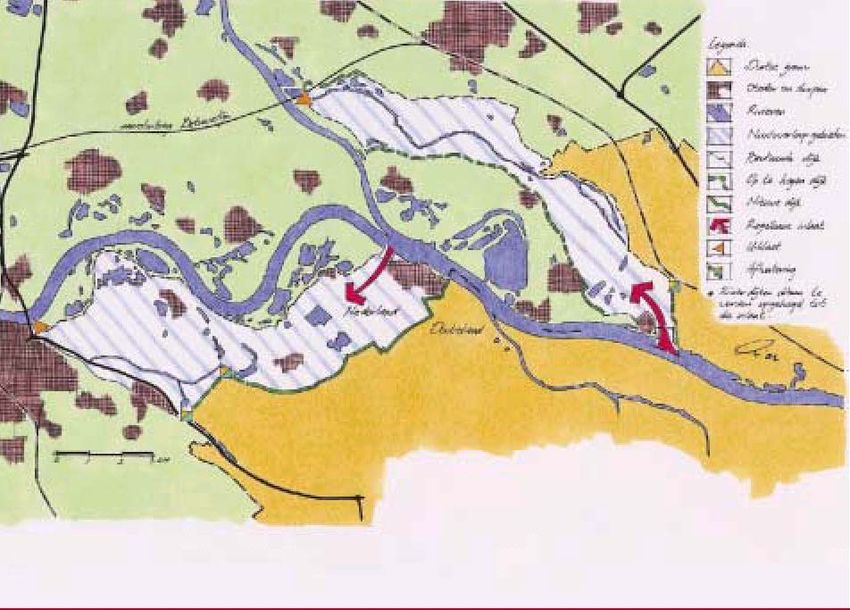
•The Netherlands as a downstream country
•Early cooperation in the Rhine basin
•Water pollution
•Difficulties and conflicts
•Flood protection
•Ecological restauration
•What makes cooperation work

Cooperation in the Rhine basin
Dutch border    with:
               ‐Switzerland
               ‐Germany
               ‐France
               ‐Luxembourg
               ‐Netherlands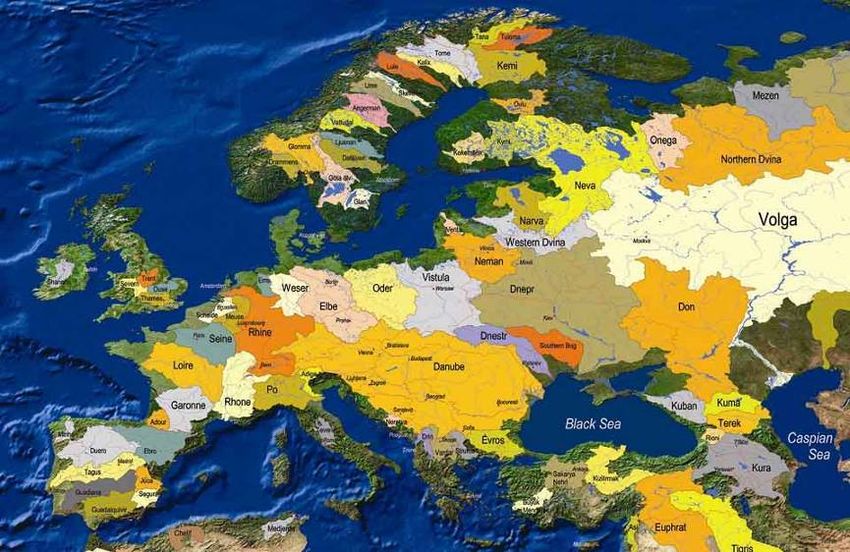
The Rhine river basin
Inhabitants                          Coblence – CIPR
58 Mio.

Drinking water
for 20 million people

Main stream
1233 km

Navigable
825 km from Basel/
Rheinfelden – Rotterdam
RIZA
RIZA
Some hydrological characteristics of the Rhine

Mean discharge Lobith: 2.200 m3/s
   Minimum in January
   Lowest discharge: 620 m3/s (1947, November)

    Extreme flood 1926, January: 12.600 m3/s
    Flood 1995, January: ca 12.000 m3/s

Height difference Rotterdam‐Basel:   260 m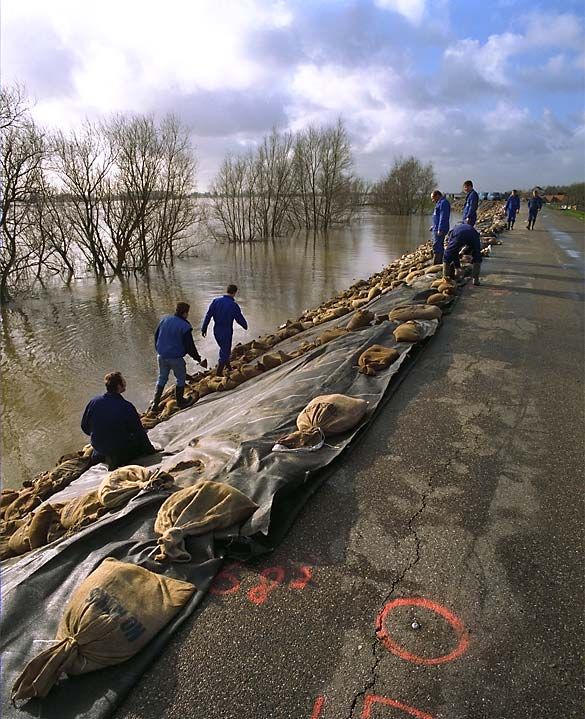
The Netherlands
as a downstream
country
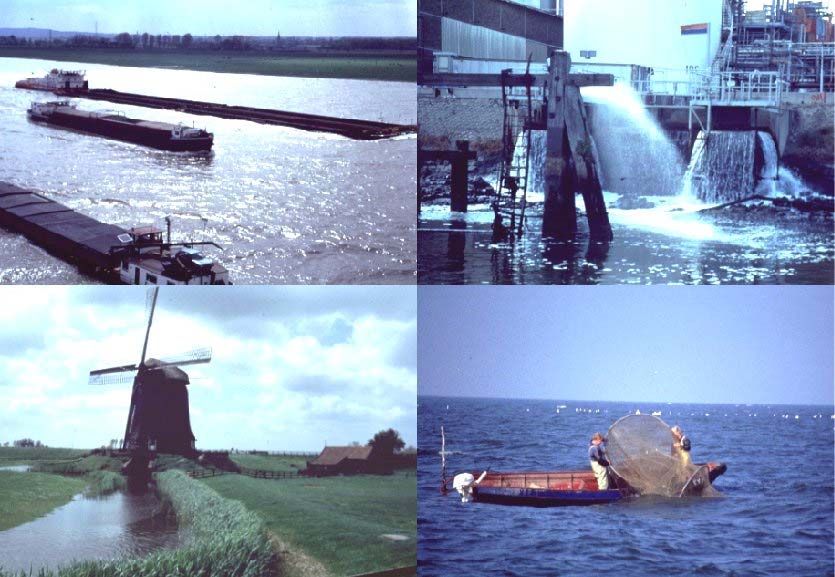
International cooperation:
       Shipping on the River Rhine
1815: Congres of Vienna
   ‐ Free shipping
   ‐ Central committee for the River Rhine

1831 Act of Mainz

1868 Act of Mannheim

1963 Convention of Strassbourg
International cooperation on prevention of
pollutionAfter World War 2: Pollution of the river leading to poor water quality
International Commission
for the
Protection of the Rhine (ICPR)

Switzerland, France,
       Germany, Luxemburg,
       Netherlands, European Community

Established 1950
Confirmed 1963
Rhine action programme 1987
New Rhine Treaty 1‐1‐2003: Rhine 2020
ICPR: Reducing pollution at source Good results in all countries 1972: 1st Rhine Ministers Conference 1976: Rhine Chemical Convention and Rhine Chlorides Convention The influence of economic weaknesses and the lessons we can learn from this
Clean‐up of industrial emissions
1400
1200

1000
800
                                          zink
600                                       cadmium
400

200
  0
       1975   1985   1990   1995   2005
14
Cadmium
12
Rhine at D/NL border
10
8
ug/l
6
4
2
0
1968 1973 1979 1984 1990 1995 2001 2006Average removal rate UWWTP 1981‐2008
100
80
rendement (%)
60
reductie fosfor
reductie stikstof
40
reductie doelstelling
20
0
1980 1985 1990 1995 2000 2005Total P (mg/l)
2
1,8
1,6
1,4
1,2
TP in mg/l
1
0,8
0,6
0,4
0,2
0
1967 1971 1976 1981 1986 1991 1996 2001 20061. Nov. 1986 (Schweizerhalle - CH) :
Sandoz accident
Fire, 10-30 t pesticides with
fire water into the Rhine
Æ it caused the death of all
aquatic life downstream
12. Nov. 1986:
The Rhine ministers
unanimously
adopted the
„Rhine Action Programme“
to save the ecosystemLife in the River Rhine is Destroyed November 7th, 1986: Submersed life before accident Submersed life after accident
Rhine Action Programme (1987 – 2000)

¾ Guarantee drinking water

¾ Reduce contamination

60 „Priority substances“: reduction by

50-70 %         e. g. cadmium,
(1985-1995)     lead, mercury, dioxines…

¾Construction of basins
collecting fire extinction water

¾Warning and alert systems

¾Ecological rehabilitation

                                           BASF Ludwigshafen
Warning and alert plan Rhine
Not all the time easy success stories

In general
‐ From 1950 till the first results took long time
‐The Sandoz fire was necessary to awaken awareness
‐Still problems not solved or new problems coming up

Some examples
‐Rhine salt
‐Cooling water
Not only successes: the salt treaty
1976: Convention for the Protection of the Rhine against Chloride
Pollution
‐ The salt from mining activities had to be stored at the French potassium
mines.

Many years of discussions followed

In 1991, a protocol to this “Salt Treaty” was signed.
‐Additional storage measures whenever the chloride level at the
German–Dutch border exceeded 200 mg Cl‐/l,
‐Special measures in the Wieringermeerpolder in the Netherlands, where
saline seepage water was no longer to be discharged into Lake Ijssel.

‐The cost of the measures had to be paid by Germany (30 percent),
France (30 percent), Switzerland (6 percent) and the Netherlands (34
percent).
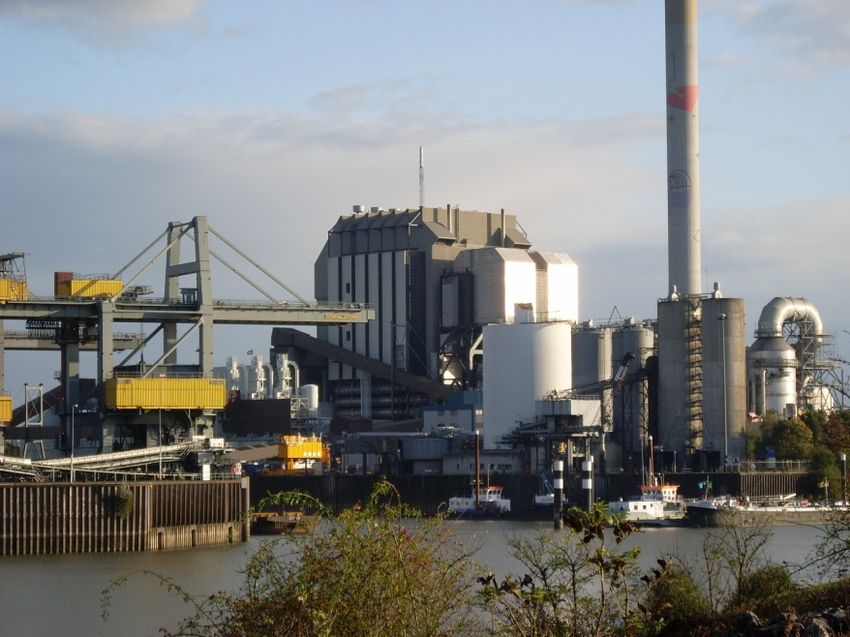
Not only successes: cooling water
Using the cool capacity of the river Rhine

‐From the early ’70‐ties till 1998 talks and negociations on a heat treaty
Without succes
‐The different opinions of the delegations could not be brought together
‐Even the EU‐commisioner tried to achieve this

‐In the mean time declarations from the Rhine ministers
‐In 1998 the situation looked more or less stable and the staus quo was
accepted. Inventory of the status quo was made.

2010: attention for climate change with renewed water temperature as an item

Conclusion: no treaty but nevertheless effect on the behaviour of the member
states
Cooperation on
flood prevention
Extreme high water in 1993 and 1995
Reaction:
‐Major rivers Deltaplan
‐Room for the River Programme
Landscape change in the Upper Rhine

1838

1872

1980

2027?
Room for the River 1
                      principles

Retention areas

                  Green river/bypass

                                       Dike relocation
Room for the River 2
principles
Deepening summer bed Groin improvement
Rising dikes (if no
other option exists)
Lowering of floodplains Remove hydraulic obstaclesDouble aim of Room for the
River
1. Safety
2. Spatial qualityRoom for the River program project area
Room for the River
                             characteristics
The Government has adopted the following
  starting points
  –   Discharge of 16,000 m3 at Lobith
  –   39 measures
  –   Investment of € 2.2 billion
  –   Work complete in 2015
  –   Design and implementation by local authorities
Rhine 2020: Program on the sustainable
development of the Rhine
Flood prevention and protection
‐10% reduction of damage risks and 25% reduction by 2020
‐Increase flood awareness
‐Improve flood warning systems
Measures
‐Increase water retention by reactivating inundation areas
‐Maintain and strengthening of dikes
‐Drafting maps with the risks of inundation (for spatial planners)Workshop " Water management challenges in the 21th century" 13
Szolnok - Hungary, October 2nd, 2003
Emergency flood storage
areas (EFSA)ICPR Flood hazard map
RIZAInternational cooperation on Rhine Ecology: Rhine
2020 and
The Water Framework DirectiveSalmon 2000 - …an impossible target? Reintroduction of the vanished Atlantic salmon († 1958) into the Rhine
Salmon life cycle
Programme Rhine 2020: Salmon 2020
   Until 2009:
   5.000 salmons have returned to the Rhine

2020: A population of 7.000 – 21.000 salmon will migrate
into the Rhine each year
A successful return

              Water: clean enough
              Mating upstream in rivers
              (D & F)
              Restoration of continuity
              Restocking with small
              salmons
              Optimisation of habitats

               Example Saynbach:
               No weirs, good habitat
               => Natural reproduction
               of salmon
Former distribution - 1900 Masterplan ”Migratory Fish“
International cooperation

• What makes it work?
Exchange of information
      3            1.   ω

                   2.   3
2     ω
      ω    4
                   3.   m

      1            4.   ε
                        RIZA
What makes the ICPR effective?
Rules of cooperation
9De-centralised organisation
9National Delegations
9political mandate
9technical know how
9funds
9Consensus
9Decisions are recommendations
9Obligation to report about
implementing measures
9Political trust, no sanctions
9Neutral secretariat
•Rhine Convention
•Rules of procedure and
financial regulations
Plenary assembly
LuxembourgWhat makes the ICPR effective?
Budget of the ICPR
Regular budget
- Regular budget (1.200.000 €/yr)
12.0%: Switzerland
85.5%: France (32.5%)
Germany (32.5%)
Netherlands (32.5%)
Luxembourg ( 2.5%)
2.5%: EC
WFD (special budget)
32% each: France, Germany, Netherlands
1.5% each: Austria, Luxembourg
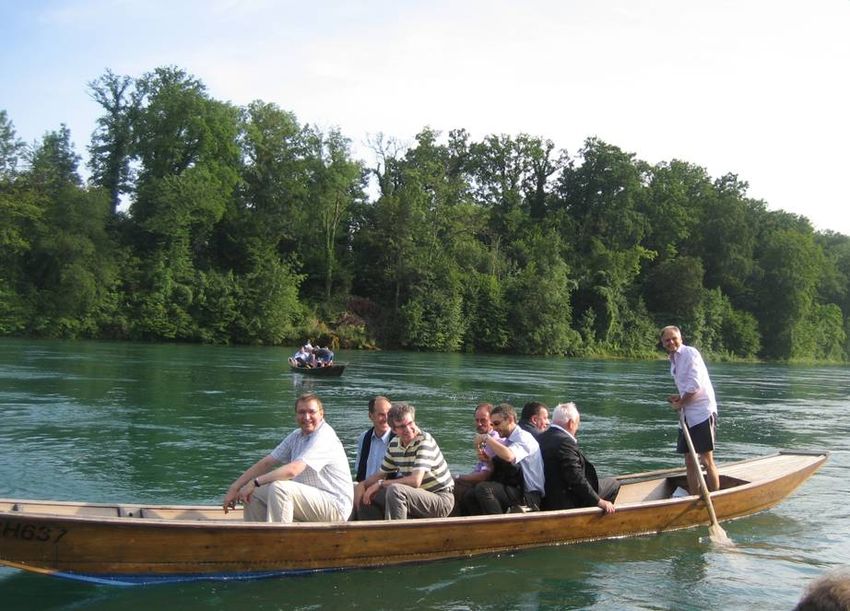
0.5% each: Belgium/Wallonia, LiechtensteinAll in the same boat!
Internet: www.iksr.org
You can also read


