TRANSIT ASSET
MANAGEMENT SYSTEM
←
→
Page content transcription
If your browser does not render page correctly, please read the page content below

TRANSIT ASSET MANAGEMENT SYSTEM
Executive Summary ................................................................................................................... 2
Background................................................................................................................................ 2
Lessons Learned ....................................................................................................................... 4
Approach ................................................................................................................................... 5
Enterprise Asset Management Solution ....................................................................................12
Conclusion ................................................................................................................................15
Appendixes ...............................................................................................................................16
       A: Asset Field Matrix
       B: Tier 1 Requirements
       C: Tier 2 Requirements
       D: Asset Hierarchy
       E: Request for Proposal - Statement of Work

Valley Regional Transit FTA TAM Report WBG070914213737BOI
                                                                                                                                            1
Executive Summary
The Federal Transit Administration's (FTA’s) State of Good Repair (SGR) pilot initiative is an
opportunity for public transit agencies to explore creative ways to address challenges with
tracking, maintaining, and planning for capital assets. By awarding grant funds to agencies of
different sizes and different demographic makeup, the FTA will receive useful information for
agencies across the United States with regard to different inventory, system, planning,
maintenance, and monetary needs.

Background
Valley Regional Transit is a Regional Public Transportation Authority in southwest Idaho with a
28-member board, made up of elected and appointed government representatives in Ada and
Canyon Counties in southwestern Idaho. VRT was formed in 1998. It currently contracts for
transit services within the city limits of Boise and Garden City, Idaho and the transit services in
Nampa and Caldwell Idaho. Valley Regional Transit was created as a single authority to be
responsible for providing, coordinating, and developing public transportation in Ada and Canyon
counties, including financial review and facilitations of public transportation and its providers and
providing public transportation by public modes of transportation. (Idaho Code, Title 40, Chapter
21). Valley Regional Transit may contract for services with public and private entities to carry
out the purposes of Chapter 21 (40-2109[4]).

Valley Regional Transit owns the ValleyRide bus system and manages the system assets. The
entire ValleyRide system is comprised of 26 transit routes and paratransit services. The VRT
fleet includes 6 vans, 58 buses, and 11 support vehicles. In FY 2011, the bus system provided
1.37 million one-way trips and 40,825 ACCESS paratransit rides.

In assessing its asset management needs, VRT established that it needed an improved system
for tracking its asset inventory. In particular, VRT determined it needed an improved system to
help analyze its assets and prioritize investment needs, supplementing the functionality
provided by its FleetNet system, which is used for basic accounting, work order processing, and
inventory tracking. Realizing that there were limited available funds for implementing an
improved asset management system, and noting that other local agencies faced similar
challenges, VRT formed a regional partnership to implement a transit asset management
system, and led the effort to apply for an FTA SGR grant on behalf of the partnership to fund the
initiative. In their application, VRT outlined the phases in which each regional partner would
participate to implement a system and develop a Regional Recapitalization Plan.

Valley Regional Transit has demonstrated how multiple smaller transit agencies and transit
providers can work together to develop regional partnerships to help improve transit asset
management. In 2011, VRT formed a regional partnership to compete for a FTA SGR grant and

Valley Regional Transit FTA TAM Report WBG070914213737BOI
                                                                                                   2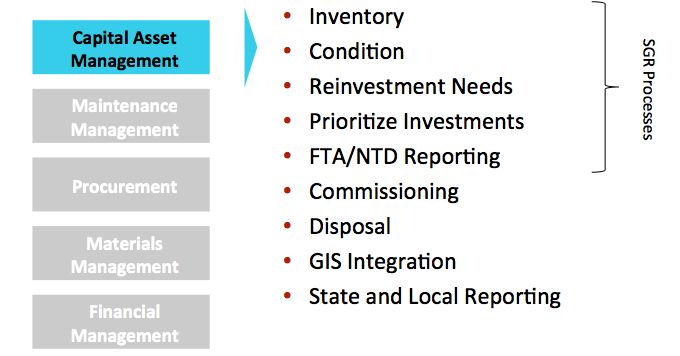
is working with its local partners to pool resources in implementation of an asset management
system.

The regional partnership consisted of the following members:

                      Agency                                           Demographics

 Valley Regional Transit                               Lead agency; fixed route and shuttle services
                                                       with 58 buses, six vans, and 11 support
                                                       vehicles

 Boise State University (BSU)                          University Shuttle System

 Ada County Highway District (ACHD)                    Division of ACHD, Commuteride provides
                                                       ridematching services

 Idaho Transportation Department (ITD)                 Manages and distributes federal funds to a
                                                       number of Idaho transit providers

 Treasure Valley Transit (TVT)                         Rural transit provider for the eight counties in
                                                       ITD District Three; also provides Dial-a-Ride
                                                       and Medicaid transportation

 Mountain Rides                                        Full service provider for Blaine County;
                                                       provides free town bus, commuter bus,
                                                       commuter vanpool, ridematch services, safe
                                                       routes to schools, and special needs demand
                                                       response

VRT was successful in obtaining a $375,000 SGR grant. Upon receiving the funding, they have
worked with partnering organizations on developing the Regional Recapitalization Plan and
Transit Asset Management Program.

In establishing a regional partnership for improving asset management, VRT first approached
stakeholders with common goals and similar assets. VRT led the effort to apply for the SGR
grant and is managing the effort to design, select, and implement an asset management system
using the grant funds. VRT will also manage the vendor relationship and information technology
associated with the new system. Regular partnership meetings are held to provide each partner
the opportunity to participate in the process and continue to provide input.

As part of the process, each partner organization agreed to participate in the capturing of the
requirements for a regional system, inventorying its assets, and recording asset conditions. VRT
evaluated the quality and consistency of the data in order to determine the information that still
needs to be collected. Methods for future data collection will be developed to ensure that all of
the organizations are using a consistent approach and have comparable data. The combined
assets of the participating organizations include: transit buses, paratransit vehicles, vanpool and
social service agency vans, university shuttle buses, support vehicles, park and ride lots, bus

Valley Regional Transit FTA TAM Report WBG070914213737BOI
                                                                                                          3
shelters and benches, operations and maintenance facilities, and transit centers. Given the
range of different assets in the inventory, it is important that the participants continue to be
active in the planning process to ensure that the resulting system is flexible enough to account
for each organization’s needs.
VRT and its partners developed an asset management system in which all of the collected data
will be stored and analyzed at an individual and regional level. VRT was particularly interested
in developing a capability for performance analysis to determine what asset investments would
be most cost effective in allowing the agency to best invest future funds.
The benefit of creating a regional system is that by pooling resources across multiple
organizations, a group of partner agencies can implement state of good repair practices and
systems more cost effectively than a single agency acting alone. Also, organizations can also
apply for grants collectively, maximizing the impact of funding by concentrating on large-scale
improvements across multiple agencies. The results of such cooperative efforts can be utilized
by multiple organizations, allowing for improved analysis capabilities that benefit all of the
participants.
The Regional Capitalization Plan is expected to establish a methodology for future efforts to
improve data collection, analysis, and prioritization models for Idaho transit agencies and
providers. This will help individual organizations to develop asset management strategies while
providing an improved capability for regional analysis. The plan also has long-term potential for
developing a protocol for sharing assets between agencies, which could yield further efficiency
gains.
Lessons Learned
The importance of lessons learned for this project are the benefits other smaller regional
transportation systems can get from this report. In the end, the project was planned, executed
and was a success, but there are still a few items the team would like to highlight at the request
of the FTA.
One of the first lessons on success is engagement. This needs to start at the top of each
regional organization, establishing a message that this is important to us and to the region.
Executives of all stakeholder agencies need to communicate that they are engaged team
members and looking to improve the region as a whole. The success of a project like this can
generate even more engagement if all of the regional players have funds at stake (we like to call
it “skin in the game”).
A second critical lesson is establishing and communicating measureable goals and objectives
up front. Measurable goals and objectives help the entire team understand the project and what
everyone is working towards.
Valley Regional Transit FTA TAM Report WBG070914213737BOI
4A final lesson is to leverage and not recreate standards. The project team saved time and effort
by leveraging the FTA hierarchy and codes already established. In addition to saving time and
effort, the ease at which reporting to the FTA can occur is a large long-term benefit.
One of the important aspects of these lessons is that the scope is defined and established at the
start of the project and run through project planning. The scope set the foundation for a
successful project.
Approach
As the lead grantee agency, VRT continued to lead the project drafting a 2-year project plan.
The initial plan would be to capture business requirements across all the regional partners and
implement at the VRT first. Regional partners would be added to the system once VRT was up
and running and stable. This strategy—and VRT providing the necessary communication,
leadership, and guidance—for the duration of the project was critical to the project’s success.
In early 2011, the VRT Project Manager finalized the project strategy and timeline. An important
factor for the regional partnership was a sustainable asset management program and system
that supported the needs of the agencies today and into the future. The following project
guidelines were created as part of the strategy:
● Establish business requirements that align with the FTA requirements
● Establish business requirements that align to the individual regional transit agencies
● Select and implement a system that best meets the combined business requirements
With these guidelines the project was planned with a launch in September of 2013 and broken
into three stages.
Valley Regional Transit FTA TAM Report WBG070914213737BOI
5The stages were created to logically structure the entire project with planning, selection and
implementation and followed by ongoing implementations and support for the new transit asset
management solution. As the lead agency, VRT would take the role of mentor and support
partner agencies as they added their assets to the system. This process will enhance regional
reporting and analysis opportunities.
Stage 1 - Planning
During this stage of the project the regional partnership group established themselves as the
governing body and developed a detailed 2-year project schedule to capture business
requirements, identify team resources, identify potential system vendors, implement a system,
and provide the necessary support and guidance for the region. The main activity during this
stage was the hiring of a professional services firm to facilitate the analysis, selection, and
implementation of an asset management solution. In early 2012, VRT executed a professional
services agreement with CH2M HILL and Four Nines Technologies to provide these services.
Stage 2 - Selection and Implementation
VRT worked with CH2M HILL and Four Nines Technologies to detail the next activities and
associated tasks. Project control activities were set up and included weekly project team
meetings and a monthly status meetings to inform the regional partnership group. In addition,
periodic working sessions were also established to ensure large milestones around business
requirements, processes, expectations, and plan updates were properly agreed upon.
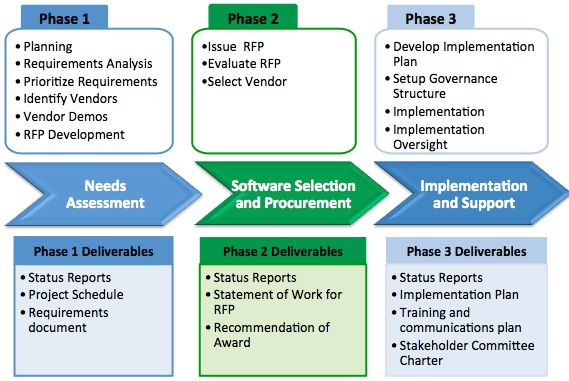
The project team’s first activity was to finalize the Stage 2 approach and timeline. The team
developed a three phase project approach, highlighted below.
Valley Regional Transit FTA TAM Report WBG070914213737BOI
6With the overall strategy in place, and VRT driving the project, the team immediately started
creating detailed project objectives. It was important to VRT and the regional partnership to
document the project objectives and get approval from the team. With different agency needs
across the region and FTA requirements making for a complex project, it was important to work
together on a unified definition of project success.
Phase 1 - Needs Assessment
The Needs Assessment phase was designed to focus on capturing the complex requirements
across the region. This phase started with defining project objectives:
● Provide a single point of reference of all assets (not just vehicles)
● Deliver reports to monitor and evaluate conditions of existing assets and future
investment needs
● Support regional planners with information for cost benefits analysis and replacement
planning
● Align with FTA Transit Asset Management (TAM) and SGR requirements
● Address four TAM Phases:
○ Procurement of new assets
○ Asset delivery and service performance
○ Asset condition assessment
○ Asset recapitalization
In addition to meeting FTA and grant requirements, VRT and the regional partnership sought to
address additional needs across the entire region:
Valley Regional Transit FTA TAM Report WBG070914213737BOI
7● Provide transit operations departments with a tool to manage assets from procurement
to disposal lifecycle
● Combine the needs for capital planners and operations in one application
● Identify and deploy a scalable solution for the entire region
Even though the project objectives went above and beyond the initial scope of the FTA grant,
VRT felt it was important to capture the true needs of the region to define and procure a system
that would be sustainable and beneficial to the entire region.
During the needs assessment, effort requirements were captured in two categories: Tier 1 -
SGR Reporting and Management (Mandatory), and Tier 2 - Maintenance and Operations. The
team was able to gather requirements from seven different agencies. This information is
included in Appendix B and Appendix C.
Requirements were grouped into five business process areas:
The first business process area, “Capital Asset Management” was categorized as Tier 1 and
aligned specifically to the grant. This was done to ensure that the new system would, at a
minimum, meet the FTA Grant requirements.
Valley Regional Transit FTA TAM Report WBG070914213737BOI
8The organization of these requirements was very important to the process and structure of the
RFP. When reviewing them, the most important requirements to all the agencies providing
information were those in Maintenance Management and Materials Management. This directly
corresponded to the agencies’ missions of providing transportation to the community in a safe
and timely manner, but these were secondary based upon the grant structure. By properly
separating both and managing them, the project team could properly identify a solution that met
both sets of requirements, even if the implementation of the Tier 2 requirements happened at a
later date. The final requirements document included of the following:
● Functional requirements captured by process and Tier 1 and Tier 2 requirements, see
Appendix B and Appendix C
● Asset and field matrix with all assets and their attributes mapped to FTA fields, see
Appendix A
● Asset Hierarchy which mapped all regional assets to the FTA codes and hierarchy, see
Appendix D
● Asset reports consisted of sample reports required by the agencies
This information provided the basis for the creation of the statement of work for potential
vendors and a complete understanding of the detailed requirements for a regional asset
management system.
As requirements were being reviewed and refined, the team performed an industry analysis to
identify potential vendors. Vendors with an emphasis in transit operations were asked to
demonstrate their product through an informal Request for Information (RFI). This process
allowed the project team and stakeholders an important opportunity to better understand
solutions in the marketplace that could meet their capital planning and maintenance
requirements. This also allowed for the project team to understand the future direction of the
Valley Regional Transit FTA TAM Report WBG070914213737BOI
9industry and plans to meet FTA, National Transit Database (NTD), SGR, MAP 21, and other
requirements.
The following vendor list was established:
● Maximo
● Mincom
● Asset Work (Trapeze)
● FleetNet
● AgileAssets
● TMT Transman
● Infor
● Sunflower
● Loc8
● Route Match
Not all vendors elected to participate, but all were provided the option to respond to the RFI and
show the team a demonstration. The RFI was also posted for the public to review or respond.
As part of the feedback process the team looked for those responding to the RFI and providing
demonstrations to provide information on additions or clarifications that could improve the
statement of work and information provided within the RFP.
Phase 2 - Software Selection and Procurement
As phase 2 started, a detailed Statement of Work (SOW) was created to capture the services
and technology needed to select and implement an asset management system that met the
needs of the region. The SOW, (see Appendix E) included details on the project management,
implementing, training, and ongoing support services required. The SOW was accompanied by
the detailed requirements providing potential vendors with a clear picture of the needs.
VRT and the regional partners elected to use a Best Value Method for the procurement of the
asset management system. The team scored all factors except cost. The factors included the
mandatory requirements, implementation and training services, prior work experience, key
personnel, and future requirements within the vendor's proposal and the vendor’s
demonstration. Once the scoring was completed by the evaluation team, the cost evaluation
was performed by dividing the total proposed costs by points awarded to each written proposal.
The vendor with the lower cost per point is selected. As this was a regional solution, the entire
regional stakeholder group was part of the evaluation, even though the solution would initially
only be deployed for VRT.
Valley Regional Transit FTA TAM Report WBG070914213737BOI
10The Trapeze Enterprise Asset Management (EAM) solution was the selected vendor providing
the best value to the region. Planning and negotiations started immediately with the VRT board
approval on January 16, 2013.
Trapeze EAM solution is built for the transit industry with the core product integrating the capital
asset and maintenance information seamlessly. The solution is a commercial off-the-shelf
product, allowing the implementation team to focus on configuring the right attributes and
processes, and not customizing a solution to meet business requirements. Using an off-the-
shelf product allows the team to receive more timely updates from the vendor, focus software
costs on additional modules and not customizations, interface with other users as managers,
and more easily stay abreast of changes in the industry.
Phase 3 - Implementation and Support
The implementation began in December 2013 with Trapeze as the project manager, and the
CH2M HILL/Four Nines Technologies team providing oversight. The implementation was
grouped into four activities over a two-phase rollout. Phase 1 was core functionality to meet
asset inventory and capital planning requirements. Phase 2 was the implementation of
functionality for maintenance management. Each implementation phase had four activities to
properly sequence the project.
1. Planning
2. Design
3. Configuration
4. Testing
During and at the end of each phase a milestone review was conducted to ensure that the
requirements of the SOW were being adhered to, and that meetings were held to present the
status to the regional stakeholder group.
Stage 3 - Support and Improvement
Today VRT is live with the all Tier 1 requirements and the Trapeze modules to support the
Asset Lifecycle needed to manage assets according to the FTA requirements. VRT is able to
generate the reports needed for the NTD, as well as the regional capital planning reports.
Ongoing activities include moving additional agencies in the region to the new asset
management solution and planning for Tier 2 requirements in 2015. BSU and ACHD are
currently in process, with more to come. This Asset Management program is ongoing and will
continue to encourage other smaller agencies to leverage this robust tool. As stated in Phase 1
of the Needs Assessment, the team’s goal was to establish:
● A single portfolio of all regional assets
● Reports that allow capital planners to perform cost benefit analysis
● Reports that allow capital planners to prioritize asset replacement based upon regional
needs
As the leading agency VRT continues to champion the solution and benefits on a regional level.
VRT provides the support and contract management needed to facilitate smaller agencies
Valley Regional Transit FTA TAM Report WBG070914213737BOI
11joining the program, as well as the addition of new processes and functionality as the
capabilities grow.
Enterprise Asset Management Solution
The final solution is an EAM system that supports all stages of the Asset Lifecycle and the
operations and maintenance of a public transit agency. As a smaller region, it is important to do
more with less. The strategy of this project focused on meeting FTA requirements while also
positioning VRT to take advantage of a leading EAM solution. Today, VRT has a maintenance
system that can track the purchase of an asset, the required maintenance and warranties,
materials needed and used and the capital planning all under one application. The importance
of this to an agency the size of VRT is immense. And now, VRT’s ability to provide these same
features to these smaller regional providers allows them to focus on their needs (typically bus
maintenance) while concurrently allowing regional planners to have access to the information
they need for capital planning on a regional level.
As highlighted previously, VRT structured the implementation in two phases, with the first phase
an implementation of Trapeze modules that specifically met the requirements of the FTA and
grant application. This phase focused on an asset inventory and capital planning. The modules
included in the first phase were:
Module Function
Core Module Captures vehicle inventory information
Capital Planning and State of Good Repair Captures and monitors state of good repair
information
Facilities and Stationary Assets Tracking and monitoring of all non-vehicle
assets
Web Reporting Front end tool to enable reporting within a
browser
Performance Measures and Metrics Functionality to define and capture
performance metrics over time
MAXQueue Functionality to allow multiple reports to be
run at the same time (especially important as
more agencies join the program)
Valley Regional Transit FTA TAM Report WBG070914213737BOI
12The first phase was completed in September 2013. VRT launched the EAM solution with:
● 59 motor buses
● 18 demand response
● 200 benches
● 50 shelters
● 3 facilities
● 200 pieces of equipment
● 900 bus stops
● 28 support vehicles
Upon the completion of Phase 1, VRT is now working with the operations team and Trapeze on
Phase 2. The schedule for the operations and maintenance requirements is from January 2015
to September 2015.
As the importance of maintaining the assets of a transit system was VRT’s mission, the team
was eager to implement the additional modules and functionality. The maintenance functionality
required the modules below and included some additional modules for more robust decision
support. A plan is in place, but due to internal delays and priorities, these requirements have
been pushed to 2015.
Module Function
Shot Activity Work order, job order, warranty management
and paperless elements all managed in a
portal for operations
KPI Dashboard Reporting with green/yellow/red monitoring
based upon metrics for performance;
providers a visual way to look at the data
Notifications Workflow notifications based upon business
rules to monitor events or conditions
Action Map GIS Visualization Basic GIS integration with stationary assets;
ability to create maps, run queries and tie to
existing GIS if necessary
Incidents Management Functionality to capture and monitor incidents
Phase 2 will go live in September of 2015. With the current planned scope for Phase 2, VRT will
be able to look at an asset from the highest level; date in service, total cost (purchase and
maintenance), and expected useful life, and will also be able to drill down to the details of the
warranty on each part and the details of when maintenance was performed by whom and when.
Valley Regional Transit FTA TAM Report WBG070914213737BOI
13This end to end management in one system will provide VRT with the necessary capital
planning tools, while also providing them with a modern solution to keep assets safe, and in the
best condition possible for the community.
With the launch of Phase 2, VRT will add additional assets to the EAM solution, these will
include:
● Social service agency buses and vans
● University shuttle buses (BSU)
● Vanpool vehicles (ACHD)
● Transit centers
● Park and ride lots
The additional assets will be coded directly to the FTA codes, providing simple regulatory
reporting and leveraging the initial process developed by VRT for condition assessment,
prioritization reporting, and health monitoring.
The EAM solution captures all the necessary attributes required of a public transit agency to
support maintenance, operations, NTD reporting, capital planning and decision support. The
Trapeze EAM solution has the following information for every asset:
● Asset type
● Location
● Condition
● Date built/acquired
● Rehabilitation history
● Replacement cost
● Quantity
● Expected Life
These attributes provide the details required by VRT to meet FTA reporting requirements and
the core capital planning needs for the region.
In addition to these attributes the Trapeze EAM solution also captures the following information
to support operational functions and additional reporting.
● Vendor Details:
○ Make, model, warranty, Asset Type serial numbers, preventative maintenance
information, etc.
● Maintenance Details:
○ Vehicle type, mileage, insurance, preventative maintenance plan, manuals and
other documents, weight, seating, etc.
● Accounting Information:
○ Purchase costs, book value, depreciation, sale/disposal, procurement, funding,
etc.
● Parts Information:
○ Serial number, book value, quantity, reorder points, warranties, usage, install
instructions, etc.
Valley Regional Transit FTA TAM Report WBG070914213737BOI
14● Location and Ownership:
○ GIS map, agency ownership, agency maintenance, etc.
The Trapeze EAM solution provides VRT and the region with a comprehensive EAM solution
out of the off-the-shelf program. The solution will have the additional benefit of future
improvements through upgrades as Trapeze continues to work with other transit agencies on
product improvements.
The Trapeze EAM solution has been implemented to allow other regional agencies to add their
assets and leverage all the current processes and standards, while also being able to report and
manage at a regional and individual agency level.
Conclusion
VRT has an end-to-end asset management solution that captures every asset and their required
attributes. These attributes enable VRT to report to the FTA and maintain their assets, make
informed capital planning decisions on a regional basis. VRT has a single repository for all asset
information ranging from purchase data and costs, useful life, recent maintenance, condition,
warranty, location, miles and performance. VRT can report on capital projects directly from the
solution and has plans to improve reporting functionality in the future.
Without the SGR grant, VRT would not have a single repository for their asset inventory and the
attributes to manage a healthy transit operation. Maintenance and reporting on assets would
have continued to be a challenge and a highly manual process, and maintenance would
continue in an antiquated system with manual process and limited reporting. From a regional
perspective, the possibility of regional asset reporting would not be possible without this
solution.
VRT is the only agency current on the process, with BSU and ACHD in the process of adding
their assets. Two specific challenges in bringing on additional agencies has been their ability to
secure funding for licenses/maintenance, and their concern about the level of effort to maintain
a system over the long term. The VRT’s leadership in supporting their smaller regional partners
has been critical in allaying these concerns.
It is important for transit systems the size of VRT and the regional partners to receive FTA
funding aligned to support both the capital planning and the maintenance. For future programs it
is important to leverage all of the information provided by the FTA, including asset numbering,
attributes, and the hierarchy, as well as have an understanding of TERM and TERM Lite.
Valley Regional Transit FTA TAM Report WBG070914213737BOI
15Appendixes
A: Asset Field Matrix
B: Tier 1 Requirements
C: Tier 2 Requirements
D: Asset Hierarchy
E: Request for Proposal - Statement of Work
Valley Regional Transit FTA TAM Report WBG070914213737BOI
16Appendix A: Asset Field Matrix Valley Regional Transit FTA TAM Report WBG070914213737BOI
A                          B                          C                                    D                                       E                         F
1 Valley Regional Transit
2 RFP 2012-09-10 Asset Management System
3 Appendix A – Capital Asset Management Tier 1 Requirements
                                                                                                                                                       If No how will you address the
                                                                                                                                   Vendor Can Meet     requirement, please describe.
                                                                                                                                     Requirement     (example, through customization
4    REF ID                    Process               Process Group                         Requirement                                 (Yes/No)            approximately 40 hours)
                                                                       The system shall provide the ability to perform cost
                                            Analysis (Reinvestment,    benefit analysis to make "buy versus lease" and "buy
5          5200 Capital Asset Management    Prioritization, Backlog)   versus repair" decisions. (see attached templates).
                                                                       The system shall provide a capital improvement
                                            Analysis (Reinvestment,    program for maintaining a 10 year plan with a list of all
6          5205 Capital Asset Management    Prioritization, Backlog)   assets and expected improvements by year.
                                                                       The system shall have the ability to generate analysis
                                            Analysis (Reinvestment,    reports that prioritize asset investments based upon
7          5255 Capital Asset Management    Prioritization, Backlog)   predetermined criteria and weights.
                                                                       Capability to perform multiyear (5 year and 10 year)
                                                                       asset recapitalization planning based upon asset
                                                                       condition, replacement value, in-service date and
                                                                       design life. The analysis should be able to estimate
                                                                       current asset backlog, investment required to bring
                                                                       asset inventory to a State of Good Repair over a
                                                                       predetermined period of years and allow for
                                                                       constrained funding analysis showing how the condition
                                                                       of the asset inventory will evolve over time based on
                                                                       various funding scenarios. This analysis should be
                                                                       similar to that done by the Federal Transit
                                            Analysis (Reinvestment,    Administration’s Transit Economics Requirements
8          5297 Capital Asset Management    Prioritization, Backlog)   Model (TERM), Lite (local agency) version.
                                                                       The system shall track to-be-repaired assets at all
9          1436 Capital Asset Management    Condition                  locations including third-party repair vendors.
                                                                       The system shall track Inspection Data, for example
                                                                       track inspection activities, both mandated and
                                                                       nonmandated, all track inspections required by
                                                                       governmental agencies (e.g. a log verifying that these
                                                                       mandatory inspections have taken place,
                                                                       etc) Inspection fields and analysis should support
10         1464 Capital Asset Management    Condition                  condition ratings and decay curve analysis.
A B C D E F
The system shall provide an analysis tool to assess the
condition of their assets by tracking inspection checks,
11 5207 Capital Asset Management Condition maintenance records and the age of the asset.
The system shall provide the ability to create a step by
step workflow process to assess condition, with date
triggers, asset triggers, roles and inspection input
12 5212 Capital Asset Management Condition forms.
The system shall support the ability to track the
condition of an asset with expected repair dates using a
13 5252 Capital Asset Management Condition rating criteria (FTA or internal)
The system shall have a standard condition rating
14 5266 Capital Asset Management Condition system
The system will have the ability to incorporate track FTA
15 5267 Capital Asset Management Condition useful life and industry based on useful life.
NTD Report A-30 - Revenue Vehicle
Inventory: Instructions for From A-30 can be found on
page 182 in the following document
http://www.ntdprogram.gov/ntdprogram/pubs/ARM/2
011/pdf/2011_Asset_Module.pdf Below are the key
elements of the report that must be generated by type
of service: RVI ID # in Fleet Vehicle Type - see NTD
codes in RFP Ownership Code - see NTD codes in
RFP Funding Source Code - see NTD codes in RFP Year
of Manufacture Year of Rebuild Manufacturer Code -
See NTD Codes in RFP Model Number # of Years Active
in Fleet # of ADA vehicles # of Emergency
Vehicles Fuel Type Code Vehicle length Seating and
standing capacity Total active miles Total avg miles
over vehicle lifetime Optional "supports another
16 5324 Capital Asset Management FTA/NTD Reporting mode"
The system shall have flexible tools to generate reports
that meet FTA/NTD reporting needs today and in the
future. Allow the ability to submit reports that identify
FTA/NTD Reporting Analysis What kind of asset is it? Year built; Useful life;
(Reinvestment, Prioritization, Replacement cost; Agency capital responsibility for the
17 5256 Capital Asset Management Backlog) asset; Quality and Condition ratings
The system shall track disposal records of all repairable
18 1437 Capital Asset Management Inventory assets.A B C D E F
The system shall provide the ability to track non-
19 1449 Capital Asset Management Inventory revenue vehicle usage data
The system shall provide the capability to add extensive
search routines for locating equipment, parts, serial
numbers and part numbers via wild cards with multi-
20 1450 Capital Asset Management Inventory field qualifiers.
The system shall provide for high-level user-defined
21 1451 Capital Asset Management Inventory overview of assets with drilldown functionality.
The system shall provide the ability to track reliability
22 1456 Capital Asset Management Inventory and failure data including shop repair data.
The system shall track and record incidents on all assets
23 1462 Capital Asset Management Inventory to include linkage to detailed accident data.
The system shall provide a tool to track funding sources
24 5203 Capital Asset Management Inventory and grants by type and grant numbers.
The system shall provide the ability to track assets by
different legal entity with security access controlled by
25 5204 Capital Asset Management Inventory role
The system shall provide the ability to integrate with
the general ledger and fixed asset applications in
Fleetnet with the ability to identify which assets
26 5211 Capital Asset Management Inventory information is shared and which is not.
The system shall provide a report organized by type
(capital and non capital asset), by location, by date/date
27 5215 Capital Asset Management Inventory range, and with the ability to summarize data.
The system shall provide a comprehensive inventory of
assets. Assets should be flagged as date in service, out
28 5216 Capital Asset Management Inventory of service, in inventory, scrapped or sold.
The system shall be able to provide all asset information
29 5226 Capital Asset Management Inventory in a single solution.
The system shall track ownership type of all assets and
equipment with labels to include (owned, leased,
30 5241 Capital Asset Management Inventory management, etc.)
The system shall support the ability to transfer assets
and equipment between locations while still
31 5249 Capital Asset Management Inventory maintaining their entire history and date of transfer.
The system shall support a process to perform physical
inventories of assets and equipment on a periodic and
sample basis. Fields should track last physical count,
32 5250 Capital Asset Management Inventory who counted and commentsA B C D E F
The system shall provide the ability to add hierarchal
categorization of assets with custom types as per FTA's
33 5257 Capital Asset Management Inventory asset hierarchy (provided as part of the RFP).
The system shall track the ability to capture funding
34 5286 Capital Asset Management Inventory source for each asset
The system shall provide the ability to track and manage
impairments against fixed assets where federal funds
35 5287 Capital Asset Management Inventory were used to purchase the asset
They system shall provide a report to manage asset
inventory and reconcile financial asset (book), physical
36 5288 Capital Asset Management Inventory and asset in the asset management system
They system shall provide the ability to generate
reports to capture assets by different combinations of
37 5289 Capital Asset Management Inventory funding source, location, ownership and responsibility.
The application should be designed to support all
38 5295 Capital Asset Management Inventory required fields (see attachment, field mapping)
The system shall track vehicle miles, service miles and
39 5296 Capital Asset Management Inventory time in/out of service (deadhead)
Fleet Report - broken down by individual assets: buses,
support vehicles, equipment and facilities. Have
cumulative and individual asset data: a. To include
mileage MTD, YTD and total b.Make, model, year,
seating capacity, standee capacity, wheelchair positions,
serial number (VIN), license #, fleet #, warranty start
and end or like to warranty page, GVWR, last PMI done,
next PMI with link to completed PMI form, links to all
major components or subsystems, active or inactive
asset with date if inactive, useful life(years and mileage)
and base location. c. Track by agency, division and
40 5303 Capital Asset Management Inventory location
The system shall support ad hoc analysis to allow users
to create reports using a user friendly query or report
41 5259 Capital Asset Management Management Reporting tool.
The system shall support the ability to develop custom
reports that allow for targeted investments focused on
42 5260 Capital Asset Management Management Reporting replace and rehabilitating aging transit infrastructure.A B C D E F
The system shall have the ability to calculate and track
performance metrics including but not limited
to Asset Backlog: % of asset value that is past useful
life (worse than 2.5 FTA condition rating) % of Assets
in State of Good Repair % of asset value that is in state
of good repair (better than x.x FTA condition
rating) Average Condition of Assets: Condition
weighted average based on FTA condition ratings Bus
Fleet Availability: Average daily percent of fleet
available for revenue service Bus Failure: Miles
between reported bus service disruption due to
equipment malfunction O&M Costs: O&M cost per
revenue mile. Includes administrative, operations,
43 5285 Capital Asset Management Management Reporting maintenance (vehicle and non-vehicle) costs
Financial Data Reports a. Track grants, projects,
depreciation, fed/local percentages b. Be able to report
by asset and fleet c. Budgeted assets i. Report grant,
project and when funds available, obligated and
committed. ii. Add RFB/RFP/RFQ dates, submittal
dates, approved by Executive Director, approval by
board(s), order date expected delivery date, PO #,
44 5314 Capital Asset Management Management Reporting actual delivery date and date in service.
Asset report that can summarize the total vehicles into
buckets for Directly Operated Modes and Purchase
Transportation Modes that support NTD B-10 Report.
The modes to note change much for VRT, currently Bus
and Demand Response. In the future we will need
45 5323 Capital Asset Management Management Reporting additional modes, van pool, trolly bus and other.
The system shall provide the ability to conduct lifecycle
46 1454 Capital Asset Management State and Local Reporting management for buying, tracking and selling an asset.
The system shall have interface with Financial Fixed
Asset system - Fleetnet for depreciation and financial
47 1422 General Functions General reporting.
The system shall interface with the procurement system
(Fleetnet) so procurement information can be found in
the Asset Inventory (date of purchase, costs, vendor
48 1427 General Functions General etc.)A B C D E F
The system shall have the ability to build security based
49 5233 General Functions General upon roles.
The system shall support exporting and importing
50 5234 General Functions General functionality to Excel and MS Access
They system shall support full web client accessibility
from remote locations so IT does not need to install
51 5237 General Functions General software on work stations
They system shall support the ability to query asset,
52 5242 General Functions General maintenance and other information in the system.
The system shall provide the ability to define and
calculate Key Performance Indicators (KPIs) such as
53 1445 Maintenance Management Failure Reporting equipment failures.
The system shall provide the ability to track system
performance and incidents related to usage
54 1441 Maintenance Management Fleet Maintenance parameters.
The system shall track individual system/component
performance to assist in developing system
55 1442 Maintenance Management Fleet Maintenance improvements or identifying system problems.
The system shall provide maintenance histories for
vehicles, major/minor systems, and critical components
Fleet Maintenance Maintenance so that specific vehicle repairs can be tracked and
56 1416 Maintenance Management (Fleet, Facilities, Equipment) repair/replacement trends can be reviewed.
The system shall provide for tracking of equipment
Fleet Maintenance Maintenance maintained by outside maintenance contractors or in-
57 1423 Maintenance Management (Fleet, Facilities, Equipment) house maintenance support organizations.
The system shall track maintenance history, for example
all maintenance activities relating to specific vehicles,
components and systems cross referenced to the
Maintenance (Fleet, Facilities, previously defined maintenance histories to avoid
58 1419 Maintenance Management Equipment) duplication.
Maintenance (Fleet, Facilities,
59 5262 Maintenance Management Equipment) The system shall track fleet availability.
The system shall track equipment installed on assets
Maintenance (Fleet, Facilities, (radios, fareboxes, camera's etc.) and cross reference
60 5275 Maintenance Management Equipment) from asset to equipment and equipment to asset.
Asset Inventory Inspection Reporting a. Confirm asset
location b. Confirm condition of asset by FTA or other
standard method of determination. c. Report by asset
61 5312 Maintenance Management Management Reporting and fleet. d. Track asset moves and disposals.A B C D E F
The system shall provide the ability to define and
maintain maintenance plans and schedules by asset
62 5243 Maintenance Management Preventive Maintenance Planning type and frequency.
The system shall support flagging of repairs and
63 5244 Maintenance Management Preventive Maintenance Planning maintenance that are FTA required by asset type.
The system shall automatically prompt a user if a work
order is being issued for asset or component covered by
64 5195 Maintenance Management Warranty Management warranty.
The system shall have the capability to track
65 1311 Materials Management Item Master parts/components,Appendix B: Tier 1 Requirements Valley Regional Transit FTA TAM Report WBG070914213737BOI
Valley Regional Transit
RFP 2012-09-10 Asset Management System
Appendix B - Tier 2 Requirements

                                                                                                                                                                    Vendor Can   Requirement can
                                                                                                                                                                       Meet       be met with no
                                                                                                                                                     Requirement   Requirement   additional costs
  REF ID           Process              Process Group                              Requirement                               Interface   Reporting     Ranking       (Yes/No)     as part of Tier 1
                                                             The system shall track warranty activity and link warranty
      1309 Maintenance Management   Warranty Management      records to all work orders where appropriate.                                           H
                                                             The system shall provide for the reservation of parts in
      1310 Materials Management     Inventory Management     inventory.                                                                              M
                                                             The system shall suggest cross reference parts when
                                                             ordering material (e.g. when ordering a screw, the system
      1314 Materials Management     Inventory Management     might suggest ordering the matching nut).                                               H
                                                             The system shall provide inventory catalogue
      1316 Materials Management     Item Master              electronically.                                                                         H
                                                             The system shall provide comment fields on work orders,
                                    Work Order (Preventive   purchase requests and other processes where annotation
      1318 Maintenance Management   and Corrective)          would be helpful.                                                                       H
                                                             The system shall identify, track and manage Item lists. List
      1319 Materials Management     Item Master              can be labeled based upon the project need.                                             M

                                                             The system shall provide a graphically represented parts
                                    Work Order (Preventive   manual that allows the user to locate the desired part by
      1320 Maintenance Management   and Corrective)          drilling down from a top-level view to individual items.                                H
                                                             The system shall provide the ability to access parts and
      1322 Materials Management     Item Master              supplies through pre-built or custom-built catalogs.                                    L
                                                             The system shall provide the ability to input vendor
                                                             catalog data, including items like part numbers and a
      1323 Materials Management     Item Master              short description.                                                                      H
                                                             The system shall maintain packing slip numbers and have
                                                             the ability to link to an image database of packing slips for
      1327 Materials Management     Inventory Management     electronic content management purposes                                                  L
                                                             The system shall have the ability to provide historical
                                                             transaction information for assets as well as all inventory
      1328 Materials Management     Inventory Management     items.                                                                                  H
                                                             The system shall allow data input by means of barcode
      1329 Materials Management     Inventory Management     scanning (currently in FleetNet).                                                       H
The system shall allow vendors to obtain information
regarding descriptions or availability of inventory items
1330 Materials Management Inventory Management via the intranet/internet. L
The system shall be able to manage (restrict, transfer, or
1331 Materials Management Inventory Transfers issue) inventory by work order, job or project. H
The system shall be able to track inventory from multiple
fund sources (GL code to be consistent but funding source
1332 Materials Management Inventory Management can have multiple codes). H
The system shall be able to track different classes of
inventory, such as repairable and should be able to post
transactions for each class to the appropriate General
Ledger Inventory account(s) as determined by original
funding source. System shall track "new" or "repairable"
1334 Materials Management Item Master separately. M
The system shall update inventory levels in real time, but
must be coordinated with timing of upgrade to VRT IT
1335 Materials Management Inventory Management scanners. M
The system shall provide the ability to update the
Accounts Payable and General Ledger systems (interface
1336 Materials Management Inventory Management with FleetNet required) for use and disposed of inventory. Yes L
The system shall provide the ability to calculate standard
inventory-related data such as holding cost, expected
stockout date, turnover, stockout probability, and report
1337 Materials Management Inventory Management actual stockout date for an inventory item. L
The system shall provide the capability for inventory
adjustments of on-hand quantities based on the results of
1338 Materials Management Inventory Management periodic or ad-hoc inventory counts. M
The system shall provide the status and estimated time of
arrival of backordered inventory items as this data
1340 Materials Management Inventory Management becomes available in the Procurement system. Yes H
The system shall deliver a reorder notice and historical
data to the inventory planner to complete analysis and
1342 Materials Management Inventory Management prepare purchase requisition. L
The system shall accommodate different methods of
inventory valuation, such as FIFO, LIFO, Last Cost or
1343 Materials Management Inventory Management Average Cost. M
The system shall provide inventory stocking functionality
with minimum reorder points at the warehouse and
satellite storeroom locations and also indicate primary
1344 Materials Management Inventory Management and secondary suppliers. HThe system shall provide on-hand quantities and bin
1345 Materials Management Inventory Management locations. H
The system shall support several blind cycle programs
such as annualized daily counts, recounts and counts
1347 Materials Management Cycle Counting when storeroom reorder points are violated. L
The system shall maintain transactional audit history on-
line for 36 months for inventory items to include reorder
point changes, all transaction types, average unit prices
1348 Materials Management Inventory Management and on-hand quantities changes. M
The system shall check warehouse back order status to
provide projected delivery dates and notification to the
customer or designated personnel when the part
becomes available when a work order is deferred due to
1350 Materials Management Inventory Management stock-out. L
The system shall provide the personnel the ability to track
status of parts on order, to include email notifications of
1351 Materials Management Inventory Management status changes upon request. M
The system shall have the ability to track receipts and
1355 Materials Management Inventory Management issues of non-stocked items as separate from inventory. H
The system shall provide flexible reorder point programs
that allow for different types of reorder point formulas to
include seasonality, closed end production, critical stock
or high variability using both forecasts and historical data
1358 Materials Management Inventory Management as needed. L
The system shall have multiple part number fields
including vendor, manufacturer and generic part number
1360 Materials Management Item Master information. H
The system shall track stock number changes, transfer of
item history to the combined or new stock number, and
1362 Materials Management Inventory Management to maintain backward reference to the old number. M
The system shall provide real time update of receipts to
the General Ledger inventory clearing account, and
Accounts Payable system for returns to vendors and price
1363 Materials Management Inventory Management edits. Yes M
The system shall track inventory levels for shop repairable
items - and send a work order request with the quantity
1364 Materials Management Inventory Management required - when a reorder point is crossed. L
The system shall provide the ability to identify out-of-
stock items, as well as make substitutions with alternate
1368 Materials Management Inventory Management parts, vendor, and location tracking capabilities. H1370 Materials Management Inventory Management The system shall track material in transit. L
The system shall have the ability to track item cost by last
1372 Materials Management Inventory Management cost, average cost or user defined standard cost H
The system shall identify obsolete, use-to-deplete, critical,
1374 Materials Management Inventory Management or protected stock. M
The system shall provide the ability to generate kit part
1378 Materials Management Inventory Management lists M
The system shall have the ability to add the relevant
replacement/repair cost of each part used, (whether parts
1382 Materials Management Inventory Management are non-inventory or storeroom issue), to the work order. M
The system shall provide the ability to plan track parts
1385 Materials Management Inventory Management usage and manage stock levels. H
The system shall have the ability to remind users to
reorder parts and offer a user-friendly search process for
1386 Materials Management Inventory Management finding needed supplies. H
The system shall provide the ability to calculate Economic
Order Quantity (EOQ) on demand and the ability to adjust
1392 Materials Management Inventory Management the criteria. M
The system shall provide the ability to identify vendor (or
1395 Materials Management Inventory Management part) substitutes. L
The system shall be able to separate material by funding
source, operating versus different capital funded types,
without requiring physical separation, and allow for
different general ledger impacts upon purchase and issue
1396 Materials Management Inventory Management of differently funded items. L
The system shall provide the ability to create daily picks
1400 Materials Management Inventory Transfers for transfers (warehouse). L
The system shall track and archive "inspection" data
including stock number, quantity, inspection requirement
1401 Materials Management Cycle Counting and date the inspection request is generated. H
The system shall have the ability to replenish stock in
locations from other locations or from a vendor when
1408 Materials Management Inventory Management quantities fall below minimum levels. L
The system shall have the ability to recalculate reorder
1410 Materials Management Inventory Management points using customer forecasts. L
The system shall provide management control sorts by
1412 Materials Management Inventory Management supplier or role, date, stock number and type. H
The system shall provide tracking of stock, non-stock and
1413 Materials Management Item Master hazardous items. LThe system shall provide the ability to set alerts for
1414 Materials Management Inventory Management atypical materials usage. H
The system shall be able to track warranties, parts, and
Work Order (Preventive equipment being used by contractors, corrective and
1424 Maintenance Management and Corrective) preventative maintenance. H
The system shall provide the ability to store and access
images (drawings, CAD, photos, illustrations, legal
documents, pdf files) of assets, parts and equipment for
all users of the system as part of an electronic content
1428 Capital Asset Management Inventory management system H
The system shall have the ability to schedule equipment
1429 Maintenance Management Fleet Maintenance to be off-line prior to work being performed. H
The system shall have the ability to track and identify
1431 Materials Management Inventory Management rebuilt parts with associated costs. M
Preventive Maintenance The system shall calculate repair estimates based upon
1434 Maintenance Management Planning specific variables. M
The system shall provide a 'Used on/used with' capability
1435 Capital Asset Management Condition for all assets L
1438 Capital Asset Management Inventory The system shall provide shop equipment usage. M
The system shall provide deferred repair tracking, for
example incomplete repairs because of lack of parts
(inventory vs. shop repairable) or other reasons. This
1439 Capital Asset Management Condition should work with condition management M
The system shall provide work flow tracking to include the
Work Order (Preventive ability to link work orders to track repair from original
1440 Maintenance Management and Corrective) report through shop component repair. L
The system shall provide the ability to receive remote real
time monitoring of applicable equipment; vehicles,
1443 Capital Asset Management GIS Integration escalators, elevators, and operational data M
The system shall provide the ability to track asset
warranties, process warranty claims, and alert system
user that warranty is valid or nearing the end of it's
1446 Maintenance Management Warranty Management duration. H
The system shall provide a centralized reference
1447 Capital Asset Management Inventory information for equipment used for maintenance L
The system shall provide the ability to define multiple
warranties for multiple pieces of equipment for all
1448 Maintenance Management Warranty Management vehicles or facilities. HYou can also read


