TRANSITION YEAR 2019 - 2020

PARENT INFORMATION BOOKLET
←
→
Page content transcription
If your browser does not render page correctly, please read the page content below
TRANSITION YEAR 2019 - 2020 PARENT INFORMATION BOOKLET

Clongowes Transition Year 2018 - 2019 - Information Summary                    Pg 3

General Introduction To Clongowes Wood College TY Programme                    Pg 4

Clongowes Mission Statement                                                    Pg 4

Preamble                                                                       Pg 4

School Management Policies Regarding TY                                        Pg 5

Aims of TY in Clongowes                                                        Pg 5

School Policy on Assessment in TY and on on the Evaluation of TY               Pg 5

Peeling the layers of Clongowes Wood College TY Programme                      Pg 6

List of Subjects and Modules                                                   Pg 6

Organisational Details                                                         Pg 8

Names of Coordinator and Core Team Members                                     Pg 8

How the Timetable Works                                                        Pg 9

Main Calendar Features                                                         Pg 9

Work Experience & Social Placement Arrangements                                Pg 11

Assessment and Certification Details                                           Pg 12

Finances                                                                       Pg 13

Evaluation                                                                     Pg 13

GAISCE Awards                                                                  Pg 14

Integrity of the Programme                                                     Pg 15

Frequently Asked Questions                                                     Pg 16

Parent Experience of TY                                                        Pg 17

How Parents can help and support their son in TY                               Pg 18

What Every Student should know about Transition Year                           Pg 19

Guidelines for Participation in the European Exchange Programmes 2018 - 2019   Pg 20

The Duck Push                                                                  Pg 23
Clongowes Transition Year 2019 – 2020: Information Summary
Transition Year (TY) is compulsory in Clongowes and offers students space to learn, mature and
develop through a broad variety of learning experiences inside and outside the classroom.
Students have a full timetable of 30 class periods per week. These include classes in:
Core subjects: English, Irish, Mathematics and French or German. - Examinations in these
subjects at Christmas and summer.
Taster subjects for Leaving cert: Science Subjects, Business subjects, History, Geography,
Music etc.
TY specific subjects: Career Ed., Chess, Photography, European Studies, Mini Company,
Development Ed., Health Ed., Computers, and much more.
Social Awareness programmes such as Social outreach and Age Action which are central to
TY in Clongowes and to developing “Men for Others”.
A core element of TY in Clongowes is career guidance and subject choice.
Students participate in and attend a wide range of workshops, seminars, class trips,
university visits, visiting speakers and activities throughout the year. These take place on
average once a week and do impact on regular classes. There is a charge of €300 per
student to cover participation in all of these. This is charged in September and is used to top
up the TY budget which is drawn from the normal fee.
In addition to the timetabled classes we run optional evening courses in Cookery, Life
Saving, and Yoga. There may be extra charges to cover the cost of these.
Sport and the full range of co-curricular activities such as music instrumentation,
orchestra, choir etc. run as normal.
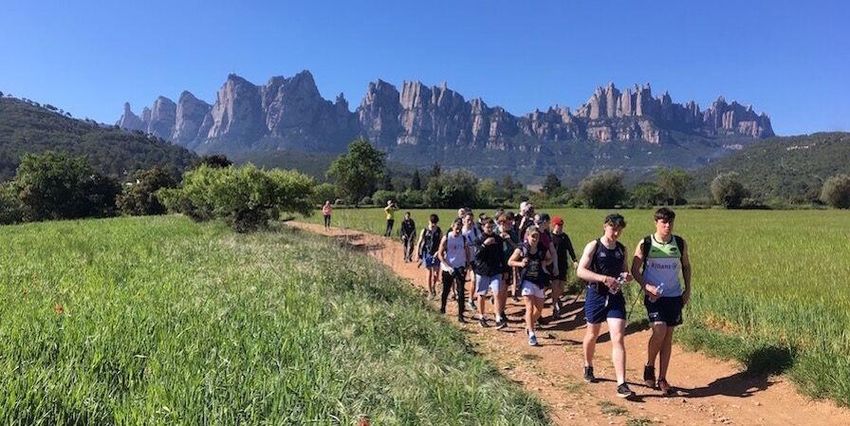
Students will go on a residential outdoor education trip for three nights in September. This
normally coincides with publication of JC results. Boys will need to return to Clongowes in
August with appropriate clothing and equipment.
Students are timetabled for at least one hour regular study and one hour computer study
most evenings.
Students will spend at least three weeks in addition to normal breaks and vacations away
from Clongowes on work experiences – two one week placements – first week beginning
21st October and second week beginning 30th March and social placement - 1 week
th
beginning 25 November.
If students do not go on the Jesuit Ethos Cultural experience in May they go home to do
work experience or social placement instead.
Students may arrange up to three extra work experience/social placements throughout the
year.
Students and parents who are interested in taking part in our European exchange
programme should read the guidelines for participation and only then apply. No student is
guaranteed a place on our exchange programme and all applicants must be approved for
participation by a selection committee. Please consider carefully whether your son is a
suitable candidate and/or if you are in a position to host an exchange student. Flexibility is
essential.
Families who are restricted in their ability to host an exchange student may wish to arrange
3a private stay abroad for their son. They should apply to the Headmaster for a leave of
absence for the duration.
All students are encouraged to participate in our annual TY charity fundraiser “The Duck
Push” - Approximately 30 students actually push the duck in June. Students apply for this
after Easter.
Clongowes TY Certificate awarded with Distinction, Merit or Pass at TY Graduation
Ceremony.
1.1 Clongowes Wood College Mission Statement
The mission of Clongowes Wood College is to educate its pupils according to the vision of the
Gospel and the best traditions and highest standards of Jesuit schooling, as expressed in The
Characteristics of Jesuit Education.
Clongowes is a Catholic boarding school located in beautiful surroundings twenty miles from
Dublin and draws its pupils from all over Ireland and abroad. It aims to create an open, happy,
stimulating, mutually respectful and supportive community where young people are able to
develop the full range of their talents and academic abilities in a balanced, integrated and
generous way, striving for excellence in all that they do.
It is our conviction that human fulfilment is to be found through faith in Jesus Christ and service of
Ireland and the world in imitation of Him. In partnership with parents, we seek to form pupils who
will strive to develop that faith and to give Christian leadership through the example of their lives
and their commitment to a renewal of the Church and a more just, inclusive and caring society.
The Transition Year will offer students space to learn, mature and develop through a broad variety
of learning experiences inside and outside the classroom.
Teachers of TY in Clongowes are informed by the awareness that we have a responsibility to care
for the individual student, regardless of their competence, aptitude or interest (cura personalis) in
keeping with the principles of Ignatian pedagogy
1.2 Preamble:
It is the policy of the school that all students who attend will take part in the Transition Year
Programme.
The Transition Year Programme aims to promote the personal, social, educational and
vocational development of students and to prepare them for their role as autonomous,
participative and responsible members of society.
There are three broad aims:
Education for maturity with special emphasis on social awareness and
increased social competence.
Education through experience of adult and working life as a basis for
personal development and maturity.
Promotion of general, technical and academic skills with an emphasis
on interdisciplinary and self-directed learning. 41.3 Management Policies
It is school policy:
To adhere to the guidelines issued by the Department of Education and Skills and
to devise a programme consistent with the aims laid down for the Transition Year
To support a Transition Year Committee established to assist the Coordinator in
his/her work
To provide parents of Transition Year students with information about the programme
To provide time within the timetable to enable the Coordinator to do his/her work
To encourage staff to be flexible in their teaching methods, in assessments and
in facilitating the demands and overall aims of the programme
To provide flexible study arrangements conducive with the running of the programme
To provide a learning structure which promotes maturity
To be learning-led rather than exam-led.
To cooperate with all educational partners, especially parents, in providing a
broad and enriching educational experience
To provide experiential learning through such experiences as Work
Experience, Social Work Experience, Social Outreach Programme, Outdoor
Pursuits etc.
To learn through networking with other schools and social agencies
To encourage variety and learning styles
To develop life skills
To enable students to become independent learners
To promote compensatory and remedial education
To use a variety of methods of assessment including oral, aural, and written
exams, project work, unit work, continuous assessment etc.
To provide certification which will be school-based.
To ensure on-going review of the TY programme with a view to improving all aspects
1.4 TY in Clongowes Wood College aims:
To inspire students to become “Men for Others”
to give students opportunities to discover and develop their own individual gifts
and strengths.
To enable students to become more independent.
To allow students to experience a year where the emphasis will be on
individual responsibility.
To enable the nurturing of thinking, caring, articulate and self-confident people.
To provide students with the skills and supports necessary to discover their
individual talents, aptitudes and abilities.
To enable students to understand their own educational needs.
To facilitate the development those skills and competences necessary to cope
successfully with the students particular stage of development.
1.5 Assessment in TY in Clongowes Wood College
It is school policy:
That assessment in TY will adhere to the principles of Assessment For Learning (AFL)
To encourage staff to be flexible in assessments and in facilitating the demands and
overall aims of the programme.
That TY be learning-led rather than exam-led.
5 To use a variety of methods of assessment including oral, aural, and written exams,
project work, unit work, continuous assessment etc.
To provide certification which will be school-based.
1.6 Evaluation of TY in Clongowes Wood College
It is school policy to ensure on-going review of the TY programme with a view to improving all
aspects.
Students complete a written evaluation of their TY at the end of the year. This is collated and
reviewed by the TYC and changes are made where appropriate and practical.
2.1 Peeling the layers of Clongowes Wood College TY Programme
Clongowes devises its own timetabled programme to cater for the needs of its students. This is
done in accordance with the Department of Education & Science guidelines and school and
community resources. The programme is designed and delivered by the Coordinator, core
team and teaching staff in consultation with management. Essentially a Transition Year
programme offers students a broad and balanced curriculum.
1. Calendar Layer
2. Transition Specific Layer
3. Sampling Layer
4. Core subject Layer
2.2 List of subjects and modules.
Clongowes offers the following in 2019-2020:
CALENDAR LAYER
• Work Experience Placements
• Visiting Speakers
• Outdoor Education
• Skills Days & Workshops
• Social Awareness Placement
• TY Ignatian Camino Pilgrimage
6TRANSITION SPECIFIC LAYER
Mini Company Computer Studies
European Studies Social Outreach & Age Action
Chess Life Saving
Philosophy Yoga
Careers Education Cookery
Photography Health Education
Film Studies Development Education
SUBJECT SAMPLING LAYER
• Science (Biology, Chemistry, Physics)
• Latin
• Music
• History
• Geography
• Business Studies (Accountancy, Business Studies, Economics)
CORE SUBJECT LAYER
English Physical Education
Religion Mathematics
Irish French or German
7While overall responsibility for the Transition Year will rest with senior management, the day-to-
day management and co-ordination is carried out by the Transition Year Coordinator.
3.1 Names of Coordinator and Core Team Members
TY Coordinator Mr. Paul Mc Cormack
Coordinator of Work Experience and Social Placements Mr. Noel Murray
Syntax Academic Monitor Ms. Helen Hickson
Lower Line Prefect Mr. Steven Gray
Assistant Lower Line Prefect Mr. John O Donoghue
Coordinator of GAISCE Awards Ms. Patricia Frampton
Pastoral Assistant to the Headmaster Ms. Anne Marie Dolan
Guidance Counsellor Ms. Maria Shaw
Coordinator of French Exchanges Mr. Francis Marron
Coordinator of German Exchanges Mr. Paul Mc Cormack
Coordinator of the Social Outreach Programme Mrs. Anne Marie Dolan
Coordinator of Age Action Mr. Francis Marron
Coordinator of Learning Support & Gaisce Awards Ms. Patricia Frampton
83.2 How the Timetable Works (proposed for 2019-2020)
The proposed weekly structure would comprise of 27 classes of 60 minute duration and 3 classes
of 40 minute duration.
Subject Number of Classes Per Week
English 3
Irish 3
French/German 3
Maths 4
Science 3
Religion 2
Module 1: 2
(Latin/Music/Development Students taking Latin do so for the year, the
Education/European Studies) other 3 subjects for one third of the year
each.
Module 2: 2
(Career Ed./Philosophy/Chess/Geography) Students take each subject for a quarter of
the year each.
Module 3: 2
(Art (Photography) /History/ Film Studies/ Students take each subject for a quarter of
Health Ed.) the year each.
Module 4: 3
(Computers / Business / P.E. ) 1 hour per week for each subject.
Module 5: 2
(Social Outreach/ Mini-Co./Age Action) Students take each subject for a third of
the year each.
TY Co-Ordinator’s Meeting 1
93.3 Main Calendar Features
Key Dates (Draft - to be confirmed in June)
2019
Wednesday 28th August: Term beings for Syntax (arrival by 20.30)
Wednesday 11th September: Junior Certificate Results (TBC)
Tuesday 10th to Friday 13th Sept: Outdoor Education Trip (TBC)
T.Y. Induction Meeting Part Two: Thursday 26th September (Leads into September Break)
Parent Day: To be confirmed
Work Experience One: Monday 21st to Friday 25th October (Leads into Halloween
Break)
Social Awareness Placement: Monday 25th November to Friday 29th November (leads into
December break)
Christmas Concert Sunday 8th
2020
Syntax Retreat: Term 2, Date TBC
Parent Teacher Meeting: Term 2, Date TBC
Work Experience Two: Monday 30th March to Friday 3rd April
(Leads into the Easter Vacation)
TY Ignatian Camino Pilgrimage: April 25th - May 1st TBC (or Work Experience 3 or Social
Awareness Placement 2)
Portfolio Assessment: 18th - 22nd May
Graduation Ceremony Tuesday 26th May
103.4 Work Experience and Social Awareness 2019/2020 KEY DATES (Provisional)
Work Experience One
Input of Data Friday 4th October.
WE Monday 21st – Friday 25th October 2019
Thank You Letter Wednesday 6th November
Report Saturday 9th November
Work Experience Two
Input of Data Friday 13th March
WE Monday 30th March – Friday 3rd April
Thank You Letter Wednesday 22nd April
Report Saturday 25th April
Social Awareness Placement.
Input of Data Friday 8th November
SAP Monday 25th November – Friday 29th November 2019
Thank You Letter Wednesday 4th December
Report Friday 6th December
Other Information
Host families are responsible for exchange students who are here during these weeks
& organise work experience if possible. Exchange students may not stay in Clongowes
during placement weeks.
Students must complete a SAP during the year (Even if student is on exchange in
December) and this should be in their local community. Exceptions may occur in
certain circumstances.
I would encourage students to complete their report the week of their WE/SAP and
not procrastinate until their return to Clongowes.
A cover letter and insurance details will be forwarded to employer 2/3 weeks before
the placement commences. This is determined by how quickly students enter details
on system.
Any questions do not hesitate to contact: nmurray@clongowes.net
Clongowes is happy to facilitate students who wish to take part in additional educational courses,
work experience and social placements outside of the scheduled weeks provided they are fully
engaged in the TY programme in the school while here.
Students should apply by email to the TY Work Experience/Social Placement Coordinator at least two
weeks in advance of any such extra placements. The number of students granted permission for such
extra placements will be limited in any one week in order to minimise disruption to normal classes.
Students should do no more than three extra work experience/social placement weeks.
Clongowes has secured a limited number of placements for TY students to spend a week with the
Fr. Peter McVerry SJ Trust in Dublin. Parents who would like their son to spend a week with the
Trust should email nmurray@clongowes.net indicating same. Please include the words - PMV
Trust Placement - in the subject line. Parents and sons will have to organise their own transport
and accommodation for the week of these placements. Placements will be allocated on a first
come first served basis. Parents will be contacted in due course to confirm dates. Please do not
contact the PMV Trust directly as you will simply be redirected to apply through Clongowes.
Please note that places are limited and usually do not take place during a designated placement
week.
113.5 Assessment & Certification
Assessment
Students are assessed in a variety of ways during TY. These include:
Headmaster's Reports for diligence and attainment every five weeks based on class
work, homework and/or class tests.
Formal Examinations in Core subjects at Christmas and Summer
Written reports on TY Activities, Work Experience & Social Placements.
Presentation of their individual Web-based Portfolio.
End of year interview.
Certification
All of the information from above is collated and a three person committee consisting of the TY
Coordinator, Syntax Academic Year Head and Lower Line prefect meet and decide on the appropriate
level of Certification.
Certificates are awarded to students at three levels
Distinction
Merit
Participation
123.6 Finances
In addition to the normal school fee the following approximate extra charges are foreseen in TY.
Outdoor Ed. Trip September €240
Skills, Workshops, Sep – May, Billed for in September €300
Visiting Speakers,
Buses & Excursions
Ethos Trip (optional) May (full payment for flights €1000
at time of booking)
Cookery Course (optional) €100
Life Saving (optional) TBC
Yoga Classes (optional) €60
Charges for Exchanges (Flights etc.), Orchestra and Rugby trips are not included here.
If in exceptional circumstances parents wish to withdraw their son for Transition Year the following
charges apply in order to retain the student’s place for Poetry.
50% of the annual school fee is payable in June of Grammar year followed by a non-refundable
deposit of the first moiety of Poetry fees in January of Transition Year.
There will be no reduction in fees for students who go on exchange or take a shorter leave of
absence during the year.
3.7 Evaluation
The TY Coordinator in conjunction with teachers, students and management regularly evaluate the
efficacy of the Transition Year modules, subjects, activities and events and discuss any necessary
changes. At the end of each year the TY Core team meets to discuss any recommendations or
changes that may be appropriate.
Students complete a written evaluation of their TY at the end of the year. This is collated and
reviewed by the Transition Year Coordinator and changes are made where appropriate and
practical. See Student Evaluation Form.
133.8 About the Award:
Gaisce - the President’s Award is Ireland’s National Challenge Award, the country’s most prestigious
and respected individual award programme, and a challenge from the President of Ireland, to young
people between 15 and 25 years of age. Gaisce is a member of the International Award Association of
National Challenge Awards Worldwide.
How does it work?
There are three different types of award that students can earn – bronze, silver and gold.
Transition Year students will initially work towards the Bronze Award.
How to earn an award?
There are 4 different challenge areas. To earn an award, students will need to participate in each
of the 4 challenge areas. Our 4 challenge areas and time commitments:
1. Community Involvement- 1 hour a week for a total of 13 weeks.
2. Personal Skill- 1 hour a week for a total of 13 weeks.
3. Physical Recreation- 1 hour a week for a total of 13 weeks.
4. Adventure Journey- Undertake a 2 day, 1 night adventure journey in a group.
Additional Time- Each participant must choose one challenge area to complete for an additional
13 weeks, resulting in 26 weeks of participation in one category.
Example:
In the example below, the participant uses the additional hours in the Physical Recreation
challenge.
Community Involvement:
Transition Year Social Outreach with
K.A.R.E. Total 13 weeks
PersonalSkill:
Piano
Total 13 weeks
Physical Recreation:
Rugby and further training (Athletic Club, running, etc.)
13 weeks plus an additional 13 weeks.
Total 26 weeks
Upon completion, participants will be presented with their Bronze Gaisce Award at the TY
graduation ceremony in May
15
13
133.9.1 Integrity of the Programme
Special Requests/Absences Throughout the Year
Each year we publish a school calendar of breaks and vacations together with other important
dates in the life of the school. We circulate this well ahead of the start of the year.
.
Each year, too, we appeal to parents to respect this calendar and not to arrange family holidays
during school time. There is always a temptation to take boys out of school at other times and this
may mean some boys being absent during exam periods, at times of special events, at times of
group projects, and, especially, at the beginning and end of the various terms. This can be a
temptation for all parents and I appeal to you not to succumb to the temptation during this year.
I am aware that many parents consider that Transition Year provides a suitable opportunity for
boys to go abroad to learn a language. The school does its best to provide exchanges for as many
boys as possible – if they are deemed suitable candidates for an exchange. But because no such
year exists within the French or German school programme, Clongowes is dependent on the good
will of its partner schools to agree to share in the organisation of exchanges and our numbers are
limited accordingly.
Parents sometimes ask about private arrangements for France/Germany. So, if you wish to make a
private arrangement for your son, and give notice well in advance of your intentions, it may be
possible for the school to give permission for this provided it doesn't conflict with the Transition
Year programme and projects for the period in question and provided that your son is considered to
be a suitable candidate for such an arrangement. Clearly, no arrangements should be made nor
commitments entered into until permission has been obtained.
However, if sufficient notice is not given, or if there is conflict with the school programme, then
permission may not be given. This may not be a popular decision with everyone, but it is vital to
maintain the integrity of the Transition Year programme not alone for each individual pupil but for
the year as a whole. If very large numbers are absent it will affect the quality and continuity of
teaching and the programme itself and ultimately may not serve either our students or the
incoming German and French students well.
3.9.2 Frequently Asked Questions
What is Transition Year?
A one year programme taken after the Junior Certificate and before the Leaving Certificate
Programme.
What’s the purpose of the Transition Year Programme?
To promote maturity:
Maturity in studies by making students more self-directed learners through the
development of general, technical and academic skills
Maturity in relation to work and careers by developing work-related skills
Personal maturity by providing opportunities to develop communication skills, self-
confidence and a sense of responsibility
Social maturity by developing greater ‘people’ skills and more awareness of the world
outside school
15
14
14Who decides on the Transition Year Programme?
Each school devises its own TY programme. The teaching staff draws up a programme in the light
of the Transition Year Guidelines and the Resource Material published by the Department of
Education and Science. They also consider students’ needs, parents’ views, employers and the
wider interests of the local community. Each year the programme should be evaluated, with inputs
from all these parties, and revised by the teaching staff.
What subjects are studied?
This varies from school to school but in every school students follow a timetable as they do in other
years. Most programmes work towards getting a balance between some continuation of essential
core subjects, a tasting and sampling of other subjects, a variety of distinctive courses designed to
broaden students’ horizons and some modules and activities specifically aimed at promoting the
maturity that is central to the whole Transition Year ideal.
Even if all these programmes are different, surely there are some features common to the
programme in a lot of schools?
Many schools offer modules, short courses on particular topics. Most schools offer a work
experience programme. Mini-company, where students set up and operate a real business, is a
popular way of learning. The use of visiting speakers as well as trips beyond the classroom is
features of many programmes. Project work, where students undertake independent research,
usually more extensive than traditional ‘homework’, is also common to many programmes.
What about exams?
Assessment is a key part of any worthwhile learning programme. Transition Year is an opportunity
to move beyond the narrow focus of end-of-year, written exams. The emphasis is on varied and on-
going assessment with students themselves becoming involved in diagnosing their own learning
strengths and weaknesses. Project work, portfolio work and exhibitions of students’ work are also
encouraged. Each individual school makes its own arrangements for reporting to parents and for
the certifications of students who complete a TY programme.
Can the Transition Year be part of a three-year Leaving Certificate programme?
The Transition Year programme is a school-designed, distinctive programme and should not
constitute year one of a three-year Leaving Certificate. TY is part of the Senior Cycle experience
and lays a solid foundation for Leaving Certificate studies. TY programmes should challenge
students intellectually, give them an orientation to the world of work and cater for the development
of their personal and social awareness. The exploration of any Leaving Certificate material should
be in a way that is original and stimulating and significantly different from the approach taken
during a two-year Leaving Certificate programme.
Is Transition Year available to all students?
TY is compulsory for all students in Clongowes.
Is Transition Year suited to all students?
With its emphasis on development and maturity, all young people can benefit from the programme.
Transition Year, in particular, can allow for the development of an individual’s multiple
intelligences-linguistic, logico-mathematical, spatial, musical, bodily-kinesthetic, interpersonal,
intrapersonal and naturalist. The Transition Year programme can also develop key skills for the
21st century such as the threeTs: thinking, teamwork andtechnology.
16
15How are parents involved?
Parents’ understanding of and support for student learning in TY is a key factor in a successful
Transition Year experience. Some parents make their particular expertise available to the school
during the TYP. Parents should encourage their sons and daughters to avail of the numerous
opportunities offered by this unique programme.
3.9.3 Parent Experience of Transition Year
I remember driving up the M6 to the TY information afternoon with a sense of dread. This was
spring 2013 and our two sons, Donnchadh and Richard, were about to embark on TY one after the
other. I anticipated massive hassle trying to organise work experience, social placements and
exchanges. It also appeared to me to be a very expensive form of personal enrichment. Two years
later, I look back and realise I was wrong. I now find myself a total enthusiast for this absolutely
brilliant experience. It has promoted independence, organisational and social skills, friendships
and language enhancement. Moreover, it has really broadened the boys’ minds. The work
experience has helped them focus on what they might like to do later in life and more importantly,
on what they don’t.
After digesting the information booklet, I panicked and fired off five letters to several big
corporations, pretending to be Donnchadh. (Yes, I know the boys are supposed to organise things
for themselves…sorry Mr McCormack!) Not one response. Not even one. It really dawned on me
then the importance of finding an enthusiastic, genuine and welcoming environment, given this is
the first interaction the boys would have with the open workforce. I then spoke to some friends-
parents from the class- and together we managed to come up with some really good ideas of our
own. We also sourced a couple of programmes which were already up and running. When the year
began the boys seemed to travel in packs between different homes and cities, sampling lots of
different experiences. Donnchadh wanted to check out law, business and healthcare. The Director
of Public Prosecutions run a programme during which students visit different courts each day,
shadowing solicitors who kindly impart details of the proceedings. Other highlights were 3 great
days at AERCAP, an aircraft leasing company, and 4 days at the SIMMED School in University
College Hospital, Galway.
Having investigated the TY medical courses early on we found them extremely difficult to access.
So, with the help of an amazing and enthusiastic colleague, Dr Dara Byrne, we decided to set one
up ourselves. In April 2014, we hosted 25 TY students from the West of Ireland who had written to
the hospital seeking a placement. The programme centred on simulations of real clinical situations
using SIMMAN, a robot who can do a lot of what we can. The students worked in teams to save his
life in different scenarios. They learned to suture, insert IV drips, administer IV medications, insert
urinary catheters and even plastered each other’s limbs, amongst lots of other activities. It was a
massively rewarding experience for all the kind volunteers involved and of course super for the
students.
By the time the following year started I felt like a TY pro and was totally shameless about asking
friends and acquaintances for help. Richard has spent a week at OPENNET- a systems solutions
company and at Beechwood Partners learning about business, marketing and accountancy. Purdy
Fitzgerald Solicitors instructed him to invest in a suit and proceeded to give him an amazing
experience in employment law, augmented by McLynn Solicitors who hosted him in the courts. He
spent last week at a TY marketing and social media programme run by Stein Study on Camden
Street, just Richard and seven girls! My advice regarding work experience is to speak to other
parents early, approach your friends and keep an eye out for dedicated TY programmes. Do not
panic because in the end the boys seem to end up doing more than the required two weeks as
things evolve along the way. There is a small dedicated group of teachers and prefects in the
school
16with responsibility for the programme, led by Mr McCormack. We have found them to be highly
supportive, flexible, informative and very receptive to suggestions.
The social programme run by Fr Peter McVerry was superb for the social placement week and if
the views the boys adopted there about drugs persist we will be doing well. Others went to nursing
homes, hospices, special needs schools and animal shelters.
Both boys went to Gaesdonck in Germany for the autumn term. Once notified of the available dates
by Mr McCormack, it was all pretty straightforward. It was a rewarding experience in terms of
independence and acquiring language skills. We took weekend breaks to Amsterdam and Berlin
when they were there which were wonderful family experiences, bringing the grandparents with us
on one trip. We hosted a German boy also and have established lovely acquaintances in his
parents.
The work experience, social placement and exchanges are the areas we had to pay most attention
to. After that the school really do the rest. There are so many opportunities including lifesaving,
cookery, photography, guest speakers, tasters of subjects for leaving cert, social outreach, The
European Youth Parliament, brilliant workshops, yoga, driving in Mondello Park, the amazing
Eastern European Experience amongst so much more.
And then there is the portfolio. The boys are required to record all their experiences as they go
along on their individual online portfolio and are then examined on it in what effectively mimics a
job interview at the end of the year. We had to nag the boys to keep these up to date, as we are free
to view them using the Clongowes passwords. Despite the occasional friction and various threats
around these, they are really proud of them and they provide a brilliant and often entertaining
record of their year for us all into the future.
The penultimate event of the year was a dignified and fun graduation ceremony in the Boys Chapel,
a really heart-warming event. All the boys were rewarded for their efforts which was lovely to see.
In early June, after a year of fundraising, a large group headed off on the Duck Push, a not-to-be
missed event, for so many reasons.
I understand the parents association is starting a buddy system for TY parents. I so look forward to
boring one or two of you even more about this fantastic opportunity.
Elizabeth Walsh
3.9.4 How Parents can help and support their son in Transition Year
Encourage your son to make the most of the Transition Year programme. It really is a year
from which the benefits accrued directly relate to the effort put into it. Keep in touch with
what is current.
Demonstrate as much interest in your child's daily educational activities as you would when
he is following a Junior Certificate or Leaving Certificate programme.
If you do not understand the rationale behind any TY activity the school organises, ask the
TY Co-ordinator, or any of the support team.
Familiarise yourself with all the 'extra' and optional opportunities the school plans to
provide during the year. Students may only convey what they are interested in to their
parents and many valuable opportunities may be overlooked. Sometimes parents only
discover what was on offer at the end of the year!
17 Acclimatise yourself to having a student who will not necessarily have traditional
'homework'. Transition Year opens doors to 'other ways of learning'. The TY student will
tend to have other forms of homework. He may have projects to complete questionnaires
and surveys to conduct or oral presentations to prepare. Should your son report that he has
little or no work to do, do contact the Academic Year Head.
Please continue to develop good levels of communication with your son’s prefect.
Every effort should be made to ensure that your son is well motivated and has a positive
attitude towards the programme.
If you have an area of interest e.g. Local Politics or an expertise e.g. Interview skills, or
willing to give or organise a talk or workshop consider offering your services to the TY
Coordinator.
Call 045 868202
Email: pmccormack@clongowes.net
3.9.5 What every Student should know about Transition Year
The Transition Year will offer students space to learn, mature and develop.
The Department of Education and Science encourages us to design our own Transition Year
Programme to meet the needs of our students.
Students will be offered a broad variety of learning experiences inside and outside the
classroom.
Throughout TY, your teachers are encouraged to promote activity-based learning, research
skills and self-directed learning.
Transition Year, like each other year of a six-year cycle through second-level schooling, has
its own unique contribution to make to each students development and education.
Students are encouraged to see TY as providing opportunities to discover personal
strengths and to develop their potential. Thinking in terms of ‘multiple intelligences’ –
linguistic, logico-mathematical, spatial, musical, bodily-kinesthetic, interpersonal,
intrapersonal and naturalist – can be helpful in this regard.
In addition to traditional style homework, TY students are also asked to undertake projects,
assignments, interviews, research and other demanding tasks.
The Transition Year programme will assist young people to connect with adult and working
life through the provision of work experience and career guidance.
While TY presents opportunities to learn without the pressure of external examinations,
assessment is an essential part of every TY programme. We will be assessing our students
using varied forms of assessment such as written, practical, oral and aural, portfolios ,
reports, project displays, exhibitions of work, and personal journals
Each year every we will evaluate how well we have run the TY programme. Listening to
student opinions is an important part of such evaluations.
18Please give serious consideration to the pros and cons of the exchange programme for your son
before making any decision and familiarise yourselves fully with this document.
Consider
• Is a language exchange your son’s priority for TY?
• Going on exchange means hosting an exchange partner for a similar length of time.
• Can you host an exchange student over breaks and long weekends?
• When can you not host an exchange?
• What dates suit your circumstances best?
• If you live abroad, what arrangements can be put in place for hosting an exchange partner?
• Will your son have commitments to sports teams or other activities?
• What plans has your son for work experience and social placement?
1. Pre-Application Stage:
Before you agree to allow your son's name to go forward for selection, the following obligations
need to be noted by both parents and sons:
1.1 Speaking the foreign language
It is important that your son be prepared to enter into the spirit of the exchange and attempt to
speak the language of that country consistently. You need to be confident that your son will avoid
speaking English to students in the host school or to other Clongowes students who are on
exchange. The more he speaks the language, the more he will learn, the more he learns, the more
he will enjoy himself.
1.2 Care of Exchange Partner
Your son's exchange partner should be regarded as a 'substitute son' during his stay in Ireland and
the following outlines some of the care to be provided.
You will:
meet him when he arrives at the airport and bring him to Clongowes at the appropriate
time.
provide and organise clean and comfortable bedding for his time while boarding at
Clongowes and make arrangements for his laundry.
ensure that in the case of exchanges of a duration of one month or less that the exchange
partner is brought out most week-ends (Friday to Sunday evening) and for longer
exchanges that the exchange partner is brought out on as many Sundays as possible and
typical calendar breaks. Encourage your exchange partner to ring you regularly from
Clongowes to arrange pick-up times etc.
be responsible for him during all school breaks and holidays during his stay, as you would
for your own son.
if your exchange partner is here during a time when Transition Year students are out of
College on Work Experience Placement or Social Awareness Placement, make
arrangements for him to have an appropriate placement and to accommodate him in your
home during that time.
In general make him feel part of the family and he should have a sense of being welcome
19and at home with you. It should go without saying, that your son would be welcomed in a
similar manner by his host family.
Costs, see 1.4 below.
There is an expectation of students who have accepted an exchange place, to give
assistance in the care of other exchange partners in Clongowes before or after their own
period on exchange.
Not all Clongowes families are in a position to host an exchange partner for a variety of
reasons. We would be very grateful to hear from families who are in a position to host more
than one student so that a Clongowes student would be able to participate in our exchange
programmes.
1.3 Your son's behaviour while on exchange
You are advised to discuss expectations in this area directly with your exchange family. Our
exchange students must abide by the rules of the home. You should also be aware of different
attitudes in your son's host family e.g. attitudes to drinking habits and curfew times and
permission to be away from home for activities etc. Very often attitudes can be stricter or more
relaxed in this regard especially concerning drinking.
In Germany for example, the legal age for the purchase and consumption of beer and wine is
sixteen. Some schools have a bar or “Partykeller” which may be opened on two evenings a week.
Students aged sixteen and over are allowed to drink two beers on such evenings. Spirits are strictly
forbidden. If a student is suspected of having consumed too much alcohol they may be
breathalysed by school authorities. Failure to comply with the rules while abroad may lead to a
student being sent home.
If your son is chosen, he will be representing Clongowes as an ambassador abroad and the normal
school standards should govern behaviour in every situation while on exchange. It would be very
helpful if you discussed with your son the standards you would expect of him while he is abroad, as
a representative of his family and school. Also be aware that your son will need to plan his
recreation time carefully (in Germany the school day can finish at 1pm.) and endeavour to make the
most of this opportunity. Another matter you may wish to discuss is that of religious observance,
especially Mass and advise your exchange family of your requests.
1.4 Costs
Host families should pay for all school related expenses. Transfers between countries are covered
by respective families.
It is appropriate to also pay for outings e.g. cinema trips, days out with friends (treats), admissions
e.g. museum entrance and transport (buses) to activities outside of school time.
Exchange partners are expected to pay for any personal or luxury items which are incurred using
his own pocket money. You are advised to make this clear when communicating with your partner
family. It is understood that this arrangement is reciprocated abroad.
2. Application Stage:
If you are sure you are willing to commit to the conditions and responsibilities for participation in
the French or German exchange programme, please return a completed application form
(available on the college website) to Mr. Paul Mc Cormack, Transition Year Coordinator, Clongowes
Wood College, by Friday May 3rd 2019
20You may decide to make a late application in September, when you have more clarity about your
sons plans for TY. It is likely that we will have students in similar circumstances in our partner
schools and we will do our best to match suitable candidates up with exchange partners. If this is
the case please register your interest in an exchange via email to Mr. Paul McCormack as soon as
possible.
Please Note: In submitting an application form you are indicating your approval of your son's
candidacy for consideration as a possible participant in the exchange programme and you are
accepting the conditions of the different responsibilities that will be undertaken on your and his
part. An application for a place on exchange is a commitment to hosting a French or German
student provided your son is approved for participation by the selection committee.
3. Selection Process:
Following receipt of completed application forms the selection of students for possible exchange
places will begin. Every effort will be made to do this during the third term of Grammar year. Each
applicant will be considered by the Selection Committee (see below) for approval (or otherwise), for
participation in the exchange programme. The Selection Committee will recommend to the
Headmaster a final list of students who are deemed approved candidates for the exchange
programme.
3.1.Selection Committee
This is comprised of the Transition Year & German Exchange Coordinator-Mr. Paul Mc Cormack,
Assistant Headmaster-Mr. Martin Wallace, French Exchange Coordinator-Mr. Francis Marron,
Academic Monitor-Ms. Helen Hickson, Lower Line Prefect-Mr. Steven Gray, Grammar Prefect-Mr.
Gary Corcoran and Grammar Academic Year Head-Mr. Killian O’Domhnaill.
3.2. Criteria
Boys will be considered on their merits in terms of:
basic ability in the target language.
general application to studies (in particular the student's diligence mark in HM Reports).
evidence of maturity for his age.
taking responsibility for his own actions.
evidence of reliability to perform in line with expectations.
good behaviour and worthiness to represent Clongowes and their family and country
abroad.
suitability to the particular school offering the exchange.
4. Post Acceptance Stage:
Those students selected will be informed as soon as possible. Mr. Marron and Mr.
McCormack will contact partner schools in an effort to find suitable exchange partners.
Following acceptance, you will need to wait for Clongowes to supply each family with the
relevant addresses, telephone numbers and additional information. Please note that it may
not be possible to do this for all students until well into TY.
It is advisable, and well worth the effort, to make contact with the exchange family, as soon
as possible, even if there are language difficulties in doing this. Should you experience any
difficulties with this first contact please contact appropriate coordinator, Mr. Paul
McCormack (German) and Mr. Francis Marron (French).
Normally, when a group are travelling together, one of the Clongowes parents is asked to
act as contact person to arrange travel arrangements and the booking of flights, departure
/arrival dates and times etc. This has been very helpful in the past.
21If for any reason a Clongowes student decides not to go on exchange, having already made a
commitment to an exchange partner, that student and his family must still host the exchange
partner for his planned time in Clongowes.
5. Requirements for Students Prior to Departure:
Students will before departure:
complete and submit all coursework consistent with relevant deadlines and the T.Y.P.
establish with class teachers any coursework requirements to be completed while on
exchange.
honour all commitments to any responsibilities and activities undertaken in the T.Y.
ensure that all text and reference books are in good order, for use by your exchange
partner.
prepare a class timetable for your exchange partner for the period on exchange. The
prepared
timetable must be clear with each detail matching your own current timetable. Specific
names (not option numbers), teacher's names and classroom numbers must be included.
These timetables should be returned to the relevant exchange coordinator who will
distribute them to their exchange partner on arrival. There is an expectation of students
who have accepted an exchange place, to give assistance in the care of other exchange
partners before or after their own period on exchange.
6. Items To Bring With You
Cash and Bankcard
Student I.D. Card
Passport (organise safe keeping)
European Health Insurance Card (EHIC)
An “Irish” present for your exchange family (guideline
€25) Clothes – time of year?, cold mornings
Formal dress or appropriate dress for formal school/family occasions
Airports: Check with airline the conditions for an U16 travelling on their own (if applicable), also if
baggage on return journey is overweight, cash for extra charge will be needed.
7. Report by Host School of Students on Exchange:
Each participating exchange-school will be sent a report form for completion regarding students
while on exchange. This is primarily to provide a testimonial from the school that the relevant
student has spent a period of time in their country and followed classes and participated in school-
life through the medium of a foreign language.
8. Consideration of Private Arrangements for Leave of Absence
The College does its best to provide opportunity for as many students as possible to participate in
the Exchange Programme. But because no such year exists within the other European Schools'
programmes, Clongowes is dependent on the good will of its partner-schools to agree to share in
the organisation of exchanges and our numbers are limited accordingly. Where we experience
difficulty in identifying sufficient partner-schools, or for exceptional reasons, the College will
consider applications for private arrangements. So if parents wish to arrange an exchange/leave of
absence for their son and make an application well in advance of their intentions, it may be
22possible to give permission for the request provided it does not conflict with the Transition Year
Programme and that your son is considered a suitable candidate for exchange (see section 3.
above).
An application should be made in writing to the headmaster at the earliest opportunity. Parents
will remain responsible for Clongowes fees in all privately arranged leave of absences. There will
be no reduction in fees for students who go on exchange or take a leave of absence for part of the
year.
Clearly, no arrangements should be made or commitments entered into until permission has been
obtained from the Headmaster and arrangements are made with the finance office regarding the
payment of fees. We reserve the right to approve or refuse permission for such arrangements. You
may appreciate that the absence of too many Clongowes students or the presence of too many
foreign students may adversely affect the running of the Transition Year Programme.
Other opportunities such as HOPE trip to Kolkata, exchanges with Riverview College Sydney,
Fordham Prep New York etc., may arise and parents will be informed as information becomes
available.
The Clongowes “Duck Push” has been running since 1993 when a group of Transition Year
students from Clongowes decided to do something different to help other young people.
They decided to raise money by pushing a large Duck on wheels across the country, appealing for
sponsorship and collecting in the towns and villages along the way.
A number of child focused charities such as Childline have been helped with funds raised during
that time but for most of the projects lifetime funds have been directed to Our Lady's Children’s
Hospital in Crumlin.
In recent years a piece of equipment has been purchased for the Hospital after consultation each
September and presented by the boys.
So far over €1.7m has been raised since 1993.
While around thirty boys take part in the actual push over eight days from Crumlin to Limerick, the
whole year group helps with the annual project, also raising funds through mini companies and
collection days.
Boys are involved with every aspect of the organisation of the Duck Push from contacting sponsors
to liaising with local media; from running mini companies to contacting host schools such as
Cistercian College Roscrea and Glenstal Abbey School along the route.
The project is a way for boys to further live the “men for others” ideal and fosters cooperation and
leadership within the year group.
We look forward to many more years of Clongowes' Duck Push!
23You can also read


