TRENDS & IMPETUS - DB Cargo AG
←
→
Page content transcription
If your browser does not render page correctly, please read the page content below
01/19

The customer magazine of DB Cargo

                                           FOCUS

                  TRENDS &
                   IMPETUS
                     Entire industry sectors in upheaval, climate change
                    as a key topic and the perennial issue of digitalisation.
                            Ceaseless change remains an ongoing
                          challenge for the logistics industry as well.

                                              Page 08
EDITOR IAL                                                      01 / 19

     Editorial

     Dear Readers,

     The economy is in the midst of changes spanning
     all industries around the globe. Tried-and-tested
     structures are unravelling, while entire industry
     sectors are experiencing tectonic shifts. This state
     of affairs continually presents us with new challenges
     as a transport and logistics company, and we will
     continue to tackle them with vigour in 2019.
     Experienced professionals and experts at DB Cargo
     explain what lies in store for us and what changes
     we will need to respond to. Climate protection will
     remain one of our biggest tasks. This is why we have
     joined the Rail Freight Forward Coalition, an associa-
     tion of European freight operating companies that
     started the unique art project known as Noah’s Train
     at the climate conference in Katowice, Poland.

     The title page of our current issue of railways features
     a picture of the project for your enjoyment. On this
     two-page spread, you can see the second of four
     motifs which DB Cargo contributed to this work of art.

     In an interview with Dr. Roland Bosch, you will learn
     about why this project is so critical and how DB Cargo
     is positioned to take on other challenges in 2019.

     I hope you enjoy our magazine.

     Sincerely,

     Thorsten Meffert
     Vice President Marketing, DB Cargo AG

02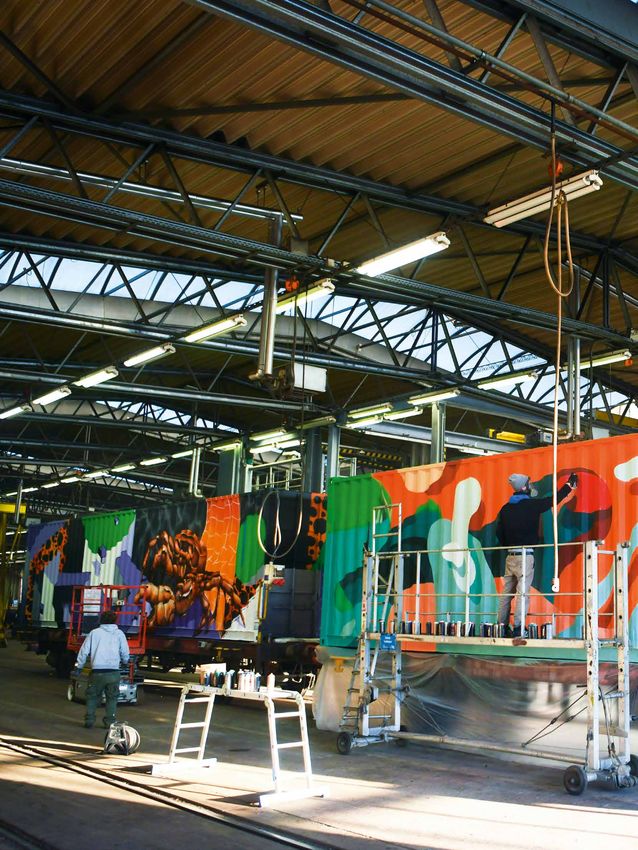
01 / 19                 EDITOR IAL

 _ The German
wagons of Noah’s
Train were painted
with strikingly
colourful graffiti in
Berlin.

                               03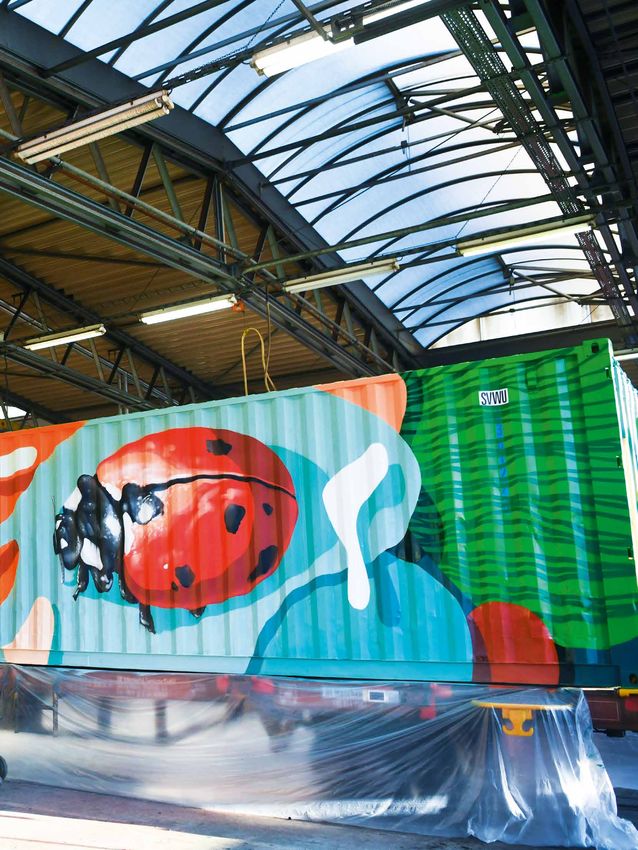
CONTENTS                                                                                                   01 / 19

                     FO C U S

02                   08                                              22
Editorial            High-speed transformation                       Economic trend N° 1
                     Experts take stock of current challenges in     The steel industry is on a stable course,
04                   the logistics industry.                         thanks to a strong partner.
Contents
                     18                                              26
                     Interview: Dr. Roland Bosch                     Economic trend N° 2
06
                     DB Cargo’s CEO on the challenges and            The automotive industry, including its
News
                     opportunities that lie in store for Europe’s    logistics, is in a state of flux.
                     largest freight operating company.

               _ Safety first: the
            maintenance depot in
             Cologne-Gremberg.

                                                     _ Dr. Roland
                                                   Bosch explains
                                                 how DB Cargo is
                                              positioned for 2019.

04
01 / 19 CONTENTS
_ The digitalisa-
tion of rail freight
transport is making
DB Cargo more
appealing to its staff.
C U S TO M E R S & M A R K E T S I N N OVAT IO N S & S O LU T IO N S
28 42 52
Economic trend N° 3 Steel recycling gets a lift from rail New wagons are rolling well
The coal industry is in the midst of upheaval With DB Cargo’s help, Derichebourg is New Shimmns-ttu special wagons for
and heading in new directions, especially making the raw materials cycle more aluminium coils weighing several tonnes.
internationally. sustainable.
54
32 46 Exclusive fleet
Economic trend N° 4 More sustainability and efficiency The TiRex20 rack system pumps up load
Digitalisation: increased quality and A clever reloading concept for Stora Enso volumes for log transport.
transparency thanks to digital trans prevents empty runs.
formation. 56
50 The freight wagon doctors will see
36 The environmentally friendly way you now
Economic trend N° 5 to Sweden The Cologne-Gremberg maintenance depot
Combined transport: cross-modal solutions Supplier AC Floby transports 60,000 tonnes ensures safety on the rails.
lock in growth. of automotive parts by rail.
58
39 Just what is the job of ...
Economic trend N° 6 ... a mobile maintenance team?
Sustainability: on the way to fully
carbon-free transport. 59
Looking ahead and publishing
details
NEWSLETTER Our customer magazine won
a gold at the FOX AWARDS
Visit our website and in the “Transport and Logis-
subscribe to our newsletter: tics: external communication”
www.dbcargo.com/newsletteranmeldung category.
05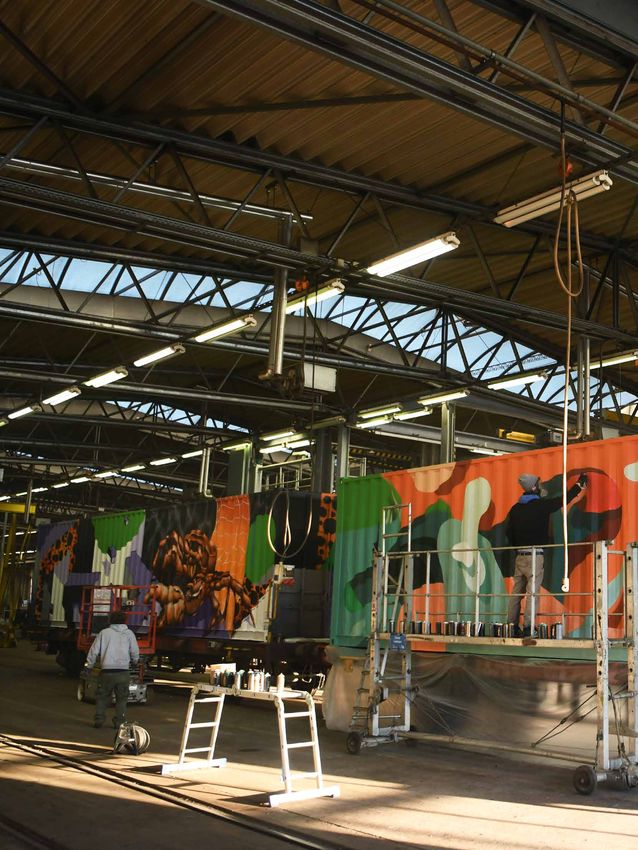
NEWS                                                                                                                   01 / 19

                  R E A D E R S U RV E Y
R A ILWAYS NEWS

                  Abundant praise for revamped
                  railways
                  We’re delighted! We reached out to you in the last edition of railways,
                  dear readers, to ask for your opinions, because we had given our customer
                  magazine a thorough overhaul a little more than a year ago. We’ve now
                  analysed the survey findings, and the results have us feeling like we made
                  the right decision.

                  83% of participants gave the new railways a rating of “good” or “very
                  good”. 75% rated the relevance of the topics as “good” or “very good”.
                  With regard to ease of navigation, our magazine scored a rating of “good”
                  or “very good” from 91% of respondents. Two-thirds of respondents were
                  satisfied with the scope of the magazine and its articles. When asked
                  to rate the likelihood that they would recommend the magazine to
                  colleagues or people they knew, all participants rated the likelihood as
                  70% or higher.

                  Were there also some critical comments or suggestions? Of course there
                  were! Some of those surveyed found that figures and statistics were
                  sometimes arranged in a manner that was confusing and somewhat dis-
                  ruptive to the flow of the text. Readers also expressed the desire for arti-
                  cles on improvements and processes at DB Cargo. We will be glad to take
                  up these suggestions.

                  The 25 winners of our raffle have already received their DB Cargo power
                  banks. Congratulations! №

                                                  GERMANY – NEW LOGISTICS EXPERTS

                                                  DB Cargo’s Management
                                                  Board team is becoming
                                                  more international
                  Two international logistics experts are joining         Staszek, originally from Poland, succeeds Michael
                  DB Cargo’s management team. Pierre Timmer-              Anslinger, who will assume other responsibilities in
                  mans, 57, (pictured at left) will assume Raimund        the
                  Stüer’s position as the Board Member for Sales and      DB Group. Staszek brings to the table 25 years
                  Marketing. Mr Stüer has already left the Group.         of experience in rail freight transport. He has been
                  Mr. Timmermans, who hails from the Netherlands,         a member of the Management Board of DB Cargo
                  has more than 20 years of expertise and railway         Polska since 2010, initially having served as Board
                  experience under his belt, having served as CEO         Member for Finance & Controlling and, since 2014,
                  of Czech rail freight logistics company AWT, as         as CEO. Previously, Staszek held positions which
                  head of the container port group of PSA Interna-        included CFO at PCC Rail S.A. and CEO at PTKiGK
                  tional – based in Singapore – and as CEO of Danish      in Rybnik. Both of these are Polish companies now
                  transport company formerly known as Frans Maas          belonging to Deutsche Bahn.
                  (now DSV).
                                                                          In the next edition of railways, you’ll have an oppor-
                  On 1 February, Marek Staszek, 49, assumed his           tunity to learn more about both new members of the
                  new position as Board Member for Production.            Board of Managing Directors. №

  06
01 / 19 NEWS
Berlin
Brussels 24 January 2019
20 February 2019 _ Noah’s train was
Katowice decorated with
14 December large-scale graffiti
2018 on its tour through
Vienna major European
cities.
Paris 14 January 2019
5 February 2019
E U RO P E – N OA H ’ S T R A I N
Railway art raises
awareness for more
_ DB Cargo CEO
climate protection
Dr. Roland Bosch A spectacular campaign is drawing to a close. On 20 February
(pictured at left)
and Alexander Doll 2019, Noah’s Train will reach its destination in Brussels, wrap-
of Deutsche Bahn’s ping up its tour through Europe. But this is only the beginning.
Management Board This is because the freight train with the strikingly designed
sign Noah’s Train. wagons symbolises the start of something big.
Over the next 11 years, a coalition of 18 railways and logistics
associations aims to boost the market share of rail freight
transport from 18%, where it currently stands, to 30%. That
increase would make a substantial contribution toward meeting
the goals of the Paris climate agreement.
Transporting goods by train in particular has great potential.
The specific energy consumption of rail transport is six times
lower than that of road transport. That difference is significant
when considering the environmental impact, especially because
most trains are powered by electricity. According to one of the
coalition’s central demands, this difference should be conside
red in future cost calculations. Currently, calculations such as
these still favour lorry transport.
The coalition is also asking regulatory authorities to step up in
a different way. Authorities are being requested to remove
obstacles that currently make cross-border freight transport by
rail considerably more complicated than road transport on the
same routes. Additionally, the coalition is calling upon the rail
freight sector itself to provide even more services superior to
those provided by lorries. №
Visit https://railfreightforward.eu for more information.
07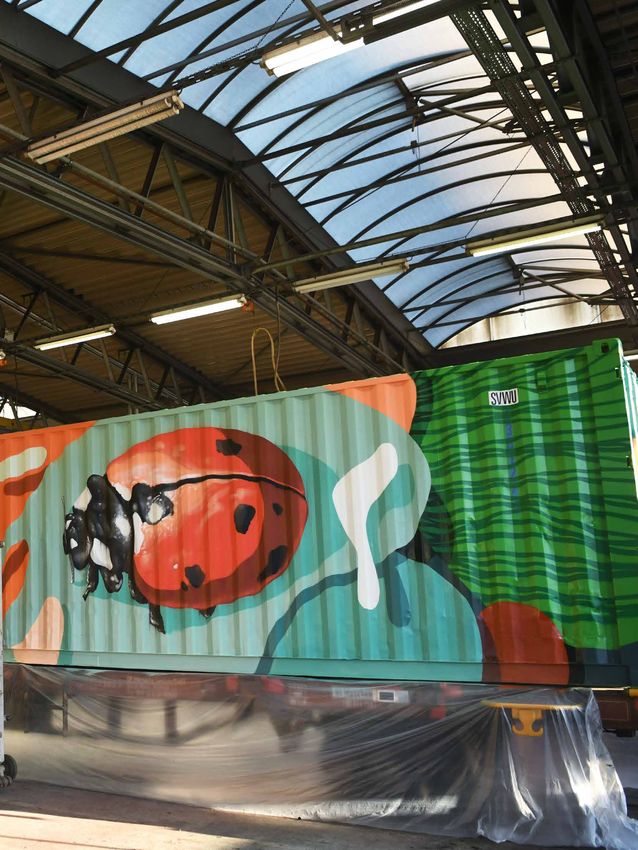
FO C U S     01 / 19

  High-speed
transformation

8
08
01 / 19                                                         FO C U S

  Digital transformation, climate change, dwindling resources
        and political uncertainty – the logistics industry
       is subject to constant change. Nevertheless, it has
     strong prospects of once more outpacing the growth
                of the broader economy in 2019.

                                                                    09
                                                                     9
01 / 19
H
owever, the indus
try first has several
hurdles to clear.
It did post strong
figures in 2017,
and there was
decent growth in
2018, as well. “The German economy
is experiencing a solid upturn despite
protectionist trends in the global eco
nomy”, said the German Federal
Ministry for Economic Affairs at the
close of the third quarter of 2018. Still,
the mood has taken a sombre turn.
Many firms, forced to plan today for
the impending changes of tomorrow,
have been rattled. As service provi
ders, it is a particularly thorny task
for logistics companies to anticipate
future developments without running
off the economic rails by setting the
wrong targets and making the wrong
investments.
“The German
economy is expe-
riencing a solid
upturn despite
protectionist
trends in the
global economy.”
THE GERMAN FEDERAL MINISTRY
FOR ECONOMIC AFFAIRS AND ENERGY
at the end of the third quarter of 2018
1001 / 19 FO C U S
Political uncertainty and the
spectre of trade conflicts have tem
pered the prospects for growth. These
factors combine with trends that
impact economic performance – the
imperative to increase sustainability,
demographic change, digital transfor
mation and the modernisation of infra
structure. When viewed as issues to be
addressed in the medium-term, these “The uncertain future of the
areas of concern make it clear that the
industry faces some whopping chal
global economic order and
lenges down the road. demographic change
have thrown up major obstacles
Demographic change: Defined as the
for the German economy.”
change in the structure of a country’s popu- CHRISTOPH M. SCHMIDT
lation. Birth and death rates, migration Chairman of the council of experts
and age distribution are key figures for
determining the structure of a population.
Three figures related to demographic
change and the shortage of skilled
workers
30–45% Projected increase in the propor-
tion of people over 67 as part of the total
“We are therefore facing important will fall off, translating into less traffic.
working population by 2034.
economic policy decisions.” At the same time, however, it predicts
The joint diagnosis delivered by that freight transport will neverthe
1/3
five German economic institutes to less experience powerful growth in
Projected decline in labour force by 2060
Germany’s Federal Ministry of Eco revenue (2.3%) and transport service
(as many as 16 million people), if Germany
nomic Affairs and Energy was only (3.1%). This can be attributed to rising
were to prohibit immigration.
marginally more optimistic: “On aver construction investments, production
age, following growth of 1.7% in 2018, of main construction trades and indus
352 of 801 Number of job categories
economic output may expand at rates trial production.
currently facing staff shortages.
of 1.9% in 2019 and 1.8% in 2020”,
according to the prognosis of Septem Growth
ber 2018. Roland Döhrn, chief eco
nomic forecaster of the RWI-Leibniz The industry, however, is about far
Institute for Economic Research, con more than just freight transport – it
Economic outlook for 2019 curs: “The German economy’s upward is Germany’s third-largest economic
swing is losing momentum. Interna sector, with more than 3 million
We begin by presenting several unvar tional demand has slackened, and at employees and revenue of EUR 267 bil
nished figures from analysts. The the same time it is apparent that com lion in 2017. The “Logistikweisen”
council of experts advising the German panies are increasingly encountering (German for logistics sages), a group of
government and dedicated to assessing problems finding enough employees well-regarded experts hailing from
macroeconomic developments pre for their production.” In 2019, freight various industries and sectors, exami
dicts the real gross domestic product transport is also likely to see large ned the industry’s prospects. Accor
(GDP) growth rate will increase by gains. The German Federal Office for ding to the results the committee
1.6% in 2018 and 1.5% in 2019. “The Goods Transport prepares a “rolling published in autumn of 2018, “growth
uncertain future of the global eco medium-term forecast for freight and of 1.7% by euros is forecast for 2019”.
nomic order and demographic change passenger transport” for the German In the following year, this figure is
have thrown up major obstacles for the government. Its current forecast states expected to climb to as much as 2.2%.
German economy”, said the council of that crude steel production will hold However, the Logistikweisen have
expert’s chairman Christoph M. steady, crude oil consumption will an important statement to make:
Schmidt in November 2018. remain nearly static and sales of coal Some of the growth consists of
11FO C U S 01 / 19
more tonnage, but most of it is ing locomotive drivers and wagon
attributable to higher prices. Logistics inspectors, as well as planners and dis
services are therefore becoming more patchers in production. In addition,
expensive. the age distribution among current
employees will exacerbate this short
Trends age in the coming years. “The effects of
demographic change are now hitting
But what is driving the logistics indus with full force. During my talks with
try in 2019? What are the major issues logistics managers, the shortage of
that consignors and service providers skilled staff was always something
will have to grapple with this year and looming on the horizon. Now it’s affec
in years to come? “There are two major ting everyone”, says Professor Stölzle.
bottlenecks: the shortage of skilled
workers and the development of capa Infrastructure
city on the road”, says Wolfgang Stöl
zle, professor for logistics management Moreover, there is a limiting factor
at the Institute for Supply Chain that the Logistikweisen have named
Management of the University of very clearly: “The requisite replace
St. Gallen in Switzerland. Stölzle, who ment or repair of road and rail infra
is also a member of the Logistikweisen structure will give rise to numerous
group, is bullish about 2019. However, construction sites, some of which will
“there’s a prevailing impression that a be in existence for too long. Also, the
long-lasting cyclical peak could slowly foundation for smart traffic manage
come to an end. On both sides of the ment is lacking. Furthermore, the
equation, the logistics industry bene infrastructure system is still dilapi
fits disproportionately from economic dated. That leads to losses in effi
shifts”. ciency, longer timelines and rising
costs in logistics”.
For example, nearly half of all high
way bridges were built between 1965
61%
and 1975. Today, they need to be at
least thoroughly overhauled or rebuilt,
as determined by the German Eco
nomic Institute back in 2017. The
number of infrastructure deficiencies
of companies consider staff short- on waterways is even more striking.
ages to already be a risk today. Approximately 600 locks and weirs
have reached an average age of 70 and
65 years, respectively. These old
facilities are often rendered unavail
able, and they are too small for today’s
Skilled employees ships.
The situation on the tracks is simi
The logistics industry is running out of lar: Nearly 10,000 railway bridges date
skilled employees, which is constrai back to before World War I. Today, the
ning transport capacity even today. railway bridges in Germany have an
Without the train drivers, transport average age of approximately 56 years.
service providers, dispatchers and There is a great need for renovation
lorry drivers they need, increasingly here, too. The German government
complex supply chains will no longer wants to extend political support to
be able to function. There are too few the railways by expanding the rail
employees in all of these professions. network. Twenty-nine additional rail
Estimates indicate a current shortage projects have been designated as “first
of up to 45,000 lorry drivers. Railway priority”. Twenty-two projects invol
companies also lack skilled employees. ving new construction and upgrades,
DB Cargo, for example, hired more six upgrade projects for railway junc
than 1,800 new employees in 2018. tions and measures for the use of
They will become train drivers, shunt 740-metre-long trains have been
1201 / 19 FO C U S
assigned the highest level of urgency. by important main trade partners and
“We are putting additional rail projects international logistics providers. They
on the track, which are a real win for ranked Germany number one in the
the entire rail network and the regions. category of “quality of trade and trans
They are a means for us to eliminate port infrastructure”.
bottlenecks, create more capacity
and provide infrastructure for the
Germany-wide integrated regular-
interval timetable”, said Andreas
Scheuer, the German Federal Minister
of Transport. A large amount of money
Germany-wide integrated regu-
lar-interval timetable: Coordinated,
“Trade is
is now being invested in modernising regular-interval train timetable for all of changing rapidly;
the infrastructure. However, many
brick and mortar
Germany, encompassing regional service,
construction projects take years to main traffic arteries and everything in
complete, and many projects are
currently making infrastructure even
between. The Germany-wide integrated
regular-interval timetable is grounded in
commerce has
less usable than it was before at an
inopportune time.
the German government’s 2018 coalition
agreement and will benefit freight trans-
continued to
“There is no possible way for infra port, e.g. through special tracks and open up and
structure to keep pace with traffic
growth. That applies to all areas of
targeted infrastructure expansion.
expand multi-
transport”, said Professor Stölzle of the
University of St. Gallen. “So far, the
Objectives of the future alliance for rail
• Expand capacity:
channel sales.”
age-old demand that economic growth Investment of billions of euros in electrifi-
MARTIN SCHWEMMER
be decoupled from growth in transport cation, network and technology (ETCS)
Fraunhofer working group
has not been met. On the contrary, the for Supply Chain Services, Nuremberg
economy is becoming more and more • Strengthen competitiveness:
transport intensive”. Improved rules for awarding paths and
However, an international compa pricing, as well as interoperability for
rison is worth noting in this context. networked service rates
2018 marks the third consecutive year
the World Bank has placed Germany at • Reduce noise pollution: Martin Schwemmer from the Fraun
the top of its list of 160 countries on Introduce noise abatements on tracks hofer working group for Supply Chain
the Logistics Performance Index. The and use quieter trains to make Deutsche Services SCS in Nuremberg. Last
rating takes into account assessments Bahn a good neighbour to everyone November, the working group
presented the latest top-100 study of
• Promote digitalisation, automation logistics in 2018 and 2019. “Trade is
and innovation: changing rapidly; brick and mortar
Self-driving rail vehicles and electric commerce has continued to open up
mobility (e.g. fuel cell technology) and expand multi-channel sales”, says
“We are putting Schwemmer. “Many logistics provi
additional ders are now clearly seeing the need to
invest.” Consignments are shrinking,
rail projects on E-commerce is changing the entire
which makes flexibility in particular
the key to success.
the track, which logistics industry “It is entirely possible that rail will
be able to capture a share of value
are a real win At the same time, flows of goods in added”, says Schwemmer. This mode
for the entire rail Germany are changing. Supply
chains are growing longer in response
of transport, especially combined trans
port, has a great deal of potential. How
network and the to a boom in e-commerce. The number
of services offered for storage, order
ever, Deutsche Bahn needs to offer the
flexibility and the slots that mesh with
regions.” picking, transport, delivery and, distributors’ systems.
in some cases, payment for products Additionally, many freight for
ANDREAS SCHEUER is increasing. “Companies in full- warders have not yet had any experi
German Federal Minister of Transport container-load transport, less-than- ence with rail. This means that com
container-load transport and combined panies like DB Cargo need to make
transport are also growing”, says their product portfolios easier to
1301 / 19
PLATFORM VS.
access and offer customers the abil
ity to transport small amounts of cargo
LOGISTICS
more simply.
A trend toward more sustainability
PROVIDERS Cargo bikes, electric vehicles, artificial
Dr Steffen Wagner is a partner and Head __Dr. Steffen intelligence for planning routes and
_ Dr Steffen
of Transport & Leisure at KPMG Wirtschafts- Wagner .... the perfectly planned use of various
Wagner, KPMG
prüfungsgesellschaft. He has worked in the Wirtschaftsprü- modes of transport are examples of
areas of transport, services and infrastruc- fungsgesellschaft how seriously logistics providers are
ture since 1997. taking the matter of making supply
chains more environmentally friendly.
Sustainability will continue to be a hot
At the logistics Congress held in Berlin last October, German topic in 2019. “We see it as a relevant
Minister for Economy Affairs Peter Altmaier appealed to trend”, says Martin Schwemmer.
German industry to create worldwide platforms for logistics. “However, there’s no intrinsic motiva
Are platforms like these actually an important symbol for an tion for sustainability; instead, it is
entire industry’s digital revolution? external forces such as political regula
tions or customers calling for it”. He
DR STEFFEN WAGNER _ Platforms do indeed carry the potential to says that logistics providers in particu
upend traditional business models. For instance, some platforms are lar, including express service provid
not just marketplaces for transport services; instead, they take things ers, are closer to end-customers and
one step further, for instance by offering a plethora of additional feel more pressure to put their sustain
services related to land transport. In the past, a consignor would call ability efforts on display. Schwem
a freight forwarder and arrange an appropriate service package. mer’s view is that the need for sustain
Today, some of the same services are available on platforms.
However, for that to be an option, transport solution providers
must be able to put a price tag on their services in real time. This is
a very tough nut to crack for small and medium-size businesses since
quite often their processes are simply not transparent enough in
digital terms.
What does that mean for logistics companies?
SW _ We have to consider that freight volumes will continue to
undergo structural changes in the coming years. Shipments will
become smaller and smaller and will require more flexible solutions.
“Even today,
At the same time, freight space will be limited; there is also the
shortage of drivers, rising diesel prices, road toll hikes and upcoming
digitalisation is
investments in new drive systems. All of these factors drive costs leading to greater
higher. One consequence will be more pronounced consolidation
on the provider market. Another will be increased insourcing by con- transparency;
signors, which depend on reliability, at least for planning services.
after all, we have
What does that mean today? much more
SW _ My view is that small logistics service providers have three knowledge about
basic options. They can sell their business or consolidate it into a
larger unit, step up their cooperation with a major consignor (for our supply chains
example, by way of a manner of insourcing) or integrate themselves
into platforms which are relevant for them, provided they have the
today than we did
informational basis to do so. Simply put, the critical question for previously.”
logistics service providers is whether and how they will succeed in
maintaining the increasingly elusive customer interface. The big logis- WOLFGANG STÖLZLE
tics providers built their own platforms a long time ago to ensure this Professor for logistics management
interface was in place. It will be exciting to see in a few years which
of them have prevailed on the market.
1401 / 19 FO C U S
which are rail’s most formidable com
petitor, have to bear the burdens of
Picking: The act of removing a steeper road tolls and a potential
product from a storage unit in a upsurge in fuel prices. The social
warehouse to fill an order. aspect of sustainability is increasingly
taking centre stage as well. In light of
METHODS OF PICKING: the shortage of skilled employees, it is
1. Picking with a pick list essential to make the company attrac
• The warehouse location, item tive to both existing and future
number and quantity are written employees.
on the pick list
Digital transformation reigns
2. Pick-by-scan supreme
• A mobile data recording device,
which can be hand-held or Finally, we come to the digital trans
mounted on a forklift, contains formation. It is predicted that digitali
the detailed picking order sation will provide technology to solve
many problems at once. Automation
3. Pick-by-voice and artificial intelligence (AI) are
• A mobile data recording device helping to overcome the shortage of
is controlled by voice (micro- skilled staff. AI and data analytics,
phone), and the order is transmit- together with long lorries, platooning,
ted via audio, usually over longer trains and self-driving vehicles,
headphones help ensure that the limited infrastruc
ture is used efficiently, thereby boost
4. Pick-by-light ing sustainability. This is certainly one
• In the warehouse, light signals factor which prompted Germany’s
directly indicate which items and Federal Minister of the Economy,
quantities need to be removed for Peter Altmaier, while addressing the
a given order BVL-Logistics Congress in Berlin last
October, to appeal to companies to
5. Pick-by-vision take charge of the digitalisation pro
• Displayed in the picker’s visual cess and advance the construction
field using smart glasses
• Integrated directional guidance
optimises the paths travelled
• System can be controlled using
voice recognition Platooning: A system currently in
development for road transport in
which multiple vehicles employ control
system technology to drive in close
proximity to each other with no adverse
impact on traffic safety.
able transport solutions is an
enormous opportunity for companies In a pilot phase, columns of DB Schenker
in rail freight transport in particular to lorries were tested in scheduled service
increase their share of the modal split, over several months in real street traffic
because the efficient and electrified on German highway A9 between
nature of rail transport mean it pro Munich and Nuremberg. Since the end
duces fewer emissions than lorries, for of September 2018, the lorries have
instance. However, competitive costs made up to three trips on the 145 km
are the pivotal factor. So far, sustain route on typical logistics days. For the
able supply chains have had to make first time, there were no test drivers
financial sense”, explains Schwemmer. behind the wheel; instead, they had
Railway companies’ hand is strength professional lorry drivers from
ened because they are sheltered from DB Schenker at the helm.
some costs, such as track access
charges. Lorries, on the other hand,
15FO C U S 01 / 19
of digital platforms (see interview picking. “This also fuels a lot of uncer under high pressure to perform, the
with Steffen Wagner on page 14). tainty”, says Schwemmer. Many com capacity for innovation is understand
“Even today, digitalisation is lea panies are waiting it out because they ably tight.
ding to greater transparency; after all, are under a great deal of cost pressure.” Digitalisation is already a difficult
we have much more knowledge about Digital projects are not being initiated field for the logistics industry itself,
our supply chains today than we did until their business cases make finan and there are other uncertainties
previously”, says Professor Stölzle. cial sense. influencing the economy on a funda
The result is that many companies, mental level. Will automation bring
armed with digital services, are now Decision time is now about growth around the world? How
forcing their way onto the market. will climate change impact global
However, many standards are still not The path to becoming a digital com approaches to manufacturing? And
in place, says Martin Schwemmer. pany is treacherous, however. The who is in a position to find good
According to Schwemmer, the range of transformation has to take place while answers to these questions today? №
digital tools used today is very broad, operations are ongoing. When all
from 3D printing, localisation and tour systems are running around the clock,
planning to smart glasses used for 365 days a year, and all employees are
INDUSTRIES IN TRANSITION
On the following pages, we will show you what issues
are at play in the various branches of the industry in
Created by Gregor Cresnar
from the Noun Project
Germany, Europe and the rest of the world. We will 3.68 15.33 76.54
Germany EU World
also share with you the changes to which logistics
2018 gross domestic product (GDP)
companies will ultimately have to adapt. (in EUR trillion)
42.4 168.1 1,808 5.65 22 73.5 175.1 490.1 7,730
Created by sahua d
from the Noun Project
Germany EU World Germany EU World Germany EU World
Steel production in 2018 Automobile production in 2017 Coal extraction in 2017
(crude steel, in million t) (in million pc.) (in million t)
pp. 22–25 pp. 26–27 pp. 28–31
Created by Ralf Schmitzer
from the Noun Project
15.3 23.5
Created by BomSymbols
from the Noun Project
28.6 15.1 776 0.905 3.5 36.15
Germany Norway South Korea Germany World Germany EU World
Internet connection speed Container transshipment in 2017 CO2 emissions in 2017
(in Mbit/s) (in million TEU) (in billion t)
pp. 32–35 pp. 36–38 pp. 39–41
1601 / 19 FO C U S
17FO C U S 01 / 19
_ The physicist and
doctor of economics has
been at the helm of
DB Cargo for a year.01 / 19 FO C U S
AN INTERVIEW WITH DR. ROLAND BOSCH
What to
expect in 2019
Megatrends in logistics: opportunities and challenges for
Europe’s largest freight operating company. CEO Dr. Roland Bosch (47)
explains how DB Cargo has prepared itself for 2019 and beyond.
Dr. Bosch, it has been a year since “The global eco Board Member for Sales, and Marek
you took over the helm of DB Cargo.
How would you sum up your time as nomy is growing, Staszek, our new Board Member for
Production, are not only experts in the
CEO so far?
and along with it, industry but also bring international
experience with them. There is no
D R . RO L A N D B O S C H _ I made a the logistics mar- shortage of opportunities for rail
freight in Germany and on European
deliberate decision to take on the role a
year ago, and I still enjoy my job. There ket. That is the corridors, and we want to do a better
are a wide range of challenges, but we
have already had some success. We most important job of tapping into this potential. I am
looking forward to working with our
took a big step when we transitioned
our entire production system to the
trend for us.” new team.
new end-to-end approach last year, and Looking ahead, what will DB Cargo
production is much more stable on the focus on in 2019?
whole than it was a year ago. What I
love to see most is when customers and RB _ We are focusing on quality and
employees report on progress we have DB Cargo announced at the end of growth, and that’s not going to change.
made. That lets me know that we’re on last year that it would reorganise its We want to start growing again and
the right track. Certain customers are Management Board. expand our leading position in Euro
already more satisfied with our ser pean rail freight transport in 2019. To
vices. We have a difficult road ahead of RB _ Yes, the reasons for the reorgan do that, we need to offer high-quality
us at DB Cargo, but rail freight has isation were twofold. On the one hand, products and services that appeal to
tremendous potential, and because it it was in response to Raimund Stüer’s customers. And that requires invest
lowers CO2 emissions, it also plays an departure and Michael Anslinger’s ment in our locomotives and wagons,
important role in climate protection – move to another part of the DB Group. supported by measures that will
one of the most important sociopoliti On the other hand, it gave us the strengthen automation and digitalisa
cal issues, which ultimately affects all chance to take on a more European tion. Our entire fleet of freight wagons
of us. focus. Pierre Timmermans, our new is already equipped with smart
19FO C U S 01 / 19
_ Two things are at
the very top of
Roland Bosch’s
agenda in 2019:
quality and growth.
sensor technology for automotive “DB Cargo underscore our commitment to pro
transport. There is also a lot of poten
tial in digital fleet management and hired 1,800 tecting the climate and to gain support
for shifting more traffic to rail. The
predictive maintenance. We are con
stantly modernising our fleet and are
new employees freight train stopped in Berlin, Paris
and Brussels on its tour.
procuring more multi-system electric
locomotives for international services
in 2018.”
How is DB Cargo responding to fac-
as well as replacing old diesel locomo tors that companies have little
tives with hybrid and bi-mode models. influence over, such as the decline
On the staffing side, we are continuing in heavy industry, global production
the largest recruitment and training and decentralisation?
programme in the history of DB Cargo,
which is crucial. R B _ We are addressing the changes
initiative along with other companies caused by the decline in heavy indus
Looking at market developments, to increase rail’s share of all freight try by taking steps such as offering
what is the most important trend? transport in Europe from 18% to 30% multimodal transport solutions and
by 2030. To drum up attention for the expanding links between Europe and
R B _ That’s easy. Freight transport initiative, we sent Noah’s Train, the China. Our European network gives us
by truck, rail and ship is expected to world’s longest mobile work of art, on a a strategic competitive advantage,
grow 30% in Germany alone by 2030. journey through Europe at the end of which we need to build on. It allows us
And we want to make big gains in our the Katowice climate summit in to easily serve plants in Eastern
share of the modal split. DB Cargo has December 2018. The purpose of the Europe for our automotive customers.
launched the Rail Freight Forward train, named after Noah’s Ark, is to Further afield, we are taking advan
tage of China’s considerable growth
potential and stepping up our involve
ment along the New Silk Road.
DBeco neutral DBeco plus Germany is continuing to move
away from coal, in part for sustaina-
bility reasons, yet the steel and
DB Cargo compensates for CO2 emissions DBeco plus makes it possible to transport automotive industries are booming.
on all routes by buying climate protection cargo entirely CO2 -free in Germany and How will you manage these two
certificates. The money from the certifi- Austria. Electricity from renewable opposing trends?
cates is used to support sustainable sources is used for traction. Customers
projects around the world and promote receive a certificate of their CO2 savings.
the expansion of renewable energy, which R B _ We’re managing by targeting
helps reduce CO2 emissions. our sales efforts and systematically
cultivating the entire market. We’ll
2001 / 19 FO C U S
need to compensate for lost transport recruit at a high level in future. Our DR. ROLAND BOSCH
in one area with new orders in the course is set for growth, even though
other. The market potential is there. customers haven’t necessarily been
We have business with existing cus- able to directly feel the effects yet.
CV
tomers that has grown 25% in the past Many of our new colleagues are still in
year. We are also shifting to trans training, and the new wagons aren’t 2002: H
ead of strategic planning,
regional strategy and competitor
porting more light goods. More and yet operating with the necessary level analysis at DaimlerChrysler
more companies want sustainable of efficiency.
transport, and we have clearly bene- 2005: Head of finance for DaimlerChrysler
North-East Asia in Beijing
fited from that trend. No mode of DB Cargo wants to be a reliable
transport is more sustainable than partner for its customers. How do 2010: Member of the Management Board
of DB Netz AG responsible for
rail. you intend to convince your custom-
Finance
ers that rail is the way to go?
Policymakers are improving the 2013: Member of the Management Board
of DB Netz AG responsible for
framework for rail freight. How R B _ That’s easy: Our primary objec
Production
would DB Cargo like to participate tive is to deliver. We want to win over
in this forecast growth? customers with our performance and December 2017 to present:
Chairman of the Management
quality, and our colleagues are hard at
Board and CEO of DB Cargo AG
R B _ The German government’s Rail work on that every day. That’s why we
Freight Master Plan sends a clear sig have been asking customers for feed
nal that policymakers want to shift back once a month since 2017 instead
more traffic to environmentally of just once a year. This feedback tells
friendly rail. We’re getting a big boost us in near real time where the hiccups
from the reduction in track access are and where any adjustments need to the DB Cargo team. It is also important
charges for rail freight operators. We be made. We need to beef up our to me that all of our employees know
will be able to funnel these funds into resources so we can reliably meet the what they can do themselves, and that
transport services that are growing high demand to our customers’ full they have the confidence to do get
and also put them towards improving satisfaction. Access to rail is increas things done and make changes.
quality and investing in locomotives ingly digital, which also makes it eas Any decision that benefits our custom
and wagons. ier. And that’s why we’ll be even more ers is a good decision. We will be talk
Ultimately, our customers are the ones involved in Xrail in 2019 and will join ing about how we can reinforce this
who will benefit. The Master Plan will the broker platform for single wagon behaviour at our internal “Manage
also help our international services. load transport. We are working on ment Board on site” dialogue events
We are currently hard at work on our adding more services to our own plat in 2019. №
processes so that we can improve the form, which we have renamed link
speed and reliability of service on 2rail.
pan-European corridors. Our goal is
to move from a freight operating com What about yourself? What do you,
pany with 16 national companies to as Chairman of the Management
one production system with cross- Board and CEO, hope to accomplish
border value chains. with DB Cargo by the end of the
year?
In order to grow, you need enough
staff and assets. Where is DB Cargo R B _ We will have accomplished a lot
right now? if I can call our customers on 31 link2rail
December and they tell me that they
R B _ We want to create a level of are more satisfied with DB Cargo on
resources, both on the locomotive and the whole and with our performance,
wagon side and on the staff side, that or even with our new products and link2rail is the central customer platform
for all DB Cargo digital services.
will allow us to take advantage of mar services. We will have done well if
In addition to the familiar myRailportal
ket opportunities. We began an ambi they say that they were told about solutions, services are being developed
tious hiring and training programme problems in a timely manner and that that transcend customer portal services
back in Summer 2017. We need to con we found good solutions to those prob and will provide our customers with even
tinue the programme and step up our lems. That will prove that the work on better support in digitalising their logis-
tics processes in the future. By using
efforts in 2019 in light of projected our processes and our investment in
modern technology and user-oriented,
growth and demographic change. quality and growth has paid off – and simple access via an app, we enable
DB Cargo hired 1,800 new employees not just in terms of customer satis customer systems to utilise functions.
in 2018, and we want to continue to faction, but in terms of motivating
21FO C U S 01 / 19
1
ECONOMIC TREND
Staying the
course
N° Germany’s steel industry has big challenges
ahead. It has a dependable partner in DB Cargo.
L
ast year was a year full of
challenges for the steel
industry in Germany. The
trade dispute between the
United States and China
continued to threaten global economic
growth, and European manufacturers
and logistics services providers were
hit with the rising cost of CO2 certifi
cates. The industry is also facing the
technological challenge of successfully
STEEL TRANSPORTS BY developing and establishing digital
DB CARGO IN NUMBERS solutions to optimise efficiency along
the entire steel production and logis
Industrial Sales: tics supply chain.
steel transport figures (2017–18) The transformation in the steel “In 2019, we
industry extends to scrap steel recy
cling, too. Scrap steel shipping has expect continued
Tonnage carried (t)
Tonne kilometres
71.2 million
25.708 billion
stagnated in Germany, but the global
market continues to expand. So how
tailwinds for steel
Average transport
should the steel industry as a whole transport by rail,
deal with these trends? And what
distance (km)
Single wagons (t)
361
44%
developments can we expect in steel and the outlook
Block trains (t) 56%
recycling?
for the market is
In Germany (€) 48% Dr. Hilker: “Measures to greatly
increase capacity at DB Cargo.”
generally stable.”
Outside Germany (€) 52%
DR. JÖRG HILKER
No. of freight wagons 37,906 Despite all the challenges the industry Senior Vice President Industrial Sales
No. of freight wagons faced last year, Dr. Jörg Hilker, Senior at DB Cargo
carried (not fleet) 1,127,576 Vice President Industrial Sales at
DB Cargo, has a positive outlook:
2201 / 19 FO C U S
in light of temporary decreases in auto
motive production due to the well-
known approval problems and tariff
debates around the world,” Hilker adds.
Dr. Cosson, BDSV: “2018 was a good
INDUSTRIAL
year for the steel recycling industry.”
SALES
This stable growth also extended to
the steel recycling industry. For better
or worse, the sector is directly depend Industrial Sales
ent on its largest group of customers: transports around
Germany’s steel industry. If Germany’s
steel industry has a cold, then Germa
71.2
ny’s steel recycling companies are sure
to develop pneumonia. Last year was a
good year for the steel recycling indus
try, both in terms of volume and the
price of scrap as a recycling product.
“Like the steel industry, steel million tonnes of steel a year
recycling is at the beginning of the for the steel industry,
value chain,” says Dr. Rainer Cosson, with a large fleet of vehicles
_ Steel is a major
managing director of the Bundes and the expertise of
economic factor: The
vereinigung Deutscher Stahlrecycling- its industry team. Scrap
steel industry employ- und Entsorgungsunternehmen e. V. accounts for around
ees around 96,000 (BDSV), an association of German
people in Germany. steel recycling and disposal compa
8
nies. “That means it is first to be hit
by economic fluctuations, which often
lead to overreactions,” Cosson adds.
“The steel recycling industry has
adjusted to living with erratic spikes
“DB Cargo transported more cargo and plunges, especially in prices.” million tonnes of that
than in the previous year.” Hilker According to Cosson, the fluctuations volume. Industrial Sales
expects the cargo volume to increase in 2018 were relatively mild, although also supplies the steel
further: “We have leased all the suita the first signs of a slowdown in the industry with some
ble freight wagons available on the German economy were starting to be
market since 2017 and have decided to felt at the end of the year.
3
substantially expand the fleet by pro
curing new wagons. Many of the wag Dr. Cosson, BDSV: “Freight opera
ons were delivered in 2018, and we will ting companies have to improve
receive even more in the next two their flexibility and value.”
years.”
The company will also implement a The growing staff shortage and lack of million tonnes of coal and
lasting increase in staff capacity for sufficient infrastructure for cargo
production operations. According to transport are especially challenging
15
Hilker, “The measures we have already for the steel recycling industry.
initiated will give a major boost to “Moreover, the hot summer caused
capacity at DB Cargo starting in 2019.” Germany’s waterways to drop to
Last year was clear proof that the rail extremely low levels, which negatively
system is an absolutely essential part affected inland waterway transport.”
of efforts to make transport structures The industry is cautiously optimistic million tonnes of ore.
in Germany and Europe more environ that the economy as a whole will be
mentally friendly, Hilker says. able to make it through an economic
DB Cargo expects continued tail downturn in 2019, but it is not expect
winds for steel transport by rail in ing a recession: “In the steel recycling
2019, and the outlook for the market is industry, we are preparing for business
generally stable. “That’s the case even to continue to grow at a sufficiently
23FO C U S 01 / 19
satisfactory rate. Steel will c ontinue expects to make a big impact: “All coil
to expand its position as the world’s wagons will be equipped by the end of
most important material.” 2019. For the first time, we will be able
to identify their location and load
Fundamental problems: staff condition in Germany and other coun
shortage and poor transport tries at the touch of a button.” The new
infrastructure control system for the single wagon
load system, which will gradually be
According to the BDSV, the staff short introduced starting in 2020, will also
age and poor transport infrastructure “We are confi- make it possible to provide much bet
are fundamental problems that need to ter information on delivery times and
be solved. “In terms of staffing, the dent the EU will to do so using an automated process.
improvements kick-started by
policymakers in recruiting from out come to realize Transforming the BDSV into a digi-
side the EU could provide some relief.
That’s why we are working hard at the
that deindustriali- tal association where members are
actively involved
BDSV to improve the image of jobs at sation of the
our member companies. Our compa The digital transformation of all steps
nies are part of the environmental European in the steel recycling process is also a
economy. They help protect raw mate
rials and greatly reduce harmful emis economy would high-priority issue at the BDSV,
explains Cosson. “That’s why we
sions.
In terms of transport, we want to
have serious con- launched a digitalisation working
group in 2018 to provide member com
make concrete progress together with sequences for the panies with guidance on all things dig
freight operating companies, espe ital. We’re fully behind the digital
cially DB Cargo. Rail freight has the EU as a whole.” transformation, even within the asso
environmental edge, but it needs to ciation itself. Our agenda for 2019
make considerable improvements in DR. RAINER COSSON includes transforming the BDSV into
Managing Director, BDSV
flexibility and value.” a digital association where members
are even more actively involved. We
Dr. Hilker: “Expensive CO2 certifi- will be creating an intranet for all
cates call for fundamental changes members, which we hope will help us
to steel production and logistics.” represent and advance our members’
interests more effectively.” №
According to Dr. Hilker at DB Cargo, See page 32 for more on digitalisation.
climate change and its impact on logis
tics chains will only increase in future.
Fast and clear-cut decisions will be
needed. “The financial burden of
increasingly expensive CO2 certifi
cates calls for fundamental changes to
steel production and logistics. And rail
will play a vital role. However, arrange
ments need to be made soon since
longer-term preparations are needed if
we are to expand rail’s capacity.”
Focus on process digitalisation
In addition to tackling environmental
challenges, expanding capacity, and
improving quality in 2019, says Hilker,
DB Cargo will also be pressing ahead
with digitalising processes at the
company and improving points of
contact with customers. All freight
Dr. Jörg Hilker,
wagons are being equipped with GPS Senior Vice President Industrial Sales, DB Cargo AG
and other sensor technology, which he joerg.hilker@deutschebahn.com
2401 / 19 FO C U S
_ Around 1.8 billion
tonnes of raw steel are
currently produced
around the world
each year.
25FO C U S 01 / 19
2
ECONOMIC TREND
The automo-
tive industry
N°
is booming
“The world’s population is growing, and more
and more people want to be mobile. For them,
owning their own car is a dream that combines
individual mobility with convenience and social
status.”
T
he global market for auto tics companies’ business. With its ser
mobiles grew 2% in 2018, vice and quality requirements, the
while the European market industry has set standards later
expanded by 1%. It’s no won adopted by other sectors. And logistics
der that Germany industry providers have long been part of
posted a new record in 2018. German automakers’ value added. In Europe,
car manufacturers increased their specialised service providers have
global production to 16.7 million units dedicated networks connecting plants.
in 2018, an all-time high, says Bernhard They supply materials to factories and
Mattes, President of the German Asso transport vehicles from the production
ciation of the Automotive Industry plants to ports and distribution
(VDA). centres around the world.
It is uncertain whether this At the same time, networks must
growth will continue in 2019, how meet ever increasing quality require
ever, and if so, how. “Germany’s auto ments as the variety of models
motive industry is facing a major increases. Automakers have to be
transformation process,” Mattes says. highly flexible to respond to dynamic
“As a driver of technology, Germany’s markets. For transport companies, this
automotive industry is up against par is making it harder and harder to plan
ticular challenges, such as digitalisa capacity utilisation in their networks.
tion, networked and automated driv If the logistics industry is to partici
ing, efficient drive systems and pate in future growth, it therefore
mobility services.” needs to evolve.
The automotive industry sets Helping to shape the industry’s
standards transformation
This transformation will have a major DB Cargo is one of the industry’s most
impact on the logistics sector since the important logistics providers, offering
automotive industry continues to solutions that extend all the way
account for a substantial part of logis into manufacturers’ production
2601 / 19 FO C U S
“When we talk
about a partners-
hip with our
_ DB Cargo trans- customers, we
ports finished vehi-
cles and components know that we
on more than 250
trains a day. have a clear
responsibility.”
JENS NÖLDNER
CEO, DB Cargo Logistics GmbH
plants. Responding to change is gration mean that ever more processes
nothing new for the freight operating are being automated.
company. And the number of components
DB Cargo offers intermodal net isn’t likely to decrease as drive systems gic and collaborative commercial
work solutions in order to design its are automated and electrified. Instead, arrangements are needed in order for
systems to be as efficient and flexible we’ll likely see more parts, especially innovation and investment to make
as possible while also ensuring high electronic components, such as sen financial sense.
quality even if disruption occurs. sors, meaning more goods need to be Yet Nöldner also knows that
It acts as a lead logistics provider and transported. DB Cargo has to deliver, too: “When
one-stop shop for all the necessary we talk about a partnership with our
logistics services. The company has Innovation in the spirit of customers, we know that we have a
also expanded its European network partnership responsibility. We need to wow cus
and achieved growth on multiple tomers – above all, with our services,
corridors thanks to the customer “We need new ideas, more innovation new ideas and efficient solutions.” №
confidence it enjoys. and a high investment capability to be
“As one of the major logistics able to respond to trends like these,”
providers, we are called on to help Nöldner says. That’s why the DB Cargo
shape the automotive industry’s Group is planning to invest on a
transformation process by providing large scale. On the automotive logistics
environmentally friendly logistics side, it is focusing on IT platforms
services,” says Jens Nöldner, CEO to manage complex systems and on
of DB Cargo Logistics GmbH. self-learning algorithms to improve
Take electromobility, a driving force operations planning and dispatching.
of innovation, for example. According Investments will also be made in
to the VDA, the German manufactur updated equipment, vehicle
ers alone want to increase the number compounds and logistics centres.
of models with electric drive systems But these solutions aren’t some
from 30 to more than 100 in the next thing a logistics provider can develop
two years. New drive systems and vehi on its own. “Maintaining a constant
Jens Nöldner,
cle concepts can require new supply dialogue with our customers is vital,” CEO, DB Cargo Logistics GmbH
routes. Greater digitalisation and inte Nöldner says. He believes that strate jens.noeldner@deutschebahn.com
27You can also read


