Tuvalu National Culture Policy Strategic Plan 2018 2024 - Unesco
←
→
Page content transcription
If your browser does not render page correctly, please read the page content below
Tuvalu National Culture Policy
  Strategic Plan 2018 – 2024
Tuvalu National Culture Policy
  Strategic Plan 2018 – 2024

          August 2018
          Published by the Government of Tuvalu
ACKNOWLEDGEMENTS

The Government of Tuvalu extends its deepest appreciation to the many individuals,
community leaders, organisations and institutions who provided valuable
perspectives, ideas and support throughout the process that has given rise to
this policy. The analysis and deliberations were greatly informed by the national
consultations.

Produced by the Ministry for Home Affairs and Rural Development

Government of Tuvalu
Funafuti, July 2018

Front cover image: © Pamela Lysaght
Graphic designer: Yi Shi

SPO/TV/2018/CL/PI/1

             Sustainable
             Development
             Goals

This publication is supported by UNESCO and Rei Foundation.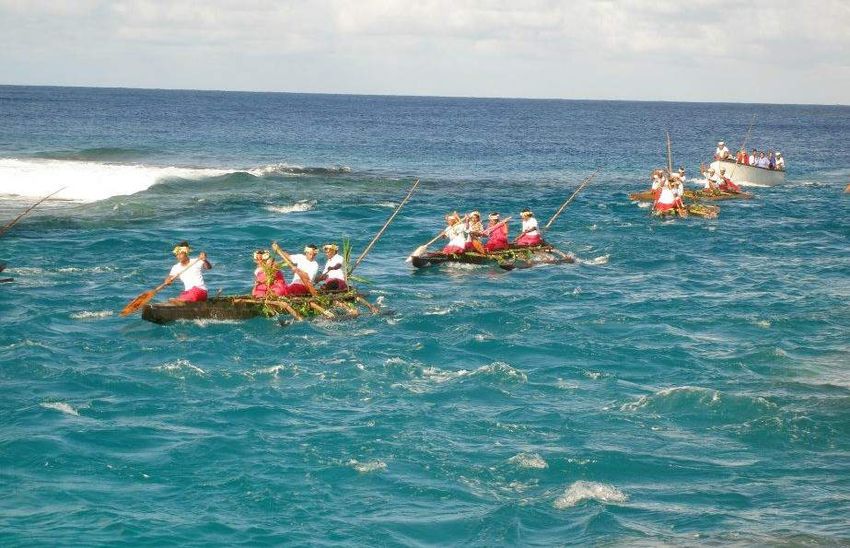
Acronyms
BSP       Blue Shield Pasifika
CBI		     Community-based Intangible Cultural Heritage Inventorying
CCA		     Climate Change Adaptation
CDCC		    Culture Development Coordinating Committee
DoC		     Department of Culture
DRR       Disaster Risk Reduction
FesPAC    Festival of Pacific Arts and Culture
ICH		     Intangible Cultural Heritage
MoE       Ministry of Education
MHARD     Ministry of Home Affairs and Rural Development
PIF       Pacific Islands Forum
RFL		     Rei Foundation Limited
SDGs		    Sustainable Development Goals
SIDS		    Small Island Developing States
SPC       The Pacific Community
SPREP     Secretariat of the Pacific Regional Environmental Programme
PARBICA   Pacific Regional Branch of the International Council of Archive
PIMA      Pacific Islands Museum Association
TCH		     Tangible Cultural Heritage
FTF       Fonotaga a Takitaki o Falekaupule (General Conference of Falekaupule Leaders)
TNCP      Tuvalu National Culture Policy
TNCW      Tuvalu National Council for Women
UCH		     Underwater Cultural Heritage
UNESCO    United Nations Educational, Scientific and Cultural Organisation
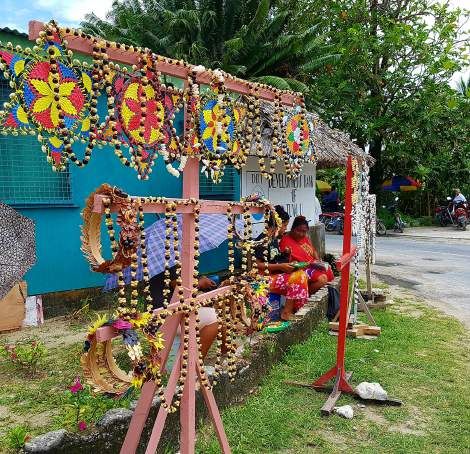
Table of Contents

    Foreword                                 		       1

    Vision                                   		       3

    Mission							 		3

    Introduction                                      4

    Goals							 		9

    Objectives                                         10

    Implementation, Monitoring and Evaluation        18

    Annex: Roadmap 2018-2024                           22

    References                                         28

1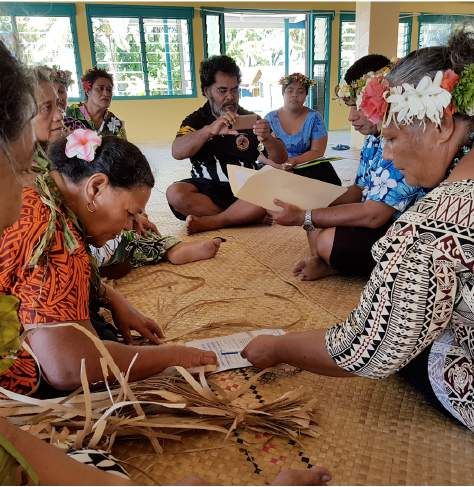
1

Foreword from Minister of Home
Affairs and Rural Development
                      I am pleased to present to you herewith the Tuvalu National Culture
                      Policy: Strategic Plan 2018 – 2024.

                     Tuvalu has a rich and dynamic culture. Culture is a foundation of the
                     identity of the people of Tuvalu. In Tuvalu, when we refer to ‘cul-
                     ture’ we mean our ‘cultural values, norms and traditional practices’.
                     It is our dance and arts, our feastings and renowned welcoming cer-
emonies.   We rarely see culture as it relates to other sectors such as culture and the law;
culture and education; culture and women; culture and environment and the list goes on
and on.

The National Strategy for Sustainable Development (2016-2020) (TK III) provides the
important guidelines on Tuvalu’s sustainable development across different sectors of the
nation. With regard to culture, TK III identifies the need to reinvigorate cultural health and
preservation in the national discussion in the country through the development of a Tuvalu
National Culture Policy (TNCP).

The Tuvalu National Culture Policy (TNCP): Strategic Plan 2018-2024 has been prepared
based on the assessment report “Tuvalu Cultural Mapping, Planning and Policy Report”
published with the assistance of the Pacific Community (SPC) and the following extensive
consultative process in 2016 and 2017 with the assistance of the United Nations Educa-
tional, Scientific and Cultural Organisation (UNESCO).

At regional level, the TNCP upholds the principle of the Framework for Pacific Regional-
ism (2015), stating “We treasure the diversity of the Pacific and seek a future in which its
cultures, traditions and religious beliefs are valued, honoured and developed”.

At the international level, the TNCP reflects the commitment presented in the SAMOA
Pathway of the 3rd International Conference on Small Island Developing States (SIDS),
international normative instruments in culture and other international strategies and plans,
notably, the 2030 Agenda for Sustainable Development 2015 - 2030.

Fakafetai Lasi, Tuvalu mo te Atua

………………………………..
Hon. Namoliki Sualiki Neemia
Minister for the Home Affairs and Rural Development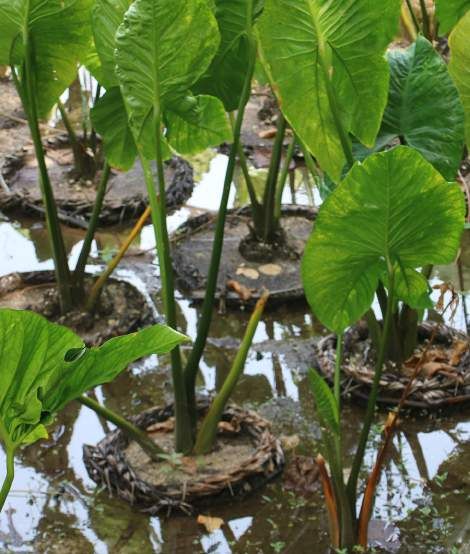
Foreword from Chief Executive
    Officer from Home Affairs and Rural
    Development
                               Talofa, It gives me a great pleasure to release the Tuvalu National
                               Culture Policy (TNCP): Strategic Plan 2018 - 2024. The TNCP
                               was conceived by the concerted effort of staff of the Department of
                               Culture under the Ministry of Home Affairs and Rural Development.
                               The Policy and its strategic plan will promote and safeguard our
                               Tuvaluan cultural heritage and identity in order to generate a sense
                               of place and pride.

    The TNCP has been developed by and for the people of Tuvalu to link our national and
    regional culture strategic plan with the 2030 Agenda for Sustainable Development. Fostering
    creativity is one of the Goals in the Culture Policy, which aims to assist the development
    of arts, creativity, innovation and entrepreneurship, and support the sustainable growth of
    its cultural production and emerging cultural industries.

    We hope that our cultural strategies will make culture as an engine for a meaningful
    development by living in small atoll islands that are suffering from the impacts of climate
    change.

    My sincere gratitude to our bilateral friends from around the globe who are helping Tuvalu
    in terms of funding and technical assistance. We deeply value your support and we look
    forward to continuing our partnership in the near future.

    Fakafetai lasi, Tuvalu mo te Atua

    ..............................................................
    Mr. Iete Avanitele
    Chief Executive Officer
    Ministry of Home Affairs & Rural Development

2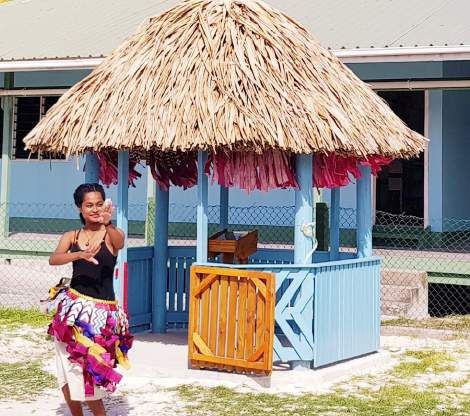
3

         Tuvalu National Culture Policy
           Strategic Plan 2018-2024

                            Vision
   Instilling pride to live and practice the norms, values and
  traditions of our culture to the fullest in pursuance of better
                     sustainable livelihoods .

                           Mission
 Safeguard heritage and foster creativity by capitalising on our
  culture to the fullest in pursuant of sustainable livelihoods,
community well-being and sustainable development of Tuvalu.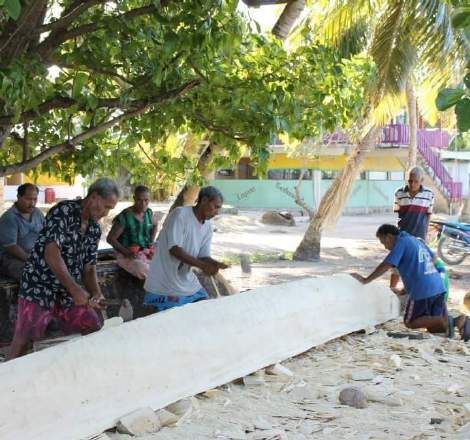
Introduction

4
5

This     introductory    section   highlights       Tuvalu is particularly rich in Intangible Cultural
background information regarding the                Heritage (ICH), also known as “the practices,
development of the Tuvalu National Culture          representations, expressions, knowledge,
Policy (TNCP): Strategic Plan 2018-2024.            skills – as well as the instruments, objectives,
The section has been prepared mainly based on       artefacts and cultural spaces associated
the information in “Tuvalu Cultural Mapping,        therewith – that communities, groups and,
Planning and Policy Report” published by the        in some cases, individuals recognize as part
Pacific Community (SPC) in 2012 and other           of their heritage” (Article 2 of UNESCO
reports and documents made available until          2003 Convention for the Safeguarding of the
now.                                                Intangible Cultural Heritage).

Tuvalu, comprising nine islands (Nanumea,           Examples of this ICH include Fatele
Nanumaga, Niutao, Nui, Vaitupu, Nukufetau,          (Tuvalu traditional performing arts), Alofa
Funafuti, Nukulaelae and Niulakita), is home        (presentation of performing arts and gifts in
to around 10,000 people. The cultures among         the forms of mats and handicrafts to visitors at
these islands are diverse, though they are          the end of welcoming feasts), and traditional
united within the principles enshrined in the       craftsmanship related to, for example, mat
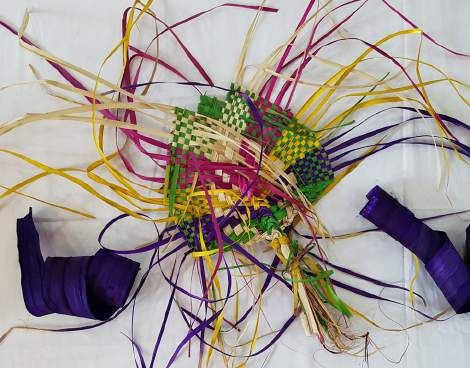
Constitution of Tuvalu.                             weaving, fan making, and shell necklace
                                                    making. Traditional agriculture, such as
Culture in Tuvalu underpins the ability of          Pulaka (giant swamp taro) pits, is a good
the people of Tuvalu to live and thrive in the      example of sustainable farming. In addition,
island environment. Strong community-based          traditional community fishing practices are
cultural values support a traditional safety net,   also important ICH elements that support
even with overseas communities, for resilient       sustainable livelihoods.
communities.
                                                    Tuvalu ratified the UNESCO 2003 Convention
Since its independence in 1978, the                 for the Safeguarding of the Intangible Cultural
government of Tuvalu and the people of              Heritage in May 2017. As a State Party, Tuvalu
Tuvalu have committed to keeping their              has started to establish ICH safeguarding
culture alive. This has been demonstrated           measures, implementing community-based
by the active participation in the Festival of      ICH inventorying activities across its islands.
Pacific Arts and Culture (FesPAC), a regional
festival held every four years since 1972 with
a rotating venue among the different island
states and territories in the Pacific.
With regard to Tangible Cultural Heritage increasingly sought after as gifts for conference
(TCH), several archaeological sites have been delegates and tourists. The Tuvalu National
identified in Tuvalu such as Punatau on Vaitupu Council for Women (TNCW) is the national
Island, the ancient settlement of the people of focal point for the promotion of Tuvalu
Vaitupu. It also contains an important potential handicrafts.
for Underwater Cultural Heritage (UCH) in
the form of shipwrecks, sacred sites linked to Meanwhile, the accelerated expansion of social
its local communities and underwater cultural networks and user generated content are having
landscapes. impacts on the people of Tuvalu as well.
Furthermore, Falekaupule (island meeting The Tuvaluan language is the first and common
halls) have maintained an important socio- language in use with the exception of one island
cultural function for traditional governance and Nui who people commonly use the I-Kiribati
teaching (serving as community culture centers language. Each island has different dialects.
as well), though the physical aspect of their School education is based on the Tuvaluan
timber architecture with thatched roof have on language. The Tuvalu Language Board has
the increase replaced by modern architectural been working on the Tuvalu Dictionary project.
styles.
Facing the formidable challenge of climate
A Tuvalu World Heritage Convention Workshop change impact, the global rise in sea levels,
was held in Funafuti, Tuvalu, in March 2015. and the devastating consequences of extreme
The objective of this Workshop was to generate weather patterns, Tuvalu is at the frontline in
awareness of the importance of heritage advocating for the fight against climate change
preservation and enhancement in Tuvalu. The together with other island nations.
Workshop concluded by recommending that
Tuvalu become a Party to the UNESCO 1972 Currently, there exists the need to protect
Convention concerning the Protection of the Tuvaluan communities and their heritage
World Cultural and Natural Heritage or the through public awareness-raising designed
World Heritage Convention. to demonstrate the significant contribution
The National Archive and Library of Tuvalu that Tuvaluan culture has on sustainable
which safeguard documentary heritage are development and resilience. Additional efforts
located in Funafuti. Tuvalu does not have a are needed to promote its positive value through
National Museum. The Falekaupule (island strengthened cultural production, and culture-
meeting halls) serve as multi-purpose based education and media.
community centers, where Fatele are performed
and handicrafts displayed. The Tuvalu National Culture Policy (TNCP)
2018-2024 aims to provide a strategic
The communities in Tuvalu have actively direction to ensure a more visible and effective
engaged in the cultural production of a variety integration of culture into economic, social and
of handicrafts, such as mats, baskets, fans, environmental development practices, and the
shell necklaces, and costumes for traditional National Strategy for Sustainable Development
performances. These handicrafts are designed (2016-2020) (TK III) and TK IV (2021-2024).
for daily use by the community, but are now
67
Background and Justification - Existing National Scenario on Culture
This subsection provides an illustration of the existing situation relating to culture in Tuvalu. It
commences with the presentation of the legal framework right from the Constitution of Tuvalu to
other legislation relating to culture. Then it describes the references made to culture within the
national policy framework i.e. Kakeega I and Kakeega II. It finishes off with the presentation of
the work of the DoC impressing mainly on the level of funding and technical support for culture
at this point in time.
1) The Constitution and Culture
Culture is enshrined in the Constitution of Tuvalu as one of the three pillars of the Constitution.
The other two include Christian principles and the Rule of Law. Thus the Government of Tuvalu
has a constitutional obligation to support the fostering, strengthening and development of the
Tuvalu culture as shown in the Preamble and Principles quoted below.
AND WHEREAS the people of Tuvalu desire to
constitute themselves as an independent State based on
Christian principles, the Rule of Law, and
Tuvaluan custom and tradition.
Preamble to the Constitution of Tuvalu2) Tuvalu Cultural Council Act, 1991
This Act was passed in 1991 and at present it is defunct. It establishes a Tuvalu Cultural Council
with eleven members Chaired by the Minister responsible for Culture while the Permanent
Secretary for Culture provides the secretariat functions. The main functions of the Tuvalu Cultural
Council were:
• Develop, plan, preserve, strengthen and recommend for approval of the Cabinet a National
Policy on Culture;
• Carry out any other functions as prescribed by the Minister from time to time.
The Act vested upon the Tuvalu Cultural Council the following powers:
• Employ any person deemed appropriate to advise and undertake duties in order to fulfill the
mandate of the Council;
• Appoint a Standing Committee to advise and perform tasks in support of the work of the
Council;
• Accept and keep accounts of money received from the Tuvalu annual National Budget as well
as money received from donors in support of the development of culture;
• Allocate money received for culture in accordance with the established priorities.
3) Falekaupule Act, 1997
Although the Falekaupule Act is a milestone formulated based on the Tuvalu culture in which the
‘power’ was returned to the rightful owners i.e. Chiefs and Elders from the elected councillors,
its focus as far as culture is concerned is limited only to governance. There is still a large gap
within the Act which has not accounted for the many elements of the Tuvalu culture that requires
preservation by law and thus either the Falekaupule or Tuvalu Cultural Council Acts could continue
to be reviewed and amended accordingly or consideration be given to formulating a new Act
altogether for culture.
Section 12 of the Falekaupule Act made reference to culture and hereby quoted: ‘c’ expand,
strengthen and protect by law the making of Tuvalu handicrafts plus other cultural resources.‘d’
preserve and protect Falekaupule traditions and prohibit by law the removal of endemic traditional
knowledge of families and valuable cultural traits of each.
4) Culture and National Strategy for Sustainable Development 2016-2020
(Te Kakeega III)
Te Kakeega III acknowledged and respect the importance and significance of culture and traditions
and to cooperate in their maintenance, development and contributions towards the achievement of
key objectives of Te Kakeega III.
Objectives of Kakeega III:
• Development of Cultural Policy;
• To establish a Cultural Development Coordinating Committee (CDCC) ;
• To develop a Strategic Action Plan for on cultural preservation and development;
• To prepare cultural awareness raising promotion.
8Goals
1. Safeguard heritage
Tuvalu aims to build its national system for safeguarding, protecting and transmitting
its cultural heritage in all its forms (encompassing tangible, intangible, land-based,
underwater, as well as movable and immovable) with the participation of local
communities.
At the same time, Tuvalu aims to promote awareness of the linkages between
cultural and biological diversity through the protection and encouragement of the
customary use of its eco-systems, in respect of traditional cultural practices, as a
key element of a comprehensive approach to sustainable development.
2. Foster creativity
Tuvalu aims to assist the development of arts, creativity, innovation and
entrepreneurship; support the sustainable growth of its cultural production and
emerging cultural industries (including in the digital environment); provide
technical and vocational training for communities, artists and cultural professionals;
and increase employment opportunities for youth and women.
3. Mainstream Culture for community well-being and sustainable
development
Tuvalu aims to ensure that women and men can equality access, participate in, and
contribute to cultural life and decision-making. In addition, Tuvalu is committed to
the successful implementation of the Tuvalu National Culture Policy (TNCP). An
approach based on human rights and gender equality will ensure the achievements
by TNCP and that of the Sustainable Development Goals (SDGs).
9Objectives
Objective 1:
Safeguard and transmit Intangible Cultural Heritage (ICH)
Objective 2:
Protect and preserve Tangible Cultural Heritage (TCH)
Objective 3:
Promote cultural production and cultural industries
Objective 4:
Promote the integration of culture into education
Objective 5:
Promote culture for sustainable development
10
10Objective 1:
Safeguard and transmit Intangible Cultural Heritage (ICH)
Strategic Statement
The implementation of the UNESCO 2003 Convention for the Safeguarding of the Intangible
Cultural Heritage will provide a useful tool in assisting communities in Tuvalu to safeguard
their intangible cultural heritage and address the various challenges of sustainable development,
including climate change and natural disasters, loss of biodiversity, safe water, conflicts, unequal
access to food, education and health, migration, urbanization and social marginalization, and
economic inequalities.
Strategic Initiative 1.1: Undertake
community-based ICH inventorying
Establish national mechanisms for ICH
safeguarding by establishing a culture focal
point at Falekaupule (Local Government
Office) in each island. Furthermore,
establish one or more competent bodies for
ICH safeguarding, which could be part of
the national mechanism.
Support community-based ICH inventorying
(CBI) grounded on the principles of human
rights and gender equality and with “Free,
Prior and Informed Consent” in each of the
Community-based inventorying at Funafuti community
island of Tuvalu. © UNESCO/A.Takahashi
Tuvalu village made by MSS staff in Vaitupu
Strategic initiative 1.2: Support © Leotasi Kautu
community-based ICH safeguarding
and transmission activities
Support community-based ICH
safeguarding, transmission and revitalisation
activities, including: teaching by Tufuga
(Tuvaluans with talents), for example,
composers, choreographers, house builders,
canoe builders, healers, and weavers in the
community; island festivals; and awareness-
raising campaigns in cooperation with Tuvalu
Broadcasting Corporation. Priority will be
put on the identification and safeguarding
of ICH elements that are under threats and
impacted by climate change, thus requiring
urgent safeguarding interventions.
1112
Strategic Initiative 1.3: Participate in Strategic Initiative 1.4: Support
international cooperation mechanisms for cultural festivals
ICH safeguarding
Support cultural festivals in Tuvalu and
Participate in international cooperation mechanisms the participation of Tuvalu delegations in
such as the ICH Fund and the preparation of FesPac in 2020 and 2024 and other regional/
International Assistance Requests for the ICH international cultural festivals and fora.
safeguarding, including capacity building activities
to train relevant staff in their drafting, especially for
ICH elements in need of urgent safeguarding.
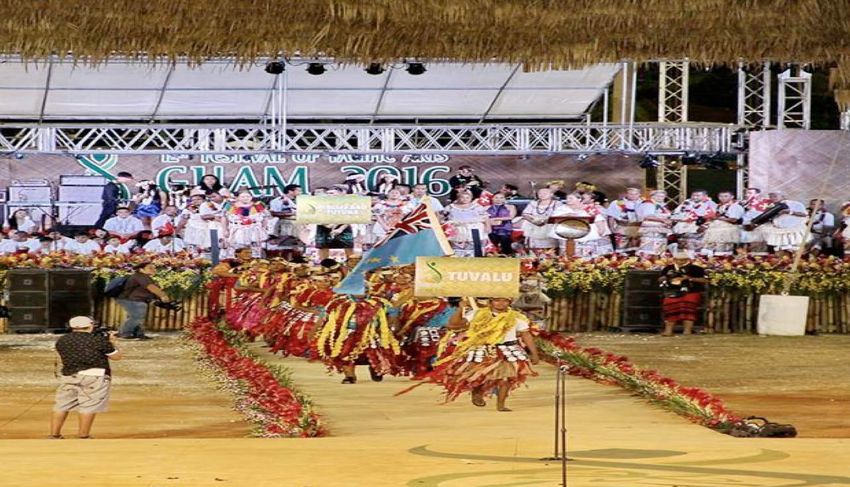
Tuvalu delegation at 12th FESPAC in Guam © UNESCO/A.TakahashiObjective 2:
Protect and preserve Tangible Cultural Heritage (TCH)
Strategic Statement
The development of national systems for TCH protection, in particular, a National Heritage
Register, provides a knowledge base of historical records of TCH belonging to the people
of Tuvalu.
Strategic Initiative 2.1: Support
community-based heritage protection
activities
Support community-based heritage protection
activities and field survey across the country
with the aims of identifying archaeological
sites, monuments, historical buildings and
places of cultural significance (including
underwater cultural heritage), while collecting
data and information.
A National Heritage Register will be
established and legal frameworks will be
developed.
Launch a national process with a view to
joining the UNESCO 1972 World Heritage
Convention as a major priority through
awareness raising activities and consultations
in the islands. Traditional meeting house in Funafiti
© UNESCO/A.Takahashi
Strategic initiative 2.2: Develop
Disaster Risk Reduction (DRR) and
Climate Change Adaptation (CCA)
strategy for cultural heritage and
institutions
Develop DRR and CCA strategy for cultural
heritage and institutions through awareness-
raising and capacity building of communities
and heritage professionals.
Tuvalu shall endeavour to develop national
systems for the Protection the Underwater
Cultural Heritage in light of the maritime
nature of the country and the potential of
UCH for sustainable development and
understanding climate change.
Pulaka pit © Jessica Marinaccio
1314
Strategic Initiative 2.3: Develop a Strategic Initiative 2.4: Support cultural
national inventory of movable cultural activities at community culture centres and
objects develop a Tuvalu National Culture Centre and
Museum
Identify movable cultural objects of
significance to catalogue and digitalise for Support community-based cultural activities at
preservation, including movable cultural Maneapa (community cultural centres) in the islands.
objects of underwater origin.
Support the development of a Tuvalu National Culture
Draw up a national inventory of movable Centre and Museum in Funafuti in order to create
cultural objects in cooperation with a place to showcase movable cultural objects of
communities, establish expert certificates significance and provide Tufuga a place for knowledge
or legal measures in order to prevent illicit and skill sharing, and for artists and communities
trafficking of cultural objects. with a space for their cultural and artistic activities,
taking into consideration the UNESCO 2015
Recommendation on the protection and promotion of
museums and collections.
Performing of Te Fuavaka in Vaitupu © Matini VailopaObjective 3:
Promote cultural production and industries
Strategic Statement
Cultural production enhances the confidence of artists, and supports the community livelihoods
and inclusive economic development. The emerging arts, creativity and cultural industries with
the use of digital technologies need to be supported.
Strategic Initiative 3.1: Support cultural
production and arts/creativity activities
Support cultural production by artists,
especially by youth and women, by
assisting community-based activities and
the institutional and capacity development
of the Tuvalu National Council for Women
(TNCW), addressing the challenges faced by
artists in Tuvalu in terms of the supply of raw
materials, work space, promotion, and market
access. Tuvaluan fan in making © UNESCO/A.Takahashi
Strategic initiative 3.2: Support the
professional development of artists and
creators
Support artists and creators, with priority on
youth, and improve their socio-economic
conditions, and promote individual
mobility by assisting the establishment of
a Tuvalu Arts Council (TAC) and through
the implementation of the UNESCO 1980
Recommendation on the Status of the Artist. Tuvalu artist © Matini Vailopa
Strategic Initiative 3.3: Support the
emergence of local markets for cultural
goods and services
Support the emergence of local markets for
cultural goods and services and facilitate the
effective and licit access of such goods and
services to regional and promotion of cultures
is a central element to boosting international
relations for Tuvalu through administrative
and policy measures specific to this area
and through the national efforts to ratify the
UNESCO 2005 Convention for the Protection
and Promotion of the Diversity of Cultural Local crafts market in Funafuti
Expressions. © UNESCO/A.Takahashi
15Objective 4:
Promote the integration of culture into education
Strategic Statement
The integration of culture into formal and non-formal education in Tuvalu contributes to the
enhancement of quality education (SDG 4).
Strategic Initiative 4.1: Support
projects for the integration of culture
into education
Promote, in cooperation with the Ministry
of Education (MoE) and other Ministries
concerned, the integration of culture into
formal and non-formal education based on
the use of mother-language and cultural
heritage related contents. This involves
undertaking an assessment on the current
situation, lesson plan development, teacher
training and development of learning
materials. Tufuga making canoe © Maina Talia
Nauti Primary School performing traditional welcome for Polynesian Leaders Group delegation in Funafuti
© Pamela Lysaght
16Objective 5:
Promote culture for sustainable development
Strategic Statement
Culture plays a key role in sustainable development and it serves as a vehicle to foster mutual
understanding and peace. Culture is a driver and enabler for development and resilience
toward natural disasters and climate change impact.
Strategic Initiative 5.1: Mainstream
culture in other sectors of Tuvalu for
sustainable development
Enhance inter-ministerial cooperation
to mainstream the key role of culture
in addressing the various challenges
of sustainable development, including
climate change and natural disasters,
loss of biodiversity, safe water, conflicts,
unequal access to food, education and
health, migration, urbanization and social
marginalization and economic inequalities. David’s Drill heritage site in Funafuti
© Matini Vailopa
Strategic initiative 5.2: Enhance
awareness of the role of culture as
enabler and driver for sustainable
development
Support community outreach activities
on TNCP as well as artists and their role
in mainstreaming culture in sustainable
development in each islands of Tuvalu
through radio programmes, local festivals,
and the production of promotional materials.
17Implementation,
Monitoring and Evaluation
1. The Tuvalu Cultural Council Act was passed in 1991
and revised in 2008.
2. Te Kakeega III
3. Regional cooperation
4. International cooperation
181. The Tuvalu Cultural Council Act was passed in 1991 and revised
in 2008.
The Act establish the Tuvalu Cultural Council (“the Council”). The functions of the Council shall
be to:
(a) Maintain, co-ordinate, implement, promote and advise on a national cultural policy for Tuvalu
promulgated from time to time by Cabinet; and
(b) Comply with such written directions as the minister responsible for cultural affairs may from
time to time give.
The composition of the Council is as follows;
(1) The Council shall consist of -
(a)The Secretary for the Ministry for the time being responsible for cultural affairs or his nominee;
and
(b) Up to eleven other members to be appointed by the Minister by notice.
(2) Members (other than the Member referred to in subsection (1) (a) or his nominee) shall be
appointed by notice for a period to be determined by the Minister and shall be eligible for
re-appointment.
(3) Members other than public officers shall be paid by the Council such fees and allowances as
are in accordance with current Government rates and conditions.
MHARD and its Department of Culture (DoC) will serve as Secretariat of the meetings of the
Council.
2. Te Kakeega III
TK III mentions the establishment of a Culture Development Coordinating Committee (CDCC).
The functions of CDCC are to develop a Strategic Action Plan for DoC of MHARD and to
develop a partnership with potential donors who have an interest in, and funding for, the Culture
Programme. CDCC is to be composed of individuals with technical background in the area of
culture.
MHARD will report the matters related to the Culture Programme at the Tuvalu Island Leaders’
Summit (TILA) held every 2 years by the Government of Tuvalu, bringing together the leaders
of 9 islands of Tuvalu.
MHARD will manage the Culture Programme and Budget and report the implementation of the
Culture Programme to Cabinet.
1920
First and foremost in the effective implementation of the approved TNPC will be the expansion
of the Department of Culture as proposed in the new structure below. The financial position of
the Government of Tuvalu at this point in time is acknowledged as being quite tight. It is also
accepted that there may be equally ranking priorities which had been in the pipeline for some
time. However, it is strongly advocated that the implementation of the TNPC will enhance not
only the achievement of other development targets given the mere fact that culture impinges on
all sectors of the economy, but will also add on to the quality of human development throughout
the national development platform. The following proposed structure therefore will address the
specific priority requirements which need be fulfilled right from the outset if the TNPC is to bear
fruits of success in its early years of implementation.
Proposed New Structure for the Department of Culture
Director of Culture
(Level 4/3)
Cultural Officer (Informa- Cultural Officer Cultural Officer
tion & Data Collection) (Arts & Theatre) (Research & Development)
(Level 5) (Level 5) (Level 5)
3 Project Assistants
(Level 7)
This proposed structure was crafted on the principle of simplicity to kick-start the implementation
of the TNPC. Over time, the responsible directory for culture will be able to see more needs and
therefore be able to make relevant recommendations in the further enhancement of this structure.
It is suggested therefore that this structure be reviewed regularly at least in every 3 years to ensure
its relevance to consistently deliver the required cultural targets and outputs over the years.3. Regional cooperation
Regional partners for the Culture Programme include, among others, the Pacific Community
(SPC), University of the South Pacific (USP), Secretariat of the Pacific Regional Environmental
Programme (SPREP), and regional NGOs, such as Pacific Arts Council (PAC), International
Council of Monuments and Sites (ICOMOS) Pasifika, Pacific Regional Bureau of the International
Council of Archives (PARBICA), Blue Shield Pasifika (BSP), Pacific Islands Museum Association
(PIMA).
4. International cooperation
Tuvalu will actively engage in international cultural cooperation with international organisations
and partner with civil society and the private sector.
Working alongside UN agencies and other development partners, Tuvalu is committed to raise the
profile of the culture sector as a driver and enabler for sustainable development and community
resilience.
21Annex: Roadmap 2018-2024
Resources
Strategic Time Lead
Objective Output and
initiative frame agency
partners
1.Safeguard 1.1: Undertake 1.1.1: ICH inventories 2018- MHARD National
and Transmit Community-based ICH established in Tuvalu’s 2024 budget
Intangible Inventorying islands Development
Cultural Heritage Partners
(ICH)
1.2: Support 1.2.1: ICH present in 2018- MHARD National
community-based ICH Tuvalu safeguarded 2024 budget
safeguarding and and transmitted Development
transmission activities Partners
1.3 Participate in 1.3.1: International 2018- MHARD National
international cooperation Assistance Requests 2024 budget
mechanisms for ICH for ICH Fund Development
safeguarding developed Partners
1.3.2: Cooperation 2018- MHARD National
with WIPO for 2024 budget
Traditional Knowledge Development
protection enhanced Partners
1.4 Support cultural 1.4.1: Cultural 2018- MHARD National
festivals festivals in Tuvalu 2024 budget
supported Development
Partners
1.4.2: Tuvalu 2018- MHARD National
delegations 2024 budget
participated in FesPAC Development
and other festivals Partners
2223
Resources
Strategic Time Lead
Objective Output and
initiative frame agency
partners
2: Protect 2.1: Support community- 2.2.1: Tuvalu TCH 2018- MHARD National
and preserve based heritage protection protected a National 2024 budget
Tangible Cultural activities Heritage Register Development
Heritage (TCH) established and Tuvalu Partners
ratified the 1972,
1954, 1970 and 2001
conventions.
2.2: Develop DRR and 2.2.1: DRR and 2018- MHARD National
CCA strategy for cultural CCA strategy for 2024 budget
heritage and institutions cultural heritage and Development
institutions developed Partners
2.3: Develop a national 2.3.1: National 2018- MHARD National
inventory of movable inventory of movable 2024 budget
cultural objects cultural objects Development
established Partners
2.4: Support cultural 2.4.1: Cultural 2018- MHARD National
activities at community activities at community 2024 budget
culture centres and culture centres and Development
develop Tuvalu National the development of Partners
Culture Centre and a Tuvalu National
Museum Culture Centre and
Museum supported
3: Promote 3.1: Support cultural 3.2.1: Artists/creators 2018- MHARD National
cultural production and arts/ supported 2024 budget
production and creativity activities Development
industries Partners
3.2: Support the 3.3.1: Report on 2018- MHARD National
professional development possible policy 2024 budget
of artists and creators measures produced Development
Partners
3.3: Support the 3.3.1: Tuvalu became 2018- MHARD National
emergence of local party to UNESCO 2024 budget
markets for cultural goods 2005 Convention on Development
and services the Protection and Partners
Promotion of the
Diversity of Cultural
ExpressionsResources
Strategic Time Lead
Objective Output and
initiative frame agency
partners
4: Promote 4.1: Support projects for 4.1.1 Culture 2018- MOE National
integration of the integration of culture integrated in education 2024 and budget
culture into into education MHARD Development
education Partners
5: Promote 5.1:Mainstreaming 5.1.1 Culture fully 2018- MHARD National
Culture for culture in other sectors mainstream in TK III 2024 budget
Sustainable of Tuvalu for sustainable & TK IV. Development
Development development Partners
5.2: Integration of Culture 5.2.1 CH concerned 2018- MNR National
in Agriculture and Food inventoried and 2024 budget
Security: transmitted to younger Development
generations. Partners
Safeguard ICH related
to local/traditional
foods preparation and
preservation that are
climate resilient.
5.3: Integration of Culture 5.3.1 Marine resources 2018- MNR National
in Fishery: better protected. 2024 budget
Development
Conserve, maintain, and 5.3.2 ICH concerned Partners
improve the conservation inventoried and
areas (Local Marine transmitted to future
Management Area and generations.
Marine Protected Area).
Promote research and
projects to safeguard
and revitalize traditional
fishing methods,
knowledge and skills.
2425
Resources
Strategic Time Lead
Objective Output and
initiative frame agency
partners
5: Promote 5.4: Integration of Culture 5.4.1 Awareness of 2018- MOH National
Culture for in Health: families, communities 2024 budget
Sustainable and students on the Development
Development • Promote traditional benefit of traditional Partners
healthy diet and diet enhanced.
cooking methods to
reduce prevalence of 5.4.2 ICH concerned
NCD. safeguarded and
• Recognize and transmitted to future
support the knowledge generations.
and skills of
traditional healers. 5.4.3 Association of
• Promote research and traditional healers
projects to identify established.
scientific evidence
on the efficacy of 5.4.4 The knowledge
traditional medicine. and skills of traditional
healers enhanced
through relevant
trainings provided by
MOH
5.4.5 Researches
into traditional
medicine and practices
supported.Resources
Strategic Time Lead
Objective Output and
initiative frame agency
partners
5: Promote 5.5: Integration of Culture 5.5.1 The production 2020- Department National
Culture for into Tourism: of cultural products 2024 of Tourism budget
Sustainable and handicrafts MFATTEL SPTO
Development • Collaborate in the increased through the Kaupule UNESCO
implementation organization of village Community UNDP
of activities in the tours. SPC
National Tourism NZAid
Development Strategy 5.5.2 Cultural Annual AusAID
and Tourism Policy events and activities activity BIE
and its outcomes. at regional and (2018-
• Encourage the international 2024)
participation of expositions enhanced.
Tuvalu at International
Expositions, Regional 5.5.3 Information 2021
Tourism Fairs to brochure and map
promote Tuvalu showing historical
national festival and and archaeological
its cultural production. sites of significance
produced for visitors
and tourists.
5.6: Integration of Culture 5.6.1 Tuvalu heritage, 2018- MEYS National
in Education: arts and creativity 2024 budget
integrated in the UNESCO
• Integrate Tuvaluan curriculum. UNICEF
heritage, arts, and World Bank
creativity into the 5.6.2 Review of TVET USP
curriculum. programme conducted.
• Upgrade TVET
programme related 5.6.3 Tuvaluan Studies
to traditional and life strengthened at all
skills. levels including USP.
• Strengthen Tuvaluan
Studies at all levels. 5.6.4 Tuvaluan
• Encourage and cultural activities and
promote Tuvaluan traditional games
culture activities and promoted at all
traditional games at schools.
all schools.
2627
Resources
Strategic Time Lead
Objective Output and
initiative frame agency
partners
5: Promote 5.7: Integration of Culture 5.7.1 Number of 2018- TNCW National
Culture for in Gender Equality: women at decision 2024 Department budget
Sustainable making bodies of Gender at UNDP
Development • Increase the number increased at all levels. OPM UNESCO
of women involved SPC
in decision making 5.7.2 Craftspeople DFAT
bodies at all levels. – women and men Pacific Women
• Empower craftspeople – and their activities Council
– women and men – enhanced.
and their activities.
• Encourage the equal 5.7.3 Equal
participation of participation of women
women and men in and men in good
good parenting at all parenting enhanced at
families. all families.
• Safeguard and
promote Tuvaluan 5.7.4 ICH concerned
recipe and traditional inventoried and the
herbal medicine previously published
primarily practiced by book on Tuvaluan
women. recipe and herbal
medicine updated and
promoted widely.References
1. 2003 UNESCO Convention for the Safeguarding of the Intangible Cultural
Heritage.
2. 2005 UNESCO Convention on the Protection and Promotion of the Diversity
of Cultural Expressions.
3. Constitution of Tuvalu (1986)
4. Tuvalu Cultural Council Act (1991)
5. Regional Cultural Strategy; Investing in Pacific Cultures 2010-2020
6. Alamai Sioni and Rt Hon. Bikenibeu Paeniu. 2012. Secretariat of the
Pacific Community Human Development Program: Tuvalu Cultural Mapping,
Planning and Policy Report. Secretariat of the Pacific Community: Funafuti,
Tuvalu.
2829
You can also read


