U.S. ELECTIONS-WE HAVE A WINNER: DEBT - Euler ...
←
→
Page content transcription
If your browser does not render page correctly, please read the page content below

ALLIANZ RESEARCH

                                                                    Photo on Unsplash
U.S. ELECTIONS-WE HAVE
A WINNER: DEBT
29 September 2020
04 Four different scenarios for the outcome of the U.S. elections
06 Economic platforms: How big should the federal government be?
09 Impact on growth in the short run
10 Impact on deficits and debt
11 Impact on external relations
12 Impact on long-term growth potential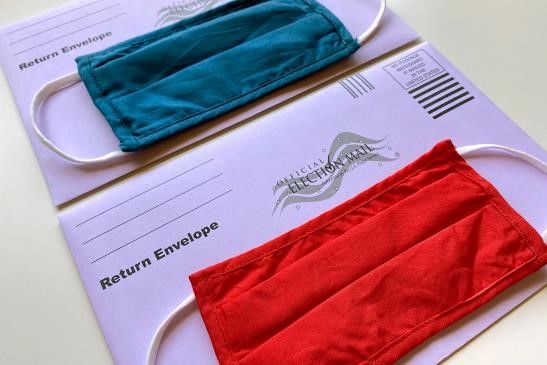
Allianz Research
The U.S. elections will spark a period of high uncertainty and market
volatility until the end of the year. It could take one to two months after
EXECUTIVE
03 November to finalize the results due to the record high use of mail-in
ballots amid the Covid-19 pandemic. With the outcome likely to be con-
tested by the two camps, a judiciary battle of one or two months is also
possible, and market volatility could significantly increase during this
SUMMARY time. We identify four possible election outcomes, with our central sce-
nario being a short contested victory of Joe Biden, with the Senate still in
the hands of the Republicans (40% probability).
Choosing between the two candidates will mainly mean choosing be-
tween a bigger or smaller federal government. Joe Biden’s economic
platform aims at being more redistributive, with a likely net rise of
USD3.7trn in taxes over the decade, mostly affecting the highest income
earners. It is also demand-side oriented: A Biden win could see public
spending rise by USD6.4trn at the horizon of 2030. In contrast, the incum-
bent U.S. president offers supply-side oriented propositions, including
USD3trn of net spending cuts at the horizon of 2030, coupled with
USD1.4trn of tax cuts, causing a USD1.1trn net cut in overall government
receipts.
Alexis Garatti, Head of Economic Research
What will this mean for short-term growth? As Biden’s platform also em-
+33 (0) 1 84 1142 32 phasizes improvements in infrastructure, which is usually associated with
alexis.garatti@eulerhermes.com the highest multipliers that real activity can benefit from, his victory
could result in an extra 1pp of real economic growth in 2021. This sup-
plementary boost should increase until 2024, reaching at least 1.5pp,
2.3pp and 2.2pp of real growth contribution in 2022, 2023 and 2024,
respectively. A Trump victory would sustain real economic growth by
0.9pp in 2021, 0.7pp in 2022 and 0.3pp in 2023 as a result of the recov-
ery infrastructure package in the short to medium term. After that, the
negative impact of the long-term spending cuts would offet the positive
impacts of tax cuts.
Peter Lefkin, Senior Vice President of Government and Over the long-term, public debt will be the real winner of this election. It
External Affairs, Allianz of America Corporation should reach 159% of GDP at the horizon of 2030 (compared with 137%
peter.lefkin@allianz.com
expected in 2020), a trajectory which is common to the two candidates
despite radically different economic orientations (public debt at 151% of
GDP at the horizon of 2030 in the case of a Trump win).
In this context, we expect the U.S. economy’s growth potential to be
structurally impaired. Between 2021 and 2030, it could reach +1.4% with
a Biden victory, and +1.25% in the case of a Trump victory.
In our view, political choices in terms of reshoring or redistribution will
Dan North, Senior Economist for North America
dan.north@eulerhermes.com
not create a new regime of very high inflation. We expect a slight over-
shoot of the 2% target between end -2022 and the beginning of 2023,
and a stabilization close to 2% thereafter.
Anita Poulou, Research Assistant
anita.poulou@eulerhermes.com
2
29 September 2020

                                           Photo by Dan Dennis on Unsplash
159% of GDP
     U.S. public debt by 2030

                                       3
Allianz Research

       FOUR DIFFERENT SCENARIOS FOR
       THE OUTCOME OF THE U.S. ELECTIONS

 The 2020 Presidential elections are            Scenario 1. Short contested victory for     trigger a significant correction of the
 likely to intensify uncertainty in the U.S.:   Joe Biden (40% probability), with the       equity market, requiring a strong inter-
 it could take one to two months after          Senate still in the hands of Republicans.   vention of the Fed in order to tame vo-
 03 November to finalize the results due        In this scenario, President Trump con-      latility. This instability would last only
 to the record high use of mail-in ballots      tests the outcome and Supreme Court         during Q1 2021 as the perspective of a
 amid the Covid-19 pandemic. President          has to validate the outcome after pre-      new investment cycle would reassure
 Donald Trump has voiced strong oppo-           cise recounting. Over the medium-term,      the market later.
 sition to mail-in ballots, saying he could     because of Republicans still controlling
 reject the results if the election is close    the Senate, Joe Biden has to wait until     Scenario 4. Large victory for President
 and it takes an extended period to             the second half of 2021 before seeing       Trump (10% probability), with no clear
 count all of the votes. In this context, a     an effective execution of his economic      majority in the Congress. The House
 convoluted process in Congress, even-          platform (starting with infrastructure      remains in the hands of Democrats.
 tually even involving the Supreme              projects) and has to compromise on the      President Trump manages to imple-
 Court, is possible.                            most liberal aspects.                       ment tax cuts albeit with delays
                                                                                            (second half of 2021). His foreign policy
 Tangible signals of nervousness are            Scenario 2. Short contested victory for     is more assertive, in particular targeting
 already visible in different segments of       President Trump (30% probability), with     China, with negative impacts on global
 the market, as the price to get pro-           the Senate still in the hands of Republi-   equity markets. De-globalization would
 tected against adverse moves of volati-        cans. Democrats ask for precise recoun-     accelerate at a global level.
 lity in November has significantly in-         ting. President Trump has also to wait
 creased. Over the last few weeks, com-         until the second half of 2021 before we
 panies have rushed to issue debt in            see a materialization of a large wave
 anticipation of much more challenging          of new tax cuts, while infrastructure
 and tighter conditions during and after        projects could receive a swifter appro-
 the elections. Market volatility is likely     val of the Congress because of their
 to significantly increase from Novem-          bipartisan aspect.
 ber until the end of the year because of
 these elections.                               Scenario 3. Large victory for Joe Biden
                                                (20% probability), with a clear majority
 According to public polls, Joe Biden           in the Congress for Democrats. In this
 now benefits from 50.7% of vote inten-         case, the new U.S. President can imple-
 tions, while President Trump currently         ment his economic platform quickly
 stands at 42.6%. However, bet polls            with more liberal orientations. The mul-
 suggest that the race could be much            tiplier impacts are much stronger and
 tighter. We have identified four diffe-        quicker. In the beginning of 2021, more
 rent scenarios, with impacts sum-              leftist or liberal orientations could
 marized in Figure 1.

4
29 September 2020
Figure 1: Four different scenarios for the U.S. elections
Scenario Biden large victory Biden short victory Trump short victory Trump large victory
Probability 20% 40% 30% 10%
Scenario President Trump President Trump Biden refuses Joe Biden cannot
description cannot make any fraud victory claim before full verdict – argues for make any fraud claims.
claims. counting of ballots Russia interferences, Whole congress
Democrat majority in Fraud claim once potential voting fraud, turns Republican.
congress, in the house as Biden’s victory is revealed. institutional pressures,
well as in the senate. Final validation from and voter suppression
Rapid voting of a the Supreme Court 1 to 2 laws.
USD 2.7 trillion package months after the election No clear majority in
(net) over the ten coming possible. the Congress. The house
years. No clear majority in keeps a Democrat
the Congress. The house majority and the senate
keeps a Democrat majority keeps a Republican
and the senate keeps a majority.
Republican majority. Validation from the
Negotiation blockade Supreme Court 1 to 2
on the budget in the months after the election
Congress maintains a possible.
possibility of shutdown until
Q2 2021.
Economic New investment Less ambitious Supply-side policy, Tax cuts, new
impact cycle with big program. Consensus on extended tax cuts for protectionist measures,
infrastructure projects Infrastructure projects but individuals, smaller size bipartisan adoption of
and redistributive lower re-distribution in favor
Infrastructure projects. infrastructure program,
policies. of households, not fulfillingUncertainty on external but less extensive than
Decline of of the promise of increasing policy, perspective of Biden because of a less
unemployment rate at corporate tax rate from 21% harsher tone on China ambitious green plan,
5.5% by the end of 2022 to 28% (halfway). and re-shoring weighs on early implementation of
(8.4% today). US GDP growth the investment cycle other spending cuts.
US GDP growth at - comes at -5.3% in 2020; despite tax cut US GDP growth
5.3% y/y in 2020, +4% +3.7% in 2021 and +3.2% announcements. comes at -5.3% in 2020,
y/y in 2021 and 3.5% in in 2022. Bold moves on the 2,7% in 2021, 1,8% in
2022. external side (technology 2022.
cold war, tariffs, and
sanctions on US
companies located
abroad) penalizes growth
(-5.3% in 2020; +1.7% in
2021 and +1.2% in
2022).
FED FED balance sheet FED balance sheet FED balance sheet FED balance sheet
response levels off as early as Q1 increases until end-Q2 increase until end Q3 levels off as early as Q2
2021 after a steady 2021 (to alleviate significant 2021, then levels off. 2021 after a steady
increase since Q4 2020. amount of uncertainty) then Political uncertainty is as increase since Q4 2020.
First rate hike as levels off. high as in the short Biden First rate hike as
early as Q3 2022. First rate hike from Q3 victory scenario. early as Q4 2023.
2023 only.
USD The dollar is set to The dollar is set to The dollar is set to The dollar is set to
depreciate versus the depreciate versus the EUR depreciate versus the depreciate versus the
EUR by up to 2,5% within by up to 5% (~1.25) within EUR by up to 7,5% within EUR by up to 10% within
the next 12 months; the next 12 months; the next 12 months; the next 12 months;
Then re-appreciates Then re-appreciates Then re-appreciates Then re-appreciates
by 4-6% one year later. by 2-3% one year later. by 2-3% one year later. by 4-6% one year later.
10 year 1,25% at the end 1% at the end 2020; 1% at the end 2020; 1,15% at the end
treasury 2020; 1,8% at the end of 1.4% at the end of 2021. 1.4% at the end of 2021. 2020; 1.6% at the end of
yield 2021. 2021.
Sources: Euler Hermes, Allianz Research
5
Allianz Research

       ECONOMIC PLATFORMS: HOW BIG SHOULD
       THE FEDERAL GOVERNMENT BE?

Unsurprisingly, Biden and Trump have          tional and improved infrastructure: 23%      trying to rein in pharmaecutical costs as
radically different ideas for the scope       of this will be dedicated to housing, as     well as “surprise billing”, which hits pa-
of federal government involvement in          part of the USD640bn Housing Plan,           tients who go to a medial provider out-
the U.S. economy and both plan (see           1.5% to investing in rural broadband,        side of their insurance companies’ net-
appendix 1 for a detailed comparison)         7.7% to school infrastructure, 2.3% in       work. The third behemoth spending
on doing much more than simply pay-           small business funding and 0.8% in           plan will therefore – unsurprisingly –
ing lip service to their respective politi-   transit projects that serve high-poverty     deal with health. For one thing, the
cal parties’ paradigms in 2020 itself.        areas. The Biden Plan for a Clean Ener-      Biden Plan for Mobilizing American
Indeed, choosing between Biden and            gy Revolution and Environmental Jus-         Talent and Heart to Create a 21st Cen-
Trump on 03 November will also, if not        tice accounts for the lion’s share of the    tury Caregiving and Education Work-
mainly, mean choosing between a big-          entire economic platform, bringing           force will allocate no less than
ger or smaller federal government.            about USD2trn in additional investment       USD775bn to funding child and elder
                                              over the course of four years. This          care. Additionally, the Biden Plan to
Joe    Biden’s     economic                   spending colossus should entail              Protect and Build on Obamacare will
                                              USD300bn dedicated to R&D, through           inject USD750bn into strengthening the
platform aims at being                        the Biden Plan for Investment in Re-         previous U.S. president’s famous re-
more redistributive                           search & Development and Break-              form. Finally, the Biden Plan to End the
                                              through Technologies, as well as             Opioid Crisis will disburse USD125bn
Biden’s Vision for the United States al-      USD400bn mobilized in favor of a pur-        with the goal of ending the on-going
most has a 1930s New Deal-ish tone,           chase program through the Biden “Buy         opioid epidemic.
with massive spending plans that go by        American” Plan.
the trillion and a strong emphasis on                                                      To finish, Biden has also mentioned
improving the country’s infrastructure        Defending Obamacare                          wanting to strongly tackle the highly
first.                                        The Biden platform will likely incorpo-      debated student loan problem in the
                                              rate policies similar to those proposed      U.S., although in this case giving a
Infrastructure projects at the core of a      or enacted during the Obama admin-           clearly defined cost might not be a
green revolution                              istration, and even expand upon them         piece of cake. Indeed, estimates sug-
The Biden Plan to Invest in Middle            by trying to reduce the age of eligibility   gest the problem could amount to as
Class Competitiveness will have the           for receiving Medicare to 60, creating a     much as USD2.9trn, far above Biden’s
U.S. federal government disburse no           public option for health insurance, ex-      usual communication, putting forward
less than USD1.3trn to invest in addi-        panding the Medicaid program and             a cost of USD750bn.

6
29 September 2020
Figure 2: Main features of Biden’s economic plan Figure 3: Global trade growth, in volume terms and value (%, y/y)
BIDEN TRUMP
SPENDING, USDbn (+6435.85) CBO multipliers SPENDING, USDbn (-2965) CBO multipliers
+970 Infrastructure (not elsewhere) 0.850
+1275 Infrastructure 0.850
+2000 Climate change 0.850
+750 Student loans 0.825 -125 Higher education 0.725
+1650 Health 0.775 Reform welfare programs &
-280 0.825
+128.2 Schools 0.793 increase parental leave
+23.6 Defense 0.850 -1550 Discretionary, non-defense 0.850
+240.5 Public-private investment 0.725 -400 Discretionary,defense 0.850
+640 Housing plan 0.850 -1630 Health 0.725
+33.55 Other spending increases 0.725 -255 Other spending cuts 0.848
REVENUE, USDbn (+3686) CBO multipliers
REVENUE, USDbn (-1085) CBO multipliers
+3746 Tax increases -0.400
-60 Increase tax incentives -0.600 -1370 Tax decrease -0.225
+285 Reduce tax incentives & raise fees -0.634
Sources: Diverse media, Euler Hermes, Allianz Research
Sources: Diverse media, Euler Hermes, Allianz Research
A return to the pre-Trump era in terms Biden would also eliminate the carried Finally, Biden favors establishing a go-
of taxes interest tax preferences for partners of vernment-sponsored retirement ac-
The Biden presidency would also cause private equity and hedge funds, and is count option that would make it easier
major shake-ups in federal receipts, likely to raise the maximum applicable for small employers to establish a reti-
mostly channeled through substantial deduction above USD10,000 for state rement program for their employees. It
tax increases. In 2017, President Do- and local taxes affecting individuals. would directly compete against private
nald Trump’s Tax Cuts and Jobs Act The beneficiaries of this last measure fund managers
ended the bracket system organizing are likely to be residents in high taxed
corporate income tax, leading to a states such as New York, California and President Trump’s economic
14pp drop in the marginal rate (which New Jersey, which by tradition vote De-
became the only rate applicable) down mocratic, and are still resentful of what platform is more about
to 21%. It also cut by half the minimum they perceive as a Republican partisan supply-side policies
tax on global income originating from effort to hurt them in the 2017 Tax Re-
intangible assets such as patents and form bill. In total, the Biden Tax Vision
trademarks, as well as copyrights may raise around USD4trn depending Although the Republican party has not
(known as GILTI); repealed the corpo- on the dynamic effects caused by the published an official political platform
rate alternative minimum tax and rear- numerous stimuli packages mentioned for the 2020 presidential election, ins-
ranged the graduated personal income by the former Vice President if elected. tead stating it would continue to abide
tax system, notably by decreasing the by the ideas pushed forward over the
marginal tax rate by 2.6pp down to Also on a Biden agenda will be efforts course of Trump’s current term, we do
37%, among other changes. Joe Biden’s to expand retirement savings, particu- have some visibility on the debt and
Tax Plan would reverse much of this by: larly among people with lower in- budget paths if Trump were reelected.
comes. The current system, which relies
In February 2020, the White House re-
increasing the now unique corpo- upon 401K and other qualified em-
ployer sponsored plans, provides a de- leased its budget projections over the
rate income tax rate by 7pp to 28%,
duction for those who save. Critics course of the current decade. We pair
re-introducing a 15% minimum
argue that that this provides more this document with the latest announ-
book tax on corporations whose
benefits to the wealthy, as they pay cements regarding the so-called
income goes beyond USD100mn,
taxes at the high effective rate of 37% CARES Act – Coronavirus Aid, Relief,
limiting itemized deductions,
and thus get a bigger deduction than and Economic Security Act – imple-
repealing Trump’s reform on the
lower paid workers. Believing that tax mented amid the Covid-19 pandemic.
taxation of GILTI,
taxing capital gains at ordinary incentives should be used to broaden
income tax rates instead of the the number of people who have retire-
current 23.8% rate for those ear- ment plans and increase their savings
ning over USD1mn rates, the Biden proposal would re-
and subjecting incomes above place deductions with tax credits to
USD400,000 to the 12.4% Social equalize the benefits.
Security payroll tax.
7Allianz Research
Photo on Unsplash
Large spending cuts envisaged ployees may have to live without va- Fiscal revenues to be boosted by un-
In its budget vision, the Trump adminis- rious perks, the cost of which amounts leashed growth on the back of persis-
tration plans on faithfully complying by to USD90bn; the postal service might tently low taxes
the Republican party’s motto, which be reformed to need USD95bn less In the receipt department, the Trump
emphasizes the idea of a smaller go- than currently, farm subsidies may de- Vision is reinforced with an extension of
vernment, by enacting major spending crease by USD50bn, and education the currently enforced tax overhaul on
cuts amounting to almost USD3trn in could lose no less than USD170bn, individuals beyond 2025. Depending
total. To begin with, if chosen to pursue among other cuts. on dynamic effects impacting GDP
a second term, President Trump will growth, this measure could decrease
further slim the budget dedicated to The Trump administration does intend revenue by around USD1.4trn. Finally,
health. For one thing, costs associated to pass a USD1trn recovery infrastruc- under the form of additional fees and
with Medicare and Medicaid could ture plan in the short term, added to an premia, combined with slimmed tax
drop by USD785bn; then, Trump’s Vi- initially planned USD275bn infrastruc- incentives, the Trump administration
sion for Health Reform could materia- ture package mainly aimed at impro- aims at raising around USD260bn in
lize through an USD845bn spending ving the highway network. Finally, supplementary receipts. Consequently,
cut. Moreover, discretionary spending USD45bn will be disbursed in favor of overall revenue may suffer a net loss
might drop USD1.95 trn over 10 years, scholarships and USD20bn towards close to USD1.1tr.
including USD400bn on the defense financing parental leaves, among other
side. A series of welfare programs could minor increases.
lose USD220bn in funding; federal em-
829 September 2020
IMPACT ON GROWTH
IN THE SHORT RUN
Figure 4: U.S. GDP growth in different scenarios
3%
1%
-1% 20 21 22 23 24 25 26 27 28 29 30
-3%
-5%
Biden (lite), baseline Biden Biden (heavy spending)
Trump (major cuts) Trump, baseline Trump (minor cuts)
CBO
Sources: Euler Hermes, Allianz Research, OMB, PWBM, White House, CBO
Based on the various shaded areas from H2 2021. The more redistributive infrastructure, which is the type that is
underlined in both candidates’ political economic platform should support usually associated with the highest mul-
platforms, we envisage no less than six growth by +1pp, albeit to a lower ex- tipliers that real activity can benefit
forecast possibilities, each one putting tent compared with 2020 (+1.7pp im- from. Our forecast point to an extra
forward its singular debt, GDP and defi- pact on growth of the USD2.2trn CARES 1pp of real economic growth in 2021
cit trajectories. Under “Trump (minor Act), as direct cash payments to house- due to a stimulus package of around
cuts)”, President Trump could only im- holds in particular had quicker and USD320bn. This supplementary boost
plement a quarter of his planned spen- higher multiplier impacts. However, if should increase until 2024 – that is, over
ding cuts by 2030, under “Trump, base- Biden wins, the likely division within the the course of Biden’s first, if not unique,
line” half of them and under “Trump Congress could result in delayed execu- term – reaching at least 1.5pp, 2.3pp
(major cuts)”, all cuts would be con- tion, resulting in less than USD500bn and 2.2pp of contribution in 2022, 2023
ducted successfully over the course of being spent in the first year of the new and 2024, respectively. After that,
the decade. Similarly, based on the va- Presidency. should Biden be reelected, the effec-
riations in the effective cost associated tiveness’ of the stimulus program
with the Biden Student Debt Plan, we If elected, Biden’s plans could likely should slowly fade. All in all, we esti-
have chosen to study three Biden paths cause the U.S. federal public deficit to mate at $2.7 trillion the net size of a
for the debt, GDP and deficit trajecto- jump between 1.1pp (to 5.7% of GDP) new stimulus affecting the U.S. econo-
ries. “Biden (lite), baseline” implies a and 1.9pp (to 6.5% of GDP) beween my under a Biden presidency, spread
$750bn plan, “Biden” suggests a cost of 2019 and 2030, depending on the true over a 10-year timeframe.
$1,220bn, while “Biden (heavy spen- cost of his plan to fix the student debt
ding)” points to $2,920bn. problem. However, in compensation, The four trajectories of growth pre-
GDP will receive a boost over the sented below correspond to the diffe-
A Biden presidency could see U.S. fiscal course of the decade. Indeed, the majo- rent options achievable by Biden or
policy producing positive results by rity of Biden’s extra spending tackles Trump based on the multipliers pre-
reactivating a new investment cycle the need for additional or improved sented in Figures 2 and 3.
9Allianz Research
IMPACT ON
DEFICITS AND DEBT
Figure 5: U.S. public debt, % of GDP Figure 6: U.S. public deficit, % of GDP
165%
13%
145%
125% 8%
105% 3%
19 20 21 22 23 24 25 26 27 28 29 30 19 20 21 22 23 24 25 26 27 28 29 30
Biden (lite), baseline Biden Biden (heavy spending) Biden (lite), baseline Biden Biden (heavy spending)
Trump (major cuts) Trump, baseline Trump (minor cuts) Trump (major cuts) Trump, baseline Trump (minor cuts)
CBO CBO
Sources: Euler Hermes, Allianz Research, OMB, PWBM, White House, CBO Sources: Euler Hermes, Allianz Research, OMB, PWBM, White House, CBO
Covid-19 has already caused U.S. public Indeed, there is substantial doubt the 2030, too strong a GDP growth artifi-
debt to swell further to 137pp of GDP, Trump administration will manage to cially inflates tax receipts and dramati-
from 109pp in 2019. So the election will enact all desired spending cuts, consid- cally distorts the base effect when cal-
be about picking between high or ering the potential impact on economic culting the public deficit in GDP per-
alarmingly high when it comes to debt. growth this might entail, which will only centage points. Consequently, the
Under Biden, public debt would consist- partially be compensated by the con- Office of Management and Budget –
ently grow at an average pace of comitant tax decrease. As a matter of the POTUS’ main expert council on the
+2.2pp each year between 2021 and fact, all adjustments considered, the matter – forecasted that deficit would
2030, eventually standing at 159pp. In federal budget might save no less than decrease to 0.7% of GDP in 2030, no
case the cost of the Biden Student Debt USD1.9trn over the course of 10 years, less than 2.8pp below our prevision.
plan ends up reaching levels far above bringing the deficit down 1pp to 3.6% of And that’s in the case Trump manages
$750bn, the debt could stand at 160pp GDP in 2030 from 4.6% in 2019, which, to carry on with the spending cuts as he
to 166pp by 2030. Should Trump start a said differently, also amounts to falling plans! For that matter, we envisage two
second term, and if his intended policies 6.1pp from the post-Covid 19 crisis level other “Trump-scenarii”, in which only
are to be continued all the way through of 9.6% in 2021. Nevertheless, our esti- 50%, or even 25%, of all spending cuts
the entire decade, U.S. public debt mate for the public deficit stands far would be enforced. In such cases, the
would keep on increasing at an aver- above the White House’s, which, in Feb- public deficit would gain 0.2pp or 0.8pp
age yearly pace of +2.5pp between ruary, clearly underestimated the nega- reaching 4.8% or 5.4% of GDP – which
2021 and 2025, before consistently de- tive impact of the tax overhaul exten- stands 0.1pp above the CBO baseline,
creasing -1.3pp annualy (on average), sion beyond 2025 on government re- at 5.3pp – between 2019 and 2030.
eventually reaching 142pp. If President ceipts, notably due to unrealistic as-
Trump’s spending cut measures were sumptions regarding GDP growth. Con-
only partially enforced, which is more sistently around 5% year-on-year in
likely to happen, U.S. public debt would nominal terms from 2021 to
stand at between 151pp and 155pp in
2030.
10
1029 September 2020
IMPACT ON
EXTERNAL RELATIONS
The U.S. “Cold Peace”conflict with Chi- North Korea to rein in militarism and A second Trump Administration would
na will likely remain throughout the provocations. Both countries remain probably not be all that different than
2020s and the Biden mandate of rein- intertwined economically, but expect a first one. The President would contin-
ing in China will not be that much continued Congressional efforts to re- ue to promote de-regulation, urge the
different than Trump’s. However, what strict Chinese investments in the U.S.. Federal Reserve to pursue a more ac-
can be expected to change is that Under Biden, the U.S. would also seek commodative monetary policy and
Biden will seek to reaffirm relations to reaffirm the NATO and EU relation- deprioritize climate change is-
with tradtional U.S. allies that were shiops and assure Europe that the At- sues. President Trump has shown disfa-
fractured by President Trump, bringing lantic Alliance remains very important. vor for international institutions and we
them into a broader coalition of coun- The U.S. could continue efforts already expect this would continue.
tries that togther would work to ensure undertaken by the Obama and Trump
that China adheres to international administrations to get NATO members
rules. Tariffs would be used strategical- to increase their defense budgets, and
ly but not viscerally. Biden would be also to secure their cooperation in com-
anxious to have China address climate batting cybersecurity, terrorism and
change and also to apply pressure on other risks to the international order.
Photo by Dan Dennis on Unsplash
11Allianz Research
IMPACT ON
LONG-TERM GROWTH POTENTIAL
To compare the impact of the two dummy variables and a trend we ob- Below / above trend growth of
economic platforms on the long-term tain the following results: productivity in the case of a Demo-
growth, we first estimate the U.S. crat / Republican administration
economy’s long-term growth in func- Historically, Democrat administra- Above / below trend growth of the
tion of four different variables, i.e. pro- tions have a lower performance in active population in the case of a
ductivity growth (over one year), terms of productivity growth (-0.6 Democrat / Republican administra-
growth of the active population pp below trend) versus Republi- tion
(yearly), the share of imports as a per- cans (0.4 pp above trend) Public debt reaching 160% of GDP
centage of GDP and the size of public Historically, Republican administra- at the horizon of 2030 in the case
debt as a percentage of GDP. We as- tions have a lower performance in of a Democat victory and 150% of
sume that these four variables will take terms of growth of the active popu- GDP in the Republican case
different trajectories under a Democrat lation (-0.3 pp below trend) com- The share of imports as a percen-
or Republican administration. Our esti- pared with Democrats (+0.4 pp tage of GDP returning to a pre-
mate reveals that the growth potential above trend) Trump era level (14.3% of GDP at
is positively explained by the growth of the horizon of 2030 versus 13.6% in
productivity (coefficient C(1) = 0.07), A Biden administration would make Q2 2020) in the case of a Demo-
the growth of the active population immigration reform a priority, and try to crat victory and a further decline to
(coefficient C(2) = 0.26) and the share provide some degree of protections to 13.3% at the horizon of 2030 in the
of imports as a percentage of GDP people who came to the U.S. illegally case of a Republican victory
(coefficient C(3) = 0.36, meaning that re but who have been here for many
-shoring activities are bad for the years and have jobs and family, DACA We eventually obtain an average po-
growth potential). However it is negati- recipients. Along with the priority given tential of growth of +1.4% between
vely determined by the size of public to education and health, this would pay 2021 and 2030 in the case of a Demo-
debt (coefficient C(4) = -0.03). a positive role in the growth of the ac- crat win and +1.25% in the case of a
tive population. In contrast, with a con- Republican win.
Separately, we create a dummy va- tinuation of the Republican administra-
riable “dummy 1”, using 1 for a Demo- tion, supply-side policies would be
crat administration and 0 for a Republi- more beneficial to productivity, while
can one. Inversely we create a dummy stricter conditions on immigration and
variable “dummy 2”, using 0 for a De- lower spending in health and educa-
mocrat administration and 1 for a Re- tion could lead to lower growth of the
publican one. Explaining the growth of active population. Taking into account
productivity and the active population the following assumptions:
between 1971 until today with the two
1229 September 2020
Photo on Unsplash
Would a Biden victory be destabilizing Oil prices, which can be seen as energy even in the central case, have the po-
for inflation ? cost, the latter possibly exposed to up- tential to bring inflation above the 2%
ward pressure because of a rapid tran- target, albeit only in a temporay man-
From a Democratic party perspective, sition to greener energy ner in our central scenario. This scenario
the Covid-19 pandemic has further re- The share of imports in the economy, in is clearly conceivable as evidenced by
vealed the fact that income and social order to factor in any trend favorable to the recent decision of the Fed to re-
inequality are more pevasive than pre- reshoring, which is favored by the two place its 2% objective with an average
viously thought and for the sake of na- candidates approach of it.
tional unity require redressal. The Biden The monetization of debt measured by
platform is not designed to displace the free-float, which is a trend observa-
the private marketplace, but instead to ble across developed countries and
infuse it with greater responsibilities required for the planned accumulation
including assistance in promoting diver- of debt by the two candidates
sity in the workplace, and adhering to The output gap or growth deviation
ESG guidelines. Expect also an increase from trend in order to factor in long-
in the federal minimum wage. In order lasting macroeconomic shocks
to estimate the impact on inflation of
the economic platform of a more redis- All coefficients have a conventional
tributive economic policy, similar to the sign: an acceleration of unit labor costs
one proposed by Biden, we build equa- triggers an acceleration of CPI inflation.
tions using variables allowing us to fac- Any long-term policy of reshoring is like-
tor in long-term political orientations ly to generate higher inflation as well.
such as: Debt monetization nurtures inflation
over the medium-term. We have identi-
Unit labor costs, which currently have a fied three regimes of inflation in func-
higher probability to mirror a more re- tion of the assumptions that we take on
distributive fiscal policy should Biden all the exogenous variables of our mod-
win the election els. Debt monetization and reshoring,
13Allianz Research
APPENDIX 1 Details of economic plans of candidates
OUTLAYS TRUMP1 BIDEN2
+$1,275bn +$870bn
Infrastructure +275: enact highway and other +850: The Biden Plan to Invest in Middle Class Competitiveness
(not infrastructure spending (not allocated elsewhere)
elsewhere) +1,0003: infrastructure plan to boost the +20: Investment in rural broadband infrastructure, part of the
economic recovery Biden Plan to Invest in Middle Class Competitiveness
+$1,970bn
+1,270: The Biden Plan for a Clean Energy Revolution and
Environmental Justice (not allocated elsewhere)
Climate
+300: The Biden Plan for Investment in Research & Development
change
and Breakthrough Technologies, part of the Biden Plan for a Clean
(not
Energy Revolution and Environmental Justice - $30bn is dedicated
elsewhere)
to the Small Business Opportunity Fund
+400: The Biden “Buy American” Plan, part of the Biden Plan for a
Clean Energy Revolution and Environmental Justice
-$125bn +$978.2bn
-170: reform higher education loans and +100: investment in schools' infrastructure, part of the Biden Plan
spending to Invest in Middle Class Competitiveness
+45: establish Education Freedom +50: investment in workforce training, including community-college
Scholarship business partnerships and apprenticeships
Education
+8: invest in community college facilities and technology
+70: invest in Historically black colleges and universities and other
minority-serving institutions
+750: student loan forgiveness program
+0.2: grant directed towards minority universities and colleges
-$280bn
-35: reform disability programs and
reduce Social Security improper
Welfare payments
programs -220: reform Welfare Programs
-45: promote return-to-work for workers
with disabilities
+20: provide paid parental leave
-$400bn +$23.6bn
Defense -400: freeze defense spending after 2025 +23.6: increase funding for up-armored Mine-Resistant Ambush
and reduce OCO spending Protected vehicles
-$1,630bn +$1,650bn
-785: reduce Medicare and Medicaid +775: The Biden Plan for Mobilizing American Talent and Heart to
Healthcare Costs Create a 21st Century Caregiving and Education Workforce
-845: support the President’s Vision for +125: The Biden Plan to End the Opioid Crisis
Health Reform (placeholder) +750: The Biden Plan to Protect and Build on Obamacare
-$50bn +$270.5bn
-50: Reduce farm subsidies +120: public-private investment to minority entrepreneurs
(originally $150bn, $30bn is dedicated to the Small Business
Opportunity Fund, included in the $300bn R&D investment plan
Public-
and part of the Biden Plan to Invest in Middle Class
private
Competitiveness)
investment
+60: establish a True Small Business Fund
& Subsidies
+30: double down on the State Small Business Credit Initiative, part
to businesses
of the Biden Plan to Invest in Middle Class Competitiveness
+60: increase Community Development Financial Institutions
(CDFI) funding
+0.5: establish a military spouse entrepreneurship pilot program
+$640bn
+530: The Biden Housing Plan, $300bn of which is part of The
Biden Plan to Invest in Middle Class Competitiveness
+100: establish an Affordable Housing Fund, part of the Biden
Housing
Housing Plan
+10: transit projects that serve high-poverty areas, part of The
Biden Housing Plan and The Biden Plan to Invest in Middle Class
Competitiveness
Others -$1,755bn +$33.55bn
1429 September 2020
RECEIPTS TRUMP1 BIDEN2
-$1,215bn +$3,686bn
-1,3704: extend tax overhaul for +3,7465: Tax receipt increase (personal income tax, corporate
Tax receipts,
individuals income tax increase and other measures), without dynamic effects
including tax
+80: reduce the “tax gap” -10: tax incentives for the construction of more affordable housing
incentives
+75: require Social Security number for -50: establish a renter’s tax credit to help more low-income families
most tax credits
+$130bn
+60: raise PBGC, GSE, and Other
Fees, premia Premia
& Others +45: increase various user fees and sell
government assets
+25: raise other revenue
TOTAL -$1,085bn +3,686bn
1
White House 2021 Budget proposal, Office for Management Budget
https://www.whitehouse.gov/wp-content/uploads/2020/02/budget_fy21.pdf
2
https://joebiden.com/joes-vision/
3
In March 2020, Trump tweeted about a $2tn Big and Bold infrastructure plan. In practice, the Trump administration has been working on passing a $1tn
infrastructure plan since June 2020.
4
Office for Management Budget estimate
5
Non-dynamic estimate taken from Penn Wharton Budget Model, “The Updated Biden Tax Plan: Budgetary, Distributional, and Economic Effects”, John
Ricco, Alexander Arnon and Xiaoyue Sun produced this analysis under the direction of Efraim Berkovich, Richard Prisinzano and Kent Smetters.
https://budgetmodel.wharton.upenn.edu/issues/2020/3/10/the-biden-tax-plan-updated
15OUR TEAM 16
RECENT PUBLICATIONS

   24/09/2020 Living on with a Covid-19 hum
   23/09/2020 Allianz Global Wealth Report 2020
   18/09/2020 German "Wumms" vs. French "relance": Who does it better?
   18/09/2020 The big compression: the erosion of duration risk
   17/09/2020 Average inflation targeting: The U.S. Fed buys two years of respite
   11/09/2020 Back to school: when the tech bubble hisses
   10/09/2020 Quantitative easing in emerging markets: Playing with fire?
   09/09/2020 ECB: talking the talk, before walking the walk in December
   03/09/2020 European consumers still firmly in the woods
   03/09/2020 France, Germany, Italy: Good fiscal stimulus, bad trade deficits?
   03/09/2020 Allianz Pulse 2020: The political attitudes of the French, Germans and
              Italians: grim expectations

   15/07/2020 Covid-19: Contagion risks also apply to markets
   09/07/2020 Coping with Covid-19 in differing ways
   08/07/2020 Brexit: Trade tricks won’t be enough
   03/07/2020 Chinese banks put to the test of RMB8tn of Covid-19 problematic loans
   01/07/2020 Allianz Global Insurance Report 2020: Skyfall
   30/06/2020 Money is power: Can a country's culture increase the risk of payment
              defaults?
   26/06/2020 When Main Street makes it to Wall Street
   19/06/2020 Construction companies in Europe: Size does matter
   17/06/2020 The risk of 9 million zombie jobs in Europe
   12/06/2020 Have policymakers created Pavlovian markets?

Discover all our publications on our websites: Allianz Research and Euler Hermes Economic Research

                                                                                                     17
Director of Publications: Ludovic Subran, Chief Economist
Allianz and Euler Hermes
Phone +33 1 84 11 35 64
Allianz Research Euler Hermes Economic Research
https://www.allianz.com/en/ http://www.eulerhermes.com/economic-
economic_research research
Königinstraße 28 | 80802 Munich | 1 Place des Saisons | 92048 Paris-La-Défense
Germany Cedex | France
allianz.research@allianz.com research@eulerhermes.com
allianz euler-hermes
@allianz @eulerhermes
FORWARD-LOOKING STATEMENTS
The statements contained herein may include prospects, statements of future expectations and other forward -looking
statements that are based on management's current views and assumptions and involve known and unknown risks and
uncertainties. Actual results, performance or events may differ materially from those expressed or implied in such forward -
looking statements.
Such deviations may arise due to, without limitation, (i) changes of the general economic conditions and competitive situa-
tion, particularly in the Allianz Group's core business and core markets, (ii) performance of financial markets (particularly
market volatility, liquidity and credit events), (iii) frequency and severity of insured loss events, including from natural ca-
tastrophes, and the development of loss expenses, (iv) mortality and morbidity levels and trends, (v) persistency levels, (vi )
particularly in the banking business, the extent of credit defaults, (vii) interest rate levels, (viii) currency exchange rat es
including the EUR/USD exchange rate, (ix) changes in laws and regulations, including tax regulations, (x) the impact of
acquisitions, including related integration issues, and reorganization measures, and (xi) general competitive factors, in
each case on a local, regional, national and/or global basis. Many of these factors may be more likely to occur, or more
pronounced, as a result of terrorist activities and their consequences.
NO DUTY TO UPDATE
The company assumes no obligation to update any information or forward -looking statement contained herein, save for
any information required to be disclosed by law.
18You can also read


