Undergraduate 2021 www.tcd.ieUndergraduate/e3 - Engineering Environment Emerging Technologies - Trinity College Dublin
←
→
Page content transcription
If your browser does not render page correctly, please read the page content below

Engineering

                                       Environment

                              Emerging Technologies

                                 Balanced
                                 solutions for a
                                 better world
   Undergraduate

                   2021
www.tcd.ie/Undergraduate/e3
Balanced
solutions for a
better world

E3 Engineering
   Environment
    Emerging Technologies
    Balanced solutions
    for a better world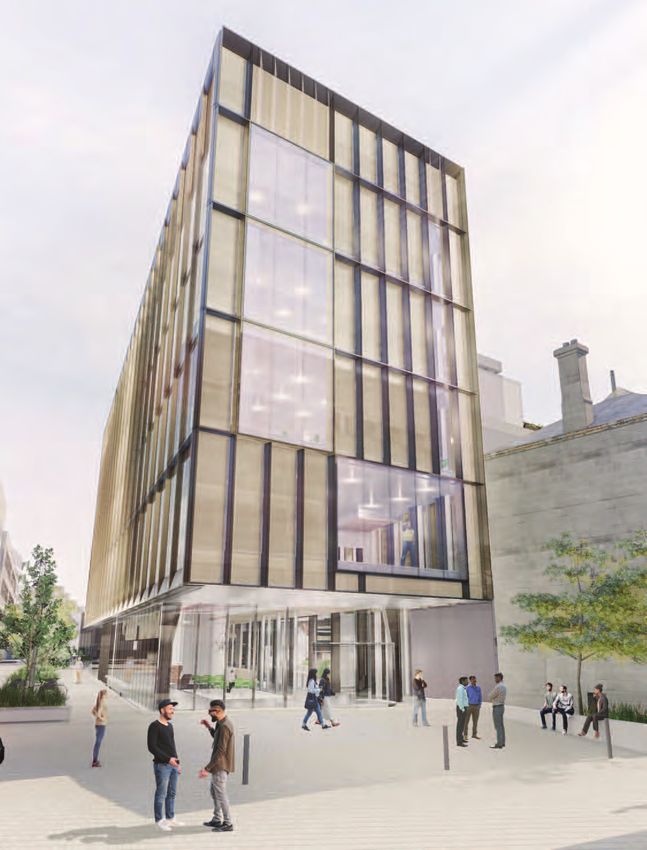

Welcome         01
         "Taking up the
        responsibility of                              About E3        03
'Balanced Solutions for
                                          Trinity Facts + Figures      09
 a Better World', E3 will
address the challenges                           University Life       11
of our time; reconciling
 technological progress                     How to apply + Fees        15
     with a sustainable
future for planet earth"                      E3 Undergraduate         17
                                                   Programmes
        Dr. Patrick Prendergast
   Provost, Trinity College Dublin             Multidisciplinary       19
                                                  courses in E3

                                            School of Computer         27
                                             Science + Statistics

                                          School of Engineering        47

                                       School of Natural Science       59

       E3 Engineering
          Environment
               Emerging Technologies
               Balanced solutions
               for a better world                    Balanced
                                                     solutions for a
                                                     better world
Welcome

      As a university we have a responsibility to work    E3 presents a future-proofed education for
      with society to address the most pressing issues    new graduates via a suite of Undergraduate and
      of our time. Universities are centres of            Postgraduate programmes across its
      excellence for research and teaching. They act      constituent schools. These include a variety of
      as focal points, working through a time and         new and existing Undergraduate programmes,
      place, to inspire generations. At their best they   from Environmental Science and Engineering or
      uncover new knowledge and foster new ideas          Computer Science and Geography.
      for the betterment of society and the planet on
      which we live.                                      As Dean of the Faculty, I warmly invite you to
                                                          consider registering for an E3 Undergraduate
      In 2018 Trinity College Dublin launched its E3      Taught Programme. In doing so you will be
      initiative. Representing Engineering,               taking the bold next step, not just in furthering
      Environment and Emerging Technologies, E3 is        your education but, as a participant in this
      a radically new type of collaboration between       exciting new venture. With our leading research
      the Schools of Computer Science and Statistics,     professors and staff you will become a co-
      Engineering and of Natural Science. It sets out     creator of your future and that of generations to
      to put the finite nature of our natural resources   come. Together we will seek out 'balanced
      firmly at the forefront of Irish third-level        solutions for a better world' and enable society
      education.                                          to live on this planet in a more sustainable and
                                                          equitable way.
      Coupled with a new capital project that
      provides purpose-built teaching and learning
      spaces, E3 will realise trans-disciplinary          Professor Sylvia Draper
      Undergraduate and Postgraduate programmes
      under the research themes of Data, Production,      Dean of the Faculty
      Well-being, Environment, Resources and              of Science, Technology, Engineering and
      Communities. These programmes will imbibe           Mathematics
      students with the skills they need to tackle the
      global challenges of today and tomorrow and to
      bring world-changing discoveries within their
      reach.
‘Vision
  is the art of    Jonathan Swift
                   Trinity Alumnus

seeing things
     invisible.’

                                     01 02
About E3

  Balanced
  solutions for a
  better world

  Talent

Humanity

About E3
                                                                                    enhance
                                                                                    our quality of life

  "                                                   E3 will position Ireland at the forefront of fields
                                                      of research in Science, Technology, Engineering,
                                                      and Mathematics (the STEM disciplines), that
                                                      are crucial for future economic competitiveness.
  Trinity College Dublin is embarking on an           It will educate engineers and scientists for
  ambitious project to expand education and           employment in existing and new technology
  research activities across three of its Schools:    sectors, equip them with the skills and
  the Schools of Engineering, Natural Sciences,       attributes to lead in the creation of new
  and Computer Science & Statistics.                  businesses, and place Ireland in a leadership
  Recognising the importance for humanity in          role globally for the quality of its graduates in
  addressing the challenge of sustainable             the STEM disciplines.
  technological development, the expansion of
  the three Schools is being executed as a single     Research in E3
  strategic activity in the area of “Engineering,     As inherently curious and creative, humanity
  Environment, and Emerging Technologies”,            will always seek to both understand the world
  or E3.                                              around us and to create tools, systems and
                                                      processes that enhance our quality of life. As
  The E3 vision enables;                              our understanding of our world grows, we now
                                                      know better the effects, both positive and
  ■ the creation of a purpose built, multi-           negative, that our way of living has on the world
    disciplinary, foundry for the delivery of         around us.
    innovations in research and teaching within
    the Schools of Engineering, Natural Science       These effects lead to challenges that are
    and Computer Science and Statistics.              inherently global, multidisciplinary and
  ■ a future-proofed education for new                complex in nature. E3 will be among the first
    graduates who will enable society to live on      centres internationally to integrate Engineering,
    this planet in a way that is sustainable and      technology and scientific expertise at scale to
    equitable.                                        address some of the biggest challenges facing
  ■ the underpinning of the infrastructural and       Ireland and the world – challenges such as
    staffing needs of these expanded Schools to        climate change, renewable energy, personalised
    ensure that their outputs are world leading.      data, water, connectivity, and sustainable
  ■ An increase in the number of STEM students        manufacturing, among many others. The span
    within Trinity by over one third in 10 years.     of E3 research has been defined using six E3
                                                      Research Challenges:
  With E3, Trinity promotes the Vision of a society
  where an understanding between technological        Environment                        Production
  innovation and our natural capital is advanced
  by world-leading research, education and
  entrepreneurship.                                   Well-being
                                                                          E3                 Communities

                                                      Data                                Resources
                                                                                                            03 04
About E3

   Martin Naughton E3                                  E3 Research Institute
   Learning Foundry
                                                       Building on its tradition of innovation,
   The central theme of E3 is ‘balanced solutions      entrepreneurship and engagement, the
   for a better world’. E3 will be a crucial           expected development of the Grand Canal
   component in our transition to a ‘smarter’          Innovation District (GCID) being championed
   economy, developing technological solutions         by Trinity will include an opportunity to
   that are more sustainable and more equitable in     contribute to the development of Dublin as an
   the use of the earth’s limited natural resources.   innovation centre. At the heart of GCID, the E3
                                                       Research Institute will be a venue for large-scale
   The E3 project aims to significantly increase the   research programmes, especially for those
   number of students in the E3 Schools. This will     working in collaboration with industry and
   ramp up over ten years. The education of these      other stakeholders.
   students with a new pedagogy will be realised
   through the Martin Naughton E3 Learning             E3 Research Institute will tackle the
   Foundry, a state of the art 7,200 square metre      fundamental issues of a liveable planet, the
   facility based on the main Trinity campus, which    technological development that is needed for
   will deliver new teaching facilities and an         our economy and society.
   innovative interactive learning space for
   undergraduate and postgraduate students.            At the core of the E3 Research Institute is a
                                                       recognition that technology must evolve in
   It will accommodate the substantial growth in       symbiosis with the natural and human world.
   the number of students and staff, and facilitate     The natural world furnishes us with resources
   an innovative curriculum with increased             that are needed for economic activity and for
   emphasis on team work, design and project-          society, and that economic activity in turn
   based activities that will draw the teaching        impacts on the natural world.
   activities in the E3 Schools closer together.
   Work will commence on the space this year,
   with a projected completion date of 2023 on
   the cards.
The Martin Naughton E3
Learning Foundry which is due
05 06
to be completed by 2023.● Dublin
Innovation
Balanced Solutions ● Trinity's Centre for Creative
District
for a Better World Technologies & Media
Engineering
V-SENSE
● The River Liffey
● O’Connell Street Bridge
An innovation district will connect Trinity Research Centres;
Trinity
indigenous and multinational companies Trinity Centre for
College
Dublin
E3 Research
Institute together with researchers and venture Bioengineering
capitalists. Such a district will produce a
Grand Canal
Innovation
District
sum that is greater than its parts, driving Trinity Centre for
inward investment, new collaborations Biodiversity Research
Dublin and jobs. Its benefits will be brought to
Innovation the regions through virtual connections Trinity Centre for Creative
District
and the sharing of research, best practice Technologies & Media
and space. Engineering (CHIME)● The Irish Sea
● E3 Research
Institute
● The School of Computer
Science & Statistics
Trinity Centre for Biomedical
● Engineering ● ADAPT ● CONNECT
● CRANN ● AMBER
Zoology ● Martin Naughton E3 School of
● Department ●
Learning Foundry Engineeering
● School of Botany
● iCRAGLAB@TCD Trinity Centre for
●
the Environment (TCE)
● School of
Natural Sciences
● Trinity Campanile
● Trinity College Dublin
● College Green Entrance
Science Foundation Ireland centers; Trinity analytical and test facilities;
CONNECT Ireland's Research Centre for Future Networks iCRAG LAB@TCD State-of-the-art electron and laser beam equipment
and Communications. for the characterisation of geoscience material.
ADAPT The Global Centre of Excellence for Digital CRANN Advanced Microscopy Laboratory (AML) Structures
Content and Media Innovation. Testhalls - Civil, Structural & Environmental
iCRAG (Irish Centre for Research in Applied Geosciences) Engineering.
- Ireland’s national geoscience research centre, V-SENSE Investigates Visual Computing at the
located at UCD. intersection of Computer Vision,
Amber (Advanced Materials and BioEngineering
Research) - Centre that provides a partnership
Computer Graphics and Media Signal
Processing.
07 08
between leading researchers in materials
science and industry.LERU Trinity is a member of
the League of European
Research Universities
Trinity Facts and Figures
The Times Higher Education
University Impact Rankings
2020 places Trinity College in
Top 5 position in the
Trinity College Dublin, founded in 1592, is the “Sustainable Cities &
oldest university in Ireland and is recognised
internationally as Ireland's No. 1 university. For Communities” category and
over 425 years, this historic university has been a Top 30 spot in “Affordable
a world leader in high-quality, internationally- and Clean Energy”.
recognised education. With a global reputation
for excellence, Trinity promotes creativity and
innovative thinking in students.
Trinity’s bustling 47-acre campus is an oasis in
the very heart of Dublin, a vibrant and safe Trinity researchers
European capital city. The university’s city- attract approx.
centre location offers students a unique €100 million
opportunity to blend a rigorous academic annually in
programme with an unparalleled array of external funding
cultural, social and professional experiences.
Approximately
A wealth of museums, theatres, galleries, cafes, 2,500 works of
restaurants and historic tourist sites are located art displayed on
right on Trinity’s doorstep. campus
To study at Trinity is to become part of a global
community of thinkers, creators, scientists,
artists, inventors and entrepreneurs, from
over 130 different countries.
Over 1 million
visitors to Science
Gallery since
opening in 2008
The Book of Kells
in Trinity’s Old
Library was
written
Ranked
in Ireland
1st
around the yearar
800AD
QS World University
Rankings 2020
The Trinity Top world 101
Community university
QS World University
Ranking 2021Global Reach
A deposit library Balanced
Over
holding over
400
solutions for a
6 million better world
industry partners volumes
Microsoft, Google, IBM, Trinity’s campus ranks in the top ten of Europe's
European Commission 200 student most beautiful universities1 and lies in the very
societies, sports centre of Dublin city. Within minutes of
clubs and museums, seats of government, theatres and
Founded in
1592
publications global corporations, Trinity is an oasis in the
middle of a vibrant European capital.
by Queen Supports 112
Elizabeth I startup companies For centuries, Dublin has been renowned for
music and literature. Now it is also a European
17,000 hub of innovation.
students from
122 countries
Connected to the Globe
Modules offered Over 31.5 million people pass through Dublin
in over
12 foreign Over 600 Airport every year2. Only one hour from London
course options and five hours from New York, Dublin is a hub
languages
for Ryanair and Aer Lingus, low cost carriers
More than connecting to over 180 destinations3 across the
140,000 alumni world.
living in
150 countries Dublin ranks 37th worldwide for best student
cities4 and has more than 300 worldwide
Spread across student exchange agreements.
47-acres
in Dublin's city Dublin is home to Europe’s largest urban park,
centre part of the city’s 5000 acres of green space.
Ireland's Most
No 1 Ireland consistently ranks as one of the safest
Innovative in Europe for and friendliest countries in the world5. Our air is
University producing clean, our hilltops are the world’s greenest and
Reuters Europe's Most graduate our education system is world-class.
Innovative Universities entrepreneurship
2019
(Pitchbook, 2020)
1 Times Higher Education Ranking 2018
Trinity is the
16th 92 nd 2 + 3 Dublin Airport Facts and Figures 2019
4 QS Best Student Cities Ranking 2019
most QS World 5 Global Peace Index Ranking 2019
international University
University in the Rankings for
world.
Times Higher Education
Graduate
Employability
09 10
Ranking 2019
2020University Life
Sports
There are over 50 sports clubs available to
Trinity students. Get fit, stay active, and meet
people outside the classroom! The university is
also home to a state-of-the-art sports centre. All
registered Trinity College students can utilise
the facilities at the Sports Centre including the
25m pool, climbing wall, fitness centre and
classes.
Socialising
The Trinity Ball, Europe’s largest private party
and a highlight of every spring term on campus.
Learning Supports
IT Services
As a student at Trinity, you are provided with
access to hundreds of computers located across
campus, secure WIFI, a Trinity Gmail account
Accommodation at Trinity and e-learning resources via the Blackboard
Many undergraduate students find Learn system, see www.tcd.ie/itservices/
accommodation in shared houses or self- students
catering apartments. Houses and apartments
vary in price, depending on size, facilities and Library
location. The Students’ Union offers a useful Trinity’s library is the largest research library in
Accommodation Advisory Service at Ireland with six million printed volumes, nearly
www.tcdgsu.ie/accommodation. A limited 500,000 electronic books, 80,000 electronic
number of students may be housed in journals, the country’s largest collection of
University accommodation, including maps and printed music, and an extensive
residences on-campus and at Kavanagh Court collection of manuscripts, see
located just a 15 minute walk to the University, www.tcd.ie/library.
see www.tcd.ie/accommodation.
Student Societies
Trinity's 120 societies attract dynamic members
from all over the university. From arts, culture,
politics and debating to gaming, advocacy and
music, you're sure to find your niche.TOP STUDENTS QUESTIONS
WHERE CAN I MEET PEOPLE?
WHO CAN I TALK TO?
CAN I GET HELP STUDyING?
HOW DO I GET ACTIVE?
Student Services
Careers Service
Plan your future beyond your current course of
study with the help of guidance software, skills
workshops and personal consultations, see
www.tcd.ie/ careers
Trinity Health Service
Trinity’s Health Service provides GP services for
students. Student consultations are free of
charge with modest fees for additional services.
All EU students should bring with them a
European Health Insurance Card issued in their
country of origin. Non-EU students are not
entitled to free national health services in
Ireland, and are advised to take out insurance
cover for hospitalisation or to extend private
health insurance before leaving their home
country. Private health insurance cover is also
available in Ireland and the student health
service can advise you on your options, see
www.tcd.ie/college_health
Day Nursery
The day nursery caters for children aged three
months to four and a half years old. There is a
fee for this service, see
www.tcd.ie/about/services/daynursery
"A trinity education
extends beyond the
classroom; it facilitates
student internships and
work placements with
multi-national industry
partners"
11 12University Life
Disability Service
The Student Disability Service works closely
with academic staff, tutors, administrators and
other support services to meet the needs
requirements of students with any disability,
see www.tcd.ie/disability
Graduate Students Union
The Graduate Students’ Union serves to protect
students’ interests and acts as a helpful meeting
point. The Union organises a variety of events,
receptions and trips each year, see
www.tcdgsu.ie
Student Councelling Service
Student Counselling offers a confidential,
professional and free of charge service. There is Employment
also a Peer Support Network which is Students from countries within the European
confidential and based on student-to-student Union (EU) are free to take up employment
support, see www.tcd.ie/student_ counselling under standard EU free movement of labour
regulations. Combining the demands of
employment and student is not easy however
and it is ecommended that students do not
arrive from elsewhere in the EU without
possessing the financial resources to complete
their chosen course of study.
Non-EU nationals who have permission to
undertake postgraduate study in Ireland are
entitled to take up casual employment, defined
as up to 20 hours part-time work per week or
full-time work during vacation periods. In order
to encourage talented, skilled graduates to
pursue careers in Ireland, non-EU nationals are
permitted to remain in Ireland for an additional
period of 12-24 months after receiving the
results of their final examinations as part of the
Third Level Graduate Programme, see
www.inis.gov.ie/en/INIS/Pages/
Student%20Pathway13 14
How to Apply and Fees

                                                        Visa Requirements
                                                        If you are a citizen of the European Union (EU),
                                                        you do not need a visa to enter and live in
                                                        Ireland. Some, but not all non-EU students
                                                        require visas to enter Ireland, students from
                                                        North America are among those who do not
                                                        require a visa. The list of visa-required countries
                                                        can be found at the INIS website:
                                                        www.inis.gov.ie. It is important to note that ALL
                                                        non-EU students, whether visa-required or not,
                                                        must register with the Irish Naturalisation and
                                                        Immigration Service (INIS) for permission to
                                                        remain in the state. Students must show their
                                                        offer letter at airport immigration where they
                                                        will receive a temporary stamp in their passport.
                                                        They must register with the INIS within the time
   Language Requirements                                limit specified on their temporary stamp. Visa-
   All applicants whose first language is not           required non-EU students should contact their
   English and who have not been educated               nearest Irish Embassy or Consulate for
   through the medium of English must present           information on visa requirements. Visas can
   one of the following qualifications in the English   take up to 8-10 weeks to process, so please
   language:                                            allow sufficient time. You should apply as early
                                                        as possible, especially if an Irish visa is required.
   ■ IELTS: Grade 6.5 overall
   ■ TOEFL: 88 internet-based, 570 paper-based,         For further information:
     230 computer-based                                 www.tcd.ie/study/international/before-arrival/
   ■ University of Cambridge: Proficiency               visa-immigrations. All non-EU fee paying
     Certificate, Grade C or better (CEFR Level C1      students must pay their full tuition fees prior to
     or C2); Advanced Certificate, Grade C or           registration.
     better (CEFR Level C1 or C2)
   ■ Pearson Test of English (Academic) – PTE
     Academic: a minimum score of 63 to be
     eligible (with no section score below 59)
     Full details available at:
     https://www.tcd.ie/study/apply/admission-
     requirements/undergraduate/
Fees Find out more:
Fee details for all courses are available at: www.tcd.ie/study/international/scholarships/
www.tcd.ie/academicregistry/feesandpayments www.tcd.ie/academicregistry/feesandpayments/
Please note a non-refundable online application
fee is required for all taught and research How to apply
courses. An EU application is one made by a All course information and online
person who fulfils one or more of the following application details are available at
criteria: 1. who is ordinarily resident in the EU www.tcd.ie/courses.
and who has received full-time further or higher
education in the EU for three of the five years Contact us
immediately preceding admission; or 2. who is Academic Registry provides central academic
ordinarily resident in the EU and has worked administrative services to assists students with
full-time in the EU for three of the five years all queries including course applications/
immediately preceding admission; or 3. who admission, fees and registration.
holds a passport from an EU state and has
Academic Registry, Watts Building,
received full-time further or higher education in
Trinity College Dublin,
the EU for three of the five years immediately
the University of Dublin, Dublin 2, Ireland
preceding admission. All other applications are
E: academic.registry@tcd.ie
considered to be non-EU applications.
T: +353 (0)1 896 4500
Funding & Scholarships
General enquiries from International students
Tuition fees vary by course and can be found on
[outside of Ireland and EU/EEA] should be
the Academic Registry website. A range of
addressed to:
scholarships and funding options are available.
Trinity accepts student loans and works with the Global Relations, East Theatre,
US federal loan programme. Trinity College Dublin,
the University of Dublin, Dublin 2, Ireland
Students considering E3 undergraduate E: international@tcd.ie
programmes can apply tor the E3 - Balanced T: +353 (0)1 896 4494
Solutions for a Better World Scholarship.
Postgraduate students should be sure to check
with their schools and departments for subject-
specific funding. PhD students should discuss
funding with their potential supervisors. Unless
explicitly excluded, local scholarships and grants
can be used towards Trinity fees. Please visit our
website for more information on Trinity
scholarship opportunities.
15 16E3 Undergraduate Taught Programmes
As inherently curious and creative, humanity
will always seek to both understand the world
around us and to create tools, systems and
processes that enhance our quality of life. As
our understanding of our world grows, we now
know better the effects, both positive and
negative, that our way of life has on the world
around us. Challenges around health,
automation, artificial intelligence, climate
change, energy, water and food are inherently
global, multidisciplinary and complex in nature.
The role of specialists in understanding and
shaping developments in these areas will
continue to be as important, or more important,
than it has been to date. Increasingly however, E3 graduates will:
humanity will require specialists who can
contextualise their knowledge in broader circles ■ Have strong technical competence in their
and who can efficiently and effectively work chosen discipline.
with experts from other disciplines. ■ Be comfortable and experienced working in
teams, including with specialists from other
E3 graduates across all its constituent disciplines, on ill-defined and
disciplines will share an experience of having multidisciplinary challenges.
learnt and worked in a multidisciplinary ■ Be skilled communicators across a range of
environment, been educated by world-leading platforms and to varying audiences.
experts in areas of their specialisation and
■ Have an ability to think at multiple levels of
benefitted from best-in-class pedagogy.
detail and abstraction.
E3 graduates will be flexible, adaptable and
■ Be comfortable in both practical and
creative individuals who bring deep disciplinary
theoretical contexts.
knowledge and problem-solving expertise to
■ Be able to make informed and ethical
any problem they are presented with. They will
decisions that balance technical, social and
be highly sought after by indigenous and
environmental considerations.
multinational companies in Ireland and will be
equipped and ready to work in an international ■ Be able to confront the limitations of their
context if that is their chosen route. During their own knowledge and to address these
studies, E3 students will have opportunities to limitations through collaboration and life-
follow their passions, both inside and outside long learning.
their chosen disciplines, supported by a flexible
and responsible academic support system that Open a world of possibilities with an
allows the abilities of each student to flourish. E3 Undergraduate programme at
Trinity College DublinUndergraduate Taught Programmes Balanced
solutions for a
better world
B.Sc. in Environmental B.A. (Moderatorship)
Multidisciplinary Science and Engineering Honours Bachelor Degree
courses in E3 (NFQ Level 8) in Computer Science &
Geography Joint Honours
(NFQ Level 9) Optional M.Sc. in
Applied Environmental
Science or MAI specialising in
Environmental Engineering
School of Computer School of School of Natural
Science & Statistics Engineering Science
B.A. (Moderatorship) Honours M.A.I. Master’s Degree in B.A. (Moderatorship) Honours
Bachelor Degree (NFQ Level 8) Engineering (Common Entry Bachelor Degree (NFQ Level 8)
Optional: M.C.S. in Computer Programme) (NFQ Level 9) in Science (direct entry courses -
Science (NFQ Level 9) Optional: exit after 4th year with Biological and Biomedical Sciences;
B.A.I. Honours Bachelor Degree Geography and Geoscience)
B.A. (Moderatorship) Honours in Engineering (NFQ Level 8)
Bachelor Degree in Computer B.A. (Moderatorship) Honours
Science Joint Honours (with M.A.I. Master’s Degree in Bachelor Degree (NFQ Level 8)
Geography, Business or Engineering with Management in Biological and Biomedical
Linguistics) (NFQ Level 9) Sciences (Botany; Environmental
Optional: exit after 4th year with Science; Zoology)
B.A. (Moderatorship) Honours B.Sc. Honours Bachelor Degree
Bachelor Degree in Management in Engineering with B.A. (Moderatorship) Honours
Science and Information Management (NFQ Level 8) Bachelor Degree (NFQ Level 8)
Systems Studies in Geography and Geoscience
(with specialisations in
B.A. (Moderatorship) Honours Geography and Geoscience)
Bachelor Degree in Computer
Science, Linguistics and a
Language
To study at Trinity is to become part of a global
community of thinkers, creators, scientists,
artists, inventors and entrepreneurs spanning
158 countries and over 425 years
17 18Multidisciplinary courses in E3
The School of Engineering & Natural Science
B.Sc. in Environmental Science and Engineering
(with option of integrated M.Sc. in Applied Environmental Science or MAI specialising in Environmental Engineering
What is Environmental Science and Engineering? The School of Natural Sciences conducts research,
Environmental Science and Engineering is a new and delivers teaching, on all aspects of the natural
integrated undergraduate with postgraduate degree world, from the formation of the earth, the behaviour
course that aims to train the next generation of of the environment, the evolution and ecology of its
graduates who have the competencies, knowledge organisms and its interactions with human society
and experience necessary to design and deploy Trinity’s School of Engineering is ranked in the top
solutions that protect and improve our environment 100 engineering schools in the world and offers
and human wellbeing, and that work with rather than outstanding teaching by Engineers who are at the
against the natural world to foster biodiversity, forefront of their field worldwide. The School of
climate action and sustainable use of Earth’s finite Engineering is a vibrant, intellectual community of
resources. Students complete an integrated five-year innovative researchers, teachers and students, which
course consisting of four year B.Sc. plus an additional combines high-quality teaching with expansive
year of study leading to either Master in Engineering research activity.
(Studies) a M.A.I. (St.) or Master in Applied
Environmental Science MAES. Special Entry Requirements
The course for you? Leaving Certificate A H4 in mathematics and
The course will provide students with fundamental a H4 in one of the
grounding in the Natural Sciences and Engineering, following subjects:
and in the applied skills required to develop physics, chemistry,
sustainable solutions for major societal and biology, physics/chemistry,
environmental challenges. The unique combination geology, geography,
of Engineering and Natural Sciences modules agricultural science,
represents one of the first in Ireland and computer science
internationally. Strong emphasis is placed on
students acquiring practical laboratory and field Advanced GCE Grade C in Mathematics
skills, as well as working in teams. Environmental (A Level) Grade C in one Science
Science and Engineering at Trinity is a new integrated subject
degree programme is delivered through the expertise
of two Schools (School of Natural Science and the International HL Grade 5 in Mathematics
School of Engineering). Baccalaureate HL Grade 5 in one Science
subjectMultidisciplinary courses in E3
The School of Engineering & Natural Science
Graduate skills and career opportunities employment in governmental regulatory
Environmental Engineers and Applied Environmental organisations and other institutions such as Local
Scientists who graduate from this new Authorities, Environmental Protection Agency,
interdisciplinary programme will address some of the Geological Survey Ireland, Teagsac as well in
most challenging and important issues of our time in Humanitarian Non-Governmental Organisations
terms of sustainable development, particularly with (Concern, GOAL, Selfhelp Africa).
respect to the protection of the environment.
Graduates will have a strong grounding in
Environmental Science in conjunction with applied
Engineering skills and problem solving approaches
and will therefore be at the forefront of initiatives to
solve the challenges of many of the United Nations
Sustainable Development Goals. Graduates from this
programme will be highly skilled and employable in
both industrial and governmental organisations both
here in Ireland as well as overseas. Recent graduates
from the Civil Engineering stream who have
specialised in Environmental Engineering are working
in R&D, Civil Engineering and Environmental
Consultancies, Project Engineers, Environmental
Regulation, Energy companies, mining companies as
well as setting up new ventures and spin outs.
Our environmental engineers and scientist graduates
are also working in the design and development of
environmental solutions with leading Engineering
consultancies such as Arup, RPS, ESB International,
Shell, IBM etc. Such companies have a strong demand
for high quality graduates at the Masters (and Ph.D.)
level due to the high technical level off their work.
Environmental Engineers and scientists also find
19 20Multidisciplinary courses in E3
The School of Engineering & Natural Science
B.Sc. in Environmental Science and Engineering
(with option of integrated M.Sc. in Applied Environmental Science or MAI specialising in Environmental Engineering
your degree and what you’ll study Environmental Engineering
Drawing on the expertise of the School of Engineering This strand of the Environmental Science and
and the School of Natural Science at Trinity, this Engineering course places stronger emphasis on
programme focuses on delivering a research-inspired, modules and project work with an Engineering focus
outcome-based educational experience to students. in years 4 and 5. Applied Environmental Science This
Students complete an integrated five-year course strand of the Environmental Science and Engineering
consisting of four year B.Sc. plus an additional year of course places stronger emphasis on modules and
study leading to a M.A.I. (St.) or MAES. During the first project work in the discipline of Environmental
three years a balanced and integrated programme of Sciences in years 4 and 5.
modules in Environmental Science and Engineering is
provided. Following completion of the first three Applied Environmental Science
years of the course, students start to follow a more This strand of the Environmental Science and
specialised programme in one of the following Engineering course places stronger emphasis on
strands, although there are still many shared modules and project work in the discipline of
courses and projects between the environmental sciences in years 4 and 5.
two strands: In Year 4, students have the option to undertake an
Industry Internship or International Exchange in their
chosen stream. These options include Erasmus,
Course director says UNITECH (as a paid industrial partnership) and
CLUSTER. Alternatively, a student can stay for the full
"A key strength of this courses is that it offers year in Trinity and undertake a Capstone Project
students tremendous scope – through working module which aligns with their chosen stream, in
with industry partners and working on their own addition to at least 2 optional modules associated
research projects – to tailor their programmes in with their chosen stream. Following completion of the
the areas they are most interested in.” fourth year of the Environmental Science and
Engineering degree course it is anticipated that most
Professor Jennifer Mc Elwain eligible students would elect to complete one further
The School of Natural Science year of study in their chosen strand leading to a M.A.I.
(St.) or MAES degree.Multidisciplinary courses in E3
The School of Engineering & Natural Science
Assessment
This new course will be delivered through laboratory
practicals, lectures and field work which includes
international trips. The course has been designed to
embed a diverse array of assessment approaches
across the entire 5 year programme. These include
summative and formative assessment approaches,
peer assessment, group assessment, self- assessment
and more conventional continuous and exam
assessment methods.
Study abroad and language options
Students who spend the first semester of fourth year
in Trinity may then spend the second semester on an
industrial placement where they complete an
industry-based project. Students following this mode
will have two project supervisors: a staff member of
the host company, to provide day-to- day guidance
whilst on placement as well as liaison with Trinity and Get in touch!
a member of Trinity’s academic staff. Alternatively,
students who have chosen the Environmental ■ https://naturalscience.tcd.ie/undergraduate/
Engineering route may opt to spend the fourth year environ-eng/
on the Cluster/Unitech programme in a partner
University. ■ E: Jenny McElwain (Course Director)
JMCELWAI@tcd.ie
and Laurence Gill (Course Director):
LaurenceGill@tcd.ie
■ T: +353 1 896 1074
21 22Multidisciplinary courses in E3
Computer Science & Geography (Joint Honours)
TR240 B.A. (Moderatorship) Joint Honours Bachelor Degree
in Computer Science & Geography (NFQ Level 8)
Why study Computer Science and Geography? The combination of Computer Science and
Geographical knowledge and experience are more Geography allows students to combine
important than ever, giving us the skills to understand computational skills and geographical knowledge to
a dynamic and rapidly changing world. Geography is address important global issues. Examples of this
an integrative subject with an international outlook include Geographical Information systems (GIS)
and openness to interdisciplinary collaboration. The which is used to underpin decision making in: urban
focus in geography is on understanding spatial and planning; land use planning and energy distribution
temporal change on and of our planet. or Remote Sensing/Earth Observation which can be
Computer Science is concerned with the study of used to monitor the impact of global change.
everything to do with computers and our relationship Graduates of this programme will be well placed to
with them. Computer scientists are critical to the develop the next generation of GIS; these may, for
efficient running of modern societies, dealing with example, incorporate large volumes of IOT (Internet of
health, security, finance, transportation, and now Things), remote sensing data, integrate diverse forms
increasingly our interaction through social networks. of data, and present advanced visualisations. These
Computing professionals deal with theoretical issues, developments would be driven by computer
solve complex problems, deal with matters of ethics scientists who understand geoscience. Graduates of
and with society at large. the programme might apply "big data” techniques to
geographic data, for example to predict flooding, to
model urban traffic, to explain demographic changes
or monitor long-term environmental change.
Graduates with these skills will be at the heart of the
design of future smart and sustainable cities and
societies.Multidisciplinary courses in E3
"Many of the developments that will make ripples across the globe in years to come will be driven by computer
scientists who understand geoscience and possess the technological skills to create solutions. These skills are at
the very heart of the design of future smart and sustainable cities and societies. We are excited to watch our
graduates develop and see which paths they take in their learning. Some may apply big data techniques to
geographic data to predict flooding or model urban traffic, while others may monitor demographic changes or
monitor long-term environmental patterns before developing apps that benefit people and the planet.”
Professor Lucy Hederman,
Course Director
Why study Computer Science and Geography at Trinity is a place of intensive and
Geography at Trinity? extensive geographical scholarship in Ireland. The
This programme is a multidisciplinary programme School carries out teaching and research across the
delivered by the School of Computer Sciences and discipline, from development theory to coastal
Statistics and the School of Natural Sciences. modelling, and from climate change to the social
economy, all within different contexts, from Nigeria to
The School of Computer Science and Statistics at New Zealand. The School aims to challenge students
Trinity is recognised for establishing computer intellectually to foster and maintain world-class
science as an academic discipline in Ireland. The research and teaching in a supportive and collegial
School has earned a strong international reputation atmosphere. Trinity is ranked in the world top 101
and has partnerships in education, research and universities for Geography (QS World University
industry across the globe. Computer Science at Rankings by Subject 2020).
Trinity is ranked number 1 in Ireland, top 25 in Europe
and top 100 worldwide (QS subject rankings, In recent years, third and fourth year geography
2020). The School hosts three National Research students have been involved in academic staff-led
Centres and continues to evolve and lead ground fieldwork from Clare Island to Mallorca, undertaken
breaking research programmes. The School summer research projects in Kenya, and made
collaborates with leading employers and fosters digital video documentaries and blogposts as part of
innovation through its many successful start-up their assessed work.
companies.
What our graduates say
“It might be cheesy to say that ‘geography rocks’ but it’s true! Studying Geography
at Trinity has left me with more than just an education. Through the wide range of
modules offered within the course I have learnt a diverse range of skills which are
really relevant in today’s society. Not only that, but the chance to partake in field-
trips both at home and abroad makes this course an excellent place for forming
lasting friendships while learning lots along the way.”
Sarah McDonagh
23 24Multidisciplinary courses in E3
Computer Science & Geography (Joint Honours)
TR240 B.A. (Moderatorship) Joint Honours Bachelor Degree
in Computer Science & Geography (NFQ Level 8)
Programme overview For their fourth year, students undertake a capstone
This is a Joint Honours Programme. Students on the project or research dissertation in either Computer
programme begin studying both subjects Science or Geography depending on their pathway. In
equally, and then may specialise more in one subject addition students choose from Computer Science
than the other, and may exit with a Joint Honours topics such as Group Programming Project, Machine
Degree or a Major with Minor Degree. Learning, Strategic Information Systems, Technology
Entrepreneurship, Data Analytics, Fuzzy Logic, Formal
Drawing on the expertise of both Schools, the Verification, Functional Programming, Internet
programme focuses on delivering a research inspired, Applications, Human Factors, Computer Graphics,
outcome-based educational experience to students. Computer Vision; and from Geography choose from
In first year students spend equal time on Computer modules such as Living on the Edge (coastal
Science and Geography. In the first three years of the Geography), Globalisation and African Development,
Computer Science programme, students will develop Historical Geography, Geomorphology, GIS and
key skills in designing and implementing computer Remote Sensing Applications in Geography,
programmes and systems, solving problems, using Environmental Governance, Remote Sensing of the
mathematics, statistics and data analytics and Environment, Spatial Analysis Using GIS, Stormy
communicating both orally and in writing. Students Geomorphology, Urban Geography: Cities, Space and
will learn how to use a range of programming Culture.
languages and how to tackle large software
engineering projects. Students will also learn about The Course for you?
computer networks and telecommunications, This new course will suit students who are interested
information management and the relationship in the world around them, in understanding the
between computers and society. The first year significant challenges that face our world, and would
Geography course aims to provide a solid grounding like to tackle those challenges with computer and
in human, physical and environmental geography, related technologies. Computer Science is best suited
focusing on materials that are dealt with in greater to those who are comfortable applying logical
depth in later years. Second and third year geography thinking to situations.
modules cover issues relating to cultural, economic
and historical geography, and to natural and human- No prior knowledge of Computer Science or
modified environmental processes and systems. Geography is assumed.
Research skills are developed further through e.g.,
Remote Sensing and GIS modules and modules that Learn more about the joint honours pathways
include fieldwork components. on page 34Multidisciplinary courses in E3
Study abroad and language options
Students may apply to spend your third year studying
at a university abroad as part of an exchange
programme.
Graduate Opportunities
Graduates from this new course will be highly skilled
and employable in both industrial and governmental
organisations both here in Ireland as well as overseas.
Both geography and computer science offer a wide
array of career opportunities for graduates. The
combination of these disciplines train students to
analyse challenges in a broad range of areas and to
provide solutions to them.
Careers taken up by graduating geography students in
recent years include urban and regional planning,
environmental consultancy, policy, and research, and
teaching as well as positions in such areas as financial
services, foreign affairs, leisure and tourism and
Get in touch!
overseas development.
■ www.scss.tcd.ie
Graduates from computer science find employment in
almost every sector from communications and ■ E: undergraduate@scss.tcd.ie
entertainment to manufacturing and transportation,
government, healthcare, education and many more. ■ T: +353 1 896 1765
Positions can be found within: design, testing, ■ www.tcd.ie/geography
manufacturing, support and implementation,
information systems, research and development, ■ E: geog@tcd.ie
operations and management. Some graduates of this
course can be expected to pursue careers in research ■ T: +353 1 896 1576
to Ph.D. and beyond; others will found their own
companies.
25 26School of Computer Science & Statistics
Computer Science at Trinity is ranked number 1 in
Ireland, top 25 in Europe and top 100 worldwide
(QS Subject rankings 2018, 2019, 2020)

The School of Computer Science and Statistics         Whichever programme students choose, we are
at Trinity is recognised for establishing computer    preparing them with strong research skills and
science as an academic discipline in Ireland.         an ability to ask insightful and pertinent
The School has earned a strong international          questions. Whether they choose to join Ireland’s
reputation and has partnerships in education,         vibrant R&D sector or to enter academia, our
research and industry across the globe. The           students are helping to ask and answer some of
School is actively engaged in research across         the most pressing questions in computer science
virtually all areas of computer science including     and statistics.
artificial intelligence, future networks and the
Internet of Things (IoT); graphics, vision,           Students joining us can look forward to a friendly
augmented and virtual reality; smart cities;          atmosphere with world-class academic staff
Computer Science and Statistics.                      supported by a state-of-the-art teaching and
                                                      research environment. The success of our School
In addition, the School leads four major              depends on the enthusiasm and ingenuity of our
nationally-funded large-scale research centres;       staff and students. If you join us, we will work
ADAPT, CONNECT, ENABLE and V-SENSE.                   hard to foster your creativity and, in return, we
                                                      are sure you will enjoy your time with us and
The School of Computer Science and Statistics         help contribute to our reputation as a leading
has a strong track record of working with             centre for academic excellence.
industry as research partners and via student
internships in Dublin and around the world.
Many of our graduates are in leadership positions
in the global technology sector or are founders of
startups like Iona Technologies, Havok, Kore,
Swrve, Quaternion Labs, LinguaBox, WiFi Guard,
CipherApps, Haunted Planet Studios, Haptica,
GLANTA, Tolerant Networks, Cara Health, X
Communications Ltd, EmpowerTheUser, Insight
Statistical Consulting, Xcelerit, Wripl and Emizar,
SoapBox Labs, Good Travel Software,
SilverCloud, Danalto, Volgrams and Data
Chemist.

The School has a wide range of undergraduate
taught and research programmes. It offers a
variety of options for students wishing to pursue
Ph.D. studies, from working individually with an
expert supervisor to engaging in a rich
programme of studies offered by one of the four
SFI Centres for Research Training supported by
the School.
                                                                                                           27 28
Computer Science (Single Honours)
B.A. (Moderatorship) Honours Bachelor Degree (NFQ Level 8)
Optional Masters in Computer Science (NFQ Level 9)
Leaving Certificate H4
Course Code TR033 Mathematics
CAO Points 2020 509 Advanced GCE (A Level) Grade C
Duration 4 years Mathematics
(5 years with a master’s)
HL Grade 5 Mathematics
What is Computer Science? to information security, and from social network sites
Computer Science is concerned with the study of to educational and training systems.
everything to do with computers and our relationship
with them. Computer scientists are critical to the Computer Science: The course for you?
efficient running of modern societies, dealing with Computer Science at Trinity is a challenging and
health, security, banking and finance, transportation, exciting course with a focus on innovation and
and now increasingly our interaction through social cutting-edge technology that demands the very best
networks. Computing professionals deal with from our students. To get the best from the course
theoretical issues, solve complex problems, deal with you need to be interested in developing clear logical
matters of ethics and with society at large. Theoretical ideas about situations and about how to develop
issues in computer science relate to the abstract feasible schemes (‘algorithms’) for computers to deal
notions of computation and information. with these situations. You need to be comfortable
using mathematical techniques to solve problems. If
The study of these issues leads, for example, to you are knowledgeable about computers already, to
efficient and robust algorithms and to new the extent of building them or writing programmes
programming languages. Applications of computer for them, so much the better – but bear in mind, no
science range from artificial intelligence to health prior knowledge of computer science is assumed.
informatics, from computer animation and graphicsComputer Science (Single Honours)
Computer Science at Trinity The School collaborates with leading employers and
Computer Science at Trinity is ranked number 1 in fosters innovation through its many successful start-
Ireland, top 25 in Europe and top 100 worldwide (QS up companies.
subject rankings, 2020).
This course is accredited by Engineers Ireland.
Computer Science at Trinity is an integrated
programme: students can study for an Honours Graduate skills and career opportunities
degree over four years, and also have the option to Graduates from this programme are highly sought
study for a fifth year leading to a master’s degree in after and can expect to find employment anywhere in
Computer Science (M.C.S.). the world. Each year leading employers in the sector
attend a special recruitment fair held at the School of
The School of Computer Science and Statistics at Computer Science and Statistics which affords
Trinity is recognised for establishing computer students an opportunity to chat informally regarding
science as an academic discipline in Ireland. The their career opportunities.
School has earned a strong international reputation
and has partnerships in education, research and Graduates find employment in almost every sector
industry across the globe. The School hosts three from communications and entertainment to
National Research Centres and continues to evolve manufacturing and transportation, government,
and lead ground breaking research programmes. healthcare, education and many more. Positions can
be found within: design, testing, manufacturing,
support and implementation, information systems,
research and development, operations and
management. Many graduates hold senior positions
such as CTO and CIO. Others pursue careers in
research to Ph.D. and beyond. The School is proud of
the entrepreneurial and academic success of its
graduates.
29 30Computer Science (Single Honours)
B.A. (Moderatorship) Honours Bachelor Degree (NFQ Level 8)
Optional Masters in Computer Science (NFQ Level 9)
your degree and what you’ll study You will spend the second half of this fourth year
working with an academic supervisor on a substantial
First, second and third years Capstone project in an area of your choice.
In the first three years of the programme, you will If you decide to study for the master’s degree in
develop key skills in designing and implementing Computer Science over five years, you also choose
computer programmes and systems, solving from the range of advanced subjects listed above.
problems, using mathematics, statistics and data
analytics and communicating both orally and in Internship
writing. You will learn how to use a range of Fourth-year students who opt for the master’s degree
programming languages and how to tackle large undertake an internship in industry or in a research
software engineering projects. You will also learn laboratory at home or abroad. The aim is to develop
about computer hardware and develop a broad your understanding of how design and theoretical
knowledge of other topics, including networks and aspects of computer science are applied in a
telecommunications, information management and commercial or research workplace.
the relationship between computers and society.
Students will take two Trinity Electives in the second Companies participating in our internship
year, one in the first semester and one in the second programme include: Cisco, DemonWare, Microsoft,
semester. At the end of third year, you choose to study MasterCard, Murex, Susquehanna International Group
either for the Honours degree (B.A. Moderatorship in (SIG), Accenture, Google, First Derivatives, Havok,
Computer Science) or the master’s degree in Bloomberg, Bank of America Merrill Lynch, Glanta
Computer Science (M.C.S.). Ltd., SAP, Amazon, AOL, Incognito, Swrve, ALTV, Citi,
EATON, Edgescan, Effective Software, Enernoc,
Fourth year Ezetop, FieldAware, Hosted Graphite, Hubspot, Intel-
If you decide to study for the Honours degree in Movidus, KDEG/CNGL TCD, LexisNexis, Popdeem,
Computer Science over four years, you can choose Popple, PricewaterhouseCoopers pwc, Purpledecks,
from a range of advanced subjects to study including: Qualtrics, Revenue, Shutterstock, SQA Consulting,
Artificial Intelligence; Computer Graphics and Ticket Chain, Toast, Touchtec Payments, Travelport
Animation; Computer Vision; Internet Applications; Digital, Ultan Technologies, Visible Thread, Workday.
Advanced Computer Networks; and many others.
Topics are reviewed annually to reflect developments
in the field of computing.Computer Science (Single Honours)
Fifth year
In your optional 5th year, as well as continuing to
study advanced subjects, you will spend the second
half of the year working with an academic supervisor What our graduates say
on a substantial research dissertation in an area of
your choice. What I really enjoyed about the course was the
exposure to software, hardware and
On successful completion of the five years, both a B.A. telecommunications which gives you the entire
Moderatorship and master’s degree in Computer view of a system rather than the separate
Science are awarded. components. I found the lecturers to be
knowledgeable and approachable. Being a
Study abroad male dominated science, I think we need more
You may apply to spend your third year studying at a girls to think seriously about studying computer
university abroad as part of an exchange programme. science at university. During my summers at
Trinity, I undertook a number of internships
both in Ireland and abroad. One of these
internships resulted in a full-time graduate job
offer in London.
Katharine Burton
Get in touch!
■ www.scss.tcd.ie/cs
■ E: undergraduate@scss.tcd.ie
■ T: +353 1 896 1765
31 32Computer Science (Joint Honours) B.A. (Moderatorship) Honours Bachelor Degree (NFQ Level 8) Computer Science can be studied as as a Joint Honours subject with one of the following options: TR240 Geography Page 23 TR188 Business Page 30 TR241 Linguistics Page 32
Computer Science (Joint Honours)

                                                              Leaving Certificate          H4/O2
                                                                                           Mathematics
                                                              Advanced GCE (A Level)       Grade C
                                                                                           Mathematics
    Course Code            TR240, TR188 and TR241        or
                                                              GCSE                         Grade A
    Duration               4 years                                                         Mathematics

                                                         HL Grade 5 Mathematics

Computer Science Joint Honours Combinations              Information Management and Software Engineering.
Each of the Computer Science Joint Honours               Depending on the pathway chosen, students may also
combinations offers unique opportunities where the        take Applied Statistics and Probability, Intermediate
subjects intersect. Students studying Computer           Programming, Algorithms and Data Structures II, and
Science and Geography may have a particular interest     Natural Language Processing.
in geographic information systems, spatial data or
“smart cities”. The combined study of Computer           Third year
Science and Linguistics yields opportunities for         All students in third year take Software Engineering,
graduates to specialise in computational speech and      Information Management, and Computer Networks.
language processing or text analysis. Our long-running   Depending on the chosen pathway, students may take
Computer Science and Business joint programme            additional subjects such as Compiler Design, Artificial
provides graduates with the knowledge and expertise      Intelligence, Symbolic Programming, Functional
needed to work in the technical field of Computer        Programming, Discrete Mathematics, Advanced
Science along with the business management skills        Computer Networks.
required to understand the fundamentals of markets,
organisations and business management.                   Fourth year
                                                         In the fourth year, all students will complete a
Pathways                                                 Capstone project. In addition they choose from topics
The pathways available are Major with Minor and Joint    such as Group Programming Project, Machine
Honours. See Trinity prospectus for further              Learning, Strategic Information Systems, Technology
information.                                             Entrepreneurship, Data Analytics, Fuzzy Logic, Formal
                                                         Verification, Functional Programming, Internet
your degree and what you’ll study                        Applications, Human Factors, Computer Graphics,
Details of the Computer Science part of the joint        Computer Vision.
programmes are provided below.
                                                         Assessment
First year                                               Courses are examined by a combination of continuous
In first year, students spend about 25% of their time    assessment and/or end of term examination or
learning to design and write computer programs. They     assessment.
also study Mathematics, Statistics, and Computer
Systems.                                                 Study abroad
                                                         You may apply to spend your third year
Second year                                              studying at a university abroad as part
In the second year the study of Computer Science         of an exchange programme.
continues with Algorithms and Data Structures,                                                          33 34
You can also read


