UNHCR's People Strategy 2016-2021 - IN SUPPORT OF THOSE WE SERVE
←
→
Page content transcription
If your browser does not render page correctly, please read the page content below
UNHCR’s People Strategy
2016-2021
IN SUPPORT OF THOSE WE SERVE
UNHCR’s People Strategy
2016-2021
IN SUPPORT OF THOSE WE SERVE

UNHCR’s ability to provide protection and assistance to an ever-increasing number of persons of concern
is dependent on its people. These people – talented, compassionate, with high integrity – are called upon to
respond to large-scale humanitarian crises and are willing to work in some of the most difficult and dangerous
locations in the world. As the demands upon UNHCR have both expanded and evolved in recent years, the
commitment, adaptability and professionalism of those who work for the organization make them the greatest
resource of the Office. Such circumstances require a strategic approach to recruiting, placing, supporting and
developing our people. This People Strategy defines that approach.

This document is for general distribution. All rights reserved.
Reproductions and translations are authorized, except for
commercial purposes, provided the source is acknowledged.
Cover photo: © UNHCR / B. Loyseau
© United Nations High Commissioner for Refugees
December 2015
FOREWORD FROM

                                                                                                                      © UNHCR / J. Kohler
    THE HIGH COMMISSIONER

    Looking at UNHCR’s evolution over the last decade,
    I am struck by two driving forces: those of continuity
    and of change. Our work – delivering protection and
    supporting solutions for refugees, asylum-seekers,
    stateless persons and internally displaced persons
    – remains an unwavering constant in this complex
    world, anchored by the mandate with which we have
    been entrusted.

    Yet the ways in which we deliver protection,
    assistance and solutions in support of persons
    of concern have greatly evolved. To name but a
    few: our urban policy and work on alternatives
    to camps; the use of cash-based interventions;
    the introduction of biometrics; our age, gender
    and diversity approach; and our emphasis on
    community-based protection and accountability
    to persons of concern. All of this is occurring in
    an environment that recognizes the centrality of
    partnerships in our ability to deliver – partnerships
    with host countries, national and international          In the last three years alone, UNHCR has responded
    NGOs, the UN family, donor governments and an            to five Level 3 crises, which has challenged the
    increasingly broader range of development and            international community and the organization alike.
    private sector actors.                                   To respond to the crises, staff and flexible workforce
                                                             have increased with many working for extended
    I have been inspired and gratified by the ability of     periods in high-threat locations. Prolonged
    those who work for UNHCR to innovate and to              exposure to human tragedy and unsafe conditions,
    embrace change, while remaining true to our core         oftentimes without access to adequate medical
    values. It must be within the DNA of the unique          facilities and nutrition, raises the risk of secondary
    individuals who choose to serve in an organization       trauma, burnout, depression and long-term health
    like ours: I have consistently seen throughout my        conditions. With nearly 50 percent of UNHCR
    travels how the people who work for UNHCR are            staff now working in such locations, it is ever more
    driven by their regard and hopes for our persons of      incumbent on the organization to do its utmost to
    concern.                                                 protect and preserve its people for the long term.

    As an organization, UNHCR, too, has experienced          Since the demands upon UNHCR and our workforce
    a significant transformation, due in large part to       show no signs of abating, this strategy is therefore
    the number, magnitude and complexity of the              timely, and I am convinced its implementation will
    emerging and protracted crises we face. Ten years        enable us to revisit and strengthen the way we
    ago, UNHCR was responding to 17 million persons          recruit, care for, support and manage our human
    of concern; today, that number has more than             talent – those who serve and strive to empower our
    tripled, reaching nearly 55 million. Similarly, our      persons of concern – in both the immediate and the
    global expenditure has jumped from USD 1 billion         long term.
    to over 3.3 billion – even as 45 percent of the
    budget, which is based upon the needs of persons         António Guterres
    of concern to UNHCR, remained unmet despite the
    unprecedented generosity of donors. This evolution
    has also brought significant human resources
    challenges.

4   UNHCR’s People Strategy 2016 – 2021
TABLE OF CONTENTS

INTRODUCTION......................................................................................................................................................................... 6
SIX GUIDING PRINCIPLES........................................................................................................................................................ 8
UNHCR’S FOUR PEOPLE GOALS.......................................................................................................................................... 11

GOAL 1                                                                                                                                                                            12
PREPAREDNESS AND DIVERSITY
      1.1 U
           NHCR BETTER                                             1.2 U
                                                                         NHCR VALUES                                             1.3 U
                                                                                                                                       NHCR ATTRACTS,
          ANTICIPATES GLOBAL                                            DIVERSITY AND                                                 HIRES AND RETAINS
          OPERATIONAL                                                   PROVIDES AN                                                   HIGHLY QUALIFIED
          DEMANDS FOR STAFF                                             INCLUSIVE WORKING                                             PEOPLE
          AND SKILLS                                                    ENVIRONMENT

GOAL 2                                                                                                                                                                            14
PERFORMANCE AND COMPETENCE

      2.1 U
           NHCR ACTIVELY                                           2.2 U
                                                                         NHCR AIMS                                               2.3 U
                                                                                                                                       NHCR PROMOTES
          SUPPORTS STAFF                                                AT EXCELLENCE                                                 EFFECTIVE
          GROWTH AND                                                    THROUGH                                                       PERFORMANCE
          DEVELOPMENT                                                   LEADERSHIP                                                    MANAGEMENT

GOAL 3                                                                                                                                                                            16
FLEXIBILITY AND TIMELINESS

      3.1 U
           NHCR MANAGES                                            3.2 U
                                                                         NHCR MAXIMIZES                                          3.3 U
                                                                                                                                       NHCR SUPPORTS
          STAFF MOBILITY IN A                                           THE POTENTIAL                                                 STAFF IN MANAGING
          FAIR AND EFFICIENT                                            OF DIFFERENT                                                  THEIR MOBILITY
          MANNER                                                        WORKFORCE
                                                                        ARRANGEMENTS

GOAL 4                                                                                                                                                                            18
CARE AND SUPPORT

      4.1 U
           NHCR ENSURES A                                          4.2 U
                                                                         NHCR IS SUPPORTED                                       4.3 U
                                                                                                                                       NHCR FOSTERS A
          QUALITY HEALTH AND                                            BY HIGHLY                                                     CULTURE OF TRUST,
          WELLBEING SYSTEM                                              PROFESSIONAL                                                  COMMUNICATION
          FOR ITS WORKFORCE                                             HUMAN RESOURCES                                               AND CORE VALUES
                                                                        STAFF AND SYSTEMS

ANNEX 1: A COLLECTIVE RESPONSIBILITY.....................................................................................................................21

ANNEX 2: STAFF OVERVIEW................................................................................................................................................ 22

In support of those we serve                                                                                                                                                              5
INTRODUCTION
    UNHCR’s raison d’être is international protection – protection for millions of the world’s most vulnerable
    people1. Though the content of that protection is grounded in universal human rights and international law,
    including the 1951 Convention relating to the Status of Refugees, its delivery is highly-context specific and labour
    intensive. UNHCR can only deliver protection through its workforce, who remains its most valuable resource.

    With the number of people forcibly displaced by conflict, persecution, generalized violence or human rights
    abuses at the highest level on record and with new crises continuing to unfold even as protracted crises endure,
    it is appropriate that the Office review and restate its strategy for managing and supporting those who carry
    out this important work.

    As at 31 December 2014, UNHCR had 9,411 staff, 74 percent of whom were nationally recruited. Given
    the need to rapidly respond to changes in its operating environment, UNHCR also has flexible operating
    arrangements with a range of partners, such as the United Nations Volunteers (UNV) and the United Nations
    Office for Project Services (UNOPS). In total, more than 12,000 persons were working for the organization at
    the end of 2014.

    While staff are the focus of this Strategy, many elements are equally relevant to the care and support of people
    working for UNHCR under other flexible workforce arrangements.

    UNHCR’s People Strategy must be informed by and respond to the way in which the organization, its mission,
    and its workforce are truly unique.

    1
        The High Commissioner for Refugees is mandated by the member states of the United Nations to lead and coordinate
        international action for the protection of refugees and the resolution of refugee problems. The Office’s primary purpose
        is to safeguard the rights and well-being of refugees and asylum-seekers. UNHCR’s Executive Committee and the UN
        General Assembly have authorized involvement with other groups, including stateless persons, former refugees who have
        returned to their homelands, and internally displaced persons.

6   UNHCR’s People Strategy 2016 – 2021
WHAT MAKES UNHCR UNIQUE...
1               Of necessity, and by definition, UNHCR delivers protection in some of the most
THE NATURE OF   challenging, volatile and even dangerous contexts. Our operational environment is
OUR WORK        one of conflict, crisis and forced displacement. Our people witness and respond to
                incredible human suffering and need, just as they participate in and support human
                resilience. UNHCR’s People Strategy must support staff as they work to protect
                and assist persons of concern in these challenging circumstances.

2               Given the above, UNHCR attracts a truly special kind of people, who are driven
THE             by compassion and integrity, and with a desire to contribute to the world in
CHARACTER OF    which they live. Such personal values – as well as the diversity of a staff drawn
OUR PEOPLE      from 154 countries and who speak more than 450 languages – are essential to
                the performance of the duties with which they are entrusted. UNHCR staff are
                effective precisely because they reflect the great diversity and courage of the
                people we serve. UNHCR’s People Strategy must welcome and continuously
                nurture these values, as well as the diversity of UNHCR staff, throughout their
                careers.

3               As an organization, UNHCR is exceptional for the high level of commitment among
UNHCR AS A
                its staff. The most recent Global Staff Survey found that 97 percent of respondents
CAREER, NOT
                have a strong belief in the goals and objectives of UNHCR, while 93 percent are
SIMPLY A JOB
                willing to put in extra efforts to help the organization, and 88 percent are proud
                to work for UNHCR. The longevity of staff careers with the organization is,
                therefore, perhaps not surprising, though it is highly unusual for most employers
                today. Combining all assignments, over 30 percent of active staff have worked at
                UNHCR for more than 11 years, while over 50 percent have worked at UNHCR
                for more than 6 years. This loyalty and longevity greatly benefits UNHCR and our
                persons of concern. Yet, compounded by the complexities of staff rotation and the
                need to reconcile family and personal life, longevity comes with unique personal
                and professional demands. UNHCR’s People Strategy must be responsive to these
                demands, including in the areas of career management, staff welfare, contracts
                policy, learning and leadership development.

4               Inherent in UNHCR’s mandate are fundamental operational challenges. The
THE DYNAMIC     number of individuals forced to leave their homes per day due to conflict and
CONTEXT         persecution increased four-fold over the last four years, reaching 42,500 people
OF UNHCR’S      – a small city – every single day. UNHCR cannot predict the unpredictable. Yet it
OPERATIONS      must be prepared to respond at a moment’s notice, through its workforce, with
                lifesaving protection and assistance. While emergency teams are deployed within
                72 hours, whole operations may need to be staffed through “fast track” and other
                deployment procedures, which cannot happen to the detriment of persons of
                concern served by existing operations. Responding to the needs of those we serve
                requires tremendous flexibility on the part of UNHCR as well as its people.

5               UNHCR staff cover a vast array of functional areas, ranging from site planning,
A WIDE          information management and financial control to public health, education and the
RANGE OF        prevention of and response to sexual and gender-based violence. As operational
CAPABILITIES    demands evolve, the Office must meet an increasing need for specialists and new
AND SKILLS      skills. At the same time, it must balance this specialization with the continuing
                imperative for well-rounded staff and leadership with diverse skills and
                experiences.

                                                                                                      7
SIX GUIDING PRINCIPLES
    THIS PEOPLE STRATEGY IS UNDERPINNED BY THE FOLLOWING PRINCIPLES:

    1                                  2                                     3
    SUCCESS THROUGH                    BALANCING                             EMBRACING
    OUR PEOPLE                         PERSONAL NEEDS AND                    DIVERSITY
                                       OPERATIONAL DEMANDS

    First, and most important, is      Given the nature of our work,         It is essential that our policies
    the recognition that UNHCR’s       UNHCR staff are regularly             and practices value, embrace
    greatest asset is its workforce,   challenged with reconciling           and reflect the diversity of our
    whose vast majority is working     personal aspirations and needs        staff and the people we serve.
    in the field and is nationally     and operational demands. Of           UNHCR’s People Strategy
    recruited.                         necessity, a high proportion of       should drive efforts to attract
                                       our staff must carry out their        and retain a workforce that
                                       work in difficult and non-family      is diverse in the broadest
                                       duty stations. UNHCR’s People         sense, and to foster leadership
                                       Strategy must enable response to      behaviours that inspire our staff.
                                       rapidly changing requirements,
                                       while staying mindful of and
                                       mitigating, where possible, the
                                       impact on staff and their families.

8   UNHCR’s People Strategy 2016 – 2021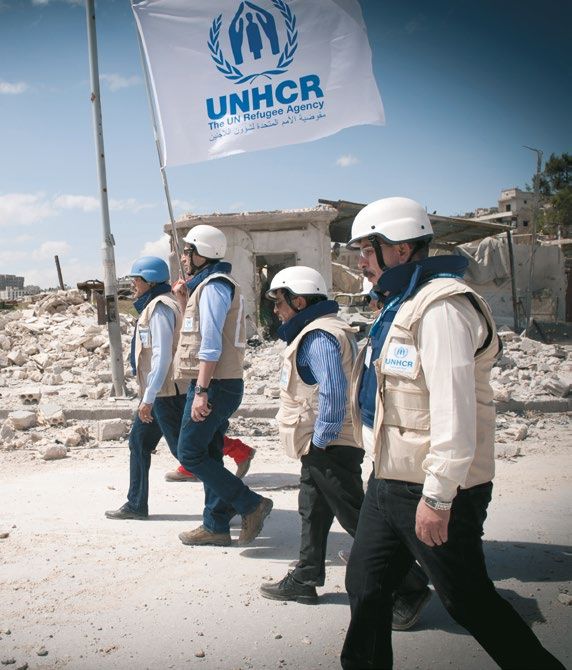
© UNHCR / E. Gurel
4                                     5                                       6
WORKING IN                            A FLEXIBLE                              A COLLECTIVE
PARTNERSHIP                           WORKFORCE                               RESPONSIBILITY

With fewer than 10,000                UNHCR has long relied on the            Achieving the goals of this
staff and some 3,000 people           capacity, skill and commitment          People Strategy is a collective
working under other flexible          of colleagues working alongside         responsibility and undertaking,
arrangements, UNHCR’s                 UNHCR staff through flexible            to be shared by UNHCR’s
capacity to protect and assist        workforce arrangements. Stand-          leaders, senior managers, joint
more than 50 million persons          by partners give the Office added       staff-management dialogue
of concern is greatly bolstered       flexibility to rapidly respond to       mechanisms and all staff, with
through the collaboration and         emerging crises or needs for            guidance, support and services
complementarity of its many           specific expertise, so that it can      provided by the Division of
partners. UNHCR’s concept of          expand, contract or shift the           Human Resources Management
partnership starts with persons       workforce as conditions change.         (DHRM) as a strategic partner.
of concern themselves and             With unprecedented needs
embraces countries of asylum,         among persons of concern, and
of return and of resettlement,        a 45 percent gap between our
without whom UNHCR could not          needs-based budget and actual
deliver protection or solutions.      funding last year, UNHCR has an
It further includes national and      obligation to be as efficient as
international NGOs and UN             possible in its use of human and
sister agencies. It is essential      financial resources. UNHCR’s
that our people reflect this ethos,   People Strategy must therefore
demonstrating a capacity and          facilitate an effective and efficient
drive to work collaboratively in      blend of staff and workforce
support of persons of concern.        under other contractual
                                      arrangements.

In support of those we serve                                                                                    9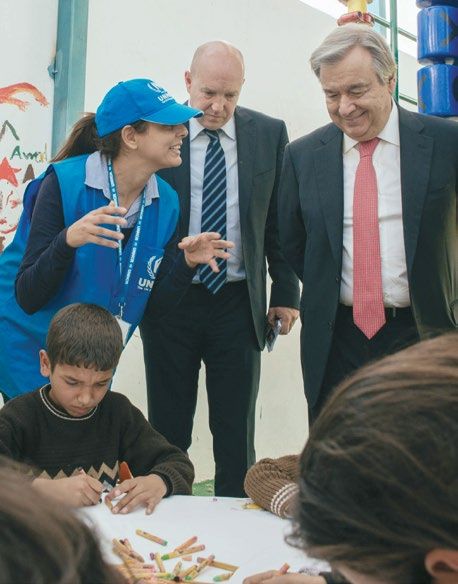
t UNHCR / P. Behan

                     10   UNHCR’s People Strategy 2016 – 2021
UNHCR’S FOUR
PEOPLE GOALS
This Strategy identifies how UNHCR will address key human resources
challenges over the next five years, strengthening our ability to respond
effectively to those we serve. It is based on the Office’s human resources
mission statement:
NHCR seeks to be optimally prepared to respond to global forced
U
displacement challenges, through a diverse workforce of talented and highly
performing people, who are flexibly and timely deployed, and who benefit
from comprehensive care and support from the organization.
It therefore focuses on four goals, distilled from the above:
1
PREPAREDNESS • We anticipate global operational demands for staff and skills
AND DIVERSITY • We value diversity and provide an inclusive working environment
• We attract, hire and retain highly qualified people
2
PERFORMANCE • We actively support staff growth and development
AND COMPETENCE • We aim at excellence through leadership
• We promote effective performance management
3
FLEXIBILITY AND • We manage staff mobility in a fair and efficient manner
TIMELINESS • We maximize the potential of different workforce arrangements
• We support staff in managing their mobility
4
CARE AND • We ensure a quality health and wellbeing system for our workforce
SUPPORT • We are supported by highly professional HR staff and systems
• We foster a culture of trust, communication and core values
11GOAL 1
PREPAREDNESS AND DIVERSITY
UNHCR ADDRESSES CURRENT AND FUTURE HUMANITARIAN CHALLENGES
THROUGH A DIVERSE WORKFORCE OF TALENTED PEOPLE
1.1 UNHCR BETTER ANTICIPATES 1.2 UNHCR VALUES DIVERSITY
GLOBAL OPERATIONAL DEMANDS AND PROVIDES AN INCLUSIVE
FOR STAFF AND SKILLS WORKING ENVIRONMENT
Increasing instability and conflict have resulted in We are proud of the diversity of UNHCR’s workforce,
a rapid expansion of UNHCR’s workforce over the which we think is one of our great strengths as an
past five years. While we will never be able to fully organization and helps us find innovative solutions
predict the timing or scope of humanitarian crises, in responding to humanitarian crises. We remain
we must be as prepared as possible to respond to committed to attracting, retaining and developing a
the needs of our persons of concern and to mitigate workforce that is diverse in the broadest sense – not
the risk of workforce misalignment. This requires only in terms of gender but also in terms of race,
a foundation of systems for gathering data, and religion, colour, national or ethnic origin, language,
intelligence for analysing trends that drive demand marital status, sexual orientation, age, socio-
for numbers, locations, experience and skills of staff. economic status, disability, political conviction, as
In this regard, we will seek to enhance partnership well as background, experience, skills, perspective
between DHRM and the regional bureaux and or any other distinguishing feature. We believe that
functional divisions, to ensure that a continuous a diverse workforce flourishes where there is a
flow of communication informs workforce planning. culture of inclusion, so we seek to create an inclusive
We will also strengthen analytical capacity to better working environment in which all staff feel valued and
anticipate future staffing needs. respected irrespective of difference, and are enabled
to perform at their very best.
ACTIONS ACTIONS
• Develop an up-to-date picture of the current skills mix • Explore the barriers and opportunities for a diverse
and capacities within UNHCR. workforce in terms of careers in UNHCR, and work with
leaders, managers and staff to enhance opportunities.
• Strengthen strategic relationships between DHRM, the
bureaux and divisions to build and maintain a shared • Develop a more effective accountability system in
understanding of evolving staffing needs, including both support of delivery on diversity targets, including
volume and functional areas/expertise. gender.
• Establish strategic capacity to assess data sources • Work with leaders, managers and staff to promote a
for trends and better inform workforce planning and shift in attitude and practice towards a more inclusive
decision-making. and respectful working environment.
• Design tools and systems supporting the assessment • Continue to mainstream good practice on diversity
of both current and future capacity gaps, as well as and inclusion into the recruitment, progression and
projected staffing needs. development of all our staff.
• Develop innovative and practical approaches to close • Recognizing the benefits for staff and organizational
short and long-term capacity gaps. performance, explore opportunities for greater flexibility
in careers and working arrangements.
12 UNHCR’s People Strategy 2016 – 20211.3 UNHCR ATTRACTS,
HIRES AND RETAINS HIGHLY
QUALIFIED PEOPLE
Given the nature of UNHCR’s work, it is essential
that its people have the right mix of life experiences,
attitude and qualities that will enable them to
succeed in their demanding roles. UNHCR’s
people must be reliable, flexible, innovative team
players and problem-solvers, able to work within
and demonstrate respect for different cultures.
Demands for skills and capabilities evolve, and there
is an increased need for specialists in the field as
well as at headquarters. UNHCR will implement a
more structured approach to the profiling of jobs
and people, for outreach and selection, in order
to strengthen matching and minimize delay in
© UNHCR / S. Rich
deployments. This approach should also seek to
enhance UNHCR’s emergency response capacity
and avoid unexpected staff depletions in ongoing
operations.
ACTIONS
• Strengthen talent outreach strategies, and maintain • Develop automated application filtering tools to
pre-screened pools of skilled and experienced external facilitate eligibility and suitability screening.
candidates.
• Keep staff informed of evolving functional needs,
• Ensure that UNHCR’s contracts policy and range of and ensure that all existing staff have meaningful
contractual options are not only attractive to external opportunities to develop their skills and capacities in
applicants, but also supportive of the long-term anticipation of those needs.
retention of highly-performing staff.
• Increase opportunities for qualified nationally recruited
• Provide induction and orientation programmes for new staff to compete for international vacancies, including
recruits, including mentoring. through the development and promotion of career
growth strategies.
• Develop clear job profiles and operational contexts that
support efficient and effective applicant matching. • Encourage greater responsibility from managers with
regard to hiring and promoting in the workplace.
• Enable staff to record accurate information about
themselves in the HR systems, facilitating better staff
profiling and matching.
In support of those we serve 132.1 UNHCR ACTIVELY SUPPORTS STAFF
GROWTH AND DEVELOPMENT
GOAL 2
PERFORMANCE The establishment of an innovative global learning
center has greatly expanded opportunities for UN-
AND
HCR’s workforce and partners, wherever they are,
to acquire knowledge and better manage their career
paths, in particular through the “Learn and Connect”
COMPETENCE online platform, which offers access to a wide array of
learning programmes aligned with UNHCR’s strategic
UNHCR HAS A COMPETENT AND and operational priorities. Further enhancing career
HIGH-PERFORMING WORKFORCE, and learning opportunities for all UNHCR staff re-
EMPOWERED TO MEET INCREASINGLY mains a priority in the years ahead. In addition, we will
COMPLEX OPERATIONAL NEEDS ensure that the growth and development of UNHCR’s
workforce reconciles current and future staffing needs
with the experience, competencies, career and life
priorities of national and international staff. The new
Assignments and Career Management Service will
strengthen UNHCR’s capacity to successfully navigate
these various and sometimes competing factors. In
particular, career counselling of staff will be informed
by closer cooperation among DHRM, regional bureaux
and divisions on organizational staffing needs, both
immediate and projected.
ACTIONS
• Reinforce the role of Career Management Officers
as skilled and knowledgeable counsellors working in
partnership with staff while supporting operational
needs.
• Continue to develop learning options, addressing a
range of functional areas and competencies and utilizing
innovative formats and technologies to bring learning
closer to learners.
• Foster a culture of continuous learning, enabling staff
to build their skills and capacities, with attention to the
needs of national staff as well as international staff.
• Strengthen the role of managers in the field in the
development of careers that reconcile organizational
needs and individual aspirations.
• Provide additional developmental opportunities for
© UNHCR / A. McConnell
staff, including strategic secondments to partner
organizations.
14 UNHCR’s People Strategy 2016 – 20212.2 UNHCR AIMS AT EXCELLENCE 2.3 UNHCR PROMOTES EFFECTIVE
THROUGH LEADERSHIP PERFORMANCE MANAGEMENT
UNHCR staff are highly motivated and committed UNHCR expects, and requires, high performance
to our persons of concern. This motivation can of its staff. It is committed to a performance
inspire them to excellence, particularly when they management system in which individuals take
are supported by strong leadership. UNHCR’s responsibility and are held accountable for
managers play a critical role in the organizational their performance; are recognized for their
culture. We look to our managers as leaders, achievements; and are mentored to develop
coaches, mentors and role models. They are their potential. Where performance does fall
responsible for facilitating the development and below expectations, it is essential that areas for
performance of their teams, and for creating improvement be clearly identified; that staff receive
enabling environments. With many staff members candid, timely feedback; and that appropriate
recruited during the crises of the 1990s, a significant improvement opportunities be provided. Trust
number of UNHCR’s senior managers are expected in the performance management system will be
to retire within the coming five years. While this reinforced by systematic, fair and transparent
will result in an inevitable loss of experience and procedures to assess the suitability of staff for new
knowledge, it also represents an opportunity for roles and assignments. Managers bear a particular
talented colleagues from a new generation. responsibility for fostering a culture of trust,
transparency, honesty, dialogue, collaboration and
innovation.
ACTIONS ACTIONS
• Identify, build and manage leadership talent pools. • Guide and support managers to approach performance
management as a continuous dialogue between
• Develop current and future leaders through supervisee, supervisor and reviewing officer on past and
programmes that include assessment, coaching, expected performance.
shadowing and blended learning, with a strong focus on
behaviours in support of UNHCR’s core values. • Foster implementation of the performance management
policy in a consistent manner, with the use of clear perfor-
• Develop the means to assess the performance of mance assessment criteria aligned to roles and functions.
leaders as leaders, with accessible and targeted
• Develop additional training for managers on delivering fair
development opportunities to address areas identified
and open feedback to staff.
for improvement.
• Support staff in understanding the feedback and ratings
• Undertake succession planning, including the process, as well as their role and responsibilities in
development of leadership pools, to cover all effective performance assessment.
critical positions, especially those held by people
to retire soon. • Recognize high-performing staff and continually seek
suitable opportunities to retain them.
• Provide opportunities for all staff to enhance their per-
formance through a range of means, including mentoring,
coaching, learning and career development.
• Develop workable strategies aimed at early intervention
and improvement of behaviours inconsistent with
UNHCR’s core values.
• Address issues related to staff not meeting performance
expectations and ensure systematic, fair and transparent
procedures to remedy performance.
In support of those we serve 15GOAL 3
FLEXIBILITY AND TIMELINESS
UNHCR DEPLOYS ITS PEOPLE WHERE AND WHEN THEY ARE NEEDED
3.2 UNHCR MAXIMIZES THE
3.1 UNHCR MANAGES STAFF MOBILITY POTENTIAL OF DIFFERENT
IN A FAIR AND EFFICIENT MANNER WORKFORCE ARRANGEMENTS
A unique, even defining, aspect of UNHCR is Flexible workforce arrangements allow UNHCR
its mandatory mobility policy for international to quickly respond to a shift in workforce
professional staff. A system of staff rotation requirements and needs for specific expertise.
is essential to UNHCR’s capacity to deliver its People working under those flexible arrangements
mandate, as it ensures the availability of staff support a wide spectrum of UNHCR’s efforts,
worldwide to respond to the needs of people including in specialized areas such as water,
of concern, even in duty stations with difficult sanitation and nutrition, and more general roles,
living and working conditions. Operationally, such as protection, supply or field support. These
the rotation system brings added complexity to arrangements give UNHCR added agility to
the responsibility of managing, caring for and rapidly expand, reduce and shift the workforce in
supporting UNHCR staff, yet it is contingent upon a response to operational demands. UNHCR also
degree of burden-sharing among staff. This People uses the services of a variety of emergency stand-
Strategy first commits to ensure that rotation is by partners, and it maintains a range of stand-by
implemented in a fair and transparent manner. arrangements and deployment schemes. Given
In addition, it will seek to implement rotation in their critical importance, UNHCR will formulate
a way that builds skills and experiences that are a new strategic approach to engaging, managing
supportive of career development, and is aligned and supporting members of the flexible workforce.
with evolving organizational needs. Particular emphasis will be given, where possible, to
the consistent and equitable treatment of our entire
workforce.
ACTIONS ACTIONS
• Enhance and refine, as needed, the policy on • Develop an organization-wide affiliate workforce
assignments and the rotation model that serve as the strategy.
foundations of managed mobility in UNHCR.
• Enhance partnering arrangements with UNV and
• Establish a fair and transparent process for functional UNOPS to further clarify responsibilities, to strengthen
assessments and clearance. selection processes and improve deployment timelines.
• Review the methodology and system for assigning • Ensure proper collection and recording of information
international staff to posts, with an emphasis on on the flexible workforce, including performance.
suitability, fairness, transparency and efficiency.
• Develop tools to enable the monitoring and analysis of
trends in the use of flexible workforce arrangements.
16 UNHCR’s People Strategy 2016 – 20213.3 UNHCR SUPPORTS STAFF IN
MANAGING THEIR MOBILITY
The sheer volume of assignments in recent
years has put tremendous pressure on human
resources administration. UNHCR is committed
to managing the assignments process to provide
greater notice in advance of staff moves and to
administer assignments in timeframes that are
sensitive to the impact on their personal lives. The
policy and processes behind assignments must
provide an equitable framework for rotation and
preserve the operational flexibility required to
meet today’s global challenges. They must also give
due consideration to the welfare of staff and their
families through substantial forward planning and
timely, open communication.
© UNHCR / L. Baumann
ACTIONS
• Modernize the administration and system for assigning
international staff to posts.
• Provide professional staff applicants subject to rotation
with timely advice and feedback, so that they are able to
better target their applications.
• Ensure that staff applicants are able to monitor the
progress of their applications, enabling them to manage
their career planning.
• Deliver proactive communication and support to staff
in need of regular assignments, including temporary
solutions.
In support of those we serve 174.1 UNHCR ENSURES A QUALITY
HEALTH AND WELLBEING SYSTEM
FOR ITS WORKFORCE
GOAL 4
CARE AND As reflected in responses to the 2014 Global
Staff Survey, staff are proud of their work and are
SUPPORT
strongly committed to the organization. However,
due to the nature of UNHCR’s work and operational
environment, staff may be exposed to human
UNHCR PROMOTES AN tragedy, primary and secondary trauma, security
ENVIRONMENT THAT FOSTERS threats as well as health and safety risks. The high
HEALTH AND RESILIENCE level of commitment by many staff to the work of
the organization may impact personal life, including
relationships and families. It is therefore imperative
that even in the most difficult working environments
staff can depend upon excellent health and
wellbeing support. We will ensure that UNHCR’s
health and welfare services stay at the forefront of
advances in global occupational health and well-
being. These services must earn the confidence
and trust of all staff, allowing them to benefit fully
from the support available. In addition, the use of
aggregated data to identify trends and risk factors
will continue to inform advances in the delivery of
staff health and wellbeing services.
ACTIONS
© UNHCR / B. Diab
• Develop practical strategies and solutions for
monitoring, preventing, reducing and mitigating key risks
that affect staff health and wellbeing.
• Develop tools that support individual and team
resilience in diverse environments.
• Strive towards making UNHCR a family friendly
organization as an element of individual resilience, in
particular within the context of mandatory mobility and
high-risk assignments.
• Ensure adequate accommodation and living conditions
for the workforce.
• Implement on a continual basis relevant advances in
occupational health and wellbeing services.
18 UNHCR’s People Strategy 2016 – 20214.2 UNHCR IS SUPPORTED BY 4.3 UNHCR FOSTERS A CULTURE
HIGHLY PROFESSIONAL HUMAN OF TRUST, COMMUNICATION
RESOURCES STAFF AND SYSTEMS AND CORE VALUES
Globally, UNHCR seeks to ensure that human The prevalent culture across UNHCR is that of a
resources staff are provided with opportunities to community, typically described by staff as “family”.
develop within the human resources career stream, As in any family, however, tensions and conflicts can
and that a range of sound policies, procedures and arise. Managers and staff, including in particular
systems are in place to enable them to perform human resources staff, will be supported with the
their functions in support of the staff. DHRM will skills and means to resolve conflicts at the earliest
continue to modernize existing tools, and plans to stage, restoring a positive and productive work
transform the human resources administrative and environment. In addition, clear communication
transactional function into one of human resources about human resources decisions, as well as
management, which is more strategic, forward- transparency in policy implementation, will be
looking and proactive. critical to build trust and confidence.
ACTIONS ACTIONS
• Improve professional human resources capacities • Implement a human resources communication
through targeted recruitment, specialized learning strategy to increase outreach and foster interactive
(such as HR certification), strategic deployments and a communication on HR issues among staff at all levels.
comprehensive review of the role, responsibilities and
skills of staff performing HR functions. • Develop human resources initiatives and policy changes
based on an inclusive approach that considers the
• Review HR policies, procedures and systems so that perspectives of people across all diversity groups.
they allow timely and appropriate response to changing
operational needs. • Communicate on those initiatives and changes from an
early stage with staff and key internal stakeholders, such
• Ensure that a “client service orientation” is at the heart as senior leadership and the Staff Council.
of the HR response.
• Improve strategies for effective and timely conflict
• Enhance the analytical capacity of DHRM as a key management at all levels in the organization.
element of workforce planning.
• Improve strategies aimed at early intervention and
improvement of behaviours inconsistent with UNHCR’s
core values.
In support of those we serve 19© UNHCR / B. Sokol
IMPLEMENTATION AND
ASSESSMENT OF THE
PEOPLE STRATEGY
This Strategy will result in
a five-year implementation
plan. The plan will contain
clearly defined activities,
targeted benchmarks and
milestones, and a process
for reviewing progress in its
implementation.
Periodic updates will be made
available to all staff and to
the Executive Committee
of the High Commissioner’s
Programme. Reviews will
include an assessment of the
Strategy’s effectiveness and
should permit refinements
when and as needed.
A comprehensive review
of the Strategy and its
implementation will be
undertaken in 2021.
20 UNHCR’s People Strategy 2016 – 2021ANNEX 1
A COLLECTIVE RESPONSIBILITY
OUR MANAGERS
• Inspire their teams through communication and • Contribute to support team building, as well as team
open discussions around clear, common goals aimed and individual resilience.
at enhanced delivery. • Encourage high performance from their staff and
• Embrace and effectively undertake their HR teams, and effectively engage with their staff on
responsibilities towards their staff and members of performance matters, delivering fair, consistent,
the flexible workforce. open and honest feedback.
• Support staff health and wellbeing in the workplace, • Provide and allow for staff career growth
in strategic partnership with DHRM. opportunities, including through coaching,
• Work closely with HR in definition of roles and job mentoring, shadowing and training.
profiles; identification of current and future staffing • Avail themselves of leadership and management as
needs; assignment of staff to posts in a fair, timely well as conflict resolution learning opportunities.
and optimal manner; identification of talent; and
succession planning.
OUR PEOPLE OUR LEADERS
• Embrace career development and growth opportunities, aligned • Contribute to
to both their personal aspirations and organizational needs. informed projections
• Maintain personal high performance, ethics and integrity. of organizational
direction and
• Contribute to strong team performance by supporting a spirit of
PEOPLE priorities as well as
collaboration both within the organization and with its various STRATEGY staffing needs.
partners.
• Support policies and
• Show openness to constructive feedback.
the transformation
• Avail themselves of opportunities to sustain personal health and of the HR function
wellbeing in and out of the workplace. which enable the
• Support and contribute to staff-management dialogue achievement of the
mechanisms to ensure staff perspective continues to feed the People Strategy and
People Strategy throughout its implementation. champion its delivery.
DHRM
• Build understanding and commitment to the • Build and maintain partnerships grounded in mutual
People Strategy, championing a shift in focus from trust with regional bureaux and functional divisions
transactional HR to a more strategic, proactive and to ensure that a continuous flow of communication
forward-looking approach. informs workforce planning.
• Coordinate, monitor and evaluate implementation of • Develop effective, fair and user-friendly policies that
the People Strategy. embrace diversity and inclusiveness.
• Improve professional human resources capacities • Communicate effectively with staff, managers and
and expertise. key internal stakeholders in order to foster trustful
relationships.
• Design and refine the tools, systems and means to
deliver on the People Strategy goals. • Mainstream a client service orientation in the HR
response.
• Maintain effective strategic partnerships with other
HR functions across the UN system.
In support of those we serve 21ANNEX 2
9,411 UNHCR STAFF
STAFF OVERVIEW 63% MALE 37% FEMALE
Data as at 31 December 2014
WORLDWIDE PRESENCE
PERCENTAGE OF STAFF BY 4. IRAQ - 373 staff
UNHCR REGION OF OPERATION
50% Africa 2. JORDAN - 462 staff
21% Middle East and North Africa
15% Asia and the Pacific
8. SUDAN - 301 staff
10% Europe
4% Americas
PERCENTAGE OF AFFILIATE WORKFORCE*
BY UNHCR REGION OF OPERATION
3,194 PEOPLE
37% Middle East and North Africa
20% Africa
* Data related to the people working for
19% Asia UNHCR in a non-staff capacity such as
consultants, contractors, United Nations
Volunteers and UNOPS Individual
19% Europe Contractors. These statistics do not include
data on non-staff personnel managed by the 6. CHAD - 335 staff
5% Americas other Divisions in UNHCR (“deployees”).
PERCENTAGE OF UNHCR STAFF
BY REGION OF ORIGIN* 7. DR OF THE CONGO - 334 staff
46% Africa
27% Asia (incl. the Middle East and the Pacific)
17% West. Europe & N. America (incl. Australia, Israel and Turkey)
7% Eastern Europe
* Distribution as per the United Nations
3% Latin America & the Caribbean Regional Groups of Member States
INTERNATIONAL STAFF NATIONALLY RECRUITED STAFF
West. Europe & N. America 34% MALE
(incl. Australia, Israel and Turkey) 43%
48% MALE
52% FEMALE 8% 66% FEMALE
Africa 30%
69% MALE
31% FEMALE 51%
74% MALE
26% FEMALE
Asia 31%
17%
58% MALE 66% MALE
(incl. the Middle East and the Pacific) 42% FEMALE 34% FEMALE
39% MALE
Eastern Europe 7% 51% MALE
49% FEMALE
7% 61% FEMALE
Latin America & 59% MALE 44% MALE
3% 41% FEMALE
3% 56% FEMALE
the Caribbean
22IN
126 COUNTRIES AT
461 LOCATIONS
154 NATIONALITIES 452 LANGUAGES SPOKEN 42 AVERAGE AGE
2009-2014 TRENDS
NUMBER OF STAFF
TOTAL
10. AFGHANISTAN - 266 staff
9,411
8,629
8,283
7,838
7,266
6,980
9. PAKISTAN - 287 staff
6,914
6,389
6,217
5,948
5,484
5,218
1,762
1,782
1,890
2,066
2,240
2,497
2009 2010 2011 2012 2013 2014
International staff Nationally recruited staff National officers
3. ETHIOPIA - 409 staff
LEADERSHIP
5. SOUTH SUDAN - 365 staff
ANTICIPATED STAFF DEPARTING
FOR RETIREMENT IN THE NEXT
5 YEARS (2016-2021 PROJECTIONS)
1. KENYA - 483 staff
D2 D1 P5
Top 10 operations in 23 83 224
the field with most staff
70% 55% 35%
Note: The boundaries and names
shown and the designations used 57% MALE 54% MALE 66% MALE
on this map do not imply official 43% FEMALE 46% FEMALE 34% FEMALE
endorsement or acceptance by the
United Nations.
Projected Women in leadership positions:
nr.
retirements 42% in grades P5 and above
STAFF DEMOGRAPHICS
26% 74% 12% 88% 37% STAFF 63% STAFF
INTERNATIONAL NATIONALLY STAFF IN STAFF IN NON-FAMILY IN FAMILY
STAFF RECRUITED STAFF HEADQUARTERS* IN THE FIELD DUTY STATIONS DUTY STATIONS
57% MALE 65% MALE 40% MALE 66% MALE 77% MALE 54% MALE
43% FEMALE 35% FEMALE 60% FEMALE 34% FEMALE 23% FEMALE 46% FEMALE
45% NATIONALLY 77% NATIONALLY 81% NATIONALLY 69% NATIONALLY
RECRUITED RECRUITED RECRUITED RECRUITED
* Geneva, Budapest, Copenhagen, Brussels
23Published by: UNHCR P.O. Box 2500 1211 Geneva 2 Switzerland For information and inquiries, please contact: DHRM hqps00@unhcr.org
You can also read


