Using Social Impact Financing to Improve Asthma Outcomes - Webinar Monday, September 29, 2014
←
→
Page content transcription
If your browser does not render page correctly, please read the page content below
Using Social Impact Financing to
  Improve Asthma Outcomes

          http://www.childhoodasthma.org/

               Webinar
      Monday, September 29, 2014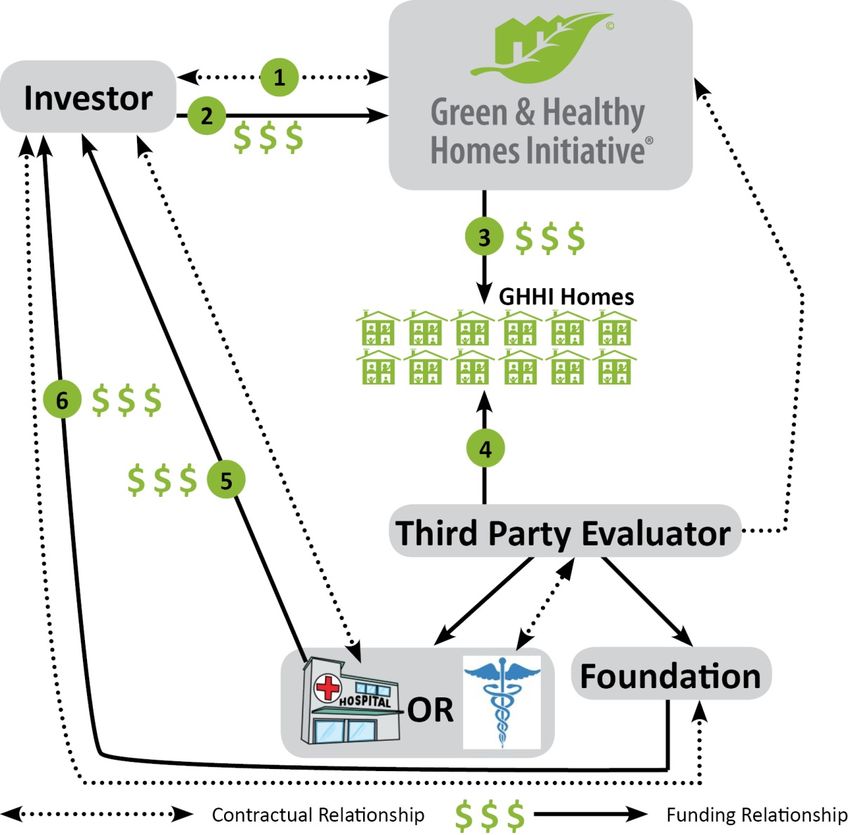
Webinar Instructions
AUDIO
    • This is an audio/web broadcast where the audio will be transmitted through your
      computer speakers. Please make sure your speakers are turned on and not muted.
    • Upon entering the event, there will be an audio broadcast window where you can adjust
      volume.
    • If you are unable to connect to the webinar using your computer speakers or having
      audio difficulties, please use the dial-in information provided.
    • Your line will be muted.

QUESTIONS
    • If you have a question during the webinar, please click on the “Q&A” tab at the right of
       your screen and send it to “All Panelists.”
         • If you are directing your question to a specific presenter, please write their name
            before the question (e.g., Lamb, Yu, Iton, Brush, Norton, Hernandez).
    • Due to the large number of participants, we will answer as many questions as possible
       within the time frame allotted for this webinar. If your question was not answered, we
       encourage you to reach out to the individual presenter via e-mail following the webinar
       (email addresses will be provided at the end of the presentation).
Today’s Agenda and Speakers
           Using Social Impact Financing to Improve Asthma Outcomes
Anne Kelsey Lamb, MPH, Director, Regional Asthma Management & Prevention

                             Overview of Pay for Success
                        Alice Yu: Associate, Third Sector Capital

   Case Study I: Fresno, CA – Tony Iton, MD, JD, MPH, Senior Vice President, Healthy
Communities, The California Endowment / Rick Brush, Founder and CEO, CollectiveHealth

  Case Study II: Baltimore, MD- Ruth Ann Norton, President & CEO, Green & Healthy
                                   Homes Initiative

       Case Study III: Alameda County, CA – Maria Hernandez, PhD, President,
 Impact4Health; Special Advisor on Social Impact Investing, Health Research for Action,
                         UC Berkeley School of Public Health

                                Questions & Answers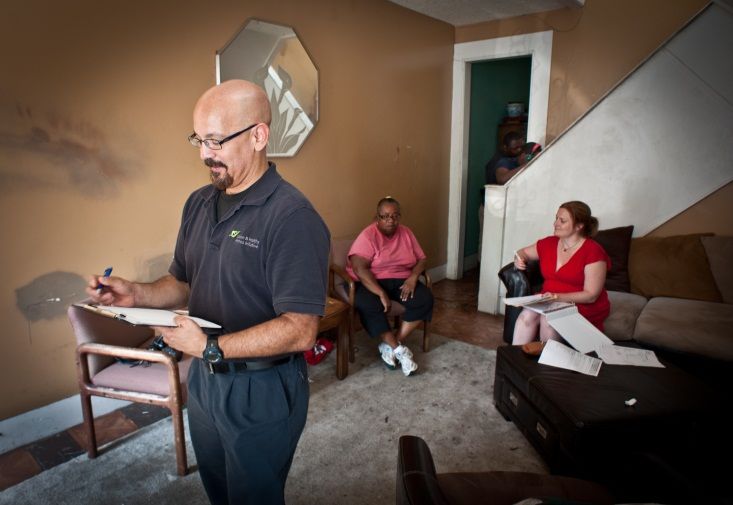
Using Social Impact
     Financing to Improve
      Asthma Outcomes

              Introduction

     Anne Kelsey Lamb, MPH, Director
Regional Asthma Management & Prevention
Why are we interested?

1. Asthma is a significant public health problem
2. We know a lot about how to manage and
   prevent asthma
3. We lack sustainable funding sources to make it
   happen
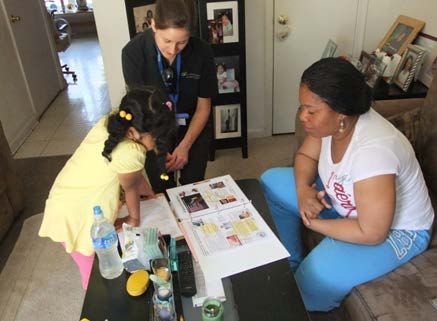
Asthma is a significant public
health problem

• According to the CDC, in 2010, 18.7 million
  adults and nearly 7 million children had asthma—
  a 15% rise since 2001
• There are significant disparities by race, ethnicity,
  and socioeconomic status
• Asthma costs the healthcare system an estimated
  $56 billion annually
Asthma is not as well managed as it should be

• Nearly 60% of children diagnosed with asthma have
  experienced an attack within the previous 12 months
• Researchers project that improving asthma
  management among vulnerable populations could
  save as much as 25% of the total asthma costs
We know a lot about how to manage asthma

National Clinical Guidelines
  •   Assessment of disease severity and control
  •   Comprehensive pharmacologic therapy
  •   Patient education
  •   Environmental control measures to avoid or
      eliminate factors that contribute to asthma onset
      and severity
National Clinical Guidelines
  •   Assessment of disease severity and control
  •   Comprehensive pharmacologic therapy
  •   Patient education
  •   Environmental control measures to avoid or
      eliminate factors that contribute to asthma onset
      and severity

  “An increasingly robust body of evidence shows that these two
    aspects of effective asthma management not only improve
    symptoms, but do so at a reasonable cost.” -Asthma Regional Council,
      Investing in Best Practices for Asthma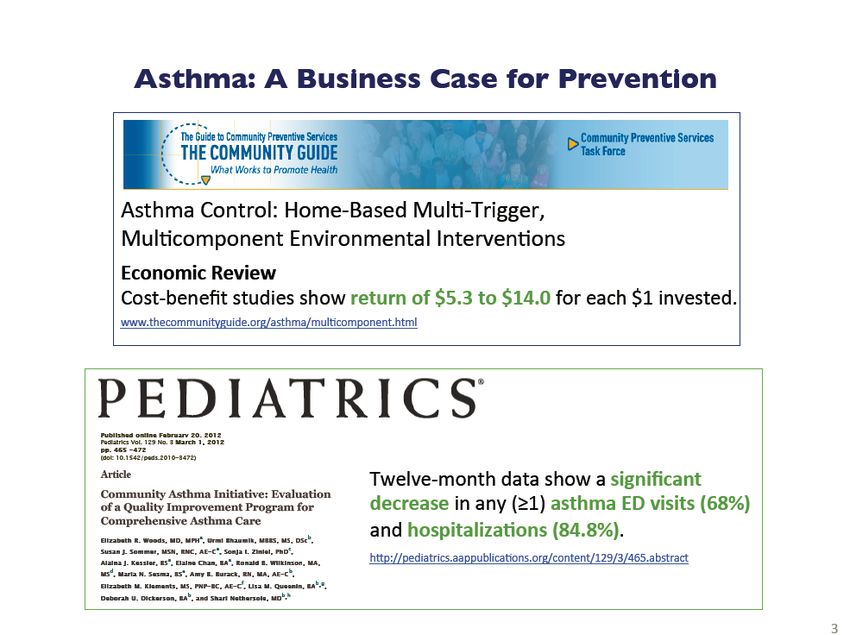
Patient education
• Impacts: Reduced asthma symptoms, enhanced
  quality of life, improved medication adherence,
  fewer activity limitations and, reduced medical
  costs
• ROI studies: One education program targeting
  high risk children demonstrated a ROI of $11.22
  for every $1 spent, while a case management
  and education program targeting children
  demonstrated a ROI of $7.69-$11.67 for every
  $1 spent
Environmental control measures
• Impacts: U.S. Centers for Disease Control’s Task
  Force on Community Preventive Services found
  “strong evidence of effectiveness of in-home
  environmental interventions” in improving overall
  quality of life and productivity in children and
  adolescents with asthma
• ROI analysis: In its analysis, the Task Force
  included an economic review and studies showing
  a return of $5.3 to $14 for each $1 invested
Sustainable funding for these
evidence-based interventions?

• Grant funding: An essential component, but we’ve
  seen many grant-funded programs come and go
• Policy changes: There are some exciting
  opportunities being explored at state and local levels
• Social impact financing: A new opportunity?
Speakers
• Alice Yu: Associate, Third Sector Capital Partners
• Tony Iton, MD, JD, MPH: Senior Vice President,
  Healthy Communities, The California Endowment;
  Presenting with Rick Brush: Founder and CEO,
  CollectiveHealth
• Ruth Ann Norton: President & CEO, Green & Healthy
  Homes Initiative
• Maria Hernandez, PhD: President, Impact4Health;
  Special Advisor on Social Impact Investing, Health
  Research for Action, UC Berkeley School of Public
  Health
Overview of Pay for Success

                            September 29, 2014

                              Third Sector Capital Partners, Inc.
Boston & San Francisco | (617) 912-8957 | info@thirdsectorcap.org | www.thirdsectorcap.org
Definitions
Pay for Success (PFS)
PFS Performance-based contracting within the social sector
where government pays only if results are achieved.
Social Impact Finance (SIF)*
Financing that bridges timing gap between government
payments for successful outcomes and upfront capital
SIF needed to run PFS programs.
*Social Impact Bonds (SIBs) are a type of SIFWhen Does PFS Make Sense?
Significant Unmet Needs
and Targetable
Population
Leadership from
Credible Data
Stakeholders
Net Financial and/or
Interventions that Work
Social Benefit
Service Providers with
Risk Mitigation
Capacity to ScalePFS Momentum Across the Country
Active Project Construction/Feasibility Launched Projects
•Cuyahoga County, OH – Homelessness/Foster Care •Massachusetts – Juvenile Justice
•Illinois – Dually Involved Youth •New York – Justice/Workforce Development
•New York State – Juvenile Justice •New York City – Juvenile Justice
•Santa Clara County, CA – Chronic Homelessness •Salt Lake City, UT – Early Education
•Santa Clara County, CA – Mental Health
•Alameda County, CA – Asthma
•Baltimore, MD – Asthma
•Connecticut – Child Welfare
•Denver, CO – Homelessness
•Fresno County, CA – Asthma
•Los Angeles County, CA – Feasibility
•Los Angeles County /First 5 – Feasibility
•Minnesota – Homelessness
•Orange County/First 5 – Feasibility
•San Francisco County, CA – Feasibility
•Salt Lake County, UT – Feasibility
•South Carolina – Early Childhood
•Washington, DC– Teen Pregnancy
Asthma-related projectsKey Players in a PFS Deal
Initiates contract and identifies lead agency and/or provider(s)
Government / Payor End payer for successful outcomes
Serves as contract holder and service project manager
Negotiates PFS contract and identifies service
Lead Agency providers/subcontractors
Can also provide direct services
Delivers services
Service Provider(s) Receives complete cost coverage; may receive performance
payments
Provide working capital to lead agency/providers
Funder(s) May lose capital if project unsuccessful or be re-paid through
government success payments
Supports rigorous evaluation design; measures progress
Evaluator towards outcomes based on contract requirementsPay for Success Structure
Services
Payments
Funders Success Payments
1
Provide Repays funders
up-front if outcomes
financing met
2 6 5
Provides payment for Makes Success Payments
Lead Agency / services Special if outcomes met
Government /
Service Purpose
Pay for Success Contract Pay for Success Contract Payor
Provider(s) Vehicle
3
Delivers Services
Designs evaluation
methods and measures
outcomes
4
EvaluatorOpportunity for Asthma with Pay for Success
1 Establish or Expand Capacity to Scale Interventions
Identify a means to establish or expand capacity of preventative asthma programs to serve
more clients and enable programs to scale interventions
2 Assess Effectiveness of Interventions
Enable programs and stakeholders to assess the effectiveness of asthma interventions
through a more rigorous evaluation
3 Explore Performance-based Contracting
Test and explore the use of PFS or outcome-driven contracting for future asthma
intervention programs
4 Attract Additional Sources of Funding
Attract a new source of funding to pay up-front needs of service provision, in particular for
programs that have proven to be effective22
23
24
25
26
27
28
29
GHHI’s Pay for Success Model

                                                    Ruth Ann Norton
                                                   September 29, 2014

©2014 Green & Healthy Homes Initiative. All rights reserved.            www.ghhi.org
GHHI’s model shifts funding towards
preventative care in the home setting
Today… …the long-term goal
There are millions of homes across There are millions of homes across
the country that are contributing to the country that are contributing to
the poor health of their residents the poor health of their residents
GHHI finds these homes and ‘braids’ The medical field recognizes the
public and private funding from home as a key part of the continuum
numerous sources to provide the of care and payers provide funding
necessary improvements for home improvements
This intervention yields proven This funding is provided to GHHI
results, including reduced medical through a more streamlined process
expenses, yet the beneficiaries of so they can scale their operations
these savings are not involved and serve more homes
Our assumption is that large public and private
payers will not shift funding until the
intervention is proven at scale
©2014 Green & Healthy Homes Initiative. All rights reserved. www.ghhi.orgOrganizational history
• 501(c)3 nonprofit organization established in 1986.
Headquartered in Baltimore, Maryland
• Direct service programs have helped more than 25,000
Baltimore families, including over 1,600 asthma patients
since 2000.
• Launched a national initiative in 2008 to transform the
country’s fractured and siloed approach to the delivery of
energy and health-based housing interventions.
• Currently there are 17 GHHI cities around the country,
and 5 more are onboarding for certification.
• Funding support from federal, state and local agencies,
and philanthropy
©2014 Green & Healthy Homes Initiative. All rights reserved. www.ghhi.orgGHHI: The Team
Environmental Health Educator
• Resident education
• Pre and post client health surveys
• Action plans for the residents
• Healthy Homes Maintenance Kit
• Referrals to partners for other services
Environmental Home Assessment Technician
• Pre and post intervention environmental assessments and audits
• Comprehensive Health and Housing Assessment Tool
• Complete scopes of work for the properties
Housing Intervention Crews
• Executes cross-discipline scopes of work (next slide)
Data Collection
Quality Assurance & Quality Control
©2014 Green & Healthy Homes Initiative. All rights reserved. www.ghhi.orgInterventions
Health & Safety Green
Asthma Trigger Reduction Energy Audit
Lead Hazard Reduction Weatherization
Health & Safety Assessment Insulation
Integrated Pest Management Reducing Air Infiltration & Leakage
Trip & Fall Risk Reduction Energy Efficiency Measures
Fire & Injury Prevention Measures Remediating Gas Leaks & CO
Health & Safety Education Energy Efficiency Education
©2014 Green & Healthy Homes Initiative. All rights reserved. www.ghhi.orgImpact on asthma
• 66% reduction in asthma hospitalizations
• 28% reduction of emergency room visits
• 67% reduction in home-based asthma triggers
• 62% increase in no missed school days
• 88% increase in asthma not interfering with
work
©2014 Green & Healthy Homes Initiative. All rights reserved. www.ghhi.orgGHHI’s Pay for Success Model
Structure & intervention
1 All involved parties sign agreements to
support the structure
• Investor & GHHI
• Investor & Hospital
• GHHI and Evaluator
• Hospital & Evaluator
• Investor & guarantor
2 Investor provides GHHI with the first
tranche of the financing (three draws)
3 GHHI provides services to 1/3 of the total
homes in year 1, 1/3 in year 2, and 1/3 in
year 3
4 The third party evaluator assesses the
program’s effectiveness and determines if
savings targets are met
If the targets are met…
5 The hospital / payor repays the Investor’s
principal and the interest that has accrued
If the targets are not met…
6 The investor’s guarantee is called,
repaying the Investor at a set %; Investor
loses the balance
www.ghhi.org
©2014 Green & Healthy Homes Initiative. All rights reserved.Project development structure
Executive Steering Committee
Core Project Team
Working Groups
Outcome Data & Finance & Service Secondary Stakeholder
Setting Evaluation Accounting Provision Benefits Outreach
Experts Experts Experts Experts Experts Experts
©2014 Green & Healthy Homes Initiative. All rights reserved. www.ghhi.orgInnovations
• The first pay for success structure that engages a private
institution as the payor instead of the government
• Multiple secondary benefits will be tracked beyond the
savings to the healthcare entity – impact on Medicaid, school
and work attendance, energy consumption, and
neighborhood stabilization
• The first time retail investors will be able to participate in a
pay for success contract for as little as $20
©2014 Green & Healthy Homes Initiative. All rights reserved. www.ghhi.orgQuestions?
Ruth Ann Norton
President & CEO
ranorton@ghhi.org
410-534-6447
Follow us on Twitter @HealthyHousing
Like us on Facebook @GHHINational
©2014 Green & Healthy Homes Initiative. All rights reserved. www.ghhi.orgAlameda County Pay For Success
Asthma Initiative
SETTING THE STAGE FOR COLLECTIVE IMPACTCoordinating for Collective Impact
Alameda County Healthy Homes Turner Consulting and Actuarial
Department Services, LLC
• Project Management • Review patient utilization data
• Intervention Implementation
Third Sector Capital Partners
Alameda County Department of • Review our application of PFS
Public Health strategy and
• Project Management
• Guide preparation for
• Intervention Implementation
securing private investors in
Better Health East Bay— Phase 2, if appropriate
Sutter Health Foundation
• Invest financial support for UC Berkeley School of Public
community engagement Health/Research for Action
• Provide in-kind assistance with Institute
medical “hot-spotting” for high • Review intervention design
utilizers • Evaluate results
Impact4Health, LLC
Project Facilitation, Coordination & Technical SupportOur Project Target Outcomes 1. Improve quality of life indicators based on Pediatric Asthma Survey 2. Reduce Asthma emergency department visits by 30% 3. Reduce Asthma related hospitalization days by 50% 4. Reduce missed days of school by 30% 5. Improve housing conditions through occupant education and technical assistance
Bringing Together Successful Interventions:

       Asthma START                  Department of Healthy
                                             Homes
• Conduct psycho-social         •   Conduct behavioral health
  assessment of health needs        assessment of needs
• Provide health education      •   Healthy home visual
                                    assessment
• Insure Asthma management
                                •   Conduct environmental
  plan is in place
                                    treatment and removal of
• Check-in to affirm behavior       known asthma triggers
  changes                       •    Address safety issues,
• Refer to Healthy Homes for        provide technical
  environmental and home            assistance to property
  remediation                       owner and refer to
                                •   Use code enforcement, as
                                    necessary
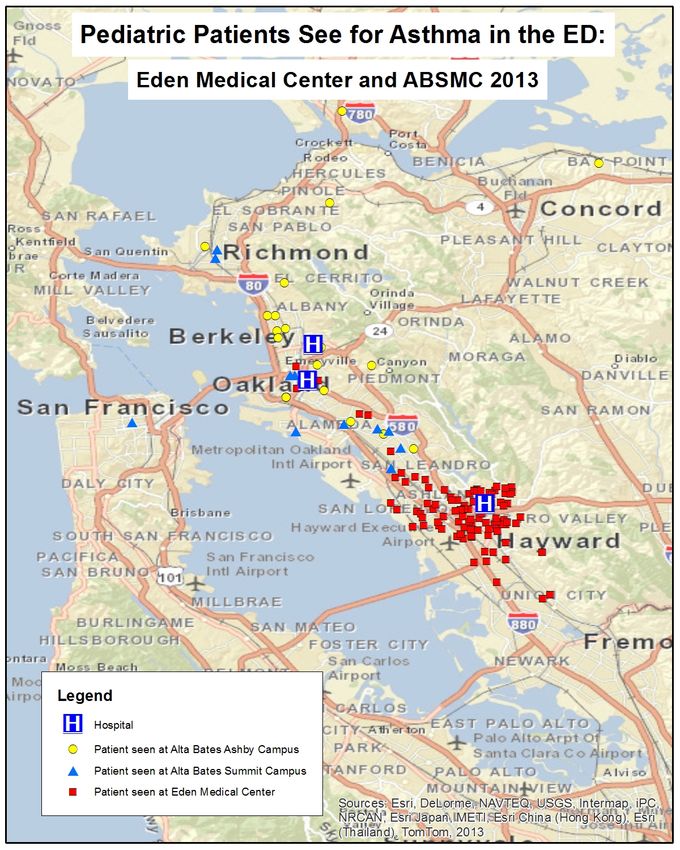
Leveraging Unique Opportunity
to Identify High Utilizers
For One Hospital Only
( Primary Diagnosis Only)
Number of
Diagnosis
Encounters
Total Number of
109,514
Encounters in ED
Total Number of
Encounters with Dx as 1,812
Asthma
Total Number of
Encounters Peds 180
AsthmaticsBuilding on Existing Success There was as much as a 56% difference in cost of care for pediatric patients (0 – 5 yrs) at Alameda Alliance during the 12 months after receiving Asthma START services.
The Potential ROI
• 65% of the children in Asthma START visited the ED during the 6
  months prior to starting the program (average cost: $3,500)
• 45% of the children in Asthma START had been hospitalized (average
  cost $16, 585)

  Pilot Project                                          Estimated
     Budget        Program costs       Healthcare        Treatment
  Components       Per Participant    Interventions         Costs    ROI
 Intervention                        1 hospitalization
                      $2,500                             $20,085     7.03
    Alone                             and 1 ED visit

  Intervention                       1 hospitalization
                      $3,432                             $20,085     4.85
and Direct Costs                      and 1 ED visit
Engaging a Local Community Foundation
Community Foundation as Financial Intermediary
Private Investors Sustainable End Payors
• Family Shared Savings
Foundations Health Impact • Self-Insured
• High Net Worth Employers
Fund • Accountable Care
Individuals
• Corporate Organizations
Foundations • Hospitals (Charity
Care Contributions)
Community Community Community
Interventions Interventions Interventions
Produce savings for financial stakeholdersFor More Information
Maria Hernandez, PhD
510.550.7182
maria@impact4health.com
@drmghernandez
Please join the Pay For Success
Innovations CommunityQuestions?
Anne Kelsey Lamb Rick Brush
Regional Asthma Management & Prevention Collective Health
(RAMP) rick@collectivehealth.net
anne@rampasthma.org
Ruth Ann Norton
Alice Yu Green and Healthy Homes Initiative
Third Sector Capital Partners ranorton@ghhi.org
ayu@thirdsectorcap.org
Maria Hernandez
Impact4Health
maria@impact4health.com
http://www.childhoodasthma.org/You can also read


