USING TELEMATICS IN PROFESSIONAL VEHICLE FLEETS - European ...
←
→
Page content transcription
If your browser does not render page correctly, please read the page content below
USING
             TELEMATICS IN
             PROFESSIONAL
             VEHICLE FLEETS

25   YEARS   1993-2018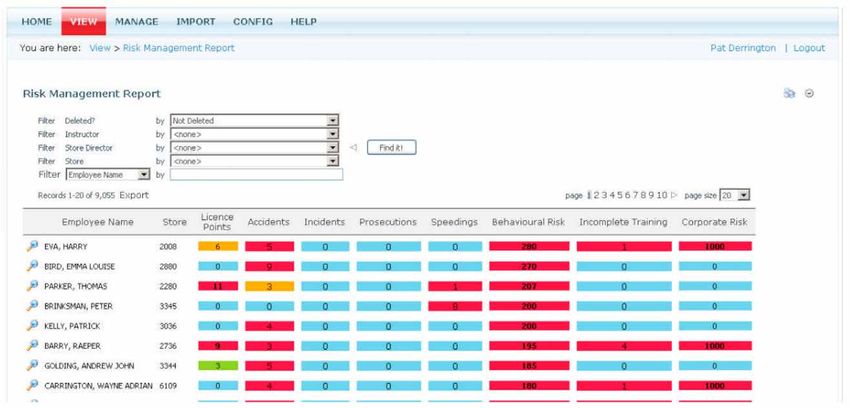
About PRAISE
Using the roads is a necessary part of our working lives. But it’s
an ordinary activity that leads to an incredibly high level of injury
and death. ETSC’s PRAISE (Preventing Road Accidents and Injuries
for the Safety of Employees) project addresses the safety aspects
of driving at work and driving to work. Its aim is to promote
best practice in order to help employers secure high road safety
standards for their employees.

The project is co-ordinated by the ETSC secretariat with the
support of Fundación MAPFRE, the German Road safety Council
(DVR), the Dräger Foundation and MiX Telematics.

For more information
European Transport Safety Council
20 Avenue des Celtes
B-1040 Brussels
Tel: +32 2 230 4106
information@etsc.eu
www.etsc.eu/praise

The contents of this publication are the sole
responsibility of ETSC and do not necessarily
represent the views of the sponsors or the
organisations to which the PRAISE experts belong.

© 2018 European Transport Safety Council

USING TELEMATICS IN
PROFESSIONAL VEHICLE FLEETS

                      Author
                 Laurence Atchison

                      October 2018

    25   YEARS   1993-2018
CONTENTS

EXECUTIVE SUMMARY                                                              5

1.   INTRODUCTION: ROAD SAFETY AND WORK-RELATED ROAD SAFETY IN EUROPE TODAY    6
     1.1 Road safety in Europe                                                 6
     1.2 Work-related road safety                                              7
     1.3 What constitutes a work-related road death?                           7
     1.4 How does road safety affect the workplace?                            8
     1.5 How can organisations reduce their road risk?                         9

2.   VEHICLE TELEMATICS: WHAT ARE THEY AND HOW DO THEY WORK?                   11
     2.1 Types of telematics                                                   11
     2.2 Fitting telematics: options and costs                                 12

3.   USING TELEMATICS: IDENTIFYING AND MANAGING RISK                           14
     3.1 Addressing key road safety issues                                     14
     3.2 Addressing driver specific issues                                     15
     3.3 Addressing company-wide/specific issues                               16

4.   MAKING THE MOST OF TELEMATICS DATA                                        18
     4.1 Feedback: collecting and using the data                               18
     4.2 Telematics as part of a work-related road risk management programme   18
     4.3 Handling data                                                         19
     4.4 Leadership and buy-In                                                 19

5.   WHAT EVIDENCE IS THERE FOR THE EFFECTIVENESS OF TELEMATICS?               20
     5.1 Academic research/literature review                                   20
     5.2 Case studies                                                          21

6.   RECOMMENDATIONS                                                           23

APPENDIX: CASE STUDIES                                                         24
     Martin Brower                                                             24
     Reading Buses                                                             24
     National Vehicle Distribution                                             25

BIBLIOGRAPHY                                                                   26
EXECUTIVE SUMMARY
25,250 PEOPLE LOST THEIR LIVES ON EU ROADS IN 2017 AND AN ESTIMATED
135,000 SUFFERED SERIOUS INJURIES. A LARGE PROPORTION OF THESE
WERE VICTIMS OF WORK-RELATED ROAD COLLISIONS. EVEN THOUGH THE
EXACT NUMBER IS UNKNOWN, IT IS LIKELY THAT UP TO 40% OF ALL ROAD
DEATHS ARE WORK-RELATED.
A range of measures has been introduced to try and tackle consensus that they have a proven effect on road safety.
this problem. Governments have updated legislation, Nevertheless, existing research findings do indicate some
clarifying the obligations of employers concerning the positive trends as well as noting the utility of telematics
safety and well-being of their employees and ensuring as a means for undertaking future research.
that road safety is an integral part of this. Health and
safety authorities have issued improved guidance As with many work-related road safety interventions,
for organisations, to help them abide by their legal there are numerous case studies which highlight the
responsibilities but also encouraging them to go beyond positive effects of telematics in fleets and seek to promote
these requirements and be proactive in managing road ‘best’, or at least ‘good’, practice. While case studies are
safety for their workers. no substitute for proper research, collectively they do
demonstrate the possibilities of what can be achieved
Finally, organisations have taken up the mantle of road by bringing about changes in road safety management,
safety themselves. A plethora of road safety schemes, including the use of telematics.
initiatives and programmes has been implemented with
the aim of enhancing the safety of employees, but also As with road safety in general, the growth of technological
reducing costs and improving efficiency. These include solutions to work-related road safety problems has led
driver training, group discussions, incentives, publicity to a mixture of clear advantages and disadvantages.
campaigns and improved management of road safety Similarly, the debate surrounding the potential role of
across the organisation. technologies ranges from enthusiasm to suspicion.
Recently, there has been a growth in the use of in- In the work-related road safety context, it is clear that
vehicle data recorders, also known as telematics systems, there is significant potential to be gained from the
to monitor and collect data on an individual’s driving. effective use of technology. The extant research and the
Some are used to capture data in the period immediately experience of many organisations points to the usefulness
preceding a collision, but increasingly they are being of telematics as a tool to manage work-related road risk.
used to continually monitor driving behaviour. The The task now should be to study this intervention more
detailed data that is collected can then be used for a closely in order to properly understand it and to maximise
number of purposes, such as feedback sessions, future the potential benefits, while minimising any risk.
driver training, the calculation of incentives, and the
identification of potential fleet-wide issues.
N.B. This report focuses primarily on the use of telematics
Research has been undertaken into the effectiveness of
in driving for work, although references are made to
telematics as a measure to improve road safety. However,
other uses of telematics.
weaknesses in research methods combined with an
overall lack of research means that there is not yet a
Using telematics in professional vehicle fleets | 5PART I
INTRODUCTION
1.1 ROAD SAFETY IN EUROPE
25,250 people lost their lives on EU roads in 2017, Road collisions give rise to huge societal costs; a recent
representing a 2% reduction on the 2016 figure. This study estimated the value to society of preventing all
number has fallen by only 3% in the last four years. reported collision in the EU to be about 270 billion EUR
in 2015 (nearly twice as large as the annual EU budget).4
There has been progress over a longer period but it is The monetary value (for 2017), of the human losses
not enough to meet the EU’s target to halve road deaths avoided by preventing one road death are calculated to
between 2010 and 2020. Since 2010, the average annual be 2.11 million EUR at factor cost.5
progress in reducing the number of road deaths in the EU
has been 3.1%, equivalent to a 20% reduction between The total value of the reductions in road deaths in the
2010 and 2017 (Fig. 1). A 6.7% year-to-year reduction EU28 for 2017 compared to 2010 is thus estimated at
was needed over the 2010-2020 period to reach the approximately € 13 billion, and the value of the reductions
2020 target through consistent annual progress. As a in the years 2011-2017 taken together compared with
consequence of the slow progress between 2014 and five years at the 2010 rate is about € 70 billion.
2017, for the EU to reach the 2020 target, road deaths
need to be reduced by around 14.5% annually in the If the EU had moved towards the 2020 road safety
upcoming three years – an almost impossible task.12 target through constant progress of 6.7%, the greater
reductions in road deaths in the years 2011-2017 would
Similarly, there has been little progress in reducing have increased the valuation of the benefit to society by
serious road traffic injuries since 2010. The European about € 40 billion to about € 110 billion over those years.
Commission estimates that more than 135,000 suffer
serious injuries each year.3
Fig. 1 – Reduction in the number of road deaths since 2010 (solid blue line) plotted against the EU target
for 2020 (dotted blue line).
1
ETSC (2018), 12th Road Safety Performance Index Report, p6.
2
Ibid., p15.
3
Ibid., p20.
4
ETSC (2018), Briefing: 5th EU Road Safety Action Programme 2020-2030, p9.
5
ETSC (2018), 12th Road Safety Performance Index Report, p16.
6 | Using telematics in professional vehicle fleetsGiven the financial constraints that many EU countries Travel survey data from the UK Department of Transport
face, the value to society of improving road safety show that people who drive for work are up to 40%
should be taken into account in the policy and budgetary more likely than other drivers to be involved in a collision,
planning processes, expressing in monetary terms the accounting for up to one in three road collisions in the
imperative of reducing road risk. UK.8
The high value of societal costs avoided during 2011- Using the road for business is the leading cause of work-
2017 shows once more that the saving potential offered related deaths and injuries.9 It is estimated that 6 out of
by sustained road safety improvements is considerable, 10 work accidents resulting in death are road collisions.10
making clear to policy-makers the potential for road These types of collisions account for 39% of work-related
safety policies to provide a sound investment. deaths in the European Union.11
Unfortunately, following pressure to reduce public
spending, the number of police officers on the roads 1.3 WHAT CONSTITUTES A WORK-RELATED ROAD
enforcing driving laws has dropped in several countries, DEATH?
as well as budgets for road maintenance.
Work-related road safety (WRRS) is both a road safety
It is important that wherever possible, other sectors and and an occupational safety and health (OSH) matter and
actors, are encouraged to contribute to improving safety should therefore, be addressed as both. From a road
on the roads. safety perspective road users are held accountable for
their behaviour while, from an OSH perspective, it is
a shared responsibility between the employer and the
1.2 WORK-RELATED ROAD SAFETY
employee.
Millions of people across Europe use the roads every In developed countries, work-related road deaths are
day for their work. Using the roads is a necessary part of increasingly being understood and categorised as an
our working lives. However, it’s an everyday activity that occupational safety and health issue. As general, and
leads to a high risk of injury and death. Data from the work-related, traffic levels increase, this is a growing
UK show that business travel makes up about 30% of all area of concern for those working in road safety, public
travel, rising to 50% if commuting is included.6 health, occupational health and regulatory authorities.
It’s also of relevance to the general public, as the effects
Of the 25,250 lives lost on the road in the European Union
of work-related road safety are by no means limited to
in 2017 a large proportion were victims of work-related
professionals.12
road (WRR) collisions. Even though the exact number is
unknown, it is likely that up to 40% of all road deaths are Employers are responsible for providing the framework
work-related.7 Gaining a full and detailed picture of WRR for work-related risk management within which
collisions in the EU is very challenging due to differing employees can work safely and this extends to work-
definitions, the variety of data sources and a lack of related road use. While the EU definition of a work-
linkages between data sources and underreporting. related road (WRR) death is present in the OSH field,
there is no common EU definition of a WRR death in the
According to Eurostat data, based on the European
road safety area.
Statistics of Accidents at Work (ESAW) definition, around
3,790 work-related deaths occurred in the EU on average A WRR death is defined in European Statistics of
each year over the period 2012-2014. Accidents at Work (ESAW) as a death of a victim that
occurred within one year of the collision. It covers all
Around 60% of these work-related deaths happened in
accidents that happened in the course of work, including
transport, including road, rail, water and aviation. One
road traffic collisions, but excluding commuting. Data
of the limitations of the Eurostat data is that there is no
reporting on the deaths of self-employed people is
figure for the exact numbers of work-related transport
voluntary.13
deaths that occurred only on the road.
6
Murray, W. (2011), “The Work-Related road safety business case: Societal, business, legal and cost factors”.
7
ETSC (2017), PIN Flash Report 33: Tapping the Potential for Reducing Work-Related Road Deaths and Injuries, p6
8
UK Department for Transport (2013), Reported Road Casualties Great Britain 2012.
9
European Commission/European Road Safety Observatory (2009), SafetyNet: Work-related Road Safety
10
EU-OSHA (2010), A review of accidents and injuries to road transport drivers, p7.
11
European Commission (2005), “Causes and circumstances of accidents at work in the EU”.
12
IOSH - Fatal Collisions on the road and safety and health (June 2016)
13
Eurostat, Accidents at Work (ESAW, 2008 onwards), https://goo.gl/tzh5yH
Using telematics in professional vehicle fleets | 71.4 HOW DOES ROAD SAFETY AFFECT THE WORKPLACE?
For employers in organisations of all types, using the road for work, or to get to work, is probably the most risky
activity to which they are exposing their employees. Consequently, ensuring their safety should be a priority.
Work-related road safety (WRRS) should also be a priority for organisations for legal, societal, reputational, financial
and efficiency reasons. From a reputational and business perspective, being involved in a fatal or serious collision
can have a significant impact on organisations and their leaders. It should go without saying that the impact on the
person driving the vehicle at the time, and their family can be catastrophic.
Total incidents Total incidents Total incidents
% of which on
which resulted in which resulted in which resulted in
the road
days off fatalities fatalities
2008 703,976 11,2% 956 48,6%
2009 651,453 11,9% 894 44,5%
2010 658,847 11,8% 888 45,5%
2011 669,914 11,5% 945 49,3%
2012 640,891 11,6% 881 43,8%
Fig. 2 - Share of incidents resulting in days off and deaths, which occurred on the road in France, 2008-
2012.14
Effectively managing road safety provides an opportunity to reduce costs in several ways:
Reduced running costs, such as fuel consumption and vehicle maintenance through better driving standards;
Fewer working days lost to injury/absenteeism and a reduction in the long-term associated costs;
Reduced risk of work-related ill health;
Reduced stress and improved morale/job satisfaction;
Less need for investigation and paperwork;
Less time lost to work rescheduling;
Fewer vehicles off the road for repair;
Fewer missed orders and business opportunities, reduced risk of losing the goodwill of customers;
Less chance of key employees being banned from driving;
Reduced insurance premiums and costs associated with insurance claims (e.g. excesses/deductibles).
14
ETSC (2014), The Business Case for Managing Work-Related Road Safety, p8.
8 | Using telematics in professional vehicle fleetsIn the case of a collision, there are many administrative company logo can have a long lasting negative impact
duties that can weigh on an employer such as filling out on a company’s image.20
forms and claims, dealing with insurance companies and
allocating time to put the business back on track.15 On the other hand, being recognised externally for
performing well in fleet safety can be an effective
This can be especially cumbersome for smaller marketing tool. Similarly, road safety is rarely offered
organisations, which can even be put out of business as a as an example of good CSR practice. This is a missed
consequence of a serious collision. This is one of the key opportunity, as it also serves to set a good example
reasons why SMEs, as well as large organisations, should and encourage other organisations, companies and
be looking to manage road risk proactively. Reducing individuals to commit to improving road safety in their
injuries of any kind reduces workers’ compensation claim own workplace.
expenses, reduces or eliminates health and safety fines,
reduces lost time from work and improves profitability. A work-related risk management scheme can help in
achieving environmental goals and motivate organisations
From a managerial perspective, and aside from reduced to manage their carbon footprint as carbon emissions
business costs, there is also the achievement of creating are one of the main external costs of transportation.
a safer workplace and the fulfilment that comes from
making great strides in worker safety. Working safely
simply is good business.16 Having a work-related road 1.5 HOW CAN ORGANISATIONS REDUCE THEIR
safety management programme in place can also boost ROAD RISK?
morale and reduce turnover of staff/drivers. Research
shows that investment in ‘Workplace Health Promotion’ Organisations should start by ensuring they are fully
yields a return on investment of one to 2.5–4.8 in compliant with the relevant legal requirements.
reduced absenteeism costs.17 Governments continue to update legislation, clarifying
the obligations of employers concerning the safety
In an economy where organisations are looking to stand and well-being of their employees and ensuring that
out from the rest, approaching road safety in a proactive road safety is an integral part of this. Health and safety
way can keep organisations ahead of the competition authorities issue regular guidance for organisations, to
and in line with regulatory and legal requirements. This help them abide by their legal responsibilities but also
can give employers a level of competitive advantage, encouraging them to go beyond these requirements
compared to more ‘reactive’ market competitors.18 and be proactive in managing road safety for their
employees. The international standard ISO 39001 also
If SMEs can demonstrate that they are managing road serves to guide organisations in how to improve road
risk, they may also benefit their contract tendering safety in the work place.21
and business development processes. This is especially
relevant for organisations bidding for sub-contracts Internally, organisations have attempted to tackle
where road safety is one of the factors in the tendering work-related road risk in their fleets through a range
process. When road safety procedures are included in of interventions and policies. Some of these aim to
other management areas (such as quality certification improve general driving standards, whereas others
and marketing promotions), a commercial benefit can target elements of road safety that are particular to the
be attained in this way.19 professional environment, or the situation of a particular
organisation. They can focus on the organisation as a
Incentives to include safety criteria in contracts should also whole, safe drivers, safe vehicles and safe journeys.
be included in public procurement. Liability responsibility
for work-related road safety and appropriate risk
management and preventative measures must be
extended throughout supply chains.
Trust and a good reputation are important assets that
attract clients and investors. The reputation of a company
is hard to make and easy to lose. One high-profile
collision involving a company-owned vehicle bearing a
15
Eurogip (2013), Statistical review of occupational injuries – France.
16
Ibid.
17
ETSC (2012), Fitness to Drive, p3.
18
ETSC (2012), Work Related Road Safety Management Programmes, p7.
19
European Agency for Safety and Health at Work (2001), Factsheet on Preventing Road Accidents involving Heavy Goods Vehicles.
20
CSR film from ASDA available from https://goo.gl/FJPW2U / ETSC (2014), The Business Case for Managing Work-Related Road Safety.
21
Health and Safety Executive (UK 2014), Driving at Work: Managing Work-Related Road Safety, pp.1-2 / ISO 39001:2012 https://goo.gl/UvNiC4
Using telematics in professional vehicle fleets | 9Safer organisations Safer vehicles
For many years, road safety interventions aimed to The vehicles used in the workplace and by the workforce
change the behaviour of individual employees. Recently, vary between organisations: some primarily use cars,
there has been a shift towards more holistic approaches whereas others will use larger, more specialised vehicles.
across an entire organisation. For example, many However, regardless of the types used, by introducing
organisations now conduct work-related road safety risk vehicles into the fleet with higher levels of crashworthiness
management schemes, ensuring that road safety is a key and which feature in-vehicle technologies, organisations
part of occupational safety and health and not simply an can help avoid collisions and mitigate their severity if
add-on. they do occur.25
Organisations can work to develop a ‘safety culture’, New advanced driver assistance technologies, such as
through safety policies and procedures issued by a senior Intelligent Speed Assistance, Autonomous Emergency
management that is committed and willing to invest in Braking and alcohol interlocks, can help address a range
safety, and implemented by a line management and of key road safety issues like speeding and drink driving.
workforce that is willing to comply.22
Safer drivers Safer journeys
Driver training has long been the primary, and often Journey organisation and route planning play an
only, approach used by organisations (although it is a important role in an organisation’s approach to road risk
contentious topic in the wider field of road safety). It and can affect key risk factors such as fatigue and stress.
is used to instruct fleet drivers in how to improve their In many organisations employees spend long hours on the
overall driving behaviour but also how to respond to road. As workloads increase and drivers face escalating
individual hazards and situations on the road.23 It can also pressures to deliver faster and more cheaply (often using
be used as a means to instil greater general responsibility ‘just-in-time management’ systems), drivers can become
on the road, as well as a positive attitude and interest in over-worked and over-stressed by the demands place on
safety issues and further measures.24 them.
Group sessions can also be used, in which employees Organisations can help avoid risk by ensuring that drivers
collectively discuss safety issues to try and bring about are only taking journeys that are necessary. If a journey is
behavioural change. Unlike day-to-day road use, in deemed necessary, then there are steps they can take to
the professional fleet environment it is also possible to reduce journey risk as much as possible, such as changing
reward good driving behaviour and low collision rates schedules, distances and plans to allow sufficient time
through the use of incentive schemes. for drivers to complete their journeys safely (including
delivery stops, rest breaks and foreseeable weather and
Campaigns and publicity drives can be used to focus on traffic conditions).26
specific safety issues that have arisen in an organisation
or those linked to different seasons or types of work.
22
ETSC (2012), Work Related Road Safety Management Programmes, p10.
23
IOSH (2011), Work-related road safety: A systematic review of the literature on the effectiveness of interventions, Grayson, G. B., and Helman S., TRL, p6.
24
ETSC (2010), Fit for Road safety: From Risk Assessment to Training, p2.
25
ETSC (2009), How Can In-vehicle Safety Equipment Improve Road Safety at Work?
26
ETSC (2014), Managing the Road Risk of Van Fleets, pp. 26-27.
10 | Using telematics in professional vehicle fleetsPART II
VEHICLE TELEMATICS:
WHAT ARE THEY AND
HOW DO THEY WORK?
2.1 TYPES OF TELEMATICS
The term ‘vehicle telematics’ refers to a range of
technologies that can be used to monitor the driving
of a vehicle. By combining a positioning system with a
vehicle’s on-board diagnostics it is possible to follow, and
record, the vehicle’s position, speed and manoeuvres.
Telematics can be used to monitor the elements and types
of driving that are linked to collisions. However, they are
also used to monitor general driving behaviour and its
impact on fuel consumption and vehicle wear and tear.
The most common elements of driving that telematics
monitor are:
Journey start and end times;
Vehicle speed;
Vehicle location;
Acceleration;
Braking;
Cornering;
Seatbelt use;
Fuel consumption.27
More advanced systems can also map driving conditions
such as night-time driving, heavy congestion and bad
weather.28
‘Vehicle telematics’ remains a broad term, and covers a
variety of products and systems, but they can be narrowed
down into two categories – Event Data Recorders (EDRs)
and Journey Data Recorders (JDRs).
27
RoSPA (2013), Road Safety and In-vehicle Monitoring (Black Box) Technology, p7.
28
RoSPA (2014), Young Drivers at Work (Scotland): Black Box Pilot, p7.
Using telematics in professional vehicle fleets | 11Event Data Recorders (also known as There are other forms of telematics, such as tachographs.
crash data recorders or accident data A tachograph is a recording device, fitted to commercial
recorders) monitor driving throughout vehicles which stores details of vehicle movement and
a journey but only record data for of certain work periods of their drivers. The recording of
several seconds before, during and the driver’s individual duty periods is mandatory in some
after an ‘event’. This can be triggered by a collision commercial vehicles in EU countries for enforcement of
(e.g. deployment of the airbag) or when an event driving-time regulations.33
exceeds certain pre-set parameters (e.g. position of the
accelerator/angle of the steering wheel). Compliance with the provisions of Regulation 561/2006/
EC34 is dependent on regular monitoring and controls,
These data are then available for later analysis and can which are carried out at the national and international
be made available to the driver, the organisation and/or level by checking tachograph records at the road side
a third party. Some versions provide immediate, real-time and at special tachograph check premises.35
alerts (visual and/or audible) to the driver throughout the
journey. New vehicle technologies are continuing to emerge, both
in the form of already available advanced driver assistance
Journey Data Recorders work in a systems (such as Intelligent Speed Assistance) and the
similar way, except they monitor and coming changes brought about by automation. There is
record driving throughout an entire considerable crossover between these technologies and
journey, providing larger amounts of those used by telematics systems. Similarly, the research
data for later analysis and retroactive into the effectiveness of telematics systems (feedback
feedback. Again, some versions also and incentives), may help contribute to the debate on
provide real-time alerts to the driver.29 In most cases, the effectiveness of new vehicle technologies.36
the term ‘telematics’ refers to this style of continual
monitoring.
2.2 FITTING TELEMATICS: OPTIONS AND COSTS
Since the mid-1990s data recorders have been introduced
to professionally used vehicle fleets (HGVs and buses Telematics can be installed in a number
and coaches) throughout Europe.30 Initially the focus of ways: there are pro and cons to all
was on Event Data Recorders but, as technology has systems and it is for the organisation to
improved, more fleets are using Journey Data Recorders decide which is most appropriate for their
to continuously monitor driving. Telematics use has even needs.
been expanded to private vehicles (usually cars and vans)
used for work – the ‘grey fleet’. Traditionally, in-vehicle monitoring
required the installation of a ‘black box’, or was part
Telematics are also used by private drivers, in particular of software embedded in another device, such as a
young and novice drivers. As in fleets, the systems satnav. These are retro fitted into the vehicle, and incur
record information about high-risk behaviours and the some costs for the black box, the installation and the
information is then used to advise the driver, via a website/ ongoing data communication (which varies depending
app or by a specialist. Many insurance companies in the on the provider). Such systems may also require future
UK are employing telematics systems as a tool to support maintenance.
and positively influence young drivers, helping them
to reduce claims expenditure.31 Telematics technology Recently, other telematics options have become
has the potential to be a useful tool for other road user available, such as the use of smartphone technology
groups too, such as older drivers and offenders.32 and an associated app. While these systems are more
convenient and less expensive, they can be problematic
given the possibility of tampering and the distractive
29
RoSPA (2017), Driving for Work: Using Telematics, p2.
30
ETSC (2009), How Can In-vehicle Safety Equipment Improve Road Safety at Work?, p9.
31
ETSC (2016), Reducing Casualties Involving Young Drivers and Riders in Europe, pp.33-34.
32
RoSPA (2013), Road Safety and In-vehicle Monitoring (Black Box) Technology, p4.
33
ETSC, PRAISE (2011), Tackling Fatigue: EU Social Rules and heavy goods vehicle drivers, p8.
34
Regulation (EC) No 561/2006 of the European Parliament and of the Council of March 2006 on the harmonization of certain legislation relating to road
transport and amending Council Regulations (EEC) No 3821/85 and (EC) No 2135/98 and repealing Council Regulation (EEC) No 3820/85,
https://goo.gl/fyImRV
35
European Commission, Driving time and rest periods, https://goo.gl/uEstKl Regulation (EU) No 165/2014 of the European Parliament and of the Council
of 4 February 2014 on tachographs in road transport on the harmonisation of certain social legislation relating to road transport Text with EEA relevance,
https://goo.gl/9mj046
36
TRL 2015, Report 755: Provision of Telematics Research, Tong, S., Lloyd, L., Durrell, L., McRae-McKee, K., Husband, P., Delmonte E., Parry, I., Buttress, S.,
pp. 41-42.
12 | Using telematics in professional vehicle fleetspotential of mobile phones.37,38 If used, organisations The cost of a telematics system (device, installation,
may need to consider taking steps to actively discourage maintenance and feedback provision) is naturally an issue
or block mobile phone use.39 that organisations must consider, and studies show it can
deter some from choosing to use telematics. However,
An emerging and more reliable method of installing it is more than likely that the reductions in other costs
telematics technology is to have it built-in to the vehicle, (insurance premiums, fuel, damage), would compensate
as part of the original vehicle equipment. Vehicle for the initial start-up costs.42
manufacturers can do this voluntarily (as they do with
other technologies), or it could be made mandatory A European Commission study of vehicle technologies
in the relevant jurisdiction. The European Union has found the use of Event Data Recorders alone to have a
recently proposed the mandatory installation of EDRs in positive benefit-cost ratio. EDRs were ranked one of the
cars and vans.40 most cost-effective technologies in the study.43
Telematics systems can also be linked to a video camera, Typically, the system will generate risk-ratings for
in order to provide a “driver’s eye” view or a view of individual drivers, based on calculations made using the
the inside of the vehicle. This can help provide more data collected from the vehicle. These ratings can then
information on the context in which incidents take be used for a range of purposes: to identify risks and
place, or the reasons for certain types of driver behaviour behavioural trends, develop and prioritise driver training,
(e.g. seatbelt use, in-vehicle distractions such as mobile make changes to fleet management (e.g. schedules and
phones or other passengers). routes) and if necessary for disciplinary purposes. These
are discussed more in section 3.3 below.
This final stage in the process is crucial, as it is only by
using the data produced by the telematics system to
inform and develop policies to manage road risk that
Once installed, the telematics system provides data and
change can come about.44 Therefore, managers and staff
feedback to a manager and/or the driver, usually via a
need to understand how the telematics work and what
dedicated programme or website/app. Some will only
the feedback means.
download the data at the end of each day, but others
feature real-time monitoring. Data can be collected for It is important to note that there will always be elements
a certain period without feedback in order to generate a of driving that telematics cannot capture. They are not
baseline against which future progress can be compared. a panacea for road risk and must only be used as part
of a comprehensive work-related road risk management
Each organisation will have to decide which safety
programme.
performance metrics to establish in order to monitor
progress, or regression. These can include factors such
as injury and collision frequency, the number of collisions
per miles driven, number of collisions per vehicle or the
number of deviations from a specific policy.41
37
TRL 2015, Report 755: Provision of Telematics Research, Tong, S., Lloyd, L., Durrell, L., McRae-McKee, K., Husband, P., Delmonte E., Parry, I., Buttress, S., p43.
38
ETSC, 2010, Driving for Work: Minimising In-Vehicle Distraction, p2.
39
RoSPA (2013), Road Safety and In-vehicle Monitoring (Black Box) Technology, p2
40
ETS (2018), Briefing: EU Mobility Package III including new vehicle safety standards, https://etsc.eu/briefing-eu-mobility-package-iii-including-new-vehicle-
safety-standards/
41
Together for Safer Roads 2016, Advancing Road Safety Best Practices for Companies and Their Fleets: Guidelines for developing and managing transporta-
tion programs, p15.
42
RoSP (2013), Road Safety and In-vehicle Monitoring (Black Box) Technology, p34.
43
European Commission, 2006, Cost-benefit assessment and prioritisation of vehicle technologies, p145/p22.
44
RoSPA – Driving for Work: Using Telematics (2017), p2.
Using telematics in professional vehicle fleets | 13PART III
USING TELEMATICS:
IDENTIFYING AND MANAGING RISK
Reducing risk doesn’t mean only developing a work-
related road risk policy, but managing the risk proactively
and uniformly through collective and individual measures Example – Iron Mountain’s Speed by Speed Zone
across the organisation.45 Telematics can help identify and
address key road safety issues, issues specific to individual In 2009, Iron Mountain began the implementation of
drivers and also issues specific to the organisation. a risk assessment programme for all its commercial
vehicle drivers. Part of this was a ‘speed by speed
It is important to note that recorded incidents may zone’ daily report for all of its UK and Ireland vehicles,
increase sharply at the start as collisions and behaviours which reports any violation of more than 4 miles per
that were not reported previously start to get reported.46 hour above any posted limit. They have worked with
drivers to reduce the number of violations and within
six months reduced them by 80%.
3.1 ADDRESSING KEY ROAD SAFETY ISSUES
Some road safety issues affect all drivers, both private
and professional, regardless of the type of vehicle they
are in. Some telematics systems can provide insight into the
use of in-vehicle technology systems. For example, when
Speed is one such example. Inappropriate speed is linked to the braking system on commercial trailers, the
responsible for up to 30% of all fatal road crashes.47 brake system automatically intervenes when the trailer
Even when respecting speed limits, drivers can drive at tends to rollover, (a functionality called RSS, “Rollover
inappropriate speeds or have an inappropriate driving Stability Support”) or the ESC activates. Such telematics
style.48 Certain types of professional vehicle, such as systems can send an alert to the dispatcher of the fleet
HGVs, have speed limiters but can still breach lower each time such an intervention happens, which allows the
speed limits. fleet owner to review the event with the driver, provide
further training if necessary or take other actions.52
Therefore, a primary goal for organisations should be to
prevent speeding and its consequences.49 Telematics can Telematics can assist in the identification of issues
provide real-time monitoring and recording of speeding that are difficult to enforce by regular enforcement
incidences and their location, allowing managers to authorities. Distracted driving is a common phenomenon,
identify speeding offences that may go undetected by especially concerning mobile phone usage. And it is
national enforcers.50 They can also help companies to difficult to enforce. Organisations can address phone
link and compare data sets on issues such as speeding, usage in fleets by using mobile phone records and/or
risk assessment and fuel consumption.51 devices that monitor phone usage, in conjunction with
telematics data to identify occasions when employees
were using their phone. By juxtaposing the two, they
can also examine whether phone usage was associated
with inappropriate behaviour.53 There is also evidence to
45
ETSC (2011), Driving for Work: Managing Speed, p19.
46
Ibid./ETSC (2009), How Can In-Vehicle Safety Equipment Improve Road Safety at Work?, p9.
47
OECD (2018), Speed and Crash Risk. https://goo.gl/E7YMEq
48
ETSC (2011), Driving for Work: Managing Speed, p31.
49
Ibid., p19.
50
ETSC (2014) Managing the Road Risk of Van Fleets, p34.
51
ETSC (2011) Driving for Work: Managing Speed, p31.
52
Ibid.
53
ETSC (2010), Driving for Work: Minimising In-Vehicle Distraction, p9.
14 | Using telematics in professional vehicle fleetssuggest that seatbelt wearing can be improved through for consumers to know if a vehicle has previously been
the use of telematics.54 involved in a collision.58
Driver fatigue is another safety issue that organisations 3.2 ADDRESSING DRIVER SPECIFIC ISSUES
can do a lot to manage. Fatigue affects all road users
but is especially prevalent amongst professional fleets, in By collecting and analysing telematics information about
particular those drivers involved in road haulage. Analysis employees’ driving behaviour, strengths, weaknesses
and comparison of individual driving styles and data for and areas of concern can be identified. Employers can
the entire fleet makes it possible to identify how and monitor driving in real-time and provide immediate
when fatigue occurs and how to reduce it.55 feedback to drivers if, for example, their speed becomes
inappropriate. Data on drivers can later be used to create
It is worth noting the contribution that telematics data personalised feedback and training for individual drivers
can make to road safety at all levels. The circumstances in the long-term.59
that surround road collisions help inform local, national
and international approaches to road safety. Telematics Telematics data can even be linked to the general health
systems record detailed, objective data about vehicle and well-being of staff, an important issue for safety in
collisions, in particular the pre-crash phase, which are the workplace60 For example, a Swiss company organised
often of a higher quality than are currently available.56 consultations with eye doctors for employees who
demonstrated poor driving performance.61
This data can then be analysed by police, collision
investigators, insurance companies, vehicle As the amount of lone worker legislation increases, and
manufacturers and researchers, helping them to better with the onus put squarely on employers to protect both
understand the causes of collisions and the effectiveness their employees and those they come into contact with,
of new safety technologies.57 Other applications include it is imperative to be able to identify any potential risks.62
the provision of objective data for legal proceedings (in
Data can be fed into risk-rating systems which combine
particular when supporting witness statements, detailed
sources of information (e.g. on-the-road incidents,
information for vehicle manufacturers to ensure that
driving licence points), to create an overall risk-rating for
vehicle systems are operating correctly and the possibility
individual drivers.6364
A risk rating example from Tesco Dotcom64
54
Cranfield University (2018), Sullman, M. J. M., Reducing risk amongst those driving during work, p1.
55
ETSC (2011), Tackling Fatigue: EU Social Rules and Heavy Goods Vehicle Drivers, p35.
56
Hynd, D., McCharty, M. 2014, Study on the benefits resulting from the installation of Event Data Recorders, Transport Research Laboratory, p97.
57
ETSC (2015), Young Drivers at Work, p20
58
Hynd, D., McCharty, M. 2014, Study on the benefits resulting from the installation of Event Data Recorders, Transport Research Laboratory, p16.
59
ETSC (2010), Fit for Road safety: From Risk Assessment to Training, p6.
60
ETSC (2010), Fitness to Drive.
61
ETSC (2009), How Can In-vehicle Safety Equipment Improve Road Safety at Work?, p10.
62
ETSC (2012), Work Related Road Safety Management Programmes, p19.
63
ETSC (2014), Managing the Road Risk of Van Fleets, p34.
64
ETSC (2011), Driving for Work: Managing Speed, p31.
Using telematics in professional vehicle fleets | 15In general, devices are put in all fleet vehicles, although In many organisations, drivers use their own vehicles
increasingly more detailed analysis can be used to target (usually cars) for work business – known as the ‘grey
attention to the 5-15% of drivers that are responsible for fleet’.72 It is possible to include these drivers in a telematics
a disproportionate number of collisions and violations in system, however it may require additional processes
most organisations.65 (such as getting staff agreement), and discussions with
insurers and vehicle leasing companies.73
Many risk management systems include an element of
driver self-improvement and reflection. They provide
immediate in-vehicle feedback for drivers following
any high-risk or aggressive manoeuvres (e.g. cornering,
changing lanes abruptly and accelerating suddenly). By
analysing different types of manoeuvre and identifying
whether they have been performed correctly and safely,
“Drivers often overestimate
the system can encourage drivers to manage their own their own abilities or may
safety on-the-go.66
Drivers often overestimate their own abilities or may not
not realise they were doing
realise they were doing something wrong. Feedback something wrong. Feedback
from telematics can help draw attention to unknown
issues and calibrate their perceived performance with from telematics can help draw
their actual performance.67
attention to unknown issues
Risk-rating systems, underpinned by detailed telematics
data, can be used to organise reward schemes. As a and calibrate their perceived
behaviour modification tool, rewarding good behaviour
is at least as powerful as punishing bad behaviour.68 performance with their actual
However, at the national level, road safety tends
(understandably) to be centred on punishing bad driving performance.”
behaviour. Similarly, there are few options available for
rewarding private drivers.
In the fleet environment it is possible to reward good
driving. Compliance (and improved compliance) with
safety policies can be encouraged through monetary
incentives.69 Furthermore, unlike other forms of driver
monitoring, the data from telematics allow managers to
explain clearly why and how rewards are calculated.70
However, it is important to consider the costs of running
such a scheme.71 Similarly, organisations should take
care to consider how best to use such a system. For
example, rewarding only good driving can act as a
disincentive to those drivers that are not yet at that level.
Instead, reward schemes should focus on progress and
improvement rather than simply the best.
65
ETSC (2011), Driving for Work: Managing Speed, p31.
66
ETSC (2009), How Can In-vehicle Safety Equipment Improve Road Safety at Work?, p9
67
RoSPA (2017), Driving for Work: Using Telematics, p7.
68
ETSC (2012), Work Related Road Safety Management Programmes, p26.
69
ETSC (2011), Driving for Work: Managing Speed, p18.
70
Ibid.
71
ETSC (2012), Work Related Road Safety Management Programmes, p26.
72
ETSC (2016), Managing Grey Fleet Safety
73
RoSPA (2017), Driving for Work: Using Telematics, p5.
16 | Using telematics in professional vehicle fleets3.3 ADDRESSING COMPANY-WIDE/SPECIFIC ISSUES Improvement of overall safety levels in an organisation
can help reduce insurance costs. Insurers can incentivise
The data collected from vehicle telematics can help to the use of telematics by linking their use to their
assess trends and issues across an organisation as a premiums.78 This is already becoming common in some
whole. Employers can then adopt internal policies and insurance markets for young drivers.79 Some insurers,
useful interventions for all drivers.74 The driving behaviour such as Zurich, have become very proactive in offering
of contractors and subcontractors can also be monitored these types of services to commercial fleets.80
(depending on national data protection regulations).75
An added insurance benefit of telematics is the
The data may also point to specific issues related to the information they provide on the circumstances
work of a particular organisation, such as overloading, surrounding a crash and for the authentication of an
speeding, idling and fatigue.76 Alongside driver training, incident for insurance claims, or equally importantly for
the telematics information can then be used as a the rejection of insurance claims (e.g. drivers involved in
management tool, to change shift patterns and driving a collision because of allegedly inappropriate speed).81
times to avoid risky periods and routes that are either Incidents are recorded automatically, and rely less
riskier or more expensive in terms of fuel use.77 heavily on staff and witness reports. Investigations are
often quicker, easier and cheaper, with more accurate
conclusions.82
The driving techniques and style that make drivers safer
are exactly the same as those that make drivers more fuel
Example – Reynolds Logistics – Managing Fatigue
efficient.83 Adopting telematics systems can therefore
Using telematics data, Reynolds Logistics evaluated help deliver environmental benefits and improvements
individual driving style grades and analysed the data in fuel economy. These added benefits can also help in
across the entire fleet to develop a company driving style securing buy-in within an organisation.
that not only saved fuel and reduced vehicle wear and
tear but helped manage the issue of driver fatigue.
“Improvement of overall safety
levels in an organisation can
help reduce insurance costs.
Insurers can incentivise the use
of telematics by linking their
As outlined above in Section 1.4, there are significant
financial benefits to managing work-related road risk. use to their premiums.”
The costs associated with days lost due to injury and
long term absenteeism can be prohibitive, especially for
smaller organisations operating within tighter budgets.
Similarly, the costs of continual vehicle repairs and
maintenance due to collisions and poor and/or aggressive
driving can mount quickly, especially in large vehicle
fleets that are being continually used.
74
ETSC (2014), Managing the Road Risk of Van Fleets, p28.
75
ETSC (2016), Making Taxis Safer, p6.
76
ETSC (2011), Driving for Work: Managing Speed, 31.
77
RoSPA (2014), Young Drivers at Work (Scotland): Black Box Pilot, p7, ETSC, 2009, How Can In-vehicle Safety Equipment Improve Road Safety at Work?, p9.
78
ETSC (2014), Managing the Road Risk of Van Fleets, p34.
79
ETSC (2016), Reducing Casualties Involving Young Drivers and Riders in Europe, p34.
80
Zurich Fleet Intelligence https://www.zurichna.com/_/media/dbe/zna/docs/kh/const/zfi.pdf?la=en&hash=49B64171B22A76ABE054D2376F881D3A6DFF6F09
81
ETSC (2009), How Can In-vehicle Safety Equipment Improve Road Safety at Work?, p8.
82
RoSPA (2016). Driving for work: Incident Reporting and Investigation, p9.
83
ETSC (2011), Driving for Work: Managing Speed, p25.
Using telematics in professional vehicle fleets | 17PART IV
MAKING THE MOST OF TELEMATICS DATA
4.1 FEEDBACK: COLLECTING AND USING THE DATA Routine systematic monitoring should be part of the
day-to-day operation of any organisation whose work
Typically, organisations have taken includes driving. In the long term the continuous analysis
a reactive approach to road safety, of data helps to develop appropriate policies and can
responding to increases in collisions then be used to evaluate them.89 Without continued
demonstrated by their insurance monitoring, the benefits of telematics can begin to
data or collision reporting systems.84 decrease.90 Likewise, continued feedback is required;
Telematics can help organisations without it the impact on driver behaviour is reduced.
to be proactive by forming part of a wider monitoring
system (combined with insurance data, licence data,
management ride-alongs, public feedback etc.) that 4.2 TELEMATICS AS PART OF A WORK-RELATED
aims to identify trends and key risks before they lead to ROAD RISK MANAGEMENT PROGRAMME
collisions and harm. In this way, they can be a central
part of an organisation’s approach to fleet safety.85 As telematics and monitoring systems
become more sophisticated, the
However, the collection of telematics data alone sheer quantity of data recorded has
does not necessarily lead to any positive change in an the potential to be overwhelming.
organisation’s road risk or fleet management. While it Therefore, it is important for an
is possible to identify some improvements due to the organisation to have a work-related
simple presence of telematics devices in a vehicle (i.e., road risk management programme in
a Hawthorne effect), more tangible, long term change place to help focus attention on the most important
requires the proper exploitation of that data into safety issues.
something useful.86,87
Reducing work-related risk requires the development of
The most immediate way of doing this is through ‘real- safety policies, but it also needs proactive and uniform
time’ feedback while the driver is in the vehicle. This has management of the risks across the organisation, through
the advantage of alerting a driver to an issue and giving a combination of collective and individual measures.
them the chance to change their driving on a specific
journey. Retrospective feedback, after a journey, can To gain maximum benefits from telematics, they should
be delivered straight to the driver, or via a third party be integrated into an existing work-related road safety
such as a manager. management programme which includes clear policies
on key road safety issues (such as speeding, drink-driving,
Care should be taken to ensure that the information fatigue etc.). These policies will help to inform the way in
used in feedback is relevant, and also easy to understand. which telematics are used. Similarly, they should always
Similarly, the feedback system used (especially if feedback be used in cooperation with key stakeholders across the
is given directly to drivers, without an intermediary) organisation.91
should be clear and straightforward.88
84
ETSC (2010), Fit for Road safety: From Risk Assessment to Training, p3.
85
Haddon Matrix, featured in ETSC, 2010, Fit for Road safety: From Risk Assessment to Training, p3.
86
Driving for Better Business, 2018, How the latest technology can reduce your fuel spend,
https://www.drivingforbetterbusiness.com/how-the-latest-technology-can-reduce-your-fuel-spend/
87
RoSPA (2013), Road Safety and In-vehicle Monitoring (Black Box) Technology, p7, p32.
88
RoSPA (2014), Young Drivers at Work (Scotland): Black Box Pilot, p20/p26.
89
ETSC (2010), Driving for Work: Minimising In-Vehicle Distraction, p9.
90
ETSC (2009), How Can In-vehicle Safety Equipment Improve Road Safety at Work?, p9.
91
ETSC (2010), Driving for Work: Minimising In-Vehicle Distraction, p9.
18 | Using telematics in professional vehicle fleets4.3 HANDLING DATA 4.4 LEADERSHIP AND BUY-IN
It is important when handling and using Leadership, consultation with and buy-
the data gathered from telematics in from staff are essential to developing
devices that organisations take care to any work-related road safety policy, but
abide by the data protection rules that especially one that involves telematics.96
apply in their jurisdiction.92 They should Staff and/or representative bodies (such as
also be sure to give staff a proper trade unions/staff associations) need to be
explanation of how the technology works, how they plan involved in the process and have an awareness of the
to use the data, and who will have access to the data.93 joint responsibility for operational success.97 It is in the
interest of both employers and employees and reduces
Employees may initially have concerns about elements of the potential for distrust and tension between the two.98
telematics, like real-time tracking, personal privacy and
the potential ramifications of bad training. Organisations Organisations should consider introducing a ‘telematics
should be transparent about the reasons for using policy’, in addition to, or as part of their driving for work
telematics and make sure that drivers have the option to policy that explains what is expected of both employers
challenge and discuss any conclusions drawn from the and employees.99
data.94
Care must be taken to ensure that data is assigned to
the correct drivers, especially for those who work with
pool vehicles. If the right data are not linked to the right
driver, it will be rendered largely meaningless. This may
require the use of additional data sources, like logbooks
or driver identification technology.95
“Telematics can help organisations to be proactive by forming
part of a wider monitoring system (combined with insurance data,
licence data, management ride-alongs, public feedback etc) that
aims to identify trends and key risks before they lead to collisions
and harm.”
92
ETSC (2011), Driving for Work: Managing Speed, p31.
93
RoSPA (2017), Driving for Work: Using Telematics, p7.
94
Ibid., p3.
95
Ibid., p5.
96
ETSC (2012), Work Related Road Safety Management Programmes, p19.
97
RoSPA (2014), Young Drivers at Work (Scotland): Black Box Pilot, p31.
98
ETSC (2009), How Can In-vehicle Safety Equipment Improve Road Safety at Work?, p9.
99
RoSPA (2017), Driving for Work: Using Telematics, p9.
Using telematics in professional vehicle fleets | 19PART V
WHAT EVIDENCE IS THERE FOR THE
EFFECTIVENESS OF TELEMATICS?
5.1 ACADEMIC RESEARCH/LITERATURE REVIEW
Unlike general road safety, work-related road safety “It is unfortunate that there
suffers from a notable lack of research. As a result, there
is only a small amount of work that looks at the field of has been so little evaluation of
telematics. Similarly, in many cases telematics are studied
as part of a group of measures, and not in isolation. an intervention that has such
Consequently, it can be difficult to assess their effects.
potential for research”
A systematic review of the literature on work-related
road safety (63 studies), carried out for the Institute of
Occupational Safety and Health in 2011, examined six
intervention areas: driver training, group discussions,
incentive schemes, publicity, organisational approaches The main conclusion of the project was that there
and in-vehicle data recorders.100 Only four of the is a “pressing need” for more and better-controlled
intervention areas were found in studies of a scientifically evaluation work in order to gain a better understanding
acceptable standard that showed statistically meaningful of work-related road safety issues.104 In particular, it is
reductions in crash risk. unfortunate that there has been so little evaluation of an
intervention that has such potential for research, given
One of these was the installation of in-vehicle data its capacity for the collection and use of real-time data in
recorders, or telematics. A major 2000 study, conducted real-world situations.105
by Wouters & Bos, was able to demonstrate that the
installation of data recorders could reduce collision Earlier studies also point to a positive safety effect
involvement among fleet drivers.101 The study covered a of telematics on commercial fleet safety. A Dutch
number of fleets in Belgium and the Netherlands and study examining police vehicle collisions noted a crash
drivers were made aware that the data being recorded reduction in EDR-equipped fleets of 20%.106 Similarly,
could be used when assessing collision responsibility.102 a UK study of police vehicles fitted with EDRs saw a
reduction of 20-25%107.
Another area that was found to be effective was the
use of incentives, in the form of a bonus. A study of In 2014, a study of young drivers at work in Scotland
multiple measures conducted in Sweden recorded a 23% with telematics installed in their vehicles demonstrated
reduction in the accident rate for the bonus group.103 an improvement in driving scores for 75% of the drivers
involved.108
A 2015 report stated that studies of fleet telematics
noted overall average reductions in collisions of between
0-30%, when comparing drivers monitored by telematics
systems with those who were not. The evidence deemed
most reliable indicated a reduction of 20%, although
100
IOSH (2011), Work-related road safety: A systematic review of the literature on the effectiveness of interventions, Grayson, G. B., and Helman S., TRL.
101
Wouters P and Bos J M. Traffic accident reduction by monitoring driver behaviour with in-car data recorders. Accident Analysis & Prevention 2000; 32: 643–650.
102
IOSH (2011), Work-related road safety: A systematic review of the literature on the effectiveness of interventions, Grayson, G. B., and Helman S., TRL, p7.
103
Ibid.
104
Ibid., p5.
105
Ibid., p7.
106
SWOV (1997) in Hynd, D., McCharty, M., (2014) Study on the benefits resulting from the installation of Event Data Recorders, Transport Research Laboratory.
107
(Charlton 2005) in Hynd, D., McCharty, M., (2014) Study on the benefits resulting from the installation of Event Data Recorders, Transport Research
Laboratory, p38.
108
RoSPA (2014), Young Drivers at Work (Scotland): Black Box Pilot, p32.
20 | Using telematics in professional vehicle fleetsYou can also read


