Utilizing level design artifacts to maximize fun - The IYRC
←
→
Page content transcription
If your browser does not render page correctly, please read the page content below
The International Young Researchers’ Conference
       DOI:

       Utilizing level design artifacts to maximize fun
       Kayra Yorulmaz, Jonathan Lai
       The British School in Tokyo
       23kyorulmaz@bst.ac.jp

Abstract                                                most important elements in understanding player
In video games, a change in difficulty is usually the   enjoyment is how difficulty should be paced. In
biggest contributor to the enjoyment a player           general, the difficulty needs to fluctuate between
would face (alongside graphics, sound, etc.).           being easier and harder while still not being too
However, the difficulty does not exclusively come       easy to get boring, or too hard to become tedious;
from game elements such as the intelligence of          this is called flow (Csikszentmihalyi, 1971,
enemy AI or the rarity of items. This paper is          Csikszentmihalyi, 1990). Measuring player
meant to examine how changes in the aspects of          enjoyment is also critically important in its own
the level design itself would be a major change in      right, as control variables such as tiredness,
enjoyment. We examine previous works and find           setting, time of day, and even which sort of test
that there is not much research on the effect of        performed (Persona modeling, RITE testing,
changing the level design can affect player             Qualitative questionnaires, etc.) could produce
enjoyment. We create a theory on player                 especially different results (Ganglbauer, 2009). A
enjoyment and along with measures of enjoyment          player’s engagement to a game also directly
and how game level design elements could be             correlates to their enjoyment, as some
changed, added, or removed, and by adding               engagements outside of the game, such as
these changes to artifacts we could improve             competition for high scores, online discussions,
general enjoyment in a Minecraft custom level.          and most importantly social connections, are
We found that level design on its own was enough        powerful motivators to continue playing (Drachen,
to increase player enjoyment and that the primary       2017). In levels designed to be explored (such as
factor we identified for increased player               the sections designed for this experiment), it is
enjoyment was immediately recognizable details          important to consider that players might get bored
concerning the goal of the level or stage.              when dragged into the same/similar looking areas
Keywords: Game Level Design, Minecraft,                 (De Castro, 2016).
Human-Computer Interaction
                                                        Theory
Introduction                                                   In most games that adjust difficulty
       As videogames had been researched for            dynamically, only minor, quantifiable, elements
over 40 years, there is an extensive amount of          are changed. The most common changes are
previous work done in understanding what                usually an increase in enemy intelligence or a
causes players to enjoy video games. One of the         change in the rarity of items. In our tests, however,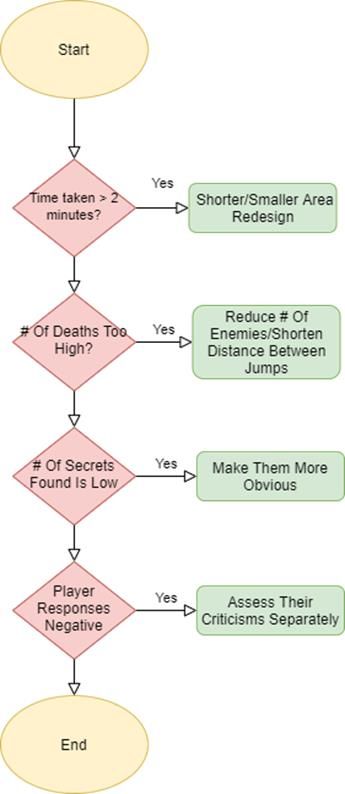
a change in objects and spacing are also used to        Design Rules for Changing Game Artifacts for
either increase or decrease difficulty. With the        Player Enjoyment
prevalence of highly-changeable games such as                  The design rules I have chosen came from a
Roblox (2008) and Minecraft (2009), it has              variety of aspects, from what publications &
become easier than ever to make direct edits to         content creators (Bishop, 2015, Hanson, 2011,
the level layouts and interactions themselves           Desurvire & Chen, 2004) considered to be good
rather than simply changing stats. However, while       level design to what experts in the field of game
there is a lot of research done online on the           design have considered differentiating between
correlation between difficulty and enjoyment            good and bad level design.
(Csikszentmihalyi, 1971, Csikszentmihalyi, 1990,               We will propose four unique artifacts for our
Drachen, 2010, Wang, 2008), there is a largely          game design changes:
lacking field in how changes in level design could          I.      Introducing the player with agency
make an impact on player enjoyment. Thus, we                   One method of hooking players into playing
will largely be examining the level design and how      your game would be to give them a high level of
the use of some of its artifacts would change the       agency from the start. This is important as a high
enjoyment players would accumulate when                 level of agency would make the player feel more
playing. In video games, an artifact is a design rule   confident and have a higher opinion of the game.
that is used to mold an element in the game. In            II. Having the player do more than one “verb”
level design, an artifact could be anything from               “Verbs” are the actions a player is allowed to
how the level is presented visually (e.g. color         perform in a game. Having players do only one
composition, in-game time-of-day) to what sorts         verb can be immensely boring. If there’s a long
of mechanics would appear within it (e.g.               stretch of road where all that the player has to do
presence of counter-operative elements such as          is hold right, then the player would likely lose
Player versus Player (PvP), presence of co-             interest. Giving a player more verbs to do at once
operative elements such as keys and levers).            would, in theory, keep them more interested as
Based on the results produced from this                 they have to do more at once to succeed.
experiment (alongside results produced in other           III. Having a skill ceiling to reward expert
works), this paper will decide if changing these                    players
artifacts improve player enjoyment and out of                  When the players claw through a game’s
these 4, which type of artifacts are the most           challenge, they are expected to either get an
significant in increasing the enjoyment of a level.     intrinsic reward or an extrinsic reward. For
         For our purposes, player performance           extrinsic, this could be a new ability, better
would be measured by a counter inside of the            weapons, or just the rest of the game. Intrinsically,
server (e.g. death counter, timer, etc.) while the      you could increase the skill ceiling to expand the
player impressions would be recorded by me. As          margin of difference between a beginner and a
analyzing player emotions is far more qualitative       master at the game. In that case, the player will
than quantitative, multiple methods of measuring        know that he is performing much better than when
satisfaction have been made (Abeele, 2020,              he had just started the game, which gives them
Rigby, 2007, Canossa, 2018, Sherry, 2006).              intrinsic satisfaction.
Several external questionnaires have also been           IV.        Making sure to create immediately
made such as the GIQ (Cheng, 2014), IEQ                             recognizable details
(Jennett, 2008), GEQ (Brockmyer, 2009). That                   If every single room or corridor the player goes
we can use as a base for judging reactions              through has details that are nearly identical to
qualitatively after the session has ended.              each other, then there is a high chance the player
                                                        might get confused and start to have difficulties
                                                        trying to navigate around it.

The International Young Researchers’ Conference, March 27-28, 2021, Virtual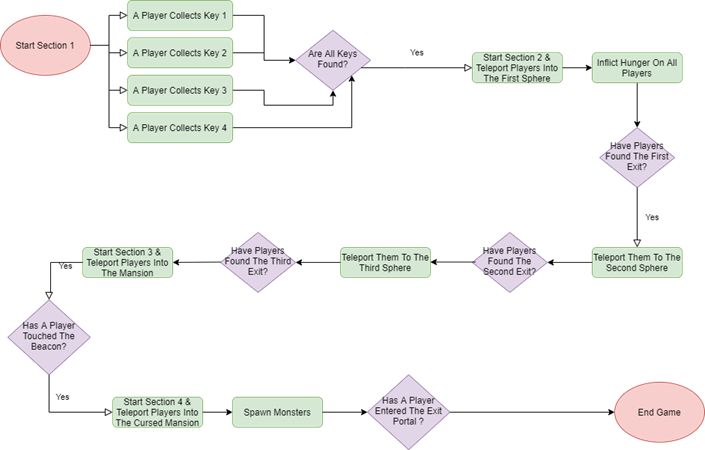
V.     Utilization of theory                            The Hedge Maze
    The level tested for these concepts would be                In the first section, all players would spawn
a non-linear adventure through a Halloween-              into the hedge maze. Here, players would run
themed level. Players are expected to traverse           around the maze to find 4 keys (as shown by the
through a hedge maze to find keys, eat through           beacons in Figure 2) to break a barrier that's
spheres of cake to find an exit, use hidden levers       preventing them from getting into the mansion.
to activate doors to collect ladders, and finally find   The challenge presented in this section would be
a hidden exit from a demented version of the             one of persistence, as many of the most obvious
mansion. These objectives would be varied                routes lead to dead ends as depicted in Figure 3.
enough in their linearity to show us the
effectiveness of these ideas in a variety of
objectives.

Introduction to Initial Level
        The level players would have to complete
would be a co-op adventure map set in a
Halloween-like setting. The level would comprise
3 different sections, with a new section starting for
each player as they reach the exit of a given
section. Figure 1 shows a flowchart giving a             FIGURE 2. A Screenshot of a key in the Hedge
general overview of how the initial level would be       Maze Section.
structured.

                                                         FIGURE 3. A top-down Screenshot depicting a
                                                         part of the maze layout in the hedge maze section.

                                                         The Cake Pit
                                                                 Once they enter the mansion, players fall
                                                         into a pit, where they are teleported to the cake
                                                         pit shown in Figure 4. Here, the players are
                                                         expected to eat through all of the cake to find an
FIGURE 1. A flowchart depicting the layout of the        exit. The players’ hunger rapidly drops, thus they
initial level.                                           need to constantly eat cake to stay alive.

The International Young Researchers’ Conference, March 27-28, 2021, Virtual
Criteria
To decide how much of a change to
enjoyment these design decisions employed, a
specific set of criteria shown in Figure 6 was
determined. The criteria used would be effective
in showing whether design decisions taken during
the initial level design were better or worse than
the re-design. The criteria were:
● The time it takes to clear a set-piece;
● Number of people taking a different route;
● # Of Deaths;
FIGURE 4. A screenshot of the initial 3x4 cake ● Player responses during play (with voiced
grid in the Cake Pit section. commentary);
The Pumpkin Hunt
Once players complete the cake pit, they
are dropped into the mansion. The goal in this
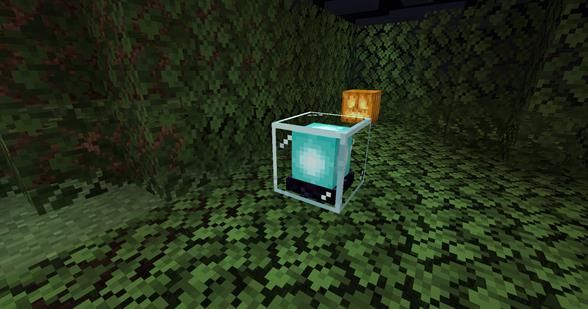
section is to collect a special Jack-o-Lantern,
shown in Figure 5, which is placed behind an
unbreakable glass wall. To reach the lantern,
players are expected to adventure around the
mansion to find a hidden path through.
FIGURE 5. (From left to right) A screenshot of the
room holding the Jack-O-Lantern, an opening
through the third floor window, and the hidden
passage accessed through the ceiling.
Methodology
The test subjects were eight children aged
10 – 13 years, who joined a Tokyo Coding Club
(TCC) hosted online sessions twice a week and
played the same level in each session for a total
of four sessions. Permission for research was
granted through parental agreements with TCC.
Here, I joined the session as a spectator and
recorded their whole playthrough as a video file. FIGURE 6: A flowchart showing the criteria used
This allowed video evidence of their real-time to evaluate player satisfaction and steps needed
behaviors and progress and would show me to address negative areas.
evidence of their immediate impressions.
The International Young Researchers’ Conference, March 27-28, 2021, VirtualPlayer Impressions of Initial Playthrough Summary of Player Observations
From the initial playthrough, there were There was a multitude of issues that were
several issues. Generally, the most prominent discovered in this first playthrough; all of the 3
issue was the length of each section; they were sections had their difficulties.
either too long or too short, making it difficult for For the hedge maze, while players were
players to invest enough interest to fully enjoy a able to complete within the allotted time and
section. understood at a glance what their objective was,
Section 1: The Hedge Maze players’ overall enjoyment was significantly
The hedge maze was the most successful, damaged due to harassment caused by PvP
as it met most of the criteria between all 3. By being enabled. For the cake maze, it was
working together, players were able to finish the especially difficult to decide what players’
section in less than 2 minutes and 20 seconds. impressions were as most players had quickly
Players however found the section to be finished with this section and moved on to section
monotonous towards the end, mainly due to a 3 before any meaningful commentary could be
lack of any obstacles throughout (e.g. enemies, given. Finally, a general lack of direction and
pits). While all the players found the design of the amount of open space given to players led to
maze to be interesting, many repeatedly them feeling visibly confused, and most resorted
commented on their annoyance with some to killing each other as a source of enjoyment.
players, as they would repeatedly harass and hit
them. This harassment decreased the overall TABLE 1. Average player performance and
enjoyment of the maze. impressions for each section for the initial
Section 2: The Cake Pit playthrough.
The cake pit was too short and easy. Only Criteria/Section Hedge Maze Cake Pit
Pumpkin
Hunt
15 seconds in, players were able to find the exit. Within Too
Due to how shallow the pit was, other players Time Taken Too Long
Allotted Time Short
were easily able to jump down and follow other # of People
Taking an
players, defeating the entire purpose of the Alternate
0 0 0
section. Players didn’t comment during the Route
playthrough of this section at all, as nearly all # of Deaths 3 0 7
players had quickly entered section 3. Player
Section 3: The Pumpkin Hunt Mostly Very
Responses Unknown
Negative Negative
The major issue with the pumpkin hunt was During Session
that it was too vague in design. Right after players
had completed the Cake Pit, the lack of an Introduction to Revised Level
immediate objective (as the Jack-O-Lantern was Because the results in enjoyment
placed on the second floor when players entered expected in the initial level were far worse than my
the mansion through the first floor) and any sort of expectations, a couple of major changes in
clear directions. Even though players saw their artifacts and section length was needed.
objective, the Jack-O-Lantern behind the glass Generally, each section was extended with either
wall, all of the players gave up trying to search for more space, had additional obstacles, was
a path through. Less than 1 minute after the completely new, or had additional mechanics
section had begun, a majority of players began to players had to interact with. Different changes
change their focus from finding the secret
pathway to fighting each other (PvP was
unintentionally activated). It wasn’t until one
player had begun to search around that the game
was completed 5 minutes later.
The International Young Researchers’ Conference, March 27-28, 2021, Virtualwere done for different sections to see which The Cake Pit
artifacts increased the most amount of enjoyment. The cake pit had a complete overhaul.
While initially, the cake pit was a 3x3 square pit
that wasn’t all too deep, the new cake pit takes
place between 3 giant floating spheres shown in
Figure 9 and Figure 10. Players would fall into the
original pit the cake pit was placed in and get
teleported to the first of these spheres. Because
of the much larger area afforded here, layers
would spend more time looking around for the exit
for each of the three spheres before finding the
final exit and transitioning into the mansion.
FIGURE 7. A flowchart depicting the general
construction of the layout in the revised level.
The Hedge Maze FIGURE 9. A screenshot of the greatly expanded
The hedge maze had the least amount of Cake Pit section.
changes, as the complaint was of the lack of
challenge in moving round rather than the
placement of the keys. Thus, while the key
placements and the maze design were left the
same, additional challenge was added through a
multitude of pits for players to carefully jump over
as shown in Figure 8.
FIGURE 10. A screenshot of the exterior of the
greatly expanded Cake Pit section.
The Lever Puzzle
After finding the exit to the cake hunt,
players are dropped into the mansion. Here, the
focus is changed towards using levers to unlock
FIGURE 8. A screenshot of two consecutive pits rooms as shown in Figure 11. In those locked
in the revised Hedge Maze section. rooms, there are chests that either contains
The International Young Researchers’ Conference, March 27-28, 2021, Virtualadditional levers, ladders, or simply nothing. By
collecting ladders, players would be able to climb
up a stack of golden blocks to reach the beacon
at the top shown in Figure 12.
FIGURE 13. An outside screenshot of the “cursed”
mansion.
FIGURE 11. A screenshot depicting an open door
with a lever in the “OFF” position next to it.
FIGURE 14. A comparison shot between the
lighting in the normal mansion (right) and the
cursed mansion (left).
FIGURE 12. A screenshot of the ladders placed
on top of the stack of golden blocks.
The Final Escape
Another section had been added in the
revised level. In a darker version of the mansion,
shown in Figure 13 and Figure 14, players are
thrown into a gauntlet of enemies. The goal is for
players to navigate through the gauntlet to find a
FIGURE 15. A top-down view of the secret exit.
secret exit, shown in Figure 15, and finally escape
the mansion. Enemies spawn at a rapid rate, and
Mechanical Changes
the lack of any health items should make this a
While these additions don’t directly
difficult final section.
correlate to the level design changes to the
revised level, they were added to supplement the
players’ experience.
The International Young Researchers’ Conference, March 27-28, 2021, VirtualThe Information Tab eaten). Moreover, players felt immensely
The information tab is a space on the mid- confused about where to go, with 2 of the players
left of players’ screens. It was added as a still being stuck in the first chamber by the time all
response to players’ getting so easily/quickly of the others were able to find a path out and had
confused during the pumpkin hunt. Now, specific entered section 3. Even with some strategically
details, objectives, and tips could be shown to placed lanterns around to guide players, the
players whenever they enter a new section. overcompensated space caused players to feel
too confused, and quite a number of them gave
Removal Of PvP (Player Versus Player) up within 2 minutes until one of the players was
PvP wasn’t meant to be used so finally able to find a path out.
extensively during the playthrough. Immediately Section 3: The Lever Puzzle
after the game began in the hedge maze, some In contrast to player impressions in the
players had begun to hit each other, which revised cake pit, player experiences during the
created frustration with others who were simply lever puzzle were much improved. By telling the
trying to do the task at hand. Because of the players what to do through the information bar
constant problems PvP created in this adventure and spawning them next to a box of levers,
map, it was decided that PvP should be removed. players were able to immediately understand their
objective, and were given the necessary tools at
Player Impressions of the Second Playthrough the start to begin exploring tools. With these
Player impressions in the second changes, players were able to finish the level
playthrough were marginally better than the first within the allotted time, and all of the players
playthrough. The biggest improvement was seen expressed a high level of satisfaction towards the
from the removal of the biggest mechanical completed task.
obstacles encountered in the first session such as Section 4: The Final Escape
PvP and lack of clear direction. The final section was the only entirely new
Section 1: The Maze section, so I didn’t have a previous point of
The maze had the least amount of changes reference to see whether player impressions were
between all three, but players still appreciated the either positive or negative compared to the
clever and complex designs of the maze. original. Overall, most players weren’t
However, the removal of PvP meant that players exceptionally pleased with the section. The
weren’t being attacked by each other, and thus problem most players cited was the stark increase
the annoyance that had significantly detracted in difficulty between the past 3 sections and the
from the enjoyment of the level was removed. final section. The game’s internal difficulty was set
While the addition of pits had a slight increase in to “Hard” and a multitude of enemy spawners was
player impressions, as players were required to placed to prevent players from simply swerving
pay more attention, the removal of PvP had a far around enemies. It was intended that the players
greater impact than the changes in the level would have to find new strategies to either get by
design itself. or confront the enemies in the corridors. However,
Section 2: The Cake Pit the difficulties became too much for many players,
The cake pit, however, was still received and by the end, only 4 of the 8 players were able
rather poorly. Multiple players expressed irritation to complete this section.
towards the tedium of the challenge. Many of the Summary of Player Observations
players commented about how unforgiving the Overall, players had completed with a
hunger bar was (as the players’ health would marginally increase in satisfaction in comparison
deplete rapidly when not eating) and how to their initial playthrough as seen in Table 2.
annoying it got to eat through so much cake (as a While the addition of some of the artifacts (do
single block of cake required 4 clicks to be fully more than one verb, create immediately
The International Young Researchers’ Conference, March 27-28, 2021, Virtualrecognizable details), had big improvements onto there still is the possibility that players may begin
the amount of enjoyment gained, players had still to experiment in later sessions. The second least
had a multitude of difficulties in understanding effective was introducing the players with agency.
objectives and would still give up only a couple of Different from the other artifacts, agency was
minutes into a section if they see no immediately removed in the revised level to increase the
visible progress is being made. dedication needed to complete a section. Even
after the difficulty of each stage was either
TABLE 2. Average player performance and increased or decreased to be more homogenous,
impressions for each section for the revised players didn’t have a visible increase in enjoyment
playthrough. due to a purposefully easy first section. The
Criteria/Section Hedge Maze Cake Pit
Lever Final artifact with the second biggest impact on
Puzzle Escape
Within enjoyability was forcing players to do more than
Within Too
Time Taken
Allotted Time Long
Allotted Too Long one verb. While in small amounts, players had
Time
# of People begun to have more enjoyment as they were
Taking an 6 0 4 0 forced to do more than one action at a time (e.g.
Alternate Route
platforming). The artifact that did have the most
# of Deaths 2 8 0 7
Player
changes was having immediately recognizable
Responses Very Positive
Very
Negative
Very
Positive
Mostly
Negative
details. In each section, players would get easily
During Session distracted if they didn’t know what their objective
was. If they couldn’t recognize what to do through
Conclusion either stage details or directly being told (i.e.
In conclusion, a difference in level design information bar, voice chat) within 1 to 1.15
can produce an exceedingly large change in the minutes, the players would begin to aimlessly walk
enjoyment of players. However, there is a large around. Yet after players were able to immediately
difference in artifacts that were changed due to grasp what their goal was, their enjoyment had a
player responses and ones that weren’t. Section very substantial increase.
1 and 3 had numerous player criticisms, which There are two main takeaways from this
when rectified in the redesign, greatly improved project: Changeable Level Design in Video
player impressions. Meanwhile, sections that had Games can be highly influential to the player’s
artifacts added without sufficient/none player enjoyment, and that immediately recognizable
impressions (Sections 2 & 4) were still received details are the most important artifacts used in
poorly. Thus, player feedback is crucial for constructing levels. However, there were many
improving enjoyability in level design. faults in the data that would lead us to this
Every level design artifact exercised in this conclusion. All of the data gathered was done
test didn’t yield the same number of results. The qualitatively rather than quantitatively. The lack of
artifact with the least amount of effect was having any quantifiable data (e.g. # of player deaths &
a skill ceiling. In both playthroughs of the level, death coordinates, positions players commonly
players felt more than comfortable simply walked over, the time it took for each player to
following each other through different sections. complete a section, etc.), would greatly reduce
While some players did begin to split up in their the accuracy of the results produced in this
paths whenever they were presented with a non- experiment. Moreover, the small pool of data
linear goal (collect ladders, find keys), most of the recorded (only 2 sessions) meant that the data
time players were more than happy simply collected may be false and cannot be averaged.
copying each other’s paths. Thus, those hidden Finally, more player-specific details (e.g. heart
routes and items that were placed around the rate, RITE testing) couldn’t be examined due to
level were never found during both playthroughs. the conditions of the experiment being “online-
Granted, there were only two playthroughs, so only”.
The International Young Researchers’ Conference, March 27-28, 2021, VirtualThis topic could be investigated further, as Desurvire, H., & Chen, B. (2004). 48 Differences Between Good
and Bad Video Games: Game Playability Principles
this paper only covers the impacts of different (PLAY) For Designing Highly Ranked Video Games.
artifacts. Testing for more personal responses Retrieved February 19, 2021, from
(e.g. individual player performance, Qualitative https://static1.squarespace.com/static/5591e171e4b04
0c8aa3e29dc/t/55c271a0e4b0421122066793/143880
surveys) could be done to find new evidence of 6432821/48Differences-06-Desurvire+copy.pdf
the impacts on enjoyment level design could Drachen, A. (2017, August 24). How long will you keep playing?
create. Testing changes in level design in other The game knows. Retrieved March 13, 2021, from
https://andersdrachen.com/2017/08/24/how-long-will-
genres would be important as well, as this paper you-keep-playing-the-game-knows/
only covers changes in the enjoyment of an Drachen, A., Yannakaki, G., Nacke, L., & Pedersen, A. L. (2010,
adventure map. Players who play games with less January). Correlation between Heart Rate, Electrodermal
Activity, and Player Experience In FPS Games. Retrieved
of a direct focus on level design (e.g. Strategy from
games, racing games) may show a far less or far https://www.researchgate.net/publication/250306069_
greater reaction to changes. In the future, we plan Correlation_between_Heart_Rate_Electrodermal_Activit
y_and_Player_Experience_in_First-
to do a similar experiment by analyzing Person_Shooter_Games_Pre-print
quantitative data and automating the level Ganglbauer, E., Schrammel, J., Deutsch, S., & Tscheligi, M.
changes to allow for more iterative feedback to (2009). Applying Psychophysiological Methods for
Measuring User Experience: Possibilities, Challenges,
the players. and Feasibility.
Hanson, A. (. (Director). (2011, November 1). Sequelitis - Mega
References Man Classic vs. Mega Man X [Video file]. Retrieved
Abeele, V. V., Spiel, K., & Nacke, L. (2020, March). Development February 19, 2021, from
and validation of the player experience inventory: A scale https://www.youtube.com/watch?v=8FpigqfcvlM&ab_ch
to measure player experiences at the level of functional annel=Egoraptor
and psychosocial consequences. Retrieved March 13, Jennett, C., Cox, A., Cairns, P., Dhoparee, S., Epps, A., Tijs, T., &
2021, from Walton, A. (2008, May 07). Measuring and defining the
https://www.sciencedirect.com/science/article/pii/S107 experience of immersion in games. Retrieved March 13,
1581919301302?via%3Dihub 2021, from
Bishop, R. (2015, September 8). The design of Super Mario Bros. https://www.sciencedirect.com/science/article/abs/pii/S
World 1-1 EXPLAINED. Retrieved February 19, 2021, 1071581908000499
from Rigby, S., & Ryan, R. (2007, September). The Player Experience
https://www.popularmechanics.com/culture/gaming/a17 of Need Satisfaction (PENS). Retrieved March 13, 2021.
251/super-marios-bros-world-1-1-explained/ Sherry, J. L. (2006). Video Game Uses and Gratifications as
Brockmyer, J., Fox, C., Curtiss, K., McBroom, E., Burkhart, K., & Predictors of Use and Game Preference.
Pidruzny, J. (2009, March 12). The development of the Wang, L. (2008, May 27). The Pursuit of Games: Designing
game engagement questionnaire: A measure of Happiness. Retrieved March 13, 2021, from
engagement in video game-playing. Retrieved March 13, https://www.gamasutra.com/view/feature/132072/the_p
2021, from ursuit_of_games_designing_.php
https://www.sciencedirect.com/science/article/abs/pii/S
0022103109000444
Canossa, A., & Azadvar, A. (2018, August). UPEQ: Ubisoft
perceived experience questionnaire: A self-
determination evaluation tool for video games. Retrieved
March 13, 2021, from
https://dl.acm.org/doi/10.1145/3235765.3235780
Cheng, M., She, H., & Annetta, L. (2014, April 14). Game
immersion experience: Its hierarchical structure and
impact on game‐based science learning. Retrieved
March 13, 2021, from
https://onlinelibrary.wiley.com/doi/abs/10.1111/jcal.120
66
Csikszentmihalyi, M. (1990). FLOW: The Psychology of Optimal
Experience. Retrieved March 13, 2021.
CSIKSZENTMIHALYI, M., & BENNETT, S. (1971). An Exploratory
Model Of Play.
De Castro, B. P., Da Mota, R. R., & Fantini, E. P. (2016). Level
Design on Rogue-like Games: An Analysis of Crypt of the
Necrodancer and Shattered Planet. Retrieved March 13,
2021.
The International Young Researchers’ Conference, March 27-28, 2021, VirtualYou can also read


