4X STRATEGY GAMES GAME GENRE REPORT - by Howard Chen - Android Developers
←
→
Page content transcription
If your browser does not render page correctly, please read the page content below

GAME GENRE REPORT

4X STRATEGY GAMES
by Howard Chen

This whitepaper offers mobile game developers KPI benchmarks and player behavior trends
within specific genres to better understand opportunities to increase performance.

November 2020
Overview
This report is the first in a series of upcoming Google Play deep-dives on popular mobile game
genres and sub-genres. Today we focus on the game genre of 4X strategy. Our goal is to support
developers building products in these areas by providing KPI benchmarks to understand your
game’s relative performance. We also analyze trends in player behavior to understand player affinity
across genres, and we offer contextual insights on genre expectations to help you prioritize your
feature roadmaps.

We define 4X strategy as a game that combines real-time strategy, world-building, and RPG
mechanics, where players ultimately engage in PVP-battles and build armies to attack and bases to
defend. Note that individuals and businesses may differ in how specific game genres are defined,
and other names for the genre include strategy MMO, multiplayer MMO, and SLG.

Unless otherwise indicated, data cited is from a fifteen-month period (the beginning of Q1 2019
through the end of Q1 2020). Developers in 4X strategy (and other genres) can use the Play Console
to compare game performance against the weighted average performance of top titles in the 4X
strategy genre.

                                                                                                 01
Genre Overview
Genre overview: 4X Strategy 4X Strategy Today
The defining objective of 4X strategy is to The genre grew in popularity during the early
conquer digital real-estate on the server and, phases of free-to-play mobile games, and
usually, to defend against others in Player vs today it is one of the most monetized game
Player (PvP) conflicts. genres in the industry. It also has one of the
highest churn rates of any genre. Putting this
It borrows its ‘4X’ name from the PC genre: duality in context offers 4X strategy
developers a high opportunity for success.
Exploring Due to the fundamental competitive systems
that drive zero-sum outcomes, these games
territory tend to require a larger investment of time and
resources compared to other genres.
Combined with the risk of losing resources or
progression after a play session, the genre can
Expanding the feel punitive to players unfamiliar with 4X
base of operations expectations.
The learning curve for new users has
historically been high, due to the assumed
Exploiting level of experience of 4X strategy genre
resources players. That friction can cause a lower
retention rate for 4X strategy when compared
to other genres, which creates a false
assumption that the 4X strategy genre is
Exterminating difficult for new developers to enter.
Understanding the relationship between the
competition higher monetization potential of 4X strategy
players and the higher risk of early churn is
fundamental to developer success in this
space.
The evolution of the 4X strategy genre, which
we provide some examples of in the ‘insights
and tips’ section below, has resulted in notable
KPI trends: retention, engagement, and
monetization metrics (weighted averages)
have all increased for top 4X strategy titles.
Our hypothesis is that developers who build
features to support more player types see
an increase in game performance in these
areas.
02Genre affinity: strategy player behavior
4X strategy players tend to be thought of as more selective or niche than
players of other genres. To understand why, it’s best to put player
behavior in context by looking at genre differences at a higher level.
Since 4X strategy is within the overall Strategy genre, let’s start by
comparing Strategy player behavior to role-playing game (RPG) and
massively multiplayer online role-playing game (MMO-RPG) player
behavior. Along with genre affinity, two metrics that offer insight are
number of unique genres played and number of unique games played.
35% of core Strategy players play only Strategy games. This
demonstrates that core Strategy players are more likely to stay within
their preferred genre than core players of other genres (see chart to
compare this with core RPG players, 19% of whom play only RPG games,
and core MMO-RPG players, 21% of whom play only MMO-RPG games).
The comparatively low number of core Strategy players who play more
than three genres (32%) also indicates how selective the Strategy genre
base base is.
% of core genre players who play other genres
1 genre 2 genres 3 genres 3+ genres
MMO-RPG 21% 16% 13% 50%
Game
Role Playing
Game 35% 15% 12% 54%
Strategy
Game
35% 20% 13% 32%
0% 10% 20% 30% 40% 50% 60% 70% 80% 90% 100%
Source: Google Play (June 2020)
03Genre Affinity
Loyal , core player base
This means developers of Strategy games benefit from a loyal, core
player base—one that is more likely to spend time and money within
the Strategy genre.
However, when looking at the number of individual games played by
core players, 80% of core Strategy players play only one Strategy
game during a given month. Therefore, the other consequence of
this loyalty is that core Strategy players have a low probability of
leaving their current preferred game to experiment with additional
games.
Longer game
sessions $ Heavy time and
financial investment
All developers in all genres should strive to make their games engaging and sticky enough
to increase retention of new players. However, given the behavior of core Strategy players
and the overwhelming likelihood of those players preferring to remain in a single game, it is
even more critical for developers within the Strategy genre to build games that stand
out and focus more on engagement and retention amongst their peers.
Next, let’s look at what core Strategy players who do play other genres tend to play.
Looking at Google Play affinity research, we see that the two genres they are most likely to
play are Shooter and MOBA games.
04Genre Affinity
Genre affinity normalized to strategy games:
45% of strategy game players play shooters
Strategy Game 100%
Shooter 45%
MOBA 37%
Role Playing Game 22%
Match 3 20%
MMO-RPG 16%
Puzzle RPG 10%
Card Strategy 8%
0% 25% 50% 75% 100%
Source: Google Play (June 2020)
These genres both offer something different than the
Strategy genre does: standalone entertainment within a
single session (or battle) and a sense of success within
short-term victories rather than long-term time and
resource investments. Our hypothesis is that core
Strategy players who play other genres seek out
different but complementary types of experiences in
order to fulfill additional play-style preferences unmet by
the Strategy genre.
05KPI trends
KPI trends: 4x Strategy
We recommend all developers continuously track your game’s performance metrics and use those
KPI trends to prioritize new features and improvements in areas where your game is below its
genre’s benchmarks (refer to the series “KPIs for Apps and Games” for more details).
Let’s look specifically at 4X strategy games. As of Q1 2020, 4X strategy revenue on Google Play is
up 9% year over year. This is significant because it was the only core KPI to improve; two remained
flat (total buyers and DAU) and the other decreased nearly 27% (total installs).
Global year-over-year growth for 4x KPIs:
revenue, # of Buyers, Total DAU, and Total Installs from Q1’19
to Q1’20 across genres
9%
-1%
4x -1%
-27%
-30.% -20% -10% 0% 10%
Revenue Buyers DAU Installs
Source: Google Play
06KPI trends
4x Strategy: increase in revenue
Looking at these KPIs together reveals an important insight about the 4X strategy genre: an increase
in revenue despite a flat player base indicates an improvement in 4X strategy games’ underlying
monetization metrics during this time. From this we can conclude that developers in this genre are
better able to improve the value of the experience for their existing player base.
Note that it is a best practice, when increasing revenue, to optimize game
performance rather than rely on a continual stream of new players. This shows
that 4X strategy developers are succeeding in making monetization
decisions geared toward long-term, sustainable success, and in doing so
they are also reducing their reliance on new installs to sustain performance.
A thorough comparison includes looking at benchmarks of not just the genre, but also of the parent
genre and even of other parent genres. Therefore, for the rest of the report KPIs 4X will be
compared to the Strategy genre overall, as well as to RPG and MMO-RPG.
07Retention: 4x Strategy
Retention: 4X strategy
The average D2 retention for 4X strategy games is just below 23%. As mentioned, the higher
investment required for players to succeed in 4X strategy games, as well as the higher risk of
individual play sessions to feel punitive, means that 4X strategy games tend to churn players who
are more casual.
This is a crucial insight about the genre to keep in mind, especially when comparing retention
metrics.
D2 retention trends from Q1’19 to Q1’20 across genres
40% 39%
39%
39% 32%
36% 36%
35% 36% 35%
32% 35% 35%
33% 32% 31%
30%
21% 24% 23% 24%
21%
20%
10%
0.00
Q1`19 Q2`19 Q3`19 Q4`19 Q1`20
4x Strategy RPG MMO-RPG
Source: Google Play
This explains why D2 retention for 4X strategy is lower than that of its parent genre and other
genres.
08Retention: 4X strategy
D2-D28 retention trends from Q1’19 to Q1’20 of top 4x games
25.00%
23.8% 23.9%
23.5%
21.4% 21.2%
20.00%
15.00%
10.00% 8.2%
8.1% 8.2%
7.0%
6.7%
5.2%
4.4% 5.1% 5.2%
5.00% 4.2% 3.4%
3.3% 3.4%
2.9%
2.7%
0.00
Q1`19 Q2`19 Q3`19 Q4`19 Q1`20
D2-D28 Retention 4x
D2 D7 D14 D28
Source: Google Play
However, retention growth is up. Since Q3 2019, every retention metric for 4X games improved by at
least 10%. Despite a low retention rate compared to other genres, 4X strategy retention growth is
undeniably impressive.
Let’s look at a cross-genre comparison of both D2 and D28 retention growth.
09Retention: 4X strategy
D2 retention growth from Q1’19 to Q1’20 across genres
12%
4x
Strategy 10%
Role Playing Game -10%
MMO-RPG -20%
-30% -20% -10% 0% 10% 20%
Source: Google Play
D28 retention growth from Q1’19 to Q1’20 across genres
17%
4x
Strategy 18%
Role Playing Game -1%
MMO-RPG -7%
-10% 0% 10% 20%
Source: Google Play
10Retention: 4X strategy
4X strategy’s retention growth far exceeds that of RPG and MMO-RPG (both are down). Put
another way to illustrate this difference—for every 100 users, there are 17 more 4X strategy
players playing by D28 after install while there were 7 fewer MMO-RPG players playing by D28.
So while short-term retention remains a challenge for 4X strategy games due to the nature of
the genre, there is still notable developer success in nurturing the players that do stick.
Stickiness (calculated by dividing DAU by MAU) is up by a few percentage points, from under
16% in Q1 2019 to almost 19% in Q1 2020. This growth is a positive sign for the 4X strategy
genre since its stickiness is lower than that of other genres for the same reasons that it has
lower short-term retention. In other words, it is closing the stickiness gap (albeit slowly).
DAU / MAU trends from Q1’19 to Q1’20 across genres
40%
31% 31%
30%
28% 29%
27% 25%
24% 24%
23% 24%
23%
20% 19% 19%
20%
18% 19% 18%
16% 16% 17%
10%
0%
Q1`19 Q2`19 Q3`19 Q4`19 Q1`20
4x Strategy RPG MMO-RPG
Source: Google Play
11Retention: 4X strategy
Let’s compare this with the stickiness of the overall Strategy
genre, which also improved (from under 27% to almost 31%) and
with the stickiness of the RPG and MMO-RPG genres, which
both declined (from 26% to 25%, and from 23% to 18%,
respectively).
This shows that it’s not only developers of 4X strategy games
who are seeing more success, but developers in its entire
parent Strategy genre.
4X strategy players are also playing more session days per
month than before—and more minutes per session. Let’s
compare total minutes played by new users, from D1 to D28,
throughout the year.
D(X) new user minutes trends from Q1’19 to Q1’20 of top 4X games
100
100
91
88 87 88
78 79
74 65 73
75
69 70
63 65 65
57
56 55
53
49
50
25 25 25
25
22
21
0
Q1`19 Q2`19 Q3`19 Q4`19 Q1`20
D1 Minutes D2 Minutes D7 Minutes D14 Minutes D28 Minutes
Source: Google Play
12Retention: 4X strategy
During Q1 2020, new users spent an additional nine minutes playing per day on day 28 than they had
on day 28 a year prior. Based on minutes played, that’s almost a 10% increase in time; this is a
significant improvement, and it is further proof that 4X strategy players who do stick around are
highly engaged.
While some of this improvement may come from increased quality of users, due to things like better
performance-marketing strategies, our hypothesis is also that new features and updates to game
systems contributed to the accessibility of the genre.
In more traditional 4X strategy games, live-service events tend to be rinse-and-repeat quests (e.g.
kill a creature, battle another player). In newer 4X strategy games, live-service events include this
kind of progression in addition to events that allow players to progress in specialized goals (e.g.
character-collection). This is one example of how having wider goals for players provides them with
more reasons to engage and thus longer minutes played by those who stick around.
13Monetization: 4x strategy
As mentioned at the top of the KPI trends section, 4X
strategy genre revenue increasing by 9% year over year
despite a flat player base indicates an improvement in
underlying monetization metrics. Let’s return to this now
and take a closer look at why, using other genres’
baselines for comparison.
Average buyer conversion for 4X strategy remains
relatively flat, but this is one of the few metrics discussed
so far in which 4X strategy performs better than its
parent genre, Strategy.
Average buyer conversion trends from Q1’19 to Q1’20 across genres
3.0% 2.9% 2.9% 2.9%
2.8%
2.7% 2.7%
2.6%
2.4%
2.0% 2.0%
1.8%
1.0%
1.0% 1.0% 1.0% 0.9%
0.8%
1.0%
0.7% 0.8% 0.7%
0.7%
0.0%
Q1`19 Q2`19 Q3`19 Q4`19 Q1`20
4x Strategy RPG MMO-RPG
Source: Google Play
14Monetization: 4X strategy
This, again, reinforces that although 4X strategy games have initial retention challenges, they are
better able to monetize their comparatively loyal player base. One note on MMO-RPGs is that they
saw large buyer conversion growth.
A game can increase its revenue by increasing the number of buyers or increasing the amount of
spend from existing buyers (or a combination of both). In this case, we will look at both Average
Revenue per Daily Active User (ARPDAU) and Average Revenue per Paying User (ARPPU) to
understand 4X strategy revenue growth. Let’s look at both of these metrics by genre.
Average revenue per daily active user (ARPDAU)
trends from Q1’19 to Q1’20 across genres
$2.50
$2.05
$1.88
$2.00
$1.52
$1.50
$1.35
$1.30
$1.00
$0.72 $0.76
$0.70 $0.71
$0.65
$0.41
$0.50
$0.36 $0.38 $0.36
$0.28
$0.61 $0.14 $0.14 $0.16 $0.14
$0.00
Q1`19 Q2`19 Q3`19 Q4`19 Q1`20
4x Strategy RPG MMO-RPG
Source: Google Play
15Monetization: 4X strategy
Average revenue per paying user (ARPPU) trends
from Q1’19 to Q1’20 across genres
$80.00
$72.31
$71.12 $69.39
$65.08
$63.12
$60.00
$42.36
$37.02
$40.00
$36.21 $34.60 $31.76
$19.90 $19.72
$24.87 $18.92 $17.58
$26.33 $26.77
$20.32 $25.94 $25.39
$20.00
$20.00
$0.00
Q1`19 Q2`19 Q3`19 Q4`19 Q1`20
4x Strategy RPG MMO-RPG
Source: Google Play
The 4X strategy game genre, unlike Strategy and
MMO-RPG, improved its ARPDAU and ARPPU metrics
despite flat buyer conversion trends. This signals that 4X
games are monetizing existing player bases more
successfully. Despite not having user growth, 4X strategy
still grew its revenue, which may indicate the high value of
live services as well as optimized player experiences.
We recommend developers look closely at buyer
distribution, or when different buyers spend, as well as the
above KPIs. Comparing buyer distribution of 4X strategy,
Strategy, and the two other parent genres, we see that
buyer distribution has indeed shifted.
16Monetization: 4x Strategy
Average buyer distribution (last time paid)
between Q1’19 and Q1’20 of top 4X games
80%
74%
67%
60%
40%
20%
10%
8% 8%
7%
2% 2%
1% 1% 2% 1%
0%
Q1`19 Q1`20
Yesterday 2-4 5-7 8-14 15-30 30+
Source: Google Play
Between Q1 2019 and Q1 2020, buyers who converted two days in a row grew from 67% to 74%,
which means 10% more users spending consecutively than in the year prior.
Earlier, when discussing engagement KPIs, we mentioned the improvement in D28 minutes played
by new users. If engagement KPIs improved toward the end of the month, it’s worth also noting
when exactly monetization improved.
The data shows that monetization and buyer conversion improvements in new players occurred
earlier; not only are new users spending more time in-game by day 28, they are also converting into
paying users much earlier than that.
17Monetization: 4x Strategy
Average week 1 conversion trends from
Q1’19 to Q1’20 of top 4X games
2.00%
1.62%
1.57% 1.57%
1.50%
1.09%
0.93%
1.00%
0.50%
0.00%
Q1`19 Q2`19 Q3`19 Q4`19 Q1`20
Source: Google Play
Looking just at week-one buyer conversion, we see an increase of almost two-thirds. This could be
attributed to better-quality starter-packs and clearer value propositions for merchandise, which we
will explore more in our ‘insights and tips’ section for monetization.
Lastly, things that could have contributed to the step change between Q2’19 and Q3’19 include a
higher quality of users and an overall decrease in total installs. 4X strategy is performing better
not just due to optimizations for existing users, but also due to better new user experiences
for those comprising the new installs.
18Insights and tips: onboarding & retention
Case study:
Star Trek™ Fleet Command:
Broadening the funnel to increase
engagement and reduce churn
The team behind the game shares what they learned about their 4X strategy players.
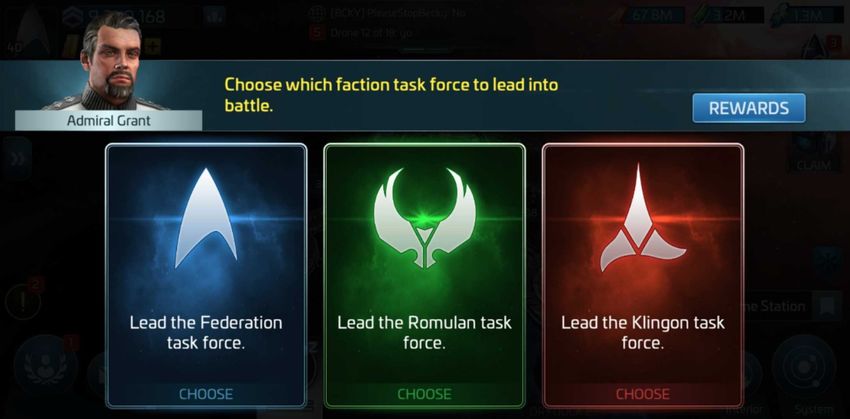
Star Trek™ Fleet Command is a mobile strategy game that has pushed the genre
forward by blending classic MMO elements with deeper, more personalized narratives
that immerse players more than any other game in the category by a US-based
publisher.* This attention to personalization and storytelling begins at the very top of
the player funnel, and continues on to broaden that funnel and increase retention,
decreasing the churn that is common within the genre.
From first arrival into our galaxy, the player receives a high fidelity graphic game with a
story-based introduction that leads them into the game and motivates them with goals
and objectives. Those narrative goals, and the desire to discover more of the Star Trek
universe, create a more accessible and enjoyable adventure, blended within the
traditional demands of exploration and progression.
The early game experience, tied in with actual story and decision, has proven to
significantly benefit retention of our players. After integration of a core storyline
during soft launch, day 30 retention rose by 37%.**
*via AppAnnie Q1 2020
19Case study: Star Trek™ Fleet Command
Our narrative arcs bridge, branch, and interweave based on many choices presented to
players, increasing personalization and further broadening the player funnel by
deepening engagement. We see the results of this in our players' habits: about 80% of
players are playing 7 days a week.** New content that’s tied to an event, meanwhile,
can be segmented and personalized, with difficulty and rewards anchored to the
player’s time and progress within Star Trek™ Fleet Command.
The lure of a new storyline, with new characters, can be found around every hidden star
system of the game, with more arriving all the time. This influx of new content, new
features, and a dynamic live ops roadmap can be segmented and personalized, with
difficulty and rewards anchored to the player’s time and progress within Star Trek™ Fleet
Command. These elements combine to deliver a genre-leading experience that players
lover and continue returning to for years. Over the past 15 months, the team has
consistently reduced daily churn by half.**
"Personalization of content is critical to how we think about the success of Star Trek
Fleet Command and any game like it. The more we can provide engagement for a
different experience, tailored to the progress of each player, and then reward that
progress with still more opportunity for new engagement, is the more
successful we can be in the long-term."
- General Manager and Vice President of Game Design,
David Eckelberry
**based on data provided by Scopely
20Insights and tips: onboarding and retention
The increase in retention discussed above is likely due to
one of the most powerful ways to improve game
performance: improving onboarding. 4X strategy
games, once notorious for a high learning curve, have
made notable improvements as a genre when it comes
to making it easier for new players to understand and
engage with early game mechanics.
The mechanics that define the genre (explore, expand,
exploit, exterminate) are a good framework to
understand what new users need to be taught and
guided through as seamlessly as possible to prevent
churn. It’s difficult for players new to a genre to
understand everything simultaneously; because
immediate competition can feel unfair (if a brand new
player is faced with an expert player) and because
resource-loss or perceived ‘wasted time’ after a session
goes awry can be discouraging, it’s recommended that
4X strategy developers introduce the exploration and
expansion mechanics first—well before introducing
the extermination elements, for example.
Layering collection mechanics, such as those common in RPG games, into the early user experience
creates a sense of progression that gives new players confidence that their time is being
well-spent and that they are succeeding in their gameplay.
This also allows players space to make mistakes and time to grow their resources and power, which
provides a sense of safety in addition to accomplishment. Some 4X strategy games wait several
weeks before introducing the competitive elements, and when they do so, they allow players to
opt-in to combat knowingly (e.g. by choosing to enter a specific area or leveled quest). This type
of onboarding improvement decreases the likelihood that new users will churn out of frustration,
but it also creates an early game experience that is more broadly appealing and thus increases the
likelihood that new users will stay.
21Insights and tips: onboarding and retention
In giving players more autonomy and space to practice game mechanics in the early stages of a
game, developers of these newer 4X strategy games have not strayed from the traditional goal (i.e.
allure) of the ‘4X,’ where competition is a main motivator of the end-game; instead, they have
introduced the various elements of ‘4X’ thoughtfully, and in sequence.
Many new 4X strategy players may also simply enjoy the early sandbox elements of the game, while
they consider what kind of player they want to be or what kind of strategy they want to adopt when
the game at last expects them to risk the resources they have accumulated in order to build power
over other players.
This onboarding experience is crucial in optimizing engagement and retention, but also for
monetization. Forcing new players to spend money in order to defend themselves from attacks they
aren’t ready for in the first place is not an ideal player experience for anyone, let alone players new to
4X strategy.
When it comes to play style and target audience, there is room for both casual and core players in
the 4X strategy genre. Whom a game is catered toward depends on the developer’s vision and how
broad of a player base is desired.
Another major change in 4X strategy games is the more user-friendly UI/UX improvements.
Traditional standards had clustered menus and muted colors, whereas newer releases are easier to
read and look more vibrant. This is a more inviting experience for players new to the game or
unfamiliar with the genre. Using hybrid models alongside innovation, as well as a more
narrative-focused design or incorporating IP partnerships, can also attract a wider audience.
Shifts occur in how players play certain titles, as well. For example, 4X strategy games typically used
to be played in portrait mode on mobile to allow for easier typing and chatting; newer games
support landscape mode, which provides familiarity as it resembles other handheld games.
.
22Insights and tips: onboarding and retention
Here are some tips in thinking through how to optimize your 4X strategy game’s onboarding:
01
This will help the game experience feel rich
Prioritize the and meaningful, even without the elements
introduction of of gameplay that have yet to be introduced.
certain features
Identify which elements of gameplay are
critical at what points in the game, and bring
them in accordingly. Don’t assume too much
04 Design a more
inviting UI/Ux
Make it easy for new players to see and
knowledge; keep any friction in onboarding understand what they’re looking at, without
as low as possible, and consider allowing being visually overwhelmed. Make sure your
experienced 4X strategy players to bypass colors and style look conducive to both
any explanations with which they may casual and core players (if that’s your goal).
already be familiar.
Avoid introducing too many of a game’s
mechanics and opportunities at once,
especially those that are more relevant (and
thus better saved for) later in the game.
05 Optimize the 4X
social experience
Keep new users as well as experienced
users in mind, and adjust how you offer
02 Protect new engagement with social features
accordingly. Chat may be a good layer to
players from unfair start with, but consider how mentorship and
competition other leadership opportunities for advanced
players can help create a positive
Reduce or eliminate altogether the atmosphere for new players. Social play is
likelihood of experienced players among the core expectations for
confronting new players before the new 4X strategy players, and that means both as
players have time to find their footing and friend and foe.
prepare for combat.
Consider how to create a competitive
Additionally, make it clear when new players atmosphere through indicating different
are approaching a potential confrontation, power positions of each player or how to
and consider allowing them to opt-in to that raise awareness of timely events and
type of experience before assuming this is activities. You can also read up on some
what they want. additional recommended best practices for
03
managing multiplayer communities. Lastly,
Offer a sense any meaningful game politics should be
well-surfaced (menus, leaderboards,
of progression iconography), as this is a proven method for
For at least the first few play sessions, increasing retention of socially-driven
create ample opportunities for new players players.
to collect resources, expand their abilities,
or otherwise achieve evidence of success.
23Insights and tips: monetization
Some 4X strategy games deviate from standard
merchandising techniques, so it’s worth noting the differences
to understand what is best for a particular game.
In traditional 4X strategy games, players receive a pack
offering almost immediately after logging in—one that’s timed
to expire, in order to incentivize a purchase through fear of
missing out. Newer titles sometimes forgo serving players this
experience, instead moving more toward ‘pull-style’
merchandising techniques: bringing players to the store,
rather than bringing the store to the players, and ensuring
they browse for what they want, which creates a different but
potentially more successful purchase pattern than what once
was assumed to be the most effective.
Did you know?
Focusing less on interstitial promotions (e.g. packs) and establishing a strategy
for providing more individual purchases (e.g. hero characters) can sometimes
increase week-1 conversion, and we saw the genre improve week-1 conversion by
nearly 70% year over year. However, traditional monetization methods aren’t
gone, and there is still plenty of evidence that they continue to drive revenue.
Giving players more choice and autonomy in how they spend their time and
money in a 4X strategy game is part of the shifting mobile landscape.
24Insights and tips: monetization
Here are some tips in thinking through how to optimize your 4x Strategy game’s monetization:
01 Provide limited,
incremental
purchases
03 Alternating pricing
strategies
Alternate pricing strategies (and bundles). A
Provide limited, incremental purchases that common practice in traditional 4X strategy
provide meaningful value (limits could be games is to increase bundle prices after
daily, weekly, or monthly). Small yet helpful each purchase; however, this can scare
items provide the most value when their players off and even reduce the frequency
benefit is immediately recognizable to the of purchases once the price point gets too
player. high with no alternatives.
Scarcity also helps. This can also increase Allowing players to have other choices, such
day-over-day purchases. as during times of conflict or when gifting
items to someone else, provides more
freedom for players who have preference
for when or how they spend.
02 Allow users to
keep Items
04 Live services for
player segments
Allow users to keep items (e.g. make them
durable and permanent). Since 4X strategy
There is more than one way to play 4X
is a genre about conquering digital real
strategy games, due to the sandbox nature
estate—land that can be taken away—
of the genre, and therefore players often
ensure the player is finding value in
have a wide variety of different play styles
ownership elsewhere.
and personal goals. It's a good practice to
ensure you’re accommodating these various
needs with your live events, as well.
For example, offer strategy-driven events
(e.g. base relocations) for your segment of
highly strategic players, and offer events
that reward resource milestones for your
segment of players that enjoy
resource-gathering and collecting. Players
who feel the game is meeting their needs
and preferred play style are more likely to
engage and continue returning.
25Conclusion: 4X Strategy
Conclusion: 4X strategy
4X strategy is a competitive game genre for developers to enter: year-over-year installs did not
increase, despite the new 4X strategy games released. This creates pressure for developers to bring
fresh ideas that will attract those loyal players. The acquisition funnel is challenging, but key metrics
for retention, engagement, and monetization are up. Players are better retained, playing more, and
spending earlier and more frequently.
Ultimately, developers must evaluate the needs of 4X strategy players and build priority features to
address those opportunities. Consider variances in progression, game economy, and player
personas based on the target audience. Remember, 80% of core Strategy players play only one
game during a given month, so it’s critical to stand out.
We hope you find success taking action on the insights provided in this report. This 4X strategy
report is just the first in a series of upcoming game genre reports, where we will provide our
developer community with exclusive Google Play data and specific analyses to help grow
businesses in these genres. If there are genres you want to learn more about next, please feel free
to send us your feedback using this quick survey link.
Howard Chen
Developer Growth Consultant
Google Play
26You can also read


